
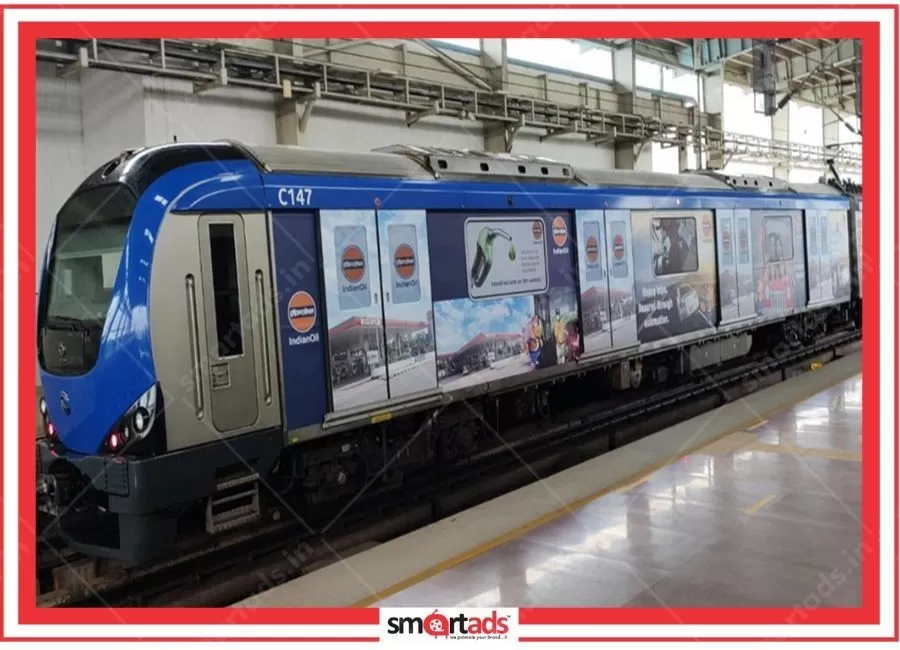
Exterior Metro Wrap
Size & Printing Cost as per actual
On the outside of metro Train, advertise
Rate per Metro Display Cost / 1 Month
Route:Nagasandra To Silk Institute
₹1000000.00
Showing 1 to 3 of 3 Results
MEDIA DETAILS
Size & Printing Cost as per actual
On the outside of metro Train, advertise
Rate per Metro Display Cost / 1 Month
Route:Nagasandra To Silk Institute
₹1000000.00
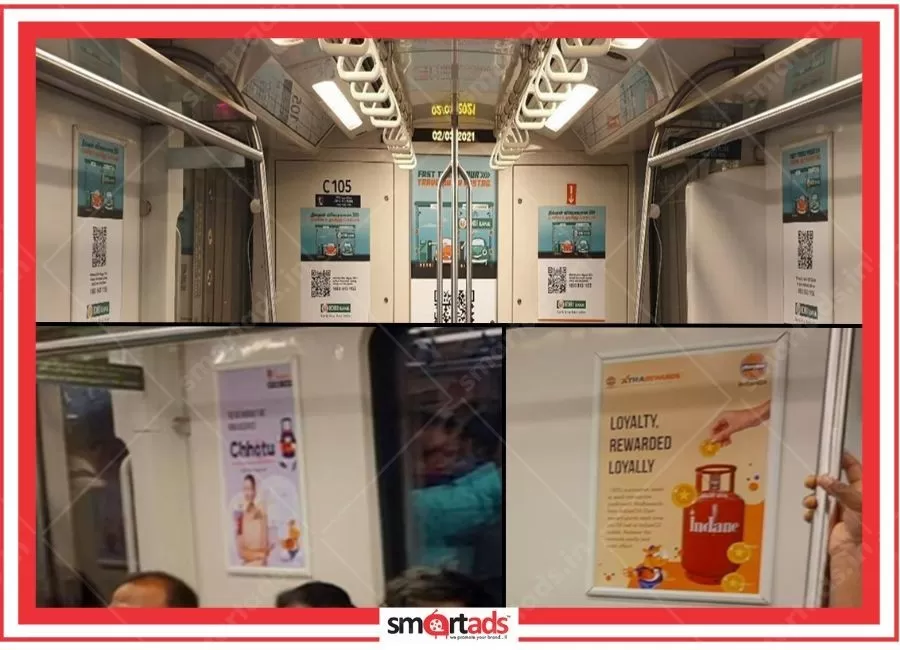
Size & Printing Cost as per actual
On the outside of metro Train, advertise
Rate per Metro Display Cost / 1 Month
Route:Nagasandra To Silk Institute
₹170000.00
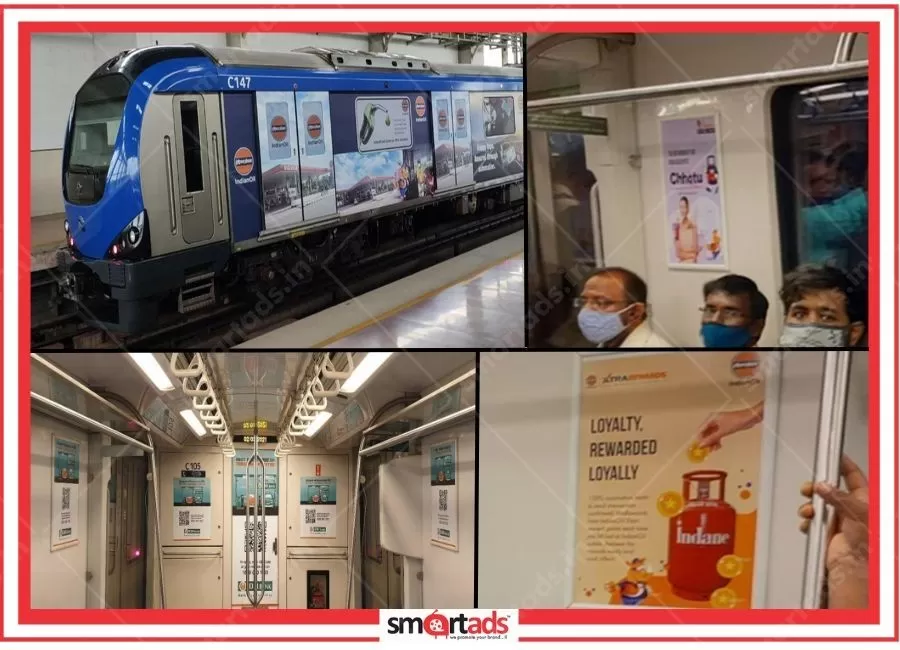
Size & Printing Cost as per actual
On the outside of metro Train, advertise
Rate per Metro Display Cost / 1 Month
Route:Nagasandra To Silk Institute
₹1500000.00
MEDIA REACH

MinimumQty :
1
EstimateReachPeople :
150000000
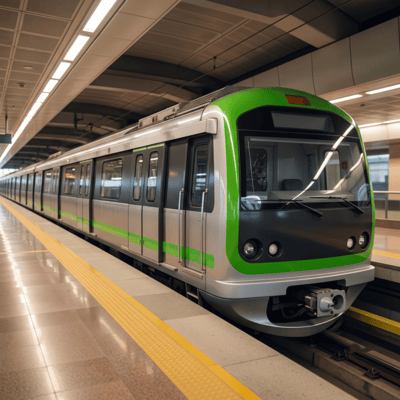
Brands that write off metro train advertising in Bangalore Green Line as a niche BTL play are leaving serious reach on the table. The Namma Metro Green Line carries somewhere in the ballpark of 2.5 lakh daily commuters across its 33.46 km North–South corridor, which means a single full train wrap on this route is effectively a moving billboard seen by a captive, urban, largely high-income audience — repeated, unavoidable, and impossible to skip the way a YouTube pre-roll can be. What surprises most of our clients when we first walk them through the numbers is just how competitive the cost-per-impression works out to be, especially when compared to what they are already spending on digital display.
Metro train advertising in Bangalore Green Line is, at its core, a form of transit media that uses the physical surface area of a metro train — both its exterior shell and its interior coach space — as a branded canvas that travels the entire length of the route, multiple times a day. Unlike a static hoarding fixed to one location on Outer Ring Road, a train wrap on the Green Line moves through 32 stations, from Madavara in the north all the way down to Silk Institute in the south, which means the same creative is exposed to dramatically different audience clusters — industrial workers near Peenya, office commuters at Yeshwanthpur, shoppers and travellers at the Majestic interchange, and the residential belt stretching through Rajajinagara and Jayanagar — all within a single day's operation.
The Green Line, formally designated as Line 2 of the Namma Metro network, is operated by the Bangalore Metro Rail Corporation Limited (BMRCL), which holds authority over all commercial advertising rights within the metro system. Advertising on this corridor is not something brands can arrange directly with BMRCL in most cases; the exclusive advertising rights on the Green Line have been awarded to Lokesh Outdoor through a seven-year contract, which means any brand looking to place a train wrap, interior branding, or platform advertising on this corridor needs to work either directly with Lokesh Outdoor or through an authorised media buying agency. At SmartAds, we have navigated this process for multiple clients across categories, and frankly speaking, understanding the exclusivity structure upfront saves a significant amount of time during the campaign planning phase.
What a lot of people miss is that metro train advertising is not just about the train itself. The Green Line ecosystem includes station branding, platform advertising, escalator branding, smart card branding, and — increasingly — digital out-of-home (DOOH) screens at select stations, which together create what media planners would call a full-funnel transit media environment. A brand that wraps a train exterior and also takes interior branding on the same coaches is essentially creating a 360-degree brand experience for every commuter who sees the train arrive, boards it, and spends 20 to 45 minutes inside — a dwell time that no roadside hoarding can replicate.
The Bangalore Metro Green Line stretches 33.46 km across what is arguably Bengaluru's most economically diverse urban corridor. Running from Madavara in the northwest — a station that gained significant strategic importance after the November 2024 extension that brought it closer to the Bangalore International Exhibition Centre (BIEC) — the route passes through Peenya, Yeshwanthpur, Rajajinagara, the Majestic interchange, Jayanagar, and terminates at Silk Institute in the south. The Madavara extension is a development that most competitor analyses have simply not caught up with yet; the BIEC catchment alone draws lakhs of trade visitors annually for exhibitions, auto shows, and industry events, which makes the stations in that northern cluster suddenly very relevant for B2B brands, automotive advertisers, and consumer durables companies.
For campaign planning purposes, we always advise clients to think about the Green Line in three distinct geographic zones rather than as a single homogeneous route. The northern zone — roughly from Madavara through Peenya and Yeshwanthpur — is dominated by industrial workers, logistics professionals, and manufacturing-sector employees, which skews the audience toward a mass-market, value-conscious consumer profile. The central zone, anchored by the Majestic interchange station (formally known as Nadaprabhu Kempegowda Station), is the highest-footfall point on the entire Namma Metro network; it is where the Green Line and the Purple Line intersect, which means commuters transferring between lines pass through this station twice — once inbound and once outbound — effectively doubling the impression count for any advertising placed in this zone. The southern zone, running from Lalbagh through Jayanagar down to Silk Institute, serves a predominantly residential, upper-middle-class audience, with a meaningful concentration of students, educators, and professionals.
The 32 stations on the Green Line are not all created equal from an advertising standpoint, and this is where the real value lies in working with a media planning team that knows the route intimately. High-footfall stations like Yeshwanthpur, Majestic, and Jayanagar command premium station branding rates; stations in the Peenya industrial cluster offer broader reach at more accessible price points. Daily ridership across the full corridor sits in the ballpark of 2.5 lakh daily commuters on a typical weekday, with numbers spiking considerably during festive periods, public events at BIEC, and the IPL season — all of which are windows we flag to clients as priority booking periods.
The honest answer to why brands should be taking Bangalore Metro Green Line advertising more seriously than they currently do comes down to one word: captivity. A commuter on the Green Line is not browsing — they are sitting or standing in a closed environment for an average of 20 to 45 minutes, which is a dwell time that most above-the-line media formats can only dream about. Television advertising, for all its reach, competes with second-screen usage, ad-skipping, and background noise; the metro commuter, by contrast, has limited distractions and a natural tendency to read, observe, and absorb the environment around them. Brand recall studies on transit media — including research cited in the FICCI-EY Media & Entertainment Report — consistently show that commuter advertising generates recall rates that outperform static OOH by a meaningful margin, precisely because of this enforced dwell time.
On top of that, the Namma Metro Green Line serves what is effectively Bengaluru's economic spine. The Silicon Valley of India label that the city has carried for two decades is not just a tech-sector story; it reflects a broader urban professional class that uses public transit not because they cannot afford alternatives, but because the metro is genuinely faster and more reliable than road commuting in Bengaluru's notorious traffic. The GroupM TYNY Report has consistently highlighted urban transit media as an underpenetrated category relative to the quality of audience it delivers, and our own experience at SmartAds bears this out — we have seen brands achieve cost-per-thousand impressions that work out to roughly ₹8 to ₹12 on a full train wrap campaign, which is a number that genuinely surprises clients when they compare it to what they are paying for programmatic display or even mid-tier print placements.
To be fair, metro train advertising in Bangalore Green Line is not a standalone solution for every campaign objective. It works best as part of an integrated media mix — where the metro wrap creates mass visual impact and brand salience, while digital and on-ground activations handle the conversion layer. One retail client we worked with in Bengaluru's south zone ran a full train wrap on the Green Line for 45 days ahead of their flagship store launch in Jayanagar; the campaign was paired with hyperlocal digital targeting around the Green Line stations, and the store reported walk-in traffic that was roughly 30% higher in the first month than their benchmark from a comparable launch in a different city where only digital media was used. The metro wrap, in their words, made the brand feel "already established" before the store even opened.
The format options on the Bangalore Metro Green Line are considerably more varied than most brands initially assume, and the choice of format has a significant bearing on both the campaign cost and the type of impression being created. The most visually dominant format is the full train wrap, which covers the entire exterior surface of a 6-coach train — working out to roughly 5,300 sq ft of branded surface area — and turns the train into what is essentially a moving billboard that travels the full 33.46 km route between 16 and 17 trips per day. A full train wrap on the Green Line is the format of choice for brand launches, major product introductions, and campaigns where top-of-mind awareness is the primary objective; the sheer scale of the creative, combined with the frequency of exposure across different parts of the city, creates a brand presence that is genuinely difficult to ignore.
Exterior train branding also exists in partial formats — single coach wraps and two-coach configurations — which are more accessible for brands with tighter budgets or those wanting to test the medium before committing to a full train wrap. Interior branding, on the other hand, operates on a different logic entirely; the roughly 400 sq ft of interior ad space within a 6-coach train is seen exclusively by passengers who are already inside the train, which means the audience is smaller in absolute terms but significantly more engaged. Interior branding formats include overhead panel ads, door panel wraps, grab-handle branding, and floor graphics — each of which creates a different type of visual contact during the commute. We have found, through multiple campaigns, that interior branding paired with a strong call-to-action performs particularly well for categories like e-commerce, fintech, and education, where the commuter has time to scan a QR code or note down a URL.
Beyond the train itself, the Green Line advertising ecosystem includes platform advertising at individual stations, escalator branding, smart card branding — which puts a brand's creative on the physical metro card that commuters carry and use daily — and station branding packages that can dominate a single high-footfall station for an extended period. DOOH screens at select Green Line stations are an emerging format, though availability is currently more limited than what brands would find on some other transit systems globally; where digital screens are available, they offer the advantage of time-of-day targeting and dynamic creative rotation, which is particularly useful for brands running promotional campaigns with changing offers. At SmartAds, our media planning team typically recommends a combination of exterior train branding for reach and at least one station branding element for frequency — the two together create a campaign that works at both the awareness and the consideration stages of the purchase funnel.
Frankly speaking, the absence of transparent pricing is one of the biggest frustrations that brand managers and media planners face when trying to evaluate Bangalore Metro Green Line advertising, and it is a gap we have always tried to address directly with our clients rather than hiding behind "contact us for rates" language. The rate structure on the Green Line is tiered by format, duration, and the number of trains involved in the campaign, which means there is no single answer — but there are meaningful benchmarks that can anchor a planning conversation.
A full train wrap on the Green Line — covering all 6 coaches of a single train with exterior train branding — is typically priced somewhere between ₹8 lakh and ₹15 lakh per month, depending on the season, the specific train assigned, and whether the campaign includes any station-level add-ons; festive periods like Diwali, Ugadi, and the pre-IPL window tend to attract a premium of roughly 15 to 25% over base rates. A single coach wrap, which is the most accessible entry point for metro coach branding, works out to somewhere in the range of ₹1.5 lakh to ₹3 lakh per month per coach, which puts it within reach of mid-sized regional brands and well-funded startups. Interior branding packages — covering the full interior ad space of a 6-coach train — are typically priced in the ballpark of ₹4 lakh to ₹8 lakh per month, which is a format we particularly recommend for fintech, BFSI, and ed-tech brands targeting the young professional commuter.
Station branding at high-footfall stations like Majestic, Yeshwanthpur, and Jayanagar commands a separate rate structure, with dominant station packages — which can include platform panels, escalator branding, and entry-gate wraps — ranging from roughly ₹2 lakh to ₹6 lakh per month per station. Smart card branding, which is one of the most underutilised formats in the Green Line ecosystem, is priced on a per-card basis and works out to a relatively low absolute cost for the daily-touch brand exposure it generates; we have seen this format work exceptionally well for banking and payments brands, where the association between the smart card and the brand's own card product creates an intuitive connection in the commuter's mind. All rates quoted here are indicative benchmarks based on our experience booking Green Line advertising; actual rates should be confirmed with Lokesh Outdoor or through an authorised metro advertising agency at the time of booking, as inventory availability and seasonal demand significantly influence final pricing.
The audience profile on the Namma Metro Green Line is not uniform, and treating it as such is one of the most common mistakes we see brands make when planning metro train advertising in Bangalore Green Line. The corridor passes through such a diverse range of urban zones — from the industrial estates of Peenya to the tech-adjacent residential areas near Silk Institute — that the audience composition shifts meaningfully depending on which part of the route you are thinking about. This is why, at SmartAds, we always begin a Green Line campaign brief by asking the client to tell us which audience segment they are most trying to reach, and then we map that against the station-level ridership data to recommend the most appropriate format and station combination.
The northern zone of the Green Line — covering Madavara, Peenya, and the industrial cluster stations — draws a significant proportion of blue-collar and skilled-trade workers, along with logistics and manufacturing professionals; this is an audience that responds well to mass-market FMCG, two-wheeler brands, affordable housing, and vocational education advertising. The central and southern zones tell a very different story: the Majestic interchange area sees a genuinely mixed urban audience, including daily-wage workers, traders, students, and office commuters, while the southern stretch through Jayanagar and towards Silk Institute is dominated by young professionals, IT professionals working in nearby campuses, students from educational institutions in the area, and upper-middle-class residential households. The Dentsu e4m Report on urban media consumption has noted that metro commuters in Tier 1 Indian cities over-index on smartphone usage, digital payment adoption, and discretionary spending relative to the general urban population — which is a finding that aligns closely with what we observe anecdotally from the Green Line's southern corridor audience.
One automotive brand we worked with used this zone-based audience logic to structure a genuinely smart campaign on the Green Line: they ran a full train wrap for broad awareness across the entire route, but supplemented it with station branding specifically at Yeshwanthpur and Rajajinagara — two stations with high footfall from the target demographic of young male professionals aged 25 to 35 — and the combination delivered a brand recall score in post-campaign research that was roughly 2.4 times higher than what the same brand had achieved with a comparable static OOH campaign in Bengaluru the previous year. The dwell time advantage of the metro environment, combined with the zone-specific station reinforcement, was what made the difference.
This is a question we get asked regularly, and the honest answer is that the two corridors are not really in competition with each other — they serve different audience profiles and different geographic markets within Bengaluru, which means the right choice depends entirely on what the brand is trying to achieve and who it is trying to reach. The Purple Line (Line 1) runs East–West, connecting Whitefield in the east to Challaghatta in the west, and its audience skews heavily toward IT professionals, tech-sector employees, and the upper-income residential communities of East Bengaluru; it is the natural choice for brands targeting the tech-savvy, high-income urban professional, and its association with the Whitefield and Marathahalli IT corridors gives it a very specific demographic signature.
The Bangalore Metro Green Line, running North–South from Madavara to Silk Institute, covers a broader and more economically diverse audience base, which is both its strength and its complexity. For brands targeting mass-market urban consumers — FMCG, two-wheelers, affordable banking, telecom, and retail — the Green Line's demographic diversity is actually an advantage, because a single campaign reaches multiple consumer segments across a single route. For brands with a very specific premium or tech-sector targeting requirement, the Purple Line may deliver a more concentrated audience; but for brands that need genuine city-wide reach and cannot afford to run campaigns on both corridors simultaneously, the Green Line's 2.5 lakh daily commuters across 32 stations and 33.46 km make it the higher-volume choice.
The Majestic interchange is, in our view, the single most strategically important factor in the Green Line vs Purple Line comparison — because it is the point where both lines converge, which means a brand advertising on the Green Line automatically gets exposure to Purple Line commuters who transfer at Majestic. This interchange effect is rarely factored into reach calculations by brands doing their own planning, but it meaningfully increases the effective reach of a Green Line campaign beyond what the Green Line ridership numbers alone would suggest. From a cost standpoint, the two corridors are broadly comparable on a per-train-wrap basis, though specific rates vary by season and availability; what we typically recommend to clients with a choice to make is to run a pilot on the Green Line first, given its broader audience base, and then layer in Purple Line inventory if the campaign is extended or the budget allows.
The commercial advertising rights on the Namma Metro Green Line are not open-market inventory — they are governed by an exclusive seven-year contract awarded by BMRCL to Lokesh Outdoor, which is the arrangement that defines how all train wrap, interior branding, station branding, and other advertising formats on the Green Line are sold and managed. This exclusivity structure is something that brands and their media agencies need to understand clearly before approaching the market, because it means that going directly to BMRCL with an advertising enquiry will typically result in a referral to Lokesh Outdoor, and any agency claiming to offer Green Line inventory without Lokesh Outdoor's involvement should be approached with caution.
For brands, the practical implication of this exclusive advertising rights arrangement is that inventory access is centralised, which has both advantages and disadvantages. The advantage is consistency — rate cards, creative approval processes, and campaign execution standards are managed through a single entity, which reduces the coordination complexity that can arise when multiple vendors are involved. The disadvantage is that there is limited room for negotiation on base rates, particularly during peak demand periods, and inventory availability on premium formats like full train wraps can be constrained well in advance of major festive seasons. We have seen clients lose preferred booking windows because they delayed the decision-making process by two or three weeks during the Diwali and Ugadi planning cycles, which is why we always advise starting the booking conversation at least 6 to 8 weeks ahead of the intended campaign launch date.
The non-fare revenue that BMRCL generates through advertising partnerships like the Lokesh Outdoor contract is a meaningful part of the metro's commercial sustainability model — a dynamic that the FICCI-EY Media & Entertainment Report has highlighted as an increasingly important revenue stream for metro rail corporations across India. This commercial imperative means that BMRCL has a genuine interest in ensuring that the advertising experience on the Green Line is well-managed and brand-safe, which translates into a structured creative approval process that brands must navigate before any artwork goes live on a train or station. At SmartAds, we manage this approval process on behalf of our clients as part of our end-to-end campaign management service, which typically saves two to three weeks of back-and-forth that brands attempting to book directly often encounter.
The booking process for metro train advertising in Bangalore Green Line follows a sequence that is more structured than most brands expect, and understanding each stage upfront prevents the delays that typically derail campaign timelines. The process begins with a campaign brief — format, duration, target stations or full-route coverage, budget range, and campaign objective — which is then used to check inventory availability with Lokesh Outdoor for the desired period. Availability on premium formats like full train wraps is finite; there are only a certain number of trains operating on the Green Line at any given time, and during high-demand periods, specific trains or station positions may already be committed to other advertisers, which is why early engagement with the booking process is genuinely important rather than just a sales pitch.
Once availability is confirmed and a rate proposal is agreed upon, the next stage is creative development and BMRCL approval. The artwork specifications for a full train wrap are precise — the exterior surface of a 6-coach Green Line train requires artwork files that account for the specific panel dimensions of BEML rolling stock, including door positions, window cutouts, and the curvature of the coach body; submitting artwork that does not meet these specifications is one of the most common causes of campaign delays, and it is something that an experienced metro advertising agency will flag and resolve before submission rather than after. BMRCL's approval process typically takes somewhere between 7 and 14 working days, during which the creative is reviewed for compliance with content guidelines — no political content, no content that could be deemed offensive or misleading, and adherence to specific size and resolution requirements.
After approval, the execution phase involves the physical application of the train wrap by Lokesh Outdoor's installation team, which is typically completed within 3 to 5 days for a full train wrap; interior branding installation is faster, usually completed within 1 to 2 days. Campaign monitoring — which includes periodic checks that the wrap is in good condition and that interior panels have not been damaged — is an ongoing responsibility during the campaign period, and brands should ensure their agency has a process for flagging and resolving any maintenance issues quickly. The minimum campaign duration on the Green Line is typically 30 days for most formats, though some station branding formats allow shorter booking windows; for train wraps specifically, we recommend a minimum of 45 to 60 days to allow sufficient time for the frequency of exposure to translate into meaningful brand recall among the daily commuter base.
The ROI case for metro train advertising in Bangalore Green Line is built on three factors that, taken together, make it genuinely difficult to replicate with conventional out-of-home advertising: captive audience exposure, route frequency, and demographic quality. A static hoarding on a busy Bengaluru road is seen by passing traffic at speeds that make meaningful creative engagement nearly impossible; the average exposure time to a roadside billboard is measured in seconds. A metro commuter, by contrast, is exposed to interior branding for the entire duration of their journey — which, on the Green Line, averages somewhere between 20 and 45 minutes depending on how many stations they travel — and is exposed to the exterior train wrap every time the train enters and exits a station, which happens 16 to 17 times per day across the full route.
The brand recall advantage of transit media over static OOH has been documented in multiple studies, and our own campaign experience at SmartAds reinforces this consistently. A financial services brand we worked with ran a 60-day interior branding campaign on the Green Line, targeting the young professional commuter segment in the southern corridor; post-campaign brand awareness surveys conducted in the catchment area around Jayanagar and Silk Institute showed aided recall of roughly 68%, which was significantly higher than the 41% recall the same brand had achieved from a comparable static OOH campaign in a similar Bengaluru market the previous year. The difference, in our assessment, was almost entirely attributable to dwell time — the commuter had enough time to actually read the creative, process the message, and in many cases scan the QR code on the panel.
On a pure cost-efficiency basis, the CPM on a full train wrap campaign on the Namma Metro Green Line works out to somewhere in the range of ₹8 to ₹15 per thousand impressions when calculated against the daily ridership and the number of days in the campaign; this is a number that compares very favourably to mid-market digital display CPMs, which typically run between ₹50 and ₹150 for comparable urban audience targeting in Bengaluru. To be fair, the comparison is not perfectly apples-to-apples — digital display offers targeting precision that metro advertising cannot match — but for brand awareness objectives where reach and frequency among a quality urban audience are the primary metrics, the Green Line's cost efficiency is genuinely compelling. The TAM AdEx data on transit media spending in metro cities has shown consistent year-on-year growth in advertiser investment in this category, which reflects a broader market recognition of this value proposition.
Not every category extracts equal value from metro train advertising in Bangalore Green Line, and being honest about this is something we think distinguishes good media planning from generic pitch decks. The categories that consistently perform well on the Green Line are those whose target consumers are urban, mobile, and commuter-heavy — and the Green Line's specific route through Bengaluru's North–South economic spine makes it particularly well-suited to certain industries that might not immediately come to mind.
Real estate is one of the most natural fits — residential projects in Rajajinagara, Jayanagar, and the northern growth corridors near Madavara and Peenya are essentially advertising to their own catchment audience when they run campaigns on the Green Line; the commuter who travels this route daily is, in many cases, already a resident of or aspirant to these very neighbourhoods. Education — both higher education institutions and ed-tech platforms — benefits enormously from the student and young professional demographic that dominates the southern Green Line corridor; we have run campaigns for multiple ed-tech brands on this corridor and consistently found that QR code scan rates from interior branding panels are higher on the metro than on any other OOH format we have tested. BFSI, telecom, consumer electronics, two-wheelers, and FMCG brands all find meaningful reach on the Green Line, though the specific format and station mix needs to be calibrated to the brand's target segment within the corridor.
The Madavara extension — which brought the Green Line closer to the Bangalore International Exhibition Centre — has opened up a genuinely new use case for B2B brands and event-specific advertising, which is a segment that metro advertising had not traditionally served well. Brands participating in trade exhibitions at BIEC can now run targeted station branding at Madavara during the exhibition period, creating a brand presence that reaches visitors arriving by metro; this is a format application that we have begun recommending to automotive, industrial equipment, and technology brands with a presence at BIEC events, and the feedback from early campaigns has been very positive. The cost of a 7 to 10 day station branding burst at Madavara during a major exhibition is a fraction of what the same brand would spend on exhibition hall advertising, and the reach extends beyond just exhibition visitors to include the broader commuter base using that station.
Q: What is metro train advertising on the Bangalore Green Line?
Metro train advertising on the Bangalore Green Line refers to the use of the physical surfaces of Namma Metro trains — both exterior and interior — as advertising media across the Green Line's 33.46 km North–South corridor, which runs from Madavara to Silk Institute through 32 stations. It is classified as transit media and BTL advertising, and it encompasses formats ranging from full train wraps on the exterior to interior branding panels, overhead displays, and door wraps inside the 6-coach trains. The advertising rights on this corridor are managed exclusively by Lokesh Outdoor under a seven-year contract with BMRCL, which means all bookings are processed through this channel or through authorised media buying agencies like SmartAds that have established relationships with the rights holder.
Q: How much does it cost to advertise on the Bangalore Green Line metro train?
The cost of advertising on the Bangalore Metro Green Line varies significantly by format and duration. A full train wrap — covering the entire exterior of a 6-coach train — is typically priced somewhere between ₹8 lakh and ₹15 lakh per month at standard rates, with festive season premiums adding roughly 15 to 25% to the base rate. A single coach wrap works out to somewhere in the range of ₹1.5 lakh to ₹3 lakh per month, while interior branding packages for a full 6-coach train are typically in the ballpark of ₹4 lakh to ₹8 lakh per month. Station branding at high-footfall stations like Majestic or Yeshwanthpur adds to the campaign cost but significantly boosts frequency and recall. These are indicative benchmarks based on our experience; actual rates should be confirmed at the time of booking, as seasonal demand and inventory availability influence final pricing.
Q: Who has exclusive advertising rights on the Namma Metro Green Line?
Lokesh Outdoor holds the exclusive advertising rights on the Namma Metro Green Line under a seven-year contract awarded by BMRCL. This exclusivity covers train wraps, interior branding, platform advertising, station branding, escalator branding, and smart card branding across the Green Line corridor. Brands and agencies looking to place advertising on the Green Line must work through Lokesh Outdoor or through an authorised reseller; any party claiming to offer Green Line inventory outside of this arrangement should be verified carefully before any commitment is made.
Q: What ad formats are available on the Bangalore Green Line metro trains?
The Green Line offers a range of advertising formats across the train and station environment. On the train itself, options include full train wraps covering all 6 coaches, partial exterior wraps covering one or two coaches, and interior branding formats including overhead panel ads, door wraps, grab-handle branding, and floor graphics. At the station level, formats include platform advertising panels, escalator branding, entry-gate wraps, and smart card branding. DOOH screens are available at select stations, offering dynamic creative rotation; availability of digital screen inventory is more limited than static formats and should be confirmed at the time of booking.
Q: How many commuters travel on the Namma Metro Green Line daily?
The Namma Metro Green Line carries approximately 2.5 lakh daily commuters on a typical weekday, which represents a substantial and growing captive audience for advertisers. Ridership spikes during festive seasons, major public events at the Bangalore International Exhibition Centre near Madavara, and periods of road disruption — all of which increase the effective reach of campaigns running during those windows. The Majestic interchange station, where the Green Line meets the Purple Line, is the single highest-footfall point on the network and sees significantly higher daily traffic than any other station on the route.
Q: How many stations does the Bangalore Metro Green Line cover?
The Bangalore Metro Green Line covers 32 stations across its 33.46 km North–South corridor, running from Madavara in the north to Silk Institute in the south. Key stations along the route include Peenya, Yeshwanthpur, Rajajinagara, the Majestic interchange (Nadaprabhu Kempegowda Station), Lalbagh, and Jayanagar. The November 2024 extension added Madavara to the northern terminus, bringing the line closer to the Bangalore International Exhibition Centre and opening up a new audience catchment in that area.
Q: What is the minimum campaign duration for Green Line metro train advertising?
The minimum campaign duration for most formats on the Green Line is 30 days, though this can vary by format and availability. For train wraps — both full and partial — we recommend a minimum of 45 to 60 days to allow sufficient frequency of exposure to build meaningful brand recall among the daily commuter base; a 30-day campaign is possible but may not deliver the repetition needed for the message to fully register with the audience. Some station branding formats allow shorter booking windows of 7 to 14 days, which makes them suitable for event-specific or promotional campaigns tied to a specific occasion or exhibition period.
Q: What is the difference between exterior train wrap and interior branding on the Green Line?
An exterior train wrap covers the outside surface of one or more coaches of a Green Line train with a full-bleed branded creative, turning the train into a moving billboard visible to people on platforms, at road level near elevated sections of the track, and to pedestrians and drivers in the vicinity of the route. The exterior surface of a full 6-coach train offers roughly 5,300 sq ft of ad space, which makes it one of the largest single-canvas advertising formats available in Bengaluru. Interior branding, by contrast, targets passengers who are already inside the train; it uses the roughly 400 sq ft of interior ad space within a 6-coach train across overhead panels, door wraps, and grab-handle branding, and benefits from the extended dwell time of the commute journey. The two formats serve different campaign objectives — exterior for reach and awareness, interior for engagement and conversion — and the most effective campaigns typically combine both.
Q: How do I book metro train advertising on the Bangalore Green Line?
Booking metro train advertising in Bangalore Green Line involves a multi-step process: first, a campaign brief is prepared covering format, duration, target stations, and budget; inventory availability is then confirmed with Lokesh Outdoor for the desired period; once availability and rates are agreed upon, artwork is developed to BMRCL's technical specifications and submitted for approval, which typically takes 7 to 14 working days; after approval, the physical installation is completed by Lokesh Outdoor's team, which takes 3 to 5 days for a full train wrap. Working with an experienced metro advertising agency significantly streamlines this process, particularly the artwork specification and approval stages, which are the most common points of delay for brands booking for the first time.
**Q: Is metro train advertising on the Green Line effective for BTL campaigns?
