
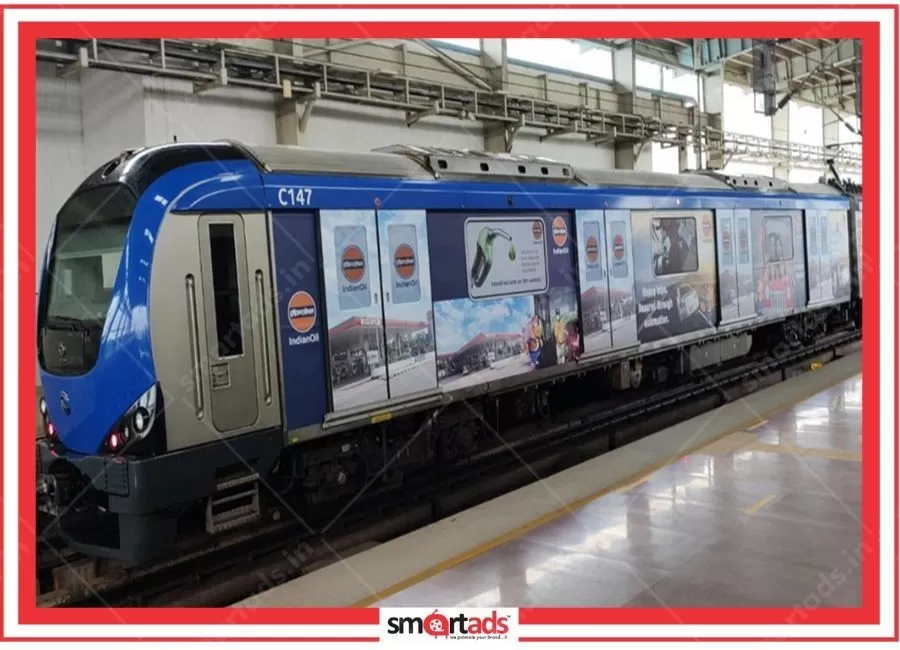
Exterior Metro Wrap
Custom
The advertisement spans the whole train,
Rate per Metro Display Cost / 1 Month
Route : Tirusulam To WIMCO Nagar
₹1000000.00
Showing 1 to 5 of 5 Results
MEDIA DETAILS
Custom
The advertisement spans the whole train,
Rate per Metro Display Cost / 1 Month
Route : Tirusulam To WIMCO Nagar
₹1000000.00
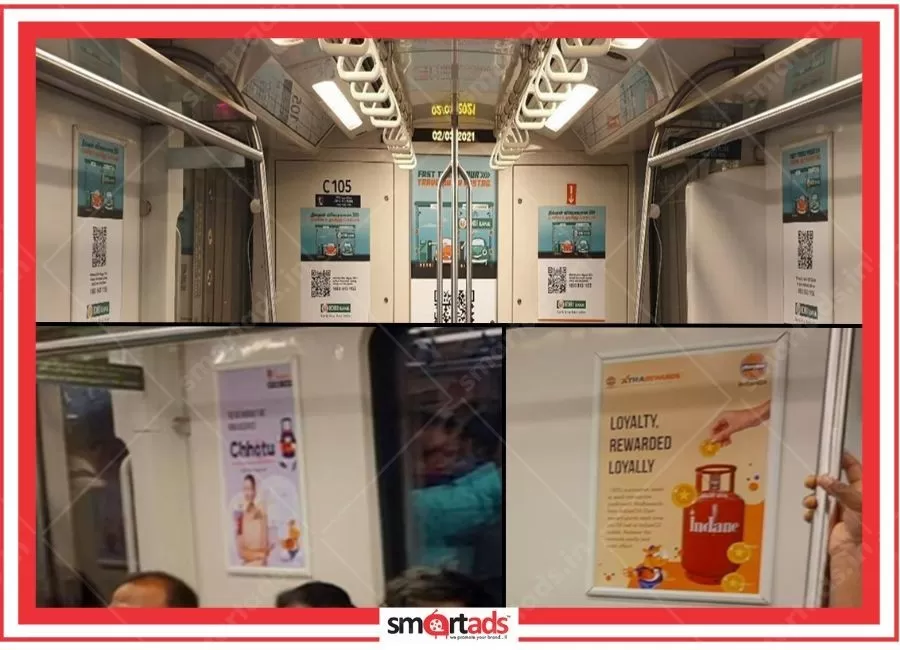
Custom
On the inside of the metro train the adv
Rate per Metro Display Cost / 1 Month
Route : Tirusulam To WIMCO Nagar
₹500000.00
20 Sec Audio
A jingle is a song or a phrase, and the
Rate per Metro Jingle Cost / 1 Month
Route :Tirusulam to WIMCO Nagar
₹400000.00

10 Sec Video
Digital screen on the metro station will
Rate per Metro Digital Display Cost / 1
Route :Tirusulam to WIMCO Nagar
₹600000.00

1 Metro Train
On the outside of the metro train the ad
Rate per Metro Display Cost / 1 Month
Route :Tirusulam to WIMCO Nagar
₹1500000.00
MEDIA REACH

MinimumQty :
1
EstimateReachPeople :
150000000
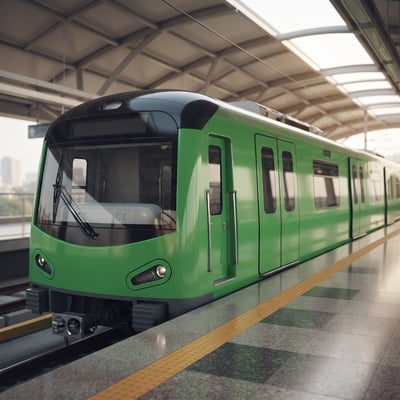
Pune Metro crossed a quiet but significant threshold in 2024 — daily ridership on the combined Purple and Aqua Lines surpassed the 1.5 lakh mark on working days, which means the network is now delivering the kind of consistent, high-frequency audience exposure that most outdoor formats in the city simply cannot match. What surprises most brand managers we speak to is not the scale, but the quality of that audience: salaried professionals, college students from premium institutions, and upper-middle-class households who are, frankly speaking, exactly the demographic that most consumer brands spend heavily to reach through digital channels. Metro train advertising in Pune is no longer an experimental BTL bet — it is a mainstream media channel that deserves a serious line item in your campaign budget.
Most people picture a poster on a wall when they think of transit advertising, which is a reasonable starting point but misses what makes metro train branding genuinely different from static out-of-home advertising. When a brand wraps the exterior of a metro train or covers the interior coach panels of a six-car rake running on the Purple Line between PCMC and Swargate, that advertisement travels with the audience — it is not the commuter who passes the ad, but the ad that accompanies the commuter through every station, every tunnel, and every elevated stretch of the route. This moving billboard dynamic creates a fundamentally different psychological engagement than a hoarding, which a driver passes in roughly three seconds.
Operationally, metro train advertising in Pune is managed through concession agreements between Maha Metro (Maharashtra Metro Rail Corporation Limited) and authorised advertising partners, who then sell inventory to brands either directly or through media buying agencies. The formats available range from interior train branding — panels, overhead strips, door vinyls, and grab-handle wraps inside the coach — to exterior train wrap, which covers the outer surface of the train body, and full train branding, which combines both interior and exterior in a single campaign buy. Maha Metro also controls station-level inventory including platform panel advertising, digital OOH screens, and concourse displays, which can be bundled with train-body formats for an integrated metro advertising campaign.
At SmartAds, we always tell our clients that the booking process for Pune metro advertising is more structured than most OOH formats, which is actually an advantage — it means your creative runs exactly where and when you booked it, without the ambiguity that sometimes plagues hoarding placements. Campaigns are typically booked for a minimum of 30 days, though we have seen brands run 15-day bursts around product launches with strong results; the key is understanding the approval workflow, creative submission timelines, and the Maha Metro compliance requirements before you lock your campaign dates.
The format decision is, in our experience, where most brands either unlock the real value of metro train branding in Pune or leave significant impact on the table. Interior train branding and exterior train wrap serve very different communication purposes, and treating them as interchangeable is a mistake we have seen cost brands both money and effectiveness.
Interior train branding covers everything inside the coach — the overhead luggage rack panels, side wall panels, door panels, window decals, floor graphics, and the increasingly popular grab-handle branding, which places a brand message literally in the hand of every standing commuter. The average dwell time inside a Pune Metro coach on a cross-city journey works out to somewhere between 18 and 35 minutes depending on the route segment, which is an extraordinary amount of time for a brand message to sit in front of a captive audience. Compare that to a roadside hoarding, which commands perhaps three seconds of attention, and the arithmetic of interior metro coach branding becomes obvious.
Metro interior panels come in standardised sizes — the most common being the overhead panel format, which typically runs approximately 1000mm x 300mm, and the side wall panel, which can go up to roughly 600mm x 400mm depending on the rake configuration — though brands should always confirm exact specifications with the authorised vendor or their metro advertising agency in Pune before submitting print-ready artwork. Material requirements are equally specific: Maha Metro mandates non-flammable, anti-graffiti vinyl substrates for all interior applications, which means your regular flex print vendor may not be equipped to handle this. At SmartAds, we manage creative production alongside media buying for exactly this reason — the technical compliance piece trips up a surprising number of first-time metro advertisers.
Exterior train wrap is the format that generates the most conversation, and for good reason — a fully wrapped metro train is essentially a moving billboard that covers hundreds of square metres of visual surface, travels through densely populated corridors, and is seen not just by passengers on board but by everyone at stations, on elevated stretches, and at road-level crossings. The Pune metro exterior wrap can cover partial panels (typically one or two coach sides), a half-train, or the entire rake in what is called full train branding, which is the most premium and impactful format available in the Pune metro advertising inventory.
Full train branding — covering both the exterior wrap and interior coach panels of an entire rake — is typically pursued by large consumer brands during product launches, rebranding exercises, or high-stakes festive campaigns; we worked with a real estate developer in Pune who ran a full train branding campaign on the Aqua Line during a major township launch, and the brand recall scores their post-campaign survey returned were, frankly, the highest we had seen for any single OOH format in that budget range. Train wrap advertising also benefits from what media planners call the earned media effect — a strikingly designed wrapped train gets photographed and shared on social media by commuters, which extends the campaign's reach well beyond the paid impressions. On top of that, the sheer novelty of a branded train in a city where metro advertising is still relatively new means that Pune commuters are genuinely paying attention, which is not something you can say about markets where transit advertising has been around for decades.
Transparency on pricing is something the industry does not do well enough, and we want to change that. Metro advertising cost in Pune varies considerably based on format, duration, line selection, and seasonal demand — but we can give you a working framework that will help you budget sensibly before you enter any formal negotiation.
For interior train branding on a single coach, rates typically fall somewhere in the ballpark of ₹80,000 to ₹1.5 lakh per month depending on the number of panels booked and whether you are on the Purple Line or Aqua Line; a full coach interior takeover — covering all available panel positions within one coach — generally works out to the higher end of that range. Exterior train wrap rates are a different order of magnitude: a partial exterior wrap covering two coach sides on a single rake is priced somewhere between ₹3 lakh and ₹6 lakh per month, which sounds steep until you calculate the CPM. When we have done that calculation for clients — dividing the monthly cost by the estimated monthly impressions based on daily ridership and average route frequency — the CPM works out to roughly ₹8 to ₹15, which is a number that genuinely surprises most brand managers when they compare it to what they are paying for Instagram reach or Google Display Network impressions in Pune.
Full train branding, which combines exterior wrap and interior coach branding across an entire rake, is the most premium tier of Pune metro advertising rates — budgets for this format typically start around ₹15 lakh per month and can go higher depending on the rake configuration and duration commitment. Smart card advertising, which places brand messaging on the physical metro smart cards issued to commuters, is a lower-cost, high-frequency touchpoint that works particularly well for fintech brands, payment apps, and loyalty programmes; rates for this format are considerably more accessible, often in the range of ₹1.5 lakh to ₹3 lakh for a batch of cards. Metro advertising booking for seasonal peaks — Ganeshotsav, Diwali, the IPL window — commands a premium of roughly 20 to 30 percent over base rates, and inventory on key corridors tends to get absorbed weeks in advance, which is why we always advise clients to plan festive campaigns at least six to eight weeks ahead.
This is a question we get asked constantly, and the honest answer is that the right line depends entirely on who your customer is — not which line looks more impressive on a map.
The Purple Line, also known as Pune Metro Line 1, runs from PCMC in the north to Swargate in the south, passing through Pimpri, Chinchwad, Akurdi, Nigdi, and then through the dense urban core via Shivajinagar and Deccan Gymkhana — stations which, between them, serve some of the highest footfall corridors in the city. The audience on this line skews toward industrial workers, government employees, and the significant student population that moves between PCMC and central Pune; FMCG brands, educational institutions, and healthcare advertisers have found this line particularly effective, and we have seen real estate advertising campaigns on the Purple Line perform strongly for developers with projects in the PCMC belt.
The Aqua Line, or Pune Metro Line 2, runs from Vanaz in the west to Ramwadi in the east, cutting through Deccan Gymkhana, Civil Court, Bund Garden, and onward toward Kharadi — which means it passes through or near some of Pune's most affluent residential neighbourhoods and its fastest-growing IT employment corridors. The audience profile on the Aqua Line is distinctly more premium: working professionals in the 25-to-40 age bracket, dual-income households, and the kind of urban commuters who are actively researching financial products, edtech platforms, OTT subscriptions, and premium consumer goods. Fintech advertising and edtech advertising campaigns we have run on the Aqua Line have consistently delivered stronger conversion metrics than equivalent spends on the Purple Line, which reflects the income and digital-adoption profile of the Aqua Line's daily commuters.
The short version is: more categories than most people assume. But the more useful answer requires thinking about what metro train advertising actually delivers — captive audience exposure, high repeat exposure across a defined geographic corridor, and a demographic profile that skews urban, educated, and economically active.
Real estate advertising is one of the strongest use cases we have seen for Pune metro advertising, and it makes intuitive sense — a commuter spending 25 minutes on a train is exactly the person who is thinking about where they live relative to where they work, which makes a well-placed interior panel for a new residential project in Wakad or Kharadi enormously relevant. Edtech brands targeting working professionals who want to upskill, fintech companies launching new payment or investment products, healthcare brands covering the Ruby Hall Clinic and Bund Garden station catchments, and FMCG brands running brand awareness campaigns across the city have all found strong ROI in metro train branding in Pune. Startups and SMEs are often surprised to learn that the format is accessible to them — not every metro advertising campaign needs to be a full train branding exercise; a single-coach interior panel campaign on a relevant corridor can be a highly efficient hyperlocal marketing tool for a brand with a focused geographic target.
At SmartAds, our experience shows that the categories which consistently underperform on metro advertising are those whose purchase cycle is entirely impulse-driven and requires immediate point-of-sale proximity — which is why we would not typically recommend metro train advertising as a standalone channel for, say, a quick-service restaurant without any metro-adjacent outlets. But for brand awareness campaigns, product launch advertising in Pune, and category education — particularly for brands targeting working professionals and students — metro transit advertising delivers a quality of audience attention that most other BTL advertising formats simply cannot replicate.
Not all stations are created equal, and any media planning conversation about Pune metro advertising that does not address station-level footfall is missing a critical variable. Shivajinagar station sits at the intersection of both the Purple Line and Aqua Line interchange, which makes it the single highest-footfall node in the entire network — a brand with station-level inventory at Shivajinagar is reaching a disproportionately large share of the total daily commuter base. Deccan Gymkhana station serves one of Pune's most commercially active and affluent neighbourhoods, drawing a premium audience of residents, shoppers, and professionals; it is, in our view, one of the most underpriced station branding opportunities in the Pune metro advertising inventory.
Bund Garden station on the Aqua Line sits at the gateway to the Koregaon Park and Kalyani Nagar belt, which has the highest concentration of premium residential addresses and upscale retail in eastern Pune — brands in luxury, lifestyle, and financial services should be looking at this station very seriously. On the Purple Line, the PCMC end of the corridor — covering stations like Pimpri and Chinchwad — serves a massive working-class and industrial commuter base, which makes it ideal for mass-market FMCG brands, healthcare OPD advertising, and vocational education. The Kharadi IT corridor, while not yet directly served by a metro station, is within the catchment of the Aqua Line's eastern stretch, and the forthcoming Pune metro Line 3 extension will change that equation dramatically.
Platform panel advertising and DOOH screens at key interchange stations like Shivajinagar and Civil Court offer brands the ability to layer station-level presence on top of train-body campaigns, which creates a surround-sound effect that significantly amplifies brand recall. We have found that campaigns which combine interior train branding with platform panel advertising at two or three key stations consistently outperform single-format campaigns on post-campaign brand awareness surveys — the multi-touchpoint exposure within a single commuter journey is, in our view, where the real value of metro station branding lies.
Pune outdoor advertising is a crowded and competitive market — the city has a well-developed hoarding network, active mall branding inventory, strong newspaper insert activity, and an increasingly sophisticated digital OOH ecosystem. So the fair question is: why choose metro train advertising over these alternatives, or how should it sit alongside them in a media mix?
The fundamental difference between metro transit advertising and conventional out-of-home advertising in Pune is the captive audience dynamic. A hoarding on the Pune-Mumbai Expressway or on FC Road is seen by passing traffic — exposure is measured in seconds, attention is divided, and recall is correspondingly lower. A commuter inside a metro coach, by contrast, is stationary, has limited visual alternatives, and is exposed to the same brand message for the entire duration of their journey; high-frequency exposure is built not just across multiple journeys over a campaign period, but within a single trip. This is why brand recall scores for interior metro coach branding consistently outperform equivalent-spend hoarding campaigns in post-campaign studies we have reviewed.
On a pure CPM basis, metro train advertising rates in Pune are competitive with mid-tier digital display — and in some cases cheaper — which is a comparison that tends to shift the conversation when brand managers are trying to justify BTL advertising spend to a digital-first marketing leadership team. Below the line marketing has always had a justification problem relative to digital because of the perception that it is harder to measure; the reality is that Maha Metro provides verifiable ridership data which, combined with standard frequency multipliers used in transit advertising planning, gives you a defensible impressions figure. On top of that, the non-traditional advertising premium — the novelty and prestige of a branded metro train in a city where the format is still relatively new — delivers an earned media value that does not show up in any CPM calculation.
The booking process for metro advertising in Pune is more structured than most OOH formats, which is both its strength and its occasional source of frustration for brands used to the relatively informal world of hoarding bookings. Understanding the workflow upfront saves a significant amount of time and prevents the creative submission delays that can push campaign start dates back by weeks.
The first step is inventory availability confirmation — Maha Metro's advertising inventory is managed through authorised concessionaires, and availability on specific rakes, specific lines, and specific formats needs to be checked before any creative work begins. This is where working with an experienced metro advertising agency in Pune pays dividends; at SmartAds, we maintain live visibility on available inventory across both lines, which means we can tell a client within 24 hours whether their preferred format and corridor are available for their target campaign window. Once availability is confirmed, a formal booking is made with the concessionaire, typically requiring a signed insertion order and an advance payment of 50 to 100 percent depending on the format and duration.
Creative submission follows booking confirmation, and this is the stage that most frequently causes delays — Maha Metro has specific technical requirements for print substrates, vinyl specifications, and artwork file formats, and submissions that do not meet these standards are returned for revision, which eats into your campaign timeline. We always recommend submitting artwork at least 10 to 14 working days before the campaign start date to allow for one round of revision if needed. Production, installation, and inspection are handled by the concessionaire's empanelled vendors, and brands should factor in a two-to-three-day installation window for exterior train wrap formats, which require the rake to be taken out of service during application. Campaign monitoring — confirming that the creative is in place and in good condition throughout the booking period — is something we handle as a standard part of our metro advertising booking service, because material wear, particularly on exterior wraps, can sometimes require mid-campaign replacement.
This is the question that every brand manager eventually asks, and it deserves an honest answer rather than a vague claim about brand building. Campaign ROI for metro train advertising in Pune is genuinely measurable, and the benchmarks we have seen across our own campaigns are encouraging.
A consumer durables brand we worked with ran a 45-day interior train branding campaign across six coaches on the Aqua Line, targeting the Vanaz-to-Ramwadi corridor during a new product launch window; the post-campaign brand awareness study they commissioned showed a 34 percent increase in unaided brand recall among Aqua Line commuters in the target demographic, which compared favourably to the 18 percent lift their concurrent social media campaign delivered among a comparable audience segment. The metro campaign's CPM worked out to roughly ₹12, which was actually lower than their Instagram CPM for the same period — a finding that, frankly, changed how that client thinks about media mix allocation. A financial services brand we worked with on a 30-day smart card advertising campaign — placing their brand on newly issued metro smart cards during a card refresh cycle — reported a 22 percent increase in app downloads tracked from the Pune market during the campaign period, with a cost-per-acquisition that was significantly below their paid search benchmark.
What a lot of people miss when they try to calculate metro advertising ROI is the repeat exposure multiplier — a daily commuter who uses the same metro line five days a week is exposed to your interior train branding roughly 20 to 22 times over a 30-day campaign, which is a frequency level that most digital campaigns would require substantial additional spend to replicate. The FICCI-EY Media and Entertainment Report has consistently highlighted transit advertising as one of the highest-recall formats in the OOH category, and our own campaign experience in Pune validates that finding. Brand recall for full train branding campaigns, in particular, tends to be exceptional — the sheer visual impact of a branded rake is difficult to ignore, and the impressions generated extend beyond the on-board audience to everyone who sees the train at stations and on elevated sections.
This is the section that most competitor pages do not cover, and it represents what we believe is the single most significant upcoming shift in Pune metro advertising. Pune Metro Line 3 — the Pink Line connecting Rajiv Gandhi Infotech Park in Hinjewadi to Shivajinagar — is under construction and, when operational, will serve what is arguably the most valuable advertising audience in the entire Pune metro network.
Hinjewadi is home to Rajiv Gandhi Infotech Park, which houses the Pune operations of hundreds of technology companies and employs somewhere in the range of 3 to 4 lakh IT professionals — a concentration of high-income, digitally active, brand-conscious working professionals that is, frankly, a media planner's dream audience. The Hinjewadi corridor currently has no mass transit connection to central Pune, which means the commuter base is entirely car and cab-dependent; when Line 3 opens, it will unlock a captive audience of tech employees, startup founders, and IT sector workers who will be on that train for 30 to 40 minutes each way, which creates an interior train branding opportunity of exceptional quality. Edtech platforms, fintech brands, premium FMCG, real estate developers with projects along the corridor, and OTT platform advertising campaigns targeting the tech-professional demographic should be thinking about this line now — not after it opens, when the premium inventory will already be absorbed.
PMRDA's involvement in the Line 3 project adds a layer of administrative complexity to the advertising concession structure, which is still being finalised; but brands that establish early relationships with the authorised advertising partners for this corridor — through an experienced metro advertising agency in Pune — will be positioned to secure preferred inventory before the general market becomes aware of what is available. At SmartAds, we are already tracking the Line 3 advertising concession developments closely, and we are advising clients in the technology, financial services, and premium consumer categories to begin planning their Hinjewadi corridor campaigns well ahead of the operational launch.
Q: What is the cost of metro train advertising in Pune in 2026?
Metro advertising cost in Pune in 2026 varies considerably by format and line, but to give you a working framework: interior train branding on a per-coach basis typically falls somewhere between ₹80,000 and ₹1.5 lakh per month, which covers the standard panel positions within a single coach. Exterior train wrap for a partial rake — covering two coach sides — generally works out to somewhere between ₹3 lakh and ₹6 lakh per month, while full train branding combining exterior and interior across an entire rake starts in the ballpark of ₹15 lakh per month. Smart card advertising is the most accessible entry point, typically priced in the range of ₹1.5 lakh to ₹3 lakh for a card batch. Rates for festive periods — particularly Ganeshotsav and Diwali — carry a premium of roughly 20 to 30 percent over base rates, and availability at these times is limited, so early booking is essential.
Q: Which metro lines are available for advertising in Pune?
Currently, metro train advertising in Pune is available on two operational lines: the Purple Line (Line 1), which runs from PCMC to Swargate and passes through the industrial and residential corridors of Pimpri-Chinchwad and central Pune; and the Aqua Line (Line 2), which runs from Vanaz to Ramwadi and covers the affluent western and eastern residential and commercial belts. Pune Metro Line 3 — the Pink Line connecting Hinjewadi to Shivajinagar — is under construction and is expected to open advertising inventory once operational, representing a significant new opportunity particularly for brands targeting the IT and technology professional segment.
Q: What are the different formats for metro train advertising in Pune?
The main formats available are interior train branding (which covers overhead panels, side wall panels, door vinyls, window decals, and grab-handle wraps inside the coach), exterior train wrap (which covers the outside surface of the train body, available as partial or full rake coverage), and full train branding (which combines both interior and exterior in a single campaign). Beyond train-body formats, metro station branding options include platform panel advertising, concourse displays, digital OOH screens at key stations, and smart card advertising. Each format serves a different communication objective — interior branding maximises dwell time and message depth, while exterior wrap maximises visual impact and impressions from outside the train.
Q: How do I book metro train advertising in Pune?
Booking is done through Maha Metro's authorised advertising concessionaires, either directly or through a media buying agency. The process involves confirming inventory availability for your preferred format, line, and campaign window; signing an insertion order and making advance payment; submitting print-ready artwork that meets Maha Metro's technical specifications; and coordinating production and installation through the concessionaire's empanelled vendors. Working with an experienced metro advertising agency in Pune significantly simplifies this process, particularly for brands unfamiliar with the technical compliance requirements and approval timelines.
Q: What is the difference between interior and exterior metro train branding?
Interior train branding places your brand message inside the coach, where it is seen exclusively by on-board passengers during their journey — the key advantage is dwell time, with commuters exposed to the message for the full duration of their trip, which can be 20 to 35 minutes. Exterior train wrap places your brand on the outside of the train body, where it is seen by station commuters, bystanders at road crossings, and anyone in the visual range of the elevated sections — the key advantage is raw impressions volume and the moving billboard effect. Full train branding combines both, which is why it commands the highest rates and delivers the strongest brand recall.
Q: How many daily commuters does the Pune Metro serve?
As of 2024, the Pune Metro network was recording daily ridership in excess of 1.5 lakh commuters on working days across both the Purple Line and Aqua Line combined, with ridership continuing to grow as network awareness increases and more feeder connectivity is added. Ridership figures are published periodically by Maha Metro and provide the baseline for impressions calculations in metro advertising media planning.
Q: Is metro train advertising a BTL or ATL activity?
Metro train advertising is classified as a BTL advertising activity — it falls under the below the line marketing category alongside other non-traditional advertising formats such as mall activations, transit advertising, and experiential marketing. However, the scale of a full train branding campaign or a multi-station metro advertising buy can generate ATL-level reach within a defined geographic market, which is why some media planners treat it as a bridge format between BTL and ATL depending on the campaign scope.
Q: What types of brands benefit most from Pune metro train advertising?
Real estate developers, educational institutions, healthcare brands, fintech and edtech platforms, FMCG companies, OTT platforms, and consumer durables brands have all shown strong performance from Pune metro advertising campaigns in our experience. The format works best for brands whose target audience overlaps with the metro commuter profile — urban, educated, working professionals and students in the 20-to-45 age bracket — and whose communication objective is brand awareness, product launch visibility, or category education rather than immediate point-of-sale conversion.
Q: What is the minimum duration for a metro train advertising campaign in Pune?
The standard minimum campaign duration for most metro train advertising formats in Pune is 30 days, which aligns with the monthly booking cycle used by Maha Metro's concessionaires. Some formats — particularly smart card advertising — may have longer minimum commitments tied to card production cycles. For exterior train wrap and full train branding, we generally recommend a minimum of 45 to 60 days to allow sufficient time for the frequency buildup that drives meaningful brand recall; a 30-day campaign is viable for a product launch burst, but brands looking to build sustained awareness should plan for at least two months.
Q: How does Pune metro train advertising compare to hoarding or billboard advertising?
The fundamental difference is dwell time versus drive-by exposure. A hoarding on a busy Pune road commands roughly three to five seconds of attention from a passing vehicle; an interior metro panel holds a commuter's attention for the full duration of their journey. On a CPM basis, metro train advertising is broadly comparable to mid-tier hoarding inventory in Pune, but the quality of attention — and therefore the brand recall generated per impression — is significantly higher for metro. Exterior train wrap is more directly comparable to a large-format hoarding in terms of the impression type, but the moving billboard dynamic means the train wrap reaches multiple geographic locations throughout the day rather than a single fixed point.
Q: Can small businesses or startups afford metro train advertising in Pune?
Yes, and this is something we want to be clear about because the perception that metro advertising is only for large brands is simply not accurate. A single-coach interior train branding campaign on a relevant corridor can be executed for somewhere in the range of ₹80,000 to ₹1.5 lakh per month, which is within reach for many funded startups and established SMEs. Smart card advertising is even more accessible. The key for smaller brands is format selection and corridor targeting — a hyperlocal marketing approach that concentrates spend on the two or three stations most relevant to the target customer's commute pattern can deliver excellent results at a fraction of the cost of a full-network campaign.
Q: What creative specifications or dimensions are required for Pune metro train ads?
Exact dimensions vary by rake configuration and format type, but as a general guide: overhead interior panels typically run approximately 1000mm x 300mm, side wall panels are roughly 600mm x 400mm, and door panels vary by coach design. For exterior train wrap, artwork is produced as large-format vinyl prints that are mapped to the specific dimensions of the coach body, which requires precise technical drawings from the concessionaire. All materials must meet Maha Metro's fire safety and substrate specifications — non-flammable, anti-graffiti vinyl is mandatory for all interior applications. We strongly recommend confirming exact specifications with the authorised vendor before commissioning artwork, as incorrect dimensions are one of the most common causes of campaign delays.
Q: Will the new Line 3 (Hinjewadi–Shivajinagar) corridor offer advertising opportunities?
Yes — and this is, in our view, one of the most significant upcoming opportunities in Pune metro advertising. When operational, Pune Metro Line 3 will connect Rajiv Gandhi Infotech Park in Hinjewadi directly to Shivajinagar, serving a commuter base that is heavily weighted toward IT professionals, startup employees, and high-income working professionals. The advertising inventory on this line — particularly interior train branding on rakes serving the Hinjewadi corridor — will be among the most premium transit advertising inventory in Maharashtra. Brands in fintech, edtech, premium consumer goods, and real estate should begin planning for this corridor now, as early-mover advantage in new metro advertising markets tends to be significant.
Q: How is ROI measured for metro train advertising in Pune?
ROI measurement for metro train advertising typically combines three approaches: impressions-based measurement using Maha Metro's verified ridership data and standard frequency multipliers to calculate total campaign reach; brand lift studies commissioned pre- and post-campaign to measure changes in awareness, recall, and purchase intent among the target commuter demographic; and, where applicable, direct response tracking through QR codes, dedicated landing pages, or promo codes placed on the creative. The CPM metric — dividing total campaign cost by estimated impressions — is the most common comparison benchmark, and when calculated correctly using actual ridership data, Pune metro advertising consistently delivers competitive CPMs relative to both digital display and traditional OOH formats.
The case for metro train advertising in Pune does not rest on novelty — it rests on numbers, audience quality, and the kind of brand recall that comes from genuine captive audience exposure. What we have seen across campaigns on both the Purple Line and Aqua Line is that brands which treat metro train branding as a serious channel — not a tactical add-on — consistently outperform those that treat it as a box-ticking exercise on the media plan.
The network is growing, ridership is climbing, and the imminent addition of the Hinjewadi corridor through Line 3 will add a layer of premium IT-sector audience that no other transit advertising format in Pune can currently reach. The brands that move early on this — that build relationships with the right inventory partners, understand the creative and compliance requirements, and integrate metro advertising intelligently with their broader media mix — will have a meaningful advantage over competitors who wait until the format is fully mainstream and the best inventory is gone.
At SmartAds, we have planned and executed metro train advertising campaigns across multiple cities and categories, and our experience in the Pune market specifically has given us a clear view of where the value lies, which corridors deliver for which audiences, and how to structure a campaign that justifies its budget to even the most sceptical marketing leadership team. If you are considering metro train advertising in Pune — whether for a product launch, a sustained brand awareness campaign, or a hyperlocal push in a specific corridor — we would welcome the conversation. You can reach the SmartAds media planning team at [SmartAds.in](https://smartads.in/services/traditional/metro-train-advertising-in-pune) to discuss formats, rates, and a customised campaign strategy built around your specific objectives and audience.
