


Delhi

Mumbai

Bengluru

Ahmedabad

Jaipur

Chennai

Hydrabad

Kolkatta

Lucknow

Pune
BTL Advertising in Business Hotels and Corporate Offices Across India: A Strategic Guide for Brands That Want to Reach Decision-Makers Where They Actually Are
Most brands chasing senior executives and high-net-worth individuals spend enormous budgets on digital retargeting and premium print placements — and then completely overlook the one environment where those very people spend six to eight hours of their day in a relatively undistracted, receptive state. Business hotels offices advertising, when planned with genuine intent, consistently delivers some of the most efficient CPMs we have seen for reaching C-suite professionals, business travellers, and corporate decision-makers anywhere in the Indian media landscape. The medium is under-discussed, frequently misunderstood, and, frankly speaking, underpriced relative to the quality of audience it delivers.
What Is Business Hotels and Offices Advertising in India?
There is a tendency in the industry to lump every non-traditional format together under the broad umbrella of "ambient media," which does a disservice to how strategically distinct business hotels offices advertising actually is. At its core, this medium refers to the placement of branded communication — whether static, digital, or experiential — within the physical environments of four-star and five-star business hotels, serviced apartment properties, corporate office complexes, IT parks, and business parks across Indian cities. The formats range from hotel lobby advertising and in-room branding to lift door branding, elevator branding, reception area branding, pillar branding, digital signage in hotels, tent card advertising on restaurant tables, and standee advertising in conference corridors.
What separates this from general OOH advertising or mall-based BTL advertising is the audience concentration. When a brand message appears in the lobby of a Marriott India property in Bandra Kurla Complex or on the elevator doors of a Manyata Tech Park office block in Bengaluru, it is not reaching a random cross-section of the urban population; it is reaching a self-selected group of professionals — people who have either paid a premium to stay in that hotel or who work in a premium-grade office environment. That concentration of decision-maker audience is what makes below-the-line advertising in this category so compelling for certain brand categories, which we will get into in detail shortly.
At SmartAds, we always tell our clients that business hotels offices advertising sits at a fascinating intersection — it is classified as BTL advertising because it operates outside mass-media channels and involves direct, environment-specific placements, yet it carries the brand visibility and prestige associations more typically associated with premium ATL advertising. The non-traditional advertising tag is accurate in the sense that there are no standard rate cards published in media directories, no BARC measurement framework for it, and no INS-governed pricing norms; every campaign is essentially a negotiated buy, which is precisely where an experienced media buying agency India can add significant value.
Why Should Brands Advertise in Business Hotels and Corporate Offices?
The honest answer is that most brands should not — at least not as a standalone strategy. But for brands whose primary conversion audience is senior professionals, business travellers, high-net-worth individuals, or corporate procurement decision-makers, business hotels offices advertising is one of the few BTL advertising channels that puts your message in front of that audience with almost no wastage. A full-page advertisement in a national business daily reaches a broad readership of which perhaps fifteen to twenty percent fits the target profile; a well-placed digital signage unit in the lobby of a Hyatt India property in Gurgaon reaches virtually nobody who does not fit that profile.
The captive audience advertising argument is particularly strong in this medium. A business traveller checking into a hotel after a flight is not scrolling past your ad at eighty kilometres per hour on a highway; they are standing at a reception area branding installation for three to five minutes while their check-in is processed, which is a dwell time that most outdoor advertising formats would envy. Similarly, corporate office advertising placements in lift lobbies and elevator doors are seen repeatedly by the same professional audience, which drives brand recall through frequency in a way that a single-exposure digital impression simply cannot replicate. The GroupM TYNY Report has consistently flagged the growing importance of environment-based media as brands seek to cut through digital clutter, and what we are describing here is precisely that kind of environment-based thinking applied to premium physical spaces.
On top of that, there is a genuine trust-transfer effect that we have observed across campaigns. When a premium financial services brand or a luxury automobile brand appears inside a Taj Hotels property or an Oberoi Hotels lobby, the environment itself lends credibility to the brand message — the association is implicit but powerful. One automotive brand we worked with ran a brand activation across fifteen five-star business hotel lobbies in Delhi NCR and Mumbai, and their post-campaign brand perception surveys showed a statistically meaningful improvement in "premium" and "trustworthy" attribute scores, which the brand's own research team attributed in significant part to the quality of the environments in which the campaign had appeared.
What Types of Non-Traditional Ad Formats Are Available in Hotels and Offices?
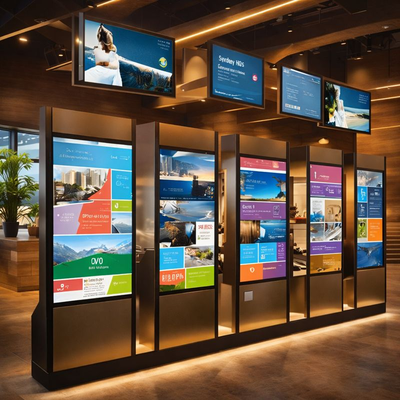
The format inventory available within business hotels is considerably broader than most media planners realise when they first approach this medium. Hotel lobby advertising is the most visible entry point — this typically includes standee advertising at the entrance or near the concierge desk, digital signage in hotels positioned at eye level near check-in counters, pillar branding on the structural columns of large atrium lobbies, and reception area branding that integrates brand messaging into the check-in experience itself. In-room branding is a separate and often underutilised category, which encompasses branded key card holders, tent card advertising on bedside tables and desks, in-room television channel sponsorships, and branded amenity inserts in bathroom kits.
Food court branding and restaurant-area activations within business hotels represent another distinct inventory bucket; these placements — table tent cards, menu jacket advertising, branded coasters, and digital screens near buffet counters — reach guests during meal times when dwell time is high and distraction is relatively low. Conference and banquet area advertising, which includes standee advertising in pre-function areas, digital signage in hotels near meeting rooms, and branded materials in conference kits, is particularly valuable for B2B brands targeting professionals who are attending corporate events and industry conferences. Kiosk advertising in hotel lobbies, which can be either static display units or interactive digital kiosks, allows for deeper brand engagement and even product sampling offices-style activations in larger hotel properties.
Corporate office advertising and IT park advertising have their own distinct format vocabulary. Lift door branding and elevator branding are the flagship formats here — the inside and outside of elevator doors in multi-floor office buildings are essentially mandatory viewing for every employee and visitor multiple times daily, which makes them among the highest-frequency touchpoints in any non-traditional advertising campaign. Notice board advertising in common areas, wall graphics office branding in corridors and break rooms, reception area branding at the building entrance, and digital signage in IT park common areas round out the primary inventory. Corporate park branding — which refers to placements in the outdoor common areas, food courts, and transit zones of large IT parks like DLF Cyber City in Gurgaon, Tidel Park in Chennai, or HITEC City in Hyderabad — is a distinct sub-format that combines elements of OOH advertising and on-ground branding within a controlled, premium environment.
Key Advertising Inventory Available in Business Hotels
To be fair to the medium, not every business hotel offers every format, and the quality of execution varies significantly between a five-star chain property and a three-star business hotel. The properties that offer the most structured advertising inventory — and where campaign execution is most reliable — are typically the branded chain hotels: Marriott India, Taj Hotels, ITC Hotels, Leela Hotels, Oberoi Hotels, and Hyatt India properties tend to have formalised advertising programmes with defined placement zones, installation guidelines, and approval processes. Treebo Hotels and similar mid-market business hotel chains offer broader geographic reach at lower cost points, which makes them relevant for pan-India BTL campaign strategies where city-level coverage matters more than individual property prestige.
The most consistently available inventory across business hotel categories includes lobby standee advertising, digital signage in hotels, in-room tent card advertising, lift door branding within the hotel building, and food court branding in properties with multi-outlet dining. What a lot of people miss is that many business hotels also offer experiential marketing opportunities — branded activations in lobby areas during check-in peak hours, product sampling near the concierge desk, or co-branded events in the hotel's conference facilities — which can dramatically increase engagement beyond what a static placement achieves. These brand activation opportunities are typically negotiated directly with the hotel's sales or events team, and the rates are genuinely flexible depending on the duration and nature of the activation.
At SmartAds, our experience shows that the most cost-effective inventory in business hotels is often the in-room category — tent card advertising and branded key card holders have very low production costs, high dwell time, and essentially zero competition from other advertisers in the same physical space. A campaign we ran for a BFSI brand targeting corporate travellers placed branded tent cards in the rooms of eight business hotels across Mumbai corporate advertising zones and Bangalore office advertising corridors, reaching an estimated forty thousand business traveller impressions over a thirty-day period at a cost that worked out to roughly twelve rupees per impression — which, when you consider the audience quality, is a number that genuinely surprises most brand managers when they compare it to what they are paying for LinkedIn reach against a similar professional audience.
Corporate Office Advertising Formats and Placements
Corporate office advertising operates on a fundamentally different permission and access model compared to hotel advertising, which is an important practical distinction. Hotels are commercial properties with a hospitality mandate, and their management is generally receptive to advertising partnerships because they generate ancillary revenue; corporate offices, by contrast, are private workplaces where advertising access must be negotiated with facility management, building owners, or the corporate entity itself. IT park advertising — placements within the common areas of large multi-tenant technology parks — sits somewhere in between, because the park management controls common area inventory and can offer it commercially without requiring individual tenant approval.
The most sought-after corporate office advertising formats are lift door branding and elevator branding, which command premium rates because of their frequency and unavoidability. In a twenty-floor office building with two elevator banks, every employee and visitor interacts with those elevator doors multiple times daily; over a thirty-day campaign, the cumulative impression count for a single building can reach into the hundreds of thousands, depending on occupancy. Office branding in reception areas — including branded display panels, digital screens, and floor graphics near building entrances — is the second most popular format, particularly for brands that want to make an impression on visitors and clients arriving at the building. Pillar branding in large atrium-style office lobbies, wall graphics office branding in corridors, and notice board advertising in break rooms and common areas complete the standard office branding inventory.
Corporate park branding in large IT parks deserves particular attention because the scale of audience concentration is extraordinary. Manyata Tech Park in Bengaluru, for instance, houses hundreds of thousands of employees across its campuses; DLF Cyber City in Gurgaon and HITEC City in Hyderabad are similarly dense professional environments where a single well-placed on-ground branding installation can generate footfall advertising impressions that rival a mid-sized mall activation. Food court branding within IT park food courts is especially effective because employees spend twenty to forty minutes there daily, which creates a high-dwell, low-distraction environment that is genuinely rare in the BTL advertising landscape. We have found that IT park activation campaigns, when planned across three to five major parks in a single city, can deliver the kind of concentrated professional-audience reach that would otherwise require a far more expensive combination of digital and print media.
Who Is the Target Audience for Business Hotels and Office BTL Campaigns?
Frankly speaking, the audience profile is what makes this medium worth discussing at all. The people who stay in four-star and five-star business hotels in India are, almost by definition, either senior corporate executives travelling on company expense accounts, business owners and entrepreneurs, or high-net-worth individuals — a demographic that is notoriously difficult to reach efficiently through mass media. The business traveller advertising opportunity is particularly valuable because these individuals are in a decision-making mindset; they are travelling for work, which means they are actively thinking about business problems, vendor relationships, and professional decisions, which makes them more receptive to relevant brand messages than the same person would be while watching television at home.
The corporate office advertising audience is similarly concentrated but slightly broader — it includes everyone from junior professionals to senior management within a given building or park, with the composition varying significantly depending on the type of property. An IT park like Tidel Park in Chennai or Noida advertising zones in Sector 62 will skew heavily toward technology professionals between twenty-five and forty-five years of age; a premium office complex in Nariman Point in Mumbai or BKC will have a higher concentration of financial services professionals, lawyers, and senior executives. This audience segmentation matters enormously for campaign planning, and it is something that a competent media planning India team should be mapping carefully before recommending specific properties.
The HNI audience advertising opportunity within business hotels is, in our view, one of the most undervalued aspects of this medium. A guest staying at a Leela Hotels property in Delhi NCR advertising zones or a Taj Hotels property in Mumbai corporate advertising areas has, by definition, either chosen or been placed in a premium environment — which tells you something meaningful about their economic profile and consumption behaviour. C-suite advertising in these environments reaches individuals who influence or control purchasing decisions worth crores of rupees annually, whether in personal consumption categories like luxury goods, financial products, and premium automobiles, or in corporate procurement categories like technology, travel, and professional services. The decision-maker audience concentration in a single five-star business hotel lobby on a weekday morning can be genuinely remarkable.
How Much Does Advertising in Business Hotels and Offices Cost in India?
This is the question that every brand manager asks first, and it is also the question that is most frequently answered with a vague "contact us for rates" on competitor pages — which is, frankly, unhelpful. We will give you actual benchmarks, with the caveat that rates vary meaningfully based on city, property tier, format, and campaign duration, and that the figures below represent our current market intelligence rather than a published rate card.
For hotel lobby advertising in a five-star property in Mumbai or Delhi NCR, a standee advertising placement for thirty days typically runs somewhere between twenty-five thousand and sixty thousand rupees per property, depending on the exact location within the lobby and the prestige of the property. Digital signage in hotels — a rotating slot on a lobby screen — tends to be priced in the ballpark of fifteen thousand to forty thousand rupees per month per property, which is considerably lower than most brand managers expect given the audience quality. In-room tent card advertising across a hundred rooms in a business hotel works out to roughly eight to fifteen thousand rupees per month, making it one of the most cost-efficient formats in terms of cost per impression against a premium audience.
Corporate office advertising rates follow a different structure. Lift door branding in a premium office building in Bengaluru or Hyderabad HITEC City advertising zones typically costs somewhere between thirty thousand and eighty thousand rupees per elevator bank per month; the range is wide because building prestige, floor count, and daily footfall vary enormously. IT park advertising in food courts and common areas can range from twenty thousand to a lakh and a half per month depending on the park, the city, and the specific placement zone. For a pan-India BTL campaign covering twenty cities with a mix of hotel and office formats, total monthly media spends in the range of fifteen to thirty lakhs are typical for mid-sized campaigns, though we have executed meaningful campaigns for considerably less by focusing on high-impact formats in fewer, carefully selected properties. The advertising rates India benchmark for this medium, when expressed as a CPM against a verified professional audience, is genuinely competitive — often more so than the equivalent LinkedIn or business magazine buy.
Which Cities Offer the Best Coverage for Business Hotel and Office Advertising?
The honest answer is that coverage quality varies enormously by city, and the right city mix depends entirely on where your target audience is concentrated. Mumbai corporate advertising — particularly in BKC, Nariman Point, Lower Parel, and Powai — offers access to the densest concentration of financial services, media, and corporate headquarters in the country; the business hotel inventory in these zones includes properties from virtually every major chain, and the office branding opportunities in BKC alone are extensive enough to sustain a significant campaign. Delhi NCR advertising, split across Connaught Place, Aerocity, Gurgaon, and Noida, offers a similarly rich inventory with a heavier weighting toward government, defence, and large corporate clients.
Bangalore office advertising is arguably the strongest market for IT park activation and corporate park branding, given the sheer density of technology companies in Whitefield, Electronic City, and Manyata Tech Park. A brand targeting technology professionals, software procurement decision-makers, or the startup ecosystem will find Bengaluru's IT park advertising inventory essentially unmatched in terms of audience concentration. Hyderabad HITEC City advertising has grown significantly in recent years as the city has attracted major technology and pharmaceutical companies; the corridor from HITEC City to Gachibowli now offers advertising inventory across dozens of premium office buildings and multiple five-star business hotels. Pune corporate branding is particularly relevant for manufacturing, automotive, and IT companies, with Hinjewadi IT Park and the Kharadi corridor offering strong corporate office advertising reach.
Chennai office advertising, centred around Tidel Park, OMR (Old Mahabalipuram Road), and the CBD, is a market that is often underweighted in pan-India BTL campaign plans despite having a significant concentration of IT, manufacturing, and BFSI professionals. Beyond these six primary markets, we have found that Tier-2 cities like Ahmedabad, Kolkata, Chandigarh, Kochi, and Coimbatore offer business hotel and office advertising inventory that is frequently available at significantly lower rates than the metros while still delivering a genuinely premium audience — which makes them worth considering for brands running a 360-degree advertising solution across multiple markets. SmartAds operates across five hundred-plus Indian cities, which gives us visibility into inventory availability and pricing in markets that most agency teams simply do not have relationships in.
How Do You Plan a BTL Campaign in Business Hotels and Offices?
Campaign planning for this medium requires a different mental model than planning a television or digital buy, because the inventory is fragmented, the access is relationship-driven, and the execution is entirely physical — which means that property selection, material production, installation logistics, and compliance with each property's guidelines all need to be managed simultaneously. The first step is audience mapping: defining precisely which professional profile you are trying to reach, which cities matter most, and whether the primary environment is hotel-based (for business traveller advertising) or office-based (for regular corporate audience targeting), because these two sub-channels have different inventory profiles, different rate structures, and different campaign rhythms.
Property selection is where the real strategic work happens. Not all five-star hotels are equal for advertising purposes — a resort property with predominantly leisure guests is far less valuable for a B2B brand than a business-focused hotel near an airport or a commercial district. Similarly, not all IT parks offer the same audience quality; a park dominated by back-office operations will have a different professional profile than one housing product development teams and startup companies. We recommend building a property shortlist based on three criteria: audience fit, physical placement quality (where exactly within the property will the brand appear), and the property management's track record for maintaining advertising materials in good condition, which is something that only comes from direct experience or agency relationships.
The booking process typically involves three stages: a proposal and rate negotiation with the property's sales team or the aggregator managing that property's advertising inventory, a creative approval process where the property reviews the brand materials for compliance with their aesthetic and content guidelines, and a physical installation managed either by the brand's production vendor or the property's own maintenance team. Geo-tagged campaign reporting — where installation photographs are captured with GPS coordinates and timestamps — has become a standard requirement for any professionally managed campaign, and it is something we insist on for every business hotels offices advertising campaign we execute. This documentation serves both as proof-of-execution for the client and as the basis for any performance audit.
How Do You Measure ROI from Business Hotels and Offices Advertising?
Measuring advertising ROI from this medium is genuinely more complex than measuring a digital campaign, and anyone who tells you otherwise is either oversimplifying or selling you something. The primary measurement framework we use at SmartAds combines three data streams: footfall-based impression estimates, which are derived from the property's own occupancy and visitor data; engagement metrics from interactive formats like QR scan rates on tent cards or kiosk advertising touchscreen interactions; and brand lift measurement through pre- and post-campaign surveys among the target audience.
Footfall advertising impression estimates are the most commonly used metric and the most straightforward to calculate — a business hotel with an average occupancy of two hundred rooms per night and a lobby that every guest passes through at least twice daily generates a minimum of four hundred lobby impressions per day, which over thirty days works out to twelve thousand impressions from guests alone, before accounting for restaurant visitors, meeting attendees, and delivery personnel. For IT park advertising, footfall data is typically available from the park management and can be quite precise; Manyata Tech Park, for instance, publishes daily footfall figures that media planners can use as a basis for impression calculations. The CPM that results from these calculations is typically in the range of eight to twenty rupees for hotel lobby advertising against a verified professional audience — which, as we mentioned earlier, is a number that surprises most first-time advertisers when they compare it to what they are paying for LinkedIn reach.
QR scan rates on tent card advertising and kiosk advertising interactions provide a more direct measure of engagement, and we have seen scan rates ranging from two to eight percent on well-designed tent cards in business hotel rooms — which is meaningfully higher than the average click-through rate on most digital display formats. One BFSI brand we worked with embedded a QR code on tent card advertising placed in three hundred business hotel rooms across five cities; over a forty-five-day campaign, the QR code generated over twelve hundred scans, which translated directly into qualified leads for their wealth management product — a conversion rate that their digital team found difficult to match at a comparable cost per lead. Brand recall measurement, conducted through post-campaign surveys among the target audience, consistently shows aided recall rates of thirty-five to fifty-five percent for well-executed business hotels offices advertising campaigns, which compares favourably to recall benchmarks for most digital display formats.
How Does Hotel and Office Advertising Compare to Mall or Residential Society BTL Activations?
The comparison is instructive because it reveals what is genuinely distinctive about business hotels offices advertising rather than just positioning it as another BTL option. Mall branding reaches a broad consumer audience with high footfall but relatively low professional concentration — a mall activation in a tier-1 city might deliver impressive raw impression numbers, but the proportion of those impressions that reach senior decision-makers, C-suite advertising targets, or HNI audience advertising profiles is typically quite low. Residential society advertising reaches a captive audience in a domestic environment, which is excellent for FMCG brand activation and consumer categories but less effective for B2B messaging or premium brand positioning.
Business hotels offices advertising, by contrast, sacrifices raw reach in favour of audience quality — and for certain brand categories, that trade-off is entirely rational. A real estate brand promotion targeting high-net-worth buyers, a BFSI advertising India campaign targeting corporate investment clients, or a luxury automobile brand seeking to reach senior executives will find the audience quality in a five-star business hotel lobby or a premium corporate office building genuinely superior to what any mall or society activation can deliver. The ambient media advertising environment of a business hotel also carries implicit prestige associations that a mall standee simply cannot replicate.
That said, the two approaches are not mutually exclusive, and the most effective campaigns we have planned have combined business hotels offices advertising with complementary BTL channels — using hotel and office placements to reach senior decision-makers and reinforce premium positioning, while using mall activations or society advertising for broader consumer reach. The key is to match the medium to the audience objective rather than defaulting to whichever format has the most familiar rate card. On-ground branding in IT parks, for instance, can be combined with digital advertising targeted at the same professional audience by IP address or LinkedIn profile to create a genuinely multi-touchpoint campaign that reaches the same individual both at work and online — which is a media planning India approach that we find significantly outperforms either channel in isolation.
Which Brands Benefit Most from Advertising in Business Hotels and Offices?
Not every brand category is a natural fit for this medium, and we would rather tell you that directly than oversell the channel. The categories that consistently generate strong results from business hotels offices advertising are those whose target customer is a senior professional, a high-net-worth individual, or a corporate procurement decision-maker. BFSI advertising India — wealth management, corporate banking, insurance, and investment products — is perhaps the single strongest category fit, because the audience in a five-star business hotel lobby or a premium corporate office building is almost perfectly aligned with the typical customer profile for premium financial products.
Real estate brand promotion is another strong fit, particularly for commercial real estate, luxury residential projects, and plotted development schemes targeting HNI buyers; we have run campaigns for real estate clients in hotel lobbies that generated direct inquiry calls within the first week of installation, which speaks to the quality of the audience. Luxury automobile brands, premium consumer electronics, business travel services, executive education programmes, and high-end hospitality brands all benefit from the prestige association and audience concentration that this medium offers. FMCG brand activation in this environment is more selective — premium personal care, health supplements, and gourmet food brands can work well, particularly in in-room branding formats, but mass-market FMCG categories are generally better served by other BTL channels.
For B2B categories — technology solutions, enterprise software, professional services, and corporate travel management — IT park advertising and corporate office advertising offer a genuinely unique opportunity to reach decision-makers in their professional environment, which is something that no other non-traditional advertising format can quite replicate. Telecom brands targeting corporate clients, cloud service providers seeking to reach IT decision-makers, and HR technology companies targeting people managers have all found strong value in business hotels offices advertising as part of a broader B2B marketing strategy. What we tell our clients at SmartAds is that the question is not whether this medium is right for your brand in general, but whether your target audience spends meaningful time in these environments — and if the answer is yes, the medium deserves serious consideration in your media planning India process.
Case Studies: Successful Campaigns in Business Hotels and Offices Across India
A wealth management firm targeting ultra-high-net-worth individuals came to us with a brief that was, frankly, one of the more challenging we have encountered — they needed to reach individuals with investable assets above five crore rupees, in a way that conveyed premium positioning without appearing intrusive or mass-market. We recommended a business hotels offices advertising strategy focused exclusively on five-star properties in Mumbai corporate advertising zones (BKC and Nariman Point) and Delhi NCR advertising areas (Aerocity and Connaught Place), using a combination of hotel lobby advertising through branded display panels, in-room tent card advertising with a QR code linking to a personalised landing page, and digital signage in hotels near the concierge desk. Over a sixty-day campaign across twelve properties, the QR code generated over eight hundred scans, of which approximately sixty percent met the firm's minimum investment threshold based on the subsequent advisory call — a lead quality metric that their internal team described as significantly better than any digital channel they had previously used.
A fast-growing enterprise SaaS company targeting IT procurement heads ran a three-month IT park activation campaign across Manyata Tech Park in Bengaluru, DLF Cyber City in Gurgaon, and HITEC City in Hyderabad, using a combination of lift door branding, food court branding, and kiosk advertising with an interactive product demonstration element. The campaign reached an estimated eight lakh professional impressions per month across the three parks, with the interactive kiosk advertising generating over four thousand product demo sign-ups over the campaign period — a cost per lead that worked out to somewhere in the range of three hundred to four hundred rupees, which compared very favourably to their existing digital lead generation costs. The brand's sales team reported that leads sourced from the IT park activation campaign had a significantly shorter sales cycle than leads from other channels, which they attributed to the fact that prospects had already had a meaningful brand interaction before the first sales call.
A premium international hotel chain entering the Indian market with a new loyalty programme ran a brand activation campaign targeting existing business travellers at competing properties — a strategy that required careful planning but delivered remarkable results. The campaign used tent card advertising and in-room branding in mid-market business hotels across ten cities, directing guests to a microsite where they could compare loyalty programme benefits. Over forty-five days, the campaign generated over twenty-two thousand microsite visits and approximately thirty-five hundred new loyalty programme registrations, at a total campaign cost that worked out to a cost per acquisition significantly below what the brand's digital team was achieving through paid search and social media. The key insight from this campaign, which we share with clients regularly, is that the business traveller advertising audience is not just receptive to relevant messaging — they are actively looking for solutions to the friction points of frequent travel, which makes well-targeted in-room branding extraordinarily effective.
Frequently Asked Questions About Business Hotels and Offices Advertising in India
Q: What is business hotels and offices advertising in India?
Business hotels offices advertising refers to the placement of branded communication within the physical environments of business hotels, corporate office buildings, and IT parks across Indian cities. This encompasses a wide range of formats — from hotel lobby advertising, digital signage in hotels, and in-room branding to lift door branding, elevator branding, reception area branding, and corporate park branding in IT parks. The medium is classified as BTL advertising because it operates outside traditional mass-media channels and involves direct, environment-specific placements that reach a defined audience in a specific physical context. The defining characteristic of this medium is its audience concentration: the people present in these environments are, by and large, senior professionals, business travellers, and corporate decision-makers — a demographic that is both economically valuable and difficult to reach efficiently through conventional advertising channels.
Q: How is business hotels and offices advertising classified as non-traditional or BTL advertising?
Below-the-line advertising is defined by its targeted, non-mass-media nature — it reaches specific audiences in specific environments rather than broadcasting to the general public through television, radio, or print. Business hotels offices advertising fits this definition precisely: it is placed in controlled, access-restricted environments where the audience composition is known and relatively homogeneous, it does not involve purchasing media time or space through conventional media buying channels, and it is typically measured through environment-specific metrics like footfall advertising impressions and engagement rates rather than GRPs or reach percentages. The non-traditional advertising classification also reflects the fact that this medium lacks the standardised rate cards, measurement frameworks, and industry body oversight that govern ATL channels — which makes it both more flexible and more dependent on agency expertise for effective planning and execution.
Q: What are the different advertising formats available inside business hotels in India?
The format inventory within business hotels is considerably broader than most advertisers realise. Hotel lobby advertising includes standee advertising, pillar branding, digital signage in hotels, reception area branding, and floor graphics. In-room branding encompasses tent card advertising on desks and bedside tables, branded key card holders, in-room television channel sponsorships, and bathroom amenity inserts. Food court branding and restaurant-area advertising includes table tent cards, menu jacket advertising, and digital screens near dining areas. Conference area advertising covers standee advertising in pre-function zones, digital signage near meeting rooms, and branded conference kit materials. Kiosk advertising in hotel lobbies can be either static display units or interactive digital installations. Experiential marketing and brand activation opportunities are also available in larger properties, typically as negotiated activations during lobby peak hours or as co-branded events in conference facilities.
Q: What types of branding placements are available in corporate offices and IT parks?
Corporate office advertising and IT park advertising offer a distinct set of formats centred on the daily movement patterns of office employees and visitors. Lift door branding and elevator branding — placements on the interior and exterior faces of elevator doors — are the most sought-after formats because of their high frequency and unavoidability. Reception area branding at building entrances, digital signage in common areas, pillar branding in lobby atriums, wall graphics office branding in corridors, and notice board advertising in break rooms and common areas constitute the standard office branding inventory. Corporate park branding in large IT parks extends to outdoor common areas, food court branding in park dining zones, transit area advertising near bus stops and parking structures, and on-ground branding installations in park plazas. IT park activation campaigns can also include experiential marketing elements like product sampling, interactive kiosks, and branded events in park common areas.
Q: Who is the target audience for advertising in business hotels and offices?
The audience for business hotels offices advertising is defined by its professional profile rather than its demographic characteristics. In business hotels, the primary audience consists of business travellers — senior executives, entrepreneurs, and corporate professionals travelling for work — along with the hotel's restaurant and conference facility visitors, who skew heavily toward the same professional profile. The corporate office advertising audience includes the full employee base of the buildings in question, with the composition varying by property type: IT parks attract technology professionals, financial district offices attract BFSI and professional services executives, and mixed commercial developments attract a broader corporate audience. Across both environments, the common thread is that this is a captive audience advertising opportunity targeting individuals with above-average income, significant purchasing power, and — in many cases — direct influence over corporate procurement decisions. The HNI audience advertising and C-suite advertising potential within five-star business hotels is particularly distinctive.
Q: How much does advertising in business hotels and offices cost in India?
Rates vary significantly by city, property tier, format, and campaign duration, but we can offer meaningful benchmarks. Hotel lobby advertising via standee advertising in a five-star property in Mumbai or Delhi NCR runs roughly twenty-five thousand to sixty thousand rupees per property per month. Digital signage in hotels typically costs somewhere between fifteen thousand and forty thousand rupees per month per property. In-room tent card advertising across a hundred rooms works out to approximately eight to fifteen thousand rupees per month. For corporate office advertising, lift door branding in a premium building costs somewhere in the range of thirty thousand to eighty thousand rupees per elevator bank per month. IT park advertising in food courts and common areas ranges from twenty thousand to one lakh fifty thousand rupees per month depending on the park and placement. A pan-India BTL campaign covering twenty cities with a mix of hotel and office formats typically requires a monthly media investment in the range of fifteen to thirty lakhs, though focused campaigns in fewer high-impact properties can be executed for considerably less.
Q: What is the minimum quantity or duration required for a business hotels and offices advertising campaign?
There is no industry-wide minimum campaign quantity for this medium, which is one of its advantages for smaller brands and test campaigns. In practice, however, a minimum campaign size of five to ten properties
