


Delhi

Mumbai

Bengluru

Ahmedabad

Jaipur

Chennai

Hydrabad

Kolkatta

Lucknow

Pune
Branded Water Bottle Advertising in India: The BTL Strategy That Travels With Your Audience
Most brands spend lakhs on hoardings that people drive past at 60 kilometres per hour, yet overlook a medium that sits in someone's hand for twenty minutes, gets carried into a boardroom, placed on a gym mat, or passed across a conference table. Water bottle advertising does exactly that — it puts your brand message inside the personal space of your target audience, at a cost per impression that would make most digital media planners do a double-take.
What Is Water Bottle Advertising and How Does It Work in India?
The premise is straightforward, but the execution is more sophisticated than most people assume. A branded water bottle — whether it is a standard 500ml packaged drinking water unit or a custom-manufactured reusable bottle — carries your brand's label, logo, and messaging as the primary visual surface. That label becomes the advertisement; the bottle becomes the medium. What makes this format genuinely interesting is the dwell time: a consumer holding a water bottle interacts with the label surface repeatedly over the course of drinking it, which means your brand gets multiple impressions from a single unit rather than a single fleeting glance.
In India, water bottle advertising operates across two broad models. The first involves co-branding arrangements with established packaged drinking water brands — think Bisleri, Kinley, Aquafina, Rail Neer, or Bailley — where an advertiser's brand appears on the label alongside the water brand's identity. The second model involves custom water bottle production, where the advertiser manufactures or procures bottles entirely branded to their campaign, which are then distributed through events, retail outlets, corporate gifting programmes, or ground-level activation drives. At SmartAds, we have worked with both models extensively, and the right choice depends almost entirely on the distribution channel and the campaign objective — brand awareness campaigns tend to favour co-branded packaged water for scale, while experiential marketing activations almost always benefit from fully custom water bottles.
What a lot of people miss is the regulatory layer that underpins this medium in India. Any packaged drinking water bottle — whether co-branded or custom — must comply with FSSAI guidelines and BIS standards under IS 14543, which governs the quality and labelling requirements for packaged drinking water. This means the advertising label cannot obscure mandatory product information, and the water itself must meet quality certifications. Frankly speaking, this compliance layer is something many smaller BTL advertising vendors in India either overlook or handle carelessly, which is why vetting your agency's understanding of FSSAI requirements is non-negotiable before you sign a purchase order.
Why Is Water Bottle Advertising One of the Best BTL Strategies in India?
The numbers tell a story that the medium's relative obscurity does not. India's packaged drinking water market was valued at somewhere in the ballpark of ₹20,000 crore and has been growing at a compound annual rate that most FMCG categories would envy, driven by urbanisation, rising health consciousness, and the government's Jal Jeevan Mission expanding awareness around safe drinking water. This growth means distribution infrastructure for packaged water is deepening into tier-2 and tier-3 cities at a pace that makes the medium increasingly viable for pan-India below the line marketing campaigns, not just metro activations.
The captive audience argument is the one we make most often to clients who are sceptical. A billboard competes with traffic, phone screens, and ambient noise; a water bottle sits in someone's hand in a moment of relative stillness — a waiting room, a conference session, a gym cooldown, an airport lounge. The brand exposure is not incidental; it is intimate. One automotive brand we worked with ran a water bottle advertising campaign across three IPL stadium venues in Delhi NCR and Mumbai, distributing roughly 80,000 custom-branded bottles across the tournament's home matches; post-campaign brand recall surveys showed unaided recall among stadium attendees at nearly 34 percent, which was significantly higher than the same brand's concurrent digital display campaign recall numbers gathered in the same cities.
On top of that, the cost efficiency of this medium relative to traditional OOH advertising is something that consistently surprises clients when they see the numbers side by side. The cost per impression for water bottle advertising works out to roughly ₹0.80 to ₹2.50 depending on the distribution channel and city, which compares favourably to OOH billboard CPMs in metro markets that typically run between ₹15 and ₹40 for a standard hoarding. The medium also sidesteps the ad-restricted zones problem — areas like India Gate or certain heritage corridors in Delhi NCR where outdoor advertising is heavily regulated are perfectly accessible via water bottle distribution, which opens up premium footfall locations that OOH simply cannot reach.
What Are the Different Formats of Water Bottle Advertising Available?
Label advertising is the most common format, and it comes in more variations than most clients initially realise. A standard wrap-around label covers the full circumference of the bottle, giving you a 360-degree brand canvas; a partial label or front-panel label is less expensive to produce and works well for campaigns where the water brand's identity needs to remain prominent. Shrink sleeve label formats, which involve a full-body heat-shrunk sleeve covering the entire bottle surface including the cap, offer the most premium visual impact and are increasingly popular for product launches and high-visibility event marketing. The shrink sleeve approach is particularly effective when the campaign needs strong shelf presence at retail outlets or kiosks.
Beyond label formats, the custom water bottle model opens up a different category of brand exposure. Reusable branded water bottles — typically manufactured in BPA-free plastic, stainless steel, or glass — function as corporate gifting assets and promotional giveaways that carry brand visibility for months rather than the minutes a single-use bottle provides. We have seen BFSI brands use custom reusable bottles as onboarding gifts for new account holders, which generates ongoing brand recall every time the recipient uses the bottle at their desk or gym. The logo on water bottle placement in these cases is typically on the body and the cap, and the quality of the bottle itself becomes a brand signal — a cheap bottle communicates something about the brand, while a well-made one reinforces premium positioning.
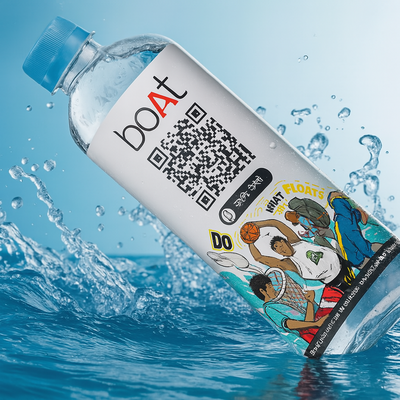
A third format worth mentioning is the QR code-enabled interactive label, which bridges the physical medium with digital engagement. A QR code printed on the water bottle label can direct consumers to a product page, a contest, a video, or a geo-tagged experience, which transforms a passive impression into an active consumer engagement touchpoint. The technology is not new, but adoption in water bottle advertising campaigns in India has accelerated meaningfully since 2022, particularly among EdTech brands targeting campuses and FMCG brands running on-ground marketing activations at weekly markets and malls.
How Much Does Water Bottle Advertising Cost in India?
This is the question that every media plan discussion eventually arrives at, and it is also the area where the market is least transparent — most vendors will tell you to "contact for rates" rather than giving you a usable benchmark. We think that is unhelpful, so here is what our experience at SmartAds shows for the Indian market as of recent campaign cycles.
For co-branded label advertising on established packaged drinking water brands, the cost per bottle typically works out to somewhere between ₹3 and ₹8 per unit inclusive of production and distribution, depending on the brand, the city, and the volume. Campaigns running in Mumbai and Delhi NCR tend to sit at the higher end of that range because distribution costs and brand partnership premiums are higher in metros; campaigns in tier-2 cities like Indore, Coimbatore, or Lucknow can come in closer to ₹3 to ₹5 per bottle. Minimum order quantities in this model generally start at around 10,000 bottles, though some platforms like Wahter and AquaMark Connect have structured smaller pilot packages for brands that want to test the medium before committing to larger volumes.
For fully custom water bottle production and distribution, the cost structure is different because you are absorbing manufacturing costs. A basic custom-labelled 500ml bottle with a full-colour wrap-around label runs somewhere between ₹6 and ₹14 per unit at volumes of 25,000 to 50,000 bottles, with the per-unit cost dropping meaningfully at volumes above a lakh. Custom reusable bottles for corporate gifting or promotional giveaway use are a different category entirely — a decent BPA-free custom bottle with logo on water bottle printing typically costs somewhere between ₹80 and ₹250 per unit depending on material and finish. The advertising rates for event-specific distribution — where you are paying for both the bottle and a staffed distribution team at high-footfall areas like airports, campuses, or malls — add roughly ₹1 to ₹3 per bottle for activation costs. To be honest, the total campaign cost for a well-executed 50,000-bottle distribution across three cities in India, including creative, production, and activation, typically lands somewhere in the ₹5 to ₹8 lakh range, which is a number that puts this medium firmly within reach of mid-sized brands that would not have the budget for a month-long metro OOH campaign.
Where Are the Best Locations to Run a Water Bottle Advertising Campaign?
The answer depends on your target audience more than any other single factor, which is something we tell every client who comes to us with a generic "high-footfall" brief. High footfall without audience alignment is wasted distribution. That said, there are location categories that consistently deliver strong results across campaign types.
Airports are the gold standard for premium audience targeting — water bottle advertising at airports in Mumbai, Delhi NCR, Bangalore, Chennai, and Hyderabad reaches a disproportionately high concentration of business travellers, frequent flyers, and upper-income consumers; the captive audience dynamic is particularly strong here because travellers are in a waiting state with time to engage with brand messaging. Rail Neer bottles distributed on Indian Railways trains serve a different but equally valuable purpose — the sheer scale of Indian Railways' passenger volume means that even a regional campaign on a few key routes can generate millions of impressions. IPL venues, corporate campuses, hospital waiting areas, fitness centres, and premium malls are all distribution channels that our campaigns have used effectively, and each has a different audience profile that should be matched to the brand's target audience.
Tier-2 and tier-3 cities represent a genuinely underexploited opportunity in water bottle advertising, and frankly speaking, most of the industry conversation still focuses on metros. Cities like Jaipur, Nagpur, Surat, Patna, Bhopal, and Visakhapatnam have growing middle-class consumer bases and significantly lower advertising costs, which means the cost per impression in these markets can be dramatically lower than metro campaigns. A pharma brand we worked with ran a pan-India water bottle advertising campaign across 18 cities, deliberately weighting 60 percent of the distribution budget toward tier-2 cities; the cost per thousand impressions in those markets came in at roughly ₹4 to ₹6, compared to ₹12 to ₹18 in the metro portions of the same campaign, and brand awareness lift in the tier-2 markets was actually higher because competitive advertising clutter is lower.
How Do Brands Measure ROI and Brand Recall from Water Bottle Advertising?
Measurement is the area where water bottle advertising has historically been weakest, and it is also the area where the medium has improved the most in recent years. The honest answer is that traditional water bottle advertising — a labelled bottle handed to a consumer — does not come with an inherent tracking mechanism the way a digital ad does; you cannot see click-through rates or view-through conversions from a physical label. What you can measure, with the right campaign design, is meaningful and often more valuable than the vanity metrics that digital campaigns generate.
Brand recall surveys conducted pre- and post-campaign are the most reliable measurement tool for this medium, and they are more actionable than most clients expect. A well-designed recall study with a sample of 500 to 1,000 respondents drawn from the distribution geography can give you unaided recall rates, aided recall rates, and message association scores that translate directly into brand awareness metrics your management team will recognise. The cost per impression calculation is also straightforward: divide total campaign cost by total bottles distributed multiplied by an average impressions-per-bottle factor, which most industry practitioners estimate at somewhere between 3 and 7 impressions per bottle accounting for secondary viewers and the multiple times a consumer looks at the label during consumption.
QR code integration has changed the measurement conversation significantly. When a QR code is embedded in the label, every scan becomes a trackable digital event, which means you get real conversion data from a physical medium. Geo-tagging and GPS-enabled distribution tracking — offered by platforms like Wahter and some of the more sophisticated vendors in this space — allow campaign managers to verify that bottles were distributed at the intended locations and in the intended volumes, which addresses the accountability gap that has historically made media planners nervous about BTL advertising. At SmartAds, we always tell our clients that the measurement framework should be decided before the campaign launches, not after — because retrofitting measurement onto a campaign that was not designed for it is how you end up with ROI numbers that no one trusts.
What Industries Benefit Most from Advertising on Water Bottles?
The medium is more versatile than it appears, but some industries have a natural fit that makes the ROI case almost self-evident. FMCG advertising brands — particularly those in the food, beverage, and personal care categories — benefit from the proximity of the medium to consumption behaviour; a snack brand's advertisement on a water bottle that someone is drinking alongside their lunch is contextually relevant in a way that a digital banner ad simply cannot replicate. Real estate developers have used water bottle advertising extensively at site visits and property exhibitions, where the branded bottle becomes part of the site experience and carries the developer's messaging home with the visitor.
BFSI brands — banks, insurance companies, mutual fund houses — have found particular value in distributing branded water bottles at corporate campuses and business events, where the target audience is exactly the working professional demographic they are trying to reach. EdTech brands targeting students have used campus distribution at universities in Bangalore, Chennai, Delhi NCR, and Pune with strong results, particularly when the label includes a QR code linking to a free trial or demo registration. Healthcare and pharma brands use the medium at hospitals, clinics, and health camps, where the audience is already in a health-conscious mindset that aligns with the brand message.
Frankly speaking, the industries that get the least value from water bottle advertising are those with very narrow demographic targeting requirements — a luxury watch brand targeting ultra-high-net-worth individuals, for instance, would struggle to justify the medium unless distribution was tightly controlled to premium venues. The medium works best when the target audience is broad enough that high-volume distribution generates meaningful reach, or when the distribution channel is specific enough that almost every recipient is a qualified prospect.
How Does Water Bottle Advertising Compare to Traditional OOH and Digital Ads?
This comparison comes up in almost every media plan discussion we have, and the answer is nuanced enough that a simple "water bottles are better" or "OOH is better" response would be misleading. The three media serve different roles in the consumer journey, and the most effective campaigns we have run have used water bottle advertising as a complement to OOH and digital rather than a replacement for either.
OOH advertising — hoardings, bus shelters, metro wraps — delivers mass reach and high frequency in a fixed geographic area; a well-placed hoarding in a Mumbai or Delhi NCR arterial corridor can generate millions of impressions per month, which is a scale that water bottle advertising cannot match on its own. What OOH cannot do is deliver a physical brand touchpoint that travels with the consumer; a hoarding stays where it is, while a branded water bottle moves through a gym, an office, a train compartment, and a home. The brand exposure from a water bottle is lower in total impressions but higher in quality of engagement, which is a trade-off that makes sense for brands in the consideration and conversion stages of the funnel rather than pure awareness campaigns.
Digital display advertising offers targeting precision and real-time optimisation that no physical medium can match, but it suffers from banner blindness, ad blocking, and the fundamental problem that consumers have trained themselves to ignore display ads. The CPM for digital display in India works out to roughly ₹8 to ₹25 depending on platform and targeting parameters, which is not dramatically different from water bottle advertising's cost per impression range — but the quality of the impression is genuinely different. A consumer who is physically holding your branded bottle and reading the label is in a different attentional state than someone scrolling past a display ad. Below the line marketing formats like water bottle advertising and digital advertising are increasingly being planned together, with the physical medium driving brand recall and the digital layer handling retargeting and conversion — a combination that our experience shows delivers stronger overall campaign ROI than either medium alone.
Can Water Bottle Advertising Be Eco-Friendly and Sustainable in India?
This is a question that has moved from a nice-to-have to a genuine business consideration, particularly as India's regulatory environment around single-use plastics has tightened and as consumer sentiment around sustainability has strengthened among urban, educated demographics. The honest answer is that conventional single-use PET water bottles are not environmentally neutral, and any brand that positions itself around sustainability values needs to think carefully about whether standard packaged drinking water is the right vehicle for their message.
The good news is that the market has responded with alternatives that make eco-friendly advertising genuinely viable. BPA-free reusable bottles made from food-grade stainless steel or recycled plastic, distributed as promotional giveaways or corporate gifting items, carry brand visibility for months or years and generate a fraction of the plastic waste of single-use campaigns. Biodegradable label materials — including paper-based labels with water-based inks — are now available from several Indian label manufacturers and can replace conventional plastic shrink sleeves without sacrificing print quality. Some vendors are also offering bottles made from recycled PET, which allows brands to maintain the single-use distribution model while reducing virgin plastic consumption, which can be positioned as part of a brand's CSR narrative.
Sustainable marketing through water bottle advertising also connects to the Jal Jeevan Mission context in a way that is worth noting — brands that align their water bottle campaigns with safe drinking water access themes, particularly in tier-2 and tier-3 cities, can generate earned media and social amplification that multiplies the campaign's effective reach. At SmartAds, we have helped a few clients structure their water bottle advertising campaigns as part of a broader CSR activation, where a portion of the distributed bottles were donated to community events or public spaces alongside the branded distribution, which generated press coverage that extended the campaign's reach well beyond the paid distribution.
How Do QR Codes and Geo-Tagging Improve Water Bottle Ad Campaigns?
The integration of QR codes into water bottle advertising labels has been one of the more genuinely transformative developments in this medium over the past few years, and it addresses one of the most persistent objections media planners have about BTL advertising: the inability to track engagement. A QR code on a label is a bridge between the physical and digital worlds; when a consumer scans it, you know the scan happened, you know approximately where it happened if geo-location permissions are granted, and you can direct that consumer to any digital destination — a landing page, a video, a contest entry form, an app download, or an augmented reality experience.
Geo-tagging at the campaign level — distinct from consumer-level geo-location — involves GPS-enabled tracking of the distribution process itself, which is a capability that platforms like Wahter have built into their operations. Distribution teams carry GPS-enabled devices that log the location and time of each bottle distributed, which generates a distribution audit trail that verifiable by the client. This matters more than it might seem: one of the persistent problems in BTL advertising in India is the gap between reported distribution and actual distribution, and GPS-enabled verification closes that gap in a way that builds genuine client confidence in the medium. We have seen campaigns where post-campaign distribution audits revealed that 15 to 20 percent of the planned distribution had not occurred as specified — geo-tagging makes that kind of discrepancy visible and correctable.
The next frontier for interactive water bottle advertising labels is augmented reality integration, where a smartphone camera pointed at the label triggers an AR experience — a 3D product demonstration, a game, or a personalised message. A few FMCG advertising campaigns in India have experimented with this format, and while the technology is not yet mainstream in this medium, the consumer engagement rates when it works are substantially higher than standard QR code scans. The cost of AR-enabled label campaigns is higher, and the consumer behaviour requirement — pointing a camera at a label rather than just scanning a QR code — creates friction that reduces activation rates; but for high-value launches or premium brand experiences, the format has genuine potential.
Water Bottle Advertising for Events, Corporates, and Seasonal Campaigns
Event marketing is arguably the highest-ROI application of water bottle advertising in India, and the reason is simple: events create a captive audience that has already self-selected by attending, which means your distribution is inherently targeted. Whether it is an IPL match in Mumbai or Delhi NCR, a corporate conference in Bangalore, a trade exhibition in Hyderabad, or a music festival in Goa, the branded water bottle is one of the few advertising formats that can be present inside the event perimeter where conventional OOH and digital advertising are often excluded or heavily restricted.
Corporate gifting and on-ground marketing through branded water bottles has grown significantly as a below the line marketing tactic, particularly in the post-pandemic period when in-person events resumed and companies were looking for memorable, practical branded touchpoints. A custom water bottle with a logo on water bottle placement and a well-designed label is a gift that gets used, which means brand exposure continues long after the event. The minimum order quantity for corporate gifting campaigns typically starts at around 500 to 1,000 units, which makes it accessible even for smaller brands with limited budgets.
Seasonal strategy is something most water bottle advertising campaigns in India handle poorly. Summer — April through June — is the obvious peak season, when water consumption is highest and distribution at outdoor venues, construction sites, and public spaces is most natural. But the IPL season, which overlaps with summer, creates a specific event marketing window that commands premium rates and delivers exceptional brand visibility. Festival seasons — Diwali, Navratri, Durga Puja — are strong for corporate gifting and promotional giveaway campaigns. The monsoon period is genuinely challenging for outdoor distribution but works well for indoor venues like malls, multiplexes, and corporate campuses. Planning the campaign calendar around these seasonal rhythms, rather than running a flat year-round campaign, typically delivers meaningfully better cost efficiency.
Frequently Asked Questions About Water Bottle Advertising in India
Q: What is water bottle advertising and how does it work in India?
Water bottle advertising is a form of BTL advertising in which a brand's message, logo, or campaign creative is printed on the label or surface of a water bottle — either a packaged drinking water bottle from an established brand or a custom-manufactured bottle — which is then distributed to consumers through events, corporate channels, retail outlets, or ground-level activation programmes. The medium works by generating brand exposure during the time a consumer holds and drinks from the bottle, which typically spans 15 to 30 minutes and involves multiple label views. In India, the medium operates across two primary models: co-branding with established water brands like Bisleri, Kinley, or Aquafina, and fully custom water bottle production for brand-owned distribution. The regulatory framework requires compliance with FSSAI guidelines and BIS standards under IS 14543, which govern both the water quality and the labelling requirements for packaged drinking water.
Q: How much does water bottle advertising cost in India?
The advertising cost varies considerably based on the model, volume, and city. For co-branded label advertising on established packaged drinking water brands, the cost per bottle typically works out to somewhere between ₹3 and ₹8 inclusive of production and distribution, with metro markets like Mumbai and Delhi NCR at the higher end. Fully custom water bottle campaigns — where the brand manufactures its own bottles — run somewhere between ₹6 and ₹14 per unit for single-use bottles at volumes of 25,000 to 50,000 units, with the per-unit cost falling at higher volumes. A complete campaign across three cities covering 50,000 bottles, including creative, production, and activation, typically lands in the ₹5 to ₹8 lakh range. Custom reusable bottles for corporate gifting are a separate category, typically priced between ₹80 and ₹250 per unit depending on material and finish.
Q: What is the minimum order quantity for water bottle advertising campaigns in India?
The minimum order quantity depends on the vendor and the campaign model. Co-branded campaigns with established water brands typically require a minimum of around 10,000 bottles, though some platforms like Wahter have structured smaller pilot packages for brands testing the medium. Fully custom water bottle production campaigns generally have MOQs starting at 25,000 to 50,000 units for single-use bottles to make unit economics viable. For corporate gifting or promotional giveaway campaigns using reusable custom bottles, MOQs are considerably lower — typically 500 to 1,000 units — which makes the format accessible to smaller brands and event-specific activations.
Q: Which locations or venues are best for running water bottle advertising in India?
The best locations depend entirely on the target audience, but the consistently high-performing venue categories include airports in Mumbai, Delhi NCR, Bangalore, Chennai, and Hyderabad for premium business audiences; IPL and cricket venues for mass urban consumers; corporate campuses for BFSI and professional services brands; university and college campuses for EdTech and youth-oriented brands; hospitals and health camps for healthcare and pharma brands; and high-footfall areas like malls, multiplexes, and weekly markets for FMCG and retail brands. Tier-2 and tier-3 cities — including Jaipur, Nagpur, Surat, and Bhopal — offer significantly lower cost per impression and less competitive advertising clutter, which makes them particularly attractive for pan-India campaigns that want to stretch their budget.
Q: How is water bottle advertising different from traditional OOH or billboard advertising?
The fundamental difference is mobility and intimacy. A billboard is fixed in space and generates impressions from a distance as consumers pass by; a branded water bottle travels with the consumer, sits in their hand, and generates close-range impressions over an extended dwell time. OOH advertising delivers higher total impressions at scale but cannot achieve the physical brand touchpoint that water bottle advertising provides. The cost per impression for water bottle advertising is typically lower than metro OOH rates, and the medium can reach locations — indoor venues, event spaces, ad-restricted zones — where outdoor advertising is not permitted. The trade-off is that OOH campaigns can achieve mass reach more quickly, while water bottle advertising builds brand recall through repeated intimate contact with a smaller but more engaged audience.
Q: What type of brands or industries benefit the most from water bottle advertising?
FMCG advertising brands, real estate developers, BFSI companies, EdTech brands, healthcare and pharma companies, and automotive brands have all demonstrated strong results from water bottle advertising in India. The medium is most effective for brands whose target audience aligns with a specific distribution channel — a bank targeting corporate professionals benefits from campus distribution; a pharma brand benefits from hospital distribution; a consumer goods brand benefits from event and mall distribution. Brands with sustainability positioning benefit from eco-friendly advertising formats using reusable bottles or biodegradable labels. The medium is less suited to ultra-niche luxury brands or B2B companies with very narrow audience definitions.
Q: How do I measure the ROI and brand recall of a water bottle advertising campaign?
The most reliable measurement approaches are pre- and post-campaign brand recall surveys, QR code scan tracking for campaigns with interactive labels, and GPS-enabled distribution verification for campaigns using geo-tagging platforms. Brand recall surveys with a sample of 500 to 1,000 respondents drawn from the distribution geography provide unaided recall rates, aided recall rates, and message association scores. QR code integration converts physical impressions into trackable digital events, giving you scan rates, geographic scan distribution, and downstream conversion data. The cost per impression is calculated by dividing total campaign cost by total bottles distributed multiplied by an average impressions-per-bottle factor of roughly 3 to 7, which accounts for multiple label views per consumer and secondary viewers.
Q: Can I use QR codes or AR features on water bottle labels for interactive advertising?
Yes, and the technology is increasingly mainstream in Indian water bottle advertising campaigns. A QR code printed on the label directs consumers to any digital destination — a landing page, a video, a contest, an app download — and generates trackable engagement data for every scan. Augmented reality integration, where a smartphone camera pointed at the label triggers an AR experience, is available but remains a premium format with higher production costs and lower consumer activation rates due to the additional behavioural step required. For most campaigns, QR code integration provides the best balance of interactivity, measurability, and consumer friction — the scan behaviour is now familiar enough among Indian smartphone users that activation rates in urban markets are meaningful.
Q: Are there eco-friendly or sustainable water bottle advertising options in India?
Several sustainable options are available and increasingly requested by brands with CSR commitments. Reusable BPA-free bottles made from stainless steel or recycled plastic, distributed as promotional giveaways or corporate gifts, generate ongoing brand visibility with a fraction of the plastic waste of single-use campaigns. Biodegradable label materials — paper-based labels with water-based inks — are available from Indian label manufacturers and can replace conventional plastic shrink sleeves. Recycled PET bottles reduce virgin plastic consumption while maintaining the single-use distribution model. Brands can also structure campaigns as CSR activations — distributing a portion of bottles to community events or public spaces — which generates earned media amplification alongside the paid distribution.
Q: How long does it take to launch a water bottle advertising campaign in India?
A co-branded campaign using an established packaged drinking water brand's distribution network typically requires four to six weeks from brief to first distribution, accounting for artwork approval, label production, and logistics coordination. A fully custom water bottle campaign — where bottles are manufactured from scratch — requires six to ten weeks depending on the complexity of the bottle design and the production volume. Corporate gifting campaigns using reusable custom bottles can move faster if standard bottle shapes are used with custom labels, typically completing in three to five weeks. QR code and AR-enabled campaigns add one to two weeks for digital asset development and QR code setup. The critical path is almost always the FSSAI compliance review and label artwork approval, which should be initiated as early as possible in the campaign timeline.
Q: What are the FSSAI and regulatory compliance requirements for advertising on packaged drinking water in India?
Any packaged drinking water used as an advertising medium must comply with FSSAI regulations and BIS IS 14543 standards, which govern water quality, packaging materials, and mandatory label information. The advertising label cannot obscure required product information — the manufacturer's name, FSSAI licence number, net volume, batch number, and expiry date must remain visible. The ASCI's guidelines on advertising standards apply to the creative content on the label. Single-use plastic regulations under India's plastic waste management rules affect label material choices — certain plastic label formats may be subject to restrictions depending on the state and the regulatory evolution of these rules. Brands should ensure their agency has current knowledge of both central and state-level regulations before finalising label specifications.
Q: Is water bottle advertising effective for regional and vernacular audience targeting in tier-2 and tier-3 Indian cities?
It is genuinely effective, and in our experience at SmartAds, it is one of the most underutilised applications of the medium. Vernacular language labels — carrying brand messaging in Hindi, Tamil, Telugu, Kannada, Marathi, Bengali, or other regional languages — resonate strongly with tier-2 and tier-3 audiences in ways that English-language advertising does not. The distribution infrastructure for packaged drinking water extends deeply into smaller cities and towns through local distributors and retail networks, which means the medium's reach in these markets is broader than most media planners assume. The cost per impression in tier-2 and tier-3 markets is dramatically lower than in metros, and the competitive advertising clutter is lighter, which means brand awareness lift from a well-executed campaign can be higher than equivalent metro spending.
Planning Your Water Bottle Advertising Campaign: What Comes Next
Water bottle advertising occupies a genuinely distinctive position in the Indian media landscape — it is physical without being static, targeted without being intrusive, and cost-efficient without being cheap-feeling when executed well. The brands that get the most from this medium are the ones that treat it as a strategic channel rather than a novelty tactic; they plan the distribution geography to match their audience, design the label to carry a clear and compelling message, integrate QR codes or other digital bridges to make the campaign measurable, and build the creative around the bottle's intimate relationship with the consumer rather than simply transplanting a billboard design onto a label.
What we have found at SmartAds, across campaigns spanning corporate events in Bangalore, summer activations in Delhi NCR, stadium campaigns during the IPL, and pan-India distribution drives covering over 500 cities, is that the medium rewards planning more than most. The difference between a water bottle advertising campaign that generates genuine brand recall and one that generates a warehouse of unseen bottles is almost entirely in the distribution strategy — who gets the bottle, where, and in what context. That is a media planning question before it is a production question, and it is where the real value of working with an experienced agency lies.
The medium is also evolving faster than its relatively low profile in industry conversations would suggest. GPS-enabled distribution verification, AR-integrated labels, biodegradable packaging options, and vernacular targeting capabilities have all matured significantly in the past two to three years, and the brands that are building these capabilities into their campaigns now are establishing a meaningful advantage over competitors who are still treating water bottle advertising as a simple promotional giveaway exercise. Sustainable marketing through reusable branded bottles, in particular, is moving from a CSR checkbox to a genuine consumer preference driver among urban demographics — a shift that is worth building into campaign strategy now rather than catching up to later.
If you are considering water bottle advertising as part of your next BTL or experiential marketing campaign — whether for a product launch, a seasonal activation, a corporate event, or a pan-India brand awareness push — the team at SmartAds.in can help you build a campaign that is properly planned, compliantly executed, and genuinely measurable. We work across 500+ Indian cities, with established relationships across the major distribution platforms and packaged drinking water brands, and we bring the same rigour to a 10,000-bottle pilot as we do to a crore-impression pan-India campaign. Reach out to us at SmartA
