


Delhi

Mumbai

Bengluru

Ahmedabad

Jaipur

Chennai

Hydrabad

Kolkatta

Lucknow

Pune
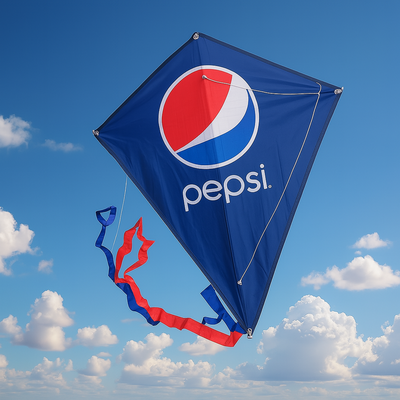
Kite Branding: The Sky Is Your Billboard
Most brand managers we speak to have never seriously considered kite branding as a media option — and frankly, that is their loss. During peak kite-flying seasons, a single branded kite flying above a crowded mela ground or residential terrace can generate tens of thousands of visual impressions in a single afternoon, which is a number that quietly stacks up against far more expensive outdoor formats when you do the math honestly.
Why Kite Branding Deserves a Serious Place in Your Media Mix
There is a tendency in media planning circles to treat anything that does not come with a TAM rating or a BARC viewership number as somehow less legitimate — and kite branding has suffered from exactly this bias for years. What a lot of people miss is that the absence of a standardised measurement framework does not mean the medium lacks impact; it simply means the impact is experiential and ambient in nature, which is actually a strength when your objective is brand recall and emotional association rather than direct response.
Our experience at SmartAds shows that kite branding works particularly well when it is deployed as part of a broader BTL campaign that surrounds a consumer during a high-engagement cultural moment. Makar Sankranti, Uttarayan in Gujarat, Basant Panchami in Punjab and Haryana, and the general kite-flying culture across Rajasthan and parts of Maharashtra create concentrated windows of audience attention; during these periods, consumers are outdoors, relaxed, and visually scanning the sky in a way that almost no other medium can replicate. The attention quality, in our assessment, is genuinely different from the passive exposure you get from a roadside hoarding.
To be fair, kite branding is not a standalone solution for most national campaigns — it works best as a high-frequency, high-emotion touchpoint that reinforces messaging delivered through television, radio, or digital channels simultaneously. We have seen this format backfire when brands treat it as a novelty stunt rather than a considered media placement; the kite design matters enormously, the geography of deployment matters, and the timing relative to the rest of the campaign calendar matters even more.
What Does Kite Branding Actually Involve?
The mechanics of kite branding are simpler than most clients expect, which is part of why the format is so accessible even for mid-sized regional brands. At its core, kite branding involves printing or applying a brand's logo, colours, tagline, or visual identity onto kites — typically paper or plastic kites ranging from small decorative sizes to large display kites that can measure several feet across — which are then flown at strategic locations during peak cultural events or through organised flying demonstrations.
There are broadly two approaches that we recommend to clients depending on their budget and objectives. The first is mass distribution branding, where thousands of smaller branded kites are manufactured and distributed to consumers — either free of charge or through retail partnerships — so that the brand essentially gets flown by the public organically across a wide geography. The second is display kite activation, where large, professionally designed branded kites are flown by trained kite flyers at specific high-footfall locations such as mela grounds, festival venues, beaches, or open public spaces; this approach generates a more concentrated visual impact and allows for more sophisticated creative execution.
A third variant, which we have found increasingly effective for FMCG and consumer durables brands, involves kite-flying competitions and events where the brand sponsors the activity and distributes branded kites as prizes or participation gifts — which creates an earned media dimension because participants photograph and share their kite-flying experiences on social media, extending the campaign's reach well beyond the physical event. One FMCG client we worked with in Ahmedabad ran exactly this kind of activation during Uttarayan, and the organic social media content generated by participants ended up reaching an audience roughly three times the size of the direct on-ground footfall.
Which Regions and Festivals Make Kite Branding Most Effective?
Geography is everything with this format, and any media planner who tells you otherwise has not actually run a kite branding campaign at scale. The cultural significance of kite flying varies dramatically across India, which means the audience engagement and the organic visibility you can expect from the same budget will differ enormously depending on where you deploy.
Gujarat is, without question, the single most important market for kite branding in India; the Uttarayan festival on the 14th and 15th of January sees virtually the entire state participate in kite flying, with cities like Ahmedabad, Surat, Vadodara, and Rajkot witnessing mass outdoor activity across residential terraces, open grounds, and riverfront spaces. The FICCI-EY Media and Entertainment Report has consistently noted the scale of festival-linked BTL activity in western India, and Uttarayan represents one of the highest-density outdoor consumer engagement windows in the country. A well-executed kite branding campaign in Ahmedabad during Uttarayan, in our experience, can generate somewhere in the ballpark of five to eight lakh visual impressions over the two-day festival period — which, when you work out the effective CPM, is genuinely competitive with mid-tier outdoor formats in the same city.
Beyond Gujarat, the kite-flying culture in Rajasthan — particularly in Jaipur, Jodhpur, and Bikaner — is deeply embedded in daily life during the winter months, not just on specific festival days; this creates a more distributed but sustained opportunity for brands that want extended visibility rather than a concentrated burst. Punjab and Haryana see significant kite activity during Basant Panchami, while parts of Bihar and Jharkhand have their own regional kite traditions tied to Makar Sankranti. At SmartAds, we cover kite branding deployments across more than 500 cities, which gives us a ground-level understanding of where the genuine cultural engagement exists versus where kite flying is more of a casual pastime — and that distinction matters enormously for campaign planning.
How Much Does Kite Branding Cost in India?
This is the question every client asks first, and the honest answer is that kite branding is one of the most cost-efficient BTL formats available in the Indian market — which makes it particularly attractive for regional brands, challenger brands, and national brands looking to extend their reach into Tier 2 and Tier 3 markets without the premium pricing of traditional outdoor.
For mass distribution campaigns, the cost of manufacturing branded kites typically works out to somewhere between ₹8 and ₹25 per kite depending on size, material quality, and print complexity — which means a campaign distributing ten thousand branded kites across a city like Jaipur during Makar Sankranti carries a production cost in the ballpark of ₹80,000 to ₹2.5 lakh, before adding distribution and activation costs. When you factor in the number of visual impressions generated by ten thousand kites flying simultaneously across a city, the effective CPM works out to figures that surprise most first-time clients when they compare them to what they are paying for digital display or even radio spots in the same market.
For large display kite activations — where professionally designed kites measuring four to eight feet are flown by trained flyers at specific venues — the cost structure is different; you are paying for creative design, kite fabrication, flyer fees, venue permissions, and activation management, which together can run anywhere from ₹50,000 for a single-city single-day activation to several lakhs for a multi-city, multi-day programme with event elements. What a lot of brands get wrong is underestimating the creative and logistics investment required to make a display activation genuinely impactful; a poorly designed large kite flying at a mediocre height in an under-trafficked location is essentially invisible, which is why we always advise clients to concentrate their budget on fewer, better-executed activations rather than spreading thin across too many locations.
What Creative Formats Work Best for Kite Advertising?
Creative execution is where kite branding either earns its place in the campaign or quietly wastes the budget, and we have strong opinions about this based on campaigns we have run across categories ranging from beverages to real estate. The fundamental constraint of kite advertising is that the creative must work at a distance — often fifty to two hundred feet in the air — which means fine text, complex imagery, and multi-colour gradients are essentially invisible to the audience below.
The most effective kite branding creative we have seen relies on bold, high-contrast colour combinations — which is why brands with strong visual identities built around a single dominant colour tend to perform disproportionately well in this format. A brand that owns a distinctive red or yellow or orange has an enormous advantage because the kite itself becomes a colour signal that registers before any logo or text is legible; this is the same principle that makes outdoor advertising effective, but compressed into a smaller, moving canvas. One beverage brand we worked with in Rajasthan leaned entirely into their brand colour for a Makar Sankranti campaign, distributing kites in their signature shade with a minimal logo, and the brand recognition scores in post-campaign surveys were notably higher than what the same budget had delivered through conventional hoardings in the same market.
Shape is another creative lever that is underused in kite branding; custom-shaped kites — designed to resemble a product, a mascot, or a distinctive brand symbol — generate significantly more attention and social sharing than standard diamond or box kites carrying a printed logo. The fabrication cost for custom shapes is higher, which is why we typically recommend this approach for display activations rather than mass distribution campaigns; but for brands that want genuine earned media and social amplification from their kite activation, the investment in a distinctive shape pays back meaningfully.
How Does Kite Branding Fit Into an Integrated Campaign Strategy?
The thing is, no serious media planner should be recommending kite branding as a standalone campaign — its real value emerges when it is synchronised with other media channels that are already building brand awareness and message recall. We have found that kite branding works best as an amplification layer that reinforces a campaign already running on television, radio, or digital; the kite becomes a physical manifestation of the brand in the consumer's immediate environment, which creates a multi-sensory reinforcement effect that single-channel campaigns cannot replicate.
A pattern we have used successfully for FMCG brands is what we internally call the festival surround strategy — where the brand runs regional TV spots and radio ads in the week leading up to a major kite-flying festival, then deploys branded kite distribution on the festival day itself, while simultaneously running geotargeted digital ads in the same city. The consumer who has seen the TV ad, heard the radio spot, and then physically receives or sees a branded kite on the festival day experiences a brand contact frequency that is qualitatively different from any single-channel exposure; the emotional context of the festival day makes the brand association stickier and more positive. One retail client in Pune — running a campaign timed to a regional festival — reported a measurable uplift in footfall at their stores in the week following this kind of multi-channel activation, which they attributed at least partly to the heightened brand salience created by the on-ground kite activity.
At SmartAds, we always tell our clients that the media mix question is not really about which channel is best in isolation — it is about which combination of channels creates the most efficient path to the consumer's memory. Kite branding, precisely because it is unexpected and culturally resonant, has a disproportionate contribution to memory encoding relative to its cost; which is why we recommend it not as a primary channel but as a high-impact accent that makes the rest of the campaign work harder.
Can Kite Branding Work for National Brands or Only Regional Ones?
This is a fair question, and the honest answer is that kite branding scales differently than most national media formats — but it absolutely can work for national brands when planned correctly. The key insight is that kite branding is inherently a local activation medium; its impact is concentrated in specific geographies during specific cultural windows, which means national brands need to think of it as a portfolio of local activations rather than a single national buy.
We have planned kite branding campaigns for national brands that ran simultaneously across eight to twelve cities during the Makar Sankranti and Uttarayan period, with city-specific creative adaptations that reflected local cultural nuances — the visual language used in Ahmedabad was different from what worked in Jaipur, which was different again from the approach we used in Patna. Managing this kind of multi-city programme requires strong on-ground vendor networks and careful logistics coordination; the brands that have had poor experiences with kite branding at scale have almost always run into execution problems rather than strategic ones, which is why the agency relationship matters as much as the concept.
Frankly speaking, national brands with significant marketing budgets sometimes underestimate kite branding because it does not come with the standardised reach and frequency metrics that make media buying easier to justify internally. The Dentsu e4m Digital Report and GroupM TYNY forecasts consistently highlight the growing importance of experiential and BTL formats in the overall media mix, particularly for reaching consumers in non-metro markets where traditional media penetration is lower; kite branding sits squarely in this space, and the brands that have been willing to invest in measuring its impact through custom brand lift studies have generally found the results compelling.
What Are the Logistics and Permissions Required for Kite Branding?
Permissions and logistics are where many kite branding campaigns run into trouble, and we would be doing a disservice to any client if we glossed over this. In India, kite flying in public spaces is subject to local municipal regulations and, critically, aviation authority guidelines — the Directorate General of Civil Aviation has specific rules about kite flying near airports and at heights that could interfere with low-flying aircraft, which are regulations that any serious kite branding campaign must navigate carefully.
For most city-based activations away from airport proximity zones, the permissions process typically involves obtaining a no-objection certificate from the local municipal authority or the event organiser if the activation is tied to a specific festival ground or venue; the process and timelines vary significantly by city, which is why advance planning of at least four to six weeks is essential for any organised kite branding activation. Mass distribution campaigns — where branded kites are simply given to consumers to fly on their own — carry fewer regulatory requirements, but brands should still ensure that the kites distributed do not use materials that could cause harm, given the ongoing regulatory attention to synthetic manja and other dangerous kite strings.
The supply chain for kite manufacturing in India is concentrated in a handful of clusters — Ahmedabad, Bareilly, and parts of Rajasthan are the primary manufacturing hubs — which means lead times for custom branded kite production need to be factored into campaign timelines. We typically advise clients to finalise creative and place production orders at least six to eight weeks before the intended deployment date, particularly for campaigns timed to Makar Sankranti or Uttarayan when manufacturing capacity gets constrained by the sheer volume of orders from across the country.
How Do You Measure the ROI of Kite Branding Campaigns?
Measurement is the honest challenge of kite branding, and we will not pretend otherwise. Unlike television, which has BARC viewership data, or outdoor, which has OOH audit frameworks, kite branding does not have an industry-standard measurement methodology — which means brands need to build their own measurement approach, and the quality of that approach determines whether they can justify the investment internally.
The most practical measurement framework we have used at SmartAds combines three components: an estimated impressions count based on footfall data for the deployment locations and the visibility radius of the kites flown; a brand recall survey conducted in the activation geography in the days following the campaign; and a correlation analysis of sales or footfall data for the brand's outlets or channels in the same geography during and after the activation period. None of these components gives a perfect read on ROI in isolation, but together they build a reasonable case — and in our experience, the recall scores from kite branding activations are consistently higher than clients expect, typically running at fifteen to twenty-five percent unaided recall among consumers who were present at or near the activation locations.
The social media amplification dimension adds another measurable layer; when consumers photograph and share branded kites on Instagram or WhatsApp, those impressions are trackable through social listening tools and branded hashtag monitoring, which gives a digital reach figure that can be reported alongside the on-ground estimates. One consumer electronics brand we worked with tracked over forty thousand organic social media impressions from a single-day kite activation in Jaipur — which, when added to the on-ground footfall impressions, produced a blended CPM that was genuinely competitive with digital display advertising in the same market.
Is Kite Branding Suitable for All Product Categories?
Not every brand belongs in the sky, and we have turned away briefs where we genuinely felt the category mismatch would undermine the campaign. Kite branding works best for categories where the brand association with festivity, outdoor activity, childhood joy, and cultural celebration is either natural or aspirationally desirable — FMCG brands, beverages, consumer durables, real estate, education, and retail are categories where we have seen strong results.
Categories that tend to underperform in kite branding are those where the product or service is contextually distant from the festive, outdoor experience — financial services, healthcare, and B2B products, for instance, can feel tonally incongruous when placed on a kite flying above a Sankranti mela; the brand message and the medium context work against each other rather than reinforcing each other. This is not an absolute rule — we have seen clever creative executions that made unexpected categories work in the format — but it is a genuine consideration that should inform the planning decision.
The sweet spot, in our experience, is brands that are trying to build emotional warmth and cultural relevance with a mass consumer audience in Tier 2 and Tier 3 markets; kite branding in these markets carries a cultural authenticity that expensive urban activations often lack, and the cost efficiency relative to the impression quality is genuinely hard to match through other formats. At SmartAds, we have consistently found that regional challenger brands — those competing against national players in specific state markets — get disproportionate value from kite branding because it allows them to claim cultural territory that larger, less agile competitors are often too slow to occupy.
Frequently Asked Questions About Kite Branding
Q: What is the minimum budget required to run a kite branding campaign in India?
The entry point for kite branding is genuinely low compared to most other advertising formats, which is one of its most attractive characteristics for brands that are testing the medium for the first time. A basic mass distribution campaign in a single city — covering the production of five thousand branded kites and their distribution through retail partners or direct activation teams — can be executed for somewhere in the range of ₹1.5 lakh to ₹3 lakh in total, inclusive of creative design, printing, and distribution costs. Display kite activations with large custom kites and trained flyers at a single venue for a single day typically start at around ₹50,000 to ₹75,000 for a modest execution, scaling upward depending on the size of the kites, the number of flyers, and the duration of the activation. For a multi-city programme timed to a national festival like Makar Sankranti, budgets in the range of ₹10 lakh to ₹25 lakh can deliver meaningful scale across eight to twelve cities simultaneously, which is a fraction of what a comparable outdoor or radio campaign in the same markets would cost.
Q: How far in advance should a kite branding campaign be booked?
The lead time question is one where we have seen campaigns get into trouble through underestimation, particularly for activations timed to peak festival periods. For Makar Sankranti and Uttarayan — the two highest-demand windows for kite branding in India — we recommend finalising the campaign brief and creative direction at least ten to twelve weeks in advance, with production orders placed no later than eight weeks before the deployment date. This timeline accounts for custom kite fabrication, which takes four to six weeks for large orders from the major manufacturing clusters in Ahmedabad and Bareilly; it also allows adequate time for permissions processing in each deployment city, which can take two to four weeks depending on the municipal authority involved. Campaigns planned outside peak festival periods have more flexibility, but even for off-season activations, a six-week lead time is the minimum we would recommend for any execution that involves custom creative and multi-location deployment.
Q: Can kite branding be combined with digital marketing for better results?
Absolutely, and frankly, we think the combination of kite branding with digital amplification is where the format delivers its best ROI. The most effective integration we have seen involves creating a digital content layer around the on-ground kite activation — which means briefing a social media team or content creator to document the activation in real time, creating a branded hashtag that participants are encouraged to use, and running geotargeted social media ads in the activation city during the festival period to create a digital echo of the physical presence. When these elements are planned together rather than treated as separate workstreams, the total campaign reach can be two to three times the on-ground footfall figure alone, which dramatically improves the effective CPM. The Dentsu e4m Report's emphasis on phygital campaign integration — the convergence of physical and digital touchpoints — is directly applicable here; kite branding is one of the BTL formats that translates most naturally into shareable digital content because the visual spectacle of kites in the sky is inherently photogenic and emotionally resonant.
Q: What are the legal restrictions on kite flying and kite branding in India?
The legal landscape for kite flying in India is governed by a combination of central aviation regulations and state or municipal rules, which vary enough by location that generalising is genuinely difficult. The DGCA's regulations prohibit kite flying within a certain radius of airports and above certain heights without prior clearance, and these restrictions apply regardless of whether the kite carries branding or not; any campaign planning kite activations in cities with major airports needs to map the no-fly zones carefully and ensure all activation locations are outside restricted areas. Several states have also enacted restrictions on specific types of kite string — particularly synthetic manja — following safety incidents, and branded kite campaigns that distribute string along with kites need to ensure compliance with these state-level regulations. Beyond aviation and safety rules, there are no specific laws in India that restrict commercial branding on kites, but activations in public spaces typically require municipal permissions or the approval of event organisers; the specific process and fees vary by city, and working with an experienced on-ground activation partner who knows the local regulatory environment is strongly advisable.
Q: How is the reach and audience for kite branding estimated?
Reach estimation for kite branding is an exercise in structured approximation rather than precise measurement, and any agency that gives you a precise reach figure without explaining their methodology should be questioned. The approach we use at SmartAds combines several data inputs: the footfall estimates for the specific locations and events where the activation is deployed, which can be sourced from municipal records, event organisers, or historical attendance data for recurring festivals; the estimated visibility radius for kites flown at typical heights, which is generally in the range of three hundred to five hundred metres depending on height and visual obstructions; and a frequency adjustment that accounts for the duration of the activation and the likelihood of repeat visual exposure by consumers in the area. For mass distribution campaigns, the reach estimate also incorporates the number of kites distributed and an assumption about where and when they will be flown, which introduces more variability but also more geographic spread. The resulting figures are estimates with meaningful uncertainty ranges, which is why we always present them as ranges rather than point estimates and recommend supplementing them with brand recall surveys to provide a qualitative validation of the quantitative reach numbers.
Q: Which cities in India have the strongest kite branding opportunities?
The cities that offer the strongest kite branding opportunities are those where kite flying is a deep cultural practice rather than a casual seasonal activity, and the distinction matters enormously for campaign effectiveness. Ahmedabad stands in a category of its own for Uttarayan — the scale of kite flying on January 14th and 15th is genuinely unlike anything else in India, with the entire city effectively becoming an outdoor advertising canvas for those two days. Jaipur, Jodhpur, and Bikaner in Rajasthan offer strong opportunities both during Makar Sankranti and during the broader winter season when kite flying is a daily activity in many neighbourhoods. Bareilly in Uttar Pradesh, which is one of the country's major kite manufacturing hubs, has a strong local kite culture that creates year-round opportunities for brands targeting that market. Patna and other cities in Bihar see significant kite activity during Makar Sankranti, while Amritsar and Ludhiana in Punjab offer good activation windows around Basant Panchami. Beyond these primary markets, cities like Hyderabad, Mumbai's suburban areas, and parts of Chennai have seasonal kite cultures that can support well-planned activations, though the intensity of engagement is lower than in the dedicated kite markets of Gujarat and Rajasthan.
Why Kite Branding Represents Genuine Value in the Modern Media Mix
The broader media planning conversation in India has been dominated for the past several years by the pull of digital advertising — which is understandable given the growth in smartphone penetration and the measurability that digital platforms offer. But what the industry data from FICCI-EY and GroupM TYNY reports consistently shows is that experiential and BTL formats have been growing their share of the overall advertising pie, precisely because brands have recognised that digital alone cannot create the kind of cultural embeddedness that drives long-term brand equity.
Kite branding occupies a genuinely unique position in this landscape; it is one of the few advertising formats that places the brand inside a moment of pure, unmediated joy — a child flying a kite on a festival morning, a family gathered on a terrace watching the sky fill with colour — which creates an emotional brand association that no amount of digital targeting can manufacture. The brands that have invested in this format thoughtfully, with proper creative execution and intelligent integration into their broader campaign strategy, have consistently reported brand recall and emotional affinity scores that justify the investment many times over.
At SmartAds, we have been planning and executing kite branding campaigns across India's most culturally active kite markets for years, and our view is that this format is significantly undervalued relative to what it delivers. If you are a brand manager or media planner looking to build genuine cultural resonance in markets like Gujarat, Rajasthan, or Punjab — particularly around the Makar Sankranti and Uttarayan windows — we would encourage you to consider kite branding not as a novelty addition to your plan but as a strategically sound media investment with a cost efficiency that is hard to match through conventional formats.
If you would like to explore what a kite branding campaign could look like for your brand — including city-specific reach estimates, creative recommendations, and integrated campaign planning — the SmartAds media planning team at SmartAds.in is available to build a customised proposal based on your objectives, geography, and budget. The sky, as it turns out, is not the limit; it is the medium.
