


Delhi

Mumbai

Bengluru

Ahmedabad

Jaipur

Chennai

Hydrabad

Kolkatta

Lucknow

Pune
Salon Advertising in India: BTL and Non-Traditional Branding Strategies for Hair and Beauty Brands
Most brands that walk into a salon conversation are thinking about it backwards — they imagine salon advertising as something a salon does to attract customers, when the far more interesting opportunity is what brands can do inside salons to reach customers who are already captive, already in a beauty mindset, and already spending money. The Indian salon and beauty services market, which is projected to cross ₹1 lakh crore in the coming years according to FICCI estimates, represents one of the most underutilised advertising environments in the country. We have found, time and again, that the brands which discover salon advertising as a BTL medium tend to never fully go back to relying on television alone.
What Is Salon Advertising in the BTL/Non-Traditional Space?
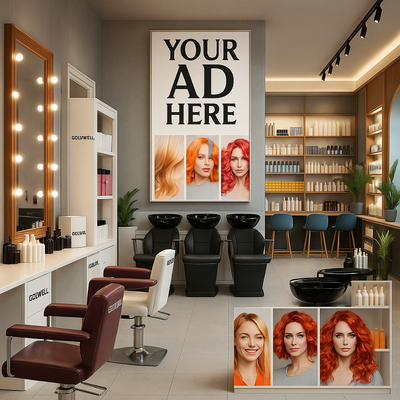
Frankly speaking, the term "salon advertising" means very different things depending on who is using it, and that ambiguity is part of why so many media planners overlook it entirely. In the BTL advertising context — which is the context that matters most for third-party brands — salon advertising refers to the placement of brand communication materials, product displays, sampling activations, and digital screens inside hair and beauty salons, where the salon itself becomes the medium rather than the advertiser. This is a fundamentally different model from a salon running its own promotional campaigns; it is, instead, a brand using the salon environment as a targeted, high-dwell-time advertising channel.
Below-the-line marketing, by its nature, bypasses mass broadcast channels and instead places the brand message directly in front of a specific, pre-qualified audience; salon advertising does this with unusual precision because the audience self-selects by walking through the door. The formats available within this medium are varied — from mirror stickers and counter branding to standees, shelf talkers, product sampling stations, and increasingly, DOOH screens installed at styling stations — which means a brand can choose the level of immersion that suits its campaign objectives. At SmartAds, we always tell our clients that the real power of in-salon advertising lies not just in who sees the message, but in when they see it: a woman sitting in a chair for forty-five minutes while her hair colour processes is not scrolling past your ad in two seconds.
The taxonomy of non-traditional advertising in India places salon media alongside formats like RWA advertising, dabbawala advertising, milk bag branding, and gym advertising — all of which share the characteristic of reaching audiences in defined physical environments during moments of receptivity. What distinguishes salon advertising from most of these formats, however, is the combination of dwell time, demographic precision, and contextual relevance; a hair care brand advertising inside a hair salon is not interrupting anything — it is participating in a conversation the customer is already having with herself.
Why Do Brands Choose Salon Advertising Over Traditional ATL in India?
The honest answer is that ATL — television, print, radio — still does things that no BTL format can replicate at scale. But what ATL cannot do, and what salon advertising does exceptionally well, is deliver a message to a specific woman, in a specific income bracket, in a specific neighbourhood, at the exact moment she is thinking about her hair and skin. That contextual alignment is worth a great deal, and most brands get this wrong by treating salon advertising as a supplementary afterthought rather than a primary activation channel for certain campaign objectives.
The dwell time argument is one we make constantly at SmartAds, and the data supports it. The average customer visit to a salon in India lasts somewhere between thirty-five and seventy minutes depending on the service — a haircut at one end, a bridal package at the other — which means the brand has an extended window of captive audience advertising that no other non-traditional format comes close to matching. Compare this to an auto-rickshaw advertisement, which a commuter sees for perhaps three to five seconds at a traffic light, or a milk bag branding impression, which lasts the duration of a morning glance; salon advertising's dwell time advantage is not marginal, it is structural.
On top of that, there is the question of audience quality. The Indian salon visitor — particularly in the women's and unisex salon segment — skews heavily toward the SEC A and SEC B demographic, which is precisely the audience that hair care brands like HUL's Dove and TRESemmé, L'Oréal India, Marico's Livon, and Streax by Hygienic Research Institute are trying to reach. Non-traditional advertising in India has grown in part because brands have realised that mass reach without audience quality is an expensive way to generate low-conversion impressions; salon advertising inverts this equation by trading some reach for dramatically better targeting.
What Are the Most Effective Non-Traditional Salon Advertising Formats in India?
Mirror stickers and counter branding are the formats most brands start with, and they work well enough — but they represent only the surface of what salon media can deliver. A mirror sticker placed at eye level during a blow-dry creates a point-of-experience advertising moment that is difficult to ignore; counter branding on the reception desk or the product display shelf gives a brand visibility at the exact moment a customer is considering a purchase or asking the stylist for a recommendation. These are low-cost, high-frequency formats, and for brands like Godrej Consumer Products or L'Oréal India running pan-India salon advertising campaigns, they form the foundational layer of the media plan.
Standees and branded display units inside the waiting area represent the next tier of in-salon advertising, which tends to work best for product launches or seasonal campaigns where the brand needs to communicate more information than a sticker can carry. Product sampling is, in our experience, the highest-converting format in the salon environment; a stylist handing a customer a sachet of shampoo or a small bottle of serum at the end of a service is not just delivering a sample — she is delivering a trusted recommendation, because the customer's relationship with her stylist is one of the most influential in the beauty purchase journey. We have seen sampling activations in salon environments generate trial-to-purchase conversion rates that surprised even the brand teams running the campaigns.
DOOH screens inside salons represent the emerging frontier of salon advertising in India, which is beginning to gain traction in premium chains like Lakme Salon, Naturals Salon, and Jawed Habib Hair & Beauty outlets in metro cities. These screens, typically placed at styling stations or in waiting areas, allow brands to run video content in a captive environment — which brings the production value of television advertising into a BTL context. Ambient advertising through scent, branded salon capes, and co-branded service menus are further extensions of the format that experiential marketing practitioners are beginning to explore seriously.
How Does Salon Advertising Deliver a Captive, Targeted Audience for Brands?
The captive audience argument is one that gets thrown around loosely in out-of-home advertising circles, but salon advertising earns it genuinely. When a customer is seated at a styling chair, her physical mobility is constrained, her attention is not divided between a phone and a television screen, and she is in a mental state that is unusually open to beauty and personal care messaging. This combination — physical captivity, mental receptivity, and contextual relevance — is what makes targeted advertising inside salons so effective for the right category of brand.
What a lot of people miss is the influence of the stylist as a brand ambassador within this environment. The stylist is not just a passive backdrop for the brand's message; she is an active participant in the customer's purchase decision, and brands that structure their salon advertising campaigns to include stylist engagement — through product education sessions, incentive programmes, or co-branded service offerings — consistently outperform those that treat the salon as a passive billboard. One FMCG client we worked with, a leading hair oil brand targeting women in Tier 2 cities, saw a significant uplift in purchase intent scores when their campaign included a stylist briefing component alongside the standard counter branding and sampling elements.
The demographic profile of the Indian salon visitor is also worth examining in detail, because it is more valuable than most media planners assume. Women between the ages of eighteen and forty-five account for the overwhelming majority of salon visits in India; within this group, the SEC A and SEC B segments are disproportionately represented in urban and semi-urban salons, which means beauty salon advertising reaches the exact consumer who is most likely to be a high-value purchaser of premium personal care products. In cities like Mumbai, Delhi NCR, Bangalore, and Hyderabad, the salon visitor profile also skews toward working women with independent purchasing power — a segment that is notoriously difficult to reach through traditional mass media at an efficient cost.
What Does Salon Advertising Cost in India? A Budget and Rates Guide
This is the question that every media planner eventually gets to, and the honest answer is that salon advertising rates in India vary more widely than almost any other BTL format — which is partly a function of the fragmented nature of the salon industry and partly a reflection of the genuine differences in audience quality between a premium chain outlet in South Mumbai and a standalone parlour in a Tier 3 town. That said, there are reasonable benchmarks that we work with at SmartAds, and understanding them helps brands plan budgets with some confidence.
For a basic counter branding and mirror sticker placement in a standalone salon in a Tier 2 or Tier 3 city, the cost works out to roughly ₹500 to ₹1,500 per salon per month — which is a number that surprises most first-time advertisers when they compare it to what they are paying for digital reach in the same markets. In metro cities, the same formats in a premium chain outlet like a Lakme Salon or VLCC franchise can run somewhere between ₹3,000 and ₹8,000 per salon per month depending on the specific location, footfall data, and the exclusivity of the placement. A product sampling activation, which involves logistics, sampling material, and stylist engagement, adds a layer of cost that typically brings the per-salon investment to somewhere in the ballpark of ₹5,000 to ₹15,000 per month for a well-executed programme.
For a pan-India salon advertising campaign covering five hundred to a thousand salons across ten to fifteen cities, the total monthly investment typically falls somewhere between ₹25 lakh and ₹75 lakh depending on the format mix, the city tier distribution, and whether DOOH screens are included. The minimum budget to run a meaningful salon advertising campaign — one that covers at least fifty salons in a single city with counter branding and sampling — is in the range of ₹3 lakh to ₹5 lakh for a one-month activation, which makes it accessible for regional brands and challenger FMCG players who cannot afford television but need to reach women in a targeted, high-quality environment. Salon advertising rates in India are also negotiable at scale, and a media buying agency with established salon network relationships can typically secure fifteen to twenty-five percent better rates than a brand approaching salon owners directly.
Which Industries Benefit Most from Salon Advertising in India?
Hair care brands are the obvious answer, and they are right to dominate this medium — companies like Marico, HUL, L'Oréal India, and Godrej Consumer Products have all run in-salon advertising campaigns at various points, and the contextual fit is self-evident. But the category of brands that benefit from salon advertising is considerably broader than hair care alone, which is a point we make frequently when working with clients who are categorising their media options too narrowly.
Skincare and personal care brands — moisturisers, sunscreens, face washes, and body lotions — find salon advertising particularly effective because the salon visit often triggers a broader conversation about skin health, and a well-placed brand message or product sample can intercept that conversation at exactly the right moment. Jewellery brands, particularly those targeting the bridal and festive segments, have found salon advertising valuable because bridal salon advertising reaches women who are actively planning major life events; a woman getting a bridal trial at a premium salon is, by definition, in the market for jewellery, and the dwell time available in that environment is more than sufficient to communicate a brand story. Matrimonial services, insurance brands targeting women, and financial products aimed at the SEC A female demographic have also run successful below-the-line marketing campaigns through salon channels.
FMCG salon advertising is perhaps the most systematically developed application of this medium in India, with brands using the salon environment for everything from new product launches to competitive sampling — the practice of placing your product in a consumer's hands at the exact moment she is using a competitor's product. Men's grooming salon advertising is a growing segment as well, particularly in the context of the rapid expansion of premium men's grooming chains in metro cities; brands targeting the male grooming category have found that the barbershop and men's salon environment offers the same captive audience dynamics as women's salons, with an audience that is increasingly receptive to premium personal care messaging.
How to Measure ROI from a Salon Advertising Campaign
ROI measurement in non-traditional advertising is a genuine challenge, and we will not pretend otherwise. The absence of click-through rates and impression pixels makes it harder to generate the kind of instant dashboards that digital marketers have come to expect; but the measurement tools available for salon advertising are more sophisticated than most brands realise, and the metrics that matter most for this medium are ones that traditional digital analytics cannot capture anyway.
The primary measurement framework we recommend at SmartAds combines three layers: reach and frequency estimation based on verified salon footfall data, brand recall and purchase intent surveys conducted with salon visitors during and after the campaign period, and sales data analysis in the geographic markets where the campaign ran. Footfall advertising measurement is not precise in the way that digital is, but a well-structured campaign with verified salon footfall data — which reputable salon chains and media networks can provide — gives brands a reasonable basis for calculating cost-per-thousand impressions, which typically works out to somewhere between ₹40 and ₹120 CPM depending on the city and format, a range that compares favourably with many digital formats when audience quality is factored in.
Product sampling campaigns offer the clearest ROI signal, because the conversion from sample to purchase can be tracked through retail sales data in the catchment areas around the salons where sampling occurred. One personal care brand we worked with ran a sampling activation across three hundred salons in Delhi NCR and Bangalore, and by comparing retail offtake data in those catchment areas against control markets, they were able to demonstrate a measurable lift in trial and repeat purchase within sixty days of the campaign — a result that justified a significant increase in their salon advertising budget for the following quarter. Advertising ROI in salon campaigns is best measured over a ninety-day window rather than the thirty-day window that digital campaigns typically use, because the purchase cycle for personal care products means that the full impact of a sampling or branding activation takes time to manifest in sales data.
City-Wise Salon Advertising: Mumbai, Delhi, Bangalore and Beyond
The salon advertising landscape in India is not uniform across cities, and a media plan that works in Mumbai will not necessarily translate directly to Hyderabad or Ahmedabad without meaningful adaptation. Salon advertising in Mumbai, for instance, is dominated by the premium chain segment — Lakme Salon, Naturals Salon, and a dense network of high-footfall standalone parlours in areas like Bandra, Andheri, and Thane — which means the audience quality is high but the per-salon cost is also at the upper end of the national range. Salon advertising in Delhi NCR benefits from the sheer density of the market, with thousands of salons spread across South Delhi, Gurgaon, Noida, and Faridabad, giving brands the ability to achieve significant scale without concentrating spend in a single premium segment.
Salon advertising in Bangalore has grown rapidly over the past three years, which reflects both the city's expanding middle class and the strong presence of organised salon chains in areas like Koramangala, Indiranagar, and Whitefield. The Bangalore salon visitor profile skews younger and more tech-savvy than most other metros, which makes it an ideal market for brands that want to combine in-salon advertising with digital integration — QR codes on mirror stickers, WhatsApp opt-in prompts at checkout, and Instagram-linked sampling programmes all perform particularly well in this market. Salon advertising in Hyderabad and salon advertising in Chennai offer excellent value relative to their metro peers, with lower per-salon costs and strong footfall in the organised salon segment; both cities have seen significant investment from national chains, which has improved the quality and measurability of the salon media inventory available.
Salon advertising in Pune is interesting because the city's large student and young professional population creates a distinct audience profile — one that is highly receptive to new product trials and brand switching, which makes Pune an excellent test market for brands launching new personal care products. Beyond the top six metros, the opportunity in Tier 2 cities like Ahmedabad, Jaipur, Lucknow, Nagpur, and Coimbatore is substantial and significantly underexploited; the cost of salon advertising in these markets is a fraction of metro rates, the competition for salon media inventory is lower, and the audience — particularly in women's and beauty parlour advertising contexts — is often more loyal and less saturated with competing brand messages. Pan-India salon advertising campaigns that include Tier 2 and Tier 3 markets consistently deliver better overall CPM efficiency than those concentrated exclusively in metros.
Salon Advertising vs. Milk Bag, Auto-Rickshaw and Other BTL Formats
Comparing salon advertising to other non-traditional media formats is a question we get asked regularly, and the answer is genuinely nuanced rather than a simple ranking. Each BTL format has a specific strength, and the right comparison depends on the campaign objective, the target audience, and the geographic market. That said, there are meaningful structural differences between salon advertising and formats like milk bag branding, auto-rickshaw advertising, and RWA advertising that are worth understanding clearly.
Milk bag branding reaches a broad household audience at a very low cost per impression — the CPM works out to somewhere in the range of ₹5 to ₹15 in most markets, which is hard to beat for sheer mass reach within a defined geography. But the dwell time is minimal, the audience is undifferentiated, and the contextual relevance for personal care brands is low; a hair care brand on a milk bag is a non sequitur, while the same brand inside a salon is a natural fit. Auto-rickshaw advertising offers good local visibility and geographic targeting, but again, the dwell time per impression is measured in seconds rather than minutes, and the audience quality is difficult to segment beyond broad geographic parameters. RWA advertising — branding within residential welfare association common areas — offers better audience quality and longer dwell time than auto-rickshaw formats, and it is a genuinely effective channel for household products and services; but it lacks the contextual relevance and the beauty-mindset alignment that makes salon advertising so powerful for personal care brands.
The format that salon advertising most directly competes with, in our view, is gym advertising — another captive, high-dwell-time, demographically defined environment. Gym advertising reaches a fitness-conscious audience that overlaps significantly with the premium personal care segment, and dwell times in gyms are comparable to or longer than salon visits. The key difference is that gym advertising skews more male and more fitness-oriented, while salon advertising delivers a predominantly female audience in a beauty and personal care mindset; for brands targeting women's grooming, skincare, and hair care categories, salon advertising wins on contextual alignment. For brands targeting male grooming or sports nutrition, the comparison tilts toward gym advertising. The smartest media plans, frankly speaking, combine both.
How to Combine Salon Advertising with Digital and WhatsApp Marketing
The integration of digital channels with physical salon advertising is where the medium is evolving most rapidly, and it is also where the gap between brands that are doing it well and brands that are doing it poorly is widest. The basic principle is straightforward: the salon visit creates a moment of high engagement and brand receptivity, and digital tools can extend that moment beyond the physical walls of the salon and into the customer's ongoing digital life. QR codes on mirror stickers or counter branding materials, which link to a product page, a tutorial video, or a loyalty programme sign-up, are the simplest form of this integration; they add a measurable digital layer to an otherwise offline activation.
WhatsApp marketing for salon brands represents a particularly powerful integration channel in the Indian market, where WhatsApp penetration is effectively universal among the target demographic. A salon that collects customer WhatsApp numbers at checkout — which most organised salons already do for appointment reminders — can, with the customer's consent, become a channel for brand communication through the WhatsApp Business API. We have worked with FMCG clients who have partnered with salon networks to create opt-in WhatsApp lists of salon customers, and the engagement rates on branded content delivered through these lists are substantially higher than what the same brands achieve through email or even Instagram Reels. The key is that the relationship is mediated by the salon, which the customer trusts, rather than arriving as a cold brand message.
Digital out-of-home advertising inside salons — DOOH screens at styling stations — creates a third integration point, which allows brands to run the same creative assets they are using in their digital campaigns within the physical salon environment. This through-the-line approach, which bridges ATL creative with BTL placement, is something that organised salon chains are increasingly offering as part of their media packages; and for brands that want to maintain creative consistency across their media mix, it is a genuinely valuable option. At SmartAds, we have found that campaigns which combine physical in-salon advertising with digital integration through QR codes and WhatsApp opt-ins consistently outperform purely offline activations on brand recall metrics by a meaningful margin.
Top Salon Advertising Ideas for Hair Care, FMCG and Beauty Brands in India
The best salon advertising ideas are not the most elaborate ones — they are the ones that fit naturally into the salon environment without disrupting the customer experience, which is something a lot of brand activation teams get wrong by trying to do too much. A well-designed mirror sticker that shows a before-and-after hair transformation, placed at the exact eye level of a seated customer, can be more effective than an elaborate display unit that the stylist has to navigate around. The principle is that the salon is the customer's space, and the brand is a guest in it; campaigns that respect this dynamic perform better than those that treat the salon as a billboard to be plastered.
Seasonal and festival-based salon advertising is one of the most underutilised strategies in this medium, which is surprising given how strongly the Indian salon industry is tied to the festival and wedding calendar. The period from October to February — which encompasses Navratri, Diwali, the wedding season peak, and Christmas — is when salon footfall in India is at its highest, and it is also when consumers are most receptive to beauty and personal care messaging. Bridal salon advertising, in particular, offers an extraordinary opportunity for jewellery brands, bridal wear labels, wedding planning services, and premium personal care brands; a woman in a bridal trial appointment is spending hours in the salon and is actively researching and deciding across multiple purchase categories simultaneously. Campaigns timed to this season, with creative that speaks directly to the bridal context, consistently outperform generic year-round placements on engagement and conversion metrics.
Product sampling tied to specific services is another idea that works exceptionally well in the salon context — for example, a hair serum brand partnering with salons to offer a complimentary serum application as part of every blow-dry service, or a skincare brand providing a face mist that stylists offer to customers at the end of a colour service. These service-linked sampling activations feel like a gift rather than an advertisement, which dramatically improves the customer's perception of the brand and increases the likelihood of a subsequent purchase. One hair care client we worked with — a mid-market brand competing against established players in the shampoo category — ran a service-linked sampling programme across two hundred salons in Chennai and Hyderabad over a six-week period; the trial rate among salon customers was significantly higher than the brand had achieved through any previous sampling method, and the cost per trial worked out to a fraction of what they had been spending on supermarket sampling activations.
Influencer and Experiential Marketing for Salons in India
Influencer marketing in the salon context is a relatively recent but rapidly growing practice, which takes two distinct forms that are worth distinguishing. The first is the use of salon visits as content creation moments — brands partnering with beauty influencers to document their salon experience using a specific product, which generates authentic-feeling content for Instagram Reels and YouTube that reaches the influencer's audience with a credible endorsement. The second, and arguably more interesting form, is the use of salon professionals themselves as micro-influencers; a stylist with a loyal local following of two thousand to five thousand customers, which is not uncommon in premium urban salons, can be a more effective brand advocate than a macro-influencer with ten times the reach but a fraction of the trust.
Experiential marketing inside salons takes the brand activation beyond passive display into active participation, which is where the most memorable brand moments are created. A brand that sponsors a "hair spa day" event at a premium salon, offering complimentary treatments to a select group of customers while showcasing its product range, creates an experience that generates word-of-mouth, social media content, and genuine product trials simultaneously. Guerrilla marketing approaches — unexpected, creative brand activations that surprise and delight salon customers — can also work well in this environment, though they require more careful execution to avoid disrupting the salon's service quality. We have seen guerrilla marketing activations in salon settings generate significant social media amplification when the creative concept is strong enough to make customers want to photograph and share it.
The combination of experiential marketing with salon advertising's natural captive audience dynamics creates a multiplier effect that is difficult to achieve in most other BTL environments; the customer is already relaxed, already engaged with the beauty category, and already in a social environment where she is likely to discuss what she is experiencing with the stylist and other customers. Brand recall from experiential salon activations, in our experience, is substantially higher than from passive display formats, and the word-of-mouth value generated by a well-executed salon experience can extend the effective reach of the campaign well beyond the number of customers who were physically present.
Salon Advertising Examples: Successful Brand Activations in Indian Beauty Salons
One campaign that we are particularly proud of at SmartAds involved a leading hair colour brand — which we cannot name, but which is one of the top three players in the Indian at-home hair colour market — that wanted to drive trial among women aged thirty-five to fifty in Tier 2 cities. The brand had strong television and print presence but was struggling to convert awareness into trial in markets like Nagpur, Coimbatore, Vadodara, and Bhopal, where the salon stylist's recommendation carries enormous weight in the purchase decision. We designed a campaign that combined counter branding and mirror stickers with a structured stylist education programme and a product sampling component, covering four hundred salons across eight Tier 2 cities over a three-month period. The results, measured through retail offtake data and a post-campaign survey, showed a trial rate among salon visitors of approximately thirty-two percent — meaning nearly one in three women who encountered the brand in the salon environment went on to purchase the product within sixty days, which was more than double the trial rate the brand had achieved through its previous sampling methods.
A second case involved a premium skincare brand targeting women in the SEC A segment in Mumbai and Bangalore, which used in-salon advertising not for sampling but for brand positioning — specifically, to shift perception from a "functional" skincare brand to a "premium beauty" brand. The campaign used high-quality counter branding materials, branded salon capes, and a partnership with a curated network of premium salons in South Mumbai and Koramangala to create an association between the brand and the aspirational salon experience. Brand perception surveys conducted three months after the campaign showed a statistically significant improvement in "premium" and "aspirational" brand attribute scores among women who had been exposed to the in-salon campaign, compared to a control group — a result that the brand's marketing team used to justify a significant increase in their below-the-line marketing budget.
A third example, which illustrates the power of combining salon advertising with digital integration, involved a men's grooming brand targeting the twenty-five to forty age group in Delhi NCR and Hyderabad. The campaign placed branded counter displays and product testers in two hundred and fifty men's salons and barbershops, with QR codes on the display materials linking to a WhatsApp opt-in for a grooming tips series. The WhatsApp list built through this campaign — entirely opt-in, mediated through the salon's existing customer relationship — became one of the brand's most engaged owned media assets, with open rates and click-through rates that substantially outperformed the brand's email list and Instagram following. The cost of building this list through the salon channel worked out to roughly ₹18 per opt-in, which compared favourably with the brand's cost of acquiring a comparable digital audience through paid social advertising.
Frequently Asked Questions About Salon Advertising in India
Q: What is salon advertising in the context of BTL/non-traditional marketing in India?
Salon advertising, in the BTL context, refers to the practice of third-party brands — typically FMCG, hair care, beauty, jewellery, or financial services companies — placing their brand communication materials, product displays, sampling activations, or digital screens inside hair and beauty salons as a paid advertising medium. The salon itself becomes the media channel, and the brand reaches salon customers during their visit, which typically lasts between thirty-five and seventy minutes. This is distinct from a salon marketing its own services; it is, instead, a brand using the salon environment as a targeted, high-dwell-time advertising placement, which falls within the broader category of ambient advertising and experiential marketing under the BTL/non-traditional advertising umbrella.
Q: How is salon advertising different from traditional ATL advertising?
ATL advertising — television, national print, radio — is designed for mass reach and brand awareness at scale, with limited ability to target specific demographics or contexts. Salon advertising, as a below-the-line marketing format, trades mass reach for precision: it reaches a defined audience (predominantly women aged eighteen to forty-five in the SEC A and SEC B segments) in a specific physical environment during a moment of high beauty and personal care receptivity. ATL is measured in GRPs and reach percentages; salon advertising is measured in footfall, dwell time, and direct consumer engagement metrics. The two are not mutually exclusive — the most effective campaigns use ATL for broad awareness and salon advertising for contextual reinforcement and trial conversion.
Q: Why is salon advertising considered a 'precisely targeted' media format for brands in India?
The precision of salon advertising comes from the self-selection of the audience. Every person inside a salon has voluntarily entered a beauty and personal care environment and is actively engaged with grooming and appearance — which means the audience is pre-qualified for beauty, hair care, and personal care brand messages in a way that no mass media format can replicate. On top of that, the geographic precision of salon advertising is exceptional: a brand can target specific neighbourhoods, specific income segments (by selecting salon tier), and even specific service occasions (bridal appointments, for example) with a level of granularity that OOH or print advertising cannot match.
Q: What types of brands or products are best suited for salon advertising in India?
Hair care brands are the most natural fit — shampoos, conditioners, hair colour, serums, and styling products from companies like HUL, Marico, L'Oréal India, Godrej Consumer Products, and Streax have all used salon advertising effectively. Skincare and personal care brands targeting women, jewellery brands with a bridal focus, matrimonial services, women's financial products, and premium FMCG brands targeting the SEC A female demographic are all strong candidates. Men's grooming brands have a growing opportunity in men's salons and barbershops. The common thread is that the product or service must be relevant to a consumer who is actively thinking about her (or his) appearance and personal care — which is the mental state of every salon visitor.
Q: What is the minimum budget required to run a salon advertising campaign in India?
A meaningful salon advertising campaign — one that covers at least fifty salons in a single city with counter branding and basic sampling — can be executed for somewhere in the range of ₹3 lakh to ₹5 lakh for a one-month activation. For a multi-city campaign covering five to seven cities with a mix of counter branding, mirror stickers, and sampling, the budget typically needs to be in the range of ₹15 lakh to ₹30 lakh per month to achieve meaningful scale. Pan-India campaigns covering five hundred or more salons across fifteen to twenty cities, with a full format mix including DOOH elements, typically require a monthly investment of ₹50 lakh and above. These are ballpark figures; the actual cost depends heavily on city tier distribution, format selection, and the negotiating leverage of the media buying agency.
Q: How do advertisers measure the ROI and effectiveness of a salon advertising campaign?
The measurement framework for salon advertising ROI combines verified footfall data from the salon network (to calculate reach and frequency), brand recall and purchase intent surveys conducted with salon visitors during and after the campaign, and retail sales data analysis in the catchment areas around the campaign salons. Product sampling campaigns offer the clearest ROI signal through trial-to-purchase conversion tracking. Digital integration elements — QR code scans, WhatsApp opt-ins — add measurable digital metrics to the otherwise offline activation. The advertising ROI from salon campaigns is best assessed over a ninety-day window to capture the full purchase cycle impact.
Q: Which cities in India offer the most salon advertising inventory for brand campaigns?
Mumbai, Delhi NCR, Bangalore, Hyderabad, Chennai, and Pune offer the largest and most organised salon advertising inventory in India, with established salon chains providing verified footfall data and structured media packages. Ahmedabad, Kolkata, Jaipur, Lucknow, and Nagpur represent the next tier of cities with significant and growing salon media inventory. For pan-India campaigns, the combination of metro cities for premium audience reach and Tier 2 cities for cost efficiency and lower competitive clutter typically delivers the best overall campaign performance.
Q: What are the different formats available for in-salon advertising?
The principal in-salon advertising formats include mirror stickers (placed at eye level at styling stations), counter branding on reception and product display counters, standees and display units in waiting areas, branded salon capes, shelf talkers on product shelves, product sampling stations, service-linked sampling activations (where the brand's product is used as part of a salon service), DOOH screens at styling stations or in waiting areas, and experiential brand activation events hosted within the salon. Each format has a different cost, dwell time, and engagement profile, and the most effective campaigns combine two or three complementary formats rather than relying on a single placement.
