
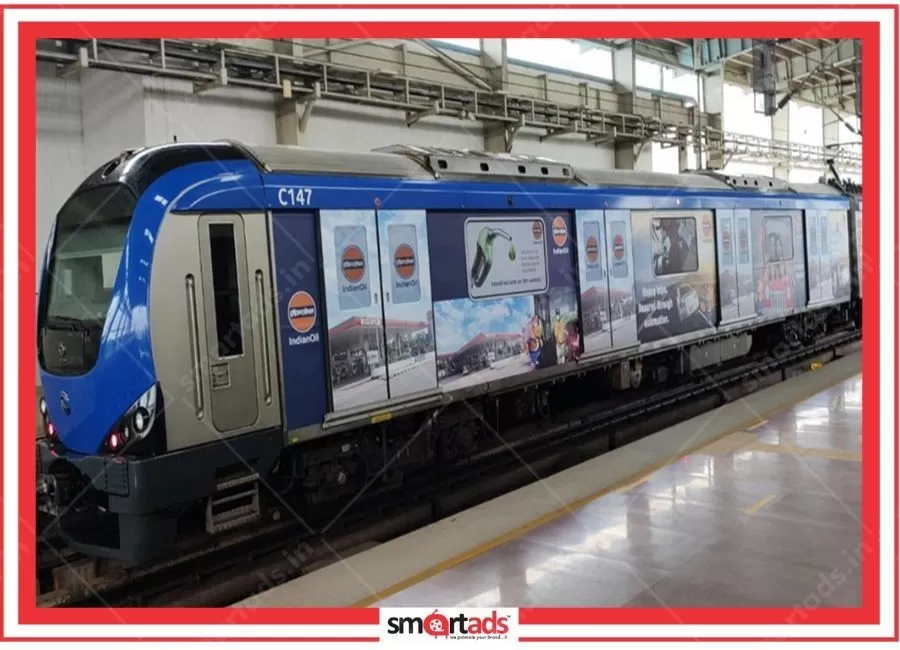
Exterior Metro Wrap
Custom
The advertisement spans the whole train,
Rate per Metro Display Cost / 1 Month
Route : Tirusulam To WIMCO Nagar
₹1000000.00
Showing 1 to 5 of 5 Results
MEDIA DETAILS
Custom
The advertisement spans the whole train,
Rate per Metro Display Cost / 1 Month
Route : Tirusulam To WIMCO Nagar
₹1000000.00
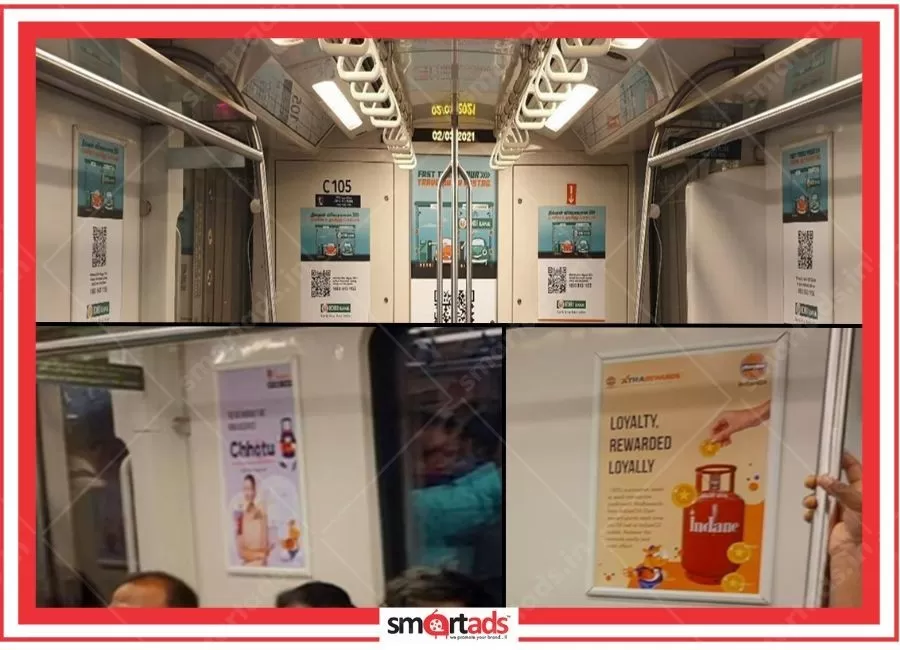
Custom
On the inside of the metro train the adv
Rate per Metro Display Cost / 1 Month
Route : Tirusulam To WIMCO Nagar
₹500000.00
20 Sec Audio
A jingle is a song or a phrase, and the
Rate per Metro Jingle Cost / 1 Month
Route :Tirusulam to WIMCO Nagar
₹400000.00

10 Sec Video
Digital screen on the metro station will
Rate per Metro Digital Display Cost / 1
Route :Tirusulam to WIMCO Nagar
₹600000.00

1 Metro Train
On the outside of the metro train the ad
Rate per Metro Display Cost / 1 Month
Route :Tirusulam to WIMCO Nagar
₹1500000.00
MEDIA REACH

MinimumQty :
1
EstimateReachPeople :
150000000
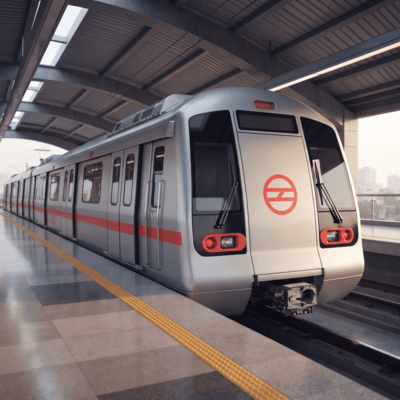
Most brand managers we speak to are surprised to learn that the Delhi Metro Blue Line — which terminates at Vaishali and runs through Kaushambi, two of the busiest transit nodes in Ghaziabad — carries somewhere in the ballpark of 35 to 40 lakh daily commuters across the entire network, a figure that the DMRC's own ridership data has consistently supported post-pandemic. What surprises them even more is that metro train advertising in Ghaziabad remains significantly underpriced relative to the quality of audience it delivers, especially when compared to the premium that brands pay for equivalent reach on digital platforms. We have been placing campaigns on this corridor for years, and frankly speaking, the gap between perceived value and actual cost-efficiency here is one of the most underappreciated stories in Delhi NCR media planning.
There is a particular kind of attention that transit environments produce — one that no social media feed, however well-targeted, can fully replicate. When a commuter boards a metro coach at Kaushambi metro station at 8:45 in the morning, they are in a contained environment for anywhere between twelve and forty minutes depending on their destination; they are not scrolling past your ad, they cannot skip it, and there is no competing content fighting for their eyeball in the same physical space. This is what media planners mean when they talk about a captive audience, and it is the foundational reason why metro rail advertising in Ghaziabad commands the brand recall numbers it does.
The demographic profile of the Blue Line commuter passing through Ghaziabad is particularly valuable for a wide range of advertisers. The corridor connects Vaishali metro station and Kaushambi metro station — both serving densely populated, upwardly mobile residential catchments in Indirapuram, Vaibhav Khand, and surrounding areas — to the heart of Delhi, which means the commuter base skews heavily toward working professionals aged 22 to 45, many of whom fall in the SEC A and SEC B income brackets. Our experience shows that this is precisely the audience that real estate developers, ed-tech platforms, healthcare brands, and financial services companies are trying to reach; and the fact that metro advertising in Ghaziabad puts you in front of this audience at a cost per impression that works out to a fraction of what you would pay on premium digital inventory makes the case almost self-evident.
What a lot of people miss is the frequency dimension. A commuter who travels five days a week on the Blue Line through Ghaziabad will encounter your brand somewhere between eight and twenty times over a single month's campaign, depending on the format mix — which is a frequency of impressions that builds genuine brand recall rather than the fleeting awareness that a single-exposure OOH placement generates. At SmartAds, we always tell our clients that metro train advertising in Ghaziabad is not just a reach play; it is a sustained brand-building exercise that compounds over the campaign duration in ways that are genuinely measurable.
The format landscape for metro advertising in Ghaziabad is considerably more varied than most advertisers realise when they first approach us, and the right format choice depends heavily on whether you are optimising for mass reach, targeted dwell time, or premium brand association. The broadest and most impactful option is full train branding — sometimes called a train wrap — which involves covering the exterior of an entire metro coach or a set of coaches with your brand creative; this format produces extraordinary visibility at stations like Kaushambi metro station and Vaishali metro station, where platforms are long and dwell times give commuters ample time to absorb the creative before boarding.
Interior train branding is, in our view, where the real value lies for most mid-sized advertisers. Inside panel advertising — the overhead panels, door panels, and window decals placed inside the coach — captures commuters during their entire journey, which means your message is being read and re-read for the full duration of their ride. The format works particularly well for brands with a message that benefits from extended engagement: an ed-tech platform explaining a course offering, a healthcare brand communicating a complex product benefit, or a real estate developer showcasing a project with multiple features. Exterior train branding, by contrast, is better suited to high-impact brand awareness campaigns where the creative is bold and the message is simple enough to land in three seconds.
Beyond the train itself, DMRC advertising infrastructure at Ghaziabad-adjacent stations includes platform panel advertising, backlit panel displays, digital screen advertising on station concourses, escalator branding, lift branding, staircase branding, and station branding packages that can effectively turn an entire station into a branded environment. Metro smart card advertising — where brand creatives are printed on the physical smart cards distributed to commuters — is a format that very few advertisers have explored, which is precisely why it tends to generate disproportionate attention when it is used well. Metro coach advertising, taken as a whole category, gives brands a genuinely multi-touchpoint presence that no single outdoor advertising format can match on its own.
Frankly speaking, this is the question every client asks first, and it is also the question that most agency websites answer least honestly — either by refusing to publish any figures at all, or by quoting ranges so wide as to be meaningless. We will do better than that. For inside panel advertising on the Blue Line covering the Ghaziabad corridor, a monthly campaign across a set of coaches works out to roughly ₹80,000 to ₹1.5 lakh per month depending on the number of panels booked and the specific placement within the coach; this is a number that tends to surprise clients who expected metro advertising to be prohibitively expensive.
Full train branding — which is the train wrap format covering the exterior of a full rake — is understandably a more significant investment, sitting somewhere between ₹8 lakh and ₹20 lakh per month depending on the number of coaches wrapped, the line, and the campaign duration negotiated with the concessionaire; but it is worth contextualising that number against the reach it delivers. A single wrapped train running on the Blue Line through Kaushambi and Vaishali will be seen by hundreds of thousands of commuters over the course of a month, which brings the effective cost per impression down to a figure that competes very favourably with outdoor advertising alternatives in the same geography. Platform panel advertising at high-footfall stations like Kaushambi metro station typically runs in the range of ₹40,000 to ₹80,000 per panel per month, while digital screen advertising on station concourses — a format that is growing rapidly — is priced in the ballpark of ₹60,000 to ₹1.2 lakh per screen per month depending on loop frequency.
Metro advertising rates in Ghaziabad 2025 have seen a moderate upward revision of roughly 10 to 15 percent compared to the previous year, which is consistent with the broader trend in transit advertising across Delhi NCR as ridership has recovered and, in many cases, exceeded pre-pandemic levels. Station branding packages — which bundle platform panels, backlit panels, escalator branding, and sometimes lift branding into a single negotiated rate — can offer meaningful savings over booking individual formats separately; and this is where working with a metro train advertising agency in Ghaziabad that has existing concessionaire relationships makes a genuine difference to the final cost. At SmartAds, we have consistently been able to secure package rates for clients that represent a saving of 15 to 25 percent compared to the published card rates.
The answer here is not simply "the busiest station" — it depends on what you are trying to achieve, which is a distinction that matters a great deal when you are allocating a finite budget. Kaushambi metro station is, by most measures, the most strategically significant station for advertisers targeting the Ghaziabad market; it sits at the boundary of Delhi and Ghaziabad, serves a massive catchment that includes Indirapuram and Dabur Chowk, and sees extremely high footfall from working professionals commuting in both directions during peak hour advertising windows. The station's architecture also allows for prominent platform panel advertising and backlit panel placements that are visible from multiple angles on the platform.
Vaishali metro station, which is the terminal station of the Blue Line's eastern branch, serves a different but equally valuable audience — the residential population of Vaishali itself, which is a well-established middle-to-upper-middle-class township with strong purchasing power across categories like real estate, consumer durables, and financial services. Terminal stations have a particular advertising advantage in that commuters tend to congregate and wait, which extends the dwell time advertising opportunity considerably; a brand creative at Vaishali metro station is not just seen in passing but actually read and considered. Anand Vihar metro station, which connects the Blue Line to the Pink Line and is adjacent to the major ISBT and railway terminal, is another high-footfall location worth considering for brands seeking a broader Delhi NCR reach that extends beyond the Ghaziabad corridor specifically.
What we tell our clients at SmartAds is that the most effective station selection strategy for metro advertising in Ghaziabad is rarely a single-station buy; it is a corridor approach that places creative at two or three stations along the commuter's journey, which creates a sequential storytelling opportunity that a single placement cannot. A real estate client we worked with in Indirapuram ran a three-station campaign across Kaushambi, Vaishali, and one intermediate station, using a different creative panel at each location to build a narrative arc — and the campaign generated a measurable uplift in site visits that was directly attributable to the metro touchpoints based on QR code tracking data.
The honest answer is that metro train advertising in Ghaziabad works best for brands whose target audience overlaps significantly with the commuter demographic — which, on the Blue Line through Ghaziabad, skews toward urban, educated, income-earning adults who make considered purchase decisions. Real estate developers operating in Indirapuram, Vaishali, and the broader Ghaziabad market are perhaps the most natural fit; the commuter audience is precisely the buyer profile for residential and commercial projects in this geography, and the extended dwell time of interior train branding allows developers to communicate project details that a roadside hoarding simply cannot accommodate.
Ed-tech platforms, coaching institutes, and professional certification brands have been among the most active categories in metro rail advertising in Ghaziabad over the past two years, which is consistent with the broader pattern we observe across Delhi NCR transit corridors. The commuter audience on the Blue Line includes a significant proportion of students and young professionals who are actively considering upskilling options, and the captive environment of a metro coach — where there is genuinely nothing else to do for twenty minutes — is an ideal context for a message about career advancement. Healthcare brands, particularly diagnostic chains, pharmacy networks, and health insurance providers, have also found strong returns from metro advertising in Ghaziabad, partly because health-related decisions are made by exactly the kind of informed, urban consumer who uses the metro regularly.
FMCG brands, banking and financial services, telecom operators, and OTT platforms round out the list of industries that have historically run successful campaigns on this corridor. Startups and SMEs are a category we would specifically encourage not to self-select out of metro train advertising in Ghaziabad on the assumption that it is only for large national brands; the hyperlocal reach that a well-planned station branding or inside panel campaign delivers is actually more relevant for a local business than for a national advertiser, and the minimum budget thresholds are lower than most people assume.
The booking process for DMRC advertising is something that trips up a lot of first-time advertisers, largely because DMRC does not sell advertising directly to brands — it operates through authorised concessionaires, which are specialist outdoor advertising companies that hold the rights to specific station zones and train formats. Understanding this structure is essential before you approach the market, because going to the wrong vendor or attempting to negotiate directly with station staff will simply not work. The concessionaires who hold rights to Blue Line inventory relevant to Ghaziabad include several established players in the transit advertising space, and working with a metro advertising agency that has existing relationships with these concessionaires is the most efficient route to market.
The practical steps, as we walk our clients through them, run roughly as follows: the first stage is brief development and format selection, where you define your campaign objective, target audience, budget envelope, and preferred station or train locations; the second stage is concessionaire identification and rate negotiation, where your agency approaches the relevant rights holders and secures inventory availability and pricing; the third stage is creative development and specification compliance, because DMRC advertising has specific technical requirements for print materials, digital files, and installation formats that must be met before approval is granted. The DMRC approval process for creative content typically adds a lead time of one to two weeks to the campaign timeline, which is a detail that many advertisers underestimate when planning launch dates.
From brief to live campaign, the realistic timeline for metro train advertising in Ghaziabad runs somewhere between three and six weeks for standard formats like inside panel advertising and platform panel advertising; full train branding and station branding packages can take longer due to production complexity and installation scheduling. At SmartAds, we manage the entire process — from concessionaire negotiation and creative specification guidance to installation supervision and campaign monitoring — which is particularly valuable for brands that are running metro advertising for the first time and do not yet have the vendor relationships or process knowledge to navigate it independently.
This is a comparison we are asked to make constantly, and the honest answer is that it is the wrong question — but since it is the question that gets asked, we will address it properly. Traditional outdoor advertising in Ghaziabad — roadside hoardings, bus shelter ads, and unipoles along NH-9 or the Raj Nagar Extension corridor — offers broad vehicular reach that metro train advertising cannot match; a hoarding on a major arterial road in Ghaziabad will be seen by a larger raw number of people, including those who do not use the metro. However, the quality of that exposure is fundamentally different, because a driver passing a hoarding at 40 kilometres per hour has approximately two to three seconds of exposure, compared to the twelve-to-forty-minute captive audience environment of a metro coach.
Digital OOH advertising in Ghaziabad — LED screens at malls, transit hubs, and high-street locations — offers the flexibility of dynamic creative and dayparting, which metro advertising in its traditional panel formats does not. But the cost per quality impression on digital OOH screens, once you account for the fact that most screen placements are shared rotations where your ad appears for ten to fifteen seconds in every two-minute loop, is often higher than the equivalent metric for interior train branding on the Blue Line. We have run side-by-side campaigns for clients where the metro train advertising component delivered measurably higher brand recall scores at a lower cost per recall point than the digital OOH component — though we should be clear that these outcomes are campaign-specific and not universal.
Auto-rickshaw branding and bus advertising in Ghaziabad are genuinely hyperlocal alternatives that reach neighbourhoods the metro does not penetrate; they are not inferior formats, they serve a different purpose. The most effective OOH advertising strategy for a Ghaziabad brand, in our experience, combines metro train advertising for the commuter audience with a complementary hyperlocal format — auto branding in Indirapuram, bus shelter ads near Vaibhav Khand — to create a surround-sound effect that neither medium achieves alone. This is the kind of integrated BTL advertising thinking that separates a well-planned campaign from a single-format buy.
Measuring advertising ROI on transit media is genuinely more complex than measuring it on performance digital channels, and we will not pretend otherwise — but the measurement tools available have improved significantly, and the returns are increasingly documentable. The most straightforward metric is cost per impression: on the Blue Line through Ghaziabad, a well-placed inside panel advertising campaign works out to a cost per impression somewhere in the range of ₹0.05 to ₹0.15 depending on the format and the ridership assumption used, which compares favourably to the ₹8 to ₹15 CPM that most brands are paying for Instagram reach among a comparable urban demographic.
Brand recall is the metric that transit advertising consistently performs best on, and the data from the broader mass rapid transit advertising category in India — referenced in successive FICCI-EY Media and Entertainment reports — shows aided recall rates for metro advertising that typically run 15 to 25 percentage points higher than equivalent outdoor advertising formats. The captive audience dynamic, combined with the frequency of impressions that a commuter accumulates over a month-long campaign, creates a brand recall effect that is disproportionate to the media spend. A healthcare diagnostics brand we worked with ran a two-month interior train branding campaign on the Blue Line through Ghaziabad and measured a 34 percent increase in branded search volume in the Ghaziabad and Indirapuram pin codes during the campaign period — a correlation that, while not a controlled experiment, was consistent with the campaign's geographic targeting.
On top of that, QR code integration on metro panel ads has made it meaningfully easier to track direct response from transit advertising — something that was essentially impossible five years ago. We have seen QR scan rates on inside panel advertising in metro coaches run at somewhere between 0.3 and 0.8 percent of estimated impressions, which sounds modest but translates to thousands of high-intent interactions on a campaign that is already delivering mass brand awareness. The combination of brand lift, frequency of impressions, and measurable direct response makes the advertising ROI case for metro train advertising in Ghaziabad considerably stronger than the format's traditional reputation as a pure awareness vehicle.
The Namo Bharat RRTS — operated by NCRTC and running on the Delhi-Meerut Regional Rapid Transit System corridor — passes through Ghaziabad and represents what we genuinely believe is the most significant new transit advertising opportunity to emerge in this market in a decade. The Sahibabad and Ghaziabad RRTS stations are already operational, and the corridor is being extended progressively toward Meerut; the trains themselves are a premium product — faster, more comfortable, and attracting a commuter profile that skews even more strongly toward upper-middle-class professionals than the Delhi Metro Blue Line does.
The advertising inventory on Namo Bharat RRTS is still in relatively early stages of commercial development compared to the mature DMRC advertising ecosystem, which creates a genuine first-mover advantage for brands willing to engage now. The station environments are modern and well-designed, which means that advertising placements — whether platform panels, digital screens, or station branding packages — are presented in a context that reinforces premium brand associations rather than diluting them. We expect Namo Bharat RRTS advertising rates to remain competitive for the next 12 to 18 months before the corridor reaches the ridership levels that will justify significant rate card increases.
For brands targeting the Ghaziabad-to-Delhi commuter audience specifically, a combined strategy that uses Delhi Metro Blue Line advertising for the mass-reach component and Namo Bharat RRTS advertising for the premium-audience targeting is, in our view, the most sophisticated approach available in the market right now. The two systems serve overlapping but distinct commuter populations, and a brand that appears on both is effectively achieving a surround effect across the full spectrum of the transit-using, urban, working-professional audience in Ghaziabad. This is a media planning insight that very few BTL advertising agencies in the market have articulated clearly, and it is one we are actively building into campaign recommendations for our clients in this geography.
Real estate has historically been the dominant category in metro advertising in Ghaziabad, and the logic is straightforward: the Blue Line corridor connects Ghaziabad's residential townships directly to Delhi's commercial centres, which means the commuter is, almost by definition, someone who lives in or is considering living in Ghaziabad — making them the exact target audience for a residential project launch or a commercial space leasing campaign. We have run several real estate campaigns on this corridor, and the combination of full train branding for awareness and inside panel advertising for detailed project communication has consistently outperformed single-format approaches.
Ed-tech and coaching brands represent the second major category, driven by the high concentration of students and young professionals on the Blue Line through Ghaziabad. One ed-tech client we worked with — a mid-sized online certification platform targeting working professionals — ran a three-month interior train branding campaign on coaches operating on the Vaishali-Dwarka corridor and reported a 28 percent increase in lead generation from the Ghaziabad and East Delhi pin codes during the campaign period, which they attributed in part to the metro touchpoints based on UTM-tagged landing page data from QR codes on the panels.
Healthcare, FMCG, banking, telecom, and OTT platforms are all active in this space, and the diversity of categories is itself a signal of the format's effectiveness across different brand objectives. Non-traditional advertising formats like metro coach advertising are particularly well-suited to brands that need to communicate a moderately complex message — a new product feature, a limited-time offer with conditions, a brand story — because the dwell time advertising environment gives commuters the time and inclination to actually read what is in front of them. BTL advertising via the Delhi Metro in Ghaziabad is, in this sense, closer to print advertising in its communication capacity than it is to outdoor advertising, which is a framing that tends to change how brand managers think about creative development for the format.
Q: What is the cost of metro train advertising in Ghaziabad in 2025?
Metro advertising cost in Ghaziabad varies significantly by format, which is why blanket figures are rarely useful without context. Inside panel advertising on Blue Line coaches covering the Ghaziabad corridor works out to roughly ₹80,000 to ₹1.5 lakh per month for a standard panel set; platform panel advertising at stations like Kaushambi metro station runs in the range of ₹40,000 to ₹80,000 per panel per month; and full train branding — the train wrap format — sits somewhere between ₹8 lakh and ₹20 lakh per month depending on the number of coaches and campaign duration. These are indicative figures based on current market rates, and the actual cost negotiated through a metro advertising agency with concessionaire relationships will typically be 10 to 25 percent lower than published card rates. Metro advertising rates in Ghaziabad 2025 have seen a moderate upward revision compared to the previous year, consistent with rising ridership and demand for transit inventory.
Q: Which metro stations in Ghaziabad are best for advertising campaigns?
Kaushambi metro station and Vaishali metro station are the two primary advertising destinations for brands targeting the Ghaziabad market, with Kaushambi being particularly strategic due to its position at the Delhi-Ghaziabad border and its extremely high footfall from the Indirapuram and Dabur Chowk catchments. Anand Vihar metro station, while technically on the Delhi side, serves a large Ghaziabad-adjacent population and is worth including in campaigns that aim for broader NCR reach. The best station selection strategy is a corridor approach rather than a single-station buy, which creates sequential brand exposure across the commuter's journey and significantly improves brand recall outcomes.
Q: What ad formats are available for metro train advertising in Ghaziabad?
The available formats span a wide range: full train branding (exterior train branding covering the outside of coaches), interior train branding (inside panel advertising on overhead panels, door panels, and window decals), platform panel advertising, backlit panel displays, digital screen advertising on station concourses, escalator branding, lift branding, staircase branding, station branding packages, metro coach advertising for specific coach sections, and metro smart card advertising. Each format serves a different campaign objective, and the most effective campaigns typically combine two or three formats to create multiple touchpoints across the commuter's journey.
Q: How many commuters can I reach through metro train advertising in Ghaziabad?
The Delhi Metro network as a whole carries ridership figures that DMRC data has placed in the range of 35 to 60 lakh daily journeys across the full network on high-traffic days; the Blue Line specifically, which serves the Ghaziabad corridor through Kaushambi and Vaishali, is one of the busiest lines in the network. A campaign running inside panel advertising across a set of coaches on this line will accumulate impressions in the range of several lakh over a month, while a full train branding campaign has the potential to reach lakhs of commuters in Ghaziabad and along the full Blue Line corridor. These are cumulative impressions across multiple exposures, not unique reach, which is an important distinction when calculating effective frequency of impressions.
Q: How do I book a metro train advertisement in Ghaziabad?
DMRC advertising is sold through authorised concessionaires rather than directly by DMRC, which means the booking process requires working with a metro advertising agency in Ghaziabad that has established relationships with the relevant rights holders. The process involves brief development, format selection, concessionaire negotiation, creative development to DMRC specifications, formal approval submission, and finally installation and campaign launch. Working with a metro train advertising agency in Ghaziabad that manages this process end-to-end — as SmartAds does for its clients — significantly reduces the time and complexity involved, particularly for brands that are new to transit advertising.
Q: What is the minimum budget required for metro advertising in Ghaziabad?
The minimum budget for a meaningful metro advertising campaign in Ghaziabad starts at roughly ₹40,000 to ₹50,000 per month for a single platform panel placement at a station like Kaushambi or Vaishali; a more impactful inside panel advertising campaign across a set of coaches would require a minimum of approximately ₹80,000 to ₹1 lakh per month. Brands with budgets below this threshold are not necessarily excluded — metro smart card advertising and partial panel bookings can be explored — but the minimum campaign duration requirement of typically four to eight weeks means that the total minimum investment for a campaign that generates meaningful brand recall is in the range of ₹2 to ₹4 lakh. SMEs and startups should not assume that metro train advertising in Ghaziabad is beyond their reach; a focused, single-format campaign at a strategically chosen station can deliver strong hyperlocal reach at a budget that is comparable to a modest digital campaign.
Q: How is metro train advertising different from traditional OOH advertising in Ghaziabad?
The fundamental difference is audience quality and exposure duration. Traditional outdoor advertising — hoardings, unipoles, bus shelter ads — delivers broad vehicular and pedestrian reach with two to three seconds of average exposure per impression; metro train advertising delivers a captive audience in an enclosed environment for twelve to forty minutes, which produces dramatically higher dwell time advertising and brand recall outcomes. The audience profile also differs: metro commuters on the Blue Line through Ghaziabad skew toward working professionals in SEC A and B income brackets, whereas roadside outdoor advertising reaches a broader, less demographically specific audience. The two formats are complementary rather than competitive, and the most effective BTL advertising strategies in Ghaziabad use both in combination.
Q: Can small businesses and startups afford metro train advertising in Ghaziabad?
Yes, with the right format selection and campaign structure. The perception that metro advertising is exclusively for large national brands is one of the most persistent and least accurate assumptions in the market. A local coaching institute, a Ghaziabad-based real estate developer, a healthcare clinic in Indirapuram, or an e-commerce startup targeting the NCR market can run a meaningful metro advertising campaign in Ghaziabad with a budget starting at ₹2 to ₹4 lakh for a four-to-eight-week campaign — which is a figure that compares favourably with what the same brand might spend on a month of digital advertising to reach a comparable audience. The key is working with a BTL advertising agency that can identify the right format and station combination for the budget available, rather than defaulting to the most expensive options.
Q: What is the typical duration for a metro train advertising campaign in Ghaziabad?
The minimum campaign duration for most DMRC advertising formats is four weeks, which is the standard booking unit; most advertisers find that eight to twelve weeks is the minimum period needed to generate meaningful brand recall, given the frequency of impressions required to move the needle on awareness metrics. Longer campaigns — three to six months — are typically used by brands running sustained brand awareness campaigns or product launches where the objective is deep market penetration rather than a short-term spike. Festive season campaigns around Diwali, Holi, and the year-end period tend to be booked well in advance, and inventory at high-demand stations like Kaushambi metro station can sell out six to eight weeks before the festive period begins.
Q: Does the Delhi Metro Blue Line cover Ghaziabad areas like Vaishali and Kaushambi?
Yes — the Blue Line (Dwarka Sector 21 to Vaishali/Noida City Centre) has two eastern branches, one of which terminates at Vaishali metro station in Ghaziabad and passes through Kaushambi metro station, making it the primary Delhi Metro artery serving the Ghaziabad market. The Blue Line is one of the busiest and longest lines in the Delhi Metro network, which means that advertising on this corridor reaches not just the Ghaziabad commuter population but also the large number of Delhi and Noida residents who travel through the Ghaziabad stations. This cross-city reach is one of the format's most underappreciated advantages for brands with a Delhi NCR-wide target audience.
Q: What industries benefit most from metro train advertising in Ghaziabad?
Real estate, ed-tech, healthcare, FMCG, banking and financial services, telecom, and OTT platforms are the most active categories in metro advertising in Ghaziabad, for reasons that map closely to the commuter demographic. Beyond these established categories, coaching institutes, insurance brands, automobile manufacturers (particularly in the two-wheeler and entry-level four-wheeler segments), and consumer electronics brands have all found strong returns from transit advertising on the Blue Line corridor. The common thread across all successful categories is that they are targeting urban, income-earning adults who make considered purchase decisions — which is precisely the commuter profile on the Ghaziabad metro corridor.
Q: Is Namo Bharat RRTS available for advertising in Ghaziabad?
Yes — the Namo Bharat RRTS, operated by NCRTC, has operational stations at Sahibabad and Ghaziabad on the Delhi-Meerut corridor, and advertising inventory on this system is available through authorised channels. The RRTS advertising ecosystem is less mature than the DMRC advertising market, which means that rates are currently competitive and inventory is more readily available — a combination that represents a genuine first-mover opportunity for brands willing to engage with the format now. The Namo Bharat commuter profile skews even more premium than the Delhi Metro Blue Line audience, making it particularly attractive for real estate, financial services, and lifestyle brands targeting upper-middle-class professionals.
Q: How long does it take to get approval and go live with a metro ad in Ghaziabad?
The realistic timeline from brief to live campaign is three to six weeks for standard formats like inside panel advertising and platform panel advertising; full train branding and station branding packages can take longer — sometimes eight to ten weeks — due to production complexity, installation scheduling, and the DMRC creative approval process, which typically adds one to two weeks to the timeline. Brands that are planning festive season campaigns or time-sensitive launches should factor in these lead times carefully and begin the booking process at least six to eight weeks before the intended go-live date. Working with a metro advertising agency that has pre-existing concessionaire relationships can compress some of these timelines, particularly at the negotiation and approval stages.
Q: What creative specifications are needed for metro train panel ads in Ghaziabad?
DMRC advertising has specific technical requirements that vary by format: inside panel advertising typically requires high-resolution print files at specific dimensions (which vary by panel location within the coach), with bleed margins and colour profiles specified by the concessionaire; exterior train branding requires vinyl wrap files at very large format specifications with precise colour matching to account for the printing process; digital screen advertising requires video or static files in specific resolutions and file sizes. Beyond the technical specifications, DMRC has content guidelines that prohibit certain categories of advertising and require that creative content be submitted for approval before production commences. A metro train advertising agency in Ghaziabad with DMRC experience will provide a detailed specification sheet at the brief stage and can advise on creative development to ensure first-time approval without costly revisions.
Metro train advertising in Ghaziabad is, in our considered view, one of the most consistently undervalued media investments available to brands operating in the Delhi NCR market. The combination of a captive, demographically valuable audience, extended dwell time, high frequency of impressions, and a cost per impression that competes with premium digital inventory makes a compelling case — and the emergence of Namo Bharat RRTS as a complementary transit advertising platform adds a new dimension to what is already a strong media story. The brands that are winning in this space are not necessarily the ones with the largest budgets; they are the ones that plan thoughtfully, choose the right format for their objective, and sustain their presence long enough for frequency to do its work.
We have seen campaigns in this corridor transform local brand recognition for a Ghaziabad real estate developer from negligible to dominant within a single quarter; we have seen ed-tech platforms generate thousands of qualified leads at a cost per lead that their digital teams could not
