
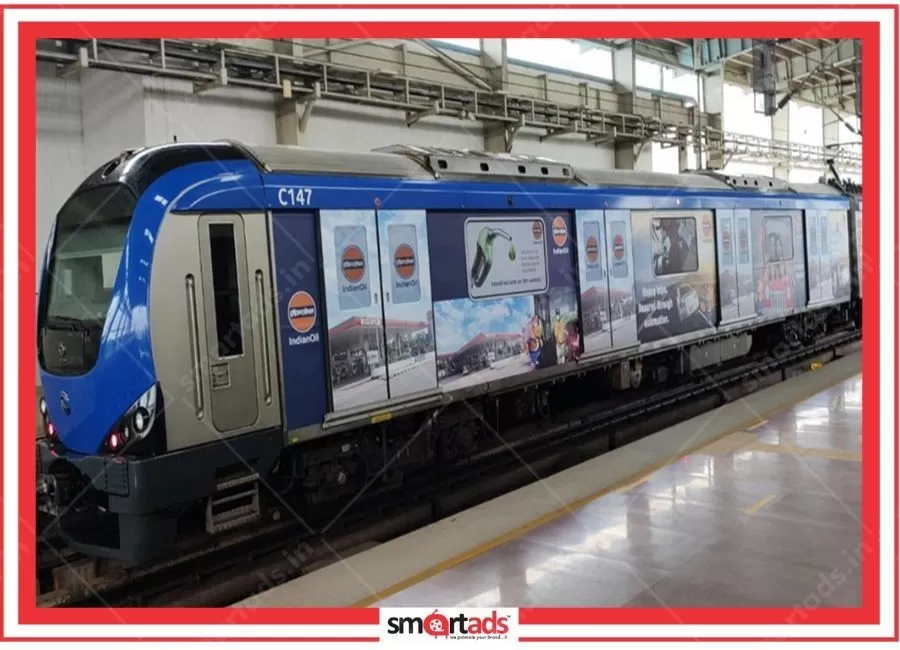
Exterior Metro Wrap
Size & Printing Cost as per actual
On the outside of metro Train, advertise
Rate per Metro Display Cost / 1 Month
6 Coaches & Route : Noida Electronic Cit
₹3560000.00
Showing 1 to 5 of 5 Results
MEDIA DETAILS
Size & Printing Cost as per actual
On the outside of metro Train, advertise
Rate per Metro Display Cost / 1 Month
6 Coaches & Route : Noida Electronic Cit
₹3560000.00
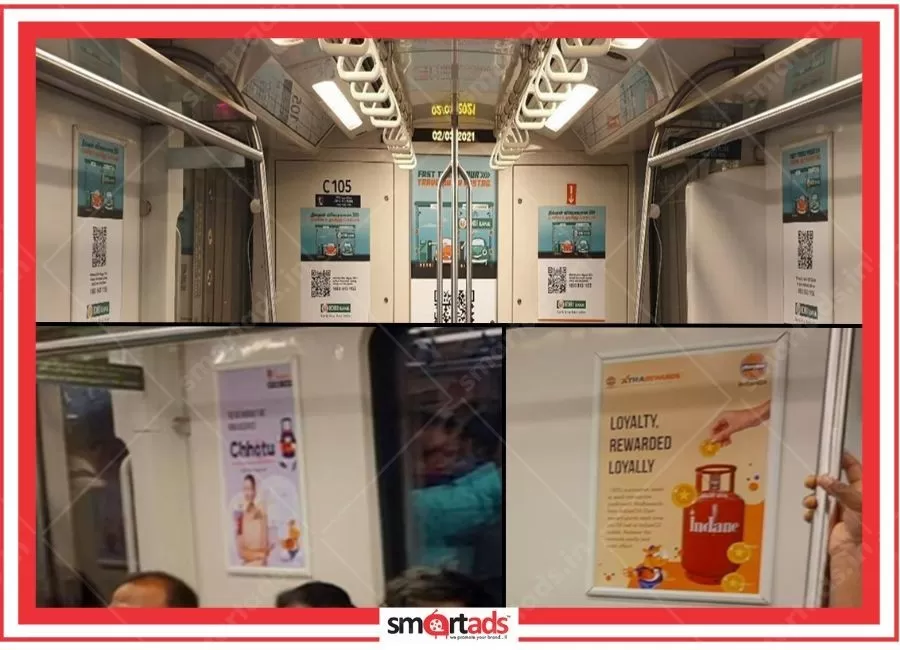
Size & Printing Cost as per actual
On the outside of metro Train, advertise
Rate per Metro Display Cost / 1 Month
8 Coach & Route : Noida Electronic City
₹1108000.00
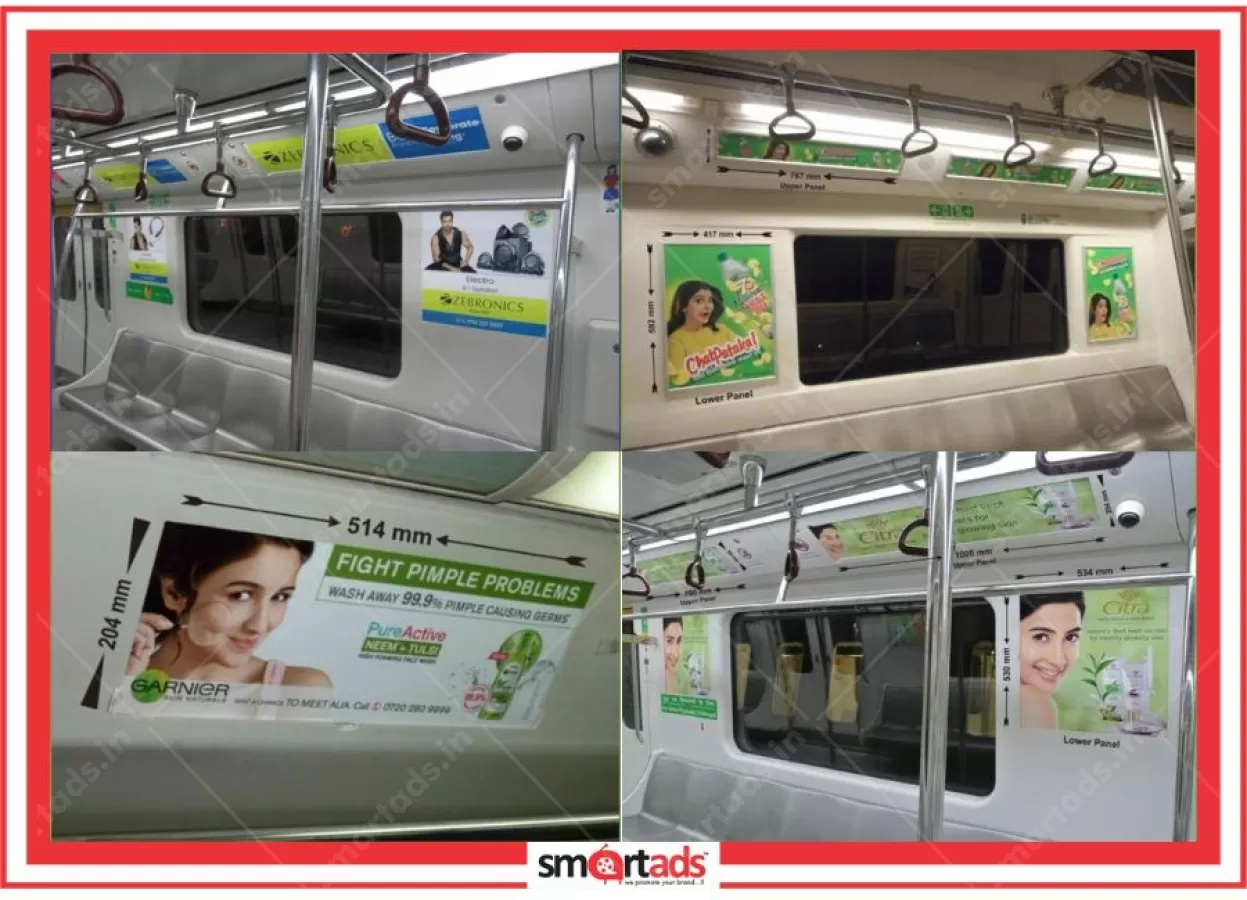
Size & Printing Cost as per actual
On the outside of metro Train, advertise
Rate per Metro Display / Per match
8 Coach & Route : Samaypur Badli to Mill
₹830000.00
20 Sec Jingle
On the outside of metro Train, advertise
Rate per Metro Display Cost / Rate Per M
Route:Noida Electronic City To Dwarka Se
₹400000.00

Size & Printing Cost as per actual
On the outside of metro Train, advertise
Rate per Metro Display Cost / 1 Month
Route:Noida Electronic City To Dwarka Se
₹4820000.00
MEDIA REACH

MinimumQty :
1
EstimateReachPeople :
150000000
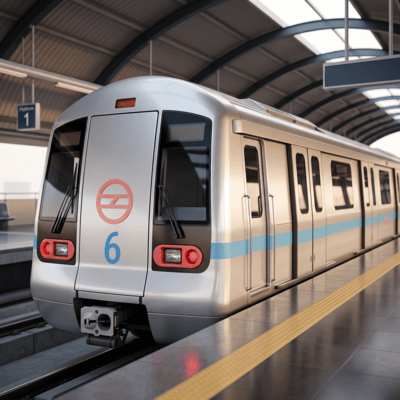
The Blue Line carries more working professionals, college students, and daily shoppers per kilometre than almost any other metro corridor in the country — and yet, most brands still treat it as an afterthought in their media plans. What a lot of people miss is that the Blue Line Main (officially Line 3 of the Delhi Metro Rail Corporation network) stretches across a 56 km metro corridor connecting Dwarka Sector 21 in the west all the way to Noida Electronic City and Vaishali in the east, threading through Connaught Place, Karol Bagh, Rajiv Chowk, and some of the most commercially dense neighbourhoods in Delhi NCR. The audience density, dwell time, and sheer geographic sweep of this route make metro train advertising in Delhi Blue Line Main one of the most undervalued formats in Indian out-of-home advertising today.
Frankly speaking, the answer has less to do with the number of stations — though 50 stations blue line coverage is genuinely impressive — and more to do with the character of the audience that rides it. The Blue Line Main connects two entirely different economic worlds: the residential satellite townships of Dwarka in the west and the IT and commercial corridors of Noida in the east, passing through the retail and business heart of central Delhi along the way. This east-west sweep means a single train wrap on the Blue Line is, in effect, a moving billboard that passes through premium residential zones, central business districts, educational hubs, and shopping corridors within a single operating day.
What our experience at SmartAds shows, after running multiple transit advertising campaigns across the DMRC network, is that the Blue Line generates a quality of commuter engagement that is difficult to replicate on any other line. The average journey time on this corridor is somewhere between 45 and 65 minutes for end-to-end commuters, which translates into extraordinary dwell time for brand messaging — far beyond what a roadside hoarding or a 30-second radio spot can achieve. A commuter seated between Dwarka and Rajiv Chowk has, quite literally, nothing to do but absorb the environment around them; and if that environment carries your brand's messaging across seat back panels, door wraps, and overhead panels, the brand recall that results is measurable and significant.
The commercial logic is reinforced by ridership data. The Blue Line consistently ranks among the highest-ridership corridors in the DMRC network, with daily ridership figures in the ballpark of 5 million daily commuters across the entire Blue Line system when both the Main Line and the branch to Vaishali are counted together. For advertisers, this translates into a cost per impression that, in our experience, works out far more favourably than equivalent digital display buys targeting the same Delhi NCR professional demographic — and the audience is captive in a way that no digital format can claim.
The range of blue line train branding options available through DMRC is considerably wider than most brand managers realise when they first sit down to plan a campaign. At the broadest level, formats fall into two categories — interior train branding and exterior train branding — but within each of those, there are multiple sub-formats that serve very different strategic purposes, and choosing the right combination is where the real media planning skill comes in.
Interior train branding on the Blue Line encompasses overhead panels (the long horizontal panels that run above the windows on both sides of the carriage), seat back panels (which are positioned at eye level for seated commuters), door wraps (applied to the interior faces of the sliding doors), window decals, and full interior coach wraps where every available surface inside a single coach is branded in a unified creative. In-train advertising of this kind is particularly effective for brands that need to communicate detailed information — a new product launch, a service explanation, a QR-code-driven activation — because the dwell time allows commuters to actually read, process, and respond to the message. We have seen this work exceptionally well for ed-tech brands, banking and insurance products, and healthcare services, all of which need more than three seconds of attention to make their case.
Exterior train branding operates on a completely different logic. A full train wrap on the Blue Line — where the entire exterior of a rake is covered in vinyl wrap carrying brand imagery — functions as a moving billboard that generates impressions not just among passengers but among everyone who sees the train at stations, at level crossings, and through the windows of parallel road traffic. Exterior train branding on the Blue Line is particularly powerful at interchange stations like Rajiv Chowk, where large volumes of commuters on platforms see the train arrive and depart; and at elevated sections of the route, where the train is visible from considerable distances to road users below. Train wrap advertising of this scale is, to be honest, one of the most visually arresting formats in all of BTL advertising, and brands that have used it well tend to generate significant organic social media attention as commuters photograph and share the branded trains.
The thing is, interior train branding is not just about plastering panels with a logo and a tagline. The commuters on the Blue Line Main are, on average, educated, digitally active, and accustomed to tuning out generic advertising — which means the creative quality and the format selection matter enormously. Overhead panels work best for high-contrast, simple messaging that can be absorbed in a glance; seat back panels, because they sit directly in a commuter's sightline for the duration of the journey, can carry more detailed content and are particularly well-suited to QR code integrations that drive app downloads or website visits.
Door wraps are a format we particularly recommend for brands that want high frequency of impression within a single journey, because commuters interact with doors multiple times — when boarding, when standing near them during crowded periods, and when alighting. A well-designed door wrap on the Blue Line can generate somewhere between four and eight separate visual impressions per commuter per journey, which is a number that surprises most first-time advertisers when they compare it to what they are paying for Instagram reach. Full coach wraps, which involve branding every interior surface of a single carriage, create an immersive brand environment that is genuinely memorable; we worked with a consumer electronics brand that ran a full coach wrap campaign across three rakes on the Blue Line Main, and their post-campaign brand recall survey showed recognition rates that were roughly 40% higher than their concurrent digital campaign targeting the same demographic.
One important practical note: DMRC has specific creative specifications for each interior format, and materials must meet fire-retardant standards, which affects the choice of vinyl and printing processes. We always advise clients to factor in at least two to three weeks for creative production and DMRC approval before the intended campaign launch date — a timeline that many brands underestimate when they first approach us.
Exterior train branding on the Blue Line Main is, in our view, the format that delivers the most dramatic brand visibility of any single out-of-home advertising unit available in Delhi NCR. A full train wrap covers the exterior of an entire rake — typically eight coaches — in a continuous vinyl wrap design, which means the branded train becomes a moving billboard covering roughly 200 metres of visual surface as it moves through the network. The impressions generated are not limited to the 5 million daily commuters who ride the line; they extend to every person standing on a platform as the train arrives, every pedestrian near an elevated section of track, and every motorist at a level crossing.
The Blue Line's geography makes exterior branding particularly effective because the route includes both underground sections (where station dwell visibility matters) and elevated sections — particularly in the Dwarka corridor and parts of the Noida stretch — where the train is visible from considerable distances. At stations like Akshardham, Yamuna Bank, and Anand Vihar, which sit at or near elevated positions and handle significant interchange traffic, a branded train generates a volume of platform impressions that is genuinely difficult to quantify but consistently impresses clients when they see the campaign in operation. One real estate developer we worked with ran a train wrap advertising campaign specifically timed to coincide with a new project launch in the Noida corridor; the train passed through Noida City Centre, Noida Electronic City, and multiple intermediate stations multiple times daily, generating hyperlocal reach precisely in the geography where the developer's target buyers lived and worked.
The practical consideration with exterior train branding is that the vinyl wrap process requires the train to be taken out of service for application, which DMRC schedules during maintenance windows; this means lead times are longer than for interior formats, typically running to four to six weeks from booking confirmation to campaign launch. The creative itself must be designed with an understanding of the coach geometry — doors, windows, and panel joins all affect how the design reads — which is why working with an experienced metro advertising agency that has handled previous Blue Line campaigns is genuinely important, not just a sales pitch.
Full train branding — where both the interior and exterior of a rake are branded simultaneously in a unified campaign — is the format we recommend when a brand needs to make an unmissable statement. It is not the cheapest option, and we would never recommend it to a client whose primary objective is pure reach at minimum cost; but for product launches, brand repositioning campaigns, or high-stakes seasonal pushes, the impact of a fully branded train on the Blue Line Main is genuinely in a different category from any other single OOH advertising unit.
The strategic logic of full train branding is that it eliminates the gap between exterior impression and interior experience. A commuter who sees the branded exterior of the train on the platform, boards it, and then finds themselves inside a branded environment has had a brand interaction that is layered, sustained, and far more memorable than a single-touchpoint exposure. This is what we mean when we talk about commuter engagement as a metric rather than just reach — the quality of the interaction, not just the quantity. At SmartAds, we have found that full train branding campaigns on the Blue Line consistently outperform equivalent-budget campaigns that split spend between multiple single-format placements, precisely because the unified brand environment creates a depth of impression that fragmented formats cannot match.
From a cost perspective, full train branding on the Blue Line Main is priced in the ballpark of ₹15 to ₹25 lakh per rake per month for a combined interior-exterior package, depending on the specific formats included and the campaign duration — with longer campaigns typically attracting better rates. To be fair, that is a significant investment, but when you divide it by the number of impressions generated across a month of operation on one of India's busiest metro corridors, the cost per impression works out to figures that are genuinely competitive with premium digital display, without the viewability and bot-traffic concerns that plague programmatic buying.
Here is where it gets interesting. DMRC has been progressively expanding its in-train audio advertising programme across the network, and the Blue Line is among the corridors where this format is now available — a development that most brand managers and even many media planners are simply not aware of. Audio advertising on metro trains operates through the in-carriage public address system, with brand messages delivered between station announcements; the format is brief, typically 15 to 20 seconds, but the captive nature of the audience and the absence of competing audio stimuli in the carriage environment make it disproportionately effective for brand recall.
The strategic value of audio advertising on the Blue Line is that it reaches commuters who are not looking at panels — those who are reading, using their phones, or simply staring out the window — and creates an additional touchpoint that complements visual in-train advertising formats. When audio advertising is run in combination with interior train branding, the dual-channel stimulation produces brand recall rates that, in our experience, are meaningfully higher than either format achieves independently. This is a principle that radio broadcasters have understood for decades; the application of the same logic inside a metro carriage, where the audience is truly captive and the audio environment is controlled, makes it even more powerful.
Booking audio advertising on the Blue Line requires coordination with DMRC's designated media partner for the audio programme, and the creative specifications are strict — no misleading claims, no competitive comparisons, and content must be approved before airing. Campaign durations for audio advertising typically start at a minimum of two weeks, and the format is priced considerably below visual formats, making it an excellent addition to a broader campaign rather than a standalone buy. We always suggest clients consider audio advertising as a frequency multiplier when they are already running interior train branding on the Blue Line Main.
The Blue Line Main (Line 3) runs from Dwarka Sector 21 in the southwest to Noida Electronic City in the east, with a branch from Yamuna Bank to Vaishali; together, these cover 50 stations across the 56 km metro corridor. For advertising purposes, not all stations are created equal, and understanding which stations generate the highest footfall and the most commercially valuable audience is essential to building an effective media plan.
Rajiv Chowk is, by any measure, the single most important station on the Blue Line from an advertising perspective; it is the interchange with the Yellow Line and handles daily footfall that is consistently among the highest in the entire DMRC network. Karol Bagh is a major retail and commercial hub, drawing shoppers and traders from across west Delhi and generating a particularly strong footfall of middle-income consumers — a demographic that is highly relevant for FMCG, fashion, and consumer durables brands. Connaught Place, accessible via Rajiv Chowk, draws a premium office-going and tourist audience; and at the eastern end, Noida City Centre and Noida Electronic City serve the IT and corporate workforce of the Noida corridor, which is among the most affluent and digitally active commuter segments in Delhi NCR.
For brands whose target audience is concentrated in specific geographies, the Blue Line's route through Dwarka — passing through Dwarka Sector 21, Dwarka Sector 10, and multiple intermediate stations — offers hyperlocal reach into one of Delhi's largest planned residential townships, which houses a significant population of government employees, defence personnel, and middle-class families. Anand Vihar, at the northeastern end of the main line, serves as an interchange with multiple bus and rail terminals and handles a high volume of inter-city travellers, making it relevant for brands in travel, hospitality, and financial services. Janakpuri West, in the western corridor, is a key node for the residential west Delhi market, which is underserved by premium OOH formats and therefore represents a genuine opportunity for brands seeking non-traditional advertising reach in that geography.
The Blue Line audience is more diverse than any single demographic profile can capture, which is actually one of its greatest strengths as an advertising medium. The western Dwarka corridor carries a high proportion of government employees, defence personnel, and middle-income families who commute into central Delhi for work; the central section — from Janakpuri through Karol Bagh to Rajiv Chowk — carries a mix of retail workers, office professionals, and students; and the eastern Noida section carries a disproportionately high share of IT professionals, corporate employees, and young urban professionals, which is among the most sought-after advertising demographics in the country.
What this means in practice is that a campaign running across the full length of the Blue Line Main is reaching a genuinely broad cross-section of Delhi NCR's economically active population — not a niche audience, but not an undifferentiated mass either. The average Blue Line commuter is, broadly speaking, between 22 and 45 years old, employed in the formal sector, digitally active, and making regular purchase decisions across categories including financial services, real estate, consumer electronics, apparel, food and beverage, and healthcare. This profile aligns closely with the target audience for a remarkably wide range of advertising categories, which is why we have successfully run Blue Line campaigns for clients ranging from ed-tech startups to luxury real estate developers to national FMCG brands.
To be honest, the student segment on the Blue Line is also significant and is often underweighted in media plans. The route passes near several major educational institutions, and student commuters — particularly those travelling between Noida and central Delhi — represent a valuable audience for brands in categories including apparel, food delivery, financial products, and digital services. The Blue Line's role as the primary transit link for this demographic makes metro train advertising in Delhi Blue Line Main a genuinely efficient channel for youth-oriented brands that might otherwise default entirely to social media, where cost per meaningful engagement has been rising steadily.
Advertising rates on the Blue Line are structured by format, campaign duration, and the number of rakes or panels booked; and while DMRC publishes a rate card through its authorised media partners, the actual cost a brand pays is typically negotiated based on campaign scale and duration. What we tell our clients at SmartAds is that the headline rate is rarely the rate you should be paying if you are booking through an experienced metro advertising agency with an established DMRC relationship.
For interior train branding, individual panel placements — such as a single overhead panel in one coach — are priced somewhere in the range of ₹8,000 to ₹15,000 per panel per month, which sounds modest until you multiply it across the number of coaches and panels needed to achieve meaningful coverage. A more practical unit for most campaigns is a full coach interior package, which typically works out to somewhere between ₹1.5 lakh and ₹3 lakh per coach per month depending on the formats included; and a full rake interior campaign — covering all eight coaches — is priced in the ballpark of ₹10 to ₹18 lakh per month. These are figures that surprise many clients when they first see them, because the cost per impression at these volumes is genuinely competitive with mid-tier digital display.
Exterior train branding, specifically a full train wrap covering the exterior of a complete rake, is priced roughly between ₹12 and ₹20 lakh per month for the Blue Line Main, with production costs for the vinyl wrap itself adding an additional ₹8 to ₹15 lakh as a one-time cost depending on the complexity of the design and the number of coaches. Audio advertising on the Blue Line is priced considerably lower — typically in the range of ₹2 to ₹5 lakh per month for a standard frequency package — which makes it an attractive add-on for brands that are already investing in visual formats. Campaign durations of three months or more typically attract discounts in the range of 10 to 20 percent, and multi-format bookings that combine interior and exterior elements are generally negotiated as packages rather than priced individually.
ROI on transit advertising is a question we get asked in virtually every client conversation, and the honest answer is that it depends significantly on what you are measuring and how you are measuring it. What the data consistently shows — across FICCI-EY Media Report analyses of the transit advertising segment and our own campaign post-analyses — is that metro train advertising delivers a cost per thousand impressions (CPM) that is competitive with, and in many cases superior to, equivalent digital formats when the audience quality and dwell time are factored in.
The CPM for interior train branding on the Blue Line works out to roughly ₹6 to ₹10 per thousand impressions, which is a number that surprises most first-time advertisers when they compare it to what they are paying for Instagram reach targeting the same Delhi NCR professional demographic. The key distinction, of course, is that a metro impression is a genuine, unavoidable exposure to a captive audience, while a digital impression may be a fraction-of-a-second scroll-past that generates no meaningful brand recall. The dwell time advantage of in-train advertising — where a commuter is exposed to a panel for 45 minutes or more — fundamentally changes the quality calculation, and brand recall studies consistently show that transit advertising outperforms digital display on aided and unaided recall metrics.
We ran a campaign for an FMCG client — a mid-sized personal care brand expanding into the Delhi NCR market — that combined interior train branding across two rakes on the Blue Line Main with a complementary digital campaign targeting the same geography. The post-campaign brand recall survey showed that the metro advertising component, which accounted for roughly 35 percent of the total campaign budget, drove approximately 55 percent of the unaided brand recall among respondents who reported using the Delhi Metro. That asymmetry between budget share and recall share is, in our view, the clearest possible illustration of why metro train advertising in Delhi Blue Line Main deserves a larger share of media budgets than most brands currently allocate to it.
The Yellow Line (Line 2, Samaypur Badli to Huda City Centre) is the most frequently cited competitor to the Blue Line for metro advertising budgets, and the comparison is worth examining carefully because the two lines serve genuinely different advertising objectives. The Yellow Line passes through Chandni Chowk, New Delhi Railway Station, and Central Secretariat, which gives it strong coverage of the old city commercial belt and the government quarter; but its geographic sweep is primarily north-south, which means it does not serve the Noida IT corridor or the Dwarka residential market that make the Blue Line so valuable for certain categories.
For brands targeting IT professionals, corporate employees, and the upwardly mobile Noida demographic, the Blue Line Main is, in our view, clearly superior to the Yellow Line; and for brands targeting the west Delhi residential market — which is large, commercially active, and significantly underserved by premium OOH advertising — the Dwarka corridor of the Blue Line is essentially without equivalent on any other line. The Magenta Line (Line 8, Janakpuri West to Botanical Garden) overlaps with the Blue Line at Janakpuri West and serves the southern Delhi and Gurugram corridor, making it more relevant for brands targeting the south Delhi and Gurugram professional market; but it carries lower ridership than the Blue Line and therefore generates fewer impressions per rupee of advertising spend.
The Airport Express Line is sometimes considered as an alternative for premium brand positioning, given its high-income traveller audience; but its ridership is a fraction of the Blue Line's, and the audience, while affluent, is transient rather than the regular, repeated-exposure commuter audience that makes transit advertising so effective for brand building. On top of that, the Airport Express Line's short route limits the geographic reach of any campaign to a very narrow corridor. For most brand categories — FMCG, real estate, financial services, ed-tech, consumer electronics, healthcare — the Blue Line Main offers a combination of scale, audience quality, and geographic reach that no other single Delhi Metro line can match.
DMRC's advertising guidelines are more detailed than most advertisers expect, and non-compliance at any stage of the process can result in campaign delays or rejection — which is why understanding the approval process before you start designing creative is genuinely important. The Delhi Metro Rail Corporation requires all advertising content to be submitted for approval before production begins, and the approval process involves review by DMRC's designated media partner as well as internal DMRC compliance review; the timeline for this process is typically two to three weeks, though complex or large-format campaigns can take longer.
Content restrictions are broadly aligned with standard Indian advertising standards — no misleading claims, no content that could be considered offensive or politically sensitive, no competitive comparisons — but DMRC also has specific restrictions on certain product categories, including alcohol, tobacco, and some pharmaceutical categories, which cannot be advertised on the metro network at all. For exterior train branding and full train wraps, the creative must be designed to DMRC's specific template, which accounts for door positions, window placements, and panel joins; any creative that does not account for these elements will be rejected at the approval stage, wasting production time and budget.
Material specifications are strict and non-negotiable: all vinyl used for train wraps must meet fire-retardant standards specified by DMRC, and the printing process must produce materials that can withstand the environmental conditions of both underground and elevated sections of the route. At SmartAds, we maintain relationships with DMRC-approved production vendors who are familiar with these specifications, which means our clients' campaigns move through the approval and production process significantly faster than those managed by agencies without this prior experience. The practical implication for any brand planning a Blue Line campaign is that the total lead time from campaign brief to campaign launch should be budgeted at a minimum of six to eight weeks — and ideally ten to twelve weeks for full train wrap campaigns.
Booking metro train advertising in Delhi Blue Line Main involves working through DMRC's authorised media partners, who hold the rights to sell advertising inventory on the network; direct bookings with DMRC are not available to advertisers, and attempting to bypass the authorised partner structure will simply result in the enquiry being redirected. The authorised partner structure means that the rates and inventory available to you depend significantly on which agency you work with and what relationships they have with the relevant DMRC media partners.
The booking process itself begins with a media brief — defining the campaign objective, target audience, geography, budget, and campaign duration — which the agency uses to recommend specific formats, rakes, and campaign structures. Once a proposal is agreed, the booking is confirmed through a purchase order and advance payment, typically 50 percent upfront with the balance due before campaign launch. Creative materials must be submitted and approved before production begins, and the production timeline must be factored into the overall campaign schedule. For interior formats, the installation is typically completed during scheduled maintenance windows and takes one to three days per rake; for exterior wraps, the process takes three to five days per rake and requires the train to be taken out of service during application.
Minimum booking durations for most Blue Line train advertising formats start at one month, though some interior panel formats can be booked for shorter periods; and minimum quantities vary by format, with some interior panel packages requiring a minimum of one full coach booking. Our recommendation at SmartAds is always to plan for a minimum campaign duration of three months for brand-building objectives, because the cumulative effect of repeated exposure to the same commuter audience over time is what drives the brand recall and purchase intent metrics that justify the investment. A one-month campaign on the Blue Line will generate impressions; a three-month campaign will build a brand.
The Blue Line has hosted campaigns from a remarkably diverse range of brand categories, which is itself evidence of how broad the line's audience appeal is. Financial services brands — banks, insurance companies, mutual fund houses — have been consistent advertisers on the Blue Line Main, drawn by the high proportion of salaried professionals in the commuter base who are actively making financial decisions. Real estate developers, particularly those with projects in the Dwarka, Noida, and Indirapuram corridors, have used Blue Line train branding extensively for project launches, because the train literally passes through their target buyers' daily commute.
Ed-tech brands have found the Blue Line particularly effective for reaching the student and young professional demographic that forms a significant share of the eastern corridor's ridership; we worked with one ed-tech platform that ran a three-month interior train branding campaign across two rakes on the Blue Line Main, targeting the Noida to central Delhi commuter segment, and the campaign drove app download volumes that were roughly 30 percent higher than their concurrent social media campaign at a cost per acquisition that was meaningfully lower. FMCG brands — particularly in the personal care, food and beverage, and household products categories — have used full train branding on the Blue Line for seasonal campaigns, leveraging the mass reach of the format to drive awareness ahead of major retail periods.
The healthcare and pharmaceutical sector, within the content restrictions that DMRC applies, has also been an active advertiser on the Blue Line; hospital chains, diagnostic centres, and wellness brands have found the format effective for building brand familiarity in specific geographic catchment areas along the route. What all of these successful campaigns share is a clear understanding of the audience, a creative approach that works within the constraints of the format, and a campaign duration long enough to generate the cumulative exposure that transit advertising requires to deliver its full impact.
Q: What is metro train advertising on the Delhi Blue Line Main?
Metro train advertising in Delhi Blue Line Main refers to the placement of brand communications on and inside the trains operating on DMRC's Blue Line (Line 3 / Line 4), which runs from Dwarka Sector 21 in the west to Noida Electronic City and Vaishali in the east. The formats available include interior branding — overhead panels, seat back panels, door wraps, and full coach wraps — as well as exterior train branding in the form of full vinyl train wraps covering the outside of the coaches. Audio advertising through the in-carriage public address system is also available on this corridor. The format is classified as BTL advertising and transit advertising, and it operates under the advertising framework managed by DMRC's authorised media partners.
Q: How much does it cost to advertise on the Delhi Metro Blue Line Main train in 2025?
The advertising cost varies significantly by format and campaign duration. Interior panel placements start at roughly ₹8,000 to ₹15,000 per panel per month for individual overhead panels, while a full coach interior package works out to somewhere between ₹1.5 lakh and ₹3 lakh per coach per month. A full rake interior campaign covering all eight coaches is priced in the ballpark of ₹10 to ₹18 lakh per month. Exterior full train wrap advertising is priced roughly between ₹12 and ₹20 lakh per month for the media space, with production costs for the vinyl wrap adding ₹8 to ₹15 lakh as a one-time expense. Audio advertising packages are priced in the range of ₹2 to ₹5 lakh per month. Longer campaign durations and multi-format packages typically attract negotiated discounts. These are indicative figures; actual rates depend on specific formats, inventory availability, and campaign structure.
Q: What advertising formats are available on Blue Line Main (Line 3) metro trains?
The formats available on the Blue Line Main include interior train branding options such as overhead panels, seat back panels, door wraps, window decals, and full interior coach wraps; exterior train branding in the form of full train wraps or partial exterior panel placements; and audio advertising delivered through the in-carriage public address system. Some campaigns also combine train-level formats with station-level formats such as pillar branding, platform panels, and smart card advertising at key Blue Line stations, creating an integrated BTL advertising campaign that reaches commuters at multiple touchpoints across their journey.
Q: How many stations does the Delhi Metro Blue Line Main cover?
The Blue Line Main (Line 3) covers 50 stations across its combined route, spanning the 56 km metro corridor from Dwarka Sector 21 in the west to Noida Electronic City in the east, with a branch from Yamuna Bank to Vaishali. Key stations along the route include Dwarka Sector 21, Janakpuri West, Rajiv Chowk, Karol Bagh, Connaught Place, Yamuna Bank, Akshardham, Anand Vihar, Noida City Centre, and Noida Electronic City, among others.
Q: What is the daily ridership on the Delhi Metro Blue Line Main?
The Blue Line is one of the highest-ridership corridors in the DMRC network, with combined daily ridership across the Main Line and the Vaishali branch estimated in the ballpark of 5 million daily commuters. This figure fluctuates by day of week and time of year, with weekday peak-hour ridership significantly higher than weekend figures. For advertising purposes, the relevant metric is not just total ridership but the cumulative impression count generated by branded formats across all commuter journeys on a given day, which for a full rake campaign runs into millions of individual exposures.
Q: Can I book interior-only or exterior-only train branding on the Blue Line?
Yes, interior train branding and exterior train branding can be booked independently; there is no requirement to combine both formats in a single campaign, though doing so typically delivers better brand recall outcomes. Interior-only campaigns are common among brands with detailed messaging needs — financial services, ed-tech, healthcare — where the extended dwell time of interior formats is the primary value driver. Exterior-only train wrap advertising is typically chosen by brands prioritising maximum visual impact and platform-level impressions, such as consumer goods brands running awareness campaigns. Full train branding combining both interior and exterior formats is available as a premium package.
Q: What is the minimum booking duration for metro train advertising on the Blue Line?
The minimum booking duration for most Blue Line train advertising formats is one month, though some interior panel formats may be available for shorter periods depending on inventory availability. For exterior train wraps and full train branding packages, a minimum of one month is standard, and most DMRC media partners prefer a minimum of two to three months for full rake campaigns. From a campaign effectiveness standpoint, we always recommend a minimum of three months for brand-building objectives, because the cumulative frequency of exposure that transit advertising generates over time is what drives meaningful brand recall and purchase intent.
Q: How do I get DMRC approval for advertising on the Blue Line Main?
DMRC approval for Blue Line advertising is managed through the authorised media partners who hold the advertising rights for the network; advertisers do not approach DMRC directly. The approval process requires submission of creative content for review, which DMRC evaluates against its content guidelines and advertising policy. The timeline for approval is typically two to three weeks for standard formats, and longer for complex campaigns. Material specifications — including fire-retardant vinyl standards for train wraps — must be met before production begins. Working with an experienced metro advertising agency that has an established relationship with DMRC's media partners significantly reduces the risk of approval delays.
Q: What are the creative size specifications for interior branding panels on the Blue Line?
Creative specifications vary by format and coach type, and DMRC provides specific templates for each format through its authorised media partners. Overhead panels are typically horizontal formats in the range of 1500mm x 300mm to 2000mm x 400mm, depending on the coach section; seat back panels are smaller vertical formats, typically around 200mm x 300mm; and door wraps cover the full interior face of the sliding door, which varies by coach model. Full coach
