
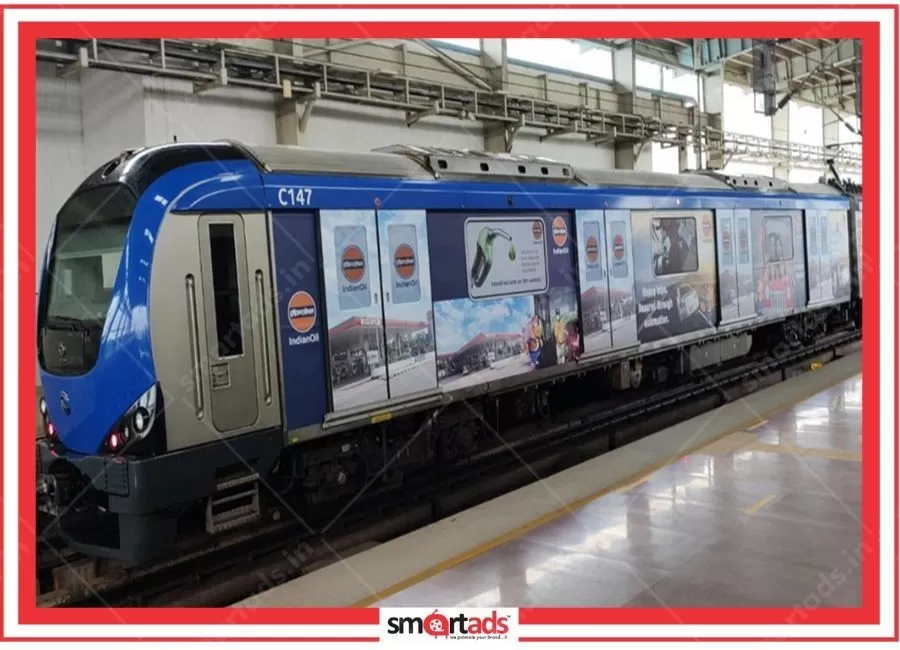
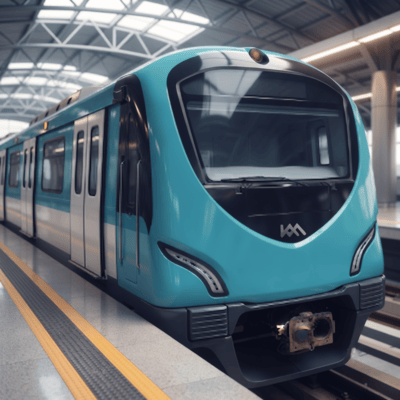
Exterior Metro Wrap
Size & Printing Cost as per actual
On the outside of metro Train, advertise
Rate per Metro Display Cost / 1 Month
Route:Aluva To Pettah
₹710000.00
Showing 1 to 4 of 4 Results
MEDIA DETAILS
Size & Printing Cost as per actual
On the outside of metro Train, advertise
Rate per Metro Display Cost / 1 Month
Route:Aluva To Pettah
₹710000.00
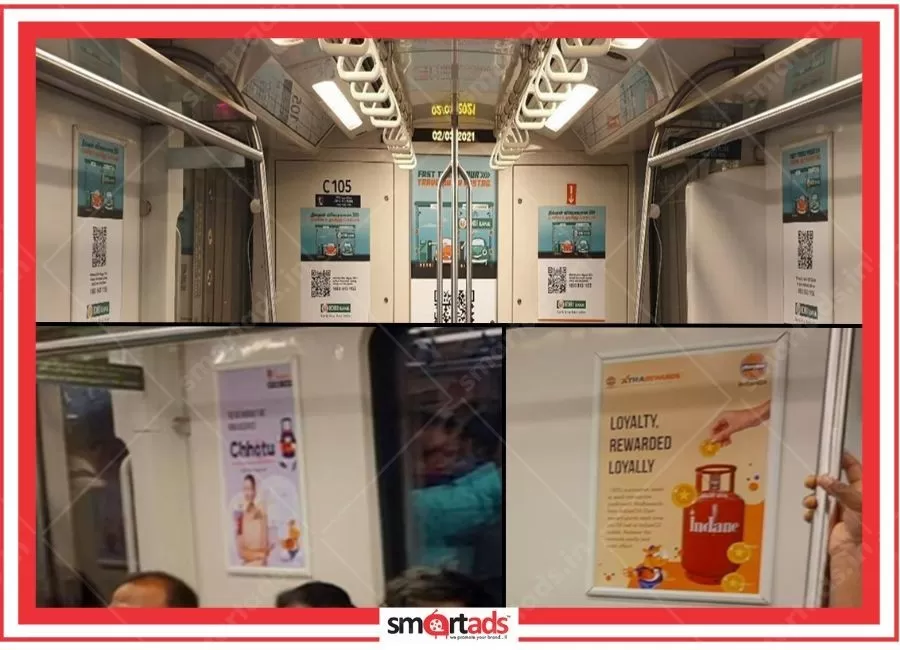
Size & Printing Cost as per actual
On the outside of metro Train, advertise
Rate per Metro Display Cost / 1 Month
Route:Aluva To Pettah
₹280000.00
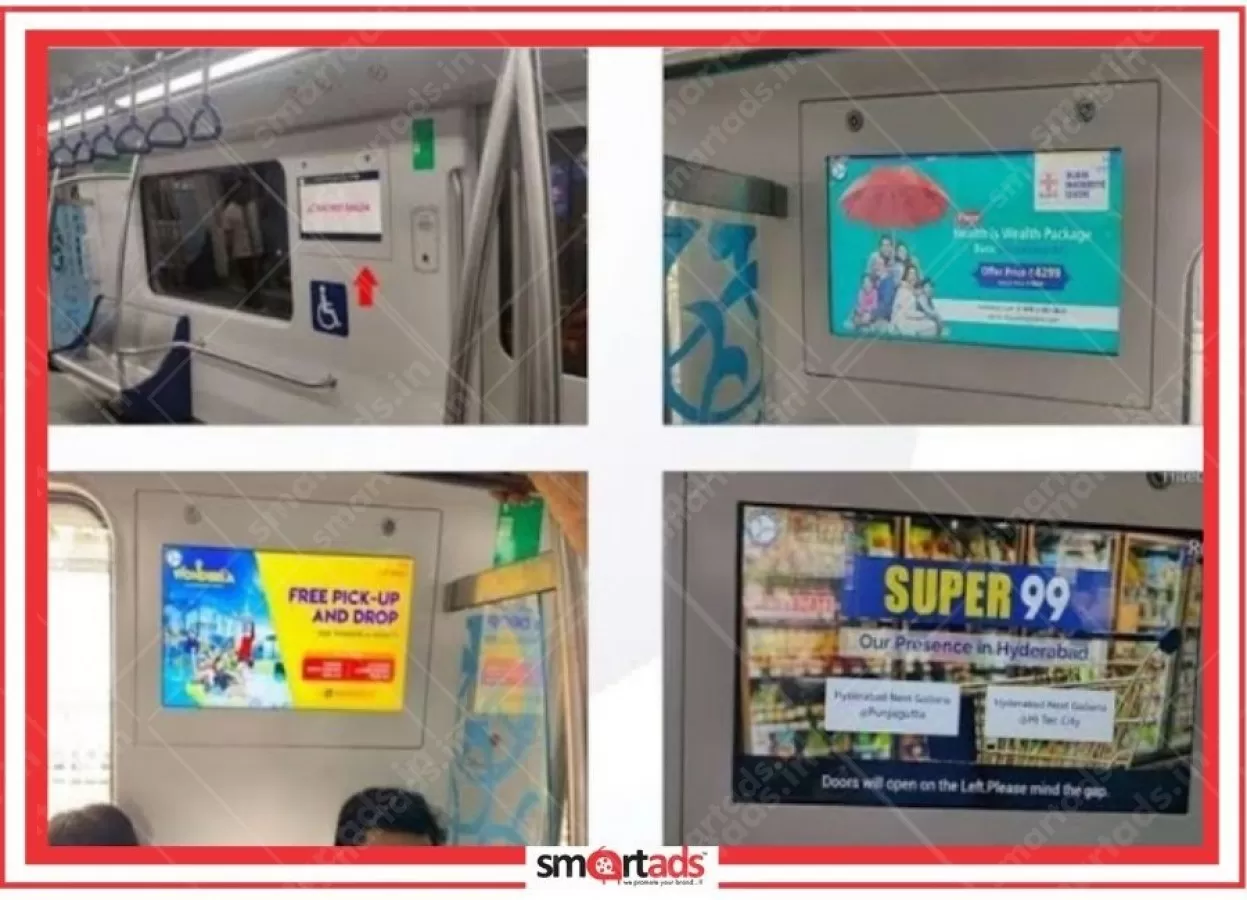
Customize Size
Digital screen on the metro station will
Rate per Screen / Month
Route : Aluva To Pettah
₹375000.00
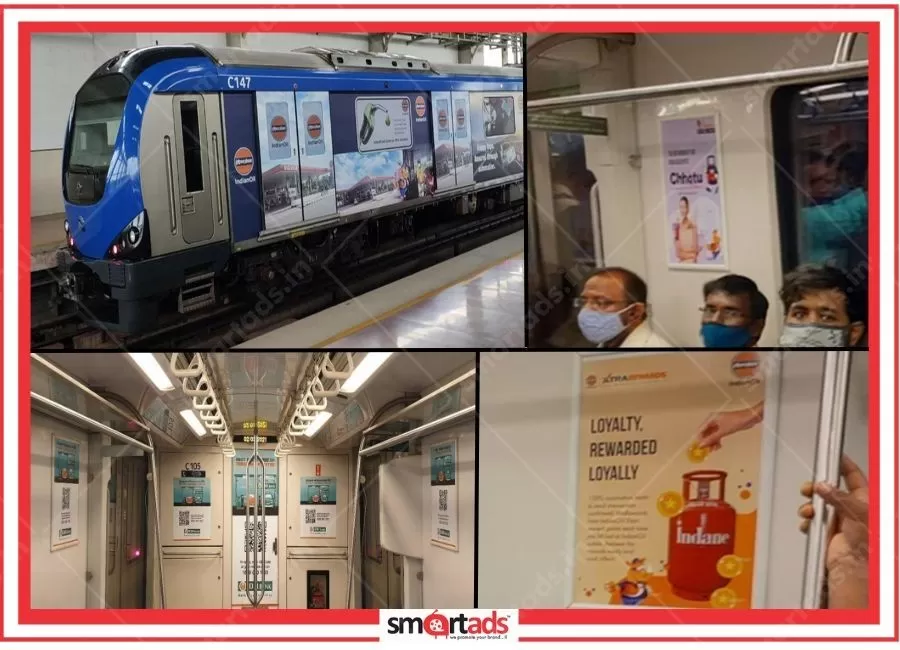
Size & Printing Cost as per actual
On the outside of metro Train, advertise
Rate per Metro Display Cost / 1 Month
Route:Aluva To Pettah
₹930000.00
MEDIA REACH

MinimumQty :
1
EstimateReachPeople :
150000000
Kochi Metro's Blue Line carries somewhere in the ballpark of 70,000 to 90,000 commuters on a typical weekday — and every single one of them is trapped in a branded environment for an average dwell time of 22 to 35 minutes. That number should make any media planner sit up. What makes metro train advertising in Kochi Blue Line genuinely different from most BTL advertising formats is not just the scale; it is the quality of attention you are buying, which is something that outdoor hoardings and newspaper inserts simply cannot replicate at any price.
At SmartAds, we have been planning transit media campaigns across Indian cities for years, and frankly speaking, the Kochi Blue Line remains one of the most underutilised advertising corridors in South India — which means the brands that move now are paying yesterday's rates for tomorrow's audience.
The Blue Line — stretching from Aluva in the north to Thrippunithura Terminal in the south — passes through the commercial, educational, and residential spine of Ernakulam district, which is arguably the most economically active corridor in Kerala. This is not a route that carries casual travellers; it carries IT professionals commuting to and from Infopark-adjacent stations, students heading to CUSAT, shoppers flooding MG Road and Kaloor, and working professionals who represent exactly the kind of aspirational, purchase-ready demographic that most brand awareness campaigns are chasing.
What a lot of people miss is that Kochi Metro advertising is not just about impressions — it is about frequency of exposure. A commuter who travels the blue line metro Kochi twice daily, five days a week, encounters your brand somewhere between 40 and 60 times in a single month, which is a frequency of exposure number that most digital campaigns achieve only with aggressive retargeting budgets. The FICCI-EY Media and Entertainment Report has consistently flagged transit advertising as one of the fastest-growing segments within OOH advertising in India, and the Kochi corridor is a textbook example of why that trend is accelerating.
On top of that, there is an eco-friendly brand association benefit that very few advertisers think to claim. Kochi Metro is one of India's first metro systems to run substantially on solar power, which means that when your brand appears on or inside these trains, it is being seen in a context that consumers associate with sustainability and modernity. For brands that are trying to build a progressive, responsible identity — particularly in a market like Kerala, where consumer literacy is exceptionally high — that association carries real weight. We always tell our clients that the environment in which your message appears is itself a message.
The range of ad formats available for metro train advertising in Kochi Blue Line is considerably wider than most advertisers initially expect, and the choice of format has a dramatic impact on both cost and campaign effectiveness. The Alstom Metropolis rolling stock that operates on the Blue Line offers multiple touchpoints across the exterior and interior of each train, which gives brands the flexibility to build a truly immersive campaign or to target specific moments in the commuter journey.
Exterior train wrap advertising is the most visually dominant format — a full train wrap converts the entire exterior of an Alstom Metropolis rake into a moving billboard that travels the length of the Blue Line multiple times a day, generating impressions not just from passengers inside but from pedestrians, motorists, and bystanders at every station and level crossing. A partial exterior train wrap, covering two or three coaches rather than the full rake, brings the cost down substantially while still delivering strong brand visibility at platform level. Door wrap branding — where the external doors of specific coaches are branded — is a format that works particularly well for product launches, because the door is the first thing a boarding passenger sees up close.
Inside the train, the formats become more intimate and arguably more persuasive. Interior train branding options include seat back panels, which sit directly in the eyeline of seated passengers and generate the highest dwell time of any format; overhead panels and grab-handle danglers, which capture the attention of standing passengers; and floor sticker advertising, which is a format that consistently surprises our clients with its recall numbers — there is something about an unexpected floor graphic that the human brain simply cannot ignore. Digital screen metro advertising is available at select stations and concourse areas rather than inside the train coaches themselves, and DOOH metro Kochi inventory has been growing steadily as KMRL expands its digital infrastructure. Platform panels, concourse advertising, and entry exit branding at key stations like MG Road metro station, Kaloor metro station, and Aluva metro station round out a full-funnel BTL advertising plan that can be activated entirely within the metro ecosystem.
Advertising cost for Kochi Metro is one of those topics where the internet is spectacularly unhelpful — most pages either say "contact us for rates" or quote numbers that are two years out of date. We will do better than that. Based on our current rate intelligence and recent bookings, a full exterior train wrap on the Blue Line works out to somewhere in the range of ₹8 to ₹14 lakh per month depending on the number of coaches wrapped, the duration of the booking, and the specific rake assignment negotiated with KMRL. That number sounds significant until you calculate the CPM, which typically works out to roughly ₹6 to ₹10 per thousand impressions — a figure that surprises most brand managers when they compare it to what they are currently paying for programmatic display or even mid-tier newspaper insertions in Kerala.
Interior train branding formats are priced more accessibly. Seat back panels across a single coach run in the ballpark of ₹80,000 to ₹1.5 lakh per month, which makes them genuinely viable for mid-sized brands and even well-funded SMEs. Floor sticker advertising and grab-handle danglers are priced lower still, and they are formats that we have used effectively for hyperlocal advertising campaigns targeting specific station catchment zones. Platform panels at high-footfall stations like MG Road metro station and Edapally metro station are priced separately and can be bundled with train-based formats for a station-plus-train package that maximises both platform dwell and in-transit exposure.
Metro advertising rates are also subject to seasonal variation, which is something that most agencies do not flag clearly enough. During Onam — when daily ridership on the blue line metro Kochi spikes significantly as shoppers flood MG Road and Kaloor — inventory tightens and rates can move upward by 15 to 25 percent. The same pattern holds around Christmas and Vishu, which are peak retail periods in Kerala. Our recommendation is always to book Onam inventory at least 8 to 10 weeks in advance, because the brands that wait until September find that the best positions are already committed. Minimum campaign durations through KMRL's official advertising empanelment typically start at 30 days, though negotiated shorter bursts of 15 days are sometimes possible for specific formats during non-peak periods.
Understanding the audience profile of the Blue Line is, frankly, the most important piece of research a media planner can do before recommending this medium to a client. The Blue Line is not a homogeneous commuter base — it is a layered audience that shifts dramatically depending on which station zone you are targeting, which time of day you are running, and which direction the train is travelling.
The northern stretch of the Blue Line — from Aluva metro station through Edapally metro station — carries a high proportion of working professionals, many of whom are commuting toward the commercial districts of Ernakulam. The CUSAT station catchment is predictably student-heavy, with a demographic profile that skews toward the 18 to 28 age group, which makes it a natural fit for ed-tech, FMCG, fashion, and financial services brands targeting first-time earners and young adults. MG Road metro station and Town Hall station serve the retail and commercial heart of Kochi, drawing shoppers, business visitors, and tourists — a mixed but high-intent audience that responds well to lifestyle, hospitality, and retail advertising. Vyttila metro station is a multimodal hub where metro connects with bus and water transport, which means the audience there includes a broader cross-section of commuters from across the wider Ernakulam district, making it valuable for mass-market brand awareness campaigns.
What the IRS (Indian Readership Survey) data and KMRL's own ridership research consistently show is that Kochi Metro's commuter base skews toward the SEC A and SEC B demographic — educated, digitally active, and with disposable income above the Kerala state average. Kerala's 100 percent literacy rate is not just a statistic; it means that every piece of copy inside a metro coach will actually be read, which is a claim that very few OOH advertising environments can make with confidence. For brands that invest in creative quality, this is an audience that rewards that investment.
Below the line marketing has always been about precision over broadcast, and metro train advertising in Kochi Blue Line delivers both simultaneously — which is an unusual combination. The captive audience dynamic is what makes transit advertising fundamentally different from every other BTL advertising format. A consumer who walks past a hoarding can look away; a consumer who is sitting in a metro coach for 25 minutes, waiting for their station, has very limited options for where to direct their attention, which is why brand recall figures from commuter advertising consistently outperform comparable OOH advertising formats.
The non-traditional advertising opportunity here is also amplified by the relative scarcity of quality BTL inventory in Kochi. The city's outdoor landscape is fragmented — hoardings are scattered, bus shelter quality is inconsistent, and mall activations are expensive and time-limited. Metro branding on the Blue Line offers something rare: a premium, controlled environment where your creative is displayed at consistent quality across a defined route, for a defined audience, with measurable frequency of exposure. We have found, across multiple campaigns, that the combination of high dwell time and repeated daily exposure produces brand recall rates that are meaningfully higher than what clients typically see from comparable OOH advertising spends.
On top of that, the multimodal advertising opportunity in Kochi is genuinely unique in India right now. KMRL's ecosystem connects with the Kochi Water Metro — the world's largest water metro system — as well as KSRTC bus services and the city's auto-rickshaw network. A brand that runs metro train advertising in Kochi Blue Line can, with the right planning, extend the same campaign creative across water metro vessels, bus shelters, and even Kochi1 card advertising, creating a multimodal advertising kochi campaign that follows the commuter through their entire journey. SmartAds has executed exactly this kind of integrated transit campaign for a consumer durables brand in Ernakulam, and the results were striking — more on that in the case studies section.
Station selection is where a lot of brands make expensive mistakes, and we have seen this backfire when advertisers assume that the busiest-sounding station names are automatically the best advertising locations. The reality is more nuanced, and it depends entirely on what you are trying to achieve.
MG Road metro station consistently records among the highest footfall numbers on the entire Blue Line, driven by its position at the centre of Kochi's retail and commercial district; it is the station where shoppers, office workers, and tourists converge, which makes it the default choice for retail, hospitality, and lifestyle brands. Kaloor metro station is a strong second, serving the dense residential and commercial zone around Kaloor Junction, which is one of Kochi's most active retail corridors — a fashion brand or electronics retailer looking for a hyperlocal advertising play around a specific catchment would do well to anchor their station-level spend here. Edapally metro station sits at one of Kochi's most important road intersections and serves a large residential and commercial population; it is also a transfer point for commuters coming from the northern suburbs, which gives it a broad demographic reach.
Aluva metro station, as the northern terminus of the Blue Line, is the origin point for a large volume of daily commuters, which means that advertising placed here is seen at the very start of the journey — when attention is fresh and the commuter has not yet been exposed to competing messages along the route. Vyttila metro station deserves special mention because of its multimodal hub status; the footfall here includes not just metro commuters but passengers transferring from buses and the Water Metro, which inflates the effective audience beyond what the metro ridership numbers alone would suggest. Thrippunithura Terminal, as the southern terminus, captures commuters from the Thrippunithura and Tripunithura residential areas — a catchment that is relatively affluent and underserved by traditional OOH advertising, which makes it disproportionately valuable for brands willing to look beyond the obvious central stations.
The booking process for metro train advertising in Kochi Blue Line runs through KMRL's official advertising empanelment framework, which is more structured than most brands expect when they first approach it. KMRL maintains a list of empanelled advertising agencies — a status that SmartAds holds — and all advertising contracts for train wraps, interior branding, platform panels, and concourse advertising must be routed through this framework. Direct bookings by brands without an empanelled agency are not typically accommodated for train-level formats, which is why choosing the right advertising agency kochi matters more here than in most other media categories.
The campaign planning process typically begins with a format and station selection brief, which is then used to check inventory availability with KMRL. For exterior train wrap advertising, rake assignment is subject to KMRL's operational scheduling, which means you cannot always guarantee a specific train — though experienced metro advertising agency partners can negotiate preferred assignments for premium campaigns. Creative artwork must be submitted for KMRL compliance review before production begins, and the approval process typically takes somewhere between 7 and 14 working days, which needs to be factored into any campaign timeline. Vinyl wrap production and installation at Muttom depot adds another 3 to 5 days, so the realistic lead time from brief to live campaign is in the range of 3 to 4 weeks for exterior formats.
Interior formats like seat back panels and floor sticker advertising have a faster turnaround — typically 10 to 14 days from artwork approval to installation — which makes them a more agile option for brands that need to activate quickly. At SmartAds, our campaign planning process for Kochi Metro always starts with a ridership and audience mapping exercise before we recommend specific formats, because the right format for a bank launching a credit card product is very different from the right format for a QSR chain doing a new outlet announcement. Getting that format-audience fit right is where the real value lies, and it is something that a generic rate card simply cannot tell you.
KMRL compliance and creative specifications are an area where we have seen campaigns delayed by weeks because brands or their creative agencies submitted artwork without understanding the technical requirements. The specifications vary by format, but there are some consistent principles that apply across all metro branding executions on the Blue Line.
For exterior train wrap advertising, artwork must be prepared as high-resolution vector files — typically AI or EPS format — at the actual dimensions of the coach panels, with bleeds specified by the production vendor. The vinyl wrap used on Alstom Metropolis trains requires a specific grade of cast vinyl that meets KMRL's durability and safety standards; the material must be fire-retardant and must not interfere with the train's aerodynamic profile or any safety markings. KMRL's compliance review will reject artwork that obscures emergency exit markings, safety instruction panels, or any regulatory signage, which is a constraint that needs to be built into the creative brief from the very beginning rather than resolved at the artwork stage.
Interior formats have their own specifications — seat back panels are typically produced on rigid substrates or durable vinyl with anti-graffiti lamination, and the dimensions are standardised to the Alstom Metropolis coach interior measurements. Floor sticker advertising requires non-slip lamination that meets safety standards for high-traffic pedestrian surfaces, and the adhesive specification must allow for clean removal without damaging the coach flooring. Digital screen metro content, where available, must be submitted as MP4 files at specified resolutions with no audio, since KMRL does not permit audio advertising inside train coaches. KMRL compliance creative specs also prohibit content that is politically sensitive, religiously provocative, or inconsistent with Kerala Government guidelines on advertising standards — a requirement that is enforced more strictly here than in some other metro systems we have worked with.
The honest answer is that metro train advertising in Kochi Blue Line and traditional OOH advertising are not really competing for the same job — they are doing different things, and the brands that treat them as substitutes tend to underperform on both. That said, the comparison is worth making clearly, because budget allocation decisions require it.
A standard hoarding on NH 66 or the Seaport-Airport Road in Kochi might generate strong vehicular impressions, but the dwell time per impression is measured in seconds — a driver passing at 60 kmph sees your creative for roughly 3 to 4 seconds, which is barely enough to register a brand name. Metro train advertising kochi, by contrast, delivers that same brand to a seated commuter for 20 to 35 minutes, which is a dwell time advantage of several hundred times. The ad recall rate data from transit advertising research — referenced in multiple editions of the FICCI-EY Media Report — consistently shows that commuter advertising produces significantly higher unaided recall than roadside OOH advertising at comparable spend levels. The CPM for a well-planned metro branding campaign works out to be competitive with or better than premium hoarding inventory in Kochi, once you factor in the quality-adjusted impression rather than the raw impression count.
Radio advertising in Kerala — particularly on stations with strong Kochi listenership — offers frequency and audio engagement, but zero visual brand building. Newspaper advertising in Malayalam dailies reaches a broad Kerala audience, but the audience is at home, passive, and already surrounded by competing messages. Metro train advertising kochi occupies a unique space: it is visual, high-frequency, long-dwell, and demographically precise in a way that neither radio nor print can match. The GroupM TYNY Report has flagged transit media as one of the categories where advertiser interest is growing fastest in Tier 1 and Tier 2 Indian cities, and Kochi is a prime example of that trend playing out in real time.
ROI transit advertising is a question that every client asks, and frankly, it is a question that deserves a more honest answer than most agencies give. The truth is that direct sales attribution from metro branding is difficult to isolate — a commuter who sees your brand on the Blue Line 40 times in a month and then purchases your product is unlikely to cite "I saw it on the metro" in a post-purchase survey. What the research does show clearly, however, is that brand recall and brand familiarity metrics improve significantly with sustained metro advertising exposure, which then translates into lower cost-per-acquisition on performance channels because the consumer already recognises the brand when they encounter a digital ad or a retail display.
The ad recall rate for interior train branding — specifically seat back panels and overhead panels — has been measured in independent transit advertising studies at somewhere between 65 and 80 percent unaided recall after a 30-day campaign, which is a number that most digital display campaigns would struggle to match even with frequency capping. Floor sticker advertising, counterintuitively, often outperforms overhead formats on recall because of the novelty factor — a well-designed floor graphic in a metro coach is genuinely unexpected, and the human brain assigns higher memorability to unexpected stimuli. We have seen this play out in our own campaign measurement, where a floor sticker execution for a fintech brand on the Blue Line generated recall scores that were meaningfully higher than the same brand's concurrent digital display campaign in the same geography.
One automotive brand we worked with ran a 60-day exterior train wrap campaign on the Blue Line, combined with seat back panels at MG Road metro station and Kaloor metro station; the brand tracking study conducted at the end of the campaign showed a 23-percentage-point increase in unaided brand awareness among metro commuters in Ernakulam, compared to a control group of non-metro users in the same city. The campaign cost was in the range of ₹18 to ₹22 lakh for the full two-month period, which worked out to a cost-per-aware-consumer figure that was significantly lower than what the same brand was achieving through television in Kerala. That is the kind of ROI case that we find resonates most strongly with marketing directors who need to justify BTL advertising spend to their management.
The campaigns we have run on the Kochi Blue Line have taught us things about this medium that no rate card or media kit can communicate, and we think the specifics are worth sharing — even in anonymised form — because they illustrate how different categories of brands can extract very different kinds of value from the same advertising environment.
A retail client based in Pune — a mid-sized fashion and lifestyle brand expanding into Kerala — ran their first Kochi market entry campaign entirely through metro train advertising in Kochi Blue Line, with no television or print support. The campaign used a full exterior train wrap on one rake, combined with interior seat back panels and entry exit branding at MG Road metro station and Kaloor metro station, running for 45 days ahead of their first Kerala store opening. Footfall at the store launch exceeded the brand's own projections by roughly 40 percent, and post-launch consumer surveys showed that metro advertising was the single most-cited source of brand awareness among first-time visitors — ahead of Instagram and Google search combined. The total campaign investment was in the ballpark of ₹12 lakh, which for a market entry campaign in a new state represents exceptional value.
A second case involves a Kerala-based educational institution that used CUSAT station and Aluva metro station as anchor points for a seat back panel and platform panel campaign targeting students and parents during the admission season. The campaign ran for 30 days across February and March — the peak admission inquiry period — and the institution reported a 35 percent increase in website enquiry volume from Ernakulam compared to the same period in the previous year, during which no metro advertising had been run. What made this campaign particularly effective was the audience precision: the CUSAT station catchment is almost entirely composed of the exact demographic — students aged 17 to 22 and their parents — that the institution needed to reach, which meant that virtually every impression was a qualified one.
The third campaign we want to highlight is the multimodal advertising kochi execution we referenced earlier — a consumer durables brand that ran coordinated creative across Blue Line train interiors, Kochi Water Metro vessels, and KSRTC bus shelter panels in Ernakulam district simultaneously. The campaign ran for 60 days and was designed around a single creative concept that adapted to each format, creating a sense of brand ubiquity across the city's transit ecosystem. The brand's distributor network in Kochi reported a 28 percent increase in retailer enquiries during the campaign period, and the brand's own digital attribution data showed a spike in branded search volume in Ernakulam that correlated closely with the campaign launch date. This is the kind of integrated BTL advertising result that justifies the multimodal approach — and it is something that metro-only or bus-only campaigns rarely achieve on their own.
Q: What is metro train advertising on the Kochi Blue Line?
Metro train advertising on the Kochi Blue Line refers to the placement of brand communications across the exterior and interior surfaces of trains operating on KMRL's Blue Line corridor, which runs from Aluva in the north to Thrippunithura Terminal in the south — a distance of approximately 28 kilometres passing through 25 stations. It encompasses formats ranging from full exterior train wrap advertising that converts the entire rake into a moving billboard, to interior formats like seat back panels, floor sticker advertising, grab-handle danglers, and door wrap branding. It also includes station-level formats such as platform panels, concourse advertising, and entry exit branding at key stations, all of which fall under the broader KMRL advertising ecosystem. The medium is classified as BTL advertising and transit advertising within the Indian media planning framework, and it is managed through KMRL's empanelled advertising agency network.
Q: How many people use the Kochi Metro Blue Line daily?
Daily ridership on the Kochi Metro Blue Line has been growing steadily since operations began in 2017, with KMRL reporting ridership figures that have crossed the 80,000 to 90,000 mark on peak weekdays in recent periods — though the number fluctuates with seasonal events, holidays, and the gradual post-pandemic recovery of urban commuting patterns. During peak retail seasons like Onam and Christmas, daily ridership spikes noticeably as shoppers use the metro to access the MG Road and Kaloor commercial zones, which creates a particularly high-value advertising window for retail and consumer brands. The annual ridership trajectory has been consistently upward, and Phase 2 expansion toward Infopark Kakkanad is expected to add a significant new commuter segment of IT professionals to the Blue Line's audience base.
Q: What types of ad formats are available on Kochi Blue Line metro trains?
The full range of ad formats available for metro train advertising in Kochi Blue Line includes exterior formats — full train wrap, partial train wrap, and door wrap branding — and interior formats including seat back panels, overhead panels, grab-handle danglers, floor sticker advertising, and window decals. At the station level, advertisers can access platform panels, concourse advertising, entry exit branding, metro pillar advertising, and digital screen metro placements where DOOH infrastructure is installed. Kochi1 card advertising — branding on the physical smart card used by regular commuters — is a niche but highly targeted format that delivers brand impressions at the point of fare payment and during the commuter's wallet interactions throughout the day. Each format has distinct specifications, pricing, and audience engagement characteristics, and the optimal mix depends on campaign objectives, budget, and target audience profile.
Q: How much does advertising on the Kochi Metro Blue Line cost?
Metro advertising rates on the Blue Line vary significantly by format, duration, and negotiated terms. A full exterior train wrap works out to somewhere in the range of ₹8 to ₹14 lakh per month; partial wraps and single-coach exterior formats are priced proportionally lower. Interior formats are considerably more accessible — seat back panels for a single coach run in the ballpark of ₹80,000 to ₹1.5 lakh per month, while floor sticker advertising and grab-handle danglers are priced lower still. Platform panel and concourse advertising rates at premium stations like MG Road metro station and Edapally metro station are priced separately and can be bundled with train-based formats. The minimum campaign duration is typically 30 days, though shorter activations are sometimes possible. Seasonal premiums apply during Onam, Christmas, and Vishu, when inventory tightens and rates move upward by roughly 15 to 25 percent.
Q: Which stations on the Kochi Blue Line have the highest footfall for advertisers?
MG Road metro station consistently records the highest footfall on the Blue Line, driven by its central commercial location; Kaloor metro station and Edapally metro station follow closely, serving dense retail and residential catchments. Aluva metro station is valuable as the northern terminus — the origin point for a large volume of daily commuters whose attention is fresh at the start of their journey. Vyttila metro station is strategically important because of its multimodal hub status, where metro, bus, and Water Metro passengers converge, inflating the effective audience beyond pure metro ridership. CUSAT station is the highest-value location for brands targeting students and young adults, while Ernakulam South station and Town Hall station serve the business and administrative core of the city. Thrippunithura Terminal captures an affluent residential catchment that is relatively underserved by traditional OOH advertising.
Q: What is the difference between interior and exterior metro train advertising in Kochi?
Exterior train wrap advertising — whether a full wrap or partial exterior coverage — generates impressions from outside the train: from platform-level viewers, pedestrians at level crossings, and motorists who see the train passing. It functions as a moving billboard, delivering brand visibility across the entire Blue Line route multiple times per day, and it is particularly effective for mass brand awareness campaigns where broad reach is the primary objective. Interior train branding, by contrast, targets the captive audience inside the coach — the commuters who are seated or standing for the duration of their journey. Interior formats benefit from dramatically higher dwell time and a more intimate, less cluttered advertising environment; a seat back panel sits directly in a passenger's eyeline for 20 to 35 minutes, which is a quality of attention that exterior formats simply cannot replicate. The most effective campaigns combine both — exterior for reach and visibility, interior for depth of engagement and brand recall.
Q: How do I book an advertising campaign on the Kochi Metro Blue Line?
Booking metro train advertising in Kochi Blue Line requires working through an empanelled advertising agency, since KMRL does not typically accommodate direct brand bookings for train-level and station-level formats. The process begins with a campaign brief covering objectives, budget, target audience, preferred formats, and desired stations or zones; the agency then checks inventory availability with KMRL and prepares a media plan. Creative artwork must be submitted for KMRL compliance review — a process that takes roughly 7 to 14 working days — before production begins. For exterior train wrap formats, vinyl production and installation at Muttom depot adds another 3 to 5 days, making the total lead time from brief to live campaign approximately 3 to 4 weeks. Interior formats have a faster turnaround of 10 to 14 days. Booking well in advance of peak seasons is strongly recommended, as Onam inventory in particular is committed months ahead.
Q: What are the creative specifications and KMRL compliance requirements for metro ads?
KMRL compliance creative specs require that all artwork be submitted as high-resolution vector files at the actual dimensions of the relevant format, with appropriate bleeds. Exterior train wrap vinyl must meet KMRL's material specifications — cast vinyl with fire-retardant properties and aerodynamic compatibility — and must not obscure any safety markings, emergency exit indicators, or regulatory signage on the Alstom Metropolis coaches. Interior formats must use approved substrates with anti-graffiti lamination for seat back panels and non-slip lamination for floor sticker advertising. Digital screen metro content must be submitted as MP4 files at specified resolutions with no audio. Content must comply with Kerala Government advertising standards and KMRL's own guidelines, which prohibit politically sensitive, religiously provocative, or otherwise inappropriate messaging. Working with an experienced metro advertising agency that has navigated the KMRL compliance process previously is the most reliable way to avoid costly delays.
Q: Is metro train advertising in Kochi suitable for small and medium businesses?
Frankly speaking, metro train advertising in Kochi Blue Line is more accessible to SMEs than most small business owners assume. While full exterior train wraps are a significant investment, interior formats like seat back panels, floor sticker advertising, and grab-handle danglers are priced at levels that a well-funded SME can accommodate within a reasonable marketing budget. Station-specific platform panels and concourse advertising at a single high-footfall station can be activated for relatively modest sums, and the hyperlocal advertising potential — targeting commuters who live or work in a specific station catchment — makes this a genuinely precision tool rather than a mass-market luxury. A local restaurant, a coaching institute, a real estate developer, or a healthcare brand serving the Ernakulam market can build meaningful brand awareness among a highly qualified local audience through a targeted, single-station or single-format metro campaign.
Q: How long should a metro train advertising campaign run in Kochi for maximum recall?
Our experience shows that the minimum effective campaign duration for meaningful brand recall from metro train advertising is 30 days — anything shorter does not generate sufficient frequency of exposure among the commuter base to move the recall needle. A 30-day campaign delivers somewhere between 40 and 60 brand exposures to a regular commuter who travels twice daily, which is the frequency threshold at which unaided recall begins to consolidate. For brand awareness campaigns or market entry objectives, 60 to 90 days is the sweet spot — long enough to build strong recall, short enough to maintain creative freshness. For sustained brand presence, a rolling 30-day booking with quarterly creative refreshes is a structure that we have found works well for brands that want to maintain top-of-mind presence among the Blue Line commuter base without the fatigue that comes from running identical creative for six months. Burst campaigns around Onam or other peak seasons can be shorter — 15 to 21 days — but they work best when layered on top of an existing base of brand familiarity rather than as standalone activations.
Q: Can I target specific stations or zones on the Kochi Blue Line for my campaign?
Yes — and this is one of the genuinely underappreciated capabilities of metro train advertising in Kochi Blue Line. Station-level formats like platform panels, concourse advertising, and entry exit branding can be booked for specific stations, which allows brands to target the precise catchment zone they care about. A brand targeting IT professionals can anchor their station spend at stations closest to the Infopark Kakkanad corridor; a brand targeting students can focus on CUSAT station; a retail brand can concentrate on MG Road metro station and Kaloor metro station. Train-level interior formats are harder to zone geographically — since the train travels the full route — but the audience composition shifts meaningfully by time of day and direction of travel, which an experienced media planner can use to optimise campaign scheduling. Combining station-specific formats with train-level interior branding is the most effective way to achieve both geographic precision and high-frequency exposure.
Q: What is the ROI and brand recall rate for Kochi Metro transit advertising?
ROI transit advertising metrics for Kochi Metro are most meaningfully measured through brand tracking studies rather than direct sales attribution, since the medium's primary function is awareness and recall building rather than direct response. Ad recall rates from interior train branding
