
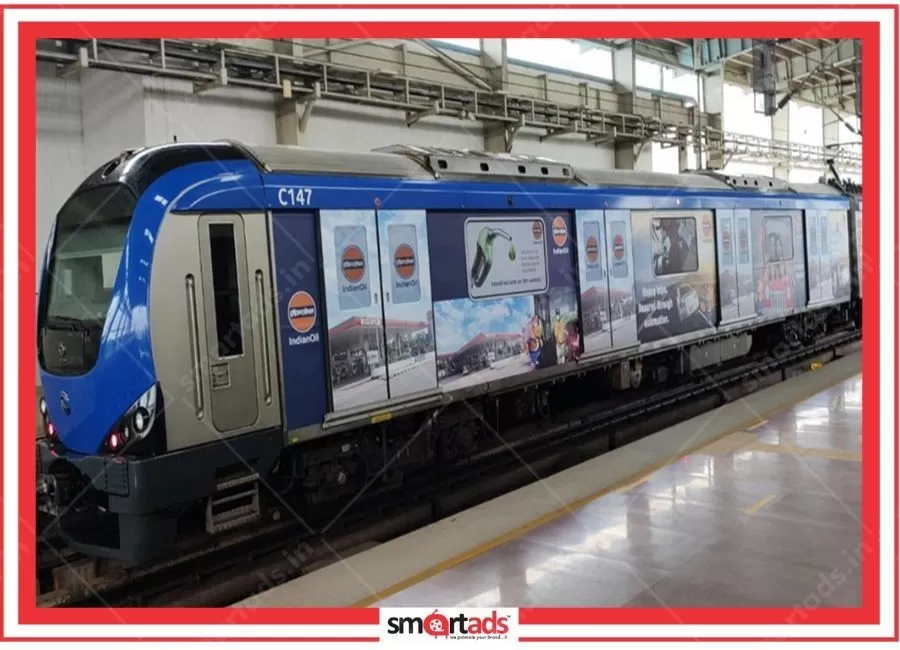
Exterior Metro Wrap
Size & Printing Cost as per actual
On the outside of metro Train, advertise
Rate per Metro Display Cost / 1 Month
Route:Thaltej gam To Vastral Gam
₹1000000.00
Showing 1 to 3 of 3 Results
MEDIA DETAILS
Size & Printing Cost as per actual
On the outside of metro Train, advertise
Rate per Metro Display Cost / 1 Month
Route:Thaltej gam To Vastral Gam
₹1000000.00
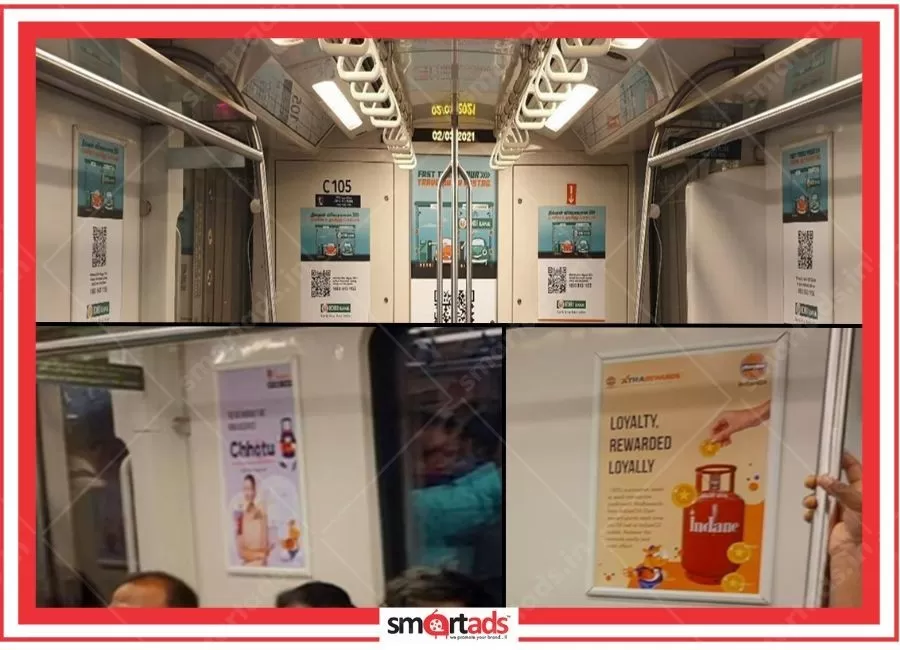
Size & Printing Cost as per actual
On the outside of metro Train, advertise
Rate per Metro Display Cost / 1 Month
Route:Thaltej gam To Vastral Gam
₹500000.00
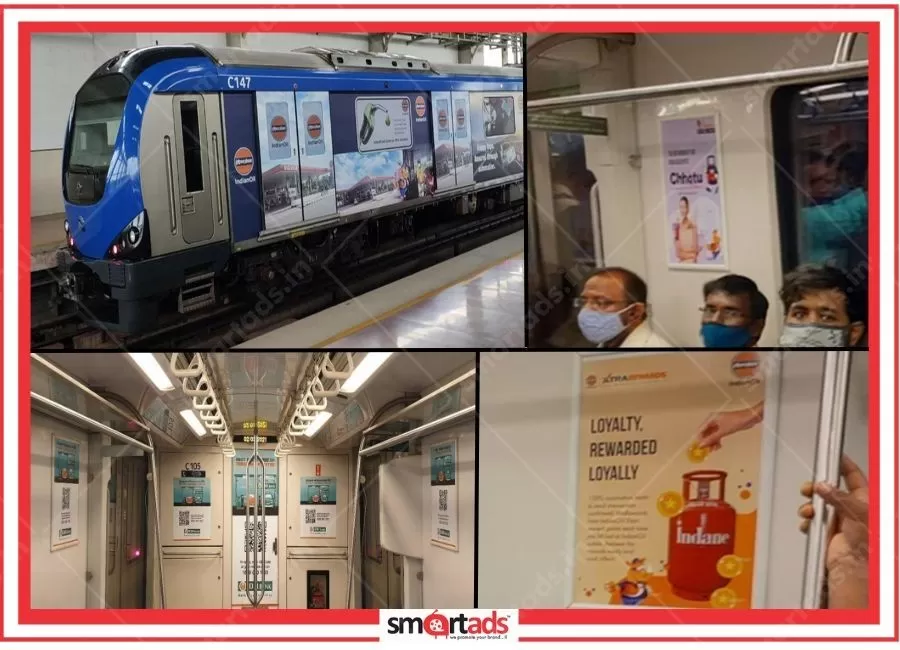
Size & Printing Cost as per actual
On the outside of metro Train, advertise
Rate per Metro Display Cost / 1 Month
Route:Thaltej gam To Vastral Gam
₹1500000.00
MEDIA REACH

MinimumQty :
1
EstimateReachPeople :
150000000
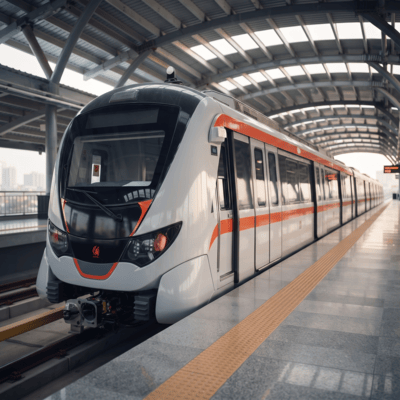
Most advertisers who approach us about Ahmedabad metro advertising are surprised to learn that the East West Corridor — the Blue Line running from Thaltej Gam to Vastral Gam — carries a captive audience of roughly 1.5 lakh daily passengers through some of the city's most commercially dense neighbourhoods, which makes it one of the most underutilised BTL advertising channels in Gujarat right now. The cost per thousand impressions on a full train branding campaign works out to a number that genuinely competes with mid-tier digital placements, yet most brands are still pouring their BTL budgets into hoardings that get ignored. We have been planning metro train advertising in Ahmedabad for several years, and the gap between what this medium can deliver and what brands actually spend on it remains, frankly speaking, one of the more puzzling inefficiencies in the Gujarat media market.
The East West Corridor is the operational spine of Ahmedabad's metro system — a 19-kilometre stretch that runs from Thaltej Gam in the west, cutting through the commercial heart of the city, to Vastral Gam in the east, which means it physically connects the city's upscale residential and IT-adjacent zones with its older industrial and working-class neighbourhoods in a single continuous journey. Gujarat Metro Rail Corporation, commonly referred to as GMRC or GMRCL, operates this Blue Line as Phase 1 of the Ahmedabad Metro project, and it is the corridor that has been generating consistent ridership data since full operations began — data that transit advertising agencies now use to benchmark Ahmedabad metro advertising campaigns against other Indian metro systems.
Metro train advertising in Ahmedabad on this corridor works differently from most OOH advertising formats, and that distinction matters enormously for media planners. A hoarding on SG Road competes with traffic, sunlight, visual clutter, and driver distraction; a brand message inside a metro coach faces none of those obstacles. The audience is seated or standing in an enclosed AC environment, dwell time per journey averages somewhere between twelve and twenty-two minutes depending on how far the commuter is travelling, and there is genuinely nothing else competing for their visual attention — which is the definition of a captive audience in the truest sense. At SmartAds, we always tell our clients that metro train branding is less like outdoor advertising and more like a thirty-second television spot that plays on repeat for the entire duration of the commute.
What a lot of people miss is the geographic precision this medium offers. The Blue Line passes through station catchments that are remarkably distinct in their demographic character — from the student-heavy footfall around Gujarat University station to the salaried professionals and business owners who board at Commerce Six Roads station, to the retail and textile trade community concentrated around Kalupur metro station and the surrounding old city. This kind of hyperlocal BTL targeting is difficult to replicate with any other non-traditional advertising format at a comparable cost, which is why brands that have tried this medium once tend to come back for subsequent campaigns.
The format range on the Ahmedabad Blue Line is broader than most advertisers expect, and the choice of format has a significant bearing on both cost and campaign impact. The most talked-about option is the full train branding or metro wrap advertising format, which involves covering the exterior of an entire train set — the available exterior wrap area works out to roughly 3,100 square feet across the train, which is a moving billboard that travels the entire 19-kilometre route repeatedly throughout the day. This format generates the kind of brand visibility that is almost impossible to achieve with static OOH advertising, because the train itself becomes a branded object moving through the city's visual field.
Interior train branding is, in our experience, the format that delivers the highest brand recall per rupee spent, and the reason is straightforward: the available interior branding space across a three-coach train configuration works out to approximately 650 square feet, which includes overhead panels, door panels, window decals, and grab-handle branding. A commuter who boards at Thaltej Gam and exits at Commerce Six Roads is surrounded by your brand message for the entire duration of their journey; there is no scroll, no skip button, no competing notification pulling their attention away. The 3 AC coaches that make up each GMRC train set are fully air-conditioned, which means commuters are comfortable and mentally present in a way that outdoor commuters simply are not.
Beyond the train itself, metro station advertising along the East West Corridor offers platform signage, pillar wrap advertising, concourse panels, and — in the underground sections — backlit panels that perform particularly well in the lower ambient light of the underground metro section. The four underground stations on the Blue Line — Kalupur, Shahpur, Gheekanta, and Kankaria East — have a distinctly different visual environment from the elevated metro section that dominates the western half of the corridor; underground stations create an enclosed, gallery-like experience where brand messages are literally the only visual stimulus available to a waiting commuter. Smart card advertising, gate branding, and floor graphics round out the station-level inventory, which can be combined with train-level formats to create an integrated campaign that touches the commuter at multiple points in their journey. GMRC has also been progressively adding digital screen inventory at select high-footfall metro stations, which opens up dynamic content possibilities for brands that want to run time-sensitive or contextual messaging.
The metro ridership figures on the Blue Line have been climbing steadily since the full corridor opened, and the 1.5 lakh daily passengers figure that is most commonly cited in planning conversations represents a conservative baseline — on peak days during Navratri, Rath Yatra, and major IPL matches at Motera Stadium (which is being served by Phase 2 connectivity), ridership spikes significantly above that number, which creates genuinely high-value windows for campaign timing. The GroupM TYNY Report and the FICCI-EY Media and Entertainment Report have both flagged transit media advertising as one of the fastest-growing OOH sub-categories in India, and Ahmedabad's metro ridership growth trajectory is consistent with that national pattern.
What the raw daily passenger number does not capture is the frequency dimension of metro advertising reach. Unlike a hoarding that a commuter might see once or twice a week while driving past, the same commuter who uses the metro daily is exposed to interior train branding on every single journey — which means a four-week campaign can accumulate eight to twelve exposures per regular commuter, which is a frequency level that most digital planners would consider excellent for brand recall building. Our experience at SmartAds shows that brands running metro train advertising in Ahmedabad for a minimum of four weeks report significantly higher unaided recall scores in post-campaign surveys than brands running equivalent-budget OOH campaigns on static formats.
The audience composition is worth examining in some detail, because the East West Corridor's demographic profile is genuinely mixed in a way that makes it useful for a wide range of advertising categories. The western stations — Thaltej Gam, Doordarshan Kendra, Gurukul Road, Gujarat University — draw heavily from the educated urban middle class, IT sector employees, and students; the central stations around Commerce Six Roads station and Old High Court station attract a business and professional commuter base; while the eastern stations approaching Apparel Park metro station, Amraiwadi, and Vastral Gam pull in a working-class urban audience engaged in manufacturing, logistics, and the textile trade. This east-to-west demographic gradient is something we map carefully when advising clients on whether to run a full-corridor campaign or to concentrate station advertising at specific stops.
Frankly speaking, this is the question that comes up in every first conversation, and it is also the question that is most poorly answered by most online sources — which either refuse to give any numbers or provide figures so outdated they are useless for actual budget planning. We will give you the honest picture as we understand it from current market conversations, with the caveat that GMRC advertising rates are subject to periodic revision and the final numbers depend on campaign duration, format selection, and the specific train or station inventory being booked.
For interior train branding on a single train set, the advertising cost per month works out to somewhere in the range of ₹3 to ₹5 lakh depending on the extent of coverage — whether you are taking all interior panels or a partial package — and this is a number that surprises most first-time advertisers when they calculate the CPM against what they are paying for Instagram reach or programmatic display. If you spread that monthly cost across the roughly 1.5 lakh daily passengers the train carries, the effective CPM works out to somewhere in the ballpark of ₹7 to ₹12, which is genuinely competitive with mid-funnel digital formats and significantly more impactful in terms of dwell time and brand immersion. Exterior train wrap advertising — the full 3,100 square feet exterior format — commands a higher premium, with monthly rates for a full train wrap typically ranging somewhere between ₹8 and ₹15 lakh, reflecting the sheer scale of the format and its visibility to both metro passengers and the general public along the elevated metro section.
Metro station advertising rates along the East West Corridor vary considerably by station tier and format type. High-footfall metro stations like Kalupur metro station, Commerce Six Roads station, and Gujarat University station command premium rates for platform signage and pillar wrap advertising — platform panels at these stations can run somewhere between ₹50,000 and ₹1.5 lakh per month per panel depending on size and placement, while pillar wraps at underground stations are priced in a similar range. The underground metro section stations are particularly valuable for station advertising because of the enclosed environment and the absence of competing visual stimuli; a well-executed pillar wrap at Gheekanta or Shahpur station gets the kind of undivided attention that no elevated or surface-level OOH format can replicate. At SmartAds, we typically recommend that clients allocate at least 30% of their metro advertising budget to station-level formats alongside train branding, because the combination of moving train impressions and stationary station impressions creates a frequency multiplier effect that neither format achieves alone.
The answer depends entirely on what you are selling and who you are selling it to, which is a point we make firmly to every client who asks us to simply identify "the best stations." That said, there are certain stations on the Blue Line that consistently outperform others in terms of footfall, dwell time, and audience quality — and the reasons are structural rather than arbitrary.
Kalupur metro station is the single most strategically important advertising location on the East West Corridor, not just because of its own ridership but because it serves as an interchange point connecting the Blue Line to Ahmedabad's broader transit ecosystem, including the Kalupur Railway Station, which is one of the busiest railway stations in Gujarat. The commuter profile here is exceptionally diverse — you have intercity travellers, local daily commuters, shoppers from the old city markets, and business travellers — which makes it the closest thing to a universal reach point on the entire corridor. Brands that need broad demographic coverage with a single station booking consistently find Kalupur to be their highest-ROI transit advertising location on the Blue Line.
Commerce Six Roads station sits at the commercial heart of the corridor and draws a concentration of salaried professionals, business owners, and retail decision-makers that is hard to match elsewhere on the line; for categories like BFSI, real estate advertising metro campaigns, and B2B services, this station's catchment is disproportionately valuable. Gujarat University station, on the other hand, is the obvious choice for education brand metro campaigns, coaching institutes, laptop and electronics brands, and any category targeting the 18-to-25 urban demographic. Apparel Park metro station is the anchor for the eastern end of the corridor, serving the textile and garment manufacturing cluster, which makes it particularly relevant for B2B brands targeting that industry as well as FMCG and consumer durables brands reaching the working-class urban audience of east Ahmedabad. The underground stations — Kalupur, Shahpur, Gheekanta, and Kankaria East — deserve special mention for their advertising environment; the enclosed, artificially lit spaces of the underground metro section create a high-attention context that elevated stations simply cannot replicate, and we have consistently seen higher brand recall scores from campaigns that include underground station elements.
The honest answer is that the East West Corridor has quietly become one of the most efficient non-traditional advertising channels in Gujarat, and the market has not fully priced that in yet — which means there is still a window for brands to establish strong presence before the medium becomes as competitive and expensive as metro advertising in Mumbai or Delhi. The combination of a captive audience, high ad frequency, demographic precision, and the sheer scale of the exterior train wrap format creates a BTL advertising proposition that is genuinely difficult to replicate through any other single medium.
To be fair, there are legitimate reasons why some advertisers have been slow to adopt metro train advertising in Ahmedabad. The GMRC approval process adds a layer of complexity that is absent from booking a hoarding or a newspaper ad; the lead time for creative production and installation is longer than digital; and the minimum campaign duration requirements mean this is not a medium for last-minute or very short-burst campaigns. But for brands that plan their BTL calendar with any degree of advance notice — which is most serious advertisers — none of these are real barriers, and the ROI transit advertising delivers more than compensates for the additional planning effort.
What makes the East West Corridor specifically compelling, as opposed to metro advertising in other Indian cities, is the corridor's unique geographic function in Ahmedabad's urban fabric. The Blue Line connects the city's most economically active zones in a single linear route; it passes through the old city, the central business district, the university zone, and the eastern industrial belt without a single transfer. This means a brand running a full train branding campaign on the East West Corridor is not reaching a narrow slice of the city — it is reaching a cross-section of Ahmedabad Gujarat's working and consuming population in a way that few other BTL advertising formats can claim. The GIFT City connectivity being developed through the metro expansion further strengthens the corridor's strategic importance for brands targeting the financial services and corporate sector.
The category mix on the Blue Line is more diverse than most people expect, and it has been evolving as the medium matures. In the early phases, real estate advertising metro campaigns dominated — developers found that the commuter audience, which skews toward salaried professionals and aspirational urban consumers, was an excellent fit for residential project launches, and the visual scale of exterior train wrap advertising gave their campaigns a premium brand association that smaller formats could not deliver. We ran a campaign for a mid-segment residential developer in Ahmedabad whose project was located near the Amraiwadi station catchment; the combination of interior train branding and platform signage at three eastern corridor stations generated a 40% increase in site visits over the four-week campaign period compared to the equivalent period the previous year, which the client attributed primarily to the metro campaign because no other media had changed.
Education brands have been among the most consistent advertisers on the Blue Line, and the logic is obvious — the corridor passes directly through the Gujarat University station catchment, which is surrounded by coaching institutes, colleges, and student residential areas, and the daily commuter base includes a substantial proportion of students and young working professionals who are actively making education and career decisions. FMCG metro advertising has been growing steadily as well; categories like personal care, packaged foods, and beverages find the metro's mass-reach-with-captive-audience combination attractive for product launch campaigns, where the goal is to generate rapid awareness among a large urban audience within a defined geography.
On top of that, we have seen increasing interest from the BFSI sector — banks, insurance companies, and fintech brands — which find the salaried professional commuter base of the Blue Line particularly well-matched to their target audience. One fintech client we worked with ran an integrated BTL and digital campaign where the metro train advertising served as the offline awareness touchpoint and a targeted digital retargeting campaign was activated for users in the corridor's geographic zones; the combination produced a cost-per-lead that was roughly 35% lower than their standalone digital campaigns, which validated the hypothesis that metro advertising can function as an effective top-of-funnel feeder for digital conversion funnels. Automotive brands, telecom companies, and healthcare providers have also been active on the corridor, and the category diversity is, frankly, a good sign for the medium's long-term health.
This is the section that most competitor pages skip entirely, which is a significant gap because the GMRC approval process is genuinely one of the more complex aspects of executing metro train advertising in Ahmedabad — and getting it wrong can delay a campaign by weeks or cause a creative to be rejected after production has already begun. Gujarat Metro Rail Corporation maintains strict guidelines for all advertising on its network, covering content standards, material specifications, installation methods, and safety compliance, which means the approval process is not a formality but a substantive review.
The process typically begins with the submission of a campaign brief and creative concept to GMRC's commercial or advertising department, which reviews the proposed content for compliance with their advertising policy — this covers restrictions on political content, content deemed inappropriate for a public transit environment, and specific categories that require additional clearances. Once the concept is approved in principle, detailed artwork files must be submitted in the specified format — typically high-resolution vector files for exterior wraps and high-resolution print-ready files for interior panels — along with specifications for the materials to be used, which must meet GMRC's fire safety and adhesive standards for rolling stock and station environments. The timeline from initial submission to final approval typically runs somewhere between ten and twenty-one working days, though campaigns with straightforward creative and pre-approved material specifications can sometimes move faster.
At SmartAds, we manage the GMRC approval process on behalf of our clients as a standard part of our transit advertising agency service, which means clients do not need to navigate the bureaucratic process independently. What we have learned from repeated campaign executions is that submitting complete documentation in the first round — rather than submitting partial files and revising — is the single most effective way to compress the approval timeline. The installation itself, once approval is granted, typically takes two to four days for a full train wrap and one to two days for interior branding, depending on the number of coaches and the complexity of the creative application. Brands should therefore build a minimum of four to six weeks of lead time into their campaign calendar from the point of artwork finalisation to campaign go-live, which is a planning reality that catches many first-time metro advertisers off guard.
Campaign planning for the East West Corridor requires a level of strategic thinking that goes beyond simply booking available inventory, and the brands that get the most out of this medium are invariably the ones that treat metro train advertising in Ahmedabad as a campaign architecture decision rather than a media buying transaction. The first question to resolve is the campaign objective — brand awareness, product launch, footfall driving, or a specific conversion goal — because the answer determines the format mix, the station selection, and the campaign duration.
For brand awareness campaigns, full train branding or exterior metro wrap advertising is the format of choice, because the visual scale and the moving billboard effect generate the kind of ambient impressions that build brand familiarity over time; a minimum campaign duration of four weeks is advisable for awareness objectives, with eight weeks being the point at which frequency effects become truly powerful. For product launch campaigns, we typically recommend combining interior train branding — which delivers high-attention, long-dwell-time exposure to the captive audience — with platform signage at three to five key stations, creating a multi-touchpoint experience that reinforces the message at the point of boarding and during the journey. Seasonal timing matters enormously on the East West Corridor; metro ridership spikes significantly during Navratri, when Ahmedabad's public transport usage increases dramatically as private vehicle use becomes impractical in the congested old city, and during IPL season, which drives elevated ridership toward the Motera Stadium catchment as Phase 2 connectivity develops. Brands that book their campaigns to align with these seasonal peaks consistently report higher impression volumes and stronger recall metrics than campaigns run during off-peak periods.
The integration of metro train advertising with digital media is an approach we have been refining at SmartAds over the past several campaign cycles, and the results have been consistently encouraging. The geographic precision of the East West Corridor — which passes through well-defined neighbourhoods with distinct demographic profiles — maps cleanly onto location-based digital targeting, which means a brand can run metro train branding as an offline awareness layer and simultaneously activate programmatic display and social media campaigns targeted at users within the corridor's geographic catchment. One automotive brand we worked with used this approach for a new model launch in Ahmedabad Gujarat; the metro campaign ran for six weeks across interior branding and two station locations, while a parallel digital campaign targeted mobile users within a 500-metre radius of each Blue Line station. The combined campaign delivered a cost-per-test-drive-booking that was 28% lower than their previous Ahmedabad launch, which used only digital and print media. The lesson, which we now apply across most of our metro advertising planning, is that the offline-online integration is where the real ROI transit advertising value lives.
Q: What are the available advertising formats for metro train branding on the Ahmedabad East West Corridor?
The format inventory on the Blue Line covers both train-level and station-level options, which can be booked independently or combined into an integrated campaign. At the train level, the primary formats are interior train branding — which encompasses overhead panels, door panels, window decals, and grab-handle branding across the 3 AC coaches — and exterior train wrap, which covers the full outer surface of the train set across approximately 3,100 square feet of ad space per train. Full train branding combines both interior and exterior into a single campaign package. At the station level, the available formats include platform signage, pillar wrap advertising, concourse panels, gate branding, floor graphics, and digital screens at select stations. The underground metro section stations — Kalupur, Shahpur, Gheekanta, and Kankaria East — offer backlit panel formats that perform particularly well given the enclosed lighting environment. Smart card advertising is an additional format that places brand messages on the physical metro smart cards distributed to commuters, which is a high-retention format because commuters handle and see the card repeatedly over its usage lifetime.
Q: How much does metro train advertising on the Ahmedabad Blue Line cost per month?
Interior train branding on a single train set typically runs somewhere between ₹3 and ₹5 lakh per month, depending on the extent of panel coverage and the specific train assigned. Exterior train wrap advertising — the full 3,100 square feet format — is priced in the ballpark of ₹8 to ₹15 lakh per month, reflecting the scale and premium visibility of the format. Station-level formats are priced per panel per month, with high-footfall metro stations like Kalupur and Commerce Six Roads commanding rates in the range of ₹50,000 to ₹1.5 lakh per panel. These are indicative market rates based on our current understanding; the final advertising cost per month depends on GMRC's current rate card, campaign duration, and the specific inventory being booked. Longer campaigns — eight weeks or more — typically attract volume discounts that meaningfully reduce the effective monthly cost, which is something we always negotiate on behalf of our clients.
Q: How many passengers travel on the Ahmedabad East West Corridor daily?
The Blue Line carries roughly 1.5 lakh daily passengers under normal operating conditions, which translates to a monthly reach figure of approximately 45 lakh unique and repeat commuters. On peak days — Navratri, Rath Yatra, major sporting events, and public holidays — ridership spikes considerably above the baseline, which creates high-value windows for time-sensitive campaign activations. Metro ridership on the East West Corridor has been growing year-on-year since full operations began, and the trajectory is expected to accelerate as Phase 2 expansion adds new stations and extends connectivity toward Gandhinagar and GIFT City.
Q: Which stations on the East West Corridor are best for metro advertising campaigns?
Kalupur metro station is the highest-priority location for most advertisers because of its interchange function and the diversity of its commuter profile. Commerce Six Roads station is the top choice for brands targeting business and professional audiences; Gujarat University station is the primary location for education, youth, and lifestyle brands; and Apparel Park metro station is the anchor for brands targeting the eastern corridor's working-class urban and textile industry audience. The underground stations — Kalupur, Shahpur, Gheekanta, and Kankaria East — are particularly valuable for station advertising because of the enclosed, high-attention environment they create. The optimal station selection depends on the brand's target demographic, which is something we map carefully for each client using available ridership and catchment data.
Q: What is the difference between interior branding and exterior train wrapping on the GMRC Blue Line?
Interior train branding places brand messages inside the coach, across overhead panels, door panels, window decals, and grab handles, creating a surround-sound brand experience for the captive audience during their journey; the approximately 650 square feet of interior branding space across a three-coach train is experienced at close range over an extended dwell time, which is why interior formats typically generate higher brand recall scores per impression. Exterior train wrap advertising covers the outside of the train — roughly 3,100 square feet of surface area — and functions as a moving billboard visible to both metro passengers on platforms and the general public along the elevated metro section; it generates a higher raw impression volume but at a shorter exposure duration per individual viewer. Full train branding combines both formats, which maximises both reach and recall but requires a larger budget commitment.
Q: How do I get GMRC approval for metro train advertising on the Ahmedabad East West Corridor?
The GMRC approval process involves submitting creative concepts, detailed artwork files, and material specifications to Gujarat Metro Rail Corporation's commercial department for review against their advertising policy and safety standards. The review covers content compliance, material fire safety, and installation method approval; the timeline typically runs between ten and twenty-one working days for a complete submission. Incomplete submissions — missing files, unspecified materials, or non-compliant content — extend the timeline significantly, which is why we recommend working with an experienced transit advertising agency that has managed the GMRC process before. At SmartAds, we handle the entire approval workflow on behalf of our clients, which typically compresses the timeline and eliminates the back-and-forth that first-time advertisers often experience.
Q: What is the minimum campaign duration and minimum number of units for BTL metro advertising in Ahmedabad?
The minimum campaign duration for train-level formats on the East West Corridor is typically four weeks, which aligns with GMRC's standard booking periods; shorter campaigns are generally not available for train branding formats, though station-level formats may have different minimum tenure requirements. In terms of minimum units, a single train booking — one train set with either interior or exterior branding — is generally the minimum for train-level campaigns. Brands that want to maximise frequency and coverage can book multiple trains simultaneously, which increases both reach and ad frequency across the daily commuter base. We advise clients to treat four weeks as the absolute minimum and eight weeks as the practical minimum for campaigns where brand recall is the primary objective.
Q: What types of brands and industries advertise on the Ahmedabad Metro East West Corridor?
The category mix on the Blue Line includes real estate developers, education institutions and coaching brands, FMCG companies, BFSI brands, automotive manufacturers, telecom companies, healthcare providers, and e-commerce platforms. Education brand metro campaigns are particularly concentrated around the Gujarat University station catchment, while real estate advertising metro campaigns tend to use full train branding for the premium brand association it creates. FMCG metro advertising and product launch campaigns use the medium for rapid urban awareness building. The corridor's demographic diversity — spanning student, professional, and working-class urban audience segments across its east-to-west route — makes it relevant for a broader category range than most advertisers initially assume.
Q: How does Ahmedabad East West Corridor metro advertising compare to hoardings or digital OOH in ROI?
The comparison depends on the campaign objective, but on a CPM basis, metro train advertising in Ahmedabad compares favourably with both traditional OOH advertising hoardings and digital OOH screens. The effective CPM for interior train branding works out to roughly ₹7 to ₹12, which is competitive with mid-tier digital formats and significantly lower than premium digital OOH screens in high-traffic locations. The qualitative advantage — captive audience, extended dwell time, high ad frequency per commuter — is harder to quantify but consistently shows up in brand recall metrics. Hoardings generate higher raw impression volumes but at much lower attention levels; digital OOH offers dynamic content but at a higher CPM. Metro advertising occupies a distinctive middle ground that combines reasonable CPM with genuinely high attention quality, which is why we position it as a complement to rather than a replacement for other OOH formats.
Q: Can I run a combined interior and exterior full train branding campaign on the Blue Line, and what does it cost?
Full train branding — combining interior train branding across all panels with exterior train wrap advertising on the same train set — is available on the East West Corridor and represents the highest-impact single-unit campaign option on the Blue Line. The combined format creates a 360-degree brand experience that reaches the captive audience inside the coach while simultaneously generating moving billboard impressions for platform audiences and the general public along the elevated metro section. The cost for a full train branding package typically runs somewhere between ₹12 and ₹20 lakh per month, depending on the specific inventory, the extent of interior coverage, and the campaign duration; longer campaigns attract discounts that bring the effective monthly cost down meaningfully. For product launch campaigns and brand repositioning exercises where impact and memorability are the primary goals, full train branding is the format we most frequently recommend.
Q: What is the ad space available per metro train coach on the Ahmedabad East West Corridor?
Each metro coach on the GMRC Blue Line offers a range of interior branding surfaces — overhead panels running the length of the coach, door panels at each entry and exit point, window decals, and grab-handle branding — which collectively add up to approximately 200 to 220 square feet of interior branding space per coach. Across the 3 AC coaches in a standard GMRC train set, the total interior branding space works out to roughly 650 square feet. The exterior of the full train set offers approximately 3,100 square feet of wrap surface, which includes the side panels, front and rear faces, and above-window sections. These figures are based on standard GMRC train configurations; actual available ad space per train may vary slightly based on coach configuration and any pre-existing GMRC branding on specific surfaces.
Q: How long does it take to execute a metro train wrap campaign on the Ahmedabad Blue Line after artwork approval?
Once GMRC approval is granted, the physical installation of an exterior train wrap typically takes two to four days, depending on the complexity of the creative and the number of coaches being wrapped; interior branding installation is generally faster, running one to two days for a full three-coach interior package. The practical planning implication is that brands should build a minimum of four to six weeks of total lead time from artwork finalisation to campaign go-live — accounting for the GMRC review period of ten to twenty-one working days plus production time and installation. Campaigns that require material production from scratch — custom-printed vinyl wraps, for instance — should add another five to seven working days for production, which means the total pre-campaign timeline can run six to eight weeks from the point of creative sign-off. At SmartAds, we map this timeline explicitly for every metro advertising campaign we plan, because timeline surprises at this stage are the most common cause of delayed launches.
The Ahmedabad East West Corridor is, in our assessment, one of the most genuinely undervalued transit media advertising channels in western India right now — and that window will not stay open indefinitely. As metro ridership continues to grow, as Phase 2 expansion extends the network toward Gandhinagar and GIFT City, and as more brands discover the ROI transit advertising delivers, the inventory will tighten and the rates will reflect that demand. The brands that establish early presence on the Blue Line are building familiarity with a commuter base that is growing in both size and economic influence; the 1.5 lakh daily passengers travelling the Thaltej Gam to Vastral Gam corridor today represent a significantly larger and more affluent audience than they did two years ago, and the trajectory points clearly upward.
What we have consistently found at SmartAds is that the most successful metro advertising campaigns on the East West Corridor are the ones that treat the medium seriously — investing in quality creative that makes use of the available format scale, planning campaign duration long enough for frequency effects to build, and integrating the metro touchpoint with digital and other BTL channels rather than running it in isolation. The brands that book a single panel for two weeks and declare the medium ineffective are, frankly, misusing it; the ones that commit to a four-to-eight-week full train branding or interior branding campaign, align it with a seasonal peak in ridership, and connect it to a digital retargeting layer consistently report results that justify the investment and then some.
If you are a brand manager or media planner evaluating Ahmedabad metro advertising for the first time, or if you are looking to improve the performance of an existing metro campaign on the Blue Line, we would welcome the conversation. The SmartAds media planning team has direct experience executing metro train advertising campaigns across the East West Corridor, managing the GMRC approval process, and integrating transit media with broader BTL and digital strategies for brands across categories. You can reach us at SmartAds.in to discuss a customised campaign plan built around your specific objectives, budget, and target audience on the Ahmedabad Blue Line.
