
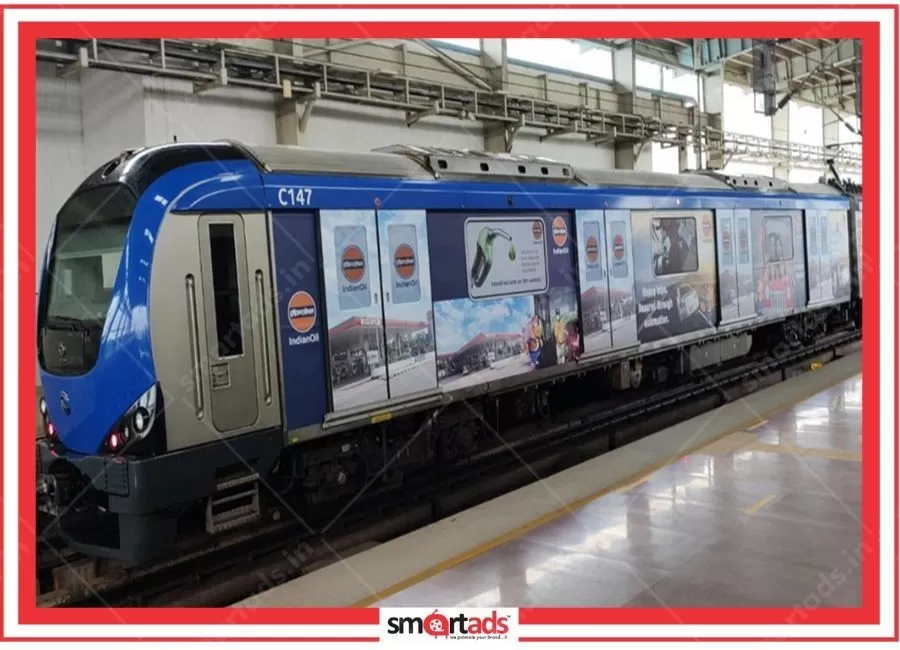
Exterior Metro Wrap
Size & Printing Cost as per actual
On the outside of metro Train, advertise
Rate per Metro Display Cost / 1 Month
Route: Sector 55 -56 To Phase 3
₹1000000.00
Showing 1 to 3 of 3 Results
MEDIA DETAILS
Size & Printing Cost as per actual
On the outside of metro Train, advertise
Rate per Metro Display Cost / 1 Month
Route: Sector 55 -56 To Phase 3
₹1000000.00
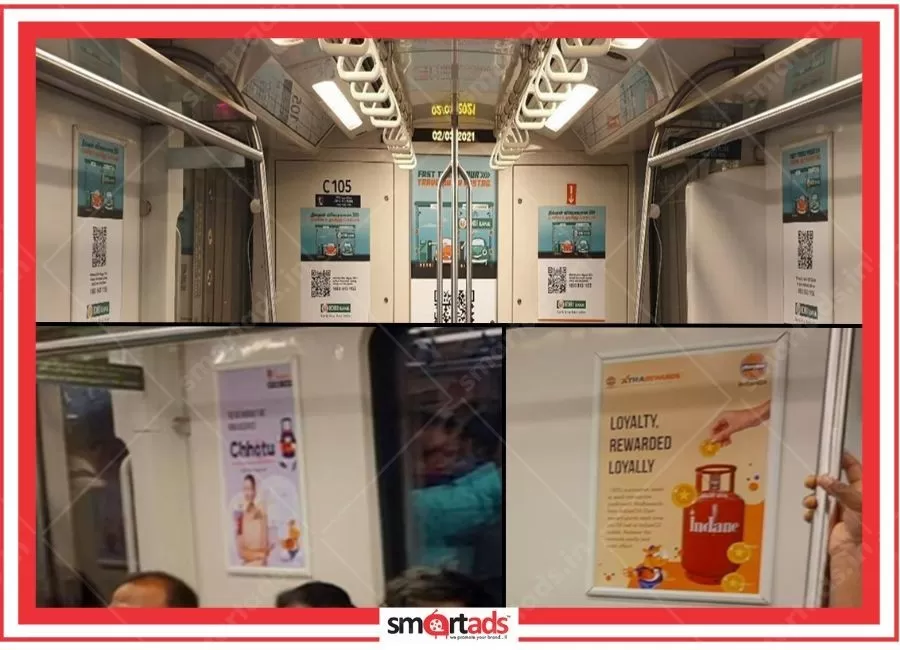
Size & Printing Cost as per actual
On the outside of metro Train, advertise
Rate per Metro Display Cost / 1 Month
Route: Sector 55 -56 To Phase 3
₹500000.00
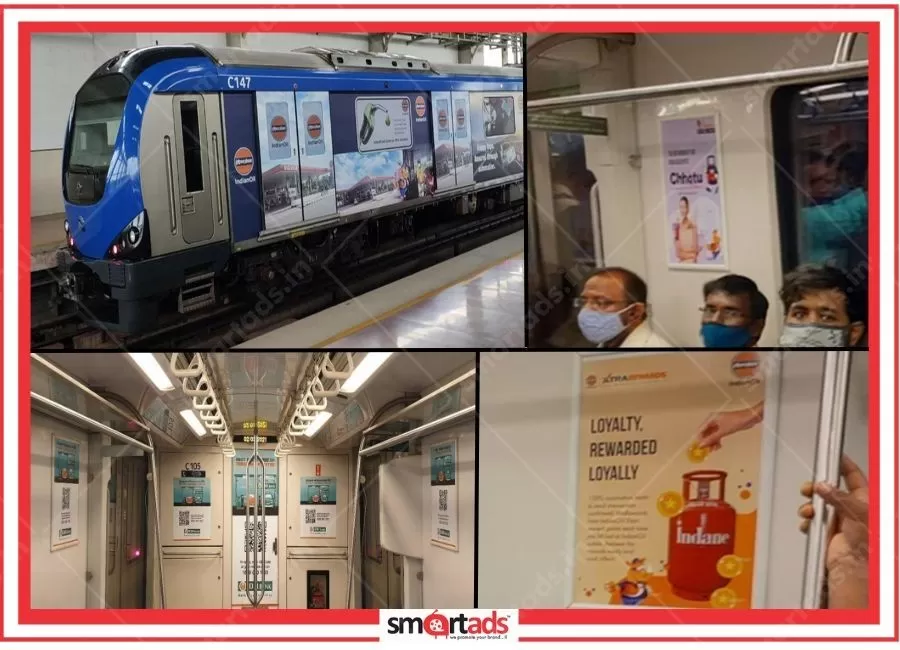
Size & Printing Cost as per actual
On the outside of metro Train, advertise
Rate per Metro Display Cost / 1 Month
Route: Sector 55 -56 To Phase 3
₹1500000.00
MEDIA REACH

MinimumQty :
1
EstimateReachPeople :
150000000
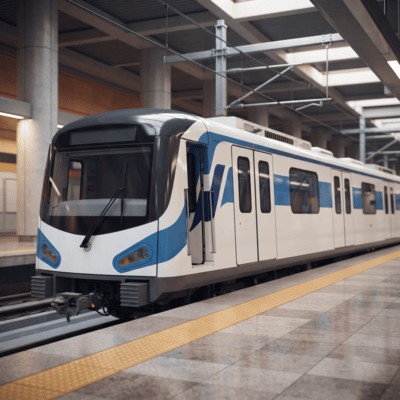
Most brands chasing the Gurugram corporate audience are spending heavily on digital display and Golf Course Road billboards, yet they are completely overlooking a channel that delivers those same high-income professionals in a captive, clutter-free environment for a fraction of the cost. The Rapid Metro Gurgaon Line 1 carries somewhere in the ballpark of 48,000 commuters on a typical weekday — and nearly every one of them is a salaried professional, a decision-maker, or a high-purchasing-power consumer who works within the DLF Cybercity and Cyber Hub corridor. What makes metro train advertising in Gurgaon Line 1 genuinely different from most OOH advertising formats is the dwell time: a commuter boarding at Sikanderpur and riding to Sector 55-56 spends roughly 21 minutes inside a train environment where your brand is the only thing competing for their attention.
Frankly speaking, a lot of advertisers we speak to conflate Rapid Metro Gurgaon with the Delhi Metro system, which is a mistake that costs them both money and strategic clarity. The Rapid Metro Gurgaon Line 1 is a distinct, privately-developed urban rail corridor — originally conceived and built by IL&FS (Infrastructure Leasing & Financial Services) — which runs approximately 11.7 kilometres through the heart of Gurugram's commercial district, connecting Sikanderpur on the Delhi Metro Yellow Line to the Sector 55-56 terminal. Rapid MetroRail Gurgaon Limited, or RMGL, was the operating entity for most of the line's life; however, in 2019, operations were formally handed over to the Delhi Metro Rail Corporation (DMRC) under an agreement with the Haryana Government, which means the advertising rights framework on this corridor now sits within a DMRC-governed ecosystem rather than a purely private one.
This transition matters enormously for advertisers, and it is something almost no agency discusses openly. Under DMRC management, the media booking process for Gurgaon Line 1 became more structured and, in some ways, more transparent — though it also introduced additional layers of creative approval that brands need to plan for. The Haryana Mass Rapid Transport Corporation (HMRTC) and Gurugram Metro Rail Limited (GMRL) are also stakeholders in the broader Gurugram metro expansion narrative, which means the regulatory environment around metro train advertising in Gurgaon Line 1 is multi-layered in a way that outdoor advertising on a highway simply is not. At SmartAds, we always tell our clients that understanding who actually controls the media rights on a given corridor is the first question to answer before any rate negotiation begins.
Transit advertising on this line is categorised under both BTL advertising and non-traditional advertising in most media plans, which is accurate — but it also carries the scale and frequency impact of a traditional mass medium. The distinction matters because it affects how brands budget for it: metro advertising campaigns on Line 1 are often planned under OOH advertising budgets, but the audience quality and the captive nature of the environment make it behave more like a premium print or radio buy in terms of audience engagement. We have found, across dozens of campaigns in the Delhi NCR corridor, that brands which treat this as a pure transit media buy consistently underestimate its brand recall potential.
The range of advertising formats on Rapid Metro Gurgaon Line 1 is broader than most media planners expect when they first sit down to build a plan. The formats broadly split into two categories — train-based and station-based — and within each, there are several execution options which carry very different cost structures, creative requirements, and audience contact points. Train-based formats include interior train branding, exterior train wrap advertising, full train branding (which wraps the entire exterior of a rake), overhead panel ads inside the coaches, and vinyl pasting on coach windows and doors. Station-based formats include LED screen advertising and DOOH placements at platforms, pillar wrap advertising on station columns, wall wrap branding on concourse and platform walls, and digital screens at entry and exit gates.
Interior train branding is, in our experience, the format that delivers the highest dwell time per impression; a commuter sitting inside a coach for 15 to 21 minutes is surrounded by branded panels, overhead panel ads, and door decals, which means the brand message is absorbed across multiple touchpoints in a single journey. Exterior train wrap advertising operates differently — it is seen by platform commuters, pedestrians near the elevated corridor, and people in vehicles on the roads below the viaduct, which makes it a genuinely outdoor-facing format even though it is technically transit advertising. Full train branding, which covers the entire exterior of a metro rake in a single brand skin, is the most premium and most impactful format on this line; it essentially turns the train itself into a moving billboard across the entire 11.7-kilometre corridor.
On top of that, station branding formats on Gurgaon Line 1 offer something that pure train advertising cannot — a static, location-specific presence at high-footfall nodes like Cyber City station and Sikanderpur station, which serve as interchange and entry points for thousands of corporate professionals every morning. LED screen advertising and digital screens at these stations allow for dynamic creative rotation, which is particularly useful for brands running time-sensitive campaigns or product launches. Pillar wrap advertising and wall wrap branding at stations like DLF Phase 2 and Moulsari Avenue give brands a large-format canvas in a clutter-free environment — something that is genuinely hard to find in Gurugram's increasingly crowded outdoor advertising landscape.
Pricing is the question every client asks first, and it is also the area where most published information is either outdated or deliberately vague. We will be direct about what we know from active media buying on this corridor. For interior train branding — covering panels, overhead panel ads, and door vinyls across a single coach — the advertising cost works out to somewhere between ₹1.5 lakh and ₹3 lakh per month per coach, depending on the number of panels booked and the campaign duration negotiated. Full train branding, which is the most sought-after format for brand launches and high-visibility campaigns, is typically priced in the ballpark of ₹8 lakh to ₹15 lakh per month for a full rake wrap, which surprises most clients when they realise that a single premium highway billboard on Golf Course Road can cost nearly as much for far less audience contact.
Exterior train wrap advertising — covering the sides and ends of individual coaches without a full rake commitment — is priced somewhere between ₹2 lakh and ₹5 lakh per coach per month, which makes it a more accessible entry point for mid-sized brands that want the outdoor visibility of a moving train without the full train branding investment. Station branding formats carry their own rate logic: LED screen advertising at high-footfall stations like Sikanderpur and Cyber City is typically sold on a per-week or per-month basis, with rates in the range of ₹50,000 to ₹1.5 lakh per screen per month depending on screen size and placement. Pillar wrap advertising and wall wrap branding at stations are generally available for somewhere between ₹40,000 and ₹1.2 lakh per panel per month, which represents genuinely strong value when you consider the daily ridership and the captive audience quality.
What a lot of people miss is that advertising rates on Gurgaon Line 1 are negotiable — particularly for multi-format, multi-month campaigns, where we have consistently secured 20 to 30 percent reductions on card rates for our clients. A retail client in Gurugram that we worked with in 2024 combined interior train branding across two coaches with pillar wrap advertising at three stations, and the blended CPM worked out to roughly ₹6 to ₹8 per impression — a number that genuinely shocked their digital media team when they compared it to what they were paying for LinkedIn reach targeting the same corporate professional audience. The minimum budget to run a meaningful metro advertising campaign on Gurgaon Line 1 is realistically in the range of ₹2 lakh to ₹3 lakh for a 30-day run, though we always recommend a minimum of 60 days for any brand recall objective to register meaningfully.
The audience on Rapid Metro Gurgaon Line 1 is, without exaggeration, one of the most concentrated clusters of high-income professionals accessible through any transit media buy in India. The line runs directly through DLF Cybercity — which houses the Indian offices of dozens of Fortune 500 companies — and connects to Cyber Hub, Udyog Vihar, and the Golf Course Road commercial corridor, which means the commuter base is overwhelmingly composed of corporate professionals, IT and ITES employees, financial services workers, and senior management-level executives. Daily ridership figures, which hovered around 48,000 on weekdays before the pandemic and have been recovering steadily since, skew heavily toward the SEC A audience bracket — people with household incomes above ₹10 lakh annually and significant purchasing power over categories like real estate, financial products, automobiles, premium FMCG, and consumer electronics.
To be fair, the line also carries a segment of service-sector workers and support staff, which means the audience is not exclusively C-suite; but the proportion of high-income professionals is significantly higher on this corridor than on most Delhi Metro lines, simply because of the geography it serves. Sikanderpur station, which serves as the interchange with the Delhi Metro Yellow Line, is particularly valuable for advertisers because it captures both inbound commuters from Delhi and residents of Gurugram's premium residential zones around Sector 26 to 29. The commuters on this line are also, by definition, urban, digitally literate, and brand-aware — which makes metro train advertising in Gurgaon Line 1 particularly effective for categories like fintech, ed-tech, health insurance, luxury real estate, and premium automobile launches.
One automotive brand we worked with specifically chose Gurgaon Line 1 for a sedan launch campaign precisely because the audience profile matched their target buyer persona almost exactly; they ran a full train branding campaign for 45 days, combined with interior train branding on two additional coaches, and the brand awareness lift measured in their post-campaign survey was 34 percent among commuters who recalled seeing the train — which, frankly, is a number that most digital display campaigns struggle to match in the same demographic. The captive audience dynamic is what drives this: unlike a billboard that a driver glances at for 3 seconds, a commuter in a metro coach has nowhere else to look for 15 to 20 minutes, which is why brand recall from interior train branding consistently outperforms recall from equivalent OOH advertising spends.
Gurgaon Line 1 has 11 stations, and not all of them are equal from an advertising value perspective — a distinction that most generic metro advertising content completely ignores. The 11 stations, running from north to south, are Sikanderpur, DLF Phase 2, Belvedere Towers, Cyber City, Moulsari Avenue, DLF Phase 3, DLF Phase 1, Sector 42-43, Sector 53-54, Sector 54 Chowk, and Sector 55-56. Of these, Sikanderpur is unquestionably the highest-value station for station branding, because it is the only interchange point with the Delhi Metro Yellow Line — which means every commuter travelling between Delhi and the Rapid Metro Gurgaon network passes through this station, creating a concentrated footfall spike during morning and evening peak hours that is hard to replicate at any other point on the line.
Cyber City station is the second-most strategically important node, because it sits at the heart of DLF Cybercity — the commercial district that generates the bulk of the line's daily ridership. Brands advertising at Cyber City station are reaching commuters at the exact moment they are entering or exiting their workplace environment, which is a psychographically significant touchpoint for categories like financial services, professional tools, and corporate wellness. Moulsari Avenue station, which serves the Moulsari Avenue commercial and retail zone, is particularly relevant for retail brands and F&B advertisers, while DLF Phase 1 and DLF Phase 3 stations serve the residential and mixed-use zones of those sectors, making them relevant for real estate, home improvement, and lifestyle brands.
The Sector 55-56 terminal station, at the southern end of the line, is worth considering for brands targeting the residential communities in the outer sectors of Gurugram — an audience that is somewhat different from the pure corporate commuter profile at Cyber City and Sikanderpur, but still represents a high-income, aspirational consumer base. At SmartAds, our media planning team typically recommends that clients with limited station branding budgets concentrate on Sikanderpur and Cyber City first, then layer in Moulsari Avenue or DLF Phase 2 depending on their category and targeting logic; this approach consistently delivers better cost-per-impression outcomes than spreading a budget thinly across all 11 stations.
This is a question we get asked in almost every briefing call, and the honest answer is that it depends entirely on what the campaign objective is — though most brands benefit from running both formats simultaneously rather than choosing between them. Interior train branding is the format of choice when the primary objective is brand recall and message absorption; the dwell time inside a coach on Rapid Metro Gurgaon Line 1 is long enough for a commuter to read detailed copy, absorb a QR code, or register a brand story across multiple creative panels, which makes it ideal for product launches, feature-heavy communication, or campaigns that need the audience to understand something rather than simply recognise a brand name. Overhead panel ads and vinyl pasting on doors and windows add frequency within the same journey, which compounds the recall effect significantly.
Exterior train wrap advertising, on the other hand, is fundamentally an outdoor-facing format — it is seen by platform commuters waiting at stations, by pedestrians and motorists near the elevated viaduct sections of the line, and by anyone in the vicinity of the stations, which gives it a reach profile that extends well beyond the 48,000 daily commuters on the line itself. Full train branding, which is the most complete version of exterior train wrap, turns the entire rake into a moving outdoor billboard that travels the 11.7-kilometre corridor multiple times per day, generating ad impressions across a much broader geographic audience than interior branding alone. We have seen this format work particularly well for real estate developers launching projects along the Golf Course Road corridor, because the train literally travels past the relevant geography while carrying the brand message.
Here's where it gets interesting: the CPM calculation changes significantly depending on which format you choose. Interior train branding delivers a smaller but more engaged audience — the captive audience of actual commuters — while exterior train wrap reaches a larger but less captive audience that includes pedestrians and vehicle occupants. In our experience, the most effective campaigns on Gurgaon Line 1 combine both: interior branding for depth of message and brand recall, exterior wrap for breadth of reach and brand awareness. A fintech brand we worked with in 2023 ran exactly this combination for 60 days, allocating roughly 60 percent of their metro advertising budget to interior train branding and 40 percent to exterior coach wraps at Sikanderpur and Cyber City, and they reported a 28 percent increase in app downloads from the Gurugram pincode cluster during the campaign period.
Outdoor advertising in Gurugram is expensive, cluttered, and increasingly regulated — which is the honest context you need to understand before comparing it to metro train advertising in Gurgaon Line 1. A premium unipole on Golf Course Road or MG Road costs somewhere between ₹3 lakh and ₹8 lakh per month, depending on size and location; the audience it reaches is broad but not captive, the dwell time is measured in seconds rather than minutes, and the creative impact is limited by the 3-second attention window that highway OOH advertising typically delivers. By contrast, interior train branding on Gurgaon Line 1 delivers a smaller but far more engaged audience — commuters who are stationary, undistracted, and in physical proximity to the brand message for 15 to 20 minutes per journey.
Digital advertising targeting the same Gurugram corporate professional audience — through LinkedIn, programmatic display, or Google search — carries its own cost logic. LinkedIn CPMs for the relevant job title and geography targeting can run as high as ₹600 to ₹1,200 per thousand impressions, which makes the ₹6 to ₹8 CPM we quoted earlier for metro advertising on Gurgaon Line 1 look extraordinary by comparison. The difference, of course, is intent: digital advertising reaches people when they are actively using a platform, while metro advertising reaches them in a physical environment where the brand message cannot be scrolled past, muted, or blocked. Non-traditional advertising formats like metro train branding occupy a unique space in the media mix — they combine the mass reach logic of OOH advertising with the audience quality logic of premium digital, which is why we increasingly recommend them as a core component rather than a supplementary one.
To be honest, the comparison that most brands find most compelling is the one against radio, which is the other medium that reaches commuters in transit. Radio advertising in Delhi NCR — particularly on stations with strong Gurugram listenership — is priced at roughly ₹300 to ₹600 per 10-second spot in peak hours, which adds up quickly for any meaningful frequency build. Metro train advertising in Gurgaon Line 1 delivers a similar commuter-in-transit audience but with a visual, tactile, and spatial brand presence that radio simply cannot replicate; a commuter can change the radio station, but they cannot remove the interior train branding from their coach. This is the clutter-free environment argument that makes transit media genuinely compelling for brand managers who are tired of fighting for attention in saturated channels.
Station naming rights are one of the most underused and underappreciated advertising formats in Indian transit media, and Gurgaon Line 1 has a precedent that makes this conversation very concrete. Vodafone — before its rebranding to Vi — held naming rights to what was then called Vodafone Belvedere Towers station on this exact line, which is one of the most visible examples of corporate station sponsorship in the Rapid Metro Gurgaon network. The format works by appending the brand name to the official station name, which then appears on all station signage, PA announcements, metro maps, and official communications — giving the brand a persistent, ambient presence that no other advertising format can replicate in terms of frequency and authority.
The investment required for naming rights on Gurgaon Line 1 is significantly higher than for standard advertising formats — we are talking about a multi-lakh annual commitment, typically structured as a multi-year deal — but the return on investment logic is different from a campaign-based buy. Naming rights deliver brand awareness that compounds over time: every commuter who uses the line, every map that is printed, every announcement that is made over the PA system carries the brand name, which creates a level of brand recall that no 30-day interior train branding campaign can match. For brands with a long-term presence in the Gurugram market — real estate developers, financial institutions, or large consumer brands — this format deserves serious consideration in the media plan.
What a lot of people miss is that station sponsorship on Gurgaon Line 1 does not have to be limited to naming rights; it can also include full station branding packages which cover all wall wrap branding, pillar wrap advertising, LED screen advertising, and digital screens within a single station, giving the brand complete visual ownership of a high-footfall node. At SmartAds, we have helped clients structure these station takeover packages at Sikanderpur and Cyber City stations, and the brand visibility impact — particularly during campaign launches — is genuinely difficult to replicate through any other single format in the Gurugram OOH advertising market.
Booking metro train advertising in Gurgaon Line 1 is more structured than most BTL advertising formats, and the process has specific steps which brands need to plan for well in advance of their campaign go-live date. The first step is identifying the formats and stations you want to book, which sounds obvious but is actually where most campaigns get delayed — because the availability of specific coach positions for interior train branding, or specific station locations for wall wrap branding, is limited and often pre-booked months in advance by regular advertisers. We recommend approaching the booking process at least 45 to 60 days before the intended campaign start date, particularly for full train branding or station naming rights, which require additional approval layers.
The second step is creative development and specification compliance. DMRC-governed advertising on Gurgaon Line 1 has specific creative guidelines which cover dimensions, file formats, material specifications for vinyl pasting, and content restrictions — and non-compliance at the artwork submission stage is one of the most common causes of campaign delays that we see. Interior train branding panels typically require artwork at specific dimensions (which vary by coach type and panel position), supplied as high-resolution print-ready files; exterior train wrap advertising requires precision-measured templates that account for the coach geometry, door positions, and window cutouts. Brands that submit generic artwork without accounting for these specifications routinely face rejection and re-submission cycles which can push a campaign start date back by two to three weeks.
The third step is the formal booking and approval process, which under DMRC management involves submitting the campaign brief, creative artwork, and commercial terms for approval before any production begins. At SmartAds, our media buying team manages this entire process on behalf of clients — from format selection and rate negotiation through to creative specification briefing, artwork approval, and production supervision — because we have found that brands which try to navigate the booking process independently, without an experienced advertising agency Gurgaon partner, consistently encounter delays and cost overruns that a structured media buying relationship would have avoided. The booking process for a standard 30-day interior train branding campaign, when managed efficiently, typically takes 3 to 4 weeks from brief to live.
Return on investment from metro advertising campaigns is harder to measure than digital, and we will be upfront about that — but the metrics that are available paint a genuinely compelling picture. The daily ridership on Rapid Metro Gurgaon Line 1 of approximately 48,000 commuters, multiplied by an average of two journeys per day (inbound and outbound), means that a single interior train branding execution on one coach generates somewhere in the range of 80,000 to 96,000 potential ad impressions per day — which works out to roughly 2.4 to 2.9 million impressions over a 30-day campaign period. For full train branding across an entire rake, that number multiplies by the number of coaches, and when you add the exterior train wrap impressions from platform commuters and pedestrians, the total reach figure becomes very significant relative to the advertising cost.
Brand recall is the metric that consistently surprises our clients. Research cited in industry publications like Media4Growth and Campaign India has consistently shown that transit advertising formats — particularly interior train branding in captive environments — deliver brand recall rates of 60 to 80 percent among exposed audiences, which is substantially higher than the 20 to 40 percent recall typically measured for highway OOH advertising or digital display. The dwell time advantage is the primary driver: when a commuter is exposed to a brand message for 15 to 20 minutes in a clutter-free environment, the message has time to register, be processed, and be retained in a way that a 3-second billboard exposure simply cannot achieve. FICCI-EY Media Reports have consistently highlighted transit media as one of the highest-recall formats in the OOH advertising category, and our own campaign measurement work on Gurgaon Line 1 supports this finding.
The ROI calculation also needs to account for the audience quality multiplier. A brand awareness impression delivered to a high-income professional in the SEC A audience bracket — which is the dominant demographic on Gurgaon Line 1 — is worth significantly more than a generic mass-audience impression in categories like financial services, real estate, premium automobiles, or luxury consumer goods. When you factor in the audience quality, the effective CPM on Gurgaon Line 1 metro advertising is arguably one of the most efficient in the Delhi NCR OOH advertising market, which is why we consistently recommend it as a core component of media plans targeting the Gurugram corporate professional audience rather than as a supplementary or experimental buy.
The future of metro train advertising in Gurgaon Line 1 is significantly more interesting than the present, and brands with a long-term Gurugram market strategy need to be aware of what is coming. The proposed extension of Rapid Metro Gurgaon Line 1 — which has been discussed under various planning frameworks involving GMRL and the Haryana Government — envisions adding approximately 28.5 kilometres of new corridor with 27 additional stations, which would dramatically expand the geographic reach of the line and bring in a substantially larger and more diverse commuter base. If and when this extension is implemented, the advertising inventory on Gurgaon Line 1 will increase proportionally, and brands that have established relationships and booking precedents on the existing corridor will be well-positioned to secure premium positions on the new stations.
The extension, if it proceeds as planned, would connect the existing Line 1 corridor to residential and commercial zones in the outer sectors of Gurugram that are currently underserved by rapid transit — which means the audience profile on the extended line will be somewhat different from the current DLF Cybercity-dominated ridership. This is actually a significant opportunity for brands in categories like retail, FMCG, and consumer durables, which have found the current Line 1 audience somewhat narrow in its demographic concentration. A broader ridership base across a longer corridor would make the Gurgaon Line 1 advertising proposition more comparable to a full Delhi Metro line buy in terms of audience diversity, while retaining the premium quality that the existing corridor's geography delivers.
At SmartAds, we track infrastructure developments like this closely because they directly affect the long-term value of media commitments on transit corridors; a brand that signs a multi-year station naming rights deal on the existing Line 1 today, for example, needs to understand how the extension might affect the relative value of their chosen station in the future network. The interplay between Gurugram Metro Rail Limited's expansion plans, DMRC's operational role, and the Haryana Government's infrastructure priorities is complex — but for advertisers, the headline is straightforward: the Gurgaon Line 1 advertising opportunity is only going to get larger, and the brands that establish a presence now will benefit from both current reach and future network growth.
Q: What is metro train advertising on Gurgaon Line 1 and how does it work?
Metro train advertising on Gurgaon Line 1 refers to the placement of brand communications across the interior and exterior surfaces of trains operating on the Rapid Metro Gurgaon corridor, which runs 11.7 kilometres from Sikanderpur to Sector 55-56 through the DLF Cybercity commercial district. The way it works is straightforward in principle: brands contract for specific advertising formats — interior train branding panels, overhead panel ads, exterior train wrap, or full train branding — for a defined campaign duration, typically 30, 60, or 90 days. The creative material is produced to DMRC-specified dimensions and material standards, then installed on the designated coaches by approved vendors. The train then operates its regular service across all 11 stations on the line, delivering brand impressions to commuters inside the coaches and to platform audiences and pedestrians outside. The process is managed through DMRC's advertising framework, which governs content approval, installation standards, and campaign monitoring.
Q: What are the advertising formats available on Gurgaon Rapid Metro Line 1?
The advertising formats on Rapid Metro Gurgaon Line 1 cover both train-based and station-based inventory. On the train side, the main formats are interior train branding (panels, overhead panel ads, door and window vinyl pasting), exterior train wrap advertising (coach side and end wraps), and full train branding which covers the entire exterior of a rake. On the station side, the formats include LED screen advertising and DOOH placements at platforms, pillar wrap advertising on station columns, wall wrap branding on concourse and platform walls, digital screens at entry and exit points, and — for brands with larger budgets — station naming rights and full station takeover packages. Each format has its own rate structure, creative specification requirements, and audience contact logic, which is why a well-structured media plan typically combines two or three formats rather than relying on a single execution.
Q: How much does advertising on Gurgaon Metro Line 1 cost in 2025?
As of 2025, the advertising cost for interior train branding on Gurgaon Line 1 works out to roughly ₹1.5 lakh to ₹3 lakh per coach per month, depending on the number of panels and the campaign duration. Exterior train wrap advertising for individual coaches is priced in the ballpark of ₹2 lakh to ₹5 lakh per coach per month, while full train branding for an entire rake is typically somewhere between ₹8 lakh and ₹15 lakh per month. Station branding formats — LED screen advertising, pillar wrap advertising, wall wrap branding — range from roughly ₹40,000 to ₹1.5 lakh per unit per month depending on size, placement, and station. These are indicative card rates; actual advertising rates negotiated through an experienced media buying partner like SmartAds.in are typically 20 to 30 percent lower for multi-format or multi-month campaigns.
Q: Which stations on Gurgaon Line 1 get the highest commuter footfall for advertising?
Sikanderpur station is unambiguously the highest-footfall node on the line, because it serves as the interchange with the Delhi Metro Yellow Line and captures all commuters moving between Delhi and the Rapid Metro Gurgaon network. Cyber City station is the second most strategically important, sitting at the heart of DLF Cybercity where the bulk of the line's corporate commuter base works. Moulsari Avenue and DLF Phase 2 are also strong performers for station branding, particularly for retail and lifestyle brands. For train-based advertising formats, station-specific footfall is less relevant — since the train travels the full corridor — but the boarding and alighting patterns at these key stations do affect the composition of the captive audience inside the coaches at any given point in the journey.
Q: Who manages advertising rights on Gurgaon Rapid Metro Line 1 — DMRC or a private agency?
Since the 2019 operational takeover by DMRC, the advertising rights framework on Gurgaon Line 1 sits within DMRC's governance structure, which means the formal approval and booking process follows DMRC protocols rather than the original RMGL private framework. In practice, DMRC works with authorised advertising concessionaires and agencies to manage the day-to-day booking, installation, and monitoring of campaigns on the line. Brands and advertisers typically access this inventory through empanelled media buying agencies or directly through DMRC's advertising division. The key implication for advertisers is that creative content approval, installation standards, and campaign terms are now governed by DMRC's established framework — which is more structured than the earlier private operator model but also more reliable in terms of contract enforcement and inventory availability.
Q: What is the daily ridership on Gurgaon Metro Line 1 and what audience does it deliver?
Daily ridership on Rapid Metro Gurgaon Line 1 is approximately 48,000 commuters on weekdays, a figure which has been recovering toward pre-pandemic levels and is expected to grow as the Gurugram commercial district continues to expand. The audience composition is heavily weighted toward corporate professionals, IT and ITES employees, financial services workers, and senior management-level executives — reflecting the geography the line serves, which includes DLF Cybercity, Cyber Hub, and the Golf Course Road commercial corridor. This makes the Gurgaon Line 1 audience one of the most concentrated SEC A audience clusters accessible through any transit media buy in India, with high purchasing power across categories including real estate, financial products, premium automobiles, consumer electronics, and lifestyle services.
Q: What is the difference between interior train branding and exterior train wrap on Gurgaon Line 1?
Interior train branding refers to advertising placements inside the metro coaches — panels on the coach walls, overhead panel ads above the seating, vinyl pasting on doors and windows — which are seen exclusively by commuters travelling inside the train. The defining characteristic of interior train branding is dwell time: commuters are exposed to the brand message for the full duration of their journey, which averages 15 to 21 minutes on Gurgaon Line 1, in a captive, clutter-free environment. Exterior train wrap advertising, by contrast, refers to vinyl or print wraps applied to the outside surfaces of the coach — sides, ends, and roof panels — which are visible to platform commuters, pedestrians near the viaduct, and vehicle occupants on roads adjacent to the elevated corridor. Full train branding combines both interior and exterior executions across an entire rake, delivering simultaneous impact to both the captive internal audience and the broader external audience.
Q: Can a brand take naming rights or station sponsorship on Gurgaon Line 1?
