
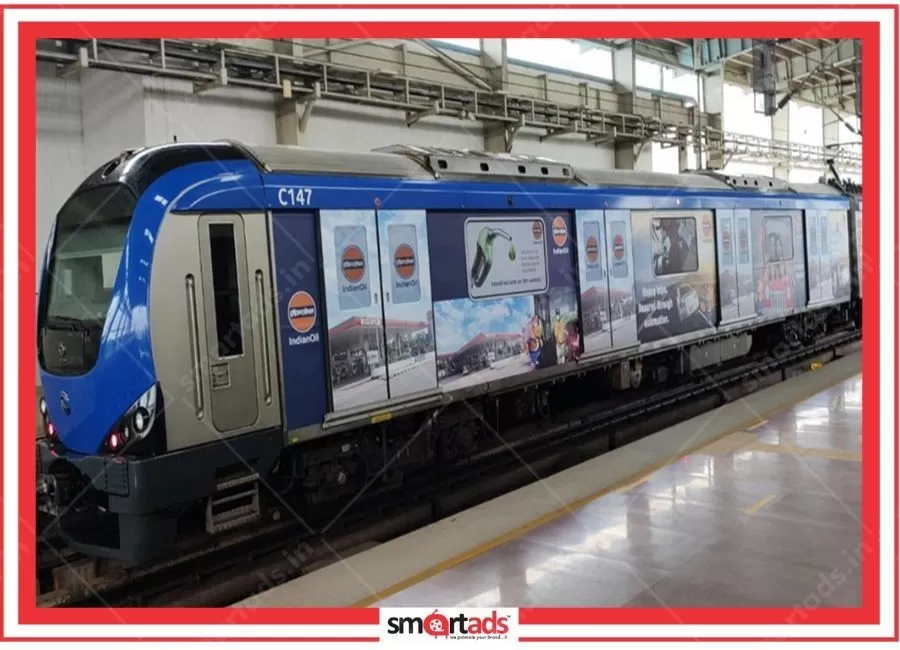
Exterior Metro Wrap
Size & Printing Cost as per actual
On the outside of metro Train, advertise
Rate per Metro Display Cost / 1 Month
Route:PCMC Bhavan To Swargate
₹1000000.00
Showing 1 to 3 of 3 Results
MEDIA DETAILS
Size & Printing Cost as per actual
On the outside of metro Train, advertise
Rate per Metro Display Cost / 1 Month
Route:PCMC Bhavan To Swargate
₹1000000.00
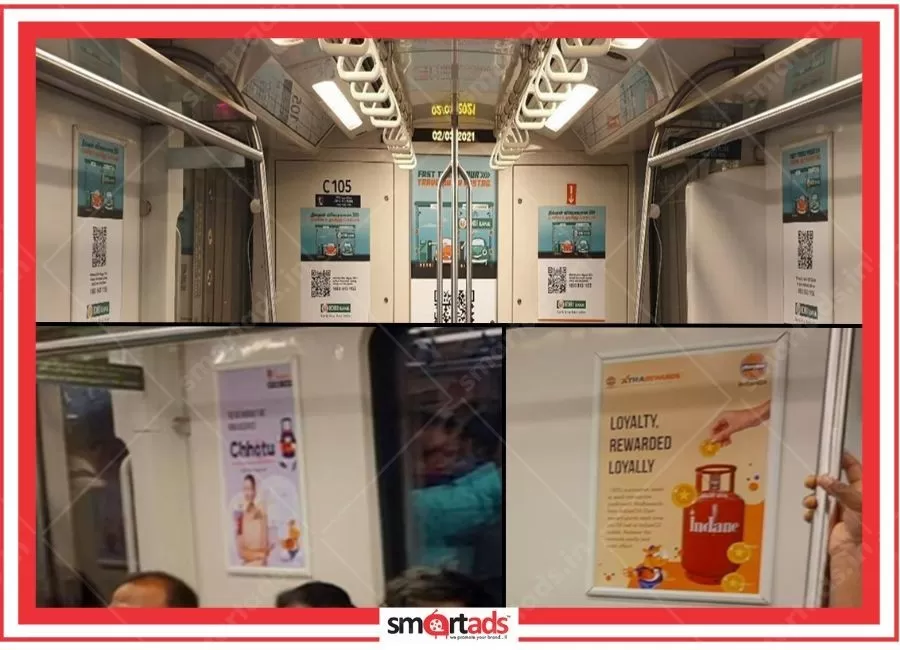
Size & Printing Cost as per actual
On the outside of metro Train, advertise
Rate per Metro Display Cost / 1 Month
Route:PCMC Bhavan To Swargate
₹500000.00
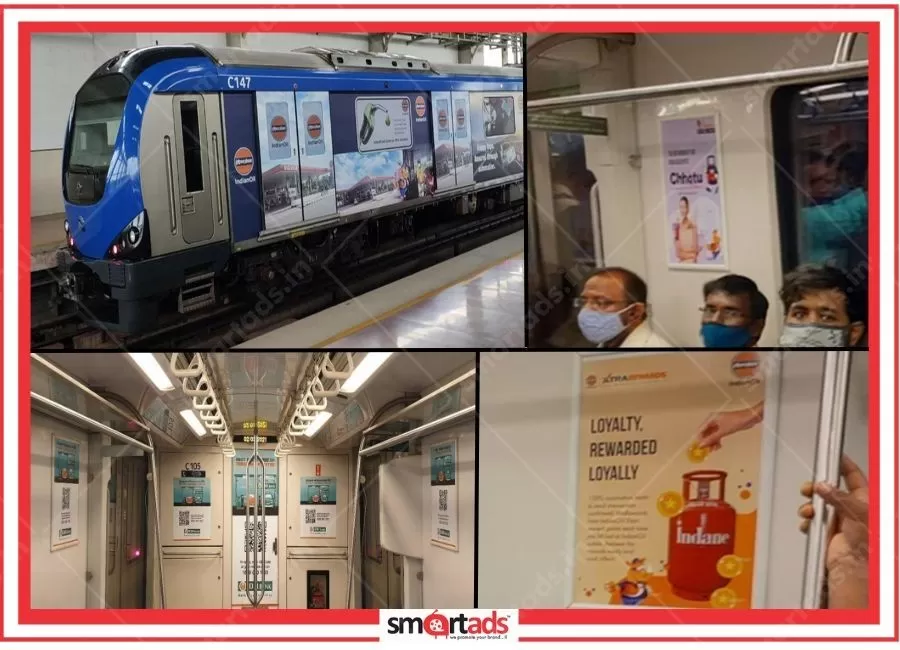
Size & Printing Cost as per actual
On the outside of metro Train, advertise
Rate per Metro Display Cost / 1 Month
Route:PCMC Bhavan To Swargate
₹1500000.00
MEDIA REACH

MinimumQty :
1
EstimateReachPeople :
150000000
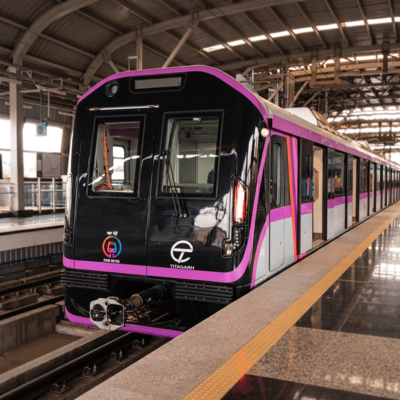
Pune's Purple Line carries somewhere in the range of 1.5 to 2 lakh daily commuters on its busiest stretches — a number that has grown faster than most media planners anticipated when the full Phase I corridor opened in September 2024. What makes this particularly interesting for advertisers is not just the volume, but the quality of that audience: working professionals, college students, and upwardly mobile residents of Pimpri Chinchwad and central Pune, locked inside a climate-controlled train with nothing to look at but your brand for six to twelve minutes at a stretch. We have found, across dozens of transit media campaigns, that this kind of captive audience exposure produces brand recall numbers that most conventional outdoor formats simply cannot match.
There is a version of this conversation we have had with brand managers many times: they come in asking about hoardings on the Pune-Mumbai Expressway or newspaper inserts in the Pune edition of a leading daily, and somewhere in the middle of the discussion, we redirect them to the metro. The Pune Metro Purple Line — formally Line 1, running from PCMC Bhavan in Pimpri Chinchwad down to Swargate in the south — passes through the economic spine of the Pune metropolitan region, connecting the industrial belt of PCMC with the commercial and educational heart of the city. That is not a coincidence; it is precisely why this corridor generates the kind of commuter traffic that makes metro train advertising in Pune Purple Line campaigns so defensible from a media planning standpoint.
What a lot of people miss is the frequency dimension. A daily commuter who boards at Phugewadi and exits at Civil Court metro station will see your interior branding panel every single weekday, which means a four-week campaign delivers somewhere in the neighbourhood of twenty individual exposures to the same person — a frequency figure that most OOH advertising in Pune cannot come close to replicating. The FICCI-EY Media & Entertainment Report has consistently highlighted transit advertising as one of the fastest-growing non-traditional advertising segments in India, and the Pune Metro Purple Line is a textbook example of why: the audience is predictable, the dwell time is guaranteed, and the context — a modern, aspirational public transport system — lends credibility to the brands that appear within it.
At SmartAds, we always tell our clients that the Purple Line is not just a media placement; it is a context play. Brands that appear on Pune Metro Purple Line trains are implicitly associated with modernity, urban mobility, and the progressive identity of the city — which is an intangible brand benefit that no rate card can fully price in.
The range of formats available for metro train advertising in Pune Purple Line campaigns is considerably wider than most advertisers realise when they first approach the medium. At the broadest level, formats fall into two categories — exterior and interior — but within each of those, the options are nuanced enough to support very different campaign objectives and budget sizes.
On the exterior, the most impactful option is the full train wrap, which covers the entire outer surface of one or more coaches with a branded vinyl application; this is what transforms the train into a moving billboard that is visible at every station it passes through, at every level crossing, and to pedestrians and motorists along the elevated sections of the purple line route. Below the full wrap, there are partial exterior options — side panel wraps covering specific coach sections, and front or rear end branding which gets particularly strong visibility at station platforms. The metro exterior wrap format is especially popular with real estate brands, FMCG companies, and consumer durables advertisers who want city-wide visibility without committing to a full wrap budget.
Interior formats are where the real depth of metro interior branding becomes apparent. Inside each coach, advertisers can book overhead panels (the longitudinal panels running above the windows), door panels, grab-handle branding, floor graphics, and seat-back panels — each of which has a different dwell time profile and a different relationship with the commuter's line of sight. On top of that, there are digital screen placements inside newer coaches, which allow for dynamic creative rotation. We have also seen smart card advertising gain traction recently, where branded messaging is printed on the reverse of reloadable metro cards — a format that offers an unusually long shelf life because commuters tend to keep their cards for months or years.
The PCMC to Swargate corridor spans roughly 17.4 kilometres with 14 operational stations, and not all of them are equal from an advertising impact standpoint. Understanding the station-level footfall and catchment profile is something we spend a significant amount of time on when building a metro branding campaign for a client, because the stations where trains dwell longest and where platform crowding is highest are the stations where exterior train branding gets the most eyes on it.
PCMC Bhavan station, at the northern terminus, draws heavily from the industrial and administrative workforce of Pimpri Chinchwad, which makes it particularly relevant for B2B brands, banking and financial services advertisers, and healthcare brands targeting working-age adults. Moving south, stations like Phugewadi and Dapodi serve dense residential catchments with a strong mix of blue-collar and white-collar commuters. Shivajinagar metro station is arguably the single highest-impact station on the corridor — it sits at the intersection of Pune's educational institutions, government offices, and the old commercial district, and it functions as an interchange hub that draws passengers from multiple feeder routes; footfall here is estimated to be among the highest on the line. Civil Court metro station is the planned interchange point with the Aqua Line (Line 2), which makes it a strategic node for advertisers who want to reach commuters transferring between corridors. Further south, Budhwar Peth and Mandai serve the dense commercial and wholesale trade areas of the old city, while Swargate at the southern end connects to one of Pune's busiest bus terminals, adding a layer of transit audience that extends well beyond the metro's own ridership.
For advertisers targeting hyperlocal marketing outcomes — a real estate developer launching a project in Wakad, say, or an edtech brand advertising metro advertising in Pune targeting college students near Shivajinagar — station-level placement decisions can meaningfully improve campaign efficiency. Our experience shows that combining train-level branding with station-level media at two or three high-footfall stops produces a significantly stronger brand recall lift than either format in isolation.
Frankly speaking, the absence of transparent pricing is one of the most frustrating aspects of the metro advertising market in India, and it is something we think does a disservice to brands trying to make informed budget decisions. So let us be direct about what metro train advertising in Pune Purple Line campaigns actually costs, with the caveat that rates are negotiated and can vary based on campaign duration, format mix, and seasonal demand.
A full train exterior wrap on the Purple Line — covering all coaches of a single train rake — works out to somewhere in the range of ₹8 to ₹12 lakh per month, which is a number that surprises most clients when they first hear it, because the per-impression cost at that reach level is actually quite competitive relative to what you would pay for equivalent OOH advertising in Pune on prime hoardings. Partial exterior wraps, covering two or three coaches rather than the full rake, come in at roughly ₹3 to ₹5 lakh per month; these are a sensible entry point for brands that want the moving billboard impact without the full train commitment. Metro interior branding — booking overhead panels across a set number of coaches — is priced in the ballpark of ₹50,000 to ₹1.5 lakh per month depending on the number of panels and the coach count, which makes it accessible even for mid-size advertisers running a focused advertising campaign in Pune. Smart card advertising rates are considerably lower, typically somewhere between ₹15 and ₹25 per card for a minimum print run, which can be an extremely cost-effective format for high-frequency distribution campaigns.
One thing we tell our clients consistently: metro advertising cost comparisons should always be made on a cost-per-thousand-impressions basis, not on absolute monthly spend. When you factor in the captive audience, the dwell time, and the frequency of repeated exposure that a daily commuter delivers over a four-week campaign, the effective CPM for Purple Line metro train advertising works out to somewhere in the range of ₹8 to ₹15 — which compares very favourably to prime-time television spots in the Pune market or to programmatic digital display at equivalent reach levels.
This is a question we get asked constantly, and the honest answer is that it depends entirely on what the campaign is trying to achieve. Full train branding — the complete exterior wrap combined with interior panels — is the most immersive and highest-impact format available in metro train branding in Pune, and for launch campaigns, brand repositioning exercises, or high-stakes festive season pushes, it is hard to argue against it. A fully branded train on the Purple Line is visible to tens of thousands of people daily who are not even metro commuters — pedestrians at level crossings, motorists waiting at signals near elevated sections, and residents whose windows overlook the viaduct — which means the campaign reach extends well beyond the ridership numbers.
Interior-only campaigns, on the other hand, offer a different kind of value: they reach a smaller but more captive audience, and they allow for more detailed messaging because the commuter has time to read and process copy that would be completely ignored on a roadside hoarding. We worked with a fintech brand running a Purple Line campaign focused on a new credit product; rather than going for exterior wraps, they booked overhead panels and door panels across six coaches, which allowed them to run a three-panel sequential narrative that walked commuters through the product benefit story over the course of a single journey. The campaign ran for eight weeks, and the brand reported a measurable uptick in app downloads from PIN codes along the Purple Line corridor — which, while not a controlled experiment, was directionally consistent with what we would expect from that kind of repeated exposure to a relevant urban audience.
The real value, in our experience, lies in the combination: a partial exterior wrap that creates awareness and visibility from outside the system, paired with interior branding that delivers the message in depth to the commuter who is already inside. This approach tends to produce the strongest brand awareness and brand recall outcomes, and it is what we typically recommend to clients who have a budget in the ₹5 to ₹8 lakh per month range for their metro branding campaign.
This is where it gets interesting, and it is something that a surprising number of brands and even some agencies are unclear about. MahaMetro — Maharashtra Metro Rail Corporation Limited — is the government body that owns and operates the Pune Metro Purple Line, but the advertising rights for the metro system, including train branding, station media, and various other formats, are managed through a concessionaire arrangement. Solutions Advertising holds the exclusive media rights for Pune Metro advertising, which means that any brand wanting to run metro train advertising in Pune Purple Line campaigns must go through Solutions Advertising or an authorised agency partner that has a working relationship with them.
What this means practically for advertisers is that the booking process is not as simple as calling a single number and placing an order; there is a formal proposal and approval workflow that involves both the concessionaire and MahaMetro's own compliance review, particularly for exterior wraps and full train branding formats. The non-fare revenue that MahaMetro generates from advertising concessions is a significant part of its operational revenue model, which means the organisation takes advertising quality and brand appropriateness seriously — and that is actually a good thing for advertisers, because it keeps the media environment premium and clutter-free relative to, say, a busy bus shelter or a cluttered newspaper page.
At SmartAds, we manage the entire interface with Solutions Advertising and MahaMetro on behalf of our clients, which significantly reduces the administrative burden and the back-and-forth that can otherwise stretch a campaign launch timeline by several weeks. Our experience shows that having an agency with an established relationship in the system can cut the approval-to-installation timeline from six or seven weeks down to three or four — which matters enormously when a campaign is tied to a product launch date or a festive season window.
The demographic composition of the Pune Metro Purple Line ridership is one of its strongest selling points as an advertising medium, and it is a dimension that gets surprisingly little attention in most discussions of metro train advertising rates in Pune. The corridor connects Pimpri Chinchwad — which is home to some of Maharashtra's largest manufacturing and IT campuses, including the Rajiv Gandhi Infotech Park cluster — with Shivajinagar, the Deccan area, and ultimately Swargate, which serves as a gateway to the older residential and commercial neighbourhoods of central Pune. The result is a ridership that skews heavily towards the 22-to-45 age bracket, with a high proportion of working professionals, which is precisely the demographic that most consumer brands, financial services companies, and lifestyle advertisers are trying to reach.
Income profile data from IRS (Indian Readership Survey) and commuter surveys conducted along similar urban metro corridors suggest that metro users in Tier 1 Indian cities index significantly higher on disposable income, digital adoption, and brand consciousness than the general urban population — and the Pune metropolitan region, with its concentration of IT and manufacturing employment, amplifies this effect. This is an urban audience that is actively making decisions about home loans, health insurance, mutual funds, consumer electronics, and education — categories where brand recall at the right moment in the purchase journey can have a direct conversion impact.
One automotive brand we worked with used Purple Line advertising specifically to reach first-time car buyers in the 28-to-35 age group who were commuting from Pimpri Chinchwad to central Pune; the insight was that these were people who had the income to consider a car purchase but were currently metro commuters, which made them an ideal conquest target. The campaign combined exterior train branding with interior panels featuring a QR code for a test drive booking, and over a six-week run, the dealership network in PCMC reported a noticeable increase in walk-ins attributable to the metro campaign — a result that validated the targeting hypothesis in a way that a city-wide OOH campaign would never have allowed us to isolate.
Below the line marketing has always been the category where creative media planning separates itself from formulaic buying, and metro train advertising in Pune Purple Line campaigns is one of the most compelling BTL options available in the city right now. To be fair, BTL advertising as a category covers an enormous range of formats — from in-store activations and direct mailers to experiential events and transit media — but what distinguishes metro advertising from most other BTL channels is its combination of scale, frequency, and environmental premium.
When we benchmark Purple Line metro train advertising against other BTL and non-traditional advertising options in Pune, the comparison that comes up most often is against auto-rickshaw advertising and bus advertising — both of which are cheaper on an absolute basis but significantly less premium in terms of audience quality and brand association. OOH advertising in Pune on prime hoardings along Nagar Road or FC Road can deliver high visibility, but it lacks the captive audience dimension that makes metro advertising so efficient on a cost-per-engaged-impression basis. The GroupM TYNY Report has consistently noted that transit advertising in Indian metros is growing at a faster rate than static OOH, which reflects exactly this shift in advertiser preference towards formats that guarantee dwell time.
What a lot of people miss is that metro advertising also functions as a form of hyperlocal marketing that is far more precise than most digital targeting can achieve in the physical world. When you run a metro branding campaign on the Purple Line, you are not just reaching "Pune"; you are reaching the specific economic corridor between PCMC and Swargate, at a specific time of day, in a specific mindset. That level of contextual precision is genuinely rare in non-traditional advertising, and it is one of the reasons we have seen brands in categories like real estate brand advertising, edtech advertising, and fintech brand metro advertising consistently return to the Purple Line for repeat campaigns.
The booking process for metro train advertising in Pune Purple Line campaigns has a few moving parts that are worth understanding before you start the conversation with a vendor or agency. The first step is brief development — defining the format, the duration, the number of coaches or trains, and the creative approach — because the approval process that follows is format-specific, and you do not want to discover mid-process that your creative concept requires a format that has a longer lead time than your campaign window allows.
Once the brief is finalised, the proposal goes to Solutions Advertising for a rate quote and availability check; availability matters more than most advertisers realise, because there are a finite number of train rakes on the Purple Line, and peak demand periods — particularly around Ganapati, Diwali, and the January-to-March corporate budget cycle — can see popular formats booked out weeks in advance. After the commercial terms are agreed, the creative artwork goes through a MahaMetro compliance review, which checks for content appropriateness, brand category restrictions (certain categories are restricted from metro advertising, including tobacco and certain types of political advertising), and technical specifications for the specific format. The metro advertising booking process from brief to installation typically takes somewhere between three and six weeks for a standard interior campaign, and five to eight weeks for a full train exterior wrap, which requires fabrication and professional installation by approved vendors.
Our recommendation to clients is always to initiate the process at least eight weeks before the intended campaign start date, and to have final artwork ready at least three weeks before installation day. We have seen campaigns delayed by two to three weeks simply because the creative file was submitted in the wrong format or at insufficient resolution — which is an entirely avoidable problem if the specifications are understood upfront.
MahaMetro's advertising compliance framework is more structured than most advertisers expect, and understanding it upfront saves a significant amount of time and frustration. The core principle is that all advertising on Purple Line trains — whether exterior wraps, interior panels, or digital screens — must be approved by MahaMetro's designated authority before any installation begins; there is no provision for retroactive approval, and unauthorised installations are removed immediately with the advertiser bearing the cost.
The content review covers several dimensions: brand category eligibility (financial services, healthcare, FMCG, real estate, and consumer brands are generally straightforward; categories like alcohol, tobacco, and certain pharmaceutical products face restrictions), creative content (no content that could be considered politically sensitive, religiously offensive, or socially inappropriate), and technical compliance (artwork must meet the specified resolution, material, and installation standards for each format). For exterior wraps, the vinyl material specifications are particularly important — MahaMetro requires materials that meet fire retardancy standards, which means not all standard OOH vinyl suppliers are qualified for metro train wrap advertising.
The naming rights and co-branding station model — which has been used by brands like Bajaj Finserv, Ruby Hall Clinic, and the Manikchand Group at various metro stations across Pune — involves a separate, longer-duration agreement with MahaMetro directly, and is a different commercial and approval process from standard train advertising. These co-branding metro station arrangements are typically multi-year commitments and are negotiated at a significantly higher investment level, but they deliver a category of brand visibility — having your name attached to a station — that no other advertising format can replicate.
This is the question that every CFO asks, and frankly speaking, it is also the question that the transit advertising industry as a whole has historically struggled to answer with the same rigour that digital advertising offers. The honest position is that metro advertising ROI measurement is a combination of modelled estimates and direct response tracking, and the methodology needs to be agreed upfront rather than retrofitted after the campaign ends.
The most reliable measurement approach we have used combines three inputs: an impressions model based on ridership data and format-specific visibility estimates (which Solutions Advertising and MahaMetro can provide as part of the campaign brief), a brand recall survey conducted among metro commuters before and after the campaign period, and direct response tracking through format-specific mechanisms like QR codes, dedicated landing pages, or promo codes embedded in the creative. The impressions model gives you the reach and frequency numbers that justify the spend to management; the recall survey gives you the brand equity impact; and the direct response tracking gives you the conversion data that ties the campaign to actual business outcomes.
Metro advertising ROI benchmarks from comparable campaigns on the Delhi Metro and Mumbai Metro — both of which have longer operating histories and more established measurement frameworks — suggest that well-executed interior branding campaigns typically deliver brand recall lifts in the range of 15 to 25 percentage points among regular commuters, which is a meaningful number when you consider the frequency of exposure that a four-week campaign delivers. The Dentsu e4m Advertising Report has noted that transit media in Indian cities delivers among the lowest cost-per-recall figures of any out-of-home format, which aligns with what we have observed in our own campaign measurement work.
Pune Metro Phase I was completed in September 2024, but the expansion story is far from over — and for advertisers thinking about long-term media planning, the trajectory of the network matters enormously. The Line 1B extension, which will extend the Purple Line southward from Swargate through Market Yard to Katraj, is targeted for completion around 2027; this extension will add a significant new catchment area to the corridor, bringing in the dense residential and commercial populations of Bibwewadi, Padmavati, and Katraj — neighbourhoods that are currently underserved by metro connectivity but have strong consumer market characteristics.
On top of that, the Pink Line (Line 3), which will connect Hinjawadi — Pune's primary IT hub — to Shivajinagar, is expected to create a significant new transit audience when it opens; while this is a separate line, it will feed passengers into the Purple Line at Shivajinagar, which will further increase footfall at that already-high-impact station. For advertisers who are considering metro train branding in Pune as a long-term channel investment rather than a one-off campaign, the network expansion trajectory suggests that the audience base will grow substantially over the next three to five years, which improves the long-term ROI case for building metro advertising into the annual media plan.
The Aqua Line (Line 2), running east-west from Vanaz to Ramwadi, is the other operational corridor in the Pune metro system; it serves a different catchment — the Kothrud, Deccan, and Koregaon Park belt — and its audience profile is somewhat different from the Purple Line's industrial-commercial mix. Some advertisers choose to run simultaneous campaigns on both lines for city-wide metro coverage, which Solutions Advertising can facilitate as a combined booking; the combined reach of both lines during peak hours represents a meaningful share of Pune's most economically active urban population, which makes the case for an integrated metro advertising strategy across both corridors quite compelling.
Most brands get this wrong in the same way: they treat metro advertising as a standalone placement rather than as the anchor of a coordinated media plan. The campaigns we have seen perform best on the Purple Line are the ones where the metro train branding is supported by complementary touchpoints — metro station advertising at two or three key stops, perhaps a pillar wrap at Shivajinagar or Civil Court, and a digital retargeting layer that serves ads to users whose device location data places them on the Purple Line corridor during the campaign period. This kind of multi-touchpoint approach creates a surround-sound effect that dramatically amplifies brand recall relative to any single format in isolation.
Seasonal timing is another dimension that is consistently underestimated. The Ganapati festival period in Pune — which typically falls in August or September — sees metro ridership spike sharply as residents travel across the city for celebrations and pandal visits; this is one of the highest-footfall periods of the year on the Purple Line, and it is also a period when consumer spending intent is elevated across categories from FMCG to consumer electronics. Similarly, the January-to-March period, which coincides with the corporate budget cycle and the peak home-buying season, is an excellent window for financial services and real estate brands. Campaign duration for metro train advertising on the Purple Line is typically sold in monthly increments, with a minimum of one month for most interior formats and a minimum of two months for exterior wraps — though we generally recommend a minimum of three months for any campaign where brand recall building is the primary objective, because the frequency effect compounds significantly over time.
Creative quality matters more in the metro environment than in most other OOH contexts, precisely because the audience has time to look. A commuter standing in a coach for eight minutes will notice poor typography, a weak headline, or a cluttered layout in a way that a motorist passing a hoarding at 60 kilometres per hour simply will not. We always advise clients to invest in proper metro-specific creative development rather than repurposing existing billboard artwork, because the format dimensions, the viewing distance, and the dwell time profile are all different enough to warrant a dedicated creative approach.
Q: What is metro train advertising on the Pune Purple Line?
Metro train advertising on the Pune Purple Line refers to brand placements on the trains that operate on Line 1 of the Pune Metro, which runs from PCMC Bhavan in Pimpri Chinchwad to Swargate in central Pune. These placements can take the form of exterior vinyl wraps that cover the outer surface of train coaches, or interior formats including overhead panels, door panels, grab-handle branding, and digital screens inside the coaches. The medium is classified as transit advertising and BTL advertising, and it is managed through Solutions Advertising, which holds the exclusive media rights for the Pune Metro system under a concession agreement with MahaMetro. The appeal of the format lies in its combination of city-wide visibility — the train functions as a moving billboard across the entire 17.4-kilometre corridor — and captive audience exposure inside the coaches, where commuters are stationary and attentive for the duration of their journey.
Q: Which advertising formats are available on Pune Metro Purple Line trains?
The formats available for metro train advertising in Pune Purple Line campaigns span a wide range. On the exterior, advertisers can book full train wraps covering all coaches, partial wraps covering specific coach sections, and front or rear end branding. On the interior, available formats include overhead longitudinal panels, door panels, grab-handle branding, floor graphics, seat-back panels, and digital screen placements on trains equipped with in-coach screens. Smart card advertising — branded messaging on the reverse of reloadable metro travel cards — is also available and offers a format with an unusually long shelf life. Each format has different minimum booking requirements, different creative specifications, and a different relationship with the commuter's attention, which is why format selection should always be driven by campaign objectives rather than purely by budget.
Q: How much does metro train advertising on the Pune Purple Line cost?
Metro advertising rates in Pune for the Purple Line vary by format and duration. A full train exterior wrap works out to roughly ₹8 to ₹12 lakh per month; partial exterior wraps covering two or three coaches come in somewhere between ₹3 and ₹5 lakh per month. Interior panel campaigns are considerably more accessible, with overhead panel bookings across a set number of coaches priced in the ballpark of ₹50,000 to ₹1.5 lakh per month depending on quantity. Smart card advertising is priced per unit, typically somewhere between ₹15 and ₹25 per card for a minimum print run. These are indicative benchmarks; actual rates are negotiated based on campaign duration, format mix, and seasonal demand, and a formal quote requires a proposal submission to Solutions Advertising or an authorised agency partner.
Q: What is the difference between metro exterior wrap and metro interior branding on the Purple Line?
A metro exterior wrap is a vinyl application on the outside surface of train coaches, which makes the train itself a moving billboard visible to everyone the train passes — commuters on platforms, pedestrians near the elevated sections, and motorists at level crossings. Metro interior branding, on the other hand, refers to placements inside the coach — panels, door graphics, grab handles, and digital screens — which are seen exclusively by passengers who are already aboard the train. The two formats serve different strategic purposes: exterior wraps maximise reach and city-wide brand visibility, while interior branding maximises depth of engagement and message retention among the captive audience of daily commuters. The most effective metro branding campaigns typically combine both, using the exterior for awareness and the interior for detailed messaging.
Q: Who holds the exclusive advertising rights for Pune Metro Purple Line trains?
Solutions Advertising holds the exclusive media rights for advertising on the Pune Metro system, including the Purple Line, under a concession agreement with MahaMetro (Maharashtra Metro Rail Corporation Limited). This means that all bookings for metro train advertising in Pune Purple Line campaigns — whether exterior wraps, interior panels, or other train-based formats — must be routed through Solutions Advertising or through an agency that has an authorised working relationship with them. MahaMetro retains approval authority over all advertising content and materials, and no installation can proceed without MahaMetro's compliance sign-off.
Q: What are the key stations on the Purple Line for maximum advertising impact?
Shivajinagar metro station and Civil Court metro station are consistently the highest-impact stations on the Purple Line from an advertising standpoint. Shivajinagar draws from a broad catchment that includes educational institutions, government offices, and the old commercial district, and it functions as a major interchange hub; footfall here is among the highest on the entire corridor. Civil Court is the planned interchange with the Aqua Line (Line 2), which makes it a node for passengers transferring between corridors and amplifies its audience reach. PCMC Bhavan at the northern end is strategically important for brands targeting the industrial and IT workforce of Pimpri Chinchwad, while Swargate at the southern end connects to one of Pune's busiest bus terminals and draws a large transit audience beyond the metro's own ridership.
Q: How do I book metro train advertising on the Pune Purple Line?
The metro advertising booking process begins with a brief that specifies the format, campaign duration, number of coaches or trains, and creative concept. This is submitted to Solutions Advertising — either directly or through an authorised agency — for a rate quote and availability check. Once commercial terms are agreed, the creative artwork goes through a MahaMetro compliance review covering content appropriateness, category eligibility, and technical specifications. After approval, the artwork is sent to fabrication and installation by approved vendors. The full timeline from brief to campaign launch is typically three to six weeks for interior campaigns and five to eight weeks for exterior wraps; we recommend initiating the process at least eight weeks before the intended start date to avoid delays.
Q: What approval is required from MahaMetro to advertise on Purple Line trains?
All advertising on Purple Line trains requires a content and compliance approval from MahaMetro before installation. The review covers brand category eligibility, creative content appropriateness, and technical compliance with format-specific material and resolution standards. For exterior wraps, the vinyl material must meet fire retardancy standards specified by MahaMetro, which means not all standard OOH vinyl suppliers are qualified for this format. The approval process is managed through Solutions Advertising as the concessionaire, but the final sign-off authority rests with MahaMetro. Certain brand categories — including tobacco, alcohol, and certain pharmaceutical products — face restrictions or outright prohibitions under MahaMetro's advertising policy.
Q: Which industries benefit most from advertising on the Pune Metro Purple Line?
Real estate brands advertising metro have found the Purple Line particularly effective for reaching aspirational home buyers in the PCMC-to-Shivajinagar corridor. Financial services brands — including banking, insurance, and fintech brand metro advertising — benefit from the high-income, digitally active commuter profile. Edtech advertising on metro platforms has grown significantly, driven by the concentration of college students and young professionals on the corridor. Healthcare, consumer electronics, FMCG, and automotive brands have all run successful metro train advertising in Pune Purple Line campaigns, as have educational institutions, hospitality brands, and government awareness campaigns. The format is most effective for brands whose target audience overlaps with the working professional and student demographic that dominates Purple Line ridership.
Q: What is the minimum campaign duration for metro train advertising on the Purple Line?
The minimum campaign duration for most interior formats on the Purple Line is one month, while exterior wraps typically carry a minimum commitment of two months due to the fabrication and installation investment involved. That said, we generally recommend a minimum of three months for any campaign where brand recall building is the primary objective, because the frequency effect — the cumulative impact of repeated exposure on the same daily commuter — compounds significantly over time and delivers meaningfully better recall outcomes than a single-month burst. Shorter durations can work well for product launch announcements or event-driven campaigns where the objective is immediate awareness rather than sustained recall.
Q: How does Purple Line metro advertising compare to traditional outdoor advertising in Pune?
The fundamental difference is the captive audience dimension. A hoarding on Nagar Road or FC Road delivers impressions to motorists and pedestrians who are moving past at speed, with a dwell time measured in seconds; a metro interior panel delivers impressions to a stationary commuter who has six to twelve minutes with nothing else to look at. This translates into a fundamentally different quality of impression — one that is more likely to result in message comprehension, brand recall, and ultimately purchase consideration. On a cost-per-engaged-impression basis, metro train advertising in Pune Purple Line campaigns is typically more efficient than prime OOH advertising in Pune, even though the absolute monthly cost of a full train wrap may be comparable to a prime hoarding. The additional advantage of metro advertising is its association with a modern, aspirational transit environment, which lends a premium quality to the brand context that roadside OOH cannot replicate.
Q: What is the daily ridership on the Pune Metro Purple Line?
The Pune Metro Purple Line carries an estimated 1.5 to 2
