
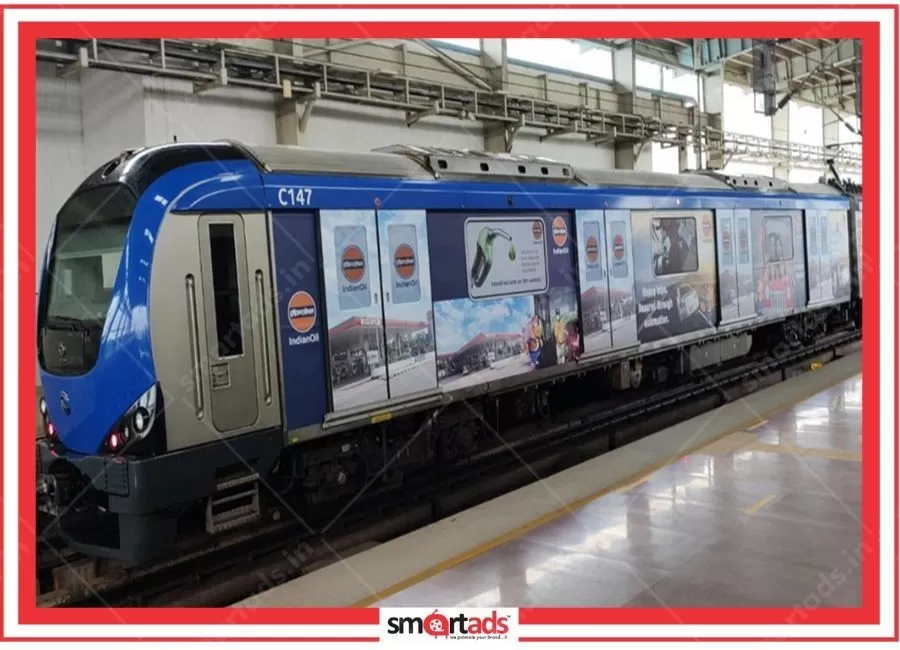
Exterior Metro Wrap
Size & Printing Cost as per actual
On the outside of metro Train, advertise
Rate per Metro Display Cost / 1 Month
Route:Vanaz To Ramwadi
₹1000000.00
Showing 1 to 3 of 3 Results
MEDIA DETAILS
Size & Printing Cost as per actual
On the outside of metro Train, advertise
Rate per Metro Display Cost / 1 Month
Route:Vanaz To Ramwadi
₹1000000.00
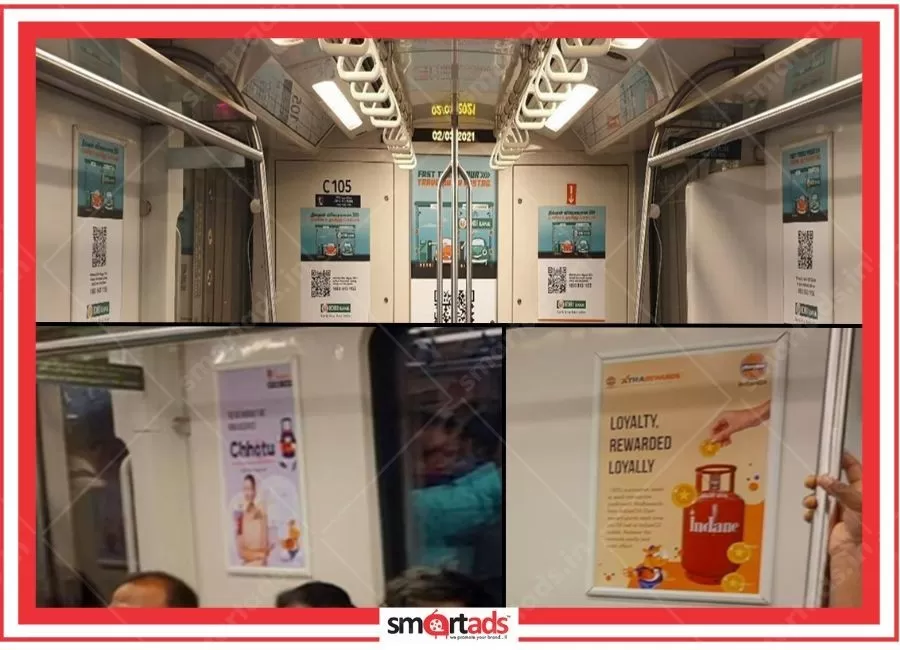
Size & Printing Cost as per actual
On the outside of metro Train, advertise
Rate per Metro Display Cost / 1 Month
Route:Vanaz To Ramwadi
₹500000.00
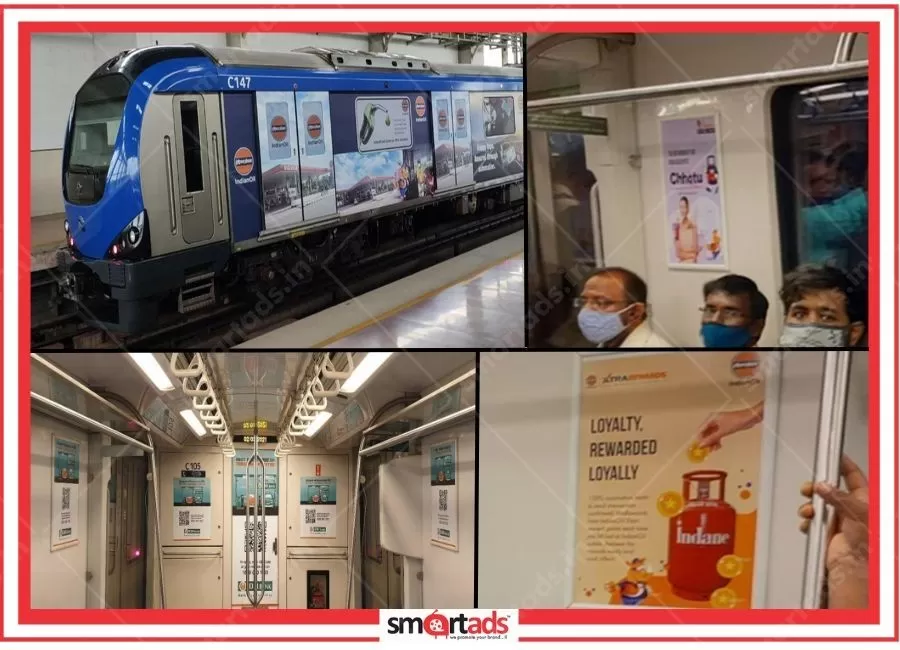
Size & Printing Cost as per actual
On the outside of metro Train, advertise
Rate per Metro Display Cost / 1 Month
Route:Vanaz To Ramwadi
₹1500000.00
MEDIA REACH

MinimumQty :
1
EstimateReachPeople :
150000000
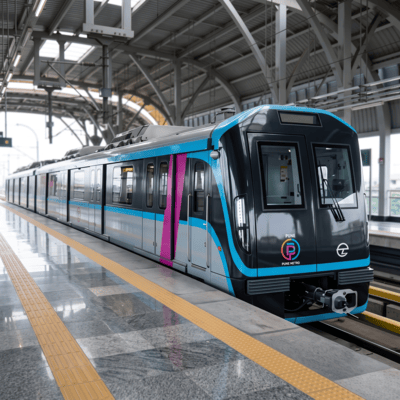
On the first day of 2025, the Pune Metro Aqua Line carried 1,02,174 passengers in a single day — a number that most brand managers we speak to simply do not believe until we show them the data. The Vanaz to Ramwadi corridor, stretching across 14.66 km and 16 stations, has quietly become one of the most potent transit advertising environments in western India, and yet the majority of Pune's advertising budgets are still being poured into traditional hoardings and newspaper inserts that deliver a fraction of the dwell time. We have been placing campaigns on this corridor since its early ridership days, and what we tell our clients consistently is this: the brands that move early on metro train advertising in Pune Aqua Line will own a premium audience at a cost that will not stay this accessible for much longer.
Metro train advertising on the Pune Aqua Line is, at its simplest, the practice of placing brand communications on or inside the rolling stock — the actual trains — that operate along the Pune Metro Line 2 corridor between Vanaz and Ramwadi. But that description undersells what is actually happening. When a train carrying your brand livery pulls into Deccan Gymkhana station during morning peak hours, it is not just an advertisement; it is a moving billboard travelling at speed through one of Pune's most commercially dense neighbourhoods, visible to commuters on the platform, pedestrians on the roads below the elevated metro corridor, and passengers seated inside the coaches simultaneously.
What a lot of people miss is that metro train advertising in Pune Aqua Line operates on a fundamentally different attention model than static OOH advertising in Pune. A billboard on Karve Road competes with traffic, other hoardings, and the general visual noise of the city; a commuter sitting inside a branded coach for twelve to eighteen minutes between Vanaz and Civil Court interchange has nowhere else to look. This captive audience dynamic — which is well-documented in transit media research globally — is what makes interior train branding particularly valuable for brand recall, especially for categories that require sustained message exposure like financial products, real estate, and edtech.
At SmartAds, we always tell our clients that the Pune Aqua Line is not a single advertising touchpoint but an ecosystem. The train itself, the platforms, the concourse areas, the entry and exit gates — all of these surfaces work together, and a brand that occupies multiple touchpoints along the same commuter journey is creating a frequency of exposure that no single format can replicate. The MahaMetro network, operated by Maharashtra Metro Rail Corporation Limited, has been designed with advertising infrastructure built in from the ground up, which means the formats are professional, the placements are clean, and the brand environment is considerably more premium than what you get on PMPML buses or auto-rickshaw panels.
The range of formats available for advertising on Pune Metro Aqua Line trains is wider than most brands realise when they first approach us. The flagship format is the full train branding or train wrap, which involves covering the entire exterior of a train — typically a three-coach or six-coach rake — with a brand's creative. This is the format that delivers the moving billboard effect; a fully wrapped train on the elevated metro corridor between Phugewadi and Civil Court interchange is visible from ground level across a significant radius, which effectively extends your outdoor reach well beyond the commuter base.
Interior train branding covers everything inside the coaches — door panels, overhead panels, seat-back panels, grab handles, and the full ceiling canopy in some configurations. Coach branding, which is a more targeted version of interior advertising, allows a brand to own a single coach rather than the full rake, which makes it accessible to advertisers who want the captive audience effect without the investment of a full train wrap. We have found that coach branding works particularly well for hyperlocal advertising campaigns — a real estate developer in Kothrud, for instance, might choose to brand the coaches that are most frequently occupied during the Vanaz-to-Deccan Gymkhana segment, which aligns with the residential-to-commercial commute pattern of that corridor.
Beyond the rolling stock itself, the Pune Aqua Line advertising inventory also includes platform panel advertising, digital DOOH screens at stations, concourse advertising panels, and entry exit branding at station gates. The DOOH metro screens are worth calling out specifically because they allow dynamic creative rotation — which means a brand can run different messages at different times of day, targeting morning commuters with one message and evening commuters with another. This is a level of contextual flexibility that static train branding cannot offer, and we often recommend combining a train wrap with DOOH metro placements at high-footfall stations like Ramwadi and Ruby Hall Clinic station for campaigns where both reach and frequency are priorities.
Frankly speaking, metro advertising rates on the Pune Aqua Line are one of the most common questions we get, and also the question that most agency pages refuse to answer directly. We will give you the honest picture, with the caveat that final costs depend on campaign duration, format selection, and negotiated terms through Solutions Advertising, which holds the 15-year exclusive media rights for Pune Metro advertising.
For a full train branding or complete exterior train wrap on the Pune Aqua Line, the investment works out to somewhere in the ballpark of ₹8 to ₹12 lakh per month depending on the rake configuration and campaign duration; a longer campaign duration of three months or more typically unlocks rate efficiencies that make the effective monthly cost considerably lower. Interior train branding for a full rake — covering all panels, overhead spaces, and door areas across the coaches — is generally priced in the range of roughly ₹4 to ₹7 lakh per month, which, when you calculate it against the daily ridership numbers, produces a CPM that surprises most first-time advertisers when they compare it to what they are paying for Instagram reach in the same city. Coach branding for a single coach runs considerably lower, typically somewhere between ₹1.5 and ₹3 lakh per month, which is a figure that genuinely opens metro advertising cost in Pune to mid-sized brands and not just large national advertisers.
What we tell our clients at SmartAds is that the rate card is only one part of the equation; the other part is production cost for the creative itself, which for a full train wrap involves precision printing on specialised vinyl that must meet MahaMetro's technical specifications. Production for a full exterior train wrap typically adds another ₹2 to ₹4 lakh to the overall campaign cost, which is a one-time investment that can be amortised across a longer campaign period. Platform panel advertising and concourse advertising at individual stations are available at significantly lower entry points — in the ballpark of ₹50,000 to ₹1.5 lakh per panel per month — which makes metro station branding accessible even for brands with tightly controlled BTL advertising budgets.
The Pune Aqua Line runs from Vanaz in the west through Kothrud, Deccan Gymkhana, and the Civil Court interchange, continuing eastward through Kalyani Nagar and terminating at Ramwadi — and the footfall distribution across these 16 stations is not uniform, which has significant implications for how brands should allocate their station-level advertising budgets. Based on September 2024 data, Ramwadi station recorded approximately 3,99,779 passengers in the month, making it the busiest station on the corridor; Vanaz station, at the western terminus, recorded roughly 2,79,044 passengers in the same period.
Civil Court interchange station deserves particular attention because it is the only station where the Aqua Line and the Purple Line intersect, which means it captures commuters from both corridors and generates a combined footfall that no other station on the network can match. For brands seeking maximum urban audience reach in Pune, Civil Court is the single most strategic station on the entire metro network. Deccan Gymkhana station sits in the heart of one of Pune's most commercially and educationally dense neighbourhoods — it serves Garware College, Ferguson College, and the Deccan commercial belt — which makes it the preferred station for edtech brands, coaching institutes, and youth-oriented consumer brands running hyperlocal advertising campaigns.
Ruby Hall Clinic station is an interesting case study in geo-targeted advertising; it sits adjacent to one of Maharashtra's most prominent hospitals and serves a catchment that includes both patients and the significant medical professional community in the area. Healthcare brands, insurance companies, and BFSI advertising campaigns targeting the upper-middle-income segment have found this station disproportionately effective. Kalyani Nagar station, on the eastern end of the corridor, serves Viman Nagar and the IT park belt, which means the audience skewing toward working professionals and office commuters is particularly pronounced there — a demographic profile that fintech branding, premium lifestyle brands, and OTT platform advertising campaigns consistently find valuable.
The honest answer is that not every brand is equally well-suited to metro train advertising in Pune Aqua Line, and we have seen campaigns underperform not because the medium failed but because the brand-audience fit was not thought through carefully enough. The Aqua Line corridor runs through a socioeconomic cross-section that skews distinctly toward the urban middle and upper-middle class — daily commuters on this route include IT professionals travelling to the Hinjewadi and Kalyani Nagar tech parks, students from the colleges around Deccan Gymkhana and Garware College station, and residents of the premium residential zones in Kothrud and Koregaon Park. This is a demographic profile that aligns almost perfectly with the target audience of real estate advertising metro campaigns, fintech branding metro campaigns, and edtech brands metro campaigns.
Real estate developers in Pune have been among the most consistent users of aqua line advertising, and for good reason — the corridor passes through or near several of Pune's most active residential development zones, and a commuter who travels daily past a full train wrap for a new residential project in Kothrud is receiving repeated, high-quality brand impressions at a point in their day when they are relatively relaxed and receptive. We worked with a real estate developer targeting the Kothrud and Bavdhan micro-market who ran a full train branding campaign on the Aqua Line for sixty days; by the end of the campaign, their site visit inquiries from Pune Metro-related tracking channels had increased by roughly 40%, which was a metric that justified a repeat booking for the following quarter.
BFSI advertising and fintech branding metro campaigns have also shown strong results on this corridor, particularly when combined with platform panel advertising at stations like Kalyani Nagar and Civil Court interchange where the working professional concentration is highest. OTT platform advertising campaigns have used the Aqua Line effectively during content launch windows — one streaming platform we worked with ran a coach branding campaign timed to a major original series launch, combining interior train branding with DOOH metro screens at five key stations, and the campaign delivered a frequency of exposure that the brand's social media spend in Pune could not match at the same budget level. Students in Pune, healthcare brands, insurance companies, automobile manufacturers, and FMCG brands targeting urban audience Pune are all well-served by this medium, though the specific format and station selection should be calibrated to each brand's audience geography.
The booking process for metro train advertising in Pune Aqua Line runs through Solutions Advertising, which was awarded the 15-year exclusive media rights for the Pune Metro network by MahaMetro — and this is a structural detail that matters for any brand or media plan booking metro campaigns, because it means there is a single authorised channel for all train branding and station advertising inventory on the Aqua Line. Working with a media plan booking metro partner like SmartAds means you have a team that already has an established working relationship with Solutions Advertising and understands the inventory availability, rate negotiation levers, and production timelines involved.
The practical booking sequence begins with a media brief — defining the campaign objective, budget range, campaign duration, and target audience geography along the corridor. From there, a format recommendation is developed, followed by a rate negotiation and availability check with Solutions Advertising. Once the booking is confirmed, the creative production phase begins, which for exterior train branding involves preparing artwork to MahaMetro's technical specifications — typically a process that takes two to three weeks for a full train wrap, including the vinyl printing and quality checks. Installation is carried out by the authorised vendor during scheduled maintenance windows, which means the installation timeline needs to be factored into the campaign start date planning.
What we tell clients who are booking metro advertising for the first time is to allow a minimum of four to six weeks between campaign confirmation and the desired go-live date, particularly for full train branding or exterior train wrap formats. The MahaMetro approval process adds a layer of time that brands accustomed to traditional OOH advertising in Pune sometimes underestimate; a hoarding can go up in forty-eight hours, but a train wrap requires formal clearance. We have found that campaigns planned with adequate lead time consistently outperform last-minute bookings in terms of creative quality and placement optimisation, which is why we build the production and approval timeline into every media plan we develop for the Aqua Line corridor.
The MahaMetro approval process for advertising on the Pune Aqua Line is more structured than most brands expect, and this is an area where working with an experienced metro advertising agency in Pune pays real dividends. MahaMetro, as the operating authority for the Maharashtra Metro network, retains final approval rights over all advertising content placed on its trains and stations — regardless of the commercial arrangement with Solutions Advertising. This means that even after a booking is confirmed and rates are agreed, the creative content must be submitted to MahaMetro for review and sign-off before any installation can proceed.
The content review process evaluates advertising material against MahaMetro's guidelines, which prohibit content that is political in nature, religiously sensitive, or likely to cause public controversy; the guidelines also specify technical requirements around material quality, adhesive specifications for vinyl wraps, and the structural limitations of where materials can be applied on the rolling stock. For exterior train branding, the artwork must account for the precise dimensions of the Titagarh Firema rolling stock used on the Aqua Line — the trains are manufactured by Titagarh Firema, and the coach dimensions, door positions, and window configurations are specific to this rolling stock, which means generic OOH artwork almost never transfers directly without significant adaptation.
Frankly speaking, the approval process is not onerous if you go in prepared, but it does require a level of documentation and process familiarity that first-time advertisers often lack. At SmartAds, our team handles the full approval submission on behalf of clients — including the technical artwork preparation, the compliance documentation, and the coordination with Solutions Advertising to ensure the MahaMetro review is completed within the campaign timeline. We have seen campaigns delayed by two to three weeks simply because the creative was submitted in the wrong format or the content review flagged an element that needed revision; building in buffer time and working with a team that knows the process is the most effective way to avoid those delays.
The case for treating metro train advertising in Pune Aqua Line as a premium BTL advertising channel rather than a secondary or experimental spend rests on a few structural advantages that are worth unpacking properly. The first is the captive audience dynamic that we referenced earlier — a commuter inside a branded coach has an average dwell time of somewhere between twelve and twenty minutes for a full Vanaz to Ramwadi journey, which is an exposure window that no other non-traditional advertising format in Pune can match. Compare this to a roadside hoarding, which captures attention for perhaps two to four seconds from a moving vehicle, and the quality of the impression is simply in a different category.
The second structural advantage is the demographic quality of the audience. The Pune Aqua Line corridor passes through some of the city's highest-income and highest-education neighbourhoods — Kothrud, Deccan Gymkhana, Koregaon Park, Kalyani Nagar, Viman Nagar — and the commuter profile reflects this geography. Transit media research, including data referenced in the FICCI-EY Media Report, consistently shows that metro commuters in Indian cities index significantly higher on income, education, and consumption propensity compared to the general urban population; this is the audience that BFSI advertising, premium consumer brands, and high-ticket real estate advertising metro campaigns are paying a premium to reach through television and digital channels. On the Aqua Line, you can reach the same audience in a physical, high-dwell-time environment at a cost that is often lower than a comparable digital reach campaign.
The third advantage is the brand safety and premium environment that the metro provides. Below the line marketing in Pune has historically been associated with formats like auto-rickshaw panels, bus shelter advertising, and wall painting — formats which, while effective for certain objectives, carry a different brand perception than advertising within a clean, modern, air-conditioned metro environment. The Pune Aqua Line is an elevated metro corridor with modern station infrastructure, which means the brand environment is premium by association; a brand that appears on the Aqua Line is implicitly communicating a level of quality and investment that resonates with the urban audience Pune demographic.
The purple line vs aqua line advertising question is one we get regularly, and the honest answer is that they serve different strategic objectives rather than one being categorically better than the other. The Purple Line (Line 1) runs from PCMC in the north to Swargate in the south, passing through the Shivajinagar and Swargate commercial corridors; the Aqua Line (Line 2) runs east-west from Vanaz to Ramwadi, passing through the Deccan-Koregaon Park-Kalyani Nagar belt. The audience profiles are meaningfully different, which should drive the format and station selection for any given campaign.
The Purple Line corridor has historically carried higher absolute ridership volumes, particularly in the PCMC-to-Shivajinagar segment which serves a large blue-collar and lower-middle-income commuter base from the Pimpri-Chinchwad industrial belt. The Aqua Line, by contrast, carries a higher proportion of white-collar, professional, and student commuters — the Deccan Gymkhana and Kalyani Nagar segments in particular skew strongly toward office commuters and working professionals. For brands in categories like fintech branding metro, edtech brands metro, premium FMCG, and real estate advertising metro, the Aqua Line audience quality premium is a real and measurable advantage; for brands in FMCG categories targeting mass consumption, the Purple Line's higher raw ridership may be the better fit.
On cost, the two lines are broadly comparable at the format level, though station-specific rates vary based on footfall data. The Civil Court interchange station, which is the only point where both lines intersect, is priced at a premium on both networks because of its combined catchment — and rightly so, because it is the single highest-footfall location in the entire Pune Metro network. One automotive brand we worked with ran a simultaneous campaign on both lines — exterior train branding on the Aqua Line targeting the premium east-west commuter belt, and platform panel advertising on the Purple Line at PCMC and Shivajinagar for mass market reach — and the combined campaign delivered a cost per unique reach that was roughly 30% lower than an equivalent television and outdoor combination in the same market.
Measuring ROI from metro train advertising in Pune Aqua Line requires a slightly different framework than what most digital-first marketers are accustomed to, and we have had this conversation with enough clients to know that the measurement question is often the last thing considered and the first thing regretted. The starting point for any ROI framework on this medium is establishing a baseline — what is the brand's awareness, recall, and consideration level in the Pune market before the campaign runs? Without this baseline, attributing any post-campaign improvement to the metro advertising specifically is difficult to defend in a budget review.
The metrics that are most directly measurable for aqua line advertising campaigns include reach (derived from daily ridership data, which MahaMetro publishes and which we use to calculate total impressions over a campaign period), frequency (which is a function of how many times the average commuter travels the route during the campaign window — for daily commuters, this can be as high as forty to fifty exposures over a thirty-day campaign), and brand recall (which is typically measured through post-campaign surveys among metro users). The TAM AdEx and BARC viewership data frameworks, while primarily designed for broadcast media, provide useful benchmarks for comparing the effective CPM of transit advertising against television and digital alternatives in the same market.
What we have found at SmartAds is that the most reliable ROI measurement for metro advertising campaigns comes from category-specific tracking — a real estate developer tracking site visit inquiries from Pune Metro-related UTM parameters, an edtech brand tracking app downloads in the pin codes served by the Aqua Line corridor, or a BFSI brand tracking branch walk-ins at locations near key Aqua Line stations. One edtech client we worked with ran a coach branding campaign targeting the Garware College station and Deccan Gymkhana station catchment for forty-five days; they tracked app downloads from the relevant pin codes throughout the campaign period and recorded a 28% uplift compared to the preceding forty-five days, which was a metric that cleared their internal ROI threshold comfortably. The GroupM TYNY Report data on transit media effectiveness in Indian metros provides additional benchmarking context that we use when presenting campaign ROI projections to clients.
Q: What is metro train advertising on the Pune Aqua Line?
Metro train advertising on the Pune Aqua Line refers to placing brand communications on the trains, coaches, and related surfaces of the Pune Metro Line 2 corridor, which runs for 14.66 km across 16 stations from Vanaz in the west to Ramwadi in the east. This includes exterior formats like full train wraps and coach branding visible to people on platforms and streets below the elevated metro corridor, as well as interior formats like panel advertising, overhead branding, and door wraps that target the captive audience of daily commuters inside the coaches. The medium is classified as BTL advertising and transit advertising, and it operates under the commercial framework managed by Solutions Advertising, which holds the 15-year exclusive media rights for the Pune Metro network.
Q: Which ad formats are available for advertising on Pune Metro Aqua Line trains?
The available formats span both the rolling stock and the station infrastructure. On the trains themselves, brands can book full train branding (a complete exterior train wrap covering the entire rake), coach branding (ownership of one or more individual coaches, either interior or exterior), interior panel advertising (overhead panels, door panels, seat-back panels, and grab handle branding), and full interior coach takeovers. At the station level, the inventory includes platform panel advertising, concourse advertising panels, digital DOOH metro screens, and entry exit branding at station gates. The most impactful single format is the full exterior train wrap, which functions as a moving billboard across the entire Aqua Line corridor; the most cost-effective format for hyperlocal advertising is typically coach branding at specific stations combined with platform panels.
Q: How much does it cost to advertise on the Pune Aqua Line metro train?
Metro advertising cost in Pune on the Aqua Line varies by format and campaign duration. A full exterior train wrap works out to roughly ₹8 to ₹12 lakh per month, while interior train branding for a full rake is in the ballpark of ₹4 to ₹7 lakh per month. Coach branding for a single coach runs somewhere between ₹1.5 and ₹3 lakh per month, and platform panel advertising at individual stations is available from approximately ₹50,000 to ₹1.5 lakh per panel per month. Production costs for vinyl printing and installation are additional, typically adding ₹2 to ₹4 lakh for a full exterior wrap. Longer campaign durations of three months or more generally attract rate efficiencies that reduce the effective monthly cost. All bookings are made through Solutions Advertising, the exclusive media rights holder.
Q: Which stations on the Pune Aqua Line have the highest daily footfall?
Based on September 2024 data, Ramwadi station at the eastern terminus recorded approximately 3,99,779 passengers in the month, making it the highest-footfall station on the Aqua Line. Vanaz station at the western terminus recorded roughly 2,79,044 passengers in the same period. Civil Court interchange station, which connects the Aqua Line with the Purple Line, generates the highest combined footfall in the entire Pune Metro network because it serves commuters from both corridors simultaneously. Deccan Gymkhana station and Kalyani Nagar station are also high-priority advertising locations because of the density of their respective catchment areas — commercial and educational institutions in the Deccan belt, and IT parks and office clusters in the Kalyani Nagar-Viman Nagar corridor.
Q: How many passengers travel on the Pune Aqua Line daily?
The Pune Aqua Line has seen consistent ridership growth since its launch, with daily passenger counts reaching significant milestones through 2024 and into 2025. On January 1, 2025, the Aqua Line recorded 1,02,174 passengers in a single day — a figure that reflects both the growing adoption of metro commuting in Pune and the scale of the captive audience available to advertisers on this corridor. Average daily ridership across regular weekdays runs in the range of roughly 60,000 to 80,000 passengers, with peaks during festivals, public events, and the IPL season pushing numbers significantly higher. Metro ridership Pune 2025 projections from MahaMetro indicate continued growth as the network expands and feeder connectivity improves.
Q: What is the difference between interior and exterior train branding on Pune Metro?
Interior train branding refers to advertising placed inside the coaches — on the walls, doors, overhead panels, and other surfaces that commuters see while seated or standing inside the train. It targets the captive audience of passengers during their journey and delivers high dwell time exposure, typically twelve to twenty minutes for a full Vanaz to Ramwadi run. Exterior train branding, or the train wrap, covers the outside surfaces of the coaches and is visible to people on platforms, at station concourses, and from street level below the elevated metro corridor. The two formats serve different objectives — interior branding maximises message depth and brand recall among commuters, while exterior branding maximises reach and acts as a moving billboard across the entire corridor. Most high-impact campaigns combine both formats.
Q: What permissions do I need from MahaMetro to advertise on the Aqua Line?
All advertising on the Pune Metro Aqua Line requires approval from MahaMetro, Maharashtra Metro Rail Corporation Limited, regardless of the commercial arrangement with Solutions Advertising. The approval process involves submitting the creative artwork along with a compliance declaration confirming that the content meets MahaMetro's advertising guidelines — which prohibit political, religious, or controversial content and specify technical requirements for materials and adhesives. For exterior train branding, the artwork must be prepared to the precise dimensions of the Titagarh Firema rolling stock used on the Aqua Line. The approval process typically takes one to two weeks, and installation is carried out during scheduled maintenance windows. Working with an experienced metro advertising agency in Pune that has an established process with Solutions Advertising and MahaMetro significantly reduces the risk of delays.
Q: Who has the exclusive advertising rights for the Pune Metro Aqua Line?
Solutions Advertising holds the 15-year exclusive media rights for advertising across the Pune Metro network, including the Aqua Line (Line 2) and the Purple Line (Line 1). This means that all train branding, station advertising, DOOH metro screens, and other commercial media placements on the Pune Metro must be booked through Solutions Advertising. Brands and agencies cannot approach MahaMetro directly for advertising bookings; the commercial channel runs exclusively through Solutions Advertising. The 15-year exclusive media rights tenure provides stability and consistency in the advertising framework, which is beneficial for brands planning long-term presence on the corridor.
Q: Which industries benefit most from advertising on the Pune Aqua Line?
The industries that consistently deliver the strongest results from metro train advertising in Pune Aqua Line are those whose target audience aligns with the Aqua Line's commuter demographic — urban, educated, middle-to-upper-middle income, and professionally employed. Real estate advertising metro campaigns targeting the Kothrud and Deccan residential markets, edtech brands metro campaigns targeting the student population around Garware College and Deccan Gymkhana, fintech branding metro and BFSI advertising campaigns targeting working professionals in the Kalyani Nagar and Viman Nagar IT belt, and OTT platform advertising campaigns targeting the 25-40 age urban audience Pune demographic have all shown strong performance on this corridor. Healthcare brands near Ruby Hall Clinic station, automobile manufacturers, premium FMCG brands, and insurance companies also find the Aqua Line audience profile well-aligned with their target segments.
Q: How is Pune Aqua Line metro advertising different from Purple Line advertising?
The core difference lies in the audience demographic profile of the two corridors. The Purple Line (Line 1) runs north-south through the Pimpri-Chinchwad industrial belt and the Shivajinagar-Swargate commercial corridor, carrying a higher proportion of blue-collar and lower-middle-income commuters from the PCMC area alongside the central city commuter base. The Aqua Line (Line 2) runs east-west through Kothrud, Deccan Gymkhana, Koregaon Park, and Kalyani Nagar — a corridor that skews strongly toward white-collar professionals, students, and upper-middle-income residents. For premium brand categories, the Aqua Line typically delivers better audience quality; for mass-market reach, the Purple Line's higher raw ridership may be the stronger choice. The Civil Court interchange station, where both lines meet, is the single highest-value advertising location in the entire network.
Q: What is the minimum campaign duration for metro train advertising on the Aqua Line?
The minimum campaign duration for most formats on the Pune Aqua Line is typically thirty days, though this can vary by format and availability. For full train branding and exterior train wrap campaigns, a minimum of thirty days is standard, with sixty and ninety-day campaigns being the most common booking windows. Shorter durations of two weeks may be available for some station-level formats like platform panel advertising and concourse advertising, particularly during high-traffic event periods. We generally advise clients against campaigns shorter than thirty days for train branding formats, because the brand recall benefits of high-frequency exposure require a minimum number of impressions to register meaningfully — and a two-week campaign rarely delivers enough frequency to move the needle on awareness metrics.
Q: Can small and medium brands afford metro train advertising on the Pune Aqua Line?
Yes, and this is a point that gets lost in the conversation around metro advertising. While a full train wrap is a significant investment, coach branding and platform panel advertising bring the entry point down to a level that is accessible for mid-sized brands with monthly BTL budgets in the ₹2 to ₹5 lakh range. A single coach branding campaign at ₹1.5 to ₹3 lakh per month, combined with two or three platform panels at key stations, can deliver a meaningful presence on the Aqua Line corridor without the investment of a full train branding campaign. For hyperlocal advertising — a restaurant chain, a coaching institute, a local real estate developer — this kind of targeted, station-specific campaign can deliver highly relevant reach at a cost that competes favourably with digital advertising in the same geography.
Q: How do I book a metro train branding campaign on the Pune Aqua Line?
Booking a metro train branding campaign on the Pune Aqua Line involves working through Solutions Advertising, the exclusive media rights holder, either directly or through an authorised metro advertising agency in Pune. The process begins with a format and station selection based on your campaign objectives and budget, followed by a booking confirmation and rate agreement with Solutions Advertising. Creative production — including artwork preparation to MahaMetro's technical specifications — then proceeds in parallel with the MahaMetro approval submission. Installation is scheduled during maintenance windows, and the campaign goes live once installation is complete and MahaMetro has confirmed clearance. Working with a media planning partner like SmartAds.in streamlines this process significantly, as the team manages the full workflow from brief to installation monitoring.
Q: What audience does the Pune Metro Aqua Line (Vanaz to Ramwadi) reach?
The Vanaz to Ramwadi corridor serves a diverse but distinctly urban and upwardly mobile audience. The western segment — Vanaz, Nal Stop, Garware College, Deccan Gymkhana — serves the Kothrud residential belt and the Deccan educational and commercial hub, with a strong student and young professional demographic. The central segment — Civil Court interchange, Mangalwar Peth — serves the core city commercial district and the interchange commuter base. The eastern segment — Ramwadi, Kalyani Nagar, Viman Nagar — serves the IT park belt and the premium residential zones of Koregaon Park and Kalyani Nagar, with a strong working professional and office commuter profile. Across the full corridor, the audience skews toward the 22-45 age bracket, with above-average income levels and high digital and consumption activity — a profile that aligns with the target audience of most premium and aspirational brand categories.
Q: How does metro train advertising compare to outdoor/OOH advertising in Pune?
The comparison between metro train advertising and traditional OOH advertising in Pune comes down to three variables: audience quality, dwell time, and cost per quality impression. Traditional OOH advertising in Pune — hoardings, bus
