
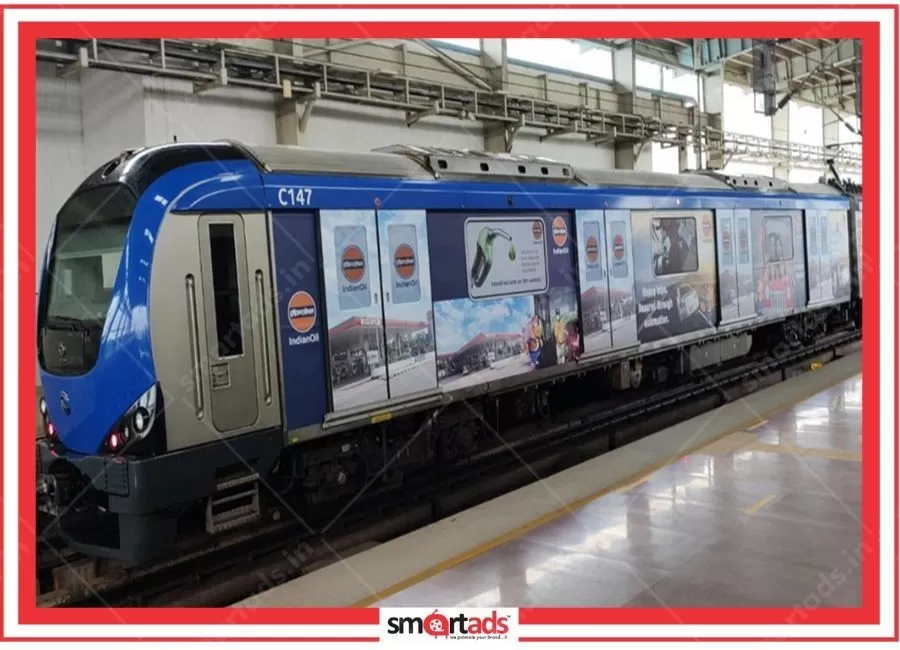
Exterior Metro Wrap
Custom
The advertisement spans the whole train,
Rate per Metro Display Cost / 1 Month
Route : Tirusulam To WIMCO Nagar
₹1000000.00
Showing 1 to 5 of 5 Results
MEDIA DETAILS
Custom
The advertisement spans the whole train,
Rate per Metro Display Cost / 1 Month
Route : Tirusulam To WIMCO Nagar
₹1000000.00
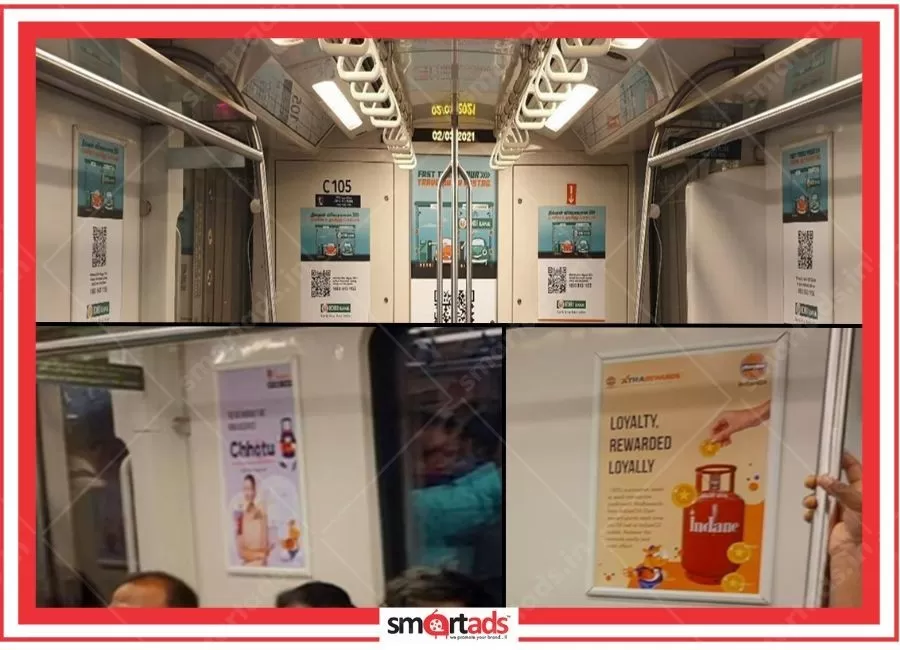
Custom
On the inside of the metro train the adv
Rate per Metro Display Cost / 1 Month
Route : Tirusulam To WIMCO Nagar
₹500000.00
20 Sec Audio
A jingle is a song or a phrase, and the
Rate per Metro Jingle Cost / 1 Month
Route :Tirusulam to WIMCO Nagar
₹400000.00

10 Sec Video
Digital screen on the metro station will
Rate per Metro Digital Display Cost / 1
Route :Tirusulam to WIMCO Nagar
₹600000.00

1 Metro Train
On the outside of the metro train the ad
Rate per Metro Display Cost / 1 Month
Route :Tirusulam to WIMCO Nagar
₹1500000.00
MEDIA REACH

MinimumQty :
1
EstimateReachPeople :
150000000
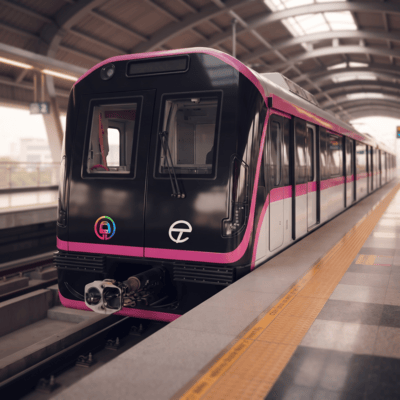
Most brands treating Pimpri Chinchwad as a secondary market are making a calculation error that costs them real reach — because the Purple Line corridor running through PCMC now carries a commuter base that rivals some of the busiest transit corridors in peninsular India. The Pune Metro Purple Line, operated by MahaMetro (Maharashtra Metro Rail Corporation Limited), has fundamentally changed what out-of-home advertising looks like in this part of the Pune metropolitan region; and brands that recognised this early have been building frequency and brand recall at a fraction of what comparable digital campaigns would cost. At SmartAds, we have been planning metro advertising campaigns along this corridor since the Purple Line became operational, and what we keep telling clients is this: Pimpri Chinchwad is not a suburb you advertise into — it is an economic engine you advertise within.
Frankly speaking, the case for metro train advertising in Pimpri Chinchwad does not rest on sentiment — it rests on the sheer density of purposeful, economically active commuters moving through a contained, high-dwell-time environment every single day. The Pimpri Chinchwad Municipal Corporation area is home to one of India's most significant industrial clusters, anchored by names like Bajaj Auto and Tata Motors, supported by the Bhosari MIDC ecosystem, and increasingly populated by a growing professional services and IT-adjacent workforce that commutes toward Shivajinagar and beyond. When these commuters board a metro train, they are not distracted by traffic or ambient street noise; they are standing or seated in a closed environment, which means your brand message gets the kind of undivided attention that outdoor hoardings and PMPML bus shelter ads simply cannot guarantee.
The BTL advertising opportunity here is also structurally different from what you find in other OOH advertising Pune formats. A commuter who rides from PCMC Bhavan metro station to Swargate — which is the full Purple Line PCMC to Swargate corridor — spends somewhere between 35 and 45 minutes inside the train environment, which creates a dwell time advertising advantage that is almost impossible to replicate with a roadside hoarding that gets a 2-second glance at 60 kmph. Our experience shows that campaigns running on metro train interior branding formats consistently outperform static roadside media on unaided brand recall metrics, sometimes by a factor of two or three — and this is a finding that aligns with what transit advertising research across markets like Delhi and Bengaluru has been showing for years.
What a lot of people miss is that below the line advertising on metro trains also carries a legitimacy premium. Commuters associate metro environments with a certain quality of infrastructure, and brands that appear within that environment — whether on coach panels, door stickers, or full metro train wrap executions — are perceived as credible, established players. We have seen this translate into measurable outcomes for a fintech brand we worked with on the Purple Line, which ran a coach branding campaign across four trains for a 60-day period and reported a 34% uplift in app download searches from the Pimpri Chinchwad and Wakad pincodes during the campaign window.
The numbers here deserve more attention than they typically get. The Pune Metro Purple Line, which runs from PCMC Bhavan in the north to Swargate in the south, has been reporting daily ridership figures that crossed the one-lakh mark on regular weekdays as of 2024, with peak months — particularly September and October — pushing total monthly ridership toward 75 lakh and above across the full Pune metro network. The PCMC corridor stations specifically, which include PCMC Bhavan, Sant Tukaram Nagar, Nashik Phata, Kasarwadi, Phugewadi, and Dapodi, collectively handle a substantial share of that morning and evening peak traffic, driven by the industrial shift patterns of the Bhosari MIDC workforce and the daily commute of professionals heading toward central Pune.
To put that in advertiser terms: a single metro train running the full Purple Line PCMC to Swargate route makes multiple return trips per day, which means a brand running metro train exterior branding on that train achieves impressions not just from boarding passengers but from platform audiences, pedestrians near elevated sections, and last-mile connectivity users at interchange points with Rainbow BRTS and PMPML services. The cumulative reach of a single branded train across a 30-day campaign period works out to somewhere in the range of 8 to 15 lakh impressions depending on the specific format and train frequency — a number that surprises most clients when they first see it laid against what they are spending on Google Display Network for equivalent reach in the same geography.
MahaMetro has also been investing significantly in ridership growth infrastructure, including feeder connectivity improvements and station area development, which means the Pune metro ridership trajectory is upward; and brands that establish metro advertising presence now are building familiarity with a commuter base that will only grow larger as the Purple Line extension toward Nigdi and Bhakti Shakti comes online. Planning ahead for that extension is something we actively discuss with clients who are thinking about 12-to-18-month brand visibility strategies in the PCMC corridor.
Not all stations on the Purple Line carry equal footfall, and understanding the station-level audience composition is where media planning for PCMC metro advertising gets genuinely interesting. PCMC Bhavan metro station is the northern terminus and functions as the primary boarding point for a large volume of government employees, administrative staff, and residents from the Pimpri core area; it consistently sees high morning boarding volumes and is one of the stations where platform-level advertising — including metro station branding, digital screens metro formats, and metro pillar advertising — delivers strong first-impression exposure to commuters who are waiting and therefore attentive.
Sant Tukaram Nagar metro station and Nashik Phata metro station serve a commuter mix that skews heavily toward the industrial workforce — factory shift workers, MIDC-based engineers, and logistics professionals — which makes these two stations particularly valuable for brands in categories like banking and financial services, mobile handsets, two-wheelers, and vocational education. Kasarwadi metro station and Phugewadi metro station, sitting in the middle of the PCMC corridor, draw a more mixed audience of residential commuters from the densely populated townships that have grown along the metro alignment; real estate advertising metro campaigns targeting buyers in the ₹50 lakh to ₹1.2 crore segment have found these stations to be high-conversion environments. Dapodi metro station, which sits at the southern edge of the PCMC zone and transitions toward the Pune city proper stations, is a natural interchange point and sees significant dwell time from commuters waiting for connecting transport — which makes it an ideal location for formats that require slightly longer reading time.
At SmartAds, we always tell our clients that station selection should follow audience logic, not just footfall volume. A D2C brand metro advertising campaign targeting urban millennials might actually perform better concentrating on Nashik Phata and Dapodi than on PCMC Bhavan, because the commuter demographic at those mid-corridor stations skews younger and more digitally active. The hyperlocal advertising advantage of metro station branding is precisely this ability to target by station, by time of day, and by the specific socioeconomic profile of the boarding population — which is something a city-level newspaper insertion or a regional television spot simply cannot offer.
The format landscape for metro advertising Pimpri Chinchwad is richer than most brands realise when they first enquire. On the train itself, the primary distinction is between metro train interior branding and metro train exterior branding, and each serves a fundamentally different communication purpose. Interior formats — which include overhead panel ads, door-facing panels, grab-handle danglers, seat-back stickers, and full coach branding wraps — are consumed by passengers who are already aboard and have nowhere else to look; these formats are ideal for detailed messaging, QR code activations, and brand storytelling that requires more than three seconds of engagement.
Metro train exterior branding, on the other hand, is a mass-reach format that works like a moving billboard across the entire route — from PCMC Bhavan all the way to Swargate — and the creative imperative here is entirely different; you need bold visuals, minimal copy, and a brand identity strong enough to register in the 2-to-4 seconds that a platform observer or street-level pedestrian gets. The premium version of exterior branding is the full train branding Pune format, sometimes called a metro train wrap, which covers the entire outer surface of one or more coaches in a single brand livery; this is the format that generates the most social media organic amplification, because commuters and bystanders photograph and share fully wrapped trains far more often than they engage with any other transit advertising format.
Beyond the train itself, the PCMC metro advertising ecosystem includes station-level formats — platform screen door panels, concourse lightboxes, entry gate branding, and the increasingly popular digital screens metro network that MahaMetro has been expanding across key stations. Route-led campaign strategies that combine train branding with station branding at two or three key PCMC stops tend to deliver the strongest overall brand recall, because they create multiple touchpoints across a single commuter journey; and this is a planning approach we advocate strongly for brands with campaign durations of 45 days or more.
This is the question every client leads with, and to be honest, the answer requires a bit of context before the numbers make sense. Metro advertising rates in Pimpri Chinchwad are structured by MahaMetro's official rate card, which is then subject to negotiation through authorised advertising agencies; the rates vary significantly by format, train count, campaign duration, and whether you are booking train-level inventory, station-level inventory, or a combination of both.
For metro train interior branding — specifically single-panel or multi-panel coach branding on the Purple Line — the metro branding cost per month works out to somewhere in the ballpark of ₹40,000 to ₹1.2 lakh per coach per month depending on the panel count and position, with overhead panels and door-facing positions commanding a premium over less-trafficked grab-handle formats. Metro train exterior branding on a single coach runs higher, typically in the range of ₹80,000 to ₹2 lakh per coach per month; and a full train branding Pune execution — which covers all coaches of a six-car rake in a single brand wrap — is a significantly larger investment, often in the range of ₹8 lakh to ₹20 lakh per month depending on the specific train, the route frequency, and the production costs involved. These metro advertising cost figures are indicative and subject to current MahaMetro rate revisions; we always recommend getting a current quote through a media planning partner who has an active relationship with MahaMetro's advertising division.
What makes these metro advertising rates genuinely competitive is the CPM calculation. When you divide the monthly cost of a coach branding execution by the estimated monthly impressions — factoring in daily ridership, average trips per commuter, and platform-level exposure — the CPM works out to roughly ₹6 to ₹18 depending on the format, which is a number that tends to stop conversations when clients are comparing it to what they are paying for Instagram reach or programmatic display in the same geography. A retail client in Pune we worked with ran a 45-day interior branding campaign across three coaches on the Purple Line and calculated a post-campaign CPM of approximately ₹9, which was 40% lower than their concurrent social media campaign reaching a comparable Pune metropolitan region audience.
The audience composition of the Purple Line through Pimpri Chinchwad is one of the most commercially valuable in Maharashtra, and it is also one of the most misunderstood. The popular assumption is that metro commuters skew young and tech-savvy — which is partially true — but the PCMC corridor specifically carries a far more diverse demographic than the Hinjewadi IT Corridor or Shivajinagar end of the network. The working professionals target audience here includes manufacturing engineers, quality control supervisors, procurement managers, and mid-level executives from the Bajaj Auto and Tata Motors supply chain ecosystem; alongside them are government employees commuting to and from PCMC administrative offices, teachers and college staff from the numerous educational institutions in Pimple Saudagar and Wakad, and a growing cohort of young professionals from residential townships in Ravet and Phugewadi who commute into central Pune daily.
The industrial workforce Bhosari MIDC dimension of this audience is particularly interesting for B2B advertisers, which is a segment that most metro advertising conversations completely ignore. Companies selling industrial equipment, ERP software, HR solutions, or professional certification programmes have found the PCMC metro corridor to be a surprisingly effective channel for reaching decision-makers and influencers within the manufacturing sector — because these individuals are commuting in large numbers on the Purple Line, and they are a captive audience advertising environment that is almost impossible to reach through conventional digital targeting without significant cost. Education brand metro advertising campaigns targeting working professionals seeking upskilling have performed particularly well on the PCMC stations, where the audience aspiration profile aligns strongly with postgraduate and professional development messaging.
On top of that, the residential catchment areas feeding into the PCMC metro stations — which include some of the fastest-growing real estate micro-markets in the Pune metropolitan region — contain a significant population of young families in the ₹8 to ₹25 lakh annual income bracket, which is the core target demographic for categories like consumer durables, insurance, banking products, and mid-segment automobiles. Commuter advertising on the Purple Line reaches this audience at a moment of relative calm and attentiveness, which is precisely the psychological state in which brand messaging tends to land most effectively.
This is a question where the right answer genuinely depends on what you are trying to achieve, and we have seen brands get this wrong in both directions. Metro train interior branding is fundamentally a frequency and depth format — it works because the same commuter sees your message multiple times per week, across multiple trips, in a high-dwell-time environment where they have the time and the mental bandwidth to actually read and process what you are saying. If your campaign objective is brand recall, message comprehension, QR code activation, or driving a specific action like downloading an app or visiting a website, interior branding is almost always the stronger choice; and the cost-per-engaged-impression is significantly lower than exterior formats because you are reaching a confirmed, captive audience advertising environment rather than a passing glance.
Metro train exterior branding, including the full metro train wrap format, is a mass awareness play — it is the format you choose when your primary objective is visibility, buzz, and the kind of city-scale presence that makes people say "I keep seeing that brand everywhere." The visual impact of a fully wrapped train moving through elevated sections of the Purple Line between PCMC Bhavan and Dapodi is genuinely striking; and for brand launches, major product announcements, or campaigns where share-of-voice dominance matters more than message depth, exterior branding delivers something that no interior format can replicate. One automotive brand we worked with chose a full train branding Pune execution for a new model launch, running a metro train wrap across two rakes for 30 days; the campaign generated organic social media coverage that the brand estimated was worth three times the media investment in equivalent paid reach.
To be fair, the most effective campaigns we have planned combine both formats within a single budget — using exterior branding for the awareness layer and interior branding for the conversion layer, so that a commuter who notices the train from the platform then boards and encounters a more detailed brand message inside the coach. This integrated approach to metro train branding PCMC campaigns is something we recommend to any brand with a campaign duration of 30 days or more and a budget that allows for multi-format execution.
The booking process for metro advertising Pimpri Chinchwad runs through MahaMetro's official advertising concession framework, which means all campaigns must be booked through authorised advertising partners — you cannot approach MahaMetro directly as a brand and purchase train inventory without going through an approved agency. This is an important distinction that catches a lot of first-time metro advertisers off guard; the metro advertising booking process involves creative approval, format compliance checks, and production coordination that an experienced agency partner handles on your behalf.
The typical campaign planning timeline for metro train advertising in Pimpri Chinchwad runs roughly four to six weeks from brief to live date — which includes rate negotiation, format selection, creative development and approval by MahaMetro, production of the vinyl wraps or printed panels, and installation on the train or at the station. Creative specifications for Purple Line coach branding are specific and non-negotiable: exterior vinyl wraps must meet MahaMetro's approved material standards (typically cast vinyl with specified adhesive grades), and interior panels must conform to exact dimensional templates for each coach position. File formats are generally required as print-ready PDFs or high-resolution TIFF files at a minimum resolution of 150 DPI at actual size; getting these specifications wrong at the production stage is one of the most common and avoidable delays we see in metro advertising campaigns.
At SmartAds, we manage the entire metro advertising booking process end to end — from initial rate negotiation with MahaMetro's advertising team to creative specification guidance, production vendor coordination, installation supervision, and post-campaign impression reporting. Our experience across 500+ cities means we bring both the local PCMC market knowledge and the media buying scale that translates into better rates and faster approvals than a brand would typically achieve going through the process independently. For brands new to transit advertising or non-traditional advertising formats, having a single point of contact who understands both the creative requirements and the operational logistics of metro train branding PCMC makes a meaningful difference to campaign timelines and outcomes.
The honest answer is that metro train advertising in Pimpri Chinchwad occupies a different strategic position from other OOH advertising Pune formats — it is not necessarily better than everything else, but it does specific things that nothing else in the PCMC media mix can replicate. PMPML bus shelter advertising, for instance, offers broader geographic coverage across the PCMC area at lower absolute cost, but the dwell time is minimal and the audience is exposed to significant ambient distraction; a commuter waiting at a bus stop is looking at traffic, checking their phone, and generally not in a receptive state for brand messaging. Railway station hoardings at Pimpri or Chinchwad railway stations offer high footfall exposure, but the format is static, the audience is transient, and the creative impact is limited by the visual clutter of a busy suburban railway environment.
Out-of-home advertising on large-format hoardings along the Mumbai-Pune Expressway or the Nashik Phata junction commands high visibility but reaches a broad, undifferentiated audience that includes a significant proportion of through-traffic with no commercial connection to the PCMC market. Metro advertising, by contrast, reaches a self-selected audience of PCMC residents and workers who have made a deliberate choice to use the metro — which, in itself, is a demographic signal of a certain income level, lifestyle orientation, and openness to urban brand messaging. The captive audience advertising advantage of the metro environment is structurally superior to any roadside or transit-adjacent format for brands that care about message depth rather than just impression volume.
Where metro train advertising in Pimpri Chinchwad genuinely competes on pure cost-efficiency terms is against digital formats targeting the same geography. The CPM for a well-planned metro interior branding campaign — somewhere in the ₹6 to ₹18 range as we noted earlier — compares favourably to programmatic display CPMs in the Pune metropolitan region, which typically run between ₹80 and ₹200 for audience-targeted inventory; and the brand recall advantage of a physical, high-dwell-time environment over a skippable digital ad is substantial. The FICCI-EY Media and Entertainment Report has consistently noted that transit advertising in Indian metros delivers recall rates that outperform digital display, a finding that aligns with what we observe in our own campaign measurement work.
The category fit for metro advertising Pimpri Chinchwad is broader than most brand managers initially assume. The obvious fits are consumer categories targeting urban working professionals — banking and financial services, insurance, mutual funds, and fintech brand metro advertising campaigns have all performed strongly on the Purple Line because the commuter demographic is precisely the target audience these brands are chasing. Education brand metro advertising is another strong category fit, particularly for professional upskilling platforms, engineering colleges, and MBA programmes targeting the working professional demographic that dominates the PCMC corridor.
Real estate advertising metro campaigns have become increasingly common on the Purple Line as developers from Wakad, Pimple Saudagar, Ravet, and the broader PCMC periphery recognise that metro commuters are actively making housing decisions based on connectivity to the metro network; a project that is "metro-adjacent" is a selling point, and advertising that message inside the metro itself creates a contextual relevance that amplifies the campaign's effectiveness. D2C brand metro advertising — particularly in categories like personal care, health supplements, and direct-to-consumer electronics — has also found strong traction on the PCMC corridor, where the audience skews toward digitally active consumers who are comfortable with online purchasing.
What surprises most people is the B2B opportunity. The industrial workforce Bhosari MIDC commuting on the Purple Line includes a significant number of purchase decision-makers for industrial goods, software, and professional services; and reaching them through metro train interior branding — where they have 35-plus minutes to read detailed messaging — is genuinely more effective than trying to reach the same individuals through LinkedIn advertising or trade publication inserts. We have planned campaigns for industrial equipment brands, HR technology companies, and professional certification bodies that specifically targeted the PCMC metro corridor for this reason, and the results in terms of qualified lead generation have been notably strong.
Q: What types of metro train advertising are available in Pimpri Chinchwad?
The format options for metro train advertising in Pimpri Chinchwad span both train-level and station-level inventory. On the train itself, you can book metro train interior branding — which includes overhead panel ads, door-facing panels, grab-handle danglers, seat-back stickers, and full coach branding wraps — or metro train exterior branding, which covers the outside surface of one or more coaches and includes the premium full train branding Pune format, also called a metro train wrap. At the station level, formats include platform screen door panels, concourse lightboxes, entry gate branding, metro pillar advertising, and digital screens metro placements at key PCMC stations. The right format mix depends on your campaign objective, budget, and whether you are prioritising mass awareness or high-frequency brand recall among confirmed commuters.
Q: How much does metro train advertising cost in Pimpri Chinchwad in 2026?
Metro advertising cost in Pimpri Chinchwad varies by format and scale. Metro train interior branding at the single-panel level works out to roughly ₹40,000 to ₹1.2 lakh per coach per month; metro train exterior branding on a single coach runs in the range of ₹80,000 to ₹2 lakh per coach per month; and a full train branding Pune execution covering an entire rake is typically in the range of ₹8 lakh to ₹20 lakh per month, inclusive of production. These are indicative metro advertising rates and are subject to MahaMetro's current rate card, which is updated periodically. Station-level formats are priced separately and can be combined with train inventory for integrated campaigns. We always recommend requesting a current rate card through an authorised metro advertising agency Pune partner to get accurate, up-to-date figures.
Q: Which metro stations in Pimpri Chinchwad get the highest footfall for advertising?
PCMC Bhavan metro station, as the northern terminus of the Purple Line, consistently sees the highest boarding volumes in the PCMC corridor and is the strongest station for first-impression advertising. Nashik Phata metro station is the second most significant station in terms of footfall, drawing heavily from the Bhosari MIDC industrial workforce. Dapodi metro station, at the southern boundary of the PCMC zone, sees high interchange traffic from commuters connecting to other transport modes. Kasarwadi metro station and Phugewadi metro station serve dense residential catchments and are particularly valuable for consumer brand campaigns targeting middle-income households. Sant Tukaram Nagar metro station is smaller in absolute footfall but highly targeted for campaigns aimed at the industrial and manufacturing professional demographic.
Q: What is the daily ridership on the Pune Metro Purple Line through PCMC?
The Pune metro ridership on the Purple Line has been growing consistently since operations commenced, with the full network crossing one lakh daily riders on regular weekdays as of 2024. The PCMC corridor stations collectively account for a significant share of this daily ridership, with peak months like September and October seeing monthly network-wide ridership approaching 75 lakh and above. These figures are directional based on MahaMetro's publicly reported ridership data; daily ridership on the PCMC segment specifically is best confirmed through current MahaMetro reports or through a media planning partner with access to current station-level data.
Q: What is the difference between interior and exterior metro train branding in Pimpri Chinchwad?
Metro train interior branding refers to advertising placed inside the passenger coaches — on overhead panels, door-facing positions, grab handles, and seat backs — and is consumed by confirmed, seated or standing passengers during their journey, which means high dwell time and multiple exposures per week for regular commuters. Metro train exterior branding covers the outside surface of the train and functions as a moving billboard visible to platform audiences, pedestrians near elevated sections, and anyone in the visual field of the moving train. Interior branding is better suited for message depth, call-to-action campaigns, and brand recall among the commuter base; exterior branding, including full metro train wrap executions, is better suited for mass awareness, brand launches, and campaigns where visual impact and city-scale presence are the primary objectives.
Q: How do I book metro train advertising on the Purple Line in Pimpri Chinchwad?
Metro advertising booking in Pimpri Chinchwad must be done through MahaMetro's authorised advertising partners — brands cannot purchase train or station inventory directly. The metro advertising booking process typically involves selecting formats and campaign duration, receiving a rate quote from the agency, submitting creative artwork for MahaMetro approval, coordinating production of the physical materials, and scheduling installation. The end-to-end timeline from brief to live date is typically four to six weeks. Working with an experienced advertising agency Pimpri Chinchwad or metro advertising agency Pune partner significantly streamlines this process and reduces the risk of creative rejection or production delays.
Q: Is metro train advertising in Pimpri Chinchwad suitable for small businesses?
To be honest, full train branding and multi-coach exterior campaigns are generally better suited to mid-size and large brands with monthly media budgets of ₹5 lakh and above. However, metro train interior branding at the single-panel or multi-panel level — particularly at specific PCMC stations — can be accessible for smaller businesses with budgets starting around ₹40,000 to ₹80,000 per month. Hyperlocal advertising strategies that concentrate on one or two PCMC stations rather than the full corridor can deliver meaningful reach for local businesses in education, retail, healthcare, and financial services. The key is working with a media planning partner who can structure a campaign that maximises impact within a defined budget rather than simply selling the largest available package.
Q: What brands are best suited for metro train advertising in PCMC?
The strongest category fits for PCMC metro advertising are banking and financial services, insurance, fintech, real estate, education and upskilling, consumer durables, two-wheelers, personal care D2C brands, and B2B companies targeting the industrial workforce of Bhosari MIDC and the broader Chakan belt. Brands in these categories benefit most because their target audiences — working professionals, industrial employees, and middle-income urban households — are precisely the demographic that dominates the Purple Line commuter base through the PCMC corridor.
Q: How long should a metro train advertising campaign run in Pimpri Chinchwad for maximum brand recall?
Our experience shows that campaigns shorter than 30 days rarely build sufficient frequency to generate meaningful unaided brand recall among the commuter base. The sweet spot for metro train advertising in Pimpri Chinchwad is 45 to 90 days, which allows a regular commuter to encounter the brand message 20 to 40 times across their journey pattern — a frequency level that transit advertising research consistently associates with strong brand recall and message retention. For brand launches or time-sensitive campaigns, a 30-day burst with high-impact exterior branding can generate awareness quickly; for sustained brand building, a 60-to-90-day campaign with interior branding delivers the deepest recall outcomes.
Q: What is the difference between metro train advertising and metro station advertising in Pimpri Chinchwad?
Metro train advertising refers specifically to formats placed on or inside the rolling stock — the trains themselves — and the key characteristic is that the advertising moves with the train across the entire route, from PCMC Bhavan to Swargate and back. Metro station branding, by contrast, refers to static formats placed within the station environment — platform screen doors, concourse panels, entry gates, pillars, and digital screens — which are fixed at a specific location and reach only the audience passing through that particular station. Train advertising delivers route-wide reach and high commuter frequency; station advertising delivers location-specific, hyperlocal advertising impact. The most effective campaigns combine both, using station branding at key PCMC nodes to reinforce the message that train branding is building across the full corridor.
Q: Can I target specific metro stations or routes in Pimpri Chinchwad for my ad campaign?
Yes — and this is one of the genuine strategic advantages of metro advertising over most other OOH formats. Station-level branding can be booked at individual PCMC stations, allowing brands to concentrate their investment at the stations whose audience profile best matches their target demographic. Train-level inventory is typically allocated to specific rakes, which run defined route patterns; while you cannot guarantee that a specific train will always serve the PCMC corridor exclusively, working with an experienced media planning partner ensures that your train branding is deployed on rakes with the highest PCMC corridor frequency. Route-led campaign strategies that align train and station inventory around the PCMC-to-Swargate corridor are the most effective way to build concentrated reach within the Pimpri Chinchwad market specifically.
Q: What audience does metro train advertising reach in Pimpri Chinchwad?
The audience for metro advertising Pimpri Chinchwad is predominantly working professionals between 22 and 45 years of age, spanning a wide occupational range that includes manufacturing and engineering professionals from the Bhosari MIDC and Chakan belt, government and administrative employees commuting to PCMC offices, IT-adjacent professionals from residential townships in Pimple Saudagar, Wakad, and Ravet, and students and educators from the numerous colleges and institutions in the PCMC area. The income profile skews toward the ₹6 to ₹30 lakh annual household income bracket, which is the core target demographic for a wide range of consumer and financial services categories. This audience is also notably digitally active, with high smartphone penetration and strong online commerce behaviour — which makes QR code activations and digital-to-physical campaign integrations particularly effective in this environment.
The Pimpri Chinchwad metro corridor is, in our assessment, one of the most underutilised advertising environments in the Pune metropolitan region right now — and that gap is closing faster than most brands realise. As daily ridership on the Purple Line continues its upward trajectory, as the planned extension toward Nigdi and Bhakti Shakti adds new stations and new audience segments to the network, and as MahaMetro continues investing in the station experience that makes commuters spend more time in the metro environment, the commercial value of metro advertising Pimpri Chinchwad will only increase. Brands that establish a presence on the Purple Line in 2026 are not just buying impressions for this quarter — they are building familiarity with a commuter base that will be significantly larger two and three years from now.
The media planning discipline required to get the most from PCMC metro advertising is not complicated, but it does require specificity — knowing which stations carry which audiences, which formats deliver which objectives, how to structure a campaign duration that builds genuine brand recall rather than just fleeting awareness, and how to integrate metro train branding with the rest of a brand's OOH and digital media mix so that the channels amplify each other rather than simply coexisting. These are the conversations we have with clients at SmartAds every day, and the outcomes we have seen — from the fintech brand that drove a 34% uplift in app searches to the automotive brand whose metro train wrap generated three times its media value in organic social coverage — reflect what happens when transit advertising is planned with genuine strategic intent rather than treated as a line item on a media schedule.
If you are a brand manager, media planner, or marketing leader evaluating metro train advertising in Pimpri Chinchwad for an upcoming campaign, we would genuinely welcome the conversation. SmartAds.in offers customised media planning for the PCMC metro corridor and across 500+ cities in India — and our experience with the Purple Line specifically means we can give you current rate intelligence, audience data, and creative guidance that generic media marketplaces simply cannot provide. Reach out to us at SmartAds.in to start building a campaign that the Pimpri Chinchwad commuter base
