
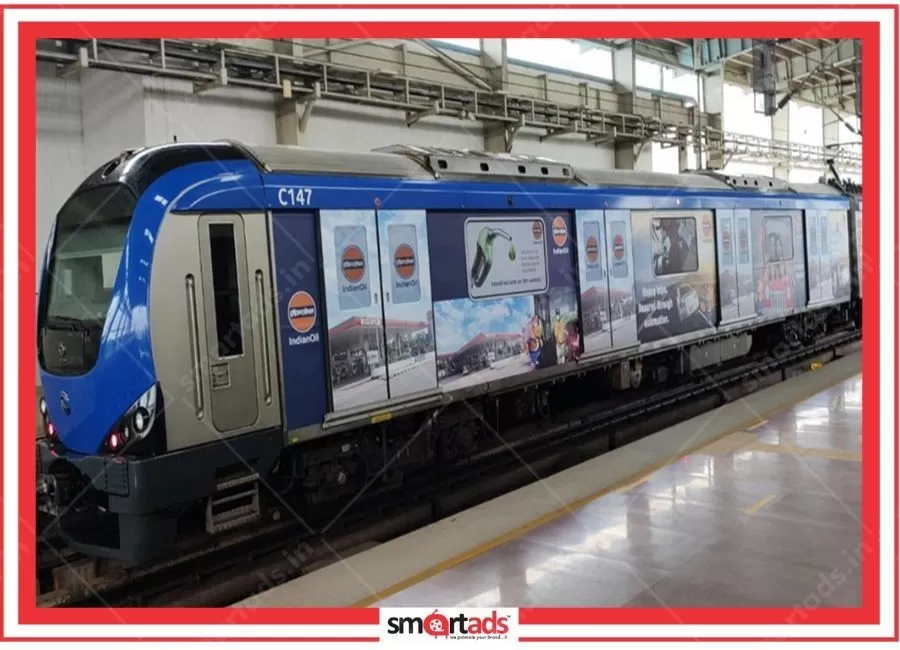
Exterior Metro Wrap
Custom
The advertisement spans the whole train,
Rate per Metro Display Cost / 1 Month
Route : Tirusulam To WIMCO Nagar
₹1000000.00
Showing 1 to 5 of 5 Results
MEDIA DETAILS
Custom
The advertisement spans the whole train,
Rate per Metro Display Cost / 1 Month
Route : Tirusulam To WIMCO Nagar
₹1000000.00
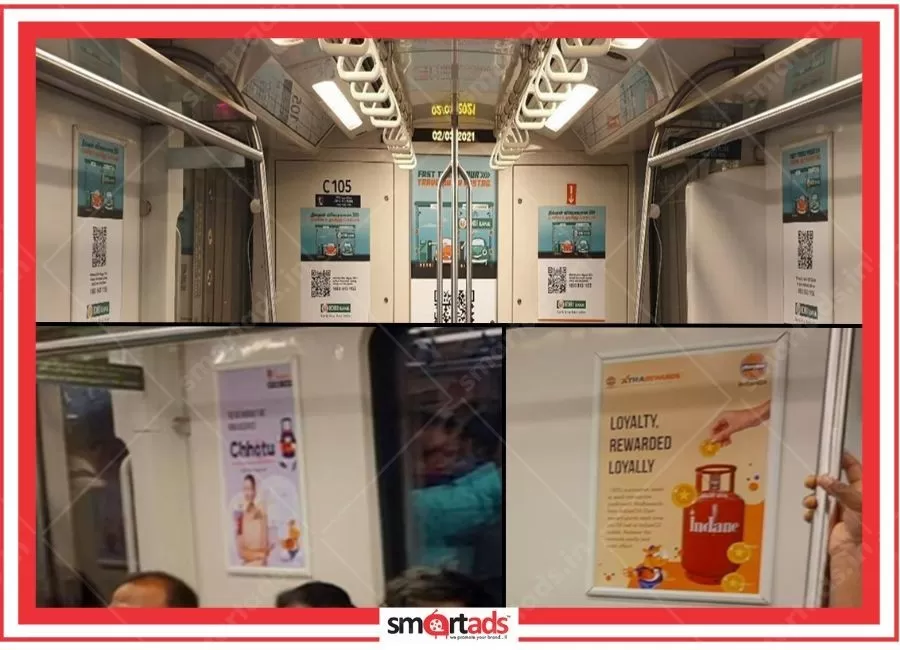
Custom
On the inside of the metro train the adv
Rate per Metro Display Cost / 1 Month
Route : Tirusulam To WIMCO Nagar
₹500000.00
20 Sec Audio
A jingle is a song or a phrase, and the
Rate per Metro Jingle Cost / 1 Month
Route :Tirusulam to WIMCO Nagar
₹400000.00

10 Sec Video
Digital screen on the metro station will
Rate per Metro Digital Display Cost / 1
Route :Tirusulam to WIMCO Nagar
₹600000.00

1 Metro Train
On the outside of the metro train the ad
Rate per Metro Display Cost / 1 Month
Route :Tirusulam to WIMCO Nagar
₹1500000.00
MEDIA REACH

MinimumQty :
1
EstimateReachPeople :
150000000
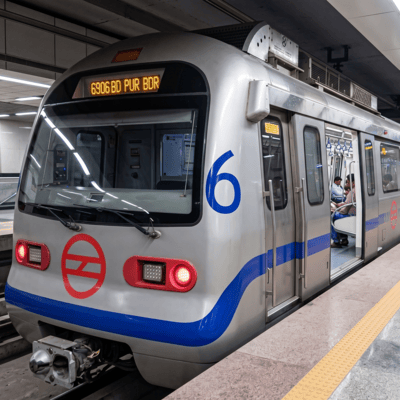
Delhi Metro carries somewhere in the ballpark of 60 to 65 lakh daily commuters across its network — a number that rivals the entire population of several Indian states — and yet a surprising number of brand managers still treat it as a secondary or experimental line item rather than a primary reach vehicle. We have found, over years of planning campaigns across the Delhi NCR corridor, that the brands getting the most out of this medium are the ones who stopped thinking of it as "transit advertising" and started thinking of it as captive, high-frequency, urban mass media with a demographic skew that most television buys can only dream about.
There is a fundamental difference between advertising that people walk past and advertising that people sit with for twelve to twenty-two minutes, which is roughly the average dwell time on a Delhi Metro journey according to DMRC operational data. That distinction matters enormously when you are trying to build brand recall rather than just impression volume. A hoarding on NH-48 is seen at 80 kilometres per hour; a panel inside a metro coach is seen at eye level, in a well-lit environment, by someone who has nothing else to do except look at their phone or look at your creative.
What a lot of people miss is that Delhi Metro's ridership is not just large — it is concentrated in a way that makes targeting genuinely efficient. The Blue Line connecting Dwarka to Noida carries a very different commuter profile than the Yellow Line running from Samaypur Badli to HUDA City Centre, and our experience shows that brands which map their format selection to line-specific demographics consistently outperform those which simply buy network-wide inventory. An FMCG brand targeting working women in Gurugram is going to find the Yellow Line far more productive than the Pink Line, not because the Pink Line is inferior, but because the audience concentration simply differs by corridor.
At SmartAds, we always tell our clients that the first question to ask about any metro campaign is not "what format should we book?" but "which commuter are we actually trying to reach, and where in the network do they concentrate?" That reframing alone changes the entire media plan — and frankly speaking, it is the difference between a campaign that generates recall data and one that generates sales conversations.
Rates are the thing most agency websites refuse to discuss openly, which is something we find genuinely unhelpful to media planners trying to build a budget case for their management. So let us be direct about what the numbers look like, with the caveat that rates shift based on format, duration, network coverage, and negotiation leverage.
Train wraps — where the exterior of an entire rake is branded — work out to somewhere between ₹8 lakh and ₹20 lakh per month per rake, depending on the line, the rake count, and whether you are booking through DMRC directly or through an approved concessionaire. That is a significant number, but when you divide it across the daily impressions a single wrapped rake generates across its twelve to fourteen hours of operation, the effective CPM works out to roughly ₹6 to ₹9, which surprises most first-time advertisers when they compare it to what they are currently paying for premium programmatic display. Interior coach panels — the framed panels above seats and on partition walls — are considerably more accessible, typically in the ballpark of ₹80,000 to ₹2.5 lakh per month for a station-specific or line-specific package, depending on the panel count and format size.
Station branding is a separate conversation altogether; pillar wraps, platform screen door panels, concourse dominations, and entry gate branding are each priced differently, and a full station domination at a high-footfall station like Rajiv Chowk or Kashmere Gate can run to ₹15 lakh to ₹30 lakh for a month-long campaign, which is a number that sounds large until you consider that Rajiv Chowk alone sees interchange traffic that no single surface-level OOH format in Delhi can match. We have seen brands get extraordinary value from partial station dominations — owning every touchpoint within a specific zone of a station rather than trying to cover everything — which is a strategy we recommend to clients working with a budget under ₹10 lakh.
The format question is where most media briefs go wrong, and we have seen this backfire when brands default to whatever format their last campaign used rather than matching the format to the specific objective at hand. Train wraps are fundamentally a brand awareness and recall tool; they generate massive impression volume and create the visual association of a brand with the metro experience itself, but they are not the format to use if you need to communicate a detailed offer, a product feature, or a call to action that requires reading time.
Interior coach panels and overhead panels, on the other hand, are where response-oriented communication belongs. A commuter sitting in a coach for fifteen minutes will read a panel three or four times if the creative is interesting — which is a frequency dynamic that no static outdoor format can replicate without repeated physical exposure over days. We worked with a fintech brand that was trying to drive app downloads among salaried professionals in the 25-to-40 age bracket; they had been running digital campaigns with reasonable CPIs but were struggling to break through in the NCR market. We recommended a combination of Yellow Line interior panels and Cyber City station branding, which ran for eight weeks, and the brand reported a 34% uplift in organic app store searches from Delhi NCR during the campaign period — a metric they attributed directly to the metro activity because their digital spends remained flat.
Digital screens at stations — the large-format LED displays at concourses and platforms — sit somewhere between the two, offering the visual impact of a wrap with the ability to run multiple creatives in rotation, which makes them particularly useful for brands running time-sensitive promotions or those that need to A/B test messaging. The cost per spot on a station digital screen network works out to roughly ₹2 lakh to ₹6 lakh per month for a multi-station package, which is a range wide enough to accommodate both challenger brands and established advertisers.
This is a question we get asked in almost every media planning discussion involving Delhi, and the honest answer is that it depends entirely on what you are optimising for. If pure reach across the broadest possible geography is the goal, a network of premium hoardings across NH-48, Outer Ring Road, and the Expressway corridor will cover more ground in terms of physical spread; however, the audience quality and dwell time metrics tilt decisively in metro's favour once you move past the raw impression count.
The GroupM TYNY report and the FICCI-EY Media and Entertainment report have both noted the continued growth of transit and place-based OOH as a share of the overall outdoor advertising market in India, which reflects what we see on the ground — brands are increasingly willing to pay a CPM premium for environments where attention can be verified rather than assumed. A hoarding impression is an opportunity; a metro coach panel impression, for a seated commuter with no immediate exit option, is something closer to a guaranteed viewing event. That distinction has real value in a media landscape where attention is the scarce resource, not inventory.
To be fair, metro advertising does have constraints that surface OOH does not. You cannot reach a commuter who does not use the metro; in Delhi, that still excludes a significant portion of the city's population, particularly in peripheral areas not yet served by the network. Our recommendation is almost always to treat metro as the high-quality anchor of an urban Delhi campaign, paired with targeted digital to extend reach into non-metro-using segments, rather than as a standalone total-market solution.
The demographic reality of Delhi Metro ridership is something that DMRC's own passenger surveys have documented fairly consistently over the years, and it aligns closely with what we observe in campaign performance data. The network skews significantly toward the 18-to-45 age bracket, with a strong representation of salaried professionals, students, and working women — which is precisely the audience that most urban consumer brands are trying to reach efficiently.
What a lot of planners do not factor in is the income profile. Delhi Metro's ridership, particularly on the Yellow and Blue Lines, indexes heavily toward SEC A and SEC B households, which is a function of both the fare structure and the geographic catchment — the stations in South Delhi, Gurugram, Noida, and Faridabad serve neighbourhoods where household incomes are well above the city average. A retail client in Noida that we worked with ran a campaign specifically targeting the Blue Line corridor between Botanical Garden and Rajiv Chowk; they were promoting a premium home furnishings collection and were initially sceptical that metro advertising would reach their target customer. The campaign ran for six weeks, and footfall data from their Noida store showed a 22% increase during the campaign period, with several customers specifically mentioning the metro panels when surveyed at the point of sale.
On top of that, the commuter frequency dynamic creates a repetition effect that is genuinely difficult to achieve with most other formats. A person who commutes daily on the Yellow Line from Gurugram to Connaught Place will see your interior panel five days a week for the duration of your campaign booking — which means a four-week campaign delivers roughly twenty exposures to a regular commuter, a frequency level that most media planners would consider optimal for brand recall without tipping into overexposure.
Planning a metro campaign well requires thinking about the network as a series of distinct media environments rather than one uniform channel, which is a mental model shift that pays dividends in both targeting precision and budget efficiency. The first decision is always about corridor selection — and that decision should be driven by audience data, not by which line happens to have available inventory.
The second decision, which most brands get wrong, is about the creative format mix. We have found consistently that campaigns which use at least two complementary formats — say, interior panels for message depth combined with a station domination at one high-traffic interchange for visual impact — outperform single-format campaigns in recall and response metrics. The interior panel does the work of communicating the message; the station domination creates the brand salience moment. They serve different psychological functions in the consumer journey, and treating them as interchangeable is a planning error we see frequently.
Booking timelines are a practical reality that many first-time metro advertisers underestimate. Premium inventory — rake wraps on the Yellow Line, concourse dominations at Rajiv Chowk, platform screen door panels at major interchange stations — gets booked months in advance, particularly around the festive season from October through December and around major retail events. We tell our clients to plan metro campaigns at least eight to twelve weeks out if they want first-choice inventory; anything shorter than that and you are working with whatever happens to be available, which is not always the format or location that best serves your objective.
DMRC has a fairly structured approval process for advertising content, which is something brands and agencies need to factor into their production and booking timelines. All creative material is subject to DMRC's content guidelines, which prohibit political advertising, content that could be deemed offensive or divisive, and certain categories of products — though the specific restricted categories are worth verifying directly with DMRC or your booking agency at the time of planning, since guidelines do get updated periodically.
The practical implication is that creative approval needs to happen before production finalisation, not after. We have seen campaigns delayed by two to three weeks because a brand submitted final artwork for approval only to receive revision requests from DMRC that required changes to copy or imagery. The smarter approach is to share rough creative concepts with the concessionaire during the booking process itself, get informal guidance on any potential compliance concerns, and then move into final production with confidence. It adds a step to the process, but it eliminates the risk of a last-minute scramble.
From a technical standpoint, DMRC specifies material and print quality standards for physical formats — backlit panels require specific substrate materials, exterior wraps have defined specifications for vinyl grade and adhesive type, and digital content must conform to resolution and file format requirements. These are not onerous requirements, but they are non-negotiable, and a production vendor unfamiliar with DMRC specifications can create costly delays.
DMRC operates its advertising inventory through authorised concessionaires — agencies that have been granted rights to sell and manage specific format categories across the network. This means that booking metro advertising is not a direct transaction with DMRC in most cases; it goes through the concessionaire, which adds a layer to the process but also means that experienced concessionaires can offer package deals, format combinations, and campaign management support that a direct DMRC booking would not include.
At SmartAds, we manage the concessionaire relationship on behalf of our clients, which means we handle the rate negotiation, the inventory availability check, the creative approval process, and the campaign monitoring — all of which are tasks that a brand manager trying to run a metro campaign independently would find time-consuming and occasionally opaque. The concessionaire landscape for Delhi Metro has a handful of established players who handle different format categories, and knowing which concessionaire to approach for which format type is itself a piece of institutional knowledge that saves time and prevents the frustration of being bounced between vendors.
The booking process typically involves a rate inquiry, an inventory availability confirmation, a creative submission for DMRC approval, a formal booking order, and a production handover — the entire cycle running somewhere between four and eight weeks for a straightforward campaign. Complex campaigns involving multiple formats, multiple lines, and custom fabrication can take longer, which is why we emphasise early planning conversations with clients who have firm campaign launch dates.
Measurement is the area where transit advertising has historically been weakest relative to digital channels, and it is a fair criticism — but the tools available have improved considerably, and a well-structured metro campaign can generate meaningful performance data if measurement is built into the plan from the start rather than retrofitted afterward. DMRC's own footfall data provides a baseline for impression estimation, and independent audience measurement through footfall counters and intercept surveys can validate reach and recall figures.
The most practical measurement approaches we have used involve a combination of brand recall surveys among the target commuter segment, tracked uplift in digital search behaviour in the campaign geography (which often shows a measurable spike when a metro campaign is running at scale), and where possible, direct attribution through promo codes or QR codes embedded in the creative. A QR code on an interior panel is actually a highly effective response mechanism because the commuter has both the time and typically the phone in hand to scan it — something that is not true of most outdoor formats. One apparel brand we worked with embedded a QR code in their Blue Line panel campaign and tracked over 4,200 scans over a six-week period, which gave them a direct cost-per-engagement metric that made the ROI case to their management straightforward.
The honest caveat is that metro advertising, like most brand-building media, generates effects that extend beyond what any single attribution model can capture. The frequency of exposure to a commuter audience builds brand salience over time in ways that show up in purchase behaviour weeks or months after the campaign ends; that delayed effect is real and documented in brand tracking studies, but it requires a management team that is comfortable with brand-building metrics rather than purely transactional ones.
Q: What is the minimum budget needed to run a meaningful metro advertising campaign in Delhi?
A meaningful campaign — one that delivers sufficient frequency and reach to generate measurable brand recall — can be structured from roughly ₹3 lakh to ₹5 lakh for a focused, single-format, single-corridor execution over four weeks, which is a number that puts metro advertising within reach of mid-sized brands and not just large national advertisers. That budget would typically cover a package of interior coach panels on a specific line, or a combination of pillar branding at two or three stations on a single corridor. The trade-off at that budget level is reach — you will be reaching a defined segment of the metro commuter population rather than the full network. For brands that want network-wide presence with multiple format types, the budget conversation starts at ₹15 lakh to ₹20 lakh per month, which is where the real scale and frequency effects become visible. We always advise clients to be honest with themselves about whether their objective is brand building at scale or targeted reach within a specific commuter segment, because the budget implications of those two objectives are very different.
Q: Which Delhi Metro line is best for advertising?
There is no single answer to this, which is the honest response even though it is not the most satisfying one. The Yellow Line — running from Samaypur Badli through Connaught Place down to HUDA City Centre — carries the highest daily ridership and passes through the most commercially significant corridors in the NCR, which makes it the default choice for brands seeking maximum reach. The Blue Line is particularly strong for brands targeting the IT and corporate professional segment given its Noida and Dwarka catchment. The Pink Line, which connects Majlis Park to Shiv Vihar, serves a large residential catchment across East and North Delhi and is underrated for FMCG and consumer durables brands targeting middle-income households. The right answer depends on your audience, and we would always recommend a ridership analysis mapped against your target demographic before committing to a line selection.
Q: How far in advance do you need to book metro advertising in Delhi?
For standard inventory — interior panels, pillar branding, non-premium station formats — a booking lead time of four to six weeks is typically sufficient outside of peak season. For premium inventory, which includes train wraps, Rajiv Chowk or Kashmere Gate station dominations, and platform screen door panels on the Yellow Line, eight to twelve weeks is the realistic minimum, and during the October-to-December festive period, some premium formats get booked out as early as July or August. We have had clients come to us in September wanting a Diwali campaign on the Yellow Line and found that the best inventory was already committed — which is a situation that better planning would have avoided entirely. The general principle is: the more specific your format and location requirements, the earlier you need to start the conversation.
Q: Can small or regional brands use metro advertising effectively, or is it only for large national advertisers?
Metro advertising is actually well-suited to regional and local brands, and this is something we find ourselves making the case for fairly regularly. A local real estate developer in Gurugram, a regional bank targeting salaried professionals in South Delhi, a D2C brand with strong NCR sales — all of these are clients for whom a focused metro campaign on one or two lines can deliver outstanding value relative to their total media budget. The key is format selection; a regional brand does not need a full network train wrap, but a well-placed set of interior panels on the corridor that serves their core customer geography can be extraordinarily efficient. We worked with a regional coaching institute targeting engineering aspirants, and a focused campaign on the Yellow Line between Vishwavidyalaya and Rajiv Chowk — a corridor heavy with student commuters — delivered a measurable uplift in their enquiry volumes at a total campaign cost well under ₹4 lakh.
Q: Is digital or static format more effective for metro advertising?
Both serve different purposes, and the most effective campaigns we have run use them in combination rather than treating them as alternatives. Static formats — printed interior panels, vinyl wraps, backlit station panels — have the advantage of permanence; they are always on, always visible, and do not require a commuter to be looking at a specific moment to register the message. Digital screens offer flexibility, animation, and the ability to run multiple creatives in rotation, which is valuable for brands with multiple products or time-sensitive offers. The CPM on digital screens tends to run higher than static, but the ability to update creative without reprinting makes them cost-effective for campaigns with changing messages. Our general recommendation is to anchor the campaign with static formats for frequency and recall, and use digital screens at key interchange stations for impact and message variety.
Q: How does metro advertising work alongside a digital campaign?
The two channels are genuinely complementary in a way that we have seen produce results neither channel achieves independently. Metro advertising builds the brand salience and visual familiarity that makes digital retargeting more effective — a commuter who has seen your brand on the metro for two weeks is significantly more likely to engage with your digital ad when it appears in their feed than a cold audience member seeing the brand for the first time. The reverse is also true; a digital campaign running alongside a metro campaign reinforces the metro messaging and extends reach to the segment of your audience that uses the metro less frequently. We recommend coordinating the creative language between the two channels — not necessarily identical executions, but a consistent visual identity and message — so that the combined effect is one of coherent brand presence rather than two separate campaigns happening to run simultaneously.
Delhi Metro is, in our experience, one of the most consistently undervalued media opportunities in the Indian advertising market — not because brands are unaware of it, but because it is often approached with less rigour than it deserves. The brands that get it right are the ones that treat it with the same strategic discipline they would apply to a television buy or a digital campaign: clear audience targeting, format selection matched to objective, creative built for the environment, and measurement built in from day one rather than as an afterthought.
The medium rewards patience and planning in a way that more transactional formats do not. A well-executed four-week campaign on the right corridor, with the right creative, reaching the right commuter segment, can generate brand recall and purchase intent effects that persist well beyond the campaign period — which is the kind of media efficiency that justifies the investment many times over. We have seen this play out across categories as varied as fintech, real estate, apparel, education, and consumer electronics, and the consistent thread in every successful campaign is that the planning conversation happened early and thoroughly.
If you are considering metro advertising as part of your Delhi NCR media plan — whether as a standalone campaign or as part of a broader integrated buy — the SmartAds team is well-placed to help you navigate the format options, rate structures, booking timelines, and creative requirements. We bring both the institutional knowledge of the Delhi Metro advertising ecosystem and the cross-channel planning perspective that ensures your metro investment works in concert with your other media activity rather than in isolation. Reach out to us at SmartAds.in to start a conversation about what a well-planned metro campaign could look like for your brand and your budget.
