
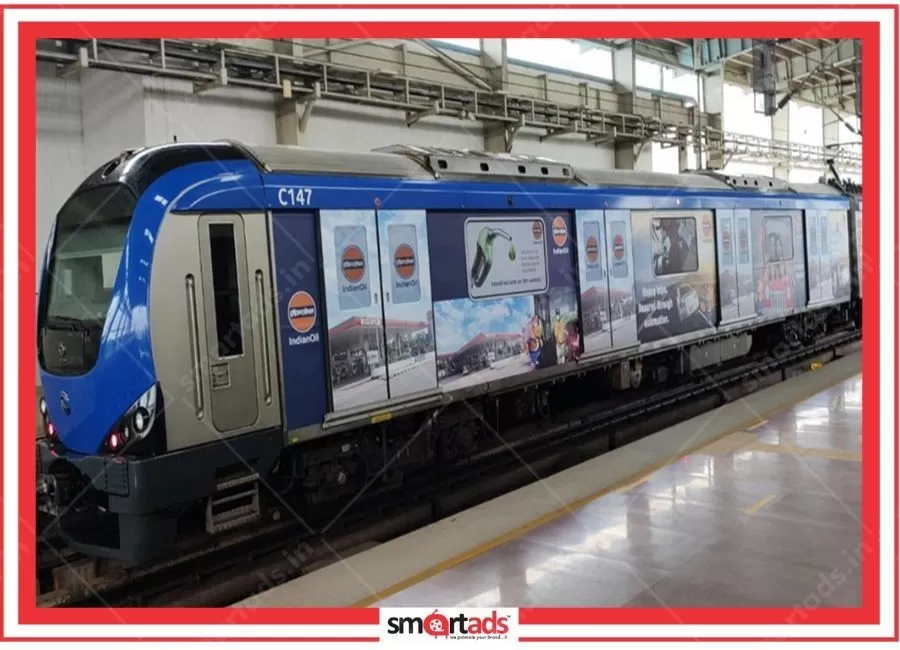
Exterior Metro Wrap
Size & Printing Cost as per actual
On the outside of metro Train, advertise
Rate per Metro Display Cost / 1 Month
Route:Noida Sec 51 To Depot
₹1000000.00
Showing 1 to 3 of 3 Results
MEDIA DETAILS
Size & Printing Cost as per actual
On the outside of metro Train, advertise
Rate per Metro Display Cost / 1 Month
Route:Noida Sec 51 To Depot
₹1000000.00
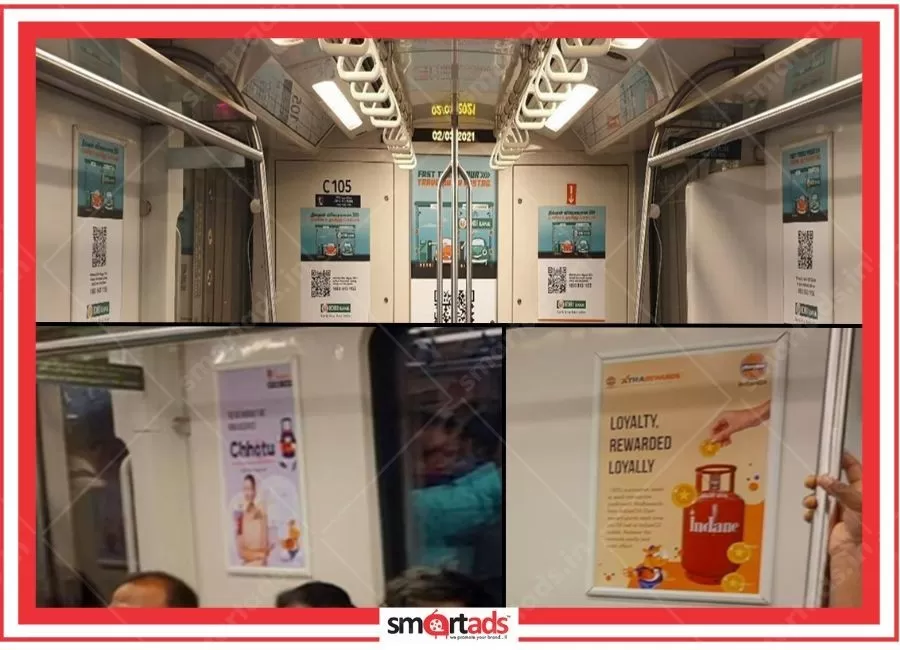
Size & Printing Cost as per actual
On the outside of metro Train, advertise
Rate per Metro Display Cost / 1 Month
Route:Noida Sec 51 To Depot
₹500000.00
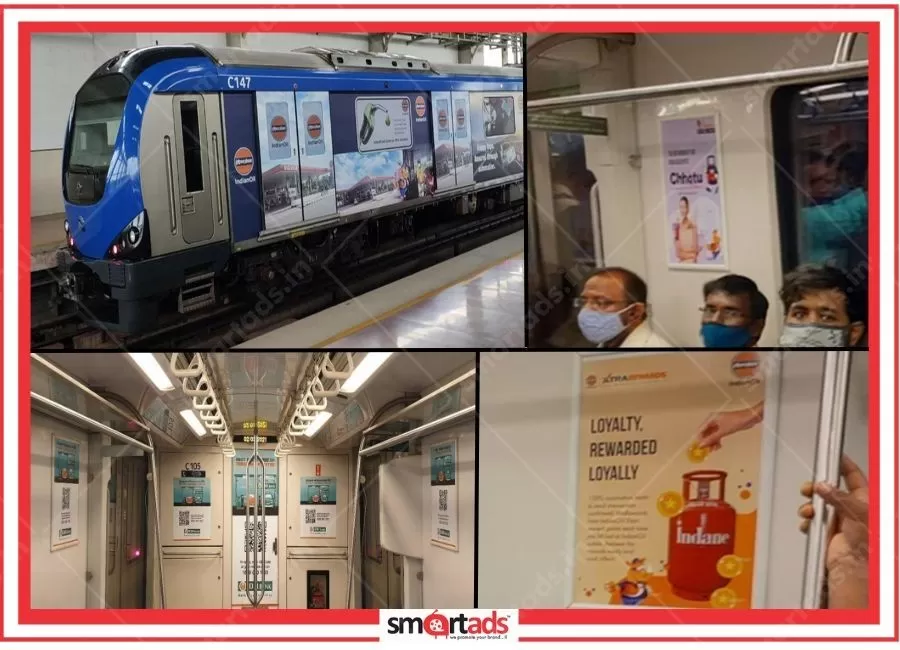
Size & Printing Cost as per actual
On the outside of metro Train, advertise
Rate per Metro Display Cost / 1 Month
Route:Noida Sec 51 To Depot
₹1500000.00
MEDIA REACH

MinimumQty :
1
EstimateReachPeople :
150000000
Most brands thinking about BTL advertising in Noida are still fixated on mall activations and auto rickshaw branding — which means the Aqua Line is, frankly speaking, one of the most underutilised transit media platforms in the entire NCR right now. The Noida Metro Rail Corporation operates a corridor that carries tens of thousands of working professionals, students, and residents through one of India's fastest-growing urban corridors every single day; and the brands that have figured this out are quietly building extraordinary brand recall at a fraction of what they would spend on a comparable Delhi Metro campaign. We have been placing campaigns on the Aqua Line since its early operational years, and what we tell our clients consistently is this: the commuter attention you get inside an NMRC coach is qualitatively different from almost anything else in the Noida media mix.
There is a tendency to lump all metro advertising under one broad umbrella, which does a disservice to what makes the Aqua Line specifically interesting as an advertising platform. Metro train advertising in Noida Aqua Line refers to brand placements that travel with the train itself — exterior vinyl wraps that transform the entire coach into a mobile billboard rolling through Noida and Greater Noida, interior panels positioned at eye level inside the coach, seat-back displays, overhead panels, and digital screens where available — as distinct from station-level media like platform branding, pillar branding, or concourse media, which stay fixed at a single location.
The Aqua Line, operated by the Noida Metro Rail Corporation under a joint venture between the Government of Uttar Pradesh and the Government of India, spans roughly 29.7 km and connects 21 stations from Noida Sector 51 (where it interchanges with Delhi Metro's Blue Line) down through Noida's commercial and residential belt and into Greater Noida, terminating near the Depot Station at Knowledge Park V. What makes this corridor particularly valuable for transit media is the nature of the journey itself — the average end-to-end travel time is somewhere in the range of 45 to 50 minutes, which creates a sustained dwell time that outdoor formats like hoardings or bus shelters simply cannot replicate. A commuter waiting at a traffic signal sees your billboard for perhaps eight seconds; a commuter seated inside a branded NMRC coach is exposed to your messaging for the entire duration of their journey.
At SmartAds, we always tell our clients that the distinction between train advertising and station advertising matters enormously for campaign objectives. If you are building brand awareness across a wide geographic corridor — essentially everything from Sector 51 to Pari Chowk — then train branding is your format; if you want hyperlocal advertising targeted at the catchment area of a specific station, then station domination or platform branding is the sharper tool. Most effective campaigns, in our experience, combine both.
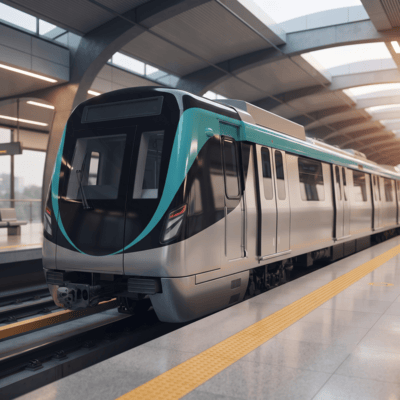
The most visually dramatic format in the Noida metro advertising inventory is the full train wrap, where the entire exterior surface of one or more NMRC coaches is covered in a large-format vinyl wrap carrying the advertiser's creative. A full train wrap on the Aqua Line effectively turns a six-coach CRRC Nanjing Puzhen train into a mobile billboard that travels the entire 29.7 km corridor multiple times a day, which means your brand is visible not just to passengers boarding and alighting at stations but also to pedestrians, motorists, and residents along the elevated track alignment. The visual impact of a well-executed full train wrap is genuinely hard to match with any other single OOH advertising format in Noida.
Partial train wraps — which cover one or two coach panels rather than the entire exterior — are available for advertisers who want the mobility and reach of exterior train branding without the investment that a full wrap requires. These are typically applied to the coach doors, end panels, or side panels, and they work particularly well for brands that have a strong logo or single visual that communicates effectively at a glance. The vinyl material used for Aqua Line train wraps is a perforated or non-perforated cast vinyl, which must meet NMRC's technical specifications for adhesion, weather resistance, and window visibility compliance — something we will address in more detail when we discuss creative specifications.
One automotive brand we worked with ran a partial train wrap across two coaches for a new model launch, targeting the Sector 62 IT corridor audience specifically; the creative featured a large QR code integration that drove measurable digital traffic, and the campaign generated roughly three times the web visits from the Noida geography that their concurrent social media spend produced in the same period. That result surprised even us, frankly — it validated something we had been arguing for years, which is that transit advertising and digital performance are not competing channels but complementary ones.
Interior train branding covers everything inside the coach that a seated or standing passenger sees during their journey. The primary formats include overhead longitudinal panels running along the length of the coach above the windows, vertical panels positioned between windows at eye level, seat-back advertising where the rear face of each seat carries a printed or laminated panel, and digital screens mounted at coach ends or above doors where NMRC has installed digital infrastructure. Interior train branding is, in many ways, where the real value lies for brands that want sustained message exposure — because a commuter seated for 30 or 40 minutes has very few places to look other than their phone and the panels surrounding them.
The dwell time advantage of interior branding is something that most brands underestimate when they first approach us for Noida metro advertising. Repeat exposure is built into the format by design; a daily commuter who takes the Aqua Line five days a week will see your interior panel somewhere between 40 and 80 times over the course of a single month-long campaign, which produces a brand recall depth that periodic OOH formats struggle to achieve. We have seen this translate into measurable outcomes — a real estate advertising client targeting the Greater Noida residential market ran interior coach panels for 60 days and reported that a significant portion of their site visit enquiries during that period mentioned having seen the metro advertising, which is an attribution signal that is rare and valuable in the BTL space.
Digital screens inside NMRC coaches, where available, add a dynamic layer to interior train branding — allowing advertisers to run multiple creatives, time-of-day targeting, or animated content that static panels cannot deliver. The inventory for digital screens is more limited than static formats, which means booking lead times tend to be longer and rates are correspondingly higher; but for brands launching a new product or running a time-sensitive campaign, the flexibility is worth the premium.
Frankly speaking, advertising rates for metro train advertising in Noida Aqua Line are not published in a single transparent rate card the way newspaper advertising rates are — which creates genuine confusion for first-time advertisers and is one of the reasons we get so many enquiries from brands who have been quoted wildly different figures by different vendors. What we can share, based on our ongoing experience booking campaigns through NMRC's authorised advertising concessionaires, is a realistic ballpark that helps brands plan budgets before they enter formal negotiations.
A full exterior train wrap on the Aqua Line — covering all coaches of a single train — typically works out to somewhere between ₹8 lakh and ₹15 lakh per month, depending on the specific train, the season, and the duration of the commitment; longer campaigns of three months or more attract meaningful discounts that can bring the effective monthly cost down by 20 to 30 percent. A partial train wrap covering one or two coach panels is considerably more accessible, generally falling in the ballpark of ₹2 lakh to ₹5 lakh per month, which puts it within reach of mid-sized brands and even well-funded startups. Interior coach panels — the overhead or window-adjacent static formats — are priced more modestly, with individual panel placements working out to roughly ₹15,000 to ₹40,000 per panel per month depending on position and coach placement, which surprises most first-time advertisers when they compare it to what they are paying for equivalent dwell-time exposure on digital platforms.
The CPM (cost per thousand impressions) for Aqua Line advertising, when calculated against daily ridership figures, works out to a number that is genuinely competitive with mid-range digital display advertising — and the quality of that impression, in terms of attention and dwell time, is arguably superior. At SmartAds, we run this calculation for every client before recommending a media mix, because the ROI story for transit media only becomes clear when you put it in CPM terms rather than absolute cost terms. Production costs for vinyl wraps — which include design adaptation, printing, and installation — add to the campaign budget and should be factored in from the start; a full train wrap production typically adds somewhere between ₹1.5 lakh and ₹3 lakh to the overall cost, depending on the complexity of the creative.
The honest answer, which we give to every client who asks us to justify the Aqua Line in a media plan, is that it offers something that almost no other BTL advertising format in Noida can match — a captive audience in an environment with essentially zero competing media. When a commuter is inside an NMRC coach, they are not being bombarded by competing billboard messages, they are not scrolling past your ad in a feed, and they are not able to physically avoid your creative the way they can skip a pre-roll video. The combination of captive audience, high dwell time, and repeat exposure across a daily commute creates a brand awareness campaign environment that is, to be honest, quite rare in the current media landscape.
The Aqua Line's physical corridor also matters strategically. The line connects some of Noida's most commercially significant zones — the Sector 18 retail and commercial hub, the Sector 62 IT corridor which houses dozens of MNC offices and tech companies, the educational institutions and residential zones of Greater Noida, and the Pari Chowk commercial area — which means the commuter audience is not a generic urban mass but a relatively concentrated group of working professionals, students, and urban consumers with above-average purchasing power. The GroupM TYNY report and Dentsu e4m data consistently show that transit media in Tier 1 and emerging Tier 1 cities like Noida is growing as a share of out-of-home advertising spend, precisely because this audience quality is being recognised by sophisticated media planners.
On top of that, the Aqua Line's IGBC Platinum Rating — which the NMRC system holds, making it one of the greener metro systems in India — gives brands an additional association benefit. Categories like sustainability-focused FMCG advertising, electric vehicle brands, and health and wellness companies have found that advertising on the Aqua Line carries a subtle but real brand alignment advantage that a highway hoarding simply does not offer. We have found this to be a genuinely underused talking point in pitches, and it is one that resonates particularly well with brands whose target consumer is environmentally conscious.
What a lot of people miss is that the Aqua Line's commuter audience is not a cross-section of the general Noida population — it is a self-selected group that skews significantly toward working professionals, students at Greater Noida's engineering and management institutions, and middle-to-upper-middle-income residents of planned sectors along the corridor. The Noida Metro Rail Corporation has reported daily ridership figures that have been growing steadily since operations stabilised, with weekday ridership numbers that reflect the IT and corporate workforce patterns of the Sector 62 and Sector 18 catchment areas; ridership growth has been particularly notable in the post-pandemic period as office attendance normalised.
The income and consumption profile of this commuter audience is meaningfully different from general Delhi NCR transit audiences. Based on the corridor's geography — which runs through sectors with high residential real estate values, premium commercial developments, and established retail zones — the Aqua Line commuter skews toward the SEC A and SEC B income brackets, with a significant proportion of daily commuters being salaried professionals in the ₹8 lakh to ₹25 lakh annual income range. This is the audience that real estate advertising clients, automobile brands, banking and financial services companies, and premium consumer goods brands are actively trying to reach; and the Aqua Line puts them in a captive environment for 20 to 50 minutes every working day.
Age-wise, the commuter audience is relatively young — our experience across campaigns suggests a concentration in the 22 to 40 age bracket, which aligns with the working professional and student populations that the corridor serves. This demographic is digitally active, which is why QR code integration in train branding has become an increasingly effective bridge between transit media and digital conversion; we have run several campaigns where a QR code on an interior coach panel drove measurable app downloads or website registrations, creating a direct attribution link between the BTL advertising spend and a digital performance outcome that clients could present to their management as ROI evidence.
Station-level strategy is something that most generic metro advertising guides completely ignore, which is a significant gap because footfall is not evenly distributed across all 21 stations on the Aqua Line. Sector 51 Station, which serves as the interchange point with Delhi Metro's Blue Line, is the highest-footfall station on the entire Aqua Line corridor; it functions as the entry and exit point for commuters connecting between the two systems, which means the volume of passengers passing through its concourse, escalators, and platforms is substantially higher than any other station on the line. For brands wanting station domination or platform branding with maximum reach, Sector 51 is the obvious anchor.
Sector 18 Station deserves special mention because its catchment area is Noida's most commercially dense zone — the Sector 18 market, Atta Market, and the cluster of malls and commercial complexes that make this the retail heart of Noida. Footfall at Sector 18 Station includes not just commuters but shoppers and visitors, which expands the audience beyond the regular commuter profile and makes it particularly valuable for retail, FMCG advertising, and consumer brand campaigns. Sector 62 Station, sitting at the heart of Noida's IT corridor, draws a concentrated working professional audience during morning and evening peak hours; for B2B brands, financial services, and premium consumer categories, the Sector 62 catchment is arguably the most valuable on the line.
Further into Greater Noida, Pari Chowk Station and Knowledge Park II and V stations serve the educational and residential clusters of Greater Noida, with a younger, student-heavy audience mix that is relevant for ed-tech, lifestyle, and consumer electronics brands. Alpha 1 Station serves one of Greater Noida's established residential and commercial zones. The thing is, for a train wrap campaign, this station-by-station analysis matters less because the train itself travels the entire corridor — but for advertisers combining train branding with station-level media, understanding which stations anchor the campaign geographically is essential to building a coherent media plan. At SmartAds, we map client campaigns against station catchment profiles before recommending any combination of train and station formats.
This is one of the most common questions we get from brand managers who are familiar with Delhi Metro advertising and are evaluating the Aqua Line for the first time. The honest comparison is nuanced — Delhi Metro's scale, with its hundreds of stations and thousands of daily commuters across multiple lines, offers a reach that the Aqua Line simply cannot match in absolute numbers; but the Aqua Line offers something that the Delhi Metro system, precisely because of its scale, has largely lost, which is exclusivity and audience concentration. A brand running train branding on the Aqua Line is one of very few advertisers on that corridor; a brand running train branding on a Delhi Metro line is competing for attention with dozens of other campaigns across a much larger and more fragmented system.
Advertising rates on the Delhi Metro are correspondingly higher — a full train wrap on a Delhi Metro line can run into costs that are several multiples of what an equivalent Aqua Line campaign would cost, which makes the Aqua Line a genuinely attractive option for brands with budgets in the ₹5 lakh to ₹20 lakh range who want the prestige and impact of metro train branding without the investment that DMRC inventory demands. The CPM comparison, when done properly, often shows the Aqua Line performing favourably — not because the absolute reach is higher, but because the cost per impression is lower and the audience quality, in terms of income and purchase intent, is comparable. For NCR advertising strategies that need to cover both Delhi and Noida, we typically recommend a split approach — using the Delhi Metro for broad reach and the Aqua Line for targeted depth in the Noida-Greater Noida geography.
There is also a practical consideration around booking and execution. Delhi Metro advertising, managed through DMRC's concessionaire system, involves a more complex approval and booking process with longer lead times; Aqua Line advertising through NMRC's authorised channels tends to be somewhat more accessible for mid-sized advertisers, with shorter campaign booking timelines and more flexibility in creative execution. To be fair, this is a generalisation and individual campaign experiences vary — but it is a pattern we have observed consistently across our campaigns on both systems.
Real estate advertising is, in our experience, the category that has historically extracted the most value from Aqua Line advertising — which makes intuitive sense, given that the corridor runs directly through the residential and commercial development zones of Noida and Greater Noida. Developers launching new projects in Sectors 50 through 150 and in Greater Noida West have used train branding to reach exactly the audience that is most likely to be evaluating property in those areas; the commuter who travels the Aqua Line daily is, almost by definition, already living or working in the catchment area of these projects, which makes the targeting inherently hyperlocal advertising in the best sense of the term.
Education brands — particularly engineering colleges, management institutes, and ed-tech platforms targeting the Greater Noida student population — have found the Aqua Line to be a highly efficient channel, given the concentration of educational institutions along the corridor and the student ridership that results. FMCG advertising brands targeting urban consumers, banking and financial services companies reaching the working professional audience, and OTT platform advertising targeting the young, digitally active commuter demographic have all run effective campaigns on the Aqua Line. Automobile brands — particularly in the two-wheeler and entry-level four-wheeler segments — have used the corridor to reach aspirational urban consumers; the automotive brand case study we mentioned earlier is one of several we have managed in this category.
What a lot of people miss is that the Aqua Line is also an excellent platform for B2B brands targeting the Sector 62 IT corridor audience — software companies, HR tech platforms, enterprise services brands, and professional services firms that want to reach decision-makers and professionals in the IT and corporate sector. This is a use case that is almost entirely absent from competitor discussions of metro advertising, which tend to focus exclusively on consumer categories; but the Sector 62 commuter audience is, frankly, one of the most concentrated B2B-relevant audiences in any transit media system in the NCR.
The booking process for metro train advertising in Noida Aqua Line runs through NMRC's authorised advertising concessionaires — private agencies that have been granted the rights to sell and manage advertising inventory across the Aqua Line system, covering both train-based and station-based formats. Direct approaches to NMRC for advertising are generally redirected to these concessionaires, which means working with an experienced metro advertising agency that has established relationships with the concessionaire is the most efficient path to campaign booking. The concessionaire landscape has included operators like Metro Spaces and other authorised vendors; the specific active concessionaire should be verified at the time of booking, as these arrangements are periodically renewed.
The NMRC approval process for train branding involves creative review and compliance sign-off, which is a step that first-time advertisers frequently underestimate in their campaign timelines. Creative materials — particularly for exterior train wraps — must be submitted for NMRC approval before production begins, and the review process can take anywhere from one to three weeks depending on the complexity of the creative and the current workload of the approvals process. This means that a brand wanting to launch a campaign booking on a specific date needs to have finalised creative at least four to six weeks before the intended launch, accounting for approval time, production, and installation. We have seen campaigns delayed by two to three weeks simply because the creative approval step was not factored into the project timeline — which is an avoidable problem with proper planning.
At SmartAds, our campaign booking process for Aqua Line clients typically begins with a media brief, followed by a rate negotiation with the concessionaire, creative specification guidance for the design team, NMRC approval coordination, production supervision, and installation oversight. Campaign duration minimums are generally set at 30 days for most formats, with 90-day campaigns being the sweet spot for brands that want meaningful repeat exposure and the rate benefits that longer commitments attract. Seasonal campaigns — particularly around Diwali, New Year, and summer product launch windows — need to be booked significantly earlier, as inventory tends to fill up quickly during peak advertising periods.
One of the most consistent mistakes we see brands make when planning their first Aqua Line campaign is treating it as a standalone placement rather than integrating it with complementary formats. Train branding creates broad corridor-level brand visibility; combining it with station domination at Sector 51 or Sector 18, platform branding at key interchange points, and pillar branding or escalator advertising at high-footfall stations creates a surround-sound effect that dramatically amplifies brand recall. A retail client in Pune — actually, to be more relevant, a retail chain expanding into Noida — ran a campaign with us that combined exterior train branding with station-level concourse media at three key stations; their post-campaign brand awareness survey in the Noida geography showed recall levels that were nearly double what their previous standalone hoarding campaigns had achieved in comparable markets.
Creative design for transit media, particularly for exterior train wraps, requires a different discipline than print or digital design — and this is an area where we have seen many campaigns underperform not because of media placement issues but because the creative was not adapted for the format. A full train wrap is viewed from a distance, often by someone in a moving vehicle or standing on a platform for a few seconds; the design needs to communicate the brand and core message within approximately three seconds of viewing, which means simplicity, high contrast, and a single dominant visual are essential. Overcrowded creatives with multiple messages, small text, and complex layouts are wasted on a train wrap — the vinyl wrap format rewards boldness and clarity above all else. For interior coach panels, where the commuter has sustained dwell time, more detailed messaging can be effective; this is where you can include a QR code integration, a web address, or a more detailed product or service explanation.
The Aqua Line Phase 2 extension — which received approvals in late 2024 and proposes to add 11 new stations to the corridor — will, when operational, significantly expand the advertising inventory available on the system and extend the geographic reach of train branding campaigns further into Greater Noida and potentially toward Jewar Airport. Brands with a long-term Noida or Greater Noida strategy should factor this expansion into their media planning horizon; the stations added by Phase 2 will open new catchment areas and potentially new audience segments, and early advertisers on extended inventory typically benefit from lower rates and less competitive inventory environments. We are tracking this development closely for our clients who are building multi-year brand presence strategies in the NCR corridor.
Q: What is metro train advertising on the Noida Aqua Line?
Metro train advertising in Noida Aqua Line refers to brand placements on the trains operated by the Noida Metro Rail Corporation across the 29.7 km Aqua Line corridor connecting Noida Sector 51 to Greater Noida. These placements include exterior vinyl wraps on coach surfaces, which turn the train into a mobile billboard travelling the entire corridor multiple times daily, as well as interior formats including overhead panels, window-adjacent panels, seat-back displays, and digital screens inside the coaches. Unlike station-based advertising — which includes platform branding, pillar branding, concourse media, and escalator advertising — train advertising moves with the vehicle and generates impressions across the entire line rather than at a fixed location. It is classified as transit media and sits within the broader BTL advertising and out-of-home advertising categories.
Q: How much does it cost to advertise on Noida Aqua Line metro trains?
Advertising cost for Aqua Line train campaigns varies by format, duration, and season, but to give a realistic planning benchmark: a full exterior train wrap typically falls somewhere between ₹8 lakh and ₹15 lakh per month, a partial train wrap covering one or two coach panels generally works out to ₹2 lakh to ₹5 lakh per month, and individual interior coach panels are priced in the range of ₹15,000 to ₹40,000 per panel per month. Production costs for vinyl wraps — printing, installation, and removal — add to these figures and should be budgeted separately. Longer campaign durations of 90 days or more typically attract discounts of 20 to 30 percent on the base rate. These are indicative ranges based on our experience; actual advertising rates are confirmed through the NMRC-authorised concessionaire at the time of booking.
Q: What advertising formats are available on the Noida Aqua Line?
The Aqua Line advertising inventory spans both train-based and station-based formats. On the trains themselves, the available formats include full exterior train wraps covering all coach surfaces, partial train wraps on specific coach panels or doors, interior overhead panels, window-adjacent panels, seat-back advertising, and digital screens where installed. At the station level, formats include platform branding, pillar branding, concourse media, escalator advertising, digital screens, and full station domination packages that cover multiple surfaces across a single station. The most impactful campaigns typically combine train-based formats with station-level placements at anchor stations like Sector 51, Sector 18, or Sector 62.
Q: What is the difference between a full train wrap and a partial train wrap on the Aqua Line?
A full train wrap covers the entire exterior surface of one or more coaches — all side panels, doors, and end panels — in a continuous large-format vinyl creative, which creates the maximum visual impact and essentially transforms the train into a branded vehicle. A partial train wrap covers a defined portion of the exterior, typically one or two coach panels, door wraps, or end-panel placements, which delivers the mobility and corridor reach of exterior train branding at a lower investment. The choice between the two depends on budget, creative ambition, and campaign objectives; full train wraps are suited to major brand launches or campaigns where maximum visual dominance is the goal, while partial wraps work well for sustained brand presence campaigns where cost efficiency over a longer duration is the priority.
Q: How many daily commuters does the Noida Aqua Line serve?
NMRC ridership figures have grown steadily since operations stabilised, with weekday ridership reflecting the IT and corporate workforce patterns of the Sector 62 and Sector 18 corridors. While exact current daily ridership figures are best confirmed through NMRC's official communications, the system has been reporting growth trajectories consistent with broader NCR metro ridership trends documented in the FICCI-EY Media and Entertainment Report. The commuter audience skews toward working professionals and students, with a concentration in the 22 to 40 age bracket and above-average income levels relative to the general Noida population.
Q: Which stations on the Noida Aqua Line get the highest footfall?
Sector 51 Station, as the interchange point with Delhi Metro's Blue Line, consistently generates the highest footfall on the Aqua Line — it serves both Aqua Line commuters and Delhi Metro interchange passengers, which multiplies the audience exposure significantly. Sector 18 Station, serving Noida's primary commercial and retail zone, and Sector 62 Station, at the heart of the IT corridor, are the next most significant stations in terms of advertiser value. For Greater Noida-focused campaigns, Pari Chowk Station and the Knowledge Park stations serve the educational and residential clusters that are particularly relevant for education, real estate advertising, and lifestyle brands.
Q: How long does a typical Aqua Line metro train advertising campaign run?
The minimum campaign duration for most train-based formats on the Aqua Line is 30 days, which is sufficient for initial brand awareness but generally not long enough to build the repeat exposure that makes transit media particularly powerful. Most experienced advertisers run campaigns of 60 to 90 days, which is the duration at which brand recall effects become measurable and at which the rate discounts for longer commitments begin to make a meaningful difference to the effective CPM. Seasonal campaigns — Diwali, New Year, summer launches — are typically planned for 30 to 45 days aligned to the specific window, but these need to be booked well in advance as inventory fills quickly during peak periods.
Q: How do I get NMRC approval for advertising on the Noida Aqua Line?
NMRC advertising approvals are managed through the system's authorised advertising concessionaires rather than directly through NMRC itself. The process involves submitting creative materials for compliance review — NMRC has guidelines around content, imagery, and messaging that must be adhered to — followed by a formal approval before production and installation can proceed. For exterior train wraps, the creative review is particularly detailed, as the wrap dimensions, material specifications, and window visibility compliance all need to be verified. The approval process typically takes one to three weeks; advertisers should factor this into their campaign timeline and plan for creative finalisation at least four to six weeks before the intended campaign launch date.
Q: Is metro train advertising on the Aqua Line suitable for small businesses and startups?
The perception that metro advertising is exclusively for large brands with large budgets is one that we actively push back on, because the reality of Aqua Line advertising rates is more accessible than most small business owners assume. Interior coach panel placements, which start at roughly ₹15,000 per panel per month, are within the budget range of many well-funded startups and growing SMBs; and a campaign built around two or three interior panels, running for 60 days, can deliver a reach and brand recall impact that would cost significantly more through digital advertising targeting the same Noida professional audience. The key for smaller advertisers is to focus on interior formats rather than full exterior train wraps, to commit to longer campaign durations to access rate discounts, and to ensure the creative is designed specifically for the transit media environment rather than repurposed from other formats.
Q: How does Noida Aqua Line train advertising compare to Delhi Metro advertising in terms of cost and reach?
Delhi Metro advertising offers significantly greater absolute reach, given the scale of the DMRC system across the entire NCR; but it comes at correspondingly higher rates, with full train wraps on Delhi Metro lines costing several multiples of equivalent Aqua Line placements. The Aqua Line offers a more targeted, cost-efficient option for brands whose primary audience is concentrated in the Noida-Greater Noida geography — the CPM comparison often favours the Aqua Line when the audience quality and dwell time are factored in. For NCR-wide campaigns, a combined approach using Delhi Metro for broad reach and the Aqua Line for depth in the Noida corridor is a strategy we recommend frequently.
Q: What industries benefit most from advertising on the Noida Aqua Line?
Real estate advertising targeting Noida and Greater Noida buyers, education brands reaching students at Greater Noida institutions, IT and technology companies targeting the Sector 62 professional audience, banking and financial services brands, automobile manufacturers, FMCG advertising companies, OTT platform advertising targeting young urban consumers, and B2B brands reaching corporate decision-makers in the IT corridor are the categories that have consistently extracted strong value from Aqua Line campaigns in our experience. The corridor's audience profile — working professionals, students, and urban consumers with above-average income — makes it particularly relevant for aspirational and premium consumer categories.
Q: Can I combine interior and exterior train branding for a single campaign on the Aqua Line?
Yes — and in our experience, campaigns that combine exterior train branding with interior coach placements consistently outperform single-format campaigns on brand recall metrics. The exterior wrap creates broad visibility across the corridor, generating impressions from passengers at stations and observers along the elevated track; the interior panels then deliver sustained, detailed messaging to the commuters who board the train, creating a two-stage brand experience that reinforces the message at different levels of engagement. This combination is particularly effective for product launches or campaigns with a specific call to action, where the exterior creates awareness and the interior drives the next step — a QR code scan, a web visit, or a store visit.
Q: How far in advance do I need to book metro train advertising on the Aqua Line?
For standard campaigns on non-peak periods, a booking lead time of four to six weeks is generally sufficient to complete the concessionaire negotiation, NMRC creative approval, production, and installation. For campaigns targeting peak advertising periods — Diwali (September-October booking), New Year (November booking), or summer product launch windows — we recommend booking eight to twelve weeks in advance, as premium inventory like full train wraps and high-footfall station placements fills up quickly. First-time advertisers should add additional buffer time to account for the creative approval learning curve.
Q: What creative dimensions and material specifications are required for Aqua Line train wraps?
NMRC train wraps use cast vinyl material that meets specific adhesion, weather resistance, and window-visibility compliance standards — perforated vinyl is typically required for window panels to maintain passenger sightlines, while non-perforated cast vinyl is used for solid body panels. Exact dimensions vary by coach type and panel position and should be obtained from the authorised concessionaire at the time of booking, as these specifications are subject to NMRC's technical guidelines. Creative files are typically required at a minimum resolution of 72 dpi at full print size (which translates to very large file
