
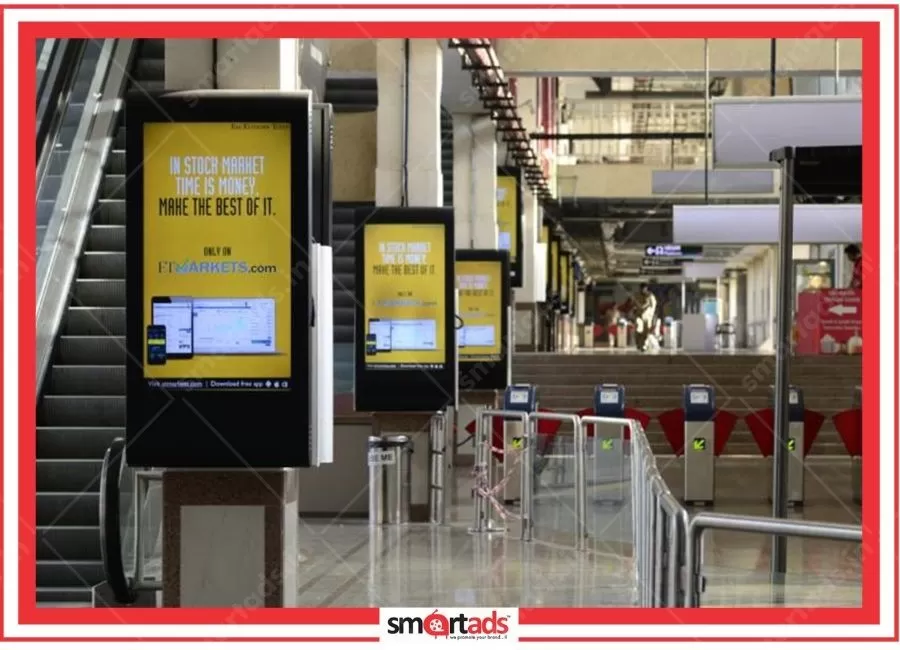
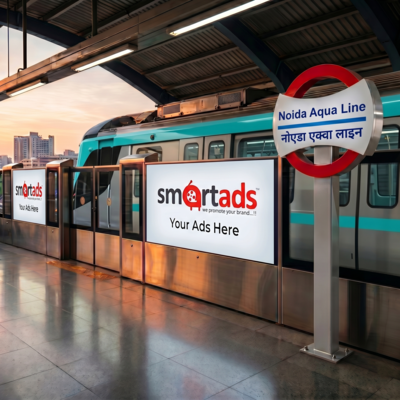
Entry Exit Panel
8 ft x 4 ft
Bright and vibrant multicolored letterin
Rate per Panel / Month
Min Requirement is 3 Panel.
₹48000.00
Showing 1 to 4 of 4 Results
MEDIA DETAILS
8 ft x 4 ft
Bright and vibrant multicolored letterin
Rate per Panel / Month
Min Requirement is 3 Panel.
₹48000.00
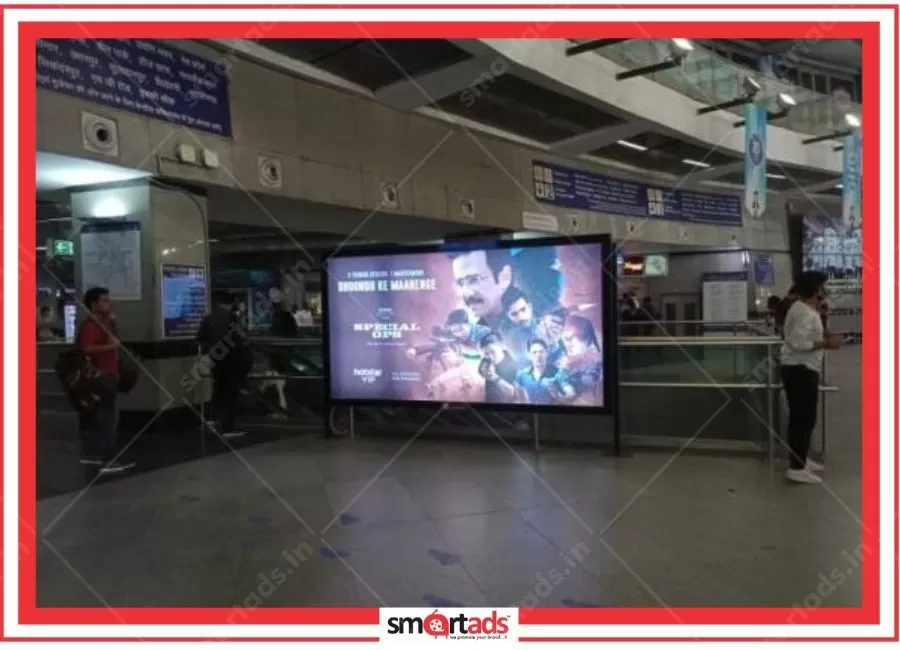
10 ft x 5 ft
A new wide wall system designed to accom
Rate per Panel / Month
Min Requirement is 3 Panel.
₹50000.00
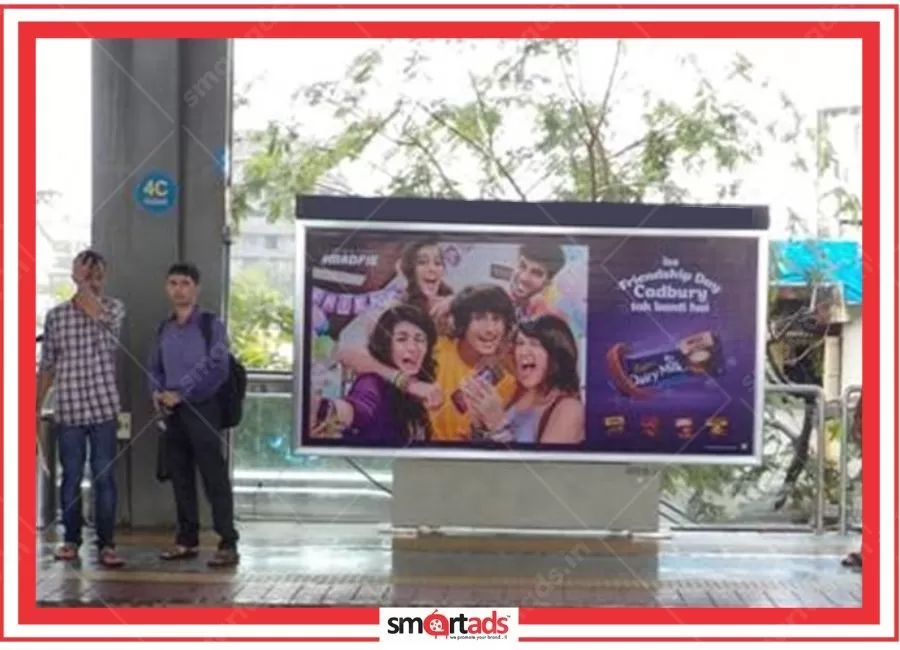
8 ft x 4 ft
A raised flooring or other horizontal su
Rate per Panel / Month
Min Requirement is 3 Panel.
₹35000.00
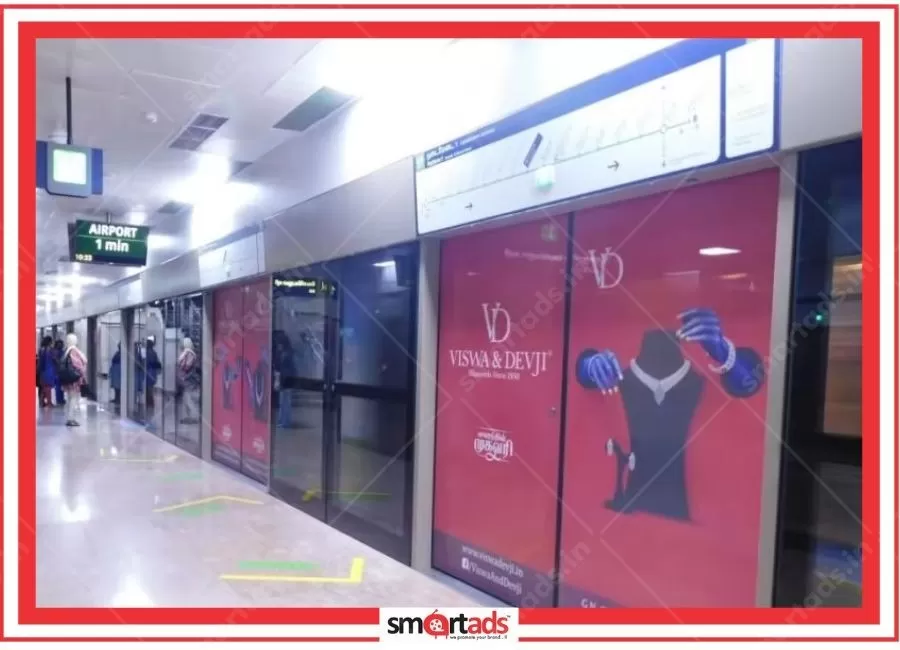
7 ft x 4 ft
Also known as platform edge doors (PEDs)
Rate per Plateform / Month
Min Requirement is 1 Stations.
₹1200000.00
MEDIA REACH

MinimumQty :
10
EstimateReachPeople :
15 Million
Most brands entering the Noida market instinctively reach for highway billboards or newspaper inserts — and then wonder why their campaign metrics look underwhelming six weeks later. The Noida Aqua Line, operated by Noida Metro Rail Corporation Limited, carries somewhere in the range of 50,000 to 70,000 daily commuters across its 29.7 km route, which means a single well-placed backlit panel at Sector 51 or Pari Chowk is generating repeated impressions among the same high-income, working-professional audience, day after day, for the entire duration of your campaign. That is a fundamentally different value proposition from any other outdoor advertising format in this corridor.
Transit advertising as a category is frequently misunderstood, and metro station advertising in particular tends to get lumped in with general outdoor advertising when it is, frankly, a very different beast. Metro station advertising on the Noida Aqua Line refers to the full spectrum of brand placements available within and around the 21 stations operated by NMRC — from platform-level backlit panels and pillar branding to concourse advertising, entry exit gate branding, digital screens, and full station domination packages which transform an entire station into an immersive brand environment. The Aqua Line runs from Noida Sector 51 in the north to Depot Station, Greater Noida in the south, connecting some of the most economically active zones in Uttar Pradesh and the broader Delhi NCR.
What makes this form of transit media genuinely distinct is the controlled environment advertising opportunity it creates. Unlike a highway billboard which a driver glances at for roughly two seconds while navigating traffic, a metro station holds its audience — commuters waiting on platforms, riding escalators, passing through concourses — for dwell times that typically range between three and eight minutes per station visit. Our experience at SmartAds shows that this extended dwell time is the single most undervalued variable in outdoor advertising planning, and it is precisely why brand recall scores from metro station campaigns consistently outperform comparable-spend highway OOH campaigns in post-campaign surveys. The captive audience dynamic here is not incidental; it is structural.
The Noida Metro Rail Corporation Limited, which was incorporated under the Government of Uttar Pradesh with equity participation from the Government of India, manages all non-fare revenue streams including advertising rights across the Aqua Line network. NMRC has developed a reasonably structured advertising inventory that covers both static and dynamic formats, and the network itself — which received an IGBC Platinum Green Rating — attracts a commuter profile that skews strongly toward educated, urban consumers with disposable income, making it particularly attractive for categories like real estate advertising, education sector advertising, and financial services.
The range of formats available for Aqua Line advertising is broader than most media planners expect when they first approach us for a Noida campaign, and the choice of format has a significant bearing on both cost and campaign effectiveness. Platform panel advertising — typically illuminated backlit panel units positioned along the platform edge walls — is the most commonly booked format; these panels sit directly in the sightline of waiting passengers, which means every commuter standing on the platform is effectively a captive viewer for the full duration of their wait. Panel sizes vary by station, but most Aqua Line platforms accommodate standard 4x6 feet and 6x4 feet backlit panel configurations.
Beyond platform panels, pillar branding is a format that we have found to be chronically underutilised by advertisers on the Aqua Line, despite offering some of the most cost-efficient impressions in the network. Pillars in metro stations are viewed from multiple angles and at close range, which means a well-designed pillar wrap generates genuine 360-degree brand visibility in a way that a flat panel simply cannot. Escalator branding — wrapping the side panels and risers of escalator units — is another format which creates a uniquely sequential brand experience, because the commuter is physically moving through the branded environment for the full duration of the escalator ride. Concourse advertising, which covers the main circulation areas between entry gates and platforms, captures the widest possible footfall at any given station; entry exit gate branding, positioned at the most-trafficked chokepoints in the station, ensures that literally every person entering or leaving the station is exposed to the brand message.
Train wrap advertising — covering the exterior of Aqua Line rolling stock manufactured by CRRC Nanjing Puzhen — extends the brand's reach well beyond station boundaries, because a wrapped train is visible to pedestrians, motorists, and residents along the entire 29.7 km Aqua Line route. Interior train branding, which includes overhead panels, door stickers, and seat-back panels inside the coaches, targets the commuter during the journey itself rather than at the station — a format which tends to generate longer exposure times because passengers are seated or standing in a relatively static environment for the full duration of their ride. Exterior train branding and interior train branding together constitute what the industry calls a full train takeover, which is the transit media equivalent of a station domination but applied to the rolling stock rather than the built environment.
Frankly speaking, this is the question that every client asks first, and it is also the question that most competitor agency pages answer with a vague "contact us for rates" — which is not particularly useful if you are trying to build a media plan before your next budget meeting. We will give you actual working figures, with the caveat that NMRC advertising rates are subject to revision and that final costs depend on station selection, campaign duration, and format mix.
For platform panel advertising at a standard Aqua Line station, the monthly rate works out to somewhere in the range of ₹15,000 to ₹35,000 per panel, depending on the station's footfall tier — high-footfall stations like Sector 51, Sector 52, and Sector 18 command a premium, while stations in the Greater Noida stretch like Alpha 1 or Delta 1 tend to be priced more accessibly. Pillar branding typically runs in the ballpark of ₹8,000 to ₹20,000 per pillar per month, which makes it one of the most cost-efficient formats in the network when you calculate the cost-per-impression. Escalator branding at a single station is priced somewhere between ₹25,000 and ₹60,000 per month depending on the number of escalator units and the station's traffic profile; concourse advertising, which covers larger surface areas, runs higher — roughly ₹40,000 to ₹1,20,000 per month for a meaningful concourse presence at a mid-to-high-footfall station.
Train wrap advertising — specifically full exterior train branding — is priced in the ballpark of ₹3 lakh to ₹6 lakh per train per month, which sounds substantial until you consider that a wrapped train is generating impressions across the entire 29.7 km Aqua Line route, not just at a single station. Interior train branding for a full coach set typically works out to roughly ₹1.5 lakh to ₹3 lakh per month. Station domination packages — which bundle multiple formats across a single station into a unified brand takeover — are priced on a case-by-case basis by NMRC, but our experience suggests that a meaningful station domination at a Tier 1 Aqua Line station can be structured somewhere in the range of ₹4 lakh to ₹12 lakh per month depending on the scope of formats included. Digital screen advertising on the Aqua Line's DOOH network is typically sold on a per-screen, per-week basis, with rates in the ballpark of ₹10,000 to ₹30,000 per screen per week at most stations. At SmartAds, we always tell our clients that these figures are starting-point benchmarks — the actual noida metro station advertising cost per month for your specific campaign will depend on negotiation, duration commitments, and the package structure we build with NMRC on your behalf.
Not all 21 stations on the Aqua Line are created equal from an advertising standpoint, and getting this station selection right is honestly where most brands either win or waste their budget. Sector 51 station, which serves as the northern terminus and the interchange point for commuters connecting from other parts of Noida, is consistently the highest-footfall station on the network; it functions as a gateway for a large proportion of the Aqua Line's daily commuters, which means advertising placements here generate the highest frequency of exposure per day. Sector 52 station is particularly strategic because it is the interchange point with the Delhi Metro Blue Line, making it a node through which commuters from Delhi, Ghaziabad, and the broader NCR pass on their way into the Aqua Line network — a brand placed here is effectively reaching a cross-network audience.
Sector 18 station, which serves one of Noida's most commercially dense zones — home to malls, multiplexes, corporate offices, and retail clusters — draws a distinct audience of shoppers, office-goers, and weekend visitors, which makes it especially valuable for FMCG brands, retail brands, and lifestyle categories. Sector 137 station, positioned adjacent to several large IT parks and corporate campuses, has a commuter profile that skews heavily toward working professionals in the 25-40 age bracket, which makes it a natural fit for financial services, edtech, and B2B brands. Pari Chowk station, which serves as a major traffic node in Greater Noida, draws a mixed audience of residents, students from nearby institutions, and commercial visitors; Knowledge Park II station, located near several prominent educational institutions, is a logical choice for education sector advertising campaigns targeting students and their families.
Alpha 1 station and the stations in the Greater Noida stretch — including NSEZ station, which serves the Noida Special Economic Zone — cater to a working-professional and industrial-sector audience that is underserved by most traditional OOH campaigns in the region. GNIDA (Greater Noida Industrial Development Authority) office proximity to several of these stations also means that government-adjacent audiences and real estate buyers are well represented in the footfall mix. Our media planning team at SmartAds typically recommends a tiered station selection strategy — anchoring the campaign at one or two Tier 1 stations for maximum reach, supplemented by two or three Tier 2 stations for category-specific audience targeting — rather than spreading the budget thinly across the entire network.
The honest answer is that the Aqua Line is not the right platform for every brand, and we would rather tell a client that upfront than take their money for a campaign that does not fit the medium. The Aqua Line's commuter base is overwhelmingly urban, educated, and employed — a profile which aligns naturally with categories like real estate advertising (particularly residential projects in Sector 150, Greater Noida West, and the Yamuna Expressway corridor), education sector advertising (coaching institutes, universities, online learning platforms), healthcare advertising (hospitals, diagnostics, health insurance), and financial services (banking, investment products, insurance).
Real estate brands, in particular, have found the Aqua Line to be an extraordinarily effective channel — and we have seen this work firsthand. A residential developer we worked with was launching a project near Sector 137, targeting IT park employees who were already commuting through that station daily. We placed backlit panels at Sector 137 and NSEZ stations, combined with interior train branding on two coaches, and the campaign generated a footfall of over 1,200 site visits in a 45-day period, which the client's sales team attributed directly to the metro campaign's repeated impressions on their target audience. That kind of hyper-local marketing precision is genuinely difficult to replicate with highway billboards or newspaper advertising.
Beyond real estate, FMCG brands launching in the Noida-Greater Noida market have used Aqua Line advertising effectively for brand awareness campaigns ahead of retail distribution pushes; edtech brands targeting the student population near Knowledge Park II and Delta 1 stations have found the medium particularly efficient for cost-per-lead generation; and healthcare brands — particularly diagnostics chains and hospitals — have used station branding at Pari Chowk and Alpha 1 to build brand visibility among Greater Noida residents who are actively seeking quality healthcare options. IT parks and corporate campuses along the route also make the Aqua Line a strong channel for B2B brands targeting decision-makers in the technology and manufacturing sectors.
Station domination is one of those formats which sounds expensive until you understand what it actually delivers, and then it starts to look like a bargain relative to the alternatives. A station domination campaign on the Aqua Line involves booking multiple advertising formats simultaneously at a single station — typically combining platform panels, pillar branding, concourse advertising, entry exit gate branding, and sometimes escalator branding — to create a total brand environment where virtually every surface the commuter interacts with carries the brand's message. The effect is immersive in a way that no single-format campaign can replicate; a commuter entering a dominated station encounters the brand at the gate, on the escalator, on the pillars, on the platform, and on the concourse, which produces a brand recall effect that is disproportionately stronger than the sum of its individual parts.
NMRC has facilitated station domination campaigns at several Aqua Line stations, and the booking process typically involves submitting a detailed format plan to NMRC's commercial division for approval, followed by a negotiation on the bundled rate — which is generally more favourable than booking the same formats individually. The minimum duration for a station domination is typically 30 days, though we have found that 60 to 90-day campaigns produce significantly stronger brand recall metrics, particularly for new brands entering the Noida market. A station domination at Sector 51 or Sector 52 — the two highest-footfall stations on the network — is a genuinely powerful brand awareness campaign tool, and we have seen brands in the real estate and education categories use it to effectively own the mindshare of a specific commuter corridor for an entire quarter.
One automotive brand we worked with used a 45-day station domination at Sector 18 to support a new model launch in the Noida market; the campaign combined exterior train branding on one Aqua Line train set with a full station domination at Sector 18, which is the station closest to the primary dealership cluster in that zone. The combined reach across the campaign period was estimated at over 18 lakh impressions, and the dealership reported a 34% increase in walk-in inquiries during the campaign period compared to the same period in the previous year — a result which, to be fair, was also supported by concurrent digital activity, but the metro campaign was the primary brand visibility driver in the offline channel.
This is a comparison we get asked about constantly, and the answer is more nuanced than a simple "metro is better" or "billboards are cheaper." Traditional outdoor advertising in Noida — highway hoardings on the Noida Expressway, Yamuna Expressway, or NH-24 — offers very high reach numbers in terms of raw traffic exposure, but the quality of that exposure is fundamentally different from what metro station advertising delivers. A hoarding on the Noida Expressway is seen by motorists travelling at speed, which means the effective viewing window is measured in seconds and the ability to communicate anything beyond a brand name and a single visual is severely limited; a backlit panel at Sector 51 or a concourse advertising unit at Pari Chowk is viewed by a stationary or slow-moving audience with a dwell time of several minutes, which allows for more complex messaging, QR codes, website URLs, and detailed product information.
The CPM comparison is also instructive. A well-located highway hoarding in Noida might deliver impressions at a CPM of somewhere between ₹5 and ₹15, which sounds efficient until you account for the extremely low attention quality of those impressions; metro station advertising on the Aqua Line, by contrast, delivers impressions at a CPM that works out to roughly ₹20 to ₹45 depending on the format and station, which is higher in absolute terms but represents a significantly more engaged audience. The controlled environment advertising context of a metro station — no competing visual clutter from adjacent billboards, no weather degradation of creative quality, no visibility issues from traffic or trees — means that the effective CPM, when adjusted for attention quality, is frequently more competitive than the raw numbers suggest.
On top of that, metro station advertising offers a targeting precision that traditional OOH advertising in NCR simply cannot match. A brand can choose to advertise only at Sector 137 and NSEZ stations to reach IT park employees; or only at Knowledge Park II and Delta 1 to reach students; or only at Pari Chowk and Alpha 1 to reach Greater Noida residents — a level of geographic and demographic specificity that no highway hoarding network can deliver. BTL advertising and non-traditional advertising formats like metro transit media are increasingly being recognised in media planning circles as superior to traditional OOH for audience-quality-adjusted ROI, which is a shift that the FICCI-EY Media Report has noted in its annual assessments of the Indian OOH and transit media landscape.
The NMRC advertising booking process is not particularly complicated, but it has enough procedural steps that going in without preparation tends to slow things down significantly. NMRC manages its advertising inventory through its commercial division, and advertising space on the Aqua Line can be booked either directly through NMRC or through an authorised advertising agency which has an existing relationship with the corporation. Working through an agency — which is the route most brands take — typically accelerates the process because the agency handles the format availability check, rate negotiation, creative compliance review, and installation coordination on the client's behalf.
The process, broadly, works as follows: first, the advertiser or agency submits a format and station selection brief to NMRC's commercial team; NMRC then confirms availability and provides a rate quote; upon agreement on rates, a booking confirmation and payment schedule is established, typically requiring an advance payment before the campaign start date; creative materials are then submitted for NMRC's compliance review, which checks for adherence to content guidelines and format specifications; and finally, installation is coordinated through NMRC-approved vendors. The creative specification guidelines vary by format — a backlit panel typically requires a flex or vinyl print at 72 DPI minimum resolution with specific bleed margins, while digital screen content must be submitted as MP4 files at specified resolution and duration parameters. At SmartAds, we manage the entire NMRC advertising booking process end-to-end for our clients, which means the brand team does not need to navigate the procedural complexity directly.
The minimum campaign duration for most static formats on the Aqua Line is 30 days, which aligns with NMRC's billing cycle; digital screen slots can sometimes be booked for shorter periods. For brands asking how to advertise on Noida Aqua Line for the first time, we recommend starting with a single high-footfall station for a 30-day pilot campaign to establish baseline brand recall metrics before committing to a network-wide campaign — this is a media planning discipline that saves budget and generates the kind of first-party data that makes subsequent campaign planning significantly more precise.
Station naming rights and co-branding on the Aqua Line represent a category of transit advertising that is genuinely underutilised by Indian brands, partly because the process is less well-publicised than standard format advertising and partly because the investment threshold is higher. NMRC has, in principle, made station naming rights available to private brands — the arrangement allows a brand to append its name to a station's official name, so that a station might be referred to as "[Brand Name] Sector 137" in official communications, station signage, and public announcements. This is a format which has been used effectively on other Indian metro networks and which generates an extraordinary level of brand recall because the brand name is embedded in the commuter's navigational vocabulary — every time someone says "I'll meet you at [Brand Name] station," the brand is being reinforced.
The co-branding opportunities on the Aqua Line extend beyond naming rights to include branded waiting areas, branded information kiosks, and branded customer service zones within stations — formats which create a service-association between the brand and the commuter's daily experience in a way that advertising panels alone cannot achieve. The SBI-NMRC CITY1 Card partnership is a publicly visible example of the kind of co-branding relationship that NMRC has facilitated, where a financial services brand is integrated into the core commuter experience rather than simply placed on a wall. For brands in banking, insurance, telecom, or retail — categories where trust and familiarity are significant purchase drivers — this kind of co-branding investment can generate returns that are disproportionate to the cost.
The investment for station naming rights on the Aqua Line is structured as a multi-year arrangement, with annual fees that vary significantly depending on the station's footfall and commercial significance; Sector 51 and Sector 52 would command the highest naming rights fees, while stations in the Greater Noida stretch are more accessible. We would recommend any brand seriously considering this route to engage with NMRC's commercial division through an agency with an existing NMRC relationship, because the negotiation process benefits significantly from institutional familiarity with how NMRC structures these deals.
Digital out-of-home advertising on the Aqua Line is available, though the DOOH network is less extensive than what you would find on the Delhi Metro's more mature advertising infrastructure — and it is worth being clear-eyed about that distinction rather than overpromising. NMRC has installed digital screens at several Aqua Line stations, primarily in concourse areas and near entry exit gate zones, which display advertising content in rotation alongside station information and public service messaging. The content loop on these screens typically runs on a 60 to 90-second cycle, with individual brand slots of 10 to 15 seconds per rotation, which means a brand's content is displayed multiple times per hour to the footfall passing through the concourse.
The advantage of DOOH advertising on the Aqua Line over static formats is the ability to update creative content without physical reinstallation — which makes digital screens particularly valuable for time-sensitive campaigns like festive season promotions, product launches with specific date triggers, or brands running A/B creative testing across different station audiences. The cost-per-screen on the Aqua Line's digital network works out to roughly ₹10,000 to ₹30,000 per week per screen, which is competitive with standalone digital OOH screens in Noida's commercial zones when you factor in the captive audience quality. What a lot of people miss is that DOOH on a metro network is fundamentally different from a roadside digital screen — the audience is not driving past it, they are standing in front of it, which changes the effective impact of even a 10-second slot significantly.
The DOOH network on the Aqua Line is expected to expand as part of NMRC's ongoing non-fare revenue enhancement programme, and the proposed extension of the Aqua Line toward Knowledge Park V — which was included in a 2024 DPR for 11 new stations — will add significant new digital screen inventory to the network when those stations are commissioned. Brands that establish an early presence on the Aqua Line's digital network are positioning themselves advantageously for the expanded inventory that will come with the extension.
Understanding who is actually riding the Aqua Line is the foundation of any intelligent media planning decision for this network, and the demographic picture is considerably more specific than "urban commuters" — which is a description vague enough to be almost useless. The Aqua Line's daily commuters are disproportionately working professionals in the 22 to 45 age bracket, employed in the IT parks, corporate offices, educational institutions, and commercial establishments that cluster along the route from Sector 51 to Greater Noida; the NSEZ station, which serves the Noida Special Economic Zone, draws a particularly high concentration of manufacturing and export-sector professionals. Income levels among Aqua Line commuters skew toward the SEC A and SEC B categories, which is a profile that aligns strongly with high-value purchase categories like real estate, automobiles, financial products, and premium consumer goods.
The student population is a significant secondary audience segment on the Aqua Line, particularly at stations serving the Knowledge Park cluster in Greater Noida — Knowledge Park II, Knowledge Park III, and the stations in the Delta 1 and Alpha 1 zone — where several large universities and professional colleges are located. This makes the Aqua Line an unusually effective channel for education sector advertising, particularly for postgraduate programmes, professional certification courses, and edtech platforms targeting aspirational young adults. The commuter mix also includes a meaningful proportion of residents from the rapidly developing Greater Noida West and Noida Extension areas who use the Aqua Line for their daily commute into Noida's commercial zones, which makes the network relevant for real estate advertising targeting buyers in those micro-markets.
A retail client in Pune — a consumer electronics brand expanding into the NCR market — asked us to assess whether the Aqua Line was the right channel for their Noida launch campaign. Our audience analysis showed that the Aqua Line's commuter profile had a significantly higher smartphone penetration and online purchase frequency than the general Noida population, which made the network an ideal environment for driving both brand awareness and digital conversion — we recommended pairing the metro station advertising with a targeted digital campaign using the same creative assets, and the integrated campaign delivered a cost-per-acquisition that was roughly 28% lower than the brand's previous NCR campaigns which had relied solely on digital channels.
Brand recall is not built in a week, and this is one of the areas where we see brands make genuinely costly mistakes — booking a 15-day campaign, not seeing immediate sales results, and concluding that metro advertising does not work, when the reality is that they simply did not give the medium enough time to do what it does best. The research on transit advertising effectiveness — including studies referenced in the FICCI-EY Media Report and Dentsu e4m Report on OOH and transit media — consistently shows that meaningful brand recall from metro station advertising begins to compound after the third or fourth week of continuous exposure, which is when the high-frequency exposure of daily commuters starts to translate into top-of-mind awareness.
Our standard recommendation for a first-time Aqua Line advertiser is a minimum of 45 days for static formats, with 60 to 90 days being the sweet spot for brand awareness campaigns where the objective is to establish the brand in the commuter's consideration set. For product launch campaigns or time-sensitive promotions, a 30-day campaign can be effective if the creative is strong and the station selection is precise — but the expectation should be reach and awareness rather than measurable conversion, because the conversion cycle for most categories is longer than a single month. Campaign duration also affects negotiating leverage with NMRC; longer duration commitments typically unlock better rates, which means a 90-day campaign often works out to a lower effective monthly cost than three separate 30-day bookings.
Seasonal timing is a variable that deserves more attention than most brands give it. The October-to-December festive season — which encompasses Navratri, Dussehra, Dhanteras, Diwali, and the pre-Christmas period — is consistently the highest-footfall period on the Aqua Line, as commuters are making shopping trips, visiting family, and attending events in addition to their regular commutes; a campaign timed to begin in late September and run through November captures both the highest daily footfall and the highest consumer purchase intent of the year. The January-to-March period, which coincides with the academic admissions cycle, is the optimal window for education sector advertising on the Aqua Line. Real estate advertising tends to perform best in the post-monsoon period from October through February, when site visits and purchase decisions are most active in the Noida-Greater Noida market.
Q: How much does metro station advertising on the Noida Aqua Line cost per month?
The monthly cost for metro station advertising on the Noida Aqua Line varies considerably depending on the format, station, and campaign scope. Platform backlit panel advertising at a standard station runs in the range of ₹15,000 to ₹35,000 per panel per month, with premium stations like Sector 51, Sector 52, and Sector 18 commanding the higher end of that range. Pillar branding is typically more affordable, working out to roughly ₹8,000 to ₹20,000 per pillar per month. Train wrap advertising — which covers the exterior of Aqua Line rolling stock and generates impressions across the full 29.7 km route — is priced in the ballpark of ₹3 lakh to ₹6 lakh per train per month. Station domination packages, which bundle multiple formats at a single station, are structured on a case-by-case basis but typically range from ₹4 lakh to ₹12 lakh per month at high-footfall stations. The most accurate cost figure for your specific campaign will depend on your station selection, format mix, and duration commitment, all of which affect the final negotiated rate.
Q: Which Aqua Line metro stations are best for advertising?
The answer depends on your target audience, but as a general framework: Sector 51 and Sector 52 are the highest-footfall stations on the network and are best for maximum reach campaigns; Sector 52 has the additional advantage of being the interchange with the Delhi Metro Blue Line, which means it captures cross-network commuters from across NCR. Sector 18 is the best station for retail, lifestyle, and consumer brand campaigns given its proximity to Noida's primary commercial and entertainment zone. Sector 137 and NSEZ are the strongest stations for reaching IT park employees and working professionals. Knowledge Park II and the stations in the Greater Noida cluster are most effective for education sector advertising targeting students. Pari Chowk is the best station for reaching the Greater Noida residential and commercial audience. For most brand awareness campaigns, we recommend a combination of one Tier 1 station and two to three audience-specific stations rather than a single-station or full-network approach.
Q: What advertising formats are available at Noida Aqua Line metro stations?
The Aqua Line offers a range of static and dynamic advertising formats across its 21 stations. Static formats include platform panel advertising (backlit panels in standard sizes along platform walls), pillar branding (wrapping of station pillars for 360-degree visibility), escalator branding (panels on escalator side walls and risers), concourse advertising (large-format displays in main circulation areas), and entry exit gate branding (placements at station entry and exit points). Dynamic formats include digital screens in concourse and gate areas, which display content in rotation. Train-based formats include exterior train branding (full or partial wraps of Aqua Line rolling stock) and interior train branding (overhead panels, door stickers, and seat-back panels inside coaches). Station domination packages bundle multiple formats at a single station for an immersive brand environment. Creative specifications vary by format — backlit panels typically require high-resolution vinyl or flex prints, while digital screen content must be submitted as MP4 files at specified resolution parameters.
Q: How do I book advertising space on the Noida Aqua Line through NMRC?
Advertising on the Aqua Line can be booked directly through NMRC's commercial division or through an authorised advertising agency. The process begins with a format and station selection brief, followed by an availability check and rate quotation from NMRC. Once rates are agreed upon, a booking confirmation is issued and an advance payment is required before the campaign start date. Creative materials are then submitted for NMRC's compliance review, which verifies that content meets NMRC's guidelines and format specifications. Installation is coordinated through NMRC-approved vendors. Working through an experienced agency significantly accelerates this process because the agency manages availability checks, rate negotiations, creative compliance, and installation coordination on the client's behalf. The minimum booking duration for most static formats is 30 days, aligned with NMRC's billing cycle.
Q: What is station domination advertising on the Aqua Line and how much does it cost?
Station domination on the Aqua Line involves booking multiple advertising formats simultaneously at a single station — typically combining platform panels, pillar branding, concourse advertising, escalator branding, and entry exit gate branding — to create a total brand environment where every surface the commuter encounters carries the brand's message. The effect is significantly more impactful than any single-format campaign because the repeated exposure across multiple touchpoints within a single station visit produces a brand recall effect that compounds with each commuter's daily visits. Station domination packages at Tier 1 Aqua Line stations are priced in the range of ₹4 lakh to ₹12 lakh per month depending on the scope of formats included; the minimum duration is typically 30 days, though 60 to 90-day campaigns produce substantially stronger brand recall outcomes. NMRC typically offers a bundled rate for station domination packages that is more favourable than booking the equivalent formats individually.
Q: How many daily commuters does the Noida Aqua Line serve?
The Noida Aqua Line serves somewhere in the range of 50,000 to 70,000 daily commuters across its 21 stations and 29.7 km route, a figure which has been growing steadily as residential and commercial development along the corridor continues to mature. Ridership is highest on weekdays during morning and evening peak hours, when the commuter mix is dominated by working professionals and students; weekend ridership includes a higher proportion of leisure and shopping trips, particularly at stations near commercial zones like Sector 18. The interchange station at Sector 52, which connects to the Delhi Metro Blue Line, sees an additional volume of transfer passengers who are not counted in NMRC's own ridership figures but who nonetheless pass through the station and are exposed to advertising placements there. As the proposed extension toward Knowledge Park V adds new stations and catchment areas, daily
