
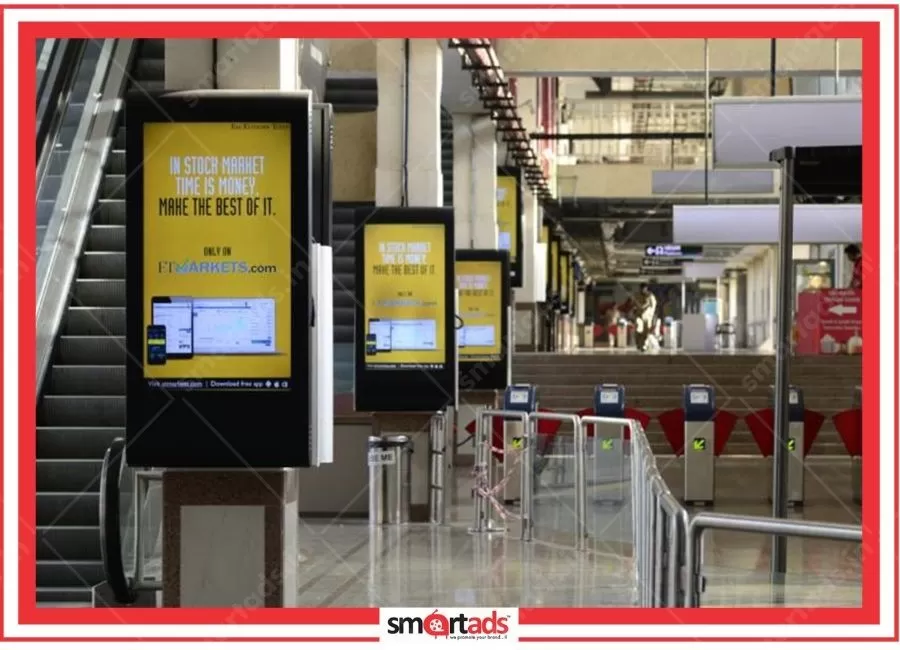
Entry Exit Panel
8 ft x 4 ft
Bright and vibrant multicolored letterin
Rate per Panel / 1 Month
Min Requirement is 3 Panel
₹48000.00
Showing 1 to 4 of 4 Results
MEDIA DETAILS
8 ft x 4 ft
Bright and vibrant multicolored letterin
Rate per Panel / 1 Month
Min Requirement is 3 Panel
₹48000.00
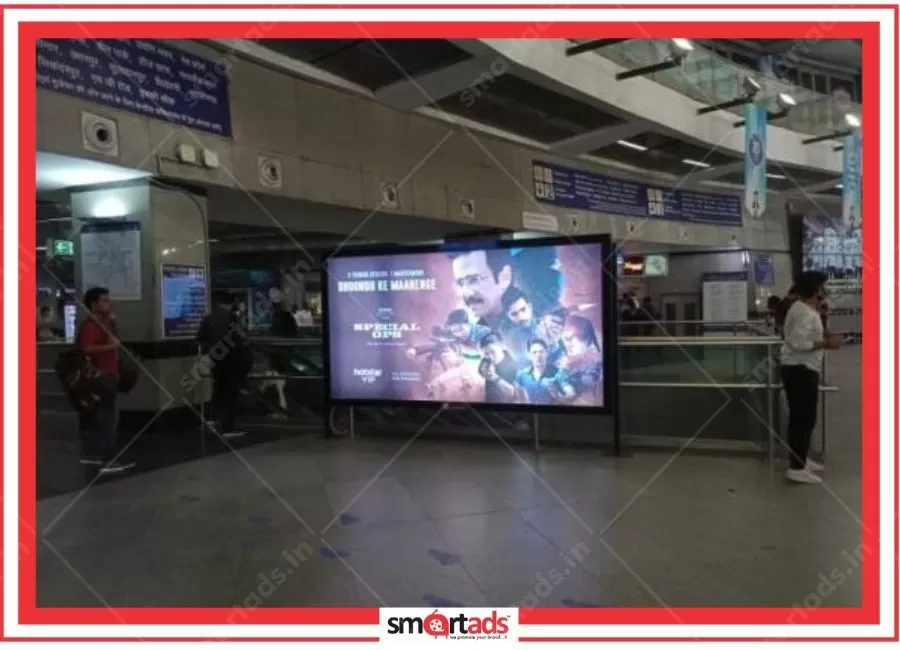
10 ft X 5 ft
A new wide wall system designed to accom
Rate per Panel / 1 Month
Min Requirement is 3 Panel
₹50000.00
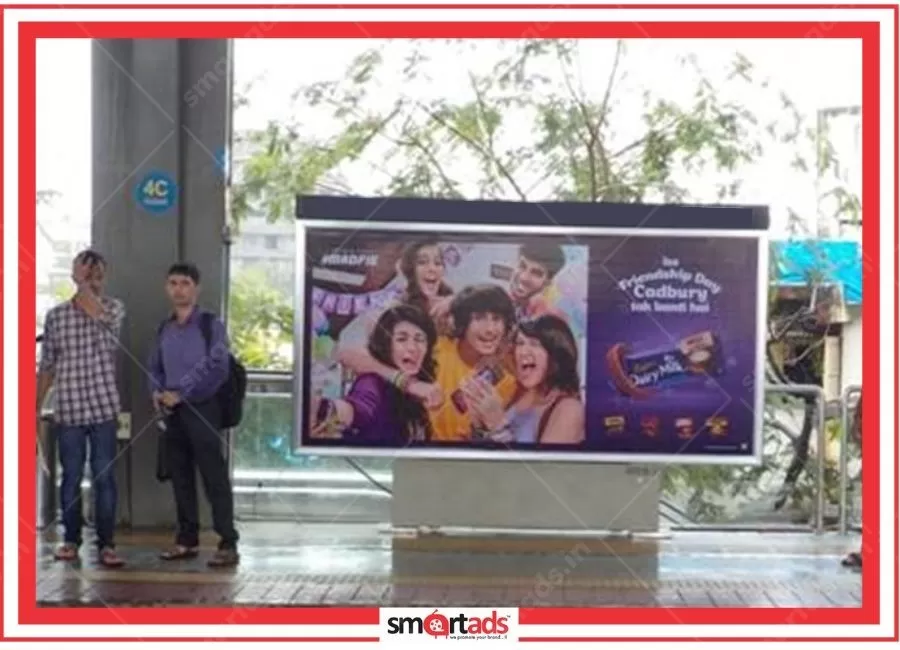
8 ft x 4 ft
A raised flooring or other horizontal su
Rate per Panel / 1 Month
Min Requirement is 3 Panel
₹35000.00
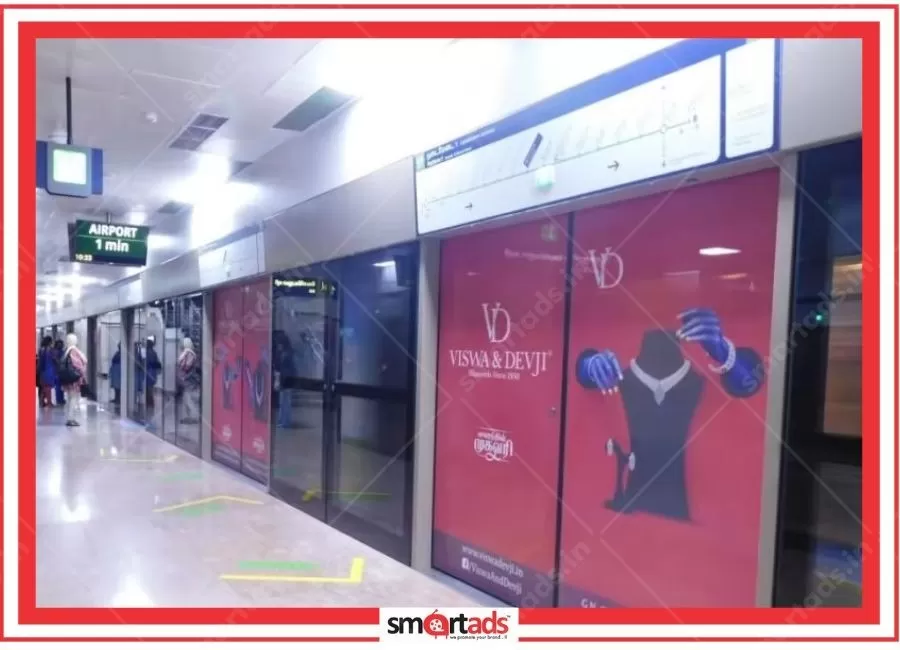
7 ft x 4 ft
Also known as platform edge doors (PEDs)
Rate per Plateform / 1 Month
Min Requirement is 1 Station
₹1200000.00
MEDIA REACH

MinimumQty :
10
EstimateReachPeople :
15 Million
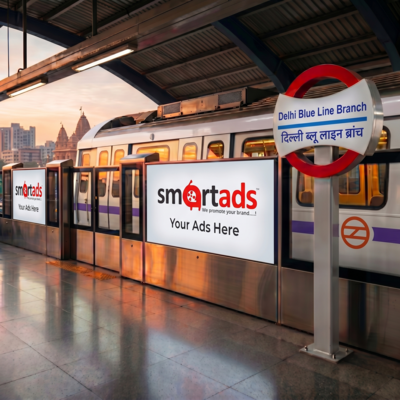
Most brand managers we speak to have a clear mental map of Delhi Metro advertising — they think Yellow Line, they think Blue Line Main, they think the big interchange stations at Rajiv Chowk or Kashmere Gate. What almost nobody thinks about, at least not until we show them the numbers, is the Blue Line Branch running from Yamuna Bank to Vaishali. That corridor, quietly carrying hundreds of thousands of East Delhi and Ghaziabad NCR commuters every single day, is one of the most cost-efficient transit media advertising opportunities we have come across in the entire DMRC network.
The audiences here are not the same as what you find on the main trunk lines; they are hyper-specific, geographically concentrated, and — frankly speaking — far less cluttered with competing brand messages than stations like Rajiv Chowk or Connaught Place, which have been sold out to advertisers for years. If your brand needs to speak to working professionals from Indirapuram, Vaishali, Vasundhara, or East Delhi, metro station advertising in Delhi Blue Line Branch is not just an option — it is arguably the most efficient way to do it.
The Delhi Metro Blue Line Branch, officially designated as Line 4 within the DMRC network, is a spur that branches off from Yamuna Bank station and runs eastward through East Delhi before crossing into Ghaziabad NCR territory, terminating at Vaishali. This branch is distinct from the Blue Line Main (Line 3), which runs from Dwarka Sector 21 in the west all the way to Noida Electronic City in the east; the branch line takes a separate trajectory that serves a different and quite distinct commuter catchment altogether.
The stations covered under the Delhi Metro Blue Line Branch, in sequence from the interchange point, are Yamuna Bank, Laxmi Nagar, Nirman Vihar, Preet Vihar, Karkarduma, Anand Vihar ISBT, Kaushambi, and finally Vaishali — which serves as the terminal station and the primary gateway for Ghaziabad's western residential belt. Mayur Vihar Phase-1 is technically part of the broader Blue Line network and sits adjacent to this corridor, making it relevant context for advertisers planning campaigns across the eastern stretch. At SmartAds, we always tell our clients that understanding the geography of this branch is the first step to understanding why Line 4 advertising works so differently from advertising on the main trunk.
What makes this branch particularly interesting from a media planning standpoint is that Anand Vihar ISBT station functions as a major interchange — not just with other Metro lines, but with the inter-state bus terminal and the Anand Vihar Railway Terminal, which is one of the busiest railway stations in Delhi. That convergence of transit modes at a single point creates a captive audience advertising environment that very few other stations in the entire DMRC network can replicate; the dwell time at Anand Vihar is measurably higher than at most other Blue Line Branch stations, which translates directly into better brand recall for advertisers who place their media there.
The thing most brands miss when evaluating transit media advertising is that reach without relevance is just noise. The Delhi Metro Blue Line Branch delivers something genuinely rare in OOH advertising Delhi — a geographically concentrated, demographically consistent audience that you can profile with reasonable precision. The commuters on this branch are overwhelmingly residents of East Delhi localities like Preet Vihar, Nirman Vihar, and Laxmi Nagar, as well as Ghaziabad NCR residents from Kaushambi, Vaishali, Indirapuram, and Vasundhara — a population that skews heavily toward middle-income and upper-middle-income working professionals, which is exactly the sweet spot for categories like FMCG, education, fintech, real estate, and healthcare.
Daily ridership on the Blue Line Branch is a figure that surprises most first-time advertisers; the combined footfall across all Blue Line Branch stations is estimated to be in the range of three to four lakh passenger trips per day, with Anand Vihar ISBT and Vaishali metro station consistently registering the highest individual station counts. To put that in context, a single month-long backlit panel advertising campaign at Vaishali metro station — which is a terminal station where commuters spend more time waiting and navigating — can deliver gross impressions that would cost significantly more to replicate through digital display advertising targeted to the same geographic audience. The FICCI-EY Media and Entertainment Report has consistently highlighted transit media as one of the fastest-growing segments within India's OOH advertising market, and the Blue Line Branch is a direct beneficiary of that growth trajectory.
On top of that, there is the clutter argument, which we find ourselves making repeatedly to clients who are conditioned to think bigger is always better. Blue Line branch advertising operates in a comparatively less saturated environment than the main line stations; brands that run station domination campaigns at Karkarduma metro station or Kaushambi metro station are often the only major advertiser visible at those stations during their campaign period, which creates a share-of-voice advantage that is simply impossible to buy on the Yellow Line or at Rajiv Chowk. We worked with a regional fintech brand that specifically chose this corridor over the main Blue Line for exactly this reason — and their post-campaign brand recall surveys showed numbers that their marketing team had never seen from an OOH campaign before.
Metro station branding on the Delhi Blue Line Branch is not a one-format proposition, and this is where a lot of advertisers leave value on the table by thinking too narrowly. The format inventory across Blue Line Branch stations spans everything from large-format backlit panel advertising on concourse walls and platform edges, to pillar branding metro installations, escalator branding metro wraps, staircase branding metro panels, AFC gate branding at entry and exit points, and full station domination packages that allow a single brand to own the visual environment of an entire station for the duration of the campaign.
Backlit panels are the workhorse format of DMRC advertising, and for good reason; they offer high visibility in the artificially lit underground environment, they are available in standardised sizes that make artwork production straightforward, and they are present at virtually every station on the Blue Line Branch from Yamuna Bank to Vaishali. Platform advertising panels are placed along the platform edges and concourse areas, which means they are seen both by passengers waiting for trains and by those moving through the station — a dual-exposure dynamic that static roadside hoardings simply cannot replicate. Concourse advertising, which refers to panels and installations in the ticketing and entry hall areas, captures audiences at a moment when they are stationary and relatively unhurried, which our experience shows correlates with higher message retention.
Beyond static formats, the Blue Line Branch also accommodates more experiential and immersive BTL advertising options. Full train wrap campaigns, where the exterior and sometimes interior of a Metro train is branded entirely in a single advertiser's creative, are available through DMRC's concessionaire arrangements and offer extraordinary visibility not just to station audiences but to the entire catchment along the route. Product sampling kiosks at stations like Vaishali and Anand Vihar, which see high footfall and have sufficient concourse space, allow brands to combine awareness with direct consumer engagement — a combination that is particularly effective for FMCG education fintech metro ads categories where trial drives conversion. Metro smart card branding, metro jingle audio advertising played through station PA systems, and platform screen door branding are additional formats that, when used in combination, can create a genuinely immersive brand experience; at SmartAds, we have seen this kind of multi-format approach deliver brand recall scores that outperform single-format campaigns by a factor of two to three times.
Frankly speaking, this is the question every client asks first, and it is also the question that most agency websites refuse to answer directly — which is frustrating for media planners trying to build a budget case for their management. We will be honest about what the numbers look like, with the caveat that DMRC advertising rates are subject to periodic tender revisions and the figures we share here reflect the general market range rather than a fixed rate card.
For a standard backlit panel at a mid-tier Blue Line Branch station like Karkarduma metro station or Nirman Vihar, the monthly cost works out to somewhere in the ballpark of ₹25,000 to ₹50,000 per panel, depending on panel size, position within the station, and the duration of the campaign — longer campaigns typically attract better rates, and this is where working with an experienced advertising agency Delhi metro partner makes a real difference in what you actually end up paying. At premium interchange stations like Anand Vihar metro station, which carries the interchange station advertising premium by virtue of its multi-modal traffic, the same format can cost anywhere from ₹60,000 to ₹1.2 lakh per panel per month; the premium is justified by the significantly higher commuter footfall and the longer average dwell time at that station. Vaishali metro station, as a terminal station with a large captive waiting audience, sits in a similar premium tier.
For larger format installations — pillar branding metro, full station domination packages, or concourse advertising that wraps multiple surfaces — the investment naturally scales up, but so does the impact. A station domination campaign at Anand Vihar, covering platform advertising, concourse panels, pillar branding, and AFC gate branding simultaneously, can be executed in the range of ₹8 lakh to ₹15 lakh per month for a full takeover; that number sounds significant until you compare it to what a comparable share-of-voice campaign would cost on digital platforms targeting the same East Delhi and Ghaziabad NCR audience at the same frequency. The CPM on a well-executed metro station branding campaign at Vaishali or Anand Vihar works out to roughly ₹8 to ₹15 per impression, which is a number that surprises most first-time advertisers when they compare it to what they are paying for Instagram reach in the same geography. For small and medium businesses — SMB small business metro advertising is something we actively encourage — entry-level campaigns with a single panel at a standard station can be structured with a minimum campaign duration of four weeks, which keeps the commitment manageable while still delivering meaningful reach.
Not all eight stations on the Delhi Metro Blue Line Branch are created equal from an advertising standpoint, and understanding the hierarchy of commuter footfall is essential to allocating your budget intelligently. Anand Vihar ISBT metro station sits at the top of the footfall pyramid for this branch, and by a considerable margin; its role as a multi-modal interchange connecting Metro, inter-state buses, and the Anand Vihar Railway Terminal means that the daily passenger throughput here includes not just regular Metro commuters but also intercity travellers, which creates an unusually diverse and high-volume audience for advertisers.
Vaishali metro station is the second major anchor of the branch from a footfall perspective; as the terminal station for Line 4, it serves as the primary Metro access point for a large residential population spread across Vaishali, Indirapuram Vaishali audience catchment, and parts of Vasundhara — a catchment that the Dentsu e4m Report on urban media consumption has consistently identified as one of the highest-aspiration, high-purchasing-power suburban belts in the NCR. Kaushambi metro station, which is technically in Ghaziabad but serves a dense commercial and residential cluster, also registers strong daily ridership and is particularly relevant for brands targeting the Ghaziabad NCR advertising market. What we tell our clients at SmartAds is to think of these three stations — Anand Vihar, Vaishali, and Kaushambi — as the premium tier of the Blue Line Branch, and to treat the remaining stations as a secondary tier that offers excellent value for brands with tighter budgets or those looking to build frequency rather than raw reach.
Karkarduma metro station occupies an interesting middle position; it serves a mixed catchment of residential and commercial commuters from East Delhi, and its footfall, while lower than the three premium stations, is consistent throughout the day rather than peaking only in morning and evening rush hours — a characteristic that makes it well-suited for certain categories like retail, quick-service restaurants, and local services brands that benefit from sustained visibility rather than peak-hour spikes. Laxmi Nagar and Preet Vihar stations serve dense East Delhi residential and commercial neighbourhoods and are particularly effective for hyperlocal advertising Delhi campaigns targeting those specific micro-markets; a retail client in East Delhi that we worked with ran a four-week backlit panel advertising campaign at Laxmi Nagar and Preet Vihar simultaneously, and reported a measurable uplift in walk-in traffic that they directly attributed to the Metro campaign through a post-campaign customer survey.
The audience profile of the Delhi Metro Blue Line Branch is one of the most compelling arguments for advertising here, and it is also one of the most misunderstood. A lot of planners assume that the Ghaziabad NCR advertising audience is somehow less premium than a Delhi audience, which is a misconception that the data simply does not support; the residential catchments of Vaishali, Indirapuram, and Vasundhara are home to a large and growing population of working professionals, dual-income households, and aspirational middle-class families whose consumption behaviour closely mirrors that of their counterparts in South Delhi or Noida.
The working professionals commuters who use the Blue Line Branch daily are predominantly in the 25-to-45 age bracket, which is the primary target demographic for categories ranging from financial services and insurance to real estate, automobiles, consumer electronics, and online education. The GroupM TYNY Report on urban media consumption has noted that Metro commuters in NCR satellite cities are among the most receptive audiences for brand messaging, partly because the commute itself — typically 30 to 60 minutes each way — creates extended exposure windows that are simply not available in other OOH advertising Delhi formats. Urban audience advertising India research consistently shows that transit media environments generate higher message recall than roadside formats, and the captive audience advertising dynamic of a Metro station, where passengers are stationary and have limited alternative stimuli, amplifies this effect further.
On top of that, the Blue Line Branch audience includes a significant proportion of students and young professionals who are first-generation Metro users — a demographic that is highly brand-aware, digitally active, and likely to amplify brand messages through social media if the creative is compelling enough. We have found that brands in the FMCG education fintech metro ads categories perform particularly well on this corridor because the audience is both the right age and the right mindset for these categories; an education brand we worked with ran a station domination campaign at Vaishali metro station during the admission season, combining platform advertising with concourse panels and a product sampling kiosk, and achieved a cost-per-lead that was roughly 40% lower than what their digital campaigns were delivering for the same target audience in the same geography.
DMRC advertising is managed through a concessionaire model, which means that the rights to sell and manage advertising inventory at Delhi Metro stations are held by private companies that have won tenders from DMRC rather than being sold directly by the corporation itself. TDI International India (P) Limited has historically been one of the primary concessionaires for a significant portion of the DMRC network, including sections of the Blue Line; other players who operate in this space include various advertising media companies that have won specific station or format concessions through the DMRC tender process.
The DMRC tender schedule for advertising concessions typically runs in multi-year cycles, and the inventory is divided into what are broadly referred to as Schedule I and Schedule II categories — Schedule I covering the larger, more prominent formats like platform advertising panels, concourse advertising, and station domination packages, while Schedule II covers smaller or supplementary formats. Understanding which concessionaire holds the rights for which station and which format is genuinely important for advertisers, because booking through the wrong intermediary can result in delays or, in some cases, campaigns that are not properly authorised; this is one area where working with an experienced advertising agency Delhi metro partner like SmartAds adds real value, because we have established relationships with the relevant concessionaires and understand the current state of the tender landscape.
DMRC approval for advertising campaigns involves a content review process, which is administered by the Central Industrial Security Force (CISF) and DMRC's own compliance team; all creative artwork must be submitted for approval before installation, and there are specific content restrictions — political advertising, certain categories of financial products, and content deemed inappropriate for a public transit environment are among the categories that face additional scrutiny or outright restriction. Advertising campaign booking DMRC timelines typically require a lead time of two to four weeks from final artwork submission to campaign going live, which is a planning consideration that advertisers often underestimate; we have seen campaigns miss their intended launch windows because the artwork was submitted too close to the desired start date, which is why we build a compliance buffer into every campaign timeline we manage.
The distinction between static backlit panel advertising and digital OOH screens metro installations is more consequential than most advertisers initially appreciate, and it affects not just the visual impact of the campaign but also the booking process, the minimum spend, and the creative strategy. Static backlit panels — which remain the dominant format across most Blue Line Branch stations — offer the advantage of 24/7 single-brand exclusivity at a fixed location; your creative is the only thing displayed on that panel for the duration of your campaign, which means there is no rotation, no share-of-voice dilution, and no risk of your message being immediately followed by a competitor's.
DOOH metro advertising, where digital screens cycle through multiple advertisers' content in a loop, is available at select stations on the Blue Line Branch, though the availability is more limited here than on the main Blue Line or the Yellow Line; Anand Vihar and Vaishali metro station are among the stations where digital OOH screens have been installed, and the inventory here is managed through the relevant concessionaire's digital platform. The CPM economics of DOOH metro advertising are different from static — you are typically buying a share of the screen's daily loop rather than exclusive ownership of a surface — which makes the entry cost lower but the per-impression exclusivity lower as well. The GroupM TYNY Report has noted that programmatic DOOH buying is gaining traction in India's metro advertising market, and while full programmatic buying for DMRC inventory is not yet as mature as it is in Western markets, the direction of travel is clearly toward more flexible, data-driven buying models.
What we tell clients who are weighing static versus DOOH is that the choice should be driven by campaign objective rather than budget alone. If the goal is sustained brand presence and high frequency among a consistent daily commuter audience — which is the case for most brand-building campaigns — static backlit panels deliver better value because the exclusive ownership of a surface creates a mental association between the location and the brand that builds over time. If the goal is a time-sensitive promotion, a product launch, or a campaign that requires creative rotation — for example, a brand that wants to run different messages on different days of the week — DOOH metro advertising offers the flexibility that static simply cannot. We have run campaigns using both formats simultaneously at Anand Vihar metro station, combining a static station domination package with DOOH screen placements, and the combination consistently outperforms either format used in isolation on brand recall metrics.
The booking process for metro station advertising in Delhi Blue Line Branch is more structured than most other OOH advertising Delhi categories, and understanding the steps in advance saves a significant amount of time and frustration. The first step is identifying the specific stations, formats, and campaign duration you want — which sounds obvious but is actually where most advertisers need guidance, because the format and station choices need to be matched to both the campaign objective and the available inventory, which changes as other advertisers book and release space.
Once the station and format selection is confirmed, the booking is placed with the relevant DMRC advertising concessionaire — in practice, this means either approaching TDI International India directly or working through an authorised advertising agency Delhi metro partner that has a booking relationship with the concessionaire. The latter route is almost always faster and more cost-effective, because agencies typically have pre-negotiated rates and existing relationships that can expedite the approval process. After the booking is confirmed, the artwork production and DMRC approval artwork specs compliance process begins; artwork must conform to DMRC's technical specifications for the specific format being used, which include requirements around file format, resolution, colour profile, and content guidelines. The DMRC compliance and artwork submission process typically takes one to two weeks if the creative is straightforward, though complex formats like vinyl wrap metro station installations or full train wrap campaigns require longer lead times.
The campaign then goes live on the confirmed start date, with installation typically handled by the concessionaire's empanelled vendors; monitoring and proof-of-performance documentation — which includes installation photographs and periodic condition checks — is something that a good agency partner will manage on your behalf. Metro advertising minimum campaign duration for most formats on the Blue Line Branch is four weeks, though some premium formats and station domination packages are sold on a monthly basis with a minimum of one month. At SmartAds, our campaign management process includes a post-installation audit within the first 48 hours to verify that all panels are correctly installed and in good condition — a step that sounds basic but which catches issues early enough to be corrected without losing campaign days.
The answer to this question is more nuanced than the generic "all brands benefit from Metro advertising" response that you will find on most agency websites. The Blue Line Branch specifically over-indexes for certain categories because of its audience profile and geographic catchment, and understanding this specificity is what separates a well-targeted campaign from a generic one. Real estate brands targeting buyers and renters in East Delhi and Ghaziabad NCR are among the most natural advertisers on this corridor; the commuters at Vaishali, Kaushambi, and Anand Vihar are precisely the audience that residential developers in those micro-markets need to reach, and the proximity of the advertising to the actual residential catchment creates a relevance that amplifies message effectiveness.
Education brands — particularly those offering professional courses, competitive exam preparation, and online learning platforms — perform exceptionally well on the Blue Line Branch because the student and young professional demographic that dominates this corridor is actively seeking upskilling opportunities; we have seen education brands achieve cost-per-inquiry figures on Metro station branding campaigns that rival their best-performing digital channels, which is a comparison that tends to get management's attention quickly. FMCG education fintech metro ads categories are well-represented in the advertiser mix on this corridor, and for good reason; fintech brands targeting the aspirational middle-class audience of Indirapuram, Vaishali, and Vasundhara find that the Blue Line Branch delivers both the right demographic and the right mindset — these are consumers who are actively making financial decisions around savings, insurance, and investment products.
Healthcare, quick-service restaurants, consumer electronics, and automobile brands also feature prominently in the advertiser mix on the Blue Line Branch; the automotive category in particular benefits from the fact that many commuters on this branch are car owners or aspiring car owners who use Metro for their daily commute while keeping their vehicles for weekend and family use. One automotive brand we worked with ran a three-month campaign combining platform advertising at Anand Vihar and Vaishali with a full train wrap on the Line 4 rolling stock; the campaign generated a measurable increase in dealership walk-ins in East Delhi and Ghaziabad, which the brand's sales team confirmed through a post-campaign dealer survey. SMB small business metro advertising is also a growing segment on this corridor — local retailers, coaching institutes, hospitals, and service businesses in East Delhi and Ghaziabad are increasingly recognising that even a single well-placed backlit panel at their nearest Blue Line Branch station can deliver more relevant local reach than a much larger spend on digital platforms.
The honest answer is that metro station advertising in Delhi Blue Line Branch occupies a distinct and largely non-overlapping position in the OOH advertising Delhi media mix, which means the comparison is less about substitution and more about complementarity. Traditional roadside hoardings and unipoles in East Delhi and Ghaziabad offer broad reach but limited audience control; you are buying impressions from everyone who drives or walks past a particular location, which includes a large proportion of people who are simply not your target audience. The Blue Line Branch, by contrast, delivers a self-selected audience of urban commuters who have already demonstrated a certain level of mobility, aspiration, and purchasing power simply by virtue of using the Metro.
Newspaper advertising in East Delhi editions and Ghaziabad supplements offers demographic targeting but declining readership among the 25-to-45 working professional demographic that the Blue Line Branch delivers so effectively; the IRS (Indian Readership Survey) data has shown a consistent multi-year decline in print readership among urban working professionals, which makes transit media advertising an increasingly attractive alternative for brands that previously relied heavily on print. Radio advertising on Delhi and NCR stations reaches a broad geographic audience but offers limited geographic precision and no visual impact; for brands that need to build visual brand identity in a specific geographic market, metro station branding simply outperforms radio on the dimensions that matter most.
Compared to digital advertising targeting the same East Delhi and Ghaziabad NCR audience, metro station advertising on the Blue Line Branch offers something that digital cannot — physical presence in a shared public space, which creates a social proof and legitimacy effect that screen-based advertising does not generate. The TAM AdEx data on transit media advertising has consistently shown that OOH and transit formats generate higher brand trust scores than digital display formats among Indian urban consumers, which is a finding that aligns with our own campaign experience. To be fair, digital and metro advertising work best when they are used together — a brand that runs station domination at Vaishali and simultaneously retargets Metro app users in the same geography with digital ads is effectively creating a multi-touchpoint brand experience that neither medium could deliver alone; this integrated approach is something we actively recommend to clients at SmartAds when the budget allows for it.
Anand Vihar ISBT metro station deserves its own extended discussion because it is genuinely unlike any other station on the Blue Line Branch in terms of the advertising opportunity it represents. The interchange station advertising premium at Anand Vihar is not just about higher footfall — it is about the diversity of that footfall; on any given day, the station sees regular Metro commuters, intercity bus passengers from the ISBT, railway passengers connecting from Anand Vihar Railway Terminal, and a significant number of daily wage workers and informal sector employees who use the bus terminal. That diversity of audience profiles makes Anand Vihar a rare station where a single campaign can simultaneously reach multiple consumer segments, which is particularly valuable for mass-market brands.
Yamuna Bank metro station, while not a terminal or a major commercial hub, is the interchange point between the Blue Line Branch and the Blue Line Main, which means it sees a daily flow of commuters transferring between the two lines; this transfer traffic creates a brief but consistent dwell time that makes Yamuna Bank a surprisingly effective location for platform advertising and concourse advertising placements. Metro co-branding naming rights opportunities — where a brand sponsors or co-brands a station — have been explored at various DMRC stations across the network, and while the Blue Line Branch stations have not been among the most prominent examples of this format to date, the option exists within DMRC's commercial framework and represents an interesting long-term brand equity investment for the right category of advertiser.
Kaushambi metro station, sitting just inside the Ghaziabad border, is the primary Metro access point for one of the densest commercial corridors in the NCR — the Kaushambi market area is a major retail and wholesale hub that draws shoppers and traders from across Ghaziabad and East Delhi, which gives this station a commercial footfall component that is distinct from the purely residential commuter profile of stations like Vaishali or Preet Vihar. For retail brands, FMCG companies, and financial services advertisers targeting the Ghaziabad NCR advertising market, Kaushambi metro station represents a high-value placement that is often overlooked in favour of the more obvious choices at Vaishali or Anand Vihar.
ROI metro advertising is a conversation that requires honesty about what can and cannot be measured, and we prefer to have that conversation upfront rather than making claims we cannot substantiate. What we can say with confidence, based on our own campaign experience and the broader industry data from sources like the FICCI-EY Media Report and the Dentsu e4m advertising industry analysis, is that transit media advertising in the Indian Metro context consistently delivers brand recall rates that outperform most other OOH formats — and the Blue Line Branch, with its relatively lower competitive clutter compared to main line stations, tends to outperform the network average on this metric.
Brand visibility urban commuters research conducted across Indian Metro networks has shown that commuters who see a brand message in a Metro station are significantly more likely to recall that brand unaided 24 hours later compared to commuters who see the same message on a roadside hoarding; the enclosed, controlled visual environment of a Metro station, combined with the repetitive nature of the daily commute, creates a conditioning effect that builds brand recall over time in a way that a single high-impact roadside placement cannot replicate. The captive audience advertising dynamic is real and measurable; daily ridership Blue Line Branch figures, combined with the average commuter frequency of five days per week, mean that a month-long campaign at a station like Vaishali metro station delivers somewhere between 20 and 22 exposures to the same commuter — a frequency level that brand recall research consistently identifies as the threshold above which unaided recall becomes reliable.
Geotargeting metro station campaigns — where the Blue Line Branch advertising is coordinated with digital retargeting of users whose mobile devices have been detected in the station catchment areas — is an emerging practice that we have been experimenting with for select clients, and the early results are genuinely interesting. One retail client in Ghaziabad who ran a four-week backlit panel advertising campaign at Kaushambi and Vaishali metro stations, coordinated with a geofenced digital campaign targeting users in those station catchment areas, saw a combined reach uplift of roughly 35% compared to either medium used in isolation, with a cost-per-reach figure that was meaningfully lower than the digital-only baseline. Hyperlocal advertising Delhi and NCR strategies that combine transit media with digital are, in our view, where the real value lies for brands with moderate budgets and specific geographic targets.
DMRC approval artwork specs are not optional, and getting them wrong is one of the most common — and most avoidable — reasons that campaigns get delayed or rejected. Every format on the Blue Line Branch has specific technical requirements, and while the exact specifications can vary by concessionaire and by format generation (older stations may have different panel dimensions than newer installations), there are consistent principles that apply across the board.
Artwork for backlit panel advertising must typically be submitted as high-resolution print-ready files — generally at 300 DPI or higher for the actual print size, in CMYK colour profile, with bleed allowances as specified by the concessionaire. Vinyl wrap metro station installations, which are used for pillar branding metro and full station domination packages, require additional specifications around material quality and installation method because DMRC has strict requirements about the adhesives and vinyl grades that can be used on station surfaces; non-compliant materials can result in the installation being refused by the CISF inspection team. Content compliance is equally important — DMRC prohibits advertising that could be construed as politically sensitive, advertising for certain categories of financial products without appropriate regulatory disclosures, and any content that CISF deems inappropriate for a public transit environment serving a diverse commuter population.
The DMRC compliance process also includes a post-installation inspection, which means that even after artwork has been approved and installed, the campaign can be stopped if the installation does not meet the physical standards specified in the approval. We have seen this happen with campaigns where the printing vendor used a slightly different material than what was specified in the artwork approval, which triggered a re-inspection requirement; the lesson we took from that experience is that the vendor chain — from artwork approval to printing to installation — needs to be managed as a single integrated process rather than a series of independent handoffs. At SmartAds, our campaign management protocol includes a pre-installation material check and a post-installation compliance audit, which eliminates the most common sources of delay in the DMRC approval and installation process.
Q: Which stations are covered under the Delhi Metro Blue Line Branch (Line 4)?
The Delhi Metro Blue Line Branch, which is Line 4 in the DMRC network, covers eight stations running from Yamuna Bank in the west to Vaishali in the east. In sequence, these are Yamuna Bank, Laxmi Nagar, Nirman Vihar, Preet Vihar, Karkarduma, Anand Vihar ISBT, Kaushambi, and Vaishali. Yamuna Bank is the interchange point with the Blue Line Main (Line 3), making it the junction station where the branch diverges from the main corridor. Each station serves a distinct residential or commercial catchment, and the advertising opportunity at each station is shaped by its specific footfall profile and audience demographics.
Q: What is the daily commuter footfall on the Delhi Blue Line Branch stations?
The combined daily ridership across all Blue Line Branch stations is estimated to be in the range of three to four lakh passenger trips per day, though this figure varies by day of week and season; weekday ridership is significantly higher than weekend ridership, which is a planning consideration for advertisers whose target audience is primarily working professionals. Anand Vihar ISBT and Vaishali metro station are the two highest-footfall stations on the branch, with Kaus
