
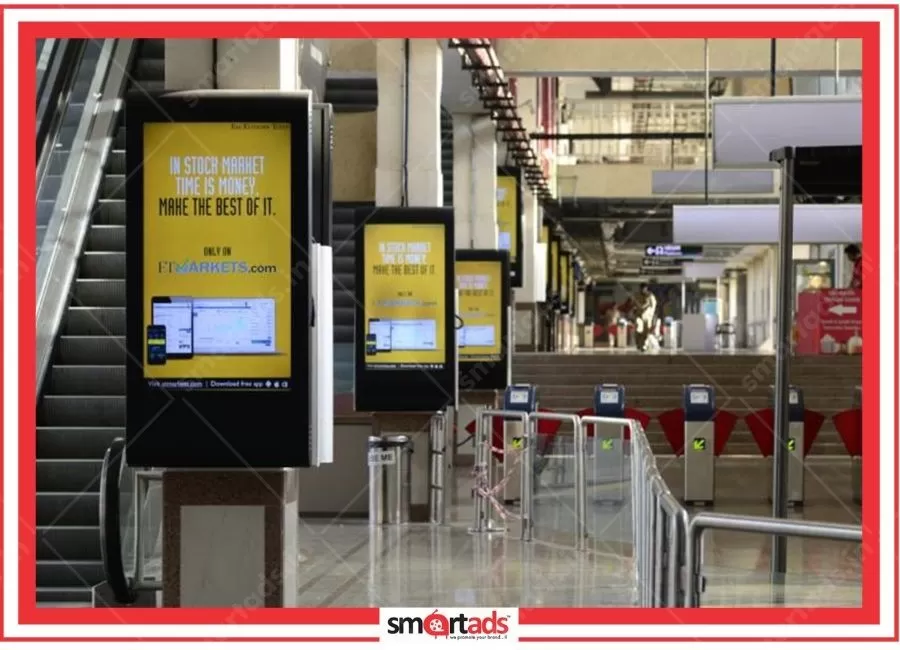
Entry Exit Panel
8 ft x 4 ft
Bright and vibrant multicolored letterin
Rate per Panel / Month
Min Requirement is 3 Panel.
₹48000.00
Showing 1 to 4 of 4 Results
MEDIA DETAILS
8 ft x 4 ft
Bright and vibrant multicolored letterin
Rate per Panel / Month
Min Requirement is 3 Panel.
₹48000.00
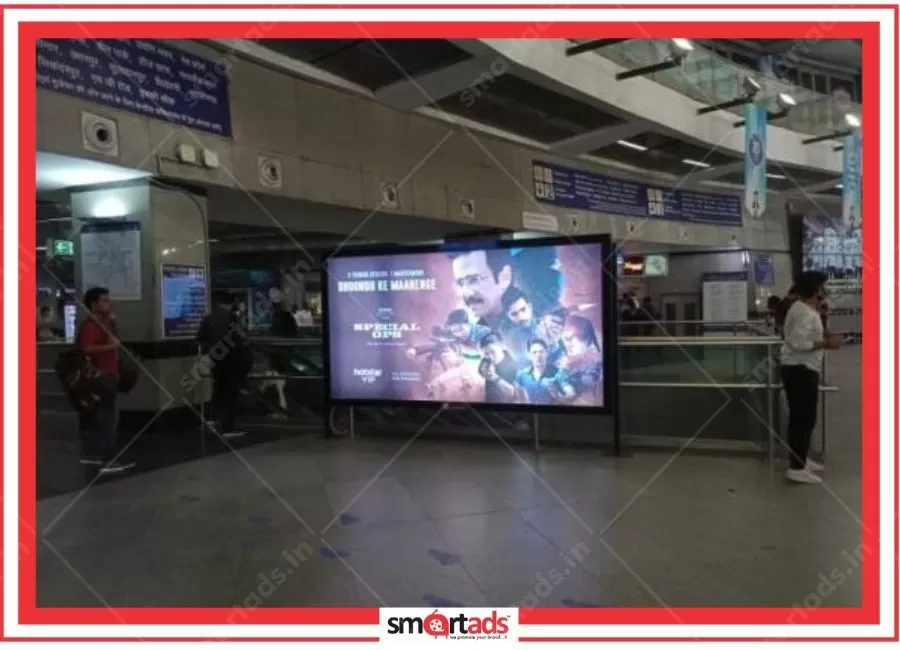
10 ft x 5 ft
A new wide wall system designed to accom
Rate per Panel / Month
Min Requirement is 3 Panel.
₹50000.00
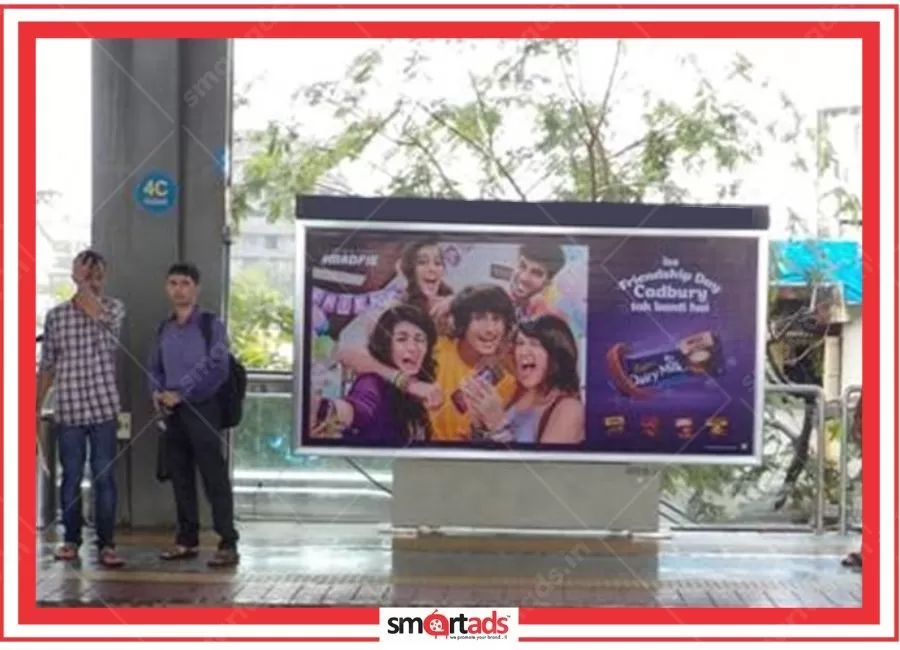
8 ft x 4 ft
A raised flooring or other horizontal su
Rate per Panel / Month
Min Requirement is 3 Panel.
₹35000.00
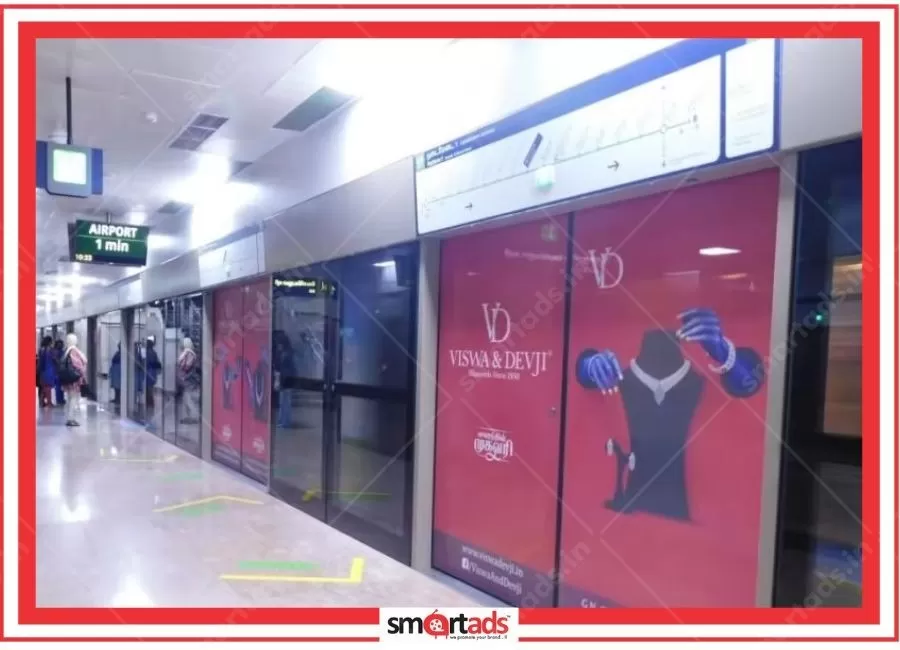
7 ft x 4 ft
Also known as platform edge doors (PEDs)
Rate per Plateform / Month
Min Requirement is 1 Stations.
₹1200000.00
MEDIA REACH

MinimumQty :
10
EstimateReachPeople :
15 Million
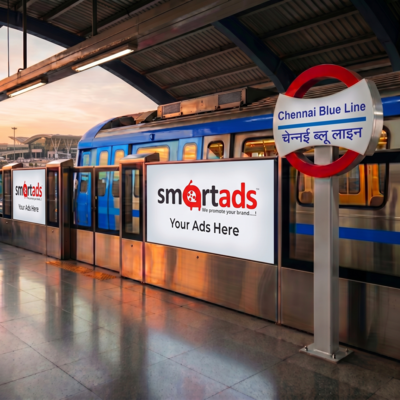
The Chennai Metro Blue Line carries somewhere in the range of 4 to 4.5 lakh commuters every single day — a number that has been climbing steadily since CMRL expanded its operational hours and added frequency on the north-south corridor. What surprises most brand managers when they first sit across the table from us is not the scale of that footfall; it is the quality of it. These are not passive highway drivers glancing at a hoarding for three seconds. These are urban commuters who are standing still, waiting, walking through concourses, and riding trains — with nowhere else to look.
We have been planning metro station advertising campaigns in Chennai for several years now, and the Blue Line consistently delivers one of the strongest dwell-time-to-cost ratios we have seen across any OOH format in Tamil Nadu. That is a claim worth unpacking carefully, which is exactly what this piece sets out to do.
Most brands approach metro advertising the way they approach a large hoarding — they think about size, location, and visibility. What they miss is the architecture of attention that a metro station creates. When a commuter enters a Chennai Blue Line station, they pass through a defined sequence of touchpoints: entry gates, concourse level, escalators, platform edges, and finally the train itself. Each of those zones is a separate advertising environment, which means a single campaign can intercept the same person at five or six distinct moments within a single journey.
The dwell time at Blue Line stations — particularly at interchange and terminal stations — works out to somewhere between four and eight minutes on average, which is a figure that no roadside OOH format can match. A billboard on Anna Salai gets roughly three to five seconds of visual contact from a moving vehicle; a backlit panel on the Koyambedu platform concourse gets the undivided attention of a commuter who has nothing else to do but wait. That is a fundamentally different kind of brand exposure, and it is one of the reasons we at SmartAds consistently recommend metro branding to clients who are trying to build brand recall rather than just raw reach.
On top of that, the audience profile on the Chennai Metro Blue Line skews strongly toward working professionals, students, and urban commuters in the twenty-five to forty-five age bracket — which is the exact demographic that most FMCG, fintech, education, and lifestyle brands are trying to reach. The affluent audience concentration is particularly high at stations near the Chennai International Airport, Guindy, and LIC, where IT sector workers and business travellers form a significant share of daily ridership. Frankly speaking, if you are spending money on digital ads to reach this demographic and ignoring the metro, you are paying twice for the same person.
The Blue Line — officially Corridor 1 of Chennai Metro Rail Limited — runs across a 45 km stretch from Wimco Nagar in the north to Chennai International Airport in the south, covering 26 stations along the way. This north-south corridor passes through some of Chennai's most commercially significant zones: the wholesale markets around Koyambedu, the legal and administrative hub near High Court and Washermenpet, the retail and hospitality belt around MGR Central, and the IT and aviation cluster at Guindy and the Airport station.
Daily ridership on the Blue Line has been reported by CMRL at figures that suggest the system is approaching pre-pandemic peak levels, with the combined Chennai Metro network crossing the 4 lakh daily trips mark on most weekdays. The Blue Line accounts for the majority of this traffic, given that it connects the city's two busiest transit hubs — MGR Chennai Central and the Airport — and passes through Koyambedu, which functions as Chennai's primary inter-city bus terminus. What this means for advertisers is that the Blue Line audience is not just local commuters; it includes a significant share of intercity travellers, tourists, and out-of-station visitors, which broadens the effective reach of any campaign placed here.
Our experience shows that brands often underestimate the cumulative reach that a four-week metro station advertising campaign on the Blue Line generates. When you factor in repeat commuters — people who use the same station five days a week — the effective frequency per individual works out to somewhere between fifteen and twenty exposures over a month-long campaign. That kind of frequency, combined with the captive audience environment, is what drives the brand recall numbers that we see in post-campaign surveys.
The format inventory on the Chennai Blue Line is considerably more varied than most advertisers expect, and the choice of format has a dramatic effect on both cost and campaign outcome. At the broadest level, the formats fall into three categories: static station formats, digital and DOOH formats, and train-based formats — each of which serves a different strategic purpose.
Within the static station category, the most commonly booked options are platform signage panels, which are placed along the length of the platform wall and receive sustained exposure from waiting commuters; pillar branding, which wraps the structural columns of both underground and elevated stations and creates a 360-degree visual presence; concourse advertising, which covers the ticketing and entry-exit zone where footfall is densest; and backlit panels positioned at entry-exit points, escalator surrounds, and fare gate areas. Station domination packages, which bundle multiple formats across a single station into one unified campaign, are particularly popular with brands launching new products or running time-sensitive campaigns, because they create an immersive brand environment that is very difficult to ignore.
The digital out-of-home inventory on the Blue Line has been expanding steadily, with DOOH screens now installed at several high-footfall stations including Koyambedu, Alandur, and MGR Central. These digital screens allow for dynamic content rotation, time-of-day targeting, and creative flexibility that static formats cannot offer — which makes them especially attractive to brands running promotional campaigns or product launches where the creative needs to change frequently. Standees and kiosks are available at concourse level at select stations, and these work particularly well for experiential campaigns where a brand wants to create a physical interaction point. Entry exit zone ads — those panels placed right at the fare gates and station entrance canopies — are among the most sought-after formats because they intercept every single person who enters or exits the station, regardless of which platform they are heading to.
This is a question we get asked almost every week, and the honest answer is that it depends entirely on what the brand is trying to achieve. Interior branding — which covers the panels, overhead strips, door surrounds, and seat-back cards inside the metro coaches — delivers unmatched dwell time. A commuter seated inside a Chennai Blue Line train for a fifteen-minute journey between Wimco Nagar and Central has nowhere to look except the interior of the coach, which means your creative gets repeated, sustained exposure from a captive audience with nothing competing for their attention.
Exterior branding, on the other hand, is about scale and street-level visibility. A full train wrap on a Chennai Metro Blue Line train — where the entire exterior of the coaches is covered in a single brand creative — generates impressions not just from passengers inside the train but from everyone who sees the train moving through elevated sections, from platform observers at stations, and from pedestrians and motorists near elevated stretches of the corridor. Brands like Amazon, Pepsi, Ola, and Airtel have all used Chennai metro train wraps at various points, and the reason is straightforward: a wrapped metro train is essentially a moving billboard that covers the entire north-south length of the city multiple times a day. The cost per impression works out to a figure that compares very favourably with what you would pay for equivalent reach on a static hoarding network.
Our recommendation — and this is what we tell our clients consistently — is to combine interior branding with at least one station domination at a high-footfall stop, rather than choosing one over the other. A retail client in Coimbatore who was launching a new store in Chennai ran exactly this combination: full interior branding across a set of Blue Line coaches paired with a concourse domination at Koyambedu station. The results, measured through footfall tracking and QR code redemptions on the creative, showed a campaign ROI that was roughly two and a half times what the same budget would have delivered on a comparable outdoor hoarding network. The key was the combination of frequency from interior branding and the high-volume intercept at Koyambedu.
Not all 26 stations on the Blue Line are created equal, and station selection is where most media planning decisions either create or destroy value. The stations that consistently generate the highest footfall — and therefore the highest advertising value — are the interchange and terminal nodes, which attract commuters transferring between modes of transport rather than just boarding or alighting.
Koyambedu station is, by a significant margin, the busiest non-terminal station on the Blue Line, because it sits adjacent to Chennai's largest bus terminus and wholesale market complex; commuters transferring from inter-city buses to the metro pass through this station in very large numbers, and the audience here includes both local residents and visitors from across Tamil Nadu. MGR Chennai Central is the northern anchor of the Blue Line's southern extension and connects to the Central Railway Station, which means it captures rail travellers, tourists, and daily commuters in roughly equal measure. Chennai International Airport station at the southern end of the corridor handles a mix of aviation passengers, airline staff, and cargo logistics workers — making it one of the most affluent audience concentrations on any metro line in South India.
Among the mid-corridor stations, Alandur functions as an interchange between the Blue Line and the Green Line, which significantly boosts its footfall beyond what its catchment area alone would suggest; LIC station draws a dense cluster of office-going professionals from the insurance, banking, and government sectors; and High Court station serves the legal community, government office workers, and a substantial walk-in retail catchment from the surrounding Washermenpet and George Town areas. Washermenpet itself, near the northern terminus, is a high-volume station that serves a dense residential and trading population. Our experience shows that brands targeting working professionals tend to get the strongest results from Airport, LIC, and Thousand Lights stations, while brands targeting mass-market consumers and traders find Koyambedu, High Court, and Washermenpet more effective.
Frankly speaking, the lack of transparent pricing is one of the biggest frustrations that brand managers face when they first start exploring metro station advertising in Chennai — and it is a gap we try to address directly. Rates on the Blue Line are managed through a combination of CMRL's own commercial division and exclusive concessionaire arrangements; Mark Metro Group holds the exclusive Phase 1 station branding rights, while JCDecaux India manages the rolling stock advertising rights for train wraps and interior branding.
For static platform signage panels at mid-corridor Blue Line stations, the monthly rate works out to somewhere in the ballpark of ₹30,000 to ₹80,000 per panel depending on size, location, and station category — with high-footfall stations like Koyambedu and Central commanding rates at the upper end of that range. Pillar branding at a single station, which typically covers four to six pillars in a concourse or platform area, is priced somewhere between ₹1.5 lakh and ₹4 lakh per month for a standard four-week campaign. Station domination packages — which bundle platform panels, pillar branding, and concourse elements into a single unified buy — are negotiated as packages and typically start in the range of ₹6 lakh to ₹15 lakh per month for a full station takeover at a premium location.
Train wrap advertising on the Blue Line is a different order of magnitude. A partial train wrap covering two to three coaches typically costs somewhere between ₹8 lakh and ₹15 lakh per month; a full train branding exercise covering an entire rake can go upward of ₹25 lakh to ₹40 lakh per month, which sounds like a large number until you calculate the daily impressions generated by a train that runs the full 45 km stretch multiple times a day. The DOOH digital screens at stations like Koyambedu and Alandur are sold on a per-spot basis, with ten-second slots in a rotation loop priced at roughly ₹15,000 to ₹40,000 per week per screen depending on the station and time-of-day targeting. These are indicative ranges based on our recent campaign bookings; actual rates are subject to negotiation, seasonal demand, and campaign duration, which is why working with an experienced advertising agency that has established relationships with the concessionaires makes a material difference to what you actually end up paying.
The honest answer is that the Blue Line works best for brands whose target audience overlaps with the metro's core commuter base — but that covers a wider range of categories than most people initially assume. The obvious candidates are consumer brands targeting urban professionals: fintech apps, ed-tech platforms, insurance companies, real estate developers, automobile brands, and lifestyle retailers. Muthoot Finance, which was among the first brands to explore semi-naming rights on CMRL stations, understood this early — the metro audience in Chennai skews toward financially active, aspirational urban consumers who are exactly the right audience for financial products.
What a lot of people miss is that the Blue Line is also highly effective for B2B brands, because the commuter base at stations like LIC, High Court, and Thousand Lights includes a very high concentration of business decision-makers, lawyers, government officials, and senior executives. An industrial equipment brand we worked with was initially sceptical about metro advertising, assuming it was purely a consumer channel; after a six-week campaign running backlit panels at LIC and High Court stations, they reported a measurable increase in inbound enquiries from the Chennai market, which they attributed directly to the campaign based on a tracking question added to their sales inquiry form.
Small and medium businesses should not automatically assume that metro station advertising in Chennai is beyond their budget. A targeted single-station campaign at a neighbourhood station like Saidapet or Tollgate — which serves a dense residential catchment — can be structured for as little as ₹1.5 lakh to ₹3 lakh for a four-week run, which is comparable to what you might spend on a mid-tier hoarding in the same area but with significantly better dwell time and audience quality. The key is matching station selection to the brand's geographic target area, which is a planning exercise that we at SmartAds carry out as a standard part of any metro advertising brief.
The booking process for Blue Line metro advertising is more structured than most OOH formats, which is both a feature and a friction point. Because CMRL has granted exclusive rights to specific concessionaires — Mark Metro Group for station formats and JCDecaux India for rolling stock — the entry point for any campaign is through these authorised partners or through an advertising agency that has active relationships with them.
The process typically begins with a brief that specifies the campaign objective, target stations, preferred formats, campaign duration, and budget range. Based on this brief, the concessionaire prepares an availability check — because premium stations and formats are frequently booked months in advance, particularly around festive periods like Pongal, Diwali, and the IPL season, when demand spikes sharply. Once availability is confirmed, a formal booking is made with a purchase order and advance payment, after which the creative compliance review process begins.
The creative compliance stage is where campaigns often get delayed, and it is worth understanding this upfront. CMRL has specific guidelines around creative content — which we will cover in the next section — and any creative that does not meet these guidelines will be sent back for revision, which can add one to two weeks to the launch timeline. From confirmed booking to campaign go-live, the realistic timeline is somewhere between three and five weeks for static formats, and four to six weeks for train wraps, which require physical printing, application, and inspection. Our standard advice to clients is to begin the booking process at least six to eight weeks before the intended launch date, particularly for high-demand stations or formats.
Creative compliance on the Chennai Metro Blue Line is governed by CMRL's advertising policy, which is administered through the exclusive concessionaires and is more stringent than what most OOH formats require. The guidelines cover content, material specifications, installation standards, and maintenance obligations — and non-compliance at any stage can result in creative rejection, campaign suspension, or financial penalties.
On the content side, CMRL prohibits advertising for tobacco, alcohol, and certain categories of political or religious content; this is standard across most metro systems in India. What is less commonly understood is that CMRL also has specific requirements around creative quality — low-resolution artwork, poorly designed creatives, or content that is deemed inconsistent with the metro's positioning as a premium public infrastructure will be flagged during the review process. Brands are required to submit print-ready artwork at specified resolutions, typically 300 DPI or higher for static formats, along with material specification sheets confirming that the printing materials used meet CMRL's standards for fire safety, adhesion, and durability.
For train wrap advertising, the compliance process is considerably more involved, because the creative must be mapped precisely to the coach dimensions, door positions, window cutouts, and safety markings of the specific train model — which requires coordination between the brand's creative agency, the printing vendor, and JCDecaux India's technical team. We have seen this process go smoothly when all parties are aligned from the start, and we have also seen it go sideways when a brand tries to manage the process independently without agency support. The installation itself is carried out during non-operational hours at the depot, and the finished wrap is inspected by CMRL before the train is cleared for service. Naming rights — a format that Muthoot Finance pioneered on CMRL — involve a separate, longer-form approval process that includes CMRL board-level sign-off.
Chennai's outdoor advertising market is competitive and well-developed, with a large inventory of hoardings along Anna Salai, OMR, ECR, and the inner city arterials. A premium unipole on Anna Salai might cost somewhere between ₹3 lakh and ₹8 lakh per month depending on size and exact location — which, on the surface, looks comparable to what you might pay for a station domination on the Blue Line. The comparison, however, is misleading if you stop at the rate card.
The fundamental difference is in audience quality and dwell time. A hoarding on a busy Chennai road reaches a very large number of people, but it reaches them for roughly three to five seconds each, in a moving vehicle, competing with traffic, signage, and the general visual noise of an Indian arterial road. A platform panel at Koyambedu or a concourse domination at MGR Central reaches a smaller absolute number of people, but reaches them for four to eight minutes in an environment where your creative is one of very few things competing for their attention. The CPM for metro station advertising in Chennai works out to roughly ₹8 to ₹15 per impression depending on format and station — a number that surprises most first-time advertisers when they compare it to what they are paying for Instagram reach, which often runs higher for the same demographic.
The other dimension where metro advertising outperforms traditional OOH is measurability. Hoarding campaigns are notoriously difficult to attribute; metro campaigns, particularly those using QR codes, Bluetooth beacon integrations, or DOOH screens with impression counters, generate data that can be used to calculate campaign ROI with reasonable precision. An automotive brand we worked with ran a parallel campaign — identical creative, identical duration — on a set of Anna Salai hoardings and a Blue Line station domination package at Airport and Guindy stations. The metro campaign generated three times the number of QR code scans and twice the number of test drive bookings attributable to the OOH exposure, at roughly eighty percent of the hoarding campaign's cost. That is a result that is difficult to argue with.
Brand recall from metro advertising is consistently higher than from most other OOH formats, and there is a structural reason for this: the captive audience environment forces sustained engagement with the creative in a way that no other medium outside of cinema can replicate. Post-campaign brand recall surveys conducted across several of our Chennai Blue Line campaigns have shown aided recall rates in the range of sixty to seventy-five percent among regular commuters who were exposed to the campaign — which is significantly higher than the thirty to forty-five percent typically reported for roadside OOH in comparable Indian markets.
The measurement methodology we use for Blue Line campaigns combines several approaches. Footfall data from CMRL's ticketing system can be used to establish the base audience for any given station and campaign period. QR code tracking on static creatives provides a direct measure of audience engagement. For DOOH campaigns, impression counters on the digital screens provide play-log data that can be audited against booking specifications. And for train wrap campaigns, GPS-based route tracking combined with ridership data allows us to calculate total impressions generated over the campaign period. None of these methods is perfect in isolation, but together they provide a reasonably robust picture of campaign performance that can be presented to management as justification for the media spend.
The upcoming Blue Line extension toward Kilambakkam — which is expected to add several new stations to the southern end of the corridor — will significantly expand the advertising inventory on the line and bring in a new catchment of commuters from the rapidly developing southern suburbs of Chennai. Brands that establish early presence on the extension stations will benefit from lower rates and less competitive inventory before the market matures, which is an opportunity that we are already discussing with several of our clients who have long-term media plans in Chennai.
Q: What is metro station advertising on the Chennai Blue Line and how does it work?
Metro station advertising on the Chennai Blue Line refers to the placement of brand communications across the physical infrastructure of the 26 stations and the rolling stock of the Blue Line corridor operated by Chennai Metro Rail Limited. The formats range from static backlit panels, pillar branding, and concourse displays at station level to interior coach panels, overhead strips, and full exterior train wraps on the metro trains themselves. The process works through CMRL's authorised concessionaires — Mark Metro Group for station formats and JCDecaux India for train-based formats — who manage inventory, creative compliance, installation, and maintenance. An advertiser or their agency submits a brief, receives an availability and rate proposal, books the space with advance payment, submits artwork for compliance review, and then the campaign is installed and goes live. The entire process, from brief to live campaign, typically takes three to six weeks depending on the format and complexity of the creative.
Q: Which Chennai Blue Line metro stations are best for advertising due to high footfall?
The stations that consistently generate the highest footfall on the Blue Line are Koyambedu, MGR Chennai Central, Chennai International Airport, Alandur, LIC, High Court, and Washermenpet. Koyambedu draws the largest volume because of its adjacency to the city's main bus terminus; MGR Central captures railway passengers and tourists; the Airport station serves aviation travellers and IT corridor workers; and Alandur functions as the interchange between the Blue Line and the Green Line. The best station for a specific campaign depends on the brand's target audience — a financial services brand might prioritise LIC and High Court, while a consumer goods brand targeting mass-market shoppers would find Koyambedu and Central more effective.
Q: What ad formats are available for advertising at Chennai Blue Line metro stations?
The format inventory on the Blue Line includes platform signage panels along the platform walls, pillar branding wrapping the structural columns at concourse and platform level, concourse advertising covering the ticketing and entry-exit zones, backlit panels at entry-exit points and escalator surrounds, DOOH digital screens at select high-footfall stations, standees and kiosks at concourse level, and station domination packages that bundle multiple formats into a unified campaign. On the train side, the formats include interior coach panels, overhead strip panels, door surrounds, seat-back cards, partial train wraps covering specific coach sections, and full train branding covering the entire exterior of a rake. Each format serves a different strategic purpose, and the optimal mix depends on the campaign objective, budget, and target audience.
Q: How much does it cost to advertise at a Chennai Blue Line metro station?
Rates vary significantly by format, station category, and campaign duration. Static platform panels at mid-tier stations are priced in the ballpark of ₹30,000 to ₹80,000 per panel per month; pillar branding at a single station runs somewhere between ₹1.5 lakh and ₹4 lakh per month; and full station domination packages at premium stations like Koyambedu or Central start at roughly ₹6 lakh and can go up to ₹15 lakh per month. DOOH screen slots are sold per spot in a rotation, with weekly rates in the range of ₹15,000 to ₹40,000 per screen. Train wraps start at approximately ₹8 lakh per month for a partial wrap and can exceed ₹40 lakh per month for a full rake branding exercise. These are indicative ranges; actual rates depend on negotiation, seasonal demand, and campaign tenure.
Q: What is the daily ridership and reach of the Chennai Metro Blue Line for advertisers?
The Chennai Metro Blue Line carries an estimated four to four and a half lakh commuters daily on weekdays, with the number rising during festive periods and declining slightly on Sundays. Over a standard four-week campaign, the cumulative reach at a high-footfall station like Koyambedu or Central can exceed thirty to forty lakh gross impressions, accounting for both unique visitors and repeat commuters. The effective frequency for a regular commuter who uses the same station five days a week works out to roughly fifteen to twenty exposures per month, which is a level of frequency that drives strong brand recall in post-campaign measurement.
Q: How is metro station advertising on the Blue Line different from train wrap advertising?
Metro station advertising refers to formats placed within the physical station infrastructure — platforms, concourses, pillars, entry-exit zones — and reaches commuters while they are stationary and waiting. Train wrap advertising, by contrast, covers the exterior or interior of the metro coaches themselves and reaches passengers during their journey. The key differences are in dwell time, audience, and visibility: station advertising intercepts all commuters who pass through the station regardless of their destination, while train advertising reaches only those who board and ride the specific wrapped train. Station formats offer a more targeted, location-specific reach; train wraps offer broader corridor-wide visibility including from external observers who see the train moving through elevated sections.
Q: Can I target only specific stations on the Chennai Metro Blue Line for my campaign?
Yes, and this is one of the significant advantages of metro station advertising over corridor-wide OOH formats. Advertisers can select individual stations or clusters of stations based on their geographic target area, audience profile, or budget constraints. A brand targeting the IT corridor might select only Airport, Guindy, and LIC stations; a brand targeting the trading and wholesale community might focus on Koyambedu and High Court. The concessionaires allow station-specific bookings for most static formats, though some package deals offer discounts for multi-station campaigns. Our recommendation is always to define the audience first and then select stations based on catchment area analysis, rather than choosing stations based on name recognition alone.
Q: What are the CMRL guidelines and approval process for advertising on the Blue Line?
CMRL prohibits advertising for tobacco, alcohol, and political or religious content. All creatives must be submitted in print-ready format at the specified resolution and must meet material standards for fire safety, adhesion, and durability. The approval process is managed through the concessionaires and typically takes five to ten working days for static formats; train wrap creatives require additional technical review to ensure correct mapping to coach dimensions and safety markings. Naming rights and station domination packages require CMRL-level approval and have a longer review timeline. Brands are advised to submit final artwork at least three weeks before the intended campaign launch to allow sufficient time for review and any required revisions.
Q: How long does it take to launch a metro station ad campaign on the Chennai Blue Line?
For static station formats, the realistic timeline from confirmed booking to campaign go-live is three to five weeks, which includes creative compliance review, printing, and installation. For train wrap campaigns, the timeline extends to four to six weeks because of the additional steps involved in technical mapping, large-format printing, depot installation, and CMRL inspection before the train is cleared for service. DOOH campaigns can be launched more quickly — sometimes within one to two weeks — because they do not require physical printing or installation. Our standard advice is to begin the planning and booking process at least six to eight weeks before the intended campaign launch date, particularly for festive or event-linked campaigns where timing is critical.
Q: Is Chennai Blue Line metro advertising suitable for small and medium businesses?
Yes, though the format and station selection need to be calibrated to the budget. A single-station campaign at a neighbourhood station like Saidapet, Tollgate, or Thousand Lights — using two to four platform panels or a pillar branding package — can be structured for as little as ₹1.5 lakh to ₹3 lakh for a four-week run, which is comparable to a mid-tier hoarding in the same area. The advantage for SMEs is the quality of the audience and the dwell time, which means a smaller spend can generate disproportionately strong brand awareness within a specific geographic catchment. The key is precise station selection and a clear, well-designed creative that works within the format constraints — both of which are planning decisions where agency support makes a material difference.
Q: How do I measure the ROI and effectiveness of my Blue Line metro station ad campaign?
The most practical measurement approaches for Blue Line campaigns combine several data sources: CMRL ridership data for the campaign stations and period establishes the base audience; QR codes on static creatives track direct engagement; DOOH impression counters provide play-log data; and post-campaign brand recall surveys among station commuters measure awareness lift. For brands with physical stores or online platforms, tracking location visits, website traffic from Chennai, or coupon redemptions during the campaign period provides additional attribution data. We recommend building measurement into the campaign brief from the start — not as an afterthought — because the data collection mechanisms need to be set up before the campaign launches.
Q: What is the difference between advertising on the Blue Line versus the Green Line in Chennai?
The Blue Line (Corridor 1) runs north-south across 45 km and 26 stations, connecting Wimco Nagar to the Airport through the city's commercial and administrative core. The Green Line (Corridor 2) runs east-west and serves a different catchment, including residential areas in the western suburbs and the Koyambedu interchange. For most advertisers targeting the urban professional, business traveller, and mass-market consumer segments, the Blue Line offers higher footfall and a more commercially diverse audience. The Green Line is more effective for brands targeting residential catchments in the western suburbs. For campaigns with sufficient budget, a combined Blue Line and Green Line presence — particularly at the Alandur interchange where the two lines meet — provides the broadest metro-based reach across Chennai.
There is a tendency in Indian media planning to treat metro advertising as a premium add-on — something you consider after the TV, digital, and outdoor boxes have been ticked. Our experience across hundreds of campaigns tells us that this is the wrong way to think about it. The Chennai Metro Blue Line is not a supplementary channel; for brands targeting urban Chennai's working and aspirational population, it is one of the most efficient and measurable OOH formats available in the market today.
The combination of high daily ridership, extended dwell time, a captive and demographically valuable audience, and an expanding format inventory — including the growing DOOH footprint and the upcoming Kilambakkam extension — makes the Blue Line a channel that will only become more valuable as Chennai's metro network matures. Brands that build familiarity with the medium now, learn its planning nuances, and establish relationships with the right partners will be significantly better positioned than those who wait until the inventory is fully priced in.
To be fair, metro station advertising in Chennai is not without its complexities — the compliance process requires patience, the lead times are longer than most OOH formats, and the rate negotiation requires knowledge of the market that not every advertiser has. This is precisely where working with an experienced partner makes the difference between a campaign that delivers and one that gets delayed, revised, and eventually launched at the wrong time. At SmartAds, we have navigated this process across multiple Blue Line campaigns, across formats ranging from single-station pillar branding to full train wraps, and we bring that experience directly to every brief we receive.
If you are evaluating metro station advertising in Chennai as part of your next campaign — whether you are a national brand looking to build presence in Tamil Nadu or a local business targeting a specific corridor — we would be glad to put together a station-by-station recommendation with rate benchmarks and audience data specific to your category. Reach out to us at SmartAds.in and let us show you what a well-planned Blue Line campaign can actually deliver.
