
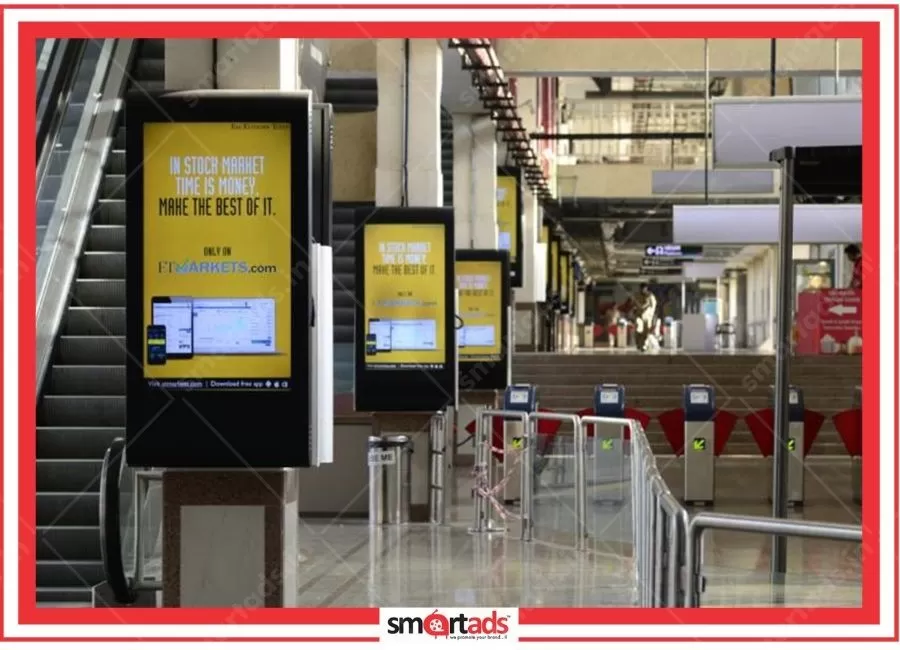
Entry Exit Panel
8 ft x 4 ft
Bright and vibrant multicolored letterin
Rate per Panel / 1 Month
Min Requirement is 3 Panel
₹48000.00
Showing 1 to 4 of 4 Results
MEDIA DETAILS
8 ft x 4 ft
Bright and vibrant multicolored letterin
Rate per Panel / 1 Month
Min Requirement is 3 Panel
₹48000.00
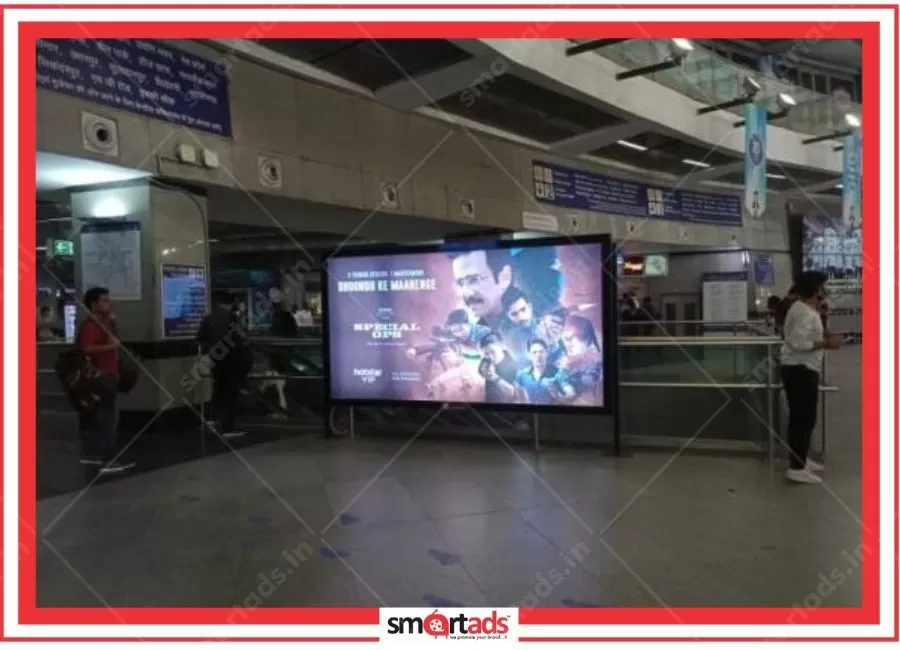
10 ft X 5 ft
A new wide wall system designed to accom
Rate per Panel / 1 Month
Min Requirement is 3 Panel
₹50000.00
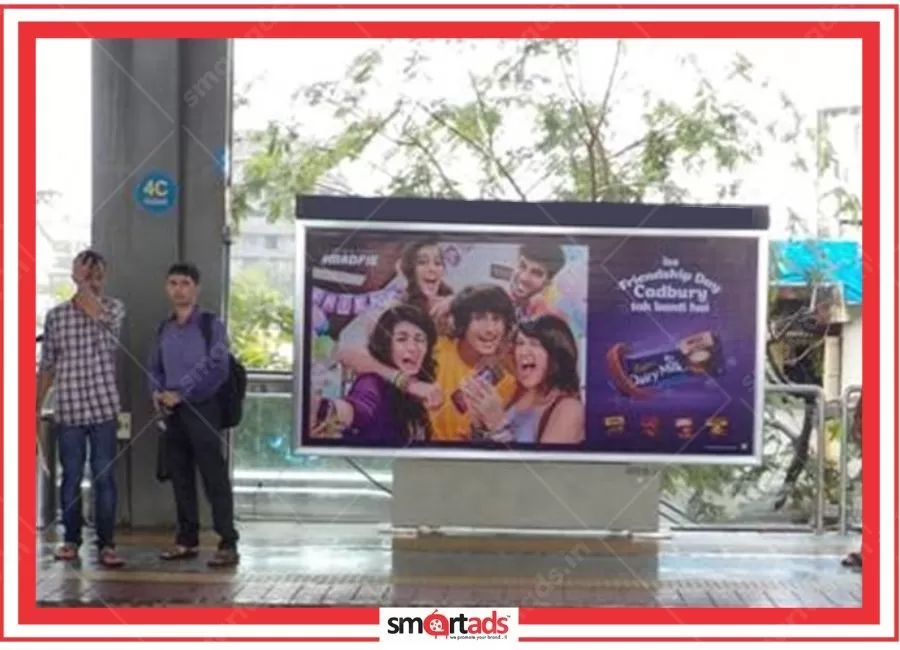
A raised flooring or other horizontal su
Rate per Panel / 1 Month
Min Requirement is 3 Panel
₹35000.00
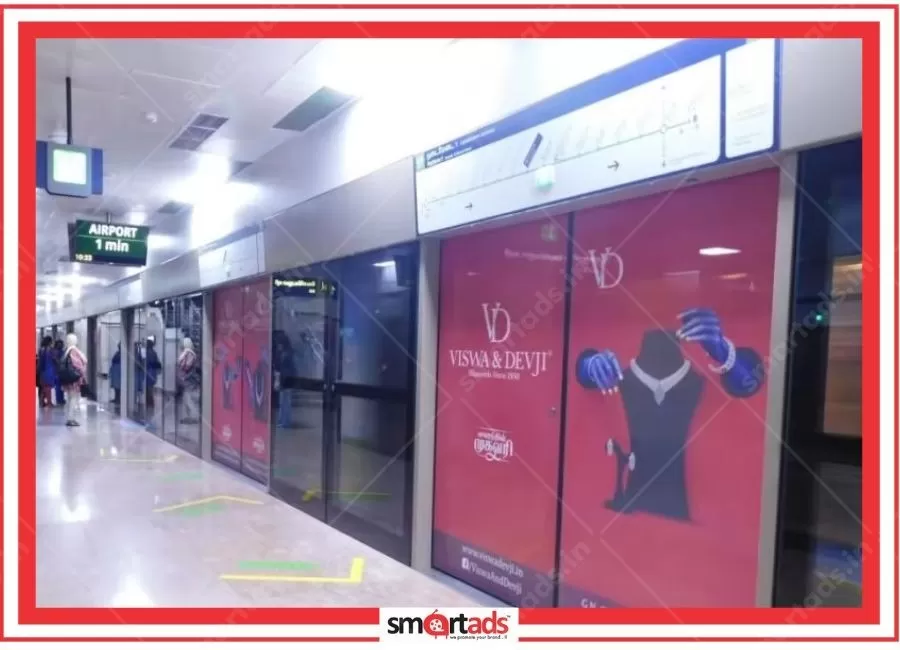
7 ft x 4 ft
Also known as platform edge doors (PEDs)
Rate per Plateform / 1 Month
Min Requirement is 1 Station
₹1200000.00
MEDIA REACH

MinimumQty :
10
EstimateReachPeople :
15 Million
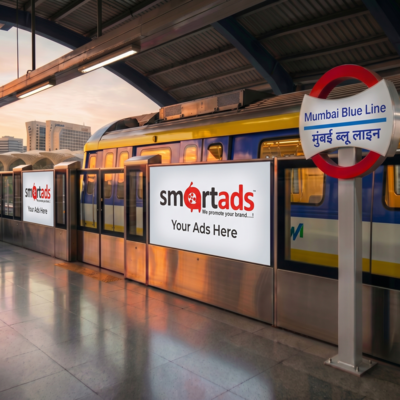
Mumbai Metro Line 1 moves somewhere in the ballpark of 450,000 to 500,000 commuters every single day — and yet, a surprising number of brand managers still treat it as a secondary media option rather than the primary reach vehicle it genuinely is. The Versova–Andheri–Ghatkopar corridor cuts through the densest concentration of working professionals, MIDC industrial workers, airport-bound travellers, and BKC-adjacent office commuters in the entire western suburban belt; which means that a well-planned blue line advertising campaign is, in many ways, more targeted than a prime-time television spot costing ten times as much. At SmartAds, we have been planning and executing metro station advertising in Mumbai Blue Line campaigns for years, and the one thing we keep telling clients is this: the medium is chronically undervalued precisely because most brands have not yet figured out how to use it properly.
The range of formats available across Mumbai Metro Line 1 is considerably wider than most advertisers realise when they first approach us. The obvious entry points are the backlit panels and ambient lit panels that line station concourses and platform edges — these are the workhorse formats of blue line advertising, offering high-frequency impressions to commuters who pass through the same station twice daily, five or six days a week. A backlit panel at a high-traffic station like Andheri metro station or Ghatkopar metro station will typically be seen by the same commuter somewhere between 40 and 50 times over a single month, which is a dwell-time and repetition dynamic that no social media platform can replicate at a comparable cost.
Beyond the static formats, Mumbai Metro One Pvt Ltd (MMOPL) — operating in partnership with Times OOH (Times Innovative Media OOH) as the concessionaire for advertising rights — offers DOOH screens and LED screen ads at several key stations, which allow for dynamic creative rotation, time-of-day targeting, and in some cases programmatic DOOH buying. This is where it gets interesting for performance-oriented brands: a FMCG brand running a morning slot on DOOH screens at Western Express Highway station reaches a very different commuter mindset than the same creative running at 7 PM, when the same commuters are heading home and are arguably more receptive to impulse-purchase messaging. Platform hoarding, pillar branding, concourse advertising, kiosk advertising, and standee advertising metro formats round out the station-level inventory; which means a brand with even a modest budget can achieve meaningful station presence without committing to a full station domination package.
The train itself is a separate and, frankly, underutilised canvas. Full train wrap — covering the exterior train branding surfaces of an entire six-car rake — delivers moving billboard impressions across the entire 11.4-kilometre Versova–Andheri–Ghatkopar corridor, and interior train branding formats including overhead panels, door panels, and grab-handle branding create a captive audience environment that is genuinely difficult to ignore during a 20-to-25-minute journey. Metro audio advertising through the in-coach PA system is an even less-explored format; we have found that audio spots delivered at station arrival announcements generate a measurable spike in brand recall among commuters who might be looking at their phones and missing visual creatives entirely.
Ghatkopar metro station is, by a significant margin, the single highest-footfall station on Mumbai Metro Line 1 — which is not surprising given that it serves as the interchange point with the Central Railway's Ghatkopar station, one of the busiest suburban rail junctions in the city. The daily footfall at Ghatkopar works out to somewhere in the ballpark of 80,000 to 100,000 unique commuters on weekdays, which makes it the most premium advertising real estate on the entire blue line. Andheri metro station is the second major anchor, sitting at the intersection of the Western Railway suburban line and serving as a feeder for the airport, BKC, and the MIDC belt; its daily footfall is estimated in the range of 60,000 to 75,000 commuters, which makes it the natural choice for brands that want maximum reach with a single station buy.
What a lot of people miss is the mid-corridor stations that punch well above their weight in terms of audience quality. Marol Naka station, for instance, sits right at the edge of the MIDC–Marol industrial and IT cluster, which means its commuter base skews heavily toward working professionals in the technology, manufacturing, and logistics sectors — a demographic that is genuinely difficult to reach efficiently through traditional OOH advertising Mumbai buys. Airport Road station draws a consistent stream of business travellers, airline crew, and hospitality workers; Western Express Highway station captures the arterial traffic of the entire western suburban belt. Chakala station, positioned near the SEEPZ Special Economic Zone, delivers a concentrated B2B and employer-branding opportunity that we have seen very few brands exploit, despite the fact that SEEPZ alone employs tens of thousands of workers in the gems, jewellery, and electronics export sectors.
Versova metro station, at the western terminus, serves a more residential and entertainment-industry-adjacent catchment — the Lokhandwala and Versova neighbourhoods have a disproportionately high concentration of media professionals, creative industry workers, and upper-middle-class families, which makes it a strong fit for lifestyle, OTT, and premium FMCG brands. D N Nagar station, positioned near the D N Nagar commercial hub and the Andheri West residential belt, is another station that tends to be overlooked in favour of the two anchor stations; yet its commuter profile skews toward SEC A and B audience segments, which are precisely the consumers that most premium brands are targeting. At SmartAds, our standard recommendation for clients with a mid-range budget is to anchor on Ghatkopar and Andheri, then layer in one or two mid-corridor stations based on the specific audience they are trying to reach.
The Versova–Andheri–Ghatkopar corridor passes through what is arguably the most economically productive strip of Mumbai's western suburbs; which means the commuter base is not a random cross-section of the city but a fairly well-defined cluster of urban commuters with specific demographic and psychographic characteristics. The dominant segment is working professionals between the ages of 22 and 45, earning household incomes that place them squarely in the SEC A and B audience brackets — these are the people who are making decisions about insurance, mutual funds, home loans, smartphones, and consumer durables, which is why BFSI advertising and real estate advertising brands have historically been heavy investors in Mumbai metro advertising.
On top of that, the corridor's proximity to the Chhatrapati Shivaji Maharaj International Airport means that a meaningful proportion of daily commuters are either frequent flyers themselves or working in airport-adjacent industries — hospitality, logistics, aviation services, and travel retail — which creates an unusually affluent and aspirational audience profile for a transit media advertising buy. The MIDC and SEEPZ catchment adds a layer of blue-collar and skilled-trade workers to the mix, particularly at stations like Marol Naka, Chakala, and Airport Road; which actually makes the Blue Line one of the few OOH advertising Mumbai formats that can simultaneously reach both premium consumers and mass-market workers within the same campaign.
We have also observed, across multiple campaigns, that the Blue Line over-indexes for edtech brand metro advertising relative to other transit corridors in Mumbai. The concentration of young professionals upgrading their skills, students commuting to coaching centres in Andheri and Ghatkopar, and IT workers looking for certification programmes creates a captive audience that is genuinely receptive to upskilling and education messaging — particularly during the morning commute, when people tend to be in a goal-oriented mindset. The dwell time on the Blue Line averages somewhere between 18 and 25 minutes per journey, which is long enough for a well-designed creative to register multiple impressions within a single trip.
Frankly speaking, advertising rates on Mumbai Metro Line 1 vary more than most rate cards suggest, and any agency that gives you a flat number without understanding your station selection, format mix, and campaign duration is probably not giving you a useful answer. That said, we can share some ballpark figures from our own booking experience. A single backlit panel at a mid-tier station like D N Nagar or Marol Naka works out to roughly ₹40,000 to ₹60,000 per month; the same format at Andheri metro station or Ghatkopar metro station can run anywhere from ₹80,000 to ₹1.5 lakh per month, depending on the exact placement within the station — concourse panels facing the entry gate command a premium over platform-level panels, for instance.
Platform hoarding and larger format ambient lit panels at premium stations are priced in the ballpark of ₹1.5 lakh to ₹3 lakh per month, which sounds steep until you calculate the cost-per-thousand impressions. Given the daily footfall figures at Ghatkopar and Andheri, the CPM for a well-placed backlit panel works out to roughly ₹8 to ₹15 — a number that surprises most first-time advertisers when they compare it to what they are paying for Instagram reach or programmatic display, where viewability and scroll-past rates significantly erode the effective CPM. DOOH screens and LED screen ads are priced on a per-slot or per-day-part basis, with monthly packages for a single screen at a premium station running somewhere between ₹2 lakh and ₹5 lakh depending on the number of daily impressions guaranteed by MMOPL's traffic data.
Full train wrap — the most premium format in the entire Mumbai metro advertising inventory — is priced in the range of ₹15 lakh to ₹25 lakh per month for a complete exterior train branding execution, which includes creative production, application, and removal costs. Interior train branding packages, which typically cover a full rake's interior panels, overhead displays, and door branding, are somewhat more accessible at roughly ₹8 lakh to ₹15 lakh per month. Station domination packages, where a brand takes over all visible advertising surfaces at a single station, are negotiated directly with Times OOH and MMOPL and are priced based on the station's traffic tier; we have seen station domination deals at mid-tier stations close at around ₹10 lakh to ₹20 lakh per month, while a full domination at Ghatkopar or Andheri metro station can command ₹30 lakh or more. The minimum campaign duration for most formats is 30 days, though exclusive station branding and naming rights arrangements require a minimum commitment of one year.
Station branding and naming rights on Mumbai Metro Line 1 represent the most premium — and most misunderstood — category of metro station advertising in Mumbai Blue Line inventory. The concept is simple in principle: a brand pays for the right to have its name co-branded with or substituted for the station's official name across all in-station signage, PA announcements, and in some cases the official station map. HDFC SKY's association with Ghatkopar metro station is perhaps the most visible example of this format in action on the Blue Line, and it is a case study worth examining because it illustrates exactly why naming rights work so well for financial services brands that need to build trust and ubiquity simultaneously.
The mechanics of naming rights on Mumbai Metro Line 1 are governed by a concession agreement between MMOPL and the advertising concessionaire, which means that the process of securing naming rights is more involved than a standard media buy. Brands interested in exclusive station branding need to approach Times OOH as the authorised sales partner, submit a creative brief and brand guidelines for approval, and negotiate a minimum one-year contract that covers all signage, digital screen updates, and PA system modifications. Semi-naming rights — where the brand name appears alongside the station name rather than replacing it — are available at a lower price point and are, in our experience, often a smarter choice for brands that want the association without the full financial commitment of a pure naming rights deal. Vivo's association with D N Nagar station and Phoenix Marketcity's branding at Jagruti Nagar station are well-documented examples of how retail and consumer electronics brands have used this format to drive footfall and brand visibility Mumbai-wide.
Pricing for full naming rights is not publicly listed, but based on our experience facilitating these negotiations for clients, the annual investment for a full naming rights deal at a high-traffic station like Andheri or Ghatkopar is in the range of ₹2 crore to ₹5 crore per year — which sounds like a large number until you consider that the brand's name is being announced over the PA system to every single commuter, every single day, for the entire year. Semi-naming rights at mid-tier stations are considerably more accessible, typically in the range of ₹50 lakh to ₹1.5 crore annually. At SmartAds, we always tell our clients that naming rights should be evaluated not as an advertising expense but as a brand infrastructure investment — the kind of association that compounds in value over time because it becomes part of how people navigate the city.
The booking process for metro station advertising in Mumbai Blue Line inventory runs through a specific channel structure that first-time advertisers often find confusing, which is one of the reasons working with an experienced metro advertising agency makes a material difference in both the efficiency and the cost of the booking. Mumbai Metro One Pvt Ltd (MMOPL), the operating entity for Mumbai Metro Line 1, has granted advertising concession rights to Times OOH (Times Innovative Media OOH), which functions as the authorised sales and operations partner for all commercial advertising inventory on the Blue Line. MMRDA, as the overarching infrastructure authority, sets the broad policy framework but is not directly involved in day-to-day advertising sales.
The practical booking process begins with a media brief — station selection, format preference, campaign duration, and creative specifications — which is submitted to Times OOH either directly or through a registered media buying agency. Creative approval is a non-trivial step; MMOPL has specific guidelines around content categories, visual standards, and messaging that must be cleared before production begins, and categories like tobacco, alcohol, and certain financial products face additional scrutiny. Production and installation of physical formats like backlit panels, platform hoarding, and pillar branding is handled by Times OOH's empanelled vendors, though brands working through an agency like SmartAds can often negotiate better production rates by consolidating multiple format orders. The lead time from brief to live campaign is typically somewhere between 15 and 25 working days for standard formats; full train wrap and station domination packages require 30 to 45 days of lead time due to the complexity of production and installation logistics.
One practical tip that we share with every client approaching the Blue Line for the first time: always negotiate the campaign duration and renewal terms upfront, because mid-campaign rate revisions are not uncommon in high-demand periods like the Diwali season, the IPL window, and the January-to-March financial year-end sprint when BFSI advertising budgets flood the market. Booking 60 or 90 days in advance for a festive season campaign is not overcaution — it is the difference between securing the Ghatkopar concourse panel you want and settling for a less-trafficked alternative because the premium inventory was already taken. Seasonal campaign planning is a discipline that is genuinely underserved in most metro advertising guides, and it is one of the areas where having a dedicated metro advertising agency partner pays for itself.
The distinction between BTL advertising and OOH advertising within the metro environment is one that media planners sometimes blur, and frankly speaking, the blur is understandable because the Blue Line offers formats that sit comfortably in both categories. Traditional OOH advertising Mumbai formats — backlit panels, platform hoarding, ambient lit panels, exterior train branding — are the formats that most people think of when they think of metro advertising; they are bought, measured, and evaluated using the same reach-and-frequency logic that governs any outdoor advertising Mumbai campaign. BTL advertising formats within the metro environment are a different proposition: kiosk advertising, standee advertising metro placements, brand activation zones, and experiential marketing setups that turn the station concourse into a live engagement environment.
The thing is, the choice between OOH and BTL on the Blue Line should not be framed as either/or. A retail client in Pune that we worked with — launching a new apparel brand in Mumbai — ran a combination of concourse backlit panels at Andheri metro station for broad awareness, paired with a weekend brand activation at the Ghatkopar concourse where commuters could try on products and receive a discount QR code. The awareness formats drove recognition; the activation drove trial and data capture. The total campaign budget was in the range of ₹18 lakh over six weeks, which included production, installation, activation staffing, and agency fees; the brand reported a 34% higher conversion rate from the metro-sourced leads compared to their concurrent digital campaign, which was running a significantly larger budget on social media platforms.
For brands with limited budgets, the BTL advertising route — a single well-placed kiosk or standee advertising metro format at a high-footfall station — can deliver surprisingly strong results when the creative is sharp and the call-to-action is specific. Non-traditional advertising formats like pillar branding and concourse advertising create ambient brand presence that builds over weeks of repeated exposure; which is why we generally recommend that brands think in terms of a minimum four-week commitment even for smaller format buys. The dwell time advantage of the metro environment — that captive 18-to-25-minute window — means that even a modest format investment can generate high-frequency impressions if the station selection is right.
The east-west connectivity Mumbai has historically lacked is precisely what Mumbai Metro Line 1 provides, and that structural role in the city's transport network is the foundation of its value as a transit media advertising platform. Before the Blue Line opened, the journey from Versova in the west to Ghatkopar in the east required either a circuitous Western Railway–Central Railway transfer through Dadar or a long, unpredictable road journey; the metro reduced that journey to roughly 21 minutes, which fundamentally changed commuting patterns across a corridor that covers some of the city's most economically active neighbourhoods. The GroupM TYNY Report and the FICCI-EY Media and Entertainment Report have both flagged transit media advertising as one of the fastest-growing segments of the OOH advertising Mumbai market, driven specifically by the expansion of metro networks in Tier 1 cities.
What makes the Versova–Andheri–Ghatkopar corridor particularly valuable from a media planning perspective is the concentration of interchange station advertising opportunities — Ghatkopar and Andheri are both multi-modal interchange points where commuters transfer between the metro and the suburban rail network, which means the dwell time at these stations is structurally higher than at non-interchange stations. A commuter waiting for a connecting train at Ghatkopar metro station is not rushing through the concourse; they are standing, waiting, and — if the creative is compelling — actually reading the advertising around them. This is the captive audience dynamic that makes interchange station advertising disproportionately effective relative to its cost.
Comparing the Blue Line to the newer Aqua Line (Line 3) and Yellow Line (2A) is a question we get asked frequently by media planners trying to allocate budgets across Mumbai's expanding metro network. The Aqua Line, running from Aarey to BKC and eventually to Cuffe Parade, serves a higher-income catchment in many stretches but currently has lower daily footfall simply because it is newer and ridership is still building. The Yellow Line (2A), running along the Western Express Highway from Dahisar to D N Nagar, is a strong option for brands targeting the northern suburbs but lacks the east-west connectivity and interchange dynamics that make the Blue Line so powerful. Our general recommendation is that the Blue Line should be the anchor of any Mumbai metro advertising plan, with the Aqua Line and Yellow Line added as reach extenders once the Blue Line investment is established.
The naming rights case studies on Mumbai Metro Line 1 are the most publicly visible examples of brand investment in the corridor, and they are instructive precisely because they represent the top end of the commitment spectrum. HDFC SKY's association with Ghatkopar metro station — one of the highest-footfall interchange stations in the entire Mumbai metro network — is a textbook example of how a financial services brand can use exclusive station branding to build the kind of ambient familiarity that converts into trust over time. The daily repetition of the brand name in PA announcements, on digital screens, and across all station signage creates a brand recall effect that is qualitatively different from what a display ad or a television spot achieves; which is why BFSI advertising brands have been among the most consistent and highest-spending categories on the Blue Line.
An automotive brand we worked with — launching a new compact SUV in the Mumbai market — ran a 45-day campaign combining full train wrap on two rakes with interior train branding across the entire Blue Line fleet and platform hoarding at Andheri metro station, Ghatkopar metro station, and Western Express Highway station. The campaign generated an estimated 12 crore impressions over the campaign period, with a cost-per-impression that worked out to roughly ₹0.12 — a figure that compared very favourably against the brand's concurrent television and digital buys. More importantly, the brand reported a 28% increase in test drive bookings at their Andheri and Ghatkopar dealerships during the campaign period, which provided the kind of attributable ROI data that justified a repeat booking for the following quarter.
A fintech startup we advised — with a budget that most people would consider modest for a Mumbai-wide campaign — ran a 30-day kiosk advertising and standee advertising metro campaign at five mid-corridor stations, supported by DOOH screens at Andheri metro station. The total investment was in the range of ₹8 lakh, which is genuinely accessible for a growth-stage company; and the campaign delivered somewhere in the ballpark of 2.5 crore impressions, with a cost-per-download (for their app) that was approximately 40% lower than their Facebook and Google campaigns running simultaneously. The lesson from that campaign — one we share with edtech brand metro advertisers and fintech brands regularly — is that the Blue Line's audience skew toward young, digitally active professionals makes it an unusually efficient channel for app-based businesses that need both awareness and conversion.
Q: What is metro station advertising on the Mumbai Blue Line (Line 1)?
Metro station advertising on the Mumbai Blue Line refers to the full range of commercial advertising formats available across the 12 stations and rolling stock of Mumbai Metro Line 1, which operates on the 11.4-kilometre Versova–Andheri–Ghatkopar corridor. The advertising inventory is managed by Mumbai Metro One Pvt Ltd (MMOPL) through its concessionaire Times OOH, and encompasses everything from static backlit panels and platform hoarding to DOOH screens, full train wrap, interior train branding, kiosk advertising, and brand activation zones within station concourses. It is classified as both OOH advertising and BTL advertising depending on the specific format, and is increasingly recognised as one of the most cost-efficient transit media advertising channels in the Mumbai market given the corridor's daily footfall and audience quality.
Q: Which ad formats are available at Mumbai Blue Line metro stations?
The format inventory on Mumbai Metro Line 1 is broader than most advertisers initially expect. Station-level formats include backlit panels, ambient lit panels, platform hoarding, pillar branding, concourse advertising, kiosk advertising, standee advertising metro placements, DOOH screens, and LED screen ads. Train-level formats include full train wrap (exterior train branding), interior train branding covering overhead panels, door panels, and grab-handle branding, and metro audio advertising through the in-coach PA system. Premium formats include station domination packages, exclusive station branding, and naming rights metro arrangements. The availability of specific formats varies by station, with anchor stations like Ghatkopar and Andheri offering the widest inventory and mid-corridor stations offering a more focused selection.
Q: How much does advertising on Mumbai Metro Line 1 cost per month?
Advertising rates on Mumbai Metro Line 1 vary significantly based on station, format, and placement. A single backlit panel at a mid-tier station runs roughly ₹40,000 to ₹60,000 per month; the same format at Andheri metro station or Ghatkopar metro station can run ₹80,000 to ₹1.5 lakh. Platform hoarding at premium stations is in the range of ₹1.5 lakh to ₹3 lakh per month. DOOH screen packages at premium stations run somewhere between ₹2 lakh and ₹5 lakh monthly. Full train wrap is in the ballpark of ₹15 lakh to ₹25 lakh per month, while station domination at high-traffic stations can reach ₹30 lakh or more. Naming rights are negotiated annually and can range from ₹50 lakh to ₹5 crore depending on the station's traffic tier and the scope of the branding arrangement.
Q: Which stations on the Mumbai Blue Line have the highest daily footfall?
Ghatkopar metro station consistently records the highest daily footfall on Mumbai Metro Line 1, estimated in the range of 80,000 to 100,000 commuters on weekdays, driven by its role as an interchange with the Central Railway suburban network. Andheri metro station is the second-highest, with estimated daily footfall of 60,000 to 75,000 commuters, benefiting from its interchange with the Western Railway and its proximity to the airport, BKC, and the MIDC belt. Mid-corridor stations like Marol Naka, Airport Road, and Western Express Highway station each see significant footfall from the MIDC–SEEPZ industrial cluster and airport-adjacent workforce, while Versova metro station draws a residential and entertainment-industry audience from the Lokhandwala and Versova catchments.
Q: Who manages the advertising rights for Mumbai Metro Line 1?
Mumbai Metro One Pvt Ltd (MMOPL), the special purpose vehicle that operates Mumbai Metro Line 1 under a concession from MMRDA, holds the overall advertising rights for the corridor. MMOPL has granted advertising concession rights to Times OOH (Times Innovative Media OOH), which functions as the authorised sales, operations, and maintenance partner for all commercial advertising inventory on the Blue Line. Brands and agencies wishing to book advertising on Mumbai Metro Line 1 must work through Times OOH or through a registered media buying agency that has an established relationship with Times OOH. MMRDA sets the policy framework for metro advertising standards but is not directly involved in commercial sales.
Q: What is the minimum campaign duration for Blue Line metro station advertising?
The minimum campaign duration for most standard formats — including backlit panels, ambient lit panels, platform hoarding, pillar branding, and DOOH screen packages — is 30 days. Interior train branding and full train wrap campaigns typically require a minimum of 30 days as well, though some packages are structured around 45-day or 60-day minimums due to the production and installation complexity involved. Exclusive station branding and naming rights arrangements require a minimum commitment of one year, with multi-year contracts available at negotiated rates. BTL brand activation formats — kiosks, standees, and experiential setups — can sometimes be booked for shorter durations of 7 to 14 days, particularly for event-linked campaigns, though availability at premium stations during peak periods is limited.
Q: Who is the target audience for brands advertising on the Mumbai Blue Line?
The primary audience on Mumbai Metro Line 1 is urban commuters in the 22-to-45 age bracket, predominantly working professionals, which places them in the SEC A and B audience segments that most premium and aspirational brands are targeting. The corridor's catchment spans the MIDC–SEEPZ industrial zone (attracting skilled trade and IT workers), the airport belt (attracting business travellers and aviation industry workers), the Andheri West and Versova residential neighbourhoods (attracting media professionals and upper-middle-class families), and the Ghatkopar commercial hub (attracting retail workers, students, and Central Railway commuters). The audience over-indexes for smartphone ownership, digital payment adoption, and financial product awareness, which makes the Blue Line particularly effective for BFSI advertising, edtech brand metro campaigns, real estate advertising, and consumer technology brands.
Q: What is exclusive station branding or naming rights on Mumbai Metro Line 1?
Exclusive station branding — commonly referred to as naming rights — is a premium arrangement where a brand's name is co-branded with or substituted for the official station name across all in-station signage, PA system announcements, digital screens, and official station maps. HDFC SKY's association with Ghatkopar metro station and Vivo's branding at D N Nagar station are the most prominent examples on the Blue Line. Semi-naming rights, where the brand name appears alongside the station name, are available at a lower investment and are often a more practical entry point for brands that want the associative benefit without the full financial commitment. Naming rights are negotiated directly through Times OOH with MMOPL approval, require a minimum one-year commitment, and are subject to content category restrictions.
Q: Can I run a BTL brand activation inside a Mumbai Blue Line metro station?
Yes — BTL brand activation is one of the most underutilised formats available on Mumbai Metro Line 1, and in our experience it consistently delivers the highest engagement metrics of any format in the station environment. Activation zones can be set up in station concourses, typically at Ghatkopar, Andheri, and Versova metro stations which have the physical space to accommodate experiential setups. Permitted activation formats include product sampling, interactive kiosks, digital engagement stations, and staffed brand experience booths; categories like food and beverage sampling require additional MMOPL approvals. Activation bookings are typically structured around weekend campaigns or event-linked periods, and lead times of 3 to 4 weeks are standard. The combination of a BTL activation with concurrent OOH formats at the same station — what we call a station-level integrated campaign — consistently outperforms either format running in isolation.
Q: How do I book metro advertising space on the Versova–Ghatkopar corridor?
Booking metro station advertising in Mumbai Blue Line inventory begins with a media brief submitted to Times OOH, either directly or through a metro advertising agency. The brief should specify station selection, format preference, campaign duration, and creative specifications. Creative approval by MMOPL is mandatory before production begins, and certain content categories require additional clearance. Production and installation is handled by Times OOH's empanelled vendors; lead times range from 15 to 25 working days for standard formats and 30 to 45 days for complex formats like full train wrap. Working through an experienced agency like SmartAds.in streamlines the approval and production process considerably, and typically results in better placement negotiations and more competitive rates than direct booking.
Q: What is the difference between interior train branding and station platform branding on Blue Line?
Station platform branding — which includes backlit panels, ambient lit panels, platform hoarding, and pillar branding — is static inventory fixed within the station environment, seen by commuters as they wait on the platform or move through the concourse. Interior train branding is applied to the inside surfaces of the train rakes themselves — overhead panels, door panels, grab-handle branding, and window decals — and travels with the train across all 12 stations of the Versova–Andheri–Ghatkopar corridor. The key distinction is audience context: platform branding reaches commuters in a transitional, moving-through state; interior train branding reaches them in a seated or standing, captive state during a 18-to-25-minute journey, which creates a fundamentally different dwell time and brand recall dynamic. For campaigns where message complexity is high — financial products, healthcare, real estate — interior train branding consistently outperforms platform formats on recall metrics.
Q: How does metro station advertising on the Blue Line compare to digital or social media advertising in ROI?
This is a comparison that comes up in almost every client conversation, and the honest answer is that they are not directly comparable — they serve different roles in the consumer journey. What we can say from campaign data is that the CPM for a well-placed backlit panel at Andheri metro station works out to roughly ₹8 to ₹15, which is competitive with or better than most programmatic display CPMs once you account for viewability losses and ad fraud. More importantly, the brand recall rate for metro OOH advertising consistently outperforms digital display in studies cited by the FICCI-EY Media Report, because the physical, unskippable nature of the medium means that impressions are genuine impressions. Digital advertising excels at precision targeting, retargeting, and measurable click-through conversion; metro advertising excels at building brand awareness, driving brand recall, and creating the ambient familiarity that makes digital retargeting more effective. The smartest campaigns we have planned use both channels in a reinforcing loop.
Q: Are digital screens (DOOH) available at Mumbai Metro Blue Line stations?
DOOH screens and LED screen ads are available at several stations on Mumbai Metro Line 1, with the highest concentration of digital OOH inventory at the anchor stations — Ghatkopar metro station and Andheri metro station — and at key mid-corridor stations including Western Express Highway station and Airport Road station. The DOOH inventory on the Blue Line supports dynamic creative rotation, which allows brands
