
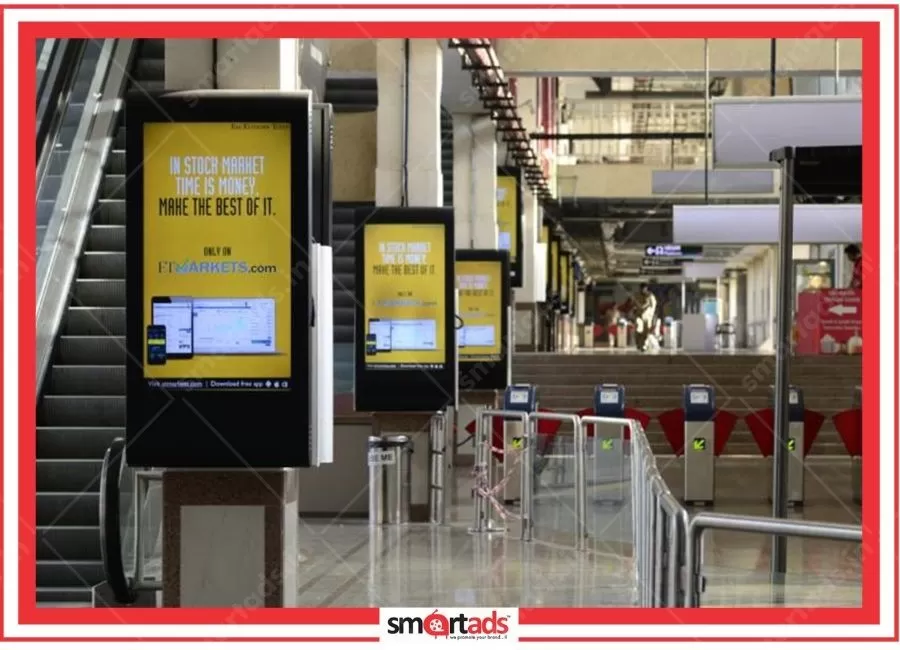
Entry Exit Panel
8 ft x 4 ft
Bright and vibrant multicolored letterin
Rate per Panel / Month
Min Requirement is 3 Panel.
₹48000.00
Showing 1 to 4 of 4 Results
MEDIA DETAILS
8 ft x 4 ft
Bright and vibrant multicolored letterin
Rate per Panel / Month
Min Requirement is 3 Panel.
₹48000.00
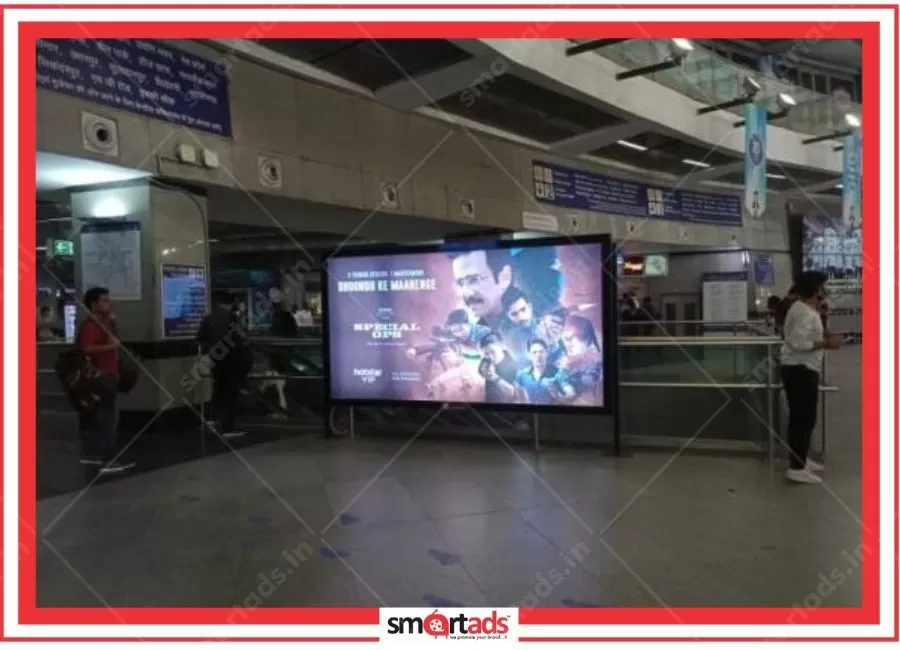
10 ft x 5 ft
A new wide wall system designed to accom
Rate per Panel / Month
Min Requirement is 3 Panel.
₹50000.00
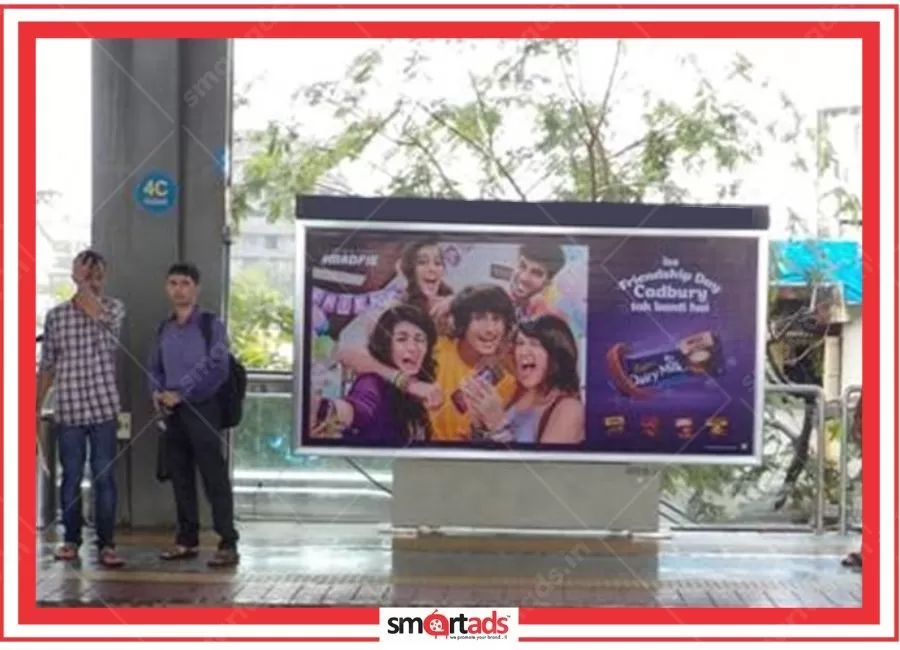
8 ft x 4 ft
A raised flooring or other horizontal su
Rate per Panel / Month
Min Requirement is 3 Panel.
₹35000.00
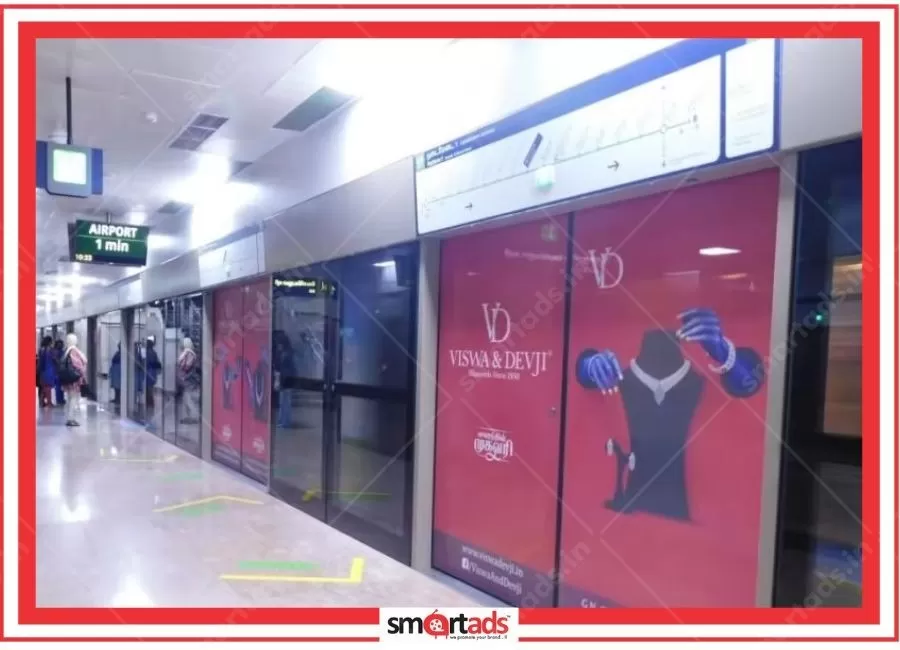
7 ft x 4 ft
Also known as platform edge doors (PEDs)
Rate per Plateform / Month
Min Requirement is 1 Stations.
₹1200000.00
MEDIA REACH

MinimumQty :
10
EstimateReachPeople :
15 Million
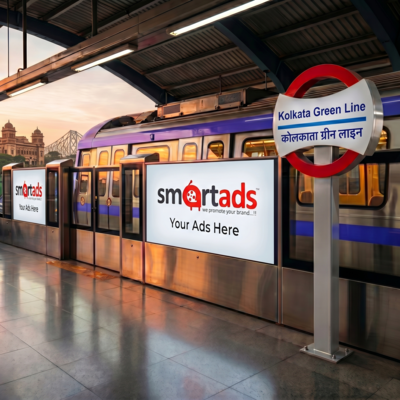
The East-West Metro in Kolkata carries something that most advertisers have not fully accounted for yet — a captive, upwardly mobile audience traveling through one of India's most ambitious urban rail projects, including the world's first underwater metro tunnel beneath the Hooghly River. Daily ridership on the Kolkata metro green line has been climbing steadily since full corridor operations resumed, and brands that moved early have locked in some of the most competitive rates in Indian transit advertising. What surprises most of our clients when we first show them the numbers is how significantly the cost-per-impression works out in their favour compared to premium outdoor hoardings in the same catchment zones.
There is a particular kind of advertiser who discovers metro station advertising in Kolkata Green Line and immediately wonders why they spent the previous three years buying hoardings on EM Bypass. The Green Line — officially Line 2, operated by Kolkata Metro Rail Corporation — runs east to west across the city's most commercially and professionally dense belt, connecting Howrah Maidan on the western bank of the Hooghly to Salt Lake Sector V in the east, which is Kolkata's primary IT and technology employment hub. This corridor, roughly 16.6 kilometres in length with 12 operational stations, is not simply a commuter rail line; it is a daily procession of engineers, bankers, students, and professionals who pass through branded environments for anywhere between eight and twenty-five minutes per journey.
What a lot of people miss is the structural advantage the Green Line holds over surface-level outdoor advertising in the same geography. A hoarding on Salt Lake Avenue competes with traffic, weather, visual clutter, and the fractured attention of someone behind a windshield; a backlit lightbox metro station panel at Bidhannagar or City Centre station commands the undivided gaze of a commuter standing on a platform with nowhere else to look. Our experience at SmartAds shows that brand recall among metro commuters runs measurably higher than recall from roadside formats in the same city zones — a finding that aligns with transit advertising effectiveness data published in successive FICCI-EY Media and Entertainment reports, which have consistently flagged transit OOH as one of the fastest-growing and highest-recall segments of the Indian out-of-home industry.
The Green Line also benefits from a demographic concentration that is genuinely rare in Indian transit advertising. The Sealdah and Howrah termini funnel enormous volumes of outstation and intercity rail travelers into the metro system, while the eastern stations from Phoolbagan through Salt Lake Sector V serve the IT corridor that houses hundreds of technology companies, BPO operations, and financial services firms. This means a single well-placed campaign across five or six Green Line stations can simultaneously reach daily IT professionals commuter targeting Kolkata, weekend leisure travelers, and the enormous student population commuting between residential areas and colleges in the Salt Lake zone — which is a media planning outcome that would cost significantly more to replicate through any combination of surface OOH formats.
Platform branding kolkata metro is where most campaigns begin, and for good reason — the platform is the single most dwell-heavy environment in any metro station, where commuters stand and wait with their attention genuinely available. At Green Line stations, platform panels are typically available as backlit lightbox units mounted along the platform walls and columns, with standard sizes running in the range of 4 feet by 6 feet and larger format options going up to 8 feet by 10 feet depending on the station; these are the workhorses of metro advertising kolkata because they deliver repeated exposure across multiple journeys for the same commuter, which compounds brand recall in a way that a single-exposure hoarding simply cannot.
Concourse hoarding kolkata metro represents the second major environment, and frankly speaking, it is where we often push clients to invest when their objective is brand awareness rather than direct response. The concourse — the ticketing and entry level of each station — sees every single passenger who enters or exits, which means the footfall exposure is technically higher than the platform, even though dwell time is shorter. Concourse formats include large-format flex and vinyl installations, pillar wraps, and increasingly, digital screen metro station units that allow for dynamic creative rotation. Metro pillar advertising kolkata is particularly effective at stations like Esplanade and Sealdah, where the architectural columns are prominent and the creative canvas is genuinely large.
Beyond static formats, the Green Line now offers train wrap advertising kolkata and coach exterior wrap kolkata metro options, where the exterior of BEML rolling stock coaches is wrapped in full-bleed vinyl creative — a format that turns the train itself into a moving billboard traveling the entire 16.6-kilometre corridor multiple times per day. Interior panel branding metro is the complementary in-coach format, covering overhead panels, door surrounds, and seat-back sticker metro advertising positions, which deliver prolonged exposure during the journey itself. For brands willing to invest in digital OOH metro kolkata, the DOOH screens installed at select Green Line stations allow for time-of-day creative scheduling, which means a coffee brand can run morning commute creatives and a streaming platform can switch to evening entertainment messaging — a level of contextual targeting that static formats simply cannot match. Entry exit gate branding metro and floor sticker metro advertising round out the format inventory, with the latter being a surprisingly high-attention format that commuters physically look down at while navigating crowded concourses.
Salt Lake Sector V metro station sits at the eastern terminus of the Green Line and is, without question, the single most commercially valuable station on the corridor for brands targeting the IT and technology sector. The station serves the Salt Lake Sector V IT hub directly — an area that houses the offices of hundreds of technology companies and employs somewhere in the range of three to four lakh IT and ITES professionals — which makes Salt Lake Sector V advertising a near-direct pipeline to one of the most affluent and digitally active commuter segments in eastern India. IT corridor Salt Lake advertising at this station commands a premium, and rightly so; the audience concentration is genuinely difficult to replicate through any other single-point media placement in Kolkata.
Howrah Maidan metro advertising occupies a different strategic position entirely. As the western terminus, the station sits adjacent to Howrah Railway Station — one of the busiest rail terminals in India — which means its footfall includes not just regular Green Line commuters but a significant volume of intercity and outstation travelers who are entering or exiting the metro system for the first time. This gives Howrah Maidan a reach profile that skews broader and more geographically diverse than any other station on the line; for brands with national or pan-regional ambitions, Howrah Maidan metro advertising is the entry point into a truly mass-market transit audience. The station also carries a unique distinction as the gateway to the Hooghly underwater metro tunnel, which gives it a certain novelty value — we have seen brands use the "world's first underwater metro" angle in their creative specifically because commuters at this station are aware of and proud of the engineering feat they are about to experience.
Sealdah metro station branding and Esplanade metro advertising represent the two high-interchange stations on the corridor, each drawing footfall from multiple directions. Sealdah connects to Sealdah Railway Station, the second major rail terminal in Kolkata, while Esplanade serves as the interchange between the Green Line and the Blue Line (North-South Metro), making it the busiest transfer point in the entire Kolkata metro network. Esplanade metro advertising therefore reaches not just Green Line commuters but a significant portion of Blue Line passengers as well, which effectively doubles the audience catchment for campaigns placed at this station. City Centre metro station branding and Phoolbagan metro advertising serve the mid-corridor residential and commercial zones of Salt Lake, where the audience profile is a strong mix of office-goers, students metro audience, and retail consumers — making these stations particularly effective for consumer brands, financial services, and educational institutions.
Metro advertising rates kolkata are a subject where the market has historically been opaque, and that opacity has cost advertisers real money — either through overpaying without benchmarks or through underinvesting because the rates seemed uncertain. To be honest, metro branding cost kolkata on the Green Line is more accessible than most brand managers assume when they first approach us. A standard backlit platform panel at a mid-corridor station like Phoolbagan or City Centre works out to somewhere between ₹25,000 and ₹45,000 per month depending on the size and exact position, which is a number that tends to surprise people when they consider that a comparable-sized hoarding in the Salt Lake commercial zone can run to ₹60,000 or more per month with significantly lower dwell-time and audience quality.
Concourse-level formats and pillar wraps at premium stations — Sector V, Sealdah, Esplanade — carry higher rates, typically in the ballpark of ₹50,000 to ₹1.2 lakh per month for large-format installations, with the exact figure depending on the creative area, the illumination type, and whether the position is exclusive or shared. Train wrap advertising kolkata and coach exterior wrap kolkata metro are priced differently, as they are sold on a per-coach or per-train-set basis rather than per-station; a full coach exterior wrap for a month works out to roughly ₹1.5 lakh to ₹2.5 lakh, which sounds significant until you calculate that the wrap travels the full corridor multiple times daily and generates impressions at every station on the line simultaneously. Digital screen metro station and DOOH metro kolkata slots are typically sold on a per-spot-per-day basis, with a 10-second slot in a rotation working out to somewhere in the range of ₹8,000 to ₹15,000 per screen per day at premium stations.
Station domination metro kolkata — where a brand takes over all available advertising inventory at a single station for a defined period — is the premium product, and frankly, it is one of the most effective brand-building executions we have run for clients on the Green Line. A full station takeover green line at a mid-tier station can be packaged in the range of ₹3 lakh to ₹6 lakh per month, while a domination at Sector V or Esplanade will run higher, typically in the ₹8 lakh to ₹15 lakh range for a complete month. These figures are indicative — the actual metro advertising campaign duration, format mix, and station selection all affect the final package — but they give brand managers a working budget framework that most competitor pages simply refuse to provide. At SmartAds, we always tell our clients that the first step to a good negotiation is knowing the market, and we share these benchmarks openly because informed clients make better campaign decisions.
The commuter audience kolkata on the Green Line is not a homogeneous mass — it is a corridor-specific demographic stack that changes character from west to east, which is something most media plans fail to account for when they treat the line as a single undifferentiated audience. At the Howrah Maidan end, the audience is heavily weighted toward intercity travelers, blue-collar and lower-middle-income commuters, and daily wage workers who use the metro as a connection point from Howrah Railway Station into the city; this western segment is valuable for mass-market FMCG brands, telecom advertisers, and financial inclusion products. As the line moves eastward through Mahakaran, Esplanade, and Sealdah, the audience transitions toward a more mixed urban professional and student profile, with Esplanade drawing significant retail footfall given its proximity to the central business district.
From Phoolbagan eastward through City Centre, Salt Lake Stadium, and ultimately Salt Lake Sector V, the audience composition shifts decisively toward IT professionals commuter targeting kolkata — software engineers, product managers, data analysts, and the broader ecosystem of professionals employed in the Bidhannagar IT zone. Bidhannagar metro station advertising in this eastern segment reaches an audience that is, on average, younger, higher-earning, and significantly more digitally active than the western segment; these are the consumers who are buying smartphones, subscribing to OTT platforms, taking personal loans for consumer durables, and making brand choices that carry long-term customer lifetime value. The captive audience metro advertising opportunity here is genuinely premium — these commuters are spending 15 to 25 minutes in a branded environment twice a day, five or six days a week, which translates to a frequency of exposure that most digital campaigns would struggle to match at the same cost.
Students represent a significant and often underestimated segment of the Green Line commuter audience. Several major colleges and educational institutions in the Salt Lake and Bidhannagar area are served by the eastern stations, and the student cohort traveling on the Green Line skews toward engineering, management, and professional courses — which makes them a high-value future consumer audience for brands in technology, education, financial products, and lifestyle categories. Our experience at SmartAds shows that brands in the edtech, banking, and consumer electronics categories have found the Green Line commuter audience particularly responsive, with one edtech client we worked with reporting a measurable spike in Kolkata-origin app downloads during and immediately after a six-week platform branding campaign across four eastern Green Line stations.
The booking process for metro station advertising in Kolkata Green Line runs through Kolkata Metro Rail Corporation, which is the statutory authority that controls all commercial advertising rights on the East-West Metro corridor. KMRC advertising approval is a two-stage process: first, the advertiser or their agency must submit a formal proposal to the KMRC commercial department, which includes the proposed creative, the station locations, the format specifications, and the campaign duration; second, the creative is reviewed for compliance with KMRC's content guidelines before the booking is confirmed and the space is officially allocated. The Kolkata Metro Rail Corporation maintains an empanelled list of advertising agencies and vendors who are authorised to execute campaigns on the Green Line, which means working with a non-empanelled vendor can result in campaign delays or outright rejection at the installation stage.
What a lot of advertisers discover too late is that the KMRC approval timeline is not instantaneous — a standard creative approval can take anywhere from one to three weeks, and campaigns involving non-standard formats like floor stickers, entry exit gate branding metro, or metro card branding kolkata may require additional clearance. This is why we strongly advise clients to initiate the booking process at least four to six weeks before their intended go-live date, particularly for campaigns timed to festive seasons like Durga Puja, when demand for Green Line inventory spikes dramatically and the KMRC commercial calendar fills up quickly. Durga Puja campaigns on the Green Line — which run across the five-day festival period and the weeks immediately preceding it — are among the most sought-after slots in Kolkata's non-traditional advertising calendar, and brands that have not booked by August for an October campaign are typically looking at whatever residual inventory remains.
At SmartAds, we manage the entire KMRC approval process on behalf of our clients, from initial proposal submission through creative compliance review to final installation supervision. The practical value of working with an empanelled metro advertising agency kolkata is not just the paperwork — it is the institutional knowledge of which positions are genuinely premium versus which are sold as premium but deliver mediocre visibility, which creative specifications consistently pass KMRC review without revision, and which station managers are responsive to last-minute campaign adjustments. Metro advertising minimum booking periods on the Green Line are typically 30 days for static formats and shorter for DOOH slots, though the most effective campaigns we have run have been structured around 60 to 90-day durations, which is where the frequency-of-exposure compound effect really begins to build brand recall metro commuters in a measurable way.
This is genuinely one of the most common questions we field from brand managers in Kolkata, and the honest answer is that it depends entirely on what the brand is trying to achieve — but the Green Line wins on specific criteria that are often more relevant to modern brand objectives than raw footfall volume. The Blue Line (North-South Metro) is the older, more established corridor with higher absolute daily ridership; Kolkata metro 190000 daily riders is a figure that has been cited for the combined network, with the Blue Line historically carrying the larger share. However, the Blue Line audience is significantly more heterogeneous, spanning the full socioeconomic spectrum from Dakshineswar to Kavi Subhas, which makes precise audience targeting considerably harder.
The Green Line's comparative advantage is demographic precision. For brands targeting the IT and technology professional segment, the financial services audience, or the premium consumer category, the eastern stations of the Green Line deliver a concentration of high-income, high-education commuters that the Blue Line simply cannot match at any single station cluster. On top of that, the Green Line's relative newness means that the advertising environment is less cluttered — commuters are still in the novelty phase of their relationship with the East-West Metro, which means they are paying more attention to the station environment, including the advertising, than they would on a corridor they have been using for twenty years. Brand visibility kolkata metro on the Green Line benefits from this novelty premium in a way that is genuinely measurable in post-campaign recall studies.
To be fair, the Blue Line is not the wrong choice for every brand — for mass-market FMCG campaigns, political campaigns during permitted periods, and brands targeting the broadest possible urban Kolkata demographic, the Blue Line's volume and geographic spread make it the more appropriate vehicle. What we typically recommend to clients with budgets that allow for both is a split allocation: anchor the campaign on the Green Line for quality and demographic precision, and use a lighter Blue Line presence for volume and reach extension. This kind of integrated transit advertising kolkata approach — treating the two lines as complementary rather than competitive — tends to produce better overall campaign metrics than committing the entire budget to one corridor.
KMRC advertising approval for non-traditional and non-standard formats is a process that deserves more detailed treatment than it typically receives in media planning conversations. Kolkata Metro Rail Corporation has specific content restrictions that apply across the Green Line, which include a blanket prohibition on advertising for alcohol and tobacco products — a restriction that is standard across most metro rail systems in India and is enforced without exception. Political advertising is similarly prohibited during non-election periods, and even during permitted election campaign windows, the specific formats and station locations that can carry political creative are tightly controlled. Brands in financial services, pharmaceuticals, and certain food categories may face additional disclosure requirements in their creative, which the KMRC commercial team reviews as part of the standard approval process.
The creative specification requirements for Green Line station formats are more exacting than many advertisers expect. Platform panel installations require materials that meet specific fire-retardancy standards, which is a safety requirement imposed by the Commissioner of Metro Rail Safety and enforced by KMRC at the installation stage. Vinyl wraps for coach exterior wrap kolkata metro must use approved adhesive grades that do not damage the BEML rolling stock surface finish, and the installation must be carried out by KMRC-approved contractors during designated maintenance windows — typically late-night or early-morning slots when the trains are not in service. Floor sticker metro advertising requires anti-slip surface treatment that meets the safety standards specified in the KMRC vendor guidelines, and any installation that does not meet this standard will be removed at the advertiser's cost.
What this means practically is that the KMRC approval process is not a bureaucratic formality — it is a genuine quality and safety gate that affects campaign execution timelines and budget planning. We have seen campaigns from brands that approached the Green Line directly, without an empanelled agency, run into installation delays of two to three weeks because their vendor's materials did not meet the fire-retardancy specification; the creative had been approved, but the physical execution was rejected at the station. This kind of delay is entirely avoidable with the right agency partner, and it is one of the reasons we invest in maintaining current knowledge of KMRC's evolving technical specifications — because the specifications do change, particularly as new station formats and digital infrastructure are added to the corridor.
ROI metro advertising India is a topic where the industry has matured considerably over the past five years, and the Green Line specifically offers some measurement advantages that older OOH formats do not. The most basic measurement framework for metro station advertising in Kolkata Green Line starts with footfall — KMRC publishes ridership data that allows advertisers to calculate gross impressions from any given station or format, and daily ridership kolkata green line figures can be converted into monthly impression estimates with reasonable accuracy by applying standard transit advertising multipliers for dwell time and sightline probability. This is the foundation of any ROI calculation, and it gives brand managers a defensible impression cost figure to present to management.
Beyond raw impressions, the more sophisticated measurement approaches we use at SmartAds involve brand lift studies, where a sample of Green Line commuters is surveyed before and after a campaign to measure shifts in brand awareness, message recall, and purchase intent. One automotive brand we worked with ran a 90-day station domination campaign across three eastern Green Line stations — Sector V, City Centre, and Salt Lake Stadium — and the post-campaign brand lift study showed a 23-percentage-point increase in unaided brand awareness among surveyed commuters in the Salt Lake and Bidhannagar catchment area, which was a result that significantly exceeded the brand's pre-campaign benchmark from similar outdoor campaigns in other cities. The campaign's cost-per-awareness-point worked out to be considerably more efficient than the brand's concurrent television buy in the Kolkata market, which was a finding that shifted their subsequent budget allocation toward transit formats.
Digital integration has added a new dimension to ROI measurement for metro advertising campaigns. QR codes embedded in platform panels and concourse hoardings allow brands to track direct response from metro commuters — a retail client in Kolkata's Salt Lake zone ran a campaign with QR codes on platform panels at four Green Line stations and tracked over 3,200 unique scans over a 45-day campaign period, which provided a concrete conversion metric that traditional OOH had never been able to deliver. Programmatic DOOH metro kolkata screens, where available, add the further capability of impression-level reporting with time-stamped data, which allows brands to see exactly when their creative was displayed and correlate that with downstream digital activity through device ID matching — a methodology that is still emerging in the Indian transit advertising market but which is already delivering meaningful attribution data for early adopters on the Green Line.
Salt Lake Sector V advertising sits in a category of its own within the Green Line inventory, and the reason is straightforward: there is no other single metro station in Kolkata that delivers such a concentrated, homogeneous audience of technology and IT professionals. The station serves the Sector V IT hub directly — an area that is home to the Kolkata offices of major technology companies, global capability centres, BPO operations, and the broader ecosystem of IT services firms that together employ a substantial portion of Kolkata's professional workforce. IT professionals commuter targeting kolkata at Sector V station is not an approximation or a demographic inference; it is a near-literal description of who is walking through the gates every morning and evening.
The advertising environment at Salt Lake Sector V station is also architecturally suited to premium brand presentation. The station's design allows for large-format concourse installations that are visible from multiple approach angles, and the relatively high ceiling height in the platform area creates opportunities for top-panel and overhead creative that are not available at all Green Line stations. Brands in the technology, financial services, premium consumer electronics, and professional services categories have consistently found Sector V to be their highest-performing single station on the Green Line, and the footfall metro station kolkata data for Sector V — which peaks sharply during the morning and evening commute windows that correspond to IT office hours — is among the most predictable and consistent audience delivery on the entire corridor.
On top of that, the New Town and Rajarhat IT corridor, which lies immediately to the north and east of Sector V, feeds additional professional traffic into the station through feeder bus and cab routes, which means the effective catchment of Sector V advertising extends beyond the immediate Salt Lake zone into the broader eastern Kolkata technology employment belt. For a brand launching a B2B technology product, a premium financial instrument, or a professional development service in the Kolkata market, Salt Lake Sector V advertising is not simply a media buy — it is a direct conversation with the exact decision-makers and influencers the brand needs to reach, delivered in a high-attention, low-clutter environment that surface OOH in the same area cannot replicate.
The instinct to treat metro station advertising in Kolkata Green Line and digital marketing as separate budget line items is one that we have seen cost brands real campaign effectiveness. The Green Line commuter is, almost by definition, a heavy smartphone user — the IT professional audience at the eastern stations is digitally native, and even the broader mid-corridor audience has smartphone penetration rates that track well above the West Bengal average. This creates a natural bridge between the physical advertising environment of the metro station and the digital touchpoints the same commuter encounters before boarding, during the journey on mobile data, and after exiting the station.
The most effective integration we have seen involves using metro station branding kolkata as the awareness layer — the high-frequency, high-visibility touchpoint that plants the brand message — and then following the same audience with targeted digital advertising on social platforms and programmatic display networks. This is achievable because the geographic precision of metro station catchment areas maps reasonably well to the location targeting parameters available on Meta, Google, and programmatic platforms; a campaign that runs platform branding at Sector V and City Centre stations can be complemented with LinkedIn advertising targeted to IT professionals in the Salt Lake and Bidhannagar pin codes, creating a multi-touchpoint brand experience that reinforces the metro message in the digital environment. One fintech client we worked with used exactly this approach — a 60-day Green Line platform campaign paired with LinkedIn and programmatic display targeting the same geography — and reported a 40% lower cost-per-lead from their digital channels during the campaign period compared to their baseline, which they attributed to the awareness and credibility lift from the metro presence.
QR code integration on static metro formats is the most direct form of digital bridge, and it is a technique that has become significantly more viable since the post-pandemic normalisation of QR scanning behaviour among Indian consumers. A backlit lightbox metro station panel with a QR code linking to a landing page, an app download, or a product demo gives the commuter a frictionless action path at the moment of highest attention — standing on the platform, phone already in hand, with 30 to 60 seconds of dwell time. The measurement benefit is equally significant, as QR scan data provides a direct attribution signal from the metro environment to digital conversion, which is something that non-traditional advertising kolkata has historically struggled to deliver. At SmartAds, we build QR integration into our metro campaign briefs as a default recommendation, because the incremental cost is negligible and the measurement value is substantial.
The perception that metro station advertising is exclusively a large-brand, large-budget medium is one that the Green Line's rate structure actively contradicts — though it is a perception that persists because most rate information in the market is either unavailable or presented in ways that emphasise the premium end of the inventory. To be honest, the entry point for BTL advertising kolkata metro on the Green Line is lower than most small and mid-sized businesses assume. A single platform panel at a mid-corridor station, booked for a 30-day period, can be executed for a budget that is comparable to a modest digital campaign or a small-format newspaper advertisement — and the audience quality and frequency of exposure are genuinely superior for certain brand objectives.
The practical consideration for smaller advertisers is format and station selection. Rather than attempting a multi-station campaign that stretches the budget thin, we generally advise smaller brands to concentrate their investment at one or two stations that are directly relevant to their target customer — a coaching institute targeting engineering students might focus exclusively on City Centre and Sector V stations; a restaurant or food delivery brand serving the Salt Lake residential zone might find that a single concourse panel at City Centre delivers more relevant footfall than a distributed campaign across five stations. This kind of focused, station-specific approach is entirely supported by the KMRC booking structure, which does not require advertisers to book the entire corridor; individual station and individual format bookings are available, which makes the Green Line genuinely accessible to local and regional brands alongside national advertisers.
The Durga Puja season deserves specific mention for smaller advertisers, because the festival period represents a window when consumer attention and purchase intent in Kolkata are both at their annual peak, and the Green Line's ridership spikes significantly as Kolkatans move around the city for pandal-hopping and festive shopping. A small business that books a concourse hoarding at Esplanade or Sealdah for the two weeks around Durga Puja is placing its message in front of an audience that is actively in a spending mindset — which is a contextual advantage that no amount of digital retargeting can fully replicate. The seasonal inventory does fill up quickly, as we noted earlier, but for brands that plan ahead, the Durga Puja window on the Green Line represents one of the best value-for-money opportunities in West Bengal OOH advertising.
Q: What types of advertising formats are available at Kolkata Green Line metro stations?
The format inventory at Green Line stations is broader than most advertisers initially expect. Platform panels — both backlit lightbox and non-illuminated — are the foundational format, available in multiple sizes across all 12 operational stations. Concourse hoardings and pillar wraps cover the entry and ticketing levels, while coach exterior wraps and interior panel branding metro cover the trains themselves. Digital screen metro station and DOOH metro kolkata units are available at select stations, with the network expanding as KMRC continues its commercial infrastructure rollout. Specialty formats include floor sticker metro advertising, entry exit gate branding metro, seat-back sticker metro advertising, and metro card branding kolkata — each serving a specific attention context within the commuter journey. Station domination and full station takeover green line packages bundle multiple formats across a single station for brands seeking maximum share of voice.
Q: How much does metro station advertising on the Kolkata Green Line cost per month?
Metro advertising rates kolkata on the Green Line vary by station tier, format type, and position. As a working benchmark, standard platform panels at mid-corridor stations run somewhere between ₹25,000 and ₹45,000 per month; concourse and pillar formats at premium stations like Sector V and Esplanade run in the ballpark of ₹50,000 to ₹1.2 lakh per month. Coach exterior wraps work out to roughly ₹1.5 lakh to ₹2.5 lakh per coach per month, and DOOH screen slots at premium stations are priced per spot per day. Full station domination packages at premium stations range from ₹8 lakh to ₹15 lakh per month. These are indicative figures; actual rates depend on campaign duration, format mix, and negotiation — and longer campaign durations typically attract meaningful rate efficiencies.
Q: Which Green Line metro station has the highest footfall for brand advertising?
Esplanade metro station technically sees the highest combined footfall because it serves as the interchange between the Green Line and the Blue Line, drawing commuters from both corridors. However, for brands with specific audience objectives, Salt Lake Sector V delivers the highest concentration of IT and technology professionals, making it the premium station for that demographic. Sealdah and Howrah Maidan carry high absolute footfall due to their proximity to the two major railway terminals. The "highest footfall" question is best answered in the context of the brand's target audience — raw footfall volume and audience quality are different metrics, and the most valuable station for a given brand may not be the one with the highest absolute ridership.
Q: How do I get KMRC approval to advertise at a Kolkata Green Line metro station?
KMRC advertising approval requires submission of a formal proposal to the Kolkata Metro Rail Corporation commercial department, including proposed creative, station locations, format specifications, and campaign duration. Creative is reviewed for content compliance — alcohol, tobacco, and certain other categories are prohibited — and materials must meet KMRC's fire safety and installation standards. Working with an empanelled metro advertising agency kolkata significantly streamlines this process, as empanelled agencies have established relationships with the KMRC commercial team and current knowledge of the technical specifications. Allow four to six weeks minimum between campaign brief and go-live, particularly for festive season campaigns when KMRC's commercial calendar is heavily booked.
Q: What is the minimum booking period for metro station advertising on Kolkata's Green Line?
Metro advertising minimum booking for static formats on the Green Line is generally 30 days, which is the standard minimum term for platform panels, concourse hoardings, and pillar wraps. Coach exterior wraps and train wrap advertising kolkata are also typically booked on a monthly minimum. DOOH screen slots can be booked for shorter periods, with some packages available on a weekly basis depending on screen availability and KMRC's commercial terms. For campaign effectiveness, we recommend a minimum of 60 days for static formats — 30 days is sufficient to generate initial awareness, but the frequency compounding that drives brand recall metro commuters really begins to show measurable results in the 60-to-90-day window.
Q: Is Salt Lake Sector V metro station good for targeting IT professionals in Kolkata?
It is the single best transit advertising location in Kolkata for reaching IT professionals, without qualification. The station serves the Sector V IT hub directly, and the morning and evening peak commuter windows correspond almost exactly to IT office hours, meaning the audience concentration during high-dwell platform moments is genuinely exceptional. Salt Lake Sector V advertising reaches software engineers, product managers, data analysts, and the broader professional services ecosystem employed in the zone. For B2B technology brands, premium consumer electronics, financial products targeting high-income professionals, and professional development services, Sector V is the anchor station for any Green Line campaign.
Q: Can I advertise only at specific stations on the Green Line or do I need to book all 12?
Individual station bookings are entirely available — there is no requirement to book the full corridor. This is one of the structural
