
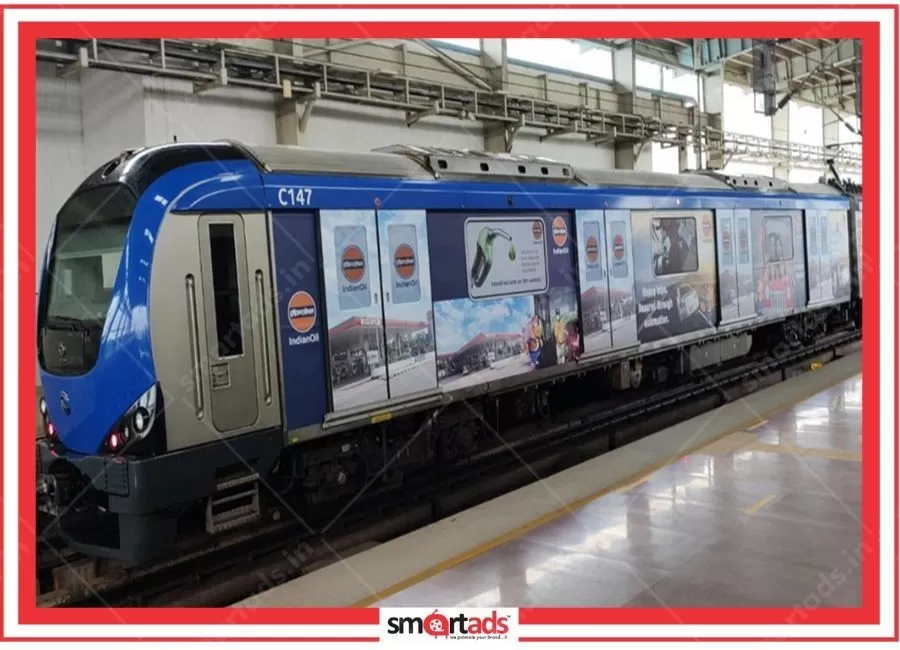
Exterior Metro Wrap
Size & Printing Cost as per actual
On the outside of metro Train, advertise
Rate per Metro Display Cost / 1 Month
Route:Salt Lake Sector IV To Esplanade
₹410000.00
Showing 1 to 3 of 3 Results
MEDIA DETAILS
Size & Printing Cost as per actual
On the outside of metro Train, advertise
Rate per Metro Display Cost / 1 Month
Route:Salt Lake Sector IV To Esplanade
₹410000.00
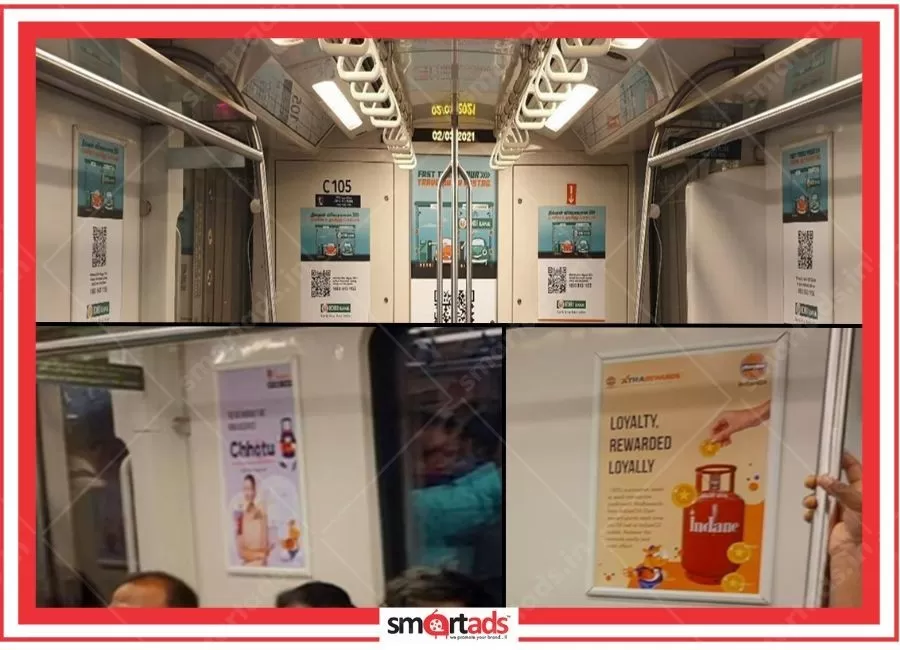
Size & Printing Cost as per actual
On the outside of metro Train, advertise
Rate per Metro Display Cost / 1 Month
Route:Salt Lake Sector IV To Esplanade
₹330000.00
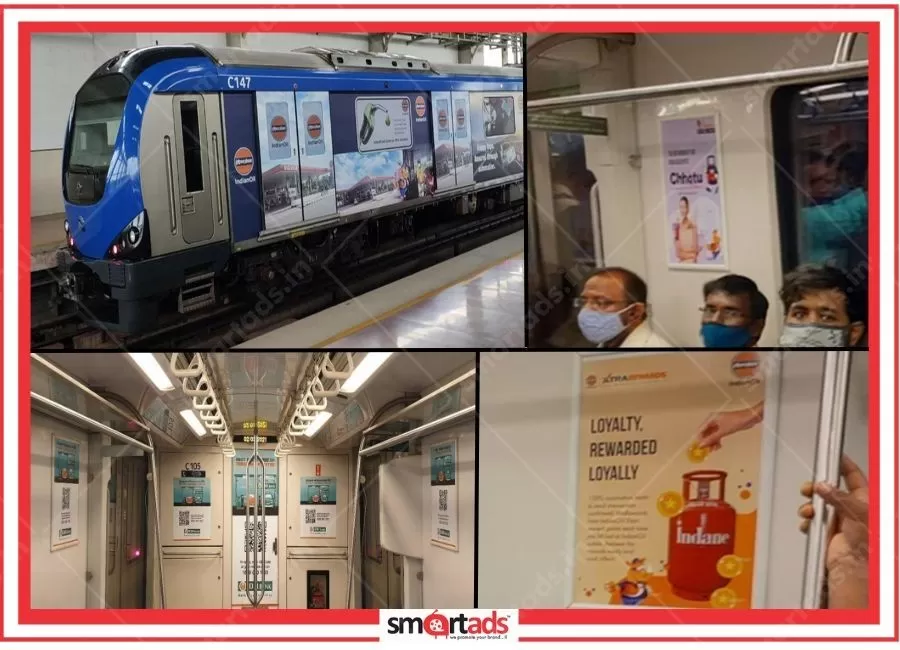
Size & Printing Cost as per actual
On the outside of metro Train, advertise
Rate per Metro Display Cost / 1 Month
Route:Salt Lake Sector IV To Esplanade
₹730000.00
MEDIA REACH

MinimumQty :
1
EstimateReachPeople :
150000000
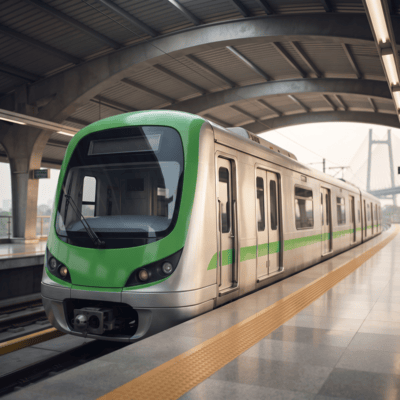
Fewer than one in five brand managers we speak with have seriously considered the East-West Metro corridor for their Kolkata campaigns — which is, frankly speaking, one of the more puzzling oversights in the city's media planning landscape. The Green Line carries a commuter audience that is younger, more affluent, and more IT-sector-heavy than virtually any other transit route in West Bengal, yet its advertising inventory remains dramatically underpriced relative to what comparable transit media commands in Mumbai or Bengaluru. If your brand is chasing upwardly mobile urban professionals in Kolkata, this is the corridor that deserves a much longer conversation.
Most people who haven't worked in transit media tend to think of metro advertising as those small posters near the ticket counter — which is a significant underestimation of what the format actually offers. Metro train advertising on the Kolkata Green Line refers to a broad category of non-traditional advertising placements that span the interior and exterior surfaces of the BEML-manufactured 6-coach trains operated by KMRC (Kolkata Metro Rail Corporation) along the East-West Metro corridor, officially designated as Line 2. These placements range from full coach wraps that transform an entire train into a moving billboard, to interior panel ads, seat-back stickers, concourse hoardings, and platform pillar advertising at key interchange stations.
The East-West Metro, which runs from Howrah Maidan in the west to Salt Lake Sector V in the east — passing beneath the Hooghly River through what is now one of India's most celebrated engineering achievements — opened its full corridor progressively between 2020 and 2024. The underwater metro tunnel section, which passes roughly 33 metres below the riverbed, has become something of a landmark in itself; commuters actively anticipate it, which means dwell time and attentiveness inside the coach are measurably higher on the Green Line than on older metro segments. For a brand, that heightened passenger attention is not a minor detail — it is the entire value proposition of interior train branding on this route.
At SmartAds, we always tell our clients that the Green Line is not just another transit advertising option; it is a hyperlocal advertising channel that delivers a specific, definable audience profile with a consistency that most OOH advertising formats simply cannot match. Unlike a roadside hoarding that gets seen by whoever happens to be driving past, metro train advertising in Kolkata Green Line delivers the same commuter audience, day after day, in a controlled environment where there is no traffic to distract them and no competing billboard two metres away.
The format range on the Green Line is wider than most brands realise, and the choice of ad format matters enormously for both creative impact and cost efficiency. The most premium option is the full train branding or coach wrap — a vinyl wrap that covers the exterior surfaces of one or more coaches in the 6-coach train consist, effectively turning the entire vehicle into a moving billboard that travels the full length of the East-West Metro corridor multiple times a day. Exterior train branding of this kind generates impressions not just from passengers inside the system but from pedestrians, motorists, and bystanders at elevated sections and station approaches, which makes the reach calculation considerably more generous than the ridership numbers alone would suggest.
Interior train branding formats include overhead panel ads (the rectangular panels mounted above the windows and doors), door sticker panels, seat-back stickers affixed to the back of each passenger seat, and full interior coach wraps where every surface — ceiling, walls, grab handles, and floor — carries branded graphics. Each of these formats has a different dwell time dynamic; a seat-back sticker, for instance, sits directly in the eyeline of the passenger seated behind it for the entire duration of their journey, which on the Green Line averages somewhere between 18 and 28 minutes depending on the boarding and alighting stations. That is a captive audience exposure duration that no digital banner ad or radio spot can replicate.
Beyond the trains themselves, station branding formats are available at key Green Line stations — platform pillar advertising, concourse hoarding placements, entry gate branding, and digital DOOH screens at select stations. Platform pillar advertising at high-footfall stations like Esplanade, Sealdah, and Salt Lake Sector V commands a premium because these are interchange or terminus points where commuters spend additional time waiting; the dwell time at these locations is meaningfully higher than at mid-corridor stations. Our experience at SmartAds shows that brands which combine interior train branding with platform pillar advertising at two or three anchor stations consistently report stronger brand recall scores than those who book only one format in isolation.
Pricing is the question every client asks first, and it is also the area where the most confusion exists — largely because very few sources publish actual rate benchmarks for this specific corridor. We will be direct about what we have seen in the market, with the caveat that rates are negotiated with KMRC or through an empanelled agency and can vary based on campaign duration, format, and seasonal demand.
For interior panel ads on a single coach, the advertising cost works out to somewhere in the ballpark of ₹40,000 to ₹80,000 per month per coach, depending on the panel position and size — overhead panels being priced differently from door panels or seat-back stickers. A full interior coach wrap, which covers all branding surfaces within one coach, is typically priced in the range of ₹1.5 lakh to ₹3 lakh per coach per month, which sounds significant until you calculate the cost per impression against the daily ridership numbers. Exterior train branding — the coach wrap that makes the train a moving billboard — tends to be priced higher, somewhere between ₹2 lakh and ₹5 lakh per coach per month for a full vinyl wrap, with full train branding across all six coaches commanding a negotiated package rate that can range from ₹8 lakh to ₹15 lakh per month.
The CPM on Green Line metro train advertising, when calculated against verified daily ridership figures and average journey frequency, works out to roughly ₹6 to ₹12 per thousand impressions for interior formats — which is a number that surprises most first-time advertisers when they compare it to what they are paying for Instagram reach in Kolkata or for prime-time radio spots on FM stations. Platform pillar advertising and concourse hoarding placements at major stations are priced separately, typically in the range of ₹25,000 to ₹60,000 per panel per month, with Esplanade and Salt Lake Sector V commanding the upper end of that range given their footfall intensity. At SmartAds, we negotiate consolidated packages that bundle train formats with station formats, which almost always results in a more favourable effective rate than booking each format independently.
The Green Line's audience profile is what makes it genuinely distinctive among Kolkata Metro advertising options, and it is worth spending some time on this because the demographic composition of the East-West Metro corridor is unlike any other transit route in the city. Salt Lake Sector V — the eastern terminus of the Green Line — is home to one of India's largest IT and technology clusters, housing major campuses of Wipro, TCS, Cognizant, IBM, Tech Mahindra, and dozens of mid-sized technology firms; the commuter audience boarding at Sector V and the adjacent Karunamoyee and Salt Lake Stadium stations skews heavily toward IT professionals aged between 24 and 42, with household incomes that place them firmly in the SEC A and SEC A+ categories.
This is not an assumption — it is a pattern we have observed consistently across campaigns we have planned on this corridor. A fintech brand we worked with ran a three-month interior train branding campaign targeting the Sector V to Howrah Maidan stretch, and their post-campaign brand recall survey showed unaided recall of 34% among respondents who identified as regular Green Line commuters — which was nearly double the recall figure they had achieved from a concurrent FM radio campaign running on two Kolkata stations. The commuter audience on the Green Line is also notably younger than on the Blue Line (the original north-south corridor), with a higher proportion of office-goers in the 25-35 age bracket and a significant student population traveling to educational institutions in the Salt Lake and Bidhannagar areas.
What a lot of people miss is that the Green Line also captures a secondary audience that is not counted in the daily ridership figures — the pedestrians, auto-rickshaw passengers, and motorists who see exterior train branding at elevated station approaches and at the Howrah Maidan terminus, which is one of the busiest transit hubs in West Bengal. The brand visibility generated by a coach wrap on a 6-coach train that completes multiple round trips per day across a 16.6-kilometre corridor is genuinely cumulative in a way that a static hoarding at a single location is not.
The honest answer is that the Green Line and the Blue Line serve fundamentally different advertising purposes, and the choice between them should be driven by audience fit rather than by a general preference for one over the other. That said, the Green Line has several structural advantages for brands targeting the professional and tech-sector demographic that are difficult to replicate on the older Blue Line network. The East-West Metro corridor was built to newer specifications, the coaches are more modern, the stations are better maintained, and the overall commuter experience — which directly influences the receptivity of passengers to advertising — is measurably more positive.
The Green Line also benefits from a captive audience dynamic that is particularly pronounced in the underwater tunnel section between Howrah and Esplanade. Passengers in that section have no phone signal, no window view, and nothing to look at except the interior of the coach — which means interior train branding in that segment commands attention that brands pay significant premiums for in other contexts. We have seen this dynamic play out in campaigns for FMCG clients who were initially sceptical about metro advertising but came back for repeat bookings after their brand awareness metrics from the Green Line outperformed their expectations.
On top of that, the upcoming interchange between the Green Line and the Orange Line at Salt Lake Sector V — which is expected to dramatically expand the connected catchment area of the terminus — represents a forward-looking reason to establish brand presence on this corridor now, before advertising inventory becomes more competitive and rates adjust accordingly. The Sector V interchange, once operational, will effectively make the Green Line a gateway to an even larger commuter audience, and brands that have already built recognition among the existing commuter audience will benefit from a compounding familiarity effect as new riders enter the system.
Station selection for platform and concourse advertising on the Green Line requires a more nuanced approach than simply picking the busiest stations, because footfall intensity, dwell time, and audience composition vary significantly across the 12 operational stations. Howrah Maidan, as the western terminus, sees very high footfall from commuters transferring from suburban rail, buses, and ferries — the audience here is broader and more mixed in terms of income and occupation than at the eastern end of the line. Esplanade, which is the planned interchange with the Blue Line, is arguably the single most strategically important station on the entire Green Line for advertising purposes; it sits at the geographic heart of Kolkata's commercial district, and the footfall here includes a mix of office-goers, shoppers, and tourists that gives it an unusually broad demographic reach.
Sealdah station, which connects the Green Line to one of Kolkata's two major railway terminals, is critical for brands that want to reach an audience that extends beyond Kolkata city — commuters traveling from suburban districts of West Bengal pass through Sealdah, which means brand visibility here has a geographic reach that extends well beyond the immediate metro catchment. Salt Lake Sector V, as the IT hub terminus, is the station of choice for brands targeting tech professionals and corporate decision-makers; the morning and evening peak hours at Sector V see concentrated footfall from a very specific, high-value demographic, and platform pillar advertising here delivers an audience quality that rivals the most expensive digital targeting options.
At SmartAds, our media planning team typically recommends that clients with a budget that allows for station branding at two or three locations prioritise Esplanade, Salt Lake Sector V, and either Howrah Maidan or Sealdah depending on whether their target audience skews toward the city's commercial core or toward the suburban and outstation traveler segment. Bidhannagar station is also worth considering for brands targeting the residential catchment of the Salt Lake township, which has a high concentration of established middle-class and upper-middle-class households.
The comparison between metro train advertising in Kolkata Green Line and conventional OOH advertising — hoardings, bus shelters, wall paintings — is one that we find ourselves making in almost every media planning conversation, because the two formats are often seen as interchangeable when they are actually quite different in how they deliver value. A large-format hoarding on a major arterial road in Kolkata can generate impressive raw impression numbers, but those impressions are typically measured in seconds — a driver passing at 40 kilometres per hour sees a hoarding for perhaps two or three seconds, which is barely enough time to register a brand name, let alone absorb a message. Metro train advertising, by contrast, delivers a captive audience with a dwell time measured in minutes, not seconds.
The cost comparison is also more favourable to metro advertising than it first appears. A prime hoarding on a major Kolkata arterial — say, on the E.M. Bypass or near the Ultadanga flyover — can cost anywhere from ₹1.5 lakh to ₹4 lakh per month, and the audience it reaches is entirely undifferentiated; you are paying for everyone who drives past, regardless of whether they are your target customer. Interior train branding on the Green Line, at a comparable cost, delivers a far more defined audience profile, with the added advantage that the commuter audience sees the ad repeatedly over multiple journeys rather than once in passing. The cost per impression for metro advertising is not always lower in absolute terms, but the cost per qualified impression — when you factor in audience relevance and dwell time — is almost always more efficient.
Guerrilla marketing and brand activation formats are also available in the metro environment in ways that are simply not possible with static OOH advertising; branded sampling activations at station concourses, interactive installations at key stations, and QR-code-linked creative executions that bridge the physical and digital environments are all formats that we have executed for clients on the Green Line. The non-traditional advertising potential of the metro environment goes well beyond what most brands consider when they first approach the medium.
The booking process for Green Line metro advertising is more structured than for most BTL advertising formats, and understanding it in advance saves a significant amount of time and frustration. KMRC manages advertising rights on the East-West Metro corridor, and bookings are typically made either directly through KMRC's commercial division or through an empanelled agency that has been approved to sell and manage metro advertising inventory. Working through an empanelled metro advertising agency is generally the more practical route for brands that are not familiar with the specific documentation and approval requirements of Metro Railway Kolkata.
The campaign booking process begins with a format and station selection brief, followed by a formal proposal and rate negotiation with KMRC or the empanelled agency. Creative materials must be submitted for approval before production begins — and this is a step that many first-time metro advertisers underestimate in terms of lead time. Metro Railway Kolkata has specific content restrictions and creative guidelines that govern what can and cannot appear on metro advertising surfaces; the approval process typically takes between 7 and 14 working days, and revisions can extend this timeline significantly. Brands that submit creative materials without first reviewing the guidelines — or without the guidance of an experienced metro advertising agency — frequently find themselves scrambling to revise artwork at the last minute, which can delay campaign launch.
Our experience at SmartAds is that a realistic campaign booking timeline, from initial brief to live installation, is somewhere between four and six weeks for interior formats and six to eight weeks for exterior coach wraps, which require more complex production and installation logistics. Campaign duration is typically sold in monthly blocks, with a minimum campaign duration of one month for most formats; longer commitments — three months or six months — generally attract better rates and are worth negotiating upfront if the brand has a sustained presence objective rather than a short burst campaign. Production costs for vinyl wraps and panel prints are separate from the space rental cost and should be budgeted for independently.
Content restrictions on Kolkata Metro advertising are governed by Metro Railway Kolkata's advertising policy, which aligns broadly with Indian Railways' general advertising guidelines but includes some KMRC-specific provisions. Advertising for alcohol, tobacco, and tobacco-related products is prohibited across all metro advertising surfaces — which is consistent with most Indian public transit systems. Political advertising and content that could be construed as religiously or politically sensitive is also not permitted; Metro Railway Kolkata has been particularly firm on this category, and campaigns that push against these boundaries are rejected without exception.
Creative dimension specifications vary by format and by the specific coach configuration of the BEML-manufactured 6-coach trains used on the Green Line. Interior overhead panel ads are typically sized at around 24 inches by 18 inches per panel, though exact dimensions should be confirmed with KMRC at the time of booking since configurations can vary between train sets. Seat-back stickers follow a standard size that fits the seat back dimensions of the Green Line coaches, typically in the range of 10 inches by 12 inches. Exterior coach wrap dimensions are calculated per coach panel section and require precise measurement of the specific coach surfaces being wrapped; a full exterior wrap for a single coach can involve artwork that spans several hundred square feet, and the production of vinyl wrap for a 6-coach full train branding exercise is a substantial production undertaking that requires experienced vendors.
The thing is, creative quality matters enormously in the metro environment — perhaps more than in any other OOH format — because the captive audience has time to scrutinise the work. We have seen campaigns where the media buy was strong but the creative execution was mediocre, and the brand recall outcomes were disappointing as a result. Conversely, a well-crafted interior coach wrap with a strong visual hierarchy and a clear call to action can generate brand recall scores that rival television advertising at a fraction of the cost.
Campaign duration is one of the most consistently underestimated variables in metro train advertising, and it is an area where we see brands make the same mistake repeatedly — booking a single month, seeing modest results, and concluding that the medium did not work, when the reality is that the medium simply needed more time to build the frequency required for meaningful brand recall. The research on transit advertising recall — including data referenced in FICCI-EY Media Reports on OOH advertising effectiveness — consistently shows that brand recall from transit media builds significantly between the four-week and twelve-week marks, as the commuter audience accumulates repeated exposures over multiple journeys.
For a brand new to the Green Line, we typically recommend a minimum campaign duration of three months as the baseline for a brand awareness objective; this gives the campaign enough time to reach the majority of regular commuters on the corridor at a frequency that produces measurable recall. For a product launch or a time-bound promotional campaign, a single month can be effective if the creative is strong and the format mix includes both train and station elements that reinforce each other. A retail client in Kolkata's Salt Lake area that we worked with ran a six-month interior train branding campaign on the Green Line, combined with platform pillar advertising at Sector V and Esplanade; by the end of the campaign, their spontaneous brand awareness among surveyed Green Line commuters had increased by 22 percentage points, which was a result that significantly exceeded the client's initial expectations and led directly to a renewal booking.
Seasonal timing also matters more than most brands account for in their media planning. Durga Puja — which transforms Kolkata into perhaps the most advertising-intensive environment in India for a two-week period — is a period when metro ridership spikes sharply as Kolkata residents use the metro to navigate the city's traffic-choked streets; brands that have their metro advertising already in place during Puja benefit from a multiplier effect on their impression numbers without any additional cost. The Kolkata Book Fair season, the IPL season, and the pre-festive period from September through November are similarly high-value windows for metro train advertising in Kolkata Green Line, and booking inventory for these periods well in advance — ideally three to four months ahead — is strongly advisable.
This is genuinely one of the more interesting strategic questions in Kolkata media planning, and the honest answer is that it depends entirely on what your brand is trying to accomplish and who it is trying to reach. The Blue Line — the original north-south Kolkata Metro corridor running from Dakshineswar to Kavi Subhas — has a much longer operational history, higher total daily ridership across its full length, and a broader geographic footprint that covers more of the city's residential areas. The Green Line, by contrast, is newer, covers a shorter distance, but delivers a more concentrated and demographically specific audience that is harder to reach through other media.
For brands in the technology, fintech, e-commerce, professional services, and premium consumer goods categories, the Green Line's IT-professional-heavy commuter audience makes it the more efficient choice on a cost-per-qualified-impression basis, even if the raw ridership numbers are lower than the Blue Line. For brands in FMCG, mass-market retail, or categories that require broad demographic reach across income brackets, the Blue Line's wider geographic coverage and more diverse ridership profile may be the better fit. To be fair, the two lines are not mutually exclusive — an integrated metro advertising campaign that covers both corridors can be structured at a combined rate that is more efficient than booking each line independently, and the Esplanade interchange station, which will eventually connect both lines, creates a natural anchor point for cross-corridor campaigns.
One automotive brand we worked with — a premium two-wheeler manufacturer targeting young urban professionals — ran simultaneous campaigns on both corridors and found that their cost per brand-aware consumer was roughly 30% lower on the Green Line than on the Blue Line, despite the Green Line having lower absolute ridership; the audience quality differential more than compensated for the reach gap. That kind of outcome is not universal, but it illustrates why audience composition should be weighted at least as heavily as raw footfall numbers in metro advertising decisions.
Q: What is the cost of metro train advertising on the Kolkata Green Line?
The advertising cost on the Kolkata Green Line varies significantly by format. Interior panel ads on a single coach are typically priced somewhere in the range of ₹40,000 to ₹80,000 per coach per month, while a full interior coach wrap runs in the ballpark of ₹1.5 lakh to ₹3 lakh per coach per month. Exterior train branding — the full vinyl wrap that covers the outside of a coach — is generally priced between ₹2 lakh and ₹5 lakh per coach per month, with full train branding packages for all six coaches of a train set negotiated as consolidated deals that can range from ₹8 lakh to ₹15 lakh per month. Station-based formats like platform pillar advertising and concourse hoardings are priced separately, typically between ₹25,000 and ₹60,000 per panel per month depending on the station and location within it. Production costs for vinyl wraps and panel prints are additional to space rental costs and should be budgeted for separately.
Q: What ad formats are available for Green Line metro train advertising in Kolkata?
The Green Line offers a broad range of ad formats across both train and station environments. On the trains themselves, available formats include full exterior coach wraps (vinyl wrap covering the outside of one or more coaches), full interior coach wraps, overhead interior panel ads, door panel stickers, seat-back stickers, and grab handle branding. At stations, formats include platform pillar advertising, concourse hoarding placements, entry gate branding, and digital DOOH screens at select stations. The most impactful format for brand visibility is the full train branding option, which turns the entire 6-coach train into a moving billboard; the most cost-efficient format for sustained brand recall among the captive audience is typically the interior panel ad or seat-back sticker, which delivers repeated exposure to the same commuters over multiple journeys.
Q: How many trains are available for advertising on the Kolkata Green Line?
KMRC operates a fleet of BEML-manufactured 6-coach train sets on the East-West Metro corridor. The exact number of train sets available for advertising at any given time depends on operational requirements and the number of rakes in active service; as of the most recent operational data, the Green Line runs multiple train sets across its service hours, with advertising inventory available on a per-coach or per-train basis. Availability should be confirmed directly with KMRC or through an empanelled metro advertising agency at the time of campaign booking, as some train sets may be reserved for specific operational purposes or may already be committed to existing advertising contracts.
Q: Who is the target audience for advertising on the Kolkata Green Line metro?
The commuter audience on the Green Line is predominantly composed of IT professionals, office-goers, and students traveling between the Salt Lake Sector V technology hub and the commercial and residential areas of central and western Kolkata. The demographic profile skews toward the 24-42 age bracket, with a high concentration of SEC A and SEC A+ household income groups — particularly among commuters boarding at Sector V, Karunamoyee, and Salt Lake Stadium stations. The audience also includes a significant student population traveling to educational institutions in the Bidhannagar and Salt Lake areas, as well as a broader mix of commuters at interchange stations like Esplanade and Sealdah who are transferring to other transit modes.
Q: How do I book metro train advertising on the Kolkata Green Line?
Bookings for Green Line metro advertising are managed either directly through KMRC's commercial division or through an empanelled agency that has been approved to sell metro advertising inventory. The process begins with a format and location brief, followed by a formal proposal, rate negotiation, and creative approval submission. Creative materials must be approved by Metro Railway Kolkata before production begins, and this approval process typically takes between 7 and 14 working days. A realistic end-to-end timeline from initial brief to live campaign installation is four to six weeks for interior formats and six to eight weeks for exterior coach wraps. SmartAds.in works as a media planning and buying partner that manages the entire booking and approval process on behalf of clients, including vendor coordination for production and installation.
Q: What are the creative size specifications for interior and exterior metro train ads on the Green Line?
Interior overhead panel ads on Green Line coaches are typically sized at approximately 24 inches by 18 inches, though exact dimensions vary by panel position and should be confirmed at the time of booking. Seat-back stickers are generally in the range of 10 inches by 12 inches, sized to fit the seat back dimensions of the BEML coaches used on the Green Line. Exterior coach wrap dimensions are calculated per coach panel section and require precise measurement of the specific surfaces being wrapped; a full exterior wrap for a single coach involves artwork spanning several hundred square feet and must account for doors, windows, and structural features of the coach body. All creative files should be submitted in high-resolution vector or print-ready format, and KMRC's creative guidelines specify minimum resolution requirements and colour profile standards that must be followed.
Q: What is the minimum campaign duration for Green Line metro advertising in Kolkata?
The minimum campaign duration for most Green Line metro advertising formats is one calendar month, with inventory sold in monthly blocks. However, for brands with a brand awareness or brand recall objective — rather than a short-burst promotional objective — we strongly recommend a minimum commitment of three months, as transit advertising research consistently shows that meaningful recall builds between the four-week and twelve-week exposure marks. Longer commitments of three months or six months typically attract negotiated rate benefits and are worth discussing upfront with KMRC or the empanelled agency. Production costs are a one-time expense regardless of campaign duration, which means that the effective cost per month decreases meaningfully as campaign duration increases.
Q: Is metro train advertising on the Kolkata Green Line a BTL or OOH media format?
Metro train advertising in Kolkata Green Line is technically classified as both BTL advertising and transit OOH advertising, depending on the framework being used. In the Indian media planning context, metro advertising is most commonly categorised as a BTL or non-traditional advertising format because it operates outside the conventional mass media channels of television, print, and radio, and because it allows for a degree of audience targeting and environment control that traditional OOH advertising does not. Some industry frameworks classify it under OOH advertising as a subset of transit media, which is also accurate. For budget allocation and ROI reporting purposes, most media planners treat it as a BTL/transit media line item, separate from both traditional OOH and digital advertising budgets.
Q: What content is restricted or not allowed for Kolkata Metro train advertising?
Metro Railway Kolkata's advertising policy prohibits advertising for alcohol, tobacco, and tobacco-related products on all metro advertising surfaces. Political advertising, content that could be construed as religiously or politically sensitive, and content that violates Indian advertising standards as defined by the ASCI (Advertising Standards Council of India) are also not permitted. Content that depicts violence, obscenity, or material inappropriate for a public environment is rejected without exception. Brands in regulated categories — pharmaceuticals, financial products, food supplements — may face additional scrutiny and may be required to submit regulatory approvals alongside their creative materials. The approval process for borderline content categories can take longer than the standard 7-14 working days, so brands in these categories should plan for extended lead times.
Q: How does Kolkata Green Line metro advertising compare to Blue Line in terms of audience and ROI?
The Green Line delivers a more demographically concentrated audience — skewing toward IT professionals, young office-goers, and higher-income commuters — while the Blue Line offers broader geographic reach and higher total daily ridership across its longer corridor. For brands targeting the tech-sector and professional demographic, the Green Line typically delivers a lower cost per qualified impression than the Blue Line, even accounting for the ridership differential. For mass-market brands requiring broad demographic reach, the Blue Line's wider coverage may offer better absolute reach at a comparable cost. ROI comparisons between the two lines are most meaningfully made on a cost-per-brand-aware-consumer basis rather than on raw CPM, because the audience quality differential between the two corridors is significant enough to change the effective ROI calculation substantially.
Q: Can I advertise on specific stations along the Green Line rather than on the trains themselves?
Yes — station-specific advertising is available at Green Line stations independently of train advertising, and it is a format that works particularly well for brands with a hyperlocal advertising objective or a specific geographic catchment they want to target. Platform pillar advertising, concourse hoarding placements, and entry gate branding are available at individual stations and can be booked for specific stations without committing to a full-corridor or full-train campaign. This format is especially valuable at high-footfall stations like Esplanade, Salt Lake Sector V, and Sealdah, where the dwell time and audience concentration make station branding a cost-efficient standalone option. Station advertising can also be combined with train advertising as part of an integrated Green Line media plan that maximises both in-transit and in-station brand visibility.
Q: How does the underwater Hooghly tunnel section of the Green Line benefit metro advertisers?
The underwater metro tunnel section — which passes approximately 33 metres below the Hooghly River between Howrah and Esplanade — creates a unique advertising environment that is genuinely unlike anything else in Indian transit media. In this section, passengers lose mobile phone connectivity, have no window view, and are entirely enclosed within the coach environment for approximately four to five minutes; the result is a captive audience that has nothing to engage with except the interior of the coach. Interior train branding in this section commands a level of undivided attention that is extraordinarily difficult to achieve through any other advertising medium, and brands that have run interior coach campaigns on the Green Line consistently report that the tunnel section is mentioned by commuters as a moment of heightened awareness of the advertising around them. It is, in a very practical sense, a forced attention environment — and for a brand with strong creative, that is an extraordinary opportunity.
The Kolkata Green Line metro is one of the most genuinely undervalued advertising channels in the Indian BTL media landscape right now — and that undervaluation will not last indefinitely. As the East-West Metro corridor matures, as the Orange Line interchange at Sector V comes online and expands the connected catchment, and as more brands discover the audience quality and dwell time advantages that metro train advertising on this corridor offers, the inventory will become more competitive and the rates will adjust accordingly. The brands that move now, while the medium is still relatively uncrowded, will establish a familiarity with the Green Line commuter audience that later entrants will have to work much harder — and spend much more — to replicate.
What we have seen, across the campaigns we have planned and executed on this corridor, is that the Green Line rewards brands that commit to it with patience and creative quality. A three-month interior train branding campaign with strong creative execution, combined with platform pillar advertising at two anchor stations, is a media plan that can deliver brand recall outcomes that rival television advertising for the specific audience segment that travels this corridor — at a fraction of the cost. The medium is not a substitute for every other channel in your mix, but as a component of an integrated campaign that combines transit media with digital remarketing to the same audience profile, it is remarkably powerful.
If your brand is planning a Kolkata campaign and you have not yet had a serious conversation about the Green Line, we would suggest that conversation happens before your next media planning cycle closes. The SmartAds.in media planning team works with brands across 500+ Indian cities and has direct experience planning and executing metro train advertising campaigns on the Kolkata Green Line — from format selection and rate negotiation through creative approval and post-campaign measurement. Reach out to us at SmartAds.in for a customised media plan that puts the right formats, the right stations, and the right campaign duration together for your specific brand objective and budget.
