
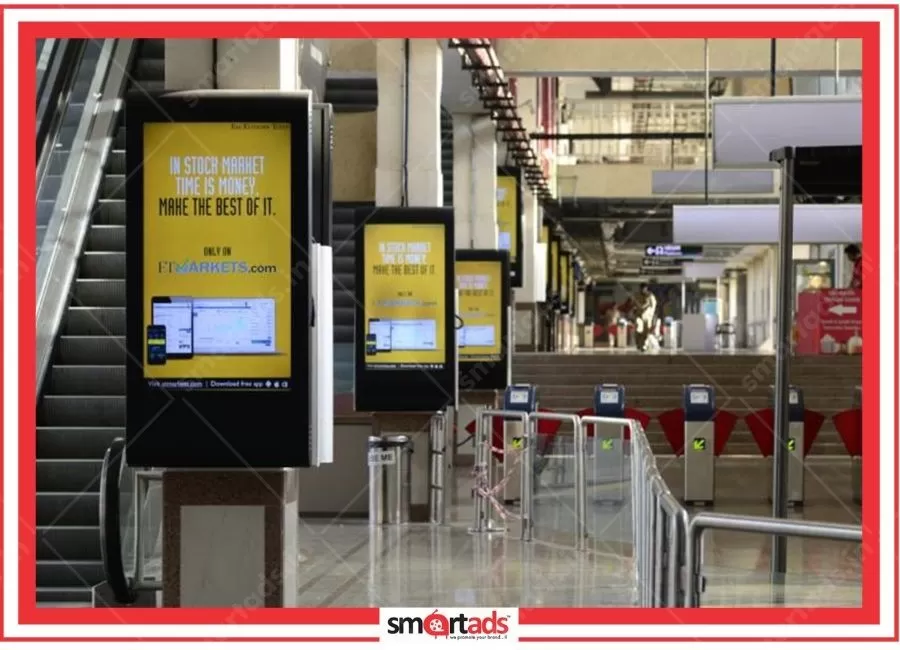
Entry Exit Panel
8 ft x 4 ft
Bright and vibrant multicolored letterin
Rate per Panel / Month
Min Requirement is 3 Panel.
₹48000.00
Showing 1 to 4 of 4 Results
MEDIA DETAILS
8 ft x 4 ft
Bright and vibrant multicolored letterin
Rate per Panel / Month
Min Requirement is 3 Panel.
₹48000.00
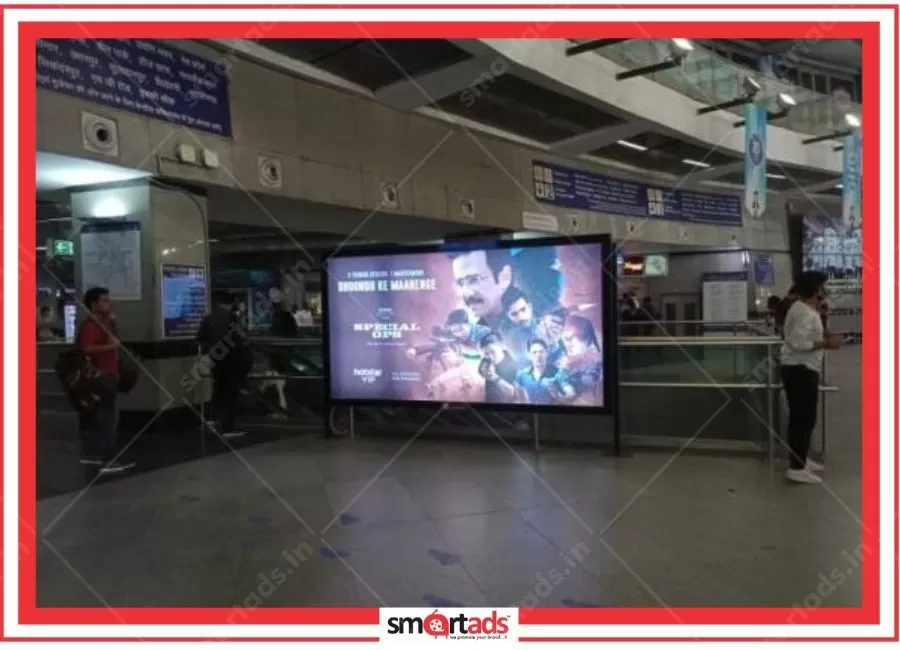
10 ft x 5 ft
A new wide wall system designed to accom
Rate per Panel / Month
Min Requirement is 3 Panel.
₹50000.00
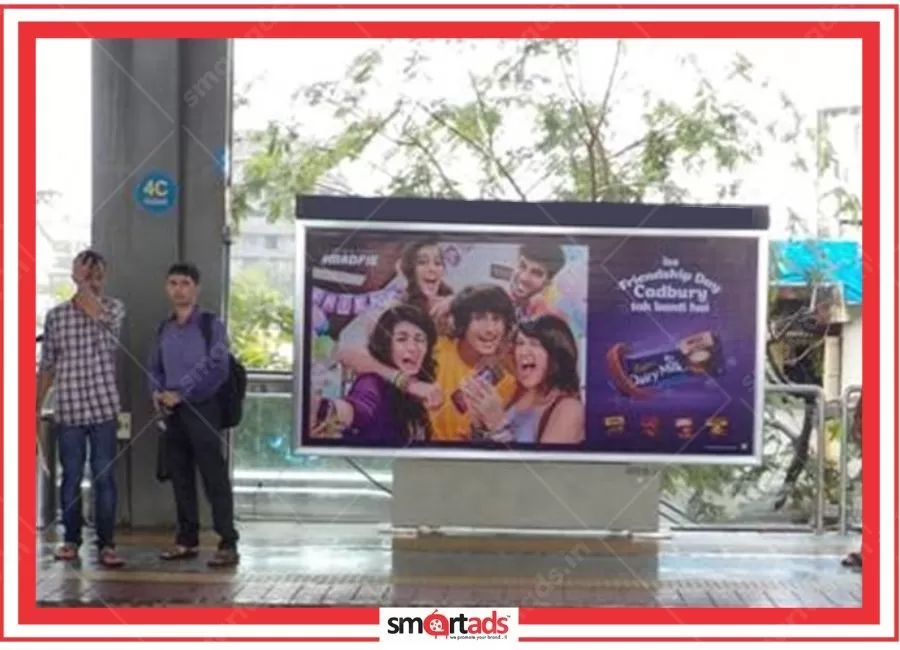
8 ft x 4 ft
A raised flooring or other horizontal su
Rate per Panel / Month
Min Requirement is 3 Panel.
₹35000.00
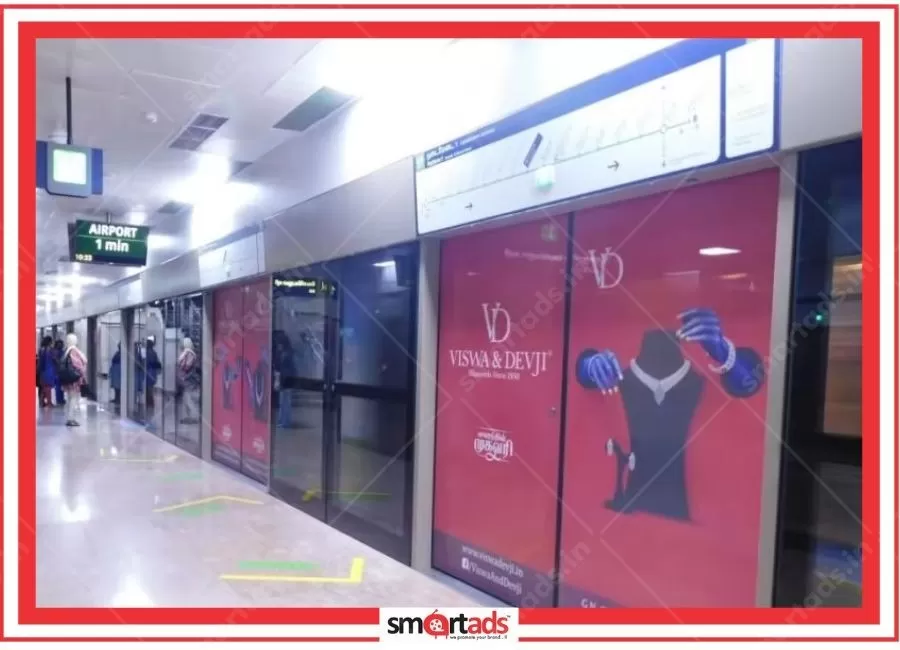
7 ft x 4 ft
Also known as platform edge doors (PEDs)
Rate per Plateform / Month
Min Requirement is 1 Stations.
₹1200000.00
MEDIA REACH

MinimumQty :
10
EstimateReachPeople :
15 Million
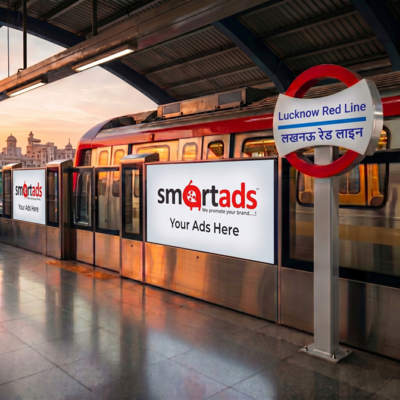
Most advertisers who approach us about Lucknow have already spent their budget on newspaper inserts and FM radio spots — and then they discover the Red Line metro, and everything changes. The Lucknow Metro Red Line carries somewhere in the ballpark of 65,000 to 70,000 daily commuters through a corridor that cuts directly through the city's most commercially active zones, which makes it one of the most underpriced captive-audience environments in any Tier-1 Indian market right now.
The thing is, most outdoor advertising in India competes for attention with everything else happening on the street — traffic, other hoardings, pedestrians, the general chaos of an Indian road. A metro station is structurally different; the commuter is stationary, the environment is controlled, and there is quite literally nowhere else to look. What we tell our clients, especially those evaluating Lucknow for the first time, is that the Red Line's station dwell time — which averages somewhere between four and seven minutes per platform visit — creates a contact quality that a roadside billboard simply cannot replicate.
The Lucknow Metro Red Line stretches across 23 kilometres connecting CCS Airport to Munshi Pulia, passing through stations that serve wildly different audience profiles. Hazratganj station, for instance, sits in the middle of Lucknow's most premium retail and commercial district, which means the footfall there skews heavily towards working professionals, college students, and upper-middle-class shoppers; Alambagh and Amausi, on the other hand, pull in a much larger share of daily wage commuters and airport travellers. This is not a one-size-fits-all corridor, and any media plan that treats all Red Line stations as interchangeable is leaving serious targeting value on the table.
At SmartAds, our experience across multiple Lucknow campaigns has shown that the station selection decision matters far more than most clients initially expect. We worked with a retail fashion brand targeting SEC A and SEC B women in Lucknow, and by concentrating their metro station spend on Hazratganj and Sachivalaya stations — which serve the highest concentration of government employees and corporate professionals — they achieved a brand recall lift that their post-campaign survey pegged at roughly 34%, which was significantly higher than what the same budget had delivered on conventional hoardings the previous quarter.
This is where it gets interesting, because the format inventory at Lucknow Metro stations is considerably more varied than most media planners realise when they first call us. The Lucknow Metro Rail Corporation has opened up a fairly broad range of surfaces across the Red Line — from large-format backlit panels on station concourses and platforms, to pillar wraps, gate branding, ticket counter surrounds, and digital screens positioned at entry and exit points. Train branding — both interior panels and full exterior train wraps — is also available, which gives a brand the unusual ability to move with the commuter rather than waiting for the commuter to come to the brand.
Platform screen door (PSD) branding deserves special mention here, because it is one of those formats that consistently outperforms expectations in our experience. The PSD panels run the full length of the platform on the side facing commuters as they wait, which means every person standing on that platform is looking directly at the brand for the entire duration of their wait. The dwell-time advantage is compounded by the fact that commuters are typically not on their phones while navigating the platform — they are watching for the train, which means their eyes land on the PSD panels almost involuntarily. We have seen this format deliver recall numbers that rival prime-time television spots for certain product categories.
Digital screens — which are positioned at concourses, near fare gates, and in some cases on the platforms themselves — add a layer of flexibility that static formats cannot offer. A brand can rotate multiple creatives through the day, which allows, say, a quick-service restaurant to push a breakfast offer in the morning rush and a dinner deal during the evening peak, all from the same screen booking. To be fair, the digital inventory at Lucknow Metro is still expanding, and availability varies by station; but for brands that want time-of-day targeting in a physical environment, this is one of very few options in the Lucknow market.
Frankly speaking, this is the question every client asks first, and it is also the question that is most poorly answered by most online sources — which either give vague ranges or simply say "contact for pricing." We will be more direct. For static backlit panels at mid-tier Red Line stations, rates typically work out to somewhere in the range of ₹40,000 to ₹80,000 per panel per month, depending on the station's footfall rank and the specific surface location within the station. Premium stations like Hazratganj and Charbagh command a premium that pushes that figure closer to ₹1 lakh to ₹1.5 lakh per panel per month for the best-positioned concourse panels.
Train interior branding — which covers panels inside the coaches and is seen by every passenger who boards that train — is priced differently, typically on a per-coach or per-train basis; a full-train interior campaign across the Red Line fleet can run somewhere between ₹3 lakh and ₹6 lakh per month for a meaningful presence, which sounds significant until you calculate the per-impression cost against the daily ridership numbers. The CPM on metro interior branding works out to roughly ₹12 to ₹18, which is a number that surprises most clients when they compare it to what they are currently paying for programmatic display or even mid-roll video on YouTube. Digital screen time-slots are generally priced on a per-spot, per-day basis, with a 10-second spot running somewhere in the ballpark of ₹800 to ₹2,000 per day per screen depending on location and time band.
One thing most brands get wrong is treating metro advertising as a single-station buy. The real value — both in terms of reach and in terms of rate negotiation — comes from booking across multiple stations simultaneously; the Lucknow Metro Rail Corporation and its appointed concessionaire tend to offer meaningful package discounts for multi-station, multi-month commitments, which can bring the effective per-station cost down by 15% to 25% compared to standalone bookings. At SmartAds, we routinely negotiate these packages on behalf of clients, and the savings are real and consistent.
The ridership profile of the Lucknow Metro Red Line is something that most advertisers underestimate in terms of its commercial value. Data from UPMRC (Uttar Pradesh Metro Rail Corporation) ridership studies, cross-referenced with IRS audience data for Lucknow, suggests that the Red Line commuter skews heavily towards the 22-to-45 age bracket, with a significant proportion being government employees, private sector professionals, college students, and airport travellers — a combination which represents exactly the kind of SEC A and SEC B audience that most FMCG, banking, insurance, and lifestyle brands are chasing.
Lucknow is not a city that gets discussed as much as Delhi or Mumbai in media planning conversations, but it is the capital of India's most populous state and has a consuming class that is growing faster than most southern metros on several economic indicators. The FICCI-EY Media and Entertainment Report has consistently flagged Uttar Pradesh as one of the highest-growth advertising markets in India, and Lucknow specifically has seen a surge in organised retail, banking branch expansion, and real estate development — all categories which benefit enormously from the kind of high-frequency, high-dwell-time exposure that metro station advertising provides.
What a lot of people miss is the airport connection. Because the Red Line runs all the way to Chaudhary Charan Singh International Airport, there is a meaningful segment of business travellers and frequent flyers in the daily ridership mix — particularly at the Amausi station end of the corridor. For brands in categories like business banking, travel, premium consumer electronics, or corporate services, this airport-adjacent audience is genuinely difficult to reach through any other single Lucknow media format at comparable cost.
To be honest, we have run this comparison many times for clients who are deciding between metro, traditional hoardings, and mall advertising in Lucknow, and the answer is rarely simple — but the metro holds up surprisingly well on almost every metric that matters. A prime hoarding on Hazratganj Road or Gomti Nagar Extension might cost somewhere between ₹80,000 and ₹2 lakh per month, and while the gross impressions can be high, the effective attention time is measured in seconds; a driver passing at 40 kmph gets perhaps two to three seconds of exposure, which is qualitatively very different from a commuter standing on a platform for five minutes.
Mall advertising in Lucknow — specifically Phoenix Palassio and Lulu Mall, which are the two dominant premium retail destinations — offers a captive audience as well, but the footfall is concentrated on weekends and evenings, which limits the weekly frequency of exposure; metro commuters, by contrast, are using the system five to six days a week, which means a station panel is building frequency with the same audience in a way that most other formats cannot match. Our experience shows that for brands trying to build top-of-mind awareness over a 60 to 90-day campaign window, the frequency advantage of metro advertising is often the deciding factor.
On top of that, there is a brand safety and environment quality dimension that matters more than it used to. The Lucknow Metro stations are clean, well-lit, and well-maintained, which means a brand's creative is being displayed in an environment that implicitly communicates quality — something that cannot always be said for a hoarding that is peeling at the edges or a newspaper insert that lands next to a crime story.
The booking process for Lucknow Metro advertising runs through the UPMRC's appointed advertising concessionaire, and it is — to be fair — not the most straightforward process for a brand approaching it directly for the first time. Inventory is managed station by station, with different surfaces sometimes under different sub-agreements, which means a brand trying to book a multi-station campaign independently can find itself navigating several separate conversations simultaneously. This is one of the more practical reasons why working through an agency that already has established relationships with the concessionaire saves time and, quite often, money.
Typically, the booking process involves a site inspection or virtual inventory review, creative specification sign-off (which is important because the metro authority has specific guidelines around content, size, and material for different surfaces), a formal booking confirmation with advance payment, and then a production and installation window that needs to be factored into the campaign timeline. For static panels, the production and installation lead time is generally somewhere between 10 and 15 working days from creative approval; for digital screens, the lead time is considerably shorter since no physical installation is required. Campaigns are typically booked in minimum one-month blocks, though longer commitments are both available and advisable for frequency-dependent brand objectives.
At SmartAds, we manage the entire booking and execution process — from inventory identification and rate negotiation through to creative production coordination and post-installation verification — which means our clients are not spending their time chasing vendors and approvals. We have found that brands which try to manage metro bookings independently often end up with suboptimal site selections simply because they do not have visibility into which specific panels within a station are actually performing well versus which are technically "available" but poorly positioned.
The honest answer is that metro advertising is not the right first choice for every brand or every campaign objective — but for certain combinations of objective, audience, and budget, it is genuinely hard to beat. If a brand's primary goal is building frequency with a defined urban professional audience in Lucknow over a sustained period, metro advertising should be near the top of the plan; if the goal is mass reach across all socioeconomic segments of the city in a short burst, a combination of television and radio will cover more ground faster.
Where metro advertising really earns its place is in the mid-funnel — the space between initial awareness and actual purchase consideration. We worked with a banking client launching a new savings product in Lucknow, and their brief was specifically to reach working professionals who were likely to be evaluating financial products but had not yet made a decision. We placed their campaign across six Red Line stations with a mix of platform panels and concourse backlit displays over a 90-day period; the post-campaign brand tracking showed that unaided awareness among metro commuters in their target segment had moved from roughly 12% to 31%, which was a lift that their media investment at other touchpoints had not come close to matching on a cost-per-awareness-point basis.
One category that we think is significantly underusing Lucknow Metro advertising is real estate — particularly residential projects in the Gomti Nagar, Shaheed Path, and airport corridor zones, which are all well-served by Red Line stations. The audience profile of metro commuters in those catchments maps almost perfectly onto the buyer profile for mid-premium and premium residential projects, and the sustained frequency that metro advertising provides is exactly what a considered purchase like real estate requires.
Creative for metro station advertising operates under a set of constraints and opportunities that are genuinely different from what works on a roadside hoarding or in a print ad, and this is an area where we see a lot of brands make expensive mistakes. The most common error is adapting a hoarding creative directly to a metro panel without accounting for the fact that the viewing distance and viewing angle are completely different; a metro commuter standing two metres from a platform panel is reading the ad at close range, which means the creative can carry more detail, more copy, and more nuance than a billboard that needs to communicate in three seconds at 60 metres.
That said, the close-range viewing environment also means that production quality is scrutinised far more closely — a pixelated image or an inconsistent colour profile that might be invisible on a roadside hoarding is immediately obvious on a backlit metro panel viewed at arm's length. We always recommend that clients produce metro creatives at higher resolution than they think they need, and that they review physical proofs before approving the final print run. The backlit nature of most metro panels also means that colours render differently than they do on a printed proof or a monitor, which is something that needs to be accounted for in the colour calibration stage.
For digital screens, the creative brief is different again; a 10-second slot needs to communicate one clear message with no ambiguity, because there is no second chance to re-read the panel if the commuter missed something. We have found that campaigns which use the static and digital formats in a complementary way — with the static panel carrying the full brand story and the digital screen carrying a single sharp call to action — consistently outperform campaigns that use the same creative across both formats.
This is a question that deserves a genuinely honest answer, which means acknowledging both what metro advertising does well and where its limitations lie. On reach, a well-planned Red Line campaign covering eight to ten stations over a 60-day period can reasonably expect to generate somewhere between 30 lakh and 50 lakh gross impressions, depending on the specific stations and formats selected — a number which, when divided by the campaign investment, typically yields a CPM that is competitive with most digital formats and significantly lower than television on a Lucknow-specific basis.
On brand recall, the data from our own post-campaign tracking studies — which we run for clients who want to measure beyond impressions — consistently shows that metro advertising generates higher unaided recall than comparable spends on outdoor or radio, which we attribute primarily to the dwell-time advantage and the controlled viewing environment. The recall lift tends to be strongest in the 25-to-40 age bracket, which aligns with the core commuter demographic. Where metro advertising is less effective is in driving immediate direct response; it is not a format that generates website visits or phone calls in the way that a well-targeted digital campaign does, which is why we almost always recommend pairing a metro campaign with a digital retargeting layer that captures the audience online after they have been exposed to the brand in the station.
An automotive accessories brand we worked with ran a 45-day Red Line campaign ahead of the festive season, targeting the Gomti Nagar and Indira Nagar station catchments specifically; their retail outlets in those areas reported a 22% increase in walk-in footfall during the campaign period compared to the same period the previous year, which — while not attributable solely to the metro campaign — was directionally consistent with the brand recall data we collected. The combination of physical environment presence and the retargeting campaign we ran simultaneously produced a return that the client described as the most efficient festive season spend they had executed in Lucknow in three years.
Q: What is the minimum budget required to start advertising at Lucknow Metro Red Line stations?
The practical minimum for a meaningful campaign — meaning one that will actually build frequency with the target audience rather than just technically "being present" — is somewhere in the range of ₹1.5 lakh to ₹2.5 lakh per month, which would cover a single premium station with a well-positioned backlit panel. That said, we generally advise clients with budgets at that level to consider concentrating on one high-footfall station rather than spreading thinly across multiple stations, because frequency at one location consistently outperforms low-frequency presence at several locations for brand recall objectives. For a multi-station campaign that starts to deliver meaningful reach across the corridor, a budget in the range of ₹5 lakh to ₹10 lakh per month is more realistic, and at that level the negotiated package rates start to make the economics considerably more attractive.
Q: Can small and medium-sized businesses advertise at Lucknow Metro stations, or is it only for large brands?
This is one of the more persistent misconceptions we encounter, and it is worth addressing directly. Metro station advertising is not exclusively the domain of large national brands; in fact, some of the most effective campaigns we have executed on the Lucknow Red Line have been for local and regional businesses — a Lucknow-based real estate developer, a regional bank expanding its branch network, a local chain of diagnostic centres — all of which used metro advertising to build the kind of credibility and visibility that previously felt out of reach for businesses of their size. The key for smaller advertisers is station selection; a local business that concentrates its budget on the one or two stations closest to its catchment area can achieve very high frequency with exactly the right audience without needing a city-wide budget.
Q: How far in advance do bookings need to be made for Lucknow Metro advertising?
For static formats, a booking lead time of three to four weeks before the intended campaign start date is generally sufficient for most stations, though premium inventory at high-footfall stations like Hazratganj and Charbagh can get booked out further in advance — particularly in the October-to-December festive window and the January-to-March period when many brands are executing their year-end campaigns. For digital screen slots, the lead time is shorter, and bookings can sometimes be confirmed within a week for non-peak periods. Our strong recommendation is to plan metro campaigns at least six to eight weeks in advance if a specific station or format is non-negotiable to the campaign strategy, because last-minute bookings often mean settling for second-choice inventory.
Q: Is it possible to measure the ROI of metro station advertising in Lucknow?
Measurement is genuinely more challenging for physical OOH formats than for digital, and anyone who tells you otherwise is oversimplifying. That said, there are several practical approaches that we use with our clients to build a reasonable picture of campaign impact. Brand recall surveys — conducted with a sample of metro commuters before and after the campaign — are the most direct method, and they consistently produce data that is actionable for future planning decisions. Footfall tracking at nearby retail locations, combined with sales data analysis for the campaign period, can provide directional evidence of commercial impact, particularly for brands with physical stores in the station catchment areas. Digital retargeting campaigns that serve ads to users who have been geofenced within metro station boundaries can also be used to create a measurable digital response layer on top of the physical campaign, which gives the overall programme a trackable conversion dimension.
Q: What content restrictions apply to advertising at Lucknow Metro stations?
The UPMRC and its advertising concessionaire maintain content guidelines that are broadly consistent with the Advertising Standards Council of India (ASCI) code, with some additional restrictions specific to the metro environment. Categories that are typically restricted or require special approval include alcohol, tobacco, political content, and certain categories of financial products that require regulatory disclaimers. All creative must be submitted for approval before production, and any changes to approved creative during the campaign period require a fresh approval cycle — which is something that needs to be factored into the campaign timeline. Practically speaking, for most mainstream consumer brand categories, the approval process is straightforward and does not add significant time to the booking process.
Q: How does Lucknow Metro advertising fit into a broader integrated media plan for UP?
Lucknow Metro advertising works best as one component of a broader Uttar Pradesh media plan rather than as a standalone investment, and this is a perspective we hold quite firmly based on our experience running multi-city campaigns across the state. The Red Line gives a brand deep penetration with Lucknow's urban professional audience, but it does not reach the vast semi-urban and rural population of UP that is accessible through television — particularly regional channels which, according to BARC viewership data, command enormous reach in districts beyond Lucknow. A well-constructed UP plan might use metro advertising to anchor the Lucknow urban presence, regional television to extend reach across tier-2 and tier-3 cities, and digital targeting to capture the audience across all touchpoints with a consistent message. The brands that get the most out of their Lucknow Metro investment are almost always the ones that have thought carefully about how the metro campaign connects to the rest of their media ecosystem.
The Lucknow Metro Red Line represents something that is still relatively rare in Indian advertising — a high-quality, controlled-environment, captive-audience medium that is priced at a point where it is genuinely accessible to brands that are not working with eight-figure media budgets. The combination of dwell time, audience quality, and the implicit credibility of the metro environment creates a contact experience that is difficult to replicate through any other single format available in the Lucknow market; and as ridership continues to grow — which all available projections suggest it will, given the ongoing urban development along the Red Line corridor — the value of early and consistent presence in this medium is only going to increase.
What we have seen consistently, across the campaigns we have planned and executed at SmartAds, is that the brands which treat metro advertising as a strategic, sustained investment rather than a one-time tactical buy get disproportionately better results. A 90-day campaign at six stations builds something qualitatively different from a 30-day campaign at two stations, even if the total investment is similar — because frequency and familiarity compound in ways that single-exposure advertising simply does not. The brands that are winning in Lucknow right now are the ones that have figured this out and committed to the medium with enough consistency to actually move the needle on awareness and consideration.
If you are evaluating metro station advertising on the Lucknow Red Line — whether for a specific campaign or as part of a broader Uttar Pradesh media strategy — the SmartAds team is available to walk through inventory options, rate structures, and campaign design in detail. We work across 500+ Indian cities and have specific experience with the Lucknow market across multiple media categories; reach out to us at SmartAds.in for a customised media plan that is built around your specific audience, objective, and budget rather than a generic rate card.
