
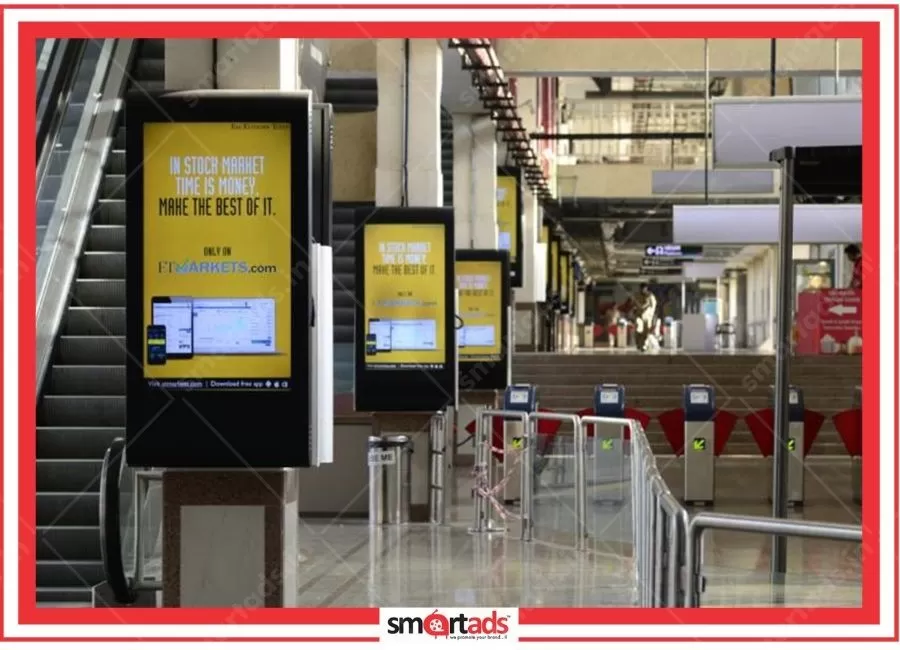
Entry Exit Panel
8 ft x 4 ft
Bright and vibrant multicolored letterin
Rate per Panel / 1 Month
Min Requirement is 3 Panel
₹48000.00
Showing 1 to 4 of 4 Results
MEDIA DETAILS
8 ft x 4 ft
Bright and vibrant multicolored letterin
Rate per Panel / 1 Month
Min Requirement is 3 Panel
₹48000.00
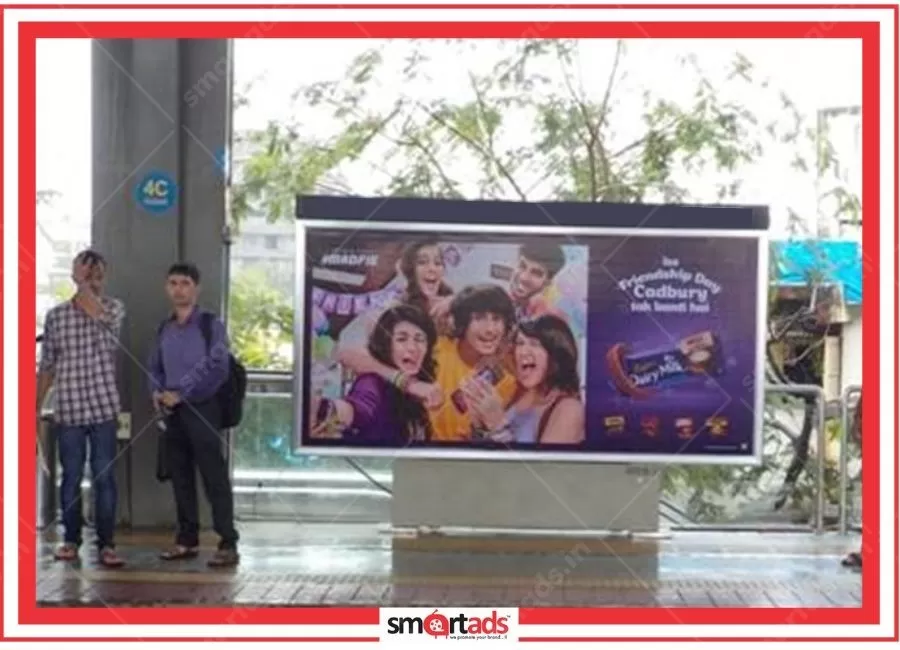
10 ft X 5 ft
A new wide wall system designed to accom
Rate per Panel / 1 Month
Min Requirement is 3 Panel
₹50000.00
8 ft x 4 ft
A raised flooring or other horizontal su
Rate per Panel / 1 Month
Min Requirement is 3 Panel
₹35000.00
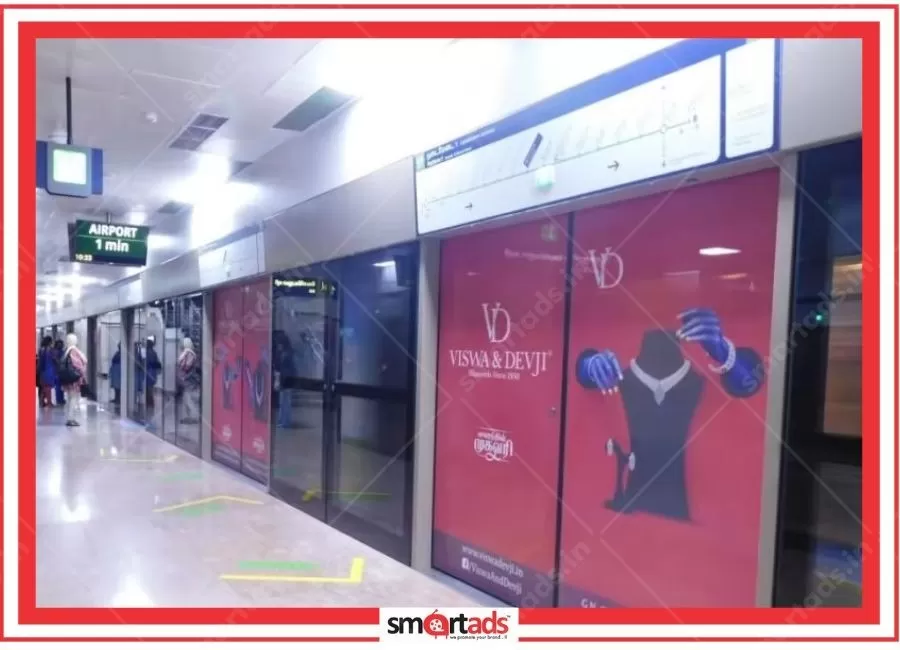
7 ft x 4 ft
Also known as platform edge doors (PEDs)
Rate per Plateform / 1 Month
Min Requirement is 1 Station
₹1200000.00
MEDIA REACH

MinimumQty :
10
EstimateReachPeople :
15 Million
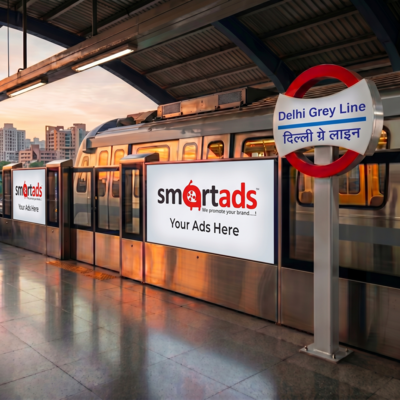
Most brands chasing Delhi Metro inventory instinctively reach for the Yellow Line or the Blue Line — the high-footfall corridors that command premium rates and, frankly, premium competition. What gets overlooked is Line 9, the Grey Line, which quietly connects one of Delhi's most densely populated residential belts to the broader metro network at a fraction of the cost and with a commuter profile that many categories would pay considerably more to reach on other platforms.
The Grey Line is the shortest operational metro line in Delhi at just 5.19 kilometres, running four stations through the Dwarka-Najafgarh corridor in western Delhi — and that brevity is precisely what makes it interesting from a media planning standpoint. At SmartAds, we have seen brands consistently underestimate what a tightly scoped, hyperlocal metro campaign on this line can do for neighbourhood-level brand recall, particularly when the objective is to own a geography rather than spray reach across the city.
Metro station advertising on the Delhi Grey Line operates within the broader DMRC advertising framework, which governs all commercial placements across the Delhi Metro Rail Corporation's network through a combination of direct licences and authorised media partners. The way it works, in practical terms, is that brands or their agencies apply for space at specific station locations — concourse level, platform level, entry/exit gates, or across the station facade — and the creative material goes through a DMRC approval process before installation. The inventory itself spans static formats like backlit panel advertising and pillar branding metro placements, through to more immersive options like full station domination packages where a single advertiser occupies every visible surface within a station.
What distinguishes grey line metro advertising from advertising on a larger corridor is the intimacy of the environment. Because the line serves four stations across a relatively contained geography, the commuter who boards at Dhansa Bus Stand metro station and alights at Dwarka metro station passes through the same ad environment repeatedly — sometimes twice a day, five or six days a week. That repetition is what builds brand recall in a way that a single-exposure OOH format on a flyover simply cannot replicate. The dwell time at stations, particularly on platforms where trains run at intervals, adds another layer of exposure that most transit advertising delhi formats do not offer.
At SmartAds, we always tell our clients that metro station advertising is not just a visibility play; it is a frequency play. The captive audience at a Grey Line station is not scrolling past your ad — they are standing in front of it, waiting for a train, with nowhere else to look. That is a fundamentally different attention quality than what most out-of-home advertising delhi formats deliver, and it is one that the CPM numbers alone do not fully capture.
The delhi grey line, officially designated Line 9 by the Delhi Metro Rail Corporation, runs from Dwarka metro station in the north to Dhansa Bus Stand metro station in the south, with Nangli metro station and Najafgarh metro station as the two intermediate stops. The line opened in two phases — the Dwarka to Najafgarh section came first, and Dhansa Bus Stand was added subsequently — and the entire corridor serves what urban planners would describe as a transitional zone between established urban Delhi and the peri-urban settlements of western Delhi that have grown rapidly over the past decade.
The commuter profile on line 9 delhi metro is meaningfully different from what you encounter on, say, the Magenta Line or the Pink Line. The ridership here skews toward daily wage workers, government employees, students from the numerous colleges in the Dwarka and Najafgarh belt, and middle-income residential families who have moved to the area because of relatively affordable housing. The footfall figures, while lower than the Blue Line's headline numbers, are concentrated and consistent — a daily ridership in the range of several thousand commuters per station, which translates to a captive audience that is geographically predictable and demographically coherent. For brands targeting western Delhi micro-markets, that coherence is worth considerably more than the raw reach numbers suggest.
The interchange dynamic at Dwarka metro station is also worth understanding properly. Dwarka functions as the junction where line 9 delhi metro meets the Blue Line (Delhi Metro), which means that a meaningful portion of Grey Line commuters either originate from or transfer to the Blue Line corridor — bringing with them a slightly broader demographic spread than the purely local ridership would suggest. A brand that places its messaging at Dwarka metro station is therefore reaching not just the Grey Line's own commuters but also a slice of the Blue Line's western Delhi audience, which makes the station particularly valuable for advertisers whose target geography extends across the Dwarka sub-city.
The range of metro advertising formats available across the grey line metro station network is broader than most advertisers assume when they first enquire. Backlit panel advertising is the most common entry point — these are the illuminated display panels positioned at concourse level, platform edges, and along station corridors, which catch the eye because of the contrast they create in the relatively controlled lighting environment of a metro station. Panel sizes vary by station and location, but the standard formats run from small concourse panels of roughly four feet by three feet through to large-format backlit units that can span six feet by four feet or larger, depending on the structural configuration of the specific station.
Beyond panels, pillar branding metro placements are available at stations where the structural columns offer wrap-around surface area — and this is a format we have found to be particularly effective for brand recall because the three-dimensional presence of a pillar wrap creates a more immersive visual experience than a flat panel. Escalator wrap advertising, where the side panels of escalators are covered in branded vinyl, is another format that delivers high dwell time exposure because commuters spend anywhere from fifteen to forty-five seconds on an escalator, with their gaze naturally directed toward the sides. AFC gate branding — the branded panels on the Automated Fare Collection gates through which every single commuter must pass — offers what is arguably the highest guaranteed exposure of any format in the station, because there is no route through the station that bypasses the fare gates.
For brands with larger budgets and a desire to own the environment completely, full station domination packages are available on the grey line, which allow a single advertiser to take over all available advertising surfaces within a station for a defined period. This station takeover advertising approach has been used effectively by real estate developers launching projects in the Dwarka-Najafgarh corridor, by educational institutions targeting students commuting through the line, and by FMCG brands running regional launch campaigns in western Delhi. On top of that, digital screen advertising metro options — DOOH metro delhi placements on digital screens within stations — are being progressively rolled out as part of DMRC's broader infrastructure upgrade, though availability at specific grey line metro station locations should be confirmed at the time of booking because the rollout is ongoing.
Frankly speaking, this is the question that comes up in almost every first conversation we have with a brand considering metro station advertising in delhi grey line, and the honest answer is that the rates are more accessible than most people expect. A standard backlit panel at a grey line metro station — a single unit at concourse level for a four-week campaign — works out to somewhere in the ballpark of ₹25,000 to ₹50,000 per panel per month, which is a number that tends to surprise clients who have been quoted rates for Yellow Line or Blue Line inventory and assumed the Grey Line would be similarly priced. The lower footfall relative to the premium corridors is reflected in the rates, but so is the targeting precision — and for a brand that specifically needs western Delhi coverage, paying less for a more targeted audience is a straightforward efficiency win.
For pillar branding metro placements and escalator wrap advertising, the advertising rates step up depending on the format size and the specific station, but a full escalator wrap campaign across multiple stations on the grey line can be structured for somewhere between ₹1.5 lakh and ₹4 lakh per month, which positions it as a genuinely competitive option against outdoor/OOH advertising in western Delhi where a single hoarding on a major road can cost comparable amounts without the dwell time advantage. The metro advertising cost for a full station domination package — which we would typically recommend for a product launch or a high-impact awareness burst — runs considerably higher, in the range of ₹8 lakh to ₹20 lakh per station per month depending on the station, the duration, and the formats included in the package.
The cost per thousand impressions (CPM) calculation for grey line metro advertising is where the real value argument becomes clear. Because the commuter audience is a captive audience that passes through the same ad environment repeatedly, the effective frequency per commuter is significantly higher than a single-exposure OOH format — which means the CPM on a reach-adjusted basis works out to roughly ₹8 to ₹15 for well-placed station inventory, a figure that compares favourably with what most brands are paying for comparable brand awareness metro delhi objectives through digital channels. These are the grey line advertising rates per month benchmarks we work with at SmartAds, though actual rates are subject to DMRC's current tariff schedule and should be confirmed through an authorised media partner.
Western Delhi is not a homogeneous market, and that is something most national media plans fail to account for. The Dwarka-Najafgarh belt specifically represents one of the largest planned residential developments in Asia — Dwarka sub-city alone houses an estimated population of several lakh residents, with a demographic profile that skews toward government employees, defence personnel, teachers, and middle-income service sector workers. These are consumers who are underserved by premium OOH formats that concentrate on commercial corridors like Connaught Place or Aerocity, and they are commuters who use the grey line metro station network as a daily necessity rather than an occasional convenience.
The hyperlocal advertising potential of this corridor is something we have been advocating for several years at SmartAds. A brand that commits to a sustained presence across the four stations of the delhi grey line is, in effect, building a media moat around a specific geography — one where the same commuter encounters the brand messaging at the station near their home, again at the interchange, and potentially again on the return journey. That kind of repeated, contextually relevant exposure is what drives the brand recall metrics that justify the investment to management, and it is considerably harder to achieve through digital channels where western Delhi audiences are fragmented across multiple platforms and devices.
The integration opportunity with last-mile BTL touchpoints is another dimension that competitors rarely discuss. The exits at Dwarka metro station and Najafgarh metro station feed directly into auto-rickshaw stands, e-rickshaw queues, and local market approaches — all of which offer additional non-traditional advertising surfaces that can be booked in conjunction with the metro station branding to create a continuous brand corridor. We have run campaigns for a retail client in Dwarka where the metro station backlit panels were paired with auto-rickshaw vinyl wraps and kiosk activations at the Najafgarh market approach, and the combined impact on footfall to the client's store was measurably higher than the metro-only phase of the same campaign.
The campaign booking process for metro station advertising in delhi grey line runs through authorised DMRC media partners, which are agencies or vendors that hold a licence from the Delhi Metro Rail Corporation to sell and manage advertising inventory across the network. Working directly with an authorised metro advertising agency is important not just for access to the inventory but also because the DMRC approval process — which is mandatory for all creative material — is most efficiently navigated by partners who have an established relationship with the relevant DMRC departments. At SmartAds, we handle this end-to-end for our clients, which means the brand team does not need to manage the administrative process themselves.
The practical steps in a typical campaign booking begin with a brief — the target stations, the desired formats, the campaign duration, and the budget envelope. From that brief, we prepare a media planning metro proposal that maps available inventory against the brief's objectives, which is then presented to the client for approval before any booking is confirmed. Once the plan is approved, the creative material needs to be finalised to DMRC's artwork specification requirements — which include specific file formats, resolution standards, and content guidelines that prohibit certain categories of advertising — and submitted for DMRC approval before production begins. The minimum campaign duration for most grey line metro station formats is typically four weeks, though some formats and packages allow for shorter activations; this is something to clarify at the brief stage because it affects both the production timeline and the budget structure.
One thing we tell clients who are booking metro advertising for the first time: build the DMRC approval timeline into your campaign calendar before you set a go-live date, not after. We have seen this backfire when brands assume the approval is a formality and schedule a product launch around a go-live date that then slips by two or three weeks because the creative required revisions under DMRC's content guidelines. The approval process is manageable and predictable when you plan for it; it becomes a problem only when it is treated as an afterthought.
The DMRC approval process for advertising across the delhi grey line — and across the broader Delhi Metro network — operates under a framework that has been progressively formalised over the years, with the most significant recent development being the 141-station draft licence agreement that DMRC was working toward in late 2025, which consolidates advertising rights across a large portion of the network under a more structured commercial arrangement. For advertisers, the practical implication is that DMRC advertising inventory is managed through a defined set of authorised partners, and the approval process for creative material is governed by DMRC's advertising policy, which sets out prohibited content categories and technical specifications.
The timeline from creative submission to DMRC approval typically runs somewhere between five and fifteen working days, depending on the complexity of the creative and whether any revisions are required. DMRC's content guidelines prohibit advertising for certain product categories — including tobacco, alcohol, and content deemed politically sensitive — and require that all creative material be submitted in the specified format with the relevant brand and agency details. The Central Industrial Security Force (CISF), which manages security across Delhi Metro stations, also has a role in the installation process, as any work within the station environment must be coordinated with CISF protocols for access and timing. This is one of the reasons why working with an experienced metro advertising agency matters — the coordination with DMRC and CISF for installation is a process that benefits enormously from established relationships and prior experience.
The DMRC co-branding initiative, which has been a feature of the network's commercial strategy, allows for more integrated brand partnerships that go beyond standard panel placements — including naming rights discussions, thematic station branding, and co-branded communications. For brands with the appetite for a deeper association with the grey line metro station network, this is a conversation worth having through an authorised partner who can navigate the DMRC co-branding framework. At SmartAds, we have facilitated these conversations for clients in the real estate and education sectors, both of which have found the western Delhi corridor to be a productive geography for this kind of brand-environment association.
The most useful comparison is probably between the grey line and the Blue Line, partly because Dwarka metro station serves as the interchange between the two, and partly because many brands considering grey line metro advertising are simultaneously evaluating Blue Line inventory for the same western Delhi geography. The Blue Line carries dramatically higher daily ridership — it is one of the busiest corridors in the entire Delhi Metro network — which means that advertising rates on the Blue Line are correspondingly higher, and the competitive clutter for audience attention is considerably greater. A backlit panel on the Blue Line at a major interchange station can cost three to five times what a comparable format on the grey line costs, which means that for a brand with a specific western Delhi focus, the Grey Line often delivers a better return on the advertising investment than the premium Blue Line inventory.
The comparison with the Pink Line and Magenta Line is instructive for a different reason. Both of these lines serve newer, higher-income catchments — the Pink Line runs through areas like Majlis Park and Shiv Vihar, while the Magenta Line connects Janakpuri West to Botanical Garden through south Delhi's professional belt — and their commuter profiles skew toward higher household incomes and younger demographics. For brands targeting those specific audiences, those lines are the right choice; but for brands whose target consumer is the middle-income, family-oriented, government-employed resident of western Delhi, the grey line metro station network is a more precise instrument than either of those alternatives.
What a lot of people miss is that the Grey Line's lower ridership is not a weakness for every advertiser — it is a feature for advertisers who value targeting precision over raw reach. The CPM on the Grey Line is lower than on premium lines, which means the cost per thousand impressions works out more favourably for brands that are genuinely trying to reach western Delhi commuters specifically. We have run side-by-side analyses for clients who were considering splitting budget between the Grey Line and a higher-traffic line, and in several cases the Grey Line allocation delivered a higher ROI on brand awareness metro delhi metrics precisely because the audience was more concentrated and the frequency per commuter was higher.
Advertising ROI on metro station advertising is a topic where the industry has historically been better at generating data than at communicating it clearly, and the grey line specifically has not been well-served by published benchmarks. What we can say from our own campaign experience at SmartAds is that the brand recall metrics for well-executed metro station branding campaigns on the Grey Line are consistently strong — in the range of 60 to 75 percent aided recall among commuters who have been exposed to a campaign for four weeks or more, which compares favourably with the recall benchmarks that BARC viewership data and TAM AdEx studies have documented for other transit advertising delhi formats.
The advertising ROI calculation for a grey line campaign depends significantly on the brand's objectives. For a real estate developer launching a project in the Dwarka-Najafgarh corridor, the relevant metric is enquiry volume and site visit conversion — and we have seen campaigns where a four-week full station domination at Najafgarh metro station generated a measurable uplift in walk-in enquiries that the client attributed directly to the metro campaign based on commuter surveys conducted at the site. For an educational institution targeting students commuting through the line, the metric is application volume and brand awareness among the relevant age cohort; for an FMCG brand running a regional launch, it is distribution-weighted trial and repeat purchase in the western Delhi geography.
One anonymised case study that illustrates the ROI potential clearly: an educational institution running a postgraduate programme booked a two-month campaign across three grey line metro stations — Dwarka, Nangli, and Najafgarh — using backlit panels at concourse level and pillar branding metro placements on the platform. The campaign reached an estimated daily commuter audience of roughly 18,000 to 22,000 unique individuals across the three stations, with an average frequency of contact of approximately eight to ten exposures per commuter over the campaign period. The institution reported a 34 percent increase in enquiries from western Delhi pin codes during the campaign period compared to the same period in the prior year, which was attributed in part to the metro campaign and in part to a concurrent digital campaign targeting the same geography — a combination that the GroupM TYNY Report and the FICCI-EY Media Report have both identified as delivering synergistic brand awareness effects when transit and digital channels are run in parallel.
The commuter profile of the delhi grey line makes it a natural fit for a specific set of categories, and understanding that fit is more useful than a generic argument that "all brands can benefit from metro advertising." Real estate is the most obvious category — the Dwarka-Najafgarh corridor is an active residential and commercial development zone, and the commuters on this line are precisely the audience that residential developers, commercial property brands, and home interiors companies want to reach. We have worked with multiple real estate clients who have used grey line metro station advertising as a cost-efficient alternative to the expensive hoardings on NH-48 and other western Delhi arterial roads, and the targeted commuter audience has consistently outperformed the broader road-facing OOH in terms of qualified lead generation.
Education is another category where the Grey Line delivers strong returns, partly because of the student population commuting through Dwarka and Nangli, and partly because the line's commuter profile includes a high proportion of parents of school-age children who are actively evaluating educational options. Financial services — particularly insurance, mutual funds, and banking products targeted at government employees and salaried professionals — is a third category where the demographic alignment is strong. Healthcare, particularly hospitals and diagnostic centres in the western Delhi catchment, benefit from the hyperlocal advertising potential of station-specific campaigns that can direct commuters to nearby facilities. FMCG brands running regional or city-specific campaigns, retail brands with stores in the Dwarka and Najafgarh markets, and telecom brands targeting middle-income subscribers round out the categories that we would most strongly recommend consider metro advertising for local brands delhi on the Grey Line.
The category that is perhaps most underexplored on this line is the quick-service restaurant and food delivery segment. The commuter audience on the grey line includes a significant proportion of daily workers and students who make food decisions based on proximity and affordability — exactly the audience that QSR brands and food delivery platforms are spending heavily to reach through digital channels, often at higher CPMs than what a well-placed backlit panel at Dwarka metro station or Najafgarh metro station would cost for comparable frequency of exposure.
Dwarka metro station is the northern terminus of the grey line and the point at which line 9 delhi metro connects to the Blue Line, which makes it by far the highest-footfall station on the Grey Line and the most commercially attractive location for brands seeking maximum exposure within the corridor. The station's interchange function means that the commuter traffic here includes not just Grey Line riders but also Blue Line passengers transferring between the two lines — a combined audience that is broader in geographic origin and demographic spread than the purely local ridership at the southern stations. Backlit panel advertising at Dwarka metro station commands the highest rates on the line, and the station is the most likely location where digital screen advertising metro formats will be available as DOOH metro delhi infrastructure is progressively installed. For brands considering a single-station campaign on the Grey Line, Dwarka is the default recommendation; for brands considering targeted advertising western delhi commuters at the interchange level, it is essentially irreplaceable.
Nangli metro station sits between Dwarka and Najafgarh and serves a primarily residential catchment — the Nangli area is densely populated with middle-income housing, and the commuter profile here is strongly weighted toward daily office commuters, students, and homemakers making occasional trips into the city. The footfall at Nangli is lower than at Dwarka, which is reflected in the advertising rates, but the audience concentration is high and the competitive clutter from other advertisers is lower — making it an attractive option for brands that want strong frequency of exposure among a specific residential demographic without paying Dwarka-level rates. Pillar branding metro placements and escalator wrap advertising tend to perform particularly well at Nangli because the station's layout creates natural dwell points where commuters spend time waiting, and the captive audience effect is pronounced.
Najafgarh metro station is the second-to-last station on the line and serves as the gateway to one of western Delhi's most active local market ecosystems. Najafgarh is a significant commercial and agricultural hub for the extended western Delhi region, and the commuter traffic at this station includes a meaningful proportion of traders, small business owners, and rural-urban commuters who represent a distinct and commercially valuable audience segment. For brands targeting the informal economy, local retail, and small business categories — as well as for financial services brands targeting this specific demographic — Najafgarh metro station offers a targeting precision that is difficult to achieve through any other media format in this geography. The station is also a natural anchor for campaigns that integrate metro station branding with last-mile BTL touchpoints in the Najafgarh market area.
Dhansa Bus Stand metro station, as the southern terminus of the grey line, serves a commuter population that is among the most hyperlocal on the entire Delhi Metro network — the catchment here is largely residential and peri-urban, with significant daily worker and student traffic connecting to the broader city via the metro. The advertising rates at Dhansa Bus Stand are the most accessible on the line, and the station offers an opportunity for brands seeking maximum cost efficiency in their metro advertising package to establish a presence in a geography that is genuinely underserved by conventional OOH advertising. Full station domination at Dhansa Bus Stand is achievable at a budget level that would not come close to covering a single large-format hoarding on a premium western Delhi road, which makes it an interesting option for local brands and regional advertisers who want metro station branding credibility without a premium-line budget.
Q: How many stations are there on the Delhi Grey Line and where are they located?
The delhi grey line, officially Line 9 of the Delhi Metro Rail Corporation network, has four operational stations: Dwarka, Nangli, Najafgarh, and Dhansa Bus Stand. The line runs approximately 5.19 kilometres through the western Delhi corridor, making it the shortest operational metro line in the Delhi Metro system. Dwarka metro station serves as the northern terminus and interchange with the Blue Line, while Dhansa Bus Stand metro station is the southern terminus. The line was developed to serve the rapidly growing residential and commercial areas of the Dwarka sub-city and the Najafgarh region, which had been underserved by the earlier phases of the metro network.
Q: What advertising formats are available at Grey Line metro stations in Delhi?
The metro advertising formats available across grey line metro station locations include backlit panel advertising at concourse and platform levels, pillar branding metro placements on structural columns, escalator wrap advertising on escalator side panels, AFC gate branding at Automated Fare Collection entry and exit points, vinyl wrap advertising on station walls and corridors, and full station domination packages that cover all available surfaces within a station. Train-level formats — including interior train branding and exterior train branding such as train wrap advertising — are subject to the current status of DMRC's tender process for train branding rights on the Grey Line, and availability should be confirmed with an authorised metro advertising agency at the time of booking. Digital screen advertising metro formats are being progressively installed across the network, and DOOH metro delhi availability at specific Grey Line stations should be verified at the time of enquiry.
Q: How much does it cost to advertise at a Delhi Grey Line metro station?
The advertising rates for metro station advertising in delhi grey line vary by format, station, and campaign duration. A single backlit panel at concourse level for a four-week period works out to roughly ₹25,000 to ₹50,000 per panel, depending on the station and the specific location within the station. Pillar branding metro placements and escalator wrap advertising typically run somewhere between ₹1.5 lakh and ₹4 lakh per month for a multi-station campaign. A full station domination or station takeover advertising package — covering all available surfaces at a single station — is in the ballpark of ₹8 lakh to ₹20 lakh per station per month, depending on the station and the formats included. These are benchmark figures based on our experience at SmartAds; actual metro advertising cost will depend on current DMRC tariff schedules and the specific campaign configuration.
Q: Is Grey Line metro advertising currently available or still pending DMRC approval?
Metro station advertising in delhi grey line is currently available through authorised DMRC media partners for station-level formats including panels, pillar branding, and escalator wraps. Train-level advertising — specifically train wrap advertising and interior train branding for Grey Line rolling stock — is subject to the status of DMRC's ongoing tender process for train branding rights, which has been part of the broader 141-station co-branding licence framework that DMRC was advancing in late 2025. The practical implication for advertisers is that station-level inventory is bookable now, while train-level formats should be confirmed with an authorised agency before being included in a campaign plan.
Q: What is the daily footfall and audience profile at Grey Line metro stations?
The daily ridership across the delhi grey line is lower than on the major corridors of the Delhi Metro network, which is a function of the line's length and the density of the catchment it serves. Dwarka metro station, as the interchange with the Blue Line, has the highest footfall on the line — drawing both Grey Line commuters and Blue Line transfer passengers. The commuter audience profile across the grey line is predominantly middle-income, with a significant proportion of government employees, defence personnel, students, and daily wage workers. This demographic profile makes the line particularly relevant for categories including real estate, education, financial services, healthcare, and local retail — categories where the western Delhi residential audience is a high-value target.
Q: How do I book a metro station advertising campaign on the Delhi Grey Line?
Campaign booking for metro station advertising in delhi grey line is done through an authorised DMRC media partner or metro advertising agency. The process begins with a brief covering target stations, desired formats, campaign duration, and budget, following which the agency prepares a media planning metro proposal mapping available inventory to the brief. Once the plan is approved, creative material is submitted for DMRC approval — which typically takes five to fifteen working days — before production and installation proceed. At SmartAds, we manage this process end-to-end, including DMRC approval coordination, artwork specification guidance, and installation supervision.
Q: What is the minimum campaign duration for advertising at Grey Line stations?
The minimum campaign duration for most grey line metro station advertising formats is four weeks, which aligns with the standard booking period across the DMRC network. Some formats and packages may allow for shorter activations — particularly for event-linked or promotional campaigns — but four weeks is the baseline to plan around. Longer campaign durations of eight weeks or twelve weeks typically attract better rates and are recommended for brand awareness objectives where frequency of exposure is critical to achieving measurable brand recall.
Q: How is Grey Line metro advertising different from advertising on the Blue or Yellow Line?
The primary differences are in scale, cost, and audience concentration. The Blue Line and Yellow Line carry significantly higher daily ridership and command correspondingly higher advertising rates — a comparable format on the Blue Line can cost three to five times the grey line equivalent. The Grey Line's lower footfall means lower cost and lower competitive clutter, but higher audience concentration for brands specifically targeting western Delhi. For a brand with a city-wide reach objective, the premium lines are the right choice; for a brand with a hyperlocal western Delhi focus, grey line metro advertising often delivers a better return on investment.
Q: Can I do a full station domination or takeover at a Grey Line metro station?
Yes — full station domination packages are available at Grey Line stations, and this is one of the formats we actively recommend for product launches, real estate project launches, and high-impact awareness campaigns in the western Delhi corridor. A station takeover advertising campaign on the Grey Line covers all available advertising surfaces within the station — panels, pillars, escalator wraps, AFC gate branding, and corridor walls — giving a single advertiser complete visual ownership of the station environment for the campaign period. Dhansa Bus Stand metro station and Nangli metro station are particularly well-suited to station domination campaigns because their smaller footprint makes it easier to achieve complete visual saturation at a manageable budget.
Q: What is the ROI of metro station advertising on the Delhi Grey Line?
The advertising ROI from grey line metro advertising is best measured through brand recall, footfall uplift, and enquiry volume metrics rather than direct response metrics, because metro station branding is primarily a brand awareness and frequency-building medium. From our campaign experience at SmartAds, aided brand recall among commuters exposed to a four-week metro station advertising campaign on the Grey Line typically runs in the range of 60 to 75 percent — which is a strong result for an OOH format. The CPM on the Grey Line works out to roughly ₹8 to ₹15 on a frequency-adjusted basis, which compares favourably with digital brand awareness formats for the same western Delhi audience.
Q: What types of businesses benefit most from advertising on the Grey Line?
Real estate developers, educational institutions, financial services brands, healthcare providers, QSR and food delivery brands, telecom companies, and local retail businesses in the western Delhi catchment are the categories that benefit most from metro station advertising in delhi grey line. The commuter profile — middle-income, government-employed, family-oriented, geographically concentrated in western Delhi — aligns particularly well with these categories. Metro advertising for local brands delhi is also a strong use case on the Grey Line, because the lower advertising rates make the medium accessible to regional and local advertisers who cannot justify the cost of premium-line inventory.
Q: Are digital screens (DOOH) available at Delhi Grey Line metro stations?
Digital screen advertising metro formats — DOOH metro delhi placements — are being progressively installed across the Delhi Metro network as part of DMRC's infrastructure modernisation programme. Availability at specific grey line metro station locations is subject to the rollout schedule, which was ongoing as of the most recent information available to us. Dwarka metro station, as the highest-footfall station on the line and a Blue Line interchange, is the most likely location where DOOH inventory will be available earliest. Brands interested in digital screen placements on the Grey Line should confirm current availability with an authorised metro advertising agency at the time of campaign planning.
Q: What is the process and timeline for DMRC approval for Grey Line station ads?
The DMRC approval process for grey line metro station advertising creative material typically takes five to fifteen working days from the date of submission, depending on the complexity of the creative and whether revisions are required under DMRC's content guidelines. The submission must include the creative material in the specified file format and resolution, along with the brand and agency details. DMRC's advertising policy prohibits certain content categories — tobacco, alcohol, and politically sensitive content among them — and requires that all creative material meet the technical specifications for the specific format and station location. Building this timeline into the campaign calendar before setting a go-live date is essential; we always advise clients to allow a
