
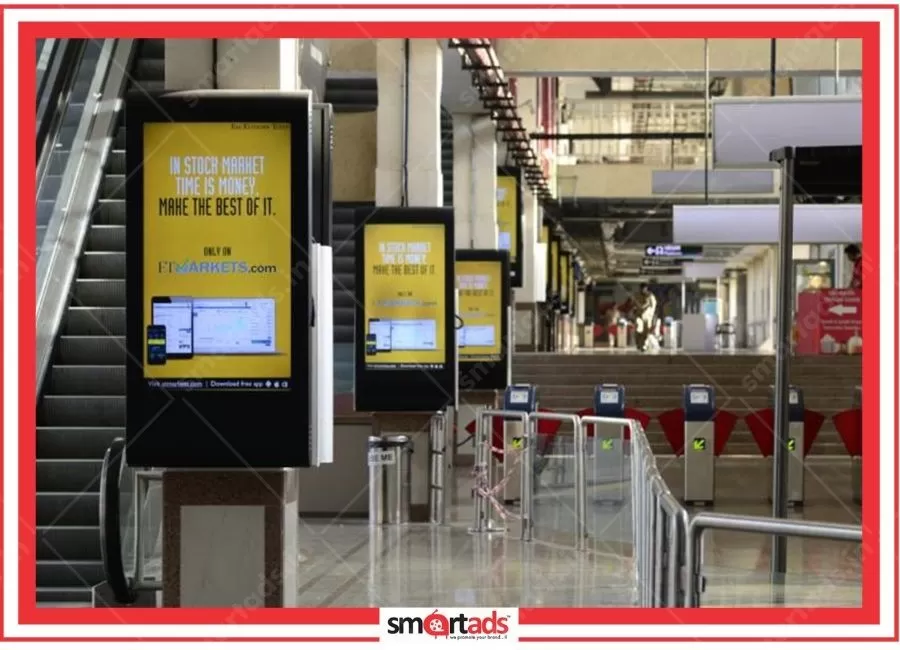
Entry Exit Panel
8 ft x 4 ft
Bright and vibrant multicolored letterin
Rate per Panel / 1 Month
Min Requirement is 3 Panel
₹48000.00
Showing 1 to 4 of 4 Results
MEDIA DETAILS
8 ft x 4 ft
Bright and vibrant multicolored letterin
Rate per Panel / 1 Month
Min Requirement is 3 Panel
₹48000.00
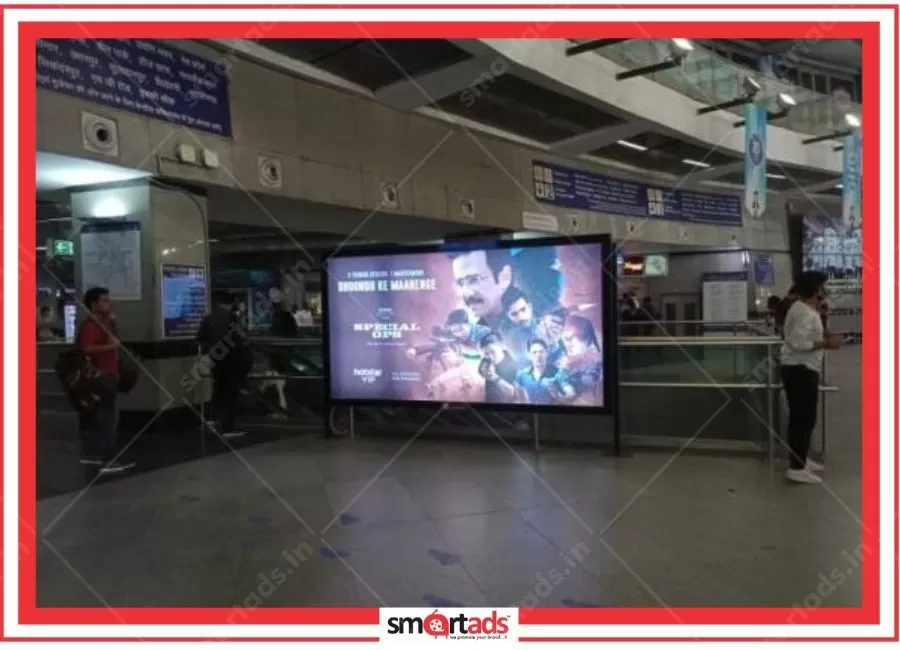
10 ft X 5 ft
A new wide wall system designed to acco
Rate per Panel / 1 Month
Min Requirement is 3 Panel
₹50000.00
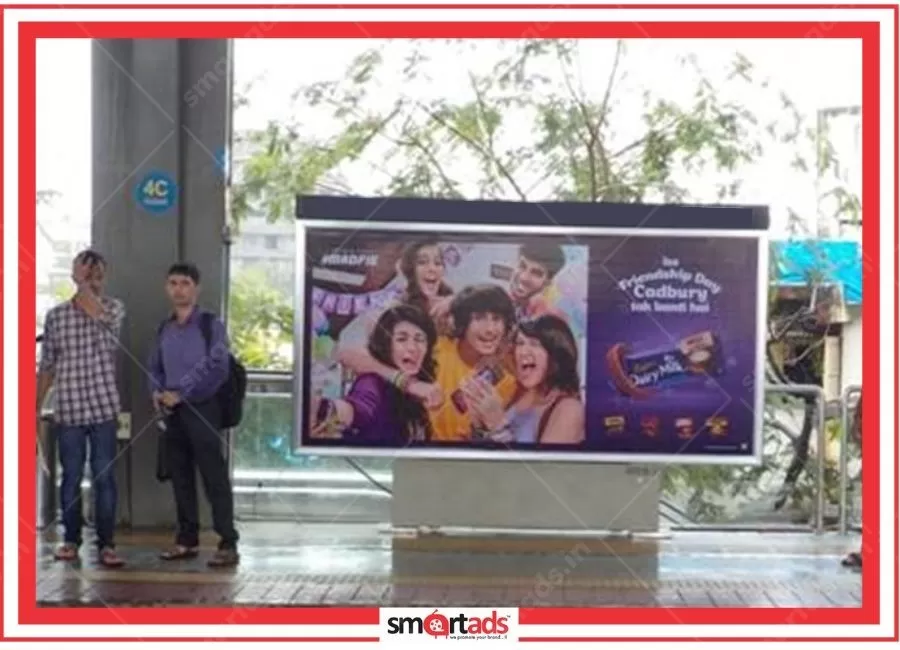
8 ft x 4 ft
A raised flooring or other horizontal su
Rate per Panel / 1 Month
Min Requirement is 3 Panel
₹35000.00
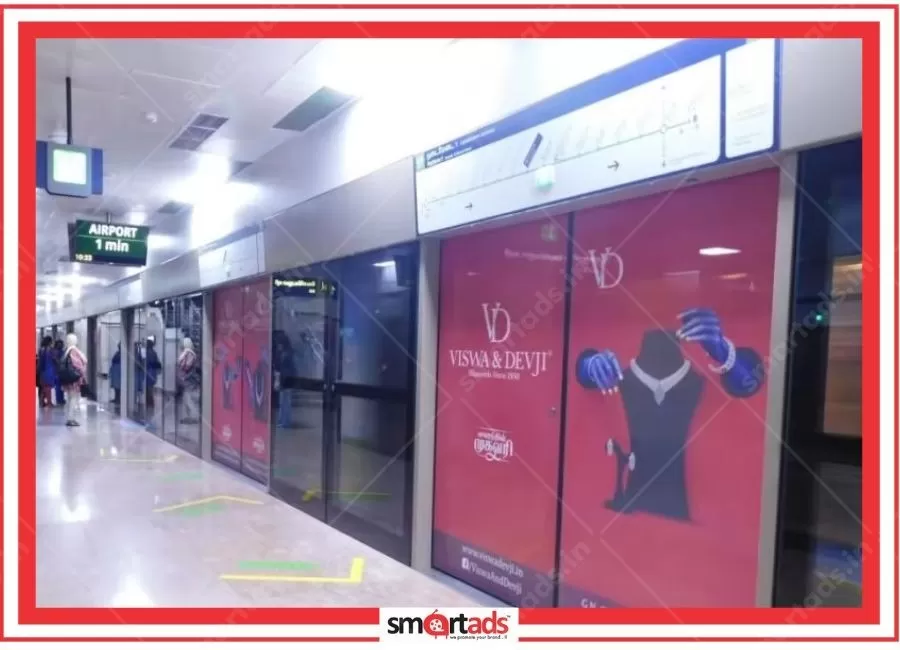
7 ft x 4 ft
Also known as platform edge doors (PEDs)
Rate per Plateform / 1 Month
Min Requirement is 1 Station
₹1200000.00
MEDIA REACH

MinimumQty :
10
EstimateReachPeople :
15 Million
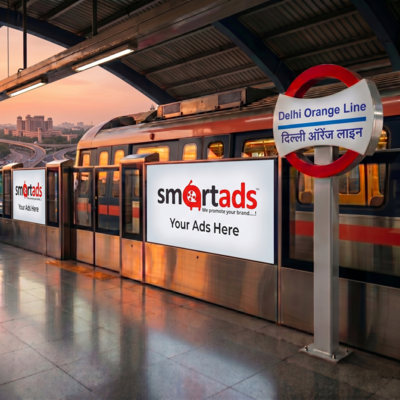
The Delhi Metro Orange Line carries fewer than 70,000 passengers on an average weekday — and that is precisely what makes it one of the most valuable advertising corridors in the entire Delhi NCR market. Every single person on that train is either heading to or returning from Indira Gandhi International Airport, which means the audience self-selects in a way that no other metro line, billboard, or digital placement can replicate. At SmartAds, we have placed campaigns on this line for clients ranging from luxury hospitality brands to fintech companies, and the pattern we keep seeing is the same: brands that understand the Orange Line's audience profile get disproportionate returns relative to their spend.
The Orange Line — officially designated Line 10 by DMRC, though most people still call it the Airport Express Line — operates on a completely separate track from the rest of the Delhi Metro network; it runs non-stop or with minimal stops between New Delhi Railway Station and Dwarka Sector 21, serving Indira Gandhi International Airport via the Aerocity station. What separates it from every other metro line in the country is its City Airport Terminal status: passengers can check in their luggage and receive boarding passes at New Delhi Metro Station itself, which means the airport experience begins the moment someone steps onto the Orange Line platform. That institutional framing — the fact that the line is functionally an extension of IGI Airport — is what gives metro station advertising in Delhi Orange Line its premium character.
The average dwell time at Orange Line stations is meaningfully higher than at stations on the Yellow Line or Blue Line, because travelers arrive early to check in, clear security, and wait for their train in a relatively calm, clutter-free advertising environment. This is not the rushed, shoulder-to-shoulder commuter crush of Rajiv Chowk or Kashmere Gate; it is an audience that is seated, unhurried, and often in a receptive frame of mind. Frankly speaking, this is the kind of captive audience that outdoor advertising on a highway simply cannot deliver — the exposure is longer, the environment is controlled, and the competing stimuli are far fewer. Our experience at SmartAds shows that brand recall scores from Orange Line campaigns consistently outperform recall benchmarks from comparable spends on high-footfall Yellow Line stations, which is a counterintuitive finding until you factor in the dwell time differential.
On top of that, the recent extension to Yashobhoomi Dwarka Sector 25 — serving the India International Convention and Expo Centre — has added an entirely new audience segment to the line. Business delegates attending conferences, trade shows, and government summits now travel the Orange Line regularly, which has broadened the target audience beyond the traditional airport traveler demographic. This makes Delhi metro Orange Line advertising genuinely interesting for B2B brands, professional services firms, and luxury goods companies that previously had no obvious transit advertising touchpoint in Delhi NCR.
The range of advertising formats available through DMRC advertising on the Orange Line is wider than most media planners assume when they first enquire. The most familiar format is the backlit panel advertising unit — large-format illuminated displays mounted on station walls, concourses, and platform areas, which offer the kind of visual impact that static paper-based formats simply cannot match in an underground environment. Backlit panel advertising at Orange Line stations typically comes in sizes ranging from 4 feet by 6 feet up to larger 8 feet by 10 feet configurations, depending on the specific station and the available wall real estate; the illuminated quality of these panels means that creative work with strong contrast and bold typography tends to perform exceptionally well in this environment.
Ambient lit panel formats are a slightly different proposition — these are non-backlit displays that rely on the station's ambient lighting rather than their own internal illumination, which makes them a more economical entry point for brands that want metro station branding without the premium cost of backlit inventory. Pillar advertising in metro stations is another format that deserves more attention than it typically receives; the structural pillars at stations like New Delhi, Dhaula Kuan, and Delhi Aerocity offer 360-degree brand visibility to commuters walking through the concourse, and a well-designed pillar wrap creates a genuinely immersive brand moment. Platform screen door advertising — the branded panels placed on the glass barriers that separate the platform from the track — is one of the most coveted formats on the Orange Line because every passenger standing on the platform faces these doors directly while waiting for the train.
Beyond static formats, DMRC advertising on the Orange Line increasingly includes DOOH advertising options — digital out-of-home screens at select stations that allow for dynamic content, dayparting, and even contextual messaging. The digital screens at New Delhi Metro Station, in particular, attract significant attention because of the volume of business travelers passing through the City Airport Terminal check-in area. Interior train branding — including overhead panels, door stickers, and full interior train branding packages that cover every visible surface inside a coach — rounds out the format menu; and for brands with serious budget and ambition, full train wrap branding on the exterior of Orange Line rolling stock is available as a high-impact option that turns the train itself into a moving billboard visible from platforms, approach roads, and even aerial vantage points near the airport. At SmartAds, we always tell our clients that the format choice should follow the audience insight, not the other way around — and on the Orange Line, that usually means prioritising formats with high dwell time exposure over pure reach.
This is the question that comes up in every first conversation we have with a client, and the honest answer is that orange line advertising rates vary considerably depending on the format, station, duration, and whether you are going through DMRC's own tender process or working through an authorised advertising agency. That said, we can share the ballpark figures that our media planning team works with, because we think the industry's habit of saying "contact us for rates" without giving any benchmark numbers is genuinely unhelpful for brand managers trying to build a budget.
For a standard backlit panel advertising unit at a mid-tier Orange Line station like Dhaula Kuan or Shivaji Stadium Metro Station, the monthly rate works out to somewhere in the range of ₹40,000 to ₹80,000 per panel, depending on size and exact placement — which is a number that surprises many clients when they realise they are reaching a premium, self-selected audience of business travelers and high-net-worth travelers for roughly the same cost as a mid-range digital campaign with far less audience quality control. Premium placements at New Delhi Metro Station or Delhi Aerocity station advertising — the two highest-footfall points on the line — command rates that can be anywhere from ₹1 lakh to ₹3 lakh per panel per month for the most visible positions, reflecting the disproportionate traffic those stations carry. Interior train branding packages, which cover multiple panels across one or more coaches, are typically priced in the range of ₹2 lakh to ₹5 lakh per train per month, while full train branding — the complete exterior wrap — is a premium product that generally starts at ₹8 lakh to ₹12 lakh per month for a single train on the Orange Line.
What a lot of people miss is that Delhi metro advertising cost on the Orange Line should be evaluated on a cost-per-quality-impression basis rather than a raw CPM calculation. The line's total ridership is lower than the Yellow or Blue lines, so the absolute impression numbers are smaller — but when you account for the income profile, travel purpose, and dwell time of the audience, the effective cost per relevant impression is frequently lower than what brands are paying for comparable reach on other out-of-home advertising Delhi formats. We have found that campaign duration also has a significant effect on the overall rate: a 90-day booking typically attracts a discount of somewhere between 15% and 25% compared to a 30-day rate, which is worth factoring into the budget conversation from the very beginning.
The Orange Line currently runs through six operational stations — New Delhi, Shivaji Stadium, Dhaula Kuan, Delhi Aerocity, IGI Airport Terminal 3, and Dwarka Sector 21 — with the Yashobhoomi Dwarka Sector 25 station having been added as an extension serving the India International Convention and Expo Centre. Each of these stations has a distinct audience profile and a different advertising value proposition, which is why a thoughtful media planner will not simply recommend the highest-footfall station by default.
New Delhi Metro Station is the origin point for most airport-bound travelers coming from central Delhi, Connaught Place, and connecting from the Yellow Line; it is also the City Airport Terminal check-in point, which means passengers spend significantly more time here than at any other station on the line. New Delhi metro station advertising, therefore, offers the longest average dwell time and the broadest mix of traveler types — domestic flyers, international passengers, and connecting commuters. Delhi Aerocity station advertising is particularly valuable for hospitality brands, car rental companies, and financial services firms, because Aerocity is home to a dense cluster of five-star hotels and corporate offices, and the passengers alighting there tend to be high-value business travelers rather than leisure tourists. Dwarka Sector 21 metro advertising captures a slightly different audience — families, leisure travelers, and residents of the Dwarka sub-city — and is often used by brands that want to combine airport corridor branding with neighbourhood-level reach in one of Delhi's most populous residential zones.
Yashobhoomi metro station advertising is, frankly, the most interesting emerging opportunity on the entire line. Convention centre advertising at Yashobhoomi is still relatively underpriced compared to what it will command once the India International Convention and Expo Centre reaches full operational capacity; brands in professional services, technology, manufacturing, and luxury goods that want to reach senior decision-makers attending trade shows and government events should be looking at this station seriously right now, before the market catches up to its value. At SmartAds, we have already started recommending Yashobhoomi as a priority placement for B2B clients, and the early feedback on brand recall from delegates attending events at the convention centre has been very encouraging.
The audience profile of the Delhi Metro Orange Line is unlike anything else in Indian transit advertising, and we say that having planned campaigns across metro networks in Mumbai, Bengaluru, Hyderabad, and Chennai. The line's ridership is almost entirely composed of people with a specific, high-intent purpose — they are travelling to or from Indira Gandhi International Airport, which handles over 70 million passengers annually and is consistently ranked among the busiest airports in Asia. That means the Orange Line's captive audience skews heavily towards frequent flyers, business travelers, international tourists, and high-net-worth travelers — a demographic that is extraordinarily difficult to reach efficiently through mass media channels like television or newspaper.
Data from the FICCI-EY Media and Entertainment Report and ridership analyses based on DMRC's own published figures suggest that the Orange Line's passenger base has a significantly higher average household income than the Delhi Metro network as a whole; a disproportionate share of Orange Line commuters hold corporate travel accounts, premium credit cards, and international travel histories, which makes airport express line advertising particularly effective for categories like banking and financial services, luxury retail, premium automobiles, hospitality, insurance, and technology products. To be fair, this is not a line for brands whose primary target is the mass-market urban consumer — if you are advertising a ₹99 recharge plan or a neighbourhood grocery chain, the Yellow Line or Pink Line will serve you better. But for brands that are trying to reach India's upper-middle and affluent class in a moment of travel-related mindset, there is no better transit advertising environment in Delhi NCR.
The addition of the Yashobhoomi extension has layered in a third audience segment beyond airport travelers and Dwarka residents: conference and convention delegates, who tend to be senior professionals, government officials, and international business visitors. This audience is particularly valuable for B2B brands, professional services firms, and premium consumer brands that want to associate themselves with the imagery of India's growing position as a global business destination. Our experience at SmartAds shows that brands which align their creative messaging with the travel and business context of the Orange Line — rather than running generic brand awareness creative — see meaningfully better engagement and brand recall outcomes.
The booking process for metro station advertising in Delhi Orange Line involves working through DMRC's official advertising framework, which operates on a tender and licensing model rather than a simple rate-card transaction. DMRC periodically issues tenders for advertising rights at specific stations and on specific formats; authorised advertising agencies — which have been empanelled through DMRC's own vendor qualification process — are the primary channel through which brands access this inventory. The practical implication is that if you approach DMRC directly as a brand, you will almost certainly be redirected to work through an authorised agency, which is why choosing the right orange line metro advertising agency matters more than many clients initially realise.
The timeline for booking and executing a campaign is something that catches a lot of first-time metro advertisers off guard. From the point of confirming a booking, the creative artwork submission typically needs to happen within five to seven working days; DMRC's approval process — which involves review by CISF and DMRC's own advertising committee — can take anywhere from seven to fifteen working days depending on the format and the complexity of the creative. Print production and installation for backlit panel advertising and ambient lit panel formats adds another three to five working days, which means the realistic lead time from booking confirmation to live campaign is somewhere between three and five weeks. We always advise our clients to factor this into their campaign planning calendar, especially if the campaign is tied to a product launch, seasonal window, or specific event at Yashobhoomi or IGI Airport.
Payment terms for DMRC advertising typically require full payment or a substantial advance before the campaign goes live, which is standard practice across the DOOH advertising and OOH advertising industry in India. For brands working with SmartAds, we handle the entire booking, artwork submission, DMRC approval, and installation coordination process as part of our media buying service — which means the client's team does not need to navigate the bureaucratic complexity of the DMRC approval process directly. Advertising campaign planning for the Orange Line also benefits from early-stage creative consultation, because the format constraints and environmental conditions of metro station branding are quite different from what works in print or digital, and we have seen campaigns underperform simply because the creative was not adapted for the medium.
This is a debate that comes up regularly in our campaign planning conversations, and the honest answer is that they serve different objectives rather than competing for the same outcome. Interior train branding — which encompasses overhead panel advertising, door stickers, window clings, and full interior train branding packages that cover every surface inside a coach — delivers an extraordinarily high dwell time exposure, because a passenger on the Orange Line is inside the train for anywhere from eight to twenty-five minutes depending on their boarding and alighting stations. During that time, there is essentially nothing else to look at; the brand message is inescapable in a way that even the most prominent outdoor advertising Delhi format cannot replicate.
Station backlit panel advertising, on the other hand, reaches a broader mix of travelers — not just those on a specific train, but everyone passing through the station concourse, waiting on the platform, or using the City Airport Terminal check-in facilities. The exposure duration per individual is shorter than interior train branding, but the cumulative reach across a campaign period is higher because the panel is visible to every passenger regardless of which train they board. Platform screen door advertising sits somewhere between these two extremes — it is seen by everyone on the platform, but the exposure moment is concentrated in the thirty to ninety seconds before the train arrives, which is actually a high-attention window because passengers are standing still and looking towards the track.
What we tell our clients at SmartAds is that the most effective Orange Line campaigns typically combine at least two formats — usually a high-visibility station format like backlit panel or pillar advertising in metro stations, paired with an interior train branding element that delivers the extended dwell time exposure. One luxury watch brand we worked with ran a combination of platform screen door advertising at New Delhi Metro Station and interior train branding across two coaches for sixty days; the brand recall survey conducted at the end of the campaign showed unaided recall rates that were roughly 2.3 times higher than the benchmark the brand had achieved from a comparable spend on airport advertising at IGI Terminal 3 alone. That finding shaped how we approach Orange Line media planning for premium consumer brands going forward.
The DMRC approval process is one of those areas where a lack of preparation can genuinely derail a campaign timeline, so we think it is worth explaining in some detail rather than glossing over it. DMRC advertising on the Orange Line — as with all DMRC properties — is governed by the corporation's advertising policy, which specifies permitted categories, format dimensions, content restrictions, and the approval workflow that all creatives must pass through before installation. The process begins with the submission of artwork in the formats specified by DMRC's advertising department, which typically requires high-resolution print-ready files for static formats and specific file format and resolution standards for DOOH advertising screens.
Content review is conducted by DMRC's advertising committee, which evaluates submissions against a checklist that includes compliance with the Cable Television Networks (Regulation) Act, the Advertising Standards Council of India (ASCI) guidelines, and DMRC's own internal content policy. Certain brand categories face additional scrutiny or outright restrictions on the Orange Line — alcohol advertising, for instance, is not permitted on DMRC properties, and political advertising is subject to strict limitations. Tobacco and pan masala advertising is similarly restricted, as are certain categories of financial products that have not received regulatory clearance. CISF clearance is required for any installation activity at Orange Line stations because of their proximity to IGI Airport and their designation as security-sensitive infrastructure, which adds a layer of coordination that does not apply to advertising on other metro lines.
For brands working with an experienced orange line metro advertising agency, this process is largely managed behind the scenes — but it is important for the client's marketing team to understand that creative changes requested after the initial submission will restart the approval clock, which is why getting the artwork right the first time is so important. Creative specifications for backlit panel advertising at Orange Line stations typically require a minimum resolution of 150 DPI at final print size, with bleed margins of at least 5mm on all sides; colour profiles should be CMYK rather than RGB, and any text elements should be embedded or converted to outlines to prevent font substitution issues during production. These are not unusual requirements for large-format print, but they are frequently overlooked by design teams that are more accustomed to producing digital assets.
This question comes up more often than you might expect, and the answer is more nuanced than a simple yes or no. The Orange Line is generally perceived as a premium advertising environment — and it is — but that does not mean it is exclusively accessible to large national brands with multi-crore media budgets. The entry point for orange line advertising rates, particularly for ambient lit panel formats at mid-tier stations like Shivaji Stadium Metro Station or Dhaula Kuan Metro Station, is genuinely accessible for regional brands, premium SMEs, and challenger brands in categories like fintech, edtech, travel, and premium consumer goods.
What a lot of smaller brands miss is that the Orange Line's relatively low total footfall actually works in their favour from a budget perspective — the absolute cost of a campaign is lower than on high-footfall lines, while the audience quality is arguably higher. A boutique travel insurance brand, a premium luggage company, or a business-class hotel property in Aerocity can run a meaningful thirty-day backlit panel campaign at Delhi Aerocity station advertising or Dwarka Sector 21 metro advertising for a budget that would barely register as a line item on a large brand's media plan, yet reach exactly the right audience at exactly the right moment in their travel decision journey. We have run campaigns for several mid-sized clients in this bracket, and the cost-efficiency on a per-relevant-impression basis has consistently been among the best we have seen across any OOH advertising Delhi format.
The practical constraint for smaller brands is not the media cost itself but the production and logistics overhead — creating print-ready artwork at the required specifications, managing the DMRC approval process, and coordinating installation across even one or two stations requires either internal expertise or a reliable agency partner. This is where working with a media planning agency Delhi NCR that has existing relationships with DMRC's advertising infrastructure makes a real difference; the process that might take a brand's internal team six to eight weeks to navigate independently can typically be completed in three to four weeks through an experienced agency.
This is one of the most strategically interesting comparisons in Delhi NCR advertising, and it is one that we find ourselves making regularly with clients who are trying to allocate budget between the two. IGI Airport advertising — particularly at Terminal 3, which handles international and premium domestic traffic — is the gold standard for reaching high-net-worth travelers and business travelers in India, and the rates reflect that status; a prominent lightbox panel in the T3 departures area can cost anywhere from ₹5 lakh to ₹15 lakh per month or more for the most visible positions, which puts it out of reach for many brands that would genuinely benefit from the audience.
Orange Line metro advertising, by contrast, reaches a very similar audience — everyone passing through T3 has, by definition, also passed through an Orange Line station, or will do so on their return — at a fraction of the cost. The CPM for a well-placed backlit panel advertising unit at New Delhi Metro Station works out to somewhere in the range of ₹15 to ₹40 per impression depending on the specific placement and campaign duration, which compares very favourably to the effective CPM of airport advertising at IGI Airport, which can run to ₹100 or more for premium positions. The trade-off is context: inside the terminal, passengers are already in the airport mindset and the brand environment is entirely controlled; on the Orange Line, the airport association is strong but the environment is slightly less exclusive.
What we have found works exceptionally well is an integrated OOH strategy that combines Orange Line station advertising with IGI Airport advertising — using the metro placements to build frequency and familiarity during the journey, and the airport placement to deliver the high-impact brand moment at the destination. One automotive brand we worked with ran exactly this kind of integrated airport corridor branding campaign for ninety days, combining interior train branding on two Orange Line trains with a backlit panel at T3 arrivals; the brand tracking study at the end of the campaign showed a statistically significant lift in brand consideration among the target audience of business travelers, which the client's marketing team attributed specifically to the repeated exposure across the journey rather than either placement in isolation.
Measuring ROI from metro station advertising in Delhi Orange Line requires a slightly different framework than what most brands apply to digital campaigns, where click-through rates and conversion tracking create an illusion of precision. The more honest and useful metrics for transit advertising are brand recall, unaided awareness, and consideration lift — all of which require a structured brand tracking study to measure properly, and which most brands skip because they seem expensive relative to the media spend. That is a mistake, and one that leads to metro advertising being undervalued in post-campaign reviews.
The data points that we have collected across multiple Orange Line campaigns at SmartAds suggest that unaided brand recall from a well-executed sixty-day campaign — combining station backlit panel advertising with interior train branding — typically runs somewhere between 35% and 55% among surveyed passengers who were exposed to the campaign. That is a number that compares very favourably to the recall benchmarks published in the FICCI-EY Media and Entertainment Report for comparable OOH advertising formats in urban India, and it reflects the clutter-free advertising environment and high dwell time that characterise the Orange Line. For context, the average unaided recall for a roadside hoarding in a high-traffic Delhi corridor is typically in the 15% to 25% range, which makes the Orange Line's recall premium quite significant.
Campaign duration strategy matters enormously on the Orange Line, in a way that is different from mass-reach media. Because the line's total ridership is lower than the Yellow or Blue lines, frequency of exposure is built more slowly — a thirty-day campaign may not achieve sufficient frequency among the target audience to drive meaningful recall lift, whereas a sixty or ninety-day campaign allows the message to accumulate across multiple journeys for the same traveler. We generally recommend a minimum of sixty days for brand awareness objectives on the Orange Line, and ninety days for campaigns where consideration or preference shift is the goal; the incremental cost of the extended duration is almost always justified by the frequency benefit, particularly given the discount structures that DMRC advertising typically offers for longer bookings.
The Delhi Metro network spans multiple lines with very different audience profiles and advertising value propositions, and understanding where the Orange Line sits in that landscape is important for making intelligent budget allocation decisions. The Yellow Line — running from Samaypur Badli in the north to HUDA City Centre in Gurugram — is the highest-footfall line in the network, carrying well over a million passengers daily through stations like Rajiv Chowk and Connaught Place; it offers unmatched reach for mass-market brands but comes with significant creative clutter and a much more heterogeneous audience profile. The Blue Line, serving the east-west corridor from Noida and Vaishali to Dwarka, is similarly high-volume and similarly mixed in its audience demographics.
The Pink Line and the newer Magenta Line serve different parts of the NCR with varying audience profiles, but neither approaches the Orange Line's level of audience self-selection. What makes metro station advertising in Delhi Orange Line categorically different from advertising on any other line is the single-purpose nature of the ridership — there is no commuter on the Orange Line who is simply going to work at an office in Connaught Place; every passenger has a direct connection to air travel, which creates an audience cluster around income, travel frequency, and purchase intent that is genuinely unique in Indian transit advertising. Frankly speaking, if your brand's target audience is the frequent-flying, upper-middle-class urban Indian professional, the Orange Line is not just a good option — it is probably the most efficient non-traditional advertising environment available to you in Delhi NCR.
The comparison also extends to pricing dynamics: because the Orange Line carries fewer passengers than the Yellow or Blue lines, the absolute cost of advertising is lower, which creates a counterintuitive value opportunity for brands that are willing to think about audience quality rather than raw reach. A brand that spends ₹5 lakh on a Yellow Line campaign reaches a very large but highly diverse audience; the same ₹5 lakh on the Orange Line reaches a smaller but far more precisely defined group of high-value travelers. For categories like premium banking, luxury goods, business travel, and high-end consumer electronics, we have consistently found that the Orange Line delivers better campaign outcomes per rupee than any other metro line in the Delhi network.
The campaigns we are most proud of on the Orange Line are not necessarily the biggest by budget — they are the ones where the audience insight drove the format and placement decisions, and where the results validated the strategic logic. One case that stands out involved a premium co-branded credit card targeting frequent flyers; the brand ran a sixty-day campaign combining backlit panel advertising at New Delhi Metro Station and Delhi Aerocity station advertising with interior train branding across three coaches. The campaign reached an estimated 1.2 million unique impressions over the campaign period — a number that sounds modest compared to mass-media reach figures, but which represented an extraordinarily high concentration of the brand's precise target demographic. Post-campaign research showed a 41% unaided recall rate among surveyed Orange Line passengers, and the brand's airport lounge application volumes from Delhi showed a statistically significant uptick in the weeks following the campaign launch.
A second campaign that illustrates the Orange Line's B2B potential involved a technology solutions company that was exhibiting at a major trade show at Yashobhoomi. The brand booked Yashobhoomi metro station advertising for the three-week period surrounding the event, using a combination of platform screen door advertising and pillar advertising in metro stations to create an immersive brand environment for delegates arriving at the convention centre. The total campaign cost was in the range of ₹8 lakh for the three-week period — which, by the standards of B2B event marketing, is extremely competitive — and the brand's sales team reported that the station branding was referenced unprompted by multiple senior delegates during the exhibition, which is the kind of qualitative outcome that is difficult to put a number on but genuinely meaningful for a B2B brand building credibility with a senior audience.
A third campaign worth mentioning involved a premium luggage brand that was launching a new product line ahead of the summer travel season. The brand chose to concentrate its entire Delhi BTL advertising budget on the Orange Line rather than spreading it across multiple OOH advertising formats, running a ninety-day full interior train branding campaign on one dedicated train. The creative — which showcased the product in travel contexts that were directly relevant to the Orange Line audience — achieved an unaided recall rate of 48% in a post-campaign survey, and the brand's retail partner at Terminal 3 of Indira Gandhi International Airport reported a 27% increase in walk-in enquiries during the campaign period compared to the equivalent period in the previous year. These are the kinds of results that make us genuinely enthusiastic about recommending the Orange Line to the right clients.
Q: What is the Delhi Metro Orange Line and how many stations does it have?
The Delhi Metro Orange Line — officially Line 10 and commonly known as the Airport Express Line — is a dedicated high-speed metro corridor operated by DMRC that connects New Delhi Railway Station to Dwarka Sector 21, with an extension to Yashobhoomi Dwarka Sector 25. The line currently serves seven stations: New Delhi, Shivaji Stadium, Dhaula Kuan, Delhi Aerocity, IGI Airport Terminal 3, Dwarka Sector 21, and Yashobhoomi Dwarka Sector 25. Unlike the rest of the Delhi Metro network, the Orange Line operates as a premium express service with a focus on airport connectivity; it also functions as a City Airport Terminal at New Delhi Station, where passengers can check in luggage and collect boarding passes before boarding the train to IGI Airport.
Q: How much does it cost to advertise at Delhi Metro Orange Line stations?
Orange line advertising rates vary by format, station, and campaign duration, but the general ballpark figures that our media planning team works with are as follows. Standard ambient lit panel formats at mid-tier stations start at roughly ₹30,000 to ₹50,000 per panel per month; backlit panel advertising at premium stations like New Delhi or Aerocity can range from ₹1 lakh to ₹3 lakh per panel per month for the best positions. Interior train branding packages typically start at around ₹2 lakh per month for a partial coach package, while full train branding on the exterior can start at ₹8 lakh per month. Longer campaign durations — sixty or ninety days — typically attract discounts of 15% to 25% on the base rate, which makes extended bookings significantly more cost-efficient.
Q: What advertising formats are available at Orange Line metro stations?
The full menu of formats available for metro station advertising in Delhi Orange Line includes backlit panel advertising, ambient lit panel formats, pillar advertising in metro stations, platform screen door advertising, DOOH advertising on digital screens, interior train branding (overhead panels, door stickers, window clings, and full coach wraps), exterior train branding or full train wrap branding, metro smart card advertising, audio jingle metro advertising at station announcement points, and brand activation metro station experiences in concourse areas. Not all formats are available at all stations, and availability is subject to DMRC's current inventory and any existing exclusivity arrangements with other advertisers.
Q: Why is the Orange Line considered a premium advertising corridor in Delhi?
The Orange Line's premium status derives from three factors that operate simultaneously: the audience quality, the dwell time, and the clutter-free advertising environment. Every passenger on the line is connected to air travel at IGI Airport, which creates a self-selected audience of business travelers, frequent flyers, international tourists, and high-net-worth travelers who are extraordinarily difficult to reach efficiently through mass media. The dwell time at Orange Line stations — particularly at New Delhi Metro Station, where the City Airport Terminal check-in process keeps passengers on the premises for an extended period — is significantly higher than at comparable stations on other lines. And because the line carries fewer passengers than the Yellow or Blue lines, the advertising environment is less cluttered, which translates directly into higher brand recall.
Q: Who are the typical commuters and travelers on the Delhi Airport Express Line?
The Orange Line's ridership is dominated by three distinct groups: airport-bound travelers (domestic and international), airport staff and crew, and — since the Yashobhoomi extension — convention and event delegates. Within the traveler segment, the income profile skews significantly upward compared to the Delhi Metro network as a whole; a disproportionate share of Orange Line passengers are frequent flyers, corporate travel account holders, and international visitors, which makes the line particularly valuable for brands in banking and financial services, luxury retail, hospitality, premium automobiles, and technology. The Yashobhoomi segment adds senior business professionals and government officials to this mix, broadening the line's appeal for B2B and professional services brands.
Q: What is the process to get DMRC approval for advertising on the Orange Line?
The DMRC approval process for Orange Line advertising involves submitting print-ready or digital artwork to DMRC's advertising department through an authorised agency; the submission is reviewed by DMRC's advertising committee and CISF for content compliance and security clearance, which typically takes between seven and fifteen working days. Creative content must comply with ASCI guidelines, DMRC's internal content policy, and applicable regulatory frameworks. Once approval is granted, print production and installation can proceed, adding another three to five working days. The total lead time from booking to live campaign is typically three to five weeks, and creative changes after initial submission will restart the approval clock — which is why getting the artwork finalised before submission is important.
Q: Can I advertise on the exterior of the Orange Line train (train wrap)?
Yes, exterior train branding — also called
