
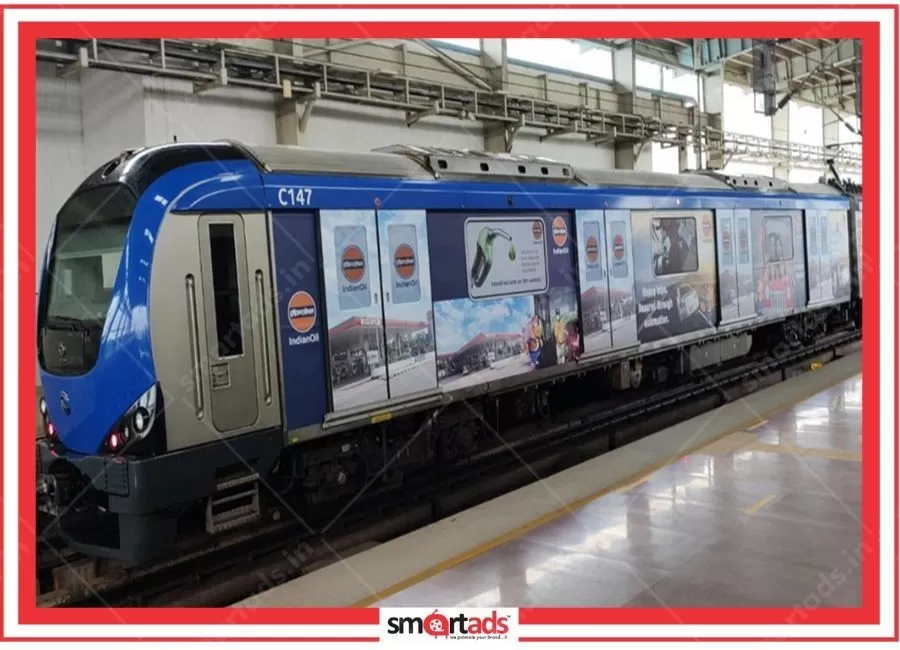
Exterior Metro Wrap
Size & Printing Cost as per actual
On the outside of metro Train, advertise
Rate per Metro Display Cost / 1 Month
Route:New Delhi To Dwarka Sector 21
₹900000.00
Showing 1 to 4 of 4 Results
MEDIA DETAILS
Size & Printing Cost as per actual
On the outside of metro Train, advertise
Rate per Metro Display Cost / 1 Month
Route:New Delhi To Dwarka Sector 21
₹900000.00
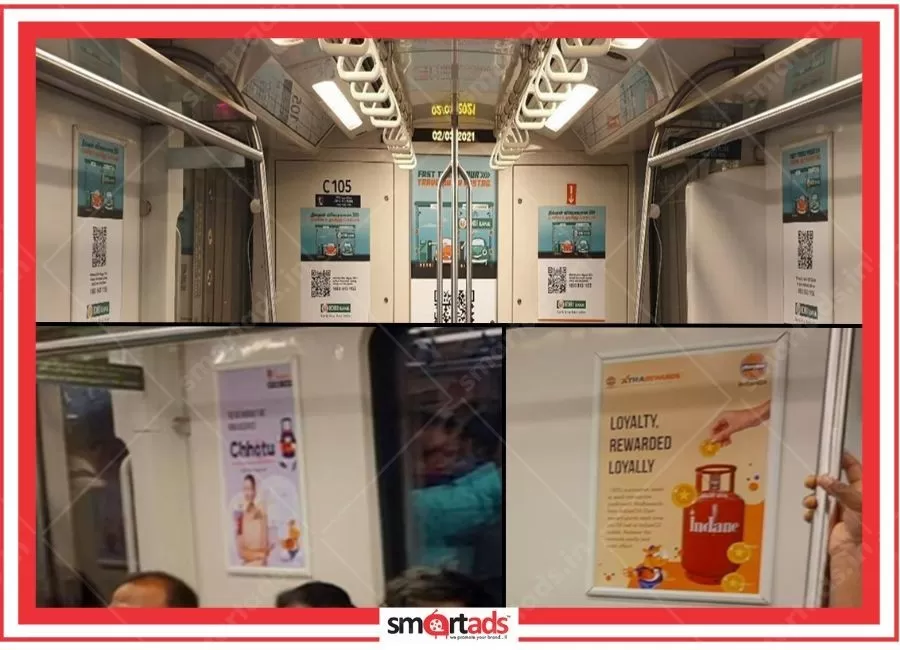
Size & Printing Cost as per actual
On the outside of metro Train, advertise
Rate per Metro Display Cost / 1 Month
Route:New Delhi To Dwarka Sector 21
₹500000.00

20 Sec Jingle
On the outside of metro Train, advertise
Rate per Metro Display Cost / 1 Month
Route:New Delhi To Dwarka Sector 21
₹400000.00
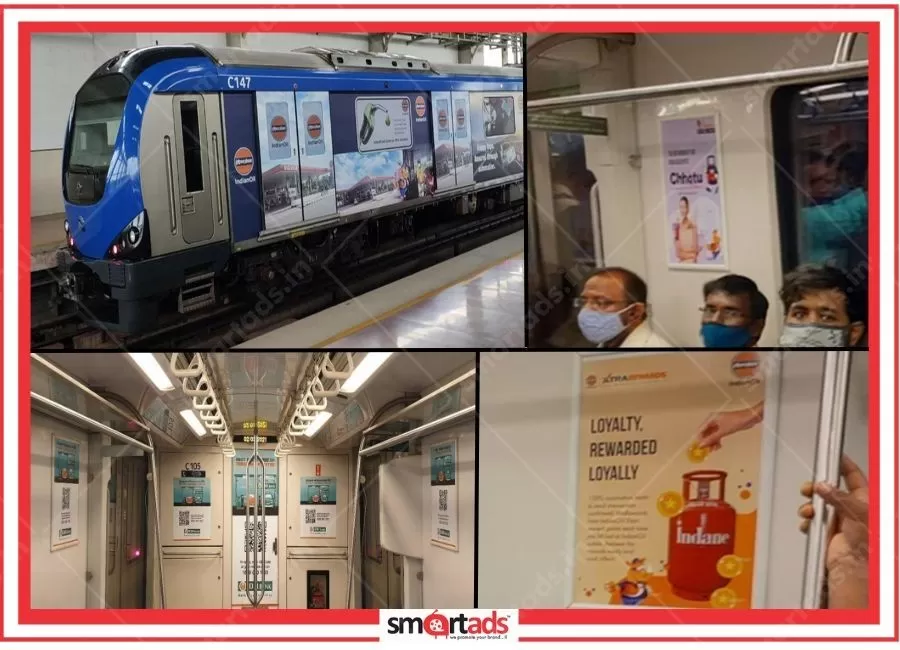
Size & Printing Cost as per actual
On the outside of metro Train, advertise
Rate per Metro Display Cost / 1 Month
Route:New Delhi To Dwarka Sector 21
₹1300000.00
MEDIA REACH

MinimumQty :
1
EstimateReachPeople :
150000000
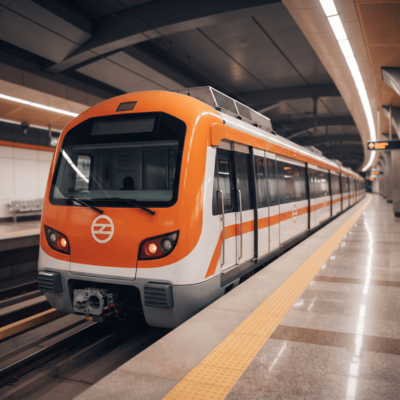
Most advertisers think of metro advertising as a volume play — pack in the commuters, run the panels, move on. The Delhi Metro Orange Line, which connects New Delhi railway station to Indira Gandhi International Airport across a 22.7 km corridor, is something else entirely; it is arguably the most concentrated premium audience route in all of Indian transit media, and yet a surprisingly small number of brands have figured out how to use it properly. When you consider that a single full train wrap on this line puts your brand in front of airport travelers, international business flyers, and high-income tourists for the entire duration of their journey, the CPM math starts looking very different from what most media planners are used to seeing.
There is a tendency in the industry to lump all DMRC advertising into one category, which does a disservice to routes that have fundamentally different audience profiles. Metro train advertising on the Delhi Orange Line — formally designated as Line 10 and operated as the Airport Express Line — refers to the placement of brand communications directly on or inside the rolling stock that runs this specific corridor; this includes everything from full exterior train wraps that turn the entire six-coach formation into a moving billboard, to interior coach panel ads, seat back panels, digital screens, and even audio jingle advertising that plays inside the coaches during the journey.
The Orange Line is not a standard commuter metro. It was purpose-built as a high-speed metro advertising environment — trains run at speeds of up to 120 km/h, the journey from New Delhi Metro Station to IGI Airport Metro Station takes roughly 20 minutes, and the passenger mix is unlike anything you will find on the Blue, Yellow, or Red lines. What this means practically is that the dwell time inside the coach is concentrated and uninterrupted; passengers are not hopping on and off at every stop the way they do on a traditional urban metro, which makes interior train branding on the Orange Line far more effective per minute of exposure than most transit media alternatives.
At SmartAds, we always tell our clients that the Orange Line is not a reach play in the conventional sense — it is a quality-of-audience play. The Delhi Metro Rail Corporation has built something genuinely unusual here: a transit corridor where the vast majority of passengers are either traveling internationally or meeting someone who is, which means your brand is consistently in front of a demographic that most advertisers spend considerably more money trying to reach through other channels.
Frankly speaking, the answer comes down to one thing: the passenger. On most Delhi metro lines, you are reaching a broad cross-section of the NCR population, which is valuable for mass-market brands but not particularly efficient for premium positioning. The Airport Express Line advertising environment is categorically different because the route's sole purpose is connecting the city to Indira Gandhi International Airport — Terminal 3 specifically, which handles the bulk of international and full-service domestic traffic. Every single person on that train either has a flight to catch, has just landed, or is picking someone up, which means the audience self-selects in a way that no amount of demographic targeting can replicate.
The FICCI-EY Media and Entertainment Report has consistently noted that airport-adjacent transit corridors command a premium in media planning precisely because of this audience concentration, and the Orange Line is the clearest example of this in the Indian market. Daily ridership on the Airport Express Line runs somewhere in the range of 82,000 to over one lakh passengers on peak travel days, which sounds modest compared to the Blue Line's numbers — but the income profile, travel frequency, and purchase intent of those passengers is dramatically higher. We have worked with hospitality and luxury travel brands that found their cost-per-qualified-impression on the Orange Line was actually lower than what they were paying for premium digital display, once you account for the audience quality differential.
On top of that, the Orange Line now serves Yashobhoomi Dwarka Sector 25, the station adjacent to the India International Convention and Expo Centre, which has added an entirely new category of high-value audience to the line: MICE travelers, corporate event attendees, and international delegates who are using the metro to move between the convention centre and the airport. For brands in B2B services, fintech, real estate, and hospitality, this is a genuinely new opportunity that most competitors in the metro advertising space have not yet incorporated into their planning frameworks.
The format options on the Delhi Metro Orange Line are more varied than most brands realize when they first approach us, and the choice of format has a significant impact on both cost and campaign effectiveness. Exterior train branding — the full train wrap — is the most visually dramatic option; it involves applying vinyl graphics across the entire outer surface of the six-coach formation, which effectively turns the train into a moving billboard that is visible at every station it enters, on every elevated section of track, and to every vehicle that crosses the corridor. A partial train wrap advertising option also exists for brands that want strong exterior presence without committing to the full-train investment.
Interior train branding covers a broader range of sub-formats, each with its own audience interaction dynamic. Coach panel advertising refers to the large-format panels placed above the windows or on the end walls of each coach; these are the formats that passengers look at during the journey when they are not on their phones, which — given that the Orange Line journey is relatively short and passengers are often in travel mode rather than commute mode — happens more frequently than on standard lines. Seat back panel advertising places brand messaging directly at eye level for seated passengers, which creates an unusually intimate brand interaction; we have seen this format work particularly well for travel insurance, credit card, and luxury hotel brands whose messaging benefits from that close-proximity, unhurried read.
Beyond the static formats, the Orange Line also supports digital screen advertising on the in-coach screens, which allows for video creative and dynamic messaging — a capability that is genuinely underused by most brands currently advertising on this corridor. Audio jingle advertising on the Orange Line is perhaps the most underexplored format of all; the in-coach announcement system can carry brand audio messages between station announcements, which creates an audio touchpoint that passengers cannot scroll past or look away from. Smart card advertising — branding on the Airport Express smart cards that passengers purchase — rounds out the format portfolio and offers a physical brand touchpoint that passengers carry with them beyond the journey itself.
This is the question every media planner asks first, and it is also the question that most agency websites answer with a vague "contact us for rates" — which helps no one. We believe in giving clients real benchmarks, so here is what the market actually looks like based on our experience booking Orange Line campaigns.
A full train wrap on the Orange Line — exterior vinyl covering all six coaches of the formation — typically runs somewhere in the ballpark of ₹15 lakh to ₹25 lakh per month, depending on the duration of the booking, the creative complexity of the wrap, and the time of year. This full train branding cost includes the media space itself but usually excludes production, which for a high-quality exterior vinyl wrap across a six-coach formation can add another ₹8 lakh to ₹15 lakh depending on the material specification and the number of panels involved. When you amortize the full train wrap cost across the estimated monthly impressions — which works out to somewhere between 25 lakh and 35 lakh visual exposures depending on ridership patterns — the CPM lands in a range that surprises most first-time advertisers when they compare it to what they are paying for premium digital video or airport terminal advertising.
Interior coach panel advertising is considerably more accessible; a single coach panel campaign across all coaches of a single train formation runs roughly ₹2 lakh to ₹4 lakh per month, which makes it a viable entry point for brands that want Orange Line presence without the full-train commitment. Seat back panel advertising tends to be priced slightly lower per unit but requires a minimum number of panels to be booked for DMRC approval purposes. Digital screen advertising on the in-coach screens is priced on a per-spot, per-day basis — in the ballpark of ₹500 to ₹1,500 per spot per day depending on frequency — which gives brands a flexible, lower-commitment way to test the corridor before committing to a larger physical format campaign. Metro advertising rates in India vary significantly by line and city, and the Orange Line commands a premium over most other DMRC lines because of its audience profile; this premium is, in our experience, almost always justified by the quality of results.
The affluent audience on the metro Orange Line is not a demographic assumption — it is a structural reality of the route. Every passenger on the Airport Express metro is, by definition, connected to air travel, which in the Indian market still skews heavily toward upper-middle and high-income households. According to data referenced in multiple industry planning documents, the average household income of a frequent flyer in India is substantially above the national urban average, and the Orange Line's passenger base reflects this; you are reaching people who hold credit cards, book hotels, buy insurance, invest in mutual funds, and make purchase decisions that span categories from luxury goods to real estate.
Young professionals in the metro audience on this line are a particularly interesting segment — these are typically 25-to-40-year-olds who travel frequently for work, are digitally active, and are in active consideration phases for financial products, travel services, and lifestyle brands. We worked with a fintech brand a couple of years ago that was trying to reach exactly this profile; they had been running heavy digital campaigns with reasonable reach but poor conversion, and when we moved a portion of their budget to interior train branding on the Orange Line, the brand recall scores from their post-campaign survey were significantly higher than anything their digital campaigns had delivered. The explanation is straightforward: a captive audience in a physical environment, with no skip button and no competing notifications, processes brand messaging differently.
International tourists and business travelers form another distinct segment within the airport traveler advertising universe on this line — people who have just landed at IGI Airport and are taking the metro into the city for the first time, or who are heading to the airport for an international departure. For hospitality brands, luxury retail, and destination marketing organizations, this is an audience that is genuinely hard to reach through conventional Indian media channels; the Orange Line puts your brand in front of them at precisely the moment they are orienting themselves to Delhi, which is about as high-intent a brand interaction as transit media advertising can deliver.
The DMRC approval process is one of those areas where a lot of campaigns get delayed unnecessarily, usually because the brand or their agency has not done the groundwork correctly before submitting. DMRC advertising on the Orange Line follows a specific process that is managed through Delhi Metro Rail Corporation's designated advertising concessionaire, and understanding this process upfront can save you three to four weeks of back-and-forth.
The first stage involves submitting a formal campaign proposal to the DMRC advertising authority — or through an authorized metro advertising agency like SmartAds — which includes the creative artwork, the specific format and location being requested, the campaign duration, and the brand/product category. DMRC has a content review process that screens for compliance with their advertising guidelines; categories like tobacco, alcohol, and certain political content are excluded, and all creative must meet their technical specifications for size, material, and installation method. For exterior train branding specifically, the vinyl material specification is non-negotiable — DMRC requires materials that meet specific fire retardancy and adhesion standards, which affects both the production vendor you choose and the timeline for material procurement.
Once creative approval is granted, the installation is typically scheduled during non-operational hours — usually late night or early morning — to avoid disruption to the service. For a full train wrap on the Orange Line, installation typically takes two to three nights depending on the complexity of the design and the number of panels involved. The total timeline from campaign brief to live installation — assuming creative is ready and DMRC approval goes smoothly — is generally somewhere between four and six weeks; we always advise clients to build in at least six weeks of lead time for Orange Line train advertising campaigns, and eight weeks if the campaign involves a new brand category that DMRC has not previously approved on this line.
To be honest, the list of industries that benefit from Orange Line advertising is more specific than the list for most other transit media options, which is actually a feature rather than a limitation — it means the media is doing genuine targeting work for you. Aviation and travel brands are the most obvious fit; airlines advertising on the Airport Express Line are reaching passengers who are either about to fly or have just landed, which is about as contextually relevant as advertising gets in the OOH space. We have seen airport traveler advertising campaigns for airlines on this corridor generate brand recall scores that rival what those same brands achieve with television, at a fraction of the cost.
Real estate metro advertising on the Orange Line is a category that has grown significantly over the past two years, particularly as premium residential and commercial projects in Dwarka, Aerocity, and the broader Southwest Delhi corridor have sought to reach high-income buyers. The logic is straightforward: the people on this train are high-income, they are often thinking about their next major purchase, and a full train branding campaign puts your project in front of them repeatedly over the course of weeks. Hospitality brands — hotels, serviced apartments, and luxury resorts — have similarly found the Orange Line to be a highly efficient channel for reaching the inbound traveler audience that arrives at IGI Airport and needs accommodation in Delhi or is planning onward travel.
Fintech metro advertising, luxury consumer goods, premium credit cards, and international education brands have all found meaningful results on this corridor; the common thread is that these are categories where the audience quality matters more than the raw audience size. Product launch metro advertising campaigns have also worked well on the Orange Line specifically because the concentrated, captive audience means a new brand or product can achieve very high frequency of exposure among a defined premium segment within a single campaign cycle — something that is much harder to engineer through digital channels without significant budget.
The booking process for metro train advertising in Delhi Orange Line campaigns involves more steps than a standard OOH booking, and getting each step right is what separates a campaign that goes live on time from one that gets stuck in approvals for months. The process begins with a media brief — format preference, campaign duration, budget range, and creative readiness — which your metro advertising agency uses to check availability with the DMRC concessionaire. Availability on the Orange Line, particularly for full train wrap advertising, is more constrained than most clients expect; there is typically only one train formation available for exterior branding at any given time, which means popular periods like the October-to-December travel season and the January-to-March MICE season can book out several months in advance.
Once availability is confirmed, the agency submits a booking application to DMRC along with the creative artwork for content review. This is where having an experienced delhi metro advertising agency matters — agencies that have worked through the DMRC approval process multiple times know exactly what the content review team will flag, and can advise on creative adjustments before submission rather than after rejection. After DMRC approval, a formal booking order is issued, the media cost is invoiced, and production of the vinyl or panel materials begins. For exterior train branding, the production vendor must be approved by DMRC or must provide material certification that meets DMRC's specifications; this is a step that first-time advertisers frequently underestimate in terms of lead time.
At SmartAds, we manage this entire process end-to-end for our clients — from the initial availability check through DMRC submission, creative compliance review, production vendor coordination, and installation supervision. Our experience is that clients who try to manage the DMRC approval process independently, without an agency that has existing relationships with the concessionaire, typically add four to six weeks to their timeline unnecessarily. The metro advertising booking process is manageable, but it rewards preparation and institutional knowledge.
This is a question we get asked in almost every media planning conversation involving Delhi NCR advertising, and the honest answer is that it depends entirely on what you are trying to achieve. The Blue Line — which runs from Dwarka Sector 21 to Noida Electronic City and passes through Rajiv Chowk — is the highest-ridership line in the DMRC network, with daily passenger volumes that dwarf the Orange Line; if your objective is maximum reach across a broad urban demographic, the Blue Line wins on volume. The Yellow Line, running from Samaypur Badli to HUDA City Centre in Gurugram, gives you access to the corporate Gurugram audience which is valuable for B2B and professional services brands.
The Orange Line metro advertising proposition is fundamentally different from all of these, which is why comparing it on a CPM-per-impression basis alone is misleading. The airport express metro audience is not just larger-than-average in income — it is specifically in a travel mindset, which research in transit media advertising consistently shows is associated with higher brand receptivity and stronger purchase intent for travel-adjacent categories. We have run parallel campaigns for a hospitality brand on both the Blue Line and the Orange Line simultaneously; the Blue Line delivered roughly four times the raw impressions, but the Orange Line delivered nearly twice the qualified leads per impression for the hotel booking objective, which made the overall cost-per-acquisition comparable despite the Orange Line's higher media cost.
For brands targeting Delhi NCR advertising with a premium positioning objective — luxury, aviation, hospitality, premium financial services — the Orange Line is almost always the right starting point, with other lines added for reach extension. For brands with mass-market objectives and broad demographic targets, the Orange Line works best as a premium layer within a larger multi-line campaign rather than as the primary vehicle. The Line 10 Orange designation matters in media planning because it signals a specific audience context, not just a geographic route; treating it as interchangeable with other DMRC lines is, in our experience, one of the most common mistakes brands make when planning transit media advertising in Delhi.
The advertising ROI on metro campaigns is one of those topics where the industry has historically been vague, and we think that vagueness has actually held back investment in this channel. Based on our campaign experience and data from industry sources including the GroupM TYNY Report and Dentsu e4m Report, which have both highlighted the growing effectiveness metrics for transit media in Indian urban markets, here is what brands can realistically expect from a well-executed Orange Line campaign.
Brand recall from Delhi Orange Line metro advertising tends to run significantly higher than equivalent OOH formats — industry benchmarks for in-transit advertising suggest unaided brand recall in the range of 40 to 60 percent among passengers who were exposed to interior train branding over a four-week period, which compares favorably to the 15 to 25 percent unaided recall typically reported for static roadside hoardings. The captive audience effect is real and measurable; passengers on the Airport Express Line have an average journey time of 18 to 20 minutes with no option to exit mid-journey, which means a well-designed interior campaign gets multiple exposures per passenger per trip. For a brand running a four-week interior train branding campaign, the estimated total impressions work out to somewhere between 20 lakh and 30 lakh, with a CPM that — when calculated against the premium audience profile — is in the ballpark of ₹8 to ₹15, which is a figure that surprises most clients when they realize it is competitive with mid-tier digital display.
One automotive brand we worked with ran a two-month exterior train wrap campaign on the Orange Line ahead of a new model launch; the campaign was combined with digital screen advertising inside the coaches and station domination at Delhi Aerocity Metro Station. Post-campaign brand tracking showed a 34 percent lift in brand consideration among the target demographic of high-income male travelers aged 30 to 50 — a result that the brand's marketing team described as the strongest single-medium performance they had seen in a BTL advertising campaign that year. The moving billboard effect of the exterior wrap, which was visible from the elevated sections of the track across a wide swath of Southwest Delhi, contributed an estimated 15 lakh additional visual impressions beyond the in-station and in-coach exposures.
The Orange Line covers six stations across its 22.7 km route, and each station has a distinct advertising dynamic that is worth understanding before you finalize your campaign format mix. New Delhi Metro Station is the eastern terminus and the interchange point with the Yellow and Blue lines — it is the highest-footfall station on the Orange Line and the point where passengers first board the Airport Express, making it the ideal location for brand messaging that sets the tone for the journey. Shivaji Stadium Metro Station, the next stop heading west, serves the central Delhi commercial and government district; advertising here reaches a mix of government employees, business travelers, and tourists who are connecting from the city center to the airport.
Dhaula Kuan Metro Station sits at the junction of several major arterial roads in Southwest Delhi, and its catchment area includes the diplomatic enclave, defense establishments, and the upscale residential neighborhoods of Vasant Vihar and Shanti Niketan — an audience profile that is particularly relevant for luxury and premium lifestyle brands. Delhi Aerocity Metro Station is perhaps the most commercially interesting non-airport station on the line; the Aerocity hospitality district, which houses a concentration of international hotel brands, corporate offices, and retail facilities, generates a passenger mix of business travelers, hotel guests, and airport workers that is highly valuable for hospitality, food and beverage, and business services advertising.
IGI Airport Metro Station at Terminal 3 is the point of maximum audience concentration for international and premium domestic travelers — this is where inbound passengers first encounter the metro system and where outbound passengers make their final brand interactions before departure. Dwarka Sector 21, the western interchange with the Blue Line, connects the Orange Line to the broader Dwarka residential catchment, which has grown significantly as a high-density middle-to-upper-income residential zone. Yashobhoomi Dwarka Sector 25, the newest station on the line, serves the India International Convention and Expo Centre — a venue that hosts large-scale MICE events and international exhibitions — and represents a genuinely new advertising opportunity for brands targeting corporate and international delegate audiences that has not yet been fully exploited by the market.
The short answer is yes, and in our experience, the brands that get the most out of their Orange Line investment are almost always the ones that combine both interior train branding and exterior train branding into a single integrated campaign. The strategic logic is straightforward: exterior train branding creates awareness and visual impact across the city — the train is visible on elevated sections, at station platforms, and from adjacent roads — while interior coach panel advertising and seat back panel advertising deliver the detailed brand message to a captive audience that has already been primed by the exterior. This two-stage brand interaction, which mirrors the way effective advertising works in other media (awareness followed by engagement), is particularly powerful in the transit media context because the same passenger who sees the exterior wrap on the platform then spends 18 to 20 minutes inside the train with the interior messaging.
A full train branding campaign that integrates both formats — exterior vinyl wrap plus interior coach panels plus digital screen advertising — represents the highest-impact execution available in metro train advertising in Delhi Orange Line campaigns, and it is also the format that commands the strongest brand recall scores in post-campaign research. We have found, through multiple campaigns, that adding audio jingle advertising to this mix creates a genuinely multi-sensory brand experience that passengers remember distinctly; one retail client in Gurugram who ran a combined audio-plus-visual campaign on the Orange Line reported that their post-campaign consumer survey showed nearly 70 percent of respondents could recall the brand's audio message unprompted, which is an extraordinary result for any non-television medium.
The production coordination for a combined interior-exterior campaign is more complex than a single-format booking, and the DMRC approval process involves separate sign-offs for the exterior and interior elements — but an experienced delhi metro advertising agency can manage this in parallel rather than sequentially, which keeps the overall timeline manageable. At SmartAds, we typically recommend a minimum four-week campaign duration for combined format bookings to allow sufficient frequency of exposure for both the exterior and interior elements to build meaningful brand recall.
Q: What is metro train advertising on the Delhi Orange Line?
Metro train advertising on the Delhi Orange Line refers to brand placements on the rolling stock — the trains themselves — that operate on the Airport Express Line (Line 10) of the Delhi Metro Rail Corporation network. This includes exterior train wraps applied to the outer surface of the six-coach formation, interior coach panel advertising inside the coaches, seat back panels, digital screen advertising on in-coach screens, audio jingle advertising through the announcement system, and smart card advertising on the physical travel cards issued to passengers. The Orange Line runs 22.7 km from New Delhi Metro Station to Dwarka Sector 21, with a branch to Yashobhoomi Dwarka Sector 25, and its primary corridor serves Indira Gandhi International Airport at the IGI Airport Metro Station at Terminal 3.
Q: How much does it cost to advertise on the Delhi Metro Orange Line train?
Metro advertising rates on the Orange Line vary by format and duration, but as a practical benchmark: a full train wrap covering the exterior of all six coaches typically costs somewhere between ₹15 lakh and ₹25 lakh per month for the media space, with production costs for the vinyl graphics adding another ₹8 lakh to ₹15 lakh depending on material specification and design complexity. Interior coach panel advertising is more accessible, running roughly ₹2 lakh to ₹4 lakh per month for a full-train interior campaign. Digital screen advertising is priced per spot per day, generally in the range of ₹500 to ₹1,500 per spot. These are market benchmarks based on our booking experience; actual rates depend on campaign duration, seasonal demand, and negotiation with the DMRC concessionaire.
Q: What ad formats are available for Orange Line metro train advertising?
The format portfolio for Orange Line train advertising includes full exterior train wraps, partial train wrap advertising on selected coaches, interior coach panel advertising, seat back panel advertising, digital screen advertising on in-coach screens, audio jingle advertising through the coach announcement system, backlit panel advertising at station entry points, and smart card advertising on the Airport Express travel cards. Each format has different production requirements, DMRC approval timelines, and audience interaction dynamics; the most impactful campaigns typically combine two or more formats to create a layered brand experience across the journey.
Q: Can I book only one coach for advertising on the Orange Line, or do I need the full train?
Single-coach bookings are technically possible on the Orange Line for certain interior formats, but the minimum booking requirements set by the DMRC concessionaire often make full-train interior bookings more cost-efficient on a per-panel basis. For exterior train branding, the wrap is applied to the full formation — a partial exterior wrap covering only selected coaches is available but is less common because the visual impact of the exterior format depends significantly on the continuity of the design across the full train length. We generally advise clients with limited budgets to opt for full-train interior panel campaigns rather than single-coach exterior bookings, as the former delivers better audience coverage per rupee spent.
Q: How do I get DMRC approval for advertising on the Orange Line?
DMRC approval for Orange Line advertising is obtained through the corporation's designated advertising concessionaire, and the process involves submitting a campaign proposal with creative artwork, format specification, campaign duration, and brand/product category details. DMRC's content review team screens all creative for compliance with their advertising guidelines — prohibited categories include tobacco, alcohol, and certain political content — and all materials must meet technical specifications for size, fire retardancy, and adhesion. The approval timeline is typically two to three weeks for standard formats; exterior train wraps may take slightly longer due to the additional technical review required. Working with an authorized metro advertising agency significantly streamlines this process because experienced agencies know the compliance requirements and can address potential issues before submission.
Q: What is the daily ridership of the Delhi Metro Orange (Airport Express) Line?
Daily ridership on the Airport Express Line runs in the range of 82,000 to over one lakh passengers on peak travel days, with ridership peaking during holiday travel seasons — particularly October through December and March through May — and during major MICE events at the Yashobhoomi convention centre. While this is considerably lower than the ridership on the Blue or Yellow lines, the audience quality differential is substantial; the Orange Line's passenger base is almost entirely composed of air travelers, airport workers, and hotel guests, which gives it an income and purchase-intent profile that is significantly above the DMRC network average.
Q: Who are the typical passengers on the Delhi Metro Orange Line and why are they valuable for advertisers?
The Orange Line passenger base is dominated by air travelers — both international and domestic — along with airport and Aerocity hospitality workers, business travelers, tourists, and increasingly, delegates attending events at the Yashobhoomi convention centre. This audience skews heavily toward upper-middle and high-income households, is disproportionately composed of frequent flyers and credit card holders, and includes a significant proportion of international visitors who are seeing Delhi for the first time. For advertisers in premium categories — hospitality, aviation, luxury goods, financial services, real estate, and travel — this is one of the most efficiently targeted audiences available in Indian transit media advertising.
Q: What is the difference between interior and exterior train branding on the Orange Line?
Exterior train branding involves applying vinyl graphics to the outer surface of the train coaches, creating a moving billboard that is visible at stations, on elevated track sections, and from adjacent roads and buildings. Interior train branding encompasses all formats placed inside the coaches — panel ads above windows, seat back panels, digital screens, and audio messaging — which reach passengers during the journey itself. The two formats serve different communication objectives: exterior branding maximizes broad visual reach and creates strong brand awareness across the city, while interior branding delivers detailed messaging to a captive audience in an unhurried, high-attention environment. The most effective Orange Line campaigns combine both.
Q: How many stations does the Delhi Metro Orange Line cover and where are they located?
The Orange Line covers six stations: New Delhi Metro Station (eastern terminus, interchange with Yellow and Blue lines), Shivaji Stadium Metro Station, Dhaula Kuan Metro Station, Delhi Aerocity Metro Station, IGI Airport Metro Station (Terminal 3), and Dwarka Sector 21 (western terminus, interchange with Blue Line). Yashobhoomi Dwarka Sector 25 is an additional station on a branch of the line serving the India International Convention and Expo Centre. The line runs predominantly elevated through Southwest Delhi, covering the 22.7 km corridor in approximately 20 minutes.
Q: How long does it take to launch a metro train advertising campaign on the Orange Line?
The total timeline from campaign brief to live installation is typically four to six weeks for interior format campaigns and six to eight weeks for exterior train wrap campaigns, assuming creative artwork is ready at the start of the process. The DMRC approval process itself takes two to three weeks; production of vinyl materials for exterior wraps adds another one to two weeks; and installation is scheduled during non-operational hours over two to three nights. Brands should build in additional buffer time during peak booking periods — October through December and January through March — when Orange Line inventory is in high demand.
Q: Is the Delhi Metro Orange Line advertising available for international brands?
Yes, international brands can and do advertise on the Orange Line; in fact, the airport-adjacent audience profile makes it particularly attractive for international brands seeking to establish or reinforce their presence with Indian high-income consumers. International brands must go through the same DMRC approval process as domestic brands, and all creative must comply with DMRC's content guidelines. There are no nationality-based restrictions on advertising on the Orange Line, and the format is fully available to foreign companies operating in India.
Q: What industries benefit most from advertising on the Delhi Airport Express (Orange Line)?
The industries that consistently see the strongest results from Orange Line advertising are aviation and travel, hospitality and hotels, luxury consumer goods, premium financial services (credit cards, wealth management, insurance), real estate (particularly premium residential and commercial), fintech, international education, and automotive brands targeting premium segments. The common thread is that these are categories where the high-income, travel-oriented audience profile of the Orange Line creates a natural alignment between the media environment and the brand's target consumer.
Q: How does Orange Line metro train advertising compare to airport advertising at IGI Airport?
Airport advertising at IGI Terminal 3 — which includes terminal branding, baggage carousel advertising, and digital screens inside the departure and arrival halls — reaches a similar premium traveler audience but at a significantly higher cost per format. Airport terminal advertising also has more restrictive creative guidelines and longer approval timelines in many cases. The Orange Line offers a complementary but distinct touchpoint: it reaches passengers before they enter the terminal (outbound) or immediately after they exit (inbound), which means it can serve as either a pre-departure brand reinforcement or a first-impression brand introduction for arriving passengers. Many brands targeting the airport traveler advertising segment use both channels in combination — Orange Line for the journey touchpoint and airport terminal advertising for the in-terminal touchpoint — to create a consistent brand presence across the entire travel experience.
Q: Can I combine Orange Line train branding with station advertising at Delhi Aerocity or IGI Airport?
Absolutely, and in our experience this multi-format, multi-location approach delivers significantly stronger brand recall than any single format in isolation. A campaign that combines exterior train branding on the Orange Line with station domination at Delhi Aerocity Metro Station and in-terminal advertising at IGI Airport creates a brand presence that accompanies the traveler from the moment they board the metro to the moment they reach their destination — a level of brand immersion that is very difficult to achieve through any other media combination at comparable cost. We have executed several such integrated campaigns for hospitality and aviation clients, and the consistency of the brand experience across the journey corridor is something that passengers notice and remember.
Q: What are the creative and design specifications for a full train wrap on the Orange Line?
A full train wrap on the Orange Line's six-coach formation requires vinyl graphics that cover the exterior panels of each coach, with dimensions that vary by panel location — side panels, end panels, and door surrounds each have specific size requirements that must be obtained from the DMRC concessionaire at the time of booking. The vinyl material must meet DMRC's fire retardancy specifications (typically conforming to BS 476 or equivalent standards) and must use adhesives approved for use on rolling stock. Design files must be submitted in high-resolution vector or raster formats at the correct scale, and DMRC's creative guidelines prohibit certain visual elements including anything that
