
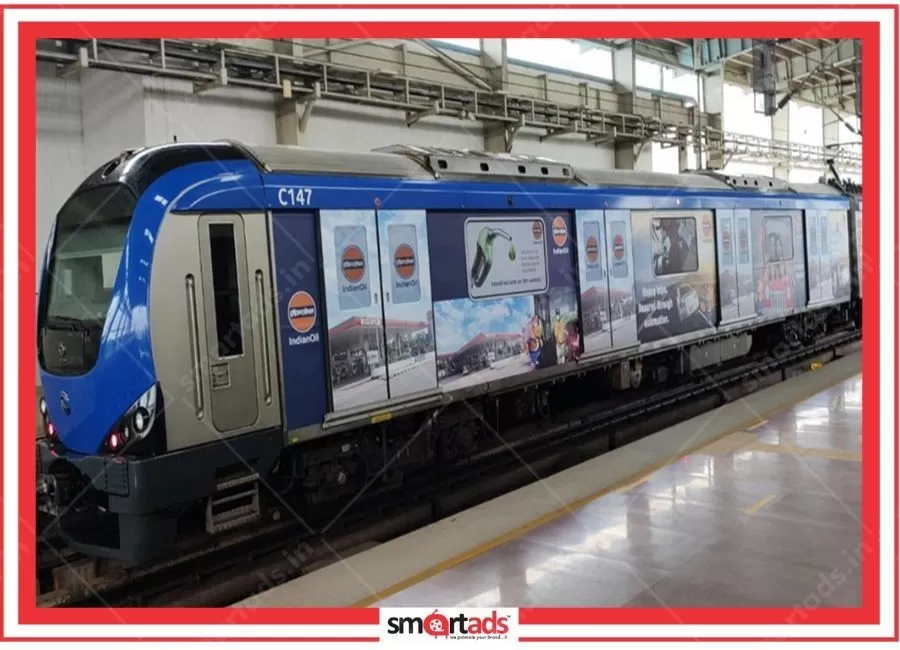
Exterior Metro Wrap
Custom
On the outside of metro Train, advertise
Rate per Metro Display Cost / 1 Month
Route:Andheri To Dahisar
₹760000.00
Showing 1 to 5 of 5 Results
MEDIA DETAILS
Custom
On the outside of metro Train, advertise
Rate per Metro Display Cost / 1 Month
Route:Andheri To Dahisar
₹760000.00
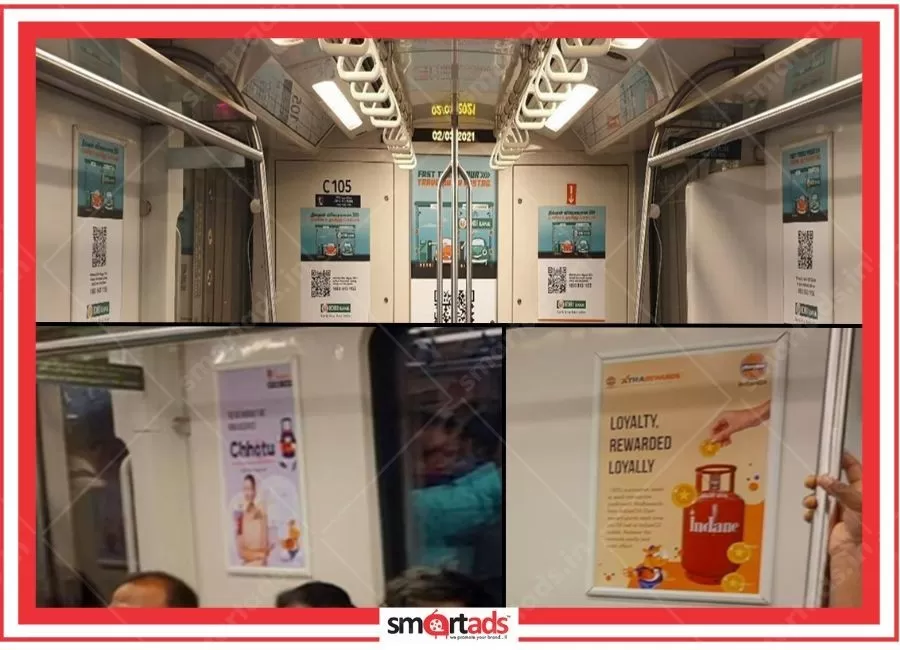
Size & Printing Cost as per actual
On the outside of metro Train, advertise
Rate per Metro Display Cost / 1 Month
Route:Andheri To Dahisar
₹430000.00

10 Sec Video
On the outside of metro Train, advertise
Rate per Metro Display Cost / 1 Month
Route:Andheri To Dahisar
₹600000.00
20 Sec Jingle
On the outside of metro Train, advertise
Rate per Metro Display Cost / 1 Month
Route:Andheri To Dahisar
₹23333.00

Size & Printing Cost as per actual
On the outside of metro Train, advertise
Rate per Metro Display Cost / 1 Month
Route:Andheri To Dahisar
₹1080000.00
MEDIA REACH

MinimumQty :
1
EstimateReachPeople :
150000000
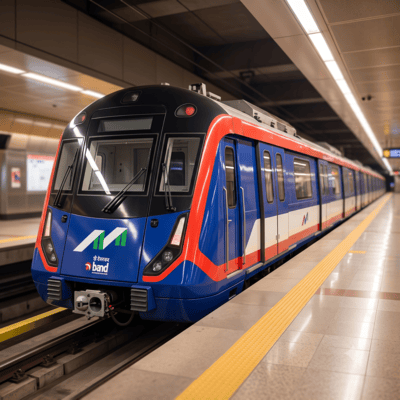
Mumbai's western suburbs have quietly become one of the most contested advertising corridors in the country — and most brands are still catching up to what that means. The Mumbai Metro Red Line, spanning Line 7 and the newly extended Line 9, now carries somewhere in the ballpark of 4 to 5 lakh daily commuters through a stretch that connects Dahisar East to Gundavali at Andheri East, with the Line 9 extension pushing further into Mira Bhayandar territory as of April 2026. What makes this particularly interesting for media planners is not just the volume of eyeballs, but the quality — salaried professionals, students heading to colleges near the western express highway corridor, and upper-middle-class families who have moved into the newer residential pockets of Borivali, Kandivali, and Mira Road.
Metro train advertising on Mumbai Red Line is, at its core, a form of BTL advertising that places brand messages inside the train coaches, on the exterior surfaces of the trains themselves, and across the stations that make up the Red Line network — but calling it simply "advertising on trains" undersells what it actually does for a brand. The captive audience dynamic is what separates this from virtually every other out-of-home advertising format. A commuter on the Mumbai Red Line is not driving past a hoarding at 60 kmph; they are seated or standing inside a coach for anywhere between 12 and 35 minutes, with limited visual alternatives and a natural tendency to read, observe, and absorb what is around them.
What we tell our clients at SmartAds is that metro train advertising on Mumbai Red Line operates across two distinct environments — the train itself and the station ecosystem — and that confusing the two leads to poorly structured campaigns. Interior branding inside the coach delivers repeat exposure to the same commuter over days and weeks, which is where brand recall compounds. Station branding, on the other hand, works more like traditional OOH advertising, reaching a broader mix of commuters, auto-rickshaw passengers waiting outside, and pedestrians near station exits. The most effective campaigns we have planned for this corridor have used both in combination, treating the train as the frequency engine and the station as the reach amplifier.
The regulatory framework governing this space is worth understanding before you begin. Mumbai Metropolitan Region Development Authority (MMRDA) oversees the infrastructure and policy framework for the Red Line, while Maha Mumbai Metro Operations Corporation Limited (MMMOCL) handles day-to-day operations and, by extension, the commercial advertising concessions. Any brand wanting to advertise on the Red Line must work within MMMOCL's creative guidelines, which include restrictions on certain content categories, mandatory safety compliance for materials used in coach interiors, and approval timelines that typically run three to four weeks before a campaign can go live. Brands that try to shortcut this process — and we have seen this happen — end up with delayed launches and wasted production budgets.
Line 7 runs from Dahisar East in the north to Andheri East in the south, covering 16 stations across an elevated corridor that runs broadly parallel to the Western Express Highway — a stretch that carries some of the heaviest vehicular and pedestrian traffic in the Mumbai Metropolitan Region. Key stations along this route include Magathane, Borivali East, Kandivali East, and Aarey, with Gundavali at Andheri East serving as the southern terminus and an interchange point with other transit options. The elevated corridor design means the trains are visible from the highway and surrounding buildings, which gives exterior branding on these trains an additional ambient media value that is rarely factored into standard campaign calculations.
Line 9, which is the southern extension connecting Gundavali to CSIA Terminal 2 at Chhatrapati Shivaji Maharaj International Airport, adds a critically important node to the Red Line network — the airport. This section of the route carries a meaningfully different audience mix compared to the northern stretch; you have business travellers, airline crew, hotel industry workers, and a higher proportion of international-facing consumers who are worth considerably more to premium brands on a per-impression basis. The Line 9 extension to Mira Bhayandar, which became operational in April 2026, extends the network northward into a catchment that had previously been underserved by rapid transit; Mira Bhayandar has a population of roughly 12 to 14 lakh and a growing middle-class residential base that has historically been difficult to reach through traditional OOH advertising without significant budget wastage.
To be honest, the Mira Bhayandar extension is the most underappreciated new advertising opportunity in Mumbai right now. Most brands have not yet recalibrated their media plans to account for this catchment, which means early movers are getting access to a fresh, unsaturated audience at rates that will almost certainly increase once demand catches up. Our media planning team at SmartAds has been advising clients in the real estate, FMCG, and education sectors to consider this corridor specifically for hyperlocal advertising campaigns targeting first-time homebuyers and young families — the dominant demographic in that geography.
The range of ad formats available for metro train advertising in Mumbai Red Line is broader than most advertisers realise when they first approach this medium, and the choice of format should be driven by campaign objective rather than budget alone. Interior branding encompasses several distinct placements: seat panel ads positioned on the back of seats and directly in the sightline of seated commuters, overhead panel strips running along the length of the coach ceiling, door panel placements near entry and exit points which capture attention during the boarding and alighting process, and full wall wrap executions that transform an entire coach section into an immersive brand environment. Each of these formats delivers a different dwell time experience — a seat panel ad will be read repeatedly over the course of a journey, while a door panel gets a burst of attention at high-frequency moments.
Exterior train wrap advertising is the format that generates the most conversation among clients who are new to transit media, and frankly, it deserves that attention. A full exterior wrap turns the entire train into a moving billboard — one that travels the length of the Red Line multiple times a day, visible from station platforms, from the Western Express Highway, from residential buildings alongside the elevated corridor, and from street level at station approaches. The visual impact is significant, and the effective reach extends well beyond the commuter base to include anyone in the visual catchment of the train's route. Partial wraps covering specific panels or the front and rear of the train are also available at lower price points, which makes this format accessible to brands that cannot commit to a full-train execution.
Audio advertisement placements inside coaches and at stations represent a format that is consistently underutilised by advertisers on the Red Line, which is a mistake we have seen brands regret after competitors moved in. The announcement system inside coaches and at platforms delivers audio messages to a captive audience that has no ability to skip, mute, or scroll past the content — a dynamic that is increasingly rare in an era of ad-blocking and streaming media. Digital screen advertising, including DOOH placements on screens inside coaches and at station concourses, rounds out the format mix; these screens support dynamic creative, which means brands can run time-of-day relevant messaging, live offers, and even QR code integration that drives commuters from the physical ad to a digital destination in real time.
The audience profile of the Mumbai Red Line is one of the strongest arguments for metro train advertising on this corridor, and it is an argument that is rarely made with enough precision. The western suburbs catchment — Dahisar, Borivali, Kandivali, Malad, Goregaon, Andheri — is home to a disproportionately high concentration of working professionals employed in the IT, media, finance, and healthcare sectors. These are not casual or infrequent transit users; they are daily commuters who ride the same train at the same time five or six days a week, which means their exposure to interior branding placements is not a one-time event but an accumulating frequency that builds brand recall in a way that a single hoarding impression simply cannot.
Income profile data from IRS and NCCS classification surveys consistently places the western suburbs commuter base in the A and B socioeconomic categories, with a significant proportion of monthly household incomes above ₹75,000 — a segment that is actively sought by brands in the fintech, edtech, automobile, insurance, and premium consumer goods categories. The age skew is towards the 22 to 45 bracket, which aligns almost perfectly with the primary target audience for most D2C brands, app-based services, and aspirational lifestyle products. What a lot of people miss is that this demographic is also highly smartphone-penetrated, which is precisely why QR code integration on Red Line metro train ads can drive meaningful offline-to-online conversion — something we have tested with measurable results on campaigns for a fintech client in the savings and investment category.
The Line 9 extension to Mira Bhayandar adds a somewhat different demographic layer — younger families, first-generation urban professionals, and a significant student population from colleges in the Mira Road and Bhayandar areas. This audience is price-sensitive in some categories but aspirational in others, which makes it particularly valuable for brands in the affordable housing, two-wheeler, consumer electronics, and quick-service restaurant segments. One automotive brand we worked with specifically targeted the Mira Bhayandar corridor for a two-wheeler launch campaign, using interior branding on coaches that ran the northern stretch of the Red Line; the brand reported a 23% uplift in showroom walk-ins from the Mira Road and Dahisar catchment areas over the eight-week campaign period, which was significantly ahead of what comparable OOH advertising had delivered in the same geography.
Advertising rates on the Mumbai Red Line are not published in a standardised rate card the way print or radio rates are, which creates genuine confusion for brands trying to plan budgets — and which is one of the reasons working with an experienced advertising agency matters enormously in this space. Based on our current market knowledge and active bookings, interior branding placements such as seat panel ads work out to roughly ₹80,000 to ₹1.5 lakh per coach per month, depending on the specific placement, the number of coaches booked, and the campaign duration; a number that surprises most first-time advertisers when they compare it to what they are paying for equivalent reach on Instagram or YouTube. Full interior coach branding — where all available surfaces inside a coach are covered by a single brand — typically falls somewhere between ₹3 lakh and ₹6 lakh per coach per month, and the visual dominance this creates is genuinely difficult to replicate through any other format at that price point.
Exterior train wrap advertising commands a premium that reflects both the production complexity and the extended reach it delivers. A full exterior wrap on a single train is typically priced in the ballpark of ₹15 lakh to ₹25 lakh per month, which sounds significant until you account for the fact that a single train on the Red Line completes multiple runs daily, generating exterior impressions across the entire length of the route — effectively functioning as a moving billboard that is seen by both commuters and non-commuters alike. Partial exterior wraps, covering specific panels or the front and rear sections, are available at proportionally lower rates and represent a sensible entry point for brands testing exterior branding for the first time. Audio advertisement slots are typically priced per spot per day, with rates working out to somewhere between ₹50,000 and ₹1.5 lakh per month depending on frequency and station coverage.
Digital screen advertising and DOOH placements inside stations and coaches are priced on a CPM or share-of-voice basis, with the cost per impression working out to roughly ₹8 to ₹12 per thousand impressions — a figure that becomes very competitive when you factor in the quality of the audience and the dwell time advantage over standard OOH formats. For SMBs and startups that are concerned about minimum commitment, it is worth knowing that MMMOCL and its concession partners do offer shorter-duration packages — campaigns as brief as two weeks are possible for certain formats — and single-train activations are available for brands that want to test the medium before scaling. At SmartAds, we typically recommend a minimum of four weeks for interior branding campaigns to allow sufficient frequency to build, but we have structured two-week activations for product launches and event-driven campaigns where the objective is awareness rather than recall.
Frankly speaking, this is a question we get asked in almost every media planning conversation involving Mumbai Metro, and the answer depends heavily on where your audience lives and works. Line 2A, which runs from Dahisar West to D.N. Nagar, covers a different socioeconomic catchment and carries a different commuter mix; Line 3, the underground Aqua Line connecting Colaba to Aarey, skews towards a higher-income, South Mumbai-anchored audience. The Red Line's competitive advantage is volume combined with demographic quality — it serves the densest residential and commercial corridor in Mumbai's western suburbs, which is where the majority of the city's working-age population actually lives.
What the Red Line offers that no other Mumbai Metro line currently matches is the combination of a long-haul commute (the full Line 7 journey takes approximately 35 to 40 minutes, which is an extraordinary dwell time by any transit media standard), a high-frequency ridership pattern among daily commuters, and the new Mira Bhayandar extension which adds a previously inaccessible suburban catchment. The elevated corridor design also gives exterior branding on Red Line trains a visibility advantage over underground lines like Line 3, where exterior wraps are simply not visible to the general public. For brands that want to dominate the western suburbs conversation — whether in real estate advertising, FMCG brand building, fintech advertising, or edtech brands targeting students and young professionals — the Red Line is, in our assessment, the single highest-value metro advertising corridor in Mumbai right now.
We have also found that the Red Line's proximity to the Western Express Highway creates a natural synergy with roadside OOH advertising. A campaign that runs exterior train wrap advertising on the Red Line alongside highway hoardings on the WEH creates a surround-sound brand experience for commuters who use both modes — and in our experience, that combination drives significantly higher brand recall than either medium alone. A retail client in Pune who was expanding into Mumbai's western suburbs ran exactly this combination for a store launch in Kandivali; the campaign generated a cost per reach that was roughly 40% lower than what a purely digital campaign had delivered for their Pune launch, and footfall in the first month exceeded their projections by a meaningful margin.
Real estate advertising is perhaps the most obvious fit for the Red Line, and the numbers bear this out — the western suburbs corridor from Dahisar to Andheri East is home to some of Mumbai's most active residential real estate markets, and the commuters on this line are precisely the audience that developers of mid-range and premium residential projects want to reach. We have seen real estate brands use interior branding on the Red Line to drive QR code scans to project microsites, generating qualified leads at a cost per lead that is considerably more efficient than what search advertising delivers for the same audience in the same geography.
FMCG brands, fintech advertising platforms, and edtech brands have all found the Red Line to be a productive non-traditional advertising channel, though for somewhat different reasons. FMCG brands benefit from the sheer frequency of exposure — a commuter who sees the same brand message every day for four weeks is in a very different mental state regarding that brand than someone who saw a 30-second ad once on television. Fintech and edtech brands, on the other hand, are drawn to the demographic precision; the working-professional audience on the Red Line is exactly the segment most likely to be considering investment apps, upskilling courses, and financial planning products. Audio advertisement placements work particularly well for these categories because they can deliver a call-to-action — "download the app", "scan the QR code", "visit our website" — in a moment when the commuter's hands are free and their phone is already in their pocket.
Healthcare brands, insurance companies, automobile manufacturers, and quick-service restaurant chains have all been active on this corridor, and we have seen campaigns from consumer electronics brands timed to product launches that used full interior coach branding to create an immersive product experience. The key insight, which a lot of brands miss when they first approach metro train advertising in Mumbai Red Line, is that the format works best when the creative is designed specifically for the transit environment — not repurposed from a television or digital campaign. Long copy works here in a way it does not work on a highway hoarding; the dwell time supports it, and the captive audience will actually read it.
The booking process for metro train advertising on Mumbai Red Line involves more lead time than most brands anticipate, and underestimating this is one of the most common and costly mistakes we see. MMMOCL manages advertising concessions either directly or through appointed media partners, and the approval process — which includes creative review, material compliance check, and scheduling confirmation — typically requires three to four weeks from submission to go-live. For festive campaigns timed to Diwali or Ganapati, which are the highest-demand periods on this corridor, we recommend initiating the booking process at least eight to ten weeks in advance; inventory sells out, and late bookings end up with suboptimal placements or no placement at all.
The practical steps involve first confirming format availability for your desired campaign period, then submitting creative artwork in the required specifications — which vary by format and are strictly enforced by MMMOCL. Interior branding materials must meet fire-retardant standards, exterior wrap materials must comply with weatherproofing and adhesion specifications, and digital screen content must meet resolution and file format requirements. An advertising agency with active relationships in the metro advertising space can significantly compress this process; at SmartAds, we maintain ongoing relationships with the relevant concession partners across the Mumbai Metro network, which allows us to confirm availability faster, flag potential creative compliance issues before submission, and negotiate better rates on multi-format or multi-duration bookings.
Media planning for a Red Line campaign should begin with a clear objective — brand awareness, product launch, lead generation, or footfall driving — because the objective determines which formats and which stations are most relevant. A brand awareness campaign might prioritise full exterior train wrap advertising for maximum reach and visibility; a lead generation campaign would lean more heavily on interior branding with QR code integration and audio advertisement placements that deliver a specific call to action. Seasonal and festive advertising strategy is also worth thinking through carefully; the western suburbs audience on the Red Line has strong Ganapati and Diwali consumption patterns, and campaigns that acknowledge the festive context in their creative tend to outperform generic brand messaging during these periods by a significant margin.
The single most impactful thing a brand can do to improve campaign ROI on the Red Line is to resist the temptation to run the same creative across all formats. Interior branding and exterior branding serve fundamentally different communication functions — the interior is a conversation with a captive audience that has time to engage, while the exterior is a broadcast message to a passing audience that has seconds to process. Treating them as interchangeable leads to creative that is mediocre at both jobs; designing separately for each format, with different messaging hierarchies and visual approaches, consistently delivers better results in our experience.
Repeat exposure is the engine of brand recall in transit media, and the Red Line's daily commuter base makes this particularly powerful — but only if the campaign runs long enough for the frequency to accumulate. A two-week campaign generates initial awareness; a four-week campaign begins to build genuine brand recall; an eight-week or longer campaign can shift brand preference metrics in ways that are measurable through post-campaign tracking. For brands with limited budgets, we recommend concentrating on fewer formats for a longer duration rather than spreading across many formats for a shorter period; depth of frequency beats breadth of format when the objective is brand awareness.
Phygital campaign integration — using QR codes, NFC tags, or short URLs in metro train ads to drive digital engagement — is an area where the Red Line presents a genuinely underexploited opportunity. Commuters on this line are smartphone-first, and the dwell time inside coaches is sufficient for them to scan a code, visit a landing page, and complete a conversion action before they reach their destination. One edtech brand we worked with integrated QR codes into seat panel ads on the Red Line, linking to a free trial sign-up page; the campaign generated a cost per acquisition that was roughly 35% lower than their benchmark from paid social campaigns, which was a result that surprised even our own team. The key to making this work is ensuring the landing page is mobile-optimised and loads quickly — a slow or poorly designed destination page will kill the conversion rate regardless of how good the transit media creative is.
The comparison between metro train advertising in Mumbai Red Line and traditional out-of-home advertising like hoardings and bus shelters is one that comes up in almost every media planning conversation, and the honest answer is that they are not really competing for the same job. Traditional OOH advertising — particularly large-format hoardings on the Western Express Highway — delivers enormous reach and strong brand visibility, but the exposure is typically measured in seconds; a driver or passenger in a vehicle on the WEH sees a hoarding for perhaps two to four seconds at highway speed. The cost per impression for a premium WEH hoarding works out to a number that looks attractive on a spreadsheet, but the quality of that impression — the attention, the engagement, the likelihood of message retention — is fundamentally different from what a captive audience in a metro coach delivers.
Interior branding inside a Red Line coach delivers dwell time that is measured in minutes rather than seconds, which changes the economics of brand communication in a meaningful way. The cost per impression may be higher than a highway hoarding on a raw CPM basis, but the cost per engaged impression — accounting for the attention differential — is considerably more favourable. This is a distinction that media planners understand intuitively but that brand managers sometimes need help appreciating; the GroupM TYNY Report and various FICCI-EY Media and Entertainment reports have consistently highlighted transit media's superior engagement metrics relative to static OOH formats, and this finding holds true for the Mumbai Red Line corridor specifically.
To be fair, traditional OOH advertising has advantages that metro advertising cannot match — particularly in terms of reach beyond the commuter base and the ability to dominate a specific geographic location with a single large-format unit. The most effective media plans we have built for brands targeting the western suburbs audience combine both: a highway hoarding or two for broad reach and brand visibility, with metro train advertising on the Red Line for depth of engagement and frequency among the core target audience. The two formats reinforce each other in ways that neither can achieve alone, and the combined cost is often lower than brands expect when they see the reach and frequency numbers together.
Q: What is the Mumbai Metro Red Line and which areas does it cover?
The Mumbai Metro Red Line refers to Lines 7, 7A, and 9 of the Mumbai Metro network, which together form an elevated corridor running through the western suburbs of Mumbai and into the Mumbai Metropolitan Region. Line 7 connects Dahisar East to Andheri East (Gundavali), covering 16 stations including Magathane, Borivali East, Kandivali East, and Aarey; Line 9 extends southward from Gundavali to CSIA Terminal 2 at Chhatrapati Shivaji Maharaj International Airport, adding critical connectivity to the airport catchment. The April 2026 extension of Line 9 northward to Mira Bhayandar has significantly expanded the Red Line's geographic footprint into a suburban catchment of roughly 12 to 14 lakh residents who previously had no rapid transit access. The entire Red Line network is managed operationally by Maha Mumbai Metro Operations Corporation Limited (MMMOCL) under the policy oversight of MMRDA.
Q: What advertising formats are available for metro train advertising on the Mumbai Red Line?
The Red Line supports a broad range of BTL advertising formats across both the train and station environments. Inside the coaches, available formats include seat panel ads, overhead panel strips, door panel placements, and full wall wrap or coach takeover executions. On the exterior of the trains, partial and full exterior train wrap advertising is available, effectively turning the train into a moving billboard visible across the entire elevated corridor. Audio advertisement placements are available through the in-coach and station announcement systems. At stations, platform branding and station branding options include pillar wraps, concourse panels, entry and exit gate branding, and digital screen or DOOH placements. The specific availability of each format on Line 7 versus Line 9 can vary based on train configuration and station infrastructure, which is why confirming format availability with MMMOCL or an experienced advertising agency before finalising creative is always advisable.
Q: How much does metro train advertising on the Mumbai Red Line cost?
Advertising rates on the Red Line vary significantly by format, duration, and the number of trains or stations involved. Interior branding placements — seat panels, overhead strips — typically work out to somewhere between ₹80,000 and ₹1.5 lakh per coach per month; full interior coach takeovers range from roughly ₹3 lakh to ₹6 lakh per coach per month. Exterior train wrap advertising is priced in the ballpark of ₹15 lakh to ₹25 lakh per train per month for a full wrap, with partial wraps available at proportionally lower rates. Audio advertisement packages and digital screen or DOOH placements are typically priced on a per-spot or share-of-voice basis, with monthly costs ranging from ₹50,000 to ₹1.5 lakh depending on frequency and coverage. These are indicative benchmarks based on current market rates; actual rates depend on campaign specifics and are best confirmed through a formal media planning conversation.
Q: Who is the target audience for advertising on the Mumbai Red Line?
The core audience on the Red Line is daily commuters from the western suburbs — primarily working professionals aged 22 to 45, employed in IT, finance, media, healthcare, and services sectors, with household incomes predominantly in the upper-middle and affluent segments. The Line 9 extension adds an airport-adjacent audience that includes business travellers, airline and hospitality industry workers, and a higher proportion of premium consumers. The Mira Bhayandar extension brings in a younger, more aspirational suburban audience of first-generation urban professionals and families. Across the full Red Line network, the urban audience skews strongly towards smartphone-first consumers who are active on digital platforms, making this a particularly strong channel for brands that want to bridge offline brand awareness with online conversion.
Q: What is the difference between interior branding and exterior train wrap on the Red Line?
Interior branding refers to all advertising placements inside the train coaches — seat panels, overhead strips, wall wraps, and door panels — which are seen exclusively by passengers travelling inside the train. The key advantage of interior branding is dwell time; a commuter is exposed to interior branding for the full duration of their journey, which can be anywhere from 12 to 35 minutes depending on how far they travel. Exterior train wrap advertising, by contrast, is visible to anyone who sees the train — commuters on platforms, pedestrians near stations, motorists on the Western Express Highway, and residents in buildings alongside the elevated corridor. The exterior wrap functions more like a moving billboard, delivering broad reach and high brand visibility; the interior branding functions more like a targeted engagement medium, delivering depth of exposure to a defined commuter audience. The most effective campaigns use both in combination, with the exterior driving awareness and the interior building recall.
Q: How do I book a metro train advertising campaign on the Mumbai Red Line?
Booking a campaign on the Red Line involves working through MMMOCL's advertising concession framework, either directly or through an appointed media partner or advertising agency. The process begins with confirming format availability for your desired campaign dates — particularly important for high-demand periods like Diwali, Ganapati, and the January-March planning season. Creative artwork must then be submitted in format-specific specifications and approved by MMMOCL, which includes compliance checks for material safety (fire retardancy for interior materials, weatherproofing for exterior wraps) and content guidelines. The full approval-to-installation process typically takes three to four weeks, so campaign timelines must account for this. Working with an experienced advertising agency that has active relationships in the Mumbai Metro advertising ecosystem can significantly compress the timeline and reduce the risk of creative rejections or compliance delays.
Q: Which industries benefit most from advertising on the Mumbai Metro Red Line?
Real estate advertising — particularly residential projects in the western suburbs — is arguably the strongest fit, given the direct overlap between the Red Line's commuter catchment and the target audience for mid-range and premium housing projects. Beyond real estate, fintech advertising platforms, edtech brands, insurance companies, automobile manufacturers (particularly two-wheelers and entry-level cars), FMCG brands, healthcare providers, quick-service restaurant chains, and consumer electronics brands have all found strong ROI on this corridor. The airport connectivity via Line 9 also makes this a productive channel for travel, hospitality, and premium lifestyle brands targeting frequent flyers and business travellers.
Q: What is the minimum duration and quantity for a Red Line metro advertising campaign?
MMMOCL and its concession partners do offer flexibility on minimum commitments, though the specifics depend on the format. For interior branding placements, campaigns as short as two weeks are technically possible, though we recommend a minimum of four weeks for meaningful frequency accumulation. Single-train activations are available for exterior branding and interior coach takeovers, which makes this format accessible to brands that want to test the medium before scaling. Audio advertisement and digital screen placements can often be booked on shorter durations as well. For SMBs and startups with limited budgets, a focused single-train interior branding campaign over four weeks is a sensible and affordable entry point into metro train advertising in Mumbai Red Line.
Q: How does Mumbai Red Line metro advertising compare to traditional outdoor advertising like hoardings?
The fundamental difference is dwell time and audience quality. A highway hoarding delivers a two-to-four-second impression to a passing motorist; an interior branding placement on the Red Line delivers a 12-to-35-minute impression to a seated or standing commuter with no ability to look away. The cost per raw impression may favour hoardings, but the cost per engaged, retained impression favours metro advertising significantly. Traditional OOH advertising delivers broader geographic reach and is visible to non-commuters; metro advertising delivers deeper engagement with a defined, demographically consistent audience. For brand awareness campaigns targeting the western suburbs, a combination of both formats tends to outperform either medium alone.
Q: Can small businesses or startups afford metro train advertising on the Mumbai Red Line?
Yes — though it requires thoughtful format selection and campaign design. Interior branding placements on a single coach, or audio advertisement packages with limited frequency, can be structured at monthly budgets that are accessible to SMBs and funded startups. The key is to concentrate budget on one format and one campaign objective rather than spreading thin across multiple formats. A single-train interior branding campaign targeting the Mira Bhayandar to Andheri East corridor, for example, can deliver meaningful reach among a relevant urban audience at a cost that is competitive with mid-tier digital advertising campaigns — and with significantly better brand recall outcomes.
Q: What is the expected ROI from advertising on the Mumbai Metro Red Line?
ROI from metro train advertising in Mumbai Red Line depends heavily on campaign objective, creative quality, and how well the format is matched to the audience. For brand awareness campaigns, post-campaign tracking studies we have conducted consistently show brand recall uplifts of 25% to 40% among the commuter audience after a four-to-eight-week interior branding campaign. For conversion-focused campaigns using QR code integration, cost per acquisition benchmarks have come in 30% to 40% lower than equivalent paid social campaigns for the same audience segment. The repeat exposure dynamic — where the same commuter sees the same brand message daily for weeks — creates a compounding brand recall effect that is difficult to achieve through any other format at comparable cost.
Q: Are audio ads available on Mumbai Red Line metro trains, and how do they work?
Audio advertisement placements are available on the Red Line through the in-coach public address system and at station platforms. These are typically 15-to-30-second spots that are played at defined intervals during the journey, either between station announcements or at specific moments in the commute. The format delivers a non-skippable, non-avoidable brand message to a captive audience — a dynamic that is increasingly rare in an era of streaming and ad-blocking. Audio ads work particularly well for brands with a clear call-to-action, such as app downloads, website visits, or promotional offers, because the commuter's hands are free and their phone is typically accessible. Creative for audio placements should be written specifically for the transit context — clear, concise, and with a memorable hook in the first three seconds.
Q: What is the daily ridership of the Mumbai Metro Red Line (Line 7 and Line 9)?
The Red Line network — combining Line 7 and Line 9 — carries an estimated 4 to 5 lakh daily commuters, a figure that has been growing steadily since the lines reached full operational capacity and is expected to increase further with the Mira Bhayandar extension adding new ridership from a previously unserved catchment. MMRDA and MMMOCL publish periodic ridership data, and TAM AdEx and various industry reports track transit media audience metrics for planning purposes. For media planning purposes, the relevant figure is not just total ridership but the frequency of repeat commuters — the majority of Red Line riders are daily commuters who make the same journey five or six days a week, which means the effective frequency of exposure for interior branding placements is considerably higher than a single-impression OOH format.
Q: How does the new Line 9 extension to Mira Bhayandar create new advertising opportunities?
The Line 9 extension to Mira Bhayandar, which became operational in April 2026, opens up a suburban catchment of roughly 12 to 14 lakh residents who previously had no rapid transit connectivity to Mumbai's commercial centres. This is a young,
