
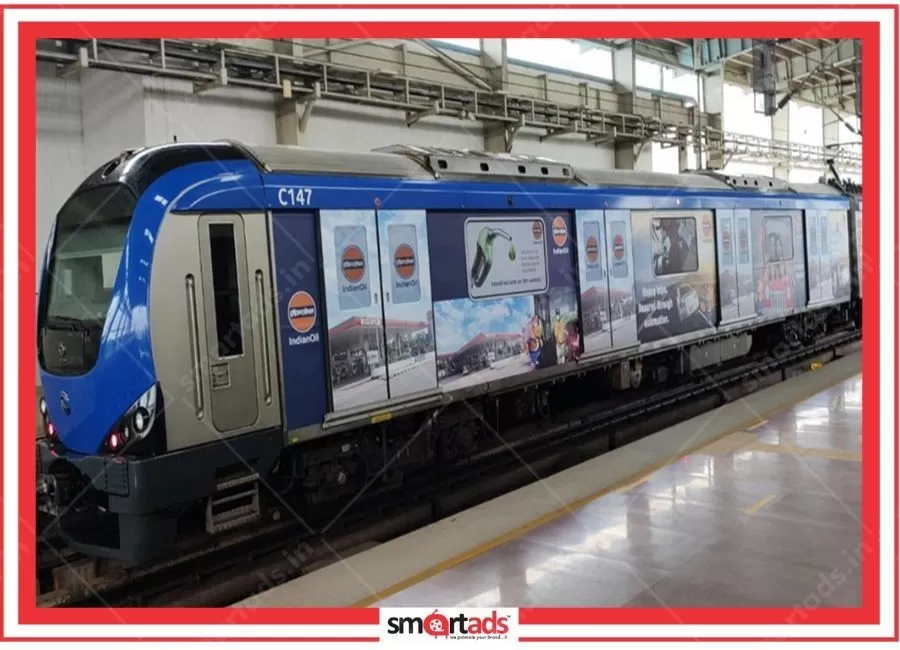
Exterior Metro Wrap
Size & Printing Cost as per actual
On the outside of metro Train, advertise
Rate per Metro Display Cost / 1 Month
Route:IIT Kanpur To Moti Jheel
₹1000000.00
Showing 1 to 3 of 3 Results
MEDIA DETAILS
Size & Printing Cost as per actual
On the outside of metro Train, advertise
Rate per Metro Display Cost / 1 Month
Route:IIT Kanpur To Moti Jheel
₹1000000.00
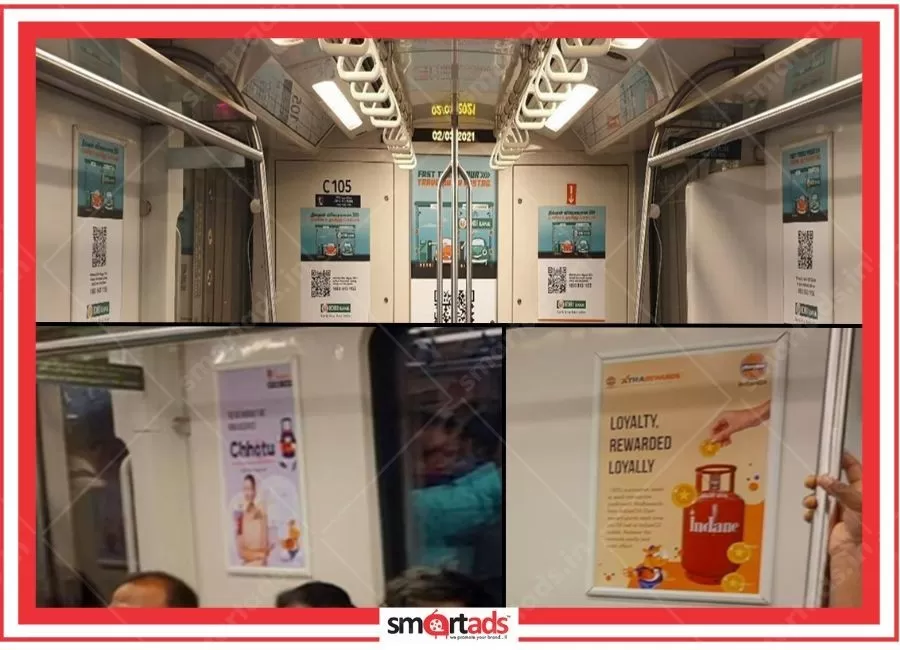
Size & Printing Cost as per actual
On the outside of metro Train, advertise
Rate per Metro Display Cost / 1 Month
Route:IIT Kanpur To Moti Jheel
₹500000.00
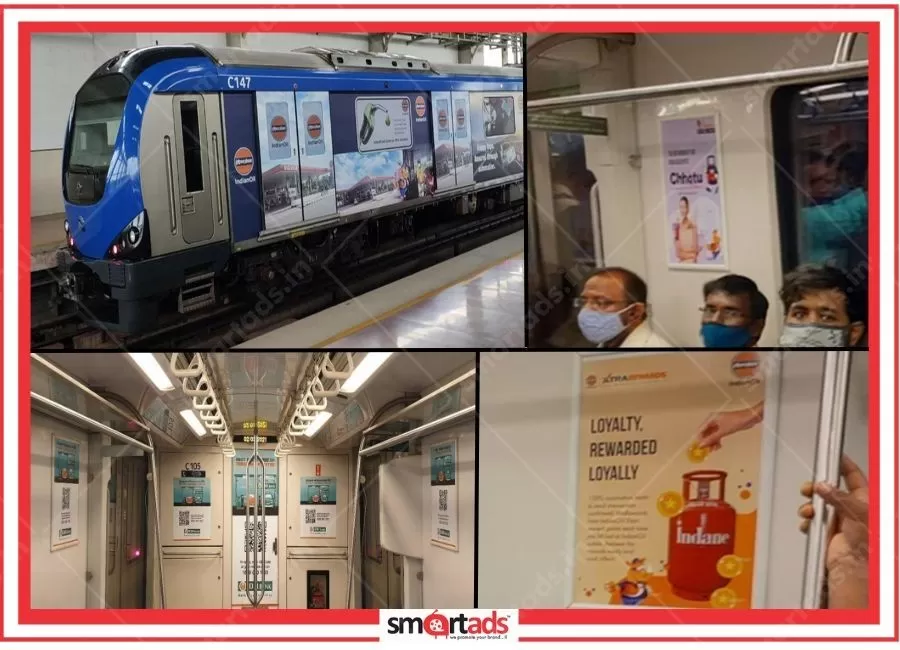
Size & Printing Cost as per actual
On the outside of metro Train, advertise
Rate per Metro Display Cost / 1 Month
Route:IIT Kanpur To Moti Jheel
₹1500000.00
MEDIA REACH

MinimumQty :
1
EstimateReachPeople :
150000000
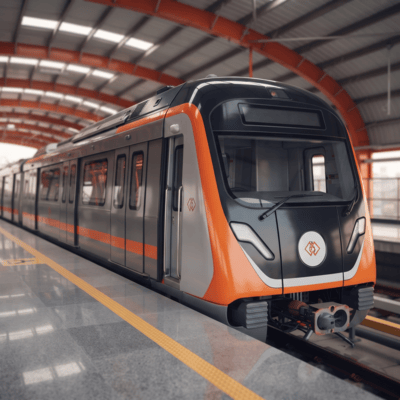
Kanpur Metro's Orange Line has quietly become one of the most underrated transit media opportunities in Uttar Pradesh — and most brands are still sleeping on it. The corridor stretches from IIT Kanpur in the west to Naubasta in the northeast, cutting through some of the densest commercial and residential pockets of Kanpur city, which means the captive audience sitting inside those Alstom-Bombardier Movia coaches is not a random cross-section of the population. These are working professionals, college students, and daily commuters who ride the same route repeatedly — which is precisely the kind of repeated exposure advertising that brand recall studies consistently reward.
What makes this moment particularly interesting is the May 2025 inauguration of the underground section through Kanpur Central metro station, which has added a new dimension to the advertising inventory on Corridor-1 and opened up formats — concourse advertising, entry exit branding, and underground platform panels — that simply did not exist on this line before.
Metro train advertising on the Kanpur Orange Line refers to the placement of brand communication across the rolling stock, stations, and ancillary surfaces of Corridor-1, which runs under the operational authority of the Uttar Pradesh Metro Rail Corporation (UPMRC). The Orange Line — formally designated as Line 1 — spans roughly 23.8 kilometres across Kanpur Uttar Pradesh, connecting IIT Kanpur metro station in the west through major interchange points like Rawatpur station, Motijheel station, Bada Chauraha metro station, Naveen Market station, Nayaganj metro station, Chunniganj metro station, and Kanpur Central metro station before continuing toward the Naubasta terminus.
What a lot of people miss is that metro train advertising in Kanpur Orange Line is fundamentally different from static OOH advertising in the city. A billboard on the GT Road might be seen by a driver for three seconds at 60 kilometres per hour; a ceiling panel inside a metro coach is seen by the same commuter for eight to twelve minutes every single morning and evening. That dwell time is the asset, and it is an asset that outdoor advertising simply cannot replicate. At SmartAds, we always tell our clients that transit media is not about impressions in the traditional sense — it is about impressions per commuter per week, which compounds in a way that no other BTL advertising format does.
The advertising inventory on the Kanpur Metro Orange Line is governed through UPMRC's tender framework, specifically the KNPAR-17 and KNPAR-18 tender cycles, which determine which concessionaires hold the rights to sell advertising space across stations and rolling stock. Brands do not typically approach UPMRC directly; instead, they work through authorised media agencies — which is where a media buying partner with existing relationships and rate negotiation experience becomes genuinely valuable rather than a formality.
The format range on the Kanpur Metro Orange Line is considerably wider than most brand managers realise when they first sit down to plan a campaign. On the rolling stock itself, the most impactful option is the full train wrap, which covers the entire exterior of one or more coaches with a single brand skin — the visual effect at a platform is essentially a moving billboard that arrives and departs every few minutes, giving the brand repeated exposure to everyone standing on the platform. A more targeted exterior train branding option is the partial wrap or coach panel, which covers specific sections of the exterior without committing to the full-train investment, and which suits brands that want strong visibility without the premium outlay of a complete wrap.
Interior panel branding is where the real granularity begins. Inside the coaches, available surfaces include overhead ceiling panel advertising above the seating rows, interior door panels, window decals, and the increasingly popular hand grab branding — those overhead loops that every standing passenger grips during the journey, which puts a brand message literally in someone's hand for the entire ride. Gangway cover branding, which wraps the accordion-style connecting sections between coaches, is a format that very few brands have explored on the Kanpur Orange Line so far, which means early movers get the novelty advantage. We worked with a consumer electronics brand on a similar gangway cover format on another UP metro corridor, and the brand recall scores from post-campaign surveys came back nearly thirty percent higher than their simultaneous outdoor campaign in the same city.
On the station side, the inventory spans platform panels, concourse advertising at the entry and exit gates, digital screens metro installations (DOOH screens at select stations), entry exit branding at the fare gates, and co-branding metro station opportunities where a brand's name or identity is associated with a specific station — a format that has been used on other Indian metro systems and which UPMRC has made available under specific commercial arrangements. The newly opened underground section at Kanpur Central metro station has added a particularly valuable layer of inventory, since underground stations create a closed environment where commuters have no competing visual stimulus from the street, which concentrates attention on in-station advertising far more effectively than elevated stations do.
Frankly speaking, this is the question every client asks first, and it is also the question that most agency websites answer vaguely or not at all — which is a disservice to anyone trying to build a serious media plan. We will be direct about what we know from our experience booking campaigns on the Kanpur Metro Orange Line, with the caveat that rates are negotiated through UPMRC's concessionaire framework and can shift based on campaign duration, format combination, and seasonal demand.
A full train wrap on the Kanpur Orange Line — covering the exterior of an entire train set — works out to somewhere in the ballpark of ₹8 to ₹12 lakh per month for a single train, which is a number that surprises most clients when they compare it to what a comparable-reach outdoor campaign across Kanpur city would cost. Interior panel branding per coach runs considerably lower, typically in the range of ₹40,000 to ₹80,000 per coach per month depending on the panel type and position, which means a brand can achieve meaningful interior presence across multiple coaches for a total metro advertising cost that sits well within mid-market campaign budgets. Platform panels at high-footfall stations like Kanpur Central metro station or Naveen Market station are priced somewhere between ₹25,000 and ₹60,000 per panel per month, with the underground stations commanding a premium given their enclosed environment and longer dwell times.
DOOH or LED screen metro advertising inside stations is priced on a slot basis, with a ten-second spot in a sixty-second loop working out to roughly ₹15,000 to ₹30,000 per screen per month at key stations — which is a format that suits brands running topical or time-sensitive messaging that needs to be updated without reprinting physical material. The minimum annual guarantee (MAG) framework that UPMRC uses means that concessionaires have committed to a baseline revenue floor, which in practice means that short-term bookings of under a month are possible but carry a premium over the per-month rate for longer campaigns. For small businesses in Kanpur city who want to explore metro advertising in Kanpur without committing to large budgets, interior panel branding on two to three coaches for a ninety-day campaign is typically the most accessible entry point, with total spends starting from roughly ₹2 to ₹3 lakh for the full duration.
Station selection is something most brands get wrong — they default to the most recognisable station names without actually mapping footfall data against their target audience profile. Our experience with UP metro advertising shows that the highest raw footfall does not always translate to the highest brand-relevant impressions, and the distinction matters enormously when you are allocating a fixed budget across multiple touchpoints.
Kanpur Central metro station is the undisputed anchor of the Orange Line in terms of interchange traffic; it connects to the main railway station, which makes it the entry and exit point for a significant volume of intercity travellers in addition to daily commuters, and the newly opened underground section has made the station environment considerably more premium than the elevated stations on the corridor. IIT Kanpur metro station draws a very specific audience — students, faculty, research professionals, and the growing residential population in the western corridors of Kanpur Uttar Pradesh — which makes it disproportionately valuable for brands targeting educated urban consumers, edtech platforms, or financial products. Naveen Market station sits at the heart of one of Kanpur city's busiest commercial districts, which means the footfall profile skews toward shoppers, small business owners, and retail-oriented consumers — a profile that is extremely useful for FMCG brands, fashion labels, and consumer durables.
Rawatpur station and Motijheel station serve dense residential catchments with strong working-professional demographics, and in our experience these stations are underpriced relative to the quality of audience they deliver, which makes them a smart inclusion for brands that want to stretch their metro advertising cost efficiency. Nayaganj metro station and Chunniganj metro station serve areas with significant commercial activity and student movement, and Gurudev Chauraha is emerging as an important node as the corridor's ridership matures. The upcoming Naubasta terminus, once fully operational, will open up advertising inventory at what is expected to become a significant last-mile transit hub for the northeastern parts of Kanpur — and brands that establish presence there early will benefit from the lower rates that typically characterise new inventory before demand catches up.
The case for orange line metro advertising is built on three things that are genuinely difficult to find together in any other single media format in Kanpur Uttar Pradesh: captive audience, repeated exposure advertising, and a premium brand environment. The captive audience argument is straightforward — a commuter inside a metro coach cannot scroll past your ad, cannot change the channel, and cannot look away without effort, which is a condition that digital advertising has been trying to replicate through forced-view formats for years, and still cannot fully achieve. Brand recall from transit media consistently outperforms equivalent spends on outdoor advertising in Indian market studies, and the FICCI-EY Media and Entertainment Report has flagged transit advertising as one of the fastest-growing segments within the OOH advertising category in India precisely because of this recall advantage.
The brand visibility argument for Kanpur Metro Orange Line is also a function of the city's traffic conditions. Kanpur city is notorious for congested arterial roads, which means that outdoor advertising on hoardings and unipoles is seen under conditions of driver stress and distraction; metro advertising in Kanpur, by contrast, is consumed by a relaxed, seated or standing audience with nothing else demanding their attention for the duration of the ride. One automotive brand we worked with ran a simultaneous campaign — exterior train branding on the Orange Line alongside hoardings on three major Kanpur arterial roads — and the post-campaign brand awareness survey showed the metro train branding Kanpur component generating nearly forty percent higher unaided recall despite accounting for only about thirty-five percent of the total campaign budget.
On top of that, the metro environment carries an implicit brand association that is worth acknowledging: advertising inside a modern, clean, air-conditioned metro system positions a brand differently than advertising on a bus shelter or a painted wall. For real estate brands, premium FMCG labels, financial services companies, and educational institutions, that environmental association is a meaningful part of the brand communication — and it is something we factor into media plans when we are advising clients on the right OOH advertising mix for Kanpur.
The Uttar Pradesh Metro Rail Corporation (UPMRC) is the statutory authority that owns and operates the Kanpur Metro Orange Line, and all advertising on the corridor — whether on rolling stock, platforms, concourses, or digital screens — requires UPMRC approval. UPMRC manages advertising rights through a concessionaire model, where advertising inventory is bundled and tendered out under frameworks like KNPAR-17 and KNPAR-18, which cover different segments of the advertising inventory across the corridor. Brands and their agencies do not negotiate directly with UPMRC in most cases; instead, they work through the authorised concessionaire for the specific inventory type they want to book, and the concessionaire handles compliance and UPMRC clearance as part of the booking process.
The content restrictions under UPMRC guidelines are fairly standard across Indian metro systems but worth knowing before a campaign goes into production. Political advertising is prohibited outright; content that is deemed offensive, obscene, or contrary to national interest is rejected; and advertisements for tobacco, liquor, and certain categories of financial products face additional scrutiny or outright exclusion. Beyond content, UPMRC specifies material standards for physical advertising — vinyl specifications, adhesive types, and installation methods are all prescribed to protect the rolling stock and station infrastructure, which means that production vendors need to be familiar with these requirements or risk rejection at the installation stage. We have seen this backfire when clients use their existing outdoor production vendor without briefing them on metro-specific material standards, resulting in delays and reprinting costs that could easily have been avoided.
The non-fare revenue framework that UPMRC operates under also means that advertising is a commercially significant revenue stream for the corporation, which in practice translates to a reasonably professional and responsive concessionaire ecosystem — rates are documented, inventory is trackable, and campaign verification (proof of display) is available, which is not always the case with informal OOH advertising formats in Kanpur city. For brands that need to justify media spend to management or auditors, this documentation trail is genuinely useful.
This is a question we get asked in almost every metro advertising brief, and the honest answer is that it depends on what the brand is trying to achieve — but the framing of the question itself reveals a common misunderstanding about how these two formats actually work. Exterior train branding, including the full train wrap, is primarily a mass-reach format; it generates impressions among everyone who sees the train at stations, on elevated sections visible from roads, and at depot yards, which makes it functionally similar to a moving billboard with very high frequency on the corridor. Interior panel branding, on the other hand, is a dwell-time format — it works on the same audience repeatedly over longer periods, building brand recall through sustained exposure rather than broad reach.
The data we have gathered from post-campaign surveys across UP metro advertising campaigns suggests that interior branding consistently outperforms exterior on brand message recall — commuters who travel the same route daily are exposed to interior panels five to ten times per week, which compounds into a level of message familiarity that exterior advertising simply cannot match for the same budget. A retail client in Kanpur ran a three-month interior panel branding campaign across eight coaches on the Orange Line, focusing on ceiling panels and door panels, and reported that unprompted brand recall among surveyed Orange Line commuters reached sixty-two percent by the end of the campaign period — a figure that would be extremely difficult to achieve with an equivalent outdoor advertising spend in the city.
To be fair, exterior train branding has a reach advantage that interior cannot replicate: a full train wrap is seen by pedestrians, motorists, and bystanders along the entire corridor, not just by fare-paying passengers, which extends the effective audience well beyond the metro ridership base. For brand launches, major product announcements, or campaigns where maximum visual impact over a short period is the priority, exterior train branding on the Kanpur Orange Line delivers a spectacle that interior formats cannot. The ideal approach — which is what we recommend when budgets allow — is to combine both: exterior for reach and impact, interior for recall and message depth, treating them as complementary rather than competing formats within the same campaign.
The audience profile of the Kanpur Metro Orange Line skews toward urban, educated, and economically active consumers — which makes it a strong fit for a specific set of brand categories, though the list is broader than most media planners initially assume. Working professionals and students make up the bulk of daily commuters on the corridor, and the route's passage through IIT Kanpur metro station means there is a meaningful concentration of technically educated and aspirationally oriented young adults in the western section of the line.
Real estate metro ads have been among the most consistent performers on the Orange Line, for an obvious reason: people who commute by metro are already demonstrating a preference for organised urban infrastructure, which correlates strongly with interest in planned residential developments, gated communities, and commercial properties. FMCG brands metro advertising on this corridor benefits from the sheer frequency of exposure — a soap or beverage brand that appears on ceiling panels in a commuter's daily ride for ninety days achieves a level of top-of-mind presence that is extremely difficult to dislodge. Educational institutions, edtech platforms, and coaching centres have also found the Orange Line particularly effective, especially in the sections near IIT Kanpur metro station and Naveen Market station, where student footfall is concentrated.
Financial services — insurance, mutual funds, credit cards, and digital payment platforms — are a natural fit for metro advertising in Kanpur because the audience is already comfortable with organised financial systems (they are, after all, using a GoSmart Card or NCMC for their daily transit). Healthcare brands, particularly hospitals and diagnostic chains, have used platform panels and concourse advertising at Kanpur Central metro station effectively, given the station's proximity to the main railway station and its role as a high-footfall transit hub. What a lot of people miss is that SMBs and local Kanpur businesses — clothing retailers, jewellers, coaching institutes, restaurants — can also access metro train advertising in Kanpur Orange Line through interior panel formats at budgets that are genuinely competitive with local newspaper advertising, and with far superior audience targeting.
The booking process for metro train advertising on the Kanpur Orange Line involves more steps than booking a newspaper ad or a digital campaign, but it is not as complicated as it appears from the outside — particularly if you are working with a media advertising agency Kanpur that already has an established relationship with the UPMRC concessionaire. The process begins with a brief: format selection, station or train preferences, campaign duration, and creative specifications. Based on this brief, the agency approaches the concessionaire to check inventory availability, since popular formats like full train wraps and Kanpur Central metro station platform panels can be booked several weeks in advance, particularly during high-demand periods like Diwali, the wedding season, and back-to-school months.
Once inventory is confirmed, a formal booking order is raised, creative artwork is submitted for UPMRC approval (which typically takes five to seven working days), and production is initiated in parallel. Physical installation on rolling stock is done during maintenance windows — usually at night — and station installations follow a similar off-peak schedule. The minimum campaign duration for most formats on the Kanpur Orange Line is thirty days, though some concessionaires offer shorter runs for digital screen metro advertising, which does not require physical installation and can be updated remotely. For brands planning seasonal or festive campaigns, we strongly recommend initiating the booking process at least six to eight weeks before the intended go-live date to account for approval timelines and production lead times.
At SmartAds, our experience with media plan Kanpur metro campaigns shows that the most common delay point is creative approval — not because UPMRC is difficult to work with, but because clients often submit artwork that was designed for other formats without adapting it to the specific dimensions and viewing distances of metro surfaces. A ceiling panel viewed from 1.5 metres below requires very different typography sizing and visual hierarchy than a newspaper quarter-page or a social media graphic, and getting this right at the first submission saves significant time and avoids costly reprints.
Metro ridership Kanpur has been growing steadily since the Orange Line's phased opening, and current estimates place daily passengers on the corridor at somewhere around 35,000 daily passengers on weekdays, with weekend ridership showing a different pattern as leisure and shopping trips supplement the commuter base. To put that number in context: a brand running interior panel branding across ten coaches on the Orange Line is potentially generating contact with a significant fraction of those daily commuters, and because the same commuters travel the same route repeatedly, the effective frequency of exposure per person per month is substantially higher than a single-impression OOH format would deliver.
The urban commuter audience on the Kanpur Orange Line skews toward the 18-to-45 age bracket, with a meaningful representation of women commuters — particularly in the sections connecting residential areas to commercial zones — which is a demographic that many Kanpur city advertisers have historically struggled to reach efficiently through traditional OOH advertising. The GoSmart Card and NCMC adoption data, while not publicly disaggregated at the station level, suggests a commuter base that is comfortable with digital transactions and organised services, which is a behavioural proxy for the kind of consumer profile that premium and aspirational brands target.
What the raw ridership number does not capture is the quality of the attention. Transit advertising India research, including studies referenced in the Dentsu e4m Report on OOH effectiveness, consistently shows that metro commuters — particularly those on enclosed underground sections — exhibit significantly higher advertising recall than commuters on buses or open transit formats. The Kanpur Central metro station underground section, which opened in May 2025, is expected to become one of the highest-dwell-time advertising environments on the corridor, since underground platforms create a contained sensory environment where advertising surfaces face no competition from the street environment outside.
Kanpur city has a reasonably mature OOH advertising market — unipoles on the GT Road and Kanpur-Lucknow highway, bus shelter panels across the city, wall paintings in residential areas, and cinema advertising at multiplexes in the commercial districts. Each of these has its place in a media plan, but metro advertising in Kanpur occupies a distinct position in the mix that is not easily substituted by any of these alternatives. The fundamental difference is the captive audience condition: no other BTL advertising format in Kanpur city puts a brand message in front of a stationary, undistracted audience for eight to twelve minutes at a stretch, repeatedly, over a campaign period of thirty to ninety days.
On a cost-per-thousand (CPM) basis, metro train advertising in Kanpur Orange Line is competitive with — and in many cases superior to — traditional outdoor advertising when the frequency multiplier is applied. A hoarding on a busy Kanpur arterial road might generate a high raw impression count, but the effective CPM after accounting for attention and recall drops significantly; a metro interior panel, by contrast, generates fewer raw impressions but at a dramatically higher attention rate, which makes the effective CPM considerably more favourable for brand recall objectives. Non-traditional advertising formats like metro branding also carry the advantage of a clean, uncluttered environment — there is no advertising clutter inside a metro coach the way there is on a roadside where fifteen hoardings compete for attention within a hundred metres.
Compared to cinema advertising in Kanpur, which offers high attention but very low frequency (most people visit a cinema once every few weeks at most), metro train branding Kanpur delivers frequency that cinema cannot match. Compared to digital advertising, metro advertising in Kanpur offers physical presence and environmental association that a mobile banner simply cannot replicate. The most effective media plans we build for Kanpur city campaigns treat metro advertising as the frequency and recall engine, combined with digital for targeting and retargeting, and outdoor for broad reach — a combination that the GroupM TYNY Report has consistently identified as outperforming single-channel OOH approaches in Tier-1 and emerging Tier-2 Indian markets.
Q: What is metro train advertising on the Kanpur Orange Line?
Metro train advertising on the Kanpur Orange Line refers to the placement of brand communication across the trains, stations, and associated surfaces of Corridor-1 (Line 1) of the Kanpur Metro, which is operated by the Uttar Pradesh Metro Rail Corporation (UPMRC). This includes formats on the rolling stock — both exterior train branding and interior panel branding — as well as station-based formats like platform panels, concourse advertising, entry exit branding, and digital screens metro installations. The corridor runs from IIT Kanpur metro station to the Naubasta terminus, covering some of the densest commercial and residential zones of Kanpur Uttar Pradesh, which makes it one of the most strategically valuable transit media opportunities in the state.
Q: What advertising formats are available on the Kanpur Metro Orange Line?
The format inventory on the Orange Line spans both train-based and station-based options. On the trains, brands can choose from full train wrap (exterior), partial coach wraps, interior ceiling panel advertising, door panel branding, window decals, hand grab branding, and gangway cover branding. At stations, the available formats include platform panels, concourse advertising, entry exit branding at fare gates, LED screen metro advertising (DOOH screens), and co-branding metro station arrangements at select stations. The newly opened underground section at Kanpur Central metro station has added enclosed concourse and platform inventory that commands a premium due to the high-dwell, distraction-free environment it creates.
Q: How much does it cost to advertise on Kanpur Metro Orange Line trains?
Metro advertising cost on the Kanpur Orange Line varies by format, duration, and station. A full train wrap works out to roughly ₹8 to ₹12 lakh per month per train set; interior panel branding per coach runs somewhere between ₹40,000 and ₹80,000 per month depending on panel type; platform panels at premium stations like Kanpur Central are priced in the ballpark of ₹25,000 to ₹60,000 per panel per month; and LED screen metro advertising on a slot basis works out to roughly ₹15,000 to ₹30,000 per screen per month. For small businesses, interior panel campaigns across two to three coaches for a ninety-day period can be initiated with a total budget starting from approximately ₹2 to ₹3 lakh, which makes metro advertising in Kanpur more accessible than most SMB owners assume.
Q: What is the difference between train wrap branding and interior panel branding on Kanpur Metro?
Exterior train branding — including the full train wrap — is a mass-reach format that generates impressions among everyone who sees the train, including non-passengers; it functions like a moving billboard across the entire corridor. Interior panel branding targets fare-paying commuters during their journey and works through repeated exposure over time, building brand recall through sustained dwell-time contact rather than broad reach. The two formats serve different objectives: exterior for launch impact and reach, interior for message depth and recall — and the most effective Kanpur metro train branding campaigns typically combine both rather than choosing one exclusively.
Q: How many passengers travel daily on the Kanpur Metro Orange Line?
Current estimates place daily ridership on the Kanpur Metro Orange Line at around 35,000 daily passengers on weekdays, with the figure expected to grow as the corridor matures and the Naubasta extension becomes fully operational. The urban commuter audience skews toward the 18-to-45 age bracket, with a strong representation of working professionals, students, and women commuters — a demographic profile that is particularly valuable for brands in the financial services, FMCG, education, and real estate categories.
Q: Which stations on the Kanpur Orange Line are best for advertising?
Kanpur Central metro station is the highest-footfall station on the corridor and the most premium advertising environment, particularly following the opening of its underground section. IIT Kanpur metro station is the best choice for brands targeting educated young adults and the student-professional demographic. Naveen Market station is ideal for retail, FMCG, and consumer brands given its commercial catchment. Rawatpur station and Motijheel station offer strong working-professional audiences at rates that are generally more competitive than the anchor stations, making them excellent value inclusions in a multi-station media plan for Kanpur.
Q: Who regulates and approves metro advertising in Kanpur?
All advertising on the Kanpur Metro Orange Line is governed by the Uttar Pradesh Metro Rail Corporation (UPMRC), which manages advertising rights through a concessionaire framework under tender cycles including KNPAR-17 and KNPAR-18. Brands work through authorised concessionaires rather than approaching UPMRC directly; the concessionaire manages UPMRC approval, which typically takes five to seven working days for creative content. Content restrictions include prohibitions on political advertising, tobacco and liquor promotions, and material deemed offensive or contrary to national interest; physical material specifications for vinyl and adhesives are also prescribed by UPMRC.
Q: Can small businesses afford metro train advertising on the Kanpur Orange Line?
Yes — and this is something the industry does not communicate well enough. Interior panel branding on two to three coaches for a ninety-day campaign can be executed for a total budget starting from roughly ₹2 to ₹3 lakh, which is comparable to or less than what many Kanpur businesses spend on local newspaper advertising for the same period, and with considerably higher audience quality and frequency. LED screen metro advertising on a slot basis is also accessible for smaller budgets, particularly for brands that want to test the format before committing to a longer physical installation campaign. A media advertising agency Kanpur with concessionaire relationships can often negotiate more favourable terms for smaller campaigns than a brand approaching the market independently.
Q: What is the minimum campaign duration for metro train advertising in Kanpur?
The minimum campaign duration for most physical formats — exterior train branding, interior panel branding, platform panels — is thirty days on the Kanpur Orange Line. Digital screen metro advertising (DOOH) can sometimes be booked for shorter periods since it does not require physical installation, though rates for sub-monthly bookings typically carry a premium. For brands planning festive or seasonal campaigns, we recommend a minimum of forty-five to sixty days to capture both the pre-event build-up and the peak period, since brand recall studies consistently show that campaigns shorter than thirty days generate significantly lower unaided recall scores than those running forty-five days or more.
Q: What types of businesses benefit most from advertising on the Kanpur Orange Line?
Real estate developers, FMCG brands, educational institutions and edtech platforms, financial services companies (insurance, mutual funds, digital payments), healthcare providers, consumer electronics brands, and retail chains all have strong category fit with the Orange Line audience. Local Kanpur businesses — coaching institutes, jewellers, clothing retailers, restaurants — also benefit significantly from metro branding, particularly through interior formats at stations closest to their commercial catchment areas. The key criterion is whether the brand's target consumer overlaps with the urban commuter audience profile of the Orange Line, which skews educated, economically active, and digitally comfortable.
Q: How do I book metro train advertising on the Kanpur Orange Line?
The booking process involves briefing an authorised media agency on your format preferences, campaign duration, and target stations or trains; the agency confirms inventory availability with the concessionaire; creative artwork is submitted for UPMRC approval (five to seven working days); production is initiated; and installation is carried out during off-peak maintenance windows. The full process from brief to live campaign typically takes three to four weeks for physical formats, and somewhat less for digital screen bookings. Initiating the process six to eight weeks ahead of a desired launch date is strongly recommended for festive or high-demand periods.
Q: What content restrictions apply to Kanpur Metro advertisements under UPMRC guidelines?
UPMRC prohibits political advertising, content promoting tobacco or alcohol, material that is sexually explicit or offensive, and advertisements that could be construed as contrary to national interest or public order. Financial product advertising may face additional category-specific scrutiny. Beyond content, UPMRC specifies production material standards — vinyl grade, adhesive type, and installation method — which must be met for physical formats; non-compliance results in rejection and reprinting costs. Working with an experienced metro advertising agency Kanpur that knows these specifications from prior campaigns is the most reliable way to avoid production-stage delays.
Q: Is exterior train wrap advertising more effective than interior branding on the Kanpur Orange Line?
Neither format is categorically superior — they serve different objectives. Exterior train branding delivers broader reach and visual spectacle, generating impressions among non-passengers as well as commuters; interior panel branding delivers deeper recall through repeated dwell-time exposure to the same audience. Post-campaign survey data from our own UP metro advertising campaigns consistently shows interior formats outperforming exterior on unaided brand recall among commuters, while exterior formats outperform on broad awareness metrics across the general population. The optimal approach combines both, using exterior for reach and interior for recall within the same campaign budget.
Q: How does Kanpur Metro Orange Line advertising compare to billboard or OOH advertising in the city?
Metro advertising in Kanpur delivers a captive audience condition — stationary, undistracted, and exposed for eight to twelve minutes per journey — that outdoor advertising cannot replicate. On an effective CPM basis (accounting for attention and recall rather than raw impressions), metro branding is typically more cost-efficient than equivalent outdoor spends for brand recall objectives. The metro environment also carries an implicit brand association with modernity and urban infrastructure that roadside hoardings do not provide, which is meaningful for premium and aspirational brand categories. The ideal media plan uses metro advertising as the frequency and recall engine, with outdoor providing broad reach and digital providing targeting — rather than treating them as alternatives.
Q: What are the newly opened underground stations on the Orange Line and their advertising potential?
The Kanpur Central metro station underground section, inaugurated in May 2025, is the most significant new advertising inventory addition to the Orange Line. Underground stations create a closed sensory environment where commuters have no competing visual stimulus from the street, which concentrates attention on in-station advertising far more effectively than elevated stations. The concourse advertising, entry exit branding, and platform panel inventory at the underground Kanpur Central section is expected to command premium rates relative to the elevated stations on the corridor, and early bookings in this inventory will benefit from the novelty factor before the space becomes fully subscribed.
Q: What is the expected ROI from metro advertising on the Kanpur Orange Line?
Metro advertising ROI is best measured through brand recall lift, footfall attribution (for retail brands), and lead generation tracking (for real estate and financial services). Post-campaign surveys from our SmartAds campaigns on UP metro corridors have shown unaided brand recall rates of fifty to sixty-five percent among surveyed commuters after forty-five-day interior panel campaigns — a figure that significantly outperforms equivalent outdoor advertising in the same markets. For retail and real estate clients, store visit and inquiry attribution to metro campaigns has shown ROI multiples of three
