
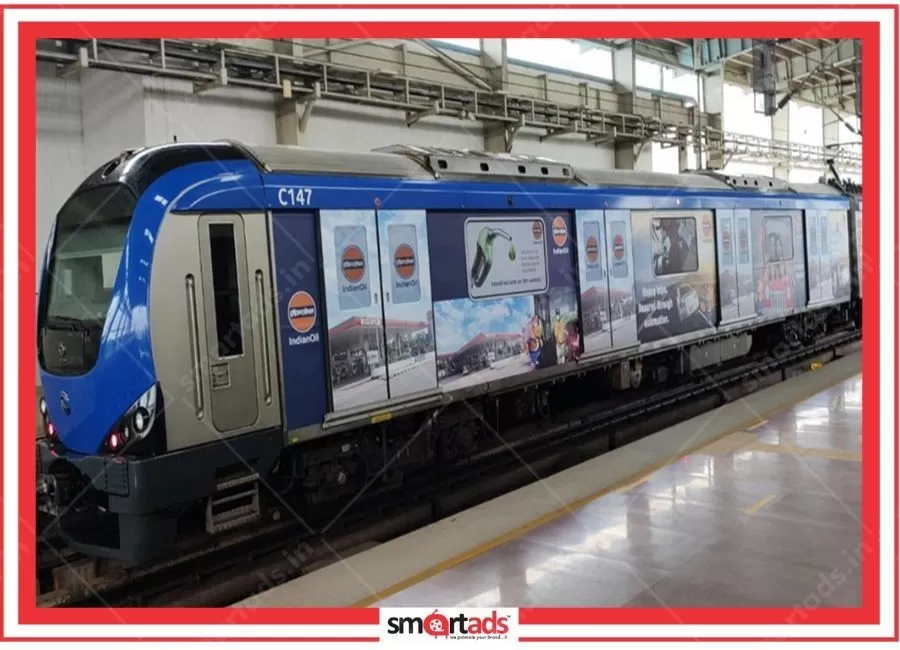
Exterior Metro Wrap
Size & Printing Cost as per actual
On the outside of metro Train, advertise
Rate per Metro Display Cost / 1 Month
Route:Sitabuldi To Lokmanya Nagar
₹1000000.00
Showing 1 to 4 of 4 Results
MEDIA DETAILS
Size & Printing Cost as per actual
On the outside of metro Train, advertise
Rate per Metro Display Cost / 1 Month
Route:Sitabuldi To Lokmanya Nagar
₹1000000.00
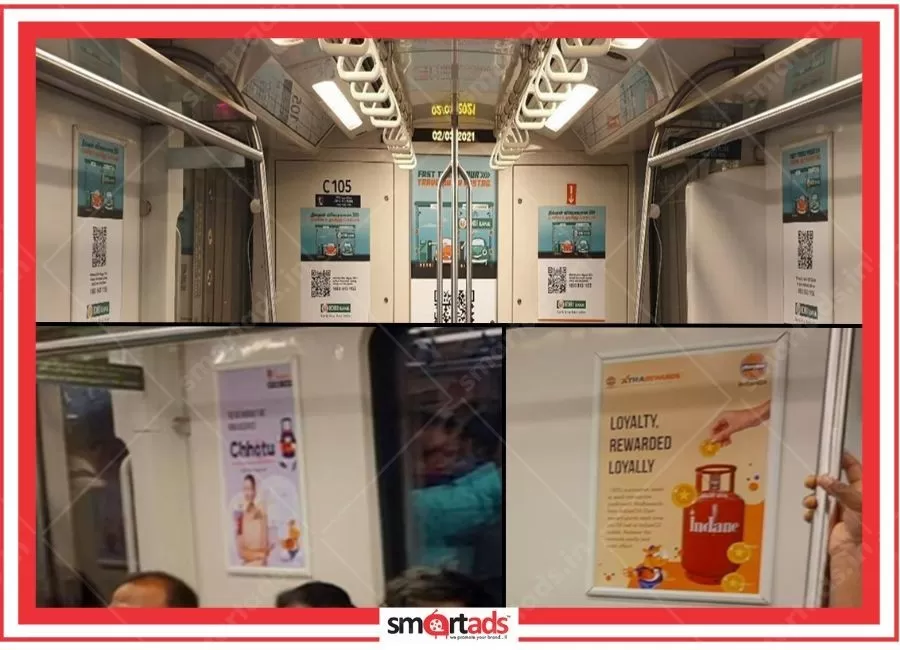
Size & Printing Cost as per actual
On the outside of metro Train, advertise
Rate per Metro Display Cost / 1 Month
Route:Sitabuldi To Lokmanya Nagar
₹500000.00
20 Sec Jingle
On the outside of metro Train, advertise
Rate per Metro Display Cost / 1 Month
Route:Sitabuldi To Lokmanya Nagar
₹400000.00
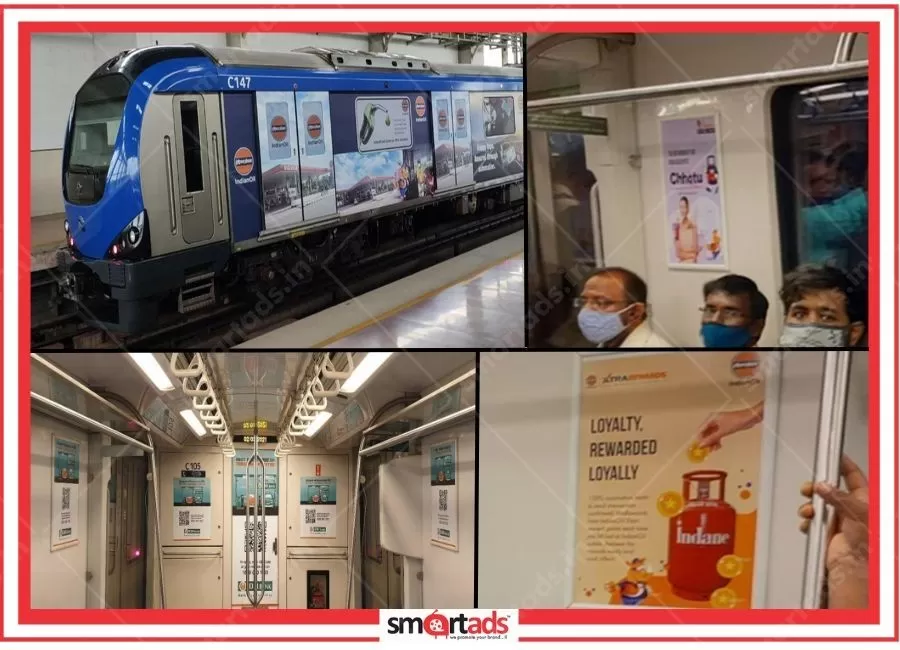
Size & Printing Cost as per actual
On the outside of metro Train, advertise
Rate per Metro Display Cost / 1 Month
Route:Sitabuldi To Lokmanya Nagar
₹1500000.00
MEDIA REACH

MinimumQty :
1
EstimateReachPeople :
150000000
Most brands still think of Nagpur as a secondary market — a city you reach after you have sorted out Mumbai, Pune, and Hyderabad. That thinking is costing them real money, because the Nagpur Aqua Line is quietly delivering captive audience exposure numbers that most outdoor formats in the city simply cannot match. When the Maharashtra Metro Rail Corporation crossed the milestone of 10 crore cumulative passengers on the Nagpur Metro network, it was not just a headline for infrastructure enthusiasts; it was a signal to every media planner that transit advertising in this city had arrived at a genuinely interesting scale.
The Nagpur Aqua Line — officially Line 2, running along the east-west corridor from Prajapati Nagar to Lokmanya Nagar — passes through the commercial and residential spine of the city in a way that no single outdoor site or newspaper insert can replicate. The line cuts through Sitabuldi, which is arguably the busiest commercial intersection in central Nagpur, and continues outward through densely populated residential zones, which means the audience profile shifts organically across the day and across the route. What we tell our clients at SmartAds is that this is not simply a transit medium — it is a moving billboard that follows the consumer through their actual daily geography.
What a lot of people miss is the dwell time advantage. A commuter on the Nagpur Aqua Line spends somewhere between 18 and 35 minutes inside the train depending on how many stops they ride, which is a duration that most BTL advertising formats cannot claim. Compare that to a roadside hoarding, which captures perhaps three to five seconds of attention at 40 kilometres per hour, and the arithmetic starts looking very different. Non-traditional advertising formats that deliver sustained exposure are genuinely rare, and metro train advertising on the Nagpur Aqua Line is among the most cost-efficient ways to achieve it in this market.
There is also a geography argument worth making here. The east-west corridor connects two distinct socioeconomic zones — the older, denser commercial neighbourhoods around Dharampeth College and LAD Square on one end, and the emerging residential and institutional clusters near Prajapati Nagar on the other — which means a single campaign running across the full Aqua Line reaches audiences that would otherwise require multiple separate media buys to cover. Our experience shows that brands willing to think about the Aqua Line as a corridor rather than a collection of individual placements tend to extract significantly better brand visibility from their budgets.
Interior train branding is where most first-time metro advertisers start, and frankly, it is a smart entry point. The Nagpur Aqua Line trains, manufactured by CRRC Dalian and operated by MahaMetro, run in three-coach configurations, which means each trainset offers a defined and measurable inventory of interior surfaces. Seat back panels are the most consistently booked format — they sit directly in the eyeline of seated passengers and are exposed for the entire journey duration, which makes them particularly effective for messaging that requires more than a glance to absorb. We have worked with a financial services client in Nagpur who ran a mutual fund awareness campaign exclusively on seat back panels across the Aqua Line, and the post-campaign recall scores came back noticeably higher than what the same brand had achieved with newspaper inserts in the same period.
Beyond seat back panels, the interior of each coach offers grab handles, door panels, and window strips as additional branding surfaces, each of which serves a slightly different attention pattern. Grab handle advertising reaches standing passengers — typically during peak hours when trains are fuller — and tends to work well for short, punchy messages that do not require sustained reading. Door panels get noticed during the natural pause moments when passengers wait to exit, which creates a brief but high-attention window; window strips, on the other hand, work best for brands that want ambient, repeated exposure rather than a single strong impression. Coach branding, when all interior surfaces within a coach are taken by one brand, creates an immersive environment that is genuinely difficult to ignore — we have seen this format used very effectively by edtech advertising clients launching new courses in Nagpur, where the saturation effect reinforced the brand name across multiple touchpoints within a single journey.
The practical consideration with interior train branding is material specification. MahaMetro requires vinyl applications that meet specific fire-retardancy standards, and artwork files are typically needed at 300 DPI with bleed margins of at least 5mm on all sides; the exact dimensions vary by surface type, and we always recommend getting a confirmed dimension sheet from the authorised vendor before finalising creative. Campaign duration for interior formats typically runs in monthly cycles, with a minimum booking of 30 days being the standard across most MahaMetro-approved vendors, though 90-day campaigns tend to deliver meaningfully better brand recall because the audience has time to absorb the message across multiple journeys.
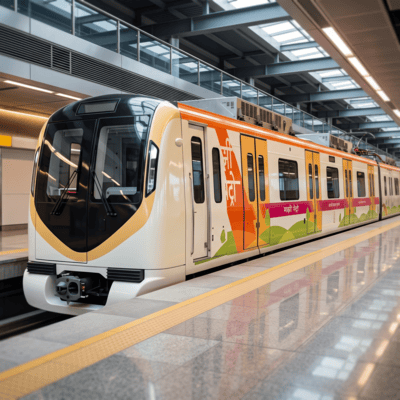
Exterior train wrap advertising is the format that generates the most excitement in client briefs, and for good reason — a fully wrapped Nagpur Aqua Line train is essentially a moving billboard covering the entire city's surface road network as it travels above ground sections of the route. The train wrap format converts the exterior of the rolling stock into a large-format visual canvas, which is visible not just to passengers on the platform but to pedestrians, motorists, and bystanders along the entire east-west corridor. The scale of a full exterior train wrap on a three-coach trainset works out to a combined surface area that most single outdoor hoarding sites cannot match, and the movement of the train means the impression count accumulates across every trip the train makes throughout the operating day.
Partial exterior wraps — covering one or two coaches rather than the full trainset — are also available and represent a more accessible entry point for brands with tighter budgets; these are sometimes referred to as partial train wrap or coach-level exterior branding, and they work particularly well when the creative is designed to be impactful at the coach scale rather than requiring the full train length for visual coherence. One automotive brand we worked with used a partial exterior train wrap on the Aqua Line during a new model launch in Nagpur, combining it with platform advertising at Sitabuldi Interchange Station and Nagpur Railway Station, and the campaign generated a level of street-level visibility that the client's regional team described as exceeding their expectations for a tier-2 city advertising budget.
The production timelines for exterior train wraps are longer than interior formats — typically 10 to 14 working days for print production and application — and MahaMetro's approval process adds another layer of lead time that brands often underestimate. Our standard advice is to initiate the booking and creative approval process at least 30 to 45 days before the intended campaign launch date, particularly for festive season campaigns when inventory across the Aqua Line tends to be absorbed quickly.
Full train branding — where a single advertiser takes over all interior and exterior surfaces of a complete three-coach trainset — is the premium format on the Nagpur Aqua Line, and it is the one that generates the strongest brand recall scores in our experience. The logic is straightforward: when a commuter boards a fully branded train, every surface they encounter reinforces the same brand message, which creates a cumulative impression that is qualitatively different from encountering a single panel among several competing advertisements. We have found that BFSI advertising clients, in particular, respond well to this format because financial products benefit from the credibility signal that comes with owning a high-visibility, premium media placement.
Frankly speaking, this is the question that dominates most initial client conversations, and it is also the area where the most confusion exists because published rate cards vary significantly between vendors and are not always current. What we can share from our direct experience with Nagpur Aqua Line advertising rates is that interior seat back panel campaigns typically work out to somewhere in the ballpark of ₹80,000 to ₹1,50,000 per month for a partial coach booking, which is a number that surprises most clients when they compare it to what they are paying for a mid-size outdoor hoarding in Nagpur — the metro format often comes in at a similar or lower cost while delivering significantly better dwell time and a more defined audience.
Full train branding — covering all surfaces of a complete three-coach trainset, interior and exterior — is priced considerably higher, with monthly rates that can range from roughly ₹5 lakh to upwards of ₹12 lakh depending on the specific surfaces included, the duration of the campaign, and the negotiation leverage that comes with longer booking commitments. The cost per impression for full train branding, when calculated against the daily ridership numbers and the multiple trips a trainset makes across the Aqua Line each day, works out to a figure that is genuinely competitive with digital display advertising in the same city — which is a comparison that tends to shift how brand managers think about metro advertising cost in Nagpur. Exterior train wrap advertising sits between these two extremes, with a partial wrap on one coach running somewhere between ₹1.5 lakh and ₹3 lakh per month depending on the coach position and the specific route section.
Platform advertising and digital screen advertising at Aqua Line stations are priced separately from train-based formats and represent a complementary layer of brand visibility that many advertisers add to their media plan once they have committed to a train branding campaign. Entry gate branding at high-footfall stations like Sitabuldi Interchange and Dharampeth College typically commands a premium over stations at the terminal ends of the line, which reflects the higher daily footfall those locations generate. At SmartAds, we always recommend that clients think about metro advertising rates in terms of campaign objectives rather than raw cost — a ₹3 lakh monthly spend on a well-placed interior campaign with strong creative will consistently outperform a ₹6 lakh spend on a poorly targeted outdoor buy in terms of brand recall and audience quality.
Not all stations on the Nagpur Aqua Line are created equal from an advertising perspective, and the footfall distribution across the 20 stations on the east-west corridor is more uneven than most brands assume when they are planning their first campaign. Sitabuldi Interchange Station is, without question, the highest-value placement on the entire line — it serves as the interchange point between the Aqua Line and the Orange Line (North-South Corridor, Line 1), which means it captures both lines' ridership in addition to the significant pedestrian traffic from the surrounding commercial area. Platform advertising and entry gate branding at Sitabuldi command the highest rates on the network, and they are frequently the first inventory to be booked during peak advertising seasons.
Nagpur Railway Station on the Aqua Line is the second anchor point worth prioritising, particularly for brands targeting travellers, intercity commuters, and the broader aspirational consumer segment that passes through the station daily; the audience at this station tends to skew slightly older and more economically active than the student-heavy catchments near Dharampeth College Station. LAD Square Station and Dharampeth College Station together cover a stretch of the route that passes through one of Nagpur's most concentrated commercial and educational zones, which makes them particularly relevant for real estate advertising in Nagpur, educational institutions, and consumer brands targeting the 18-to-35 demographic. Prajapati Nagar and Lokmanya Nagar, as the terminal stations on either end of the Aqua Line, generate consistent footfall from the residential populations in those catchments, though the daily numbers are lower than the central stations — they are worth considering for hyperlocal advertising campaigns targeting those specific neighbourhoods rather than city-wide brand awareness campaigns.
The practical implication for media planners is that a campaign which concentrates platform advertising spend at Sitabuldi, Nagpur Railway Station, and Dharampeth College, while running train branding across the full Aqua Line, tends to deliver a more efficient combination of broad reach and high-attention placement than spreading the same budget thinly across all 20 stations. This is the approach we recommend at SmartAds when clients have a defined budget and want to maximise the impact of their Nagpur Aqua Line advertising investment.
The case for BTL advertising on the Nagpur Aqua Line rests on three structural advantages that are unlikely to diminish as the network matures. The first is audience quality: metro commuters in Nagpur, as in every Indian city where metro systems have been studied, skew towards the SEC A and B demographic segments — salaried professionals, college students, and urban middle-class households — which is precisely the audience that most consumer brands, BFSI advertisers, and edtech platforms are trying to reach. The FICCI-EY Media and Entertainment Report has consistently highlighted transit media as an underutilised channel in tier-2 Indian cities, and Nagpur is one of the clearest examples of that gap.
The second advantage is the captive audience dynamic, which is genuinely different from almost every other non-traditional advertising format available in Nagpur. When a commuter is inside a metro train, there is no option to change the channel, scroll past the ad, or take a different route to avoid the creative — the brand message is present for the entire journey duration, which creates an exposure quality that outdoor advertising, newspaper advertising, and even digital display cannot replicate. We have seen this translate into measurable outcomes: a retail client in Nagpur who ran a 60-day interior train branding campaign on the Aqua Line reported a 34% increase in walk-ins from the catchment areas along the east-west corridor, which was attributed in part to the sustained brand visibility the campaign had built among daily commuters.
The third advantage is the relative lack of clutter compared to outdoor advertising in Nagpur. The city's major arterial roads are dense with hoarding inventory, which means individual outdoor sites increasingly struggle to generate standout brand visibility in a visually saturated environment. Metro train advertising on the Nagpur Aqua Line, by contrast, operates in a controlled environment where the number of competing brand messages is limited by the finite inventory of surfaces on each trainset — which means the brands that do invest in this channel benefit from a significantly less cluttered advertising environment than they would encounter on the street.
Understanding the audience profile of Nagpur Aqua Line daily commuters is essential for any brand manager trying to justify this channel in a media plan, and the data that has emerged from MahaMetro's own ridership studies and independent research paints a picture that is more commercially attractive than many advertisers expect. The core ridership on the Aqua Line's east-west corridor is dominated by working professionals commuting between residential zones and commercial centres, students travelling to and from educational institutions in the Dharampeth College and LAD Square catchment, and a growing segment of leisure and shopping-oriented riders who use the metro to access Sitabuldi's retail and commercial district.
Income-wise, the metro audience in Nagpur skews decidedly upward relative to the city's general population — the cost of a metro ticket, combined with the time-saving value proposition of the system, means that the Aqua Line's ridership is disproportionately drawn from households with disposable income and active consumption patterns. This is the demographic that financial products, automobile brands, premium consumer goods, and OTT platform advertising are all competing to reach, and the metro environment delivers them in a context that is associated with modernity, aspiration, and urban mobility — all of which are brand-adjacent values that advertisers benefit from by association.
The age distribution on the Aqua Line is also worth noting: research on Indian metro systems consistently shows that the 22-to-45 age band accounts for the majority of regular ridership, which aligns well with the target audience for categories ranging from real estate advertising in Nagpur to health insurance to smartphone brands. What we tell our clients is that if your brand's target consumer is an urban professional or college-educated young adult in Nagpur, the Aqua Line is not a supplementary channel — it is a primary one that deserves a meaningful share of the BTL budget.
The distinction between interior and exterior formats is not just about where the creative appears — it fundamentally changes who sees the ad, in what context, and with what level of attention. Interior train branding reaches the paid passenger audience exclusively: these are people who have already boarded the train and are spending a defined period of time in the branded environment, which means the dwell time is guaranteed and the attention, while not always active, is at least ambient and sustained. Exterior train wrapping, by contrast, reaches a much broader and less defined audience that includes platform passengers, bystanders at road crossings, pedestrians near elevated sections of the route, and motorists who see the train passing — the reach is higher in raw impression terms, but the quality of attention per impression is lower.
For brands whose primary objective is brand awareness at scale — a new product launch, a city-wide sale announcement, or a brand entering the Nagpur market for the first time — exterior train wrap advertising tends to deliver the broader reach that those objectives require. For brands whose objective is persuasion, consideration, or message comprehension — a financial product explaining its benefits, an educational institution communicating its admissions process, or a healthcare brand building trust — interior train branding is typically the more effective choice because the audience has time to actually read and absorb the message. The smartest campaigns we have executed on the Nagpur Aqua Line have combined both: exterior wrapping for awareness reach and interior branding for message depth, which together create a campaign architecture that addresses both the top and middle of the marketing funnel within a single media channel.
The creative requirements also differ significantly between the two formats. Exterior train wrap advertising demands artwork that works at large scale, reads clearly at speed, and uses colour and contrast effectively against the train's base livery; the messaging needs to be reducible to a single strong visual and no more than five to seven words of copy. Interior formats, particularly seat back panels and door panels, allow for more copy-dense creative because the audience has time to read — though we have found that even in interior environments, campaigns with clean, focused creative consistently outperform those that try to communicate too many messages at once.
Campaign duration is one of the most consistently underestimated variables in metro train advertising, and it is an area where we see brands make expensive mistakes by thinking too short. The minimum booking period for most Nagpur Aqua Line advertising formats is 30 days, but a single month is rarely sufficient to build meaningful brand recall among the Aqua Line's daily commuter base — particularly given that not every commuter rides the line every day, and the effective frequency needed to drive recall typically requires multiple exposures over a longer period. The general principle we apply at SmartAds is that 60 to 90 days represents the sweet spot for most brand awareness objectives on the Aqua Line, delivering enough repetition to build recognition without the creative fatigue that can set in with very long campaign runs.
Seasonal and festive campaign windows are an important exception to this framework. The period from October through January — covering Diwali, Christmas, and the New Year — sees a significant spike in Nagpur Aqua Line ridership as the city's retail and entertainment activity intensifies, which makes this window particularly valuable for consumer brands, retail advertisers, and financial services running year-end campaigns. Booking inventory for this period typically needs to happen 6 to 8 weeks in advance, and we have seen situations where key stations and train branding slots are fully committed by mid-September for the Diwali window. Similarly, the April-to-June period, which covers board exam results and college admissions season, is the most competitive window for edtech advertising and educational institution campaigns on the Aqua Line.
For brands running hyperlocal advertising campaigns targeted at specific catchment areas — a new restaurant near Sitabuldi, a residential project near Prajapati Nagar, or a retail store near Dharampeth College — shorter, more targeted campaigns of 30 to 45 days can be effective if the creative is very specifically tailored to the local audience and the station selection is precise. The key is matching campaign duration to the specific objective rather than defaulting to the minimum booking period as a cost-saving measure.
To be honest, the answer to this question has evolved considerably since the Aqua Line's early operational years, when the primary advertisers were largely real estate developers and educational institutions targeting the obvious demographic overlap with the metro's ridership. The category mix has broadened significantly, and the industries that are now extracting the most consistent value from Nagpur Aqua Line advertising include financial services, consumer durables, healthcare, FMCG brands targeting urban households, and OTT platforms — all of which have found that the metro's captive, demographically defined audience delivers better cost-per-qualified-impression than most alternative channels in the city.
BFSI advertising — banking, insurance, mutual funds, and fintech products — has become one of the most active categories on the Aqua Line, which makes intuitive sense given that the core metro commuter demographic aligns almost perfectly with the target audience for financial products: working-age adults with regular income, digital literacy, and active financial decision-making behaviour. Real estate advertising in Nagpur has also been a consistent presence on the Aqua Line, particularly for projects in the east and west zones of the city that sit within the catchment of the east-west corridor. One real estate developer we worked with ran a 90-day interior train branding campaign on the Aqua Line to support a residential project launch near the Prajapati Nagar end of the line; the campaign generated a measurable increase in site visits from commuters in that catchment, with the client attributing roughly 18% of total site visit traffic during the campaign period to the metro advertising exposure.
Retail brands, quick-service restaurants, and consumer electronics companies have found the exterior train wrap format particularly effective for new store launches and product launches in Nagpur, because the moving billboard effect generates city-wide awareness that is difficult to achieve with static outdoor formats alone. The category that we think is most underutilising this channel is healthcare — hospitals, diagnostic chains, and pharmacy brands in Nagpur are still heavily weighted towards newspaper and outdoor advertising, and the metro's audience quality and dwell time represent a genuinely underexploited opportunity for that sector.
The booking process for Nagpur Aqua Line advertising runs through MahaMetro's authorised advertising concessionaires, and understanding the approval and production workflow is essential for any brand that wants to avoid delays and last-minute scrambles. MahaMetro, as the operating authority under Maharashtra Metro Rail Corporation Limited, maintains oversight of all advertising on the network — which means creative approvals are not simply a vendor formality but a formal step in the process that can add 7 to 14 working days to the timeline if artwork is not submitted correctly the first time.
The practical sequence for booking a campaign on the Aqua Line typically begins with format selection and station or trainset identification, followed by a formal rate negotiation and booking confirmation with the authorised vendor, creative submission for MahaMetro approval, print production, and finally installation. The full end-to-end timeline from initial brief to campaign live date is realistically 30 to 45 days for most formats, and longer for exterior train wraps where production and application are more complex. Documentation requirements typically include brand authorisation letters, GST registration, creative files in the specified format and resolution, and in some cases a content compliance declaration — the specific requirements vary by format and are subject to MahaMetro's current guidelines.
At SmartAds, we manage the entire booking and approval process on behalf of our clients, which eliminates the coordination burden and significantly reduces the risk of timeline delays caused by incomplete documentation or creative revision cycles. Our team has direct relationships with the authorised vendors on the Nagpur Aqua Line network, which means we can provide accurate current rate cards, realistic availability information, and production timelines that reflect actual ground conditions rather than theoretical best-case scenarios. For brands that are new to metro train advertising in Nagpur, having an experienced advertising agency manage the process is not just a convenience — it is a meaningful risk reduction measure.
The comparison between BTL advertising on the Nagpur Aqua Line and traditional above-the-line formats is one that comes up in almost every media planning conversation we have with brands that are new to this channel, and the answer is more nuanced than a simple cost-per-impression comparison. Traditional advertising formats — television, newspaper, radio — deliver broad reach across the Nagpur market, but they do so without the audience specificity, dwell time, or contextual relevance that metro train advertising provides. A 30-second television spot on a regional channel reaches a large and diverse audience, but the metro environment delivers a defined, upwardly mobile urban demographic with guaranteed exposure duration — which is a fundamentally different value proposition.
The non-traditional advertising advantage of metro train branding also shows up in brand recall data. Research on transit advertising in Indian cities, referenced in multiple FICCI-EY Media and Entertainment Reports, consistently shows that transit media generates higher unaided recall than outdoor formats of comparable cost, which is attributed to the combination of dwell time, repetition across multiple journeys, and the relatively uncluttered advertising environment inside metro trains. The TAM AdEx data on BTL and non-traditional advertising spend in tier-2 Indian cities has shown consistent year-on-year growth in transit media allocation, which reflects the growing recognition among media planners that commuter advertising delivers measurable value in markets like Nagpur.
To be fair, metro train advertising is not a replacement for traditional media in a well-constructed media plan — it is a complement that addresses the specific gap of high-quality, sustained exposure to an urban, economically active audience. The brands that get the most out of Nagpur Aqua Line advertising are typically those that use it in combination with digital advertising to create a reinforcement loop: the metro creative builds awareness and brand salience among the commuter audience, and the digital retargeting then converts that awareness into action when the same audience encounters the brand online. This integrated approach is what we consistently recommend at SmartAds when building media plans for clients targeting Nagpur's urban consumer base.
The ROI question is the one that brand managers most need to answer for their internal stakeholders, and it is also the area where metro train advertising on the Nagpur Aqua Line is most frequently undersold because the measurement frameworks being applied are borrowed from digital advertising and do not translate cleanly to a transit media context. The right metrics for evaluating Aqua Line advertising ROI are brand recall lift, audience reach against the target demographic, frequency of exposure among regular commuters, and — where possible — direct attribution through footfall tracking or coupon redemption studies.
What our experience shows is that 90-day interior train branding campaigns on the Nagpur Aqua Line consistently deliver unaided brand recall rates in the 30 to 45 percent range among regular commuters on the route, which is a figure that compares favourably with the recall benchmarks for outdoor advertising in the same market. The cost per thousand impressions for a well-executed interior campaign works out to somewhere in the range of ₹15 to ₹30, depending on the specific format and the ridership numbers used in the calculation — which is a figure that holds up well against both outdoor CPM rates in Nagpur and digital display CPM rates for the same demographic. Full train branding, while more expensive in absolute terms, delivers a cost per impression that is actually lower than partial formats because the trainset makes multiple trips across the Aqua Line each day, accumulating impressions across both the on-board audience and the platform and street-level audience that sees the exterior.
Nagpur Metro Phase 2 expansion — which will extend the network's reach into new catchment areas and add to the overall daily ridership base — is expected to increase the advertising inventory available on the Aqua Line network and bring new audience segments within reach of metro train advertising campaigns. The planned Nagpur Metro Phase 3 corridor, which includes the Sitabuldi-Koradi route, will further expand the network's geographic coverage, and brands that establish their presence on the Aqua Line now are building brand familiarity with an audience that will grow in both size and economic significance as the network matures. The GroupM TYNY Report has consistently highlighted transit and out-of-home media as growth categories in the Indian advertising market, and the trajectory of metro advertising in tier-2 cities like Nagpur is consistent with that broader trend.
Q: What is metro train advertising on the Nagpur Aqua Line?
Metro train advertising on the Nagpur Aqua Line refers to the placement of brand communications across the various surfaces of the trains and stations on Line 2 of the Nagpur Metro network, which runs along the east-west corridor between Prajapati Nagar and Lokmanya Nagar. This includes interior formats such as seat back panels, grab handles, door panels, window strips, and full coach branding, as well as exterior formats including partial and full train wrap advertising. The channel is operated under the authority of MahaMetro — Maharashtra Metro Rail Corporation Limited — and advertising is managed through authorised concessionaires who handle booking, creative approval, production, and installation on behalf of advertisers.
Q: How much does it cost to advertise on the Nagpur Aqua Line metro train?
Metro advertising cost in Nagpur varies by format, duration, and specific placement. Interior formats such as seat back panels typically run in the range of ₹80,000 to ₹1,50,000 per month for a partial coach booking, while full train branding covering all surfaces of a three-coach trainset can range from roughly ₹5 lakh to ₹12 lakh per month depending on the scope and negotiated terms. Exterior train wrap advertising for a single coach typically falls somewhere between ₹1.5 lakh and ₹3 lakh per month. Platform advertising and digital screen advertising at key stations like Sitabuldi are priced separately and command a premium at high-footfall locations. These figures are indicative benchmarks from our direct experience; actual rates should be confirmed with a current rate card from an authorised vendor or media planning agency.
Q: What ad formats are available for metro train advertising on the Nagpur Aqua Line?
The Nagpur Aqua Line offers a range of BTL advertising formats across both train and station environments. On the trains themselves, interior formats include seat back panels, grab handles, door panels, window strips, and full coach branding; exterior formats include partial train wraps and full train wrap advertising covering the entire three-coach trainset. At stations, available formats include platform advertising panels, digital screen advertising, entry gate branding, and smart card advertising — the latter being a relatively underutilised format that places brand messaging on the physical smart card issued to regular commuters, which is a genuinely interesting hyperlocal advertising touchpoint that most brands have not yet explored on the Aqua Line.
Q: Which stations on the Nagpur Aqua Line get the highest commuter footfall?
Sitabuldi Interchange Station consistently records the highest daily footfall on the Aqua Line, benefiting from its role as the interchange point between the Aqua Line and the Orange Line as well as its location in Nagpur's primary commercial district. Nagpur Railway Station is the second most significant station for advertiser purposes, drawing a mix of intercity travellers and daily commuters. Dharampeth College Station and LAD Square Station together cover a high-density commercial and educational catchment that generates strong footfall from the student and young professional demographic. The terminal stations at Prajapati Nagar and Lokmanya Nagar serve their respective residential catchments but generate lower absolute footfall than the central stations, making them more suitable for hyperlocal advertising targeting those specific neighbourhoods.
Q: How many coaches does the Nagpur Aqua Line metro train have?
The Nagpur Aqua Line trains currently operate in three-coach configurations, which were supplied by CRRC Dalian as part of the rolling stock procurement for the Nagpur Metro project. Each three-coach trainset provides a defined inventory of interior and exterior advertising surfaces, and full train branding campaigns cover all three coaches as a single unit. The three-coach configuration is an important parameter for advertisers planning coach branding campaigns because it determines the total surface area available and the cost structure for full trainset takeovers.
Q: What is the daily ridership on the Nagpur Aqua Line?
The Nagpur Metro network, which includes both the Aqua Line and the Orange Line, has reported cumulative ridership crossing the 10 crore passenger milestone, which reflects the network's growing role in the city's daily commuter infrastructure. Daily ridership on the Aqua Line specifically fluctuates with weekday versus weekend patterns and has been growing steadily as the network's catchment areas become more densely populated and as commuter habits shift in response to traffic congestion on Nagpur's road network. For current ridership figures relevant to media planning, MahaMetro's official communications and the authorised vendor's audience data are the most reliable sources, and we always recommend requesting up-to-date ridership data as part of the media plan development process.
Q: How do I book metro train advertising on the Nagpur Aqua Line?
Booking metro train advertising on the Nagpur Aqua Line involves engaging with MahaMetro's authorised advertising concessionaires, who manage the inventory, rate negotiation, creative approval, and production process. The typical booking sequence covers format selection, rate confirmation, creative submission for MahaMetro approval, print production, and installation — a process that realistically requires 30 to 45 days from initial brief to campaign live date. Working with an experienced metro train advertising agency in Nagpur that has established relationships with the authorised vendors significantly reduces the administrative burden and the risk of delays caused by documentation or creative approval issues.
Q: What is the difference between interior and exterior train branding on the Aqua Line?
Interior train branding reaches the on-board passenger audience with sustained dwell time exposure across the journey duration, making it well-suited for message-rich creative and persuasion-oriented campaign objectives. Exterior train wrapping converts the outside of
