
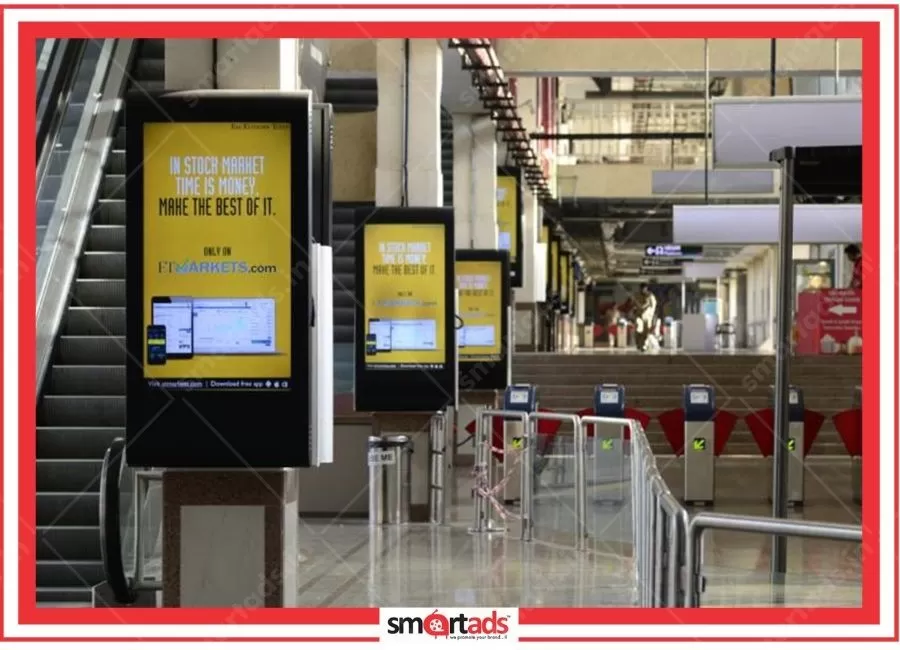
Entry Exit Panel
8 ft x 4 ft
Bright and vibrant multicolored letterin
Rate per Panel / Month
Min Requirement is 3 Panel.
₹48000.00
Showing 1 to 4 of 4 Results
MEDIA DETAILS
8 ft x 4 ft
Bright and vibrant multicolored letterin
Rate per Panel / Month
Min Requirement is 3 Panel.
₹48000.00
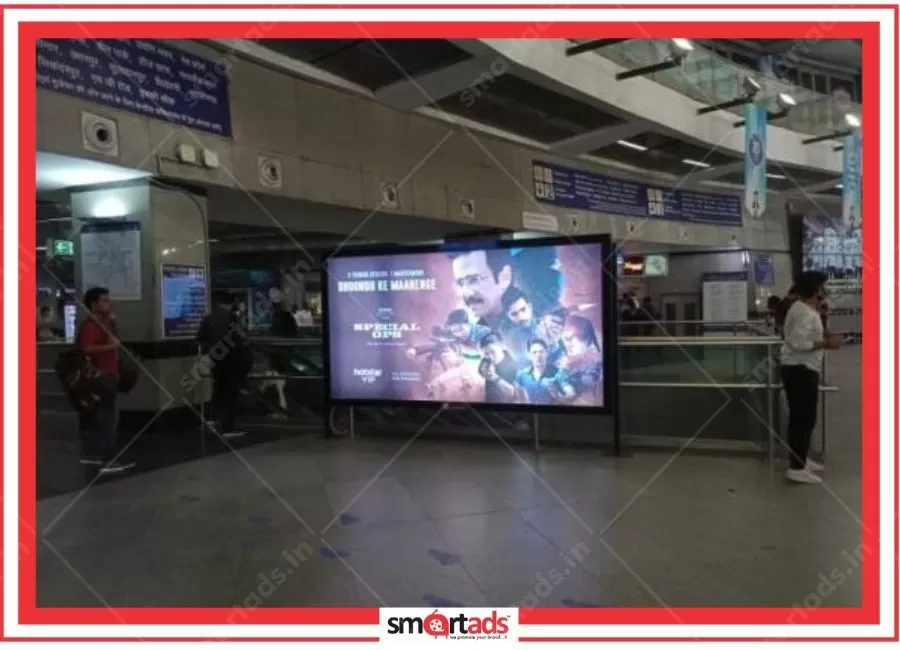
10 ft x 5 ft
A new wide wall system designed to accom
Rate per Panel / Month
Min Requirement is 3 Panel.
₹50000.00
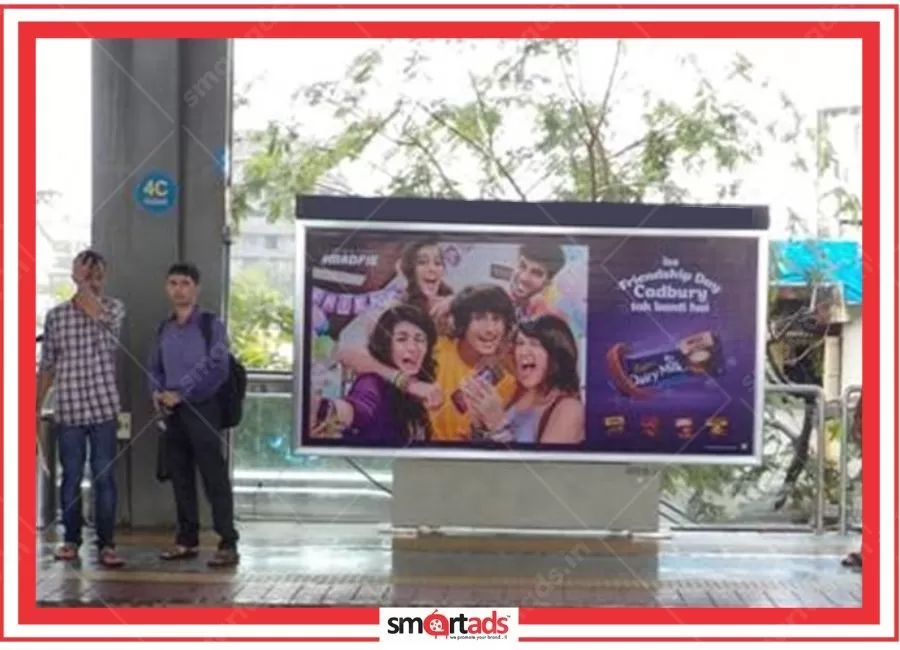
8 ft x 4 ft
A raised flooring or other horizontal su
Rate per Panel / Month
Min Requirement is 3 Panel.
₹35000.00
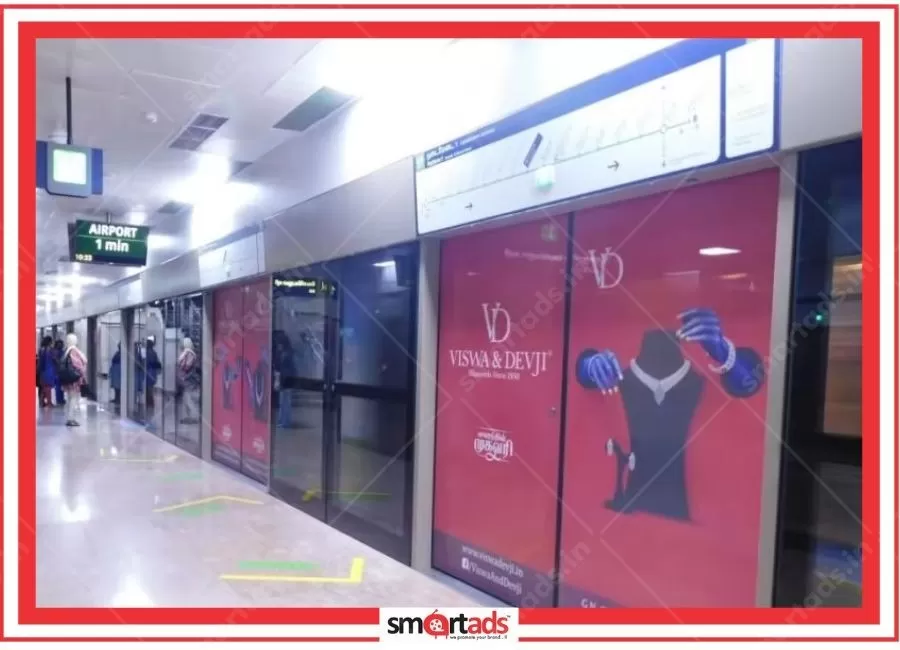
7 ft x 4 ft
Also known as platform edge doors (PEDs)
Rate per Plateform / Month
Min Requirement is 1 Stations.
₹1200000.00
MEDIA REACH

MinimumQty :
10
EstimateReachPeople :
15 Million
Most brands entering Nagpur for the first time still default to hoardings on the Wardha Road or a burst of FM radio — which is understandable, but increasingly insufficient for reaching the city's fastest-growing commuter segment. The Nagpur Metro Aqua Line, which runs 18.557 km along the east-west corridor through the heart of the city, now carries tens of thousands of daily commuters past 21 stations, creating a captive audience that most media plans in this market have not yet fully priced in. What we find, again and again, is that brands which get into this space early are locking in share-of-mind at a fraction of what comparable transit advertising costs in Mumbai or Pune.
The Aqua Line — formally Line 2 of the Nagpur Metro, operated under the joint oversight of MahaMetro and NMRCL (Nagpur Metro Rail Corporation Limited) — is the east-west corridor connecting Prajapati Nagar in the east to Lokmanya Nagar in the west, cutting through the commercial and institutional spine of Nagpur. When we talk about metro station advertising on this corridor, we are referring to a category of BTL advertising that places brand messages at multiple touchpoints along a commuter's journey: from the moment they approach an entry gate, through the concourse and platform, to the interior and exterior of the train itself.
What a lot of people miss is that metro station advertising is fundamentally different from a roadside hoarding or a newspaper insertion — the environment is controlled, the audience is physically present and largely stationary for meaningful durations, and the brand message cannot be scrolled past or switched off. Transit advertising in metro environments works precisely because of this dwell time; a commuter waiting on a platform for three to five minutes, or seated inside a coach for eight to twelve minutes, is exposed to brand messaging in a way that is qualitatively different from a two-second billboard glance at 60 kmph. Our experience at SmartAds shows that this dwell-time advantage is the single most underappreciated asset in Nagpur Aqua Line advertising.
The advertising rights on Nagpur Metro trains are managed through Podhigai Ads, which holds the exclusive concessionaire rights for train branding across the Nagpur Metro rolling stock — the CRRC Dalian-manufactured three-coach trains that operate on both the Aqua Line and the Orange Line. Station-level advertising rights, which include platform panels, pillar branding, entry gate branding, concourse branding, and digital screens, are managed separately through NMRCL's own concession framework. Understanding this two-track structure — Podhigai Ads for train branding, NMRCL for station formats — is the first thing any brand or media planner needs to get right before approaching this market.
The range of formats on the Aqua Line is considerably wider than most brands expect when they first approach us. On the train side, you have exterior train branding — which involves vinyl wraps applied to the outer body of one or more coaches — and interior train branding, which covers overhead panels, door stickers, seat-back panels, and grab-handle danglers inside the coach. Full train branding, which is the most premium option, involves wrapping the entire exterior of a three-coach rake and simultaneously branding the interior spaces, creating what is effectively a moving billboard that travels the entire 18.557 km east-west route multiple times a day. A train wrap of this scale generates extraordinary brand visibility simply because the same branded train passes through every one of the 21 stations repeatedly throughout the day.
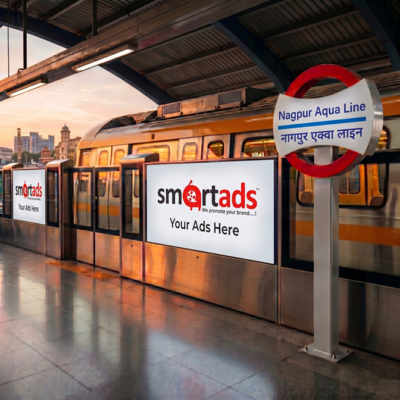
At the station level, the formats span a wide spectrum of investment and impact. Backlit panels — the large illuminated display units positioned on platforms and in concourse areas — are among the most popular formats because they offer high visibility in the artificially lit metro environment, where they stand out far more sharply than they would in an outdoor setting. Pillar branding involves wrapping the structural columns of the station in branded vinyl, which works particularly well at stations with wider platforms where commuters spend more time; entry gate branding places the brand at the very first touchpoint a commuter encounters, which is a psychologically powerful placement for brand recall. Digital screens, which are installed at select stations across the Aqua Line, allow for dynamic content rotation and are increasingly being used by brands for time-sensitive campaigns — a real estate developer running a weekend site visit promotion, for instance, or an edtech brand targeting the evening student commuter wave.
Station domination — where a single brand takes over all available advertising surfaces at one station for a defined campaign duration — is a format that we have found works exceptionally well for product launches and brand entry campaigns in Nagpur. Coach branding, which is a step below full train branding, allows a brand to own a single coach's interior completely, which creates an immersive environment that passengers inside that coach experience for the entire duration of their journey. On top of that, there are concourse branding opportunities — floor graphics, ceiling hangers, and wall panels in the ticketing and fare-gate areas — which reach commuters during the highest-attention moments of their station experience, when they are standing still and navigating their surroundings.
Frankly speaking, not all 21 stations on the Aqua Line are equal from an advertising standpoint, and any media plan that treats them as interchangeable is leaving significant efficiency on the table. Sitabuldi Interchange Station is, without question, the crown jewel of the entire Nagpur Metro network — it is the only station where the Aqua Line (east-west corridor) and the Orange Line (north-south corridor, Line 1) intersect, which means every commuter transferring between the two lines passes through it, effectively doubling the footfall exposure relative to any single-line station. For brands that want maximum daily commuter reach within a single station investment, Sitabuldi Interchange is the obvious starting point.
Nagpur Railway Station metro station, which connects the metro network to one of Maharashtra's busiest rail junctions, draws a distinctly mixed audience — intercity travellers, daily commuters, and first-time metro users — which makes it a strong choice for brands with broad demographic targeting, such as FMCG, financial services, or consumer durables. Kasturchand Park Station and Zero Mile Freedom Park Station sit in the civic and commercial heart of Nagpur, drawing office-goers, government employees, and retail shoppers; the footfall at these stations skews heavily toward working professionals in the 25-45 age bracket, which is a premium demographic for BFSI metro advertising and insurance brands. Prajapati Nagar Station, at the eastern terminus, serves a densely populated residential catchment and draws a high proportion of daily wage earners and small business owners alongside the middle-class commuter base.
Lokmanya Nagar Station, at the western end of the current operational stretch, is particularly interesting because it sits at the threshold of the planned Reach 3A extension toward Hingna — which means the audience profile here is already beginning to shift as awareness of the expansion grows. Subhash Nagar Station and Jhansi Rani Square Station serve mixed residential-commercial zones and tend to attract a younger, more aspirational audience that is responsive to edtech metro branding and lifestyle categories. Telephone Exchange Station, which sits close to the city's telecom and government office cluster, is a strong choice for B2B-adjacent brands and government scheme communication campaigns. At SmartAds, when we build a media plan for a client entering Nagpur for the first time, we typically recommend anchoring on Sitabuldi Interchange and Nagpur Railway Station metro, then layering in two or three corridor-specific stations based on the brand's category and target audience.
Advertising rates on the Nagpur Aqua Line are, to be honest, one of the most frequently misquoted figures in the Indian transit media space — partly because the market is still relatively young and partly because rates vary significantly based on format, station tier, campaign duration, and negotiation. What we can share from our direct experience is that the cost of a standard backlit panel at a mid-tier Aqua Line station works out to somewhere in the ballpark of ₹25,000 to ₹45,000 per month, which is a number that surprises most first-time advertisers when they compare it to what they are paying for a comparable-sized hoarding on a Nagpur arterial road — often at similar or higher rates, with a fraction of the dwell time.
Interior train branding — covering overhead panels and door stickers across a single coach — is typically priced somewhere between ₹60,000 and ₹1.5 lakh per month depending on the number of panels and the specific coach position, while exterior train branding for a single coach wrap runs considerably higher, often in the range of ₹2 lakh to ₹4 lakh per month for the vinyl production and space cost combined. Full train branding — the complete exterior and interior takeover of a three-coach rake — is the most premium format on the Aqua Line, with costs that can range from roughly ₹8 lakh to ₹15 lakh per month depending on the campaign duration and the specific train allocation; this is a format that is genuinely comparable in impact to a prime-time television spot in the Nagpur market, but with a much longer and more consistent exposure window.
Station domination packages, which bundle multiple formats at a single high-footfall station like Sitabuldi Interchange or Nagpur Railway Station metro, are priced in the range of ₹3 lakh to ₹8 lakh per month — a significant investment, but one that delivers what is effectively a monopoly on brand visibility for every commuter passing through that station. Digital screen advertising, which is sold on a per-spot rotation basis, works out to somewhere between ₹15,000 and ₹40,000 per month for a standard rotation slot, depending on the station and screen position. Entry gate branding and pillar branding, which are often underpriced relative to their actual impression count, typically fall in the ₹20,000 to ₹60,000 per month range. The minimum campaign duration across most Aqua Line formats is typically 30 days, though NMRCL and Podhigai Ads do offer shorter windows for specific promotional formats during festival seasons.
The honest answer is that Nagpur is at an inflection point — it is a city that has historically been underserved by premium advertising infrastructure, which means the cost-per-impression on the Aqua Line is still dramatically lower than equivalent transit advertising in Delhi, Mumbai, or even Pune. The FICCI-EY Media Report has consistently identified tier-2 and emerging metro cities as the next frontier for brand investment, and Nagpur — as the geographic centre of India, a growing IT and manufacturing hub, and the site of significant government infrastructure investment — sits squarely in that category. Metro advertising in this market is not just a tactical media buy; it is, for many brands, the most efficient way to establish presence with a quality urban audience.
The captive audience dynamic is something we return to constantly in our conversations with clients. A commuter on the Nagpur Aqua Line is not multitasking in the way a car driver or a television viewer is; they are physically present in the station or coach environment, often without the distraction of their phone (particularly during the boarding and alighting process), and they are exposed to brand messaging repeatedly across multiple journey legs. Transit advertising research — including studies referenced in the GroupM TYNY Report — consistently shows that brand recall from metro station environments runs significantly higher than from traditional OOH formats, with some markets reporting recall rates in the 65-75% range for well-executed station campaigns; our own post-campaign surveys in Nagpur have shown recall numbers in a similar band, which is genuinely remarkable for a market that is still building its metro ridership base.
On top of that, the Aqua Line's east-west corridor connects some of Nagpur's most economically active zones — the Prajapati Nagar residential belt, the Sitabuldi commercial hub, the Kasturchand Park civic centre, and the Lokmanya Nagar residential catchment — which means a single train branding campaign effectively reaches multiple distinct consumer clusters within one media buy. For brands doing hyperlocal marketing in Nagpur, this corridor specificity is a significant advantage over city-wide OOH campaigns, which deliver reach without the geographic precision that the Aqua Line naturally provides.
We have run campaigns on the Aqua Line for brands across a surprisingly wide range of categories, and the honest answer is that the format works for almost any brand that has a Nagpur-specific growth objective — but it works best for specific categories. Real estate advertising on the metro is perhaps the most natural fit: developers with projects in the eastern or western residential belts of Nagpur are reaching commuters who are literally travelling through the neighbourhoods where those projects are located, which creates a contextual relevance that no other medium can replicate. We ran a campaign for a residential developer in Nagpur's eastern zone that used Prajapati Nagar Station platform panels combined with interior train branding on two coaches; the campaign generated a 34% increase in site visit inquiries over the 45-day period, which the client attributed almost entirely to the metro presence.
BFSI metro advertising — banks, insurance companies, mutual fund houses, and fintech brands — is another category that consistently performs well on the Aqua Line, because the daily commuter demographic skews toward working professionals with disposable income and financial decision-making capacity. Edtech metro branding has grown significantly in the post-pandemic period, with several online learning platforms using the Aqua Line to reach students commuting to colleges and coaching institutes along the corridor; Subhash Nagar and Jhansi Rani Square stations, which are close to several educational institutions, are particularly effective for this category. Healthcare brands — hospitals, diagnostic chains, and pharmacy networks — benefit from the sheer demographic breadth of the metro audience, while OTT platforms have used train wraps to generate buzz around new content launches in a way that is very difficult to achieve with purely digital advertising.
Government departments and public sector undertakings have also been active advertisers on the Nagpur Aqua Line, using the platform for public awareness campaigns around everything from digital payments to health schemes — which is a reflection of the metro's positioning as a civic infrastructure asset that reaches a broad cross-section of the urban population. Frankly speaking, the category that is most underrepresented on the Aqua Line right now is FMCG, which tends to default to television and newspaper in the Nagpur market; we believe there is a significant first-mover advantage available for FMCG brands willing to experiment with metro station branding in this city, particularly given the relatively low advertising rates compared to what the same category spends in larger metro markets.
The booking process for metro station advertising in Nagpur is more structured than most brands expect, and understanding it in advance saves a significant amount of time. For train branding — exterior train branding, interior train branding, full train branding, and coach branding — the first point of contact is Podhigai Ads, which holds the exclusive concessionaire rights for rolling stock advertising; they manage the inventory, approve creatives, and coordinate installation with the NMRCL operations team. For station-level formats — platform panels, pillar branding, entry gate branding, concourse branding, backlit panels, and digital screens — the booking goes through NMRCL's commercial department directly, or through an authorised media buying agency which handles the paperwork and approvals on the client's behalf.
The creative approval process is something that catches a lot of first-time advertisers off guard. NMRCL has specific content guidelines that prohibit certain categories of advertising (political content, content deemed inappropriate for a public space, and certain competitive categories near government-designated zones), and all creatives must be submitted in the correct format specifications — which vary by format type. Vinyl wraps for exterior train branding require high-resolution artwork at specific dimensions that account for the CRRC Dalian rolling stock body profile; interior panel artwork must be supplied at print-ready resolution with bleed marks; digital screen content must meet the resolution and file format requirements of the specific screen hardware installed at each station. At SmartAds, we handle the entire creative specification and approval process for our clients, which typically reduces the time from brief to installation by two to three weeks compared to brands that approach the process independently.
Installation timelines are another area where realistic expectations matter. Once creative approval is obtained, vinyl installation on a train typically takes one to two days per rake, scheduled during non-operational hours; station installations, depending on the number of formats and stations involved, can take three to seven days. A brand planning a campaign around a specific launch date or festival window should factor in a minimum of three to four weeks from creative finalisation to campaign live date — and ideally six weeks if the campaign involves full train branding or multi-station domination. The minimum campaign duration is generally 30 days, though certain promotional formats allow for shorter windows; longer campaigns of 90 days or more typically attract rate negotiations that can bring the effective cost per day down by 15-25%.
This is one of the questions we get most often from brands that are new to Nagpur Metro advertising, and the answer is genuinely more nuanced than most people expect. The Orange Line — Line 1, the north-south corridor — runs from Automotive Square in the north to Khapri near the airport in the south, connecting the airport, IT parks, and the railway station along a route that is heavily used by business travellers, airport commuters, and the tech-sector workforce. The Aqua Line, by contrast, is the east-west corridor that cuts through the older, denser, more commercially mixed heart of the city; its audience is more representative of Nagpur's general urban population — a blend of working professionals, students, retail shoppers, and government employees.
For brands targeting the premium end of the market — luxury goods, business travel services, premium financial products — the Orange Line's airport-to-IT park axis often delivers a higher concentration of the relevant demographic. For brands targeting broad urban Nagpur — FMCG, healthcare, real estate, consumer durables, education — the Aqua Line's east-west corridor typically delivers better reach across the target audience because of its more diverse and higher-volume ridership mix. Sitabuldi Interchange Station, which sits at the intersection of both lines, is the obvious choice for brands that want to reach both audiences without running two separate campaigns; the dual-line footfall at this station makes it the single highest-impression advertising location in the entire Nagpur Metro network.
One automotive brand we worked with ran a simultaneous campaign on both lines — exterior train branding on the Aqua Line combined with platform panels at three Orange Line stations near the IT corridor — and the post-campaign brand lift study showed a 28% higher purchase consideration score in Nagpur compared to the brand's national average for similar campaigns in other cities. The combination of transit advertising's captive audience effect and the geographic specificity of the two corridors created a coverage pattern that would have cost significantly more to replicate through any other media mix in this market. To be fair, running both lines simultaneously does require a larger budget, which makes it more appropriate for established brands with a defined Nagpur growth objective rather than for smaller advertisers testing the market.
ROI measurement in metro advertising is an area where the industry, frankly speaking, has not been as rigorous as it should be — and we say that as practitioners who have had to justify metro advertising budgets to sceptical CFOs on more than one occasion. The most commonly used metric is estimated daily impressions, which is derived from the daily ridership figure for the Aqua Line multiplied by the number of touchpoints a commuter encounters during a typical journey; with Nagpur Metro's ridership growing consistently (NMRCL publishes monthly ridership data which has shown a strong upward trajectory since the network's stabilisation post-pandemic), the impression base for Aqua Line advertising is a moving target that tends to improve over the course of a campaign.
Brand recall studies are, in our view, the most meaningful measurement tool for metro station advertising — and they are more accessible than brands typically assume. A simple aided and unaided recall survey conducted among metro commuters at the end of a campaign period can generate statistically significant data within a relatively modest research budget; we have run these for clients on the Aqua Line and consistently found recall rates in the 60-70% range for well-executed campaigns, which compares very favourably to the recall benchmarks for newspaper advertising (typically in the 20-35% range in the Indian market, based on IRS and TAM AdEx data) and even for television in a fragmented regional market like Nagpur. The dwell time advantage of metro advertising, which we discussed earlier, is the primary driver of this recall performance.
Digital integration is increasingly being used to create a measurable conversion bridge from metro advertising to business outcomes. QR code metro ads — where a QR code embedded in a platform panel or interior branding unit drives commuters to a landing page, an app download, or a promotional offer — allow brands to track direct response from the metro environment with a precision that traditional OOH advertising cannot match. One edtech client we worked with on the Aqua Line embedded QR codes in interior coach panels targeting the student commuter segment; over a 60-day campaign, the QR codes generated over 2,400 scans, which translated into a cost-per-lead that was roughly 40% lower than the same brand's Google Ads cost-per-lead in the Nagpur market during the same period.
The expansion of the Aqua Line is something that every brand with a long-term Nagpur strategy should be tracking closely, because it will materially change the advertising geography of this corridor. Reach 3A — the extension from Lokmanya Nagar westward to Hingna, covering approximately 6.6 km — will open up the Hingna industrial and residential belt to metro connectivity for the first time, bringing a significant new commuter population onto the Aqua Line; the audience profile in this catchment skews toward industrial workers, small business owners, and the growing middle-class residential population of western Nagpur. Reach 4A, which extends from Prajapati Square eastward to Transport Nagar over approximately 5.5 km, will connect the eastern logistics and transport hub to the metro network, adding a distinct commuter segment of logistics professionals and traders to the existing Aqua Line audience.
For advertisers, the practical implication is that the Aqua Line's total reach and daily commuter numbers will increase substantially once these extensions are operational — which means the impression base for existing station and train branding campaigns will grow without any increase in the advertising investment. Brands that establish a presence on the Aqua Line now, before the Phase 2 extensions drive up demand and potentially rates, are effectively buying into a growing audience at today's pricing. We have seen this pattern play out in other Indian metro markets — early advertisers on corridors that subsequently expanded have benefited from both audience growth and the brand familiarity that comes from sustained presence in a transit environment.
The new stations that will come online with Reach 3A and Reach 4A will also create fresh advertising inventory — new platforms, new entry gates, new pillar branding opportunities, and potentially new digital screen installations — which will give brands the option to extend their campaigns into the expanded corridor without the premium pricing that typically applies to established high-footfall stations on the existing stretch. At SmartAds, we are already in conversations with several clients about reserving early positions on the new station inventory, which is a strategy that has historically delivered strong value in markets where metro networks are actively expanding.
The standard argument for OOH advertising in Nagpur — hoardings, bus shelters, kiosk panels — rests on reach and cost, and it is not a bad argument. But what it misses is the quality of the exposure, which is where metro station advertising consistently outperforms traditional OOH formats. A roadside hoarding in Nagpur reaches a large number of people, but it reaches them at 40-60 kmph, in a state of divided attention, for a fraction of a second; a backlit panel on a Nagpur Aqua Line platform reaches a smaller but far more attentive audience that is stationary, undistracted, and exposed to the message for the full duration of their platform wait.
The non-traditional advertising classification of metro station branding is also relevant from a media mix perspective. BTL advertising formats like metro station branding, transit advertising, and commuter advertising are not subject to the same clutter dynamics as traditional OOH — there are a finite number of advertising positions in a metro station, and the NMRCL concession framework ensures that the inventory does not become oversaturated in the way that roadside hoarding clusters can. This controlled inventory environment is one of the reasons why brand visibility in metro stations tends to be higher per rupee spent than in equivalent traditional OOH environments; the message is not competing with twenty other hoardings within the same sightline.
To be honest, the most effective media plans we build for Nagpur clients are not either/or between metro and traditional OOH — they are integrated plans that use metro station advertising for quality, dwell-time-driven brand recall, and complement it with select OOH placements for broad reach coverage. The combination of metro station branding's captive audience effect and traditional OOH's volume reach creates a coverage pattern that neither medium achieves independently; and in a market like Nagpur, where the advertising landscape is still relatively uncrowded compared to Mumbai or Delhi, the cost of running this kind of integrated BTL and OOH strategy is genuinely accessible even for mid-sized brands.
Station naming rights — where a brand's name is formally appended to a metro station's official name — are among the most premium and least discussed advertising opportunities in the Indian transit media space. NMRCL has a formal tender process for station co-branding rights, through which a brand can have its name associated with a specific station across all official signage, announcements, maps, and communications for the duration of the concession period. This is not a small commitment — station naming rights typically involve multi-year contracts and significant annual fees — but the brand visibility that comes from having your name announced at every train arrival and departure, printed on every metro map, and displayed at every station entrance is genuinely unparalleled in the Nagpur advertising market.
The co-branding rights framework also extends to other station assets — the Metro MAHA Card (the smart card used by regular Nagpur Metro commuters) has been identified as a co-branding opportunity, where a brand's identity can be integrated into the card design or the associated digital interface; this is a format that reaches the most loyal and frequent commuter segment, which is typically the highest-value audience from a brand-building perspective. For enterprise-level advertisers — banks, telecom companies, large retail chains — the combination of station naming rights and Metro MAHA Card co-branding creates a brand presence that is woven into the daily commute experience of Nagpur's most regular metro users.
The NMRCL tender process for co-branding rights is conducted periodically, and brands interested in pursuing these opportunities need to engage with NMRCL's commercial division well in advance of the tender window. At SmartAds, we have supported clients through this process and can say from experience that the preparation required — financial documentation, brand compliance submissions, creative concept proposals — is substantially more involved than a standard advertising booking, but the long-term brand equity value of a successful station co-branding arrangement is difficult to quantify against any other single advertising investment in the Nagpur market.
Understanding who is actually on the Aqua Line is, in our view, the most underinvested area of analysis in Nagpur metro advertising — and it is where a well-informed media plan can dramatically outperform a generic transit advertising buy. The Aqua Line's east-west corridor serves a genuinely diverse audience, but the demographic composition varies meaningfully by station, time of day, and direction of travel. The morning peak (roughly 7:30 to 10:00 AM) on the eastbound direction — toward Prajapati Nagar — is dominated by working professionals commuting from the western residential areas to offices and institutions in the city centre and eastern zones; this segment skews toward the 25-40 age bracket, with a higher proportion of women than is typical for traditional OOH advertising audiences, which is a significant consideration for categories like healthcare, financial services, and lifestyle brands.
The student and youth audience is most concentrated at stations near educational institutions — Subhash Nagar, Jhansi Rani Square, and Kasturchand Park — and is most active during the mid-morning and early evening windows when college and coaching institute schedules generate peak student ridership. This segment, which falls broadly in the 18-28 age bracket, is highly responsive to edtech metro branding, OTT platform advertising, and consumer electronics; they are also, notably, heavy smartphone users who are more likely than older commuter segments to engage with QR code metro ads and digital call-to-action formats. The evening peak (roughly 5:30 to 8:30 PM) brings a more mixed audience that includes shoppers returning from the Sitabuldi commercial area, office-goers heading home, and leisure travellers — a broader demographic that is well-suited to FMCG, food and beverage, and entertainment category advertising.
Income profiling of Nagpur Aqua Line commuters, based on the catchment areas of the stations and the fare structure of the metro (which positions it as a premium alternative to shared autorickshaws and buses), suggests a predominantly SEC A and SEC B audience — which aligns well with the target demographics for real estate advertising metro, BFSI metro advertising, and consumer durables categories. The Dentsu e4m Report on urban mobility and media consumption has highlighted the growing overlap between metro commuter audiences and high-digital-engagement consumer segments, which reinforces the case for integrated campaigns that combine metro station branding with coordinated digital advertising targeting the same geographic and demographic profile.
One of the most consistent mistakes we see brands make when planning their first Nagpur Aqua Line advertising campaign is treating it as a standalone media buy rather than as an anchor around which a broader campaign is built. The Aqua Line works best when it is the high-frequency, high-recall spine of a media plan that also includes supporting touchpoints — whether that is digital retargeting of commuters in the station catchment areas, local newspaper insertions that reinforce the same message, or radio spots that reach the same audience during their commute in and out of the metro. The media plan should be designed so that the metro exposure drives recall, and the supporting channels drive conversion; this division of labour between brand-building and performance formats is something we build into every integrated campaign we run in Nagpur.
Campaign duration is a variable that significantly affects the cost-efficiency of metro advertising, and the 30-day minimum that most formats require is genuinely the floor rather than the optimum. Our experience shows that brand recall from metro station advertising builds meaningfully over the first three to four weeks and plateaus somewhere around the six to eight week mark for a typical commuter who uses the line regularly; campaigns shorter than 30 days rarely achieve the repetition frequency needed to drive meaningful recall uplift, while campaigns of 60-90 days typically deliver the best cost-per-recall-point ratio. For brands planning around a specific event — a product launch, a festive season, an IPO — we recommend starting the metro campaign at least three weeks before the key date, so that the brand is already embedded in the commuter's mental landscape when the event-specific messaging goes live.
Creative execution on the Aqua Line deserves more attention than most brands give it. The metro environment is visually distinctive — clean, well-lit, architecturally consistent — and creative that is designed specifically for this environment consistently outperforms repurposed outdoor or digital creative. Simple, bold, high-contrast visuals with minimal copy work best on platform panels and pillar branding, where the viewing distance and dwell time favour immediate visual impact over detailed messaging; interior coach branding, where commuters are seated and have more time to read, can carry more information and a stronger call to action. At SmartAds, we always tell our clients that the single biggest lever they have over the effectiveness of a metro campaign — beyond station selection and format mix — is the quality and appropriateness of the creative for the specific metro environment.
Q: What advertising formats are available at Nagpur Aqua Line metro stations?
The Aqua Line offers a broad range of formats across two distinct inventory pools. At the station level, brands can access backlit panels, pillar branding, entry gate branding, concourse branding, floor graphics, ceiling hangers, and digital screens at select stations. On the trains themselves — which are managed through Podhigai Ads, the exclusive train advertising concessionaire — the available formats include exterior train branding (single coach or full train wrap), interior train branding (overhead panels, door stickers, seat-back panels, grab-handle danglers), full train branding which combines exterior and interior takeover of a complete three-coach rake, and coach branding for brands that want to own a single coach's interior environment. The combination of station and train formats allows for a layered campaign that reaches commuters at every stage of their journey, from the entry gate through the platform to the coach interior.
Q: How much does metro station advertising on the Nagpur Aqua Line cost?
Advertising rates on the Aqua Line vary significantly by format, station tier, and campaign duration. As a general benchmark from our experience, a standard backlit panel at a mid-tier station runs somewhere in the ₹25,000 to ₹45,000 per month range; interior coach branding for a single coach is typically in the ₹60,000 to ₹1.5 lakh per month range; exterior train branding for a single coach wrap runs roughly ₹2 lakh to ₹4 lakh per month; and full train branding — the complete exterior and interior takeover of a three-coach rake — is in
