
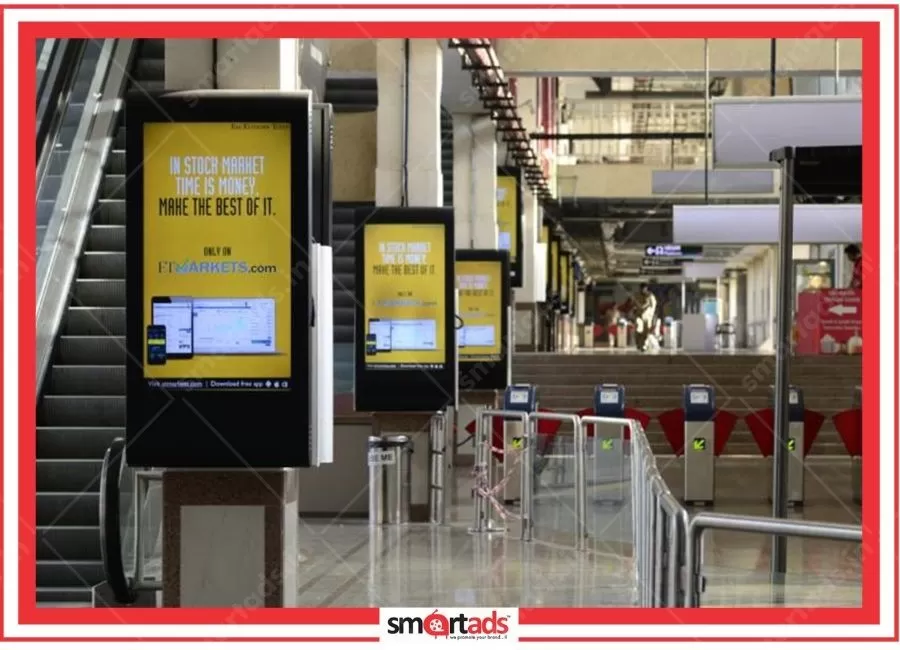
Entry Exit Panel
8 ft x 4 ft
Bright and vibrant multicolored letterin
Rate per Panel / Month
Min Requirement is 3 Panel.
₹48000.00
Showing 1 to 4 of 4 Results
MEDIA DETAILS
8 ft x 4 ft
Bright and vibrant multicolored letterin
Rate per Panel / Month
Min Requirement is 3 Panel.
₹48000.00
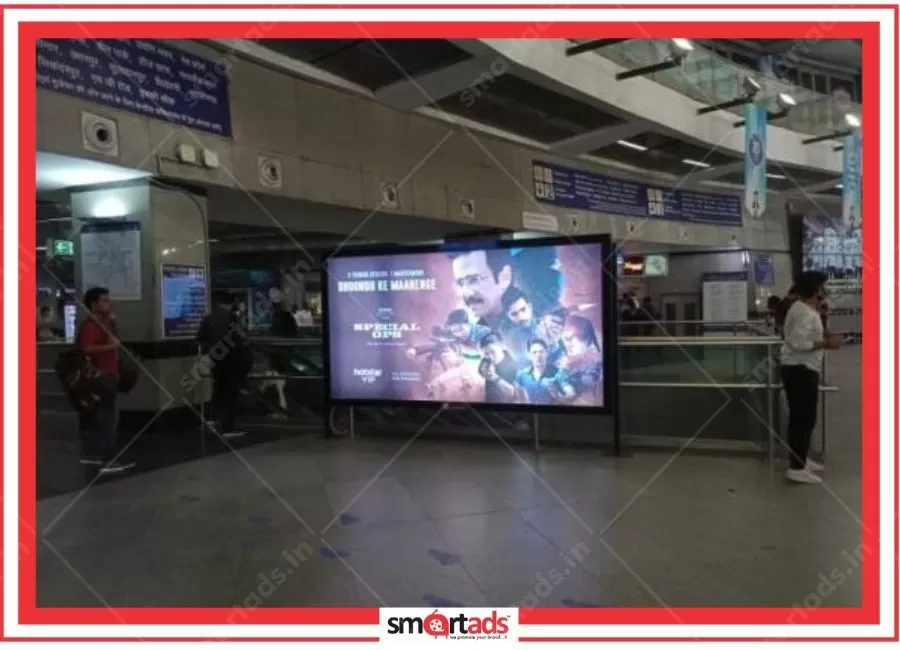
10 ft x 5 ft
A new wide wall system designed to accom
Rate per Panel / Month
Min Requirement is 3 Panel.
₹50000.00
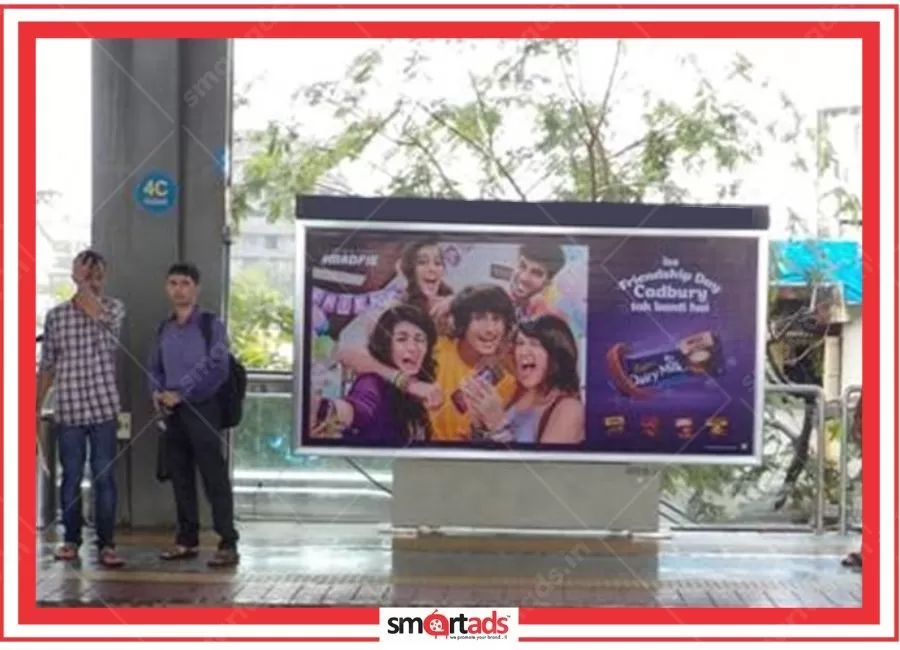
8 ft x 4 ft
A raised flooring or other horizontal su
Rate per Panel / Month
Min Requirement is 3 Panel.
₹35000.00
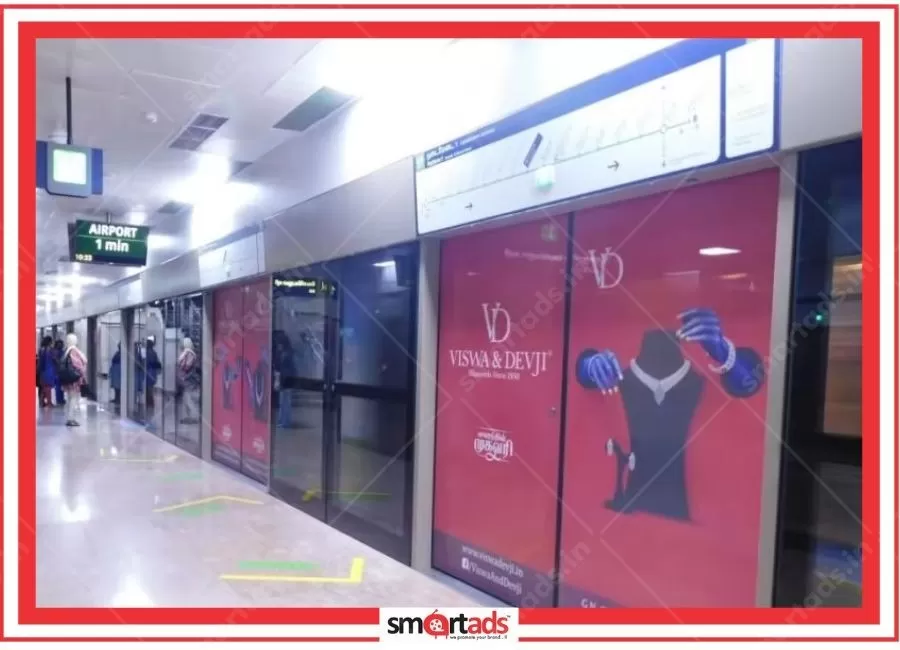
7 ft x 4 ft
Also known as platform edge doors (PEDs)
Rate per Plateform / Month
Min Requirement is 1 Stations.
₹1200000.00
MEDIA REACH

MinimumQty :
10
EstimateReachPeople :
15 Million
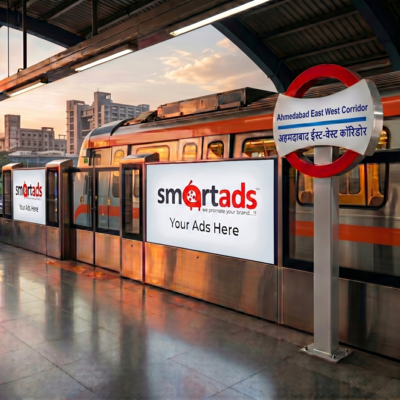
The Ahmedabad Metro's Blue Line quietly moved past a milestone that most advertisers haven't fully processed yet — the East West Corridor now carries well over three lakh commuter trips on peak weekdays, which means a single well-placed station hoarding at Kalupur Railway Station or Old High Court is generating more daily impressions than most mid-sized newspaper insertions in the Gujarat market. What surprises our clients even more is that this captive audience isn't scrolling past your ad; they are standing in front of it, waiting for a train, with nowhere else to look.
Frankly speaking, the East West Corridor is one of those media properties that the Indian advertising industry has been slow to fully appreciate, which is somewhat baffling when you look at the raw numbers. The Blue Line stretches from Vastral Gam in the east all the way to Thaltej Gam in the west, threading through some of Ahmedabad's densest commercial and residential zones — Kalupur, Gheekanta, SP Stadium, Gujarat University, Commerce Six Roads — and in doing so, it creates a continuous, high-frequency advertising corridor that no single outdoor hoarding or newspaper insertion can replicate. The corridor's strength is not just reach; it is the quality of dwell time that commuters spend inside these stations, which on average runs somewhere between four and eight minutes per platform visit depending on headway intervals.
What a lot of people miss is the socioeconomic layering of this route. The East West Corridor doesn't serve a single audience type — it moves students getting off at Gujarat University, working professionals boarding at Commerce Six Roads, traders and wholesale buyers passing through Kalupur Railway Station, and middle-income families travelling from Vastral Gam and Amraiwadi toward the city's commercial core. This demographic diversity is actually an advantage for brands that want to run corridor-led campaigns, because a single booking across multiple stations allows you to reach genuinely different audience segments within one unified media buy. At SmartAds, we have found that clients who treat the East West Corridor as a single media unit — rather than picking one or two stations in isolation — consistently see stronger brand recall scores in post-campaign surveys.
The BTL advertising potential here is also amplified by the physical architecture of the stations themselves. Underground stations like Gheekanta, Kalupur, and Shahpur have enclosed concourses with controlled lighting, which means your creative is not competing with sunlight, traffic noise, or the visual clutter that outdoor OOH advertising must fight against on Ahmedabad's streets. Elevated stations like Thaltej, Apparel Park, and Vastral Gam offer a different advantage — they sit above arterial roads and serve as visual landmarks that are visible not just to metro commuters but to road traffic below, effectively doubling the impression count for certain exterior branding formats.
The range of BTL advertising formats available across the Ahmedabad Metro's Blue Line stations is considerably wider than most brands realise when they first approach us, and the choice of format has a dramatic impact on both cost and audience engagement. Platform advertising — which includes backlit panels, unipoles, and flex displays positioned along the waiting area — is the most commonly booked format, and for good reason; commuters waiting on the platform are stationary, facing forward, and have nothing competing for their attention except your creative. Platform advertising on the East West Corridor works out to a CPM that is, in our experience, somewhere in the range of ₹6 to ₹10, which compares favourably to what brands typically spend on digital display inventory targeting the same Ahmedabad Gujarat audience.
Beyond platform advertising, the GMRC-approved inventory includes concourse branding, which covers the ticketing and entry zones where all commuters must pass regardless of their destination; pillar wrap formats, which transform structural columns into 360-degree brand canvases; and entry exit zone branding at the fare gates and stairwell areas, which captures commuters at the precise moment of transition — a moment that psychologists have long identified as one of heightened attentiveness. Digital screen advertising is available at select stations and offers the flexibility of dayparting, which means a quick service restaurant brand can run breakfast messaging in the 7 to 9 AM window and switch to a dinner promotion in the evening rush. Interior branding formats — including seat back panels inside the metro coaches themselves — extend the brand experience beyond the station and into the journey, creating a full-funnel transit advertising environment.
Train wrap and exterior branding deserve a separate mention because they operate differently from station-based formats. A full train branding execution on the Blue Line turns the metro coach itself into a moving billboard that travels the entire East West Corridor multiple times a day, generating impressions not just from passengers but from pedestrians, motorists, and bystanders at every station stop and along every elevated section of the route. We worked with an FMCG client — a packaged foods brand launching a new product line — where we combined a full train branding execution with pillar wrap installations at five key stations, and the combined reach over a 30-day period was estimated at approximately 28 lakh unique impressions, which the client's brand tracking study later confirmed had driven a measurable lift in prompted brand awareness in the Ahmedabad Gujarat market. Smart card branding is a newer format that GMRC has opened up, which puts your brand in the literal hands of regular commuters every single day — a form of high-frequency contact that most OOH advertising formats simply cannot achieve.
Not all 18 stations on the East West Corridor are equal from an advertising standpoint, and understanding the footfall hierarchy is probably the single most important piece of intelligence a media planner needs before allocating budget across this corridor. Kalupur Railway Station is the undisputed anchor of the route — it functions as an interchange station connecting the Ahmedabad Metro to Indian Railways, which means it draws not just regular daily commuters but also inter-city travellers, their families, and the entire ecosystem of service workers and vendors who orbit a major railway terminus. Daily ridership through Kalupur on the metro side alone is estimated to be among the highest on the Blue Line, and the mix of audiences — from rural visitors arriving by train to urban professionals catching the metro onward — makes it one of the most valuable single-station advertising locations in Ahmedabad Gujarat.
Old High Court Station is the second anchor, and it carries a different kind of value — it serves as an interchange point between the Blue Line and the Red Line (North-South Corridor), which means every commuter transferring between the two lines passes through its concourse. Interchange station advertising is a format category that deserves far more attention than it typically receives; the dwell time at an interchange is longer than at a standard station because commuters are navigating, waiting for connections, and orienting themselves, all of which translates into extended exposure for your brand creative. Gheekanta Station, positioned in one of Ahmedabad's historically dense commercial and textile trading zones, draws a working-class audience and small business owner segment that is genuinely difficult to reach through digital channels alone — which is precisely why a regional bank and a microfinance brand we worked with both independently chose Gheekanta as a priority station in their respective campaigns.
On the western end of the corridor, Thaltej Gam and the stations approaching it — including Gujarat University and Commerce Six Roads — serve a markedly different demographic: students, faculty, young professionals, and the upper-middle-income residential catchment of west Ahmedabad. Apparel Park Station, as its name suggests, sits adjacent to one of Ahmedabad's major garment and textile manufacturing clusters, generating a daily ridership of industrial workers and B2B buyers that makes it particularly relevant for brands in the industrial, logistics, and B2B services space. Vastral Gam at the eastern terminus is worth noting for brands targeting the growing middle-income residential belt of east Ahmedabad, where new housing projects have substantially increased the station's daily footfall over the past two years.
The urban commuter audience on the East West Corridor is not a monolith, and treating it as one is where most brands make their first planning mistake. Our experience across multiple campaigns on this corridor shows that the audience profile shifts quite dramatically depending on the station, the time of day, and the direction of travel. In the morning peak — roughly 7:30 AM to 10:00 AM — the dominant commuter segment heading westward from Vastral Gam toward Old High Court and beyond is working professionals and office-goers, with a significant student commuter segment boarding at Amraiwadi and heading toward Gujarat University. This segment skews toward the 22 to 40 age bracket, with household incomes in the range of ₹4 lakh to ₹15 lakh annually, which makes it a core target for financial services, insurance, consumer electronics, and aspirational lifestyle brands.
The midday audience is where the East West Corridor gets interesting for hyperlocal marketing — traders, small business owners, and self-employed individuals dominate the ridership between roughly 10:30 AM and 3:30 PM, particularly at stations like Gheekanta, Kalupur Railway Station, and SP Stadium. This is an audience that is actively making purchasing and business decisions, which is why we have consistently recommended the corridor to clients in the B2B services, trade finance, and wholesale retail categories. The evening peak brings back the professional and student segments, but also adds a leisure and family travel component — particularly on weekends, when ridership patterns shift toward shopping, dining, and entertainment destinations accessible via the Blue Line.
To be honest, the student commuter segment is one that most brands undervalue on this corridor. Gujarat University Station sits at the heart of Ahmedabad's university belt, and the daily footfall of students, researchers, and academic staff creates a captive audience that is highly receptive to brands in the edtech, banking, lifestyle, and quick service restaurant categories. One edtech client we worked with ran a four-week interior branding and digital screen advertising campaign concentrated around Gujarat University and Commerce Six Roads stations; the campaign generated over 18,000 QR code scans leading to app downloads, which the client's performance team confirmed was a cost-per-acquisition figure significantly below what their paid social campaigns were delivering at the same time.
Advertising rates on the East West Corridor are structured around format type, station tier, and booking duration — and the range is wide enough that both a startup with a modest BTL budget and a national brand running a corridor-wide campaign can find viable entry points. For a standard backlit platform panel at a mid-tier station like Amraiwadi or Doordarshan Kendra, the monthly rate works out to somewhere in the ballpark of ₹15,000 to ₹30,000 per unit, which is a figure that surprises most clients when they compare it to what they are paying for a comparable-size OOH hoarding on SG Highway or CG Road. High-footfall stations like Kalupur Railway Station and Old High Court command a premium, with platform advertising rates running somewhere between ₹40,000 and ₹80,000 per unit per month depending on the specific placement and format size.
Concourse branding and pillar wrap formats at premium stations are priced higher, typically in the range of ₹50,000 to ₹1.5 lakh per month per unit, which reflects the extended dwell time and 360-degree visibility these formats offer. Full train branding — which covers the exterior of one or more metro coaches — is a significantly larger investment, with costs running in the range of ₹3 lakh to ₹8 lakh per month depending on the number of coaches and the extent of the wrap; however, the impression multiplier on a full train branding execution is substantial enough that the effective CPM often works out to be lower than many individual station formats when calculated on a per-thousand-impressions basis. Digital screen advertising slots are available on a per-spot, per-day basis at select stations, with rates varying by time slot and station tier — dayparting options make this format particularly cost-efficient for brands that want to concentrate their messaging during specific commuter windows.
At SmartAds, we always tell our clients that the minimum booking duration for meaningful brand recall on the East West Corridor is 30 days, and that 60 to 90 day campaigns consistently outperform shorter bursts in post-campaign brand tracking studies. The frequency and reach dynamics of transit advertising are fundamentally different from print or digital — a commuter who travels the Blue Line five days a week will see your platform advertising at their boarding station 20 to 25 times in a single month, which is a level of frequency that builds genuine brand familiarity rather than just awareness. Cancellation policies under GMRC-approved contracts typically require 30 days' notice for standard formats, though full train branding contracts often carry longer notice periods given the production and installation complexity involved.
The GMRC approval process is one of those areas where working with an experienced metro advertising agency genuinely saves time and budget, because the Gujarat Metro Rail Corporation Limited has a structured but somewhat involved approval workflow that first-time advertisers frequently underestimate. The process begins with identifying the specific inventory — station, format, placement, and duration — and submitting a creative brief along with the proposed artwork for GMRC's review. Gujarat Metro Rail Corporation requires that all advertising content comply with its content guidelines, which prohibit political messaging, content deemed socially inappropriate, and certain product categories; the approval timeline for standard formats typically runs between 7 and 15 working days, though complex formats like full train branding or co-branding metro station executions can take longer.
Once creative approval is obtained, the booking is formalised through a rate card agreement and advance payment — GMRC typically requires full payment upfront for shorter campaigns and may offer structured payment terms for longer corridor-wide commitments. Production and installation of the physical creative materials must be carried out by GMRC-empanelled vendors, which is a requirement that catches many brands off guard when they assume they can use their existing print vendor. The installation windows are restricted to non-operational hours — typically between midnight and 4:30 AM — which means production timelines need to be planned carefully to avoid delays in campaign go-live dates. GMRC approval is non-negotiable, and we have seen campaigns delayed by two to three weeks simply because the brand's internal legal team took longer than expected to approve the final artwork — so building buffer time into the booking timeline is something we always recommend.
The GMRC also has specific technical specifications for each format type — panel dimensions, material standards, illumination requirements for backlit formats, and digital file specifications for screen advertising — and deviations from these specifications are a common cause of approval delays. For underground station branding, fire-retardant material certification is mandatory, which adds a layer of production complexity that brands sourcing their own materials need to account for. Our media planning team at SmartAds manages the entire GMRC approval workflow on behalf of clients, from creative specification briefing through to installation sign-off, which in our experience cuts the average go-live timeline by roughly 40% compared to brands attempting to navigate the process independently.
The comparison between metro station advertising and traditional OOH advertising is one that comes up in almost every media planning conversation we have with Ahmedabad-based clients, and the honest answer is that they serve different functions rather than being direct substitutes. A large-format OOH hoarding on SG Highway or Ashram Road offers massive visual scale and reaches an enormous volume of vehicular traffic — but that traffic is moving at 40 to 60 kilometres per hour, which means the actual exposure time per impression is measured in seconds. Metro station advertising, by contrast, delivers a captive audience that is stationary or slow-moving, with dwell times that give your creative the time to actually communicate a message rather than just register a logo.
The CPM comparison is where metro station advertising on the East West Corridor starts to look particularly compelling. A premium OOH hoarding on a major Ahmedabad arterial road might generate 50,000 to 80,000 daily vehicular impressions, but the effective CPM — when adjusted for actual attention and recall — is considerably diluted by the speed and distraction of road travel. Metro station advertising delivers a smaller but far more attentive audience; the brand recall rates for transit advertising in enclosed station environments are consistently higher in studies conducted by industry bodies, with some research suggesting recall rates of 60 to 70 percent for well-placed station formats compared to 20 to 30 percent for roadside OOH. Non-traditional advertising environments like metro stations also benefit from lower creative clutter — a commuter standing on a Blue Line platform is not surrounded by 15 competing ad panels the way a motorist on SG Highway effectively is.
That said, OOH advertising and metro station advertising work best when they are planned together rather than in competition, which is a media mix principle we apply consistently in corridor-led campaigns. A brand running exterior branding on the metro coaches creates impressions for road users who see the train; the same brand running platform advertising captures those same road users when they board the metro; and a digital screen advertising slot at a high-footfall station like Old High Court reinforces the message at the point of maximum dwell time. This layered approach — combining route-based advertising with hyperlocal station activations — is something we have found delivers a frequency and reach combination that neither OOH nor metro station advertising achieves in isolation.
To be fair, almost any consumer-facing brand can find a viable reason to be on the East West Corridor, but some industries have a structural advantage that makes metro station advertising on the Blue Line a near-obvious choice. Financial services — banks, insurance companies, mutual fund brands, and fintech platforms — benefit enormously from the corridor's professional and aspirational commuter audience; the working professional segment that dominates morning ridership is precisely the demographic that financial brands are trying to reach with products like home loans, SIPs, and credit cards. We have run campaigns for two separate banking clients on the East West Corridor, and both reported that their Ahmedabad Gujarat branch enquiry volumes showed a measurable uptick in the months following their station branding activations.
Real estate is another category where the East West Corridor delivers disproportionate value, particularly for residential projects in the catchment zones of eastern and western Ahmedabad. A developer launching a project near Vastral Gam or Apparel Park can use platform advertising and entry exit zone branding at those specific stations to reach exactly the audience that is most likely to be considering a home purchase in that micro-market — this is hyperlocal marketing at a level of geographic precision that broad-reach OOH advertising simply cannot match. The education sector — colleges, coaching institutes, skill development platforms, and universities — has an obvious home on the Blue Line given the student commuter segment around Gujarat University and Commerce Six Roads stations, and the edtech campaign we referenced earlier demonstrated that the cost-per-acquisition economics can be genuinely competitive with digital channels when the station selection is right.
Retail and FMCG brands benefit from the sheer frequency of contact that transit advertising delivers; a commuter who boards at Amraiwadi every morning and sees the same FMCG brand's seat back panel and platform advertising for 60 consecutive days has been exposed to that brand with a frequency that would cost significantly more to replicate through digital or print channels. Automobile brands — particularly two-wheeler and entry-level car manufacturers — find the working-class and lower-middle-income audience at stations like Vastral Gam, Amraiwadi, and Kankaria East to be a highly relevant target for aspirational vehicle messaging. Last-mile connectivity advertising is also an emerging opportunity, with brands in the cab aggregator, e-bike rental, and hyperlocal delivery space using entry exit zone branding to capture commuters at the exact moment they are thinking about their next leg of travel.
A corridor-wide campaign across all 18 stations of the East West Corridor is a significant undertaking, but it is also one of the most powerful brand visibility executions available in the Ahmedabad Gujarat market — and the planning approach is quite different from simply multiplying a single-station booking by 18. The starting point is audience mapping: understanding which stations serve which audience segments and allocating creative weight accordingly, rather than running identical creative across every station. The stations on the eastern end of the corridor — Vastral Gam, Apparel Park, Kankaria East — skew toward a working-class and industrial audience, which typically calls for vernacular-first creative with clear, simple messaging; the western stations toward Thaltej Gam and Gujarat University skew toward a more aspirational, English-comfortable audience, which opens up different creative possibilities.
Budget allocation across a corridor-wide campaign should follow a tiered approach — concentrating higher-spend formats at anchor stations like Kalupur Railway Station and Old High Court, where the footfall justifies premium placements like concourse branding and pillar wrap, while using more cost-efficient platform advertising at mid-tier stations to maintain corridor-wide presence without overspending. A well-structured corridor-wide campaign can be executed for a monthly budget in the range of ₹8 lakh to ₹25 lakh depending on the format mix, station tier allocation, and whether full train branding is included — a range that positions it as a serious but accessible media investment for mid-sized brands and regional advertisers. The GMRC approval process for a multi-station booking is managed as a single application, which is one of the procedural advantages of booking through an empanelled agency rather than approaching individual stations separately.
Seasonal timing is a dimension of corridor-wide campaign planning that deserves specific attention. Ahmedabad's metro ridership spikes significantly during major events — the IPL season at Narendra Modi Stadium drives a substantial increase in eastbound ridership, while Navratri and Rath Yatra generate corridor-wide ridership surges that can push daily commuter numbers 20 to 30 percent above the annual average. Booking corridor-wide inventory in the 4 to 6 weeks leading into these events — before the surge pricing windows activate — is a cost-saving strategy that our media planning team consistently recommends; the brand visibility multiplier during these high-ridership periods is significant, and the brands that have pre-booked their inventory capture that upside without paying event-period premiums. Underground station branding at Kalupur and Gheekanta is particularly valuable during Rath Yatra, when the areas surrounding these stations see extraordinary pedestrian volumes that extend the effective reach of station advertising well beyond the metro commuter base.
Q: What is metro station advertising on the Ahmedabad East West Corridor?
Metro station advertising on the Ahmedabad East West Corridor refers to the placement of brand communications across the physical and digital inventory available at the 18 stations of the Blue Line — the route operated by Gujarat Metro Rail Corporation Limited (GMRCL) that runs from Vastral Gam in the east to Thaltej Gam in the west. This encompasses a wide range of BTL advertising formats including platform panels, concourse branding, pillar wraps, digital screen advertising, entry exit zone branding, and in-train formats like seat back panels and full train branding. The East West Corridor is one of two operational metro lines in Ahmedabad Gujarat, and its route through the city's densest commercial and residential zones makes it one of the most valuable transit advertising environments in western India.
Q: Which stations on the Blue Line get the highest daily footfall for advertising?
Kalupur Railway Station consistently records the highest daily ridership on the East West Corridor, functioning as an interchange point between the Ahmedabad Metro and the Indian Railways network; Old High Court Station follows closely as the interchange between the Blue Line and the Red Line, making it the most important transfer node in the entire Ahmedabad Metro network. Beyond these two anchors, Gheekanta Station draws heavy footfall from the surrounding commercial and textile trading zones, while Gujarat University and Commerce Six Roads stations serve the large student and professional population of west Ahmedabad. On the eastern end, Vastral Gam and Apparel Park stations have seen consistent ridership growth as east Ahmedabad's residential and industrial catchments have expanded.
Q: What BTL ad formats are available at Ahmedabad East West Corridor metro stations?
The GMRC-approved BTL advertising inventory at East West Corridor stations includes platform advertising panels (backlit and non-backlit), concourse branding, pillar wrap formats, entry exit zone branding at fare gates and stairwells, digital screen advertising at select stations, and smart card branding for regular commuters. Inside the metro coaches themselves, interior branding options include seat back panels, overhead panels, and door sticker formats; full train branding covers the exterior of metro coaches for maximum corridor-wide visibility. Co-branding metro station executions — where a brand sponsors an entire station's naming rights or a specific zone within a station — are available through GMRC for brands seeking the highest-impact, longest-duration brand visibility on the corridor.
Q: How much does metro station advertising cost on the Ahmedabad Blue Line?
Advertising costs on the Blue Line vary considerably by format, station tier, and booking duration. Standard platform advertising at mid-tier stations runs in the ballpark of ₹15,000 to ₹30,000 per unit per month, while premium placements at high-footfall stations like Kalupur Railway Station and Old High Court can run between ₹40,000 and ₹80,000 per unit per month. Concourse branding and pillar wrap formats at anchor stations are priced higher, typically somewhere between ₹50,000 and ₹1.5 lakh per month per unit. Full train branding is a larger investment — roughly ₹3 lakh to ₹8 lakh per month depending on the scope — but the impression volume it generates often makes the effective CPM quite competitive. A corridor-wide BTL campaign across all 18 stations can be structured for a monthly investment in the range of ₹8 lakh to ₹25 lakh depending on the format mix chosen.
Q: Do I need GMRC approval to advertise at Ahmedabad metro stations?
Yes, GMRC approval is mandatory for all advertising on the Ahmedabad Metro network, including both the Blue Line East West Corridor and the Red Line North-South Corridor. Gujarat Metro Rail Corporation Limited manages all advertising inventory on the network and requires creative approval before any installation can proceed. The approval process covers content compliance, material specifications, and installation scheduling — and working with a GMRC-empanelled agency is strongly advisable because the technical requirements, particularly for underground station branding (which requires fire-retardant material certification), can cause significant delays for brands attempting to navigate the process independently.
Q: What is the difference between underground and elevated station advertising on the East West Corridor?
Underground stations on the East West Corridor — including Kalupur Railway Station, Gheekanta, Shahpur, and Kankaria East — offer enclosed, controlled-lighting environments where your creative is not competing with ambient sunlight or external visual noise; the captive audience effect is stronger in these environments, and brand recall rates for underground station branding tend to be higher than for equivalent formats at elevated stations. Elevated stations like Thaltej Gam, Apparel Park, and Vastral Gam offer a different advantage — their above-road positioning means that exterior branding formats are visible not just to metro commuters but to the road traffic passing below, effectively extending the impression count beyond the metro ridership base. From a production standpoint, underground station branding requires fire-retardant materials and has stricter illumination specifications, which adds to production cost but also ensures a higher-quality creative presentation.
Q: How many people can my brand reach through East West Corridor metro station ads?
The East West Corridor carries well over three lakh commuter trips on peak weekdays, and a corridor-wide campaign across all 18 stations would theoretically generate impressions across the majority of that ridership — though the effective reach per station varies significantly based on footfall tier. A single well-placed platform advertising unit at Kalupur Railway Station might generate somewhere between 8,000 and 15,000 daily impressions; a full train branding execution travels the entire corridor multiple times a day and generates impressions from both on-board passengers and external viewers at stations and along elevated sections. Over a 30-day campaign, a well-structured multi-station BTL campaign on the East West Corridor can realistically deliver 20 to 35 lakh total impressions, with frequency and reach metrics that are particularly strong among the daily commuter segment.
Q: Can I run a corridor-wide branding campaign across all 18 East West Corridor stations?
Yes, corridor-wide campaigns across all 18 stations of the East West Corridor are available through GMRC and are typically managed as a single booking through an empanelled agency. The practical advantage of a corridor-wide campaign is that it creates an unavoidable brand presence for the regular commuter — someone who travels the Blue Line daily will encounter your brand at their boarding station, potentially again at a transfer point, and again inside the coach if you have included interior branding in the mix. The GMRC approval process for a multi-station booking is handled as a unified application, which simplifies the administrative workflow considerably compared to managing individual station bookings separately.
Q: What industries benefit most from metro station advertising in Ahmedabad?
Financial services, real estate, education, retail, FMCG, and automobile brands have historically seen the strongest returns from metro station advertising on the East West Corridor, primarily because the corridor's audience profile aligns closely with the core target demographics for these categories. Healthcare, insurance, and telecom brands also perform well given the broad demographic spread of the Blue Line's ridership. B2B brands targeting the trading and industrial community find specific stations — Gheekanta, Apparel Park, Kalupur — to be highly relevant hyperlocal marketing environments. Brands in the quick service restaurant, edtech, and fintech categories benefit from the student commuter segment concentrated around Gujarat University and Commerce Six Roads stations.
Q: How long should I book metro station advertising for maximum brand recall?
Our experience across multiple campaigns on the East West Corridor consistently points to a minimum of 30 days as the threshold for meaningful brand recall, with 60 to 90 day campaigns delivering significantly stronger results in post-campaign tracking studies. The frequency dynamics of transit advertising are fundamentally different from other media — a daily commuter on the Blue Line will see your platform advertising at their regular boarding station 20 to 25 times in a single month, which builds the kind of familiarity that single-exposure OOH or digital formats cannot replicate. For brand launches or major campaign activations, we typically recommend a 90-day corridor-led campaign with a heavier format mix in the first 30 days to establish awareness, tapering to a maintenance-level presence in months two and three.
Q: What is the dwell time of commuters at Ahmedabad East West Corridor stations?
Average dwell time at East West Corridor stations runs somewhere between four and eight minutes per visit under normal headway intervals, with interchange stations like Old High Court seeing longer dwell times — often 8 to 12 minutes — because commuters transferring between lines need additional time to navigate and wait for their connecting train. Underground stations tend to generate slightly longer dwell times than elevated stations because the enclosed environment and limited external stimulation keep commuters more focused on their immediate surroundings, which includes your advertising. During peak hours when trains are running at capacity and commuters may miss one train and wait for the next, effective dwell time can extend to 10 to 15 minutes, which is an unusually long exposure window for any advertising format.
Q: How is metro station advertising different from OOH hoardings in Ahmedabad?
The fundamental difference is audience state — OOH advertising on Ahmedabad's roads reaches audiences who are moving, distracted, and processing multiple stimuli simultaneously, while metro station advertising reaches audiences who are stationary, in a controlled environment, and with limited competing stimuli. Brand recall rates for enclosed transit advertising environments are consistently higher than for roadside OOH in research conducted across Indian metro cities. The other key difference is audience targeting precision — a station hoarding at Gujarat University reaches a student-heavy audience with a specificity that no arterial road hoarding can match, while a platform advertising unit at Kalupur Railway Station reaches the inter-city traveller segment that is simply not accessible through standard Ahmedabad OOH inventory.
Q: Can I combine metro station ads with in-train branding for a full campaign?
Absolutely, and in our experience this combination is where the real value of the East West Corridor as a media environment is unlocked. A commuter who sees your concourse branding as they enter the station, your platform advertising while waiting for the train, and then your seat back panel or overhead panel during the journey has been exposed to your brand three times in a single commute — with each exposure reinforcing the previous one. This offline to digital funnel approach works particularly well when the in-train creative includes a QR code or a short URL that drives commuters to a digital destination, effectively converting the transit advertising exposure into a measurable digital action. The edtech campaign we referenced earlier used exactly this mechanic — platform advertising to build awareness, seat back panels with QR codes to drive app downloads — and the results validated the approach convincingly.
Q: What is the minimum number of units required for an East West Corridor BTL campaign?
GMRC does not mandate a minimum unit count for standard platform advertising bookings, which means a brand can technically book a single panel at a single station for a single month. However, from a campaign effectiveness standpoint, we would not recommend anything fewer than three to five units across at least two stations for a BTL campaign that is expected to deliver meaningful brand visibility. For a corridor-led campaign that aims to create genuine brand presence across the East West Corridor, a practical minimum is 10 to 12 units spread across six to eight stations, which provides enough frequency at key stations while maintaining corridor-wide coverage. Full train branding and co-branding metro station executions have their own minimum commitment structures, which are typically defined in the GMRC rate card and negotiated on a case-by-case basis.
Q: Are there event-based advertising opportunities during IPL or Navratri on the Blue Line?
Yes, and these seasonal windows are among the most valuable — and most quickly booked —
