
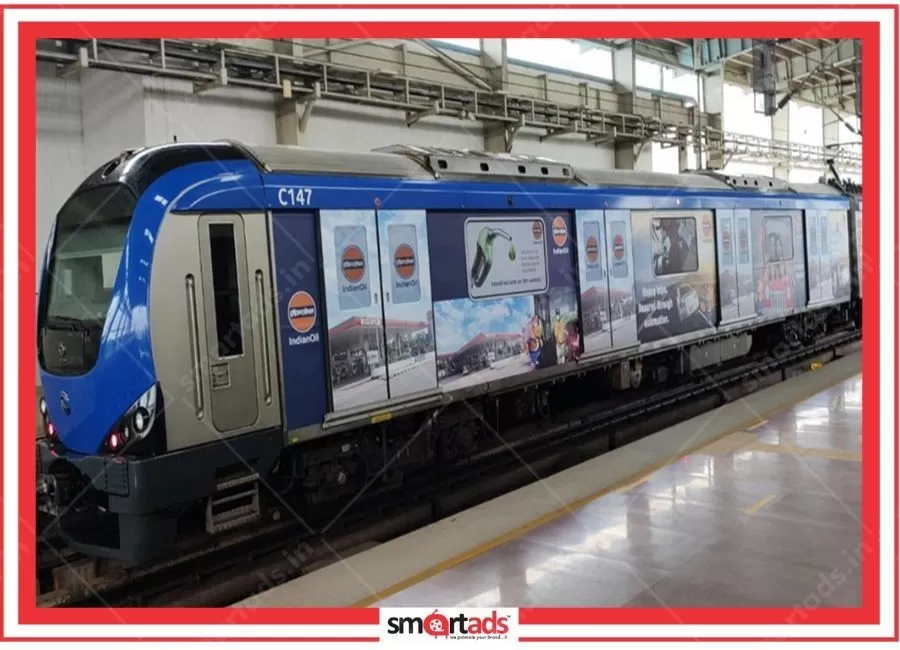
Exterior Metro Wrap
Size & Printing Cost as per actual
On the outside of metro Train, advertise
Rate per Metro Display Cost / 1 Month
Route:CCS Airport To MunshiPulia
₹1960000.00
Showing 1 to 4 of 4 Results
MEDIA DETAILS
Size & Printing Cost as per actual
On the outside of metro Train, advertise
Rate per Metro Display Cost / 1 Month
Route:CCS Airport To MunshiPulia
₹1960000.00
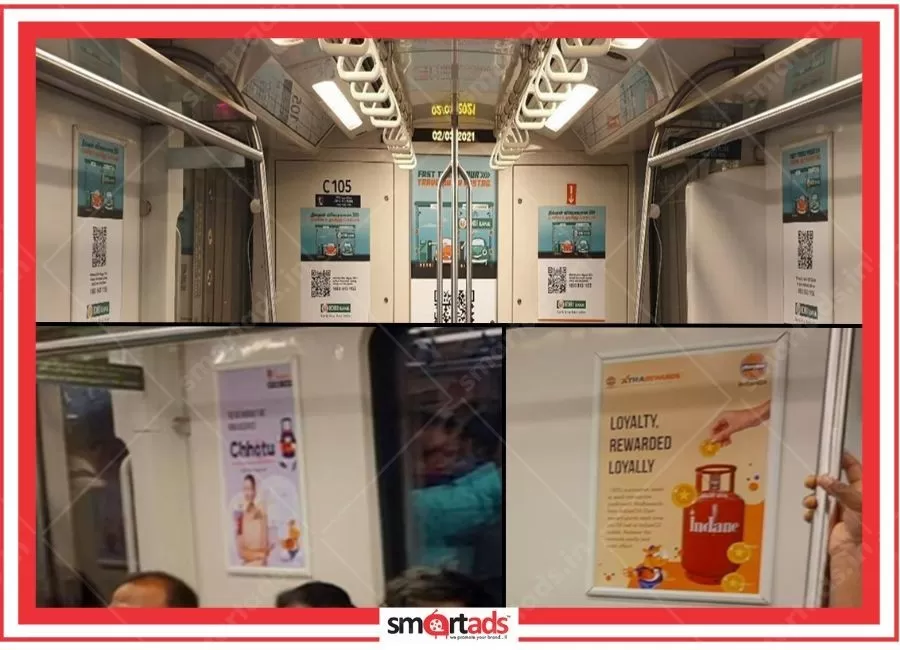
Size & Printing Cost as per actual
On the outside of metro Train, advertise
Rate per Metro Display Cost / 1 Month
Route:CCS Airport To MunshiPulia
₹1365000.00

10 Sec Video
On the outside of metro Train, advertise
Rate per Metro Display Cost / 1 Month
Route:CCS Airport To MunshiPulia
₹600000.00
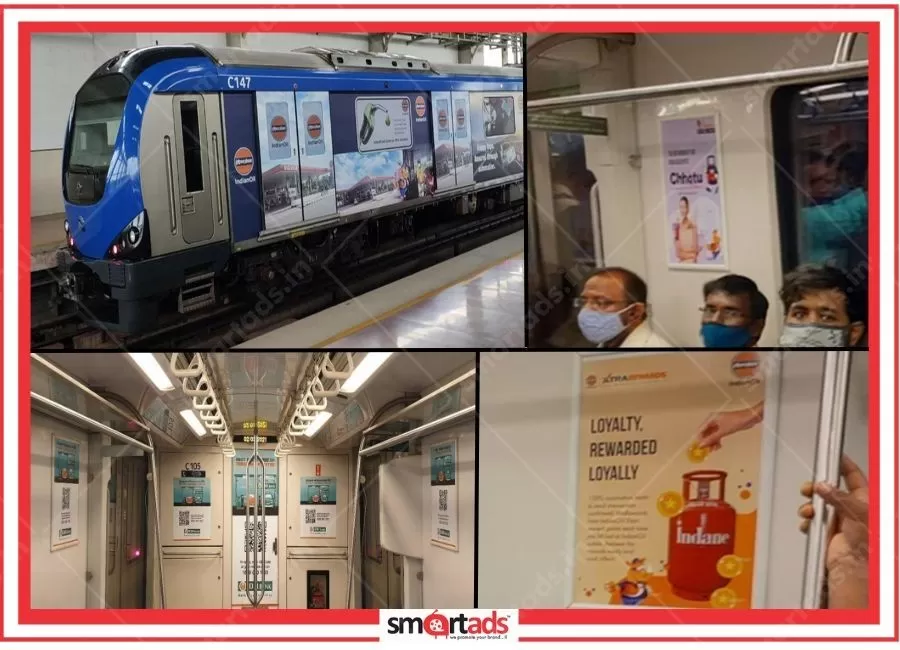
Size & Printing Cost as per actual
On the outside of metro Train, advertise
Rate per Metro Display Cost / 1 Month
Route:CCS Airport To MunshiPulia
₹3080000.00
MEDIA REACH

MinimumQty :
1
EstimateReachPeople :
150000000
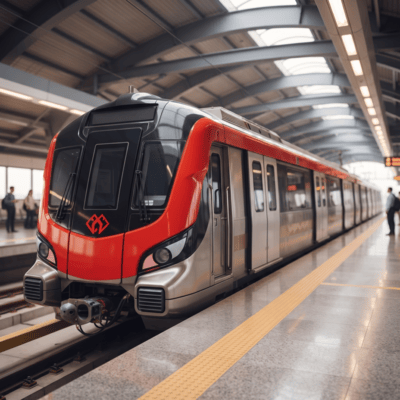
The Lucknow Metro Red Line quietly carries somewhere in the ballpark of 87,000 passengers every single day — and yet, most advertisers in the UP market are still treating it as an afterthought, allocating their budgets to hoardings on Hazratganj Road or radio spots on FM stations that compete for the same distracted ear. That is a significant oversight, because the north-south corridor offers something that almost no other OOH format in Lucknow can match: a captive audience with nowhere to go and nothing to do except look at your brand for the next twelve to twenty minutes.
The Lucknow Metro Red Line — officially Line 1, the north-south corridor operated by UPMRC, the Uttar Pradesh Metro Rail Corporation — stretches across roughly 22.87 km and connects 21 stations from CCS Airport in the south to Munshi Pulia in the north. That is not just a transit route; it is a cross-section of Lucknow's most economically active population, moving through commercial hubs like Hazratganj, administrative centres like Sachivalaya, and high-density residential zones like Indiranagar and Transport Nagar, all within a single commute. When a brand places itself inside or outside those Alstom Metropolis trains, it is not buying impressions in the abstract — it is buying minutes of uninterrupted attention from people who are, by definition, stationary and awake.
What a lot of people miss is that metro rail advertising in India has been growing at a pace that most traditional OOH formats simply cannot match. The FICCI-EY Media and Entertainment Report has consistently flagged transit media as one of the fastest-growing segments within out-of-home advertising, and the Lucknow Red Line is a particularly interesting case because it serves a city that is simultaneously a state capital, a growing IT and education hub, and one of the largest consumer markets in northern India. Our experience at SmartAds shows that brands entering the Lucknow market for the first time almost always underestimate the quality of the audience on this corridor — they assume it skews lower-income, which the data simply does not support.
On top of that, the competitive clutter on the Red Line is still remarkably low compared to, say, Delhi Metro or Hyderabad Metro, where every square centimetre of inventory is spoken for months in advance. Right now, the Lucknow Red Line represents a window of opportunity that we genuinely believe will close within the next two to three years as ridership continues to climb and more national brands discover what local advertisers have quietly been using to their advantage.
The format variety on the Lucknow Red Line is broader than most brand managers realise when they first approach us, and it is worth understanding each option before deciding where your budget goes. The most visible format is the exterior train wrap — sometimes called a full train wrap — which covers the outer body of an entire metro coach or a set of coaches in your brand's creative, turning the train itself into a moving billboard that is seen at every station, on every elevated stretch, and by pedestrians and motorists along the corridor. A full train wrap on the Red Line generates impressions not just from passengers but from the thousands of people who see the train pass through elevated sections near areas like Indiranagar, IT Chauraha, and Transport Nagar.
Inside the coaches, the format options multiply considerably. Interior metro branding includes in-coach panels positioned above the windows and doors, which are directly in the sightline of seated and standing passengers; ceiling panels, which capture the gaze of passengers during peak-hour crush; and hand grab advertising, where the hanging straps or grab handles carry brand messaging — a format which is particularly effective for FMCG and app-based brands because of its repeated, unavoidable contact with the commuter's hand and eye. Coach branding can also extend to gangway cover branding, which wraps the accordion-style connectors between coaches, and floor branding, which — while less common — creates a genuinely memorable brand moment in high-footfall coaches. Backlit panels at stations, pillar branding along platform columns, and digital screens at underground stations like Charbagh, Hussainaganj, Sachivalaya, and Hazratganj round out what is actually a fairly sophisticated inventory for a Tier-1 city outside the four metros.
There is also a category that competitors almost never discuss: semi-naming rights and co-branding rights for specific Red Line stations, which allow a brand to associate its name or visual identity with a station — "XYZ Bank Hazratganj Metro Station," for instance — creating a level of brand recall that no hoarding or radio spot can replicate. At SmartAds, we have helped clients explore this route through the UPMRC procurement process, and while it requires a longer lead time and a minimum annual guarantee commitment, the brand equity it builds in a city like Lucknow is, frankly speaking, disproportionate to the investment.
Pricing is where most conversations either get very interesting or fall apart, and we prefer to be direct about it rather than hide behind "contact us for rates." The advertising rates on the Lucknow Red Line are governed by UPMRC's licensing framework, which means the base rates are publicly tendered — but the actual cost a brand pays depends heavily on format, duration, exclusivity, and whether you are working through an authorised agency or approaching UPMRC directly.
For interior metro branding — in-coach panels, backlit panels, and pillar branding at stations — the cost works out to somewhere between ₹80,000 and ₹2.5 lakh per month per format unit, depending on the station and the specific placement; a backlit panel at Hazratganj or Charbagh, which are the two highest-footfall underground stations on the corridor, commands a meaningfully higher rate than the same format at a peripheral elevated station. An exterior train wrap — particularly a full train wrap covering multiple coaches — is a significantly larger investment, typically in the ballpark of ₹8 lakh to ₹15 lakh per month for a full rake wrap, which sounds steep until you calculate the cost per impression across the 87,000 daily commuters plus the pedestrian and motorist audience along the elevated sections. The cost per impression on a full train wrap works out to roughly ₹3 to ₹6 per thousand impressions, which is a number that tends to surprise brand managers who are used to paying far more for comparable reach on digital platforms.
The minimum campaign duration for most Red Line advertising formats is 30 days, though UPMRC's licensing structure — and most authorised agencies — will push for a 90-day or longer commitment because the brand recall data from transit media consistently shows that shorter campaigns underperform. For semi-naming rights or co-branding rights at a specific station, the minimum annual guarantee structure means you are looking at a 12-month commitment at minimum, with rates that vary significantly based on the station's commercial importance. We always tell our clients that the real value in metro train advertising in Lucknow Red Line campaigns comes from sustained presence — a brand that runs for 90 days on this corridor builds a level of familiarity with daily commuters that simply cannot be replicated with a 30-day burst.
Not all 21 stations on the Lucknow Metro Red Line are created equal from an advertiser's perspective, and the difference between a well-placed station buy and a poorly placed one can be the difference between a campaign that moves the needle and one that simply burns budget. Charbagh station is, by almost any measure, the anchor of the entire corridor — it connects directly to Lucknow Junction, one of the busiest railway stations in northern India, which means it sees a constant churn of intercity travellers, daily commuters, and visitors who are, in many cases, encountering Lucknow brands for the first time. Advertising at Charbagh is less about frequency and more about breadth of reach.
Hazratganj station sits at the commercial and cultural heart of Lucknow — the area around it houses premium retail, government offices, hotels, and the kind of footfall that skews decisively toward upper-middle-class consumers with real purchasing power. A backlit panel or digital screen at Hazratganj reaches a demographic that most brands in the BFSI, automotive, real estate, and lifestyle categories would pay a significant premium to access. Sachivalaya station, adjacent to the UP state secretariat, draws a heavy concentration of government employees, contractors, and professionals — which makes it particularly relevant for B2B brands, insurance companies, and financial services advertisers. CCS Airport station and Amausi are natural fits for travel, hospitality, and premium consumer brands, given that the passenger profile at the southern end of the corridor skews toward frequent flyers and business travellers.
On the northern end, Munshi Pulia and Indiranagar serve densely populated residential zones with a strong middle-class and upper-middle-class demographic, which makes them excellent choices for education brands, consumer durables, telecom companies, and retail chains looking to drive store footfall. Transport Nagar, as the name suggests, is a commercial hub for logistics, auto parts, and wholesale trade — which gives it a very specific and commercially valuable audience that most advertisers overlook entirely. Our recommendation at SmartAds is always to map the station selection to the brand's specific target audience rather than defaulting to the highest-footfall stations, because a well-targeted campaign at three mid-tier stations will almost always outperform a poorly targeted buy at the two premium stations.
The demographic profile of the Lucknow Red Line commuter is something that gets almost no attention in the advertising conversation around this corridor, which is a real gap — because the audience is considerably more valuable than the conventional wisdom suggests. GoSmart card data, which tracks registered metro users on the UPMRC network, indicates that a significant proportion of regular Red Line commuters are salaried professionals, government employees, students from institutions along the corridor, and retail workers; this is not a mass-transit audience in the way that, say, a city bus network might be characterised.
The north-south corridor passes through or near several of Lucknow's most important educational and institutional zones, which means students and young professionals form a substantial chunk of the daily ridership — a demographic which is, frankly speaking, extremely attractive to brands in the edtech, fintech, fashion, food delivery, and consumer electronics categories. Peak hours on the Red Line — roughly 8 to 10 in the morning and 5 to 8 in the evening — see a concentration of office-going commuters who tend to be in the 25-to-45 age bracket, which overlaps almost perfectly with the primary target audience for most national consumer brands. Off-peak hours, on the other hand, attract a higher proportion of leisure travellers, shoppers heading to Hazratganj or Aminabad, and senior citizens — a different but equally valuable audience for certain categories.
What we have found through our campaign experience on this corridor is that the Lucknow Red Line audience is also notably multilingual in its media consumption — Hindi is the dominant language, but English-language creative performs surprisingly well at stations like Hazratganj, IT Chauraha, and CCS Airport station, where the audience skews more educated and professionally oriented. For brands creating metro train advertising in Lucknow Red Line campaigns, we strongly recommend bilingual creative — Hindi headline with English subtext, or vice versa — because it signals both local relevance and brand sophistication simultaneously.
This is one of the most common questions we field from clients who are new to metro rail advertising in Lucknow, and the honest answer is that it depends entirely on what the brand is trying to achieve — which sounds like a cop-out but is actually a meaningful strategic distinction. An exterior train wrap is fundamentally a mass-reach format; it generates impressions from people who never board the train, it creates a strong visual presence along the entire 22.87 km Red Line corridor, and it positions the brand as a significant player in the city's visual landscape. A full train wrap is the kind of format that makes a CMO feel good about a campaign because it is impossible to miss — but it is also the kind of format where the audience has, at most, a few seconds of engagement as the train passes.
Interior metro branding — in-coach panels, ceiling panels, hand grab advertising, gangway cover branding, and floor branding — operates on a completely different logic. The commuter inside the coach is a captive audience in the truest sense; they are in an enclosed space, they have typically 10 to 20 minutes of transit time, and the ad is right there in their field of vision with no way to scroll past it or change the channel. Coach branding generates fewer total impressions than a full train wrap, but the quality of those impressions — measured by dwell time, attention, and brand recall — is substantially higher. We have seen this dynamic play out repeatedly in our campaigns: a real estate brand we worked with in Lucknow ran interior ads in coaches for 60 days and reported inquiry volumes that were measurably higher than a comparable outdoor campaign they had run the previous quarter.
The smartest approach, which we consistently recommend to clients with budgets that allow for it, is a combination — exterior train wrap for mass awareness and visual dominance, interior coach branding for message depth and recall. A brand that wraps the outside of the train and then continues the creative conversation inside the coach creates a genuinely immersive brand experience that transit media in India rarely achieves. For brands with tighter budgets, interior metro branding at two or three high-footfall stations — Charbagh, Hazratganj, and Sachivalaya, for instance — will typically deliver better ROI than a single exterior format running across the full corridor.
The booking process for metro train advertising in Lucknow Red Line campaigns is more structured than most advertisers expect, primarily because UPMRC manages ad inventory through a formal licensing and tender framework rather than a simple rate card system. The primary procurement portal is etenders.gov.in, where UPMRC periodically releases tenders for advertising rights across the network — including specific formats, specific stations, and specific train rakes on the Red Line. Brands can technically approach this process directly, but the practical reality is that most advertisers — including large national brands — work through authorised advertising agencies because the UPMRC tender process involves financial guarantees, compliance documentation, and a minimum annual guarantee structure that requires experience to navigate efficiently.
Authorised agencies in the Lucknow metro advertising space include names like The Media Ant, Eumaxindia, JM Publicity India, and Acme Advertising Co., which hold or have held licensing rights for specific inventory categories on the Red Line. Working through an agency typically means faster turnaround, access to pre-negotiated rate structures, and the ability to combine metro inventory with other OOH and BTL formats across the city — which is where the real media planning value lies. At SmartAds, we work as a Lucknow metro train advertising agency partner that can access Red Line inventory across multiple format categories, which means our clients are not limited to whatever a single concessionaire happens to have available.
The practical timeline for booking a metro train advertising campaign on the Lucknow Red Line is typically 15 to 30 days from brief to live — shorter for interior formats at available stations, longer for exterior train wraps or semi-naming rights which require UPMRC approval and creative sign-off. Creative artwork must conform to UPMRC's technical specifications, which vary by format — exterior wraps have specific vinyl and printing requirements dictated by the Alstom Metropolis rolling stock dimensions, while digital screens at underground stations like Charbagh and Hazratganj accept standard DOOH content formats. Getting the creative specifications right from the start saves significant time and money, which is something we make a point of briefing clients on before production begins.
The case for BTL advertising on the Lucknow Metro Red Line over conventional out-of-home advertising in Lucknow is, to be honest, stronger than most media planners articulate it. Traditional OOH formats in Lucknow — hoardings on Hazratganj, Gomti Nagar, and the Faizabad Road corridor — are fighting for attention in an environment that is inherently chaotic; the viewer is moving at 40 to 60 kilometres per hour, the creative has perhaps two to three seconds of effective exposure, and the clutter of competing signage on most major roads means that individual brand recall is genuinely difficult to achieve. Metro rail advertising, by contrast, places the brand in a controlled environment where the audience is stationary, the dwell time is measured in minutes rather than seconds, and the creative can carry substantially more information.
Non-traditional advertising formats like metro branding also benefit from what we think of as the "premium environment halo" — the association between the metro system and modernity, cleanliness, and efficiency transfers, at least partially, to brands that advertise within it. A brand that appears on the Lucknow Red Line is implicitly positioned alongside an infrastructure that Lucknow's aspirational middle class takes genuine pride in; that is a contextual advantage that no hoarding on a congested road can offer. The GroupM TYNY Report and Dentsu e4m Report have both noted the growing premium that advertisers are willing to pay for contextually appropriate placements, and metro environments represent exactly this kind of premium context in Tier-1 and Tier-2 Indian cities.
On top of that, metro train advertising in Lucknow Red Line campaigns offer something that most traditional OOH formats cannot: measurable audience data. Because UPMRC tracks ridership through ticketing systems and GoSmart card data, advertisers can access reasonably accurate audience size and frequency data — which makes ROI calculation and campaign justification to management considerably more straightforward than it is for a hoarding, where audience estimation is still largely a function of traffic count surveys and educated guesswork.
Lucknow is a city with a genuinely diverse OOH advertising landscape — hoardings, bus shelters, auto-rickshaw branding, cinema advertising at multiplexes in Gomti Nagar and Hazratganj, and radio on stations like Big FM and Radio City all compete for the same marketing budgets. The question of where metro train advertising on the Lucknow Red Line fits in this mix is one that we get asked regularly, and our view is that it occupies a distinct and largely non-overlapping position in the media plan rather than being a direct substitute for any of these formats.
Hoardings on high-traffic roads offer raw reach — a well-placed hoarding near Hazratganj crossing or on the Lucknow-Kanpur highway can generate very large impression numbers — but the cost per quality impression, when adjusted for dwell time and attention, is often less favourable than it appears on a rate card. Radio advertising in Lucknow reaches a broad audience but lacks any visual component, which limits its effectiveness for brand-building campaigns that need to communicate a product, a visual identity, or a complex message. Cinema advertising at multiplexes in Gomti Nagar offers a genuinely captive audience and high production values, but the reach is inherently limited by screen capacity and show frequency. Metro rail advertising sits at an interesting intersection: it offers the visual impact of OOH, the captive audience of cinema, and the frequency of radio — at a cost per impression that, in our experience, compares very favourably to all three when the campaign is planned correctly.
The comparison to Delhi Metro advertising is one that comes up frequently, usually from clients who have run campaigns on the Delhi network and are trying to calibrate their expectations for Lucknow. The honest answer is that Delhi Metro advertising is a different proposition entirely — the network is vastly larger, the ridership is an order of magnitude higher, and the advertising rates reflect that scale. The Lucknow Red Line is a more intimate, more targetable environment; the brand exposure Lucknow Metro offers is concentrated rather than diffuse, which makes it better suited for brands that want to dominate a specific city rather than achieve national scale. We have found that brands which run metro train advertising in Lucknow alongside a presence on Delhi Metro often use the two networks for different objectives — Delhi for scale, Lucknow for depth.
The most common mistake we see brands make on the Lucknow Red Line is treating it like a static poster campaign — designing a single creative, placing it across multiple formats, and waiting for the results. Metro train advertising in Lucknow Red Line campaigns works best when the creative is designed specifically for the format and the environment, which means accounting for the moving context of exterior wraps, the close-range viewing distance of interior panels, and the brief but repeated exposure pattern of hand grab advertising and ceiling panels.
For exterior train wraps, the creative logic is essentially the same as a high-speed billboard — bold, simple, high-contrast, with a single message that can be absorbed in under three seconds. For interior metro branding, the calculus is entirely different; because the commuter has 10 to 20 minutes with the ad, the creative can carry a QR code, a product detail, a narrative, or a call to action that would be completely wasted on an exterior format. One FMCG brand we worked with on this corridor ran a bilingual Hindi-English interior campaign with a QR code linking to a product demo video; the scan rate was significantly higher than comparable QR campaigns the brand had run on print and outdoor, which we attribute directly to the captive, smartphone-in-hand nature of the metro commuter.
Festival season strategy on the Lucknow Red Line deserves special attention — Navratri, Diwali, and Eid are periods when ridership spikes noticeably as Lucknow residents travel to shopping areas, religious sites, and family gatherings, and the commuter footfall at stations like Charbagh, Hazratganj, and Amausi during these periods can be substantially higher than the annual average. Booking metro train advertising in Lucknow Red Line campaigns for these windows requires advance planning — ideally 60 to 90 days before the festival — because inventory at premium stations gets absorbed quickly. The upcoming Red Line extension, which is expected to push the corridor further toward SGPGI in the south and IIM Lucknow in the north, will add significant new audience segments — particularly healthcare professionals and students — and brands that establish a presence on the corridor before the extension opens will benefit from the increased ridership without paying the premium rates that will inevitably follow.
Q: What is metro train advertising on the Lucknow Red Line?
Metro train advertising on the Lucknow Red Line refers to the placement of brand communications across the various advertising formats available on Line 1 of the Lucknow Metro network — the north-south corridor operated by UPMRC, the Uttar Pradesh Metro Rail Corporation, which runs 21 stations from CCS Airport in the south to Munshi Pulia in the north across approximately 22.87 km. These formats include exterior train wraps on the Alstom Metropolis rolling stock, interior coach branding across in-coach panels, ceiling panels, hand grab advertising, gangway cover branding, floor branding, as well as station-level formats like backlit panels, pillar branding, and digital screens at underground stations. It is a form of transit media and BTL advertising that places brands in direct, sustained contact with the corridor's daily commuter base of roughly 87,000 passengers per day.
Q: How much does advertising on the Lucknow Metro Red Line cost?
Advertising rates on the Lucknow Red Line vary considerably by format, station, and campaign duration, which is why we are always cautious about quoting a single number without context. Interior station formats like backlit panels and pillar branding at mid-tier stations work out to somewhere in the range of ₹80,000 to ₹1.5 lakh per month, while premium station placements at Hazratganj or Charbagh command meaningfully higher rates. A full train wrap covering the exterior of a complete rake is typically in the ballpark of ₹8 lakh to ₹15 lakh per month, depending on exclusivity and the number of coaches covered. Digital screen advertising at underground stations is priced separately and is often available on a per-spot or per-loop basis. The minimum campaign duration for most formats is 30 days, though 90-day campaigns deliver significantly better brand recall outcomes and are generally more cost-efficient on a per-impression basis.
Q: What ad formats are available on Lucknow Red Line metro trains?
The format inventory on the Lucknow Red Line is broader than most advertisers initially expect. On the trains themselves, formats include exterior train wraps (full or partial), interior in-coach panels above windows and doors, ceiling panels, hand grab advertising on straps and handles, gangway cover branding between coaches, and floor branding. At stations, the available formats include backlit panels, pillar branding, digital screens at underground stations like Charbagh, Hussainaganj, Sachivalaya, and Hazratganj, and — at a premium tier — semi-naming rights and co-branding rights which associate a brand with a specific station's identity. Each format serves a different strategic purpose and reaches the audience at a different point in the commute journey.
Q: Which stations on the Lucknow Red Line get the highest footfall?
Charbagh station consistently records the highest footfall on the Red Line because of its direct connection to Lucknow Junction, one of the busiest railway stations in northern India, which drives a constant influx of intercity travellers in addition to the regular commuter base. Hazratganj station is the second most commercially significant, drawing premium retail shoppers, government workers, and professionals from the surrounding commercial district. Sachivalaya station sees heavy traffic from government employees and contractors, while CCS Airport station and Amausi attract business travellers and frequent flyers. On the northern end, Munshi Pulia and Indiranagar serve large residential catchments with strong middle-class demographics. Transport Nagar is notable for its concentration of commercial and logistics-sector workers, which makes it valuable for specific B2B and trade-oriented advertisers.
Q: How do I book a metro train advertising campaign on the Lucknow Red Line?
The booking process runs through UPMRC's formal licensing framework, with the primary procurement channel being the etenders.gov.in portal where advertising tenders for the Red Line are periodically issued. In practice, most brands work through authorised advertising agencies — including agencies like SmartAds.in — which hold or can access pre-negotiated inventory across multiple format categories on the corridor. The practical lead time from brief to live campaign is typically 15 to 30 days for interior and station formats, and somewhat longer for exterior train wraps or semi-naming rights which require UPMRC creative approval and compliance documentation. Working through an experienced metro advertising agency in Lucknow significantly reduces the administrative burden and typically results in better rate negotiation outcomes than approaching UPMRC directly.
Q: What is the minimum campaign duration for Lucknow Red Line metro ads?
The minimum campaign duration for most advertising formats on the Lucknow Red Line is 30 days, which is the baseline period established under UPMRC's licensing structure. However, our strong recommendation — based on brand recall data from transit media campaigns across Indian metro networks — is a minimum of 90 days for any campaign where brand recall and audience familiarity are primary objectives. The logic is straightforward: a commuter who travels the Red Line five days a week will see a 30-day campaign roughly 20 times, which is adequate for awareness but insufficient for the kind of deep familiarity that drives purchase intent. A 90-day campaign delivers roughly 60 exposures to the same commuter, which is where the recall data starts to look genuinely impressive. For semi-naming rights and co-branding opportunities, the minimum commitment is typically 12 months under the minimum annual guarantee structure.
Q: What is the difference between exterior train wraps and interior coach branding on the Red Line?
The fundamental difference is the nature and quality of the audience engagement they generate. An exterior train wrap — particularly a full train wrap covering the entire outer body of one or more coaches — is a mass-reach format that generates impressions from both passengers and non-passengers who see the train at stations, on elevated sections, and at grade crossings. The exposure is brief — a matter of seconds — but the visual impact is substantial and the total impression count is high. Interior coach branding, by contrast, targets only the passengers inside the coach, but those passengers are a captive audience with 10 to 20 minutes of dwell time in a confined space where the ad is consistently within their field of vision. Interior formats — in-coach panels, ceiling panels, hand grab advertising — generate fewer total impressions but significantly higher attention and brand recall per impression. The two formats are complementary rather than competitive, and the most effective campaigns on the Red Line typically combine both.
Q: Who manages advertising rights on the Lucknow Metro Red Line — UPMRC or a private agency?
Advertising rights on the Lucknow Red Line are ultimately owned and governed by UPMRC, the Uttar Pradesh Metro Rail Corporation, which is the statutory body responsible for the operation and commercial development of the network. UPMRC licenses advertising rights to private concessionaires and agencies through a formal tender process on etenders.gov.in, which means that at any given time, specific format categories and station inventories may be held by different licensed agencies. Advertisers can approach UPMRC directly for certain categories, but the more common and efficient route is to work through an authorised Lucknow metro train advertising agency that already holds or can access the relevant licensing rights. The concessionaire structure means that the agency you work with matters significantly — not all agencies have access to all format categories on the Red Line.
Q: What types of brands benefit most from advertising on the Lucknow Red Line?
The corridor's audience profile — salaried professionals, government employees, students, and aspirational middle-class consumers — makes it particularly well-suited for brands in financial services, banking, insurance, real estate, education and edtech, consumer electronics, telecom, FMCG, healthcare, and premium retail. National brands entering the UP market for the first time find the Red Line an efficient way to establish brand visibility in Lucknow before expanding to other cities in the state. Local and regional brands — particularly real estate developers, educational institutions, hospitals, and retail chains — have been among the most consistent users of metro train advertising in Lucknow Red Line campaigns, often because they can target specific stations that are geographically relevant to their business. E-commerce and app-based brands benefit particularly from interior formats with QR codes, given the smartphone-in-hand behaviour of metro commuters.
Q: Can I advertise at specific stations on the Lucknow Red Line only?
Yes — station-level advertising on the Lucknow Red Line can be booked on a per-station basis for most format categories, including backlit panels, pillar branding, and digital screens. This is particularly useful for brands with a geographically specific message — a real estate developer promoting a project near Gomti Nagar might focus on Indiranagar and IT Chauraha stations, while a retail brand launching a store near Hazratganj would prioritise that station and Sachivalaya. The flexibility to select specific stations is one of the genuine advantages of metro advertising over a full train wrap, which by definition covers the entire corridor. That said, we generally advise against over-concentrating on a single station unless the campaign objective is extremely localised, because the nature of metro commuting means that frequency of exposure across multiple stations typically outperforms depth at a single location.
Q: What is the daily ridership on the Lucknow Metro Red Line and why does it matter for advertisers?
The Lucknow Red Line carries in the ballpark of 87,000 passengers per day — a number which, when annualised, represents roughly 31 million passenger journeys per year across the north-south corridor. For advertisers, this figure matters because it forms the denominator for cost-per-impression calculations, and it is also a proxy for the minimum reach any campaign on this corridor will achieve. More importantly, the ridership figure understates the total audience for exterior train wrap formats, which also generate impressions from pedestrians, motorists, and bystanders along the elevated sections of the route. The ridership number is also growing — UPMRC has reported consistent year-on-year increases as the network matures and more Lucknow residents integrate metro commuting into their daily routines, which means the audience an advertiser reaches today will be larger by the time the next campaign cycle begins.
Q: Are digital screens available for advertising at Lucknow Red Line stations?
Digital screens are available at the underground stations on the Red Line — Charbagh, Hussainaganj, Sachivalaya, and Hazratganj — which are the stations where UPMRC has installed DOOH infrastructure as part of the station fit-out. These screens accept standard digital out-of-home content formats and can run dynamic, time-sensitive creative — which makes them particularly useful for brands that want to run different messages during peak hours versus off-peak hours, or that want to activate festival-season creative without the lead time required for printed formats. The elevated stations on the Red Line have more limited digital screen infrastructure, with most advertising at those locations still running on static backlit panels and pillar branding. The expansion of digital screen inventory is something we expect to see as the network grows and UPMRC continues to develop its commercial revenue streams.
Q: How does Lucknow Red Line metro advertising compare to billboard or radio advertising in Lucknow?
The comparison is less about which format is better and more about what each format is designed to achieve. Billboard advertising on high-traffic roads in Lucknow — Hazratganj, Gomti Nagar, Faizabad Road — offers broad reach but very short dwell time, typically two to three seconds of effective exposure per vehicle pass; it is a strong format for simple brand awareness messages but struggles to communicate anything complex. Radio advertising on Lucknow's FM stations offers frequency and audio impact but no visual component, which limits its utility for product launches, brand identity campaigns, or any message that benefits from visual reinforcement. Metro train advertising on the Lucknow Red Line offers a combination
