
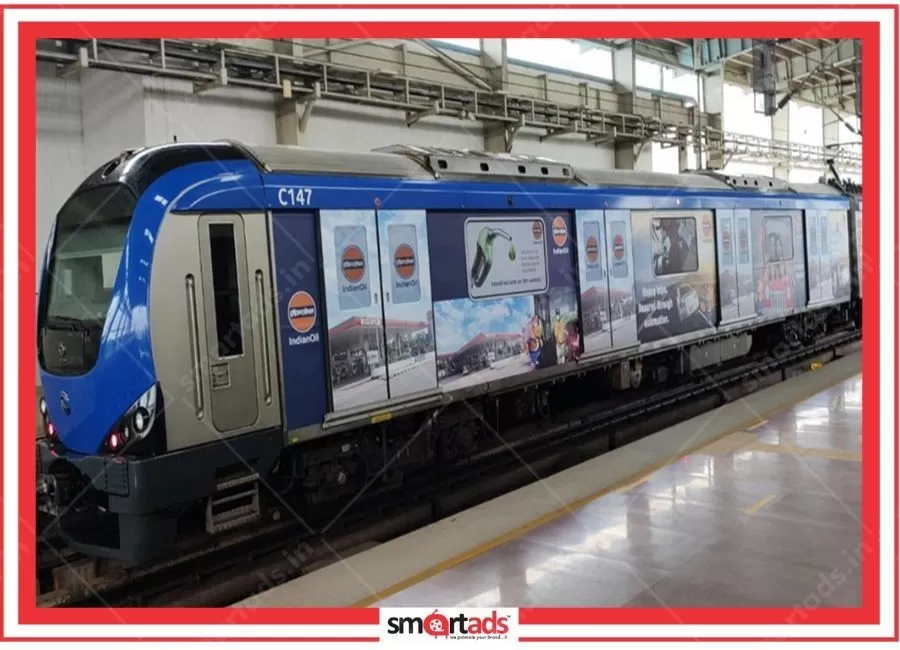
Exterior Metro Wrap
Size & Printing Cost as per actual
On the outside of metro Train, advertise
Rate per Metro Display Cost / 1 Month
Route:Dahisar To Andheri
₹600000.00
Showing 1 to 5 of 5 Results
MEDIA DETAILS
Size & Printing Cost as per actual
On the outside of metro Train, advertise
Rate per Metro Display Cost / 1 Month
Route:Dahisar To Andheri
₹600000.00
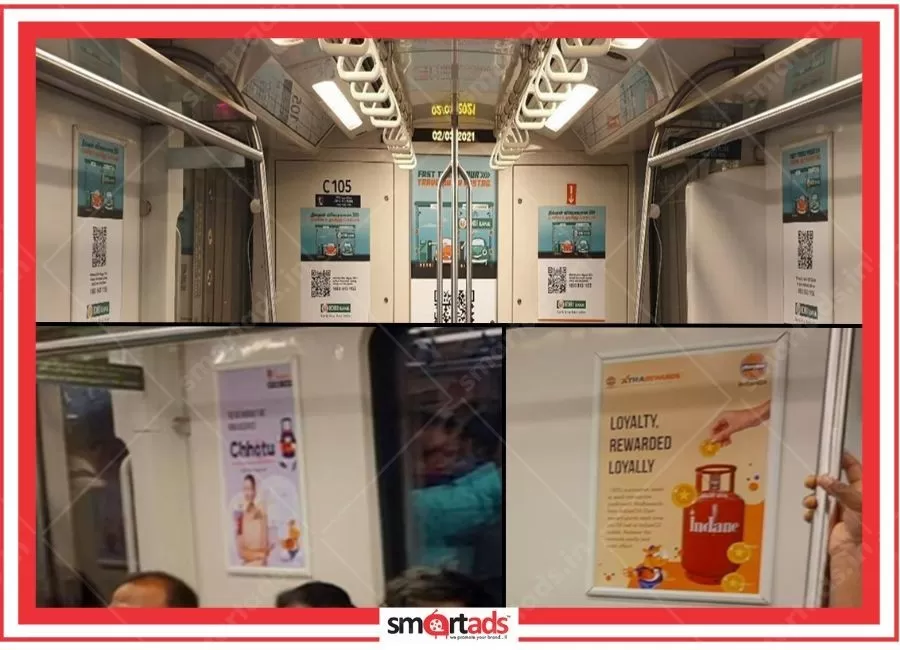
Size & Printing Cost as per actual
On the outside of metro Train, advertise
Rate per Metro Display Cost / 1 Month
Route:Dahisar To Andheri
₹2300000.00
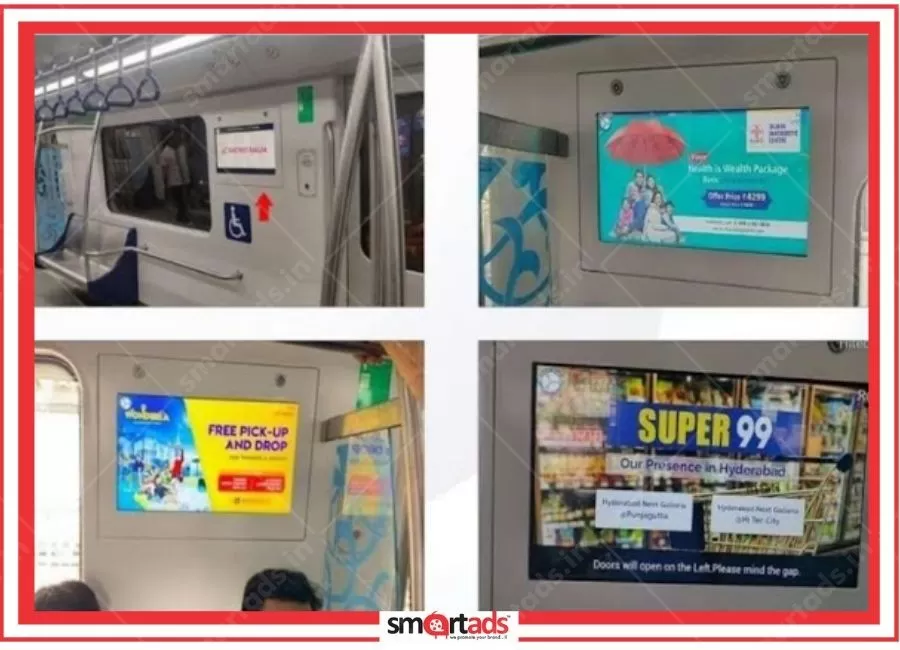
10 Sec Video
On the outside of metro Train, advertise
Rate per Metro Display Cost / 1 Month
Route:Dahisar To Andheri
₹600000.00
20 Sec Jingle
On the outside of metro Train, advertise
Rate per Metro Display Cost / 1 Month
Route:Dahisar To Andheri
₹23333.00

Size & Printing Cost as per actual
On the outside of metro Train, advertise
Rate per Metro Display Cost / 1 Month
Route:Dahisar To Andheri
₹2350000.00
MEDIA REACH

MinimumQty :
1
EstimateReachPeople :
150000000
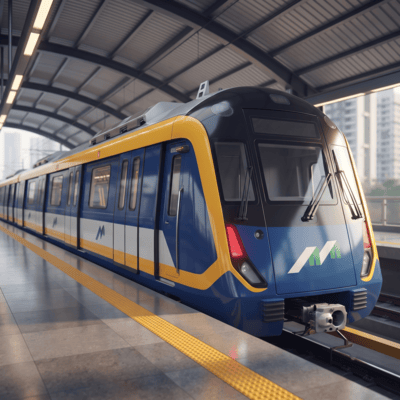
Mumbai's western suburbs move fast — and the Yellow Line moves with them. With Line 2A already operational across 18 stations from Dahisar East to DN Nagar, and Line 2B progressively expanding the corridor southward, the Mumbai Metro Yellow Line now threads through some of the most commercially dense, aspirationally upwardly-mobile neighbourhoods in Maharashtra. What surprises most brand managers we speak to is not the reach — it's the dwell time; a commuter on the Yellow Line spends somewhere between 25 and 45 minutes inside the train, which is an attention window that no billboard on the Western Express Highway can match.
Metro train advertising on the Mumbai Yellow Line is, at its core, a form of transit media that places brand messaging inside and outside the rolling stock of Line 2A and Line 2B — the two corridors that together constitute what MMRDA and MMMOCL officially designate as the Yellow Line. The distinction matters for advertisers because Line 2A (Dahisar East to DN Nagar) is fully operational and offers a predictable, audited inventory, while Line 2B (ESIC Nagar to Mandale, extending toward BKC) is in a phased rollout that is progressively unlocking new station-level and train-level advertising opportunities. Most competitor pages treat the two as interchangeable; they are not, and the difference has real implications for campaign planning.
What makes this form of BTL advertising genuinely different from conventional OOH advertising is the environment in which the brand message is received. The commuter is seated or standing in a climate-controlled, relatively quiet coach; there are no competing hoardings, no traffic noise, no visual clutter beyond what MMRDA and MMMOCL have approved. At SmartAds, we always tell our clients that metro train advertising is less like a billboard and more like a magazine — the audience is physically present, mentally available, and not going anywhere for the next half hour. That is a media condition that is extraordinarily difficult to replicate through any other non-traditional advertising format in Mumbai.
The Yellow Line corridor runs parallel to the Western Express Highway for much of its length, which means it serves the same commuter population that brands have historically tried to reach through WEH hoardings — but at a fraction of the clutter and with dramatically higher dwell time. Train branding on the Yellow Line is governed by MMRDA's concession agreements, with Times OOH, Laqshya Media, JCDecaux India, and MOMS (Madison World) among the concessioned media operators who manage inventory across different station and train assets; understanding which operator controls which format is something we navigate for our clients as part of the booking process.
Line 2A runs 18.589 kilometres from Dahisar East in the north to DN Nagar in the south, passing through stations that include Borivali West, Kandivali West, Malad West, Goregaon West, and Andheri West — a corridor that essentially traces the commercial and residential spine of Mumbai's western suburbs. Line 2B then picks up from ESIC Nagar and is intended to extend the Yellow Line corridor further south toward Bandra-Kurla Complex, which is why brands targeting the BKC corporate cluster are watching Line 2B's expansion timeline very closely. The combined Yellow Line, when fully operational, will connect Dahisar East all the way to Mandale, making it one of the longest metro corridors in the Mumbai Metropolitan Region.
From an advertiser's standpoint, the station geography is as important as the route length. Dahisar East station sits at the northern terminus and serves a catchment that includes Borivali West — one of the highest-density residential markets in Mumbai suburban — which means morning peak-hour boarding at this end of the line is dominated by working professionals, students, and daily office commuters heading south toward Andheri and beyond. Goregaon and Malad West stations are particularly interesting because they serve large residential townships as well as the Film City and SEEPZ employment zones, which creates a commuter profile that skews toward media professionals, IT workers, and creative industry employees — an audience that most FMCG, fintech, and lifestyle brands actively want to reach. Kandivali West, meanwhile, draws a strong middle-income family demographic, which makes it a natural fit for education, insurance, and consumer durables advertisers.
What a lot of people miss is the proximity of the Yellow Line to Chhatrapati Shivaji Maharaj International Airport (CSMIA). The Andheri West station on Line 2A is within a short auto or cab ride of the domestic terminal, which means a meaningful portion of Yellow Line commuters are business travellers, airport staff, and airline crew — a premium audience segment that is notoriously difficult to reach through conventional outdoor advertising. We have found, across multiple campaigns planned for travel and hospitality clients, that this airport adjacency makes the Andheri West station zone one of the most strategically valuable positions on the entire Yellow Line for premium brand messaging.
The format inventory on the Yellow Line is more varied than most advertisers initially expect, and choosing the wrong format for the wrong objective is one of the most common mistakes we see in metro train branding campaigns. Interior branding formats include seat panel advertising (the panels on the back of seats, which sit directly in the sightline of seated passengers), overhead panel strips running along the length of the coach ceiling, wall wraps covering the interior side panels of the coach, and door decals positioned at entry and exit points where dwell time is highest during boarding and alighting. Each of these formats delivers a different visual intensity and a different moment of audience engagement.
Exterior branding on Yellow Line trains is available in two primary configurations: partial exterior wraps, which cover specific panels or sections of the train's exterior surface, and full train wrap advertising, which transforms the entire exterior of a rake into a moving brand canvas. A full train wrap on the Yellow Line is, frankly speaking, one of the most visually arresting forms of transit advertising available in India — the train travels elevated for much of its journey on Line 2A, which means the exterior branding is visible not just to passengers on the platform but also to pedestrians and motorists along the Western Express Highway corridor below. Train wrap advertising of this kind generates OOH-equivalent impressions in addition to the captive audience impressions inside the coach, which effectively doubles the media value of a single buy.
Beyond visual formats, audio advertising on Yellow Line trains is an underexplored but genuinely effective channel; the in-coach PA system delivers station announcements and, in some configurations, brand audio spots between announcements — a format that reaches every passenger in the coach regardless of where they are seated or standing. Digital screen advertising is available at select stations on the Yellow Line, and platform branding through station domination packages allows brands to own the visual environment at high-footfall stations like Goregaon, Malad West, or Andheri West for defined campaign periods. The SmartAds media planning team routinely combines two or three of these formats within a single Yellow Line campaign, because the synergy between interior branding and platform branding creates a brand recall effect that neither format achieves independently.
The interior branding versus exterior branding decision is one that we get asked about constantly, and the honest answer is that they serve fundamentally different strategic purposes — which means the question should really be "what am I trying to achieve?" rather than "which is better?". Interior branding, whether through seat panels, wall wraps, or overhead panel strips, delivers high dwell time exposure to a captive audience that has nowhere else to look; the average commuter on the Yellow Line is exposed to interior branding for the full duration of their journey, which works out to somewhere between 20 and 45 minutes depending on where they board and alight. Brand recall from interior branding tends to be significantly higher than from exterior formats, because the exposure is sustained and repeated across multiple journeys.
Exterior branding, particularly full train wrap advertising, operates on a different logic entirely. The train wrap is a moving billboard that generates impressions both inside the metro system and outside it — on platforms, at elevated sections visible from the WEH, and at station approaches where pedestrians and motorists can see the train arriving or departing. We worked with a consumer electronics brand that ran a full train wrap on the Yellow Line for a product launch, and the campaign generated what we estimated at roughly 2.5 to 3 times the outdoor advertising impressions of a comparable WEH hoarding buy, simply because the train moved through high-footfall zones repeatedly across the day rather than sitting static at one location. The brand visibility generated by a well-executed train wrap advertising campaign on an elevated metro line is genuinely difficult to replicate through any other single OOH advertising format.
To be fair, exterior branding comes with a higher production cost and a more complex creative approval process through MMRDA and MMMOCL, because the wrap must meet specific material specifications, fire safety standards, and visual guidelines — and any deviation from approved artwork during production can delay the campaign launch by several days. Interior branding, by contrast, is faster to produce and install, which makes it the preferred format for time-sensitive campaigns or brands working with tighter lead times. Our general recommendation is that brands with a budget in the range of 10 to 20 lakh should prioritise interior branding for depth of engagement, while brands with larger budgets who want mass visibility and PR value should seriously consider a full train wrap as the centrepiece of their Yellow Line metro advertising campaign.
Metro advertising rates on the Yellow Line are not published in a standard rate card that anyone can download — and that opacity is something we think the industry should address, because it creates unnecessary friction for first-time advertisers. What we can share, based on our experience booking campaigns across the Yellow Line, is a realistic range of what different formats cost, with the caveat that rates are negotiated with the concessioned media operator and vary based on campaign duration, number of rakes, and seasonal demand.
For interior branding, seat panel advertising on a single rake for a 30-day campaign works out to roughly 1.5 to 3 lakh per rake, depending on the number of panels and the specific coach positions booked; overhead panel strips tend to be priced slightly lower per unit but require a larger minimum quantity to be visually effective. Wall wraps inside a coach are priced at a premium over panel formats because of the larger surface area and the higher production cost, and a full interior coach wrap — covering all available wall surfaces — can run to somewhere between 4 and 7 lakh per coach per month. These are ballpark figures, and the actual metro advertising cost will depend on which operator controls the inventory and what the prevailing rate card looks like at the time of booking.
Exterior train wrap advertising is where the metro advertising rates step up significantly. A partial exterior wrap on a single rake is typically in the ballpark of 8 to 15 lakh for a 30-day campaign, while a full train wrap advertising package — covering the complete exterior of a rake — can range from 20 to 40 lakh or more per month, depending on the rake configuration and the operator's pricing. The metro train advertising cost in India for full wraps may seem steep in isolation, but when you divide it by the estimated daily impressions — which on the Yellow Line, across both interior and exterior exposure, can run to several lakh per day — the CPM works out to a number that surprises most first-time advertisers when they compare it to what they are paying for Instagram reach or Google Display impressions. At SmartAds, we build a full cost-per-reach comparison for every metro campaign we plan, because that single calculation usually resolves the budget conversation very quickly.
The Yellow Line's ridership profile is one of the strongest arguments for metro train advertising in Mumbai, and it is a profile that has been shaped by the specific geography the line serves. Line 2A's corridor through Borivali, Kandivali, Malad, Goregaon, and Andheri is one of the most economically active stretches of Mumbai suburban, home to a mix of IT parks, media companies, retail hubs, and dense middle-to-upper-middle-class residential neighbourhoods. Daily ridership on Line 2A has been growing steadily since the line's launch, with figures cited by MMRDA in the range of several lakh commuters per day across the network — and the Yellow Line's share of that ridership reflects the density of the corridor it serves.
The audience profile skews toward urban commuters in the 22 to 45 age bracket, with a significant concentration of working professionals, which is the demographic that most consumer brands, financial services companies, and lifestyle advertisers are actively targeting. What makes the Yellow Line particularly interesting from a media planning perspective is the income profile: the western suburbs corridor has historically been associated with higher household incomes relative to the eastern suburbs, and this is reflected in the consumption patterns of Yellow Line commuters — who are more likely to be active online shoppers, credit card users, and brand-conscious consumers than the average Mumbai commuter. This is not an assumption; it is a pattern we have observed across multiple campaigns where Yellow Line placements outperformed eastern corridor placements on conversion metrics for premium product categories.
The high dwell time characteristic of metro commuting — which is something that transit media consistently delivers over other OOH formats — is particularly pronounced on the Yellow Line because the line serves long-distance commuters who board at Dahisar East or Borivali and travel all the way to Andheri or beyond. A commuter making that full journey is exposed to interior branding for upwards of 30 minutes, which is a captive audience condition that is genuinely rare in advertising. The FICCI-EY Media and Entertainment Report has consistently highlighted transit media as one of the fastest-growing OOH sub-categories in India, and the Yellow Line's commuter profile is precisely the reason why brands in fintech, EdTech, FMCG, and real estate have been increasing their allocation to metro train advertising in Mumbai over the past two years.
Frankly speaking, the Yellow Line's status as a premium BTL advertising corridor is not just about the audience — it is about the media environment. Below the line advertising in Mumbai has historically been fragmented across formats that compete with each other for attention: kiosks, hoardings, transit shelters, and mall activations all exist in environments where the consumer has multiple distractions and can easily ignore the brand message. The Yellow Line metro is different because the advertising environment is controlled, curated, and relatively uncluttered; MMRDA and MMMOCL regulate the number and type of ads that can appear in any given coach or station, which means your brand is not competing with 40 other brands on the same wall.
On top of that, the Yellow Line's elevated alignment along the Western Express Highway gives exterior branding a visibility advantage that underground metro lines simply cannot offer. A full train wrap advertising campaign on Line 2A is visible to motorists on the WEH, pedestrians at station approaches, and residents in the high-rise buildings that line the corridor — which means the campaign generates OOH advertising impressions in addition to transit media impressions, effectively creating a two-channel campaign from a single media buy. We have seen this dynamic work particularly well for real estate developers launching projects in the western suburbs, where the train wrap served as a moving announcement to exactly the residential catchment the developer was targeting.
The Yellow Line also benefits from what we call the "airport halo effect" — the proximity of the Andheri West station to CSMIA means that a portion of the ridership includes business travellers, airline crew, and airport-adjacent workers who represent a premium audience segment. Hyperlocal BTL advertising in Mumbai rarely gets access to this audience through conventional below the line advertising formats; the metro is one of the few transit media environments where this segment is captive and reachable. For brands in business travel, premium hospitality, corporate services, and financial products, this airport adjacency is a strategic asset that is worth factoring into the media plan.
The metro advertising booking process for the Yellow Line involves navigating a concessioned media structure that is, to be honest, more complex than it needs to be for a first-time advertiser. The advertising rights on Yellow Line trains and stations are held by concessioned operators — companies like Times OOH, Laqshya Media, JCDecaux India, and MOMS (Madison World) have been involved in various capacities across Mumbai Metro lines — and the specific operator controlling the inventory you want will determine who you need to approach for rate negotiations and booking confirmation. Working through an experienced advertising agency in Mumbai that has established relationships with these operators is, in our experience, the fastest and most cost-effective way to navigate this.
The typical metro advertising booking process for a Yellow Line campaign runs as follows: the brand or agency submits a brief specifying the desired format, duration, and target stations or rakes; the operator provides availability and a rate proposal; once rates are agreed, artwork is submitted for creative approval through the operator, which then routes it to MMRDA and MMMOCL for final sign-off. The creative approval timeline for Yellow Line metro advertising is typically in the range of 10 to 15 working days, which means campaigns need to be planned with a minimum 3 to 4 week lead time before the intended go-live date. We have seen campaigns delayed by two weeks simply because the creative was submitted without accounting for the approval window — a mistake that is entirely avoidable with proper planning.
Minimum campaign duration on the Yellow Line is generally 30 days for train-based formats, though some operators offer shorter tenures for digital screen advertising at stations. Our recommendation, based on frequency-to-recall data we have observed across multiple metro branding campaigns, is that 45 to 60 days is the sweet spot for interior branding — long enough for regular commuters to see the brand message multiple times and build genuine brand recall, but short enough to allow for creative refreshes if the campaign is extended. For full train wrap advertising, where production costs are significant, a 60 to 90 day tenure is typically required to achieve a reasonable cost-per-impression.
The creative approval process for metro train advertising on the Yellow Line is governed by two overlapping frameworks: MMRDA and MMMOCL's internal advertising guidelines, which cover format specifications, material standards, and content restrictions; and the ASCI advertising guidelines, which apply to all advertising in India and set standards for truthfulness, decency, and social responsibility. Both sets of guidelines must be satisfied before any creative can be approved for installation, and the review process is sequential rather than parallel — which is why the 10 to 15 working day timeline we mentioned is a realistic minimum rather than a worst case.
On the content restriction side, advertising categories that are prohibited on Mumbai Metro Yellow Line trains and stations include tobacco products, alcohol and alcoholic beverages, gutka and pan masala, gambling and betting services, and any content that ASCI would classify as misleading, indecent, or harmful to public interest. These restrictions are consistent with MMRDA's broader advertising policy across all Mumbai Metro lines and are non-negotiable; we have seen campaigns for otherwise legitimate brands delayed because the creative contained indirect references to restricted categories. Brands in pharma and financial services should also be aware that their category-specific regulatory requirements — SEBI guidelines for investment products, IRDAI guidelines for insurance — apply in addition to MMRDA and ASCI standards.
On the technical side, material specifications for interior branding and exterior train wrap advertising are detailed and specific — the wrap material must meet fire retardancy standards, the adhesive must be approved for use on rolling stock, and the artwork resolution must meet minimum DPI requirements for large-format printing. At SmartAds, we manage the end-to-end creative production and approval process for our clients, because the number of technical touchpoints between artwork approval and campaign installation is significant enough that a single missed specification can set the entire timeline back by a week. Frankly speaking, creative approval is the part of the metro advertising booking process that most brands underestimate — and it is where most campaign delays originate.
The industries that consistently perform best with metro train advertising in Mumbai's Yellow Line corridor are those whose target audience overlaps most directly with the Yellow Line's commuter profile — which, as we discussed, skews toward urban working professionals, middle-to-upper-middle-income households, and digitally active consumers in the 22 to 45 age bracket. Real estate developers targeting the western suburbs have been among the most active users of Yellow Line metro advertising, and for good reason: the commuters on this line are often the exact buyers or renters that western suburbs projects are designed for, and the geographic specificity of the Yellow Line corridor means that a campaign on Line 2A is essentially a hyperlocal BTL advertising campaign targeted at the catchment area of the project.
Fintech and banking brands have found the Yellow Line to be a particularly effective transit media environment, because the commuter profile includes a high proportion of salaried professionals who are actively using or evaluating financial products — credit cards, personal loans, investment apps, and insurance products. We ran a campaign for a digital lending brand on the Yellow Line that used a combination of seat panel advertising and overhead panel strips across three rakes, and the brand reported a measurable uplift in app downloads from the western suburbs catchment during the campaign period, which they attributed in part to the metro branding exposure. EdTech brands, similarly, have found the Yellow Line's student and young professional audience to be highly receptive to course and upskilling messaging.
FMCG brands, consumer electronics, OTT platforms, and automobile manufacturers have all used Yellow Line metro advertising effectively, though the format choices differ by category. FMCG brands tend to favour interior branding for its frequency and repetition; automotive brands often prefer full train wrap advertising for the visual impact and the PR value of a branded train on an elevated metro line; OTT platforms have been aggressive users of digital screen advertising at stations like Goregaon and Andheri West, where the footfall and audience profile align with their subscriber acquisition targets. The common thread across all these categories is that the Yellow Line's captive audience and high dwell time environment rewards brands that invest in quality creative — because the audience has time to actually read and engage with the message.
The Yellow Line does not exist in isolation — it is part of a growing Mumbai Metro network that includes the Red Line (Line 7, running from Andheri East to Dahisar East) and the Blue Line (Line 1, the original Versova-Andheri-Ghatkopar corridor) — and the most effective metro train branding campaigns we have planned in Mumbai have used two or more lines in combination to achieve a reach and frequency that no single line can deliver independently. The Yellow Line and the Red Line share a interchange at Dahisar East, which creates a natural opportunity for brands to follow their audience across both corridors; a commuter who boards at Dahisar East on the Yellow Line may transfer to the Red Line at some point, and a brand that is present on both lines creates a surround-sound effect that dramatically increases brand recall.
The Blue Line (Line 1) adds a different geographic dimension — running east-west through Andheri and connecting to Ghatkopar, it serves a commuter population that overlaps with the Yellow Line at Andheri but extends into the eastern suburbs and the BKC corridor. For brands that want to cover both the western and eastern suburban markets, a combined Yellow Line and Blue Line media plan creates a near-complete coverage of Mumbai's metro-riding working population. We have executed multi-line campaigns for clients in the telecom and banking sectors where the combined reach across Yellow, Red, and Blue lines worked out to an estimated 8 to 12 lakh unique commuters per month — a scale that is genuinely competitive with mass media buys, but delivered with the targeting precision and dwell time of transit media.
The strategic logic of combining lines is not just about reach — it is about frequency. A commuter who uses the Yellow Line daily will see your interior branding multiple times per week, which builds brand recall through repetition; adding the Red Line or Blue Line to the plan means that even commuters who switch between lines encounter the brand message across multiple touchpoints. This is the principle that the Goldmedal Electricals campaign — which ran across Line 2A, Line 2B, and Line 7 simultaneously — demonstrated effectively, and it is a model we recommend to any brand that is serious about using metro train advertising in Mumbai as a primary brand-building channel rather than a supplementary one.
Marketing ROI measurement for Yellow Line metro advertising is an area where the industry has historically been weak, and we think that weakness has held back investment in this format more than any other factor. The challenge is that metro train advertising, like most OOH advertising, does not generate a click or a conversion that can be tracked in a dashboard — which means brands accustomed to digital attribution models often struggle to justify the spend to their management. The thing is, the measurement frameworks exist; they are just different from what digital marketers are used to, and applying them correctly requires some upfront planning.
The primary metrics for Yellow Line transit advertising are estimated reach and frequency (derived from daily ridership data and campaign duration), brand recall uplift (measured through pre- and post-campaign consumer surveys in the target catchment), and indirect conversion signals such as uplift in branded search volume, app downloads from the western suburbs geography, or foot traffic to retail locations in the Yellow Line corridor during the campaign period. We have found that brands which invest in even a basic pre-post survey methodology — interviewing 200 to 300 commuters in the Yellow Line catchment before and after a 45-day campaign — consistently demonstrate brand recall uplifts in the range of 15 to 30 percentage points for interior branding campaigns, which is a number that tends to resonate with management when presented alongside the CPM comparison to digital channels.
On the CPM question specifically: the cost per thousand impressions for Yellow Line interior branding, when calculated against verified daily ridership and campaign duration, typically works out to somewhere between 40 and 80 rupees — which is higher than a programmatic display buy but dramatically lower than the effective CPM of most premium digital video formats when you account for viewability and brand safety discounts. The difference, of course, is the quality of the impression: a commuter who reads your seat panel advertisement for 30 minutes is not the same as a user who was served a display ad that was 50% in-view for 1.2 seconds. At SmartAds, we present this comparison explicitly in every metro campaign proposal, because the quality-adjusted CPM argument is the one that consistently wins the budget conversation.
Q: What is metro train advertising on the Mumbai Yellow Line?
Metro train advertising on the Mumbai Yellow Line refers to brand placements on the trains, coaches, and stations of Line 2A (Dahisar East to DN Nagar) and Line 2B (ESIC Nagar to Mandale) of the Mumbai Metro network. It encompasses interior branding formats such as seat panels, wall wraps, overhead panel strips, and door decals, as well as exterior formats including partial and full train wrap advertising. The Yellow Line is operated by MMMOCL under the oversight of MMRDA, and advertising rights are managed by concessioned media operators. It is classified as a form of BTL advertising and transit media, distinct from conventional OOH advertising because of the controlled environment and high dwell time it delivers.
Q: Which stations are covered under the Mumbai Metro Yellow Line advertising corridor?
Line 2A covers 18 stations from Dahisar East in the north to DN Nagar in the south, passing through Borivali West, Kandivali West, Malad West, Goregaon West, Dahanukarwadi, Andheri West, and several other stations along the Western Express Highway corridor. Line 2B extends the corridor southward from ESIC Nagar toward Mandale and is in a phased expansion. For advertising purposes, the most commercially significant stations — in terms of footfall, catchment demographics, and brand visibility — are Dahisar East, Borivali West, Malad West, Goregaon West, and Andheri West, though the specific stations available for platform branding and station domination packages depend on the inventory controlled by the concessioned operator at the time of booking.
Q: What ad formats are available for advertising on Mumbai Metro Yellow Line trains?
The format inventory on the Yellow Line includes interior branding options such as seat panel advertising, overhead panel strips, wall wraps, and door decals; exterior branding options including partial exterior wraps and full train wrap advertising; audio advertising through the in-coach PA system; digital screen advertising at select stations; and platform branding through station domination packages. Each format serves a different strategic purpose, and the most effective campaigns typically combine two or more formats — for example, interior branding for depth of engagement combined with platform branding at key stations for frequency reinforcement.
Q: How much does Mumbai Metro Yellow Line train advertising cost?
Metro advertising rates on the Yellow Line vary by format, duration, and the specific operator controlling the inventory. Interior branding formats such as seat panels are typically in the ballpark of 1.5 to 3 lakh per rake per month, while full interior coach wraps can range from 4 to 7 lakh per coach per month. Exterior partial wraps are roughly 8 to 15 lakh per rake per month, and full train wrap advertising can range from 20 to 40 lakh or more per month depending on the rake configuration. These are indicative ranges based on our experience; actual metro advertising cost will be confirmed by the operator at the time of booking and may vary based on campaign duration and seasonal demand.
Q: What is the daily ridership and audience profile of the Mumbai Metro Yellow Line?
Daily ridership on the Yellow Line has been growing steadily since Line 2A's launch, with MMRDA reporting consistent growth in the network's total ridership. The audience profile skews toward urban commuters aged 22 to 45, with a significant concentration of working professionals, students, and middle-to-upper-middle-income households. The western suburbs corridor served by the Yellow Line has a higher average household income relative to other parts of Mumbai suburban, and commuters on this line are disproportionately likely to be active digital consumers, credit card users, and brand-conscious shoppers — making the Yellow Line one of the most attractive transit media environments in India for premium and aspirational brand categories.
Q: Is exterior (train wrap) branding available on Mumbai Yellow Line (Line 2A & 2B)?
Yes, exterior branding including full train wrap advertising is available on Yellow Line trains, subject to availability and the approval of the concessioned media operator and MMRDA. Full train wraps are among the most visually impactful formats on the Yellow Line because Line 2A runs elevated for much of its length along the Western Express Highway, meaning the exterior branding is visible to pedestrians and motorists below as well as to commuters on platforms. The production and approval process for exterior wraps is more complex than for interior formats, and a minimum lead time of 4 to 6 weeks before the campaign launch date is advisable.
Q: How do I book metro train advertising on the Mumbai Yellow Line?
The metro advertising booking process involves identifying the concessioned media operator controlling the specific format and station inventory you want, submitting a campaign brief, negotiating rates, and then going through the creative submission and approval process. Working with an experienced advertising agency in Mumbai that has established relationships with Yellow Line media operators — such as SmartAds — significantly simplifies this process and typically results in better rate negotiations and faster approval timelines. The end-to-end process from brief to campaign launch typically takes 4 to 6 weeks, of which 10 to 15 working days are consumed by the creative approval process.
Q: What is the minimum campaign duration for Yellow Line metro advertising?
The minimum campaign duration for train-based formats on the Yellow Line is generally 30 days, though some operators offer shorter tenures for digital screen advertising at stations. For interior branding, we recommend a minimum of 45 days to achieve meaningful frequency among regular commuters; for full train wrap advertising, where production costs are significant, a 60 to 90 day tenure is typically required to achieve a reasonable cost-per-impression. Shorter campaigns are possible but tend to be less cost-efficient because the production and installation costs are amortised over fewer impression days.
Q: What categories of advertising are restricted on Mumbai Metro Yellow Line?
Advertising categories that are prohibited on the Mumbai Metro Yellow Line include tobacco products, alcohol and alcoholic beverages, gutka and pan masala, gambling and betting services, and any content that violates ASCI advertising guidelines on truthfulness, decency, or social responsibility. These restrictions are consistent with MMRDA's advertising policy across all Mumbai Metro lines. Brands in pharma, financial services, and other regulated categories must also ensure their creative complies with category-specific regulatory requirements from SEBI, IRDAI, or other relevant authorities, in addition to MMRDA and ASCI standards.
Q: How long does creative approval take for Yellow Line metro advertising?
The creative approval timeline for Yellow Line metro advertising is typically 10 to 15 working days from the date of artwork submission to the concessioned media operator. This timeline accounts for the operator's internal review, routing to MMRDA and MMMOCL for final sign-off, and any revision cycles if the submitted artwork requires changes. Brands should plan their campaign timeline with a minimum 3 to 4 week buffer between artwork finalisation and the intended campaign launch date to avoid delays.
Q: What is the difference between advertising on Line 2A vs Line 2B of the Yellow Line?
Line 2A (Dahisar East to DN Nagar) is fully operational and offers a complete, audited advertising inventory across all 18 stations and the trains serving the route. Line 2B (ESIC Nagar to Mandale) is in a phased rollout, which means advertising availability varies by station and format as new sections open. For brands planning campaigns now, Line 2A offers more predictable inventory and a more established ridership base; Line 2B is worth monitoring for future campaigns, particularly as it extends toward BKC and opens up access to the corporate and financial services audience in that corridor.
**Q: Can I combine Yellow Line metro advertising with Red Line (Line 7
