
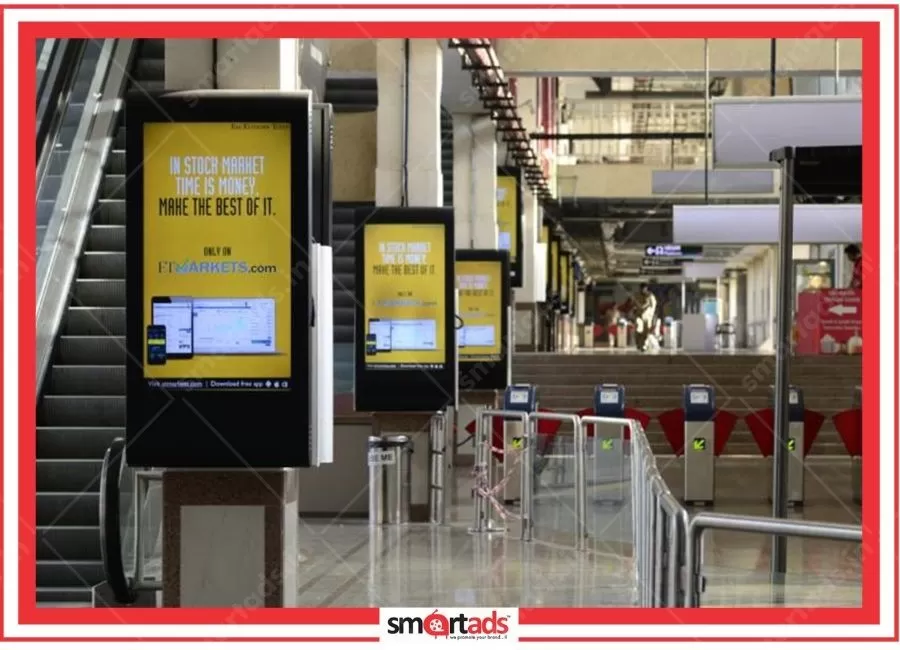
Entry Exit Panel
8 ft x 4 ft
Bright and vibrant multicolored letterin
Rate per Panel / Month
Min Requirement is 3 Panel.
₹48000.00
Showing 1 to 4 of 4 Results
MEDIA DETAILS
8 ft x 4 ft
Bright and vibrant multicolored letterin
Rate per Panel / Month
Min Requirement is 3 Panel.
₹48000.00
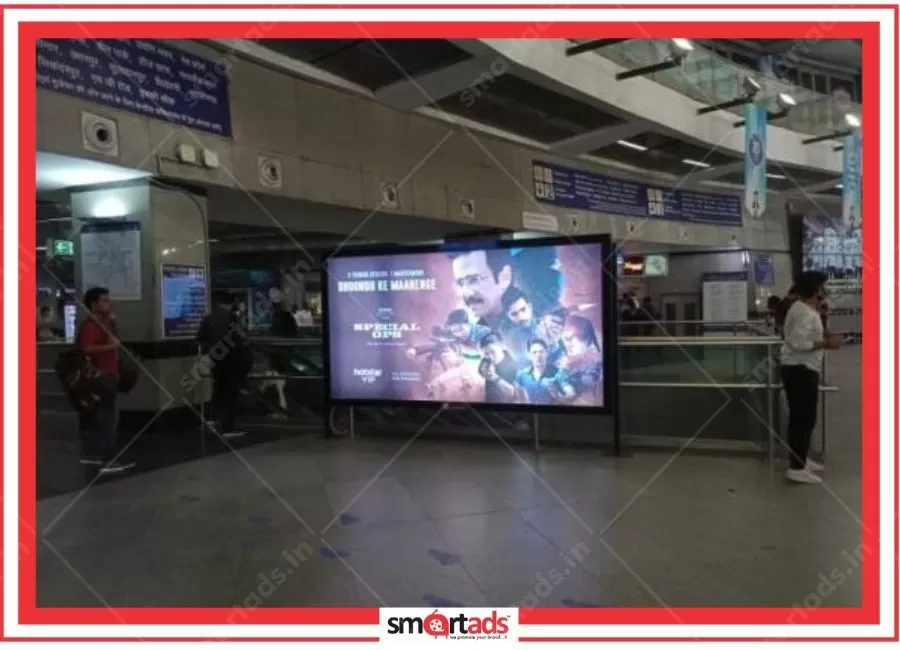
10 ft x 5 ft
A new wide wall system designed to accom
Rate per Panel / Month
Min Requirement is 3 Panel.
₹50000.00
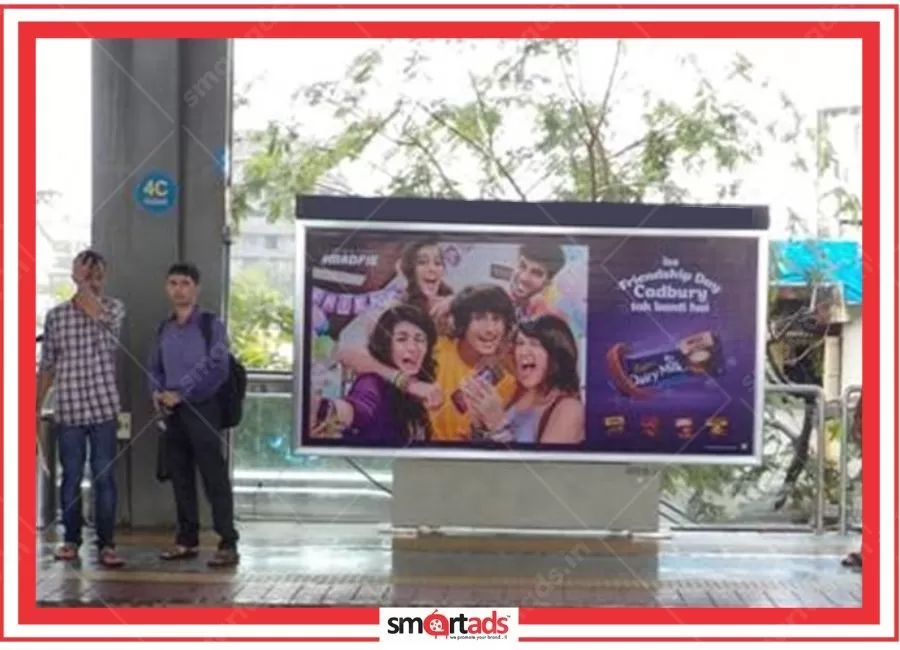
8 ft x 4 ft
A raised flooring or other horizontal su
Rate per Panel / Month
Min Requirement is 3 Panel.
₹35000.00
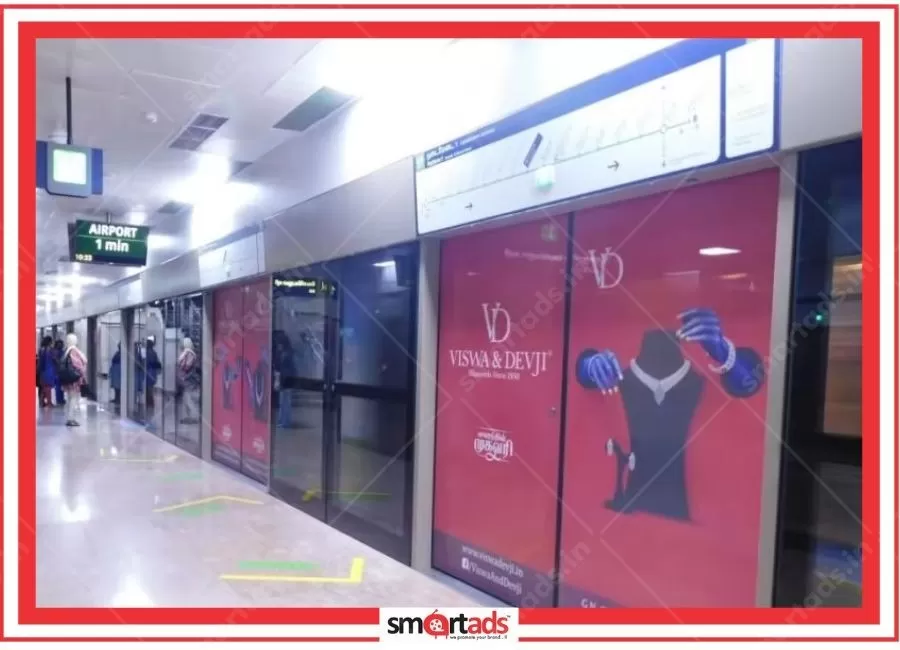
7 ft x 4 ft
Also known as platform edge doors (PEDs)
Rate per Plateform / Month
Min Requirement is 1 Stations.
₹1200000.00
MEDIA REACH

MinimumQty :
10
EstimateReachPeople :
15 Million
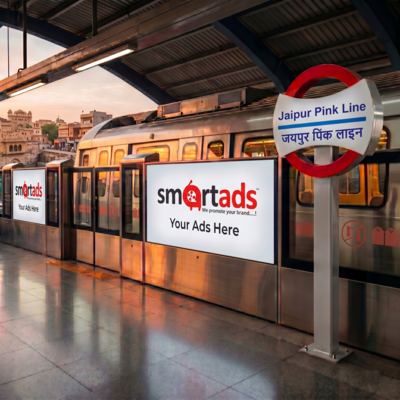
Jaipur's Pink Line carries somewhere in the range of 45,000 to 55,000 commuters every single day — and yet, most brands in Rajasthan still treat it as an afterthought when building their media plans. That is a significant oversight, particularly when you consider that the Pink Line's East-West Corridor cuts through some of the most commercially dense and tourist-heavy zones in the Pink City, connecting Mansarovar in the west to Badi Chaupar in the heart of the heritage zone. What we tell our clients at SmartAds, almost without exception, is that metro station advertising in Jaipur Pink Line offers a captive audience quality that very few other formats in the city can match.
The thing about transit advertising is that it forces attention in a way that most outdoor advertising simply cannot. A commuter waiting on a platform for three to six minutes has nowhere else to look; a passenger inside a metro train for eight to twelve minutes is, in the most literal sense, a captive audience. This is the fundamental logic behind BTL advertising on metro systems, and the Jaipur Metro Pink Line executes this dynamic particularly well because of the mix of station types it contains — elevated stations in residential and commercial zones, and underground stations in the heritage core of the city.
What a lot of people miss is the tourist dimension. Rajasthan Tourism data consistently shows that Jaipur receives upward of 50 lakh domestic and international tourists annually, and a meaningful proportion of those visitors use the metro to navigate between Jaipur Junction Railway Station, Sindhi Camp, and the heritage precincts around Hawa Mahal, Jantar Mantar, and City Palace. This means that metro advertising Jaipur is not purely a local commuter play — it is simultaneously a high-frequency exposure channel for repeat local audiences and a high-impact impression channel for first-time tourist visitors, which is a combination that is genuinely difficult to replicate with any single OOH advertising format.
Our experience at SmartAds shows that brand recall scores from metro station campaigns in Jaipur tend to run significantly higher than comparable spends on roadside hoardings, primarily because of the controlled environment. There is no visual clutter competing for attention inside a metro station concourse or on a platform panel; the creative has room to breathe, and the commuter audience has both the time and the physical proximity to actually engage with it. The FICCI-EY Media and Entertainment Report has consistently flagged transit OOH as one of the fastest-growing sub-segments of out-of-home advertising in India, and the Jaipur Pink Line is a clear example of why that trend makes sense.
Station branding on the Pink Line is considerably more varied than most advertisers initially expect. The format inventory broadly divides into three categories — station-level formats, train-level formats, and digital or DOOH formats — each of which carries different creative requirements, pricing structures, and strategic use cases. Platform panel advertising is the most widely booked format, partly because it is the most accessible in terms of minimum spend and partly because it delivers consistent high-frequency exposure to every commuter who passes through the station.
Beyond platform panels, the concourse level at each station offers a distinct advertising environment; concourse advertising catches commuters during the ticketing and access-control phase of their journey, which is a moment of relative pause that tends to generate strong brand visibility. Entry exit branding — which covers the physical gates, pillars, and fascia around station entry and exit points — is particularly effective at elevated stations like Mansarovar, Shyam Nagar, and Ram Nagar, where the surrounding streetscape means that branding is visible not just to commuters but to pedestrians and vehicle traffic passing by. Metro pillar advertising at elevated stations functions almost like a vertical hoarding, offering large-format creative space that is visible from a considerable distance.
Inside panel advertising within train coaches is a format we have found to be consistently undervalued by first-time metro advertisers. The dwell time inside a coach — which can range from a few minutes for short-hop commuters to the full twenty-three-minute end-to-end journey — creates a reading environment that is genuinely unusual in the OOH category; people look at inside panels the way they might look at a magazine advertisement, with actual attention rather than a passing glance. Full train branding, which encompasses both interior train branding and exterior train branding, is the premium option; a fully wrapped train moving through the city is essentially a moving billboard that generates impressions not just from passengers but from everyone who sees the train at stations, crossings, and elevated sections. Smart card advertising — branding on the physical metro smart cards issued to commuters — is a niche but interesting format that delivers brand impressions in the commuter's hand, literally, every single time they tap in or out.
The Pink Line's western elevated section runs from Mansarovar through New Aatish Market, Shyam Nagar, Ram Nagar, Civil Lines, Jaipur Railway Station metro, and Sindhi Camp — and each of these stations has a distinct audience character that shapes which advertising formats perform best. Mansarovar, which serves Asia's largest residential colony, draws a predominantly residential commuter audience; families, working professionals, and students dominate the footfall here, making it an excellent location for FMCG advertising, edtech advertising, and consumer durables. The footfall at Mansarovar is estimated to be among the highest on the line, in the ballpark of eight thousand to twelve thousand daily boardings, which makes it a natural anchor point for any corridor domination campaign.
Jaipur Railway Station metro station is, in our assessment, the single most strategically valuable station on the entire Pink Line for most advertising categories. It sits at the intersection of metro commuters, intercity rail passengers arriving at or departing from Jaipur Junction Railway Station, and tourist traffic — which means the audience here is genuinely multi-segment in a way that almost no other station can claim. BFSI advertising, hospitality brands, real estate advertising, and travel-category brands have all performed strongly at this station in campaigns we have managed. Sindhi Camp, which connects to the major bus stand serving routes across Rajasthan, similarly draws a mixed audience of intercity travellers and local commuters; the footfall density during morning and evening peak hours at Sindhi Camp rivals that of the Railway Station station.
Civil Lines and Ram Nagar serve the government and commercial office belt of central Jaipur; the commuter profile here skews toward salaried professionals and government employees, which makes these stations particularly relevant for financial services, insurance, and professional services advertising. Shyam Nagar draws a similar professional audience, with the added dimension of proximity to several private hospitals and educational institutions that pull a healthcare and student demographic into the mix.
The underground section of the Pink Line — covering Chandpole, Chhoti Chaupar, and Badi Chaupar — is where the creative and strategic calculus changes quite dramatically. Underground stations create an enclosed, high-dwell-time environment that is significantly different from the open elevated stations; the lighting is controlled, the visual field is limited to what is inside the station, and the commuter has no external visual distractions competing for their attention. This makes underground station advertising on the Pink Line arguably the most impactful format on the network in terms of pure brand recall per impression.
Badi Chaupar, which sits at the eastern terminus of the current operational line and is adjacent to the Hawa Mahal and the heritage zone, draws a uniquely mixed audience of local commuters from the old city and tourists who use the metro as a convenient access point to the heritage precinct. The tourist angle here is significant; international visitors in particular tend to notice and engage with advertising in metro stations because the format is familiar to them from their home cities. Chandpole, which connects to the historic Chandpole Gate and the western edge of the walled city, similarly serves a blend of heritage-area residents, traders, and tourists. Chhoti Chaupar sits between the two, serving the dense commercial and residential fabric of the old city.
What we tell clients considering underground station advertising is that the creative brief needs to be fundamentally different from elevated station work. The enclosed environment rewards longer copy, richer visual design, and calls to action that assume a commuter who has time to read — which is the opposite of the quick-glance imperative that governs roadside hoarding creative. Station domination packages at the underground stations, which allow a single brand to own all visible advertising surfaces within a station, are particularly powerful precisely because there is no competing visual noise.
Frankly speaking, advertising rates on the Jaipur Metro Pink Line are one of the most common points of confusion we encounter, partly because JMRC periodically revises its rate cards through tender processes and partly because the final cost depends heavily on format, station, duration, and whether you are booking directly or through an empanelled agency. That said, we can share broad benchmarks that are useful for initial media plan construction and budget allocation.
Platform panel advertising at a standard station — a single-face backlit panel in the two-foot-by-four-foot or similar format — works out to roughly somewhere between twelve thousand and twenty-five thousand rupees per month per panel, depending on the station's footfall tier. High-footfall stations like Mansarovar, Jaipur Railway Station metro, and Badi Chaupar command the upper end of that range; mid-tier stations like Shyam Nagar or Ram Nagar sit closer to the lower end. Concourse advertising, which typically involves larger format displays, runs in the ballpark of thirty thousand to sixty thousand rupees per month for a standard format, which is a number that surprises most first-time advertisers when they compare it to what they are paying for a roadside hoarding of comparable size in the same city.
Train wrap advertising — exterior train branding on a full rake — is the premium end of the inventory, and the costs reflect that; a full exterior train branding campaign on the Pink Line is estimated to run somewhere between two lakh and four lakh rupees per month, depending on the number of coaches covered and the duration of the campaign. Interior train branding across all coaches of a single rake is somewhat more accessible, typically in the range of eighty thousand to one lakh fifty thousand rupees per month. The CPM — cost per thousand impressions — for metro station advertising in Jaipur Pink Line works out to roughly eight to fifteen rupees when you account for daily ridership and average dwell time, which is genuinely competitive when compared to digital display CPMs in the same city that often run between twenty and forty rupees for equivalent quality audiences. Station domination packages, which bundle platform panels, concourse advertising, pillar branding, and entry exit branding at a single station, are typically negotiated as a package and can range from one lakh to three lakh rupees per month depending on the station.
The Jaipur Metro Rail Corporation — commonly referred to as JMRC — is the statutory authority that controls all advertising rights within the metro network, including both station-level and train-level inventory. JMRC typically awards advertising rights through a formal tender process to empanelled agencies, which then manage the day-to-day booking, creative approval, and installation processes on behalf of advertisers. This means that brands and media planners generally do not approach JMRC directly for individual campaign bookings; instead, they work through an authorised agency that holds the relevant JMRC concession.
The tender and empanelment process is governed by JMRC's advertising policy, which sets out the categories of advertising that are permitted, the creative guidelines that must be followed, the formats that are available at each station, and the rate structures that apply. Advertising that is considered political, religious, or potentially objectionable is not permitted; creative materials must be submitted for JMRC approval before installation, and this approval process typically takes somewhere between five and ten working days. The Rajasthan Government's transport department — transport.rajasthan.gov.in — provides the broader regulatory framework within which JMRC operates, and any significant changes to advertising policy are typically notified through official JMRC communications.
At SmartAds, we maintain active working relationships with the empanelled agencies for JMRC inventory, which means our clients benefit from faster booking turnaround, priority access to premium inventory at high-footfall stations, and support through the creative approval process. One thing we have seen backfire when brands try to navigate this independently is underestimating the lead time required — particularly for train branding, which involves a more complex approval and installation process than static station panels.
The booking process for metro station advertising in Jaipur Pink Line has a few more steps than a typical outdoor advertising booking, and understanding the sequence upfront saves a significant amount of time. The first step is identifying the specific stations, formats, and campaign duration you want — which sounds obvious but is actually where most campaigns get delayed, because advertisers come to the table without a clear brief on whether they want platform panels, concourse advertising, train branding, or some combination. A clear media plan with station-level specifics is the starting point for any productive conversation.
Once the format and station selection is confirmed, the empanelled agency will provide a formal rate card and availability check; premium inventory at high-footfall stations like Mansarovar and Jaipur Railway Station metro can book up several weeks in advance, particularly during peak advertising seasons. Creative materials then need to be submitted for JMRC approval, which — as mentioned — typically takes five to ten working days; this means the total lead time from brief to live campaign is realistically three to four weeks for station formats and four to six weeks for train branding. Campaign duration minimums are typically set at one month for most formats, though some formats allow two-week bookings at a premium rate.
We recommend booking a minimum of six weeks in advance for any campaign that involves premium stations or train branding, and at least eight to ten weeks in advance for campaigns timed around major events like the Jaipur Literature Festival, Diwali, or the wedding season peak — all of which drive significant spikes in both ridership and advertiser demand for metro inventory. A retail client in Jaipur that we worked with for a Diwali campaign learned this the hard way when they came to us with a four-week lead time; we managed to secure concourse advertising at three stations, but the platform panel inventory at Mansarovar and Badi Chaupar had already been committed to other advertisers.
The daily ridership figure for the Jaipur Metro Pink Line sits somewhere between forty-five thousand and sixty thousand passengers on an average weekday, with weekend ridership running somewhat lower but tourist-segment ridership running correspondingly higher. These numbers have been growing steadily since the post-pandemic ridership recovery, and the trajectory suggested by JMRC operational data points toward continued growth as Jaipur's urban population and commercial activity expand. For a media plan, the monthly reach of a single platform panel at a mid-tier station works out to roughly eight to twelve lakh impressions, which is a figure that compares favourably to many roadside hoardings in comparable locations.
The commuter audience on the Pink Line skews toward a specific demographic profile that is genuinely valuable for most advertising categories. The core audience is roughly sixty percent male and forty percent female, with a median age somewhere in the twenty-five to forty-five year range; income distribution skews toward SEC A and SEC B households, reflecting the fact that metro commuters in Jaipur tend to be employed professionals, students at higher education institutions, and middle-income families who use the metro for its reliability and cost efficiency relative to auto-rickshaws or cabs. This audience segmentation makes the Pink Line particularly relevant for categories like banking and financial services, insurance, consumer electronics, real estate advertising, and premium FMCG advertising.
The tourist overlay — which is particularly concentrated at Badi Chaupar, Chandpole, and Jaipur Railway Station metro — adds a distinct high-income, high-propensity-to-spend segment that is not typically captured in standard commuter audience data. International tourists using the metro to access the heritage zone around Hawa Mahal and City Palace represent a genuinely premium audience for luxury retail, hospitality, and destination experience brands; this is an angle that is almost entirely absent from competitor analyses of metro advertising Jaipur, and one that we think represents a significant untapped opportunity for the right advertisers.
Platform panel advertising and concourse advertising are often conflated, but they serve meaningfully different strategic purposes and reach commuters at different moments in their journey. Platform panels are positioned on the platform itself — the area where commuters wait for the train — which means they are seen by passengers who are stationary, attentive, and have a predictable dwell time of two to six minutes. This is a high-quality impression environment; the commuter is not moving, not distracted by traffic, and has a clear sightline to the panel. Platform panel advertising is the workhorse format of metro station advertising in Jaipur Pink Line, and it is the format we typically recommend as the foundation of any metro campaign.
Concourse advertising operates at the level above the platform — the ticketing hall, the access control gates, and the connecting corridors — which is where commuters are in transit between the street and the platform. Dwell time at concourse level is shorter and more variable than on the platform, but the format compensates with larger creative formats and the ability to intercept commuters at a moment of decision-making (buying a ticket, choosing a destination). Entry exit branding at the station gates and fascia extends the campaign's reach to non-commuters — pedestrians, auto-rickshaw drivers, and vehicle passengers who pass the station without entering — which effectively expands the campaign's audience beyond the metro ridership itself.
Train wrap advertising is a fundamentally different proposition from both of these. Interior train branding creates a sustained, enclosed brand environment for the duration of the commute; a passenger who boards at Mansarovar and exits at Badi Chaupar is inside a branded train for the full twenty-three-minute journey, which is a dwell time that no static OOH format in Jaipur can approach. Exterior train branding, meanwhile, generates impressions across the entire city — at every station the train passes through, at every road crossing where the elevated track is visible, and in the peripheral vision of anyone near the metro corridor. Full train branding that combines both interior and exterior elements is, in our view, the most powerful single format in the Jaipur metro advertising inventory, and it is the format we recommended to an automotive brand we worked with that was launching a new model in the Rajasthan market; the campaign generated measurable brand visibility uplift across the city within the first two weeks of the train entering service.
Real estate advertising has historically been one of the heaviest spending categories on Jaipur metro advertising, which makes intuitive sense given that Mansarovar and the western corridor stations serve the fastest-growing residential zones of the city; developers promoting new projects in Mansarovar, Jagatpura, and the peripheral areas of Jaipur find that the metro commuter audience — which skews toward employed professionals actively making housing decisions — is a near-perfect match for their target audience. BFSI advertising — covering banks, insurance companies, mutual fund houses, and fintech brands — is the second major category, driven by the same professional demographic and the high-frequency exposure that metro formats deliver.
Edtech advertising has grown significantly on the Pink Line over the past two to three years, particularly at stations near educational institutions and in the student-heavy commuter flows at Mansarovar and Civil Lines. The TAM AdEx data on transit advertising in Tier 1 and Tier 2 cities consistently shows education and edtech as one of the top three categories by spend volume, and our experience in Jaipur mirrors that trend. FMCG advertising — particularly personal care, packaged foods, and beverages — performs well on the inside panel formats inside train coaches, where the extended dwell time allows for more detailed product messaging than a platform panel can support.
Tourism and hospitality brands are a category that we think is significantly underrepresented on the Pink Line relative to the opportunity. Rajasthan Tourism, hotel brands, and travel aggregators have a natural audience at the Railway Station and Badi Chaupar stations that is already in a travel mindset; the commuter audience at those stations includes a meaningful proportion of people who have just arrived in Jaipur or are about to leave, which is precisely the moment when hotel booking, tour package, and travel service advertising is most relevant. One hospitality brand we worked with — a heritage hotel property in the old city — ran a six-week concourse campaign at Badi Chaupar and Chandpole and reported a measurable uplift in direct booking inquiries that they attributed, at least in part, to the metro campaign.
Station domination is one of the most requested formats among brands that are serious about metro advertising Jaipur, and for good reason — when executed well, it creates an immersive brand environment that is genuinely impossible to ignore. A station domination package typically involves a single brand taking ownership of all advertising surfaces within a station: platform panels on both sides of the platform, concourse advertising at the ticketing level, pillar branding on the structural columns, entry exit branding at the gates, and potentially digital DOOH screens where available. The effect is that every commuter who enters the station is surrounded by a single brand's messaging for the entire duration of their time in the station.
JMRC's advertising policy permits station domination bookings at most stations on the Pink Line, subject to availability and creative approval. The minimum booking duration for a station domination package is typically one month, though most brands that invest in this format book for a minimum of two to three months to justify the production costs and to build meaningful brand recall through repeated exposure. Semi naming rights — a format where a brand's name is associated with the station name in announcements, signage, or digital displays — is a more premium and longer-term arrangement that requires a separate negotiation with JMRC and is not part of the standard advertising rate card.
The stations best suited to domination campaigns, in our assessment, are Mansarovar (for residential and consumer category brands), Jaipur Railway Station metro (for travel, hospitality, and mass-market consumer brands), and Badi Chaupar (for heritage, tourism, and premium brands targeting the tourist-commuter overlap). A corridor domination strategy — which involves booking station domination or near-domination packages at multiple consecutive stations along the line — is a format that we have seen work exceptionally well for brands that want to build a narrative across the commuter's journey; one real estate developer we worked with ran a corridor domination across three western-corridor stations with a sequential creative that told a story across the commuter's journey from Mansarovar to Civil Lines, and the campaign generated significantly higher recall scores than their previous single-station campaigns.
The comparison between metro station advertising and traditional outdoor advertising in Jaipur is one that comes up in almost every media planning conversation we have, and the honest answer is that they are complementary rather than competitive — but they serve meaningfully different strategic functions. Roadside hoardings in Jaipur, particularly on high-traffic corridors like Tonk Road, Ajmer Road, and the JLN Marg, deliver very high gross impression volumes; a well-placed hoarding can generate several lakh impressions per day simply by virtue of traffic volume. But those impressions are fleeting — a driver or passenger in a vehicle has perhaps two to three seconds of exposure to a hoarding, which is barely enough time to register a brand name, let alone a message.
Metro station advertising, by contrast, trades raw impression volume for impression quality. The dwell time advantage — three to six minutes on a platform, up to twenty-three minutes inside a train coach — means that the commuter audience has genuine opportunity to engage with advertising content, read copy, notice details, and form brand associations. This is why brand recall scores from metro campaigns tend to be disproportionately high relative to the impression count; the GroupM TYNY Report and various transit advertising effectiveness studies have consistently shown that transit OOH generates higher unaided recall than comparable roadside formats.
Non-traditional advertising formats like metro advertising also benefit from a lower clutter environment than roadside outdoor advertising Jaipur, where dozens of hoardings, banners, and wall paintings compete for attention on any given stretch of road. The controlled environment of a metro station — where JMRC limits the number and placement of advertising formats — means that each individual advertisement has a higher share of the commuter's visual attention than it would in a cluttered roadside environment. To be fair, the absolute impression volumes of metro advertising are lower than major roadside hoardings, which is why we typically recommend metro advertising as a component of a broader media plan rather than as a standalone channel; the combination of high-quality metro impressions with broader-reach outdoor advertising Jaipur formats tends to outperform either channel in isolation.
Below the line advertising on the Pink Line is not a year-round proposition that performs identically across all twelve months; Jaipur has distinct seasonal rhythms that smart media planners account for in their campaign timing. The wedding season — which in Rajasthan typically runs from October through December and again from February through April — drives significant ridership increases as families travel across the city for ceremonies, shopping, and related activities; this is a strong window for jewellery, apparel, wedding services, and consumer electronics brands. Diwali and the associated festive season in October-November is the single highest-demand period for metro advertising inventory, and booking lead times of eight to ten weeks are not unusual for premium stations during this window.
The Jaipur Literature Festival, which typically takes place in late January or early February, draws a large and demographically premium audience of literary enthusiasts, academics, and cultural tourists who use the metro to access the venue; this is a narrow but high-value window for publishing, education, and premium consumer brands. The summer tourism peak — roughly March through May — sees elevated tourist footfall at the heritage-adjacent stations, making it a strong period for hospitality, travel, and retail brands targeting visitors. Campaign duration of a minimum of four to six weeks is generally recommended to build meaningful frequency with the commuter audience; below that threshold, the high-frequency exposure advantage of metro advertising is not fully realised because the same commuters need multiple exposures before brand recall registers.
Campaign measurement for below the line advertising on the Pink Line has evolved considerably; QR code integration on platform panels and inside panels allows brands to track direct response rates from metro advertising, which is a capability that most roadside OOH formats cannot match. Footfall counter data from JMRC provides verified impression counts that can be used for post-campaign analysis, and brand lift studies — which survey commuters before and after a campaign to measure unaided recall, brand association, and purchase intent — are increasingly being used by sophisticated advertisers to quantify the ROI of their metro advertising investments. At SmartAds, we build measurement frameworks into our metro campaign briefs as a standard practice, because the ability to demonstrate ROI to management is one of the most common pain points our clients face when justifying below the line advertising spend.
Q: How much does metro station advertising on the Jaipur Pink Line cost?
Advertising rates on the Jaipur Metro Pink Line vary considerably depending on the format, station, and campaign duration. As a general benchmark, platform panel advertising at a standard station works out to roughly twelve thousand to twenty-five thousand rupees per month per panel, with premium stations like Mansarovar, Jaipur Railway Station metro, and Badi Chaupar commanding the higher end of that range. Concourse advertising typically runs in the ballpark of thirty thousand to sixty thousand rupees per month for standard formats. Train branding — interior, exterior, or full — is the premium tier, with costs ranging from roughly eighty thousand rupees per month for interior-only to upward of three to four lakh rupees per month for a full exterior train wrap. Station domination packages, which bundle multiple formats at a single station, are negotiated case by case and typically range from one lakh to three lakh rupees per month depending on the station's footfall tier.
Q: Which metro stations on the Jaipur Pink Line have the highest footfall?
Based on JMRC operational data and our own campaign experience, Mansarovar consistently records the highest boarding volumes on the Pink Line, in the ballpark of eight thousand to twelve thousand daily boardings, driven by its position as the gateway to Asia's largest residential colony. Jaipur Railway Station metro is the second highest-footfall station, with the added dimension of intercity rail passengers and tourist traffic that significantly elevates the effective audience reach. Badi Chaupar, Sindhi Camp, and Civil Lines round out the top five, with Badi Chaupar particularly notable for its tourist audience overlay given its proximity to the Hawa Mahal heritage zone.
Q: What advertising formats are available at Jaipur Pink Line metro stations?
The format inventory at Pink Line stations includes platform panel advertising (backlit static panels on the platform), concourse advertising (larger formats at the ticketing and access-control level), entry exit branding (gate fascia and pillar branding at station entrances), metro pillar advertising (large-format branding on structural columns at elevated stations), inside panel advertising (panels within train coaches), interior train branding (full coach interior wraps), exterior train branding (outside surfaces of train coaches), full train branding (combining interior and exterior), digital DOOH screens at select stations, and smart card advertising. Station domination packages bundle multiple formats at a single station, and semi naming rights are available through a separate JMRC negotiation process.
Q: How do I book an ad campaign at a Jaipur Metro Pink Line station?
Advertising on the Jaipur Metro Pink Line is booked through JMRC's empanelled advertising agencies, not directly through JMRC. The process involves selecting stations, formats, and campaign duration; confirming availability and rates with the empanelled agency; submitting creative materials for JMRC approval (which typically takes five to ten working days); and completing the booking with a formal purchase order and advance payment. Total lead time from brief to live campaign is realistically three to four weeks for station formats and four to six weeks for train branding. We recommend building in additional lead time for campaigns planned around peak seasons like Diwali, the wedding season, or the Jaipur Literature Festival.
Q: What is the minimum budget required for metro advertising on the Jaipur Pink Line?
The minimum practical budget for a meaningful metro station advertising campaign on the Pink Line — covering a single station, a single platform panel format, for one month — is in the range of twelve thousand to twenty-five thousand rupees. However, a campaign at that scale is unlikely to generate significant brand impact; a more realistic minimum for a campaign that delivers measurable brand recall is somewhere in the range of one to two lakh rupees per month, which would cover multiple panels across two or three stations or a concourse advertising placement at a high-footfall station. For train branding or station domination, the minimum effective budget is considerably higher, typically in the range of two to five lakh rupees per month.
Q: Can I advertise at multiple Pink Line stations simultaneously for a corridor domination campaign?
Yes, multi-station and corridor domination campaigns are fully supported within the JMRC advertising framework, and they are, frankly, one of the most effective strategies available on the Pink Line. Booking advertising at multiple consecutive stations creates a narrative continuity across the commuter's journey that a single-station campaign cannot achieve; we have seen corridor domination campaigns generate brand recall scores that are measurably higher than single-station campaigns with equivalent total spend. Multi-station packages are typically negotiated as a bundle with the empanelled agency, which can result in more favourable rates than booking each station individually.
Q: What is the difference between platform panel advertising and concourse advertising at Jaipur Metro?
Platform panel advertising is positioned on the platform itself — where commuters wait for the train — and benefits from a predictable dwell time of two to six minutes with a stationary, attentive audience. Concourse advertising is positioned at the ticketing and access-control level, one floor above the platform, where commuters are in transit between the street and the platform; dwell time is shorter but the creative formats are typically larger and the audience includes both entering and exiting commuters. Platform panels are generally considered the higher-quality impression environment because of the longer, more predictable dwell time; concourse advertising compensates with larger format sizes and the ability to intercept commuters at the moment of entry and exit.
Q: How long does a typical metro advertising campaign run on the Jaipur Pink Line?
The minimum campaign duration for most formats on the Pink Line is one month, though some formats allow two-week bookings at a premium. In practice, most advertisers book for a minimum of two to three months to build meaningful frequency with the commuter audience; the high-frequency exposure advantage of metro advertising — which relies on repeated exposures to the same commuter audience — is not fully realised in campaigns shorter than four to six weeks. For brand-building campaigns, three to six months is the duration we typically recommend; for tactical or promotional campaigns tied to specific events or seasons, one to two months is usually sufficient.
Q: Who issues the license for advertising inside Jaipur Metro stations?
The Jaipur Metro Rail Corporation — JMRC — is the statutory authority that controls all advertising rights within the metro network. JMRC awards advertising concessions through a formal tender process to empanelled agencies, which then manage bookings on behalf of advertisers. All creative materials must receive JMRC approval before installation, and the advertising policy sets out permitted categories, creative guidelines, and format specifications. Brands and media planners work through empanelled agencies rather than approaching JMRC directly for individual campaign bookings.
Q: What types of brands and industries advertise most on the Jaipur Metro Pink Line?
Real estate advertising and BFSI advertising are
