
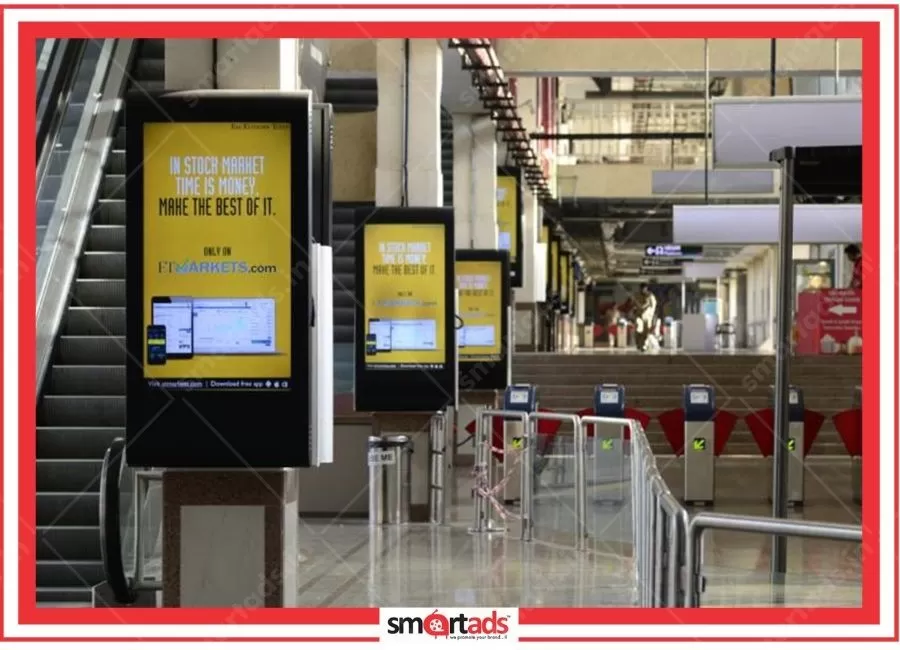
Entry Exit Panel
8 ft x 4 ft
Bright and vibrant multicolored letterin
Rate per Panel / Month
Min Requirement is 3 Panel.
₹48000.00
Showing 1 to 4 of 4 Results
MEDIA DETAILS
8 ft x 4 ft
Bright and vibrant multicolored letterin
Rate per Panel / Month
Min Requirement is 3 Panel.
₹48000.00
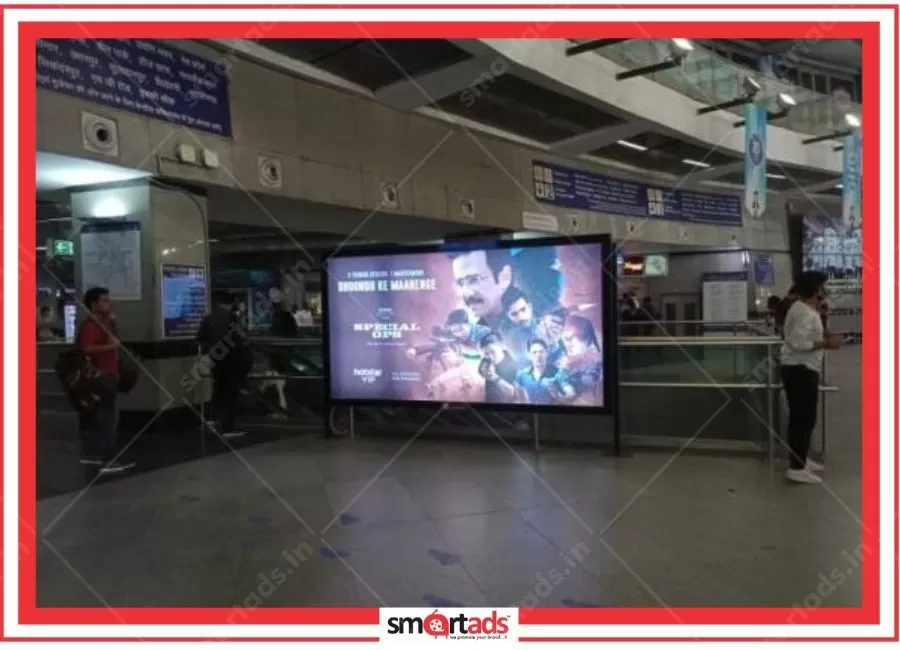
10 ft x 5 ft
A new wide wall system designed to accom
Rate per Panel / Month
Min Requirement is 3 Panel.
₹50000.00
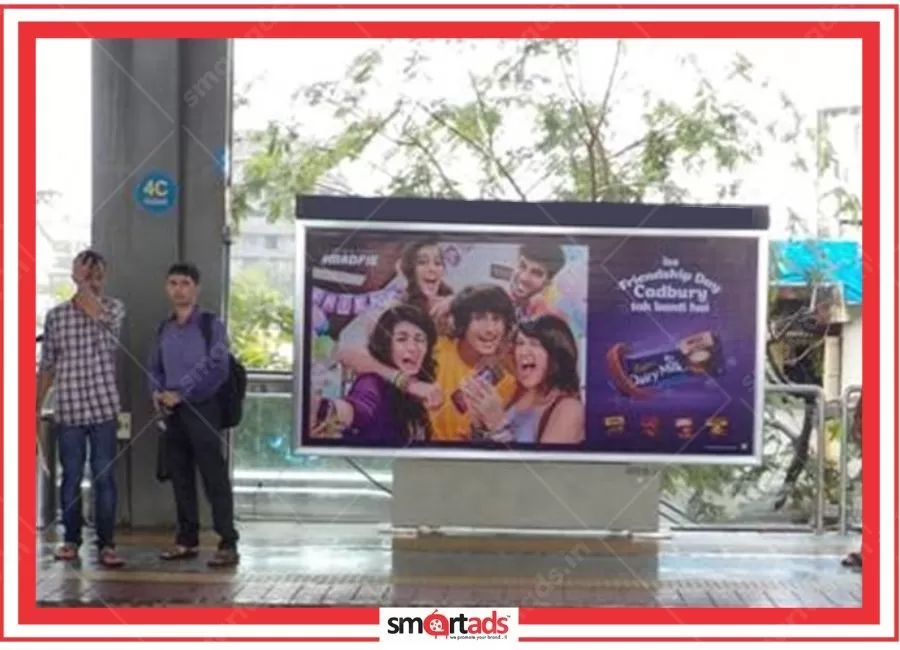
8 ft x 4 ft
A raised flooring or other horizontal su
Rate per Panel / Month
Min Requirement is 3 Panel.
₹35000.00
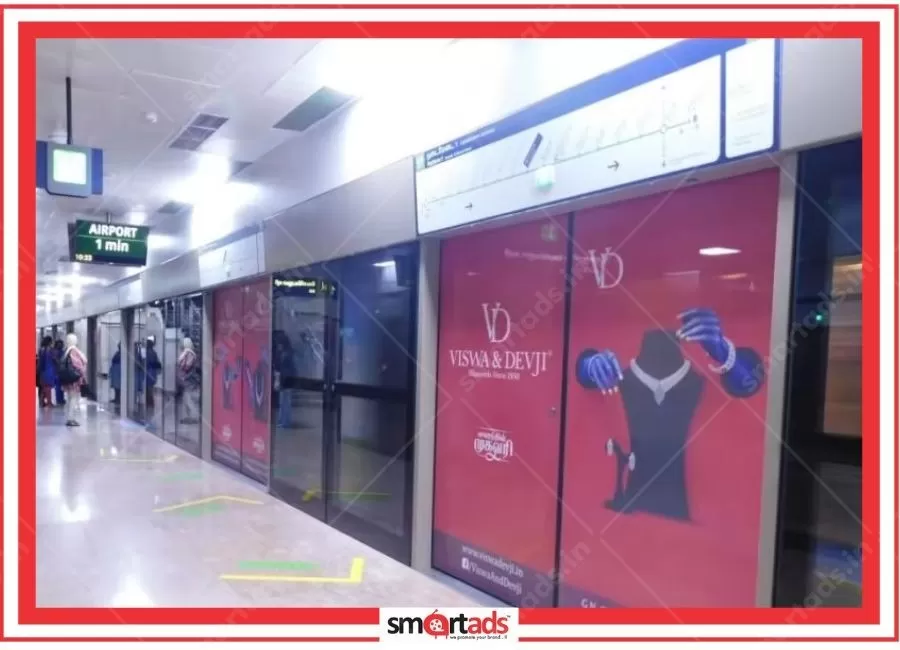
7 ft x 4 ft
Also known as platform edge doors (PEDs)
Rate per Plateform / Month
Min Requirement is 1 Stations.
₹1200000.00
MEDIA REACH

MinimumQty :
10
EstimateReachPeople :
15 Million
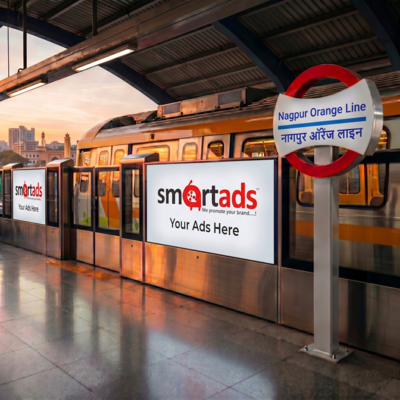
Most brand managers we speak to are surprised to learn that the Nagpur Orange Line already carries well over 60,000 daily commuters — a number that has been climbing steadily since full commercial operations began, and one that makes metro station advertising in Nagpur a genuinely different conversation from what it was even two years ago. The Orange Line is not just a transit corridor; it is a curated audience pipeline running through the commercial and residential spine of one of Maharashtra's fastest-growing cities.
Frankly speaking, the case for metro station advertising in Nagpur Orange Line is stronger than most traditional OOH options in the city, and the reason has everything to do with audience quality rather than just volume. The daily commuters on the Orange Line — which runs along the North-South Corridor connecting Automotive Square in the north to Khapri near the airport in the south — skew heavily toward working professionals, college students, and upper-middle-income households, which is precisely the demographic that most consumer brands are trying to reach. This is not a bus shelter audience; these are people who have made a deliberate choice to use organised, ticketed transit, and that choice tells you something useful about their income bracket and media receptivity.
What a lot of people miss is the dwell time advantage. When a commuter is standing on a platform waiting for the next train, or sitting inside a coach during a 20-to-35-minute journey across the corridor, they are not scrolling past your ad in 1.3 seconds the way they might on a social feed. The captive audience dynamic at Orange Line metro stations means that brand recall is built through repeated, unhurried exposure — and our experience shows that campaigns running across multiple Orange Line stations for a four-week period consistently outperform equivalent-budget billboard campaigns on brand recall metrics. The FICCI-EY Media and Entertainment Report has consistently flagged transit advertising as one of the fastest-growing segments of out-of-home advertising in India, which aligns with what we have been seeing on the ground in tier-2 cities like Nagpur.
On top of that, there is the contextual advertising advantage that the Orange Line's geography creates. A brand advertising at Sitabuldi station is reaching the city's busiest commercial hub; a brand at the Airport metro station is reaching business travellers and MIHAN-corridor professionals; a brand at Khapri is catching the tech-park and logistics workforce. This kind of hyperlocal advertising precision is simply not available with a traditional hoarding on the Ring Road, where you pay for impressions without any meaningful audience segmentation. At SmartAds, we always tell our clients that the Orange Line is not one media buy — it is eighteen distinct audience contexts strung along a single corridor.
The Orange Line, formally designated as Line 1 of the Nagpur Metro and operated by Maharashtra Metro Rail Corporation Limited (MahaMetro), spans roughly 19 kilometres with 18 stations running from Automotive Square in the north down through the city's commercial centre at Sitabuldi and continuing south to Khapri, which connects to the airport and the MIHAN economic zone. This North-South Corridor is the older and more mature of the two metro lines in Nagpur, which means the advertising infrastructure is better developed, the audience habits are more established, and the commuter footfall data is more reliable — all of which matters enormously when you are making a media planning decision.
The rolling stock on the Orange Line, manufactured by CRRC Dalian, consists of three-car and six-car rakes which offer significant surface area for exterior train branding and interior panel branding alike. The trains run at frequencies that keep platforms populated throughout the day, particularly during the morning and evening peak windows, which means that even a single-station buy delivers multiple impression cycles to the same commuter across a week. The Maha Card — Nagpur Metro's travel card system — has also driven up the proportion of regular, repeat commuters on the line, which is excellent news for frequency of exposure and brand recall building.
What is worth understanding about this ecosystem is that MahaMetro, as the concessioning authority, controls the advertising rights across all Orange Line stations and trains, and bookings are typically routed through empanelled advertising agencies. This is where working with an experienced metro advertising agency becomes genuinely valuable — not just for rate negotiation, but for understanding which inventory is actually available, which formats are performing well for which categories, and how to structure a campaign booking that does not leave money on the table.
Sitabuldi Interchange Station is, without question, the crown jewel of the Orange Line from an advertising standpoint. It is the interchange point between the Orange Line and the Aqua Line, which means it captures commuters from both corridors — and the commercial density of Sitabuldi as a retail and business district means that even non-metro pedestrian traffic contributes to the station's overall visibility. We have seen brands pay a meaningful premium for Sitabuldi station branding, and in almost every case, the premium has been justified by the reach numbers.
Automotive Square station, at the northern terminus, serves a catchment area that includes some of Nagpur's most established residential colonies and the city's automotive retail belt — which is why, not coincidentally, automotive brands and two-wheeler companies have historically been among the most active advertisers at this station. Chhatrapati Square station sits at another high-footfall node, drawing office-goers and retail visitors from the surrounding commercial zone. Further south, the Airport metro station and Khapri station together form what we think of as the MIHAN gateway cluster — the audience here includes a disproportionate share of business travellers, IT professionals, and logistics sector workers, which makes this cluster particularly valuable for BFSI metro advertising, edtech metro advertising, and corporate services brands.
Congress Nagar, Nari Road, and Subhash Nagar stations occupy the residential mid-corridor stretch, and while their individual footfall numbers are lower than the anchor stations, they offer something different: a neighbourhood audience with high repeat exposure and strong hyperlocal advertising potential for retail brands, educational institutions, and healthcare providers operating in those catchment areas. The honest advice we give clients is to anchor their campaign at one or two high-footfall stations for awareness, and then use the mid-corridor stations to build frequency with the residential audience — which is a phased campaign strategy that tends to deliver better ROI than spreading a limited budget thinly across all 18 stations.
The range of ad formats available for metro station advertising on the Nagpur Orange Line is considerably wider than most first-time metro advertisers expect, and the choice of format has a significant bearing on both cost and campaign effectiveness. Platform advertising — which covers the backlit panels, flex frames, and glow sign boards installed along the platform walls and waiting areas — is the most commonly booked format, partly because it offers the longest dwell time exposure; commuters waiting for trains have nowhere else to look, and a well-designed platform panel at a high-footfall station like Sitabuldi can deliver impression volumes that rival a prime-location billboard at a fraction of the effective CPM.
Pillar branding is a format that gets underestimated, and we have found it to be one of the most cost-efficient options on the Orange Line. The structural pillars at elevated stations offer 360-degree vinyl wrap surfaces which are visible from multiple angles across the platform, and because they are at eye level for standing commuters, the brand visibility is often more direct than a panel mounted high on a wall. Entry gate branding — covering the fare gate areas and station entry/exit points — is particularly effective for brands that want to intercept commuters at the moment of transition, when attention is briefly unanchored from a phone or a task. A retail client in Nagpur's Dharampeth area ran a three-month entry gate branding campaign at Sitabuldi and Congress Nagar stations, and reported a measurable uptick in walk-in traffic that they attributed directly to the metro campaign.
Train wrap advertising — both full train branding and partial exterior train branding — operates at a different scale entirely. A full train wrap on the Orange Line turns the entire rake into a moving billboard that travels the full 19-kilometre corridor multiple times a day, generating exterior impressions not just at stations but at every grade-level crossing, road overbridge, and residential area the elevated track passes through. Interior panel branding inside the coaches reaches the seated and standing captive audience for the duration of their journey; we have seen this format work exceptionally well for edtech metro advertising and financial services brands, where the audience has time to read and process a detailed message. Digital screen advertising at Orange Line stations — the DOOH screens installed at concourse and platform levels — adds a dynamic, time-sensitive layer to station branding campaigns, allowing brands to run different creatives at different times of day, which is a capability that static formats simply cannot match.
This is the question every client asks first, and the honest answer is that advertising rates on the Orange Line vary enough by format, station, and campaign duration that quoting a single number would be misleading. That said, we can share the ballpark figures that our media planning team works with, because opacity on pricing helps nobody.
For platform advertising at a mid-tier Orange Line station — something like Congress Nagar or Nari Road — a single backlit panel for a four-week period works out to somewhere between ₹15,000 and ₹30,000, which is a number that tends to pleasantly surprise clients who have been quoted hoarding rates in Nagpur. At high-footfall stations like Sitabuldi or Automotive Square, the same format can run anywhere from ₹40,000 to ₹80,000 per panel per month, reflecting the significant difference in commuter footfall and audience quality. Pillar branding, which covers a full structural pillar with vinyl wrap, is typically priced in the ballpark of ₹20,000 to ₹50,000 per pillar per month depending on station tier, and it is one of the formats where negotiating a multi-station package delivers the most meaningful cost efficiency.
Full train branding — the exterior train wrap — is a premium format with advertising costs that typically start around ₹3 to ₹5 lakh per month for a full rake, which sounds significant until you calculate the effective CPM against the daily impressions generated across the entire corridor. Interior panel branding across a full rake works out to considerably less, roughly in the ₹1 to ₹2 lakh range per month, and it delivers a genuinely captive audience for the duration of the journey. Digital screen advertising at Orange Line stations is typically sold on a time-slot or weekly basis, with rates that depend on the number of screens, daypart selection, and creative rotation frequency — and this is a format where working with a media planning partner who has existing relationships with MahaMetro's advertising concessionaire makes a real difference to what you actually pay. At SmartAds, we negotiate multi-format packages for clients that routinely bring the effective per-impression cost down by 20 to 30 percent compared to booking individual formats independently.
Real estate brands have been among the most consistent and aggressive advertisers on the Orange Line, and the logic is straightforward: the metro corridor itself is driving property value appreciation along its alignment, and the commuters on the line are exactly the income profile that residential and commercial developers want to reach. Real estate brands doing metro advertising on the Orange Line tend to concentrate their station branding at Sitabuldi, Chhatrapati Square, and the southern cluster near Khapri, where the MIHAN development is generating genuine homebuyer interest.
BFSI metro advertising — covering banks, insurance companies, mutual fund distributors, and fintech brands — performs exceptionally well on the Orange Line because the working professional demographic that dominates the ridership is precisely the audience that financial products need to reach at the right moment. We worked with a mid-sized insurance brand that ran a six-week interior panel branding campaign across five Orange Line stations, and the campaign generated a cost-per-lead that was roughly 40 percent lower than what the same brand was achieving through digital channels alone — which is a result that surprised the client's marketing team but did not surprise us at all. The dwell time and brand recall advantages of metro advertising are real, and they show up in the numbers when you measure properly.
Educational institutions — from engineering colleges to coaching centres to edtech platforms — have found the Orange Line to be a highly effective channel, particularly in the months leading up to admission season. The student demographic is well-represented in the Orange Line's ridership, and the contextual advertising opportunity of reaching them during their daily commute, when they are already thinking about their futures, is something that no social media platform can quite replicate. Automotive brands, retail chains, healthcare providers, and FMCG companies round out the categories that we have consistently seen deliver strong ROI from Nagpur Orange Line advertising — and the common thread across all of them is that they are targeting an urban audience with disposable income and established consumption habits.
The booking process for metro station advertising in Nagpur Orange Line runs through MahaMetro's authorised advertising concessionaires, and it is not as straightforward as calling a single number and placing an order. The concessionaire landscape has involved multiple agencies over the years, and the specific inventory available at any given time — which stations, which formats, which positions — requires current knowledge that changes with campaign cycles and existing client commitments. This is the single most practical reason to work with an advertising agency Nagpur that has active relationships with the relevant concessionaires, because availability intelligence is genuinely hard to get otherwise.
The campaign booking process typically begins with a brief — format preference, target stations, campaign duration, and budget range — after which the agency will check availability and come back with options. Lead times for static formats like platform panels and pillar branding are generally two to three weeks from booking confirmation to installation, which is worth factoring into your campaign calendar. Train wrap advertising, both exterior train branding and interior panel branding, typically requires a longer lead time of three to four weeks because of the production and installation logistics involved, and creative specifications need to be confirmed early to avoid delays. Entry gate branding and digital screen advertising can sometimes be turned around faster, particularly if the creative is already production-ready.
One practical tip our media planning team always shares: book your campaign to run across at least four weeks, because metro advertising builds brand recall through frequency of exposure rather than single-hit impact, and anything shorter than four weeks rarely gives the campaign enough time to register with the commuter audience. We have also seen brands make the mistake of booking only one station when a two-station buy — say, Sitabuldi plus one mid-corridor station — would have delivered significantly better reach for a modest incremental spend. The phased approach works well for brands with tighter budgets: start with one anchor station for the first month, measure the response, and then expand to additional stations in subsequent months as the campaign proves itself.
This is a question we get asked regularly, and the answer depends almost entirely on the audience you are trying to reach rather than on any inherent superiority of one line over the other. The Orange Line — the North-South Corridor — runs through the commercial and residential heart of Nagpur, connecting the automotive retail belt in the north to the airport and MIHAN economic zone in the south, with Sitabuldi's commercial hub at the centre. The Aqua Line — the East-West Corridor — traverses a different socioeconomic cross-section of the city, connecting eastern industrial and residential areas with the western parts of the city.
In our experience, the Orange Line delivers a slightly higher-income, more commercially active audience profile, which is why it tends to be the first choice for premium consumer brands, real estate developers, and financial services companies. The Aqua Line has its own strengths — it reaches a broader cross-section of Nagpur's working population, and for mass-market FMCG brands or government-sector communications, it can actually deliver better reach efficiency. The Sitabuldi Interchange, where both lines meet, is the single most valuable advertising real estate in the entire Nagpur metro system, and a brand that books station branding at Sitabuldi is effectively reaching the combined audience of both corridors.
For brands with sufficient budget, an integrated buy across both lines — anchored at Sitabuldi and supplemented by two or three stations on each corridor — tends to deliver the best overall campaign performance. For brands choosing one corridor, we typically recommend the Orange Line for premium and aspirational brand positioning, and the Aqua Line for mass-market reach and frequency. The BTL advertising and non-traditional advertising value of the metro system as a whole is significantly amplified when both corridors are used in combination, which is something that the GroupM TYNY Report's transit advertising data has been pointing to for the broader Indian metro advertising market.
The planned extension of the Orange Line toward Butibori MIDC — which forms a key component of Nagpur Metro Phase 2 and Phase 3 planning — is a development that forward-thinking advertisers should be paying attention to now, before the expansion opens and rates adjust to reflect the increased catchment area. The Butibori MIDC corridor is home to a significant concentration of manufacturing units, warehousing facilities, and industrial workers, and the extension will bring a new audience segment into the metro advertising ecosystem — one that is currently underserved by organised transit media.
What this means practically is that brands in the B2B space, industrial supplies, workforce management, and blue-collar financial services will find the extended Orange Line significantly more relevant than the current corridor. On top of that, the extension will increase the overall daily commuter footfall on the Orange Line, which will improve the impression volumes delivered by existing station advertising across the entire corridor — a rising tide effect that benefits all advertisers who are already established on the line. The Orange Line Phase 2 expansion is also likely to trigger a revision in advertising rates at existing stations, which is another reason why locking in longer-term campaign commitments before the expansion opens can be a smart media planning move.
At SmartAds, we have been advising clients who are planning 12-to-18-month brand campaigns in Nagpur to consider the expansion timeline in their media planning, because the brands that establish strong station branding associations on the Orange Line before the expansion will carry a first-mover advantage in terms of audience familiarity and brand recall when the new stations come online.
Return on investment measurement for metro station advertising in Nagpur is an area where most brands are less rigorous than they should be, and frankly speaking, this is where a lot of the scepticism about transit advertising comes from. The good news is that measurement has become considerably more sophisticated, and there are several approaches that we use with clients to build a credible ROI picture.
The most direct measurement approach for retail and real estate brands is footfall attribution — tracking whether there is a measurable increase in store visits, enquiry calls, or website traffic from the catchment areas served by the advertised stations during and after the campaign period. A real estate developer we worked with used a combination of QR codes embedded in their Orange Line station branding and geo-fencing around the advertised stations to track digital engagement from the metro audience; the campaign generated a cost-per-qualified-lead that was competitive with their best-performing digital channels, which gave the marketing team a clear, defensible ROI number to present internally. This kind of phygital integration — combining physical metro station advertising with digital tracking mechanisms — is something that very few brands on the Orange Line are currently doing, which means the brands that do it stand out significantly.
For brand awareness campaigns, we typically use pre- and post-campaign brand recall surveys within the commuter catchment areas, which are a standard methodology in the OOH advertising industry. The TAM AdEx data on transit advertising effectiveness in tier-2 Indian cities provides useful benchmarks for expected brand recall lifts, and our experience on the Nagpur Orange Line has generally been consistent with those benchmarks — a well-executed four-week campaign across three to four stations typically delivers a brand recall lift of somewhere between 15 and 25 percentage points among regular commuters, which is a number that compares favourably with what most digital display campaigns achieve at equivalent budget levels.
Q: What is metro station advertising on the Nagpur Orange Line?
Metro station advertising on the Nagpur Orange Line refers to the placement of brand communications across the physical and digital advertising inventory within and around the 18 stations of Line 1 — the North-South Corridor operated by Maharashtra Metro Rail Corporation Limited (MahaMetro). This includes static and backlit platform panels, pillar branding, entry gate branding, foot-over-bridge advertising, interior panel branding inside train coaches, exterior train branding including full train wrap, and digital screen advertising at concourse and platform levels. It is classified as BTL advertising and non-traditional advertising because it operates outside the traditional mass media channels of television, print, and radio, delivering instead a highly contextual, captive audience experience to daily commuters travelling the Orange Line corridor.
Q: Which stations on the Nagpur Orange Line have the highest footfall for advertising?
Sitabuldi Interchange Station consistently records the highest footfall on the Orange Line, benefiting from its position as the interchange point with the Aqua Line and its location at the heart of Nagpur's busiest commercial district. Automotive Square station at the northern terminus and Chhatrapati Square station are the next tier of high-footfall stations, followed by the Airport metro station and Khapri at the southern end of the corridor, which serve the MIHAN economic zone and Dr. Babasaheb Ambedkar International Airport catchment area. For advertisers working with limited budgets, we recommend anchoring campaigns at Sitabuldi and adding one secondary station rather than spreading spend thinly across multiple lower-footfall stations.
Q: What ad formats are available for metro station advertising on the Nagpur Orange Line?
The Orange Line offers a fairly comprehensive range of ad formats, covering both static and digital options. Platform advertising includes backlit panels, flex frames, and glow sign boards positioned along platform walls and waiting areas. Pillar branding covers the structural pillars at elevated stations with vinyl wrap. Entry gate branding occupies the fare gate and station entry/exit areas. Foot-over-bridge advertising is available at select stations where the FOB structure offers additional surface area. Interior panel branding runs inside the train coaches, covering overhead panels, door panels, and seat-back positions. Exterior train branding ranges from partial wraps to full train branding covering the entire rake exterior. Digital screen advertising on DOOH screens at concourse and platform levels allows for dynamic, time-sensitive creative rotation. Smart card advertising on the Maha Card travel card is also available as a niche format for high-frequency commuter targeting.
Q: How much does it cost to advertise at a Nagpur Orange Line metro station?
Advertising costs on the Orange Line vary significantly by format and station tier. Platform panel advertising at mid-corridor stations typically works out to somewhere between ₹15,000 and ₹30,000 per panel per month; at premium stations like Sitabuldi, the same format can range from ₹40,000 to ₹80,000. Pillar branding generally falls in the ₹20,000 to ₹50,000 range per pillar per month. Full train branding — the exterior wrap of an entire rake — typically starts around ₹3 to ₹5 lakh per month, while interior panel branding across a full rake is in the ₹1 to ₹2 lakh range. These are indicative figures; actual rates depend on campaign duration, the number of formats booked, and the negotiation leverage that comes from booking through an experienced metro advertising agency with established concessionaire relationships.
Q: What is the difference between platform advertising and train wrap advertising on the Orange Line?
Platform advertising is a stationary format — the panels, boards, and branded surfaces within the station environment — which reaches commuters during their dwell time on the platform and in the concourse area. The audience is captive and stationary, which means exposure time per impression is relatively long. Train wrap advertising, by contrast, is a mobile format; the branded exterior of the train generates impressions across the entire 19-kilometre corridor as the train moves, reaching not just station audiences but also pedestrians, motorists, and residents along the elevated track alignment. Interior panel branding sits between these two in character — it reaches a captive seated audience for the full duration of the journey, which can range from a few minutes for short-hop commuters to 30-plus minutes for end-to-end travellers. The two formats are complementary rather than competitive, and the campaigns we have seen deliver the strongest brand recall typically combine platform advertising at one or two anchor stations with interior panel branding across the full rake.
Q: How many daily commuters travel on the Nagpur Orange Line?
The Nagpur Orange Line has been reporting daily ridership figures that have grown consistently since full commercial operations stabilised, with current estimates placing daily commuter numbers in the range of 60,000 to 80,000 across the Orange Line, with the combined network (Orange and Aqua Lines together) approaching and at times exceeding 1 lakh daily trips. These figures are sourced from MahaMetro's operational reporting and have been referenced in Maharashtra government infrastructure updates. The ridership is expected to grow further as the Phase 2 expansion toward Butibori MIDC progresses and as the metro becomes more deeply integrated into Nagpur's urban mobility fabric.
Q: Can small businesses afford metro station advertising on the Nagpur Orange Line?
Yes — and this is something we actively push back on when clients assume metro advertising is only for large brands. A single platform panel at a mid-corridor station for four weeks can be booked for a budget that is genuinely accessible to a local business, and the audience quality delivered by that spend is significantly better than what the same budget would buy in print classifieds or local cable television. The key for small businesses is to be selective — choose one station that is directly relevant to their catchment area, book a single high-visibility format, and run the campaign for a minimum of four weeks to build frequency of exposure with the regular commuter audience. A local coaching institute near Nari Road, for example, would find that a well-placed platform panel at Nari Road station delivers more qualified local awareness than a city-wide newspaper insert at twice the cost.
Q: How long does a typical metro advertising campaign run on the Nagpur Orange Line?
The minimum booking period for most static formats on the Orange Line is typically 30 days, and we generally advise clients against going shorter than that because brand recall from transit advertising is built through repeated exposure rather than single-hit impact. The most common campaign durations we see are four weeks for tactical or promotional campaigns, three months for brand awareness drives, and six to twelve months for brands that are using the Orange Line as a sustained brand visibility channel. Longer campaigns not only deliver better recall metrics but also typically come with rate advantages — a three-month booking on platform advertising at a premium station can be negotiated to a meaningfully lower effective monthly rate than a single-month booking, which is a cost-saving strategy that is worth factoring into the media planning from the outset.
Q: Who do I contact to book metro station advertising on the Nagpur Orange Line?
Bookings are routed through MahaMetro's authorised advertising concessionaires, and the most efficient way to access the full range of available inventory is through a metro advertising agency that has active relationships with those concessionaires. SmartAds.in operates as an integrated advertising and media buying agency across 500+ Indian cities, including Nagpur, and handles metro station advertising bookings on the Orange Line as part of broader campaign planning. Reaching out through SmartAds.in gives you access to current availability data, rate negotiation, creative specification guidance, and multi-format package structuring — all of which make the booking process significantly smoother than approaching concessionaires directly.
Q: How is metro station advertising on the Orange Line different from billboard or traditional OOH advertising in Nagpur?
The fundamental difference is audience context. A billboard on Nagpur's Ring Road or Wardha Road delivers drive-by impressions to an audience that is moving at speed, has a fraction of a second of exposure, and is cognitively occupied with driving. Metro station advertising on the Orange Line delivers impressions to a stationary or slowly moving audience that has nothing else competing for their attention — no steering wheel, no traffic, no phone call. The dwell time advantage translates directly into better message comprehension and stronger brand recall. On top of that, the metro audience is a self-selected, ticketed demographic with a known income profile, whereas roadside OOH advertising reaches an essentially undifferentiated cross-section of whoever happens to drive past. The CPM comparison often surprises clients: effective CPM for a well-placed Orange Line platform panel works out to a number that is competitive with, and sometimes lower than, equivalent-reach billboard inventory in Nagpur — which is a calculation worth doing before dismissing metro advertising as a premium option.
Q: What industries get the best ROI from Nagpur Orange Line metro advertising?
Real estate, BFSI, education and edtech, automotive, retail, healthcare, and FMCG brands have all demonstrated strong return on investment from Orange Line campaigns in our experience. The common thread is that these categories are targeting urban, working-age audiences with disposable income — which is precisely what the Orange Line's daily commuter base delivers. Categories that tend to see the highest ROI are those where the purchase decision involves a degree of consideration and research, because the dwell time of metro advertising gives the audience time to absorb a more detailed message than a drive-by billboard allows.
Q: Is digital screen advertising available at Nagpur Orange Line metro stations?
Yes, digital screen advertising is available at select Orange Line stations, primarily at the higher-footfall locations. The DOOH screens at concourse and platform levels allow for dynamic creative rotation, daypart targeting, and time-sensitive messaging — capabilities that static formats cannot offer. A brand can, for example, run a morning commute creative aimed at office-goers and switch to an evening creative targeting homebound shoppers, all on the same screen inventory. The availability and pricing of digital screen advertising on the Orange Line is more variable than static formats, and it is an area where working with a media planning partner who has current inventory knowledge is particularly valuable.
Q: What are the creative specifications for ads at Nagpur Orange Line metro stations?
Creative specifications vary by format and position, and MahaMetro's concessionaire provides a detailed spec sheet at the time of booking confirmation. As a general guide: platform backlit panels typically require high-resolution print-ready artwork at 720 DPI or above, supplied as PDF or TIFF, with dimensions varying by panel size (common sizes include 4ft x 6ft and 6ft x 4ft formats). Vinyl wraps for pillar branding and train exteriors require solvent-print-compatible artwork with bleed allowances specified by the installer. Interior panel branding inside coaches follows standard transit panel dimensions that vary by coach configuration. Digital screen advertising requires MP4 or JPEG assets in the screen's native resolution, typically 1920x1080 for full HD screens, with file size and animation duration limits specified by the screen operator. We always recommend confirming the current spec sheet with the concessionaire before finalising creative production, because specifications can change between campaign cycles.
Q: How will the Orange Line Phase 2 expansion affect advertising opportunities in Nagpur?
The Orange Line Phase 2 expansion — which includes the extension toward Butibori MIDC — will add new stations and extend the corridor's reach into Nagpur's southern industrial and peri-urban areas. For advertisers, this means two things: first, the total daily commuter footfall on the Orange Line will increase as the expanded network attracts new riders, improving the impression volumes delivered by existing station inventory; second, the new stations will open entirely new audience segments — industrial workers, logistics professionals, and manufacturing sector employees — that are currently not well-served by metro advertising. Brands in B2B services, workforce management, industrial supplies, and mass-market consumer goods will find the expanded corridor significantly more relevant than the current alignment. The smart play, in our view, is to establish brand presence on the existing Orange Line now, before the expansion-driven rate revision, and then extend into the new stations as they come online.
Metro station advertising in Nagpur Orange Line has matured from a novelty into a genuinely serious media channel — one that delivers audience quality, dwell time, and brand recall metrics that are difficult to match with traditional OOH advertising at equivalent budget levels. The Orange Line's North-South Corridor cuts through the commercial and residential heart of Nagpur, carrying a daily commuter base that skews toward the urban, working-age, higher-income demographic that most consumer and B2B brands are actively trying to reach; and the advertising formats available across the 18 stations — from platform panels and pillar branding to full train wraps and digital screen advertising — give media planners a genuinely flexible toolkit for building campaigns at almost any budget scale.
What the data and our campaign experience consistently show is that the brands which get the most out of Nagpur metro advertising are the ones that treat it as a sustained brand-building channel rather than a one-off tactical buy. A four-week campaign at Sitabuldi will generate awareness; a three-month campaign across Sitabuldi, Automotive Square, and the Airport cluster will build the kind of brand recall and audience familiarity that actually moves purchase consideration metrics. The phased approach — start with one or two anchor stations, measure, and scale — is a strategy that has worked well for clients across categories, and it is one that keeps the initial commitment manageable while building toward a more comprehensive corridor presence.
The Orange Line Phase 2 expansion toward Butibori MIDC adds a forward-looking dimension to this conversation; the brands that invest in Orange Line station branding now are building audience relationships that will compound in value as the corridor extends and ridership grows. Integrated campaigns that combine physical station branding with digital tracking mechanisms — QR codes, geo-fencing, landing page attribution — are delivering measurable ROI that makes the case for metro advertising far easier to justify internally than it was even three years ago.
If you are evaluating metro station advertising in Nagpur as part of your next campaign cycle, the SmartAds.in media planning team can help you build a station-by-station plan with current rate benchmarks, format recommendations, and creative specification guidance — all tailored to your specific audience, budget, and campaign objectives. Reach out to us at SmartAds.in to start the conversation.
