
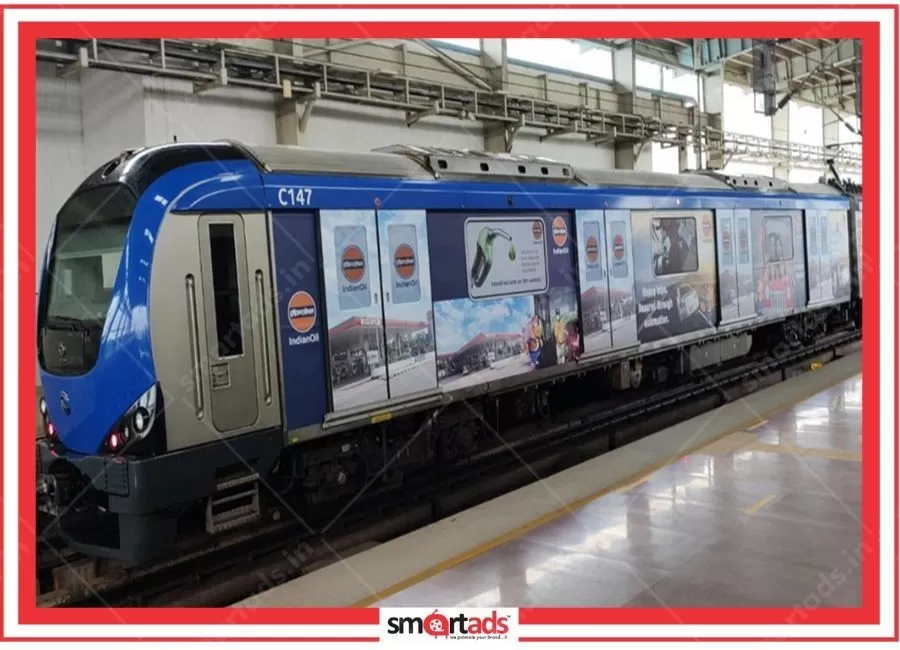
Exterior Metro Wrap
Custom
The advertisement spans the whole train,
Rate per Metro Display Cost / 1 Month
Route : Tirusulam To WIMCO Nagar
₹1000000.00
Showing 1 to 5 of 5 Results
MEDIA DETAILS
Custom
The advertisement spans the whole train,
Rate per Metro Display Cost / 1 Month
Route : Tirusulam To WIMCO Nagar
₹1000000.00
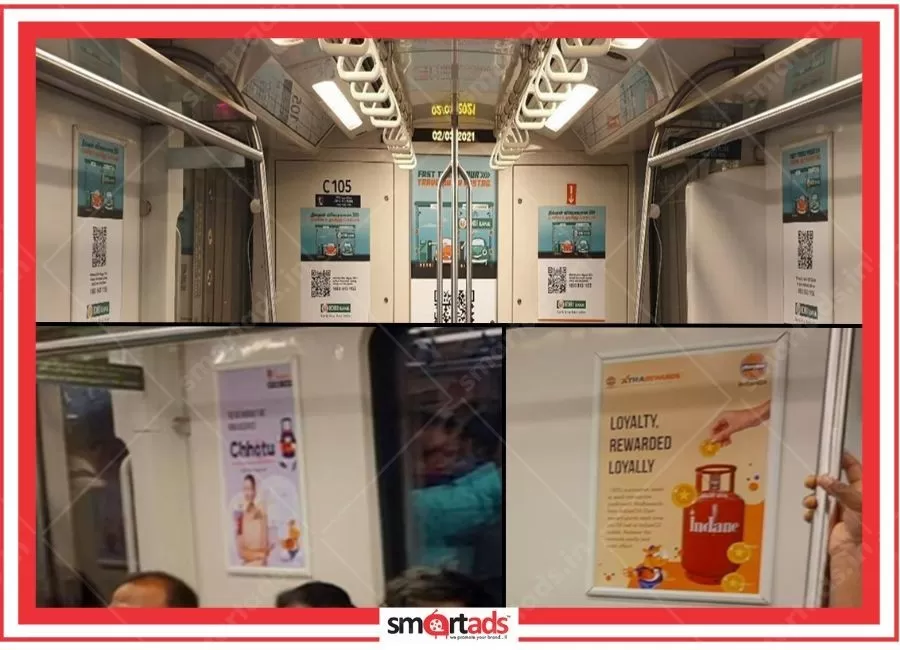
Custom
On the inside of the metro train the adv
Rate per Metro Display Cost / 1 Month
Route : Tirusulam To WIMCO Nagar
₹500000.00

20 Sec Audio
A jingle is a song or a phrase, and the
Rate per Metro Jingle Cost / 1 Month
Route :Tirusulam to WIMCO Nagar
₹400000.00

10 Sec Video
Digital screen on the metro station will
Rate per Metro Digital Display Cost / 1
Route :Tirusulam to WIMCO Nagar
₹600000.00

1 Metro Train
On the outside of the metro train the ad
Rate per Metro Display Cost / 1 Month
Route :Tirusulam to WIMCO Nagar
₹1500000.00
MEDIA REACH

MinimumQty :
1
EstimateReachPeople :
150000000
Bahadurgarh sits at a peculiar and powerful intersection — it is technically Haryana, but it functions, economically and socially, as an extension of Delhi; and the Delhi Metro Green Line has made that overlap more commercially significant than most media planners have yet appreciated. The daily commuter volume flowing between Bahadurgarh City metro station and Mundka is, frankly, one of the most underpriced captive audiences in the entire NCR advertising ecosystem. Most brands are still spending their BTL budgets on hoardings along NH-9 Rohtak Road without realising that the metro train advertising opportunity sitting right above that road delivers more dwell time, more brand recall, and — in many cases — a better return on investment per rupee spent.
The argument for metro advertising in Bahadurgarh is not just about reach — it is about the quality of that reach, which is something most outdoor advertising formats simply cannot replicate. When a commuter boards a train at Bahadurgarh City metro station or Brigadier Hoshiyar Singh station, they are locked into a journey of anywhere between 20 and 45 minutes depending on their destination; and during that entire duration, your brand is the most prominent visual stimulus in their environment. This is what media planners call a high-dwell environment, and it is genuinely rare in the cluttered OOH advertising landscape of Delhi NCR.
What a lot of people miss is the industrial dimension of the Bahadurgarh commuter base. The industrial area Bahadurgarh hosts over 2,800 medium-scale industries and approximately 200 large-scale manufacturing units — companies operating in sectors ranging from footwear and ceramics to steel pipes and glass products, with established names like Relaxo Footwear, Somany Ceramics, Surya Roshni, Hindustan National Glass, and Parle Products all having a significant presence in or around the Jhajjar district ecosystem. The workforce commuting to and from these facilities via the Green Line (Line 5) represents a target audience that is simultaneously working-class, aspirational, and economically active — which makes metro advertising in Bahadurgarh an unusually versatile medium for brands operating across both B2C and B2B categories.
At SmartAds, we always tell our clients that BTL advertising works best when the medium matches the mindset of the audience, and the Bahadurgarh metro commuter is in a particularly receptive state — they are not rushing past a billboard at 60 kilometres per hour; they are seated or standing in a clutter-free advertising environment with nothing more pressing to do than look at your brand. Our experience shows that this translates into brand recall scores that consistently outperform comparable outdoor advertising formats in the same corridor.
The Delhi Metro Green Line, officially designated Line 5 by the Delhi Metro Rail Corporation, is the only Mass Rapid Transit connection linking Bahadurgarh to the Delhi metro network, and understanding its geography is essential before any media planning conversation can begin. The line runs from Inderlok in Central Delhi all the way to Brigadier Hoshiyar Singh station — which is the terminal station located near City Park in Bahadurgarh — covering a total of 29 stations, of which the Haryana-side stations include Bahadurgarh City metro station (formerly known as Bus Stand metro station), Pandit Shree Ram Sharma metro station near the Modern Industrial Estate, and Brigadier Hoshiyar Singh metro station at the terminus. Tikri Border and Mundka serve as the transition points where Delhi gives way to the Haryana corridor, and these stations carry particularly high footfall because they function as interchange nodes for commuters switching between road and rail.
The Green Line (Line 5) is elevated through the Bahadurgarh stretch, which means the stations themselves have significant visual prominence along the NH-9 Rohtak Road corridor; and a full train wrap or exterior train branding on this line is visible not just to passengers inside the train but to motorists and pedestrians on the road below — a dual-exposure effect that most transit media formats cannot claim. DMRC advertising on this corridor effectively gives brands two audiences for the price of one: the captive audience inside the train and the passive audience on the street below.
The commuter volumes on the Green Line have grown substantially since the Bahadurgarh extension opened, with the Bahadurgarh City metro station and Brigadier Hoshiyar Singh station collectively drawing daily footfall that, according to DMRC operational data, places this corridor among the more active outer-Delhi extensions. For advertisers, this means that a campaign running on trains serving this corridor — particularly during peak hour advertising windows between 7:30 AM and 10:30 AM and again between 5:00 PM and 8:30 PM — is reaching a concentrated, repeated audience of daily commuters who will see the same creative multiple times across their weekly travel pattern, which is exactly the kind of frequency that drives brand awareness and brand recall.
Metro train advertising in Bahadurgarh is not a single format — it is a menu of options, each with a different cost structure, audience impact, and creative requirement; and choosing the wrong format for your objective is one of the most common mistakes we see brands make when they approach this medium for the first time. The broadest and most impactful option is the full train wrap, which covers the entire exterior of a metro train with a single brand creative — this is exterior train branding at its most dramatic, and it turns the train itself into a moving billboard that travels the entire Green Line corridor from Bahadurgarh to Inderlok and back, generating brand exposure across every station and every road crossing along the route.
For brands that want exterior train branding without committing to a full train wrap, partial exterior panels are available — these cover specific sections of the train's exterior, such as the side panels or the door areas, and the metro train wrap in this partial format is typically priced at a fraction of the full-wrap cost while still delivering meaningful visibility. Inside the train, interior train branding takes several forms: train interior panels placed above the windows (known as strip panels or overhead panels), door panels, and the increasingly popular full interior coach branding which wraps the ceiling, walls, and grab handles of an entire coach in a single brand theme. Interior panel branding is particularly effective for campaigns that require the audience to read a message — real estate advertising on metro trains, for example, works exceptionally well in the interior format because commuters have the time and the stillness to absorb detailed information about a project or offer.
On top of that, there are formats that most advertisers do not immediately think of when they consider metro advertising in Bahadurgarh — metro panel branding at station platforms, metro station advertising on concourse walls and entry gates, and the relatively niche but surprisingly effective smart card advertising format, where brand messaging is printed on the back of metro smart cards issued at Bahadurgarh City metro station and other Green Line stations. We have found that smart card advertising, while limited in creative size, delivers an unusually intimate brand touchpoint because the card is physically handled by the commuter every single day; and for hyperlocal advertising campaigns targeting Bahadurgarh residents specifically, this format creates a persistent daily reminder that no other transit media format can replicate.
Advertising cost is almost always the first question, and frankly speaking, the answer is more accessible than most brands expect when they first hear the words "DMRC advertising." For a full train wrap on the Green Line (Line 5), the advertising rates work out to somewhere in the ballpark of ₹8 to ₹15 lakh per month depending on the specific train assigned, the campaign duration, and whether the booking is made for a single train or multiple trains across the corridor — which is a number that surprises most first-time advertisers when they compare it to what they are spending on a single large-format hoarding on NH-9 Rohtak Road, where a premium site can cost ₹3 to ₹5 lakh per month without any of the dwell time advantages that metro train advertising delivers.
Interior train branding formats are considerably more granular in their pricing structure. Train interior panels — the overhead strip panels that run above the windows inside each coach — are typically available at rates somewhere between ₹80,000 and ₹2 lakh per coach per month, which means a brand can start its metro advertising Bahadurgarh campaign with a single-coach interior panel buy and scale up as it sees results. Metro panel branding at station level, covering platforms and concourse areas at Bahadurgarh City metro station or Brigadier Hoshiyar Singh station, works out to roughly ₹50,000 to ₹1.5 lakh per panel per month depending on the panel size and location within the station. These are indicative ranges drawn from our experience booking DMRC advertising campaigns across the Green Line; actual rates are subject to DMRC's current rate card and negotiated terms, which is why working with an experienced metro advertising agency is genuinely worth the effort.
What the advertising cost figures do not capture is the effective CPM — cost per thousand impressions — which is where metro train advertising in Bahadurgarh becomes a genuinely compelling proposition. When you divide the monthly spend by the number of commuter impressions generated across a full train wrap campaign running on a high-frequency Green Line train, the CPM works out to roughly ₹6 to ₹12, which is competitive with mid-tier digital display advertising but comes with the added advantage of zero ad-skipping, no ad-blocking, and a captive audience that cannot scroll past your creative. The GroupM TYNY Report and successive FICCI-EY Media & Entertainment reports have consistently noted that transit media in Indian metro cities delivers among the lowest effective CPMs of any out-of-home format, and the Bahadurgarh corridor is no exception to that pattern.
The commuter profile on the Delhi Metro Green Line through Bahadurgarh is more layered than a casual glance at the geography would suggest. The most obvious segment is the working-class and lower-middle-income daily commuter — factory workers, supervisors, and support staff from the industrial area Bahadurgarh who travel into Delhi for work or travel from Delhi to the HSIIDC Bahadurgarh industrial zones; and this audience is highly relevant for FMCG brands, affordable consumer durables, regional banking and insurance products, and vocational education platforms. But sitting alongside this segment on the same train are a second, equally important audience: the salaried professionals and small business owners from Bahadurgarh and Jhajjar district who commute to offices in West Delhi, Rajouri Garden, Kirti Nagar, and beyond — an audience with higher disposable income and genuine purchase intent across categories like real estate, automobiles, consumer electronics, and financial products.
The third audience segment, which most advertisers overlook entirely, is the student population. Bahadurgarh and the surrounding Jhajjar district have seen significant growth in coaching institutes, private colleges, and ed-tech enrolment over the past several years; and students commuting on the Green Line represent a target audience that is highly receptive to ed-tech metro advertising, mobile phone brands, fashion and lifestyle brands, and food delivery platforms. The IRS (Indian Readership Survey) and various BARC viewership studies have consistently shown that transit commuters in the 18–35 age bracket are among the most brand-aware and advertising-receptive audiences in the Indian market, and the Bahadurgarh metro commuter base skews heavily toward this demographic.
At SmartAds, we worked with a regional real estate developer who was launching a residential project near Bahadurgarh and was initially planning to spend their entire campaign budget on newspaper inserts and hoardings along NH-9. We suggested redirecting a significant portion of that budget toward interior train branding on Green Line trains, specifically targeting the coaches that originate from Bahadurgarh City metro station during morning peak hours. The campaign ran for 45 days; and by the end of it, the developer reported a 34% increase in site visits from commuters who specifically mentioned seeing the metro creative — which was a result that no hoarding campaign in the same corridor had delivered for them previously.
This is a debate we have internally at SmartAds almost every time a new client comes to us for metro train advertising in Bahadurgarh, and the honest answer is that neither format is universally superior — the right choice depends entirely on what the brand is trying to achieve, which is a nuance that gets lost when agencies default to recommending the most expensive option. Exterior train branding, including the full train wrap, is the format of choice when the primary objective is mass brand visibility and brand awareness — it is essentially a moving billboard that generates brand exposure across the entire Green Line corridor, and it is particularly effective for new brand launches, product announcements, and campaigns where the creative message is simple enough to be absorbed in a three-second glance.
Interior train branding, on the other hand, is where the real value lies for brands with complex messages, promotional offers, or calls to action that require the audience to actually read and process information. Train interior panels, coach wraps, and door branding all benefit from the high-dwell environment that the metro carriage creates; and our experience shows that dwell time on the Bahadurgarh–Mundka stretch averages somewhere between 18 and 25 minutes for most commuters, which is an extraordinary amount of uninterrupted brand exposure time compared to any outdoor advertising format. FMCG brands metro advertising campaigns tend to favour exterior formats for awareness, while real estate advertising metro campaigns and ed-tech metro advertising campaigns almost always deliver better results with interior formats because the audience has time to read project details, QR codes, and offer specifics.
To be fair, the most effective campaigns we have executed on the Green Line have combined both formats — a full train wrap or partial exterior train branding for the street-level and platform-level visibility, paired with interior panel branding inside the same train for the captive-audience messaging. One automotive brand we worked with ran exactly this kind of integrated metro train advertising campaign across the Green Line during a festive season launch, combining exterior train branding with interior coach panels carrying detailed feature callouts and a dealership locator QR code; and the campaign generated enquiry volumes that were roughly 2.8 times higher than their previous year's festive campaign, which had relied entirely on traditional outdoor advertising along the same corridor.
The booking process for DMRC advertising is more structured than most brands expect, and understanding the timeline is critical because the gap between "we want to advertise" and "the ad is live on the train" is typically somewhere between two and four weeks — which means campaigns need to be planned well in advance of any launch date, festive period, or product release. The first step is identifying the specific format and duration of the campaign, because DMRC's rate card and approval process differ significantly between exterior train branding, interior train branding, metro station advertising, and smart card advertising; and each format has its own creative specification requirements that need to be met before the artwork can be submitted for approval.
Once the format and duration are confirmed, the booking is formalised through an authorised DMRC advertising agency — DMRC does not typically deal directly with individual advertisers for train branding campaigns, which means working with an experienced metro advertising agency is not just convenient but functionally necessary. The agency submits the campaign brief, creative artwork, and booking documentation to DMRC's advertising cell; and DMRC then reviews the creative for compliance with its content guidelines, which we will cover in more detail in the FAQ section. The approval process typically takes between seven and fourteen working days, after which production of the vinyl wraps or printed panels begins — and production itself adds another five to seven days before installation can occur.
What a lot of people miss is that campaign duration also affects the booking process — DMRC typically requires a minimum campaign duration of 30 days for most metro train advertising formats, and longer campaigns of 90 days or more are often eligible for negotiated rates that can bring the effective advertising cost down meaningfully. At SmartAds, we manage the entire DMRC approval process for our clients, from creative compliance review to production coordination and installation supervision; and our experience with the Green Line specifically means we understand which stations and train assignments deliver the best audience quality for Bahadurgarh-focused campaigns, which is knowledge that takes years of hands-on media planning to accumulate.
Real estate is, without question, the category that has historically extracted the most value from metro train advertising in Bahadurgarh — and the reason is structural rather than coincidental. The Green Line corridor connects Bahadurgarh, which has seen significant residential development activity over the past decade, to employment centres in West Delhi and Central Delhi; and the daily commuters on this route are precisely the audience that residential developers want to reach: people who live or work near Bahadurgarh, who are aware of the area's growth trajectory, and who are actively or passively considering property purchase decisions. Interior train branding with detailed project information, location maps, and offer callouts works extraordinarily well for this category, and we have seen real estate advertising metro campaigns on this corridor generate qualified leads at a cost-per-lead that is significantly lower than comparable digital campaigns targeting the same geography.
FMCG brands with distribution in Haryana and West Delhi have also found the Green Line to be a productive advertising environment — particularly brands in the food, personal care, and household products categories that are looking to build brand awareness among the working-class and lower-middle-income audience that forms the backbone of the Bahadurgarh commuter base. Parle Products, Surya Roshni, and similar Bahadurgarh-adjacent manufacturers understand this audience intimately; and for brands looking to compete in the same retail channels, metro advertising Bahadurgarh offers a way to reach that audience at scale without the fragmentation of digital targeting. Educational institutions and ed-tech platforms targeting students in Jhajjar district and Bahadurgarh have also found metro advertising for small businesses and mid-size education brands to be a viable and cost-effective channel, particularly when campaigns are timed around admission seasons in January–February and June–July.
The industrial supplier category is one that most media planners have not yet explored on this corridor, which represents a genuine opportunity. Bahadurgarh's industrial area hosts thousands of procurement managers, plant supervisors, and business owners who commute on the Green Line; and B2B brands in categories like industrial equipment, raw materials, logistics, and business services could reach this audience through targeted metro advertising in Bahadurgarh at a fraction of what trade publications or digital B2B campaigns would cost for comparable reach. We have seen this work particularly well for a logistics company that ran a three-month interior panel campaign on Green Line trains, targeting the morning commute from Bahadurgarh City metro station — the campaign generated inbound enquiries from industrial clients who had never previously engaged with the brand through any other medium.
The most direct competitor to metro train advertising on the Bahadurgarh corridor is the large-format hoarding or unipole along NH-9 Rohtak Road — and while we are not dismissive of outdoor advertising as a medium, the comparison is not as straightforward as most advertisers assume. A premium hoarding site on NH-9 near the Bahadurgarh bypass commands rates in the range of ₹3 to ₹6 lakh per month, which on the surface appears cheaper than a full train wrap; but the effective CPM calculation tells a different story, because a hoarding generates impressions from motorists travelling at speed who have perhaps two to three seconds of brand exposure, while metro train advertising generates impressions from captive audience members who have 20 to 45 minutes of potential brand exposure in a clutter-free advertising environment. The non-traditional advertising advantage here is not just about reach — it is about the depth of that reach.
Radio advertising on stations covering the Delhi NCR market is another BTL medium that competes for the same budget, and it has the advantage of audio storytelling and frequency; but radio lacks the visual brand identity reinforcement that exterior train branding and interior train branding deliver, and it cannot be geographically targeted to the Bahadurgarh corridor with the same precision that a Green Line (Line 5) campaign provides. Cinema advertising in Bahadurgarh's local multiplex screens offers hyperlocal advertising reach but is limited by the relatively small audience size of any individual cinema hall. Metro train advertising in Bahadurgarh occupies a genuinely unique position in the BTL advertising mix: it combines the visual impact of outdoor advertising with the captive audience dynamics of cinema and the geographic precision of hyperlocal advertising — which is why, in our experience at SmartAds, it consistently outperforms single-medium alternatives when brand recall and return on investment are the primary metrics.
DMRC's content guidelines for metro train advertisements are more specific than most first-time advertisers expect, and navigating them without prior experience can add unnecessary delays to a campaign launch. The Delhi Metro Rail Corporation prohibits advertising content that is political in nature, content that promotes tobacco, alcohol, or gambling products, content that is deemed offensive or contrary to public decency standards, and content that could be construed as misleading or false advertising — all of which are standard restrictions that apply across most regulated OOH advertising environments in India. What is less commonly known is that DMRC also has specific restrictions on creative elements that could distract train operators or interfere with safety signage, which means that certain colour combinations and visual treatments that work perfectly well on a roadside hoarding may require modification before they are approved for exterior train branding.
The approval timeline, as we mentioned earlier, runs between seven and fourteen working days from the date of creative submission — but this assumes that the artwork is submitted in the correct format and at the correct resolution, which is where many campaigns lose time unnecessarily. DMRC requires high-resolution print-ready files for vinyl production, and the specific dimensions vary by format — a full train wrap has different panel dimensions from interior strip panels or door panels, and each requires a separate artwork file that accounts for the curvature and structural elements of the train carriage. Working with a metro advertising agency that has prior experience with DMRC artwork submission means these technical requirements are handled correctly the first time, which is the single most effective way to avoid delays in the approval process.
On top of that, there is a practical seasonal dimension to the DMRC approval process that most advertisers do not account for in their media planning. The period between October and December sees a significant spike in metro train advertising bookings across all Delhi Metro lines, driven by the festive season and the year-end campaign push; and during this period, both DMRC's approval timeline and the production capacity of vinyl printing vendors can stretch beyond their standard durations. At SmartAds, we advise clients planning festive season metro advertising in Bahadurgarh to begin the booking and approval process no later than mid-September, which gives enough buffer to absorb any delays without compromising the campaign launch date.
The evidence for metro train advertising's brand recall performance is not just anecdotal — it is supported by multiple industry studies and post-campaign measurement exercises that have been conducted across Indian metro cities over the past several years. TAM AdEx data and various transit media effectiveness studies have consistently shown that interior train branding achieves unaided brand recall scores in the range of 40 to 60 percent among regular commuters who have been exposed to a campaign for 30 days or more — which is a figure that most digital display campaigns and outdoor advertising formats struggle to match, particularly when the comparison is made on an equivalent budget basis. The clutter-free advertising environment of the metro carriage is the primary driver of this performance, because the commuter has no competing visual stimuli of comparable scale to distract from the brand message.
Return on investment for metro advertising in Delhi NCR is, frankly, difficult to measure with the same precision as digital campaigns — there is no click-through rate or conversion pixel for a train interior panel; and this is a legitimate limitation that we acknowledge when advising clients. What we have found, through post-campaign surveys and sales correlation analysis across multiple DMRC advertising campaigns we have managed, is that metro train advertising consistently delivers measurable lifts in brand awareness and purchase consideration among the commuter audience, with the strongest effects seen in campaigns that run for 60 days or more and combine exterior train branding for awareness with interior train branding for message depth. One FMCG client we worked with ran a 90-day campaign across the Green Line (Line 5) corridor, combining a full train wrap with interior panel branding, and their brand tracking study showed a 28-percentage-point increase in spontaneous brand awareness among Green Line commuters — a result that the client's own marketing team described as the highest single-campaign awareness lift they had recorded in five years.
The FICCI-EY Media & Entertainment Report has repeatedly highlighted transit media as one of the fastest-growing segments within the broader OOH advertising category in India, and the Dentsu e4m Report on Indian advertising expenditure has noted that brands which integrate transit media into their media mix consistently report higher overall campaign effectiveness scores than those relying solely on traditional outdoor or digital channels. For brands operating in the Delhi NCR market — and particularly for those with a specific interest in the Bahadurgarh and Jhajjar district consumer base — metro train advertising on the Green Line represents a medium that is simultaneously underpriced relative to its effectiveness and underutilised relative to its strategic potential.
Q: Which metro line connects Bahadurgarh to Delhi, and how many stations does it cover?
The Delhi Metro Green Line, officially Line 5 of the Delhi Metro Rail Corporation network, is the sole Mass Rapid Transit connection between Bahadurgarh and Delhi. The line runs from Inderlok station in Central Delhi to Brigadier Hoshiyar Singh station in Bahadurgarh, covering a total of 29 stations across the full corridor. The Bahadurgarh-side stations on the Green Line include Pandit Shree Ram Sharma metro station near the Modern Industrial Estate, Bahadurgarh City metro station (formerly known as Bus Stand metro station), and Brigadier Hoshiyar Singh metro station at the terminus near City Park. Tikri Border and Mundka serve as the key transition stations between the Delhi and Haryana sections of the line, and both carry significant footfall from commuters switching between the metro and road-based transport options.
Q: What types of metro train advertising formats are available for brands in Bahadurgarh?
The range of formats available through DMRC advertising on the Green Line is broader than most advertisers initially realise. At the most impactful end of the spectrum is the full train wrap, which covers the entire exterior of a metro train in a single brand creative and turns the train into a moving billboard across the entire Green Line corridor. Partial exterior train branding covers specific sections of the train's exterior — side panels, door areas, or end panels — and is available at lower rates than a full train wrap. Inside the train, interior train branding options include overhead strip panels above windows, door panels, full coach interior wraps, and grab-handle branding. At the station level, metro station advertising covers platform panels, concourse walls, entry gate branding, and floor graphics at Bahadurgarh City metro station and Brigadier Hoshiyar Singh station. Smart card advertising, where brand messaging is printed on the reverse of DMRC metro smart cards, is a niche but effective format for hyperlocal advertising campaigns targeting Bahadurgarh commuters specifically.
Q: How much does metro train advertising cost in Bahadurgarh in 2025–26?
Advertising rates for DMRC advertising on the Green Line vary by format, duration, and the specific train or station assignment. A full train wrap is typically priced somewhere in the range of ₹8 to ₹15 lakh per month, depending on the train and the campaign duration. Interior train branding through overhead strip panels or door panels works out to roughly ₹80,000 to ₹2 lakh per coach per month, which makes it accessible for brands with more modest budgets. Metro station advertising panels at Bahadurgarh City metro station or Brigadier Hoshiyar Singh station are typically priced between ₹50,000 and ₹1.5 lakh per panel per month. These figures are indicative benchmarks drawn from our experience at SmartAds; actual rates are subject to DMRC's current rate card and campaign-specific negotiations, and we strongly recommend consulting with an experienced metro advertising agency to get accurate current pricing for your specific campaign requirements.
Q: How do I book metro train advertising in Bahadurgarh through DMRC?
Metro train advertising in Bahadurgarh is booked through DMRC's authorised advertising channel, which in practice means working with an accredited metro advertising agency rather than approaching DMRC directly. The process begins with defining the campaign format, duration, and creative approach; after which the agency submits the booking request along with print-ready artwork to DMRC's advertising cell. DMRC reviews the creative for compliance with its content guidelines, a process that typically takes seven to fourteen working days. Once approved, vinyl production and installation take an additional five to seven days, bringing the total lead time from booking to campaign live date to somewhere between two and four weeks. Minimum campaign duration for most DMRC advertising formats is 30 days, and longer campaigns of 90 days or more often qualify for negotiated rates.
Q: What is the difference between interior panel branding and exterior train wrap on the Green Line?
Interior panel branding refers to advertising placements inside the metro train carriage — overhead strip panels above windows, door panels, and full coach wraps — which are seen exclusively by passengers travelling inside the train. Exterior train branding, including the full train wrap, is applied to the outside surface of the train and is visible to people on station platforms, road crossings, and streets below the elevated Green Line track. The fundamental difference in advertising impact is one of dwell time versus reach: interior train branding benefits from the high-dwell environment of the metro carriage, where commuters have 20 to 45 minutes of uninterrupted exposure to the brand message; exterior train branding generates broader reach by being visible to a much larger audience — including non-commuters — but with significantly shorter individual exposure times. The best campaigns on the Green Line typically combine both formats to capture both the mass reach of exterior branding and the message depth of interior branding.
Q: Which businesses or industries benefit most from metro train advertising in Bahadurgarh?
Real estate developers with projects in and around Bahadurgarh consistently extract the highest measurable ROI from metro train advertising on the Green Line, because the commuter audience on this corridor is precisely the demographic most likely to be considering residential property in the area. FMCG brands targeting the working-class and lower-middle-income consumer base of Bahadurgarh and Jhajjar district also perform strongly, as do educational institutions and ed-tech platforms targeting the student commuter segment. Automotive brands, consumer electronics companies, financial services providers, and retail chains with stores in West Delhi or Bahadurgarh have all found the Green Line to be a productive advertising environment. The industrial supplier and B2B services category is an emerging opportunity on this corridor — the concentration of industrial area Bahadurgarh businesses and their workforce on the Green Line creates a unique B2B advertising audience that has not yet been fully exploited by most media planners.
Q: How long does a typical metro train advertising campaign run in Bahadurgarh?
DMRC advertising formats on the Green Line typically require a minimum campaign duration of 30 days, and most brands find that 45 to 90 days is the optimal campaign window for achieving meaningful brand recall and awareness lift. Shorter campaigns of 30 days are effective for event-driven or promotional advertising with a specific deadline, such as a festive season sale or a product launch event. Longer campaigns of 90 days or more are better suited to brand-building objectives, where the goal is sustained top-of-mind awareness among the daily commuter audience. Our experience at SmartAds shows that the brand recall curve for metro train advertising steepens significantly between the 30-day and 60-day marks, which means that brands which commit to a minimum 60-day campaign duration consistently report better outcomes than those who treat metro advertising as a short-burst medium.
Q: What is the audience demographic of Delhi Metro Green Line commuters passing through Bahadurgarh?
The commuter demographic on the Green Line through Bahadurgarh is a genuinely mixed audience, which is one of its strengths as an advertising environment. The largest segment is working-age adults between 18 and 45 years, spanning factory workers and industrial supervisors from the Bahadurgarh industrial area, salaried professionals commuting to offices in West Delhi and Central Delhi, students travelling to colleges and coaching institutes, and small business owners and traders. The audience skews male but has a meaningful female commuter component, particularly among the student and professional segments. Income levels span lower-middle to upper-middle class, with the industrial workforce segment at the lower end and the professional commuter segment at the higher end. This demographic breadth makes the Green Line (Line 5) a versatile advertising environment for brands across multiple categories, from mass-market FMCG to aspirational real estate and financial products.
Q: Is metro train advertising in Bahadurgarh better than outdoor hoardings on NH-9?
The honest answer is that it depends on the campaign objective, which is a nuance that gets lost in the instinct to compare media on cost alone. For mass brand awareness campaigns where the goal is maximum reach across the broadest possible audience, a premium hoarding on NH-9 Rohtak Road has the advantage of reaching both metro commuters and the much larger volume of private vehicle traffic on the road. For campaigns where brand recall, message depth, and audience quality are the primary objectives, metro train advertising in Bahadurgarh is demonstrably superior — the captive audience, the clutter-free advertising environment, and the extended dwell time combine to produce brand recall scores that roadside hoardings simply cannot match. The most effective media plans for Bahadurgarh-focused brands typically alloc
