
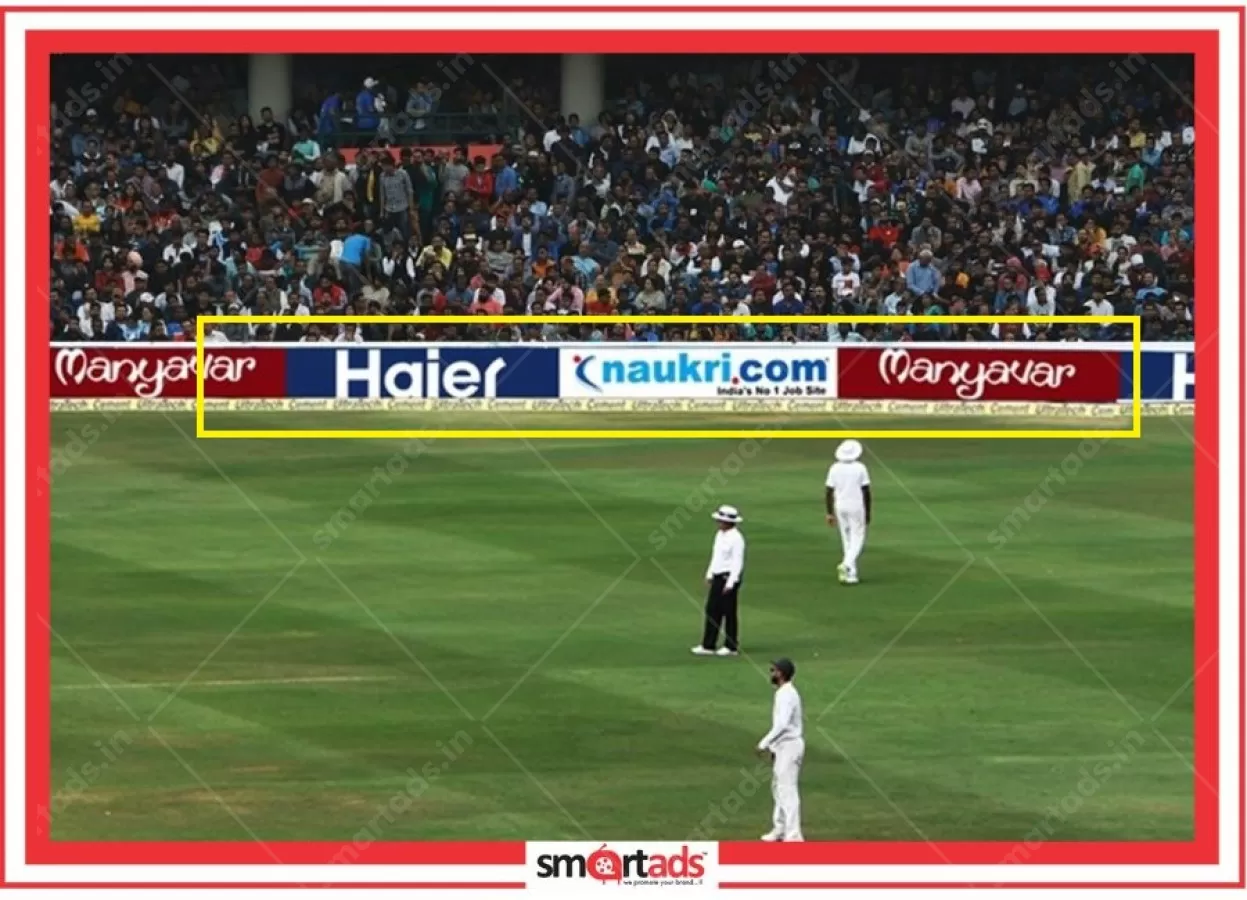
Silver HD Perimeter Signage
Various Sizes
1 ball in every 10 Balls : 50% of the Gr
Rate per Digital Screen / Per match
At Time Only 3 Display Name.
₹1100000.00
Showing 1 to 4 of 4 Results
MEDIA DETAILS
Various Sizes
1 ball in every 10 Balls : 50% of the Gr
Rate per Digital Screen / Per match
At Time Only 3 Display Name.
₹1100000.00
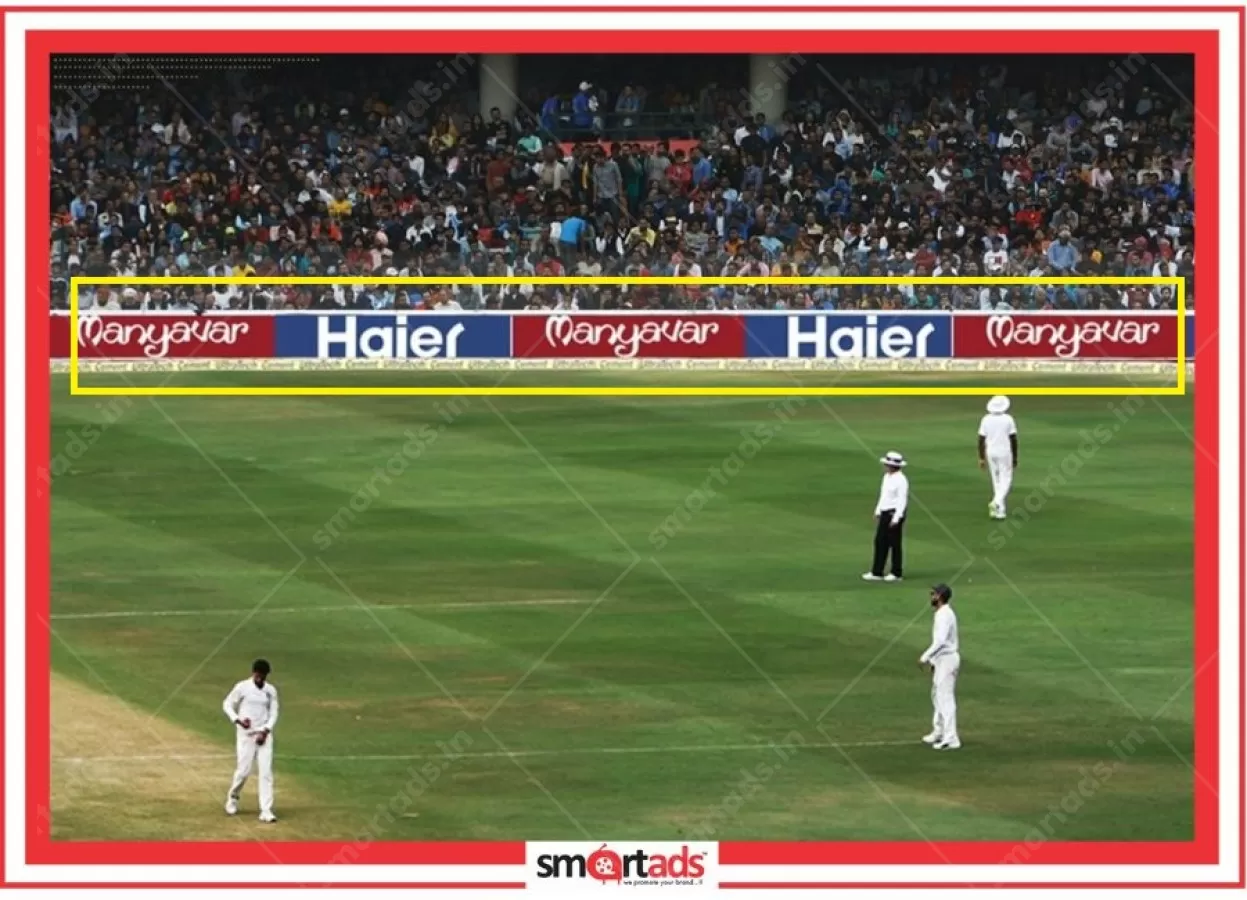
Various Sizes
1 Ball In Every 10 Balls : 50% Of The Gr
Rate per Digital Screen / Per match
At Time Only 2 Display Name.
₹1700000.00
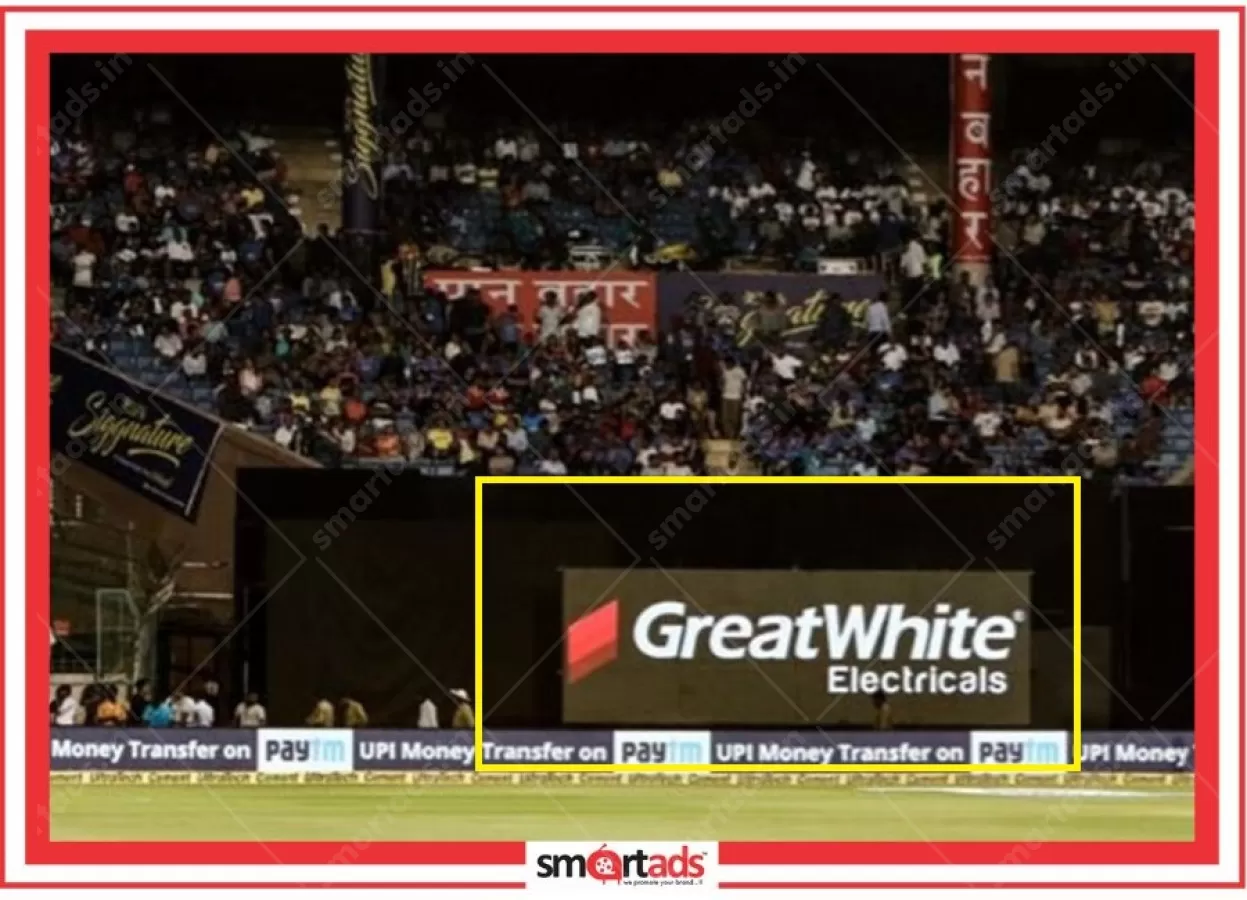
Various Sizes
5 Overs Per ODI Match , 2 Overs Per T20
Rate per Digital Screen / Per match
At Time Only 1 Display Name.
₹1150000.00
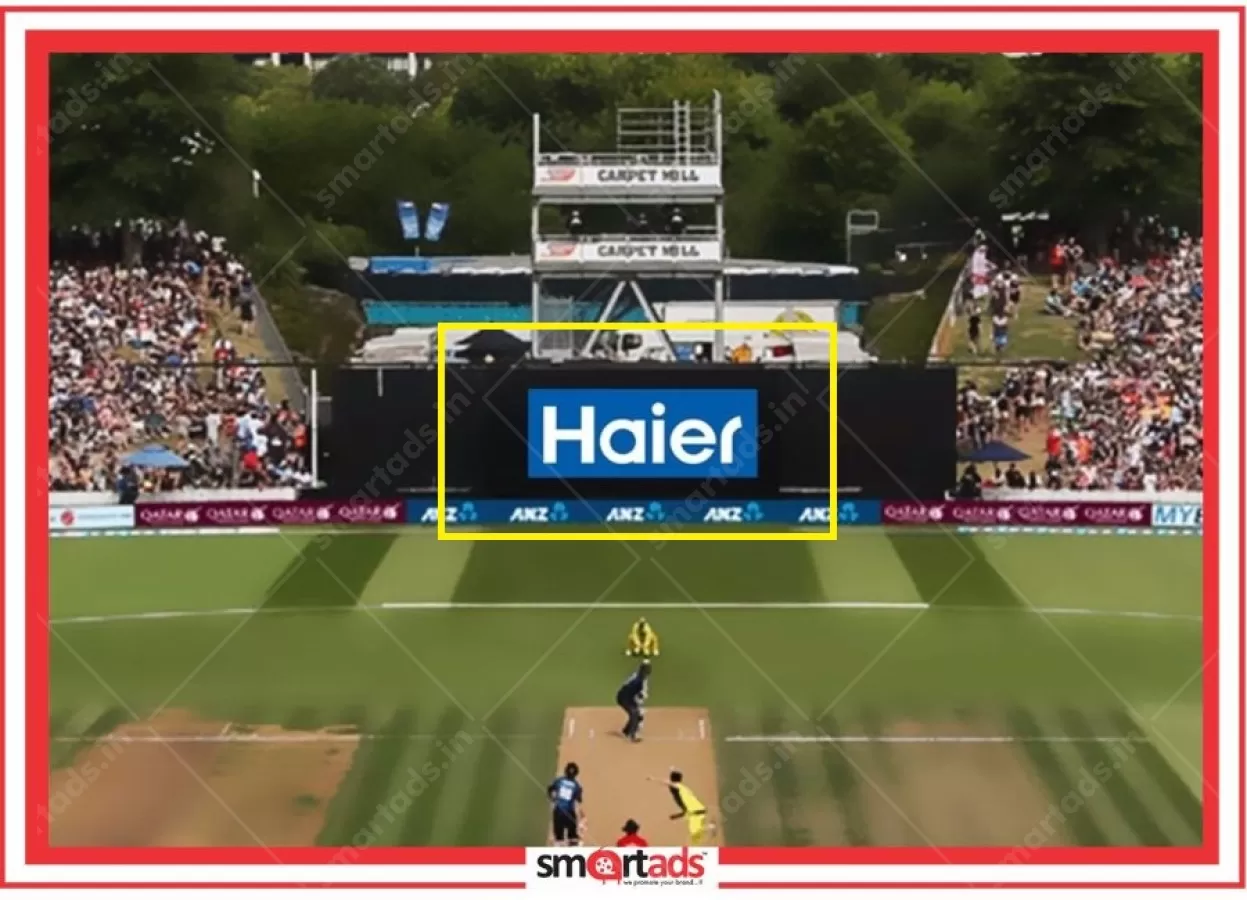
Various Sizes
5 Overs Per ODI Match , 2 Overs Per T20
Rate per Digital Screen / Per match
At Time Only 1 Display Name.
₹1150000.00
MEDIA REACH

MinimumQty :
1
EstimateReachPeople :
50000

Barsapara Cricket Stadium — officially the Dr. Bhupen Hazarika Cricket Stadium — seats close to 46,000 spectators, which makes it one of the largest cricket venues in the country by capacity, yet it remains one of the most underutilised advertising canvases in Indian sports marketing. The brands that have figured this out are quietly building enormous brand recall across Assam and the broader Northeast, while their competitors are still debating whether Guwahati deserves a line item in the media plan. We have seen this gap widen year after year, and frankly speaking, the window for early-mover advantage is still open — but not for long.
Guwahati occupies a position in the Indian media landscape that very few cities can claim — it is simultaneously the commercial capital of Assam, the political and cultural nerve centre of the Northeast, and the gateway to a region of roughly 45 million people spread across eight states. When cricket is played at Barsapara Cricket Stadium, those 46,000 seats are not filled by Guwahati residents alone; fans travel from Meghalaya, Nagaland, Manipur, Mizoram, Tripura, Arunachal Pradesh, and even parts of West Bengal to watch live cricket, which means a single match day at ACA Stadium delivers a geographic spread of audience that no billboard or radio spot in Guwahati can replicate.
The thing is, most brands planning outdoor advertising in Guwahati think in terms of hoardings on NH-37, mall branding at Paltan Bazaar, or transit advertising on city buses — all of which are legitimate channels, but none of which creates the kind of emotional context that a cricket match does. At SmartAds, we always tell our clients that the environment in which an advertisement is seen is as important as the advertisement itself; a brand seen on a perimeter board during a high-stakes T20I is processed by the brain very differently from the same brand seen on a highway hoarding. The adrenaline, the crowd noise, the shared experience — these are not intangible benefits, they are measurable drivers of brand recall, and BARC viewership data consistently shows that audiences retain brand messages encountered during live sports at significantly higher rates than those encountered during standard programming.
On top of that, the Assam Cricket Association has invested substantially in Barsapara's infrastructure over the past several years, which has resulted in a stadium that now regularly hosts Indian Premier League matches, T20 Internationals, ODIs, and has been selected as one of the venues for the ICC Women's Cricket World Cup 2025 — a historic event for north-eastern India that is expected to draw international media attention and broadcast reach far beyond what a typical domestic fixture generates. For a brand looking to establish or deepen its presence across Northeast India, there is arguably no single advertising investment that delivers comparable density of reach, emotional resonance, and multi-platform visibility.
The menu of in-stadium branding options at ACA Stadium is considerably richer than most brand managers realise when they first enquire, and the formats range from the highly visible to the surprisingly intimate. Perimeter boards — both static and LED — run along the boundary of the playing field and are the most recognised form of stadium advertising; at Barsapara, these perimeter boards are positioned to face both the live audience in the stands and the broadcast cameras, which means a single placement simultaneously delivers live audience impressions and television viewership exposure. The LED screens that form part of the perimeter display system cycle through multiple brand creatives during a match, which allows advertisers to run different messages at different points in the game — a flexibility that static boundary boards simply cannot offer.
Beyond the perimeter, the options extend into what we would describe as the "ground-level" category — ground painting, outfield branding, and pitch mat advertising, all of which are positioned directly within the camera frame and are therefore broadcast-visible throughout the match. Ground painting at the centre of the outfield, in particular, tends to generate disproportionate brand exposure relative to its cost, because the spider-cam and aerial broadcast shots that are standard in modern cricket coverage keep returning to the outfield logo throughout the day. Sight screen advertising, which appears at both ends of the pitch behind the bowler's arm, is another format that receives consistent broadcast camera time — every delivery bowled means the camera is pointed directly at the sight screen, which makes it one of the most repetitively exposed surfaces in the entire stadium.
Gallery hoardings and stadium hoardings positioned around the seating tiers, dugout branding along the players' enclosure, and boundary rope branding that runs the full circumference of the playing field round out the portfolio of in-stadium advertising formats available at Barsapara Cricket Stadium. Each of these serves a slightly different strategic purpose — gallery hoardings work best for brand awareness among the live audience, while dugout branding and boundary rope branding tend to get picked up by close-up broadcast cameras during player interviews and fielding shots. A well-constructed stadium branding package at ACA Stadium typically combines two or three of these formats, which we have found delivers significantly better brand recall than any single format in isolation.
Advertising rates at Barsapara Cricket Stadium vary considerably depending on the format, the match type, and the duration of the campaign — and this is where a lot of brands either overpay or walk away from a genuinely valuable opportunity because they received a number without context. For a standard domestic match — a Ranji Trophy game or a Vijay Hazare fixture — the entry point for in-stadium branding is relatively accessible, somewhere in the ballpark of a few lakhs for a basic perimeter board placement, which makes it a viable option even for regional brands with modest budgets.
The pricing structure shifts meaningfully when the match type changes. For an international cricket match — a T20I or ODI at ACA Stadium — the rates for premium formats like LED perimeter boards and outfield branding can work out to somewhere between fifteen and forty lakhs per match depending on the specific placement and the package negotiated, which reflects the substantially larger broadcast audience and the heightened commercial value of the event. IPL advertising at Barsapara, when Rajasthan Royals use the stadium as a home venue, operates on a different pricing tier altogether — the Indian Premier League's broadcast reach, the celebrity quotient, and the premium audience demographics that IPL attracts justify rates that are typically two to three times higher than a comparable international fixture, and brands that have experienced both will tell you the ROI calculation still works in favour of IPL for certain categories.
What a lot of people miss is that the total cost of a stadium advertising campaign at ACA Stadium is not simply the rate card figure — it includes creative production, permissions from the Assam Cricket Association, and in some cases BCCI-level approvals for certain formats during international matches, which can add both time and cost to the process if not planned for in advance. At SmartAds, we have built relationships with the relevant stakeholders at ACA and with the event management teams that handle IPL match logistics at Barsapara, which means our clients avoid the delays and cost overruns that tend to happen when brands try to navigate the permissions process independently. The stadium advertising cost in Guwahati, when managed through an experienced agency, almost always comes in more efficiently than the same campaign booked directly.
Below-the-line advertising at a cricket stadium is a category that confuses a surprising number of brand managers, largely because the term "BTL" is often associated with trade promotions and point-of-sale materials rather than with sports venues. The distinction matters here: BTL advertising in the context of cricket stadium advertising in Guwahati refers to non-broadcast, non-mass-media activations that create direct engagement with the live audience — fan zones, product sampling at stadium entry gates, branded merchandise distribution, experiential activations in the concourse areas, and on-ground brand activation events that happen before or after the match.
The value of BTL advertising at Barsapara Cricket Stadium lies in its ability to create a physical interaction between the brand and the consumer in a high-engagement environment, which is something that no amount of television or digital spend can replicate. We worked with a consumer electronics brand — a regional distributor covering Assam and neighbouring states — that ran a product demonstration zone at ACA Stadium during a T20I, and the quality of leads and brand conversations generated in a single match day exceeded what their digital campaign had produced over the previous month. The context of cricket, the dwell time of fans who arrive early and leave late, and the sheer density of the target demographic in one physical space make stadium concourse activations genuinely effective in ways that are hard to achieve elsewhere.
Non-traditional advertising at cricket stadiums also includes formats like branded seat covers, staircase branding, washroom advertising, and food court branding — all of which are BTL formats that fall outside the traditional perimeter board and hoarding category. These are particularly useful for brands that want consistent, repeated exposure to the same fan over the course of a four-to-eight-hour match day, rather than the brief but high-impact exposure that a perimeter board delivers. Frankly speaking, the most effective non-traditional advertising campaigns we have planned at ACA Stadium have always combined a broadcast-visible format like LED perimeter boards with at least one BTL activation element, because the two work synergistically — the broadcast format builds awareness, and the on-ground activation converts that awareness into a tangible brand experience.
The perimeter LED display system at Barsapara Cricket Stadium is the technological backbone of the stadium's advertising infrastructure, and understanding how it works is essential for any brand planning to invest in this format. Unlike static boundary boards, which display a single creative for the duration of a match, the LED screens that run along the perimeter are managed by a central content management system which allows multiple advertisers to share the same physical space by rotating their creatives on a timed cycle — typically somewhere between fifteen and thirty seconds per brand per rotation, depending on the number of advertisers sharing the board in a given match.
This rotation system has important implications for how brands should think about their creative strategy. A fifteen-second window on a perimeter LED board at ACA Stadium is not a television commercial — it is a brand impression, and the creative needs to be designed accordingly, with bold colours, minimal text, and a single clear message that can be absorbed in the time it takes for a fielder to run to the boundary. We have seen campaigns underperform at Barsapara not because the placement was wrong but because the creative was lifted directly from a print ad or a digital banner, which does not translate to the LED perimeter environment. The brands that get the best brand visibility from LED screens at cricket stadiums are those that design specifically for the format — high contrast, large logo, one message.
Digital screens inside the stadium — the large scoreboards and in-stadium display panels that face the audience in the stands — offer a complementary advertising opportunity which is distinct from the perimeter LED boards in that it is primarily audience-facing rather than camera-facing. These screens are used for advertising during drinks breaks, strategic time-outs, and innings intervals, which are the moments when the live audience's attention is most available. The combination of perimeter LED boards for broadcast visibility and in-stadium digital screens for live audience engagement represents what we consider the most complete form of stadium advertising at ACA Stadium — and it is a combination that the most experienced brands in the cricket advertising space have been using for years.
The live audience figure of 46,000 spectators per match is the number that tends to anchor most conversations about stadium advertising in Guwahati, and it is genuinely impressive for a city of Guwahati's size — but it is also, in some ways, the smaller part of the reach story. The broadcast audience for an international cricket match played at Barsapara Cricket Stadium runs into the tens of millions, depending on the match, the competing teams, and the broadcast platform; BARC data for India-Pakistan T20Is, for instance, has historically shown live viewership figures that dwarf the combined live audience of every stadium in the country put together, and even a lower-profile bilateral series between India and a visiting team can deliver broadcast impressions in the range of fifteen to thirty million viewers per match day.
The geographic composition of both the live and broadcast audience is particularly relevant for brands targeting Northeast India. A match at ACA Stadium draws viewers from across Assam and the neighbouring states — Meghalaya, Nagaland, Manipur, Mizoram, Tripura, Arunachal Pradesh — who are watching on Star Sports or Hotstar, which means the broadcast exposure from a single match effectively delivers a regional media buy across north-eastern India without the complexity of planning separate campaigns in eight different states. For a brand that wants to establish presence across the Northeast, this is a remarkably efficient way to achieve geographic coverage, and it is a point that gets overlooked in most discussions of stadium advertising cost versus value.
The demographic profile of the live audience at Barsapara Cricket Stadium skews strongly towards males between eighteen and thirty-five, with a meaningful secondary audience of families and older fans — a profile that aligns well with categories like consumer electronics, automobiles, beverages, financial services, and FMCG. Television viewership data from BARC consistently shows that cricket audiences in the Northeast have above-average household income indices compared to the national average for the region, which reflects the aspirational consumer profile that makes Guwahati such an attractive market for brands that have historically underinvested in northeast India. The fan engagement that cricket generates — the loyalty, the emotional investment, the repeat attendance — also means that the brand recall generated by in-stadium branding at Barsapara tends to persist well beyond the match day itself.
This is a question we get asked constantly, and the honest answer is that IPL advertising at Barsapara and international cricket match advertising at the same venue are almost two different products, even though the physical formats — perimeter boards, LED screens, outfield branding — are largely the same. The Indian Premier League, when it brings Rajasthan Royals to Guwahati as a home team, creates a commercial environment that is categorically different from a bilateral series: the production values are higher, the broadcast reach is more concentrated and intense, the celebrity presence generates social media amplification, and the audience's emotional investment in their team creates a brand association dynamic that is unique to the IPL format.
Rajasthan Royals, as the franchise that has historically used Barsapara Cricket Stadium as one of its home venues, brings with it a set of team sponsors and official partners whose branding takes precedence in certain zones of the stadium — which means that independent advertisers need to plan their placements carefully to avoid zones that are contractually reserved for franchise sponsors. This is a nuance that most brands discover too late when they try to book IPL advertising without agency support; the available inventory at an IPL match is more constrained than at a domestic or international fixture, which is part of why the rates are higher and why early booking is essential. At SmartAds, we typically advise clients who want IPL match advertising at northeast India venues to begin the planning process at least three to four months before the season starts.
International matches — T20Is and ODIs at ACA Stadium — offer a different value proposition: the inventory is generally more available, the permissions process is more straightforward, and the match schedule is known further in advance, which allows for more deliberate creative planning. Test match advertising at Barsapara, while less frequent, offers five days of sustained brand exposure to a highly engaged audience — the CPM works out to a figure that surprises most first-time advertisers when they calculate it against the total impressions delivered across five broadcast days. What we tell our clients is that the right match type depends entirely on the brand's objective: IPL for high-intensity, short-duration brand impact; internationals for sustained reach and regional credibility; and domestic matches for cost-efficient local market penetration.
Ground painting and outfield branding at ACA Stadium represent some of the most broadcast-visible advertising formats in the entire stadium, and they are also among the formats that brands most frequently overlook when they are first exploring cricket stadium advertising in Guwahati. The outfield of Barsapara Cricket Stadium — the large expanse of grass between the pitch and the boundary rope — is visible in virtually every wide-angle broadcast shot, which means a logo painted or stencilled onto the outfield surface appears on television screens throughout the match without any rotation or time-sharing with other advertisers.
The technical execution of ground painting requires coordination with the ground staff and the match officials, and the Assam Cricket Association has specific guidelines about the size, placement, and colours of outfield branding to ensure that it does not interfere with the playing surface or the visibility of the pitch markings. Typically, outfield logos are placed in the areas between the pitch and the boundary at the square-leg and cover-point positions, which are the zones most frequently captured in broadcast wide shots. Pitch mat advertising — the branded mats placed at the crease ends during breaks in play — is another format in this category, which gets picked up by close-up cameras during pitch inspections and drinks breaks.
Boundary rope branding, which involves placing branded sleeves or panels along the boundary rope itself, is one of the most cost-effective forms of outfield branding available at cricket stadiums because it combines broadcast visibility with live audience visibility at the boundary edge. We have found that brands in the beverages and FMCG categories particularly benefit from boundary rope branding at Barsapara, because the boundary rope is at eye level for fans seated in the lower tiers and is frequently in frame during fielding shots and boundary celebrations — precisely the high-emotion moments when brand recall is at its peak.
The booking process for cricket stadium advertising in Guwahati is more structured than most brands expect, and it involves multiple stakeholders depending on the match type and the specific format being booked. For domestic matches organised by the Assam Cricket Association, the primary point of contact is the ACA itself, which manages the commercial rights for non-BCCI events at Barsapara Cricket Stadium; for international matches and BCCI-sanctioned events, certain advertising rights are managed centrally by the BCCI's commercial arm, while others remain with the host association. IPL advertising rights are a further layer of complexity, because the franchise — Rajasthan Royals — controls certain commercial zones within the stadium during IPL matches, which means that some formats require franchise approval in addition to ACA and BCCI clearances.
The practical implication of this multi-stakeholder structure is that the booking timeline for cricket stadium advertising in Guwahati is longer than most brands budget for, particularly for high-profile matches. We have seen brands approach us six weeks before an international match hoping to secure perimeter LED board placement, only to find that the premium inventory has already been committed — not because the stadium was overbooked, but because the permissions and creative approval process requires time that cannot be compressed. The safest approach, which we recommend to all our clients, is to begin the enquiry process at least eight to twelve weeks before the target match date, which allows adequate time for format selection, rate negotiation, creative development, ACA approval, and production.
For brands that are new to cricket ground advertising in Assam, working through an experienced advertising agency in Guwahati is genuinely the most efficient path — not because the process is impossible to navigate independently, but because the relationships, the knowledge of available inventory, and the familiarity with ACA's approval requirements translate directly into time and cost savings. At SmartAds, we manage the end-to-end booking process for cricket stadium advertising in Guwahati across all match types, which means our clients deal with a single point of contact rather than juggling multiple approvals across the ACA, BCCI, and franchise stakeholders simultaneously.
The honest answer is that cricket stadium advertising in Guwahati is not a universal solution — it works extraordinarily well for certain brand categories and objectives, and less well for others, and the brands that get the best ROI are those that approach it with a clear strategic rationale rather than a vague desire to be associated with cricket. Consumer categories that have consistently performed well in our experience include automobiles and two-wheelers, consumer electronics and smartphones, beverages (both alcoholic and non-alcoholic, subject to category regulations), financial services including insurance and banking, e-commerce and quick commerce platforms, telecom, and FMCG brands targeting the eighteen-to-thirty-five male demographic.
Regional brands based in Guwahati or Assam have a particular strategic reason to consider stadium advertising at Barsapara — the association with the home team and the local cricket identity creates a brand-community alignment that national brands cannot authentically claim. We worked with a regional real estate developer in Guwahati who ran a stadium hoarding campaign across three international matches at ACA Stadium, and the brand recognition uplift measured in their post-campaign survey among Guwahati residents was substantially higher than what their outdoor advertising in the city had achieved over the previous six months. The sports marketing context gave the brand a credibility and a cultural relevance that traditional OOH advertising simply does not generate.
National brands entering or expanding in Northeast India also find cricket stadium advertising at Barsapara particularly effective as a market entry signal — the visibility at a high-profile venue communicates scale and seriousness to a regional audience that has historically felt underserved by national advertisers. One automotive brand we worked with used a stadium branding package at ACA Stadium during a T20I series as the anchor of their Northeast India launch campaign, combining perimeter LED boards with a brand activation in the stadium concourse; the campaign generated dealer enquiries across five northeastern states within the week following the match, which was a result that their regional media team had not anticipated from a single event-based activation.
This is the question that, in our experience, most efficiently converts a sceptical brand manager into a believer in cricket stadium advertising — because the answer reveals a fundamental truth about the economics of this medium that is not immediately obvious. When a brand places a perimeter board or an outfield logo at Barsapara Cricket Stadium during an international match, it is not buying a single-channel advertising placement; it is simultaneously buying live audience impressions from 46,000 spectators in the stadium and broadcast impressions from the television viewership audience, which can number in the tens of millions depending on the match. The effective CPM, when calculated against the combined live and broadcast audience, is a number that compares very favourably with standalone television advertising or standalone OOH advertising in Guwahati.
The broadcast visibility of in-stadium branding at ACA Stadium is a function of camera positioning and broadcast production standards, which have improved significantly as Barsapara has become an established international venue. The perimeter LED boards are positioned at the height and angle that broadcast cameras are calibrated to capture, which means that a brand on the perimeter boards at Barsapara will appear clearly in the broadcast feed on Star Sports and on Hotstar's streaming platform — reaching audiences not just across Northeast India but across the country and, for India home internationals, across the global cricket-watching diaspora. Television viewership data from BARC for matches played at ACA Stadium shows that the broadcast audience skews strongly towards the Northeast, which makes the reach particularly valuable for brands with a regional focus.
What we always clarify for clients is that the broadcast visibility of in-stadium branding is not guaranteed to be identical across all formats or all camera angles — outfield logos and perimeter boards in the camera-facing zones get the most broadcast exposure, while gallery hoardings and upper-tier stadium hoardings are primarily live-audience-facing. Understanding this distinction is essential for allocating budget across formats, and it is the kind of nuance that separates a well-planned stadium advertising campaign from one that simply buys whatever inventory is available. The FICCI-EY Media and Entertainment Report has consistently highlighted sports as one of the highest-ROI advertising environments in India, and the dual-reach characteristic of in-stadium branding is a significant part of why that finding holds true.
The landscape of advertising agencies in Guwahati that handle cricket stadium advertising and in-stadium branding is smaller than the market opportunity deserves, which is both a challenge and an opportunity for brands looking to advertise at Barsapara Cricket Stadium. Local agencies with OOH experience — including established players in the Guwahati outdoor advertising market — have relationships with the ACA and familiarity with the local regulatory environment, but may lack the national-level media buying infrastructure needed to negotiate effectively for high-value formats during IPL or international matches. National platforms that aggregate stadium advertising inventory exist, but they typically lack the ACA-specific local knowledge and the on-ground presence needed to manage a campaign at Barsapara with the attention it deserves.
At SmartAds, we operate across 500+ Indian cities including Guwahati and the broader Northeast, which means we combine the national buying scale and industry relationships of a full-service media agency with the local market knowledge that makes a real difference in execution. Our experience managing cricket stadium advertising campaigns in Guwahati spans domestic, international, and IPL match formats at ACA Stadium, and we have developed a working understanding of the ACA's approval process, the available inventory across match types, and the creative requirements for each format — knowledge that we put directly to work for our clients rather than charging for as a discovery exercise.
For brands evaluating cricket stadium advertising agency options in Guwahati, the questions worth asking any agency are: Do they have direct relationships with the ACA or with the event management companies that handle match-day operations at Barsapara? Can they provide rate benchmarks across match types rather than just a single quote? And can they manage the creative production requirements — including the specific dimensions and file formats required for LED perimeter boards — in-house or through established production partners? These are the practical differentiators that determine whether a campaign actually runs smoothly or gets mired in last-minute logistics.
Sports marketing ROI is a topic that generates more debate than almost any other in the media planning world, largely because the measurement frameworks are less standardised than those for digital or television advertising — but the evidence, when examined carefully, is consistently favourable for in-stadium branding at high-profile cricket venues. The GroupM TYNY Report and the Dentsu e4m Report have both highlighted sports as a disproportionately high-growth advertising category in India, with brands in the sports marketing space reporting higher brand recall scores, stronger purchase intent lift, and better net promoter score improvements than comparable investments in traditional media.
The ROI calculation for cricket stadium advertising in Guwahati specifically benefits from the Northeast India market context: this is a region where advertising clutter is significantly lower than in metros like Mumbai or Delhi, where consumer aspirations are rising rapidly, and where the association with a high-profile cricket event carries cultural weight that is hard to replicate through any other medium. A brand that is visible at Barsapara Cricket Stadium during an international match is not just buying impressions — it is buying a position in the cultural conversation of Assam and the Northeast, which has a brand equity value that extends well beyond the match day. TAM AdEx data on sports advertising spends in India shows consistent year-on-year growth in the sports advertising category, which reflects the increasing recognition among brand managers that the ROI of sports marketing compounds over time as brand-sport associations deepen.
To be fair, ROI from non-traditional advertising at cricket stadiums is not always immediate or easily attributable in the way that performance digital advertising is — and brands that approach stadium advertising expecting the same measurement precision as a Google Ads campaign will be disappointed. The value is real, but it operates on a brand-building timeline rather than a conversion timeline; the brands that have built the strongest associations with cricket in India — and in the Northeast specifically — are those that have invested consistently over multiple seasons rather than dipping in for a single match and expecting transformational results. We have seen this play out repeatedly in our campaign planning work, and our advice to clients is always to think of cricket stadium advertising as a brand-building investment with a twelve-to-twenty-four-month payback horizon rather than a direct-response channel.
Q: What advertising options are available at Barsapara Cricket Stadium in Guwahati?
Barsapara Cricket Stadium — also known as the Dr. Bhupen Hazarika Cricket Stadium — offers a wide range of in-stadium branding formats managed by the Assam Cricket Association and, for certain match types, by BCCI-appointed event management companies. The primary options include perimeter LED boards and static boundary boards that run along the playing field boundary, outfield branding and ground painting in the centre of the field, sight screen advertising at both ends of the pitch, pitch mat advertising during breaks in play, gallery hoardings and stadium hoardings across the seating tiers, dugout branding along the players' enclosure, boundary rope branding, and digital screen advertising on the in-stadium scoreboards. Beyond these broadcast-visible formats, BTL advertising options include branded fan zones, product sampling activations at stadium entry gates, concourse branding, and experiential brand activation events before and after matches. The specific availability of each format varies by match type — IPL, international, and domestic fixtures each have different inventory structures and approval requirements.
Q: How much does cricket stadium advertising in Guwahati cost for an IPL match versus an international match?
The short version is that IPL advertising at Barsapara costs meaningfully more than international match advertising, which in turn costs more than domestic fixture advertising — and the premium is justified by the difference in broadcast reach and audience quality. For domestic matches, entry-level placements are accessible in the low-to-mid lakh range. For international matches — T20Is and ODIs at ACA Stadium — premium formats like LED perimeter boards and outfield branding typically fall somewhere between fifteen and forty lakhs per match depending on placement and package. IPL match advertising at Barsapara, when Rajasthan Royals are the home team, commands rates that can be two to three times the international match benchmark, reflecting the IPL's superior broadcast reach and the premium demographic profile of its audience. These are indicative benchmarks; actual rates depend on the specific format, the duration of the booking, the number of matches in the package, and the negotiation leverage that an experienced media agency can bring to the table.
Q: How do I book advertising space at ACA Stadium (Barsapara) in Guwahati?
Booking advertising space at ACA Stadium involves navigating a multi-stakeholder approval process that varies by match type. For ACA-managed domestic matches, the primary contact is the Assam Cricket Association's commercial team. For BCCI-sanctioned international matches, certain rights are managed centrally while others remain with the ACA. For IPL matches, Rajasthan Royals as the home franchise control certain commercial zones within the stadium. The most practical approach for most brands is to work through an advertising agency that has established relationships with these stakeholders — both to access available inventory efficiently and to manage the permissions and creative approval process within the required timeline. We recommend beginning the booking process at least eight to twelve weeks before the target match date for international fixtures, and three to four months in advance for IPL matches, to ensure that premium inventory is available and that the approvals process does not compress the creative development timeline.
Q: What is the audience reach of in-stadium advertising at Barsapara Cricket Stadium?
Barsapara Cricket Stadium has a seating capacity of approximately 46,000 spectators, which represents the live audience for each match day. The broadcast audience — reached through Star Sports and Hotstar's streaming platform — adds tens of millions of additional impressions depending on the match type and the competing teams. The geographic reach of the broadcast audience is particularly valuable for brands targeting Northeast India, as BARC viewership data consistently shows that matches at ACA Stadium draw disproportionately high viewership from Assam and the neighbouring northeastern states. The combined live and broadcast audience makes the effective CPM of in-stadium branding at Barsapara highly competitive relative to standalone television or OOH advertising in the region, particularly when the emotional context of live cricket — and its documented effect on brand recall — is factored into the calculation.
Q: What is BTL advertising at a cricket stadium, and how does it differ from traditional advertising?
Below-the-line advertising at a cricket stadium refers to non-broadcast, direct-engagement activations that create a physical or experiential interaction between the brand and the live audience, rather than the passive exposure generated by perimeter boards or stadium hoardings. Examples include product sampling at stadium entry gates, branded fan zones in the concourse, experiential demonstrations, branded merchandise distribution, and interactive brand activation events. The distinction from traditional advertising — which in the stadium context would be the broadcast-visible perimeter boards and outfield branding — is that BTL advertising prioritises depth of engagement over breadth of reach; a fan who samples a product or interacts with a brand activation at Barsapara is having a qualitatively different brand experience than one who simply sees a logo on a perimeter board. The most effective campaigns combine both approaches, using broadcast-visible formats to build awareness and BTL activations to convert that awareness into a tangible brand experience.
Q: Can a local Guwahati brand advertise at ACA Stadium during IPL matches?
Yes, absolutely — and frankly speaking, local and regional brands from Guwahati and Assam are often better positioned to benefit from IPL advertising at Barsapara than national brands, because the home-team association and the regional cultural identity of the event create a natural brand-community alignment. The practical consideration is budget — IPL advertising rates at ACA Stadium are at the higher end of the spectrum, and local brands need to assess whether the investment is proportionate to their marketing objectives and their distribution footprint across the Northeast. Smaller formats like boundary rope branding or concourse activations can be more accessible entry points for regional brands that want IPL association without committing to the full premium of LED perimeter board placement. Working with a media agency that understands both the local market and the IPL commercial structure is particularly valuable for regional brands navigating this for the first time.
Q: What types of brands benefit most from cricket stadium advertising in Guwahati?
Consumer categories that consistently generate strong ROI from cricket stadium advertising in Guwahati include automobiles and two-wheelers, consumer electronics and smartphones, beverages, financial services (banking, insurance, mutual funds), e-commerce and quick commerce platforms, telecom, and
