
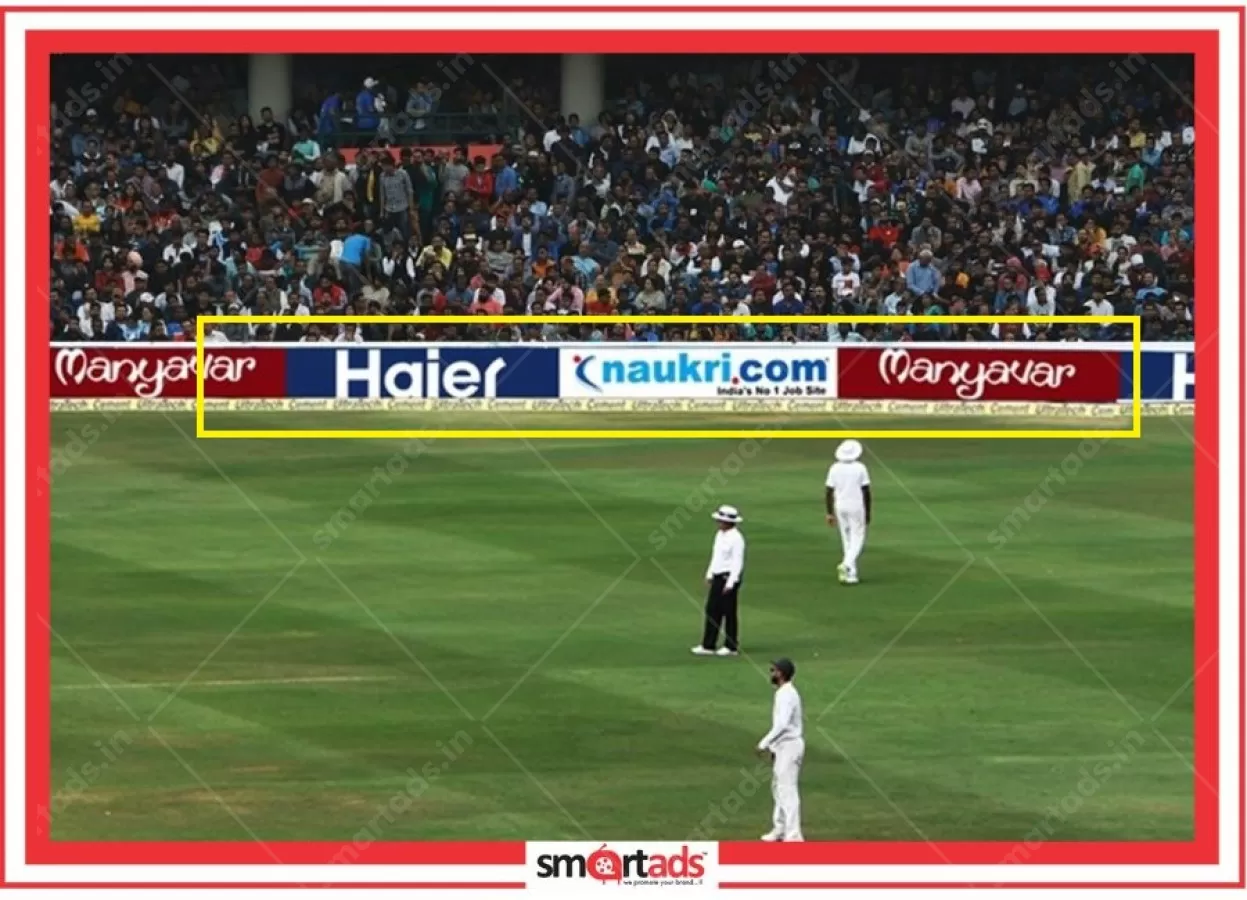
Silver HD Perimeter Signage
Various Sizes
1 ball in every 10 Balls : 50% of the Gr
Rate per Digital Screen / Per match
At Time Only 3 Display Name.
₹1100000.00
Showing 1 to 4 of 4 Results
MEDIA DETAILS
Various Sizes
1 ball in every 10 Balls : 50% of the Gr
Rate per Digital Screen / Per match
At Time Only 3 Display Name.
₹1100000.00
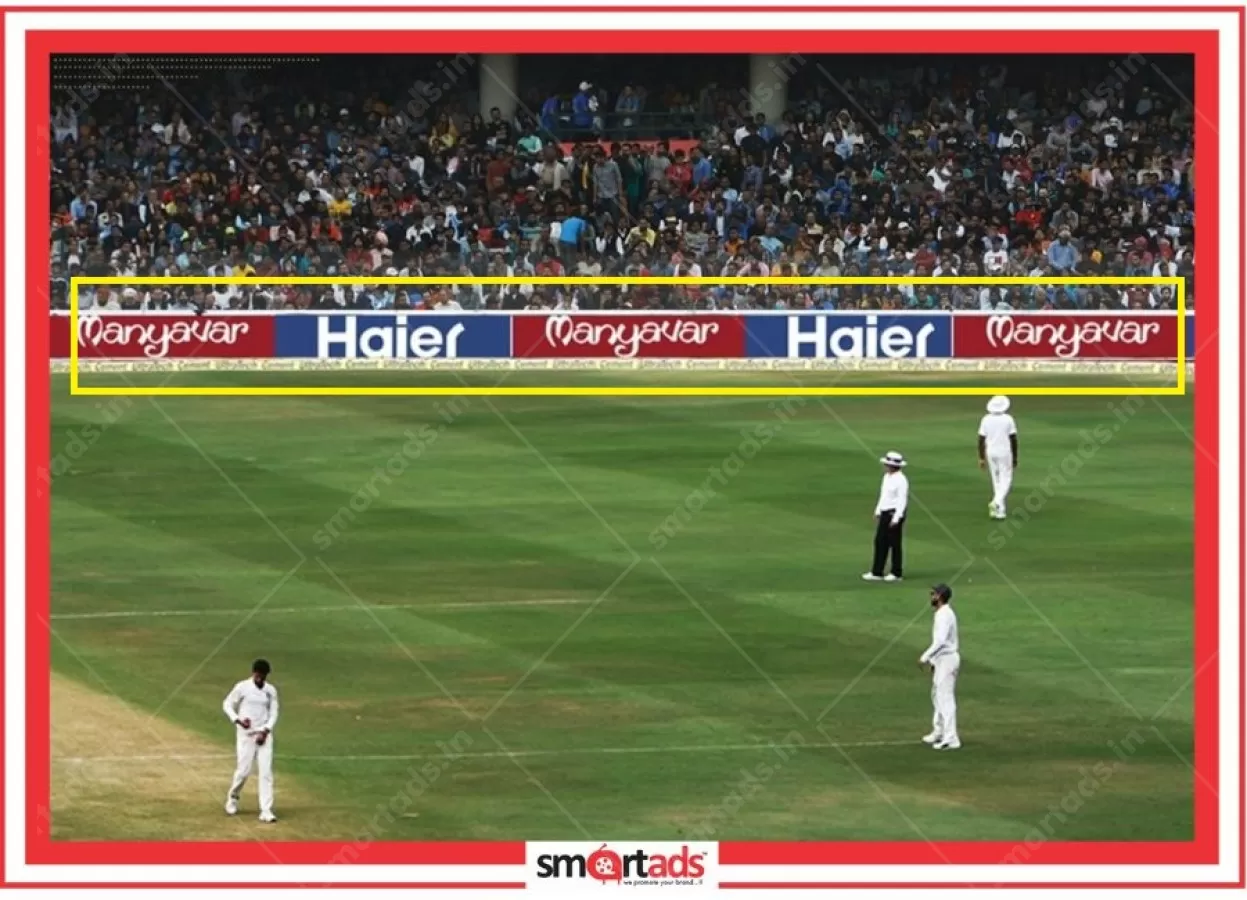
Various Sizes
1 Ball In Every 10 Balls : 50% Of The Gr
Rate per Digital Screen / Per match
At Time Only 2 Display Name.
₹1700000.00
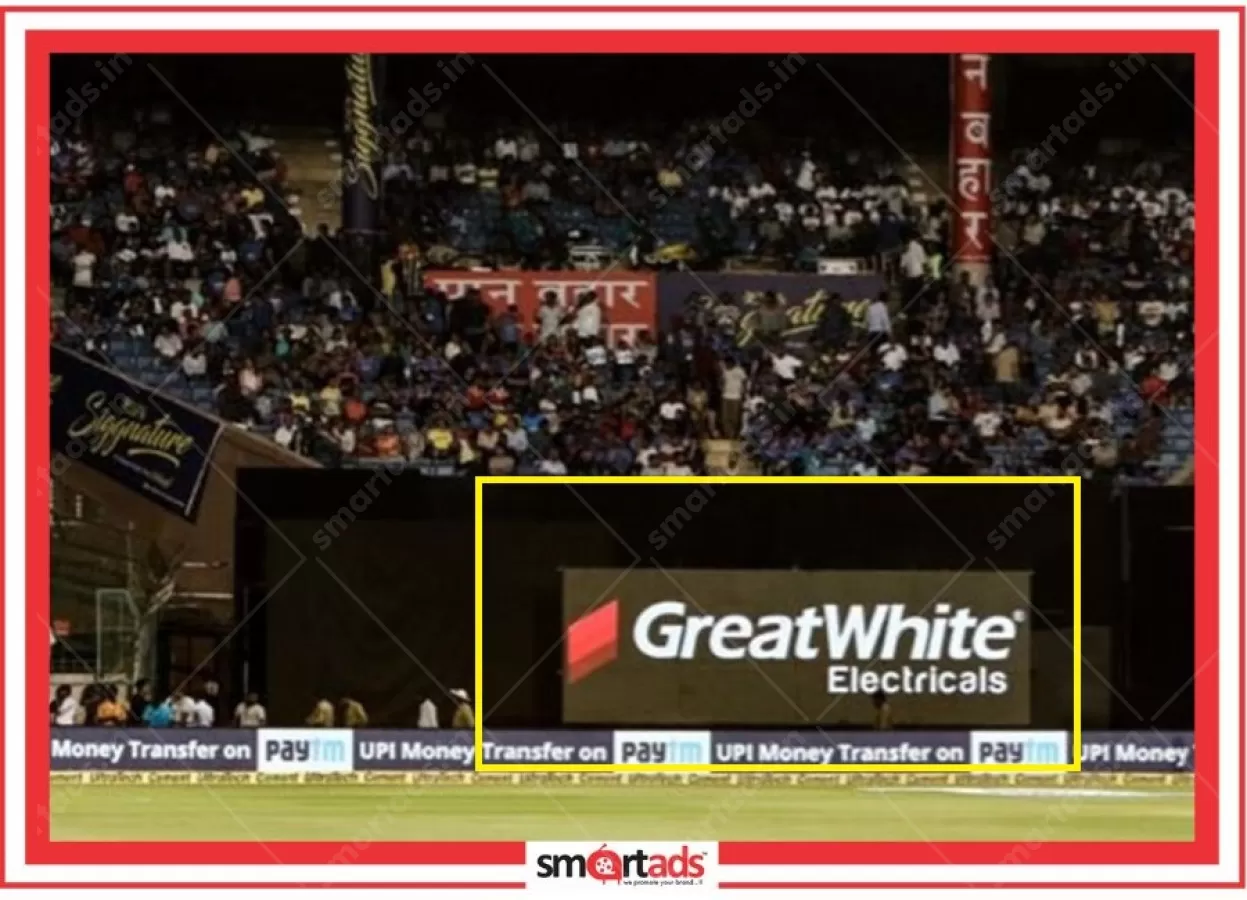
Various Sizes
5 Overs Per ODI Match , 2 Overs Per T20
Rate per Digital Screen / Per match
At Time Only 1 Display Name.
₹1150000.00
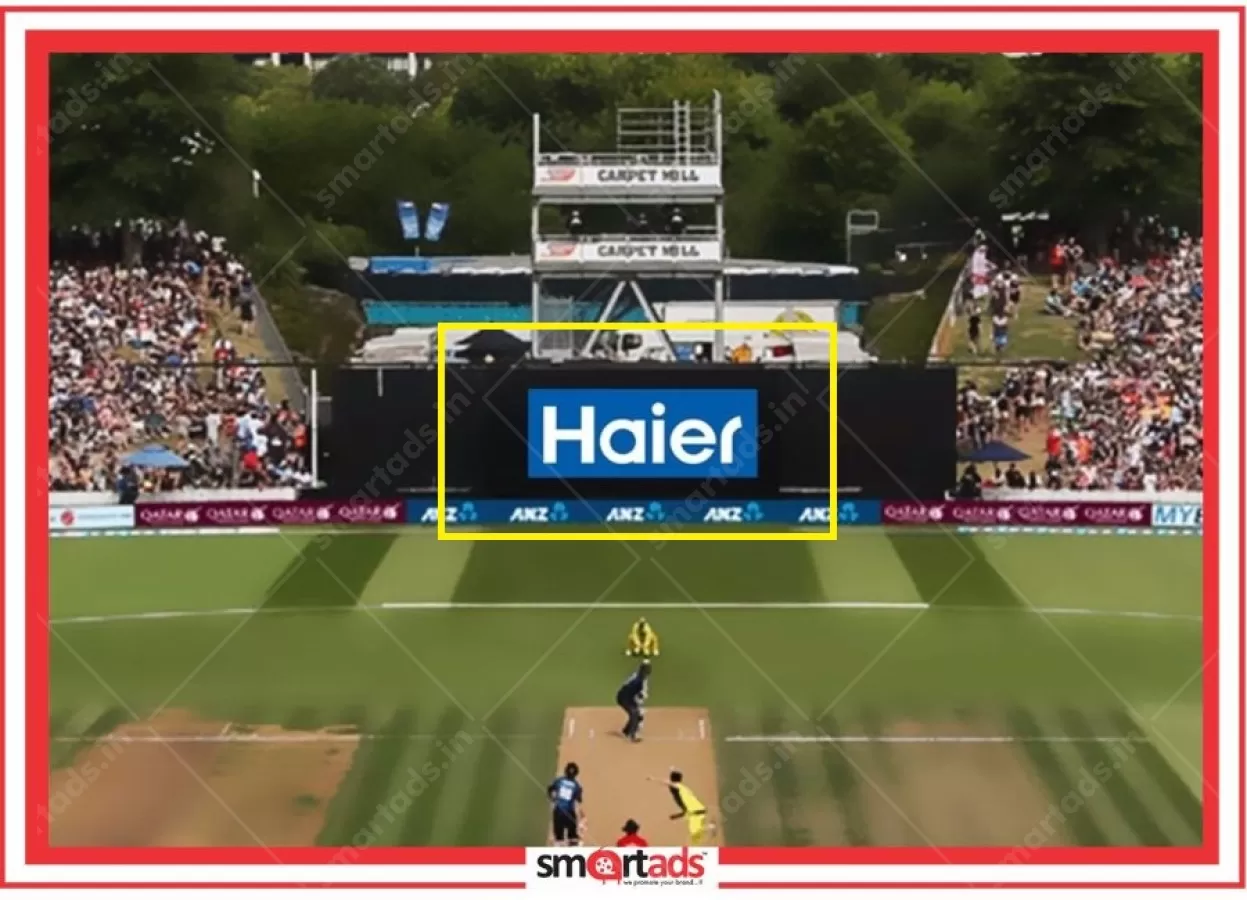
Various Sizes
5 Overs Per ODI Match , 2 Overs Per T20
Rate per Digital Screen / Per match
At Time Only 1 Display Name.
₹1150000.00
MEDIA REACH

MinimumQty :
1
EstimateReachPeople :
45000

Roughly 32,000 people walk into Arun Jaitley Stadium on a single IPL evening — and every single one of them is trapped, in the best possible sense, with nowhere to look except the field, the screens, and the brands surrounding both. What a lot of people miss is that this captive audience is not just the crowd inside the ground; the broadcast feed carrying perimeter LED advertising into the living rooms of millions of television viewers across India effectively multiplies that reach by a factor most outdoor advertising formats cannot come close to matching. At SmartAds, we have spent years helping brands navigate this space, and our honest assessment is that cricket stadium advertising in New Delhi remains one of the most underutilised BTL advertising channels for brands that are serious about reaching an affluent, urban, and deeply engaged audience.
There is something almost unfair about the demographic profile of a Delhi cricket crowd. The NCR catchment area — which draws spectators from Gurugram, Noida, Faridabad, and Ghaziabad in addition to central Delhi — produces one of the wealthiest and most brand-responsive audiences of any cricket ground in India; the per capita income of the average Arun Jaitley Stadium ticket-holder skews significantly higher than the national average, which is a fact that any serious media planner should be factoring into their cost-per-impression calculations. Feroz Shah Kotla, as the ground was historically known before being renamed in 2019, has hosted international cricket for over a century, which means the venue carries an emotional and cultural weight that newer stadiums simply cannot replicate.
The stadium's location on Bahadur Shah Zafar Marg in central Delhi also matters more than most brands realise. It sits within a short distance of Connaught Place, the diplomatic enclave, and several of Delhi's most commercially active corridors, which means the footfall surrounding match days extends well beyond the stadium gates — the surrounding area sees elevated pedestrian and vehicular traffic that amplifies the value of outdoor advertising Delhi brands often purchase in conjunction with in-stadium advertising. On top of that, Arun Jaitley Stadium's broadcast infrastructure, upgraded significantly over the past several years, ensures that camera angles capture perimeter boards and digital screens with a consistency and frequency that older grounds sometimes struggle to deliver.
What our experience at SmartAds shows is that the combination of on-ground brand visibility and broadcast visibility makes this venue genuinely unique among non-traditional advertising options in the capital. A brand that secures perimeter LED advertising at Arun Jaitley Stadium during an IPL match is simultaneously running what is effectively a television commercial — one that appears organically within the broadcast frame rather than in an ad break, which is a distinction that matters enormously when you consider how aggressively Indian audiences skip or ignore conventional spots.
The range of in-stadium advertising formats available at Arun Jaitley Stadium is considerably wider than most brands expect when they first approach us, and getting the format mix right is genuinely where the strategic value lies. Perimeter LED advertising — the dynamic LED display panels that ring the boundary of the playing field — is the flagship format and the one that delivers the most broadcast visibility; these panels rotate brand creatives every few seconds, which means a single advertiser's message cycles through multiple times per over, accumulating impression value at a rate that static hoardings simply cannot match. Perimeter boards in the traditional static format also remain available and are priced meaningfully lower, which makes them an attractive entry point for brands that want cricket ground advertising without committing to the premium tier.
Beyond the boundary, the format options become more interesting. Sight screen advertising — the large panels at either end of the pitch that appear directly behind the bowler in every delivery shot — is among the most broadcast-visible positions in any cricket ground, because the camera is pointed at it for literally every ball bowled; the brand recall generated from this position is disproportionate to its physical size. Scoreboard advertising and digital screens positioned around the stadium concourse give brands a presence in the moments when fans are not watching the game — the drinks break, the over change, the DRS review — which are actually high-attention windows that contextual advertising strategies should target deliberately. Dugout branding, in-pitch branding, and the various panel positions on the players' tunnel and press box areas round out the broadcast-facing inventory.
The below the line formats that extend into the stadium precinct are where experiential marketing and fan activation genuinely differentiate a campaign. Sampling counters, branded kiosks, product demonstration zones, and fan engagement activations in the concourse areas allow brands to create physical touchpoints with cricket fans Delhi in a way that no screen-based format can replicate; we have seen FMCG brands run product sampling during IPL matches at Delhi with trial rates that would be the envy of any mall activation team. Stadium branding on entry gates, ticket counters, and parking zones extends the brand's presence to the full match-day journey, not just the two to three hours of play.
Frankly speaking, the question we get asked most often — and the one that most agency and vendor websites deliberately avoid answering — is what cricket stadium advertising in New Delhi actually costs. We will give you real numbers, with the caveat that rates shift based on match type, season, and inventory availability, so treat these as informed benchmarks rather than fixed price cards.
For perimeter LED advertising at Arun Jaitley Stadium during IPL matches, a per-match package for a single rotation slot works out to somewhere in the ballpark of ₹8 lakh to ₹25 lakh, depending on the number of rotation slots purchased and the duration of each creative cycle; brands that buy across multiple matches in a season naturally negotiate meaningfully better rates, and a full IPL season package for perimeter LED advertising can range from roughly ₹60 lakh to upward of ₹1.5 crore depending on exclusivity and position. Static boundary boards are considerably more accessible — a per-match rate for a single static hoarding position at Arun Jaitley Stadium during IPL is typically somewhere between ₹3 lakh and ₹8 lakh, which is a number that surprises most first-time advertisers when they compare it to what they are paying for a prime outdoor advertising Delhi hoarding over the same period.
Sight screen advertising commands a premium because of its broadcast visibility, and rates for this position during IPL matches at Delhi Capitals home games are generally in the range of ₹15 lakh to ₹40 lakh per match for the full duration — the variance is wide because sight screen inventory is extremely limited and demand from category-dominant brands tends to drive auction-style pricing. For domestic matches — Ranji Trophy, Vijay Hazare, and Syed Mushtaq Ali fixtures — advertising costs at Arun Jaitley Stadium drop substantially, with perimeter board rates sometimes as low as ₹50,000 to ₹2 lakh per match, which makes domestic cricket ground advertising a genuinely viable option for brands with more modest budgets. At SmartAds, we always tell our clients that the real efficiency gain comes from building a multi-match plan across both IPL and domestic fixtures, because the blended cost-per-thousand impressions across the full plan is almost always more attractive than any single premium placement in isolation.
This is where cricket stadium advertising in New Delhi becomes genuinely interesting from a media planning perspective, and it is also where most brands dramatically underestimate the value they are receiving. Every IPL match played at Arun Jaitley Stadium is broadcast live on Star Sports across multiple channels and simultaneously streamed on JioCinema — now Jio Hotstar — which means the perimeter LED advertising and boundary boards visible from the cameras are being seen by an audience that routinely runs into the tens of millions of television viewers per match. The BARC viewership data for IPL consistently places it among the highest-rated programming in Indian television history, and Delhi Capitals home matches at Arun Jaitley Stadium attract particularly strong viewership from the NCR market, which is one of the most commercially valuable television markets in the country.
The broadcast visibility calculation is something we work through carefully with every client at SmartAds. A perimeter LED advertising panel that appears on camera for, say, four seconds per over across a twenty-over innings is accumulating roughly eighty seconds of broadcast exposure per innings, which across both innings of a T20 match works out to around two minutes and forty seconds of effective television visibility — and that is a conservative estimate that does not account for replays, DRS reviews, and the various other moments when the camera lingers on the boundary area. When you price that broadcast visibility against what a thirty-second spot on Star Sports or Jio Hotstar costs during IPL — which can run to several lakhs per spot in prime time — the impression value embedded in a perimeter board package starts to look very different from what the on-ground rate alone might suggest.
Digital amplification adds another layer. Highlight packages, social media clips, and the enormous volume of user-generated content that flows from IPL matches all carry in-stadium advertising into digital environments that the brand has not paid separately to access; a spectacular catch near the boundary boards, replayed thousands of times on Instagram and YouTube, carries the brand's perimeter LED creative along with it. This organic broadcast visibility is something that below the line advertising formats in other contexts simply cannot generate, which is why we position cricket stadium advertising in New Delhi as a genuinely cross-channel investment rather than a purely BTL spend.
The honest answer is that they are almost different products, and treating them as interchangeable is a mistake we have seen brands make with some regularity. IPL advertising at Arun Jaitley Stadium — specifically Delhi Capitals home matches — operates in a different commercial universe from domestic cricket ground advertising at the same venue; the audience size, the broadcast reach, the brand association value, and the advertising cost all sit at entirely different levels, and the strategic rationale for each is quite distinct.
During IPL, the stadium is typically sold out or near-sold out, which means the captive audience on the ground alone is around 30,000 to 35,000 people; the television viewers watching the broadcast add tens of millions more, and the social media amplification is substantial. The brands that dominate IPL advertising at Delhi Capitals home games tend to be national or pan-India advertisers — financial services, consumer electronics, FMCG, automotive — for whom the combination of on-ground brand visibility and broadcast visibility justifies the premium advertising placement cost. The association with Delhi Capitals as a franchise also carries brand equity implications that go beyond any single match, particularly for brands targeting the young, urban, aspirational demographic that the franchise has cultivated.
Domestic match advertising — Test match advertising at Arun Jaitley Stadium, ODI advertising when bilateral series are scheduled, and state-level T20 match advertising — is a different proposition entirely, and frankly one that is underutilised by brands that could benefit from it enormously. Test match advertising at Feroz Shah Kotla historically drew smaller but intensely engaged crowds, with a demographic profile that skews older and more affluent than T20 audiences; the five-day format means a brand's static hoardings and stadium branding are on display for a cumulative period that no T20 fixture can match. One BFSI client we worked with ran a Test match advertising campaign at Arun Jaitley Stadium that delivered over 40,000 on-ground impressions per day across five days at a fraction of the cost of a single IPL perimeter board slot — the ROI calculation, when done honestly, was extremely favourable.
The booking process for cricket stadium advertising in New Delhi involves multiple stakeholders, and understanding the structure is essential before you begin. The Delhi & District Cricket Association — DDCA — is the governing body that controls the stadium and its commercial inventory for domestic matches; for IPL matches, the commercial rights sit primarily with the Delhi Capitals franchise, which is jointly owned by GMR Group and JSW Sports, and the BCCI retains oversight of certain broadcast-facing inventory categories. This means that depending on which match type you are targeting and which format you want, you may be dealing with the DDCA, the Delhi Capitals franchise, or a combination of both.
For most brands approaching in-stadium advertising for the first time, working through an experienced advertising agency that has established relationships with both the DDCA and the Delhi Capitals commercial team is the most efficient path — not because the process is opaque, but because the inventory allocation, rate negotiation, and creative approval process all move significantly faster when the agency is a known entity to the rights holders. At SmartAds, we have managed bookings across both domestic and IPL inventory at Arun Jaitley Stadium, and our experience shows that lead times matter enormously; IPL inventory for perimeter LED advertising and sight screen positions tends to be substantially committed three to four months before the season begins, and brands that approach the process late often find the premium positions already taken.
The permissions and approvals required from DDCA for on-ground brand activation — sampling counters, branded kiosks, fan activation zones — are separate from the standard advertising inventory booking and typically require a formal application to the DDCA commercial committee, along with details of the activation format, the brand category, and the specific match dates. Certain brand categories — competing with official IPL sponsors, for instance — face restrictions that need to be navigated carefully, and alcohol brands face regulatory constraints that vary by the specific nature of the activation. These are the details that a media plan built without agency support often misses, which is where the value of working with a specialist becomes most apparent.
The case for experiential marketing and fan activation at Arun Jaitley Stadium rests on something that pure media metrics sometimes struggle to capture: the emotional state of the audience. Cricket fans Delhi — particularly IPL audiences — arrive at the ground in a state of heightened excitement and social openness that is genuinely unusual compared to most other advertising contexts; they are there to have a good time, they are with friends and family, and they are predisposed to engage with brands that meet them in that moment in a relevant and entertaining way. This is the environment in which brand activation delivers its highest returns, and it is why below the line advertising at cricket stadiums consistently outperforms equivalent spend in mall or transit contexts on measures of brand recall and positive brand association.
Fan activation formats that have worked particularly well at Delhi Capitals home matches include interactive gaming zones tied to cricket — ball-speed challenges, batting simulators, prediction contests — which generate extended dwell time at brand touchpoints and create natural social media sharing moments; a consumer electronics brand we worked with ran a gaming activation at Arun Jaitley Stadium across six IPL matches and recorded an average engagement time of over four minutes per interaction, which is a number that would be extraordinary in almost any other BTL advertising context. Sampling activations work especially well during the pre-match period and the innings break, when fans are moving through the concourse and are genuinely receptive to product trial; FMCG brands in the beverages, snacks, and personal care categories have found the Delhi cricket crowd to be among the most responsive sampling audiences in the country.
The NCR audience's profile — high disposable income, strong digital literacy, and a tendency toward premium brand preferences — makes in-stadium advertising at Arun Jaitley Stadium particularly valuable for brands in categories like financial services, premium FMCG, automotive, real estate, and consumer technology. These are audiences that are genuinely difficult to reach through conventional below the line channels, and the cricket stadium context provides a legitimate reason for the brand to be present in their lives in a way that feels earned rather than intrusive.
Return on investment measurement for in-stadium advertising is more sophisticated than it used to be, and the honest position is that brands which approach it with the right framework get considerably more value from their campaigns than those which treat it as an unmeasurable brand exercise. The primary measurement pillars we use at SmartAds for cricket stadium advertising in New Delhi are on-ground impressions, broadcast visibility, brand recall lift, and downstream commercial metrics — and each requires a slightly different methodology.
On-ground impressions are the most straightforward: the stadium capacity, adjusted for actual attendance figures which DDCA and the franchise typically share with official partners, gives you a baseline reach number. Broadcast visibility is calculated using the TAM AdEx broadcast monitoring data, which tracks the frequency and duration of brand appearances within the live feed — this is the same methodology used for measuring sponsorship value in broadcast sports globally, and the numbers it produces are often significantly higher than brands expect. Brand recall lift is measured through pre- and post-campaign survey panels, which we typically run across Delhi NCR audiences who attended the match versus a matched control group; the recall differentials we have observed for perimeter LED advertising during IPL at Arun Jaitley Stadium have consistently been in the range of fifteen to twenty-five percentage points above baseline, which is a strong result by any advertising standard.
The downstream commercial metrics — sales uplift, website traffic spikes, app download increases, lead generation volume — are where the ROI calculation becomes most compelling for brands that have the measurement infrastructure to capture them. One financial services brand we worked with ran a perimeter LED advertising campaign across four Delhi Capitals home matches and tracked a statistically significant uplift in brand search volume and app installs in the Delhi NCR market during and immediately after match days; the return on investment, calculated against the cost of the perimeter board package, worked out to a multiplier that justified a significantly expanded budget in the following season. The FICCI-EY Media and Entertainment Report has consistently highlighted sports sponsorship and in-stadium advertising as among the highest-ROI non-traditional advertising channels in the Indian market, and our campaign experience at SmartAds aligns with that assessment.
DDCA sponsorship — as distinct from IPL franchise sponsorship — is a category that receives far less attention than it deserves, and frankly, that gap represents a genuine opportunity for brands that are willing to look beyond the IPL window. The DDCA manages Arun Jaitley Stadium for all non-IPL fixtures, which includes international matches assigned to Delhi by the BCCI, domestic Ranji Trophy and limited-overs fixtures, and the various age-group and women's tournaments that the association runs through the year. Sponsorship packages with the DDCA can include stadium naming rights for specific match series, perimeter board positions across the full domestic season, and official association status which carries its own brand visibility benefits in DDCA communications and media coverage.
The Women's Premier League advertising opportunity at Arun Jaitley Stadium is one that almost no brand has seriously explored yet, and we think this is a significant oversight. The WPL, which has grown rapidly since its inaugural season, brings a distinct and highly engaged audience to the ground — one that skews younger and more digitally active than the average domestic cricket crowd, and one that is being actively courted by brands in categories from personal care to fintech; the advertising cost for WPL in-stadium inventory is meaningfully lower than IPL rates, which means the cost-per-impression efficiency is potentially very strong for brands that move early. At SmartAds, we have been advising clients in the FMCG and consumer technology categories to consider WPL advertising at Delhi as part of a broader sports marketing strategy, and the early results from brands that have acted on this advice have been encouraging.
The ICC Men's T20 World Cup 2026 is another horizon event that brands should be planning for now rather than later. Arun Jaitley Stadium is confirmed as one of the host venues for the tournament, which will bring international cricket fans to Delhi from across the world and generate broadcast visibility on a scale that even IPL cannot match for individual matches; the advertising inventory for ICC events is controlled by the BCCI and ICC's commercial partners, and the booking process for brand-facing positions begins well in advance of the tournament. Brands that want premium advertising placement at Arun Jaitley Stadium during the ICC T20 World Cup 2026 should be initiating conversations with their agency partners now, because the lead time on this category of inventory is considerably longer than for domestic or IPL fixtures.
The debate between static hoardings and perimeter LED advertising is one we have at SmartAds with clients on a regular basis, and the answer is genuinely more nuanced than most vendor presentations suggest. Static hoardings — the traditional boundary boards and fixed panel positions that have been part of cricket ground advertising since the sport went commercial — offer simplicity, predictability, and a lower advertising cost; a brand that books a static hoarding position at Arun Jaitley Stadium knows exactly where its creative will appear, for exactly how long, at a fixed rate that does not vary with demand. For brands with a single, strong visual message and a limited budget, static hoardings remain a perfectly viable and cost-effective form of cricket stadium advertising in New Delhi.
Dynamic LED display panels — the perimeter LED advertising format that now dominates the boundary at Arun Jaitley Stadium — offer something fundamentally different: the ability to rotate multiple brand messages, update creatives in real time, and share inventory costs across multiple advertisers, which is how the format achieves its broadcast visibility at a price point that individual brands can access. The impression value per rupee for perimeter LED advertising is generally higher than for static hoardings when broadcast exposure is factored in, because the camera captures the LED panels more consistently and with greater visual clarity than older static boards; the BARC viewership data for IPL broadcasts consistently shows that boundary-area brand exposure is among the most recalled advertising in the entire broadcast environment. The tradeoff is that a brand on a rotation slot is sharing the panel with other advertisers, which means the exclusivity and permanence of a static hoarding is not replicated.
Our recommendation at SmartAds, for brands with the budget to consider both, is to use perimeter LED advertising for the broadcast-facing positions — particularly the mid-wicket and square-leg panels that appear most frequently in the camera frame — and to use static hoardings for the concourse-facing and entry-gate positions where on-ground dwell time and repeat exposure matter more than broadcast capture. This hybrid approach to in-stadium advertising gives a brand the best of both formats without paying the full premium for an all-LED campaign.
This is a question we get asked with some frequency, and the honest answer is: more often than you might think, yes. The perception that cricket stadium advertising in New Delhi is exclusively the domain of large national advertisers is one that the industry has not done enough to correct, and it is a perception that costs smaller brands a genuinely valuable media option. Entry-level advertising packages at Arun Jaitley Stadium — particularly for domestic matches, state-level T20 fixtures, and WPL games — are priced at levels that are accessible to regional brands, local businesses with a Delhi NCR focus, and SMEs with a marketing budget in the range of ₹5 lakh to ₹20 lakh per season.
A static hoarding position at a Ranji Trophy match at Arun Jaitley Stadium, for instance, might cost somewhere in the range of ₹50,000 to ₹1.5 lakh for the match duration, which is a level of advertising cost that a serious regional brand should be able to justify on the basis of the audience quality alone; the Delhi cricket crowd, even for domestic fixtures, tends to be more affluent and brand-conscious than equivalent footfall at a mall or transit hub. Concourse digital screens and scoreboard advertising positions at domestic matches are similarly priced, and the combination of multiple lower-cost positions across several matches can build meaningful brand visibility for a fraction of what a single IPL perimeter LED slot would cost.
The entry-level advertising route also serves as an excellent test-and-learn environment for brands that are considering a larger investment in IPL advertising or DDCA sponsorship in subsequent seasons; by running a modest campaign at domestic fixtures first, a brand can develop its creative approach, understand the audience response, and build the relationship with the venue's commercial team that will serve it well when it is ready to step up to premium advertising placement. At SmartAds, we have helped several regional brands in Delhi NCR use this stepping-stone approach to build a meaningful cricket stadium advertising presence over two to three seasons without ever overcommitting their budget in any single year.
Q: How much does cricket stadium advertising at Arun Jaitley Stadium in New Delhi cost?
The advertising cost at Arun Jaitley Stadium varies considerably by format, match type, and the specific position being booked. For perimeter LED advertising during IPL matches, a per-match rotation slot works out to somewhere between ₹8 lakh and ₹25 lakh, with full-season packages for Delhi Capitals home games ranging from roughly ₹60 lakh to upward of ₹1.5 crore depending on the number of slots and the exclusivity of the position. Static boundary boards during IPL are more accessible, typically in the range of ₹3 lakh to ₹8 lakh per match. For domestic fixtures — Ranji Trophy, state T20 matches, and WPL games — rates are substantially lower, with static hoarding positions available from around ₹50,000 per match, which makes cricket ground advertising genuinely accessible to brands with regional budgets. Sight screen advertising commands the highest premium given its broadcast visibility, and those rates are generally negotiated on a case-by-case basis given the limited inventory available.
Q: What are the different BTL advertising formats available at Delhi cricket stadiums?
The in-stadium advertising formats at Arun Jaitley Stadium span a wide range, from broadcast-facing positions to on-ground experiential activations. On the broadcast-visible side, perimeter LED advertising, static boundary boards, sight screen advertising, scoreboard advertising, in-pitch branding, and dugout branding are the primary formats; these are the positions that appear in the camera frame during live coverage and generate television viewers exposure in addition to on-ground brand visibility. On the experiential and below the line side, brands can access branded kiosks and sampling counters in the concourse, fan activation zones in the pre-match and innings-break periods, entry gate and parking area branding, jersey branding and team association opportunities through Delhi Capitals sponsorship, and branded digital screens throughout the stadium interior. The full format menu is considerably richer than most brands realise when they first begin exploring cricket stadium advertising in New Delhi.
Q: How do I book advertising space at Arun Jaitley Stadium for an IPL match?
For IPL matches, the commercial inventory at Arun Jaitley Stadium is managed primarily by the Delhi Capitals franchise — jointly owned by GMR Group and JSW Sports — with the BCCI retaining oversight of certain broadcast-facing categories. The most practical approach for most brands is to work through an advertising agency that has an established relationship with the franchise's commercial team, because the inventory allocation process moves significantly faster through known agency channels and the rate negotiation is more effective when the agency has a track record with the rights holder. Lead times for IPL perimeter LED advertising and premium positions are substantial — three to four months before the season is not too early to begin the process. For domestic match inventory, the booking process goes through the DDCA commercial department, and lead times are somewhat shorter, though popular match dates fill up quickly.
Q: What permissions or approvals are needed from DDCA to advertise inside the stadium?
For standard advertising inventory — perimeter boards, digital screens, scoreboard positions — the booking process through the DDCA or the Delhi Capitals franchise constitutes the primary approval pathway, and the rights holder manages the necessary internal clearances. For on-ground brand activation — sampling counters, branded kiosks, fan engagement zones — a separate application to the DDCA commercial committee is typically required, detailing the nature of the activation, the brand category, the specific match dates, and the physical footprint of the activation. Certain brand categories face restrictions, particularly those that compete with official IPL or BCCI sponsors, and alcohol brands face regulatory constraints that need to be assessed against the specific format and location of the activation. The BCCI's sponsorship protection guidelines also place restrictions on ambush marketing activities in and around the stadium precinct, which brands and their agencies need to be aware of before planning any campaign execution.
Q: What is the difference between perimeter LED advertising and static hoarding advertising in Delhi stadiums?
Perimeter LED advertising uses dynamic LED display panels that rotate multiple brand creatives in sequence, which means several advertisers share the panel inventory across a match; the advantage is that the broadcast visibility of LED panels is higher — cameras capture them more consistently and with greater visual clarity — and the cost of accessing that broadcast-facing position is shared across multiple brands, making the per-brand advertising cost lower than exclusive static inventory at equivalent positions. Static hoardings are fixed, single-brand positions that display one creative for the full duration of the match; they offer exclusivity and simplicity, and they are particularly effective in positions where on-ground dwell time matters more than broadcast capture, such as concourse-facing panels and entry gate positions. The advertising cost for static hoardings is generally lower on a per-match basis than a full rotation slot on a premium LED panel, but the impression value calculation changes significantly once broadcast exposure is factored in.
Q: Can small and medium businesses afford cricket stadium advertising in New Delhi?
Yes, genuinely — particularly through domestic match inventory and entry-level advertising packages. A static hoarding position at a Ranji Trophy or state T20 fixture at Arun Jaitley Stadium can be secured for somewhere in the range of ₹50,000 to ₹1.5 lakh per match, which is a level of advertising cost that many serious regional brands and NCR-focused SMEs can justify. Concourse digital screens and scoreboard advertising at domestic fixtures are similarly priced, and building a multi-match plan across several domestic fixtures in a season can deliver meaningful cumulative brand visibility at a blended cost that competes favourably with equivalent outdoor advertising Delhi options. The WPL also offers entry-level advertising at rates that are substantially below IPL pricing, with an audience profile that is highly attractive for brands in consumer categories.
Q: How does in-stadium advertising at Arun Jaitley Stadium reach television viewers?
Every international match and every IPL fixture at Arun Jaitley Stadium is broadcast live on Star Sports and streamed on Jio Hotstar, which means the perimeter LED advertising, boundary boards, and sight screen advertising visible from the broadcast cameras are being seen by an audience that runs into the tens of millions of television viewers per match. The broadcast visibility of in-stadium advertising is tracked through TAM AdEx broadcast monitoring, which measures the frequency and duration of brand appearances within the live feed; this data is used to calculate the equivalent advertising value of the broadcast exposure generated by perimeter board and sight screen positions. The camera angles at Arun Jaitley Stadium, particularly for the mid-wicket and square-leg perimeter positions, are well-established and consistent, which means brands can predict their broadcast visibility with reasonable accuracy when planning a campaign.
Q: What is the reach and audience size of cricket stadium advertising during IPL in Delhi?
The on-ground captive audience at Arun Jaitley Stadium during IPL matches is typically in the range of 30,000 to 35,000 people per match, drawn from across Delhi NCR and representing one of the most affluent and brand-responsive audiences in Indian cricket. The broadcast audience — television viewers and Jio Hotstar streaming viewers — adds tens of millions of additional impressions per match, with BARC viewership data consistently placing IPL among the highest-rated programming in Indian television. The social media amplification of match content, highlights, and user-generated material from the ground adds a further layer of digital reach that is difficult to quantify precisely but is meaningfully large for a high-profile Delhi Capitals home fixture. The combined on-ground, broadcast, and digital reach of a well-positioned perimeter LED advertising campaign across a full IPL home season at Arun Jaitley Stadium represents one of the largest cumulative audience exposures available through any single BTL or non-traditional advertising channel in the Delhi market.
Q: Is cricket stadium advertising in New Delhi effective for brand recall and ROI?
Our campaign experience at SmartAds, supported by the broader industry data from the FICCI-EY Media and Entertainment Report and BARC viewership studies, is that in-stadium advertising at Arun Jaitley Stadium delivers strong brand recall outcomes — particularly for perimeter LED advertising and sight screen positions that benefit from broadcast visibility. Pre- and post-campaign brand recall surveys across Delhi NCR audiences have shown recall lifts of fifteen to twenty-five percentage points above baseline for brands running perimeter board campaigns during IPL, which is a result that compares very favourably with equivalent spend in conventional outdoor advertising Delhi or print media. The return on investment calculation is most compelling when broadcast visibility is included in the impression count and when downstream metrics — brand search volume, app installs, lead generation — are tracked during and after match days.
Q: What BTL activation options are available for brands at Delhi Capitals home matches?
The fan activation and experiential marketing options at Delhi Capitals home matches at Arun Jaitley Stadium include branded sampling counters and product trial zones in the concourse areas, interactive gaming and cricket-themed engagement activations, branded photo opportunity installations, product demonstration zones, and contest-based engagement mechanics tied to match events. These below the line formats are available in the pre-match period, during innings breaks, and in the post-match period, and they can be combined with perimeter board or digital screen advertising to create a fully integrated in-stadium campaign. Jersey branding and team association through Delhi Capitals sponsorship packages also offer a brand visibility route that extends beyond match day into the franchise's media and social content ecosystem.
Q: How does advertising during IPL differ from advertising during Test or ODI matches at Delhi?
IPL advertising at Arun Jaitley Stadium operates at a different scale and cost level from Test match advertising or ODI advertising at the same venue. IPL brings a sold-out or near-sold-out captive audience, massive broadcast visibility on Star Sports and Jio Hotstar, and a younger, more urban demographic profile; the advertising cost reflects this demand, with perimeter LED advertising rates during IPL running several multiples higher than equivalent domestic match rates. Test match advertising at Feroz Shah Kotla historically drew smaller but intensely engaged crowds with an older and more affluent demographic profile; the five-day format means cumulative on-ground
