
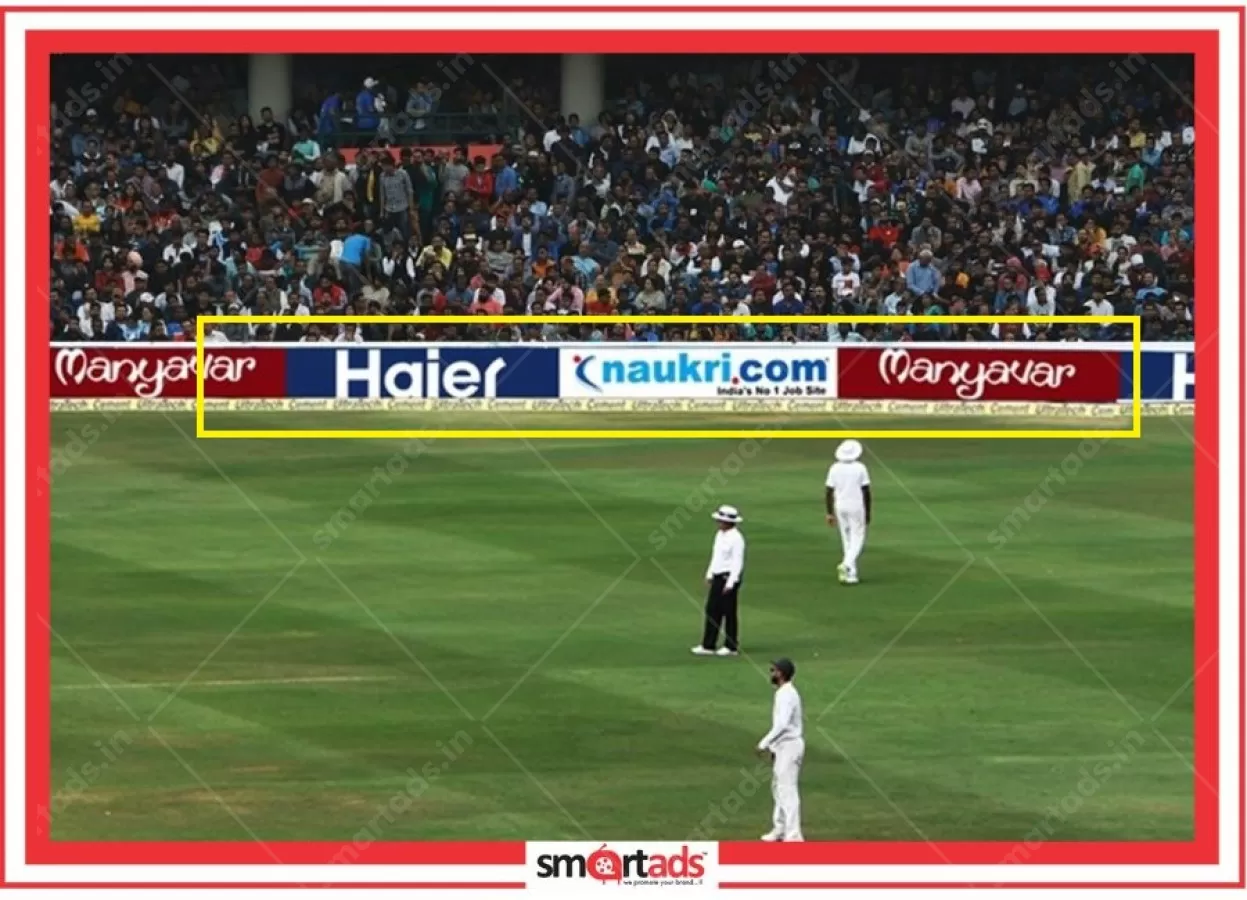
Silver HD Perimeter Signage
Various Sizes
1 ball in every 10 Balls : 50% of the Gr
Rate per Digital Screen / Per match
At Time Only 3 Display Name.
₹1100000.00
Showing 1 to 4 of 4 Results
MEDIA DETAILS
Various Sizes
1 ball in every 10 Balls : 50% of the Gr
Rate per Digital Screen / Per match
At Time Only 3 Display Name.
₹1100000.00
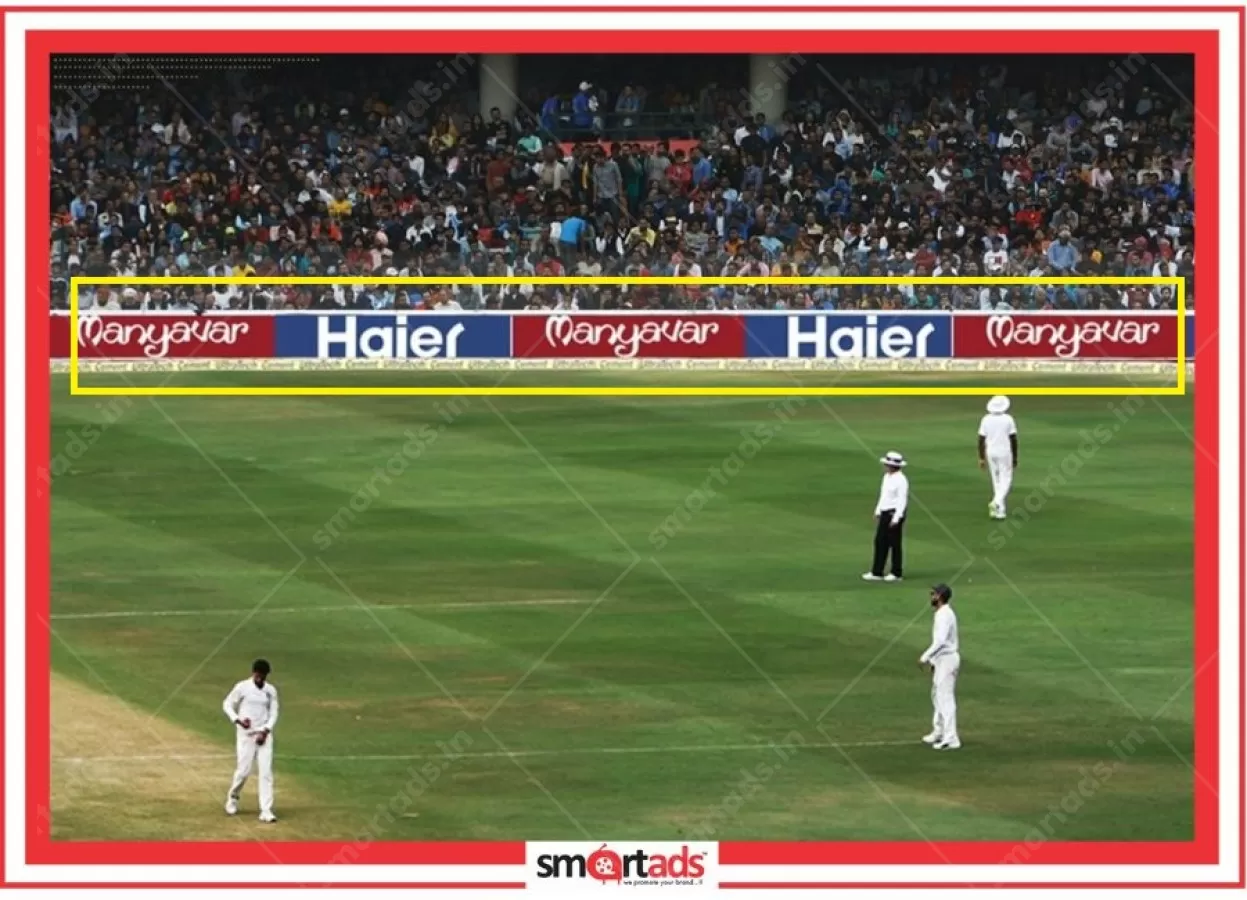
Various Sizes
1 Ball In Every 10 Balls : 50% Of The Gr
Rate per Digital Screen / Per match
At Time Only 2 Display Name.
₹1700000.00
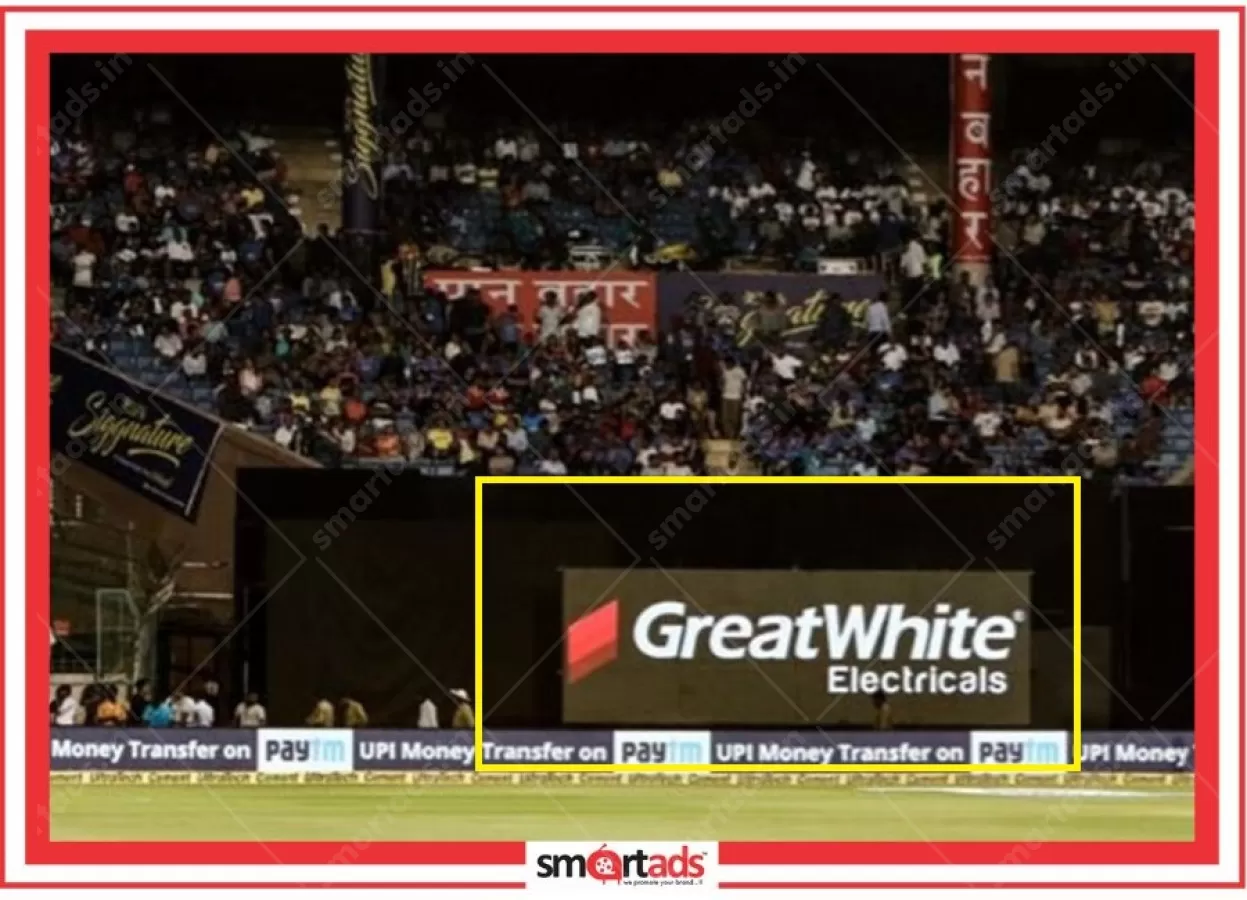
Various Sizes
5 Overs Per ODI Match , 2 Overs Per T20
Rate per Digital Screen / Per match
At Time Only 1 Display Name.
₹1150000.00
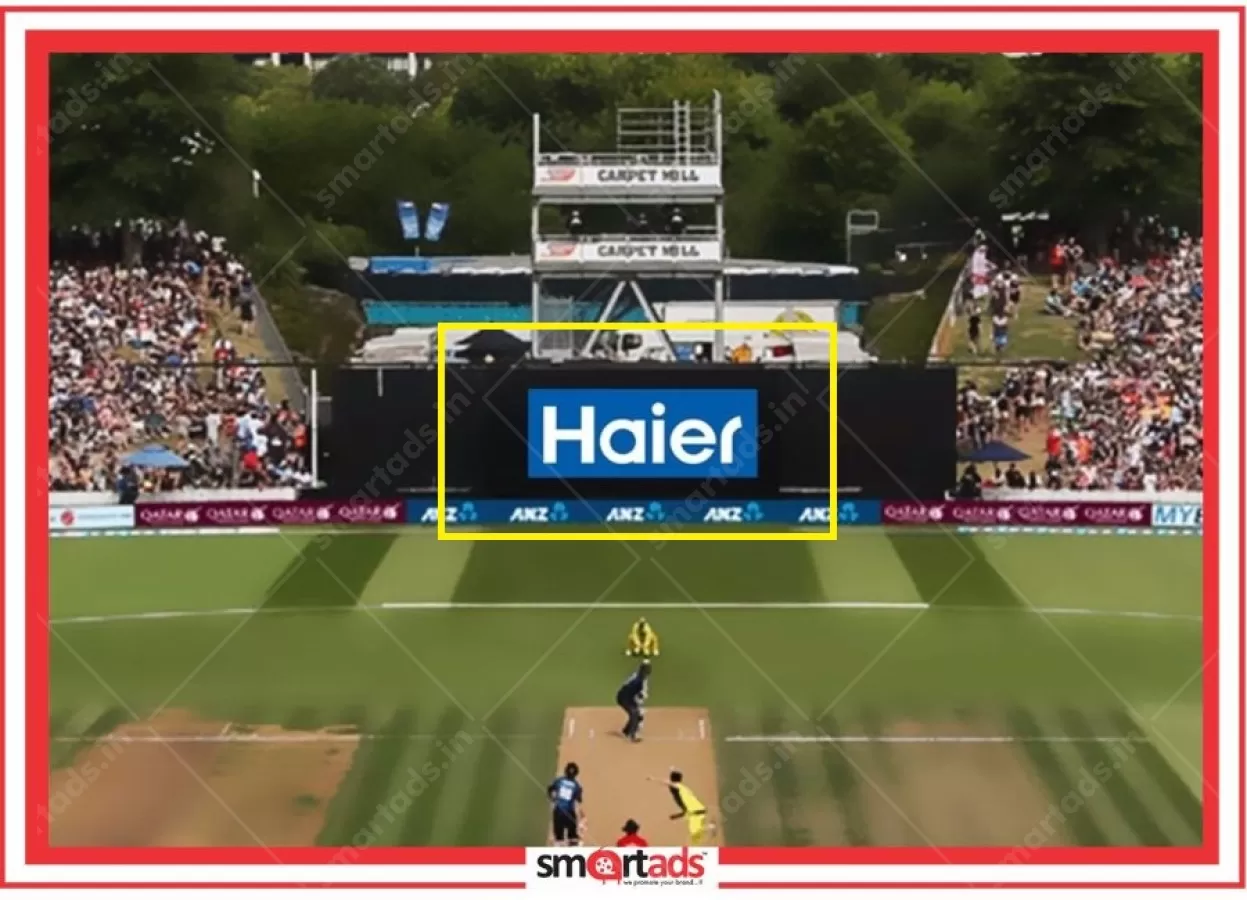
Various Sizes
5 Overs Per ODI Match , 2 Overs Per T20
Rate per Digital Screen / Per match
At Time Only 1 Display Name.
₹1150000.00
MEDIA REACH

Fewer than three percent of brands that advertise in Mumbai ever consider what happens inside the stadium — and that, frankly, is one of the most expensive oversights in Indian media planning. A single IPL match at Wankhede Stadium draws upwards of 33,000 people into a single venue, all of them physically present, emotionally charged, and staring directly at your brand for three to four uninterrupted hours. That kind of captive audience simply does not exist anywhere else in the city.
The answer has less to do with cricket and more to do with attention — which is the one thing every advertiser is desperately chasing and almost nobody is efficiently buying. When someone sits in the Sachin Tendulkar Stand at Wankhede Stadium Mumbai and watches a T20 match, they are not scrolling past your ad, they are not skipping it, and they are certainly not making tea during it. Their eyes are fixed on the field, which means every perimeter board, every LED perimeter screen, every boundary rope branding element sits squarely in their line of sight for the duration of the match. We have found, across dozens of campaigns we have planned at cricket venues, that the dwell time per viewer at a live match is somewhere between 180 and 240 minutes — a number that makes even the most loyal prime-time television viewer look distracted by comparison.
What a lot of people miss is the dual-audience effect that makes cricket stadium advertising in Mumbai genuinely unique among BTL advertising formats. The in-stadium audience is only part of the story; the broadcast visibility that comes from LED perimeter screens and pitch mat advertising means your brand is simultaneously reaching the television audience watching the match on Star Sports or JioCinema — which, during an IPL match, can run into tens of millions of viewers nationally. The FICCI-EY Media and Entertainment Report has consistently highlighted cricket as the single highest-reach live content format in India, and Wankhede Stadium sits at the very centre of that ecosystem, hosting Mumbai Indians home games during the Tata IPL season as well as international cricket matches organised under BCCI and ICC frameworks. For brands seeking brand visibility in a city as fragmented and competitive as Mumbai, this combination of physical presence and broadcast visibility is genuinely difficult to replicate through any other single channel.
At SmartAds, we always tell our clients that the real power of in-stadium branding is contextual. Your brand appears not in a break between content but as part of the content itself — woven into the visual fabric of a moment that viewers are actively invested in. A financial services brand we worked with, which had been spending heavily on OOH advertising Mumbai-wide with modest brand recall results, shifted roughly fifteen percent of their outdoor budget into a Wankhede Stadium advertising package during an IPL season; their post-campaign brand recall scores, measured through a third-party dipstick survey, were nearly three times higher among audiences who had attended matches compared to those who had only seen their hoardings on the Western Express Highway.
Wankhede Stadium advertising is not a single product — it is a menu, and the right combination depends entirely on your campaign objective, your budget, and how your creative is designed to be consumed. The most visible and most sought-after format is the LED perimeter screen, which runs along the boundary of the playing field and rotates brand creatives at intervals throughout the match; these screens are captured in virtually every broadcast camera angle, which means the brand exposure extends well beyond the 33,000 people physically present in the ground. Alongside these, traditional perimeter boards — static or flex-based signage boards fixed along the boundary — continue to offer strong value, particularly for brands that want consistent, uninterrupted display rather than rotational slots.
The pitch mat is a format that deserves more attention than it typically gets from first-time cricket stadium advertisers. Placed directly on the pitch during breaks in play, the pitch mat advertising format is shot from the aerial camera positioned above the ground, which means it appears on broadcast in a clean, unobstructed overhead frame — a genuinely premium piece of real estate that only one brand can occupy at a time. Similarly, the digital sight screen, positioned at either end of the pitch behind the bowler's arm, is in the eyeline of every batsman and every camera tracking the ball; during a T20 match, it is arguably the single most-viewed piece of in-stadium branding available. Boundary rope branding — which involves printed branding on the rope that marks the boundary of the playing field — offers a more affordable entry point while still delivering strong on-ground visibility.
Beyond these field-level formats, Wankhede Stadium also offers seat back advertising on the stadium chairs, which reaches every spectator directly at eye level throughout the match; giant LED screen advertising on the main scoreboard display, which commands attention during every drinks break, wicket celebration, and replay; and signage boards placed at entry gates, concourse areas, and fan zones — all of which are high-footfall touchpoints that brands often underestimate. For brands interested in a 360-degree advertising campaign approach, the combination of field-level formats with concourse signage and fan activation zones creates a genuinely immersive brand presence that follows the spectator from the moment they enter the Churchgate Mumbai precinct to the moment they leave. Jersey branding through team sponsorship is a separate conversation involving BCCI advertising and team commercial rights, but it is worth noting as part of the broader stadium sponsorship ecosystem for larger advertisers.
Frankly speaking, this is the question every brand manager asks first and every media planner answers last — because the honest answer is that cricket stadium advertising rates at Wankhede vary significantly depending on the match type, the format, the duration, and the season. That said, we think the industry does brands a disservice by refusing to publish any benchmarks at all, so here is what our experience at SmartAds shows for the 2025–2026 season.
For LED perimeter screen advertising during an IPL match at Wankhede Stadium, a single-match slot — typically a ten-second creative rotating across a thirty-minute block — works out to somewhere in the ballpark of ₹3 to ₹6 lakh per match, depending on the slot position and the number of rotations secured. The pitch mat advertising format, given its exclusivity and broadcast prominence, is priced considerably higher, often in the range of ₹8 to ₹15 lakh for a single match, which surprises most clients until they see the aerial broadcast footage and realise they are effectively buying national television exposure packaged as a BTL advertising placement. Perimeter boards — the static or semi-static signage boards along the boundary — are more accessible, with per-match rates for a standard board position running somewhere between ₹1.5 and ₹4 lakh, which makes them a realistic entry point for mid-sized brands.
The cricket stadium advertising cost per match for international cricket matches — Tests, ODIs, and T20 Internationals organised by BCCI at Wankhede Stadium Mumbai — tends to be priced differently from IPL inventory. International fixtures often carry a premium on certain formats because of the prestige association and the extended broadcast windows, particularly for Test matches which run across five days; however, the per-day rate for a Test match can actually work out more efficiently on a cost-per-impression basis than a single IPL evening, which is a nuance that our media planning team frequently has to explain to clients who assume IPL is always the most expensive option. For brands with a tighter budget, the boundary rope branding and seat back advertising formats offer entry-level cricket stadium advertising for small businesses, with some packages available from as low as ₹75,000 to ₹1.5 lakh per match — though availability at this price point is limited and books up quickly.
The instinctive answer from most brands is IPL, always IPL — and we understand why; the energy, the celebrity associations, the Mumbai Indians brand equity, and the sheer social media amplification around Tata IPL matches make them feel like the obvious choice. But the more considered answer, which is what we give our clients after looking at their specific objectives, is that it depends entirely on what you are trying to achieve. IPL advertising at Wankhede Stadium delivers a younger, more urban, more affluent audience — the kind of cosmopolitan audience Mumbai is famous for — and the broadcast reach through JioCinema and Star Sports during IPL season is unmatched by any other live sports property in the country. BARC viewership data has consistently shown IPL as the most-watched non-news content in India, which means the broadcast visibility component of your in-stadium branding is amplified to a degree that no other cricket ground advertising opportunity can match.
International cricket matches, on the other hand, offer something different — a slightly older, more traditional cricket audience which tends to skew more male and more loyal to the sport itself rather than to the entertainment spectacle. For brands in categories like financial services, insurance, automobiles, or FMCG products targeting the 35-plus male demographic, Test match advertising and ODI advertising at Wankhede can deliver a more precise audience targeting outcome. The stadium branding during IPL season is undeniably more glamorous and generates more social media noise; but a well-placed pitch mat or digital sight screen during an India versus Australia ODI at Wankhede Stadium Mumbai carries its own prestige — and in our experience, the broadcast camera time for field-level formats during international cricket matches is often more consistent and less interrupted by entertainment segments than during IPL broadcasts.
One automotive brand we worked with had a product launch timed to coincide with the domestic cricket calendar; rather than paying the premium for IPL inventory, we secured a package across three ODI matches at Wankhede which included LED perimeter screen rotations, boundary rope branding, and a pitch mat slot for the final match of the series. The total investment was roughly forty percent lower than an equivalent IPL package would have been, and the brand association with the Indian national team — rather than a franchise — actually aligned better with their pan India advertising objectives. The campaign generated measurable brand exposure cricket audiences across both in-stadium and broadcast channels, and the client has since made international fixture advertising a regular part of their annual media plan.
The classification of cricket stadium advertising in Mumbai as below the line advertising or non-traditional advertising is not merely a taxonomic exercise — it has real implications for how campaigns are planned, measured, and budgeted. Traditional OOH advertising Mumbai — hoardings on the Western Express Highway, bus shelters in Bandra, metro station panels — operates on a passive model; the audience moves past the ad, often at speed, with attention that is divided and fleeting. In-stadium branding at Wankhede Stadium operates on an entirely different logic, because the audience is stationary, the environment is controlled, and the emotional context of the experience amplifies brand recall in ways that passive outdoor formats simply cannot replicate.
BTL advertising, by its nature, is about creating direct, personal, high-impact touchpoints with a defined audience — and a cricket stadium is one of the purest expressions of that principle at scale. The audience at Wankhede has self-selected; they have paid for tickets, travelled to Churchgate Mumbai, and committed their entire evening or afternoon to being present in that space. That level of voluntary engagement is the foundation of effective non-traditional advertising, which is why brand recall scores from in-stadium branding campaigns consistently outperform equivalent-spend outdoor advertising campaigns in post-campaign research. The TAM AdEx data and various sports marketing studies have noted that live sports environments produce brand recall rates that are measurably higher than those achieved through comparable passive media exposures.
What we find particularly interesting — and what most brands do not fully appreciate until they have run a campaign — is that BTL advertising at a cricket venue also generates organic social media amplification that traditional outdoor formats cannot. When a spectator photographs the boundary rope branding or shares a video of the giant LED screen display on their Instagram story, your brand is effectively being distributed through earned media to their entire social network; this secondary reach, which is genuinely difficult to quantify but very real in its impact, is one of the reasons we at SmartAds consistently recommend cricket stadium advertising in Mumbai as part of a broader integrated campaign rather than as a standalone placement.
The audience profile at Wankhede Stadium is one of the most commercially attractive in Indian sports, and the data bears this out in ways that should make every brand manager pay attention. The stadium's location in South Mumbai, adjacent to Marine Drive and within walking distance of the Churchgate Mumbai railway terminus, means it draws a genuinely cosmopolitan audience that skews significantly towards urban, educated, and upper-middle-income demographics. Ticket prices for IPL matches at Wankhede — which range from roughly ₹1,000 for general stands to ₹15,000 or more for premium pavilion seating near the Garware Pavilion End — serve as a natural filter, ensuring that the in-stadium audience is predominantly from SEC A and SEC B households.
The capacity of Wankhede Stadium Mumbai is approximately 33,000 spectators, and during IPL matches and high-profile international cricket matches, the ground is typically at or near full capacity; which means a single match delivers a captive audience of over 30,000 individuals with above-average purchasing power, all concentrated in a single venue for three to four hours. When you add the broadcast visibility component — which, for a high-profile IPL match, can mean cumulative television and digital viewership in the tens of millions — the total reach of a well-placed in-stadium branding package becomes genuinely impressive. The Mumbai Cricket Association manages the ground's commercial rights for domestic and international fixtures, while BCCI advertising and IPL team commercial rights govern the Mumbai Indians home game inventory.
For brands doing audience targeting, the cricket audience at Wankhede is particularly valuable because it is not just large — it is engaged and emotionally invested. Sports marketing research has consistently shown that brand association formed in high-emotion contexts like live cricket produces stronger long-term recall than brand exposure in neutral or passive environments. A retail brand we worked with — a premium electronics retailer with stores across Mumbai — used seat back advertising and concourse signage boards across an entire IPL home season at Wankhede; their footfall tracking data showed a measurable uplift in store visits from South Mumbai postcodes in the two weeks following each match, which provided a surprisingly direct attribution signal for what is typically considered an awareness-level format.
The cricket stadium advertising booking process at Wankhede Stadium is more structured than most brands expect, and the lead times are longer than almost everyone assumes — which is the single most common mistake we see from brands approaching this space for the first time. For IPL season inventory, which is the most in-demand period, the booking process effectively begins in October or November of the preceding year; by the time the IPL schedule is announced in January or February, the premium formats — pitch mat, digital sight screen, and the best LED perimeter screen positions — are frequently already committed to returning advertisers or brands that have secured right-of-first-refusal arrangements.
The formal process involves approaching the Mumbai Cricket Association for non-IPL international cricket matches, or the Mumbai Indians franchise commercial team and their appointed media rights partners for IPL home game inventory. In practice, most brands work through an outdoor advertising agency Mumbai or a specialist sports marketing intermediary who already has established relationships with the relevant rights holders; this is where working with an experienced media planning partner like SmartAds becomes genuinely valuable, because access to inventory — particularly for mid-sized brands that do not have direct relationships with the MCA or the franchise — is often a function of those pre-existing commercial relationships rather than a simple purchase transaction. The documentation required typically includes a brand safety clearance, creative artwork in the specified format and resolution, and a signed agreement with the rights holder or their appointed agency.
For brands interested in DY Patil Stadium Navi Mumbai as an alternative or complementary venue — which hosts IPL matches and international fixtures when Wankhede is unavailable or under renovation — the booking process follows a similar structure, with the added consideration that DY Patil's larger capacity of roughly 55,000 seats and its location in Navi Mumbai means a somewhat different audience profile and different rate structures. We generally recommend that brands considering cricket stadium advertising in Mumbai evaluate both venues as part of their media planning cricket strategy, particularly if their distribution or retail footprint extends into the Navi Mumbai and Thane markets where DY Patil draws a significant proportion of its audience.
Return on investment from cricket stadium advertising is a question that deserves a more sophisticated answer than most vendors offer, and frankly, the industry's habit of citing raw reach numbers without context does brands a disservice. The honest position is that in-stadium branding is primarily an awareness and brand association play; expecting a direct, immediate sales conversion from a perimeter board at Wankhede is like expecting a billboard on Marine Drive to generate e-commerce transactions — it is measuring the wrong thing. What cricket stadium advertising in Mumbai does exceptionally well is build brand salience, create premium brand association, and generate the kind of high-emotion memory encoding that drives consideration and preference over time.
That said, there are measurement approaches that provide meaningful return on investment signals. Brand lift studies — where a sample of match attendees is surveyed before and after the campaign on brand awareness, consideration, and preference metrics — are the most direct method, and our experience at SmartAds shows that well-executed in-stadium branding campaigns typically deliver brand recall uplifts in the range of 15 to 35 percentage points among the exposed audience, which is a number that holds up well against equivalent-spend television or digital campaigns. Broadcast visibility can be measured through third-party monitoring services that track the on-screen duration of each format across the match broadcast, providing an equivalent television rating point value for the brand exposure generated — which is particularly useful for justifying the investment to management in terms they are already familiar with.
The most rigorous attribution we have seen applied to cricket ground advertising was for a consumer durables brand that ran a Wankhede Stadium advertising package across a full IPL home season and simultaneously ran geo-targeted digital ads to the same audience using mobile location data from the stadium. The combination of in-stadium BTL advertising with programmatic LED advertising cricket and social retargeting created a measurable lift in online search volume for the brand during and immediately after match days — a signal that the physical brand exposure was driving active consumer intent in a way that could be tracked through digital channels. This kind of 360-degree advertising campaign integration is, in our view, where the real value of cricket stadium advertising in Mumbai lies for sophisticated advertisers.
This is a question we get asked more often than any other, and the answer is more encouraging than most people expect — though it comes with some important caveats. Cricket stadium advertising for small businesses is genuinely possible at Wankhede Stadium Mumbai, particularly through the lower-tier formats like boundary rope branding, seat back advertising, and concourse signage boards, which can be accessed for a single match at investment levels that are within reach of brands spending ₹5 to ₹10 lakh annually on marketing. The minimum budget required to advertise at a cricket stadium in Mumbai for a single match, using these entry-level formats, is somewhere in the ballpark of ₹75,000 to ₹2 lakh — which is less than many brands spend on a single week of digital advertising with significantly lower engagement quality.
The caveat, which we are always honest about with smaller clients, is that a single match at a single format level is unlikely to deliver the kind of frequency and salience that makes in-stadium branding truly effective. The brands that get the best return from cricket stadium advertising in Mumbai are those that commit to a season-long presence — which means multiple matches, consistent creative, and ideally a combination of two or three complementary formats that reinforce each other across the match experience. A Wankhede Stadium advertising package that combines boundary rope branding with concourse signage boards across five or six home matches can be structured for a total investment of somewhere between ₹10 and ₹20 lakh, which is a meaningful but not prohibitive number for a mid-sized brand with serious growth ambitions.
On top of that, the social media amplification potential of even a modest in-stadium presence should not be underestimated by smaller brands. A well-designed boundary rope branding creative that appears in the background of fan selfies and match photographs shared across Instagram and Twitter can generate organic reach that multiplies the value of the physical placement significantly — and this secondary distribution costs nothing beyond the original investment. We have seen regional brands with relatively modest budgets achieve remarkable brand visibility outcomes from cricket stadium advertising in Mumbai precisely because they thought carefully about their creative design and how it would look in photographs, rather than simply transferring a standard print advertisement to a stadium format.
Fan activation at Wankhede Stadium is an area where most brands leave significant value on the table, either because they are unaware that activation zones exist or because they default to passive signage when the opportunity for genuine audience engagement is right there in front of them. The stadium has designated fan engagement areas — typically in the concourse and outer precinct — where brands can set up interactive experiences, product sampling, contests, and branded photo opportunities; these spaces are available through the MCA or the franchise's event management partners, and the pricing is generally negotiable as part of a broader stadium sponsorship or advertising package rather than as a standalone purchase.
Experiential marketing at a cricket venue works best when it is designed around the match-day journey rather than the match itself; the moments before the game begins, during the innings break, and immediately after the final over are when fans are most physically mobile and most receptive to brand interactions. A food and beverage brand we worked with set up a sampling activation in the concourse at Wankhede during an IPL home season, combining the physical sampling experience with a social media mechanic that encouraged fans to post their experience with a branded hashtag; the campaign generated over two lakh organic social impressions across the season, at a total activation cost that was a fraction of what equivalent digital reach would have cost through paid social channels. The key, which we always emphasise in our media planning cricket briefs, is that the activation must feel like it adds to the match-day experience rather than interrupting it.
Programmatic LED advertising cricket capabilities at Wankhede are also evolving in ways that open up interesting possibilities for brands with dynamic creative strategies; the LED perimeter screens and giant LED screen systems at the stadium now support real-time creative rotation, which means brands can serve different messages at different points in the match — a celebratory creative when a wicket falls, a product-specific message during a drinks break, or a call-to-action creative in the final overs when audience attention is at its peak. This kind of contextual advertising capability, which is still relatively underutilised by most brands doing cricket ground advertising, represents one of the more interesting emerging opportunities in the in-stadium branding space — and it is something our team at SmartAds has been actively building campaign frameworks around for clients who want to move beyond static placements.
Mumbai's OOH advertising market is one of the most competitive and expensive in the country, and brands allocating outdoor budgets in the city are constantly making trade-offs between reach, frequency, audience quality, and cost efficiency. The standard comparison points are airport advertising at Chhatrapati Shivaji Maharaj International Airport, metro station advertising across the Mumbai Metro network, and traditional hoarding formats on arterial roads; each of these has genuine merit, but each also has significant limitations that cricket stadium advertising in Mumbai does not share. Airport advertising reaches a premium audience but in a transit mindset — people are distracted, in a hurry, and thinking about their journey rather than your brand. Metro advertising offers high frequency and broad reach but suffers from the same passive, fleeting attention problem as roadside hoardings.
The CPM for cricket stadium advertising in Mumbai, when calculated across the in-stadium audience alone, works out to roughly ₹400 to ₹800 per thousand impressions for the premium formats — which is higher than a roadside hoarding on the Western Express Highway but significantly lower than what most brands are paying for equivalent-quality digital video reach on premium platforms. When you factor in the broadcast visibility component, which effectively delivers national television exposure as a by-product of the in-stadium placement, the effective CPM drops dramatically — to a number that surprises most first-time advertisers when they compare it to what they are paying for Instagram or YouTube reach. The high-impact advertising environment of a live cricket match, combined with the emotional engagement of the audience, means that the quality-adjusted cost of attention is genuinely competitive with almost any other format available in the Mumbai market.
The comparison with airport advertising is particularly instructive for brands targeting the SEC A demographic; Wankhede Stadium Mumbai delivers a comparable audience quality during IPL season — young, urban, high-income, digitally active — but in an environment of active enjoyment rather than transit stress, which research consistently shows produces more positive brand association. OOH advertising Mumbai more broadly is a ₹2,500 crore-plus market according to FICCI-EY estimates, and cricket stadium advertising, while a smaller slice of that total, consistently delivers among the highest brand recall and brand association scores of any format in the city — which is ultimately the metric that matters most for awareness-stage campaigns.
Q: What is cricket stadium advertising in Mumbai and how does it work?
Cricket stadium advertising in Mumbai refers to the placement of brand communications within and around cricket grounds — primarily Wankhede Stadium Mumbai and DY Patil Stadium Navi Mumbai — across a range of physical and digital formats that are visible to both the in-stadium audience and, in many cases, the television and digital broadcast audience. The way it works in practice is that brands purchase rights to specific advertising positions — a perimeter board slot, a pitch mat placement, a boundary rope branding position, or a digital sight screen rotation — for the duration of a match or a series of matches; these rights are administered by the Mumbai Cricket Association for international fixtures and by the IPL franchise commercial teams and their appointed partners for Mumbai Indians home games during the Tata IPL season. The creative is produced to the venue's technical specifications, installed or uploaded before the match, and displayed throughout the event; for digital formats like LED perimeter screens and the giant LED screen, creative can be rotated at intervals, which allows brands to run multiple messages across a single match.
Q: What are the available advertising formats at Wankhede Stadium in Mumbai?
Wankhede Stadium advertising inventory spans a range of formats across different price points and visibility levels. At the premium end, the pitch mat advertising format and the digital sight screen offer the highest broadcast visibility and exclusivity; these are single-brand formats that cannot be shared with other advertisers during their active period. The LED perimeter screens run along the boundary and rotate multiple brand creatives across the match, offering strong broadcast capture at a lower per-brand cost. Perimeter boards — which can be static or semi-static signage boards — provide consistent, unrotated display along the boundary. Boundary rope branding, seat back advertising on stadium chairs, concourse signage boards, and giant LED screen slots on the main scoreboard round out the inventory, with fan activation zones available in the concourse areas for brands wanting an experiential marketing component. Jersey branding through team sponsorship is a separate category governed by BCCI advertising and franchise commercial agreements.
Q: How much does cricket stadium advertising in Mumbai cost in 2025–2026?
Cricket stadium advertising rates at Wankhede for the 2025–2026 season vary by format and match type. For IPL matches, LED perimeter screen slots work out to somewhere between ₹3 and ₹6 lakh per match for a standard rotation package; pitch mat advertising is priced in the range of ₹8 to ₹15 lakh per match given its exclusivity and broadcast prominence; and perimeter boards are available from roughly ₹1.5 to ₹4 lakh per match depending on position. Entry-level formats like boundary rope branding and seat back advertising can be accessed from approximately ₹75,000 to ₹2 lakh per match, making them viable for mid-sized brands. International cricket match rates follow a different structure — Test match formats spread the investment across multiple days, which can improve cost efficiency on a per-impression basis. Full-season Wankhede Stadium advertising packages are priced separately and typically include a combination of formats with a negotiated discount relative to per-match rates.
Q: Is cricket stadium advertising in Mumbai considered a BTL or ATL activity?
Cricket stadium advertising in Mumbai is classified as below the line advertising — specifically as non-traditional advertising within the BTL category — because it involves direct, venue-specific placements rather than mass broadcast media buys. The distinction matters for budgeting purposes because BTL advertising budgets are typically managed separately from ATL spends on television, radio, and print; however, the broadcast visibility component of formats like LED perimeter screens and pitch mat advertising creates an interesting hybrid effect where a BTL placement generates what is effectively ATL reach. For accounting and media planning purposes, most agencies classify in-stadium branding as BTL or sports marketing spend, though the measurement framework often borrows from ATL metrics like television rating points and reach-and-frequency analysis to capture the full value of the investment.
Q: How do I book advertising space at Wankhede Stadium for an IPL match?
The cricket stadium advertising booking process for IPL matches at Wankhede requires approaching the Mumbai Indians franchise commercial team or their appointed media rights partners — which, in practice, means working through an established outdoor advertising agency Mumbai or a sports marketing intermediary with existing relationships in this space. The process involves submitting a brand brief, agreeing on the format and match schedule, providing creative artwork to the venue's technical specifications, completing a brand safety clearance, and signing a commercial agreement with the rights holder. Lead times for IPL inventory are significant — premium formats are often committed months in advance, and brands approaching the process less than six to eight weeks before the season begins are likely to find the best positions already taken. For international cricket matches, the Mumbai Cricket Association is the primary rights holder and the process is similar, though lead times can be somewhat shorter for less high-profile fixtures.
Q: What is the minimum budget required to advertise at a cricket stadium in Mumbai?
The minimum budget required to advertise at a cricket stadium in Mumbai depends on the format and the match type, but entry-level cricket stadium advertising for small businesses is achievable from roughly ₹75,000 to ₹1.5 lakh per match for formats like boundary rope branding or seat back advertising at Wankhede Stadium. For a more meaningful presence that combines two or three formats across multiple matches, a realistic minimum for a mid-sized brand would be in the range of ₹10 to ₹20 lakh for a partial IPL home season package. Brands with budgets below this threshold might consider DY Patil Stadium Navi Mumbai, where rate structures can be somewhat more accessible, or focus on the concourse and fan activation zone formats which tend to be priced more flexibly than the field-level inventory.
Q: Can small businesses benefit from cricket stadium advertising in Mumbai?
Small businesses can benefit from cricket stadium advertising in Mumbai, though the approach needs to be thoughtful to justify the investment. The most practical route for smaller brands is to focus on the concourse-level formats — signage boards at entry gates and fan zones, seat back advertising, and boundary rope branding — which offer genuine brand visibility at a fraction of the cost of the premium field-level formats. The key advantage for local and regional businesses is the geographic concentration of the audience; Wankhede Stadium Mumbai draws heavily from South Mumbai, the western suburbs, and the broader Mumbai Metropolitan Region, which means a local brand with distribution in those areas is reaching a highly relevant audience. The social media amplification potential — where fans photograph and share their match-day experience, incidentally capturing your branding — is also a genuine multiplier that costs nothing beyond the original placement investment.
Q: What is the difference between perimeter board advertising and LED screen advertising at Wankhede?
Perimeter boards at Wankhede Stadium are physical signage boards — typically flex or vinyl-based — fixed along the boundary of the playing field and displaying a single brand's creative for the duration of the match or a defined period; they offer consistent, uninterrupted display but cannot be changed during the match and are not as bright or visually dynamic as digital alternatives. LED perimeter screens, by contrast, are digital display panels that rotate multiple brand creatives at intervals — typically every ten to thirty seconds — and are significantly brighter, more visually impactful, and captured more prominently by broadcast cameras because of their luminosity and contrast. The LED perimeter screen format also supports programmatic LED advertising cricket capabilities, meaning creative can be rotated in real time based on match events or time triggers; this flexibility makes them more suitable for brands with multiple product messages or dynamic campaign strategies. The trade-off is cost — LED perimeter screen slots are priced higher than equivalent perimeter board positions — and exclusivity, since the rotational model means your brand shares the format with other advertisers.
Q: How many people watch matches at Wankhede Stadium and what is the reach?
Wankhede Stadium Mumbai has a seating capacity of approximately 33,000 spectators, and during IPL matches and major international cricket matches, the ground typically operates at or near full capacity. Beyond the in-stadium audience, the broadcast reach is substantially larger; IPL matches on JioCinema and Star Sports regularly attract cumulative viewership in the tens of millions per match, with BARC viewership data consistently placing IPL among the highest-rated live content on Indian television. International cricket matches — particularly India home games — also generate very large broadcast audiences, with Test matches and ODIs drawing significant viewership across the five-to-seven day and one-day formats respectively. The total reach of a well-placed in-stadium branding package at Wankhede, combining the captive in-stadium audience with the broadcast visibility component, can realistically be counted in the millions for a single match — which is a number that changes the cost-efficiency calculation significantly relative to the headline per-match rate.
Q: Does cricket stadium advertising in Mumbai also provide TV broadcast visibility?
Yes — and this is one of the most underappreciated aspects of in-stadium branding at Wankhede Stadium. Formats positioned along the boundary of the playing field — particularly LED perimeter screens, perimeter boards, and the digital sight screen — are captured in virtually every broadcast camera angle during a match; the cameras tracking
