
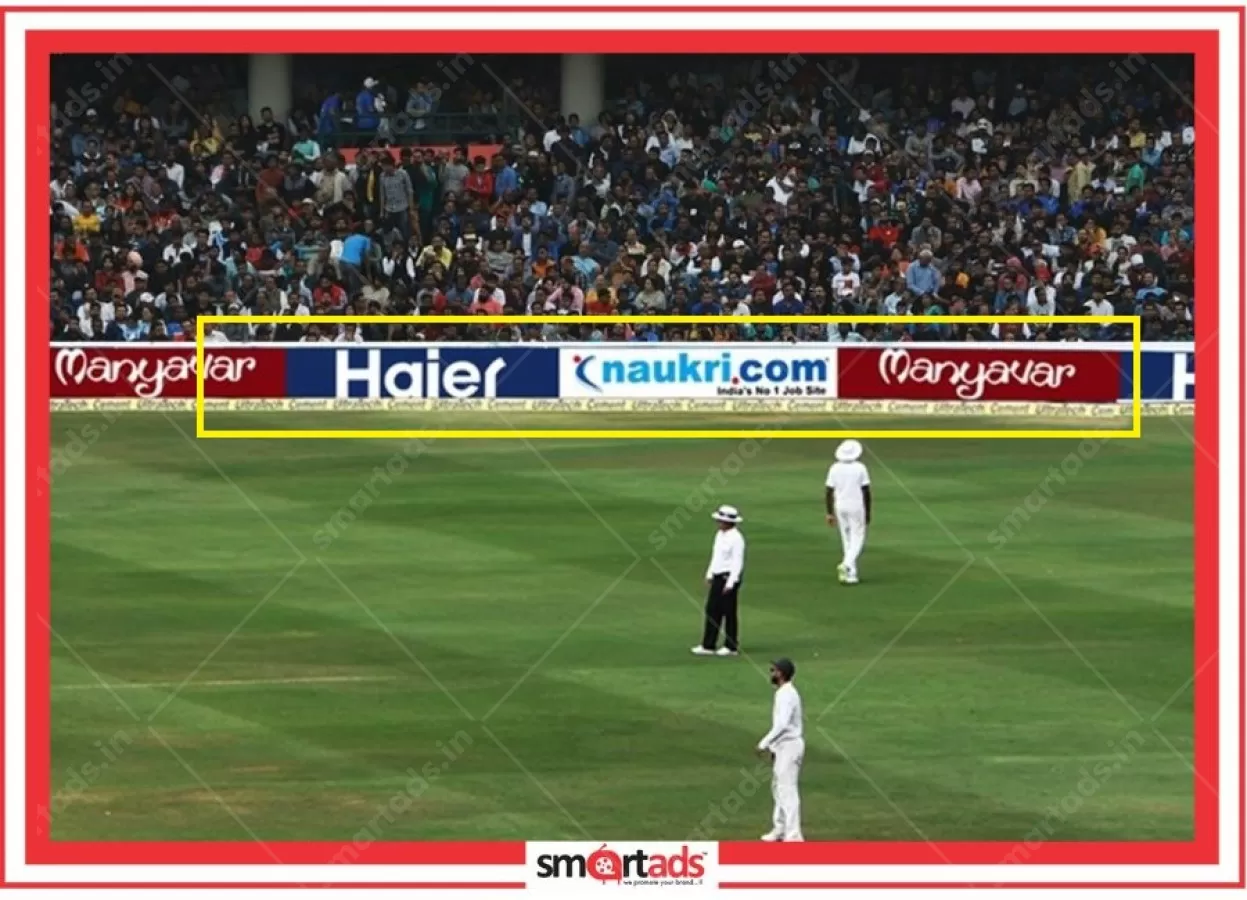
Silver HD Perimeter Signage
Various Sizes
1 ball in every 10 Balls : 50% of the Gr
Rate per Digital Screen / Per match
At Time Only 3 Display Name.
₹1100000.00
Showing 1 to 4 of 4 Results
MEDIA DETAILS
Various Sizes
1 ball in every 10 Balls : 50% of the Gr
Rate per Digital Screen / Per match
At Time Only 3 Display Name.
₹1100000.00
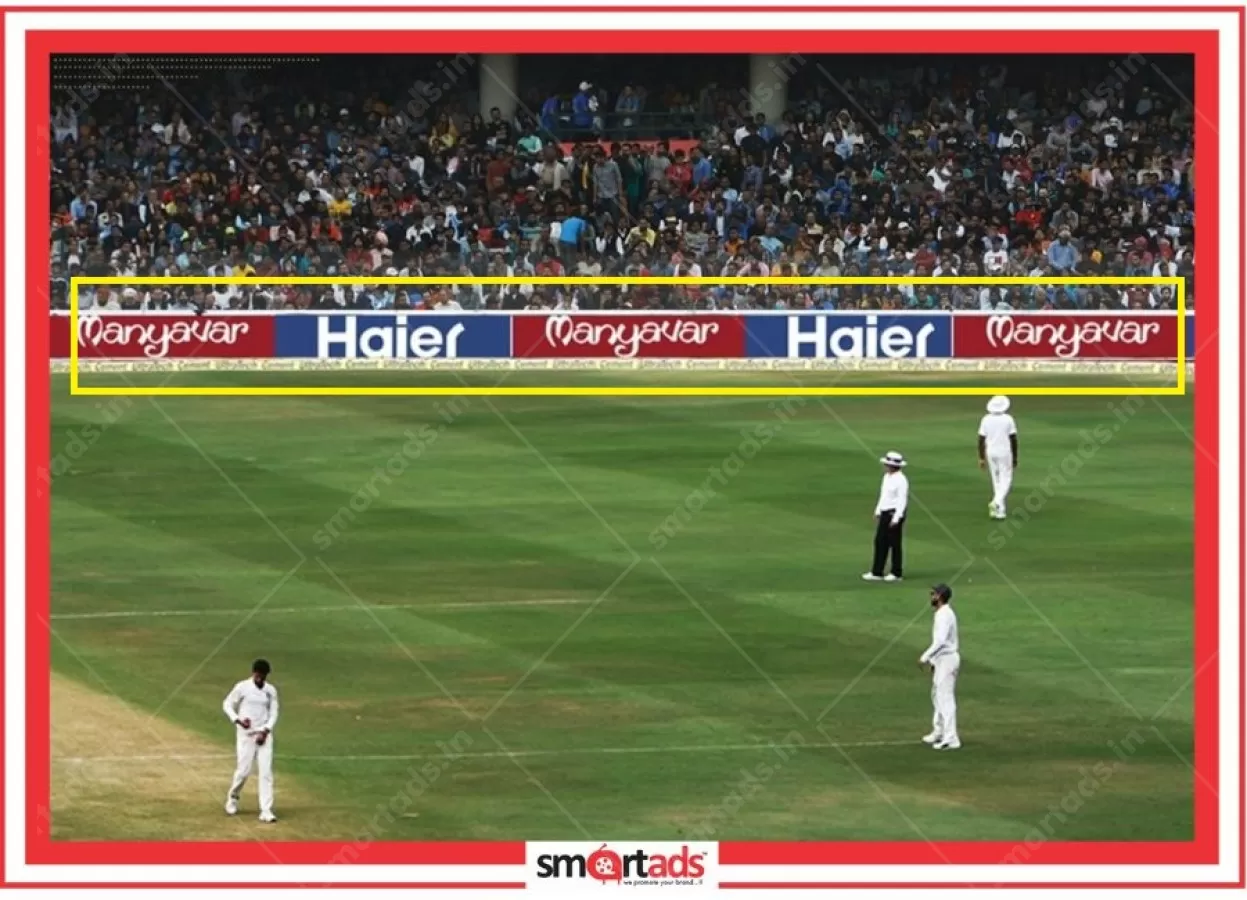
Various Sizes
1 Ball In Every 10 Balls : 50% Of The Gr
Rate per Digital Screen / Per match
At Time Only 2 Display Name.
₹1700000.00
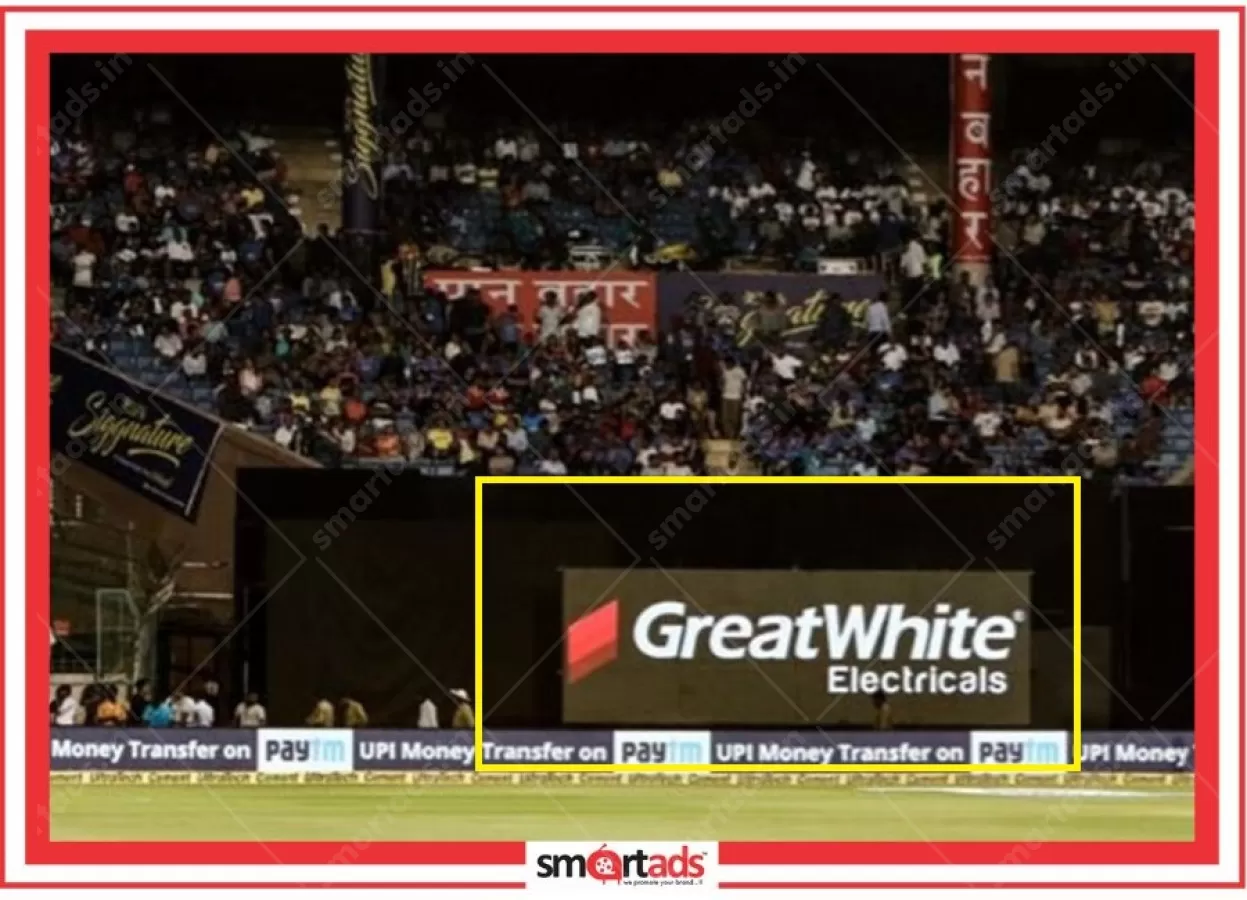
Various Sizes
5 Overs Per ODI Match , 2 Overs Per T20
Rate per Digital Screen / Per match
At Time Only 1 Display Name.
₹1150000.00
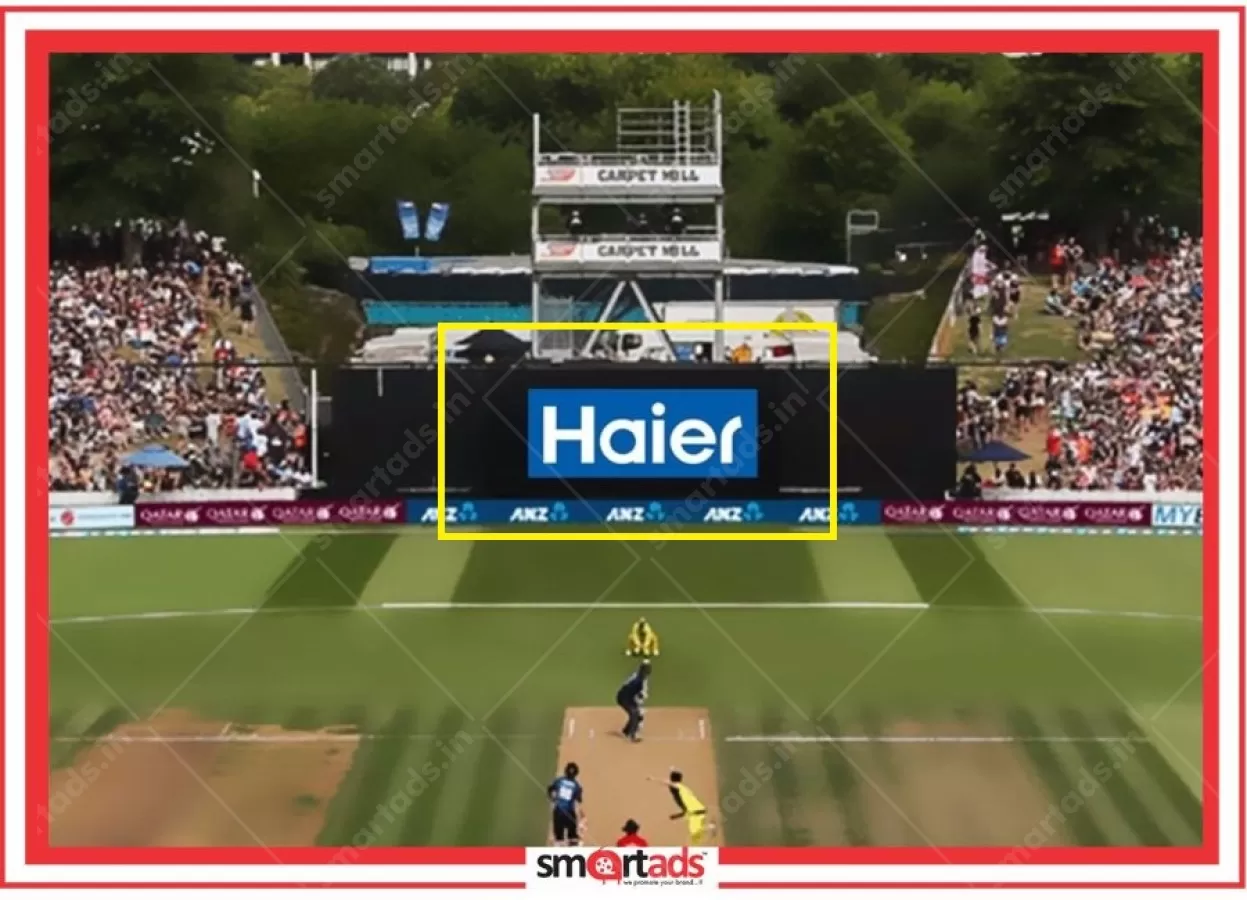
Various Sizes
5 Overs Per ODI Match , 2 Overs Per T20
Rate per Digital Screen / Per match
At Time Only 1 Display Name.
₹1150000.00
MEDIA REACH

MinimumQty :
1
EstimateReachPeople :
40000

Most brands that approach us about cricket stadium advertising in Visakhapatnam are surprised to learn that a single IPL match at the Dr. YSR ACA-VDCA Cricket Stadium can deliver combined in-stadium and broadcast impressions that rival a week-long newspaper campaign across the entire Andhra Pradesh market — at a fraction of the cost per eyeball. The stadium, which sits off NH-16 in Pothinamallayya Palem and holds just over 27,500 spectators, punches well above its capacity weight because every match is simultaneously broadcast to millions of television viewers on JioHotstar and other platforms. What a lot of brands still miss is that when you place perimeter boards or LED display units at ACA-VDCA, you are not just buying an audience of 27,500 people in seats — you are buying broadcast visibility that travels far beyond the stadium boundary.
Frankly speaking, the answer has everything to do with the nature of attention inside a cricket ground. When a fan walks into the ACA-VDCA stadium on match day, they are not multitasking the way they do while scrolling a news feed or flipping past a highway hoarding at 80 kilometres an hour; they are seated, emotionally invested, and visually anchored to the playing field for three to eight hours depending on the format. That quality of attention is extraordinarily rare in advertising, and it is the core reason why stadium advertising in Visakhapatnam consistently delivers brand recall numbers that most outdoor advertising formats cannot match.
At SmartAds, we have run post-campaign recall studies across several BTL advertising formats in the Visakhapatnam market, and the data from cricket stadium campaigns routinely shows unaided brand recall rates that are two to three times higher than what the same client achieves from a comparable investment in roadside hoardings or transit advertising. The captive audience dynamic is real — a fan seated in the lower tier at ACA-VDCA will see a perimeter board rotate past their sightline dozens of times across a single session, which means frequency is built into the format by default rather than being something you have to engineer through repetitive placements. This high-frequency branding effect, which is difficult to replicate in any other non-traditional advertising environment, is what makes the cost per impression argument so compelling when you actually run the numbers.
The broader sports marketing context matters here too. The FICCI-EY Media and Entertainment Report has consistently flagged cricket as India's single most commercially valuable sports property, and Andhra Pradesh cricket has been riding a genuine wave of fan engagement following the state's bifurcation and the establishment of a more distinct Andhra Cricket Association identity. International cricket matches and IPL fixtures at the stadium have drawn strong attendance, and the Sunrisers Hyderabad connection — the franchise has played matches in Vizag — brings an additional layer of brand-conscious, urban, upwardly mobile fan demographics to the ground. For any brand targeting the Visakhapatnam and broader Andhra Pradesh market, this is not a peripheral media option; it belongs near the centre of a well-constructed media plan.
The range of advertising formats available at the Dr. YSR ACA-VDCA Cricket Stadium is considerably wider than most brand managers realise when they first start exploring the option, and the choice of format has a significant bearing on both cost and the type of visibility you achieve. The most prominent and commercially sought-after format is the perimeter LED board system that runs around the boundary of the playing field; these digital screens rotate brand creatives every few seconds, which means multiple advertisers can share the same physical real estate across a single match, and the dynamic nature of the display makes them virtually impossible for a seated spectator — or a television camera — to ignore.
Beyond the LED display perimeter, the stadium offers static hoarding positions at various heights across the stands, sight screen branding at both the Vizzy End and the DV Subba Rao End, boundary rope branding that places a sponsor logo at the very edge of the playing surface, and pitch-side branding options that appear in close-up broadcast shots with remarkable frequency. Ground mural advertising — where a brand's creative is painted or applied directly onto the outfield — is a format that generates significant television viewership impressions because cameras sweep the ground during replays and wide-angle coverage. Dugout branding, which places signage in the players' and support staff areas, carries a particular prestige value because it appears in the frame during player reaction shots and interviews conducted at the boundary edge.
Stadium signage on the outer walls, entry gates, and concourse areas serves a different strategic purpose — it reaches the crowd during the high-engagement moments of arrival and departure, which are times when fans are physically moving through the space and more receptive to brand activation or experiential marketing touchpoints. Scoreboard advertising, which includes digital screens displaying brand messages between overs and during drinks breaks, is another format that commands strong attention because fans are actively looking at the scoreboard for match information. On top of that, the stadium also accommodates naming rights at the highest investment tier, though that is a multi-season commitment that falls into a different budget category entirely from match-day in-stadium branding packages.
This is the question every client asks first, and to be honest, it is also the question that most agency websites refuse to answer clearly — which is frustrating for anyone trying to build a realistic media plan. We will give you the most accurate publicly available benchmarks we have, with the caveat that final rates are negotiated based on match type, duration of campaign, number of matches, and the specific format combination you choose.
For perimeter LED board advertising at ACA-VDCA during an international cricket match — an ODI or a T20 International — the cost works out to somewhere in the ballpark of ₹3 lakh to ₹8 lakh per match per slot, depending on the rotation frequency and the duration of the creative cycle you are purchasing. During IPL advertising fixtures, where commercial demand is substantially higher and the broadcast audience multiplier is at its peak, rates for premium LED display positions can climb to somewhere between ₹8 lakh and ₹20 lakh per match, which sounds steep until you calculate the cost per impression against the combined in-stadium and television viewership numbers. Static hoarding positions, which are less dynamic but carry a lower price point, are generally available in the range of ₹1.5 lakh to ₹4 lakh per match for a prominent stand-facing position, and these rates can be negotiated down meaningfully if you are committing to a multi-match stadium branding package across a full season or tournament.
Boundary rope branding and sight screen advertising tend to be priced as part of bundled packages rather than standalone buys, and the advertising rates for these formats are typically in the range of ₹75,000 to ₹2 lakh per match depending on the match type and the prominence of the position. Ground mural and pitch-side branding are premium formats that command higher rates — roughly ₹2 lakh to ₹5 lakh per match — because of their disproportionate broadcast visibility. One thing we always tell our clients at SmartAds is to think about cricket stadium advertising cost in India not as a per-match expense but as a cost per impression investment; when you divide the total spend by the combined reach of in-stadium attendees plus television viewers plus digital streaming audiences, the numbers become genuinely competitive with mass media formats. For domestic Ranji Trophy or BCCI domestic tournament matches at the same venue, advertising rates are considerably lower — often 60 to 70 percent below international match rates — which makes those fixtures an excellent entry point for brands with tighter budgets who want to test the format.
The demographic profile of the audience at ACA-VDCA stadium is one of the most commercially attractive concentrations of consumers you will find in Visakhapatnam on any given day, and this is something that gets underappreciated in standard media planning conversations. Cricket in Andhra Pradesh draws a broad cross-section of the population, but the paying attendee at an international cricket match or an IPL advertising event at this venue skews heavily toward males aged 18 to 45, with a significant representation of the SEC A and SEC B income brackets — the same demographic that most FMCG, automotive, financial services, and consumer electronics brands are spending heavily to reach through television and digital channels.
What makes this target audience reach particularly valuable is the geographic specificity. Unlike a television campaign that buys reach across an entire state or a national digital campaign that reaches users across dozens of cities, cricket stadium advertising in Visakhapatnam delivers your brand message to a concentrated audience of people who live, work, and shop within the Vizag metropolitan area and the surrounding districts of Andhra Pradesh. A retail brand, a real estate developer, a local bank, or a regional consumer goods company gets enormous efficiency from this geographic precision — you are not paying to reach audiences in Chennai or Hyderabad who will never walk into your store or visit your project site. The captive audience at ACA-VDCA is, by definition, your local market.
It is also worth noting that women's cricket advertising opportunities at this venue have been growing in commercial significance. The stadium has hosted Women's ODIs and T20 Internationals, and the audience for women's cricket — while smaller in absolute numbers — tends to be highly engaged, younger, and increasingly attractive to brands in categories like personal care, fashion, and financial services. We have found that brands willing to associate with women's cricket at ACA-VDCA often achieve a disproportionate share of voice relative to their investment, precisely because the commercial competition for those fixtures is less intense than for men's internationals.
This is where the real value of cricket stadium advertising in Visakhapatnam becomes mathematically undeniable. The 27,500-capacity stadium is the physical venue, but the broadcast audience — the television viewership watching the same match on JioHotstar, DD Sports, and other platforms — can run into millions for an international fixture and tens of millions for an IPL match. BARC viewership data has consistently shown that cricket broadcasts are among the highest-rated content on Indian television, and every perimeter board, ground mural, and sight screen brand placement at ACA-VDCA is captured by broadcast cameras and delivered to that extended audience as part of the live feed.
The broadcast visibility multiplier is not uniform across all formats, which is something we are careful to explain when building a media plan for clients. Perimeter LED boards that face the main camera positions — typically the ones aligned with the pitch and the square-leg boundary — receive dramatically more broadcast screen time than boards positioned behind the sightscreen or in the upper tier. Sight screen branding is captured every time the camera follows the bowler's run-up, which in a T20 advertising context means your brand appears in frame hundreds of times across a single innings. Ground mural advertising achieves broadcast visibility during helicopter shots, replay sequences, and the wide-angle coverage that broadcasters use to establish the match atmosphere, which means it accumulates significant television viewership exposure even without being the primary focus of the camera.
At SmartAds, we had a financial services client based in Visakhapatnam who invested in a combination of perimeter LED board and sight screen branding at ACA-VDCA for a two-match T20 International series. Their post-campaign analysis, which cross-referenced BARC data with their own brand tracker survey, indicated that brand awareness among their target demographic in Vizag increased by roughly 18 percentage points over the campaign period — a result that their previous outdoor advertising investment across the city had taken nearly six months to achieve. The broadcast visibility component was the difference; the in-stadium audience was the foundation, but the television viewership reach was the amplifier that made the numbers move.
The media booking process for cricket stadium advertising at ACA-VDCA involves multiple stakeholders, and understanding the workflow in advance saves a significant amount of time and prevents the last-minute scrambles that we have seen derail campaigns for brands that came to us too late in the planning cycle. The primary rights holder for commercial advertising at the Dr. YSR ACA-VDCA Cricket Stadium is the Andhra Cricket Association, which operates in coordination with the Visakhapatnam District Cricket Association and under the overarching commercial framework set by the BCCI for international fixtures.
For international cricket matches — ODIs, T20 Internationals, and Test matches — the BCCI retains significant control over the commercial inventory, particularly for perimeter LED boards and broadcast-visible formats, because these are governed by the central media rights agreements that the board holds with broadcasters and global sponsors. This means that booking certain premium formats for international matches requires going through BCCI-approved channels, which typically means working with an authorised advertising agency or media buying partner that has an established relationship with the relevant rights holders. For IPL advertising at Vizag, the commercial rights are managed by the IPL franchise and the BCCI jointly, and the booking process is similarly structured around official channels rather than direct stadium approaches.
For domestic matches, BCCI domestic tournaments, and state-level fixtures at ACA-VDCA, the Andhra Cricket Association has more direct control over the advertising inventory, and the booking process is more straightforward — though it still requires formal proposals, creative approvals, and compliance with the association's branding guidelines. The minimum lead time for campaign planning and creative approvals is typically four to six weeks for domestic matches and eight to twelve weeks for international fixtures, which is something brands consistently underestimate. We always advise clients to begin the process at least three months before their target match date to allow adequate time for approvals, creative production, and logistics for installation of stadium signage and other physical formats.
The permissions workflow for in-stadium branding at ACA-VDCA is layered, and getting it wrong — or skipping steps — is one of the most common reasons campaigns get delayed or fall through entirely. The Andhra Cricket Association is the venue owner and the first point of contact for any brand seeking to advertise at the stadium, but the permissions required depend entirely on the match type and the format of advertising being deployed.
For international matches, the BCCI's commercial department must approve any perimeter board, sight screen, or broadcast-visible branding because these formats are covered under the central rights agreements. Brands that attempt to place advertising at a BCCI-sanctioned venue without this approval risk having their creatives removed or covered, which is both a financial loss and a reputational embarrassment. The BCCI-approved venue designation that ACA-VDCA carries is a mark of the stadium's compliance with international match standards, and it comes with a corresponding set of commercial protocols that must be followed. For non-broadcast-visible formats — concourse signage, entry gate branding, stadium hoarding on outer walls — the ACA's approval is generally sufficient, though even here the association has specific guidelines around creative content, brand categories, and placement restrictions.
On top of the ACA and BCCI approvals, brands in certain regulated categories — alcohol, tobacco, and some financial products — face additional compliance requirements under ASCI guidelines and BCCI's own category exclusivity agreements with existing sponsors. We have seen this create complications for brands that did not do their category clearance homework before committing budget to a campaign planning exercise. The practical advice we give clients at SmartAds is to treat the permissions process as a parallel workstream to creative development rather than a sequential step — start the approvals process at the same time as you begin designing your creatives, because waiting for one before starting the other adds weeks to your timeline unnecessarily.
The honest answer is that they serve different strategic objectives, and the choice between them should be driven by your campaign goals rather than by price alone. Perimeter LED boards at ACA-VDCA are the premium format for a reason — the digital screens offer dynamic creative rotation, which means your brand message can change across different sessions or even within a single session, allowing you to run multiple creatives or adapt messaging to match context. The broadcast visibility of LED display boards is also significantly higher than static hoardings, because the movement and brightness of digital screens draw camera attention and are more legible in broadcast footage than static formats.
Static stadium hoarding positions, on the other hand, offer a different kind of value — they are present for the entire duration of the match without rotation, which means a fan seated in a particular section of the ground will see your brand consistently throughout the day rather than intermittently as the LED rotation cycles through multiple advertisers. For brand recall purposes, there is a genuine argument to be made for the sustained, uninterrupted presence of a static format, particularly for brands that are still building awareness in the Visakhapatnam market and need repeated exposure to a specific audience segment. The advertising rates for static hoardings are also considerably lower than for LED display positions, which makes them a more accessible entry point for regional brands with tighter budgets.
What we typically recommend — and this is based on campaign planning experience across multiple stadium advertising campaigns in Andhra Pradesh — is a combination approach where the budget allows. A perimeter LED board slot for broadcast visibility, paired with one or two well-positioned static stadium signage panels in high-dwell areas like the main stand or the popular terrace, gives you both the television viewership amplification of the digital format and the sustained in-stadium brand recall of the static format. One automotive brand we worked with in Vizag took exactly this approach for a two-match ODI series at ACA-VDCA, and their post-campaign dealer inquiry data showed a measurable spike in walk-ins from the Visakhapatnam catchment area in the two weeks following the matches — a result that the brand's regional marketing team attributed directly to the combined in-stadium and broadcast visibility the campaign generated.
Comparing cricket stadium advertising to other outdoor advertising formats in Vizag requires being honest about what each medium is actually good at, because the answer is not simply "yes" or "no" — it depends on what you are trying to achieve and over what time horizon. A roadside hoarding on the Beach Road or near the Steel Plant area in Visakhapatnam will deliver daily impressions to a broad, geographically defined audience over a sustained period of weeks or months; cricket stadium advertising in Visakhapatnam delivers a concentrated, high-intensity burst of impressions to a demographically specific, emotionally engaged audience over a period of hours. These are fundamentally different media dynamics, and they suit different campaign objectives.
Where cricket stadium advertising consistently outperforms traditional OOH advertising in Vizag is on brand recall, fan engagement, and the prestige of association with cricket. The brand recall data from in-stadium environments is substantially higher than from roadside hoardings — partly because of the captive audience effect, partly because of the emotional context of sport, and partly because the frequency of exposure within a single match session is far higher than the frequency of exposure a driver or pedestrian achieves from a hoarding they pass once or twice a day. The cost per impression for stadium advertising, when the broadcast audience is factored in, is also competitive with — and in many cases lower than — the effective CPM of premium OOH advertising in Vizag's high-traffic corridors.
To be fair, OOH advertising has advantages that stadium advertising cannot match — it runs continuously, it reaches audiences who are not cricket fans, and it builds cumulative frequency over weeks rather than hours. For a brand that needs sustained, broad-reach awareness building across the Visakhapatnam market, a combination of OOH advertising and cricket stadium advertising is almost always more powerful than either format alone. A retail client in Visakhapatnam that we worked with for an Andhra Pradesh cricket domestic season ran a coordinated campaign that used stadium signage at ACA-VDCA for match-day intensity and a network of bus shelter and transit ads for sustained daily reach; the combined campaign delivered a cost per impression that was roughly 30 percent lower than their previous pure-OOH approach, while achieving significantly stronger brand recall scores in post-campaign research.
Measurement is the area where most brands leave value on the table, not because the data does not exist but because the measurement framework is rarely set up before the campaign begins rather than after. The metrics that matter for cricket stadium advertising in Visakhapatnam span three distinct audiences — the in-stadium crowd, the television viewership, and the digital streaming audience — and each requires a different measurement approach.
For in-stadium reach, the baseline is straightforward: the 27,500-capacity stadium provides a known maximum attendance figure, and actual attendance data for each match is available from the Andhra Cricket Association. Multiplying attendance by the average number of times a brand's perimeter board or stadium hoarding appears in a spectator's sightline during a match gives you a raw impression count, though the quality of those impressions — which is driven by format, position, and dwell time — varies considerably. For broadcast visibility, TAM AdEx data and BARC viewership reports provide the television audience numbers for specific matches, and some agencies offer brand exposure tracking services that use image recognition technology to calculate the number of seconds a brand's creative appeared in broadcast footage — a metric that can be converted into equivalent advertising value against spot rates.
The most meaningful measurement, however, is the one that connects campaign exposure to business outcomes — dealer inquiries, website traffic spikes, footfall increases, or brand tracker movements in the Visakhapatnam market. We have found that brands which set up these measurement systems before the campaign — establishing baseline metrics, defining the geographic catchment area for post-campaign analysis, and scheduling brand tracker surveys for the weeks immediately following the match — consistently extract more actionable insight from their cricket stadium advertising investment than brands that try to measure retrospectively. Share of voice analysis, which compares your brand's visibility against other advertisers in the same stadium environment, is another useful metric that helps justify the investment to management and informs future media booking decisions.
Q: What is the cost of cricket stadium advertising at ACA-VDCA Stadium in Visakhapatnam?
Advertising rates at the Dr. YSR ACA-VDCA Cricket Stadium vary significantly by match type, format, and position. For international cricket matches, perimeter LED board slots are generally priced somewhere between ₹3 lakh and ₹8 lakh per match, while IPL advertising positions at the same venue can range from ₹8 lakh to ₹20 lakh per match for premium placements. Static stadium hoarding positions are more affordable, typically in the range of ₹1.5 lakh to ₹4 lakh per match for a prominent location. Domestic match advertising rates are considerably lower — often 60 to 70 percent below international fixture rates — which makes them an attractive entry point for regional brands. Stadium branding packages that bundle multiple formats across a series of matches are almost always more cost-effective than single-format, single-match bookings, and we strongly recommend exploring these bundles when the campaign planning timeline allows.
Q: What advertising formats are available at the ACA-VDCA Cricket Stadium in Vizag?
The ACA-VDCA stadium offers a wide range of advertising formats that span both broadcast-visible and in-stadium-only categories. Perimeter LED boards and digital screens are the most prominent broadcast-visible formats, rotating multiple brand creatives throughout the match. Sight screen branding at both ends of the ground, boundary rope branding, pitch-side branding, and ground mural advertising are additional broadcast-visible options that appear frequently in camera coverage. For in-stadium audiences, static hoardings across the stands, scoreboard advertising, dugout branding, concourse signage, and entry gate branding are all available. At the highest investment level, stadium naming rights represent a long-term brand association opportunity with the venue itself. The specific availability of each format depends on the match type and the existing sponsor commitments of the ACA and BCCI for that fixture.
Q: How do I book cricket stadium advertising in Visakhapatnam for an IPL or international match?
The booking process begins with identifying the match fixture and confirming the rights holder for the specific format you want to advertise in. For international matches and IPL advertising, the BCCI's commercial framework governs broadcast-visible formats, which means working through an authorised advertising agency or media buying partner with established rights-holder relationships is the most reliable route. For non-broadcast formats and domestic matches, the Andhra Cricket Association is the primary contact. The minimum lead time is four to six weeks for domestic fixtures and eight to twelve weeks for international matches; for IPL, the process ideally begins three to four months before the match date. Working with an experienced advertising agency in Visakhapatnam that has prior ACA-VDCA booking experience — and knows the approvals workflow — saves significant time and reduces the risk of last-minute complications.
Q: What is the audience reach of cricket stadium advertising in Visakhapatnam?
The direct in-stadium audience at ACA-VDCA is up to 27,500 spectators per match, but the total target audience reach of cricket stadium advertising in Visakhapatnam is far larger once broadcast and digital streaming audiences are included. For an international T20 match at the venue, the combined television viewership and JioHotstar streaming audience can run into several million viewers, all of whom see broadcast-visible formats like perimeter LED boards and sight screen branding as part of the live coverage. BARC viewership data consistently shows that cricket broadcasts are among the highest-rated content on Indian television, and the specific audience profile — predominantly male, aged 18 to 45, SEC A and SEC B — is commercially attractive for a wide range of brand categories. The geographic concentration of the in-stadium audience in the Visakhapatnam and Andhra Pradesh market adds an additional layer of efficiency for brands targeting this specific region.
Q: Is cricket stadium advertising in Visakhapatnam considered BTL or ATL?
Cricket stadium advertising in Visakhapatnam is primarily classified as below the line advertising and BTL advertising because it involves direct, venue-specific brand placement rather than mass media broadcast buying. The in-stadium branding elements — perimeter boards, static hoardings, ground murals, sight screen branding — are all non-traditional advertising formats that fall squarely within the BTL and experiential marketing category. However, the broadcast visibility component creates an interesting hybrid dynamic: when your in-stadium branding appears on television during a live match, it effectively generates ATL reach through a BTL investment. This is one of the unique characteristics of cricket stadium advertising that makes it difficult to categorise neatly, and it is part of what makes the format so attractive from a media efficiency perspective. For accounting and campaign reporting purposes, most agencies classify it as BTL or non-traditional advertising, with the broadcast reach treated as an earned media bonus rather than a purchased ATL placement.
Q: What permissions are needed from ACA/VDCA/BCCI to place ads at the Vizag cricket stadium?
The permissions required depend on the match type and the advertising format. For international matches, broadcast-visible formats require BCCI commercial department approval because these formats are governed by the board's central rights agreements. The Andhra Cricket Association must approve all advertising at the venue regardless of match type, and their approval covers placement, creative content, and compliance with venue branding guidelines. For regulated brand categories — alcohol, tobacco, fantasy gaming, and certain financial products — additional ASCI compliance and BCCI category clearance checks are required. Non-broadcast formats on the outer walls and concourses typically require only ACA approval. The practical advice is to begin the permissions process at least three months before your target match date, treating creative approvals and permissions as parallel workstreams rather than sequential steps.
Q: How does in-stadium branding at ACA-VDCA help brands reach TV viewers beyond the live audience?
Every broadcast-visible format at ACA-VDCA — perimeter LED boards, sight screen branding, ground murals, pitch-side branding — is captured by the television cameras covering the match and delivered to the broadcast audience as part of the live feed. The broadcast visibility of perimeter LED boards is particularly strong for positions aligned with the main camera angles, while sight screen branding appears in frame every time the camera follows the bowler's run-up, which in a T20 match can mean hundreds of appearances per innings. The combined in-stadium and television viewership reach of an international match at ACA-VDCA can be several hundred times the physical stadium capacity, which means the effective cost per impression of broadcast-visible formats is dramatically lower than the headline match-day rate suggests. For brands that cannot afford a direct television advertising buy, cricket stadium advertising at ACA-VDCA offers a route to broadcast visibility at a fraction of the cost of a conventional TV spot campaign.
Q: What is the difference between perimeter LED board advertising and static hoarding at the Visakhapatnam cricket stadium?
Perimeter LED boards are dynamic digital screens that rotate multiple brand creatives throughout the match, offering broadcast visibility, creative flexibility, and the ability for multiple advertisers to share the same physical inventory. Static hoardings are fixed-position panels that display a single creative for the entire match duration, offering sustained, uninterrupted presence for a specific audience section. LED display boards command higher advertising rates and deliver stronger broadcast visibility because of their brightness, movement, and camera-friendly characteristics. Static stadium hoardings are more affordable and can be highly effective for in-stadium brand recall, particularly in high-dwell areas where fans spend extended time during the match. The choice between the two depends on campaign objectives — broadcast reach favours LED, while sustained local audience recall can be served effectively by well-positioned static formats.
Q: Which brands typically advertise at ACA-VDCA Cricket Stadium during IPL and international matches?
The brand categories most commonly represented in cricket stadium advertising at ACA-VDCA include financial services and banking, consumer electronics and mobile phones, FMCG and beverages, automotive, real estate and construction, e-commerce and retail, and fantasy sports platforms. During IPL advertising cycles, national and multinational brands dominate the premium perimeter LED board inventory because of the broadcast reach those fixtures deliver. For international cricket matches and domestic tournaments, regional brands from Andhra Pradesh — local banks, real estate developers, regional retail chains, and state government campaigns — are well represented and often achieve strong ROI because their target audience is concentrated precisely in the geographic catchment area the stadium serves. Brands that associate with cricket at ACA-VDCA benefit from the emotional equity of the sport and the prestige of being seen alongside international cricket in Visakhapatnam.
Q: How does cricket stadium advertising in Visakhapatnam compare to outdoor hoarding advertising in Vizag in terms of ROI?
The ROI comparison between cricket stadium advertising and traditional outdoor hoarding advertising in Vizag depends on the metric you prioritise. On a pure cost per impression basis, stadium advertising — when broadcast reach is included — is often competitive with or superior to premium OOH positions in Vizag, particularly for international match fixtures. On brand recall, in-stadium branding consistently outperforms roadside hoardings because of the captive audience, emotional context, and high-frequency exposure within a single session. Where OOH advertising has a clear advantage is in sustained, continuous reach — a hoarding on Beach Road or the Steel Plant flyover delivers daily impressions over weeks or months, whereas stadium advertising delivers concentrated bursts on match days only. The most effective approach, which we have validated across multiple campaigns in the Visakhapatnam market, is to use cricket stadium advertising for high-intensity brand recall and prestige association, while using OOH advertising for sustained daily frequency — treating the two formats as complementary rather than competing investments.
The Dr. YSR ACA-VDCA Cricket Stadium is one of the most commercially underutilised advertising environments in Andhra Pradesh, not because the opportunity is obscure but because most brands approach it without a clear understanding of the permissions workflow, the format options, or the genuine reach numbers that a well-planned campaign can deliver. The stadium's combination of a captive, demographically concentrated in-stadium audience and the broadcast visibility multiplier of international and IPL fixtures creates a media opportunity that genuinely sits at the intersection of BTL advertising precision and ATL advertising scale — a combination that is difficult to find anywhere else in the Visakhapatnam market.
What we have seen consistently in our work across cricket stadium advertising campaigns in Andhra Pradesh is that the brands which succeed are the ones that plan early, choose formats strategically based on campaign objectives rather than price alone, and build measurement frameworks before the campaign begins rather than after. The seasonality of the opportunity matters too — international fixtures at ACA-VDCA tend to cluster in the October to March window, which aligns well with the festive and post-festive consumer spending cycles that most brand managers are already trying to capitalise on through their broader media plans. IPL advertising opportunities, when Vizag is part of the fixture schedule, represent the peak commercial moment and deserve to be planned with the same rigour as a national television campaign.
If you are a brand manager or media planner evaluating cricket stadium advertising in Visakhapatnam for the first time, or if you have explored it before but found the booking process opaque or the rate negotiations frustrating, SmartAds.in can help you navigate the process from initial permissions through creative approvals to post-campaign measurement. We work across 500+ Indian cities and have specific experience in the Andhra Pradesh market, which means we understand the ACA-VDCA inventory, the rights-holder relationships, and the local audience dynamics that make the difference between a campaign that delivers and one that simply occupies space. Reach out to us at SmartAds.in to discuss a customised media plan that makes the most of what cricket stadium advertising in Visakhapatnam has to offer.
