
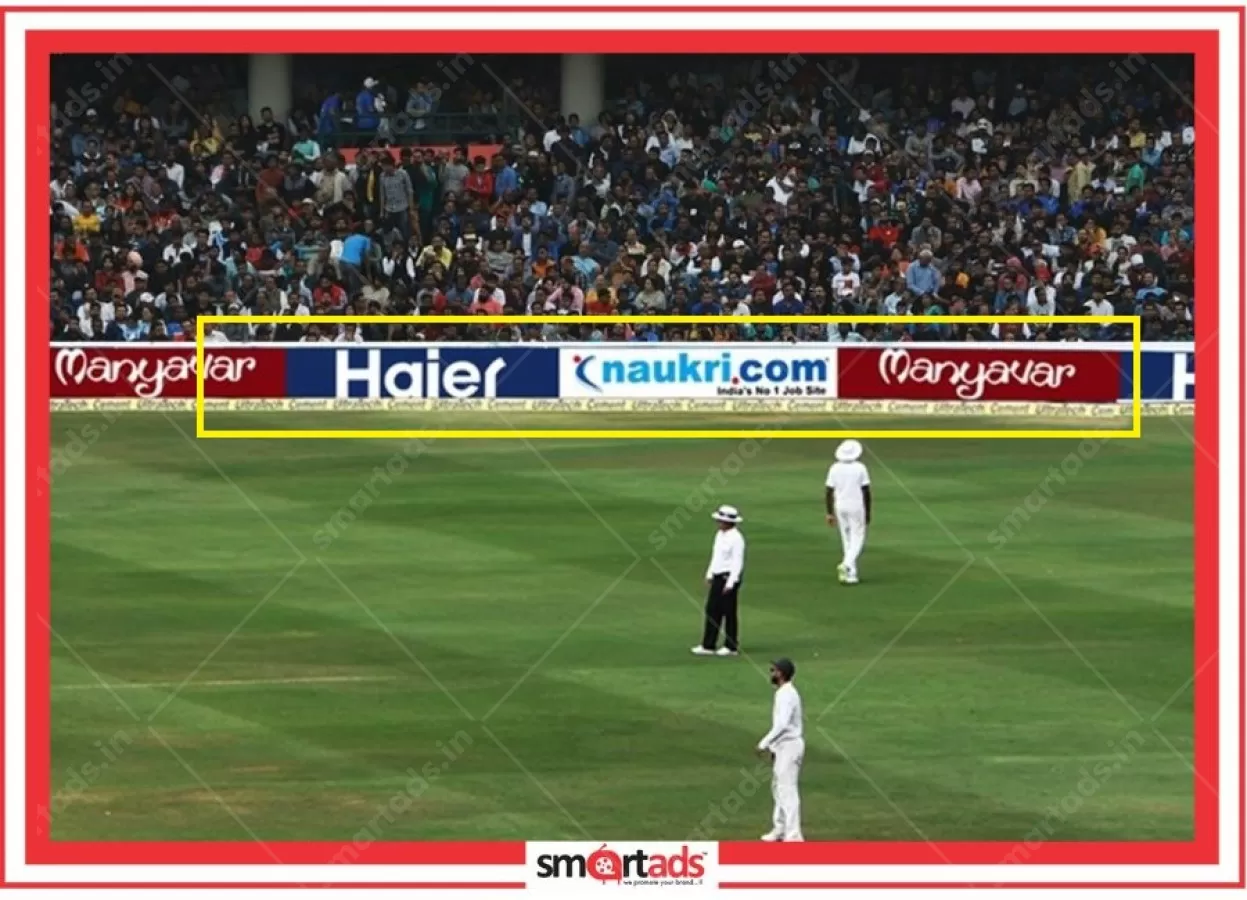
Silver HD Perimeter Signage
Various Sizes
1 ball in every 10 Balls : 50% of the Gr
Rate per Digital Screen / Per match
At Time Only 3 Display Name.
₹1100000.00
Showing 1 to 4 of 4 Results
MEDIA DETAILS
Various Sizes
1 ball in every 10 Balls : 50% of the Gr
Rate per Digital Screen / Per match
At Time Only 3 Display Name.
₹1100000.00
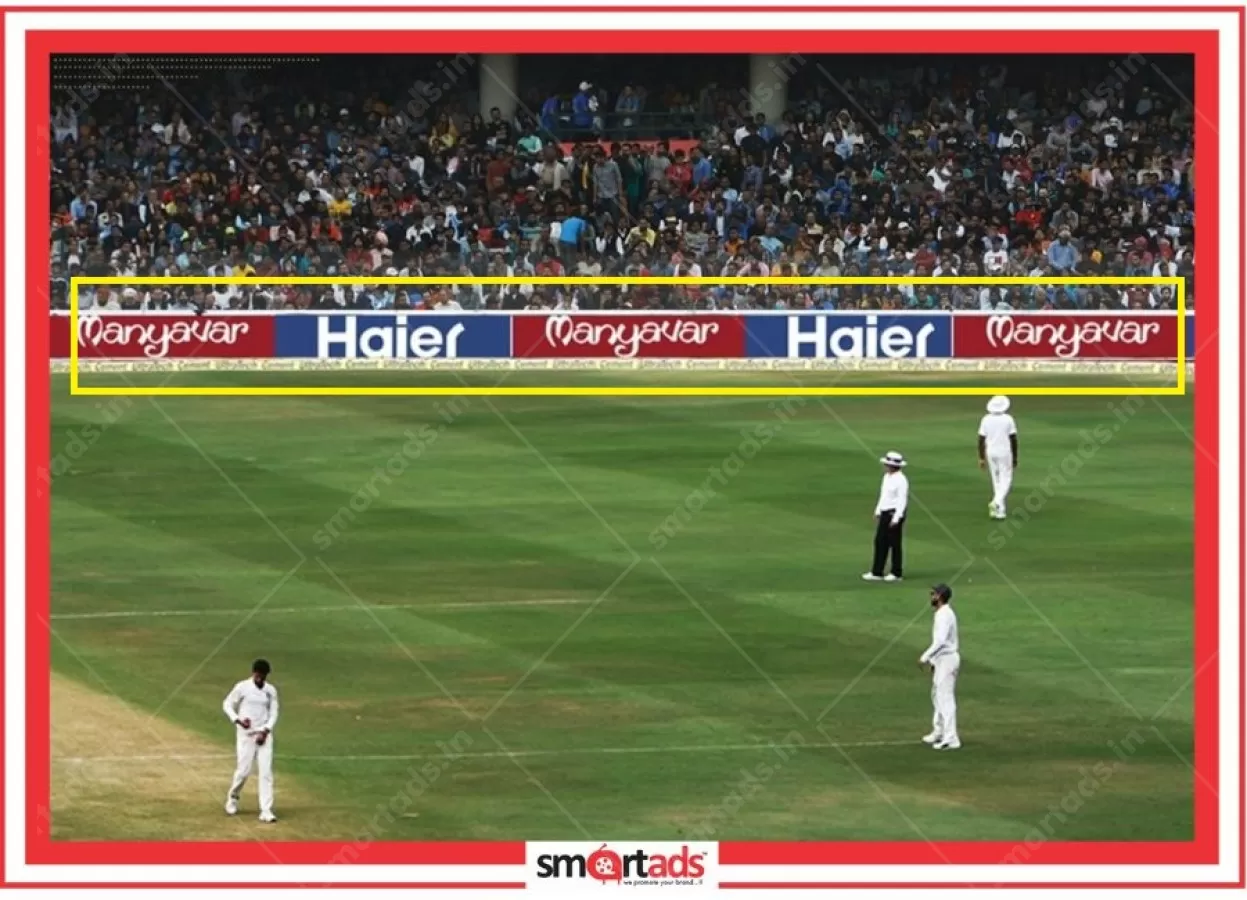
Various Sizes
1 Ball In Every 10 Balls : 50% Of The Gr
Rate per Digital Screen / Per match
At Time Only 2 Display Name.
₹1700000.00
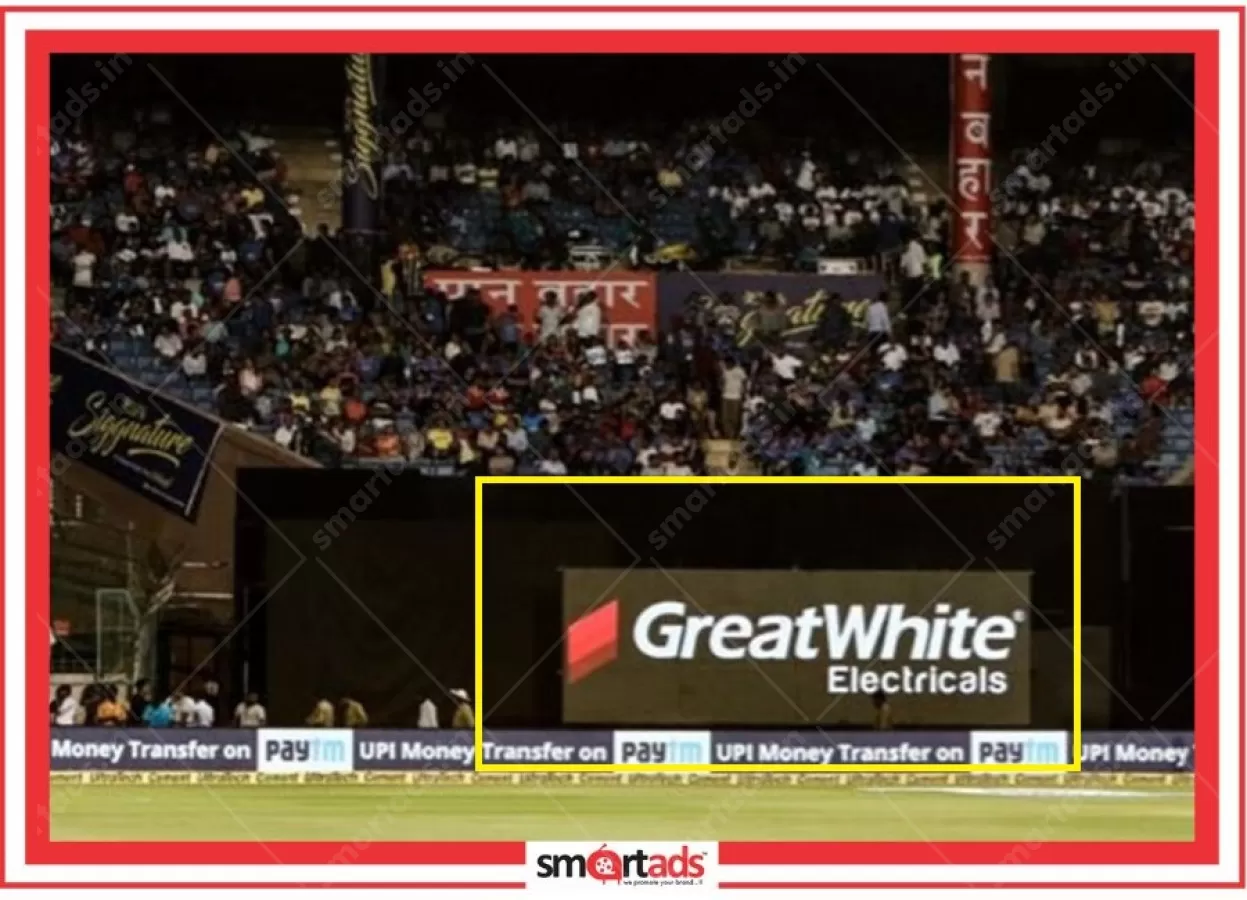
Various Sizes
5 Overs Per ODI Match , 2 Overs Per T20
Rate per Digital Screen / Per match
At Time Only 1 Display Name.
₹1150000.00
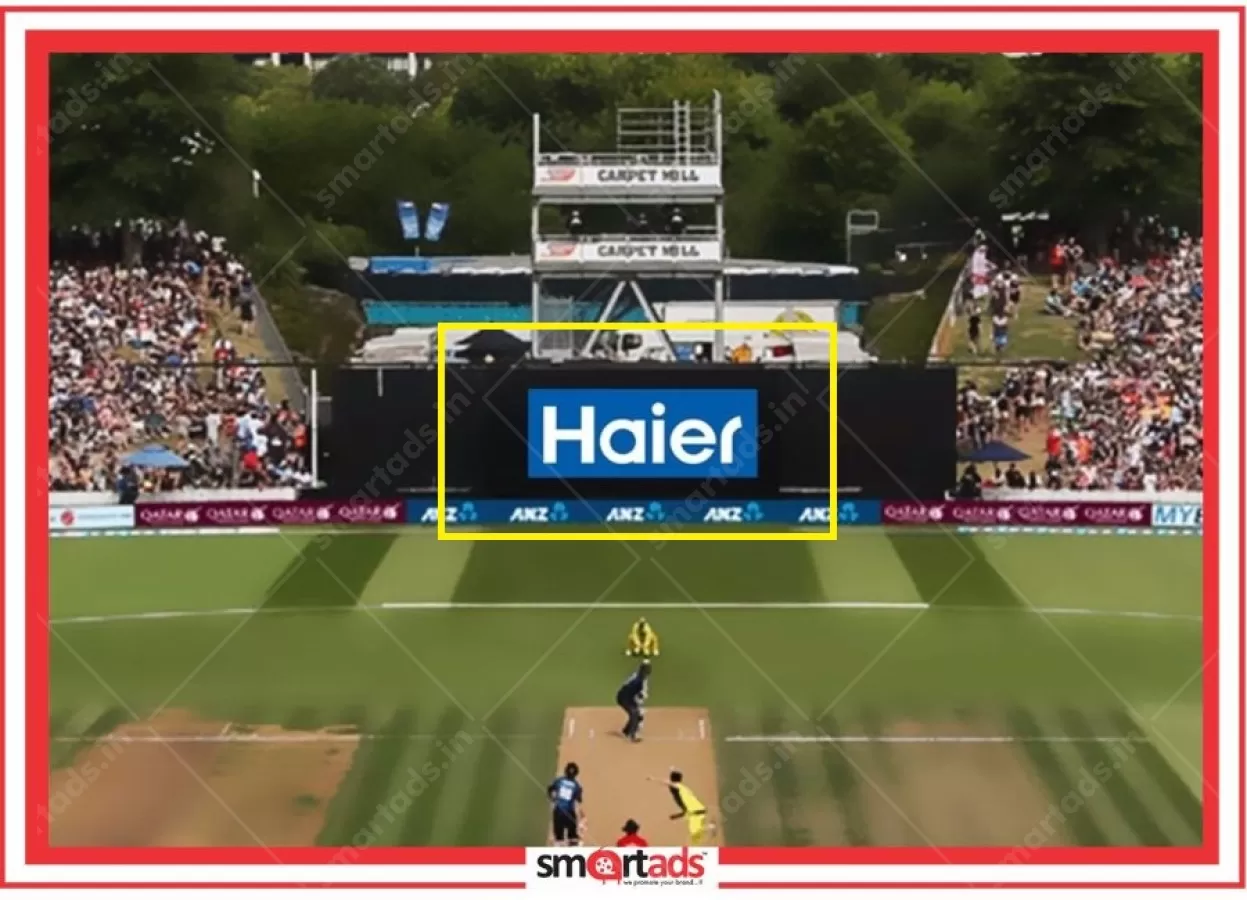
Various Sizes
5 Overs Per ODI Match , 2 Overs Per T20
Rate per Digital Screen / Per match
At Time Only 1 Display Name.
₹1150000.00
MEDIA REACH

MinimumQty :
1
EstimateReachPeople :
30000

Few advertising opportunities in India combine the emotional intensity of live cricket with a backdrop so visually arresting that television cameras cannot resist lingering on it. The HPCA Stadium in Dharamshala sits at roughly 1,457 metres above sea level, framed by the Dhauladhar mountain range in a way that makes every broadcast shot feel like a tourism advertisement — and for brands whose logos appear on those perimeter boards, that scenic context is worth considerably more than the rate card suggests.
There is a version of this conversation we have had many times at SmartAds, usually with a brand manager who has just been told by a well-meaning colleague that Dharamshala is "too small" or "too remote" to justify serious advertising investment. The numbers tell a very different story. The HPCA Stadium, developed under the stewardship of the Himachal Pradesh Cricket Association and shaped significantly by the vision of figures like Arun Kumar Dhumal, holds approximately 23,000 spectators — which is not the largest capacity in India, but which produces some of the most concentrated, high-engagement audiences anywhere in the country. When a stadium sells out for an IPL match or an international fixture, every single one of those seats is occupied by someone who has made a deliberate, enthusiastic choice to be there; passive footfall this is not.
What a lot of people miss is the tourism crossover dimension. Dharamshala and its neighbouring McLeod Ganj attract somewhere between 10 and 15 lakh domestic and international tourists annually, and a significant portion of that audience overlaps with the cricket-going demographic — educated, mobile, aspirational, and with disposable income. When Punjab Kings play a home fixture at HPCA, the crowd is not purely local; it draws fans from Chandigarh, Delhi, Amritsar, and beyond, many of whom are combining the match with a short holiday in Himachal Pradesh. For brands in hospitality, travel, FMCG, and BFSI, this crossover audience is genuinely difficult to reach through conventional media at comparable cost.
The Dhauladhar mountains in the background are not just scenery — they are a brand association asset. Our experience at SmartAds shows that brands which advertise at high-altitude cricket venues like Dharamshala consistently score higher on premium perception metrics in post-campaign surveys, compared to the same brands advertising at urban stadium venues. The visual language of the mountains communicates quality, aspiration, and authenticity in ways that a concrete stadium backdrop in a metropolitan city simply cannot replicate. This is not sentiment; it is a measurable brand-building advantage that media planners should be factoring into their planning assumptions.
The range of formats available at the Dharamshala cricket stadium is broader than most advertisers expect when they first approach us, and each format serves a different strategic purpose within a media plan. Perimeter boards are the most visible and most commonly booked format; these run along the boundary of the playing field and are captured in virtually every camera angle during a match broadcast, which means a brand's perimeter board placement at HPCA effectively functions as both an on-ground branding asset and a television advertising placement simultaneously. Traditional vinyl perimeter boards remain available, but LED perimeter signage has become the dominant format for high-value matches, allowing brands to rotate creative, display dynamic messaging, and even run match-contextual content that increases relevance and brand recall.
Beyond the boundary, the stadium offers a genuinely diverse inventory of below-the-line advertising formats. Ground mural branding — large-format creative applied to the outfield or the area surrounding the pitch — delivers dramatic visual impact and is particularly effective for broadcast visibility during aerial drone shots, which have become standard in IPL and international cricket match coverage. Pitch mat advertising, placed in the area between the wickets and the boundary, appears in close-up camera angles during fielding changes and strategic timeouts; it is a format that surprises most clients with how much screen time it actually generates. Entrance gate branding reaches every spectator as they arrive and depart, creating a high-frequency touchpoint that works well for brand awareness objectives; pillar branding inside the stadium concourses adds another layer of visibility during the pre-match and interval periods when fans are moving around.
For brands seeking deeper integration, HPCA stadium advertising also offers digital screen advertising on the large LED scoreboards and video screens positioned around the venue, which display branded content during breaks in play and can be used to run video creative that would otherwise require a television media buy. Stadium naming rights, while a longer-term and higher-investment commitment, represent the ultimate in-stadium branding opportunity and have historically been associated with major corporate sponsors at HPCA. At SmartAds, we always tell our clients that the most effective campaigns at Dharamshala cricket stadium are the ones that combine at least two or three of these formats — because a fan who sees your brand on the perimeter board, then on the entrance gate, and then on the digital screen during the drinks break has been exposed to your message in three distinct emotional states, which is precisely what drives brand recall.
Frankly speaking, this is the question we get asked most often, and it is also the question that most online resources answer least honestly. We will give you real numbers here, with the caveat that advertising rates at HPCA stadium vary significantly depending on the match type, the format, the duration of the booking, and the time of year. For a standard perimeter board placement at a Ranji Trophy or domestic match, the advertising cost works out to somewhere in the ballpark of ₹50,000 to ₹1.5 lakh per match, which is a range that makes cricket branding accessible even for regional and mid-sized businesses. For IPL matches featuring Punjab Kings, the same perimeter board placement can command anywhere between ₹5 lakh and ₹20 lakh per match, depending on the specific board position and whether the format is static vinyl or LED perimeter signage.
LED screen advertising on the stadium's digital scoreboards is priced somewhat differently — typically on a per-slot or per-match basis, with a single match package for a T20I or IPL fixture running somewhere between ₹3 lakh and ₹12 lakh depending on the number of display slots, the duration of each slot, and the creative format. Ground mural branding and pitch mat advertising, which require physical installation and are therefore booked on a per-match or per-series basis, tend to fall in a similar range to premium perimeter board placements. Entrance gate branding and pillar branding are generally more accessible, with per-match advertising costs for domestic fixtures starting at roughly ₹25,000 to ₹75,000 — which makes them a sensible entry point for brands that want in-stadium presence without committing to the full perimeter board investment.
What we tell our clients at SmartAds is that the cricket stadium advertising cost per match at Dharamshala needs to be evaluated against the combined on-ground and broadcast value, not just the live audience of 23,000. A perimeter board at an IPL match that is broadcast on a major OTT platform and a television network reaches not just the stadium crowd but potentially several crore viewers — and the CPM on that combined reach works out to a number that would surprise most brand managers who are accustomed to thinking about stadium advertising purely as an outdoor medium. The return on investment for stadium advertising becomes considerably more compelling when broadcast visibility is factored into the calculation, which is an argument we make consistently in every media plan we build around HPCA Dharamshala.
IPL advertising at HPCA has historically been the headline opportunity, and for good reason. Punjab Kings have used Dharamshala as one of their home venues, and an IPL match at the HPCA stadium generates a level of fan engagement and broadcast intensity that domestic cricket simply cannot match. The combination of a sold-out stadium, a prime-time broadcast window, and the social media amplification that surrounds IPL matches creates a multi-channel brand visibility event that is extremely difficult to replicate through any single media buy. IPL match branding at Dharamshala is, in our experience, among the most cost-efficient broadcast-amplified advertising opportunities available to brands operating in North India and Himachal Pradesh.
International cricket matches represent an equally compelling opportunity, and here is where it gets interesting from a planning perspective. The India vs South Africa T20I series in December 2025, which included a fixture at Dharamshala, demonstrated exactly how much global broadcast attention a T20I advertising placement at this venue can generate. T20I advertising at HPCA reaches not just the Indian television viewership but international audiences across South Africa, the UK, and the broader cricket-watching diaspora — which is a dimension that matters enormously for brands with international aspirations or those targeting the NRI segment. Looking ahead, the T20 World Cup 2026 presents what may be the single largest ICC tournament advertising opportunity that Dharamshala has seen, and brands that move early on that inventory will almost certainly benefit from both the pricing advantage and the premium positioning.
Ranji Trophy branding and domestic limited-overs matches offer a different value proposition — lower advertising rates, more accessible booking windows, and an audience that is predominantly local and regional, which makes them ideal for businesses whose target audience is concentrated in Himachal Pradesh and the surrounding hill districts. A retail client we worked with in Kangra used Ranji Trophy match-day advertising at HPCA as part of a hyperlocal brand awareness campaign, combining entrance gate branding with pillar branding inside the stadium; the campaign reached an estimated 18,000 to 20,000 spectators per match across a four-match series, at a total advertising cost that was well under ₹5 lakh — which represented a cost per thousand impressions that was genuinely competitive with local newspaper and radio advertising, while delivering a significantly higher emotional engagement context.
The stadium advertising booking process at HPCA is more structured than it used to be, but it still requires navigating a few steps that can catch first-time advertisers off guard. The formal route involves approaching the Himachal Pradesh Cricket Association directly for sponsorship and advertising enquiries; HPCA maintains a commercial team that handles match-specific and series-level advertising inventory, and for major formats like perimeter boards, LED perimeter signage, and ground mural branding, the booking needs to be confirmed well in advance — typically six to eight weeks before a domestic match, and three to four months before an IPL or international cricket match, given the higher demand for that inventory.
What a lot of people miss is that for many formats — particularly entrance gate branding, pillar branding, and certain digital screen advertising slots — the booking process can be handled through an authorised advertising agency, which is where a media buying partner with existing HPCA relationships becomes genuinely valuable. At SmartAds, we have established working relationships with stadium management and HPCA's commercial team, which means we can advise clients on inventory availability, negotiate on rate, and manage the creative production and installation logistics that are often the most time-consuming part of a stadium advertising campaign. The creative specifications for HPCA formats are specific — vinyl perimeter boards have particular dimension requirements, LED content has frame rate and file format specifications, and ground mural installations require advance site visits — and getting these wrong can delay a campaign or result in suboptimal placement.
For brands approaching cricket stadium advertising in Dharamshala for the first time, our recommendation is to begin the conversation at least three months before the target match window, particularly if the objective is IPL advertising or international match coverage. The most desirable positions — the straight-on perimeter board visible behind the bowler's arm, the mid-on and mid-off boundary positions that appear in nearly every batting shot — are booked quickly and rarely available at short notice. Brands that treat the booking process as a last-minute exercise consistently end up with less valuable positions at higher effective costs, which is a pattern we have seen repeat itself often enough that we now build advance booking timelines into every media plan we present to clients.
The live audience at a sold-out HPCA stadium fixture sits at roughly 23,000 people — the HPCA stadium capacity 23000 figure is well documented — but treating that as the total reach of a stadium advertising campaign is a significant underestimate. For IPL matches and international fixtures, the broadcast television viewership adds several crore additional impressions to every perimeter board and LED screen placement in the stadium; BARC viewership data for IPL seasons consistently shows that individual matches attract between 5 and 15 crore viewers on television and OTT platforms, depending on the teams and the stakes of the fixture. Even a conservative assumption about the proportion of broadcast time during which HPCA perimeter boards are visible suggests that the effective audience reach for a well-positioned in-stadium branding placement extends far beyond the physical stadium.
The demographic profile of the Dharamshala cricket stadium audience is worth examining carefully, because it differs meaningfully from the average Indian cricket crowd. The presence of Dharamshala and McLeod Ganj as major tourism destinations means that a significant share of the match-day audience consists of tourists — domestic travellers from Punjab, Delhi, and Haryana, as well as international visitors who have incorporated a cricket match into a Himachal Pradesh holiday. This tourism crossover audience tends to skew slightly older and more affluent than the average cricket fan, with higher disposable income and stronger brand responsiveness; for BFSI brands, premium FMCG, hospitality, and travel companies, this demographic composition is a genuine strategic advantage.
On top of that, the social media amplification generated by HPCA matches — particularly given the stadium's visually spectacular setting — means that branded content within the stadium frequently appears in fan-generated posts, match highlights shared on Instagram and YouTube, and official broadcast clips. A brand whose perimeter board appears in the background of a viral match moment effectively receives earned media exposure that was never budgeted for; we have seen this happen with clients who had relatively modest stadium advertising investments, and the resulting brand visibility across digital platforms added a measurable secondary layer of reach to what was already a strong on-ground campaign.
This is a comparison that comes up often in media planning conversations, and our honest assessment is that Dharamshala occupies a genuinely distinct position in the hierarchy of Indian cricket advertising venues. The major metro stadiums — Wankhede in Mumbai, Eden Gardens in Kolkata, Chinnaswamy in Bangalore — offer larger capacities and more matches per season, but they also command significantly higher advertising rates and operate in far more competitive advertising environments where brand clutter is a real problem. At HPCA Dharamshala, the relative scarcity of advertising inventory means that each brand placement receives more visual breathing room, which translates directly into higher brand recall scores.
The high-altitude cricket venue branding proposition is unique to Dharamshala among India's major cricket venues; no other international-standard stadium in the country combines a mountain backdrop, a tourism destination context, and a BCCI-approved international match schedule in the same way. This uniqueness has a measurable effect on brand perception — the Dhauladhar mountains in the background of every broadcast shot create a premium visual context that effectively elevates the perceived quality of any brand appearing alongside it. One automotive brand we worked with specifically chose HPCA Dharamshala for a campaign launch because their brief called for "premium, aspirational, outdoors-oriented" brand associations; the stadium delivered all three without any additional creative effort, simply by virtue of where it sits.
Compared to other Tier-2 and Tier-3 venue advertising options in North India, Dharamshala cricket stadium advertising offers a combination of broadcast amplification, tourism audience crossover, and premium brand context that is genuinely difficult to match. Below-the-line advertising at a city-level outdoor site in a comparable Himachal Pradesh market might reach a similar number of local impressions per day, but it does so without the emotional intensity of a live cricket match, without the broadcast television multiplier, and without the aspirational brand association that comes from being present at one of India's most photographed sporting venues.
The honest answer is that the brands which extract the most value from cricket stadium advertising in Dharamshala are the ones that have thought carefully about why this specific venue serves their specific audience — rather than treating it as a generic sports sponsorship. FMCG brands with distribution across Himachal Pradesh and Punjab find the match-day audience extremely well-targeted; a consumer goods company whose products are available in Dharamshala, Kangra, Mandi, and Shimla is reaching a genuinely relevant local audience, and the emotional context of live cricket amplifies brand message reception in ways that conventional outdoor advertising cannot replicate.
Hospitality and tourism brands are perhaps the most natural fit for HPCA stadium advertising, given the venue's location in one of India's most visited hill destinations. Hotels, resorts, travel platforms, and adventure tourism operators whose target audience is the aspirational domestic traveller are essentially advertising to their ideal customer in a context where that customer is already in a holiday mindset — which is about as close to perfect contextual advertising outdoor placement as it is possible to achieve. We worked with a hospitality brand from the Kangra valley that used entrance gate branding and digital screen advertising across a three-match T20I series at HPCA; their booking enquiries from the Dharamshala region increased by roughly 34% in the six weeks following the series, which was a result that significantly exceeded the brand's pre-campaign expectations.
BFSI brands — insurance companies, banks, mutual fund houses, and fintech platforms — benefit from the affluent, educated demographic that Dharamshala cricket stadium audiences represent, particularly during IPL and international fixtures. Sports sponsorship in the BFSI category has grown significantly according to FICCI-EY Media Report data from recent years, and the trend reflects a broader recognition that cricket audiences in smaller cities and tourism destinations represent an underserved but highly valuable segment. Brands in the education, healthcare, real estate, and consumer electronics categories have also found strong resonance at HPCA, particularly when their creative messaging connects with the aspirational, upwardly mobile character of the Himachal Pradesh cricket audience.
This is a question we get asked more often than you might expect, and the answer is more encouraging than most small business owners assume. The perception that cricket stadium advertising is exclusively the domain of national FMCG giants and major telecom brands is outdated — at HPCA Dharamshala, the advertising rate structure for domestic matches makes meaningful in-stadium branding accessible to regional businesses with advertising budgets in the range of ₹1 to ₹5 lakh per match series. Entrance gate branding and pillar branding, in particular, offer a genuinely affordable entry point into sports advertising india for businesses that want the credibility and brand recall of cricket association without the full investment of a perimeter board package.
What a lot of small business owners miss is that the minimum budget for stadium advertising in Dharamshala does not have to cover the entire match inventory — partial inventory purchases, where a brand buys a specific format for a specific match rather than a full season package, are entirely possible and are in fact how many regional businesses begin their journey with BTL advertising at HPCA. A local real estate developer, a regional bank branch, or a Dharamshala-based hospitality business can achieve meaningful brand visibility at a domestic match for a fraction of what a national campaign would cost, and the local credibility that comes from being associated with HPCA — the most prestigious sporting institution in Himachal Pradesh — carries genuine weight with local consumers.
To be fair, there are practical constraints. The most premium formats — LED perimeter signage, ground mural branding, and pitch mat advertising — are typically reserved for larger advertisers and are priced accordingly; small businesses are unlikely to access these formats at domestic match rates without a media buying partner who can negotiate on their behalf. At SmartAds, we have helped several small and medium-sized businesses in Himachal Pradesh access cricket branding himachal pradesh inventory at HPCA through package deals that combine lower-cost formats across multiple matches, which delivers the frequency and brand recall benefits of a sustained campaign without requiring a single large upfront investment.
The HPCA Stadium, formally known as the Himachal Pradesh Cricket Association Stadium, is located on the outskirts of Dharamshala in Kangra district, roughly 18 kilometres from McLeod Ganj and approximately 250 kilometres from Chandigarh. It was constructed in the early 2000s and has undergone several phases of development, emerging as one of the most architecturally distinctive cricket venues in India — a reputation that owes as much to the Dhauladhar mountains behind the pavilion end as it does to the quality of its facilities. The stadium is BCCI-approved for international cricket matches, having hosted Test matches, ODIs, and T20Is, and it serves as one of the home grounds for Punjab Kings in the IPL.
The venue's infrastructure for advertisers is well-developed, with dedicated installation zones for perimeter boards along all four sides of the boundary, multiple pillar branding positions in the concourse areas, prominent entrance gate branding locations at the main spectator entrances, and a large LED scoreboard that accommodates digital screen advertising content. The broadcast camera positions at HPCA are particularly favourable for perimeter board visibility, given the stadium's relatively compact dimensions; a boundary board at Dharamshala cricket stadium appears in camera frame more frequently per match than equivalent positions at larger venues, which is a detail that experienced media buying cricket stadium professionals factor into their placement recommendations.
The match calendar at HPCA typically includes IPL fixtures during the April-May window, domestic limited-overs matches and Ranji Trophy games during the October-March period, and international fixtures that are allocated by the BCCI on a series-by-series basis. The stadium's high altitude means that match-day conditions are generally pleasant from October through May, which supports strong attendance and a positive fan experience — both of which are important factors for advertisers, since a comfortable, engaged crowd is a more receptive advertising audience than one that is battling extreme heat or rain. Seasonal advertising strategy at HPCA should account for this calendar; the IPL and international match windows are the highest-value periods for broadcast-amplified brand visibility, while the domestic season offers more accessible rates and a strongly local audience profile.
Q: What is the cost of cricket stadium advertising at HPCA Dharamshala?
Advertising rates at HPCA Dharamshala vary quite significantly depending on the match type and the format selected. For domestic matches including Ranji Trophy and state-level limited-overs fixtures, perimeter board placements start at somewhere in the range of ₹50,000 to ₹1.5 lakh per match, while entrance gate branding and pillar branding can be accessed for roughly ₹25,000 to ₹75,000 per match — which makes these formats genuinely viable for regional businesses. IPL match advertising, where Punjab Kings are the home side, commands considerably higher rates; perimeter board positions for IPL fixtures are typically priced between ₹5 lakh and ₹20 lakh per match depending on position and format, while LED screen advertising packages for IPL games fall somewhere between ₹3 lakh and ₹12 lakh. International cricket match advertising — T20Is, ODIs, and Test matches — sits in a similar premium range to IPL, with the added benefit of international broadcast distribution. The minimum budget for a meaningful single-match BTL advertising presence at a domestic fixture is in the ballpark of ₹50,000 to ₹1 lakh, while a comprehensive multi-format campaign across an IPL or international series would typically require a budget of ₹20 lakh and above.
Q: Which ad formats are available at Dharamshala cricket stadium?
The HPCA stadium offers a broad range of BTL advertising and non-traditional advertising formats across the venue. Perimeter boards — both static vinyl and LED perimeter signage — run along the boundary and represent the highest-visibility format for broadcast amplification. Ground mural branding covers large areas of the outfield and is particularly effective for aerial broadcast shots. Pitch mat advertising occupies the area between the wickets and the boundary, appearing in close-up camera angles during field changes. Entrance gate branding reaches every spectator at the point of entry and exit. Pillar branding in the concourse areas delivers repeated impressions during pre-match and interval periods. Digital screen advertising on the stadium's LED scoreboards allows video and animated creative to be displayed during breaks in play. For major corporate partners, stadium naming rights represent the most comprehensive form of in-stadium branding, though this is a longer-term commitment. Each format serves different objectives — perimeter boards and LED screens for broadcast reach, entrance gate and pillar branding for high-frequency on-ground impressions, and ground mural or pitch mat advertising for dramatic visual impact.
Q: How can I book in-stadium branding at the HPCA Stadium Dharamshala?
The stadium advertising booking process at HPCA can be initiated either directly through the Himachal Pradesh Cricket Association's commercial team or through an authorised advertising agency with HPCA relationships. Direct booking is possible for major formats, but requires advance planning — typically three to four months before IPL or international matches, and six to eight weeks before domestic fixtures. Working through an advertising agency dharamshala or a media buying partner like SmartAds is often more practical, as it provides access to rate negotiation, creative production support, installation logistics management, and advice on the most strategically valuable inventory positions. The booking process involves confirming the match window, selecting formats and positions, submitting creative materials to HPCA's specifications, and arranging installation — which for physical formats like vinyl perimeter boards and ground murals requires on-site coordination that an experienced agency partner handles as a matter of course.
Q: What is the audience reach for advertisers at Dharamshala cricket matches?
The live audience at a sold-out HPCA fixture is approximately 23,000 spectators — the HPCA stadium capacity 23000 is the standard planning assumption for reach calculations. However, the total audience reach for in-stadium branding at IPL and international matches extends far beyond this figure through broadcast television and OTT platforms; BARC viewership data indicates that individual IPL matches routinely attract between 5 and 15 crore viewers, and a well-positioned perimeter board or LED screen placement at HPCA receives meaningful exposure across that broadcast audience. The demographic profile of the Dharamshala match-day audience is distinctive — it includes a significant proportion of tourists from Punjab, Delhi, and Haryana, as well as international visitors, which skews the audience toward higher income and education levels compared to the average Indian cricket crowd. For brands whose target audience is the aspirational, mobile, and digitally active Indian consumer, this audience composition is a genuine planning advantage.
Q: Is cricket stadium advertising in Dharamshala available for IPL matches?
Yes, IPL advertising at HPCA Dharamshala is available and represents the highest-value opportunity in the stadium's advertising calendar. Punjab Kings use HPCA as one of their home venues, and IPL match branding at Dharamshala combines a sold-out live audience with prime-time broadcast coverage across television and OTT platforms. The advertising inventory for IPL fixtures is significantly more competitive than for domestic matches — popular positions like the straight-on perimeter board behind the bowler's arm are typically booked months in advance — and the advertising rates reflect the higher demand. Brands seeking IPL advertising at HPCA should begin their planning process at least three to four months before the IPL season begins, which typically runs from March to May. It is worth noting that BCCI and IPL franchise commercial teams have their own sponsorship structures for certain categories of in-stadium advertising, which an experienced media buying partner can help navigate.
Q: What is the difference between perimeter board and LED screen advertising at HPCA Stadium?
Perimeter boards — whether static vinyl or LED perimeter signage — run along the boundary of the playing field and are captured in virtually every camera angle during a match broadcast; they deliver continuous background brand visibility throughout the match and are the format most associated with broadcast amplification in cricket stadium advertising. LED perimeter signage has the additional advantage of allowing creative rotation, dynamic messaging, and contextual content that can be updated in real time. LED screen advertising on the stadium's scoreboards and video screens, by contrast, displays branded content during specific break periods — drinks breaks, strategic timeouts, innings intervals — in a more active, foreground format that functions more like a television commercial than a background brand presence. The two formats serve complementary objectives: perimeter boards for sustained, high-frequency brand exposure throughout the match; digital screen advertising for higher-impact, message-led communication during peak attention moments. Most effective campaigns at HPCA combine both formats within the same match-day media plan.
Q: Which brands advertise at the HPCA Dharamshala cricket stadium?
The advertiser mix at HPCA Dharamshala reflects both the national profile of IPL cricket and the regional character of the venue. Major national brands across FMCG, telecom, BFSI, and consumer electronics have all been represented in HPCA's advertising inventory over the years, drawn by the broadcast amplification value of IPL and international fixtures. CP Plus, the surveillance and security solutions brand, has been associated with Punjab Kings as a title sponsor in IPL 2026, which gives them prominent in-stadium branding at HPCA during home fixtures. Regional brands from Himachal Pradesh, Punjab, and Haryana — particularly in hospitality, real estate, education, and retail — have found the venue's accessible domestic match rates an attractive entry point into sports marketing india. The advertiser profile at HPCA is genuinely diverse, which is a reflection of the venue's ability to serve both national broadcast-oriented campaigns and hyperlocal brand awareness objectives within the same inventory.
Q: Does HPCA Dharamshala advertising get broadcast television exposure?
This is one of the most important and most underappreciated aspects of cricket stadium advertising in Dharamshala. For IPL matches and international fixtures, every perimeter board and LED screen placement in the stadium receives secondary broadcast exposure across the television and OTT networks carrying the match — which means that the effective reach of an in-stadium branding investment extends far beyond the 23,000 live spectators. Television viewership for IPL matches on major broadcast platforms regularly reaches several crore viewers per match according to BARC data, and the proportion of broadcast time during which boundary-side advertising is visible is substantial. The Dhauladhar mountain backdrop that makes HPCA so visually distinctive also means that broadcast cameras frequently hold wider shots of the stadium — which increases the screen time for perimeter board placements compared to venues where the background is less visually interesting. For brands whose primary objective is broadcast brand visibility, HPCA Dharamshala offers a cost-per-broadcast-impression that is significantly more competitive than buying equivalent television advertising directly.
Q: What is the seating capacity of HPCA Stadium Dharamshala for advertising reach estimates?
The HPCA Stadium's official seating capacity is approximately 23,000, which is the figure used as the baseline for live audience reach in advertising planning. For sold-out IPL and international matches, this translates to roughly 23,000 direct impressions per match-day advertising placement, with each spectator typically exposed to perimeter board and entrance gate branding multiple times over the course of a match. For domestic fixtures that may not sell out completely, the effective live audience reach is lower — typically in the range of 10,000 to 18,000 — but the advertising rates for these matches are proportionally more accessible, which means the cost per impression remains competitive. When broadcast television viewership is added to the live audience figure for IPL and international matches, the total reach per match-day advertising placement can be several orders of magnitude higher than the stadium capacity alone suggests.
Q: Can small or regional businesses advertise at Dharamshala cricket stadium?
Absolutely, and this is a point we make consistently at SmartAds because the perception that cricket stadium advertising is exclusively for large national brands genuinely disadvantages smaller businesses that would benefit enormously from the association. For domestic matches, entry-level formats like entrance gate branding and pillar branding are accessible at advertising costs starting at roughly ₹25,000 to ₹75,000 per match — which is comparable to a mid-sized newspaper advertisement or a week of radio advertising in the same market, but with significantly higher emotional engagement and brand recall. Regional businesses in hospitality, retail, education, healthcare, and real estate have all successfully used HPCA Dharamshala advertising to build local brand credibility and reach audiences that are difficult to access through conventional media. The key for small businesses is to work with a media buying partner who can identify the most cost-effective format combinations and negotiate package rates across multiple domestic matches, which improves both the reach and the frequency of the campaign without requiring a disproportionate budget commitment.
Q: What makes advertising at HPCA Dharamshala different from other Indian cricket stadiums?
Several things, and most of them are genuine competitive advantages rather than marketing claims. The Dhauladhar mountain backdrop creates a premium visual context that elevates brand perception in ways that no urban stadium can replicate — brands appearing at HPCA benefit from a scenic association that communicates aspiration, quality, and distinctiveness without any additional creative effort. The tourism crossover audience, drawn from across North India and internationally, provides a demographic profile that is more affluent and more mobile than the average cricket crowd, which is particularly valuable for brands in hospitality, travel, BFSI, and premium FMCG. The relatively compact stadium dimensions mean that perimeter board placements receive more broadcast camera time per match than equivalent positions at larger venues. And the relative scarcity of advertising inventory — compared to the high-clutter environment of metro stadium advertising — means that each brand placement receives more visual breathing room and higher individual brand recall. For brands seeking a combination of broadcast amplification, premium brand association, and a distinctive audience profile, HPCA Dharamshala is genuinely difficult to match within the Indian cricket advertising landscape.
**Q: Is there a
