
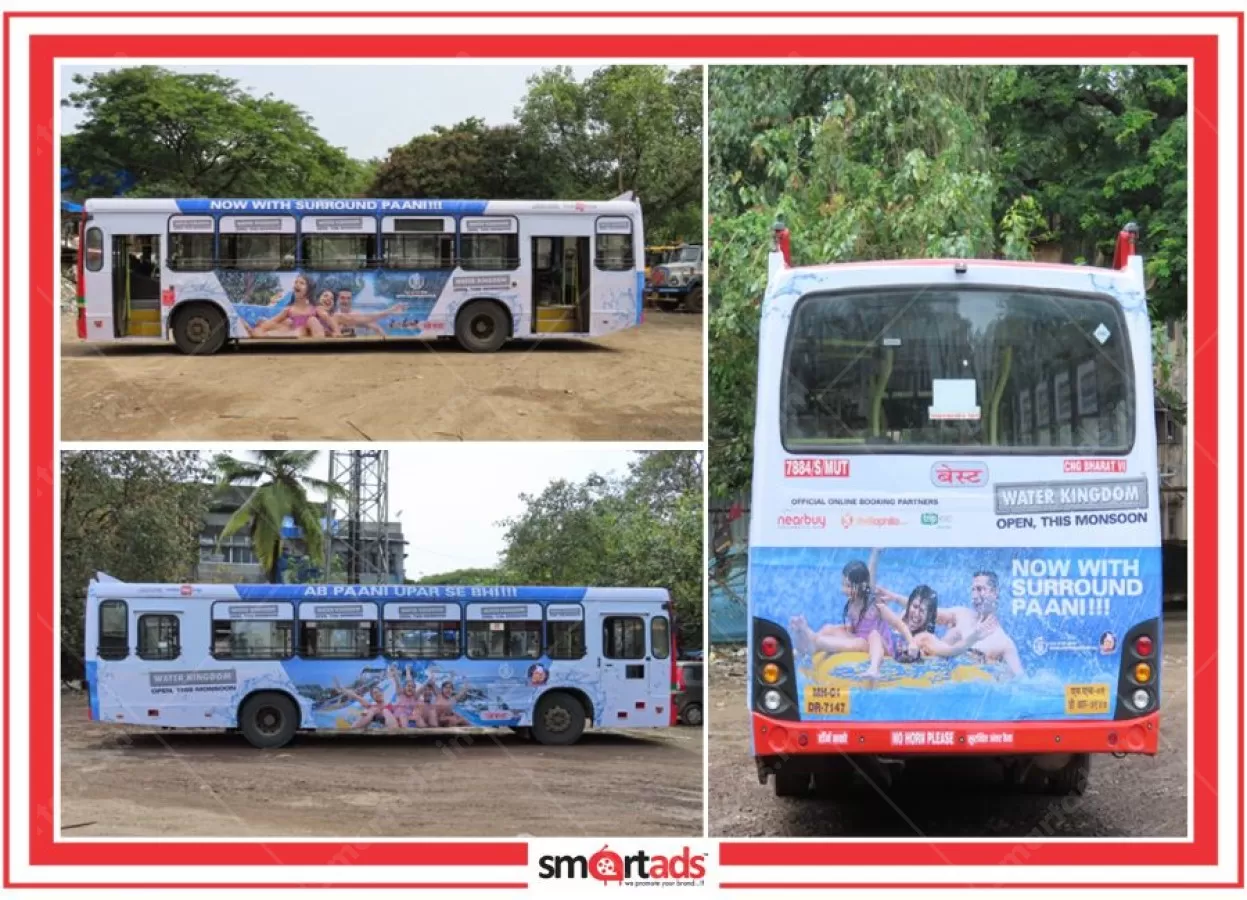
Full Wrap
746 Sqr
Marcopolo Non AC; Exterior Ads are displ
Rate per Bus / Month
Eco Solvent Vinyl printing & pasting
₹45000.00
Showing 1 to 7 of 7 Results
MEDIA DETAILS
746 Sqr
Marcopolo Non AC; Exterior Ads are displ
Rate per Bus / Month
Eco Solvent Vinyl printing & pasting
₹45000.00
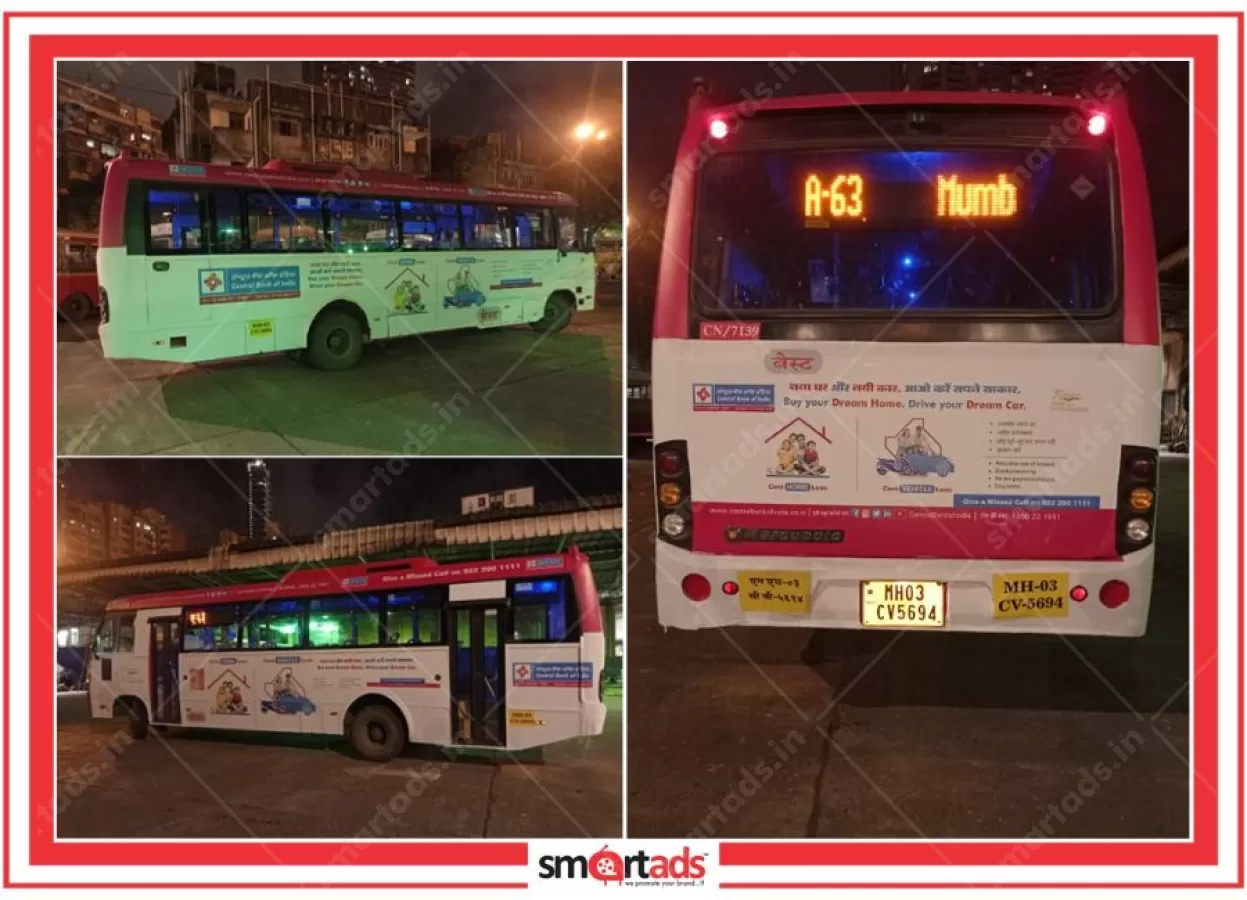
358 Sqr
Marcopolo AC; Exterior Ads are displayed
Rate per Bus / Month
Eco Solvent Vinyl printing & pasting
₹42000.00
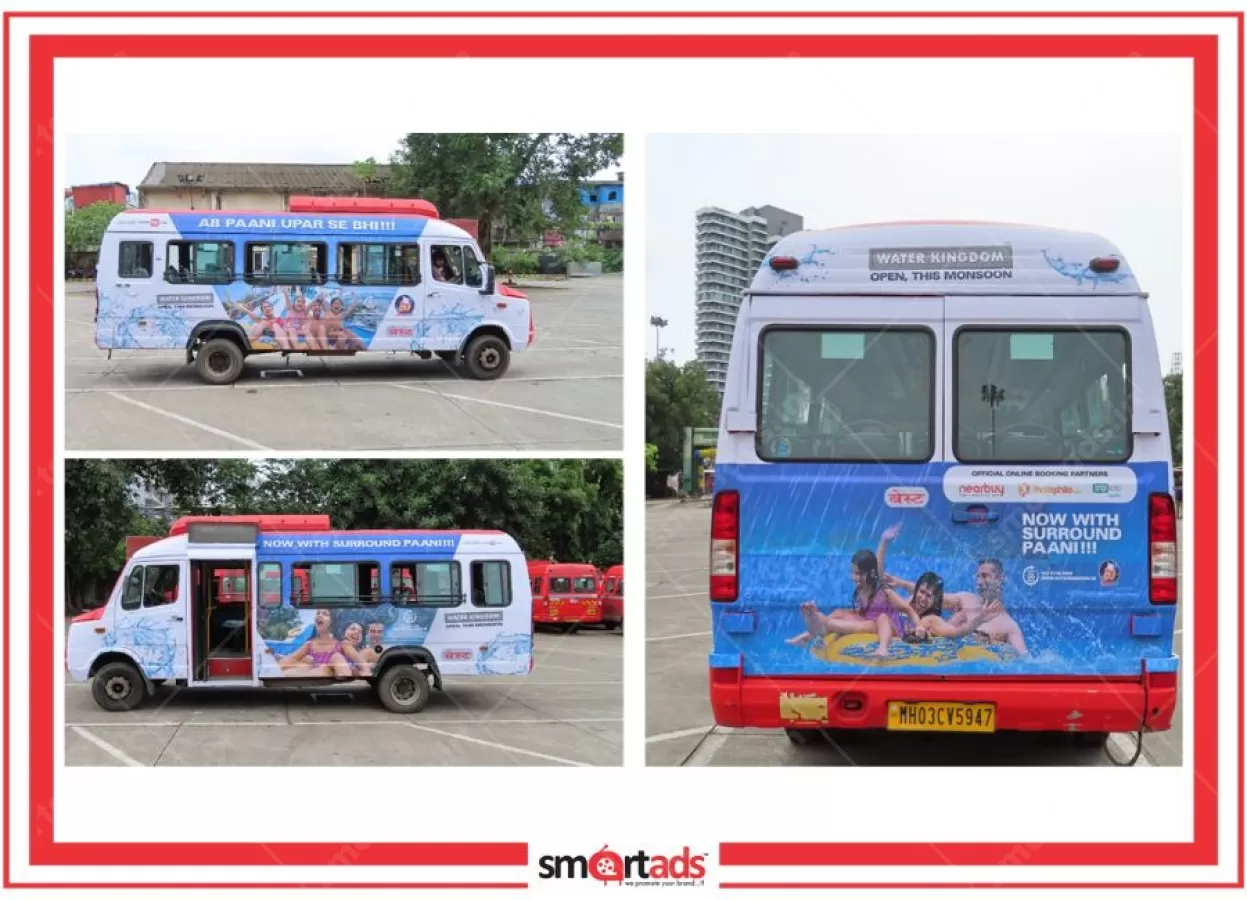
340 Sqr
Exterior Ads are displayed as a wrap, co
Rate per Bus / Month
Eco Solvent Vinyl printing & pasting
₹21000.00
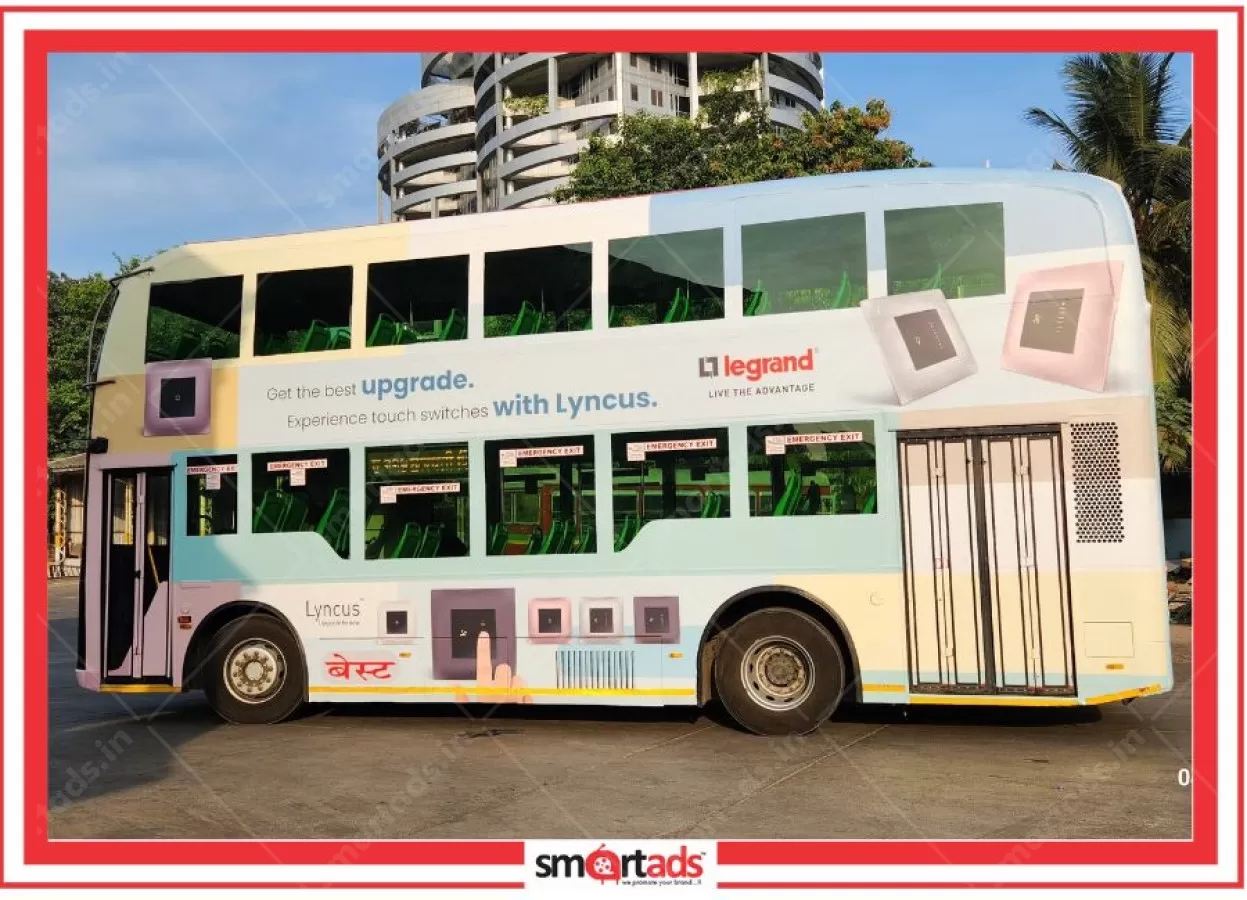
650 Sqr
Exterior Ads are displayed as a wrap, co
Rate per Bus / Month
Eco Solvent Vinyl printing & pasting
₹600000.00

10 Sqr
Interior Ads are displayed as a wrap, co
Rate per Bus / Month
Eco Solvent Vinyl printing & pasting
₹2000.00

100 Sqr
Exterior Ads are displayed as a wrap, co
Rate per Bus / Month
Eco Solvent Vinyl printing & pasting
₹20000.00

350 Sqr
Exterior Ads are displayed as a wrap, co
Rate per Bus / Month
Eco Solvent Vinyl printing & pasting
₹33000.00
MEDIA REACH

MinimumQty :
10
EstimateReachPeople :
5 Million
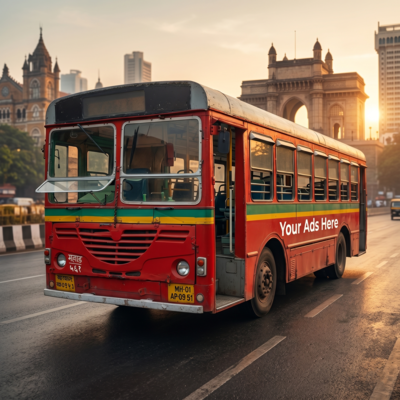
Mumbai's bus network moves somewhere in the neighbourhood of 2.8 million commuters every single day — and yet, most brand managers we speak to have never seriously considered putting their creative on a BEST bus. That is a gap in thinking that costs brands real visibility, particularly in a city where every square foot of attention is contested.
Most people assume bus advertising is simply a sticker on the back of a bus, which is a significant underestimation of what the medium actually offers. BEST bus advertising — where BEST stands for Brihanmumbai Electricity Supply and Transport, the civic body that operates Mumbai's public bus fleet — encompasses a range of formats applied to the exterior and interior of buses that circulate across hundreds of routes spanning the island city, the western suburbs, the eastern suburbs, and connecting corridors into Thane and Navi Mumbai. The buses themselves function as moving billboards, which means your brand message travels through high-traffic areas like Andheri, Bandra, Churchgate, Chembur, and Colaba without being anchored to a single static location.
The mechanics are straightforward but worth understanding properly before you commit budget. An advertiser works with a bus advertising agency — or directly through an authorised vendor empanelled with BEST — to design, print, and apply vinyl graphics to the bus surface. The creative is typically printed on high-quality vinyl wrap material, sometimes using perforated window film for window applications, and the installation is handled by certified technicians at the bus depot. Once live, the bus continues its scheduled route operations, which means your advertisement accumulates impressions across every journey the bus makes during the campaign duration, often running twelve to sixteen hours a day across densely populated corridors.
At SmartAds, we always tell our clients that the medium works on a logic that is fundamentally different from static outdoor advertising. A hoarding on the Western Express Highway reaches whoever happens to drive past that one location; a BEST bus carrying your full bus wrap travels from Borivali to Churchgate and back, touching dozens of micro-markets, residential pockets, commercial zones, and transit hubs in a single day. The frequency of exposure per creative unit is, frankly speaking, unmatched by almost any other outdoor advertising format at a comparable price point.
The range of advertising formats available on Mumbai buses is wider than most advertisers realise, and the choice of format has a direct bearing on both cost and campaign impact. The full bus wrap is the most premium option — it covers the entire exterior of the bus in your brand's creative, which transforms the vehicle into a moving billboard that is impossible to ignore on any street it travels. We have seen full bus wrap campaigns generate extraordinary brand recall in categories like real estate launches, where a developer in Thane used a fleet of twelve fully wrapped BEST buses to announce a new township project, and the enquiry volumes at their site office spiked noticeably within the first three weeks of the campaign going live.
Partial bus wrap advertising is the more budget-conscious alternative, which typically covers either the driver's side panel, the passenger's side panel, or both side panels without extending to the roof or bonnet. Bus back panel advertising is perhaps the single most visible format in terms of raw impression frequency, because every vehicle behind a bus in Mumbai traffic — and traffic in this city is rarely moving fast — is looking directly at the back panel for extended periods. Bus side panel advertising offers strong visibility to pedestrians and commuters at bus stops, which makes it particularly effective in dense commercial corridors like Bandra-Kurla Complex, Fort, and Nariman Point.
Bus interior advertising is a format that does not get enough credit in media planning conversations, and we think that is a mistake. Interior ads — placed above windows, on seat backs, or as overhead panels — speak to a captive audience of commuters who are seated, relatively stationary, and have limited competing stimuli. The dwell time is significantly higher than any exterior format, which makes interior advertising particularly suited to messages that require more than a glance to absorb: an education brand explaining a course, a healthcare brand communicating a service, or a financial product that needs a moment of consideration. Bus seat advertising and overhead panel placements are also available on select AC bus fleets, which tend to carry a slightly different audience demographic — generally more middle-income and upper-middle-income commuters who choose air-conditioned travel.
Transparency on pricing is something this industry has historically been poor at, and we are going to try to change that here. Bus advertising rates in Mumbai vary depending on the format, the fleet size, the operator, and the campaign duration — but to give you a working framework: a full bus wrap on a BEST bus typically costs somewhere in the ballpark of ₹25,000 to ₹45,000 per bus per month, which includes the cost of printing and installation. A partial bus wrap — covering one or both side panels — generally works out to roughly ₹12,000 to ₹22,000 per bus per month depending on the panel dimensions and the specific bus model.
Bus back panel advertising, which is often the entry point for brands testing the format, is priced somewhere between ₹6,000 and ₹12,000 per bus per month, making it one of the most affordable bus advertising formats in the city. Bus interior advertising — overhead panels and seat-back placements — tends to be priced lower per unit, roughly ₹3,000 to ₹8,000 per bus per month, though the impact per rupee is genuinely high given the captive audience dynamic. When you calculate the CPM — cost per thousand impressions — for a well-routed BEST bus, the number works out to roughly ₹8 to ₹15, which is a figure that surprises most first-time advertisers when they compare it to what they are paying for Instagram reach or programmatic display.
What a lot of people miss is that bus advertising cost is not just the media rate; it includes artwork production, vinyl printing, installation, and removal at the end of the campaign. A good bus advertising agency in Mumbai will bundle these into a single package rate, which is what we do at SmartAds — we have found that transparent all-inclusive pricing prevents the kind of scope creep that frustrates clients mid-campaign. For a brand running a fleet of twenty-five buses across key Mumbai routes for sixty days, the total investment including production typically falls somewhere between ₹8 lakh and ₹18 lakh depending on format mix, which is a number that looks very different when you divide it by the total impressions generated.
Brand visibility on a BEST bus is not a passive thing — it is an active, repeated encounter between your creative and your target audience across the geography of one of the world's most densely populated cities. The first and most obvious benefit is mass reach; a single fully wrapped bus operating on a high-frequency route like the 221 (Andheri to Churchgate) or the 302 (Bandra to Colaba) can generate upwards of 80,000 to 1,20,000 impressions per day when you account for pedestrians, motorists, and commuters at bus stops along the route. That is a reach figure that most below-the-line advertising formats simply cannot match at a comparable cost.
The second benefit is geographic targeting, which is more precise than most outdoor advertising options allow. Because BEST buses operate on fixed routes, you can select routes that pass through the specific neighbourhoods, commercial zones, or catchment areas most relevant to your brand. A retail brand opening a new store in Goregaon can book buses on routes that service Goregaon, Malad, and Kandivali; an education brand targeting students can select routes that pass near colleges and coaching centres in areas like Andheri and Borivali. This hyperlocal targeting capability is something we consistently recommend to clients who have geographically specific campaign objectives.
The third benefit — and this is where the real value lies, in our experience — is impression frequency. Unlike a hoarding that a commuter passes once on their way to work, a bus on a high-frequency route passes the same person multiple times a day, sometimes multiple times in a single journey if the person is waiting at a bus stop. This frequency of exposure drives brand recall in a way that single-exposure media cannot replicate. The fourth benefit is the credibility that comes with scale; a brand seen on multiple buses across multiple routes is perceived as established and serious, which is particularly valuable for new market entrants or brands expanding into Mumbai. The fifth benefit is cost-effective advertising relative to the reach delivered — the CPM for bus branding in Mumbai is consistently lower than metro station advertising, airport advertising, and most premium digital out-of-home formats, which makes it an exceptionally efficient use of below-the-line advertising budget.
Route selection is, frankly speaking, where most brands either win or waste their bus advertising investment — and it is a decision that deserves more rigour than most advertisers apply to it. The Western Express Highway corridor, served by multiple BEST bus routes connecting Borivali, Kandivali, Malad, Goregaon, Andheri, and Bandra, is one of the highest-traffic corridors in the city; buses on this corridor pass through some of Mumbai's densest commercial and residential zones, which means the cumulative daily impressions are among the highest available in the network.
The Bandra to Churchgate corridor — passing through Mahim, Dadar, Parel, and Lower Parel — is particularly valuable for brands targeting working professionals in Mumbai's financial and media industry belt. The Eastern Express Highway routes connecting Chembur, Ghatkopar, and Mulund with the central business district carry a different audience demographic, one that skews towards manufacturing, logistics, and mid-market consumer segments; for FMCG brands, healthcare brands, and consumer durables advertisers, these routes often deliver better audience-to-spend efficiency than the premium western corridor. Bus routes in Mumbai that pass through Nariman Point, Fort, and Colaba reach a high concentration of corporate professionals and tourists, which makes them relevant for banking, insurance, and premium lifestyle brands.
One thing we always advise our clients is to think about bus depots Mumbai as a secondary targeting lever. Buses returning to depots like Backbay, Oshiwara, Dharavi, and Anik pass through specific micro-markets that can be highly relevant for hyperlocal campaigns. A consumer electronics brand we worked with specifically requested routes that passed through Dharavi and Chembur because their distribution was strongest in those markets; the campaign generated measurable sales lift in those zones over a forty-five-day period, which validated the route-selection logic.
This is a question we get asked regularly, and the honest answer is that the right operator depends entirely on the geography and audience you are trying to reach. BEST — Brihanmumbai Electricity Supply and Transport — is the dominant operator within the municipal limits of Mumbai, covering the island city and the suburbs up to Dahisar in the west and Mulund in the east; if your campaign objective is to reach Mumbai city commuters, BEST bus advertising is your primary vehicle. The BEST fleet comprises roughly 3,000 to 3,500 buses operating across more than 400 routes, which gives advertisers a wide range of format and route combinations to work with.
NMMT — Navi Mumbai Municipal Transport — operates across Navi Mumbai, covering nodes like Vashi, Belapur, Kharghar, Panvel, and Airoli; for brands with distribution or retail presence in Navi Mumbai, NMMT advertising is often more cost-effective than BEST advertising because the competition for inventory is lower and the rates tend to be somewhat more affordable. KDMT — Kalyan Dombivli Municipal Transport — and TMT — Thane Municipal Transport — cover the Kalyan-Dombivli and Thane municipal areas respectively, which are among the fastest-growing urban markets in Maharashtra; real estate brands, education brands, and consumer brands targeting the expanding middle class in these cities have found strong ROI from advertising on these operators. MSRTC — the Maharashtra State Road Transport Corporation — operates intercity and semi-urban routes across Maharashtra, which makes it relevant for brands with a statewide or PAN India advertising objective rather than a Mumbai-specific one.
The practical implication for media planning is that a brand wanting to cover the full Mumbai Metropolitan Region — MMR — should consider a multi-operator strategy, booking BEST for the core city, NMMT for Navi Mumbai, and TMT or KDMT for the Thane-Kalyan belt. At SmartAds, we have executed multi-operator campaigns across the MMR for FMCG clients who needed simultaneous coverage across all these markets, and the combined reach achieved at a blended CPM is genuinely difficult to replicate with any other single outdoor advertising format.
To be fair to all formats, every medium has a context in which it performs best — but bus advertising in Mumbai holds some specific advantages that are worth stating plainly. Compared to static hoardings, bus branding offers mobility, which means your creative reaches multiple geographic zones rather than being anchored to one location; a hoarding in Andheri reaches Andheri, while a bus wrap on an Andheri-to-Churchgate route reaches every neighbourhood along that corridor. The cost per impression for bus advertising is also consistently lower than premium hoarding locations in South Mumbai or Bandra-Kurla Complex, where monthly rates for a single large-format hoarding can run to several lakhs.
Metro advertising — station panels, train wraps, and platform displays — reaches a high-income, educated commuter demographic, which makes it valuable for premium brands; however, the reach is geographically constrained to metro station catchment areas, and the cost per creative unit is substantially higher than bus advertising. Bus advertising, by contrast, reaches a broader income spectrum — from daily wage earners to office-going middle class — which makes it more relevant for mass-market brands, FMCG products, and services with wide demographic appeal. Bus advertising vs digital is a more nuanced comparison; digital advertising offers precise targeting and real-time optimisation, but it operates in a cluttered environment where ad avoidance is high; a full bus wrap in a city like Mumbai cannot be skipped, blocked, or scrolled past, which gives it a frequency of exposure and brand recall advantage that digital formats struggle to match for mass-market objectives.
Out-of-home advertising as a category — which includes hoardings, transit advertising, bus shelter advertising, and bus stop advertising — is growing in India, with the FICCI-EY Media Report consistently noting OOH's resilience and growth in tier-1 markets. Within the OOH advertising mix, transit advertising formats like bus branding are gaining share because they combine the mass reach of traditional outdoor advertising with the mobility advantage that static formats lack. We have seen brands run parallel campaigns — bus wrap advertising for mass reach and metro advertising for premium audience targeting — and the combined impact on brand awareness metrics tends to be significantly higher than either format in isolation.
Almost every category of advertiser can find a legitimate use case for bus advertising in Mumbai, but some categories extract disproportionately high value from the format. Real estate is one of the clearest fits; bus advertising for real estate works because property buyers are geographically anchored — they want to buy near where they live or work — and bus routes in Mumbai are an efficient way to reach prospective buyers in specific catchment areas. A real estate developer launching a project in Thane can book TMT and BEST buses on routes that originate in Thane and connect to Mumbai, reaching exactly the audience most likely to consider a Thane property purchase.
Education brands — schools, colleges, coaching institutes, and ed-tech platforms — are among the heaviest users of bus advertising in Mumbai, and with good reason; bus advertising for education works because students and parents are both heavy bus commuters, and the captive audience dynamic of bus interior advertising gives education brands the dwell time they need to communicate a complex message. Healthcare brands, hospitals, and diagnostic chains use bus back panel advertising extensively to build brand awareness in specific neighbourhoods, which is a form of hyperlocal targeting that is difficult to achieve through mass media. FMCG brands use full bus wrap advertising for new product launches, leveraging the mass reach and high frequency of exposure to drive trial and brand awareness simultaneously.
Bus advertising for small business is an underutilised strategy that we actively encourage, particularly for local retailers, service businesses, and startups with a defined geographic market. The minimum fleet size for a meaningful campaign is somewhere around five to ten buses, which puts the entry-level investment within reach of businesses that cannot afford television or large-format hoardings. One retail client we worked with — a chain of optical stores with outlets across Andheri, Goregaon, and Malad — ran a fifteen-bus campaign on western suburban routes for forty-five days; the campaign cost roughly ₹3.5 lakh all-inclusive, and the client reported a measurable uptick in walk-ins at all three locations during the campaign period.
The booking process for bus advertising in Mumbai is more structured than most advertisers expect, and understanding it upfront saves a significant amount of time and avoids the frustration of last-minute surprises. The first step is route and format selection — which requires a clear brief on your target audience, campaign geography, and budget envelope; a good bus advertising agency in Mumbai will map your brief to specific BEST routes and recommend a format mix based on your objectives. At SmartAds, we typically present clients with two or three route-format combinations at different budget levels, which allows them to make an informed decision rather than simply accepting the first proposal.
Once the route and format are finalised, the creative artwork needs to be prepared according to the specific dimensions and technical specifications of the chosen bus model. BEST operates multiple bus types — standard single-deck buses, low-floor buses, and AC buses — each with slightly different panel dimensions; your bus advertising agency should provide you with the exact artwork specifications, which typically include minimum resolution requirements of 72 DPI at actual size, bleed margins, and colour profile specifications. The artwork is then submitted for approval, which involves a review by the operator to ensure compliance with content guidelines — political content, certain religious messaging, and content deemed inappropriate for public display are typically not approved.
After approval, the vinyl is printed and the installation is scheduled at the relevant bus depot; installation typically takes one to two days per bus and is done during the bus's off-route hours to minimise disruption. The lead time from brief to live campaign is generally somewhere between two and four weeks for a standard campaign, though we have managed faster turnarounds for urgent briefs by pre-coordinating with depot authorities. The campaign duration for bus advertising typically runs in monthly cycles — the minimum campaign duration is usually thirty days — though longer campaigns of sixty or ninety days are common and often attract better rates. At the end of the campaign, the vinyl is removed by the same technicians who installed it, and the bus is returned to its original condition.
Q: What is BEST bus advertising in Mumbai?
BEST bus advertising refers to the placement of brand creatives — in formats ranging from full bus wraps to back panel ads and interior placements — on buses operated by the Brihanmumbai Electricity Supply and Transport undertaking, which is the primary public bus service within Mumbai's municipal limits. The BEST fleet operates across more than 400 routes covering the island city and the suburbs, making it the most extensive transit advertising network within Mumbai proper. Advertisers work with an authorised bus advertising agency in Mumbai to design, produce, and install creatives on BEST buses for a defined campaign duration, typically a minimum of thirty days.
Q: How much does bus advertising cost in Mumbai?
Bus advertising cost in Mumbai varies by format and operator, but to give you working benchmarks: a full bus wrap on a BEST bus is priced roughly in the range of ₹25,000 to ₹45,000 per bus per month including production; a bus back panel advertisement works out to somewhere between ₹6,000 and ₹12,000 per bus per month; and bus interior advertising is generally in the range of ₹3,000 to ₹8,000 per bus per month. These are all-inclusive estimates that cover media rights, printing, installation, and removal — though exact rates depend on the operator, the specific route, and the campaign volume. Brands booking larger fleets or longer campaign durations typically receive negotiated rates that can be meaningfully lower than the standard rate card.
Q: Which bus advertising format is most effective in Mumbai — full wrap, back panel, or interior?
The honest answer is that it depends on your campaign objective. Full bus wrap advertising delivers the highest brand visibility and brand recall because it transforms the entire bus into a moving billboard; it is best suited for brand launches, large-scale awareness campaigns, and categories where visual impact is paramount. Bus back panel advertising delivers the highest impression frequency because it is directly in the line of sight of every vehicle behind the bus in traffic; it is the most cost-effective format for brands that need mass reach on a tighter budget. Bus interior advertising delivers the deepest engagement because it reaches a captive audience with higher dwell time; it is best suited for messages that require more than a glance to absorb, such as education, healthcare, or financial services communications.
Q: How many buses does BEST operate in Mumbai and across how many routes?
BEST operates a fleet of approximately 3,000 to 3,500 buses across more than 400 routes within Mumbai's municipal limits, though the fleet size has fluctuated in recent years as the undertaking has navigated operational and financial restructuring. The network covers the island city from Colaba and Nariman Point in the south to Dahisar in the north on the western side, and from Churchgate to Mulund on the eastern side. For advertisers, this means there is a wide range of route and fleet combinations available, and a well-planned campaign can achieve meaningful coverage of any specific micro-market within Mumbai's urban geography.
Q: What is the difference between bus advertising and bus shelter advertising?
Bus advertising refers to creatives placed on the bus itself — exterior panels, wraps, or interior placements — which travel with the bus along its route and accumulate impressions across multiple locations throughout the day. Bus shelter advertising, by contrast, refers to static displays placed at bus stops and bus shelters, which function more like traditional out-of-home advertising — fixed in one location, reaching whoever passes that specific point. Bus stop advertising tends to have a higher dwell time for people waiting at the stop, but it lacks the geographic mobility of bus advertising. The two formats are complementary rather than competitive, and we often recommend combining bus advertising with bus shelter advertising at key stops along the same route to create a surround-sound effect for the brand.
Q: How do I book bus advertising in Mumbai and what is the process?
The process begins with briefing a bus advertising agency in Mumbai on your campaign objectives, target geography, budget, and timeline. The agency then recommends a route-format combination and prepares a proposal with rate card details. Once approved, the artwork is produced to the operator's technical specifications and submitted for content approval. After approval, printing and installation are scheduled at the relevant bus depot, with a typical lead time of two to four weeks from brief to live campaign. The campaign runs for the agreed duration — minimum thirty days — after which the creative is removed and the bus is restored.
Q: Is bus advertising in Mumbai more cost-effective than TV, radio, or digital advertising?
On a pure CPM basis, bus advertising in Mumbai is competitive with or superior to most mass media formats for a Mumbai-specific audience. Television advertising reaches a broad national or regional audience, which means you are paying for reach that extends well beyond your target market if your campaign is Mumbai-focused; radio is more geographically targeted but lacks visual impact; digital advertising offers precise targeting but operates in a high-clutter environment with significant ad avoidance. Bus advertising delivers a non-skippable, high-visibility impression to a Mumbai-specific audience at a CPM that works out to roughly ₹8 to ₹15, which is a number that compares very favourably to most digital and traditional media formats when the geographic specificity and impression quality are factored in.
Q: Which areas and routes in Mumbai have the highest bus advertising visibility?
The highest-visibility routes for bus advertising in Mumbai are generally those that traverse the city's major commercial corridors and high-traffic arterials. The Western Express Highway corridor — connecting Borivali, Andheri, Bandra, and Churchgate — is consistently the highest-reach corridor in the network. The Eastern Express Highway routes connecting Chembur, Ghatkopar, and Mulund with the central business district are valuable for brands targeting eastern suburban audiences. Routes passing through Bandra-Kurla Complex, Lower Parel, Nariman Point, and Fort are particularly relevant for brands targeting corporate professionals. The Andheri-Kurla corridor, which connects the western and eastern suburbs through the airport zone, is another high-traffic corridor that we frequently recommend for brands with a broad Mumbai audience objective.
Q: Can small businesses and startups benefit from bus advertising in Mumbai?
Absolutely — and we think this is one of the most underappreciated aspects of the format. The entry point for a meaningful bus advertising campaign in Mumbai is roughly five to ten buses, which puts the minimum investment somewhere in the range of ₹1.5 lakh to ₹4 lakh for a thirty-day campaign depending on format. For a local retailer, a new restaurant chain, a coaching institute, or a startup with a defined geographic market, this is a genuinely accessible investment that delivers mass reach within a specific neighbourhood or corridor. The key is route selection — a small business should focus on routes that pass through their specific catchment area rather than trying to cover the whole city, which keeps costs manageable and ensures the impressions are reaching a relevant audience.
Q: What is the minimum campaign duration for bus advertising in Mumbai?
The standard minimum campaign duration for bus advertising in Mumbai is thirty days, which aligns with the monthly billing cycles of BEST and other operators. Some vendors and agencies can accommodate shorter campaigns of fifteen days in certain circumstances, though the rate per day tends to be higher for shorter durations. Our experience at SmartAds suggests that sixty-day campaigns deliver meaningfully better brand recall outcomes than thirty-day campaigns, because the frequency of exposure compounds over time — a commuter who sees your bus ten times in a month is more likely to remember your brand than one who sees it five times.
Q: What types of businesses advertise most on Mumbai buses?
The heaviest users of bus advertising in Mumbai are real estate developers, education brands, FMCG companies, healthcare and hospital chains, consumer electronics brands, and government or public sector bodies running awareness campaigns. Financial services brands — banks, insurance companies, and mutual fund houses — are increasingly active in the format, particularly on AC bus routes that reach a higher-income audience demographic. Retail chains, telecom brands, and e-commerce platforms have also been significant users of bus branding for new market entry and product launch campaigns.
Q: How does BEST bus advertising compare to NMMT, KDMT, or MSRTC advertising?
BEST is the right operator for campaigns targeting Mumbai city commuters within the municipal limits; NMMT covers Navi Mumbai and is more cost-effective for brands with a Navi Mumbai focus; KDMT and TMT cover the Kalyan-Dombivli and Thane markets respectively, which are high-growth urban markets with strong consumer demand; MSRTC is best suited for statewide or intercity campaigns across Maharashtra. The rate cards vary significantly across operators — NMMT, KDMT, and TMT tend to be priced lower than BEST because the inventory competition is less intense — which makes multi-operator campaigns an efficient way to achieve MMR-wide coverage at a blended cost that is lower than booking BEST alone for the same reach.
Q: Can bus advertising in Mumbai be combined with other BTL or OOH campaigns?
Not only can it be combined — we would argue it should be. Bus advertising works best as part of an integrated BTL advertising or TTL advertising strategy, where the bus branding provides mass reach and frequency of exposure while complementary formats like bus shelter advertising, auto-rickshaw advertising, or mall activations provide touchpoints at the point of decision. We have run campaigns where BEST bus advertising was combined with radio spots on the same commuter corridors, creating an audio-visual surround effect that significantly outperformed either medium in isolation on brand recall metrics. Digital advertising — particularly geo-targeted mobile ads — can also be layered on top of a bus advertising campaign to reinforce the message at moments when the commuter is on their phone, which creates a multi-touchpoint journey that drives both awareness and conversion.
Q: What are the design specifications and artwork requirements for Mumbai bus ads?
Artwork specifications vary by bus type and format, but the general requirements for BEST bus advertising include high-resolution files — typically at 72 DPI at actual print size, which for a full bus wrap can mean files of several gigabytes — in CMYK colour profile, with bleed margins of at least 5 centimetres on all sides. The creative must be submitted as a print-ready PDF or AI file, and the content must comply with BEST's content guidelines, which prohibit political advertising, content that could be deemed offensive or misleading, and certain categories of product advertising. Your bus advertising agency should provide you with a template specific to the bus model being wrapped, which ensures that critical design elements are not obscured by windows, doors, or wheel arches.
Q: How many people see a bus advertisement in Mumbai per day?
A single BEST bus operating on a high-frequency route in Mumbai generates somewhere between 50,000 and 1,50,000 impressions per day when you account for pedestrians, motorists, and commuters at bus stops along the route — the wide range reflects the significant variation between routes in terms of traffic density and operating hours. A fleet of twenty-five buses on well-selected routes can generate upwards of 25 to 30 lakh impressions per day, which is a reach figure that rivals prime-time television advertising in the Mumbai market. These impression estimates are based on traffic count data and route analysis rather than claimed figures, and they form the basis of the CPM calculations we use at SmartAds when helping clients evaluate bus advertising against other media options.
What we have seen, over years of planning and executing bus advertising campaigns across Mumbai and the broader MMR, is that the brands which consistently underinvest in transit advertising are often the same brands that overspend on digital formats chasing reach they could achieve more efficiently on the ground. Bus advertising in Mumbai is not a nostalgic or second-choice medium; it is a high-reach, cost-effective, geographically targetable format that operates in a zero-clutter environment — there is no ad blocker for a bus wrap on the Western Express Highway.
The medium rewards strategic thinking. Route selection, format choice, creative quality, and campaign duration all interact to determine whether a bus advertising campaign delivers genuine business impact or simply generates impressions that nobody remembers. The brands that do this well — and we have seen it work spectacularly for real estate developers, education brands, FMCG companies, and local retailers alike — approach bus advertising with the same rigour they would apply to a television or digital campaign: clear objectives, defined audience, measurable outcomes, and creative that is built for the format rather than adapted from another medium.
The integration opportunity is also significant and consistently underexploited. A bus advertising campaign running in parallel with bus shelter advertising at key stops, geo-targeted digital ads on the same corridors, and radio spots during peak commute hours creates a frequency of exposure and brand recall that no single medium can replicate. This is the kind of integrated BTL advertising thinking that separates campaigns that move the needle from campaigns that simply spend the budget. If you are planning a Mumbai campaign — whether it is a city-wide brand launch or a hyperlocal retail push — bus advertising should be part of that conversation from the beginning, not an afterthought.
At SmartAds.in, we work with brands across every category to plan, book, and execute bus advertising campaigns across Mumbai, Navi Mumbai, Thane, and the broader MMR, as well as PAN India bus advertising campaigns across 500+ cities. If you want a customised media plan with transparent rate card details, route recommendations, and campaign projections specific to your brand and objectives, reach out to the SmartAds team at [smartads.in](https://smartads.in) — we would be glad to put the numbers in front of you.
