
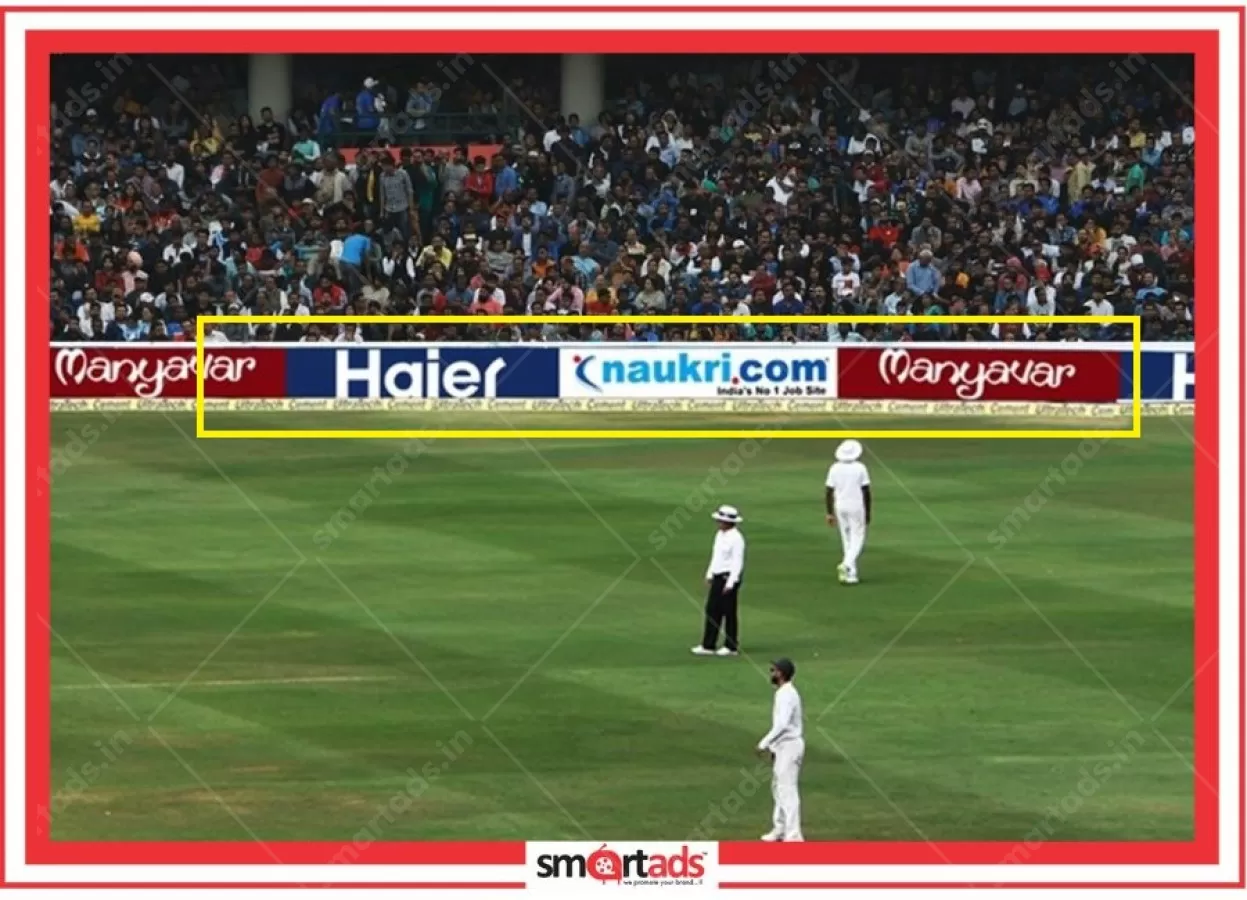
Silver HD Perimeter Signage
Various Sizes
1 ball in every 10 Balls : 50% of the Gr
Rate per Digital Screen / Per match
At Time Only 3 Display Name.
₹1100000.00
Showing 1 to 4 of 4 Results
MEDIA DETAILS
Various Sizes
1 ball in every 10 Balls : 50% of the Gr
Rate per Digital Screen / Per match
At Time Only 3 Display Name.
₹1100000.00
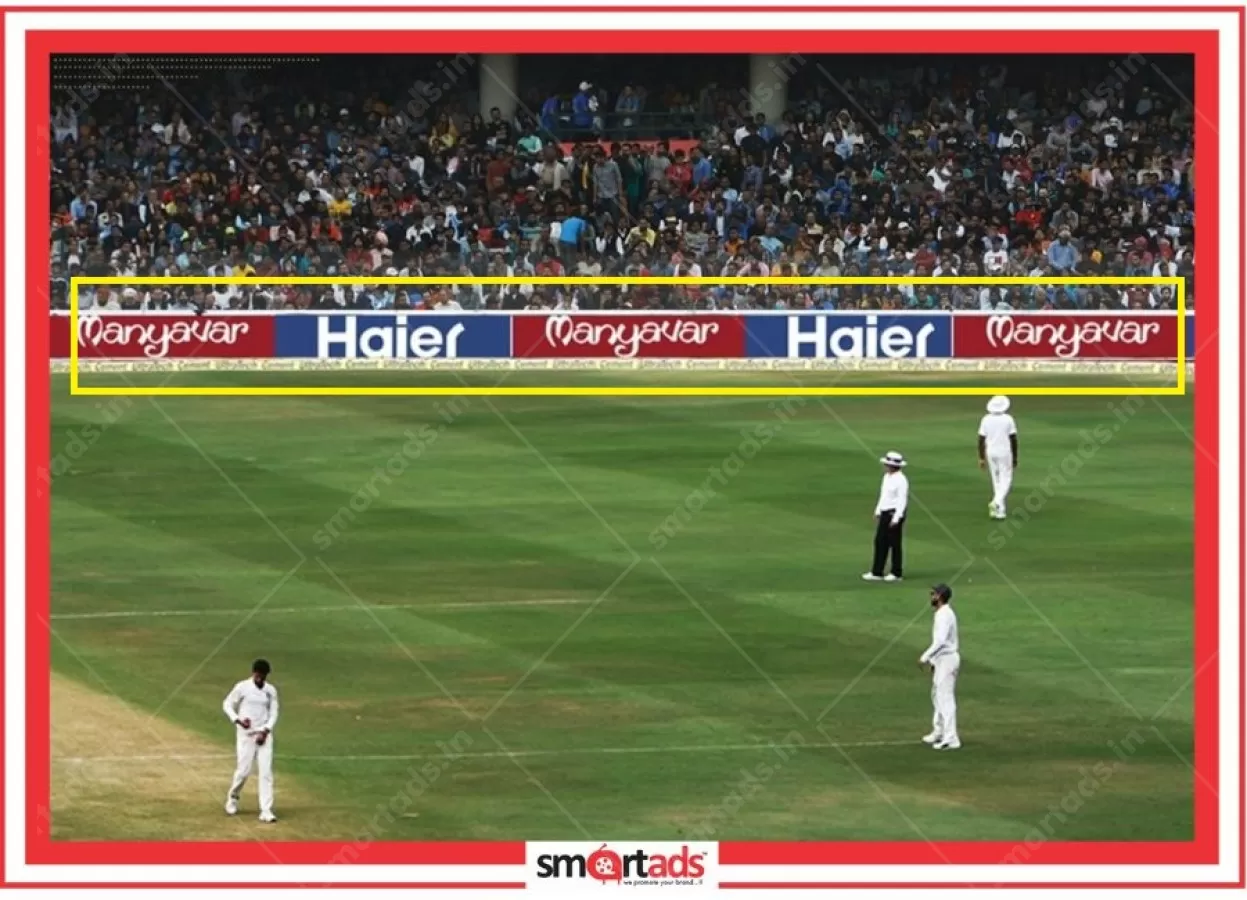
Various Sizes
1 Ball In Every 10 Balls : 50% Of The Gr
Rate per Digital Screen / Per match
At Time Only 2 Display Name.
₹1700000.00
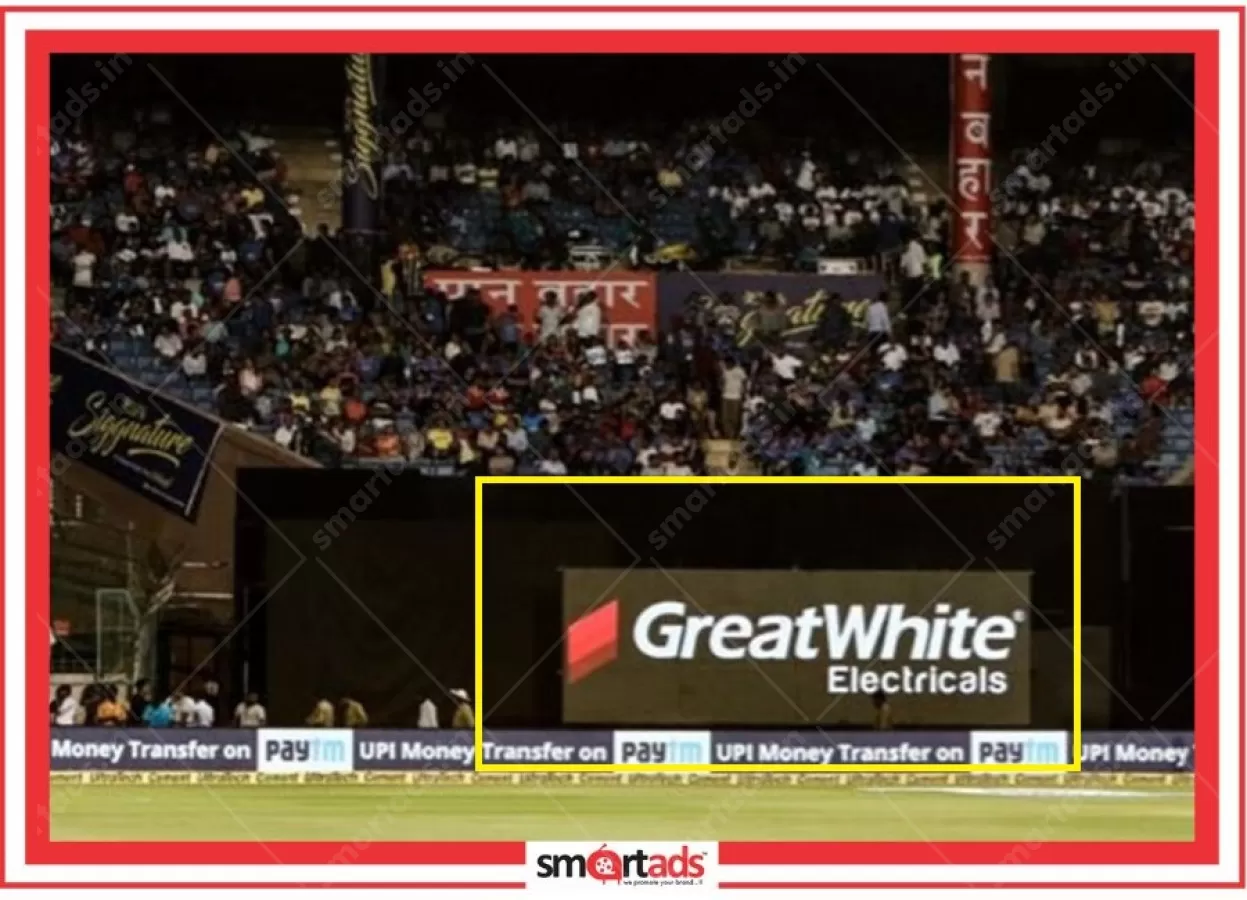
Various Sizes
5 Overs Per ODI Match , 2 Overs Per T20
Rate per Digital Screen / Per match
At Time Only 1 Display Name.
₹1150000.00
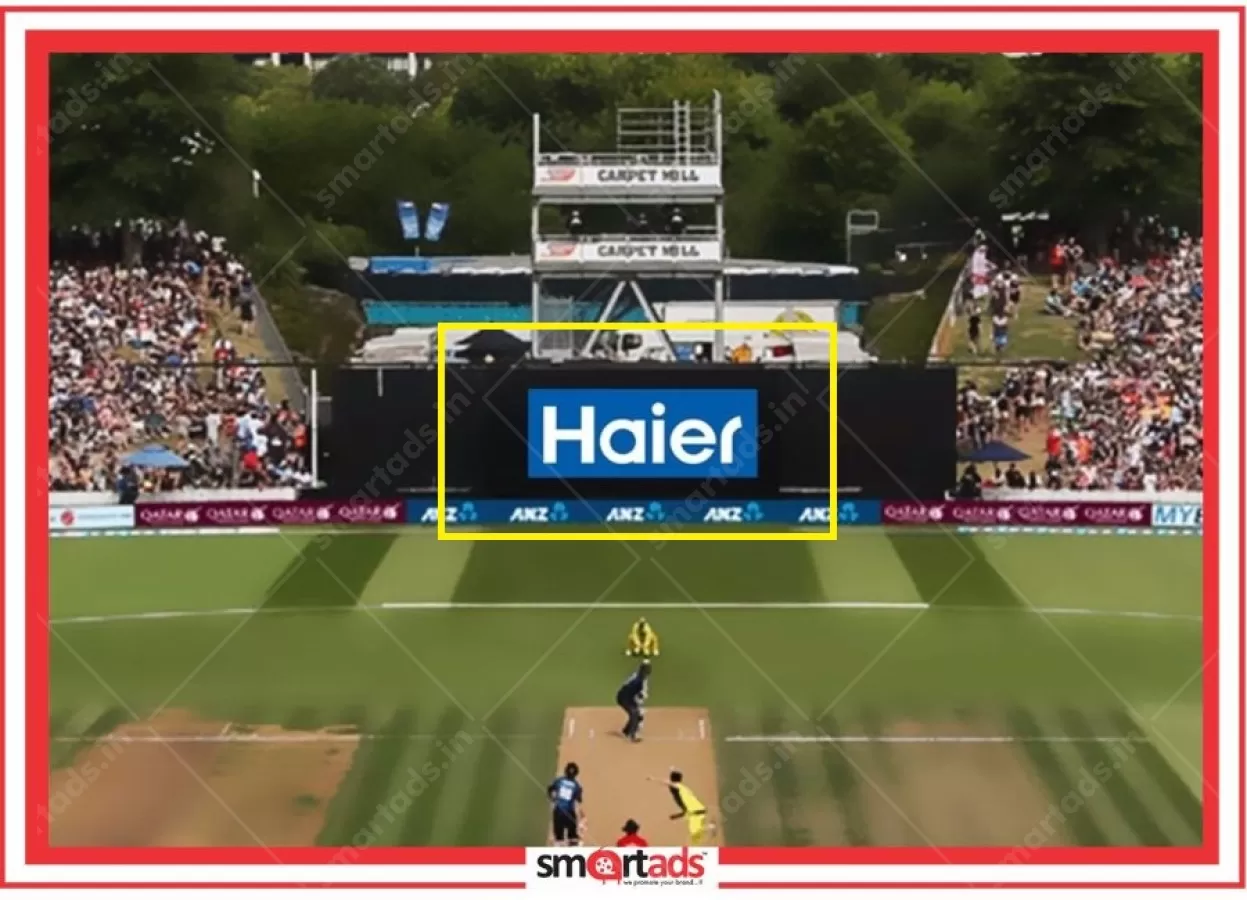
Various Sizes
5 Overs Per ODI Match , 2 Overs Per T20
Rate per Digital Screen / Per match
At Time Only 1 Display Name.
₹1150000.00
MEDIA REACH

MinimumQty :
1
EstimateReachPeople :
15000

Most brands that approach us about cricket stadium advertising in Greater Noida are surprised to discover that the venue has hosted international fixtures — including matches involving the Afghanistan cricket team — which means the broadcast visibility potential here is considerably higher than what you would expect from a Tier-2 sports infrastructure story. The Shaheed Vijay Singh Pathik Sports Complex sits inside one of the most rapidly urbanising corridors of Delhi NCR, surrounded by a catchment of corporate campuses, residential townships, and a genuinely cricket-mad population that fills those stands with real intensity. What a lot of people miss is that this stadium is not a consolation venue — it is an actively programmed, ICC-standard facility with a growing event calendar that makes it one of the more interesting BTL advertising opportunities in the entire NCR region.
Cricket stadium advertising is, at its core, about placing your brand inside the visual field of a captive, emotionally engaged audience — which is a very different proposition from a billboard on a highway where the viewer is distracted, moving, and largely indifferent. At the Shaheed Vijay Singh Pathik Sports Complex, the mechanism works through a combination of physical and digital formats that occupy the boundary perimeter, the sight screens, the outfield, and the digital screens positioned around the seating bowl; each of these touchpoints carries a different pricing logic, a different dwell time, and a different relationship with the camera.
The way it typically works in practice is that an advertiser — whether a local real estate developer from Jaypee Greens or a national FMCG brand running a regional push — secures a format package for a specific match or a series of matches, and the brand creative is then installed or programmed according to the venue's technical specifications. For LED perimeter boards, the creative rotates in a loop alongside other advertisers, which means your share of voice is a function of how many slots you purchase in that rotation; for static boundary boards and ground murals, you have exclusive ownership of that physical space for the duration of the match. At SmartAds, we always tell our clients that the choice between LED and static is not simply a budget question — it is a strategic question about whether you want frequency and dynamism or permanence and visual dominance.
What makes cricket stadium advertising in Greater Noida particularly interesting from a media planning perspective is the dual audience it delivers: the in-stadium crowd, which at a well-attended T20 fixture can reach somewhere in the ballpark of twelve to fifteen thousand people, and the broadcast audience, which can multiply that exposure by orders of magnitude depending on whether the match is being carried on a national sports channel. The Greater Noida Sports Complex Ground has been broadcast-ready for years, and matches involving the Afghanistan cricket team — which have been played here — have been picked up by international feed partners, which means your boundary board or LED perimeter board is not just talking to people in seats; it is appearing on television screens across South Asia and beyond.
The primary and, frankly, the only serious cricket advertising venue in Greater Noida is the Shaheed Vijay Singh Pathik Sports Complex, which is located in Sector Recreational Green-I and is owned and administered by the Greater Noida Industrial Development Authority — GNIDA, as it is commonly referred to in official correspondence. The stadium was developed as part of GNIDA's broader sports infrastructure mandate for Gautam Buddha Nagar district, and it has been progressively upgraded to meet the requirements of both domestic and international cricket fixtures. The seating capacity sits at approximately twenty-five thousand, though match day footfall for high-interest fixtures tends to fill the lower tiers first and can reach fifteen thousand to eighteen thousand for marquee events.
There is a secondary ground within the Greater Noida Sports Complex Ground premises that is used for practice and smaller domestic fixtures, but the advertising inventory there is minimal and largely unstructured; most serious advertisers focus exclusively on the main stadium. The venue's location near the Noida-Greater Noida Expressway gives it excellent accessibility from both Noida and central Delhi, which is part of why the audience demographic skews more urban and more affluent than you might assume for a stadium outside the main city. One automotive brand we worked with was initially sceptical about Greater Noida as a venue, but the post-campaign survey data showed that over sixty percent of the audience they reached held household incomes above ten lakh per annum — which aligned almost perfectly with their target buyer profile.
The GNIDA ownership structure is something that every advertiser and advertising agency needs to understand before approaching the booking process, because the permissions and approvals flow through GNIDA's sports department rather than through a private venue management company. This adds a layer of procedural formality to the booking process that some agencies are not accustomed to, particularly those that primarily work with privately managed venues; but it also means that once approvals are in place, the terms are clear and the process is relatively predictable. At SmartAds, we have navigated the GNIDA approval process multiple times, and our experience shows that having the right documentation prepared upfront — including brand category clearances and creative previews — can reduce the lead time significantly.
The advertising formats available at the Shaheed Vijay Singh Pathik Sports Complex span a fairly wide spectrum, which is one of the reasons cricket stadium advertising in Greater Noida works as well for a local SME running a single-match campaign as it does for a national brand running a full-series package. The primary formats are LED perimeter boards along the boundary, static boundary boards at fixed positions around the outfield, sight screen branding on both ends of the pitch, giant screen advertising on the scoreboard display, ground murals painted directly onto the outfield, pitch cover branding visible during breaks in play, and on-ground activation zones in the concourse areas where fan engagement and experiential marketing activations can be set up.
LED perimeter boards are the format that most brands ask about first, and for good reason — they are the most visible format in broadcast footage, they allow dynamic creative rotation, and they carry the highest recall among television viewers who watch the match at home. Static boundary boards, on the other hand, offer something that LED cannot: absolute visual ownership of a specific position, which means if your board is placed at a camera-facing position near the sightscreen end, it appears in virtually every wide-angle broadcast shot for the duration of the match. Our experience shows that static boundary boards at camera-facing positions often deliver better brand recall per rupee than LED perimeter slots, particularly for brands with simple, high-contrast creative that reads clearly at a distance.
Beyond the perimeter, the sight screen positions are among the most premium inventory at any cricket venue, because the sight screen is the one place where the camera is pointed almost continuously during live bowling — which means your brand appears in the background of every delivery bowled from that end. Ground murals and outfield branding are formats that work exceptionally well for broadcast visibility during aerial drone shots and wide establishing shots, and pitch cover branding gets its moment during rain delays and innings breaks when production teams often linger on ground-level coverage. On-ground activation zones in the concourse are a different proposition entirely — they are about direct fan engagement, sampling, and experiential marketing rather than passive visibility, and they work best when integrated with a broader below-the-line marketing strategy.
The difference between LED perimeter boards and static boundary boards is not just technical — it is strategic, and most brands get this wrong by defaulting to LED simply because it sounds more modern. LED perimeter boards at the Greater Noida Sports Complex Ground are digital screens that run a continuous rotation of multiple advertisers' creatives, typically cycling through a set of four to eight brands in a loop that repeats throughout the match; your brand appears for a defined number of seconds per rotation, which gives you a predictable frequency of exposure but means you are sharing the visual space with other advertisers. Static boundary boards, by contrast, are yours alone for the entire match — no rotation, no sharing, just your brand in that position from the first ball to the last.
The pricing reflects this distinction in ways that are worth understanding before you commit to a format. LED perimeter board slots at Greater Noida are typically priced somewhere between two lakh and six lakh per match depending on the match type, the number of rotation slots purchased, and the position of the board relative to the camera angles; a static boundary board at a non-premium position might cost in the ballpark of one lakh to two and a half lakh per match, while a camera-facing static board at a premium position can reach three to four lakh. These are indicative figures based on our experience with recent campaigns — actual rates are negotiated with GNIDA's approved vendors and vary by season, event tier, and demand.
What a lot of people miss is that the broadcast visibility question cuts differently for LED versus static. LED perimeter boards are specifically designed to be broadcast-visible, and the technology ensures that the creative does not flicker or wash out under stadium lighting; but because the rotation means your brand is not always on screen, the broadcast impression count per match is a fraction of what a static camera-facing board delivers. For a brand that is running a short campaign and needs maximum recognition per exposure, static boards often win; for a brand that is running a series and wants frequency across multiple matches and multiple audience segments, LED perimeter boards with a well-negotiated rotation share make more sense.
Frankly speaking, the lack of publicly available rate information for cricket stadium advertising in Greater Noida is one of the most frustrating things for brand managers trying to plan a campaign — and it is something we encounter constantly when clients come to us having spent hours searching online without finding a single concrete number. So let us be direct about what the market looks like, based on our experience booking campaigns at the Shaheed Vijay Singh Pathik Sports Complex across multiple seasons and event types.
For a standard domestic T20 fixture or a Big Cricket League match, LED perimeter board advertising costs somewhere between two lakh and five lakh per match for a standard rotation package, which works out to a CPM that is genuinely competitive when you factor in the dual audience of in-stadium and broadcast viewers. Static boundary boards at non-camera-facing positions start at around seventy-five thousand to one lakh per match, while camera-facing static boards at premium positions — particularly near the sightscreen ends — can command three to four lakh per match. Sight screen branding, which is arguably the most premium in-stadium format because of its continuous broadcast presence, is typically priced in the range of four to seven lakh per match depending on the event tier; this is a number that surprises most first-time advertisers when they compare it to what they are paying for a full-page newspaper advertisement in a regional daily, because the sight screen delivers a far more engaged audience with measurably higher recall.
On-ground activation zones in the concourse areas are priced differently — these are typically structured as a flat fee for the space, somewhere between fifty thousand and one and a half lakh per match, with the brand responsible for building out its own activation setup. Ground murals and outfield branding are priced on a per-match basis and tend to fall in the range of one lakh to two and a half lakh depending on the size and position of the mural. For a full-series package covering multiple matches — say, a six-match domestic series — most advertisers can expect a package discount of somewhere between fifteen and twenty-five percent compared to per-match rates, which is where the real value lies for brands that are committed to sustained brand visibility across a season. At SmartAds, we always negotiate package deals on behalf of our clients rather than booking match by match, because the savings are meaningful and the cumulative brand recall data is significantly stronger.
Greater Noida has been quietly building a case as one of the more interesting BTL advertising markets in Delhi NCR for the better part of a decade, and the cricket stadium is a significant part of that story — but it is not the whole story. The city's population is heavily weighted toward young, educated, employed residents who live in planned townships like Jaypee Greens and the Alpha, Beta, and Gamma sectors; many of them work in the Knowledge Park IT corridor or commute to Noida and Delhi, which means the audience at a cricket match here is not the same as the audience at a match in a smaller Uttar Pradesh city. The FICCI-EY Media and Entertainment Report has consistently highlighted sports as one of the fastest-growing advertising categories in India, and the shift toward non-traditional advertising formats — including in-stadium branding and experiential marketing — is a trend that is particularly pronounced in markets where the audience is younger and more brand-aware.
The Big Cricket League has been a significant catalyst for cricket stadium advertising in Greater Noida specifically. BCL Season 2, which is scheduled for 2026 with EaseMyTrip as the title sponsor, is expected to bring multiple high-visibility matches to the Shaheed Vijay Singh Pathik Sports Complex, and the involvement of a brand like EaseMyTrip as title sponsor signals that the league is attracting serious commercial attention. The BCL format — which features franchise-based T20 cricket with celebrity and cricketing talent — tends to draw younger, more urban audiences, which makes it particularly attractive for brands in the lifestyle, fintech, real estate, and consumer durables categories. One retail client we worked with during BCL Season 1 at Greater Noida saw a thirty-two percent uplift in brand recall among their target demographic in the Gautam Buddha Nagar catchment area, measured through a pre- and post-campaign survey — which is a number that would be difficult to achieve through any single ATL medium at a comparable campaign cost.
The Afghanistan cricket team connection adds another dimension that is genuinely unique to this venue. Greater Noida has hosted Afghanistan's home international matches on multiple occasions, including Test matches and ODIs, which means the Shaheed Vijay Singh Pathik Sports Complex has broadcast-grade international cricket infrastructure and a proven track record of delivering broadcast visibility to national and international audiences. For brands that are targeting the large Afghan diaspora community in Delhi NCR, or for brands that simply want the prestige association of international cricket, this is a significant differentiator from other NCR venues. The TAM AdEx data on cricket broadcast advertising consistently shows that international match broadcasts command higher audience attention scores than domestic fixtures, which translates directly into higher brand recall for in-stadium advertisers whose boards appear in the broadcast feed.
The honest answer is that in-stadium branding at Greater Noida works well for a wider range of advertisers than most people assume — but it works best for specific categories, and understanding which category you fall into will determine whether this is a smart allocation of your BTL advertising budget or an expensive experiment. Real estate developers operating in Gautam Buddha Nagar and the broader Noida-Greater Noida corridor are, in our experience, the most natural fit; the audience at a cricket match here is disproportionately made up of potential homebuyers and property investors who live or work in the area, and the brand visibility delivered by a well-placed boundary board or sight screen ad is reaching exactly the people who might visit a site visit on the weekend.
Education brands — particularly engineering colleges, MBA institutes, and coaching centres that are clustered in the Knowledge Park area — have found cricket stadium advertising in Greater Noida to be an effective below-the-line marketing channel, because the student and young professional demographic in the stands is precisely their target audience. Automobile brands, particularly two-wheeler and entry-level car manufacturers, benefit from the aspirational context that cricket creates; we have seen this work particularly well for brands that combine in-stadium branding with a test drive activation in the concourse, which turns passive brand visibility into active fan engagement. FMCG brands running regional campaigns across Uttar Pradesh have also found the venue useful as part of a broader brand activation strategy, particularly when the match is being broadcast on a regional sports channel that reaches the UP market.
What we tell our clients who are on the fence about whether Greater Noida makes sense for them is this: if your target audience is urban, employed, between twenty-two and forty-five years old, and based anywhere in the Delhi NCR-UP corridor, then cricket stadium advertising here is almost certainly delivering a more qualified audience than most outdoor or print alternatives at a comparable spend. The audience profile data we have collected across multiple campaigns at the Greater Noida Sports Complex Ground consistently shows that the in-stadium crowd skews male at roughly seventy percent, with a median age in the late twenties to early thirties range, and with household income levels that reflect the relatively affluent residential character of Gautam Buddha Nagar district. For brands whose media brief specifies this demographic, the venue is frankly underpriced relative to the quality of audience it delivers.
Not all matches are created equal from an advertising perspective, and the event calendar at the Shaheed Vijay Singh Pathik Sports Complex is varied enough that the right match type for your campaign depends heavily on your objectives, your budget, and your target audience. International matches — including the Afghanistan cricket team's home fixtures — deliver the highest broadcast visibility and the largest in-stadium crowds, but they are also the most competitive in terms of advertising inventory; the premium formats like sight screen branding and camera-facing static boards tend to be committed well in advance for international fixtures, sometimes months before the match date.
T20 cricket matches, whether domestic franchise tournaments or the Big Cricket League, are the sweet spot for most brand advertisers because they combine a large, engaged in-stadium audience with strong broadcast pickup and a format that is inherently more entertainment-oriented than Test cricket — which means the audience is more receptive to brand messaging and more likely to engage with on-ground activations. The BCL format in particular has been designed with commercial sponsorship in mind, which means there are structured advertising packages available at multiple price points, and the production values of the broadcast are high enough that in-stadium branding appears cleanly on screen. Match day advertising during BCL matches at Greater Noida has, in our experience, delivered some of the strongest brand recall numbers we have seen from any BTL advertising format in the NCR market.
State-level domestic matches — Ranji Trophy, Vijay Hazare Trophy, and Syed Mushtaq Ali Trophy fixtures — offer a different proposition: lower crowd numbers, which typically range from two thousand to six thousand, but also significantly lower advertising rates and a more local, community-oriented audience. For brands that are specifically targeting the Greater Noida and Gautam Buddha Nagar local market, these matches can be excellent value; the campaign cost is a fraction of what you would pay for an international or franchise T20 fixture, and the audience, while smaller, is often more geographically concentrated and therefore more relevant. On top of that, the lower inventory competition means you can often secure premium positions — including sight screen branding — at rates that would be unavailable during high-demand events.
The reach of fifteen thousand to eighteen thousand in-stadium viewers per match for a well-attended T20 fixture at the Shaheed Vijay Singh Pathik Sports Complex is the starting point, not the ceiling, when you account for broadcast and digital amplification. BARC viewership data for domestic T20 tournaments consistently shows that broadcast audiences for matches played at venues like Greater Noida — when carried on national or regional sports channels — can multiply the in-stadium reach by a factor of anywhere from ten to fifty times, depending on the match's competitive significance and the broadcaster's promotional push. For international matches involving the Afghanistan cricket team, the broadcast reach extends beyond India into Afghanistan and the broader South Asian diaspora market, which is a genuinely unique audience dimension that no other NCR venue can offer.
The demographic composition of the Greater Noida cricket audience is something we have studied carefully across multiple campaigns, and the picture that emerges is more nuanced than the generic "cricket fans are young men" narrative. The Jaypee Greens residential township, which is adjacent to the stadium, contributes a significant number of family groups and higher-income attendees; the Knowledge Park IT corridor brings a large contingent of young tech professionals; and the broader Gautam Buddha Nagar district adds a mix of local business owners, traders, and government employees. This demographic diversity is actually an asset for advertisers, because it means the audience is not monolithic — a brand targeting affluent homebuyers and a brand targeting young professionals can both find their audience in the same stadium on the same match day.
The share of voice dynamics at Greater Noida are also worth understanding. Unlike a major IPL venue where the advertising inventory is saturated with national brands and the clutter is intense, the Shaheed Vijay Singh Pathik Sports Complex offers a relatively less cluttered environment — particularly for non-IPL matches — where a brand with a well-designed creative can genuinely stand out. Our experience shows that brand recall scores from campaigns at Greater Noida are consistently higher than what clients achieve at more saturated venues, precisely because the audience is not being bombarded by fifteen competing brands simultaneously. This is one of the most underappreciated advantages of cricket stadium advertising in Greater Noida, and it is something that the GroupM TYNY Report's data on sports advertising effectiveness indirectly supports through its findings on clutter and recall correlation.
The comparison that comes up most often in our client conversations is between the Shaheed Vijay Singh Pathik Sports Complex and Feroz Shah Kotla — now officially the Arun Jaitley Stadium — in Delhi, and the contrast is instructive. Feroz Shah Kotla is an IPL venue, which means advertising inventory there during IPL season is priced at a level that is genuinely prohibitive for most brands outside the top tier of national advertisers; a single LED perimeter board rotation slot during an IPL match at Kotla can cost several times what an entire match-day package at Greater Noida would cost. For brands that want cricket association and broadcast visibility but are working with budgets in the range of five to twenty lakh per campaign, Greater Noida is not a compromise — it is the rational choice.
The Noida Cricket Stadium, which is the other NCR venue that comes up in these comparisons, has a smaller seating capacity and a less developed advertising infrastructure; the inventory options are more limited, and the broadcast pickup for matches there is less consistent than at the Shaheed Vijay Singh Pathik Sports Complex. Greater Noida, by contrast, has the advantage of GNIDA's institutional backing, which means the venue maintenance, the advertising infrastructure, and the event management standards are held to a higher baseline. The ICC-compliant specifications of the Greater Noida Sports Complex Ground — including the broadcast camera positions, the sight screen dimensions, and the playing surface standards — mean that the venue can and does attract international fixtures, which is not something that can be said of every NCR cricket ground.
From a pure value perspective, cricket stadium advertising in Greater Noida sits in an interesting middle ground: it offers significantly higher production quality and broadcast potential than a typical state-level domestic venue, but at rates that are substantially lower than the premium IPL venues in Delhi. For a brand that is building awareness in the Delhi NCR and Uttar Pradesh market, this positioning is genuinely advantageous — you are getting a credible, broadcast-grade environment for your brand without paying the premium that comes with IPL association. At SmartAds, we have recommended Greater Noida as part of a multi-venue NCR cricket strategy for several clients, pairing it with outdoor advertising along the Noida-Greater Noida Expressway to create a campaign ecosystem that surrounds the target audience across multiple touchpoints.
The booking process for cricket stadium advertising in Greater Noida is more structured than most advertisers expect, primarily because the venue is owned by GNIDA rather than a private entity — which means there is an institutional approval layer that sits between the advertiser and the final confirmation. The process typically begins with identifying the specific match or series you want to advertise around, which requires knowing the event calendar for the Shaheed Vijay Singh Pathik Sports Complex; this information is available through GNIDA's sports department or through an advertising agency that has an established relationship with the venue's commercial team.
Once the event is identified, the next step is selecting your format mix — LED perimeter boards, static boundary boards, sight screen, ground mural, or on-ground activation — and submitting a formal expression of interest with your brand category and creative brief. The GNIDA approval process requires that brand categories be cleared against a list of restricted categories, which typically excludes tobacco, alcohol, and certain political categories; for most mainstream advertisers, this clearance is straightforward. The creative specifications need to be submitted in advance — for LED perimeter boards, the standard specifications are typically a sixteen-by-nine aspect ratio at a minimum resolution of 1920 by 1080 pixels, while static boards require print-ready artwork at the specific dimensions of the board you have booked. Booking timelines vary significantly by event type — for international matches and BCL fixtures, we recommend initiating the process at least eight to twelve weeks in advance, while for domestic state-level matches, four to six weeks is usually sufficient.
Payment terms for GNIDA-administered advertising bookings typically require a fifty percent advance at the time of booking confirmation, with the balance due before the match date; cancellation policies vary by event tier, but advertisers should generally expect that cancellations within thirty days of the match will result in forfeiture of the advance. This is an area where working with an experienced advertising agency makes a meaningful difference — at SmartAds, we manage the entire booking process on behalf of our clients, from initial inquiry through creative submission and final installation, which reduces the administrative burden on the brand team and ensures that nothing falls through the cracks in the approval process. The campaign planning timeline, the creative production schedule, and the payment milestones are all things we track and manage so that the client's focus can remain on the strategic and creative aspects of the campaign rather than the procedural ones.
ROI measurement for in-stadium advertising is an area where the industry has genuinely improved over the past five years, and the metrics available to advertisers at the Shaheed Vijay Singh Pathik Sports Complex are more sophisticated than most people assume. The primary metrics fall into three categories: reach and impressions, brand recall, and downstream commercial impact — and each requires a different measurement approach. Reach is the most straightforward: the in-stadium audience count is verifiable through ticket sales data, and broadcast reach can be estimated using BARC viewership data for the specific match and channel, which gives you a reasonable impression count that can be converted into a CPM for comparison with other media.
Brand recall measurement requires primary research, which means running a pre- and post-campaign survey among the target audience in the relevant geography — typically the Gautam Buddha Nagar and broader NCR catchment area. This is not something that every advertiser does, but our experience shows that the brands that invest in this measurement consistently come away with data that justifies and often exceeds the campaign investment. One FMCG client we worked with at Greater Noida ran a three-match campaign combining LED perimeter boards with an on-ground activation, and the post-campaign recall survey showed a forty-one percent unaided brand recall rate among respondents who attended the matches — which is a number that compares very favourably with the unaided recall benchmarks for outdoor and print advertising in the same market.
Downstream commercial impact is harder to measure directly, but there are proxy metrics that work well: website traffic from the Greater Noida and Gautam Buddha Nagar geography during and after the match period, footfall at retail locations in the area, and sales data for the relevant product category in the local market. For real estate and automotive brands, where the purchase journey is longer, the metric that tends to be most useful is lead generation — specifically, how many inquiries or test drive bookings come from the Greater Noida catchment area during the campaign period compared to a baseline period. The in-stadium advertising ROI metrics that matter most will vary by brand category, and at SmartAds, we work with each client to define the measurement framework before the campaign launches so that the data collected is actually useful for the post-campaign evaluation rather than being assembled retrospectively.
Q: What are the available advertising formats at Greater Noida Cricket Stadium?
The Shaheed Vijay Singh Pathik Sports Complex offers a range of advertising formats that cover both broadcast-visible and in-stadium audience touchpoints. LED perimeter boards along the boundary are the primary digital format, running rotating creative loops throughout the match; static boundary boards offer fixed, exclusive positions around the outfield; sight screen branding occupies the premium broadcast-facing positions at each end of the pitch; giant screen advertising appears on the scoreboard display during breaks and between overs; ground murals are painted directly onto the outfield surface and are particularly visible during aerial broadcast shots; pitch cover branding appears during rain delays and innings breaks; and on-ground activation zones in the concourse areas allow brands to set up experiential marketing and fan engagement installations. The availability of specific formats depends on the match type and the event calendar, and some formats — particularly sight screen and camera-facing static boards — are booked well in advance for high-demand fixtures.
Q: How much does cricket stadium advertising in Greater Noida cost?
Advertising rates at the Shaheed Vijay Singh Pathik Sports Complex vary by format, match type, and position. As a general guide based on our experience: LED perimeter board packages for a T20 match run somewhere between two lakh and five lakh depending on the number of rotation slots and the match tier; static boundary boards range from seventy-five thousand to four lakh per match depending on position and camera-facing status; sight screen branding is typically in the range of four to seven lakh per match for premium international or franchise T20 fixtures; and on-ground activation space starts at around fifty thousand per match. Package deals covering multiple matches in a series typically attract discounts in the range of fifteen to twenty-five percent. These figures are indicative — actual rates are confirmed through the booking process with GNIDA's approved commercial partners.
Q: What is the audience reach at Shaheed Vijay Singh Pathik Sports Complex?
For a well-attended T20 fixture, the in-stadium audience at the Shaheed Vijay Singh Pathik Sports Complex reaches somewhere between twelve thousand and eighteen thousand people, with the stadium's full capacity sitting at approximately twenty-five thousand. When matches are broadcast on national or regional sports channels — which is the case for BCL fixtures and all international matches — the broadcast audience multiplies this reach significantly; BARC data for comparable domestic T20 tournaments suggests broadcast audiences of several hundred thousand to over a million viewers per match depending on the channel and the competitive significance of the fixture. For Afghanistan cricket team home matches, the international broadcast reach extends into South Asian and diaspora markets, adding a further audience dimension that is unique to this venue among NCR cricket grounds.
Q: Can small and medium businesses advertise at Greater Noida Cricket Stadium?
Yes — and this is something we actively encourage, because the perception that cricket stadium advertising is exclusively for large national brands is genuinely outdated. Static boundary boards at non-premium positions, on-ground activation packages, and concourse branding options are all accessible at price points that work for SME budgets. A local real estate developer, an education brand, or a regional FMCG company can run a meaningful in-stadium campaign for a single domestic match at a total campaign cost of one to three lakh, which is comparable to a mid-sized outdoor campaign but with the added engagement intensity of a live cricket environment. The key for SMEs is to focus on match types where the audience is most geographically concentrated — state-level domestic matches tend to draw a more local crowd — and to pair the in-stadium presence with digital advertising along the Noida-Greater Noida Expressway corridor for amplified reach.
Q: How do I book a cricket stadium advertising slot in Greater Noida?
The booking process begins with identifying the match or event you want to target and then contacting either GNIDA's sports department directly or working through an advertising agency that has an established relationship with the venue's commercial team. The process involves submitting a brand category for clearance, selecting your format mix, providing creative specifications, and completing the payment terms — typically fifty percent advance at booking confirmation and the balance before the match date. Lead times vary: for international matches and BCL fixtures, eight to twelve weeks is recommended; for domestic state-level matches, four to six weeks is usually workable. Working with an experienced advertising agency significantly simplifies the process, particularly for first-time advertisers who are unfamiliar with the GNIDA approval requirements.
Q: What is the difference between BTL cricket stadium advertising and traditional ATL media?
The fundamental difference is the nature of the audience relationship. ATL advertising — television commercials, newspaper ads, radio spots — reaches a broad, passive audience that is consuming media in a distracted, multi-tasking environment; the audience is not specifically seeking out your brand, and the attention level is variable. BTL advertising at a cricket stadium reaches an audience that is physically present, emotionally engaged, and giving their full attention to the environment in which your brand appears; the brand recall rates for in-stadium advertising consistently outperform ATL formats on a per-impression basis, precisely because of this engagement differential. Below-the-line marketing at a cricket venue also offers something that ATL cannot: the ability to create a direct, physical interaction between the brand and the consumer through on-ground activations, sampling, and experiential marketing — which is particularly valuable for brands in the trial-dependent FMCG and consumer durables categories.
Q: Which match types at Greater Noida offer the best ROI for advertisers?
The answer depends on your objective. For maximum broadcast visibility and the largest in-stadium audience, international matches and BCL franchise T20 fixtures offer the best reach numbers — but they also command the highest advertising rates and require the longest lead times for booking. For the best value in terms of cost per qualified impression, state-level domestic T20 matches like the Syed Mushtaq Ali Trophy offer a locally concentrated audience at significantly lower rates, which works particularly well for brands targeting the Greater Noida and Gautam Buddha Nagar local market. For brands that want the prestige of cricket association without the full cost of a premium fixture, a multi-match package across a domestic series — combining two or three lower-tier matches — often delivers better cumulative brand recall than a single high-cost match, because the frequency of exposure is higher.
Q: How are LED perimeter board ads priced differently from static boundary boards?
LED perimeter board pricing is based on the number of rotation slots purchased in the advertising loop, the duration of each slot, and the position of the board relative to the broadcast camera angles; because multiple advertisers share the same physical board through creative rotation, the per-advertiser cost is lower than exclusive static board ownership, but so is the
