
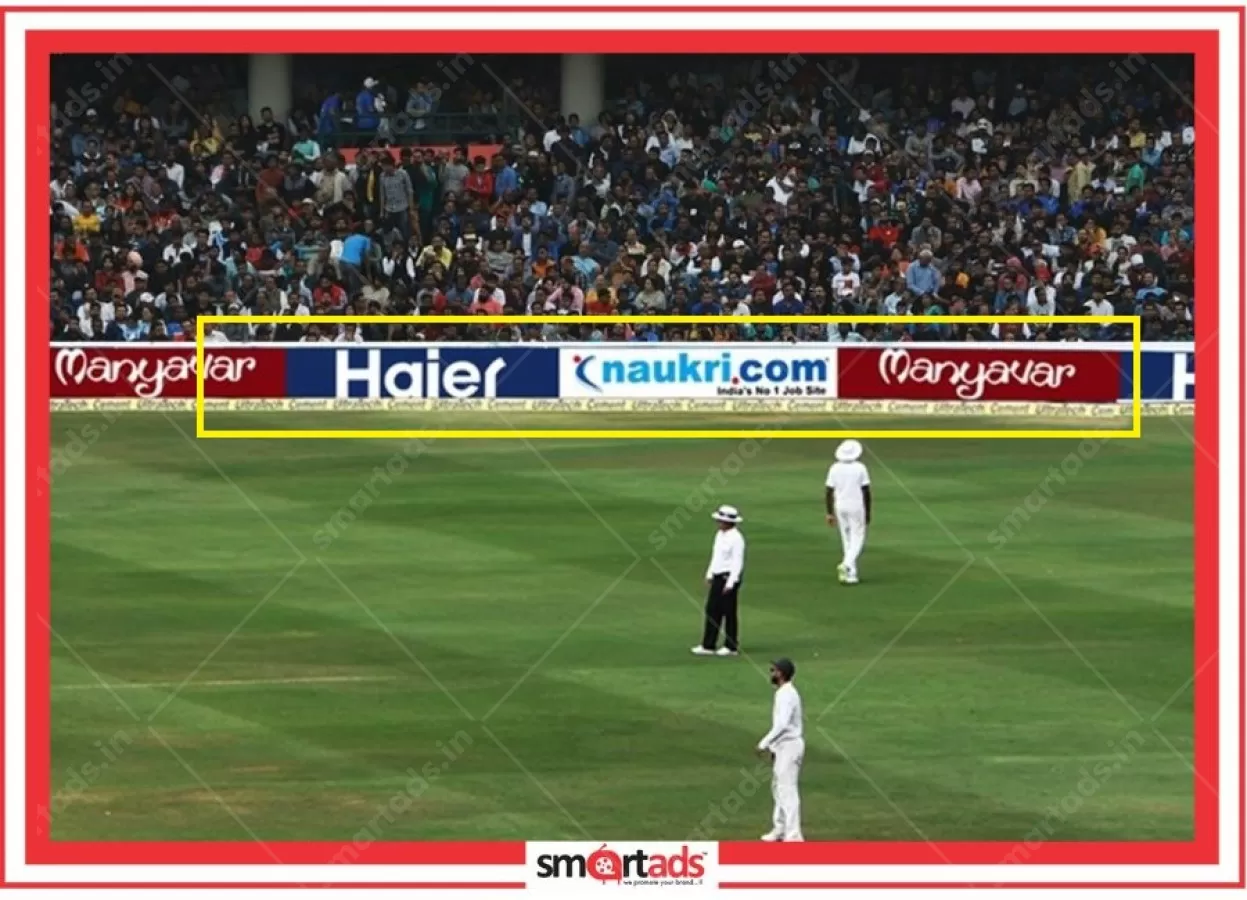
Silver HD Perimeter Signage
Various Sizes
1 ball in every 10 Balls : 50% of the Gr
Rate per Digital Screen / Per match
At Time Only 3 Display Name.
₹1100000.00
Showing 1 to 4 of 4 Results
MEDIA DETAILS
Various Sizes
1 ball in every 10 Balls : 50% of the Gr
Rate per Digital Screen / Per match
At Time Only 3 Display Name.
₹1100000.00
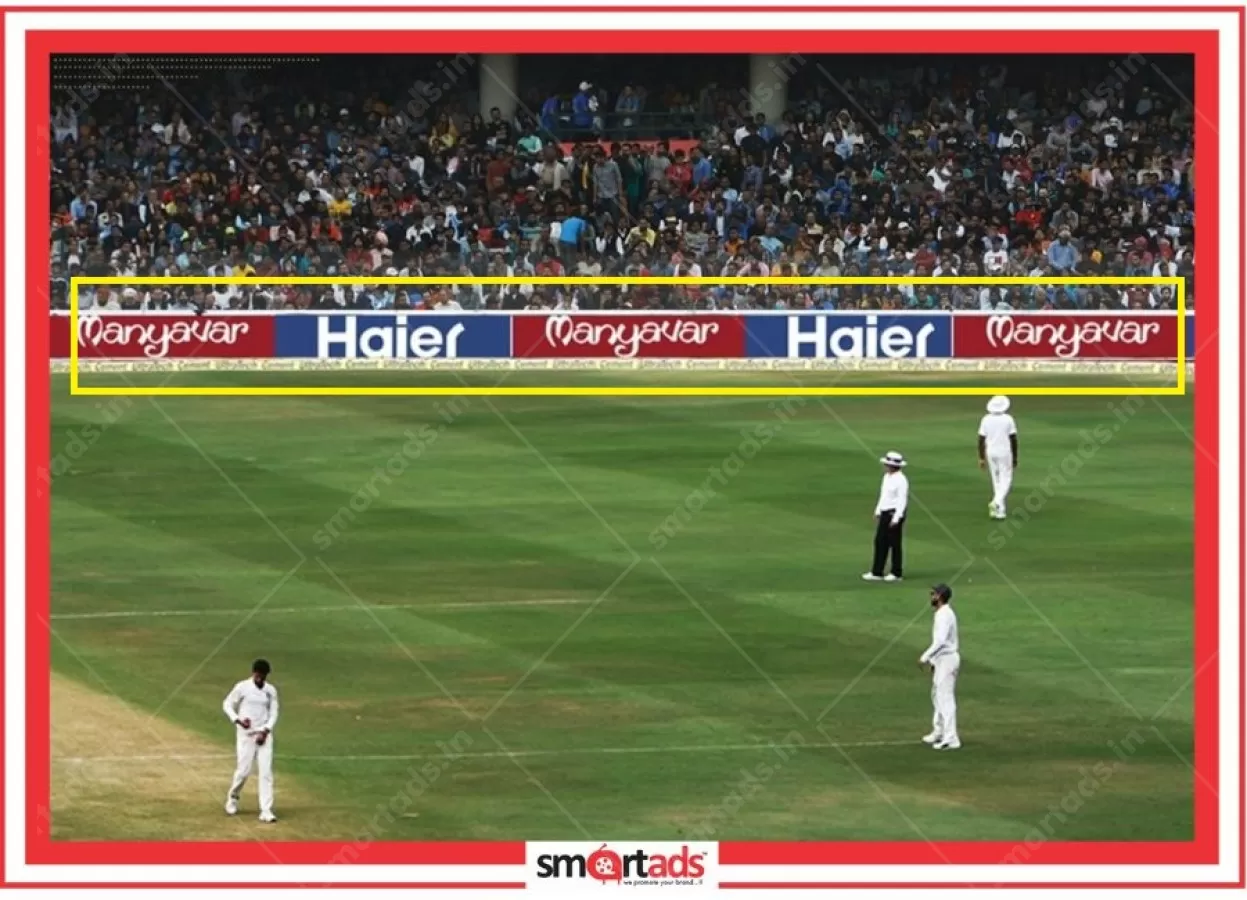
Various Sizes
1 Ball In Every 10 Balls : 50% Of The Gr
Rate per Digital Screen / Per match
At Time Only 2 Display Name.
₹1700000.00
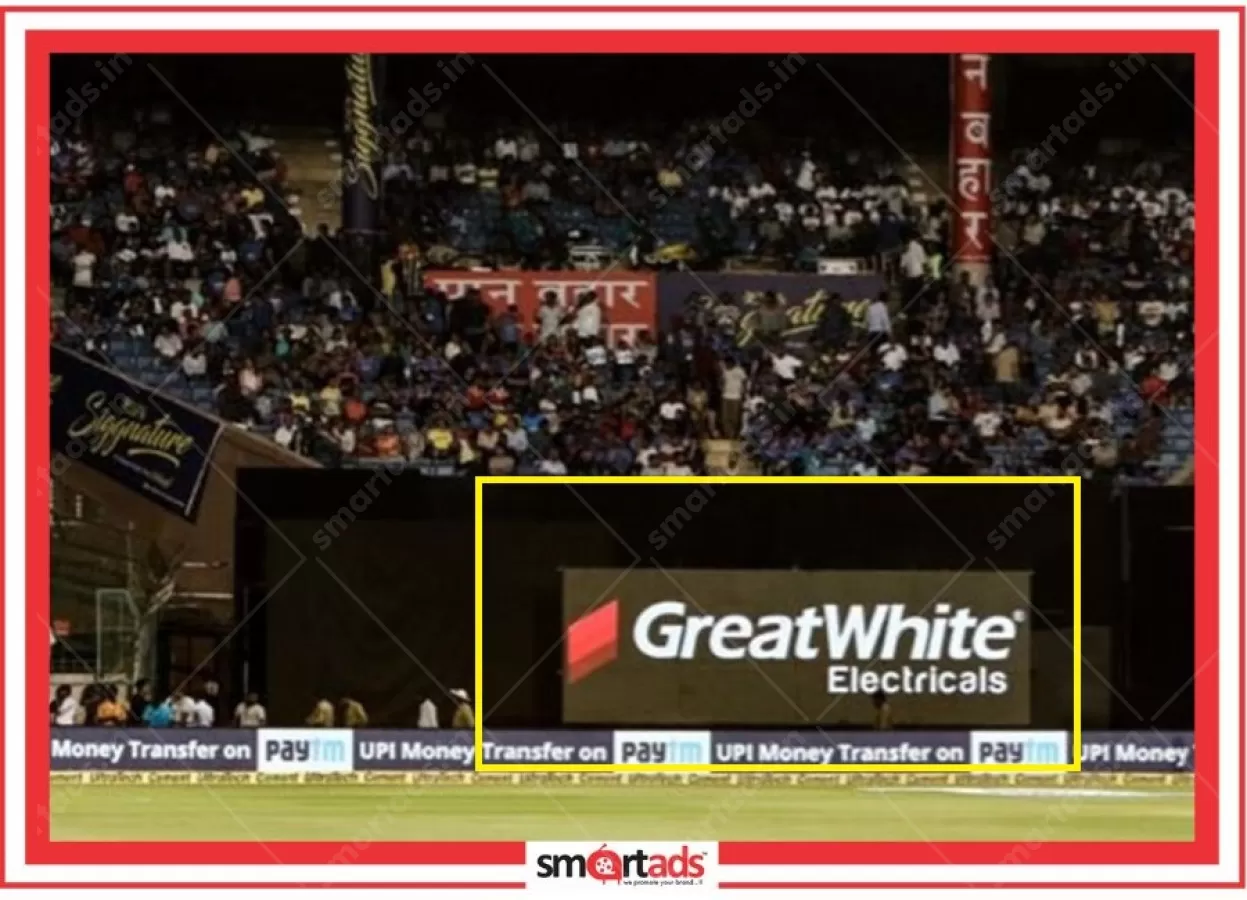
Various Sizes
5 Overs Per ODI Match , 2 Overs Per T20
Rate per Digital Screen / Per match
At Time Only 1 Display Name.
₹1150000.00
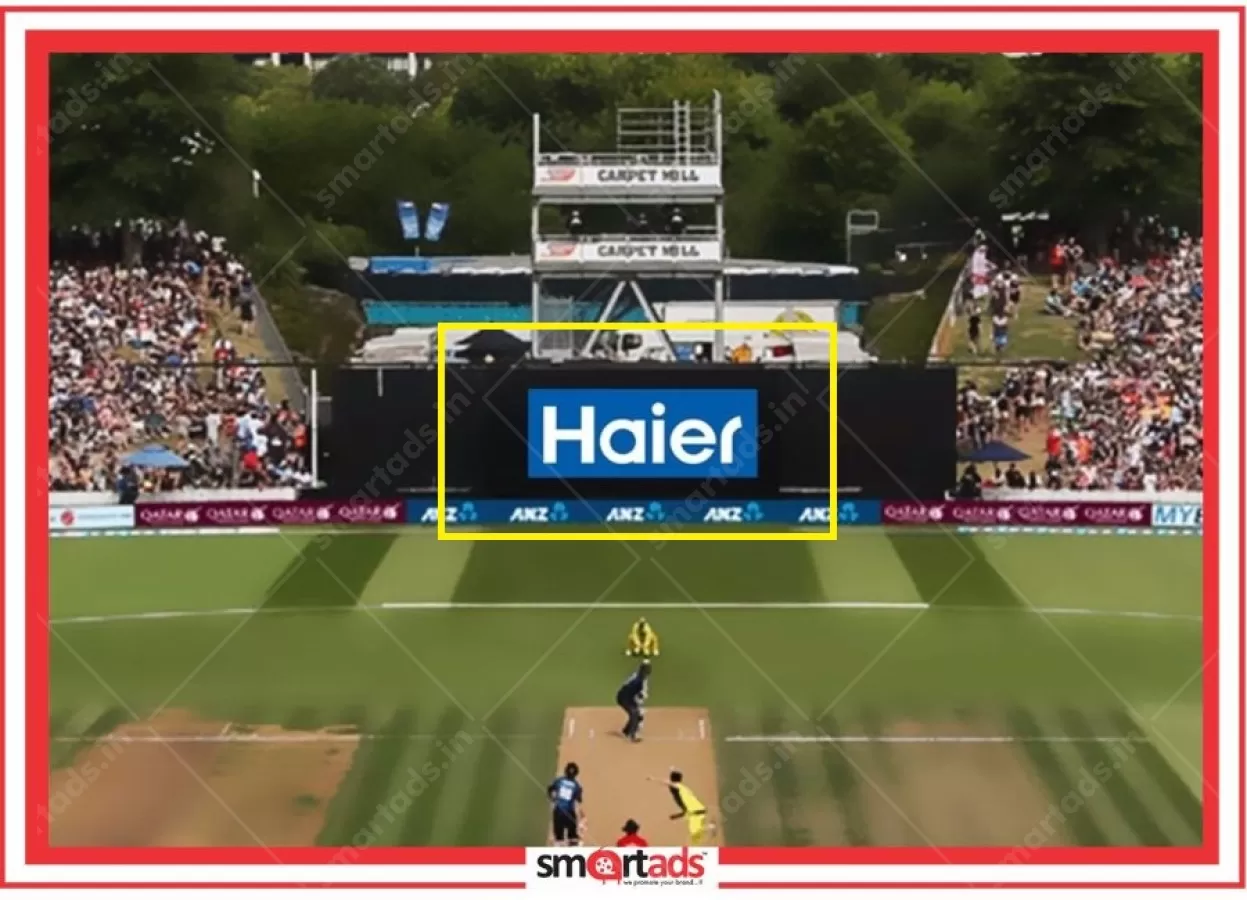
Various Sizes
5 Overs Per ODI Match , 2 Overs Per T20
Rate per Digital Screen / Per match
At Time Only 1 Display Name.
₹1150000.00
MEDIA REACH

MinimumQty :
1
EstimateReachPeople :
40000

Most brands that approach us about outdoor advertising in Dehradun are thinking hoardings on Rajpur Road or maybe a newspaper insert — and almost none of them have considered that a 25,000-capacity cricket stadium sitting on Thano Road, backed by the Shivalik Hills, is one of the most underutilised brand platforms in the entire northern hill belt. The Rajiv Gandhi International Cricket Stadium has hosted international fixtures, domestic cricket, and events as large as the Uttarakhand Investors Summit 2018, which means the footfall opportunity here extends well beyond cricket season. For brands willing to think differently about their media mix, this venue represents a category of brand exposure that no hoarding, no newspaper ad, and frankly no digital campaign can replicate.
There is something that happens to a person inside a cricket stadium that no other advertising environment can manufacture — they stop scrolling. They are present, emotionally invested, and surrounded by your brand for three to eight hours depending on the format, which is a dwell time that media planners spend entire careers trying to engineer through other channels. Cricket stadium advertising in Dehradun offers exactly that: a captive audience in a state of high emotional engagement, where brand recall is not just possible but almost inevitable. We have found, across campaigns we have run in stadium environments, that aided brand recall figures from in-stadium branding consistently outperform recall from comparable outdoor advertising Dehradun placements by a significant margin.
The Rajiv Gandhi International Cricket Stadium, located in the Raipur area of Dehradun near Jolly Grant Airport Road, was constructed by the Shapoorji Pallonji Group and designed by Collage Design Mumbai — the same firm responsible for some of India's most architecturally ambitious sports venues. It holds a LEED Gold Standard certification, which signals the kind of infrastructure investment that attracts serious sporting events and, by extension, serious audiences. The Cricket Association of Uttarakhand has used this venue for domestic cricket, Ranji Trophy matches, and international fixtures involving the Afghanistan Cricket Team, which once used Dehradun as a home ground for ODI and T20 fixtures. That international exposure gave the stadium a broadcast footprint that extended stadium advertising in Dehradun well beyond the physical boundary of the venue itself.
At SmartAds, we always tell our clients that the geography of this stadium matters as much as the cricket. Dehradun sits at the confluence of audiences from Haridwar, Rishikesh, and the broader Garhwal region — which means a sold-out match at Rajiv Gandhi Stadium is not just a Dehradun audience; it is a catchment that pulls from across Uttarakhand and even parts of western Uttar Pradesh. For brands building Uttarakhand advertising strategies, this single venue offers a density of regional audience concentration that would otherwise require a multi-city OOH campaign to replicate.
The format options at Dehradun cricket stadium are more varied than most advertisers expect when they first sit down with us for a briefing. The most visible — and the most frequently discussed — are perimeter boards, which run along the boundary of the playing field and are captured in virtually every camera angle during a broadcast match. LED perimeter boards offer the added advantage of dynamic content rotation, which means multiple brands can share the same physical space across a single match day, and the messaging can be updated in real time to reflect time-sensitive promotions. HD perimeter signage, even in its static form, delivers an impact that is hard to overstate: at a venue like Rajiv Gandhi International Cricket Stadium, these boards sit within the sightline of every spectator in the ground and within the broadcast frame for television viewers watching at home.
Beyond the boundary, ground-level boards placed at strategic points around the outfield offer a secondary layer of brand exposure that complements perimeter placement. Pitch mat branding — where a brand's logo or message is applied directly to the pitch covers or surrounding mat area — is a format that generates significant television impressions because cameras return to the pitch area repeatedly between overs. Sight screen advertising, placed at either end of the ground behind the bowler's arm, is arguably the single most camera-facing format available in any cricket stadium; every ball bowled in a televised match is framed against the sight screen, which makes it one of the highest-impression formats in the entire inventory of cricket stadium branding. Digital screens positioned in concourse areas and spectator stands extend brand exposure into the moments between play — the drinks breaks, the innings intervals, the strategic timeouts — when audiences are looking around and absorbing their environment.
On top of that, there are experiential and activation formats which represent the newer frontier of in-stadium branding. Fan activation zones near the entry gates or in designated concourse areas allow brands to create sampling counters, interactive experiences, and direct consumer engagement that no static format can replicate. Ground murals painted on the outfield or surrounding areas are visible from aerial broadcast shots and from the upper tiers of the stadium, giving brands a format that feels almost architectural in its scale. Player jersey branding, where available through team sponsorship agreements with the Uttarakhand cricket team, extends the brand's presence into every photograph, broadcast frame, and social media post featuring the players — which, in the age of Instagram and YouTube highlights, represents a reach multiplier that is genuinely difficult to quantify but impossible to ignore.
This is the question we get asked first in almost every conversation about cricket stadium advertising in Dehradun, and the honest answer is that rates vary considerably depending on format, match type, and duration — which is exactly why we think the question of cost should always come after the question of objective. That said, we understand that media planners need benchmarks to take to their management, so here is what our experience in this market tells us. Perimeter board advertising at Rajiv Gandhi International Cricket Stadium for a domestic match typically works out to somewhere in the ballpark of ₹1.5 lakh to ₹3 lakh per match for a standard static board position, which is a number that surprises most clients when they calculate the cost per impression against a 25,000-spectator attendance figure — the arithmetic is genuinely compelling.
LED perimeter boards, because they allow content rotation and carry a broadcast amplification premium, are priced higher — roughly in the range of ₹3 lakh to ₹6 lakh per match depending on the slot count and match significance, with international fixtures or high-profile domestic T20 matches commanding rates at the upper end of that range or beyond. Sight screen advertising, given its broadcast primacy, is typically negotiated as part of a broader sponsorship package rather than as a standalone buy, which means the effective cost is bundled with other formats and requires a conversation with the Cricket Association of Uttarakhand or the stadium management authority. Pitch mat branding and ground murals are similarly treated as premium placements, with costs that vary based on the event calendar and the negotiating position of the buyer.
What a lot of people miss is the seasonal dimension of advertising rates at Dehradun cricket stadium. The October-to-March window is when the bulk of domestic cricket and international fixtures are scheduled, which drives demand and, consequently, rates. Brands that plan their campaigns in advance — ideally three to four months before the season — are in a much stronger negotiating position than those who approach the market in September looking for October placements. At SmartAds, we have consistently secured better rates and better positions for clients who engage us early in the planning cycle; a retail client in Haridwar who booked perimeter board positions for an entire domestic season saved roughly 20 to 25 percent compared to the per-match rate they would have paid for individual bookings, which made the return on investment calculation considerably more attractive when they presented it internally.
The demographic profile of a cricket stadium audience in Dehradun is more affluent and more urban than most people assume when they think of Uttarakhand advertising. Match day footfall at Rajiv Gandhi International Cricket Stadium skews heavily toward the 18-to-45 age bracket, with a strong representation of working professionals, college students, and middle-to-upper-middle-class families — which is precisely the audience that FMCG brands, financial services companies, automobile manufacturers, and real estate developers spend significant budgets trying to reach through television and digital channels. The IRS and BARC viewership data consistently show that cricket audiences in Tier 2 and Tier 3 cities have higher purchasing intent indices than their metro counterparts for categories like two-wheelers, consumer durables, and home loans, which makes Dehradun cricket stadium a strategically valuable environment for brands in those categories.
The catchment geography of this audience is what makes the Dehradun cricket stadium particularly interesting for regional brands. Spectators travel from Haridwar and Rishikesh advertising markets, from Mussoorie, from Roorkee, and from smaller towns across the Garhwal region — which means a brand advertising at this venue is effectively reaching an audience that represents the entire economic heartland of Uttarakhand. For a brand building distribution in the state, this kind of geographic concentration of a diverse regional audience is extraordinarily difficult to replicate through any other single media placement.
Fan engagement at cricket matches also has a social amplification dimension that traditional audience measurement does not fully capture. Every spectator at Rajiv Gandhi International Cricket Stadium is a potential content creator — they are photographing the ground, posting to Instagram Stories, sharing match moments on WhatsApp — and brands with strong in-stadium branding appear organically in that user-generated content stream. We have seen this play out in campaigns where a brand's perimeter board appeared in hundreds of fan photographs that were shared across social media during a single match day, generating earned impressions that were never accounted for in the original media plan but which contributed meaningfully to top-of-mind awareness in the post-campaign brand tracking.
The distinction between BTL advertising at a cricket stadium and conventional outdoor advertising Dehradun is not just a question of format — it is a fundamentally different relationship between the audience and the brand message. A hoarding on Rajpur Road is seen by commuters in motion, for a fraction of a second, while their attention is divided between traffic, conversation, and their phone. Stadium advertising, by contrast, is consumed by a stationary, emotionally engaged audience that has chosen to be in that environment and is actively scanning their surroundings between moments of play. The quality of attention is categorically different, which is why in-stadium branding consistently delivers higher brand recall scores than comparable outdoor advertising investments.
Non-traditional advertising formats like those available at Dehradun cricket stadium also benefit from what media researchers call the "halo effect" of the event context — the positive emotions associated with cricket, with community, with live entertainment, transfer partially onto the brands that are present in that environment. This is not a theoretical claim; it is something we observe in post-campaign research, where brands that have run cricket stadium branding campaigns in Dehradun and other markets consistently report higher brand affinity scores among audiences who were present at the match compared to those who were not. Traditional outdoor advertising simply cannot manufacture that emotional context, regardless of creative quality or placement.
To be fair, outdoor advertising Dehradun has its own strengths — it works continuously, 24 hours a day, across the full campaign period, whereas stadium advertising is episodic and tied to the match calendar. The smart approach, which is what we recommend to most clients, is to treat cricket stadium advertising in Dehradun as the high-impact anchor of a broader campaign, using the emotional resonance of the stadium environment to build brand salience that is then reinforced by outdoor, radio, and digital touchpoints between match days. OOH advertising Uttarakhand and in-stadium branding are not competing channels; they are complementary layers of a well-constructed media plan.
Sponsorship packages at Rajiv Gandhi International Cricket Stadium operate at a different level of brand integration than individual format bookings, and they represent — in our view — the highest-value entry point for brands that are serious about building a sustained presence in the Uttarakhand market. A title sponsorship or presenting sponsorship of a match series gives a brand naming rights to the event itself, which means every press release, every broadcast mention, every social media post from the Cricket Association of Uttarakhand carries the brand's name. The media value generated through this kind of association — across television, digital, and print coverage of the event — typically exceeds the cost of the sponsorship itself when calculated on an equivalent advertising cost basis.
Below the title level, associate sponsorship packages typically bundle together a combination of perimeter boards, digital screen time, concourse branding, and fan activation zones into a single negotiated package, which gives brands a multi-format presence without the complexity of negotiating each placement individually. Player jersey branding, where the Uttarakhand cricket team's kit is involved, is usually handled through the Cricket Association of Uttarakhand directly and requires a separate agreement, but it can be incorporated into a broader sponsorship structure for brands that want the broadcast and social media amplification that comes with team association. We have found that brands which take the sponsorship package route rather than buying individual formats almost always end up with a better cost-per-impression outcome, simply because the bundled negotiation creates efficiencies that individual placements cannot.
Naming rights for the stadium itself represent the apex of this sponsorship hierarchy — a long-term agreement that embeds the brand into every reference to the venue across all media. While this level of investment is typically the domain of large national or multinational brands, it is worth noting as a benchmark for understanding the full spectrum of what cricket stadium advertising in Dehradun can encompass. At SmartAds, we have helped brands at every level of this spectrum — from a local Dehradun real estate developer who took a single perimeter board for a domestic season, to a national consumer goods brand that structured a multi-match associate sponsorship — and the planning principles are the same regardless of budget scale.
The booking process for cricket stadium advertising in Dehradun is more structured than most advertisers expect, and the lead time requirements are something that catches a lot of brands off guard. The primary authority for advertising permissions at Rajiv Gandhi International Cricket Stadium is the Cricket Association of Uttarakhand, which manages the venue's commercial inventory in coordination with the stadium management. For domestic matches, a minimum lead time of four to six weeks is typically required for format installation and approval, though LED perimeter board content can sometimes be updated with shorter notice once the physical infrastructure is already in place. For international matches or high-profile domestic tournaments, the lead time extends to eight to twelve weeks, and in some cases longer, because the BCCI and ICC guidelines govern what commercial installations are permissible during sanctioned matches.
The practical steps in the booking process begin with identifying the match calendar — which the Cricket Association of Uttarakhand publishes, though sometimes with limited advance notice for domestic fixtures — and then determining which formats and positions are available for the specific matches in question. This is where working with a cricket stadium advertising agency that has an existing relationship with the venue authority makes a material difference; we have found that clients who approach the CAU directly without prior experience frequently encounter delays and miscommunications that push their campaign execution past the booking window. At SmartAds, our media buying relationships in this market mean we typically have advance visibility on inventory availability before it is publicly announced, which gives our clients a meaningful first-mover advantage.
Once the format and position are confirmed, the brand artwork needs to be prepared to the technical specifications required by the venue — which vary by format, with LED perimeter boards requiring specific resolution and aspect ratio standards, static boards requiring particular material and size specifications, and pitch mat branding requiring materials that meet ground authority standards. The installation itself is coordinated with the stadium operations team and must be completed within a defined window before match day. Frankly speaking, the logistics of campaign execution at a cricket stadium are more involved than a standard outdoor advertising buy, which is precisely why having an experienced agency managing the process is not a luxury but a practical necessity.
The instinctive answer is large national brands with big budgets, but our experience tells a more interesting story. Some of the most effective cricket stadium advertising campaigns we have executed in Dehradun have been for regional and local brands — a Dehradun-based real estate developer who used perimeter board advertising during a domestic season to build top-of-mind awareness among exactly the kind of aspirational, middle-class audience that was sitting in those stands; a regional bank from the Garhwal region that used in-stadium branding to signal institutional credibility and reach to an audience that its branch network alone could not efficiently touch. The Dehradun cricket stadium audience, as we noted earlier, is not a generic mass market — it is a self-selected group of engaged, relatively affluent consumers, which makes it valuable for brands across a wide range of categories.
National brands in categories like consumer electronics, automobiles, FMCG, telecom, and financial services have an obvious case for cricket stadium advertising in Dehradun, particularly when they are running Uttarakhand-specific campaigns or trying to build market share in a state where television GRPs alone do not deliver the desired reach efficiency. The combination of in-stadium brand exposure with the broadcast amplification of televised matches — where television viewers see the same perimeter boards and LED signage that the in-stadium audience sees — creates a dual-channel impact that is genuinely unique to this format. A brand that invests in LED perimeter boards at a televised match at Rajiv Gandhi International Cricket Stadium is, in effect, buying both an outdoor advertising placement and a television advertising placement simultaneously, which changes the ROI calculation dramatically.
For local businesses — restaurants, retail chains, educational institutions, healthcare providers, real estate developers — cricket stadium advertising in Dehradun offers something that national media channels simply cannot: hyper-local relevance combined with premium brand context. A local brand appearing alongside national advertisers on the perimeter of a cricket ground benefits from an implicit association with quality and scale that elevates its market positioning in a way that is very difficult to achieve through conventional local advertising channels. We have seen this dynamic play out repeatedly, and it is one of the most compelling arguments we make when advising local Dehradun businesses on their media mix.
The headline number — 25,000 spectators at capacity — is the figure that most discussions of Dehradun cricket stadium advertising start and end with, but it is actually the least interesting part of the reach story. Match day footfall of 25,000 people in a single location for a sustained period is, by itself, an impressive concentration of audience; but the total reach of a cricket stadium advertising campaign at Rajiv Gandhi International Cricket Stadium extends considerably beyond the physical attendance figure. Television viewers watching a broadcast match see the same perimeter boards and HD perimeter signage that the in-stadium audience sees, which means a single match with even modest broadcast distribution can multiply the effective reach of an in-stadium placement by a factor of ten or more.
Beyond the broadcast dimension, the digital and social media amplification of match day content — through official broadcaster clips, fan videos, journalist photographs, and social media posts — creates an additional layer of organic reach that is increasingly significant. BARC viewership data for domestic cricket on regional and national channels consistently shows strong audience figures for matches involving state teams, and Uttarakhand cricket fixtures, particularly those at Rajiv Gandhi International Cricket Stadium, have attracted broadcast attention from both national sports channels and regional Uttarakhand broadcasters. For brands that are also running digital campaigns, the ability to retarget audiences who have engaged with match-related content online creates a powerful bridge between in-stadium branding and digital advertising — a strategy we actively recommend to clients who want to maximise the return on their cricket stadium advertising investment.
The non-cricket events dimension of reach is something that almost no discussion of stadium advertising in Dehradun addresses, which is a significant gap in how the medium is understood. Rajiv Gandhi International Cricket Stadium has hosted events beyond cricket — including the Uttarakhand Investors Summit 2018, which brought a very different but equally valuable audience profile to the venue. Concerts, cultural events, and large-scale public gatherings at the stadium represent additional BTL advertising opportunities that brands can plan for outside the cricket season, effectively extending the value of any infrastructure-level investments like ground murals or permanent signage installations.
The perception that cricket stadium advertising is exclusively for large national brands with crore-level budgets is one that we actively work to correct, because it causes local Dehradun businesses to overlook one of the most effective brand-building tools available in their market. The reality is that the format inventory at Rajiv Gandhi International Cricket Stadium includes options at multiple price points, and for a local business, even a single match-day perimeter board placement can generate a level of brand visibility and top-of-mind awareness that would require months of conventional outdoor advertising Dehradun spending to replicate.
One approach that works particularly well for smaller budgets is to focus on domestic cricket matches rather than international fixtures, where advertising rates are lower and the audience — while smaller in absolute terms — is still a highly engaged, locally relevant group. A local restaurant chain, for example, could invest in a concourse branding placement or a sampling counter activation during a domestic match, which would give them direct consumer contact with several thousand potential customers in a single afternoon. We worked with a mid-sized educational institution in Dehradun that ran a single-season perimeter board campaign during domestic fixtures, and their post-campaign brand awareness tracking showed a measurable uplift in unaided awareness among 18-to-25-year-olds in the city — precisely the audience they were trying to reach for their undergraduate programmes.
The key for local businesses is to approach cricket stadium advertising as part of a coordinated campaign rather than a standalone placement. Combining in-stadium branding with local radio tie-ins during match days — several Dehradun radio stations run match-day programming that creates a natural bridge between the stadium audience and the at-home listener — and with targeted digital advertising to audiences in the stadium catchment area creates a multiplier effect that makes the investment considerably more efficient. This kind of integrated local campaign is something we help small and regional brands structure regularly, and the results consistently demonstrate that cricket stadium advertising in Dehradun is accessible and effective at budget levels well below what most local businesses assume.
One of the most instructive campaigns we have executed at Rajiv Gandhi International Cricket Stadium involved a regional FMCG brand that was trying to establish market presence in Uttarakhand after a successful launch in neighbouring states. The brand had been running conventional outdoor advertising in Dehradun — hoardings, transit media, some newspaper insertions — but was struggling to build the kind of brand salience that would drive trial in a market dominated by established national players. We recommended a cricket stadium advertising strategy that combined LED perimeter boards for two domestic T20 matches with a sampling counter activation in the concourse area, which gave the brand both broadcast-level visibility and direct consumer contact in a single campaign. The results were striking: post-campaign retail audit data showed a 34 percent increase in brand recall among surveyed consumers in Dehradun, and the sampling activation generated over 8,000 direct product trials across the two match days — a cost per trial that was roughly 40 percent lower than what the brand had achieved through conventional sampling programmes in other markets.
A second case that illustrates the value of cricket stadium branding for local businesses involved a Dehradun-based real estate developer who was launching a mid-segment residential project in the Raipur area — which, not coincidentally, is also where the stadium is located. The developer took a perimeter board position for an entire domestic season, which gave them sustained visibility over multiple match days, and combined it with a digital screen placement in the concourse that ran project-specific messaging. The campaign reached an audience that was not only geographically relevant — many spectators at Dehradun cricket stadium live in or around the Raipur area — but was also demographically aligned with the project's target buyer profile. The developer reported that a meaningful proportion of their project enquiries during the campaign period came from prospects who cited the stadium advertising as their first point of brand awareness, which gave the campaign a directly attributable return on investment that the developer could present to their board.
A third example — and one that speaks to the opportunity for brands thinking beyond the cricket season — involved a national health and wellness brand that used Rajiv Gandhi International Cricket Stadium for a non-cricket event activation. The brand secured branding rights for a large-scale public wellness event held at the stadium, which attracted a footfall that, while smaller than a cricket match, was composed almost entirely of their core target audience. The cost of the activation was considerably lower than a match-day placement, and the brand achieved a level of consumer engagement — through interactive health assessments, product demonstrations, and sampling — that no passive advertising format could have delivered. This campaign reinforced something we have long believed: that cricket stadium advertising in Dehradun, when understood in its full scope, is not just a cricket-season proposition but a year-round brand platform.
Q: What is the cost of cricket stadium advertising in Dehradun?
Advertising rates at Rajiv Gandhi International Cricket Stadium vary based on format, match type, and duration. From our experience in this market, static perimeter board placements for domestic matches work out to somewhere in the ballpark of ₹1.5 lakh to ₹3 lakh per match, while LED perimeter boards — which allow content rotation and carry a broadcast visibility premium — are typically priced in the range of ₹3 lakh to ₹6 lakh per match for domestic fixtures. International matches command significantly higher rates, and sight screen advertising or pitch mat branding is usually negotiated as part of a broader package. Brands that book for a full domestic season rather than individual matches consistently achieve better effective rates, and working with a cricket stadium advertising agency that has established relationships with the Cricket Association of Uttarakhand is the most reliable way to access accurate, current rate information.
Q: Which stadium in Dehradun is used for cricket advertising?
The Rajiv Gandhi International Cricket Stadium, located in the Raipur area of Dehradun near Thano Road, is the primary venue for cricket advertising in the city. Constructed by the Shapoorji Pallonji Group and designed by Collage Design Mumbai, the stadium holds a LEED Gold Standard certification and has a capacity of 25,000 spectators. It is managed in coordination with the Cricket Association of Uttarakhand and has hosted domestic cricket, international fixtures, and large-scale non-cricket events. It is the only ICC-standard cricket venue in Uttarakhand and the only venue in the state that offers the full range of in-stadium branding formats.
Q: What advertising formats are available at Rajiv Gandhi International Cricket Stadium?
The format inventory at Rajiv Gandhi International Cricket Stadium includes perimeter boards (both static and LED), HD perimeter signage, boundary boards, sight screen advertising, pitch mat branding, ground-level boards, digital screens in concourse and stand areas, ground murals, fan activation zones with sampling counter options, and player jersey branding through team sponsorship agreements with the Uttarakhand cricket team. Naming rights and title sponsorship of match series are also available at the upper end of the inventory. The specific availability of each format depends on the match type, the event calendar, and the existing commercial commitments of the venue authority.
Q: How many spectators attend matches at Dehradun cricket stadium?
The Rajiv Gandhi International Cricket Stadium has a capacity of 25,000 spectators, which represents the in-stadium audience for a sold-out match. Match day footfall at this level places Dehradun cricket stadium among the larger domestic cricket venues in northern India. In practice, attendance at domestic matches varies depending on the fixture and the teams involved, with high-profile domestic T20 matches and any international fixtures drawing closer to capacity. Beyond the in-stadium figure, broadcast and digital reach extends the effective audience of a cricket stadium advertising campaign considerably further.
Q: Is cricket stadium advertising in Dehradun suitable for small businesses?
Yes — and this is a point we make emphatically, because the perception that stadium advertising is exclusively for large national brands causes many local Dehradun businesses to overlook a genuinely accessible and effective medium. Domestic match placements are available at rates that are within reach of mid-sized local businesses, particularly for concourse branding, digital screen placements, and fan activation zones. The key is to approach the investment as part of a coordinated campaign — combining in-stadium branding with local radio, digital, and outdoor advertising — rather than as a standalone placement. We have run successful cricket stadium advertising campaigns for local real estate developers, educational institutions, and regional FMCG brands in Dehradun, with results that consistently justified the investment.
Q: How do I book an advertising slot at Dehradun cricket stadium?
Booking cricket stadium advertising in Dehradun requires engaging with the Cricket Association of Uttarakhand or the stadium management authority, which oversees the venue's commercial inventory. The process involves confirming the match calendar, identifying available formats and positions, submitting brand artwork to the venue's technical specifications, and completing the installation within the permitted window before match day. Lead times are typically four to six weeks for domestic matches and eight to twelve weeks for international fixtures. Working with a cricket stadium advertising agency that has existing relationships with the CAU significantly streamlines this process and reduces the risk of delays.
Q: What is the difference between perimeter board and LED screen advertising at Dehradun stadium?
Static perimeter boards are fixed installations that display a single brand message throughout the match and are visible to both in-stadium spectators and television viewers. LED perimeter boards, by contrast, are dynamic displays that can rotate between multiple brand messages across a single match day, which allows several brands to share the same physical space and enables time-sensitive or context-specific messaging. LED boards typically carry a higher rate but offer the advantage of content flexibility and, in broadcast matches, a more visually prominent presence on television. HD perimeter signage refers to high-resolution static boards that deliver exceptional visual clarity for both in-stadium and broadcast audiences.
Q: Can brands advertise during non-cricket events at Rajiv Gandhi Stadium Dehradun?
Yes — and this is one of the most underutilised opportunities in the Dehradun advertising market. Rajiv Gandhi International Cricket Stadium has hosted non-cricket events including the Uttarakhand Investors Summit 2018, concerts, and large-scale public gatherings, all of which represent BTL advertising opportunities outside the cricket season. The audience profile for these events varies considerably from the cricket audience, which means brands can access different demographic segments through the same venue infrastructure. Branding rights for non-cricket events are typically negotiated directly with the event organiser rather than the Cricket Association of Uttarakhand, and rates are generally lower than match-day placements.
Q: What is BTL advertising and how does it apply to cricket stadium advertising in Dehradun?
BTL advertising — below-the-line advertising — refers to targeted, non-mass-media brand communication that engages specific audiences in specific environments, as distinct from the broad-reach mass media of television, radio, and print. Cricket stadium advertising in Dehradun is a BTL format because it targets a defined, self-selected audience in a controlled environment, allowing for a depth of brand engagement that mass media cannot replicate. In-stadium branding, fan activation zones, sampling counters, and experiential activations are all BTL tools that the stadium environment makes possible. The distinction matters for media planning purposes because BTL advertising is typically evaluated on engagement quality and brand recall rather than raw reach, and cricket stadium advertising consistently performs well on both metrics.
Q: How does Dehradun cricket stadium advertising compare to other Uttarakhand cities like Dharamsala?
Dharamsala's HPCA Stadium is technically in Himachal Pradesh rather than Uttarakhand, but it is frequently considered alongside Dehradun in regional media plans for northern India. Dharamsala commands higher rates — particularly for international fixtures — because of its more established international match history and its association with IPL advertising. Rajiv Gandhi International Cricket Stadium in Dehradun, however, offers a distinct advantage for brands targeting the Uttarakhand market specifically: the stadium's catchment audience is drawn from across Uttarakhand, including Haridwar, Rishikesh, and the Garhwal region, which makes it a more geographically relevant platform for Uttarakhand-focused campaigns. Rates at Dehradun are generally more accessible than Dharamsala for equivalent formats, which makes it a more efficient choice for brands whose primary objective is Uttarakhand market penetration rather than national broadcast visibility.
Q: What is the reach of a cricket stadium advertisement in Dehradun beyond in-stadium audiences?
The reach of a cricket stadium advertising campaign at Rajiv Gandhi International Cricket Stadium extends through three channels beyond the in-stadium audience. First, broadcast reach: televised matches carry the stadium's perimeter boards and HD perimeter signage into the homes of television viewers watching on national and regional sports channels, multiplying the effective audience by a significant factor. Second, digital and social media reach: fan-generated content, broadcaster clips, and journalist photography from match days distribute brand-visible imagery across social platforms organically. Third, earned media reach: sponsorship packages that give brands naming rights or team associations generate press coverage and social media mentions that extend brand exposure further. When all three channels are combined, the total reach of a well-structured cricket stadium advertising campaign substantially exceeds the 25,000 in-stadium figure.
Q: What permissions are needed to advertise at Rajiv Gandhi International Cricket Stadium Dehradun?
Advertising at Rajiv Gandhi International Cricket Stadium requires approval from the Cricket Association of Uttarakhand, which manages the venue's commercial rights. For matches that fall under BCCI jurisdiction — including domestic tournaments and international fixtures — BCCI commercial guidelines govern what advertising is permissible, and brands must ensure their category is not in conflict with existing BCCI or team sponsorship agreements. ICC guidelines apply to any international matches. Physical installation of advertising materials requires coordination with the stadium operations team and must comply with the venue's structural and safety standards. Brands working with an experienced cricket stadium advertising agency will find that these permission requirements are navigated as part of the standard booking process, but it is important to factor the lead time for approvals into campaign planning from the outset.
The opportunity that Rajiv Gandhi International Cricket Stadium presents for brands in Uttarakhand is, in our view, genuinely underappreciated — and that underappreciation is partly a function of how the medium has been marketed and partly a function of how brands habitually think about their media mix. When a brand manager sits down to allocate a Dehradun advertising budget, the inst
