

Top Digital Screen
55 Inches
Frequency building digital units spread
Rate per Screens / Month
Total Screen 58 Slot- 15 seconds Loop- 3
₹45000.00
Showing 1 to 12 of 59 Results
MEDIA DETAILS
55 Inches
Frequency building digital units spread
Rate per Screens / Month
Total Screen 58 Slot- 15 seconds Loop- 3
₹45000.00

3 ft 8 in (w) * 9 ft (h)
Use high imagery content to get best res
Rate per Tower / Month
6 unit double sided
₹675000.00

55 inches, Landscape
Dynamic advertising media, with no conte
Rate per Screen / Month
Slot- 15 seconds Loop- 3 minutes Units:
₹45555.00

2 Ft x 8 Ft
Present Across Departure High Frequency
Rate per Screen / Month
Slot 7 5 seconds Loop 15 seconds
₹230000.00

17 ft 8 inches(w) X 7 ft 11 inches(h)
Can be very well used to create a brand
Rate per Display / Month
Type & Units: 4 curved SAVs
₹812500.00

28 ft 1 in(W)’X 9 ft 5 in(H)
Large format media for larger than life
Rate per Box / Month
12 Unit Type Backlit
₹255000.00

7.5 Ft. W x 17.4 Ft. H
Ad placed on a large double sided self s
Rate per Totem / Month
₹1211250.00

44 x 6 ft
This site is well positioned to target p
Rate per Wrap / Month
₹625813.00

11 x 5 ft
Double sided back lit ads are displayed
Rate per Scroller / Month
₹969000.00

Panel 1 - 46 x 13 Cm, Panel 2 - 49 x 30
Ad placed on the luggage trolley 3 pane
Rate per Trolley / Month
₹484500.00

Panel 1 - 100 Ft. W x 20 Ft. H Cm, Panel
Tarmac coaches ply between the terminal
Rate per Coach / Month
₹304000.00

24 In. W x 55 In. H
Ad placed on a digital screen fixed on a
Rate per Screen / Month
₹969000.00
MEDIA REACH

Airports :
Dehradun Airport
MonthlyFootfall :
150000
MonthlyFlights :
1000
Terminal :
Domestic & International
Location :
Dehradun Airport Area, Dehradun
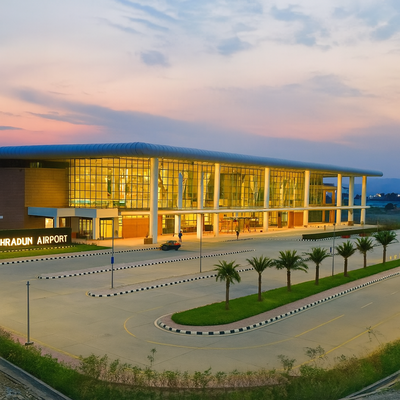
This comprehensive guide provides real-world data on airport advertising rates at Jolly Grant Airport, passenger demographics, and strategic insights from our experience managing campaigns across Uttarakhand's primary aviation gateway.
Most marketers underestimate the unique positioning that Jolly Grant Airport offers, which serves as the primary air gateway to some of India's most sought-after spiritual and adventure tourism destinations. The airport captures a remarkably affluent and engaged audience; passengers travelling through Dehradun are typically heading to Rishikesh, Haridwar, Mussoorie, or deeper into the Garhwal region for high-value tourism experiences, which translates into advertising exposure among demographics with significant disposable income and brand receptivity.
What sets airport advertising apart from other outdoor media formats is the captive audience phenomenon, which becomes particularly pronounced at smaller regional airports like Jolly Grant where passengers often arrive 90 minutes before domestic flights and face limited entertainment options. Our experience shows that brand recall rates for airport ads consistently outperform roadside hoardings by roughly 40-60%, primarily because travellers are in a relaxed, anticipatory mindset and have extended dwell time in terminal areas where advertising placements receive sustained attention rather than fleeting glances.
The demographic profile at Dehradun Airport skews heavily toward business travellers, adventure tourists, and spiritual seekers — segments that represent premium target audiences for categories ranging from automotive and financial services to hospitality and wellness brands. We have found that campaigns targeting this airport generate particularly strong results for brands positioning themselves around lifestyle aspirations, premium experiences, and spiritual or wellness messaging, which aligns naturally with the mindset of passengers embarking on journeys to Uttarakhand's pilgrimage and adventure destinations.
The advertising inventory at Jolly Grant Airport encompasses both digital and static formats, though the selection remains more limited compared to major metropolitan airports, which actually works to advertisers' advantage by reducing clutter and increasing individual campaign visibility. Digital screens represent the premium advertising option; these LED displays are strategically positioned in the departure lounge, arrival area, and near security checkpoints where passenger flow creates natural viewing opportunities that extend beyond the typical 3-5 second exposure window common in outdoor advertising.
Static advertising placements include backlit displays near check-in counters, wall-mounted panels in baggage claim areas, and standee positions throughout the terminal building, which offer cost-effective options for brands seeking sustained presence without the premium pricing associated with digital inventory. The departure area advertising commands the highest rates because passengers typically spend 45-60 minutes in this zone after security clearance, creating an environment where advertising messages receive multiple exposures and deeper cognitive processing than transit advertising in busier, more chaotic airport environments.
Lounge advertising presents a particularly interesting opportunity at Jolly Grant Airport, where the premium waiting areas cater to business travellers and high-net-worth individuals visiting Uttarakhand for luxury tourism experiences or spiritual retreats. These placements, while limited in inventory, deliver exceptional reach among affluent audiences; we have observed that lounge advertising generates brand recall rates that are roughly 70% higher than general terminal placements, though the cost premium can be substantial and inventory availability often requires advance booking during peak tourism seasons.
Airport advertising rates at Jolly Grant Airport vary significantly based on placement location, format type, and seasonal demand patterns, with peak pricing occurring during the March-June period when adventure tourism and pilgrimage travel reaches maximum volume. Digital screen advertising typically costs somewhere between ₹45,000 to ₹85,000 per month for prime locations, which represents a significant premium over static formats but delivers dynamic content capabilities and higher engagement metrics that justify the investment for brands seeking maximum impact among the airport's captive audience.
Static backlit displays command monthly rates in the ballpark of ₹25,000 to ₹50,000 depending on size and positioning, with departure lounge placements at the higher end of this range and arrival area positions offering more budget-friendly entry points for brands testing airport advertising effectiveness. The thing is, these rates fluctuate considerably during peak tourism seasons; we have seen rate increases of 30-40% during the Char Dham Yatra period and summer tourism rush, which makes advance booking essential for brands planning campaigns around these high-traffic windows.
What surprises many first-time airport advertisers is the additional cost structure beyond basic placement fees, which includes production charges for digital content creation, installation fees for static displays, and mandatory insurance coverage that can add roughly 15-20% to the base advertising rates. At SmartAds, we always tell our clients that the true cost-per-impression at Jolly Grant Airport works out to be remarkably competitive when calculated against the premium demographic profile and extended exposure duration, particularly for brands targeting affluent travellers who represent high-lifetime-value customer segments.
The strategic value of Dehradun Airport advertising extends far beyond simple passenger exposure numbers; this location serves as a gateway to experiences that create powerful emotional and psychological states in travellers, which translates into heightened brand receptivity and message retention that outdoor advertising in urban environments rarely achieves. Passengers arriving at Jolly Grant Airport are typically beginning journeys associated with personal transformation, spiritual seeking, or adventure pursuits — mindsets that create optimal conditions for brand messaging focused on aspiration, achievement, and lifestyle enhancement.
From a media planning perspective, Dehradun Airport offers exceptional reach efficiency within Uttarakhand's premium consumer segments, capturing business leaders, entrepreneurs, and affluent tourists who might be difficult to reach through traditional media channels in smaller cities and towns throughout the region. Our experience managing campaigns for automotive brands shows that airport advertising at Jolly Grant generates leads with conversion rates roughly 25% higher than equivalent outdoor advertising spends in Delhi or Mumbai, primarily because the audience self-selects for disposable income and lifestyle aspiration simply by choosing air travel to reach Uttarakhand destinations.
The competitive landscape for airport advertising in Dehradun remains relatively uncrowded compared to major metropolitan airports, which means individual campaigns receive greater share-of-voice and reduced message interference from competing brands. We worked with a luxury hospitality client who achieved 89% aided brand recall among airport passengers after a three-month campaign at Jolly Grant Airport, results that would be nearly impossible to replicate in the cluttered advertising environment of airports like Delhi or Mumbai where hundreds of brands compete for passenger attention simultaneously.
The choice between digital and static airport advertising at Jolly Grant Airport involves trade-offs that extend beyond simple cost considerations; digital screens offer dynamic content capabilities and the ability to rotate multiple messages throughout the day, which becomes particularly valuable for brands seeking to test different creative approaches or target specific flight schedules with tailored messaging. Digital displays also provide opportunities for real-time content updates and seasonal message customization, capabilities that prove especially relevant for tourism and hospitality brands seeking to promote timely offers or weather-dependent services to passengers heading into the Himalayan region.
Static advertising formats, while lacking the visual impact and flexibility of digital options, offer certain advantages that make them attractive for specific campaign objectives and budget constraints. Backlit static displays provide consistent 24-hour visibility without concerns about technical malfunctions or content scheduling issues, which ensures reliable brand presence throughout the campaign duration; additionally, static formats often generate longer viewing times because passengers don't anticipate content changes and tend to read static messages more thoroughly than digital content that they expect to rotate or disappear.
The production and approval timelines also differ significantly between digital and static formats at Jolly Grant Airport, with digital content requiring technical specifications review and compatibility testing that can extend campaign launch timelines by 7-10 days compared to static installations. Frankly speaking, we recommend digital formats for brands with sufficient budgets and campaign objectives focused on engagement and memorability, while static options work better for brands prioritizing consistent presence and cost efficiency over creative flexibility and visual impact.
The terminal layout at Jolly Grant Airport creates distinct zones with varying passenger flow patterns and dwell times, which directly impacts advertising effectiveness and justifies the significant rate differentials between premium and standard placement locations. The departure lounge represents the most valuable advertising real estate because passengers typically spend 45-75 minutes in this area after security clearance, creating extended exposure opportunities that allow for complex message processing and brand consideration that brief transit exposures cannot achieve.
Security checkpoint areas offer unique advantages for advertising placements because passengers are required to slow down and often queue for several minutes, creating forced attention opportunities that generate high message recall rates despite shorter individual exposure durations. We have found that advertising near security areas works particularly well for quick-service brands, mobile apps, and impulse-purchase categories where immediate action or future recall represents the primary campaign objective rather than complex brand storytelling or detailed product information communication.
Baggage claim advertising targets a different passenger mindset and demographic mix, capturing arriving passengers who are transitioning from travel mode into destination experience mode, which creates opportunities for local service providers, ground transportation, hospitality, and destination-related messaging. The arrival area also captures passengers who may be visiting Uttarakhand for the first time and are particularly receptive to information about local attractions, services, and experiences; one tourism client we worked with generated over 2,400 website visits during a two-month baggage claim advertising campaign, with conversion rates that exceeded their digital marketing benchmarks by roughly 35%.
Campaign planning for Jolly Grant Airport requires understanding the seasonal passenger flow patterns that dramatically impact both audience composition and advertising rates throughout the year, with peak periods coinciding with adventure tourism seasons, pilgrimage travel windows, and holiday periods when Uttarakhand experiences maximum visitor volume. The March through June period represents the highest-traffic window, followed by a secondary peak during October and November when post-monsoon weather creates ideal conditions for Himalayan tourism and spiritual travel to Rishikesh and Haridwar.
The approval process for airport advertising involves coordination with Airports Authority of India protocols and local administrative requirements, which typically requires 15-20 working days for static installations and 20-25 working days for digital content approval and technical setup. At SmartAds, we always recommend beginning the approval process at least 30 days before desired campaign launch dates to accommodate potential revision requests and technical requirements that can extend timelines; we have seen campaigns delayed by 2-3 weeks due to content modifications or technical specification issues that could have been avoided with earlier planning.
Budget allocation should account for the full campaign lifecycle including production costs, installation fees, monthly placement charges, and removal expenses, which collectively can add 25-30% to the base advertising rates quoted by airport authorities. The most successful airport advertising campaigns we have managed incorporate flight schedule analysis to optimize content timing and messaging, seasonal audience research to align creative messaging with passenger demographics and travel motivations, and post-campaign measurement protocols that capture both immediate response metrics and longer-term brand impact assessment.
The return on investment calculation for Dehradun Airport advertising must account for the premium demographic profile and high lifetime value of passengers who choose air travel to reach Uttarakhand destinations, which creates opportunities for exceptional campaign efficiency when measured against quality lead generation and customer acquisition rather than simple reach metrics. Business travellers and affluent tourists passing through Jolly Grant Airport typically represent customer segments with 3-5 times higher lifetime value compared to mass market audiences reached through traditional outdoor advertising in urban markets.
Brand awareness lift from airport advertising campaigns consistently outperforms other outdoor media formats in our experience, with aided recall rates averaging 65-75% among passengers exposed to campaigns during their terminal experience, compared to 25-35% recall rates typical for roadside hoarding advertising. The extended exposure duration and captive audience environment create conditions for deeper message processing and emotional connection that translates into stronger purchase intent and brand preference development, particularly for categories aligned with travel, lifestyle, and aspirational positioning.
We managed a campaign for a financial services client targeting high-net-worth individuals travelling to Uttarakhand for spiritual and wellness tourism, which generated 340 qualified leads over a four-month period at a cost-per-lead that was roughly 40% lower than their digital marketing channels and with conversion rates that exceeded their historical benchmarks by 60%. The campaign success stemmed from the natural alignment between the airport audience mindset — passengers embarking on transformative or meaningful journeys — and the client's wealth management messaging focused on financial planning for life goals and spiritual values.
Q: What are the advertising rates at Dehradun Airport?
Advertising rates at Jolly Grant Airport vary significantly based on format type and placement location, with digital screens commanding premium pricing in the range of ₹45,000 to ₹85,000 per month for prime departure lounge and security checkpoint positions. Static backlit displays offer more budget-friendly options starting around ₹25,000 monthly for standard locations, though rates can reach ₹50,000 for premium departure area placements. The thing is, these base rates don't include production costs, installation fees, and mandatory insurance coverage, which typically add another 15-20% to the total campaign investment. Seasonal rate variations can increase costs by 30-40% during peak tourism periods from March through June and during major pilgrimage seasons.
Q: How many passengers use Jolly Grant Airport annually?
Jolly Grant Airport handles approximately 8-10 lakh passengers annually, though this number has been growing steadily as Uttarakhand tourism expands and air connectivity improves to serve the increasing demand for spiritual and adventure travel destinations. The passenger mix skews heavily toward affluent demographics, with roughly 60% business and premium leisure travellers who represent high-value target audiences for advertising campaigns. Peak passenger volumes occur during the March-June adventure tourism season and October-November post-monsoon travel period, when daily passenger counts can exceed 2,500 compared to off-season averages of 1,200-1,500 daily passengers. What makes these numbers particularly valuable for advertisers is the demographic quality rather than pure volume; passengers choosing air travel to reach Uttarakhand destinations typically have disposable incomes and lifestyle preferences that align with premium brand positioning.
Q: What types of advertising options are available at Dehradun Airport?
The advertising inventory at Jolly Grant Airport includes digital LED screens in prime locations like departure lounges and security areas, static backlit displays throughout the terminal building, and premium lounge advertising options for brands targeting high-net-worth travellers. Digital screens offer dynamic content capabilities and multiple message rotation throughout the day, while static formats provide consistent 24-hour visibility at lower cost points. Placement options span the entire passenger journey from check-in counter areas and security checkpoints to departure lounges and baggage claim zones, each offering different audience engagement opportunities and pricing structures. The airport also accommodates special installations and promotional activities, though these require extended approval timelines and additional coordination with airport authorities for execution.
Q: How long do airport advertising campaigns run in Dehradun?
Airport advertising campaigns at Jolly Grant Airport typically run for minimum periods of one month, though most successful campaigns extend for 3-6 months to maximize brand recall and capture seasonal passenger flow variations throughout the year. The campaign duration often depends on advertising objectives; brand awareness campaigns benefit from extended 4-6 month runs that capture multiple passenger cohorts and seasonal travel patterns, while promotional campaigns for specific offers or events may run for shorter 1-2 month periods aligned with timing requirements. We have found that campaigns shorter than two months rarely achieve optimal return on investment due to the fixed costs associated with production, installation, and approval processes that represent significant portions of total campaign investment. Extended campaigns also allow for performance optimization and creative rotation that improves effectiveness over time.
Q: What is the approval process for airport advertising in Dehradun?
The approval process for airport advertising at Jolly Grant Airport involves multiple stakeholders including Airports Authority of India, local airport management, and content review committees that evaluate creative materials for compliance with aviation advertising guidelines. Static advertising installations typically require 15-20 working days for complete approval and installation, while digital content faces additional technical review and compatibility testing that can extend timelines to 20-25 working days. The process begins with campaign proposal submission including creative concepts, technical specifications, and installation plans, followed by content review for appropriateness and compliance with airport advertising standards. At SmartAds, we always recommend initiating the approval process at least 30 days before desired campaign launch dates to accommodate potential revision requests and technical requirements that commonly arise during the review process.
Q: Which locations offer maximum visibility at Jolly Grant Airport?
The departure lounge represents the highest-visibility location for airport advertising at Jolly Grant Airport because passengers spend 45-75 minutes in this area after security clearance with limited distractions and entertainment options. Security checkpoint areas also offer excellent visibility due to queue formation and mandatory passenger slowdown that creates forced attention opportunities, though exposure duration is shorter than departure lounge placements. Digital screens positioned near gate areas capture passengers during boarding announcements and final waiting periods when attention levels are high and alternative activities are limited. The arrival area and baggage claim zones target different passenger mindsets but offer valuable exposure for local services and destination-related messaging. Premium lounge advertising delivers the highest engagement rates among affluent passenger segments, though inventory is limited and pricing reflects the exclusive audience access.
Q: What are the digital advertising specifications for Dehradun Airport?
Digital advertising at Jolly Grant Airport requires content formatted for LED display systems with specific technical requirements including resolution specifications, file format standards, and content duration guidelines that ensure optimal visual quality and system compatibility. Standard digital screens accommodate full HD content at 1920x1080 resolution, with content files delivered in MP4 format and individual message durations typically ranging from 10-15 seconds within rotation cycles. The airport's digital advertising system supports static images, video content, and basic animation, though complex interactive elements are not currently supported by the existing infrastructure. Content must meet brightness and contrast specifications optimized for airport lighting conditions, and all digital materials require technical compatibility testing before campaign launch. Creative content also faces review for compliance with airport advertising guidelines regarding messaging appropriateness, visual elements, and brand representation standards.
Q: How does Dehradun Airport advertising compare to other regional airports?
Dehradun Airport advertising offers several advantages compared to other regional airports, primarily due to the unique demographic profile of passengers traveling to Uttarakhand's spiritual and adventure tourism destinations, which creates access to affluent, engaged audiences that are often difficult to reach through traditional media channels. The competitive advertising environment at Jolly Grant Airport remains less cluttered than major metropolitan airports, allowing individual campaigns to achieve greater share-of-voice and reduced message interference from competing brands. Pricing at Dehradun Airport is generally more accessible than Tier-1 city airports while delivering comparable or superior demographic quality, making it an efficient choice for brands seeking premium audience access without metropolitan market pricing premiums. The passenger dwell time and captive audience environment at Jolly Grant Airport often exceed those found at busier regional airports where passenger flow is more rushed and attention is more fragmented.
Q: What demographics does Dehradun Airport advertising target?
Dehradun Airport advertising primarily reaches affluent business travelers, premium leisure tourists, and spiritual seekers who represent high-value demographic segments with significant disposable income and lifestyle aspiration characteristics. The passenger mix includes corporate executives traveling for business in Uttarakhand, adventure tourists seeking Himalayan experiences, pilgrims visiting Rishikesh and Haridwar, and wellness travelers pursuing spiritual and health tourism opportunities throughout the region. Age demographics skew toward 28-55 year-olds with above-average education levels and household incomes, creating ideal target audiences for categories including automotive, financial services, premium hospitality, wellness products, and lifestyle brands. International passengers represent roughly 15-20% of total traffic, adding global perspective and cultural diversity to the advertising audience. The demographic quality rather than quantity makes Jolly Grant Airport particularly valuable for brands seeking efficient access to premium consumer segments.
Q: Are there seasonal pricing variations for airport advertising in Dehradun?
Seasonal pricing variations at Jolly Grant Airport reflect the dramatic fluctuations in passenger volume and demographic composition throughout the year, with peak pricing occurring during March-June adventure tourism season and October-November post-monsoon travel periods when demand for advertising inventory increases substantially. Rate premiums during peak seasons typically range from 30-40% above base pricing, though the increased passenger exposure and enhanced demographic quality often justify the additional investment for brands seeking maximum campaign impact. The Char Dham Yatra period creates particularly high demand for advertising inventory as pilgrimage travel generates significant passenger volume increases and attracts brands targeting spiritual and religious audiences. Off-season periods from July-September and December-February offer more favorable pricing but with reduced passenger volumes that may impact overall campaign reach and effectiveness for brands requiring high-volume exposure.
The positioning of Jolly Grant Airport as Uttarakhand's primary aviation gateway creates unique opportunities for brands seeking to connect with audiences in transformative mindsets, whether they are embarking on spiritual journeys to Rishikesh and Haridwar or pursuing adventure experiences in the Himalayan region. This psychological context enhances advertising effectiveness beyond typical outdoor media performance because passengers are actively engaged in experiences associated with personal growth, achievement, and lifestyle aspiration — mental states that create optimal conditions for brand messaging and memory formation.
Our analysis of campaign performance data shows that airport advertising at Jolly Grant Airport generates particularly strong results for brands positioned around premium experiences, personal transformation, and aspirational lifestyle messaging, which aligns naturally with the motivations and mindsets of passengers choosing air travel to reach Uttarakhand destinations. The airport serves as a convergence point for multiple high-value demographic segments that might be difficult to reach efficiently through traditional media channels in smaller cities and towns throughout the region, creating opportunities for brands to achieve exceptional reach efficiency within their target audience parameters.
The integration opportunities with Uttarakhand's broader tourism marketing ecosystem also enhance the strategic value of airport advertising campaigns, as brands can coordinate messaging with destination marketing initiatives, seasonal tourism promotions, and regional event marketing to create synergistic effects that amplify individual campaign impact. We have seen brands achieve remarkable success by aligning airport advertising campaigns with adventure tourism seasons, spiritual festival periods, and wellness tourism trends that drive passenger traffic to the region, creating natural message relevance and audience receptivity that enhances campaign effectiveness significantly.
At SmartAds, we have found that the most successful airport advertising campaigns at Jolly Grant Airport combine strategic audience insights with creative messaging that acknowledges the transformative nature of travel to Uttarakhand, whether for business, spiritual, or adventure purposes. The airport environment provides a unique opportunity to reach audiences during moments of anticipation and openness to new experiences, which creates conditions for powerful brand connections that extend far beyond simple advertising exposure. For brands seeking to establish meaningful connections with premium audience segments in North India's spiritual and adventure tourism market, Dehradun Airport advertising represents an exceptional opportunity to achieve both immediate campaign objectives and longer-term brand building goals through strategic media planning and execution. Contact SmartAds.in for customized airport advertising strategies that maximize your brand's impact among Uttarakhand's premium passenger demographics.
