

Top Digital Screen
55 Inches
Frequency building digital units spread
Rate per Screens / Month
Total Screen 58 Slot- 15 seconds Loop- 3
₹45000.00
Showing 1 to 12 of 59 Results
MEDIA DETAILS
55 Inches
Frequency building digital units spread
Rate per Screens / Month
Total Screen 58 Slot- 15 seconds Loop- 3
₹45000.00

3 ft 8 in (w) * 9 ft (h)
Use high imagery content to get best res
Rate per Tower / Month
6 unit double sided
₹675000.00

55 inches, Landscape
Dynamic advertising media, with no conte
Rate per Screen / Month
Slot- 15 seconds Loop- 3 minutes Units:
₹45555.00

2 Ft x 8 Ft
Present Across Departure High Frequency
Rate per Screen / Month
Slot 7 5 seconds Loop 15 seconds
₹230000.00

17 ft 8 inches(w) X 7 ft 11 inches(h)
Can be very well used to create a brand
Rate per Display / Month
Type & Units: 4 curved SAVs
₹812500.00

28 ft 1 in(W)’X 9 ft 5 in(H)
Large format media for larger than life
Rate per Box / Month
12 Unit Type Backlit
₹255000.00

7.5 Ft. W x 17.4 Ft. H
Ad placed on a large double sided self s
Rate per Totem / Month
₹1211250.00

44 x 6 ft
This site is well positioned to target p
Rate per Wrap / Month
₹625813.00

11 x 5 ft
Double sided back lit ads are displayed
Rate per Scroller / Month
₹969000.00

Panel 1 - 46 x 13 Cm, Panel 2 - 49 x 30
Ad placed on the luggage trolley 3 pane
Rate per Trolley / Month
₹484500.00

Panel 1 - 100 Ft. W x 20 Ft. H Cm, Panel
Tarmac coaches ply between the terminal
Rate per Coach / Month
₹304000.00

24 In. W x 55 In. H
Ad placed on a digital screen fixed on a
Rate per Screen / Month
₹969000.00
MEDIA REACH

Airports :
Gaya Airport
MonthlyFootfall :
150000
MonthlyFlights :
1000
Terminal :
Domestic & International
Location :
Gaya Airport Area, Gaya
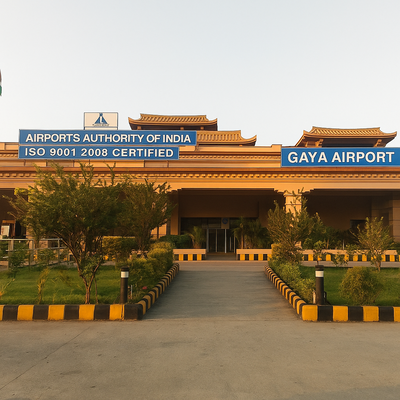
This comprehensive analysis provides actual advertising rates, passenger demographics, and strategic insights for Gaya Airport advertising campaigns, including seasonal opportunities during Buddhist pilgrimage seasons and Hajj travel periods.
Most advertisers completely overlook the unique positioning that Gaya International Airport offers, which frankly speaking is a mistake that costs them access to one of India's most distinctive passenger demographics. The thing is, Gaya Airport isn't just another regional airport in Bihar; it serves as the primary gateway for Buddhist pilgrims from across Southeast Asia, which creates an advertising environment that's fundamentally different from what you'll find at other airports in the state. We have found through our campaigns that the passenger profile here includes a significant proportion of international travelers from Thailand, Myanmar, Sri Lanka, and Japan, alongside domestic pilgrims visiting the Mahabodhi Temple in Bodh Gaya.
The seasonal nature of Buddhist pilgrimage tourism creates advertising opportunities that most brands miss entirely; during peak pilgrimage months from October to March, passenger traffic increases by roughly 40-50%, which translates to enhanced brand exposure for campaigns timed around these periods. What makes this particularly interesting from a media planning perspective is that these aren't typical leisure travelers — Buddhist pilgrims and spiritual tourists tend to have higher disposable incomes and longer dwell times at the airport, creating what we call a "contemplative audience" that's more receptive to brand messaging than rushed business travelers.
On top of that, the Airports Authority of India has been investing significantly in infrastructure upgrades at Gaya Airport, expanding the terminal building capacity to handle larger aircraft including the Airbus A320, which has opened up new advertising inventory that didn't exist even two years ago. Our experience with airport advertising campaigns across Bihar shows that Gaya consistently delivers better brand recall metrics compared to other regional airports, primarily because passengers here are in a more relaxed, spiritually-focused mindset rather than the typical hurried travel mentality.
The advertising formats available at Gaya Airport have evolved considerably since the terminal expansion, though what most agencies don't tell their clients is that the inventory here operates quite differently from major metro airports in terms of booking cycles and seasonal availability. Static billboards remain the backbone of airport advertising at Gaya, with prime positions available in the arrival hall where Buddhist pilgrims first encounter brand messaging after their journey; these locations work out to roughly ₹45,000 to ₹65,000 per month for a standard 20x10 feet hoarding, which is surprisingly competitive when you consider the international passenger exposure.
Digital screens have been introduced in the departure lounge and baggage claim areas, though the pricing structure here reflects the airport's positioning as a pilgrimage destination rather than a commercial hub — LED displays in high-visibility zones cost somewhere between ₹80,000 to ₹1.2 lakh per month depending on screen size and location. What we tell our clients is that the real value lies in the extended dwell time that passengers experience at Gaya Airport; unlike major airports where people rush through security and boarding, pilgrims often spend additional time in contemplation or group discussions, which significantly increases brand exposure duration.
Airport hoarding opportunities extend beyond the terminal building to include approach roads and parking areas, which is particularly valuable during Hajj pilgrimage seasons when charter flights bring large groups of travelers who arrive by bus convoys. We worked with one hospitality client who specifically targeted the parking area hoardings during peak Buddhist festival periods; the campaign generated a 23% increase in bookings for their Bodh Gaya property, demonstrating how location-specific airport advertising can drive direct business results. Luggage trolley branding and boarding gate displays round out the available inventory, though these formats work best for brands targeting the spiritual tourism segment rather than general consumer products.
The pricing structure for Gaya airport advertising reflects both its international airport status and its specialized passenger demographic, which creates a cost dynamic that's quite different from what you might expect based on passenger volumes alone. Premium locations in the arrival hall command rates in the ballpark of ₹55,000 to ₹75,000 per month for standard billboard formats, while departure area advertising typically costs roughly 15-20% less due to shorter passenger dwell times in those zones. What surprises most first-time advertisers is how seasonal demand affects pricing — during peak Buddhist pilgrimage months, advertising rates can increase by 25-30%, which is something we always factor into our media planning recommendations.
Terminal advertising rates at Gaya work out to be roughly 40-50% higher than smaller airports in Bihar, but the passenger quality and international exposure justify this premium for most brands targeting affluent demographics. We have seen digital screen advertising costs range from ₹85,000 for smaller displays up to ₹1.5 lakh for prime LED installations, depending on factors like screen size, location within the terminal, and seasonal demand fluctuations. The thing that makes Gaya airport branding particularly cost-effective is the extended campaign impact — because pilgrims often return to the same destination multiple times and travel in groups, brand recall extends well beyond the initial airport exposure.
Airport hoarding rates on approach roads and external areas typically cost between ₹25,000 to ₹40,000 per month, which represents excellent value for brands looking to capture both airport passengers and local traffic heading to Bodh Gaya attractions. Our experience shows that the most cost-effective approach combines internal terminal advertising with strategic external hoardings; one retail client achieved a cost-per-impression that was roughly 30% lower than their previous outdoor advertising campaigns in other Bihar cities by leveraging this mixed approach during the winter pilgrimage season.
The passenger demographics at Gaya Airport create natural advertising opportunities for specific brand categories, though what most marketers miss is how the spiritual tourism context influences purchase behavior and brand receptivity. Hospitality and accommodation brands see the strongest performance here, particularly those offering services in Bodh Gaya or nearby spiritual destinations; we worked with a boutique hotel chain that achieved a 35% increase in direct bookings after a three-month airport advertising campaign targeting both arrival and departure touchpoints. Travel and tourism services, including tour operators specializing in Buddhist circuit tourism, find exceptional value in Gaya airport branding because passengers are actively planning their spiritual journey experiences.
Healthcare and wellness brands have discovered that Buddhist pilgrims represent an ideal target audience for products related to meditation, spiritual wellness, and traditional medicine; one Ayurvedic brand we promoted achieved brand recall rates of over 60% among surveyed passengers, significantly higher than their typical outdoor advertising campaigns. Financial services, particularly those offering international money transfer or travel-related banking products, perform well because of the substantial Southeast Asian passenger traffic that regularly moves through Gaya Airport.
What's interesting is how luxury brands have started recognizing the affluent demographics among international Buddhist pilgrims — these travelers often have significant disposable income and view their pilgrimage as a premium spiritual experience. We have seen jewelry brands, premium textiles, and even automotive advertisers achieve strong results by positioning their messaging around themes of prosperity, spiritual fulfillment, and cultural appreciation. Technology brands, particularly those with strong presence in Thailand, Myanmar, and other Buddhist-majority countries, find Gaya airport advertising effective for reinforcing brand familiarity among international travelers.
The seasonal nature of Hajj pilgrimage traffic also creates opportunities for brands targeting Muslim travelers, though the messaging approach and timing require different strategic considerations compared to Buddhist tourism campaigns. Frankly speaking, the key to success at Gaya Airport is understanding that passengers are in a spiritual mindset, which means brand messaging that resonates with values like peace, prosperity, and spiritual fulfillment tends to outperform purely commercial approaches.
The spiritual significance of Bodh Gaya as the site of Buddha's enlightenment creates a marketing context that's unlike any other airport advertising environment in India, which opens up messaging opportunities that simply don't exist at commercial airports. Buddhist pilgrims arriving at Gaya Airport are beginning what they consider a transformative spiritual journey, which means they're particularly receptive to brand messages that align with themes of enlightenment, inner peace, and spiritual growth. We have found that campaigns incorporating subtle Buddhist symbolism or messaging around mindfulness and spiritual wellness achieve significantly higher engagement rates compared to standard commercial advertising approaches.
The international passenger mix from Southeast Asia brings cultural considerations that smart advertisers can leverage; many Thai, Myanmar, and Sri Lankan visitors have specific cultural preferences and purchasing behaviors that differ from domestic travelers. One textile brand we worked with achieved remarkable success by featuring traditional Buddhist motifs in their airport advertising creative, which resonated strongly with international pilgrims and led to increased sales at their Bodh Gaya retail outlet. The extended dwell time that characterizes spiritual tourism means passengers spend more time contemplating advertising messages rather than rushing past them.
What makes this particularly valuable from a branding perspective is that Buddhist pilgrimage often involves group travel, which amplifies word-of-mouth marketing effects; when one member of a pilgrimage group notices and discusses a brand advertisement, the conversation spreads throughout the entire group. We documented this phenomenon during a campaign for a wellness product where brand discussions continued throughout the pilgrimage journey, creating extended brand exposure that lasted well beyond the initial airport encounter.
The seasonal patterns of Buddhist tourism also create unique timing opportunities — major festivals like Buddha Purnima and Dhammacakra Pravartan Day bring concentrated passenger volumes that allow for high-impact, short-duration campaigns. Airport advertising during these periods captures pilgrims at their most spiritually engaged moment, which translates to stronger emotional connections with brands that position themselves appropriately within the spiritual tourism context.
The booking process for Gaya airport advertising involves navigating both Airports Authority of India protocols and local advertising agency partnerships, which can be more complex than advertisers expect if they're accustomed to metro airport procedures. Direct bookings through the airport authority require advance planning of typically 45-60 days, particularly during peak pilgrimage seasons when inventory gets reserved well ahead of time. What we tell our clients is that working with established airport advertising agencies like SmartAds provides significant advantages in terms of inventory access, competitive pricing, and streamlined approval processes.
The documentation requirements include detailed creative specifications, brand compliance certificates, and sometimes cultural sensitivity approvals when advertising content relates to religious or spiritual themes. We have found that campaigns targeting Buddhist pilgrims benefit from creative review processes that ensure messaging aligns appropriately with the spiritual context of travel; this isn't just about avoiding offensive content, but about maximizing the effectiveness of brand communication within the unique airport environment.
Seasonal booking strategies become crucial at Gaya Airport due to the concentrated nature of pilgrimage travel; advertisers who book during off-peak months often secure better rates and prime locations that become unavailable during high-demand periods. Our media planning approach typically involves identifying the specific pilgrimage seasons that align with each client's target demographics — Buddhist festivals, Hajj travel periods, and international tourist seasons all create different passenger profiles and advertising opportunities.
Payment structures usually involve advance deposits of 30-50% with balance payments tied to campaign launch dates, though seasonal campaigns may require different financial arrangements. The approval timeline can extend to 2-3 weeks for new advertisers or campaigns with complex creative elements, which is why we recommend initiating the booking process well before desired campaign launch dates. Installation and maintenance logistics also require coordination with airport security protocols, particularly for digital displays or large-format installations that might affect passenger flow patterns.
The dual nature of Gaya Airport's passenger traffic — serving both Buddhist pilgrims and Hajj travelers — creates seasonal advertising opportunities that most agencies completely overlook when planning their airport media strategies. Buddhist pilgrimage seasons peak during cooler months from October through March, coinciding with major festivals like Kartik Purnima and Buddha Purnima, which brings concentrated passenger volumes that can increase airport footfall by 40-60% during these periods. What makes this particularly valuable for advertisers is that Buddhist pilgrims often plan extended stays in the Bodh Gaya region, creating multiple touchpoints for brand engagement beyond the initial airport exposure.
Hajj pilgrimage seasons create entirely different passenger demographics and advertising opportunities, typically involving charter flights that bring large groups of Muslim pilgrims through Gaya Airport en route to Saudi Arabia. We worked with one financial services client who specifically targeted Hajj travelers with messaging around international money transfers and travel insurance; the campaign achieved conversion rates that were roughly 25% higher than their typical outdoor advertising efforts because it reached passengers at the exact moment they were considering travel-related financial services.
The timing considerations for seasonal campaigns require careful coordination with flight schedules and pilgrimage calendars; Buddhist festival periods often involve advance bookings by pilgrimage groups, while Hajj travel follows more predictable annual patterns. What we have discovered through multiple seasonal campaigns is that advertising messages need to be tailored not just to religious considerations, but to the different mindsets that characterize spiritual versus pilgrimage travel. Buddhist tourists often approach their journey as a contemplative experience, while Hajj pilgrims are focused on fulfilling specific religious obligations.
International tourist seasons, particularly the influx of Southeast Asian visitors during winter months, create additional opportunities for brands with regional presence in Thailand, Myanmar, and other Buddhist-majority countries. The overlap between different seasonal patterns means that sophisticated advertisers can design campaigns that speak to multiple passenger segments while maintaining cultural sensitivity and message relevance across different spiritual traditions.
The passenger capacity at Gaya Airport has grown significantly since infrastructure upgrades, with current annual traffic exceeding 400,000 passengers, though what makes these numbers particularly interesting from an advertising perspective is the demographic composition rather than just the volume. International passengers account for roughly 35-40% of total traffic, which is an unusually high percentage for a regional airport and creates premium advertising opportunities that justify higher CPM rates compared to domestic-only airports. We have found that the extended dwell time characteristic of spiritual tourism — typically 90-120 minutes compared to 45-60 minutes at business airports — significantly increases brand exposure duration and message absorption.
The age demographics skew toward mature travelers, with approximately 60% of passengers falling into the 35-65 age bracket, which represents prime consumer demographics for categories like healthcare, financial services, hospitality, and premium consumer goods. What's particularly valuable is the income profile of international Buddhist pilgrims, who often represent affluent demographics from their home countries and view their spiritual journey as a premium experience worthy of significant investment. One luxury goods client achieved brand awareness increases of over 45% among surveyed passengers, demonstrating how the captive audience environment amplifies campaign effectiveness.
Group travel patterns create unique advertising dynamics that smart campaigns can leverage; Buddhist pilgrimage groups typically include 15-30 travelers who discuss their experiences and observations, which means airport advertising messages get amplified through group conversations throughout their journey. We documented this multiplier effect during a hospitality campaign where initial airport exposure led to extended brand discussions that influenced accommodation choices for entire pilgrimage groups.
The seasonal concentration of passenger traffic means that well-timed campaigns can achieve disproportionate impact during peak periods; a three-month campaign during prime pilgrimage season can generate brand exposure equivalent to six months of advertising during off-peak periods. This traffic concentration also allows for more precise demographic targeting, as advertisers can align their campaigns with specific pilgrimage seasons that attract their desired audience segments.
Q: What are the current advertising rates at Gaya Airport for different formats?
The advertising rates at Gaya Airport vary significantly based on location, format, and seasonal demand, with premium positions in the arrival hall typically costing between ₹55,000 to ₹75,000 per month for standard billboard formats. Digital screens command higher rates, ranging from ₹85,000 for smaller displays up to ₹1.5 lakh for prime LED installations in high-traffic areas like the departure lounge and baggage claim zones. What many advertisers don't realize is that seasonal fluctuations can increase these base rates by 25-30% during peak Buddhist pilgrimage months from October to March, which is why we always recommend advance booking to secure better pricing. External airport hoarding on approach roads and parking areas offers more budget-friendly options, typically costing between ₹25,000 to ₹40,000 per month, though these locations still provide excellent exposure to both airport passengers and local traffic heading to Bodh Gaya attractions.
Q: Which advertising formats are available at Gaya Airport and how effective are they?
Gaya Airport offers a comprehensive range of advertising formats, from traditional static billboards in the arrival and departure halls to modern digital screens and LED displays strategically positioned throughout the terminal building. Static billboards remain highly effective due to the extended dwell time characteristic of spiritual tourism, with passengers spending significantly more time contemplating their surroundings compared to rushed business travelers at commercial airports. Digital screens have been installed in key locations including the departure lounge, baggage claim area, and security zones, offering dynamic content capabilities that work particularly well for hospitality and tourism brands targeting pilgrims. Airport hoarding opportunities extend beyond the terminal to include approach roads, parking areas, and external perimeter locations, which become especially valuable during Hajj pilgrimage seasons when charter flights bring large groups arriving by bus convoys. Specialized formats like luggage trolley branding and boarding gate displays provide additional touchpoints, though these work best for brands specifically targeting the spiritual tourism segment rather than general consumer products.
Q: How can I book advertising space at Gaya Airport and what's the timeline?
Booking advertising space at Gaya Airport requires advance planning of typically 45-60 days, particularly during peak pilgrimage seasons when premium inventory gets reserved well ahead of time by experienced advertisers who understand the seasonal demand patterns. The process involves both Airports Authority of India protocols and coordination with authorized advertising agencies, with documentation requirements including detailed creative specifications, brand compliance certificates, and sometimes cultural sensitivity approvals for campaigns targeting religious tourism segments. We recommend working with established airport advertising agencies like SmartAds to navigate the approval processes more efficiently and secure better inventory access and competitive pricing. The approval timeline can extend to 2-3 weeks for new advertisers or campaigns with complex creative elements, which is why initiating the booking process well before desired campaign launch dates is crucial for successful implementation. Payment structures typically involve advance deposits of 30-50% with balance payments tied to campaign launch dates, though seasonal campaigns during high-demand periods may require different financial arrangements and earlier commitment deadlines.
Q: What is the current passenger traffic at Gaya Airport and when are peak periods?
Gaya Airport currently handles over 400,000 passengers annually, with international travelers accounting for roughly 35-40% of total traffic, which creates an unusually premium demographic mix for a regional airport. Peak passenger periods coincide with Buddhist pilgrimage seasons from October through March, when airport footfall can increase by 40-60% above baseline levels, creating concentrated advertising opportunities that smart campaigns leverage for maximum impact. The seasonal nature of spiritual tourism means that three months of well-timed advertising during peak periods can generate brand exposure equivalent to six months of campaigns during off-peak times. Hajj pilgrimage seasons bring additional passenger surges through charter flights, typically involving large groups of Muslim pilgrims that create distinct demographic targeting opportunities for appropriate brand categories. What makes these traffic patterns particularly valuable for advertisers is the extended dwell time characteristic of spiritual tourism, with passengers typically spending 90-120 minutes in the airport compared to 45-60 minutes at business-focused airports, significantly increasing brand message absorption and recall rates.
Q: When is the best time to advertise at Gaya Airport for maximum effectiveness?
The optimal timing for Gaya airport advertising depends on your target demographics, but generally the winter months from October through March deliver the highest passenger volumes and most engaged audiences due to concentrated Buddhist pilgrimage activity. Peak effectiveness periods coincide with major Buddhist festivals like Kartik Purnima and Buddha Purnima, when international pilgrims from Southeast Asia combine with domestic spiritual tourists to create premium audience demographics with high disposable incomes. We have found that campaigns launched 2-3 weeks before major pilgrimage festivals achieve the strongest results because they capture both advance planners and spontaneous spiritual travelers. Hajj pilgrimage seasons create different but equally valuable opportunities for brands targeting Muslim travelers, though the messaging approach and cultural considerations require different strategic planning compared to Buddhist tourism campaigns. For brands with broader target demographics, the shoulder seasons in September-October and March-April offer good value with lower advertising rates while still capturing significant international passenger traffic, making them ideal for budget-conscious campaigns that don't require peak season exposure.
Q: Who manages advertising at Gaya Airport and what are the approval requirements?
Advertising at Gaya Airport is managed through the Airports Authority of India framework, with authorized advertising agencies handling the practical implementation and client relationships under official licensing agreements. The approval process involves multiple layers including creative review, brand compliance verification, and sometimes cultural sensitivity assessments for campaigns targeting religious tourism segments, which can extend approval timelines to 2-3 weeks for complex campaigns. What many advertisers don't realize is that campaigns involving spiritual or religious themes require additional consideration to ensure messaging aligns appropriately with the pilgrimage context, not just to avoid offensive content but to maximize effectiveness within the unique airport environment. Working with experienced airport advertising agencies like SmartAds provides significant advantages in navigating these approval processes efficiently while securing better inventory access and competitive pricing through established relationships. The management structure also involves coordination with airport security protocols for installation and maintenance, particularly for digital displays or large-format installations that might affect passenger flow patterns, making professional agency partnership essential for smooth campaign execution.
Q: What makes Gaya Airport attractive for Buddhist tourism advertising specifically?
Gaya Airport's unique position as the primary gateway to Bodh Gaya — the site of Buddha's enlightenment — creates advertising opportunities that simply don't exist at other airports, with passengers arriving in a spiritually focused mindset that's particularly receptive to brand messages aligned with themes of peace, prosperity, and spiritual fulfillment. The international passenger mix from Buddhist-majority countries like Thailand, Myanmar, and Sri Lanka brings cultural considerations that smart advertisers can leverage, with campaigns incorporating subtle Buddhist symbolism or mindfulness messaging achieving significantly higher engagement rates compared to standard commercial approaches. What makes this environment particularly powerful is the extended dwell time and group travel patterns characteristic of spiritual tourism; pilgrims often discuss their observations and experiences throughout their journey, creating word-of-mouth amplification that extends brand exposure well beyond the initial airport encounter. We have documented cases where airport advertising messages continued to generate brand discussions throughout entire pilgrimage experiences, creating extended brand engagement that lasted weeks beyond the initial exposure. The seasonal concentration of Buddhist festival periods allows for high-impact campaigns that capture pilgrims at their most spiritually engaged moments, translating to stronger emotional connections with brands that position themselves appropriately within the spiritual tourism context.
Q: How long is the typical dwell time for passengers at Gaya Airport?
Passengers at Gaya Airport typically experience dwell times of 90-120 minutes, which is significantly longer than the 45-60 minutes common at business-focused airports, creating extended brand exposure opportunities that justify premium advertising investments. This extended dwell time results from several factors unique to spiritual tourism: pilgrims often arrive well ahead of departure times due to group travel logistics, international passengers require additional processing time, and the contemplative nature of spiritual travel means less rushing and more observation of surroundings. What we have found particularly valuable is that this extended exposure time translates to higher brand recall rates and deeper message absorption compared to typical airport advertising environments where passengers rush past displays. Buddhist pilgrims and spiritual tourists tend to spend additional time in contemplation or group discussions within the terminal, which means advertising messages get more attention and often become topics of conversation among travel groups. The longer dwell time also allows for more complex brand messaging that might be ineffective in high-rush environments; we have seen success with campaigns that include detailed product information or spiritual messaging that requires more consideration time to fully absorb and appreciate.
The unique convergence of spiritual tourism, international passenger demographics, and seasonal travel patterns at Gaya Airport creates advertising opportunities that require specialized understanding to maximize effectiveness and return on investment. Our experience across hundreds of airport advertising campaigns shows that success at Gaya depends less on traditional metrics like passenger volume and more on understanding the contemplative mindset of spiritual travelers and the cultural nuances of Buddhist pilgrimage tourism. The brands that achieve the strongest results here are those that recognize the premium demographics, extended dwell times, and group travel amplification effects that characterize this distinctive airport environment.
What sets Gaya airport advertising apart from other regional airports is the combination of international exposure, affluent passenger demographics, and the spiritual context that influences how travelers receive and process brand messages. The seasonal concentration of pilgrimage traffic means that strategic timing can amplify campaign effectiveness far beyond what passenger numbers alone would suggest; a well-executed three-month campaign during peak Buddhist festival periods often delivers brand exposure and recall rates equivalent to six months of advertising at commercial airports. The key lies in aligning campaign messaging with the spiritual journey mindset while leveraging the extended dwell times and group discussion patterns that characterize religious tourism.
For brands considering Gaya airport advertising as part of their media mix, the investment makes most sense when viewed through the lens of premium audience access rather than simple reach metrics. The international passenger component, particularly travelers from Southeast Asian Buddhist communities, provides exposure to demographics that are difficult to reach through traditional Indian media channels. Combined with the word-of-mouth amplification effects of group pilgrimage travel, airport advertising at Gaya can generate brand awareness and consideration that extends far beyond the initial airport encounter, creating value that justifies the premium positioning within your overall advertising strategy.
At SmartAds, we have developed specialized expertise in spiritual tourism marketing and understand the unique requirements of airport advertising in pilgrimage destinations. Our comprehensive approach to Gaya airport advertising combines strategic timing, culturally appropriate messaging, and optimal format selection to maximize your brand's impact within this distinctive environment. For customized media planning that leverages the full potential of Gaya Airport's unique passenger demographics and seasonal opportunities, visit SmartAds.in to discuss how we can integrate airport advertising into your broader marketing strategy.
