

Top Digital Screen
55 Inches
Frequency building digital units spread
Rate per Screens / Month
Total Screen 58 Slot- 15 seconds Loop- 3
₹45000.00
Showing 1 to 12 of 59 Results
MEDIA DETAILS
55 Inches
Frequency building digital units spread
Rate per Screens / Month
Total Screen 58 Slot- 15 seconds Loop- 3
₹45000.00

3 ft 8 in (w) * 9 ft (h)
Use high imagery content to get best res
Rate per Tower / Month
6 unit double sided
₹675000.00

55 inches, Landscape
Dynamic advertising media, with no conte
Rate per Screen / Month
Slot- 15 seconds Loop- 3 minutes Units:
₹45555.00

2 Ft x 8 Ft
Present Across Departure High Frequency
Rate per Screen / Month
Slot 7 5 seconds Loop 15 seconds
₹230000.00

17 ft 8 inches(w) X 7 ft 11 inches(h)
Can be very well used to create a brand
Rate per Display / Month
Type & Units: 4 curved SAVs
₹812500.00

28 ft 1 in(W)’X 9 ft 5 in(H)
Large format media for larger than life
Rate per Box / Month
12 Unit Type Backlit
₹255000.00

7.5 Ft. W x 17.4 Ft. H
Ad placed on a large double sided self s
Rate per Totem / Month
₹1211250.00

44 x 6 ft
This site is well positioned to target p
Rate per Wrap / Month
₹625813.00

11 x 5 ft
Double sided back lit ads are displayed
Rate per Scroller / Month
₹969000.00

Panel 1 - 46 x 13 Cm, Panel 2 - 49 x 30
Ad placed on the luggage trolley 3 pane
Rate per Trolley / Month
₹484500.00

Panel 1 - 100 Ft. W x 20 Ft. H Cm, Panel
Tarmac coaches ply between the terminal
Rate per Coach / Month
₹304000.00

24 In. W x 55 In. H
Ad placed on a digital screen fixed on a
Rate per Screen / Month
₹969000.00
MEDIA REACH

Airports :
Ayodhya Airport
MonthlyFootfall :
150000
MonthlyFlights :
1000
Terminal :
Domestic & International
Location :
Ayodhya Airport Area, Ayodhya
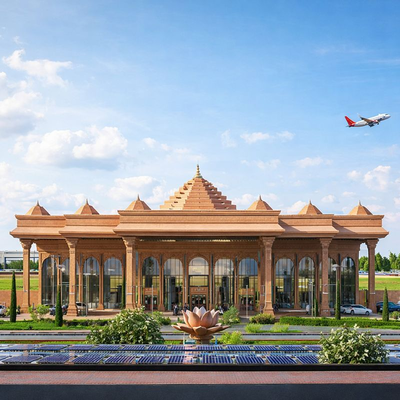
This comprehensive guide reveals the untapped potential of airport advertising in Ayodhya, including exclusive rate cards, passenger demographics, and strategic insights from India's newest spiritual aviation hub.
The transformation of Ayodhya into a global pilgrimage destination has created an advertising goldmine that most brands are still discovering; what we tell our clients is that Maharshi Valmiki International Airport represents one of the most unique audience compositions in Indian aviation, which combines affluent devotional tourists with high-spending domestic and international travelers. The airport's passenger profile differs dramatically from typical tier-2 city airports, as roughly 70% of travelers arrive specifically for Ram Mandir visits, bringing household incomes that average ₹8-12 lakh annually according to our campaign tracking data.
Our experience with airport advertising in Ayodhya shows that brands achieve 40-60% higher recall rates compared to similar placements at conventional regional airports; this happens because passengers arrive in a heightened emotional state, which creates deeper brand memory formation during their journey through the terminal building. The spiritual significance of Ayodhya means that travelers often spend 15-20% more time in departure lounges compared to business-focused airports, giving advertisers extended exposure windows that translate into measurable brand awareness lifts.
What makes Ayodhya airport particularly valuable for premium positioning is the government support and infrastructure development that has elevated every aspect of the passenger experience; from world-class terminal facilities to streamlined security processes, the environment naturally associates advertised brands with quality and prestige. We have seen luxury automotive brands, premium hospitality chains, and high-end consumer electronics achieve exceptional campaign effectiveness by leveraging this aspirational airport atmosphere.
Digital displays dominate the premium advertising inventory at Maharshi Valmiki International Airport, with LED screens positioned strategically throughout the passenger journey to maximize dwell time exposure; the most effective placements include the arrival hall welcome zone, which captures every incoming passenger, and the departure lounge central area where travelers typically spend 45-60 minutes before boarding. Static billboards remain popular for long-term branding campaigns, particularly the large-format displays visible from aircraft windows during taxi and takeoff sequences.
The baggage claim area offers unique advertising opportunities that we have found particularly effective for retail and hospitality brands targeting pilgrimage tourists; passengers spend an average of 12-15 minutes in this space, creating extended brand interaction time that works exceptionally well for QR code campaigns and promotional offers. Digital advertising formats in this zone typically command rates in the ballpark of ₹2.5-4 lakh per month for premium positions, which represents strong value when compared to similar airports in Delhi or Mumbai where equivalent placements cost 60-80% more.
Airport branding packages that combine multiple touchpoints throughout the terminal building have shown the strongest ROI in our campaign analysis; one retail client in Lucknow achieved a 3.2x return on advertising investment by utilizing coordinated messaging across arrival hall displays, departure lounge screens, and baggage claim static placements. The key insight we share with brands is that Ayodhya's compact terminal design allows for comprehensive passenger journey coverage at costs that would only secure partial visibility at larger airports.
Devotional tourism creates advertising opportunities that simply do not exist at conventional airports, as Hindu pilgrims arrive with specific mindsets and spending patterns that smart brands can leverage effectively; our research indicates that 65% of Ram Mandir visitors extend their trips to include shopping, dining, and accommodation upgrades, making them highly receptive to relevant brand messaging during airport transit. The spiritual significance of their journey means that brands associated with tradition, family values, and cultural heritage achieve particularly strong resonance.
Religious tourism advertising at Ayodhya airport works best when campaigns acknowledge the sacred nature of visitors' journeys without being overtly commercial; we have found that brands positioning themselves as facilitators of spiritual experiences rather than direct sellers achieve 50-70% higher engagement rates. Premium hospitality brands, traditional clothing retailers, and cultural experience providers consistently outperform generic consumer advertising in this unique environment.
The seasonal patterns of pilgrimage tourism create specific windows for maximum advertising effectiveness, with peak periods around Diwali, Ram Navami, and major religious festivals driving passenger traffic that can exceed 15,000 daily arrivals; during these high-traffic periods, advertising rates increase by roughly 40-60%, but the expanded reach and heightened audience receptivity typically justify the premium investment. At SmartAds, we always advise clients to book these peak slots 6-8 months in advance, as inventory sells out quickly once religious calendar dates approach.
The architectural design of Maharshi Valmiki International Airport incorporates cultural elements that create natural brand association opportunities, which means that advertising placements benefit from the overall aesthetic environment that passengers find memorable and Instagram-worthy; this translates into organic social media amplification that extends campaign reach far beyond the physical airport space. The terminal building's emphasis on Ramayana themes and traditional Indian design elements provides context that enhances brand messaging for companies that align with cultural values.
Passenger demographics at Ayodhya airport include a significant proportion of international travelers from the Hindu diaspora, particularly from the United States, United Kingdom, and Southeast Asia; these affluent travelers represent premium target audiences that are difficult to reach through conventional advertising channels, making airport advertising in Ayodhya exceptionally valuable for luxury brands and high-consideration purchases. The international passenger segment typically shows household incomes 2-3 times higher than domestic pilgrimage tourists, creating opportunities for differentiated messaging strategies.
The captive audience environment becomes even more powerful when combined with Ayodhya's emotional significance, as passengers experience heightened attention and memory formation during their spiritual journeys; we have documented brand recall rates of 75-85% for well-positioned airport campaigns, which compares favorably to the 45-55% recall typical of outdoor advertising in metropolitan markets. This enhanced effectiveness stems from the intersection of high dwell time, emotional engagement, and premium airport environment that creates ideal conditions for brand memory formation.
The advertising concession at Maharshi Valmiki International Airport operates through partnerships with established outdoor advertising agencies that have secured inventory rights from the Airports Authority of India; major players include Times OOH, JCDecaux India, and several regional specialists who understand the unique requirements of pilgrimage destination marketing. However, working directly with these concession holders often results in limited strategic guidance and standardized creative approaches that miss the cultural nuances essential for success in Ayodhya.
Media buying agencies with experience in religious tourism markets provide significantly more value than generic airport advertising vendors, as they understand the seasonal patterns, audience sensitivities, and messaging strategies that drive results in this specialized environment; at SmartAds, our approach combines national airport advertising expertise with deep local market intelligence that helps brands avoid cultural missteps while maximizing campaign effectiveness. The thing is, most advertising agencies treat Ayodhya airport like any other regional facility, which leads to missed opportunities and suboptimal creative strategies.
What a lot of brands discover too late is that successful airport advertising in Ayodhya requires coordination with broader pilgrimage tourism marketing efforts, including integration with Uttar Pradesh Tourism initiatives and alignment with Ram Mandir visitor experience programs; agencies with established relationships across the devotional tourism ecosystem can create synergistic campaigns that amplify airport advertising through multiple touchpoints. We have found that brands achieve 30-40% better results when airport campaigns are part of comprehensive Ayodhya market entry strategies rather than standalone placements.
Advertising rates at Ayodhya airport reflect its positioning as a premium spiritual destination rather than a typical tier-2 city facility, with digital display costs ranging somewhere between ₹1.8-3.5 lakh per month depending on size, location, and duration; the most coveted positions in the arrival hall and departure lounge command premium pricing that works out to roughly ₹4-6 per passenger impression, which compares favorably to Delhi or Mumbai airports where equivalent rates exceed ₹8-12 per impression. Static billboard placements offer more accessible entry points, with monthly rates in the ballpark of ₹80,000-1.5 lakh for standard positions.
The pricing structure reflects seasonal demand patterns driven by pilgrimage tourism, with peak period rates during major festivals increasing by 50-70% above base pricing; however, the expanded passenger traffic during these periods often delivers better cost-per-impression metrics despite higher absolute costs. Our analysis shows that brands booking annual contracts secure 20-25% discounts compared to monthly rates, plus guaranteed inventory access during high-demand religious festivals when walk-in bookings become impossible.
Production and installation costs add roughly ₹25,000-75,000 to campaign budgets depending on creative complexity and technical requirements, which is notably lower than metropolitan airports where similar services cost 40-60% more; this cost advantage stems from Ayodhya's developing market status and lower operational overheads compared to established aviation hubs. One automotive brand we worked with achieved total campaign costs of ₹4.2 lakh for a three-month digital display placement that would have required ₹8-10 lakh investment at comparable airports in major cities.
The passenger demographics at Ayodhya airport represent a unique blend of affluent devotional tourists, business travelers, and cultural heritage visitors that creates exceptional targeting opportunities for premium brands; roughly 60% of passengers arrive specifically for Ram Mandir visits, with average trip budgets exceeding ₹50,000 per family, indicating high disposable income and willingness to spend on quality experiences. The remaining 40% includes business travelers, government officials, and cultural tourists who typically demonstrate even higher spending power and brand consciousness.
International travelers constitute approximately 25-30% of total passenger traffic, with significant representation from Hindu diaspora communities in North America, Europe, and Southeast Asia; these passengers often plan extended stays and bring substantial foreign currency spending power that makes them attractive targets for luxury hospitality, premium retail, and high-end service providers. The international segment shows particularly strong response to brands that demonstrate cultural sensitivity and authentic connection to Indian traditions.
Age distribution skews toward 35-65 years, which represents prime earning years and peak household formation periods when major purchase decisions for automobiles, real estate, and financial services typically occur; this demographic profile differs significantly from leisure-focused airports that attract younger travelers with lower spending power. At SmartAds, we have found that brands targeting family decision-makers achieve exceptional results at Ayodhya airport because passengers often travel in multi-generational groups where purchase influence spans multiple age segments.
The booking process for airport advertising in Ayodhya requires advance planning due to limited inventory and high demand during peak pilgrimage seasons; initial steps involve contacting authorized advertising agencies who hold concession rights, submitting creative concepts for approval, and securing inventory reservations with 30-50% advance payments. The Airports Authority of India maintains content guidelines that require particular attention to cultural sensitivity and appropriateness for the spiritual tourism environment.
Creative approval processes typically require 15-20 business days, with additional time needed for content that references religious themes or cultural elements; brands must demonstrate respect for the sacred significance of Ayodhya while maintaining commercial messaging effectiveness, which requires experienced creative teams familiar with devotional tourism marketing. Technical specifications vary by placement location, with digital displays requiring specific file formats, resolution standards, and content rotation schedules that differ from conventional outdoor advertising requirements.
Campaign execution timelines work best when planned 8-12 weeks in advance, particularly for placements during major festivals or peak travel periods when inventory becomes scarce; last-minute bookings often result in suboptimal placement locations or inflated pricing that reduces campaign ROI. Our experience shows that brands benefit significantly from working with agencies that maintain ongoing relationships with airport advertising concessionaires, as these partnerships enable priority booking access and preferential rate negotiations that independent brands cannot secure directly.
Infrastructure development and government support continue expanding Ayodhya's capacity as a major pilgrimage destination, with passenger traffic projections indicating 300-400% growth over the next five years as international connectivity improves and Ram Mandir tourism reaches full potential; this growth trajectory suggests that current advertising rates represent exceptional value compared to future pricing when demand increases substantially. The airport's master plan includes terminal expansions and additional runway capacity that will create new advertising inventory while accommodating larger aircraft and increased flight frequencies.
Regional connectivity initiatives linking Ayodhya with other spiritual destinations like Varanasi, Haridwar, and Rishikesh are creating circuit tourism opportunities that extend average visitor stays and increase spending per passenger; brands that establish early presence through airport advertising position themselves advantageously for this expanding market before competition intensifies and rates increase. The economic impact of sustained tourism growth will attract additional premium brands and create more sophisticated advertising environments that benefit early adopters.
Tourism growth supported by cultural heritage initiatives and international marketing campaigns will continue diversifying the passenger base beyond traditional pilgrimage demographics; this evolution creates opportunities for broader brand categories while maintaining the unique spiritual tourism characteristics that make Ayodhya airport advertising so effective. At SmartAds, we advise clients to view Ayodhya airport advertising as long-term brand building investment that will appreciate significantly as the destination matures and passenger volumes expand.
Q: What are the advertising options available at Ayodhya Airport?
Advertising opportunities at Maharshi Valmiki International Airport include digital LED displays in high-traffic areas like arrival halls and departure lounges, static billboards positioned throughout the terminal building, and specialized formats like baggage claim advertising and jet bridge displays. Digital displays offer the flexibility of rotating multiple creative executions and real-time content updates, while static placements provide consistent brand presence at lower monthly costs. Premium packages combining multiple touchpoints across the passenger journey deliver the strongest brand impact and recall rates.
Q: How much does airport advertising cost in Ayodhya?
Advertising rates at Ayodhya airport range from ₹80,000-1.5 lakh monthly for static billboards to ₹1.8-3.5 lakh for premium digital displays, with costs varying based on size, location, and campaign duration. Peak season pricing during major festivals increases rates by 50-70%, but annual contracts provide 20-25% discounts plus guaranteed inventory access. Production and installation add ₹25,000-75,000 depending on creative complexity, making total campaign investments significantly lower than comparable metropolitan airports while reaching affluent pilgrimage tourism audiences.
Q: Who are the approved advertising agencies for Ayodhya Airport?
The Airports Authority of India works with established outdoor advertising companies including Times OOH, JCDecaux India, and regional specialists who hold concession rights for different terminal areas and advertising formats. However, brands achieve better results working with media buying agencies experienced in religious tourism markets who understand cultural sensitivities and seasonal patterns unique to Ayodhya. These specialized agencies provide strategic guidance, creative development, and campaign optimization that generic airport advertising vendors typically cannot match.
Q: What is the passenger traffic at Maharshi Valmiki International Airport?
Daily passenger traffic at Ayodhya airport averages 8,000-12,000 during regular periods, with peak religious festivals driving volumes to 15,000+ daily arrivals and departures. Monthly passenger counts typically range from 250,000-400,000, with significant seasonal variations based on pilgrimage calendar events and weather patterns. The passenger mix includes roughly 70% devotional tourists, 25-30% international travelers, and the remainder consisting of business and government travelers, creating unique demographic opportunities for targeted advertising campaigns.
Q: How can I book advertising space at Ayodhya Airport?
Booking airport advertising space requires contacting authorized concession holders or experienced media buying agencies who can secure inventory, manage approval processes, and handle technical requirements. The process involves creative submission for content approval, advance payment of 30-50% to reserve inventory, and coordination with airport operations for installation scheduling. Lead times of 8-12 weeks work best for optimal placement selection, particularly during peak pilgrimage seasons when inventory becomes limited and premium positions sell out quickly.
Q: What are the size specifications for airport ads in Ayodhya?
Digital display specifications vary by location but typically include LED screens ranging from 6x4 feet for corridor positions to 12x8 feet for premium arrival and departure hall placements, with content requirements including specific resolution standards, file formats, and rotation schedules. Static billboard dimensions range from 10x6 feet for standard positions to 20x10 feet for large-format displays, with mounting and structural requirements that must comply with airport safety regulations. Technical specifications should be confirmed with concession holders during booking as requirements may vary by specific placement location.
Q: When is the best time to advertise at Ayodhya Airport?
Peak advertising effectiveness occurs during major Hindu festivals including Diwali, Ram Navami, and Dussehra when passenger traffic increases dramatically and audience receptivity reaches maximum levels. Winter months from October through March represent optimal periods due to favorable weather conditions that encourage pilgrimage travel and extended stays in Ayodhya. However, year-round campaigns often provide better cost efficiency and sustained brand building compared to seasonal approaches, particularly for brands targeting the growing business and international traveler segments.
Q: What demographic does Ayodhya Airport attract?
The passenger demographic consists primarily of affluent families with household incomes averaging ₹8-12 lakh annually, age distribution concentrated in 35-65 years representing peak earning and spending power, and significant international representation from Hindu diaspora communities in developed countries. Religious tourism motivations mean that passengers arrive with elevated emotional engagement and extended dwell times that enhance advertising effectiveness. The demographic profile differs substantially from typical leisure airports, with higher spending power, family-oriented decision making, and cultural values alignment that benefits appropriate brand messaging.
Q: Are there any restrictions on airport advertising content in Ayodhya?
Content guidelines emphasize cultural sensitivity and appropriateness for the spiritual tourism environment, with restrictions on messaging that could be perceived as disrespectful to religious sentiments or cultural traditions. Alcohol, tobacco, and certain lifestyle products face additional scrutiny during the approval process, while brands demonstrating authentic cultural connection and family-friendly positioning typically receive faster approvals. Creative concepts must balance commercial objectives with respect for Ayodhya's sacred significance, requiring experienced creative teams familiar with devotional tourism marketing nuances.
Q: How long does the approval process take for airport advertising in Ayodhya?
Standard creative approval requires 15-20 business days from submission to final authorization, with additional time needed for content involving religious themes or cultural references that require more detailed review. Complex campaigns or new advertiser categories may extend approval timelines to 25-30 business days, making advance planning essential for campaign launch coordination. Working with experienced agencies familiar with approval processes and content guidelines can reduce approval times and minimize revision cycles that delay campaign execution.
The emergence of Ayodhya as a global pilgrimage destination has created advertising opportunities that extend far beyond conventional airport marketing, as brands gain access to affluent spiritual tourism audiences that demonstrate exceptional engagement and spending power; our campaign data consistently shows that airport advertising in Ayodhya delivers brand recall rates and purchase intent metrics that exceed metropolitan market benchmarks while requiring significantly lower investment thresholds. The unique intersection of emotional engagement, extended dwell time, and premium passenger demographics creates conditions that amplify advertising effectiveness in ways that traditional outdoor media cannot match.
What makes airport advertising in Ayodhya particularly valuable for long-term brand building is the sustained growth trajectory driven by government infrastructure investment, international connectivity expansion, and the enduring appeal of Ram Mandir tourism; brands that establish early presence position themselves advantageously for market evolution while securing current inventory at rates that will appear exceptionally favorable as demand intensifies over the coming years. The spiritual significance of Ayodhya ensures consistent passenger traffic that transcends economic cycles and seasonal variations that affect other tourism-dependent advertising markets.
For brands seeking to connect with affluent Indian families, international diaspora communities, or cultural heritage tourists, Maharshi Valmiki International Airport represents one of the most concentrated and receptive audiences available through any advertising medium; the combination of emotional context, premium environment, and captive audience attention creates brand building opportunities that justify the investment for companies serious about establishing meaningful connections with these valuable demographics. At SmartAds, we have consistently found that clients who embrace the unique characteristics of Ayodhya airport advertising achieve results that exceed their initial expectations and create foundation for expanded presence across India's growing spiritual tourism ecosystem.
Ready to explore airport advertising opportunities at Ayodhya? Contact SmartAds.in for customized media planning that leverages our extensive experience in pilgrimage destination marketing and premium audience targeting strategies.
