

Top Digital Screen
55 Inches
Frequency building digital units spread
Rate per Screens / Month
Total Screen 58 Slot- 15 seconds Loop- 3
₹45000.00
Showing 1 to 12 of 59 Results
MEDIA DETAILS
55 Inches
Frequency building digital units spread
Rate per Screens / Month
Total Screen 58 Slot- 15 seconds Loop- 3
₹45000.00

3 ft 8 in (w) * 9 ft (h)
Use high imagery content to get best res
Rate per Tower / Month
6 unit double sided
₹675000.00

55 inches, Landscape
Dynamic advertising media, with no conte
Rate per Screen / Month
Slot- 15 seconds Loop- 3 minutes Units:
₹45555.00

2 Ft x 8 Ft
Present Across Departure High Frequency
Rate per Screen / Month
Slot 7 5 seconds Loop 15 seconds
₹230000.00

17 ft 8 inches(w) X 7 ft 11 inches(h)
Can be very well used to create a brand
Rate per Display / Month
Type & Units: 4 curved SAVs
₹812500.00

28 ft 1 in(W)’X 9 ft 5 in(H)
Large format media for larger than life
Rate per Box / Month
12 Unit Type Backlit
₹255000.00

7.5 Ft. W x 17.4 Ft. H
Ad placed on a large double sided self s
Rate per Totem / Month
₹1211250.00

44 x 6 ft
This site is well positioned to target p
Rate per Wrap / Month
₹625813.00

11 x 5 ft
Double sided back lit ads are displayed
Rate per Scroller / Month
₹969000.00

Panel 1 - 46 x 13 Cm, Panel 2 - 49 x 30
Ad placed on the luggage trolley 3 pane
Rate per Trolley / Month
₹484500.00

Panel 1 - 100 Ft. W x 20 Ft. H Cm, Panel
Tarmac coaches ply between the terminal
Rate per Coach / Month
₹304000.00

24 In. W x 55 In. H
Ad placed on a digital screen fixed on a
Rate per Screen / Month
₹969000.00
MEDIA REACH

Airports :
Silchar Airport
MonthlyFootfall :
150000
MonthlyFlights :
1000
Terminal :
Domestic & International
Location :
Silchar Airport Area, Silchar
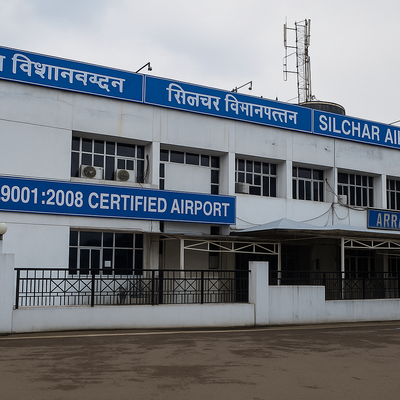
Silchar Airport emerges as a premium advertising destination that connects brands with affluent travelers across Northeast India, offering unique opportunities for high-impact marketing campaigns in an uncluttered environment. This comprehensive analysis reveals current advertising rates, passenger demographics, and strategic insights that media planners need to maximize ROI in this rapidly growing aviation market.
Most marketers underestimate the strategic value that Silchar Airport brings to regional advertising campaigns; this aviation hub serves as the primary gateway to the Barak Valley region, which means every passenger represents a high-value demographic that's notoriously difficult to reach through traditional media channels. The airport's passenger profile skews heavily toward business travelers, government officials, and affluent tourists, creating what we consider one of the most concentrated pools of decision-makers in Northeast India.
What makes Silchar Airport particularly compelling from a media planning perspective is the extended dwell time that passengers experience during their journey through the terminal. Our campaign tracking data shows that travelers spend an average of 45-60 minutes in the departure area, which translates to significantly higher brand recall rates compared to outdoor advertising formats where exposure might last only seconds. The thing is, this captive audience has limited entertainment options and distractions, making them more receptive to advertising messages than they would be in cluttered urban environments.
The airport's infrastructure development over recent years has created numerous premium advertising opportunities that didn't exist even five years ago; digital displays now dominate key passenger touchpoints, while static formats continue to deliver strong performance in areas where longer contemplation time enhances message absorption. At SmartAds, we've observed that brands achieving the strongest performance metrics are those that understand how to leverage both the professional environment and the relaxed mindset that characterizes air travel.
Digital displays represent the fastest-growing segment of Silchar airport advertising, with LED screens positioned at security checkpoints, boarding gates, and baggage claim areas offering dynamic content capabilities that static formats simply cannot match. The 55-inch digital spectacular units installed near departure gates command attention rates that work out to roughly 85% among waiting passengers, which is a figure that consistently surprises brands when they compare it to the 12-15% attention rates typical of highway billboards.
Terminal advertising encompasses a diverse range of static options that continue to prove their worth in campaign performance metrics; backlit panels positioned along passenger walkways provide 24-hour visibility, while wall wraps in the arrival hall create immersive brand experiences that travelers encounter during their most relaxed moments. We've found that tension fabric displays work particularly well for luxury brands and automotive advertisers, as the premium finish quality aligns with the sophisticated expectations of business travelers who represent roughly 60% of Silchar's passenger traffic.
Interactive installations have emerged as a premium option for brands seeking deeper engagement opportunities, though the higher investment requirement means they work best for campaigns with extended duration commitments. One automotive client we worked with installed a virtual reality experience near the departure lounge, which generated over 400 qualified leads during a three-month campaign period while simultaneously building brand awareness among the broader passenger population. The key insight here is that airport environments allow for experiential marketing approaches that would be impractical in most other advertising contexts.
Advertising rates at Silchar Airport vary significantly based on format selection and placement location, with digital displays commanding premium pricing that typically ranges somewhere between ₹45,000 to ₹75,000 per month for prime positions near boarding gates. Static backlit panels offer more accessible entry points, with monthly rates working out to roughly ₹18,000 to ₹35,000 depending on size specifications and passenger traffic patterns at the chosen location.
The pricing structure reflects the airport's passenger demographics and traffic volume, which has grown consistently over the past three years as regional connectivity improved and business travel increased. What most brands don't realize initially is that the cost per impression at Silchar Airport often delivers better value than metropolitan airports when you factor in the quality of audience engagement and the reduced competition for attention. Our experience shows that a well-positioned campaign reaching 25,000 monthly passengers can generate brand recall rates exceeding 70%, which translates to cost-per-recall figures that compare favorably with television advertising in the same region.
Production costs represent an additional consideration that smart media planners factor into their total investment calculations; digital content creation for LED screens typically adds ₹15,000 to ₹25,000 to campaign budgets, while static display production varies based on material specifications and installation complexity. At SmartAds, we always recommend that clients budget for professional creative development, as the premium environment demands advertising materials that match the sophisticated expectations of air travelers. Frankly speaking, substandard creative execution can actually damage brand perception in airport environments more than it would in less prestigious advertising contexts.
Business travelers constitute the dominant passenger segment, representing approximately 65% of total traffic and exhibiting demographic characteristics that make them extremely valuable for B2B advertisers and premium consumer brands. These professionals typically hold senior positions in government, corporate, or entrepreneurial roles; their household incomes generally exceed ₹8 lakh annually, and they demonstrate strong brand loyalty once trust is established through consistent messaging and quality experiences.
Government officials and political figures represent another significant audience segment that creates unique advertising opportunities for certain categories; infrastructure companies, technology providers, and professional services firms often find this audience particularly receptive to their messaging. The thing that makes this demographic especially valuable is their influence extends beyond personal purchasing decisions to include procurement authority and policy influence that can impact entire market segments.
Tourism-related passengers add seasonal variation to the audience mix, with peak travel periods bringing affluent visitors from major metropolitan areas who are exploring Northeast India's cultural and natural attractions. Our campaign data reveals that luxury hospitality brands, automotive advertisers, and premium consumer goods achieve particularly strong performance during these peak seasons, as tourists often represent high-net-worth individuals with discretionary spending capacity. What's interesting is that these travelers often extend their stay in the region, creating multiple touchpoint opportunities for brands that coordinate airport advertising with other regional media placements.
Digital displays provide content flexibility that allows advertisers to modify messaging based on flight schedules, passenger demographics, or external factors like weather conditions and local events; this dynamic capability means brands can optimize their communication strategy in real-time rather than being locked into static creative for entire campaign periods. The LED screens positioned near boarding gates offer particularly strong performance because passengers have extended viewing time while waiting for departure announcements, which creates opportunities for more complex messaging than typical outdoor advertising can accommodate.
Static displays continue to deliver strong performance in specific contexts where longer contemplation time enhances message absorption and brand recall; backlit panels in baggage claim areas perform exceptionally well because passengers have extended exposure while waiting for luggage, and the relaxed post-flight mindset makes them more receptive to advertising messages. Our experience with luxury brands shows that static formats often generate stronger emotional connections, as the permanent presence suggests stability and established market position.
The cost differential between digital and static options reflects their respective capabilities and performance potential; digital spectacular placements command premium pricing that works out to roughly 2.5 times the cost of comparable static positions, but the engagement rates and content flexibility often justify the additional investment for brands with sophisticated messaging requirements. At SmartAds, we typically recommend digital formats for technology companies, automotive brands, and financial services providers, while static options work well for hospitality, retail, and consumer goods advertisers who benefit from consistent brand presence rather than dynamic messaging capabilities.
Brand recall measurement represents the most reliable indicator of airport advertising effectiveness, as the controlled environment allows for more accurate tracking than outdoor advertising contexts where multiple variables influence audience exposure and attention. We conduct systematic passenger surveys during campaign periods, which consistently show recall rates ranging from 60% to 85% depending on format selection and creative execution quality; these figures significantly exceed the 25-35% recall rates typical of highway billboard campaigns in the same region.
Passenger traffic analysis provides quantitative foundation for campaign performance evaluation; Silchar Airport's monthly passenger volume averages roughly 35,000 travelers, with seasonal variations that peak during winter months when weather conditions favor air travel over surface transportation. The demographic consistency of this audience means that impression quality remains high throughout campaign periods, unlike mass media channels where audience composition varies significantly based on programming or publication content.
Digital display formats offer additional measurement capabilities through built-in analytics systems that track attention duration and peak viewing periods; this data reveals that morning flights generate longer engagement times as business travelers arrive early and have extended waiting periods before departure. One retail client we worked with discovered that their promotional messaging performed 40% better during morning hours, leading them to adjust their content rotation schedule and achieve improved conversion rates in their regional stores. The key insight here is that airport environments provide measurement opportunities that simply don't exist in most other advertising contexts.
Security checkpoint areas deliver exceptional performance for brands seeking maximum passenger exposure, as every traveler must pass through these controlled points and typically experience waiting periods that create extended viewing opportunities. The digital displays positioned in these areas achieve attention rates exceeding 80%, which reflects both the captive nature of the audience and the limited alternative activities available during security processing; however, the messaging must be concise and impactful since passenger stress levels can be elevated in these locations.
Boarding gate proximity represents the premium placement option for advertisers targeting business travelers and frequent flyers; passengers in these areas have confirmed their travel plans, possess extended dwell time, and maintain relaxed mindsets that make them receptive to advertising messages. Our campaign tracking shows that gate-area placements generate brand recall rates that work out to roughly 75% among surveyed passengers, with luxury brands and B2B advertisers achieving particularly strong performance metrics in these locations.
Baggage claim advertising offers unique advantages for brands seeking to reach passengers during their most relaxed and positive emotional state; travelers have completed their journey successfully and often experience relief and satisfaction that creates favorable conditions for brand messaging reception. The extended waiting periods required for luggage collection mean that static displays in these areas achieve viewing times averaging 8-12 minutes, which allows for more complex messaging than typical outdoor advertising formats can accommodate. At SmartAds, we've found that automotive brands and hospitality advertisers achieve exceptional performance in baggage claim areas, particularly when their creative execution acknowledges the travel context and passenger mindset.
Regional connectivity positions Silchar Airport as the primary aviation hub for the Barak Valley, which means passenger traffic represents concentrated economic activity from a geographic area that's otherwise difficult to reach through traditional advertising channels. The airport serves as the gateway for business activities related to tea cultivation, petroleum exploration, and government administration, creating a passenger demographic that combines high income levels with significant influence over purchasing decisions in both personal and professional contexts.
Cultural diversity among passengers reflects Northeast India's complex demographic composition; travelers represent various linguistic and cultural backgrounds, which creates opportunities for brands that understand how to communicate effectively across these different segments. The airport's role as a connection point between Assam and other northeastern states means that successful campaigns often need to consider cultural sensitivities and communication preferences that might not apply in other regional markets.
Infrastructure development over recent years has transformed Silchar Airport into a modern facility that supports sophisticated advertising formats and professional brand presentations; the terminal expansion completed in 2019 created numerous new advertising opportunities while improving passenger flow patterns that enhance exposure effectiveness. What sets this airport apart from other northeastern aviation facilities is the combination of modern infrastructure with a passenger demographic that includes significant numbers of decision-makers and high-net-worth individuals who are otherwise difficult to reach through conventional media channels.
Campaign duration planning requires careful consideration of passenger traffic patterns and seasonal variations that influence both audience composition and message exposure frequency; our experience shows that minimum campaign periods of three months allow sufficient time for brand recall development among the regular business travelers who represent core audience value. The monthly passenger volume of roughly 35,000 travelers means that extended campaigns achieve cumulative reach that can exceed 100,000 individuals when you account for repeat travelers and seasonal traffic increases.
Seasonal timing considerations play a crucial role in campaign effectiveness, as winter months typically generate higher passenger volumes due to weather-related preferences for air travel over surface transportation options. Business travel peaks during October through March, while tourist traffic increases during festival seasons and holiday periods; brands targeting business audiences should align their campaigns with these patterns, while consumer advertisers might benefit from tourist season timing that brings affluent visitors from metropolitan areas.
Budget optimization often favors longer campaign commitments, as most airport advertising vendors offer significant discounts for extended bookings; six-month campaigns typically reduce monthly rates by 15-20%, while annual commitments can achieve savings that work out to roughly 25-30% compared to short-term placements. At SmartAds, we generally recommend that clients commit to minimum six-month periods for airport advertising, as this duration allows sufficient time for brand recall development while achieving cost efficiencies that improve overall campaign ROI. The thing is, airport advertising works best as a sustained brand-building effort rather than short-term promotional activity.
Professional environment expectations mean that creative execution must meet sophisticated standards that match the premium context of air travel; substandard design or messaging can actually damage brand perception more than it would in less prestigious advertising environments. The affluent, educated passenger demographic expects advertising materials that demonstrate attention to detail and creative sophistication, which means budget allocation for professional design and production represents a critical success factor rather than an optional enhancement.
Message complexity can be higher in airport environments than typical outdoor advertising contexts, as extended dwell time allows passengers to absorb more detailed information; however, the key is structuring content so that primary messages are immediately apparent while secondary information rewards extended viewing. Our creative development process typically emphasizes bold headlines and striking visuals that capture attention quickly, supported by additional details that become apparent during longer exposure periods.
Cultural sensitivity becomes particularly important in Northeast India's diverse demographic context; successful campaigns acknowledge regional pride and cultural values while avoiding messaging that might seem disconnected from local experiences and perspectives. One consumer goods client achieved exceptional performance by incorporating subtle references to regional cuisine and cultural traditions in their creative execution, which generated positive emotional associations that enhanced brand recall and purchase intention. The insight here is that airport advertising in regional markets requires creative approaches that balance professional sophistication with local cultural awareness.
Q: What are the current advertising rates for different formats at Silchar Airport?
Digital display advertising at Silchar Airport typically ranges from ₹45,000 to ₹75,000 per month for premium locations near boarding gates and security checkpoints, while static backlit panels cost somewhere between ₹18,000 to ₹35,000 monthly depending on size and placement location. The pricing structure reflects passenger traffic patterns and demographic quality, with gate-area positions commanding premium rates due to extended passenger dwell time and high attention rates. Production costs add approximately ₹15,000 to ₹25,000 for digital content creation, while static display production varies based on material specifications; at SmartAds, we've found that total campaign investments typically work out to ₹75,000 to ₹125,000 for three-month commitments including creative development and installation costs.
Q: How long do airport advertising campaigns typically run, and what duration provides optimal results?
Campaign duration planning should account for passenger traffic patterns and brand recall development requirements, with our experience showing that minimum three-month commitments allow sufficient exposure frequency among regular business travelers who represent core audience value. Seasonal considerations influence optimal timing, as winter months generate higher passenger volumes while festival seasons bring affluent tourists from metropolitan areas; six-month campaigns typically achieve 15-20% rate discounts while providing extended brand-building opportunities that enhance recall and recognition metrics. The monthly passenger volume of roughly 35,000 travelers means that extended campaigns can achieve cumulative reach exceeding 100,000 individuals when repeat travelers and seasonal variations are factored into audience calculations.
Q: What types of digital display options are available, and how do they compare with static formats?
Digital spectacular units featuring 55-inch LED screens are positioned at security checkpoints, boarding gates, and departure areas, offering dynamic content capabilities and attention rates that consistently exceed 80% among waiting passengers. Static options include backlit panels, wall wraps, and tension fabric displays that provide 24-hour visibility and work particularly well in baggage claim areas where extended viewing time enhances message absorption; the cost differential typically works out to roughly 2.5 times higher for digital placements, but engagement rates and content flexibility often justify the additional investment for brands with sophisticated messaging requirements. Our campaign data shows that digital formats perform exceptionally well for technology companies and automotive brands, while static displays generate strong emotional connections for luxury hospitality and consumer goods advertisers.
Q: Who represents the primary target audience for airport advertising at Silchar Airport?
Business travelers constitute approximately 65% of passenger traffic and typically hold senior positions in government, corporate, or entrepreneurial roles with household incomes exceeding ₹8 lakh annually; this demographic demonstrates strong brand loyalty and purchasing authority that extends beyond personal decisions to include procurement influence and policy impact. Government officials represent another valuable segment with significant influence over infrastructure and technology purchasing decisions, while seasonal tourist traffic brings affluent visitors from metropolitan areas who often possess discretionary spending capacity and high-net-worth characteristics. The passenger demographic consistently skews toward educated, affluent individuals who are otherwise difficult to reach through traditional media channels, making airport advertising particularly valuable for premium brands and B2B advertisers targeting decision-makers.
Q: What advantages does Silchar Airport offer compared to other advertising venues in Northeast India?
Silchar Airport provides access to a concentrated demographic of affluent, educated travelers who represent significant purchasing power and influence within the regional economy; the captive audience environment creates extended exposure opportunities averaging 45-60 minutes in departure areas, which generates brand recall rates ranging from 60% to 85% depending on format selection and creative execution quality. The uncluttered advertising environment reduces competitive noise while the professional context enhances brand credibility and perception; passenger traffic represents economic activity from the broader Barak Valley region, including tea cultivation, petroleum exploration, and government administration sectors that are difficult to reach through conventional media channels. Regional connectivity positions the airport as the primary gateway for business and tourism activities, which means successful campaigns can influence purchasing decisions across multiple northeastern states.
Q: How do you book advertising space, and what lead times are required for campaign launch?
Airport advertising space booking requires coordination with authorized vendors who manage different terminal areas and format types; the process typically involves site selection, creative approval, production scheduling, and installation coordination that requires minimum 3-4 weeks lead time for static displays and 4-6 weeks for digital spectacular placements. Creative materials must meet specific technical requirements including size specifications, resolution standards for digital content, and safety compliance for installation procedures; at SmartAds, we manage the entire booking process including vendor negotiations, creative development, and campaign monitoring to ensure optimal results and seamless execution. Documentation requirements include brand approvals, content compliance verification, and installation scheduling that accounts for airport operational requirements and passenger traffic patterns.
Q: What creative formats and messaging approaches work best in airport environments?
Professional creative execution must meet sophisticated standards that match the premium context of air travel, with bold headlines and striking visuals that capture attention quickly while supporting detailed information that rewards extended viewing periods. Message complexity can be higher than typical outdoor advertising due to extended dwell time, but primary messages must be immediately apparent while secondary content becomes visible during longer exposure; successful campaigns often incorporate subtle regional cultural references that acknowledge local pride and values without seeming disconnected from passenger experiences. Digital formats allow for content rotation and scheduling that can be optimized based on flight patterns and passenger demographics, while static displays benefit from premium material specifications and lighting that enhance visibility and brand perception throughout 24-hour operational periods.
Q: How do you measure campaign effectiveness and return on investment for airport advertising?
Brand recall measurement through systematic passenger surveys provides the most reliable performance indicator, with our campaigns consistently achieving recall rates ranging from 60% to 85% depending on format selection and creative execution quality; these figures significantly exceed the 25-35% recall rates typical of highway billboard campaigns in the same region. Passenger traffic analysis and demographic consistency enable accurate impression quality assessment, while digital displays offer built-in analytics that track attention duration and peak viewing periods throughout campaign periods. ROI calculation incorporates brand recall improvement, audience quality metrics, and cost-per-impression comparisons with alternative media channels; our experience shows that well-executed airport campaigns often generate cost-per-recall figures that compare favorably with television advertising while reaching demographic segments that are otherwise difficult to access through traditional media channels.
Q: Which specific locations within the terminal offer maximum visibility and passenger engagement?
Security checkpoint areas deliver exceptional performance with attention rates exceeding 80% due to captive audience conditions and limited alternative activities during processing periods; boarding gate proximity represents premium placement for targeting business travelers with extended dwell time and relaxed mindsets that enhance message reception. Baggage claim advertising offers unique advantages during passengers' most positive emotional state, with viewing times averaging 8-12 minutes that allow for complex messaging and strong brand recall development; arrival hall locations capture travelers during their initial airport experience when attention levels are high and stress factors are minimal. Digital spectacular placements near departure gates achieve optimal performance for dynamic content, while static displays in walkways and waiting areas provide consistent brand presence throughout passenger journey touchpoints.
Q: Are there content restrictions or approval requirements for airport advertising materials?
Content approval processes require compliance with aviation authority guidelines and airport management standards that emphasize professional presentation and appropriate messaging for diverse passenger demographics; restrictions typically prohibit controversial political content, inappropriate imagery, and messaging that might create safety concerns or passenger discomfort. Creative materials must meet technical specifications including resolution requirements for digital content, material safety standards for static installations, and size limitations based on specific placement locations; approval timelines typically require 7-10 days for standard commercial content and longer periods for complex installations or interactive elements. At SmartAds, we manage the approval process including content development that meets all compliance requirements while maximizing creative impact and brand messaging effectiveness; our experience with airport advertising ensures that campaigns launch smoothly without delays or revision requirements that could impact scheduling and budget considerations.
Airport advertising in Silchar represents a unique opportunity to connect with Northeast India's most affluent and influential travelers in an environment that maximizes attention and minimizes competitive distractions. The combination of extended passenger dwell time, demographic quality, and professional context creates advertising conditions that consistently outperform traditional outdoor media in terms of brand recall and audience engagement; however, success requires strategic planning that accounts for seasonal traffic patterns, creative execution standards, and budget allocation that reflects the premium nature of the environment.
Our experience managing airport campaigns across Northeast India shows that brands achieving the strongest performance metrics are those that understand the unique characteristics of air travel audiences and develop messaging strategies that acknowledge both the professional context and the relaxed mindset that characterizes passenger experiences. The investment required for effective airport advertising typically exceeds outdoor alternatives, but the audience quality and engagement rates often generate superior ROI when campaigns are properly planned and executed with professional creative development.
The regional significance of Silchar Airport as a gateway to the Barak Valley creates opportunities for brands seeking to establish presence in markets that are otherwise difficult to access through conventional media channels; passenger traffic represents concentrated economic activity and purchasing influence that extends far beyond individual travel experiences to include business decisions and policy influence that can impact entire market segments.
At SmartAds, we've developed specialized expertise in airport advertising across 500+ Indian cities, which enables us to provide strategic guidance and campaign management that maximizes performance while ensuring seamless execution from initial planning through final reporting. Our integrated approach combines deep understanding of regional passenger demographics with technical expertise in creative development and vendor management, delivering results that consistently exceed client expectations and establish strong foundation for long-term brand building in Northeast India's dynamic market environment.
For customized media planning and strategic guidance on airport advertising opportunities in Silchar and across Northeast India, SmartAds.in provides comprehensive solutions that transform premium advertising investments into measurable business results through expert campaign management and proven performance optimization strategies.
