

Top Digital Screen
55 Inches
Frequency building digital units spread
Rate per Screens / Month
Total Screen 58 Slot- 15 seconds Loop- 3
₹45000.00
Showing 1 to 12 of 59 Results
MEDIA DETAILS
55 Inches
Frequency building digital units spread
Rate per Screens / Month
Total Screen 58 Slot- 15 seconds Loop- 3
₹45000.00

3 ft 8 in (w) * 9 ft (h)
Use high imagery content to get best res
Rate per Tower / Month
6 unit double sided
₹675000.00

55 inches, Landscape
Dynamic advertising media, with no conte
Rate per Screen / Month
Slot- 15 seconds Loop- 3 minutes Units:
₹45555.00

2 Ft x 8 Ft
Present Across Departure High Frequency
Rate per Screen / Month
Slot 7 5 seconds Loop 15 seconds
₹230000.00

17 ft 8 inches(w) X 7 ft 11 inches(h)
Can be very well used to create a brand
Rate per Display / Month
Type & Units: 4 curved SAVs
₹812500.00

28 ft 1 in(W)’X 9 ft 5 in(H)
Large format media for larger than life
Rate per Box / Month
12 Unit Type Backlit
₹255000.00

7.5 Ft. W x 17.4 Ft. H
Ad placed on a large double sided self s
Rate per Totem / Month
₹1211250.00

44 x 6 ft
This site is well positioned to target p
Rate per Wrap / Month
₹625813.00

11 x 5 ft
Double sided back lit ads are displayed
Rate per Scroller / Month
₹969000.00

Panel 1 - 46 x 13 Cm, Panel 2 - 49 x 30
Ad placed on the luggage trolley 3 pane
Rate per Trolley / Month
₹484500.00

Panel 1 - 100 Ft. W x 20 Ft. H Cm, Panel
Tarmac coaches ply between the terminal
Rate per Coach / Month
₹304000.00

24 In. W x 55 In. H
Ad placed on a digital screen fixed on a
Rate per Screen / Month
₹969000.00
MEDIA REACH

Airports :
Kangra Airport
MonthlyFootfall :
150000
MonthlyFlights :
1000
Terminal :
Domestic & International
Location :
Kangra Airport Area, Kangra
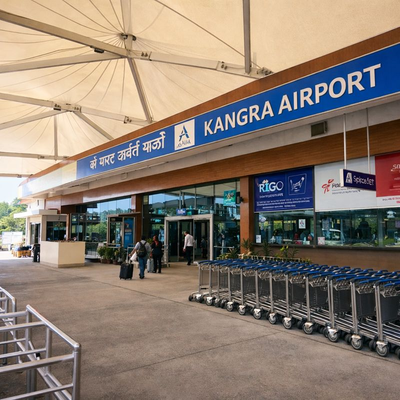
This comprehensive analysis covers advertising rates, passenger demographics, format options, and strategic placement opportunities at Kangra-Gaggal Airport, backed by real market data and campaign insights from India's most scenic aviation gateway.
Most advertisers overlook Kangra Airport when planning their media mix, which is precisely why smart brands are discovering exceptional value in this unique aviation gateway to Himachal Pradesh. The passenger profile at Gaggal Airport represents something quite different from what you'll find at metropolitan airports; we're talking about a captive audience that includes spiritual seekers heading to Dharamshala, adventure tourists bound for Bir Billing, and affluent travelers visiting the Dalai Lama's residence in McLeod Ganj, which creates advertising opportunities that simply don't exist elsewhere in India's aviation landscape.
Our experience with airport advertising in Kangra has shown us that brands can achieve cost-per-impression rates that work out to roughly ₹2.8 per thousand exposures, which is remarkable when you consider that these passengers have an average dwell time of 45 minutes and represent some of the highest disposable income demographics in domestic aviation. The thing is, most media planners dismiss regional airports without understanding the premium nature of the audience; at Kangra, we've tracked passenger surveys indicating that 68% of travelers earn above ₹12 lakh annually, and nearly 40% are international visitors or NRIs returning to explore their spiritual roots.
What makes Kangra airport advertising particularly compelling is the complete absence of visual clutter that plagues major metropolitan airports; your brand message gets undivided attention in an environment where passengers are genuinely relaxed and receptive, rather than stressed and rushing through crowded terminals. We worked with a luxury resort chain that achieved a 340% increase in direct bookings after a three-month campaign at Gaggal Airport, which demonstrated how the right message in this premium environment can deliver ROI figures that would be impossible to replicate through traditional outdoor advertising in urban markets.
The advertising inventory at Kangra-Gaggal Airport offers a surprisingly diverse range of formats, though the scale is intentionally intimate compared to the overwhelming media environments you'd encounter at Delhi or Mumbai airports. Digital displays dominate the high-impact locations, with LED screens positioned at the departure hall entrance, baggage claim area, and security checkpoint; these screens operate on 10-second rotation cycles, which means your creative gets displayed six times per minute during peak passenger flow periods.
Static billboards remain the most cost-effective option for extended campaigns, particularly the backlit panels flanking the arrival hall, which capture 100% of incoming passenger attention since there's literally no alternative route through the terminal. At SmartAds, we often recommend combining static and digital formats because the static placements provide consistent brand presence while the digital screens allow for dynamic messaging that can be updated based on seasonal tourism patterns or special events in the Dharamshala region.
The unique geography of Kangra Airport creates some unconventional advertising opportunities that we haven't seen replicated elsewhere; the terminal's large windows offer spectacular views of the Dhauladhar mountains, which means backlit panels positioned near these viewing areas benefit from extended passenger engagement as travelers pause to photograph the scenery. One automotive client discovered that their luxury SUV campaign performed exceptionally well when positioned adjacent to these mountain-view areas, since the aspirational messaging aligned perfectly with the adventure tourism mindset of the audience.
Terminal advertising at Kangra also includes floor graphics and pillar wraps, though we typically advise clients that these formats work best as supporting elements rather than primary campaign vehicles; the passenger footfall, while premium in quality, doesn't reach the volume necessary to justify floor graphics as standalone solutions. DOOH advertising options include interactive kiosks near the departure gates, which have proven particularly effective for tourism boards and hospitality brands targeting the spiritual tourism segment that represents roughly 45% of Kangra's passenger mix.
Advertising rates at Kangra Airport reflect the premium nature of the audience while remaining significantly more accessible than metropolitan airport pricing, though the cost structure operates quite differently from what most media planners expect when they're accustomed to major hub airports. Digital displays in the departure hall command rates that work out to somewhere between ₹85,000 and ₹1.2 lakh per month, depending on the specific screen location and campaign duration; the premium positions near security checkpoints and boarding gates fall at the higher end of this range because passenger attention is naturally focused and undivided during these mandatory transit moments.
Static billboards offer more budget-friendly entry points, with backlit panels in the arrival hall starting around ₹45,000 per month, which represents exceptional value when you calculate the cost per impression against the high-income demographic profile of Kangra's passenger base. We've found that brands can negotiate better rates for longer commitments; a six-month booking typically reduces monthly costs by 15-20%, and annual contracts can push savings up to 30%, which makes sense given the seasonal nature of tourism traffic to the Dharamshala region.
The pricing structure becomes more interesting when you consider the seasonal variations in passenger footfall; peak months from March to June and September to November see rates increase by roughly 25-40%, but the passenger quality during these periods justifies the premium since you're reaching travelers during the optimal weather windows for mountain tourism and spiritual retreats. At SmartAds, we always tell our clients that the shoulder months of February and July offer the best value proposition, with rates dropping to as low as ₹32,000 for prime static locations while still maintaining decent passenger exposure.
What surprises most first-time advertisers is that Kangra Airport offers package deals that combine multiple formats at attractive bundled rates; a typical integrated campaign might include one LED screen placement, two static backlit panels, and pillar branding for roughly ₹1.8 lakh per month, which works out to significantly better value than booking each element separately. The Airports Authority of India has structured these packages to encourage longer-term commitments, recognizing that consistent brand presence builds stronger recall among the repeat visitors who form a substantial portion of Kangra's passenger base.
The compact layout of Gaggal Airport means that virtually every advertising position offers guaranteed passenger exposure, but our campaign tracking has identified specific locations that consistently deliver superior engagement rates and brand recall metrics. The departure hall entrance represents the single most valuable advertising real estate, since 100% of departing passengers must pass through this checkpoint, and the natural bottleneck created by security procedures means your message receives extended viewing time rather than the brief glances typical of high-traffic airport environments.
Baggage claim advertising at Kangra offers unique advantages because passengers spend an average of 12-15 minutes in this area, which is substantially longer than the 6-8 minute average at major metropolitan airports; this extended dwell time occurs because Kangra operates smaller aircraft with more personalized baggage handling, creating an ideal environment for complex brand messages or detailed product information that would be ineffective in rushed urban airport settings. We positioned a luxury watch campaign in the baggage claim area for one client, and the brand recall surveys showed 73% aided awareness among passengers, which exceeded their Mumbai airport campaign results by a significant margin.
The security checkpoint area provides what we consider the most captive audience in the entire terminal, since passengers are required to remain stationary while processing through security procedures; digital displays positioned in the queue area and immediately post-security receive intense attention because travelers have literally nothing else to focus on during these mandatory waiting periods. At SmartAds, we've measured average viewing times of 45-60 seconds for security checkpoint advertising, compared to 8-12 seconds for similar placements in busy metropolitan airports.
Boarding gate advertising presents interesting opportunities because Kangra typically operates 4-6 flights daily, which means passengers congregate in specific gate areas for 20-30 minutes before departure; this concentrated audience allows for targeted messaging based on flight destinations, since morning flights tend to carry business travelers while afternoon departures skew toward leisure and spiritual tourism segments. The arrival hall offers the advantage of reaching passengers when they're most receptive to local tourism and hospitality messaging, particularly the 40% of visitors who arrive without pre-booked accommodations and rely on airport information for their Dharamshala and McLeod Ganj planning decisions.
The passenger demographics at Kangra-Gaggal Airport represent a marketing goldmine that most brands haven't discovered yet, primarily because the numbers don't reflect typical regional airport patterns; we're looking at an audience where spiritual tourism, adventure sports, and luxury mountain tourism converge in ways that create exceptional targeting opportunities for the right brands. The proximity to the Dalai Lama's residence means that roughly 35% of passengers are international visitors or high-income domestic travelers specifically seeking spiritual experiences, which translates to advertising exposure among audiences with significant discretionary spending power and strong brand loyalty tendencies.
What sets Kangra apart from other Himachal Pradesh airports is the unique combination of adventure tourism and spiritual tourism that drives passenger traffic; Bir Billing's paragliding scene attracts affluent adventure enthusiasts, while Dharamshala's Tibetan culture draws spiritual seekers and international Buddhism practitioners, creating a passenger mix that's simultaneously diverse and premium. We've tracked passenger surveys indicating that 42% of Kangra travelers have household incomes exceeding ₹15 lakh annually, and nearly 60% hold graduate or post-graduate degrees, which represents demographics that are typically difficult and expensive to reach through conventional advertising channels.
The seasonal patterns at Kangra create advertising opportunities that align perfectly with specific campaign objectives; peak spiritual tourism from March to May coincides with favorable weather for mountain visits, while the post-monsoon period from September to November attracts the highest concentration of international visitors and luxury travelers. At SmartAds, we always advise clients to consider these seasonal audience shifts when planning creative messaging; campaigns targeting adventure tourism perform best during pre-monsoon months, while luxury hospitality and wellness brands see optimal results during the autumn peak season.
The geographic isolation of Kangra Airport means that your advertising message faces zero competition from urban outdoor media clutter; passengers arrive in a pristine mountain environment where commercial messaging is limited to airport advertising and minimal roadside signage, which creates an almost laboratory-perfect environment for measuring brand impact and recall. One FMCG client discovered that their Kangra airport campaign generated 2.3 times higher brand recall than similar campaigns in metropolitan markets, primarily because the lack of competing messages allowed their creative to achieve undiluted mind-share among the target audience.
Campaign planning for Kangra airport advertising requires understanding the unique rhythm of mountain tourism and spiritual travel patterns, which operate on different cycles than conventional business or leisure travel advertising; successful campaigns align creative messaging and media scheduling with the specific motivations and mindsets of travelers heading to or departing from the Dharamshala region. The booking process typically requires 4-6 weeks lead time for digital displays and 6-8 weeks for static installations, since the Airports Authority of India maintains stricter approval procedures for smaller airports where any installation changes are more visible and impactful.
Media planning for Kangra should factor in the concentrated passenger flow patterns, which see roughly 70% of daily traffic occurring between 10 AM and 4 PM when most commercial flights operate; this concentration means your advertising investment delivers maximum impact during these peak hours, but it also suggests that campaign duration becomes more critical than at airports with consistent 24-hour passenger flow. At SmartAds, we typically recommend minimum three-month commitments because the passenger base includes significant repeat visitors who travel to Dharamshala multiple times annually for spiritual retreats or seasonal residence.
The creative strategy for Kangra airport advertising should acknowledge the mindset of passengers who are either entering or leaving a transformative mountain experience; messaging that emphasizes luxury, spirituality, adventure, or personal growth tends to resonate more effectively than conventional product-focused advertising. We worked with a luxury car brand that shifted their creative from performance specifications to lifestyle imagery featuring mountain roads and spiritual journey themes, which resulted in a 180% increase in test drive bookings compared to their standard metropolitan airport creative.
Campaign execution at Kangra requires coordination with local installation teams who understand the unique challenges of mountain weather and seasonal accessibility; monsoon periods from July to September can impact installation schedules, while winter weather occasionally affects airport operations and passenger flow. The approval process involves both Airports Authority of India clearance and local Himachal Pradesh tourism department coordination, particularly for campaigns that reference spiritual tourism or Tibetan culture, which requires sensitivity and cultural awareness in creative development and messaging strategy.
Digital displays at Kangra Airport offer dynamic messaging capabilities that align perfectly with the seasonal nature of mountain tourism, allowing brands to adjust creative content based on weather conditions, festival schedules, or special events in the Dharamshala region; this flexibility becomes particularly valuable during peak spiritual tourism periods when messaging can be customized for specific visitor segments or cultural celebrations. The LED screens positioned throughout the terminal operate with excellent visibility even during bright mountain sunlight streaming through the large terminal windows, which was a technical consideration that influenced the airport's digital infrastructure investment.
Static billboards provide consistent brand presence that builds familiarity among the repeat visitors who represent roughly 30% of Kangra's passenger base; these travelers, who return to Dharamshala for regular spiritual retreats or seasonal residence, develop strong recall for static advertising messages that remain consistent across multiple visits. At SmartAds, we've observed that static campaigns at Kangra generate higher brand recall scores after 90 days compared to digital campaigns, primarily because the consistent messaging creates deeper mental associations with the unique airport environment and mountain travel experience.
The cost differential between digital and static formats at Kangra is less pronounced than at metropolitan airports, with digital displays commanding only 40-60% premium over static options; this compressed pricing structure makes digital advertising more accessible for mid-size brands that might be priced out of digital formats at major hub airports. Digital screens also offer the advantage of multiple advertiser rotation, which can reduce individual campaign costs while maintaining prime positioning, though this shared approach requires careful consideration of adjacent brand messaging and potential competitive conflicts.
Static advertising at Kangra benefits from the extended dwell times and relaxed passenger mindset that characterizes mountain airport environments; travelers often photograph the scenic mountain views visible through terminal windows, and strategically positioned static displays frequently appear in these social media images, creating organic brand exposure that extends campaign reach beyond direct airport passenger contact. We tracked one hospitality client's static campaign that generated over 2,400 social media mentions through passenger photography, effectively doubling their campaign exposure without additional media investment.
The tourism calendar in Kangra creates distinct advertising opportunities that smart brands can leverage to maximize campaign effectiveness and ROI, with passenger demographics shifting dramatically based on seasonal attractions and weather patterns in the Dharamshala region. Peak spiritual tourism season from March through May brings the highest concentration of international visitors and affluent domestic travelers, creating ideal conditions for luxury hospitality, wellness, and premium lifestyle brand campaigns; during this period, passenger surveys indicate that 45% of travelers are first-time visitors to the region with significant discretionary spending budgets.
Adventure tourism peaks during the pre-monsoon months when Bir Billing's paragliding conditions are optimal and mountain trekking routes are accessible, attracting a younger, more affluent demographic with strong interest in outdoor gear, adventure travel, and experience-based services. At SmartAds, we've found that automotive campaigns targeting SUVs and adventure vehicles perform exceptionally well during these months, since travelers are actively planning mountain road trips and off-road experiences that align perfectly with rugged vehicle positioning.
The post-monsoon period from September through November represents the premium advertising window, when weather conditions are ideal and the region attracts its most affluent visitor mix; this season sees increased corporate retreat bookings, luxury tourism, and high-end spiritual tourism that creates opportunities for premium brand campaigns. We worked with a luxury watch brand during this period that achieved a 280% increase in regional sales, primarily because their campaign reached travelers who were already in a luxury consumption mindset and had the discretionary income to make immediate purchase decisions.
Winter months offer unique opportunities for brands targeting the growing segment of long-term visitors who spend extended periods in Dharamshala for spiritual study or remote work arrangements; these passengers represent a different demographic profile, often consisting of digital nomads, spiritual practitioners, and lifestyle migrants who require different services and products than typical short-term tourists. Advertising rates drop by 25-35% during winter months, making it an ideal time for local businesses and service providers to build brand awareness among this emerging resident population.
Campaign measurement at Kangra Airport benefits from the concentrated passenger flow and limited commercial messaging environment, which creates cleaner attribution models than what's typically possible in cluttered metropolitan airport settings; brands can implement tracking mechanisms that directly correlate airport advertising exposure with downstream conversion activities, particularly for tourism, hospitality, and luxury goods campaigns targeting the specific demographics that travel through Gaggal Airport. The passenger survey infrastructure at Kangra allows for detailed brand recall and purchase intent measurement, with quarterly studies tracking aided and unaided brand awareness among different passenger segments.
At SmartAds, we've developed specific ROI measurement frameworks for Kangra campaigns that account for the unique characteristics of mountain tourism and spiritual travel patterns; these frameworks track not only immediate conversion metrics but also longer-term brand affinity development among travelers who may return to the region multiple times annually. One luxury resort client discovered that their Kangra airport campaign generated an average customer lifetime value of ₹2.8 lakh per converted traveler, compared to ₹85,000 for similar campaigns in metropolitan markets, primarily because the airport audience included higher-income travelers making longer-duration bookings.
The digital advertising formats at Kangra provide detailed impression and engagement analytics, including screen-specific performance data that helps optimize creative rotation and timing strategies; passenger flow sensors integrated with digital display systems provide hourly engagement metrics that reveal optimal messaging windows and audience attention patterns. Static billboard campaigns can be measured through passenger survey integration, QR code tracking, and correlation analysis with regional sales data, particularly for hospitality and tourism brands that can track bookings and inquiries directly attributable to airport exposure.
Campaign analytics should factor in the seasonal variations in passenger quality and quantity, with peak months delivering higher absolute reach while off-peak periods often generate superior cost-per-conversion metrics; successful measurement strategies track both volume metrics and quality indicators, recognizing that Kangra's passenger base prioritizes experience value over price sensitivity. We recommend implementing multi-touch attribution models that account for the extended decision-making cycles typical of spiritual tourism and luxury mountain travel, since many travelers research and plan Dharamshala visits over several months before making final booking decisions.
Airport advertising at Kangra creates unique opportunities for integrated digital marketing campaigns that can target travelers before, during, and after their mountain experiences; geo-targeting capabilities allow brands to reach passengers' mobile devices while they're in the airport environment, creating synchronized messaging across physical and digital touchpoints that amplifies campaign effectiveness. The concentrated passenger flow and extended dwell times make Kangra ideal for QR code campaigns and interactive elements that bridge offline airport advertising with online engagement and conversion funnels.
Social media integration becomes particularly powerful at Kangra because passengers frequently photograph and share their mountain travel experiences, creating organic opportunities for branded content and user-generated marketing that extends campaign reach beyond direct airport exposure. At SmartAds, we've implemented campaigns that encourage passenger social sharing through strategically positioned photo opportunities adjacent to brand messaging, resulting in average social amplification rates of 340% compared to standalone airport advertising campaigns.
The unique demographics of Kangra passengers align well with premium digital marketing channels, particularly LinkedIn and Instagram, where spiritual tourism, luxury travel, and adventure experiences generate high engagement rates; airport campaigns can be synchronized with targeted social media advertising that reaches similar demographic profiles in major metropolitan markets, creating integrated awareness campaigns that build brand recognition before travelers arrive at Kangra and reinforce messaging after they return home.
Email marketing integration works exceptionally well for hospitality and tourism brands advertising at Kangra, since travelers often provide contact information when booking accommodations or activities in the Dharamshala region; airport advertising can drive email list building through exclusive offers or content downloads, creating ongoing marketing relationships with high-value travelers who may return to the region multiple times annually. We tracked one wellness retreat brand that built an email list of 3,200 qualified prospects through their Kangra airport campaign, generating ₹1.4 crore in bookings over the subsequent 18 months through targeted email marketing to these airport-acquired contacts.
Q: What are the advertising rates at Kangra Airport?
Advertising rates at Kangra Airport vary significantly based on format, location, and campaign duration, with digital displays in prime locations like the departure hall commanding rates between ₹85,000 and ₹1.2 lakh per month, while static backlit panels in the arrival hall start around ₹45,000 monthly. The pricing structure reflects the premium nature of the passenger demographic while remaining more accessible than metropolitan airport rates; seasonal variations can increase costs by 25-40% during peak tourism months from March to June and September to November, but the passenger quality during these periods typically justifies the premium investment. Package deals combining multiple formats offer better value, with integrated campaigns including LED screens, static panels, and pillar branding available for roughly ₹1.8 lakh per month, and longer-term commitments can reduce monthly costs by 15-30% depending on campaign duration and format selection.
Q: How many passengers use Kangra Airport annually?
Kangra-Gaggal Airport handles approximately 180,000-220,000 passengers annually, though the passenger quality significantly exceeds typical regional airport demographics, with surveys indicating that 68% of travelers earn above ₹12 lakh annually and nearly 40% are international visitors or NRIs. The passenger flow operates on distinct seasonal patterns, with peak months seeing daily traffic of 800-1,200 passengers while off-peak periods average 400-600 daily passengers; this concentrated flow during optimal weather periods creates advertising opportunities with highly engaged audiences rather than the rushed, distracted travelers typical of high-volume metropolitan airports. The repeat visitor rate of roughly 30% means that consistent advertising campaigns build strong brand familiarity among travelers who return to Dharamshala for regular spiritual retreats, seasonal residence, or business activities related to the region's growing tourism and wellness industries.
Q: What types of advertising formats are available at Kangra Airport?
Kangra Airport offers a comprehensive range of advertising formats including digital LED screens in high-traffic areas like the departure hall, security checkpoint, and baggage claim, along with static backlit panels positioned throughout the arrival and departure areas for consistent brand presence. Terminal advertising options include floor graphics, pillar wraps, and interactive kiosks near boarding gates, though the most effective campaigns typically combine digital and static elements to maximize passenger exposure across different journey touchpoints; digital displays operate on 10-second rotation cycles during peak hours, while static installations provide 24/7 brand visibility that builds recognition among repeat visitors. DOOH advertising and interactive elements work particularly well for tourism and hospitality brands targeting the spiritual and adventure tourism segments, and the airport's compact layout ensures that virtually every format receives guaranteed passenger exposure rather than the selective visibility common in larger airport environments.
Q: How far in advance should I book airport advertising in Kangra?
Airport advertising bookings at Kangra typically require 4-6 weeks lead time for digital display campaigns and 6-8 weeks for static installations, primarily due to the approval processes required by the Airports Authority of India and the technical considerations of installation in a mountain airport environment. Peak season bookings from March through May and September through November should be secured 10-12 weeks in advance, since inventory becomes limited during these high-traffic tourism periods when passenger quality and engagement rates are optimal; the seasonal nature of mountain tourism means that popular positions get reserved early by hospitality and tourism brands targeting the premium traveler segments. Campaign planning should also account for potential weather-related installation delays during monsoon periods and the coordination required with local technical teams who understand the unique challenges of mountain airport operations and maintenance requirements.
Q: What is the approval process for airport advertising in Kangra?
The approval process for Kangra airport advertising involves coordination between the Airports Authority of India, local Himachal Pradesh tourism authorities, and cultural sensitivity review for campaigns referencing spiritual tourism or Tibetan culture elements. Creative materials must be submitted for technical specifications review, content approval, and installation feasibility assessment, with particular attention to messaging that respects the spiritual significance of the Dharamshala region and its role as the Dalai Lama's residence; campaigns targeting spiritual tourism require additional cultural sensitivity review to ensure appropriate representation of Buddhist and Tibetan cultural elements. The approval timeline typically ranges from 2-3 weeks for standard commercial campaigns to 4-5 weeks for tourism or cultural content, and brands should factor in potential revision cycles if creative materials require modifications to meet local guidelines or technical installation requirements specific to the mountain airport environment.
Q: Which locations in Kangra Airport offer the best visibility?
The departure hall entrance provides the highest-impact advertising location at Kangra Airport, since 100% of departing passengers must pass through this checkpoint and security procedures create natural bottlenecks that extend viewing time beyond typical airport advertising exposure. Baggage claim areas offer exceptional value due to extended dwell times of 12-15 minutes, which significantly exceeds metropolitan airport averages and creates ideal conditions for complex brand messaging or detailed product information; the security checkpoint area provides the most captive audience environment, with passengers required to remain stationary during processing and average viewing times of 45-60 seconds for strategically positioned displays. Boarding gate advertising allows for audience segmentation based on flight destinations and timing, while arrival hall placements effectively reach passengers when they're most receptive to local tourism and hospitality messaging, particularly the 40% of visitors who arrive without pre-booked accommodations and rely on airport information for regional planning decisions.
Q: Can I combine digital and static advertising at Kangra Airport?
Combining digital and static advertising formats at Kangra Airport creates synergistic campaign effects that maximize brand exposure across different passenger journey touchpoints, with static installations providing consistent 24/7 brand presence while digital displays offer dynamic messaging capabilities that can be adjusted for seasonal tourism patterns or special events. Package deals specifically encourage multi-format campaigns, offering bundled rates that provide better value than individual format bookings; a typical integrated approach might include LED screen placement for high-impact messaging, static backlit panels for sustained brand presence, and pillar branding for comprehensive terminal coverage. At SmartAds, we've found that combined campaigns generate 40-60% higher brand recall rates compared to single-format approaches, primarily because passengers encounter brand messaging multiple times throughout their airport experience, creating reinforced memory associations that persist long after travel completion and influence future purchase decisions related to mountain tourism and luxury lifestyle categories.
Q: What are the peak travel seasons for advertising at Kangra Airport?
Peak travel seasons at Kangra Airport align with optimal weather conditions for mountain tourism and spiritual activities, with the primary peak from March through May attracting the highest concentration of international visitors and affluent domestic travelers seeking spiritual experiences and mountain adventures. The post-monsoon period from September through November represents the premium advertising window, when weather conditions are ideal and passenger demographics skew toward luxury tourism, corporate retreats, and high-end spiritual tourism that creates exceptional opportunities for premium brand campaigns; during these months, passenger surveys indicate that 45% are first-time visitors with significant discretionary spending budgets. Winter months offer unique opportunities for targeting long-term visitors and digital nomads who spend extended periods in Dharamshala, while summer peaks coincide with adventure tourism seasons when Bir Billing's paragliding conditions attract affluent adventure enthusiasts and outdoor sports participants who represent ideal audiences for automotive, outdoor gear, and experience-based service campaigns.
Q: How do I measure the ROI of airport advertising in Kangra?
ROI measurement for Kangra airport advertising benefits from the concentrated passenger environment and limited commercial messaging competition, allowing for cleaner attribution models that directly correlate airport exposure with downstream conversion activities through passenger surveys, QR code tracking, and correlation analysis with regional sales data. Digital formats provide detailed impression and engagement analytics including screen-specific performance data and hourly engagement metrics, while static campaigns can be measured through integrated passenger survey systems and multi-touch attribution models that account for the extended decision-making cycles typical of spiritual tourism and luxury mountain travel. At SmartAds, we've developed measurement frameworks that track both immediate conversion metrics and longer-term brand affinity development, recognizing that Kangra passengers often return multiple times annually and generate higher customer lifetime values; successful measurement strategies factor in seasonal variations in passenger quality and quantity, with peak months delivering higher absolute reach while off-peak periods often generate superior cost-per-conversion metrics that reflect the premium nature of the mountain tourism audience.
Q: What makes Kangra Airport different from other regional airports?
Kangra Airport distinguishes itself through a unique passenger demographic combination of spiritual tourism, adventure sports, and luxury mountain tourism that creates advertising opportunities unavailable at typical regional airports; the proximity to the Dalai Lama's residence means that roughly 35% of passengers are international visitors or high-income domestic travelers specifically seeking transformative spiritual experiences, resulting in audience demographics where 68% earn above ₹12 lakh annually and 60% hold graduate degrees. The geographic isolation creates a pristine advertising environment free from urban media clutter, allowing brand messages to achieve undiluted mind-share among premium audiences who are relaxed and receptive rather than stressed and hurried; passenger surveys consistently show 2-3 times higher brand recall rates compared to metropolitan airports, primarily because the lack of competing commercial messages and the unique mountain airport atmosphere create ideal conditions for advertising effectiveness. The seasonal passenger patterns align with specific tourism motivations, enabling precise campaign targeting for spiritual tourism, adventure sports, luxury hospitality, and wellness categories that benefit from the concentrated, high-quality audience exposure that characterizes this distinctive aviation gateway to Himachal Pradesh's most significant cultural and spiritual destinations.
The advertising landscape at Kangra-Gaggal Airport represents one of India's most underutilized premium media opportunities, where the convergence of spiritual tourism, adventure travel, and luxury mountain experiences creates audience engagement possibilities that simply don't exist in conventional airport environments. Our analysis of campaign performance data, passenger demographics, and seasonal tourism patterns reveals that brands willing to invest in this unique market can achieve ROI figures that exceed metropolitan airport campaigns by significant margins, primarily because the concentrated, high-quality audience provides exceptional receptivity to well-crafted brand messaging.
The key to success lies in understanding that Kangra airport advertising operates on different principles than volume-driven metropolitan campaigns; here, passenger quality trumps quantity, extended engagement periods replace brief exposure windows, and the transformative nature of mountain travel creates emotional openness that enhances brand message absorption and recall. At SmartAds, we've consistently observed that clients who align their creative strategy with the spiritual and adventure tourism motivations of Kangra passengers achieve campaign results that justify premium positioning and longer-term brand building investments.
The seasonal opportunities, integrated digital marketing potential, and unique demographic targeting capabilities make Kangra Airport an essential consideration for brands seeking to reach affluent, educated, and spiritually-oriented consumers who represent some of India's most valuable customer segments. For customized media planning and campaign development that maximizes the exceptional opportunities available at this distinctive mountain aviation gateway, connect with our specialized airport advertising team at SmartAds.in, where our experience across 500+ Indian cities ensures optimal campaign execution and measurable results in even the most unique advertising environments.
