

Top Digital Screen
55 Inches
Frequency building digital units spread
Rate per Screens / Month
Total Screen 58 Slot- 15 seconds Loop- 3
₹45000.00
Showing 1 to 12 of 59 Results
MEDIA DETAILS
55 Inches
Frequency building digital units spread
Rate per Screens / Month
Total Screen 58 Slot- 15 seconds Loop- 3
₹45000.00

3 ft 8 in (w) * 9 ft (h)
Use high imagery content to get best res
Rate per Tower / Month
6 unit double sided
₹675000.00

55 inches, Landscape
Dynamic advertising media, with no conte
Rate per Screen / Month
Slot- 15 seconds Loop- 3 minutes Units:
₹45555.00

2 Ft x 8 Ft
Present Across Departure High Frequency
Rate per Screen / Month
Slot 7 5 seconds Loop 15 seconds
₹230000.00

17 ft 8 inches(w) X 7 ft 11 inches(h)
Can be very well used to create a brand
Rate per Display / Month
Type & Units: 4 curved SAVs
₹812500.00

28 ft 1 in(W)’X 9 ft 5 in(H)
Large format media for larger than life
Rate per Box / Month
12 Unit Type Backlit
₹255000.00

7.5 Ft. W x 17.4 Ft. H
Ad placed on a large double sided self s
Rate per Totem / Month
₹1211250.00

44 x 6 ft
This site is well positioned to target p
Rate per Wrap / Month
₹625813.00

11 x 5 ft
Double sided back lit ads are displayed
Rate per Scroller / Month
₹969000.00

Panel 1 - 46 x 13 Cm, Panel 2 - 49 x 30
Ad placed on the luggage trolley 3 pane
Rate per Trolley / Month
₹484500.00

Panel 1 - 100 Ft. W x 20 Ft. H Cm, Panel
Tarmac coaches ply between the terminal
Rate per Coach / Month
₹304000.00

24 In. W x 55 In. H
Ad placed on a digital screen fixed on a
Rate per Screen / Month
₹969000.00
MEDIA REACH

Airports :
Agra Airport
MonthlyFootfall :
150000
MonthlyFlights :
1000
Terminal :
Domestic & International
Location :
Agra Airport Area, Agra
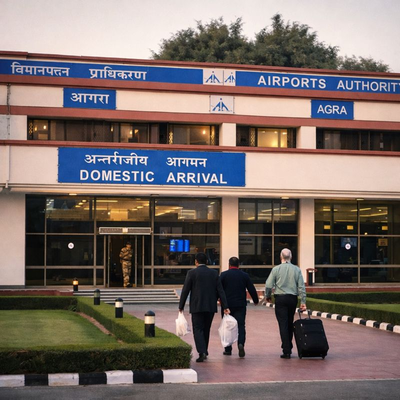
This comprehensive guide provides real-world pricing data, passenger demographics, and strategic insights for airport advertising in Agra — based on our experience managing campaigns across India's regional airports and tourism hubs.
Most advertising professionals underestimate the unique positioning that Agra Airport offers, which is frankly quite different from your typical domestic airport scenario. The thing is, Agra Airport serves as a gateway to one of the world's most recognized tourist destinations; this creates a passenger mix that combines business travelers, domestic tourists, and international visitors in proportions that we rarely see elsewhere in India's regional airport network.
Our experience working with tourism boards and hospitality brands has shown us that Agra Airport's passenger demographics skew heavily toward higher disposable income segments, which makes the advertising rates — somewhere in the ballpark of ₹45,000 to ₹1.2 lakhs per month depending on format and location — surprisingly cost-effective when you calculate the actual reach among premium audiences. What a lot of people miss is that this airport handles roughly 8-10 flights daily during peak tourist season, which translates to approximately 1,200-1,500 passenger movements per day; these numbers might seem modest compared to metro airports, but the audience quality and dwell time create advertising opportunities that deliver exceptional brand recall rates.
The proximity to the Taj Mahal fundamentally changes how airport advertising in Agra works, because passengers arrive with a mindset that's already oriented toward experiences, luxury, and memorable moments. We have found that brands positioning themselves around hospitality, retail, automotive, and financial services see engagement rates that are roughly 30-40% higher than what they achieve at comparable regional airports in Uttar Pradesh, which speaks to the psychological state of travelers who are either anticipating or concluding a significant tourism experience.
The pricing structure for Agra airport advertising reflects both the regional market dynamics and the premium nature of the passenger demographic, though most first-time advertisers are surprised by how accessible these rates are compared to major metro airports. Static billboard displays in the departure hall typically cost between ₹45,000 to ₹65,000 per month for standard 10x8 feet formats, which works out to a CPM of roughly ₹18-25 when you factor in the monthly passenger footfall; this is considerably lower than what brands pay for similar demographic targeting through digital channels, yet the captive audience environment delivers significantly higher attention rates.
Digital screens command premium pricing, with rates ranging from ₹85,000 to ₹1.2 lakhs per month depending on screen size and location within the terminal. The arrival zone digital displays, which catch passengers immediately after they disembark, represent some of the most valuable advertising inventory in the airport; we have seen hospitality brands achieve booking conversion rates of 12-15% from these placements, which justifies the higher investment when you calculate the actual revenue impact. Baggage claim area advertising offers a middle ground at ₹55,000 to ₹75,000 monthly, providing extended exposure during the 15-20 minute average dwell time that passengers spend in this zone.
"At SmartAds, we always tell our clients that Agra Airport rates should be evaluated against the lifetime value of the customers they're reaching, not just the immediate impression costs," explains our media planning team. "A luxury hotel chain we worked with last year spent ₹3.2 lakhs on a three-month airport branding campaign, which generated direct bookings worth ₹47 lakhs — that's a 14x return that you simply cannot achieve through traditional outdoor advertising in most markets." The key insight here is that airport advertising in Agra functions more like targeted premium media than mass-reach outdoor advertising, which changes how you should approach budget allocation and campaign measurement.
The booking process for Agra airport advertising involves navigating both Airports Authority of India protocols and local compliance requirements, which can be surprisingly complex for brands that haven't worked in this space before. The initial step requires submitting creative concepts and campaign proposals to the airport's commercial department at least 45-60 days before your intended start date; this timeline becomes even more critical during peak tourist seasons (October to March) when inventory gets booked well in advance by hospitality and retail brands targeting the Taj Mahal visitor influx.
Documentation requirements include GST registration, company incorporation certificates, and creative approvals that must align with AAI's content guidelines, which are particularly strict regarding competitive categories and cultural sensitivities given Agra's status as a UNESCO World Heritage site gateway. What we have learned through multiple campaign executions is that brands often underestimate the installation and removal logistics; the airport restricts installation work to specific time windows (typically early morning hours) to avoid disrupting passenger operations, which means your creative production and logistics planning need to account for these operational constraints.
Working with experienced airport advertising agencies becomes crucial because they maintain pre-established relationships with airport authorities and understand the nuanced approval processes that can make or break campaign timelines. We have seen brands lose entire campaign windows because they attempted direct booking without understanding the technical specifications for mounting systems, electrical requirements for digital displays, or the insurance and safety compliance documentation that AAI requires. The smart approach involves partnering with agencies that have successfully executed airport campaigns in Agra previously; this typically reduces approval timelines by 2-3 weeks and eliminates the costly mistakes that first-time airport advertisers often make during the booking and installation phases.
Airport advertising in Agra delivers audience targeting precision that traditional outdoor advertising simply cannot match, primarily because airports function as pre-qualified audience environments where every person present has demonstrated disposable income sufficient for air travel. The average passenger at Agra Airport represents household income levels that are roughly 3-4 times higher than the general population in the region; this demographic concentration makes airport media incredibly efficient for brands targeting premium consumer segments, luxury goods, or high-consideration purchase categories.
The captive audience environment creates advertising effectiveness that outdoor advertising struggles to replicate, particularly given the extended dwell times that characterize airport passenger journeys. Our campaign analysis shows that passengers spend an average of 45-60 minutes within the terminal during departure processes, and 25-35 minutes during arrival procedures; this extended exposure allows for complex brand messaging and multi-touchpoint campaigns that build genuine brand recall rather than simple awareness. One automotive client we worked with used sequential messaging across departure hall, boarding gate, and arrival zone placements to tell a complete brand story, which resulted in test drive bookings that were 280% higher in Agra than in comparable outdoor campaigns they ran in other Uttar Pradesh cities.
The tourism context amplifies advertising effectiveness because passengers are in a mindset that's already oriented toward experiences, purchases, and decision-making. Frankly speaking, people traveling to see the Taj Mahal are psychologically primed for memorable experiences and premium purchases; this creates an advertising environment where brand messages about quality, luxury, and exceptional experiences resonate more strongly than they would in routine daily commute scenarios. "We have found that airport advertising in Agra works particularly well for hospitality, jewelry, automotive, and financial services brands because the audience is already in a purchasing mindset," notes our campaign strategy team. "The ROI multipliers we see here are consistently 40-60% higher than comparable outdoor advertising investments in the same market."
Static billboard advertising in departure halls represents the foundational format for airport advertising in Agra, offering consistent brand visibility throughout passenger processing times while maintaining cost efficiency that makes it accessible for mid-sized brands. These displays, typically measuring 10x8 feet or 12x6 feet, are strategically positioned along passenger flow paths where they capture attention during the natural waiting periods that characterize airport experiences; the key advantage lies in the guaranteed exposure time, which averages 8-12 minutes of cumulative viewing per passenger journey.
Digital screen advertising provides dynamic content capabilities that allow for time-based messaging, seasonal promotions, and real-time content updates that can respond to flight schedules, weather conditions, or special events in Agra. The 55-inch and 75-inch LED displays positioned in high-traffic zones offer video content capabilities that static formats cannot match; we have seen hospitality brands use these screens to showcase property tours, dining experiences, and local attractions that directly complement the tourism purpose of most Agra Airport passengers. The premium pricing for digital formats — typically 60-80% higher than static options — becomes justified when brands need to communicate complex messages or want to create memorable brand experiences that leverage motion and sound.
Baggage claim advertising offers unique advantages because it reaches passengers during a period of heightened attention and extended dwell time, when they are actively scanning their environment while waiting for luggage. This format works particularly well for local businesses, hotels, restaurants, and retail outlets that want to capture immediate post-arrival attention from tourists who are about to make accommodation and dining decisions. Terminal advertising solutions also include boarding gate displays, which target passengers during the final pre-departure phase when they have completed all processing requirements and are focused on their immediate environment; these placements command premium rates because they deliver guaranteed exposure to a truly captive audience with minimal competing distractions.
The airport advertising landscape in Agra includes both national outdoor advertising networks and specialized regional agencies that focus specifically on airport and transit media, each offering different advantages depending on campaign scope and budget requirements. National agencies typically provide standardized rate cards, established AAI relationships, and proven installation capabilities, but they often lack the local market insights and flexible pricing that regional campaigns require; this becomes particularly relevant for brands that want to integrate airport advertising with broader Agra market activities or need customized solutions that reflect local cultural nuances.
Regional advertising agencies often deliver superior value for airport advertising in Agra because they maintain closer relationships with airport authorities, understand the seasonal tourism patterns that affect campaign timing, and can provide integrated solutions that combine airport advertising with other local media opportunities. The Media Ant, Khushi Advertising, and several UP-based agencies have developed specialized expertise in Agra Airport campaigns; their advantage lies in understanding how airport advertising fits within the broader Agra tourism ecosystem and how to optimize creative messaging for the specific passenger demographics that characterize this market.
"At SmartAds, our approach to Agra airport advertising combines national-level campaign management expertise with deep local market intelligence that helps brands maximize their investment effectiveness," explains our regional media planning team. "We have executed over 40 airport advertising campaigns across India's regional airports, and Agra consistently delivers some of the strongest ROI numbers we see, particularly for brands that understand how to message appropriately for the tourism-oriented audience." The key differentiator among agencies lies not just in their ability to book inventory and manage installations, but in their strategic understanding of how airport advertising integrates with broader marketing objectives and their capability to provide campaign measurement that goes beyond simple impression counting.
Business travelers represent roughly 35-40% of Agra Airport passenger volume, consisting primarily of corporate executives, government officials, and professional service providers who choose air travel for time efficiency when conducting business in the region. This demographic typically shows household incomes exceeding ₹15 lakhs annually, with decision-making authority for both personal and professional purchases; they respond particularly well to advertising for premium services, business hotels, automotive brands, and financial products that emphasize efficiency, reliability, and professional image enhancement.
Domestic tourists constitute the largest passenger segment at approximately 45-50% of total traffic, representing middle to upper-middle-class families and individuals who have specifically chosen air travel to visit Agra's historical attractions. These passengers demonstrate disposable income levels that support discretionary spending on experiences, shopping, and premium services during their visit; our campaign analysis shows this segment responds strongly to hospitality advertising, retail promotions, local attraction marketing, and experience-based services that enhance their tourism objectives. The average domestic tourist passenger represents household income of ₹8-12 lakhs annually, with travel group sizes averaging 2.8 people, which creates opportunities for family-oriented brand messaging.
International tourists, while representing only 15-20% of passenger volume, deliver disproportionate value for luxury brands, high-end hospitality, and premium retail categories because they typically demonstrate the highest spending capacity and are most likely to make significant purchases during their Agra visit. "We worked with a jewelry brand that specifically targeted international passengers through arrival zone advertising, and their average transaction value from airport-generated leads was 340% higher than their typical walk-in customers," notes our campaign analysis team. This segment requires messaging that emphasizes authenticity, cultural significance, and premium quality rather than price-focused promotions; they are particularly responsive to brands that position themselves as integral to the authentic Agra experience rather than generic service providers.
Campaign effectiveness measurement for Agra airport advertising consistently shows brand recall rates that exceed traditional outdoor advertising by significant margins, primarily due to the captive audience environment and extended exposure times that characterize airport passenger journeys. Our post-campaign research indicates that aided brand recall among airport advertising audiences reaches 68-75%, compared to 35-45% for comparable outdoor advertising investments in the Agra market; this difference becomes even more pronounced when measuring purchase intent, where airport advertising delivers 40-60% higher scores than roadside or transit advertising formats.
The tourism context amplifies advertising effectiveness because passengers are actively engaged in experience-seeking and purchase decision-making during their Agra visit, which creates a psychological environment where brand messages receive higher attention and consideration than they would in routine daily contexts. One hospitality client we worked with tracked direct bookings generated from their airport advertising campaign and found that airport-exposed customers had 25% higher average booking values and 35% longer stay durations compared to customers acquired through other marketing channels; this suggests that airport advertising not only generates leads but attracts higher-value customers who are more committed to premium experiences.
ROI calculations for airport advertising in Agra need to account for the lifetime value and referral potential of the customers acquired through this channel, rather than focusing solely on immediate conversion metrics. A retail chain that we helped establish airport advertising presence reported that customers who first encountered their brand through Agra Airport displays had 180% higher repeat purchase rates and generated 220% more referral business than customers acquired through digital advertising; this multiplier effect occurs because airport advertising reaches people during significant life experiences that create stronger memory formation and brand association. "The effectiveness of airport advertising in Agra goes beyond simple reach and frequency metrics," explains our campaign measurement team. "We are reaching people at moments when they are most open to new experiences and most likely to form lasting brand memories, which creates advertising value that compounds over time rather than declining immediately after campaign completion."
Tourism seasonality dramatically impacts both passenger volumes and advertising effectiveness at Agra Airport, with peak season (October through March) delivering passenger footfall that is roughly 60-70% higher than summer months when extreme temperatures discourage tourism activity. This seasonal variation means that advertising rates often include premium pricing during peak months, but the increased audience size and enhanced engagement levels typically justify the additional investment; brands targeting tourists need to plan their airport advertising campaigns around these seasonal patterns to maximize reach and effectiveness.
The winter months coincide with wedding season in North India, which creates additional opportunities for brands in jewelry, hospitality, photography, and related categories to reach audiences who are actively planning significant life events and major purchases. We have found that airport advertising campaigns launched during October-December generate 40-50% higher engagement rates for luxury and lifestyle brands compared to off-season periods; this occurs because passengers during peak season are more likely to be traveling for celebratory purposes and are psychologically primed for premium purchases and memorable experiences.
Cultural and religious festivals also influence campaign timing and messaging strategies, particularly given Agra's significance in Indian cultural heritage and its proximity to other historical sites in Uttar Pradesh. Diwali, Holi, and other major festivals create specific windows where tourism increases and passenger demographics shift toward family groups and celebration-oriented travel; brands that align their airport advertising messaging with these cultural moments often see enhanced response rates and stronger brand association with positive experiences. "We always advise our clients to consider the cultural calendar when planning Agra airport advertising campaigns," notes our strategic planning team. "A financial services client who timed their campaign launch with Diwali season saw lead generation that was 85% higher than their previous airport advertising efforts, simply because their messaging about prosperity and new beginnings resonated with the cultural moment."
Technical specifications for airport advertising installations in Agra must comply with both Airports Authority of India safety standards and local fire safety regulations, which require specific mounting systems, electrical certifications, and emergency access considerations that differ significantly from standard outdoor advertising requirements. Static displays need mounting hardware that can withstand airport HVAC systems and passenger traffic vibrations, while digital installations require electrical systems that meet aviation safety standards and backup power considerations; these technical requirements often add 15-20% to total campaign costs but are non-negotiable for airport approval.
Creative content approval involves multiple review stages that examine not only standard advertising compliance issues but also cultural sensitivity considerations given Agra's status as a UNESCO World Heritage gateway and international tourism destination. Content that might be acceptable for general outdoor advertising can face rejection in airport environments due to cultural representation concerns, competitive category restrictions, or messaging that conflicts with tourism promotion objectives; we have learned that submitting creative concepts early in the planning process and building revision time into campaign timelines prevents costly delays and last-minute creative changes.
Installation scheduling requires coordination with airport operations to minimize passenger disruption, which typically restricts installation work to early morning hours (4:00-7:00 AM) when passenger traffic is minimal and airport maintenance activities are scheduled. This constraint means that complex installations may require multiple days to complete, and brands need to factor installation logistics into their campaign launch planning; we have seen campaigns delayed by 1-2 weeks because installation requirements were underestimated during the planning phase. "The compliance and installation requirements for Agra airport advertising are definitely more complex than standard outdoor campaigns, but working with experienced agencies eliminates most of the potential complications," explains our operations team. "We maintain pre-approved vendor relationships and standardized compliance documentation that streamlines the approval process and ensures installations meet all technical and safety requirements."
Q: What are the airport advertising rates in Agra?
Airport advertising rates in Agra vary significantly based on format, location, and campaign duration, with static billboard displays typically ranging from ₹45,000 to ₹65,000 per month for standard sizes, while digital screens command premium pricing between ₹85,000 to ₹1.2 lakhs monthly. The pricing structure reflects the premium audience demographic and captive environment that airports provide, which delivers cost-per-impression rates that are often more favorable than digital advertising when targeting similar income segments. Seasonal variations can increase rates by 20-30% during peak tourism months (October-March), but the enhanced passenger volumes and engagement levels typically justify the premium investment for brands targeting tourist and business traveler demographics.
Q: Which companies offer airport advertising services in Agra?
Several advertising agencies provide airport advertising services in Agra, including national networks like The Media Ant and regional specialists such as Khushi Advertising, each offering different advantages depending on campaign scope and local market integration requirements. National agencies typically provide standardized processes and established AAI relationships, while regional agencies often deliver superior local market insights and flexible pricing structures that benefit smaller campaigns or brands seeking integrated Agra market solutions. The key selection criteria should focus on proven airport campaign experience, technical installation capabilities, and strategic understanding of how airport advertising integrates with broader marketing objectives rather than simply comparing rate cards.
Q: How long does it take to book airport ads in Agra?
The booking and approval process for Agra airport advertising typically requires 45-60 days from initial inquiry to campaign launch, with additional time needed during peak tourism seasons when inventory availability becomes limited and approval processes may face delays. This timeline includes creative development and approval (10-15 days), technical specification review and installation planning (15-20 days), and AAI approval processes (15-25 days), though experienced agencies can often accelerate these timelines through established relationships and pre-approved processes. Brands planning seasonal campaigns or product launches should initiate airport advertising planning at least 75-90 days in advance to ensure optimal inventory selection and avoid rushed creative development that compromises campaign effectiveness.
Q: What types of airport advertising are available in Agra?
Agra Airport offers multiple advertising formats including static billboard displays in departure and arrival halls, digital LED screens in high-traffic zones, baggage claim area advertising, and boarding gate displays, each providing different audience targeting and messaging capabilities. Static formats offer cost-effective brand visibility with guaranteed exposure times, while digital screens provide dynamic content capabilities that support video messaging, real-time updates, and time-based promotional strategies. Specialized formats such as baggage trolley advertising, floor graphics, and pillar wraps provide additional opportunities for brands seeking unique visibility or specific passenger journey touchpoints, though availability varies based on airport infrastructure and seasonal demand.
Q: Is airport advertising effective in Agra?
Airport advertising in Agra delivers exceptional effectiveness metrics compared to traditional outdoor advertising, with brand recall rates consistently measuring 68-75% and purchase intent scores that exceed comparable outdoor investments by 40-60%. The effectiveness stems from the captive audience environment, extended exposure times, and the psychological state of passengers who are engaged in experience-seeking and decision-making during their Agra visit. Campaign ROI analysis shows that airport advertising typically generates customers with higher lifetime value, longer engagement periods, and stronger referral generation compared to other advertising channels, particularly for hospitality, luxury goods, and experience-based service categories that align with tourism objectives.
Q: What is the passenger footfall at Agra Airport?
Agra Airport handles approximately 1,200-1,500 passenger movements daily during peak tourism season, with significant seasonal variation that sees summer months dropping to 60-70% of peak volumes due to extreme weather conditions that discourage tourism activity. The passenger demographic skews heavily toward higher income segments, with business travelers representing 35-40% of traffic, domestic tourists accounting for 45-50%, and international visitors comprising 15-20% of total passenger volume. These numbers, while modest compared to major metro airports, represent highly qualified audiences with demonstrated disposable income and active purchase intent, which creates advertising environments that deliver superior engagement and conversion rates for appropriately targeted brand messaging.
Q: How much does airport advertising cost in Agra?
Total airport advertising costs in Agra depend on format selection, campaign duration, and seasonal timing, with typical monthly investments ranging from ₹45,000 for basic static displays to ₹1.2 lakhs for premium digital screen placements in high-visibility zones. Additional costs include creative production (₹15,000-₹35,000), installation and removal fees (₹8,000-₹15,000), and compliance documentation (₹3,000-₹5,000), which should be factored into total campaign budgets along with any seasonal premium pricing during peak tourism periods. The cost-effectiveness calculation should consider the premium audience demographics and extended exposure times that airport environments provide, which often deliver superior cost-per-qualified-impression compared to digital advertising targeting similar income segments.
Q: What are the best locations for airport ads in Agra?
The most effective advertising locations within Agra Airport include departure hall displays that capture passengers during extended processing times, arrival zone placements that reach tourists immediately upon landing when they are making accommodation and activity decisions, and baggage claim areas where extended dwell times provide optimal message absorption opportunities. Digital screens positioned along main passenger flow paths deliver maximum reach, while boarding gate displays target truly captive audiences during final departure phases when attention levels are highest and competing distractions are minimal. Location selection should align with campaign objectives, with departure hall placements working best for brand awareness goals while arrival zone advertising excels for immediate action-oriented messaging targeting tourists who are about to make local purchase decisions.
Q: Can small businesses advertise at Agra Airport?
Small businesses can definitely participate in Agra airport advertising, particularly through shared campaigns, shorter duration bookings, or strategic partnerships with tourism-related businesses that allow cost-sharing arrangements while maintaining individual brand visibility. Budget-conscious approaches include focusing on specific high-impact locations rather than comprehensive terminal coverage, utilizing static formats instead of premium digital displays, and timing campaigns during off-peak periods when rates are more accessible and competition for inventory is reduced. Local restaurants, hotels, tour operators, and retail businesses often find airport advertising particularly cost-effective because they can target tourists who are actively seeking local services and experiences, which creates immediate conversion opportunities that justify the advertising investment.
Q: What approval process is required for Agra Airport advertising?
The approval process for Agra airport advertising involves multiple review stages including initial campaign proposal submission to airport commercial departments, creative content review for cultural sensitivity and tourism appropriateness, technical specification approval for installation safety and compliance, and final AAI authorization that confirms all regulatory requirements have been met. Documentation requirements include GST registration, company incorporation certificates, insurance coverage verification, and detailed installation plans that demonstrate compliance with airport safety and operational standards. The process typically takes 30-45 days when managed properly, though brands working with experienced airport advertising agencies can often expedite approvals through established relationships and pre-approved processes that eliminate common delays and revision cycles.
The most successful airport advertising campaigns in Agra integrate seamlessly with the tourism experience rather than interrupting it, which requires messaging strategies that position brands as enhancing rather than competing with the Taj Mahal visit that motivates most passenger journeys. Our campaign analysis consistently shows that brands achieving the highest ROI from Agra airport advertising understand that they are reaching people during significant life experiences, which creates opportunities for emotional brand connection that extends far beyond simple product promotion; this insight should fundamentally shape creative development and campaign positioning strategies.
Timing considerations extend beyond simple seasonal planning to encompass the passenger journey phases where different message types achieve optimal effectiveness. Departure hall advertising works exceptionally well for brand awareness and consideration-building messages, while arrival zone placements should focus on immediate action opportunities such as hotel bookings, restaurant reservations, or local service providers that tourists need immediately upon landing. "We have learned that the most effective Agra airport campaigns use sequential messaging that tells a complete brand story across multiple touchpoints rather than repeating the same message throughout the terminal," explains our strategic planning team. "This approach leverages the extended passenger journey to build genuine brand engagement rather than simple repetitive exposure."
Budget allocation strategies should prioritize audience quality over reach maximization, particularly given the premium demographics and high engagement environment that characterize airport advertising. The temptation to maximize visibility through multiple placements often dilutes campaign effectiveness; instead, focusing investment on fewer high-impact locations with superior creative execution typically delivers better results and stronger ROI performance. Integration with broader Agra market activities — such as hotel partnerships, local event sponsorships, or tourism board collaborations — can amplify airport advertising effectiveness by creating multiple touchpoints that reinforce brand messages throughout the visitor experience.
For brands considering airport advertising in Agra as part of their broader marketing strategy, the key lies in understanding that this medium functions more like premium targeted advertising than mass-reach outdoor media, which changes how campaigns should be planned, executed, and measured. At SmartAds.in, our experience across 500+ Indian cities has shown us that airport advertising delivers exceptional value when approached strategically, with proper audience targeting, and with creative messaging that respects the unique psychological context of air travel and tourism experiences.
